INTRO: From freelance projects to ancient ruins, this website traces a life shaped by both professional evolution and cultural exploration. My background
in Art History has long served as a compass, guiding me to architectural marvels such as the Great Pyramids of Egypt and the Taj Mahal in India. Each journey has
deepened my understanding of world culture in ways no textbook ever could—transforming theory into lived experience and curiosity into insight.
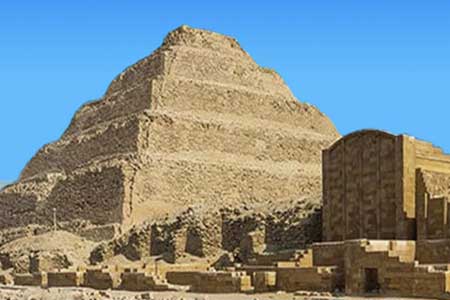
The Step Pyramid Saqqara, the Old Kingdom necropolis (2700–2200 BCE), marks the shift to cut‑stone construction, pioneered by Imhotep—the world’s first named architect—in Pharaoh Djoser’s Step Pyramid and its earliest stone columns.
The Great PyramidsThe Great Pyramids of Giza served as royal tombs for Old Kingdom pharaohs. The three largest were built for Pharaohs; Khufu, Khafre, and Menkaure, with smaller pyramids constructed for their queens.
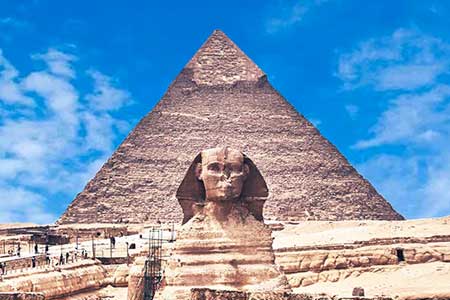
The Great SphnixThe colossal Great Sphinx of Giza was carved during the reign of King Khafre, the pharaoh responsible for the second pyramid at Giza.
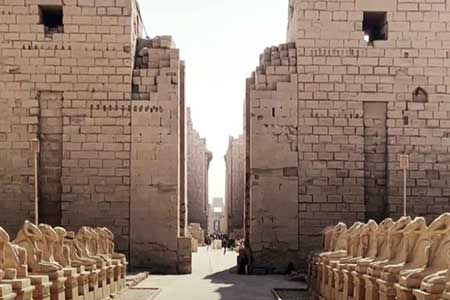
THE KARNAK TEMPLEThe Karnak Temple Complex is a vast ensemble of temples, pylons, chapels, and the Great Hypostyle Hall, linked to Luxor Temple by the Avenue of Sphinxes.
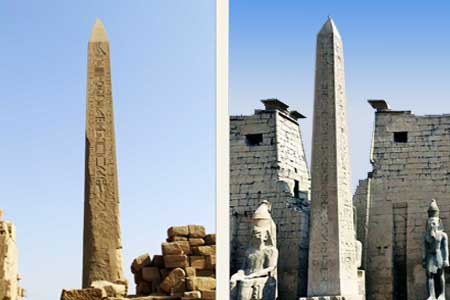
The Egyptian ObeliskObelisks are tall, four‑sided, tapering monoliths—usually carved from a single block of red granite—and crowned with a small pyramidion.
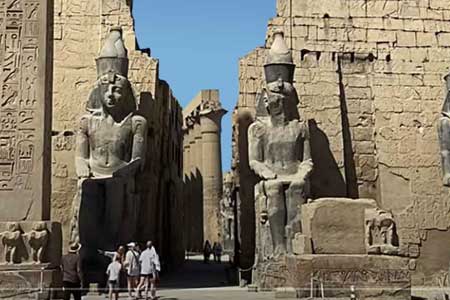
Luxor TempleLuxor Temple, a monument to the Revival of Divine Sanctity, served as a principal sanctuary of the Theban Triad and the god Amun. Located 1.5 miles south of Karnak, it is linked to its northern counterpart by the Avenue of Sphinxes.
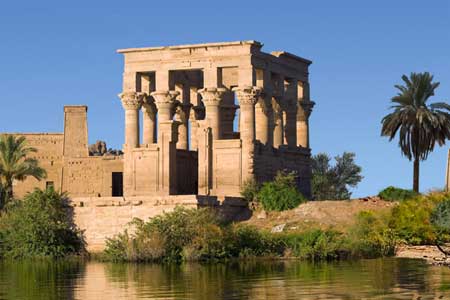
Philae TemplePhilae, the Rescued Sanctuary of Isis, now on Agilkia Island just south of Aswan, is a luminous temple complex set within the reservoir of the Aswan Low Dam, downstream from the High Dam and Lake Nasser.
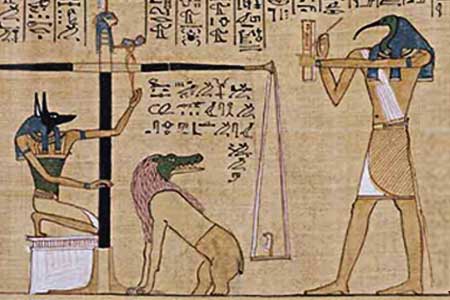
The Book of the DeadPapyrus Manuscript: Judgment Scene from the Book of the Dead of Hunefer, c. 1275 BCE.
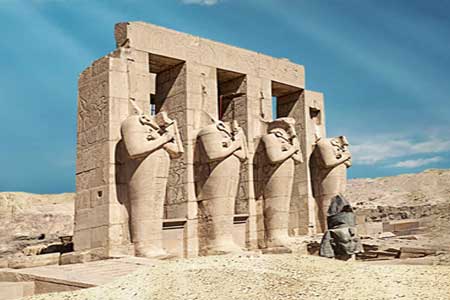
THE RAMESSEUMThe Ramesseum is the vast mortuary temple of Ramesses II—Ramesses the Great—built on the west bank of Thebes as a monumental testament to his reign. Known for its towering pylons, colossal statues, and richly carved reliefs celebrating his military victories.
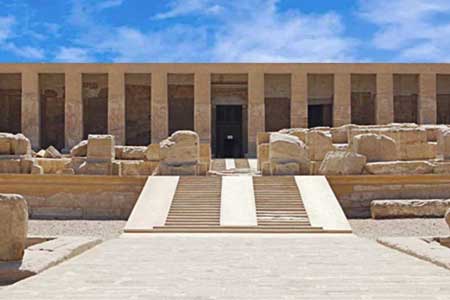
Seti I at Abydos & KV17The Temple of Seti I stands at Abydos, one of ancient Egypt’s most sacred and archaeologically significant sites, revered as the cult center of Osiris and a royal necropolis since the earliest dynasties. In the Valley of the Kings, Seti’s own tomb—KV17—remains one of the largest and most elaborately decorated in the entire necropolis.
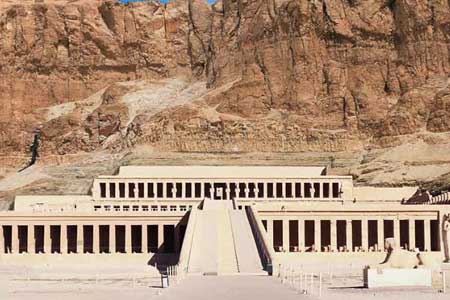
The Temple of HatshepsutThe Mortuary Temple of Hatshepsut—Djeser‑Djeseru, the “Holy of Holies”—is considered a masterpiece of ancient Egyptian architecture, built during the Eighteenth Dynasty around 1500 BC.
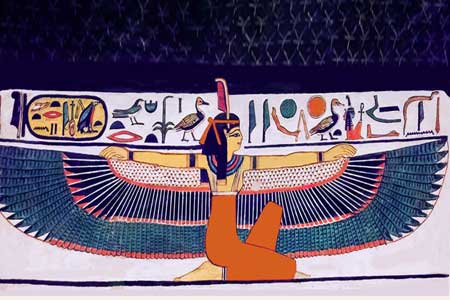
Tomb of Nefertari QV66Often called the Sistine Chapel of Ancient Egypt, the Tomb of Nefertari—created around 1255 BCE—is the most elaborately decorated burial in the Valley of the Queens, its walls glowing with exquisitely preserved scenes of the queen’s journey to the afterlife.
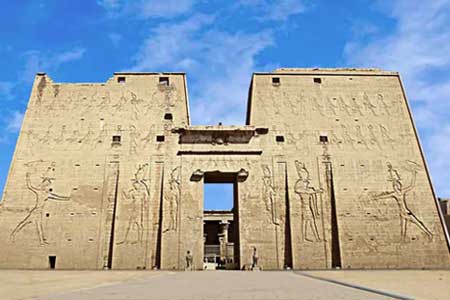
The Temple of Horus at EdfuFor over two thousand years, the Temple of Horus at Edfu lay buried beneath 12 meters (39 feet) of drifting desert sand and Nile‑borne silt. Its long entombment preserved it remarkably well—Edfu remains one of the best‑preserved temples in Egypt and is the only major sanctuary to survive with its roof fully intact.
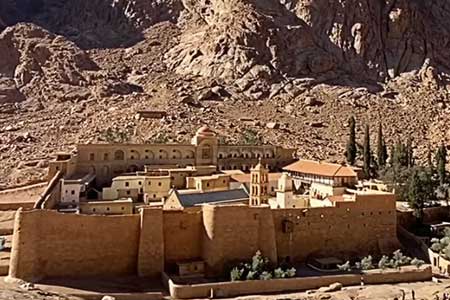
Mount SinaiMount Sinai and Saint Catherine’s Monastery—founded in 565 AD by Emperor Justinian I—stand on the Sinai Peninsula at the foot of the mountain long identified with the fable of the Burning Bush. According to the Torah, the New Testament, and the Quran, this is the place where Moses received the Ten Commandments, making the monastery one of the oldest and most revered Christian sites in continuous use.
 The Step Pyramid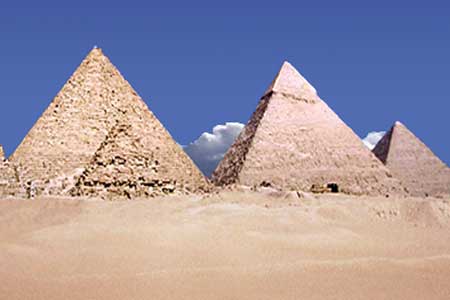
 Top
Top