The Egyptian Obelisk

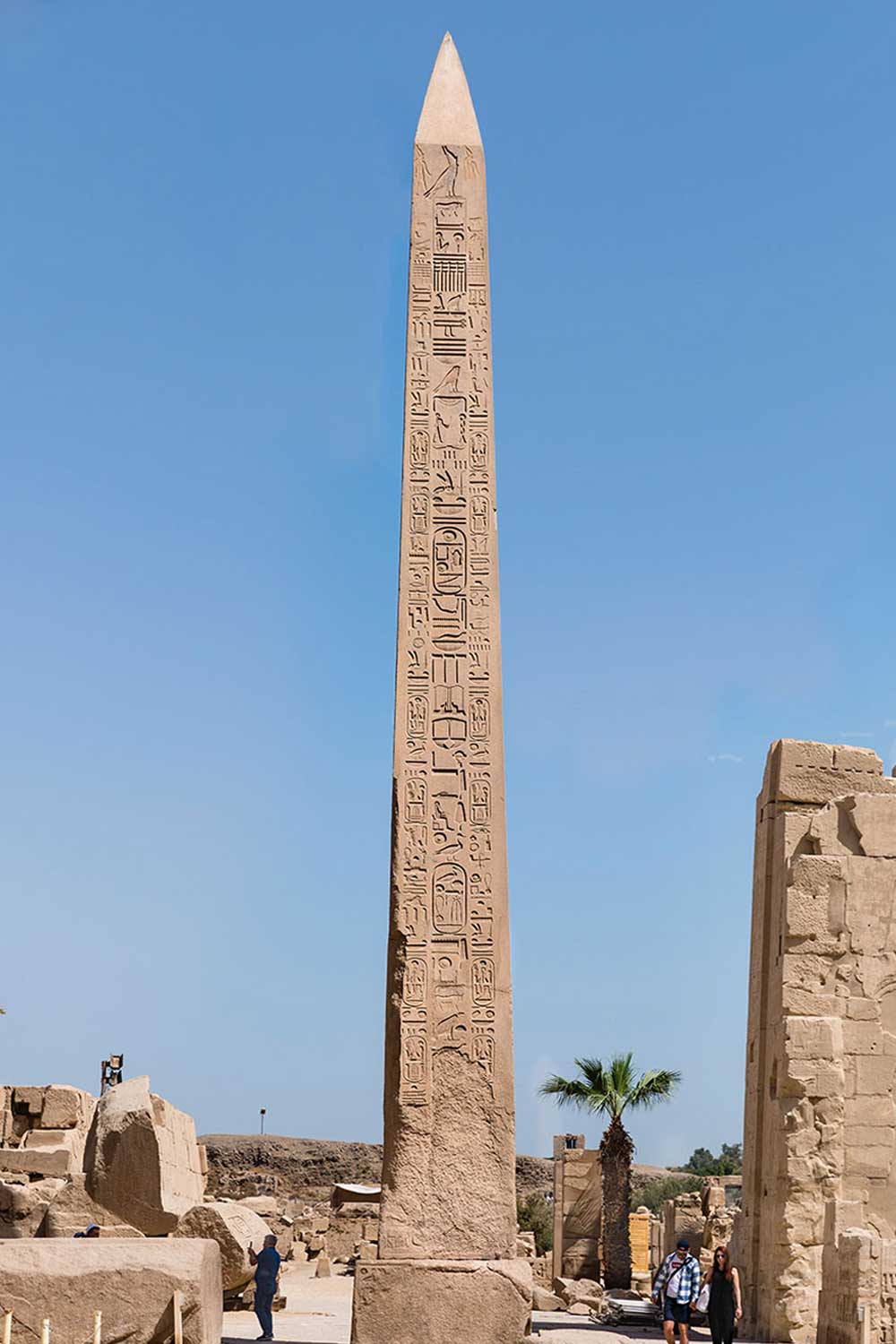
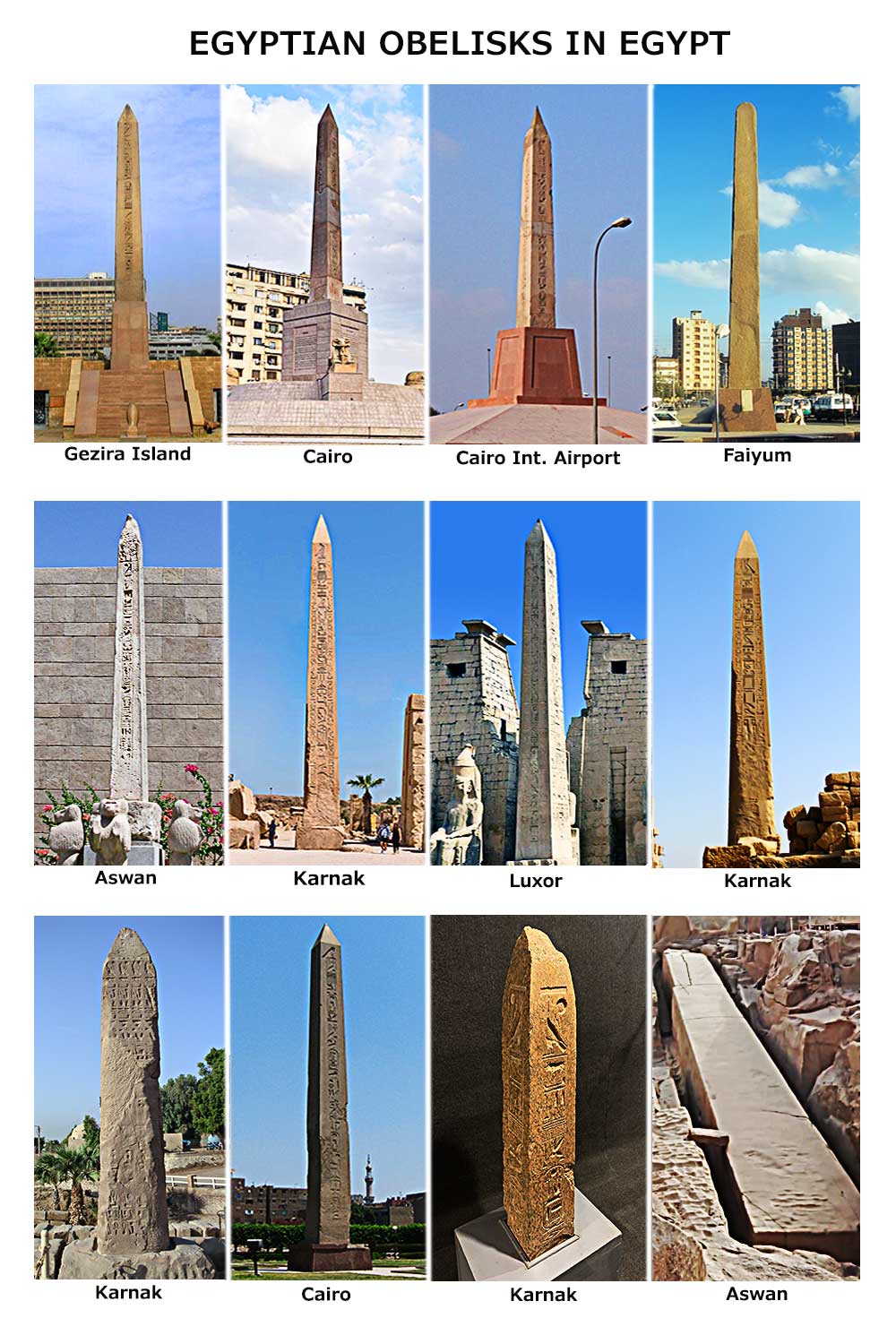
Hatshepsut's (reign 1479–1458 BCE) Obelisk, the tallest in Egypt at height 29 meters (97 feet), is still standing today on its original site in the Temple of Amun at the Great Temple complex at Karnak
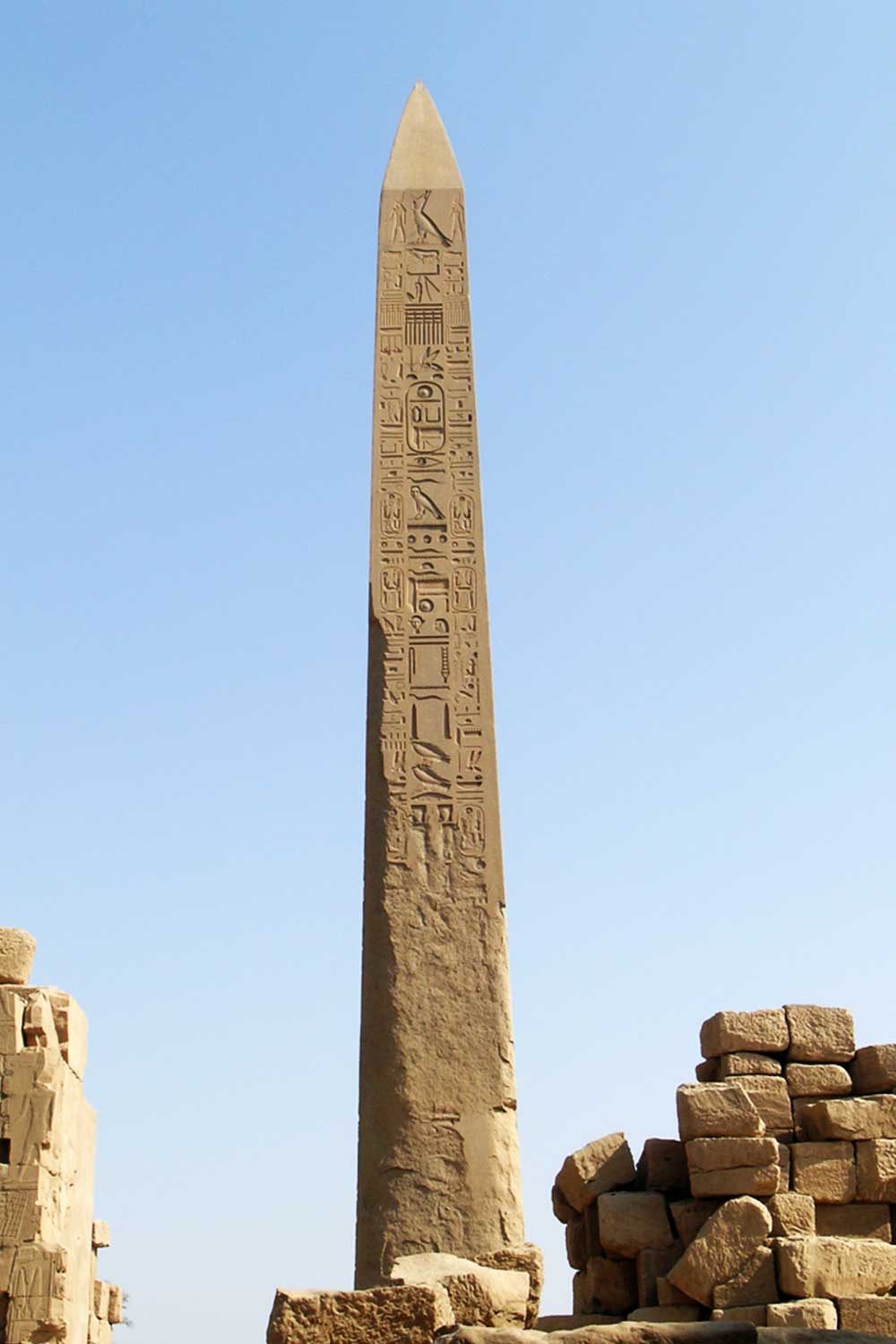
The Obelisk of Tuthmosis I (reign 1526–1513 BCE) at the gateway of the Fourth Pylon at Karnak Temple, height 21.7 meters (71 feet), Temple complex at Karnak
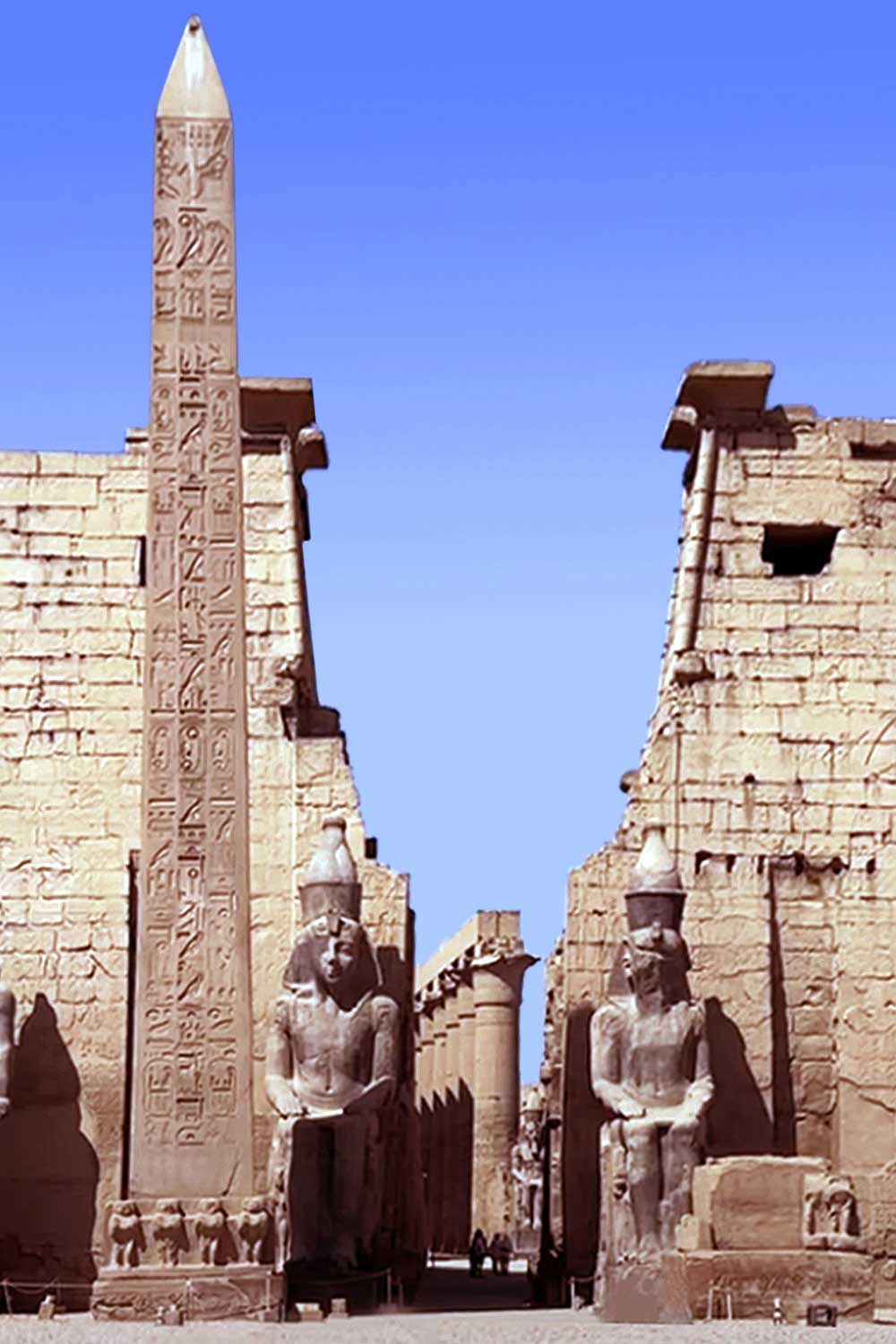
Entrance to Luxor Tempel, the Obelisk of Ramesses II, (reign 1279–1213 BCE), Egypt, height 25 meters (82 feet), it's other pair was moved in 1833 to the Place de la Concorde, Paris
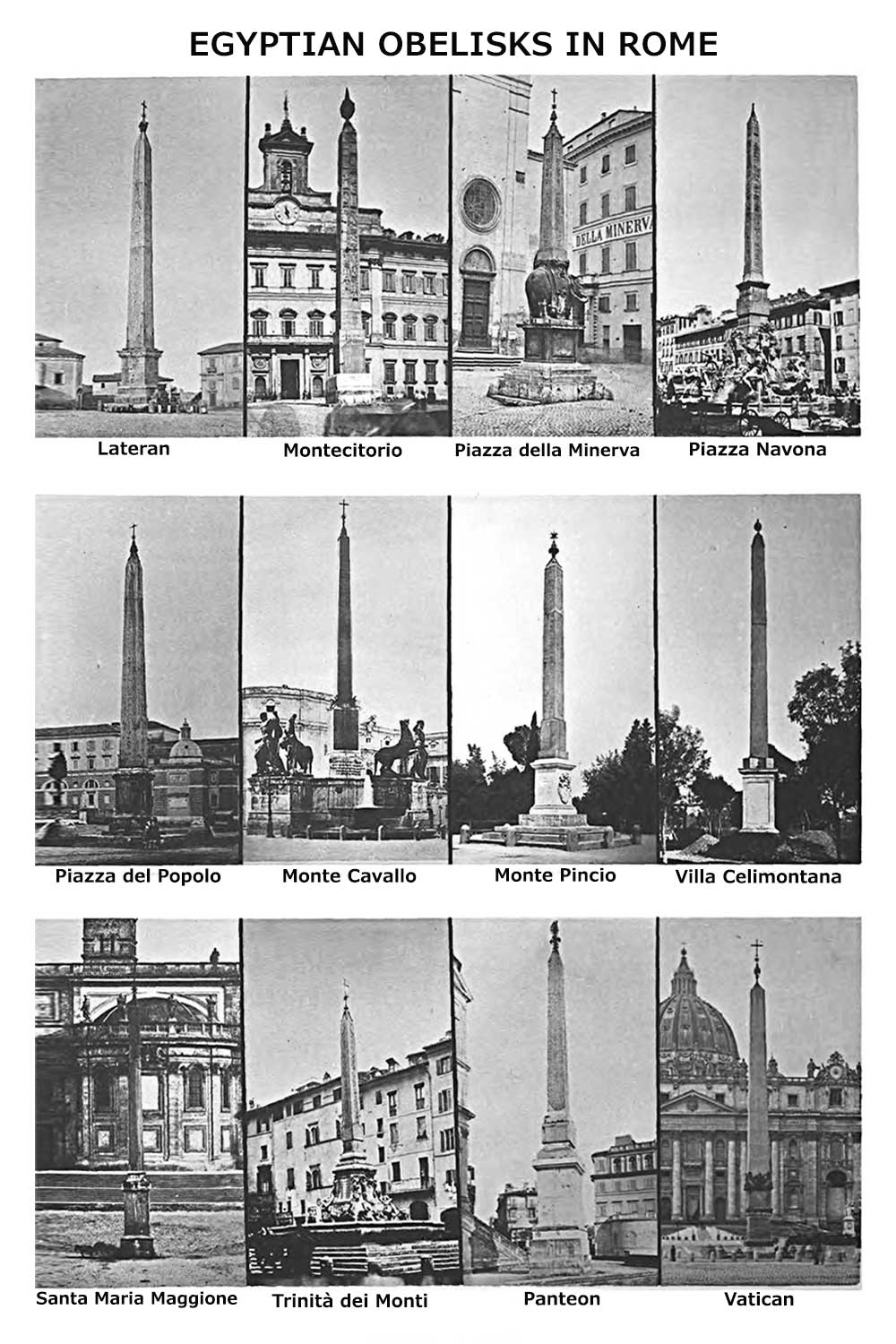
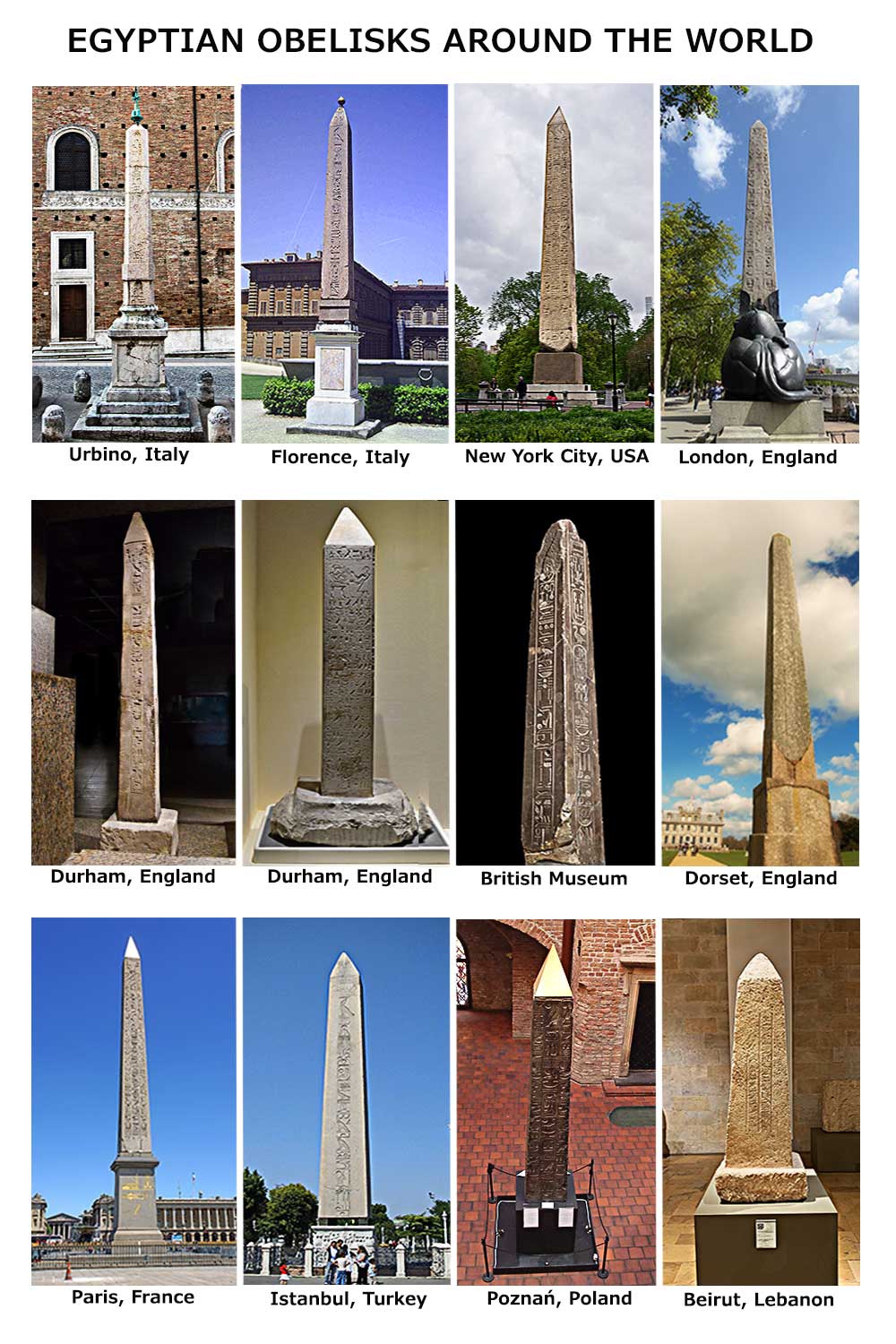
Hatshepsut's Obelisk at Karnak Temple, originally erected in the year 1457 BC, remains standing in its original location, making it the tallest surviving obelisk in Egypt. The obelisk is a symbol of Hatshepsut's power and her devotion to the god Amun. Inscriptions on the obelisk celebrate her reign and dedication to the temple. It is one of two obelisks she had commissioned for the temple, and although its twin fell and broke, this obelisk remains standing. The obelisk is made of red granite and is 29.5 meters (97 feet) high with a base measuring 9.7 sq. feet that tapers to a top of 4.85 sq. feet, crowned with a pyramidion or pointed tip of the obelisk, symbolizing the rays of the sun falling on earth. Its flawless geometry and balance allow it to stand solely by its weight, making it an enduring engineering marvel for 3,482 years. Quarrying such a monument required remarkable skill. Ancient Egyptians used dolerite, a stone harder than Aswan granite, to pound the obelisk free from bedrock without chisels. These monolithic structures were shaped with precision, then transported using wooden rollers, floated down the Nile, and hauled to their final destinations. Erecting the obelisk was the most difficult part of the process, and since no architectural papyri survive detailing how Egyptians built pyramids or temples, the exact method remains unknown. Obelisks are tall, four-sided, tapering monuments made from a single piece of stone, typically red granite, and topped with a pyramid-like shape. They were deeply symbolic in ancient Egyptian culture, closely associated with the sun god Ra and placed at temple entrances to represent the sun’s rays. During Akhenaten’s religious reforms, obelisks were seen as petrified rays of Aten, the sun disk. They were also believed to guide souls to the afterlife, reinforcing their spiritual significance. Obelisks first appeared during the Old Kingdom around 2300 BCE and became especially prominent in the New Kingdom. Their stability depended entirely on their weight and geometric balance, with the base carefully freed by digging caverns and shoring up the stone before transport. Today, only 29 Egyptian obelisks survive worldwide, with more located in Italy than in Egypt. Of these, 22 date to the New Kingdom, four to the Late Period beginning in 525 BCE, and one to the Ptolemaic Period starting in 305 BCE. Many were relocated during the Roman conquest of Egypt and later gifted to major cities in modern times. Notable examples include the Luxor Obelisk in Paris and Cleopatra’s Needles in London and New York City. Only five still stand at their original temple sites. The largest known obelisk, the Unfinished Obelisk, remains in its quarry and was never erected. Had it been completed, it would have stood 137 feet tall and weighed approximately 1,090 tons. Unlike ancient obelisks, which were monolithic and carved from a single stone, most modern obelisks are constructed from multiple rocks.
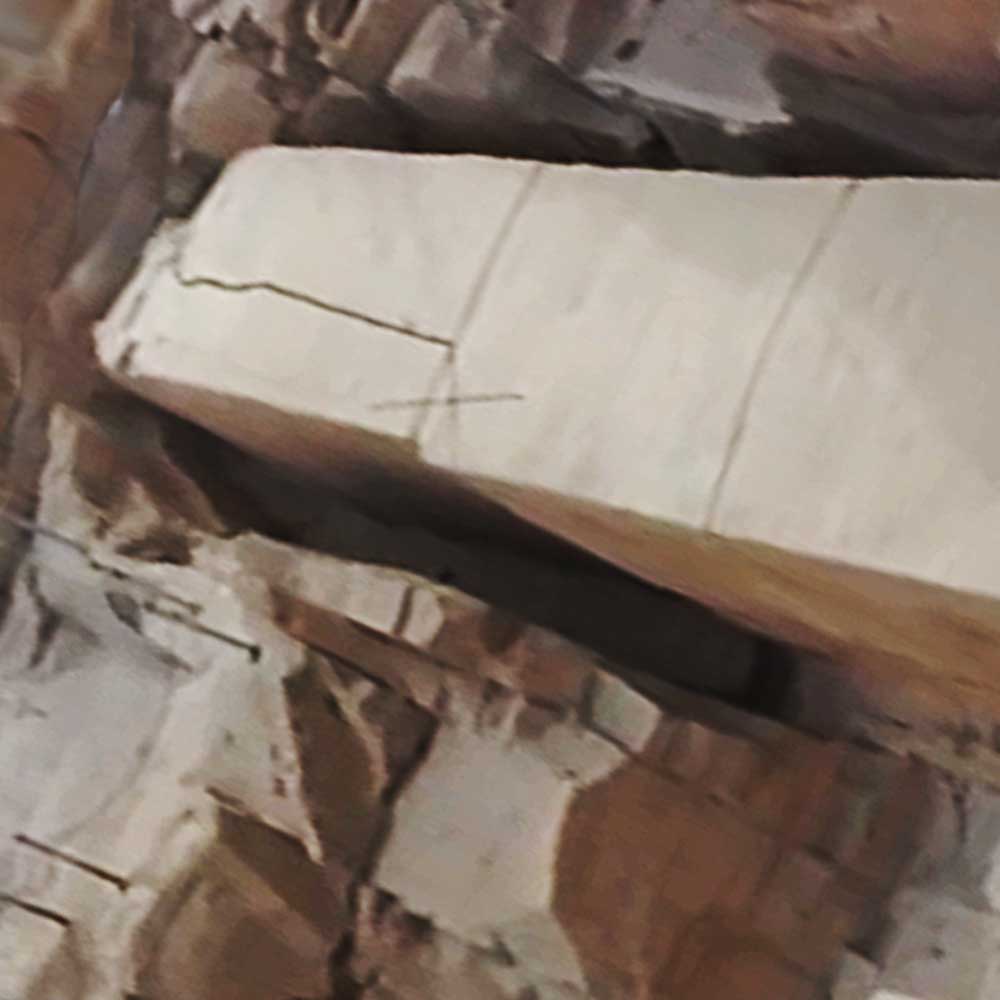
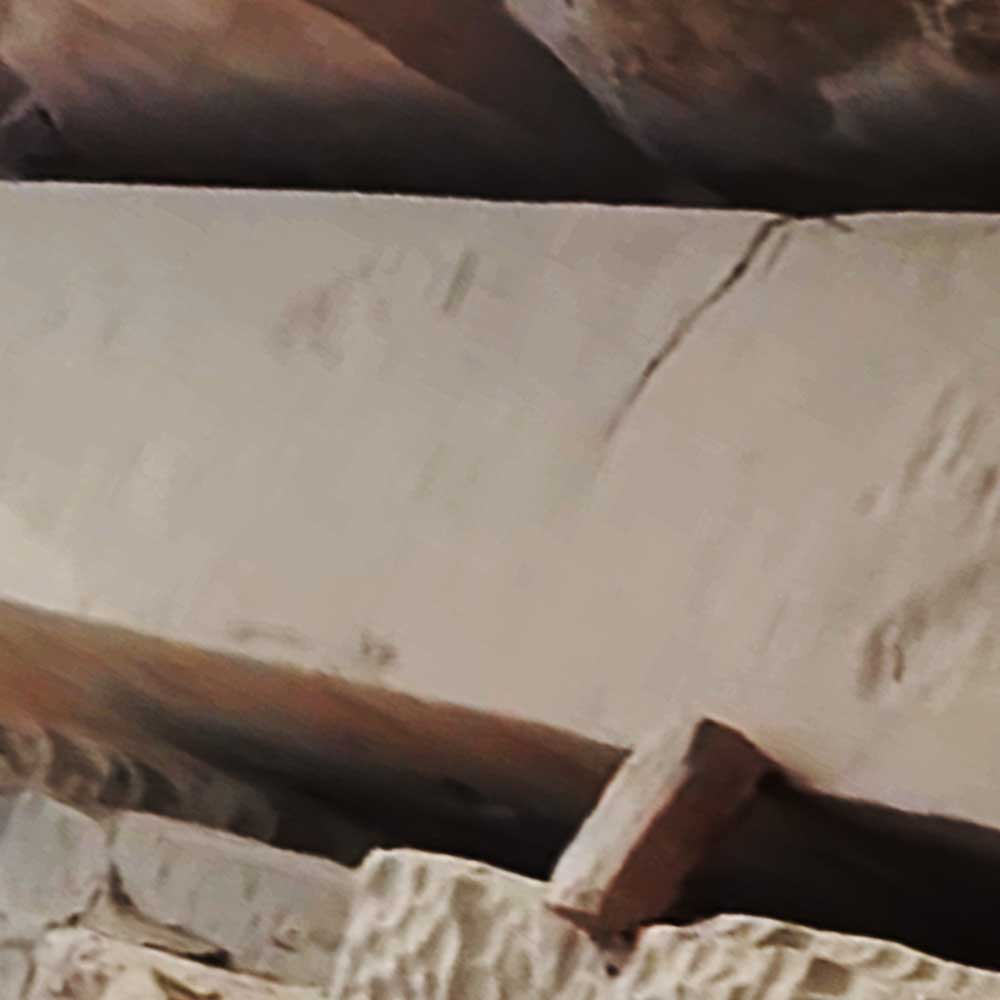
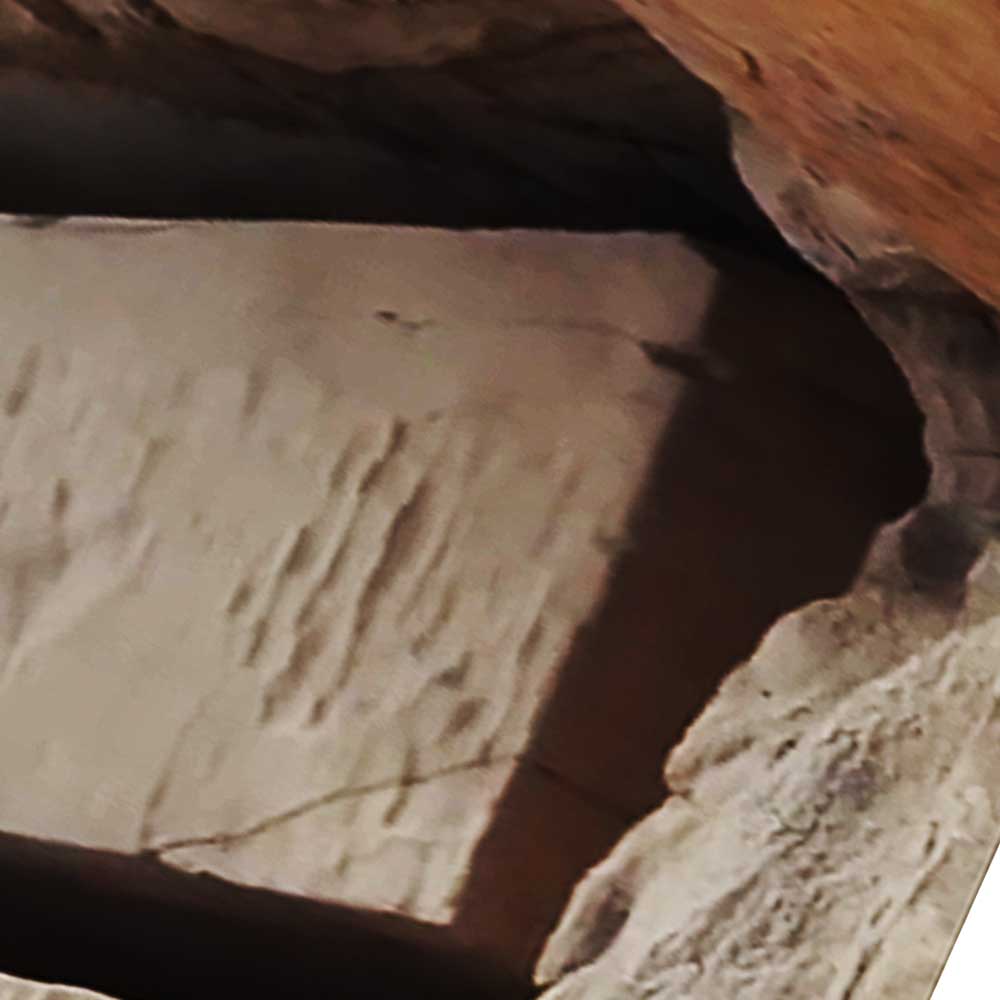
The unfinished obelisk is the largest known ancient obelisk located in the northern region of the stone quarries of ancient Egypt in Aswan, If finished it would have measured around 41.75 metres (137.0 ft)
The obelisk and wider quarry were inscribed on the UNESCO World Heritage List in 1979 along with other examples of Upper Egyptian architecture
The obelisk was ordered by Hatshepsut in 1458 BCE, the creators began to carve it directly out of bedrock, but cracks appeared in the granite and the project was abandoned.

Roman Obelisks, 1882, Henry Honychurch Gorringe


NOVA: "Secrets of Lost Empires: Pharaoh's Obelisk"
NOVA: "Secrets of Lost Empires: Pharaoh's Obelisk", Asset Copyright:2010 WGBH Educational Foundation. All rights reserved.  Rights do not expire.Public Domain
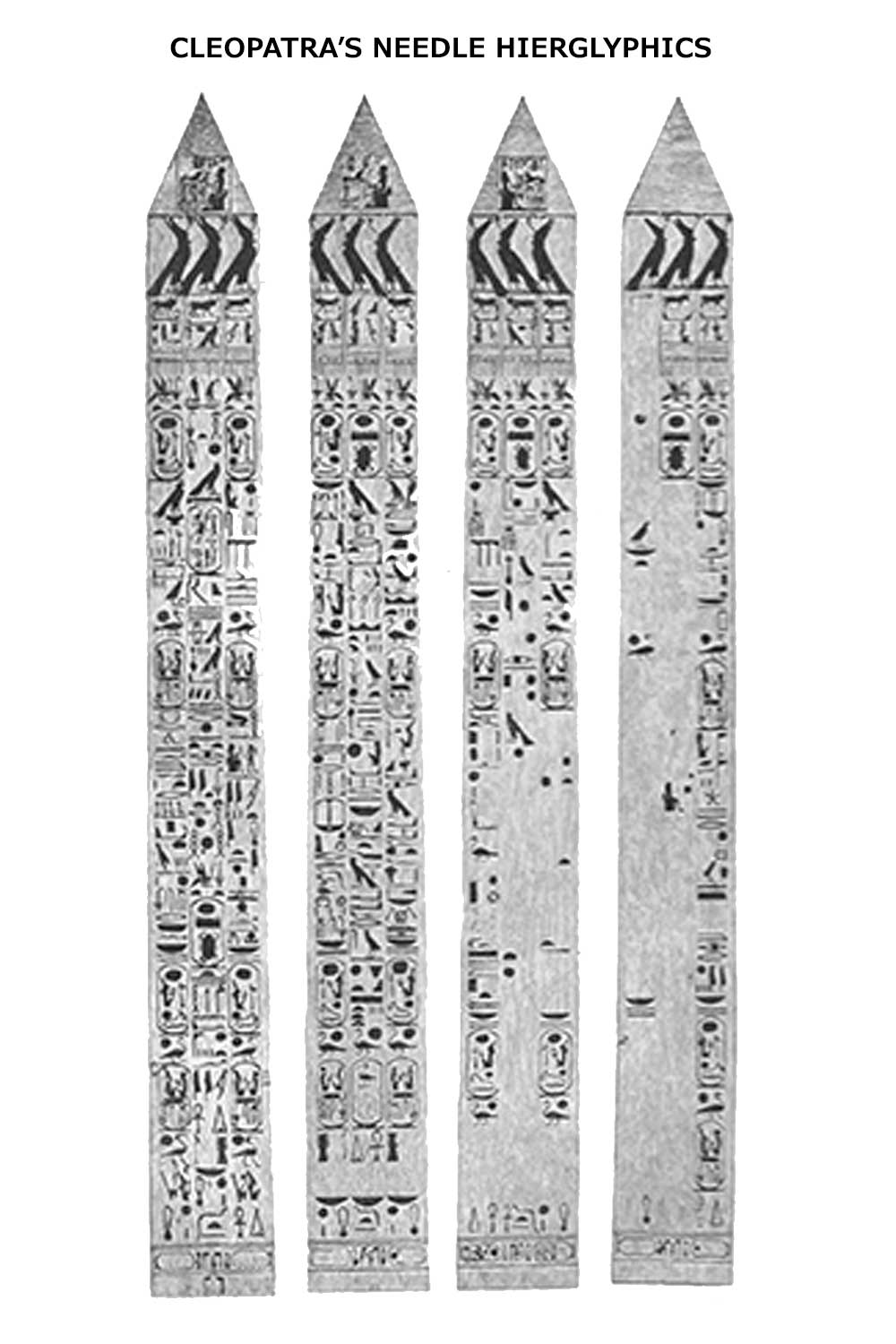
Cleopatra's Needles
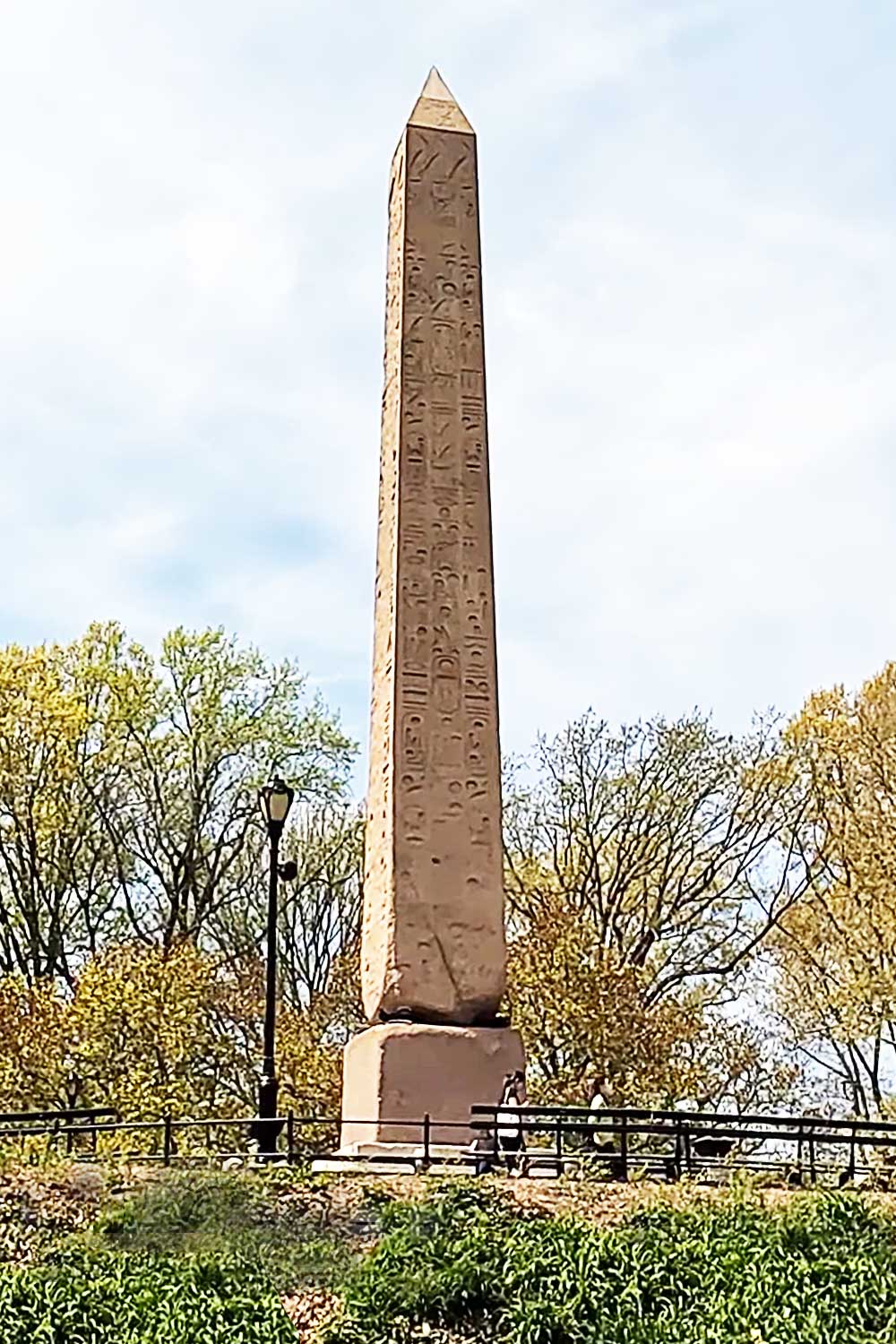
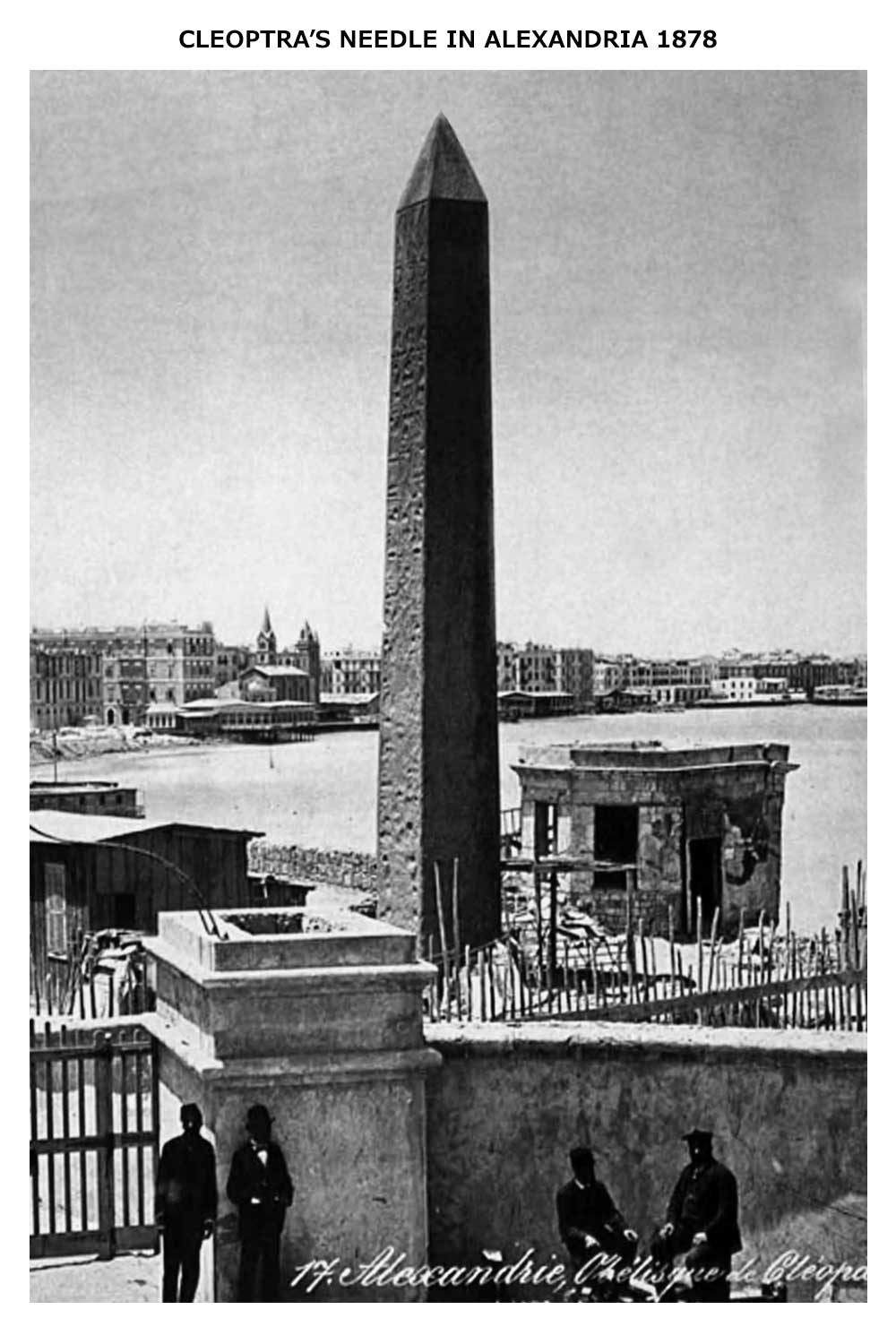
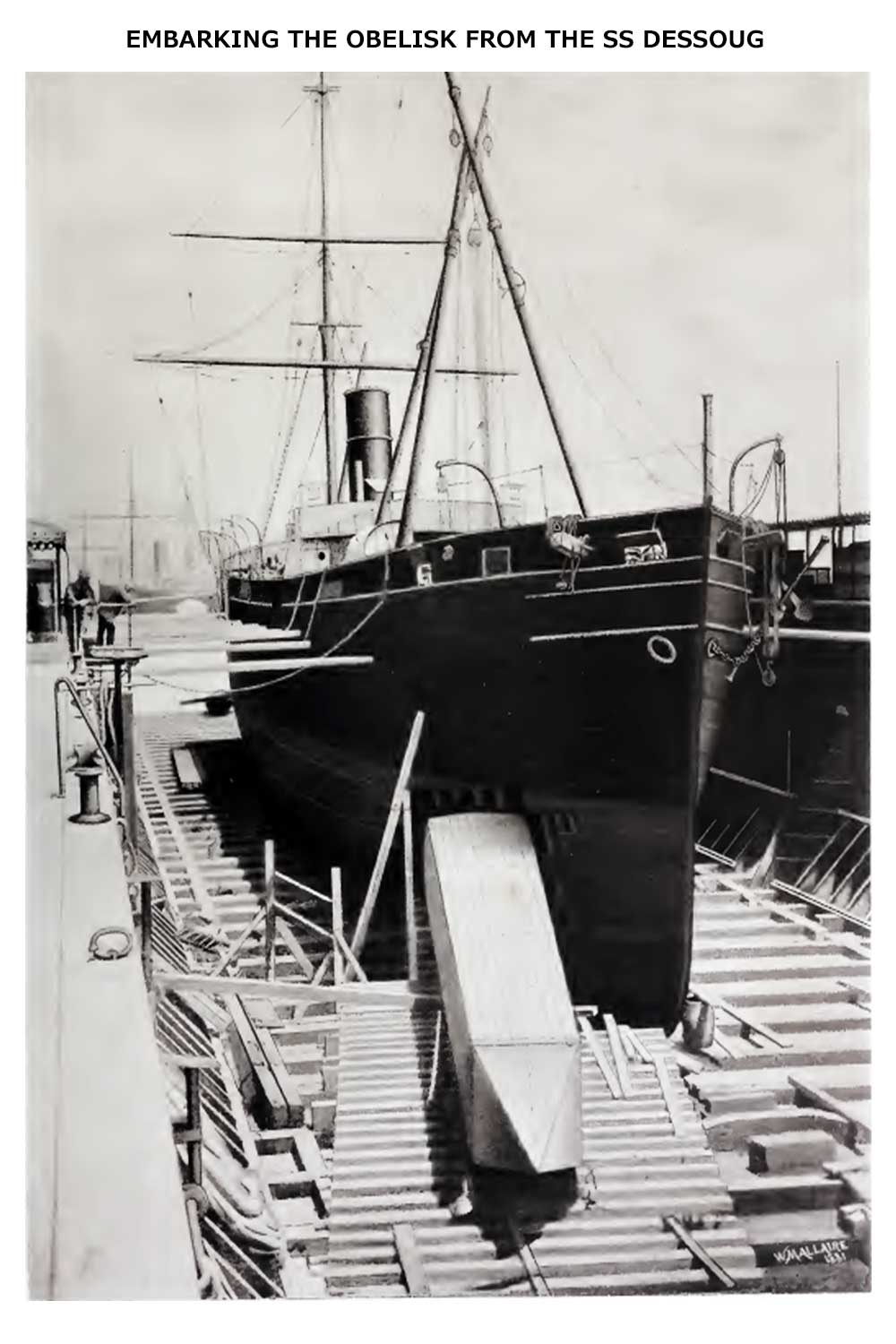
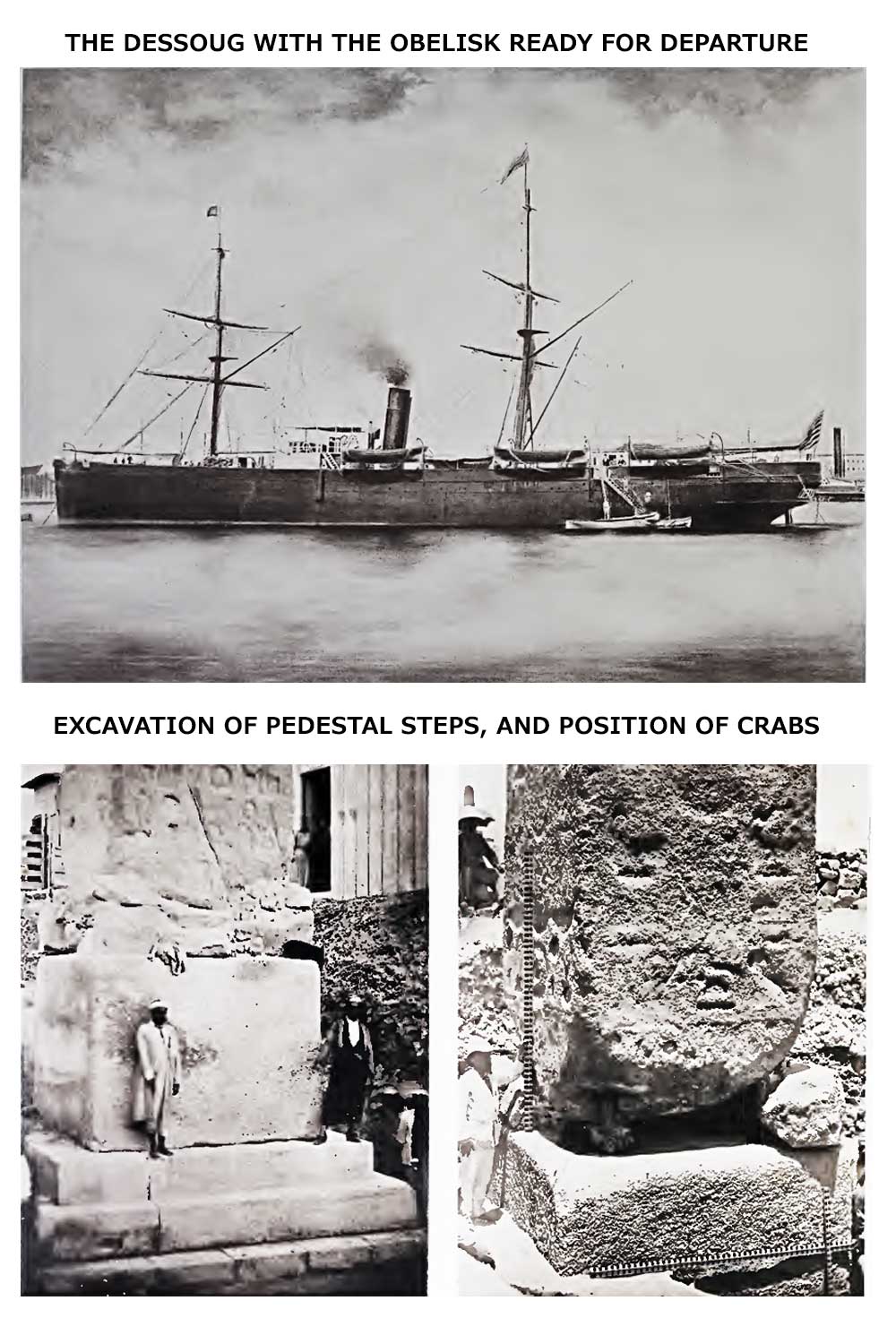
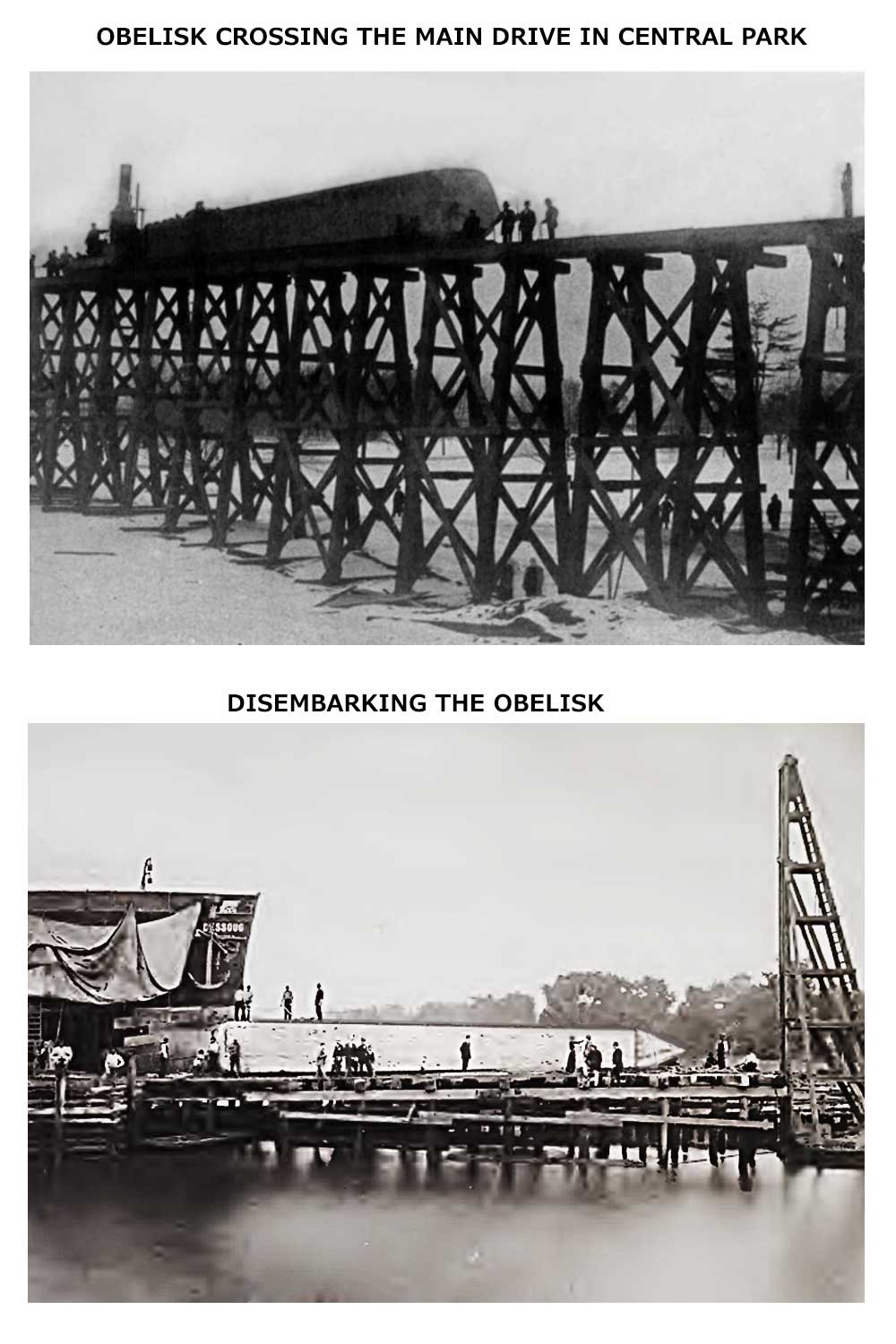
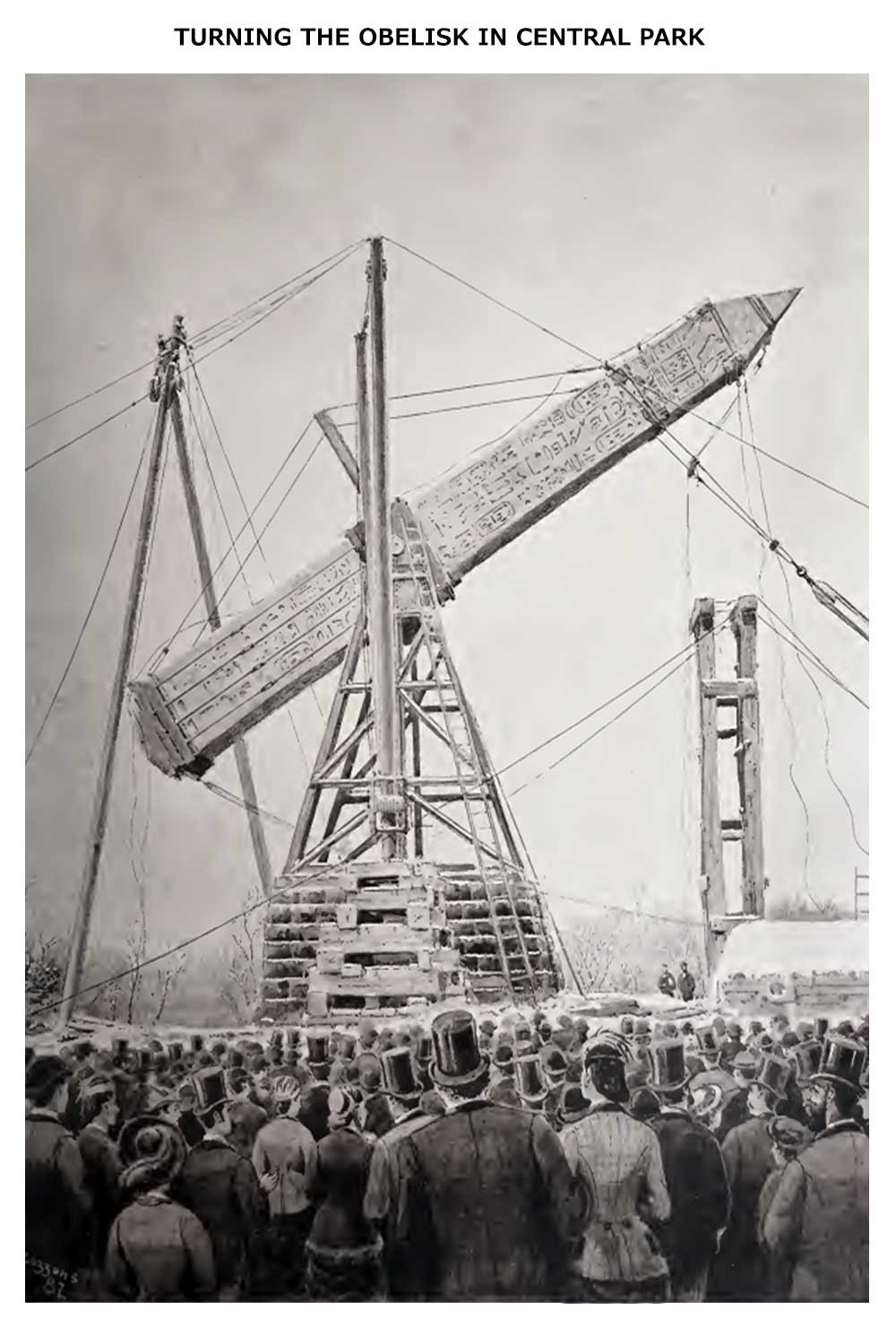
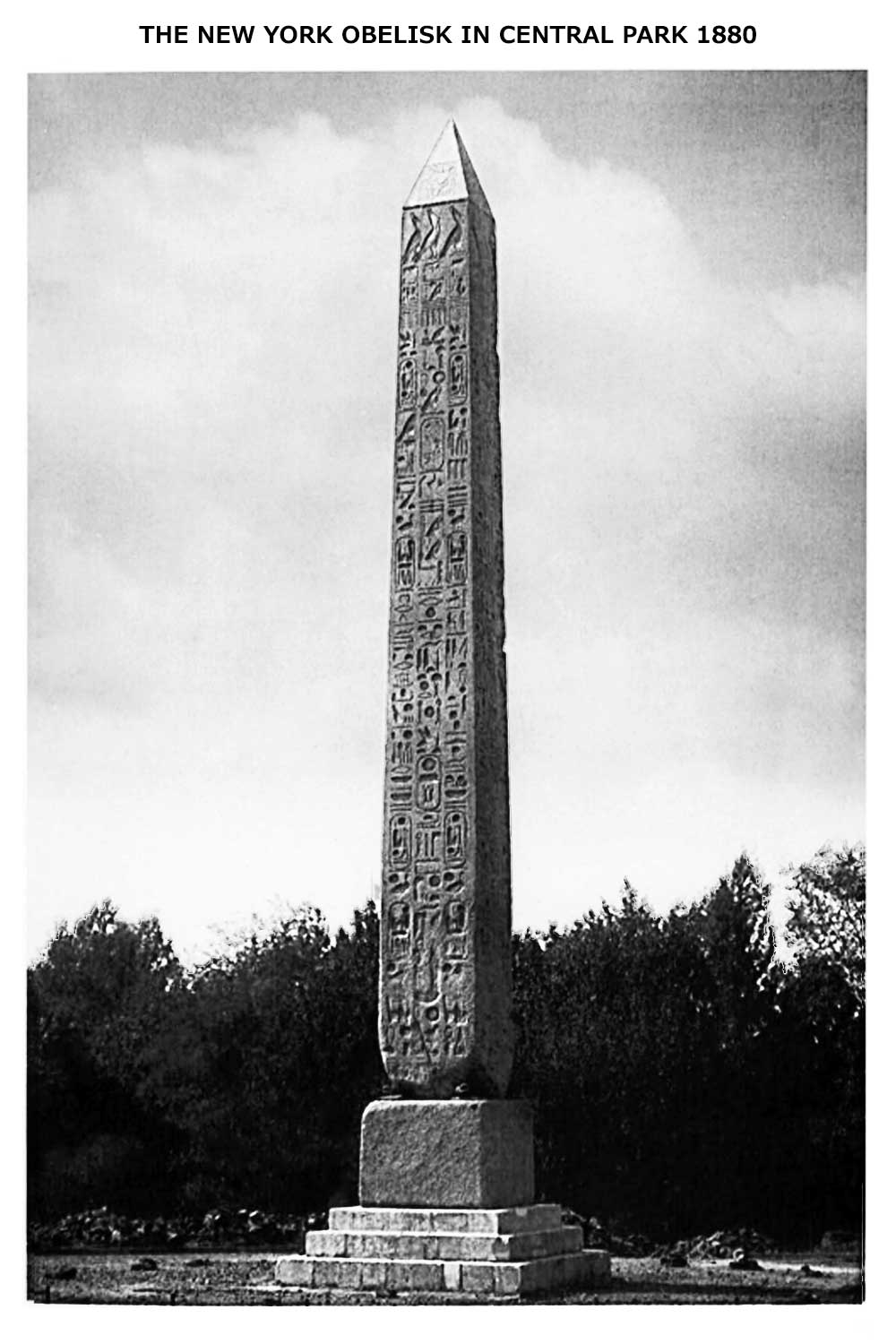
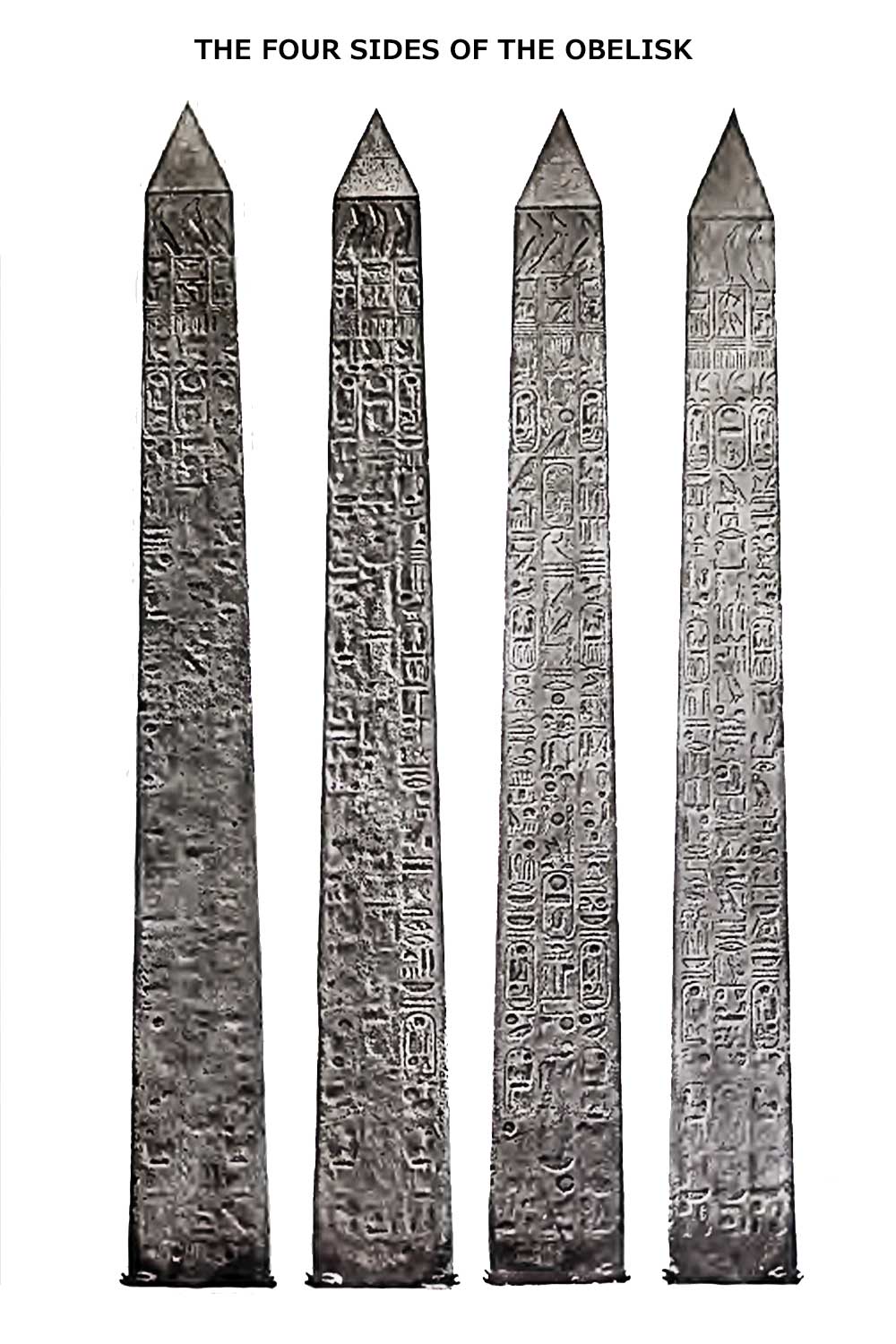
Cleopatra's Needles are a pair of ancient Egyptian obelisks now in London and New York City. They both date from the 15th century BCE and were originally made in Heliopolis (modern-day Cairo) during the Eighteenth Dynasty (1550 - 1292 BCE). They were re-erected in London at Victoria Embankment in 1878 and in New York City, at Central Park, in 1881, west of the Metropolitan Museum of Art's main building in Manhattan. Made of red granite, the obelisks stand 21 meters (69 ft) high, and are inscribed with Egyptian hieroglyphs. Originally erected on the orders of Thutmose III in 1475 BCE, inscriptions were added about 200 years later by Ramesses II (The Great) to commemorate his military victories. The story of the New York-bound obelisk transfer is particularly interesting. In Alexandria, the steamship SS Dessoug, a wooden cargo ship, was heavily modified with a large hole cut into the starboard side of its bow. The 200-ton granite obelisk and its 50-ton pedestal were loaded through the ship's hull by rolling it upon cannonballs. It set sail on June 12, 1880, arriving in New York City on July, 20, 1880. It took 32 horses hitched in pairs to bring it from the banks of the East River to Central Park. Railroad ramps and tracks had to be temporarily removed and the ground flattened so that the obelisk could be rolled out of the ship, whose side had been cut open once again for the purpose. The obelisk was carried up the East River and transported to a temporary location off Fifth Avenue. The final leg of the journey was made by pushing the obelisk with a steam engine across a specially built trestle bridge from Fifth Avenue to its new home on Greywacke Knoll, just across the drive from the Metropolitan Museum of Art. It took 112 days to move the obelisk from Quarantine Station to its resting place.
Photo: Felix Bonfils, 1878,The New York Obelisk-1993
Cleopatra's Needle, By: Henry H. GorringeEgyptian Obelisks-1882
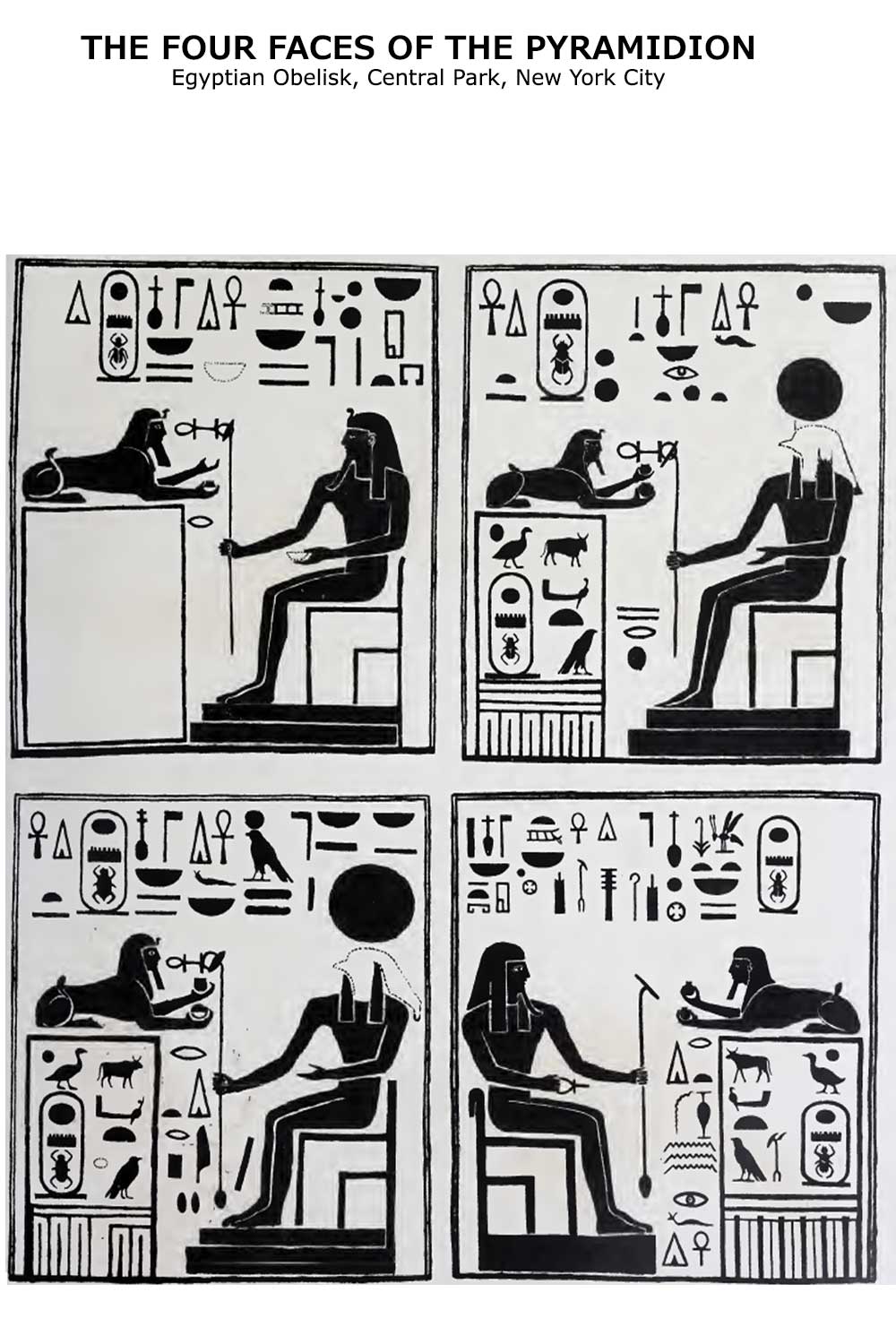
The Four Faces of the Pyramidion, It is probable that the sculptures and hieroglyphs on The Four Faces of the Pyramidion are simply dedicated to the two gods, Ra and Atum; to Ra as god of heaven, and Atum as god of Heliopolis. The inscription reads: Ra-men-Kheper, king of lower and upper Egypt, master of the world, gracious god of Heliopolis, king, giver of life, stability, and power, beloved of Atum, lord of Heliopolis, gracious god, lord of the temple.
LEFT. The kingly Horus, Strong Bull,
Beloved of the goddess, Ma,
the King of Upper and Lower Egypt,
Ra-ousor-ma-Sotep-en-Ra,
Lord of panegyries like his father,
Ptah Totanen, Son of the Sun,
Ramessou Meriamen.
Ra has generated him to adorn
festively Heliopolis
to furnish abundantly the temples
of him who generated him.
The lord of the two lands
Ra-ousor-ma-Sotep-en-Ra,
Son of the Sun,
Ramessou Meriamen,
stability and happiness.
CENTRE. The kingly Horus lifting up
the Hat; (White Crown,)
the King of Upper and
Lower Egypt.
Golden Hawk,
who has struck the kings
of all lands approaching him;
after the commandment
of his father, Ra.
Victory over the entire world,
and valiance of sword are
at the mouth of his hands
for the extension of the limits
of Egypt,
Son of the Sun,
Thothmes, Vivifier.
RIGHT. The kingly HORUS, Strong Bull,
Son of Tum,
the King of Upper and Lower Egypt,
the Lord of Diadems,
who protects Egypt
and chastises the nations.
Son of the Sun,
Ramessou Meriamen, king, warlike,
who has acted with his own hands,
in the face of the whole earth,
the Lord of the two lands,
Ra-ousor-ma-Sotep-en-Ra,
the Son of the Sun,
Ra-ousor-ma-Sotep-en-Ra,
Son of the Sun,
Ramessou Meriamen, the stable.
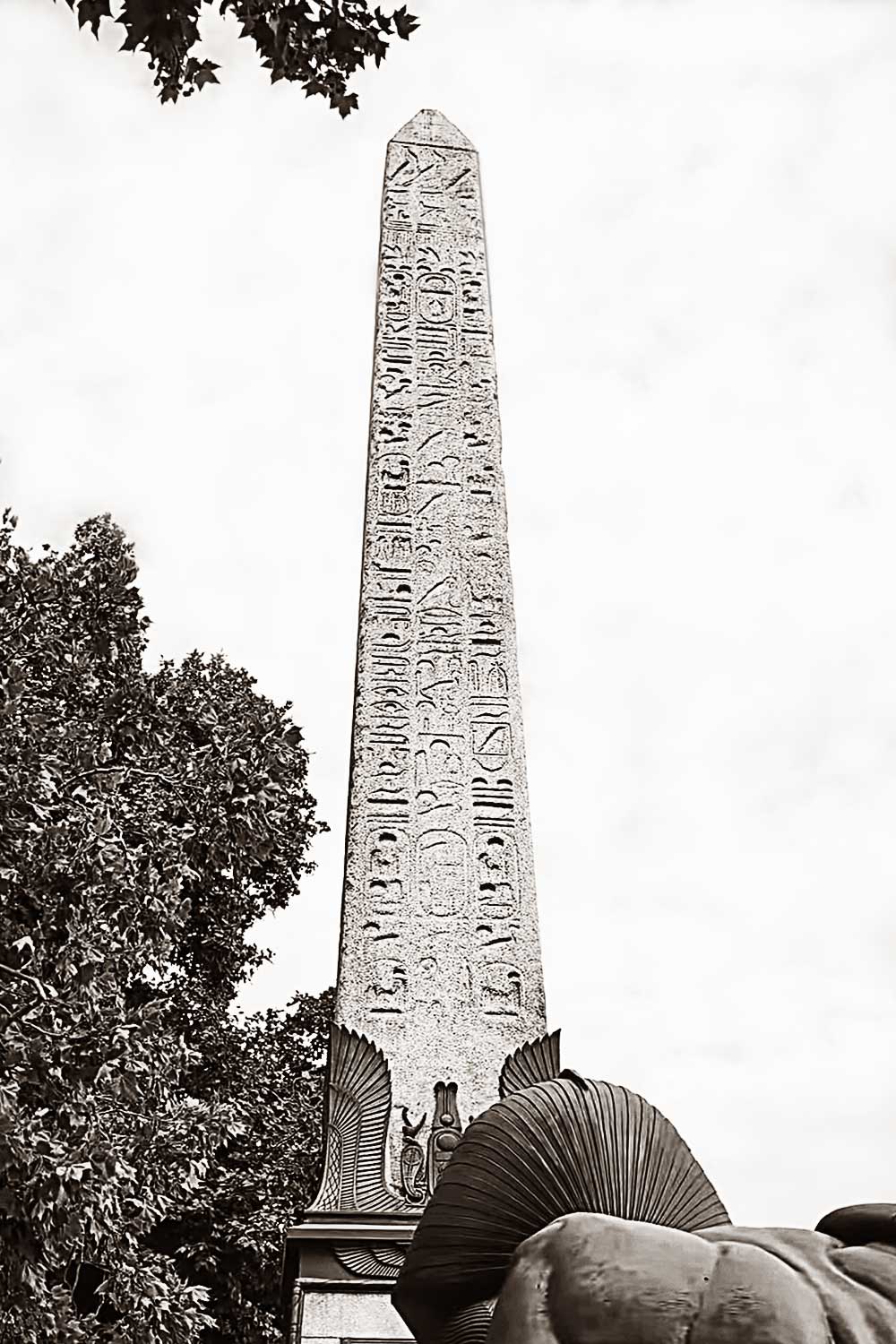

View of Victoria Embankment with Cleopatra's Needle, London, 2014
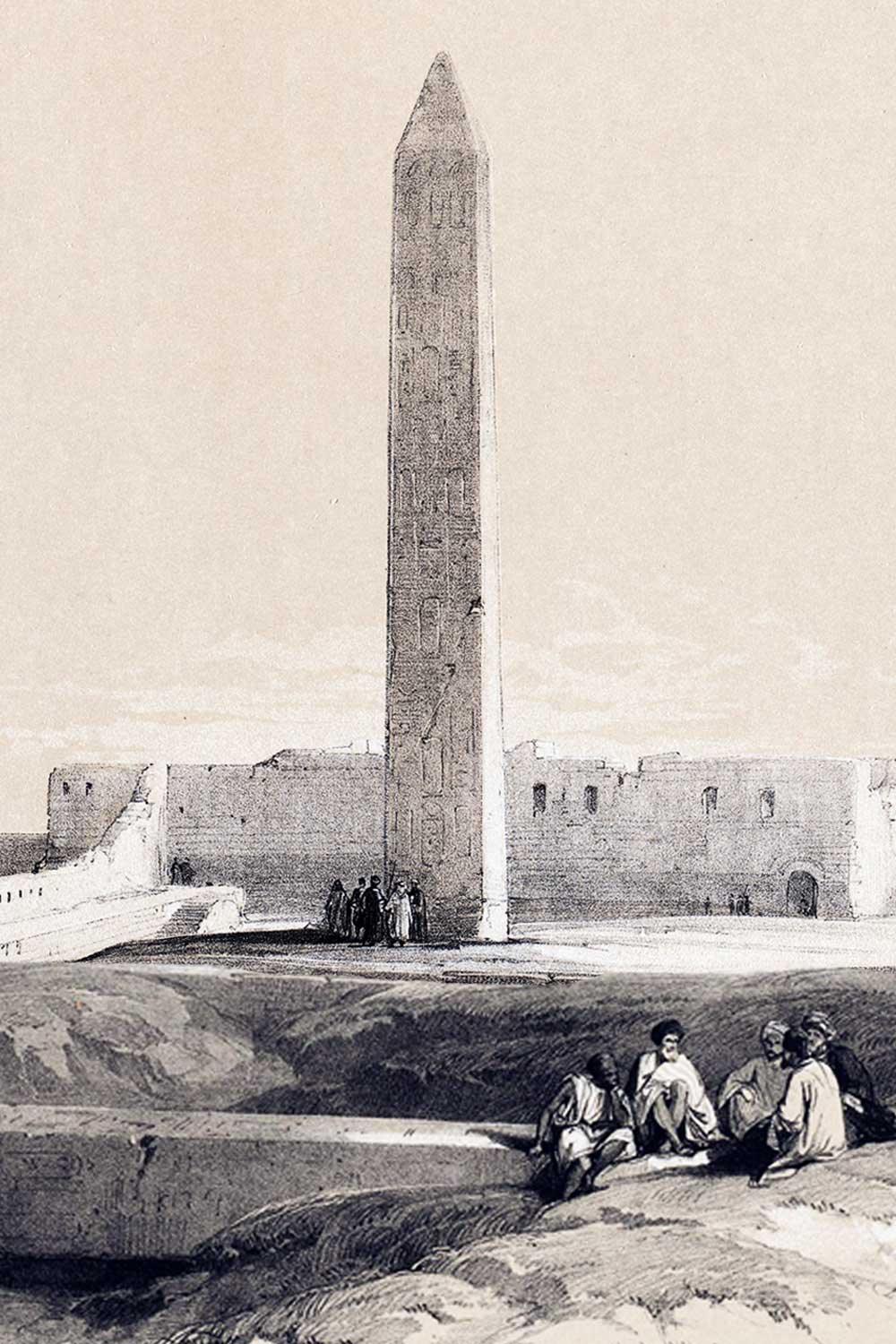
Louis Haghe, Lithograph, 1806-1885 after David Roberts, Painter, 1796-1864, Obelisk at Alexandria 1846, Commonly called Cleopatra's NeedleCleveland Museum of Art
View of Central Park with Cleopatra's Needle, New York City, 2014
Website & Website & Content Created by Richard Brafford, © 2025, All Rights Reserved, Fair Use Disclaimer for Non-Commercial Use for Educational & Entertainment Purposes OnlyTop