The Mortuary Temple of Hatshepsut
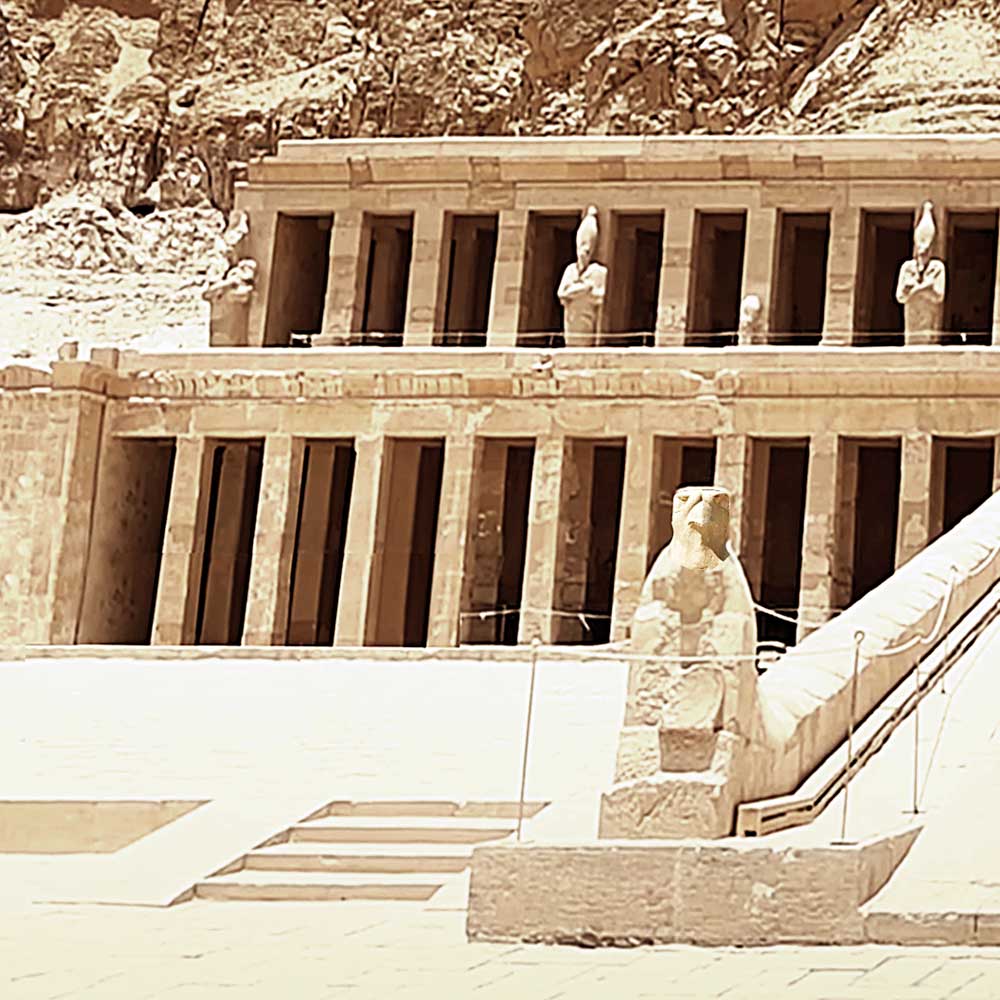
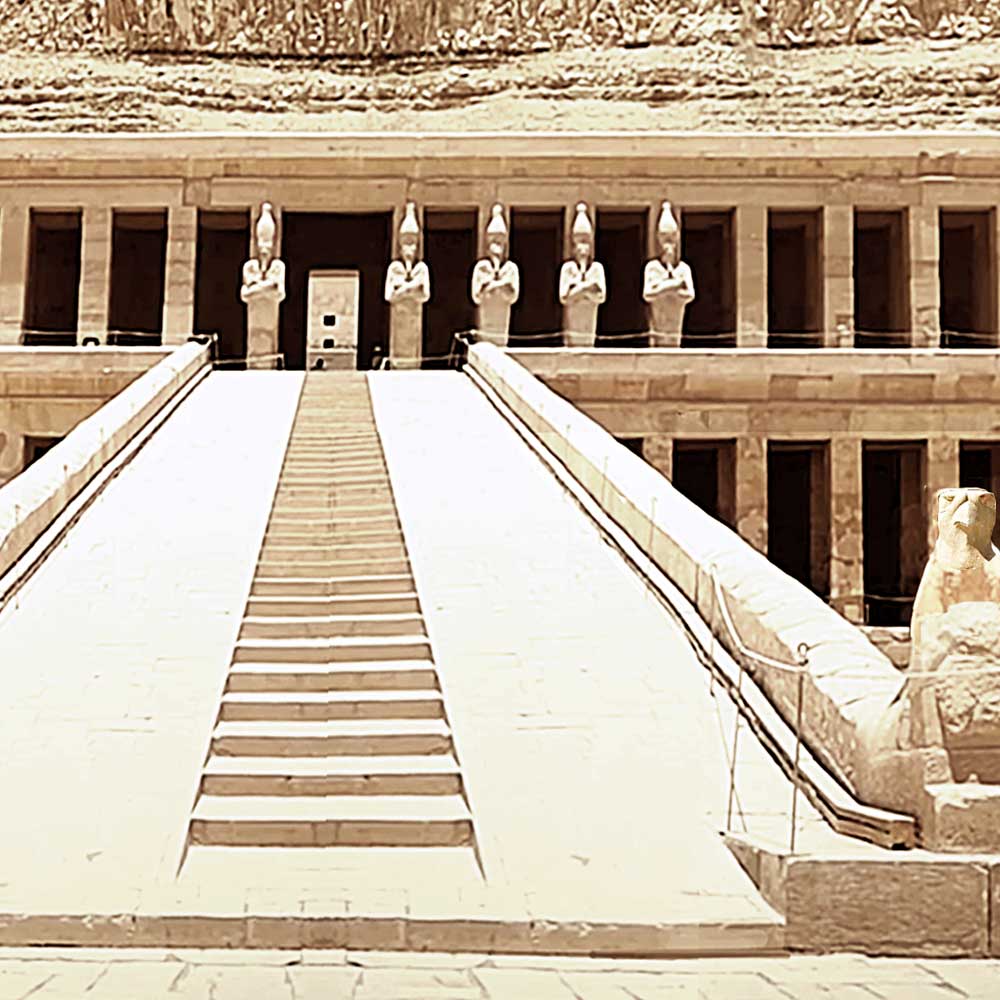
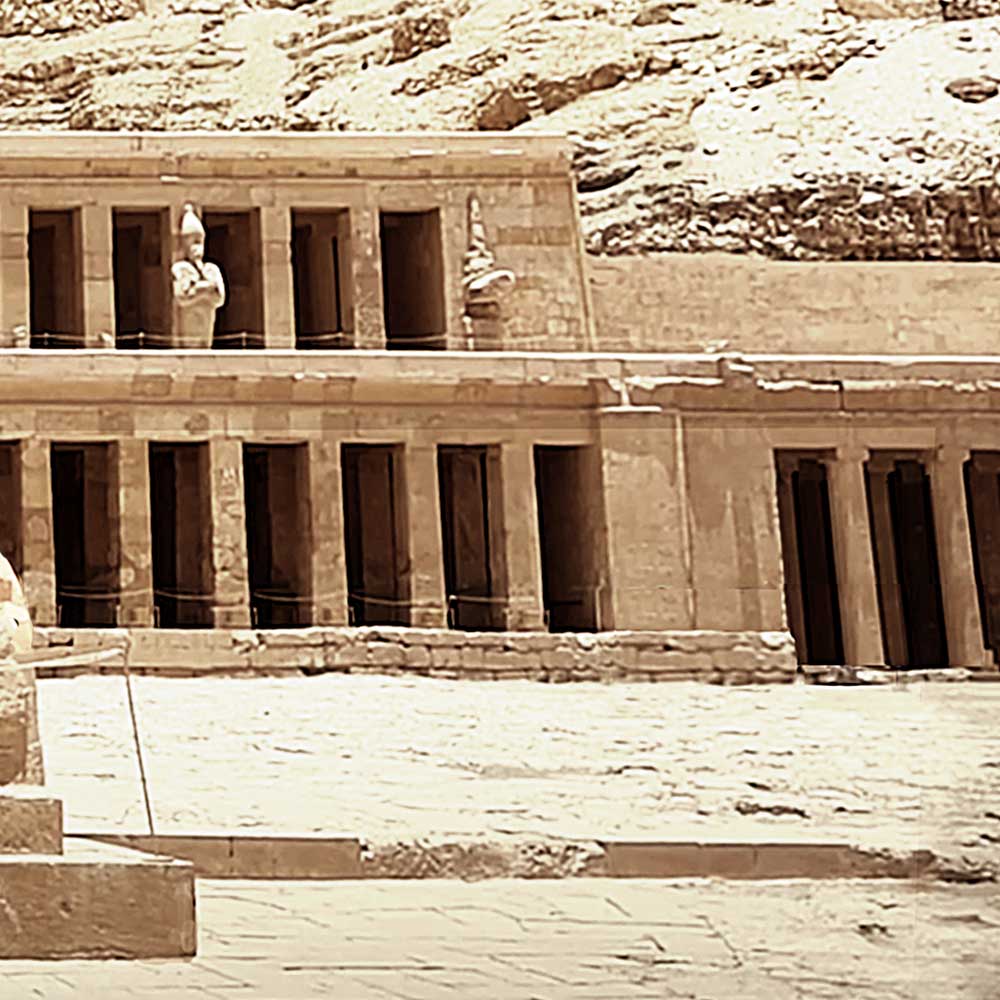
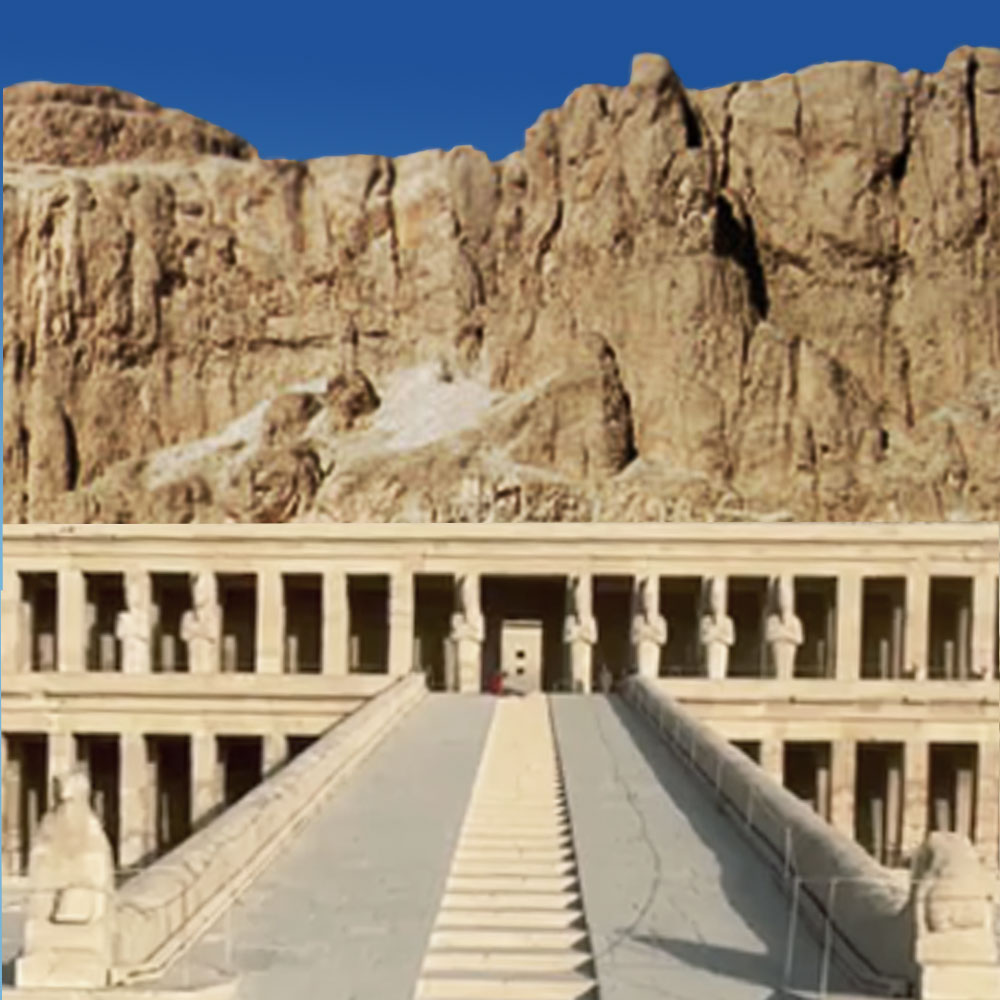
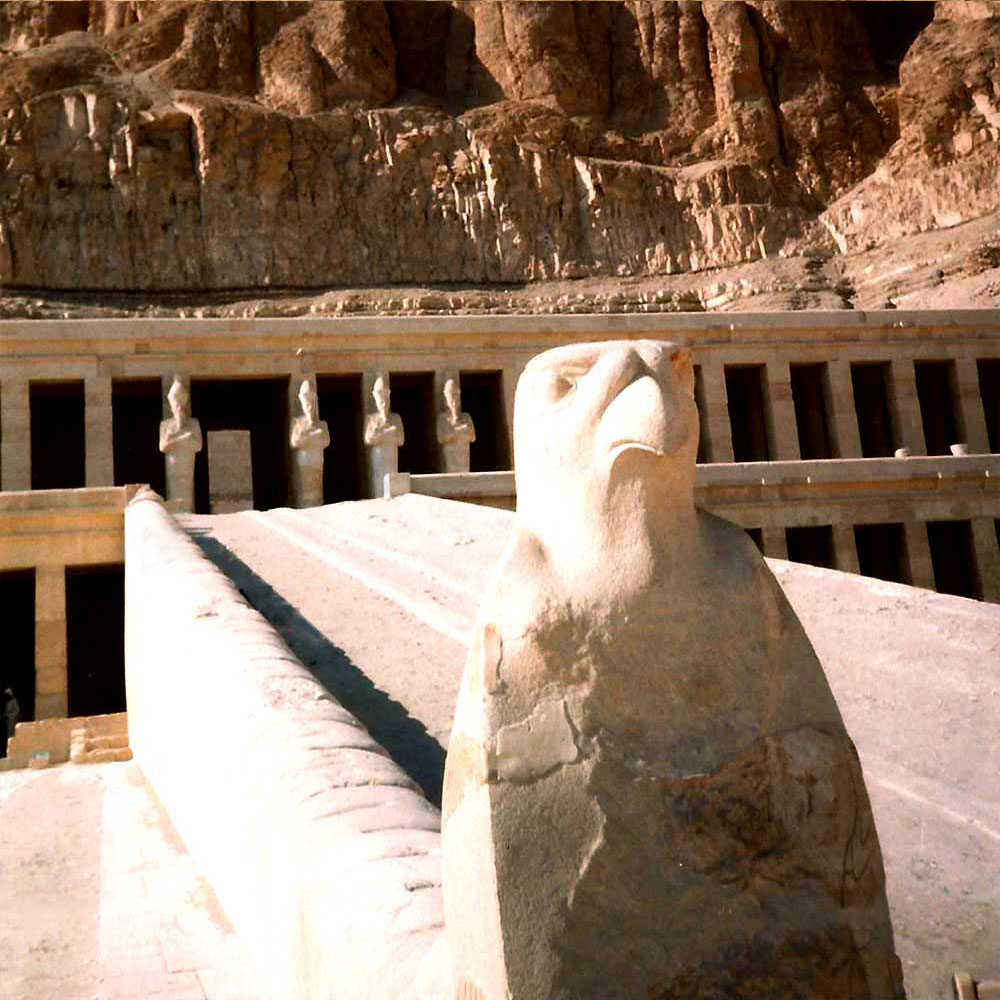
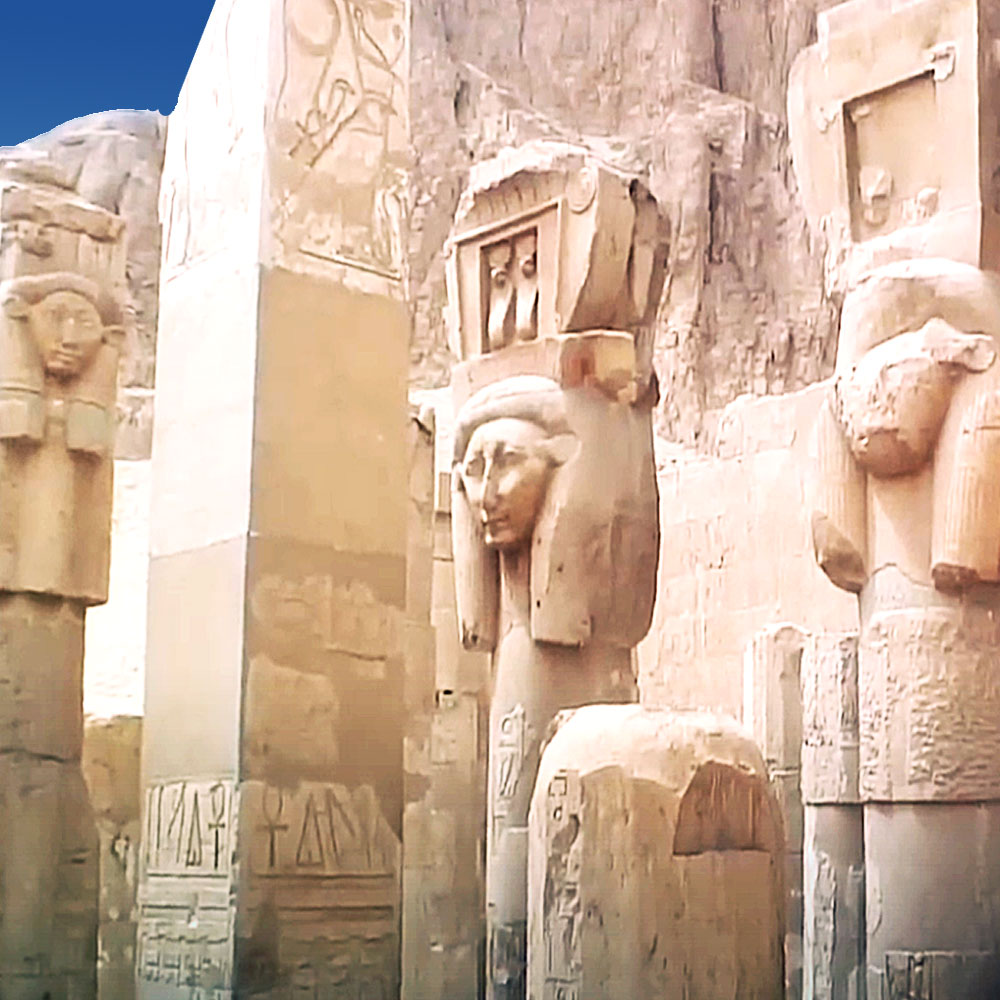
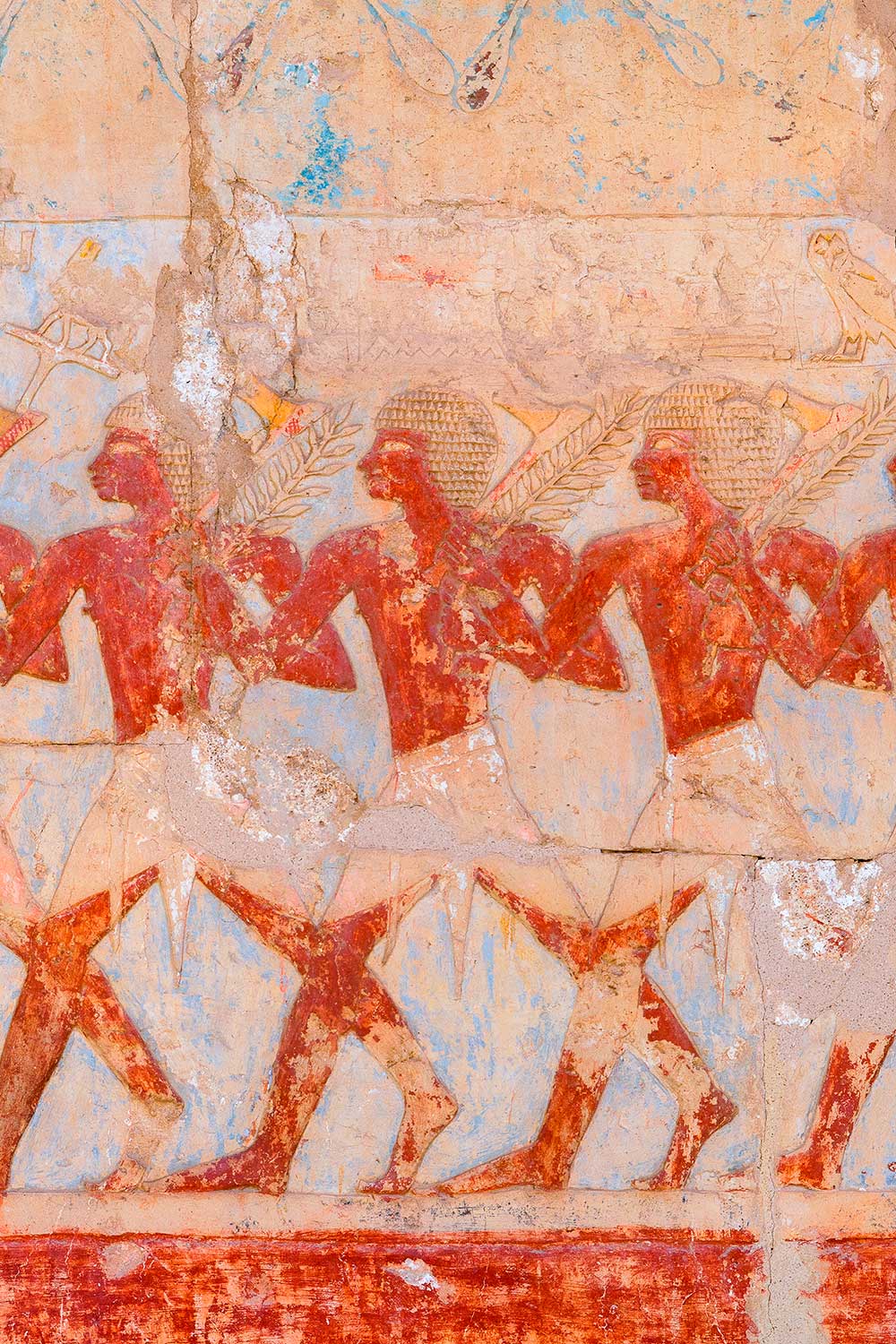
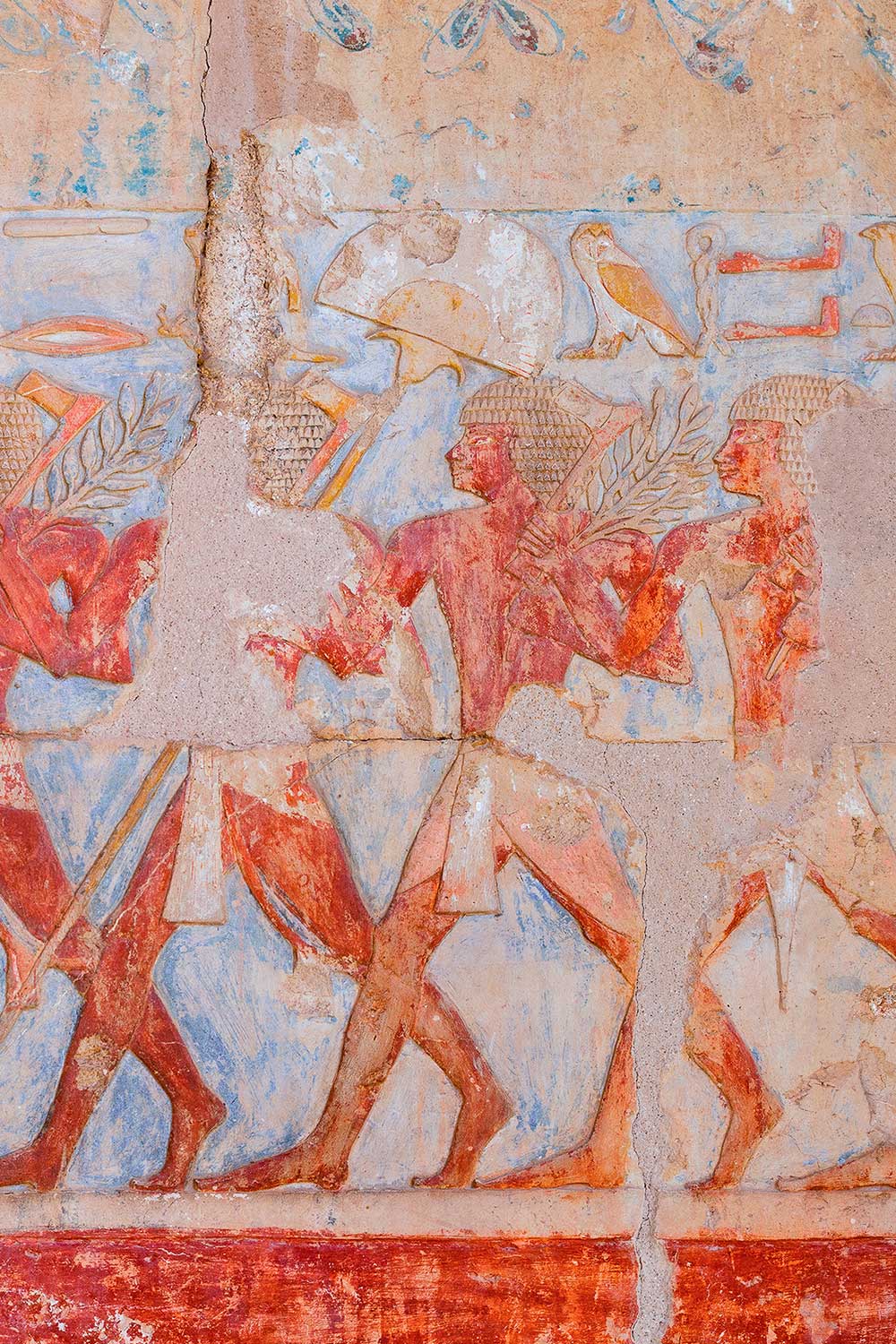
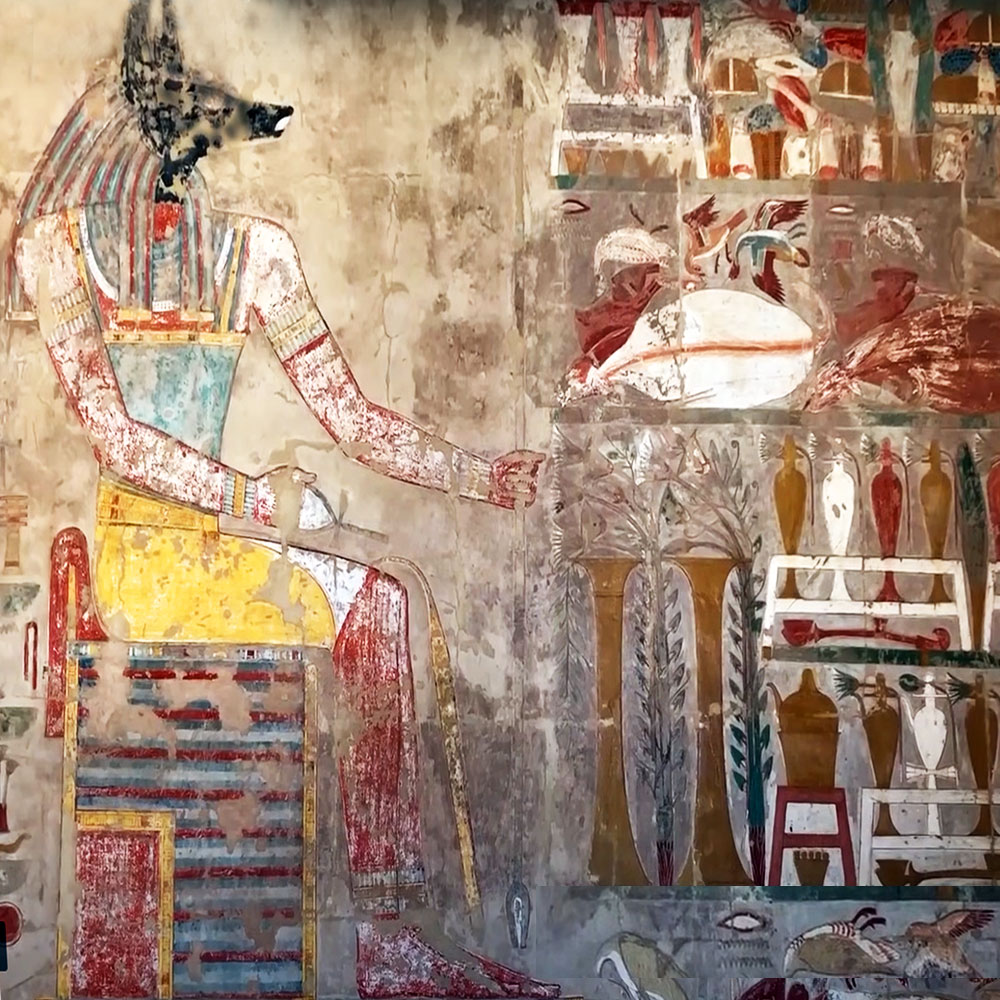
The Mortuary Temple of Hatshepsut, Djeser‑Djeseru (“Holy of Holies”), was built around 1500 BCE during Egypt’s Eighteenth Dynasty. Set against
the cliffs of Deir el‑Bahari in the Valley of the Queens, its three sweeping terraces rise seamlessly from the desert and form one of the masterpieces of ancient
Egyptian architecture. Hatshepsut’s tomb, KV20, lies deep within the same mountain, crowned by the pyramid‑shaped peak of El Qurn. The temple is renowned for its
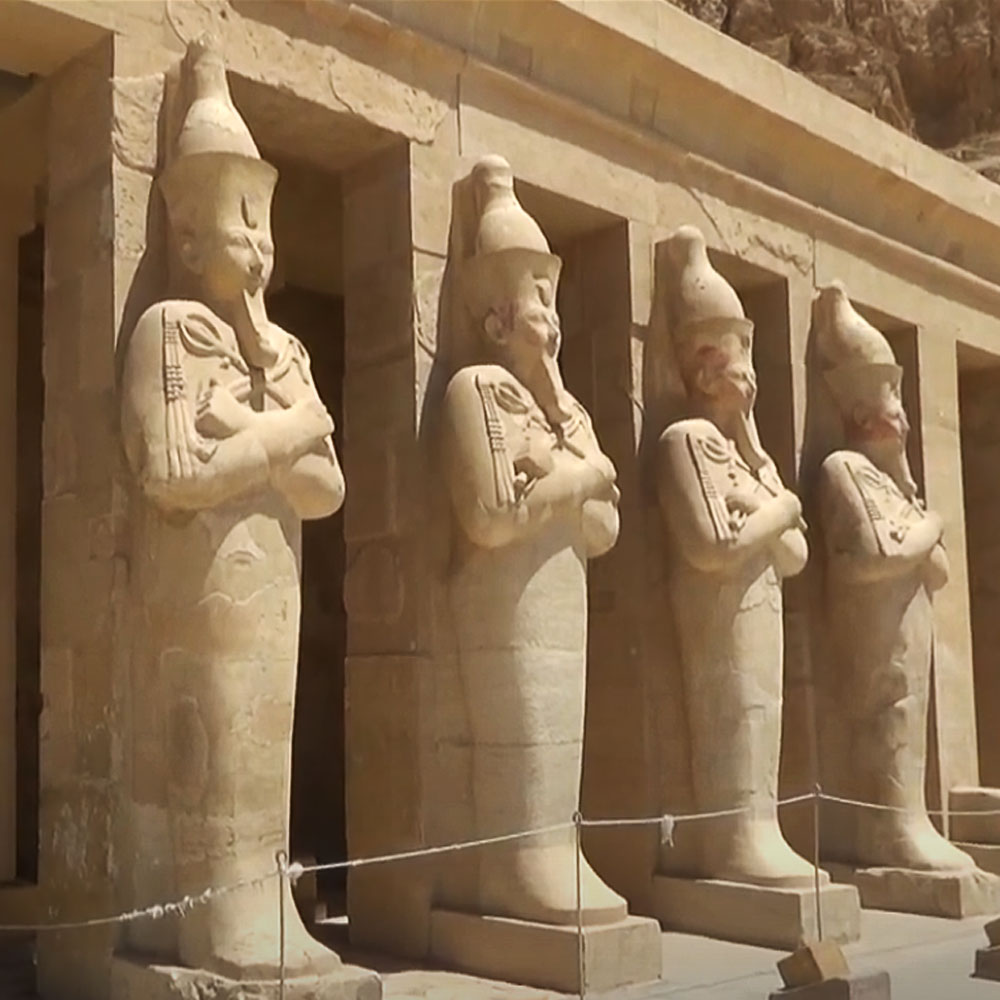
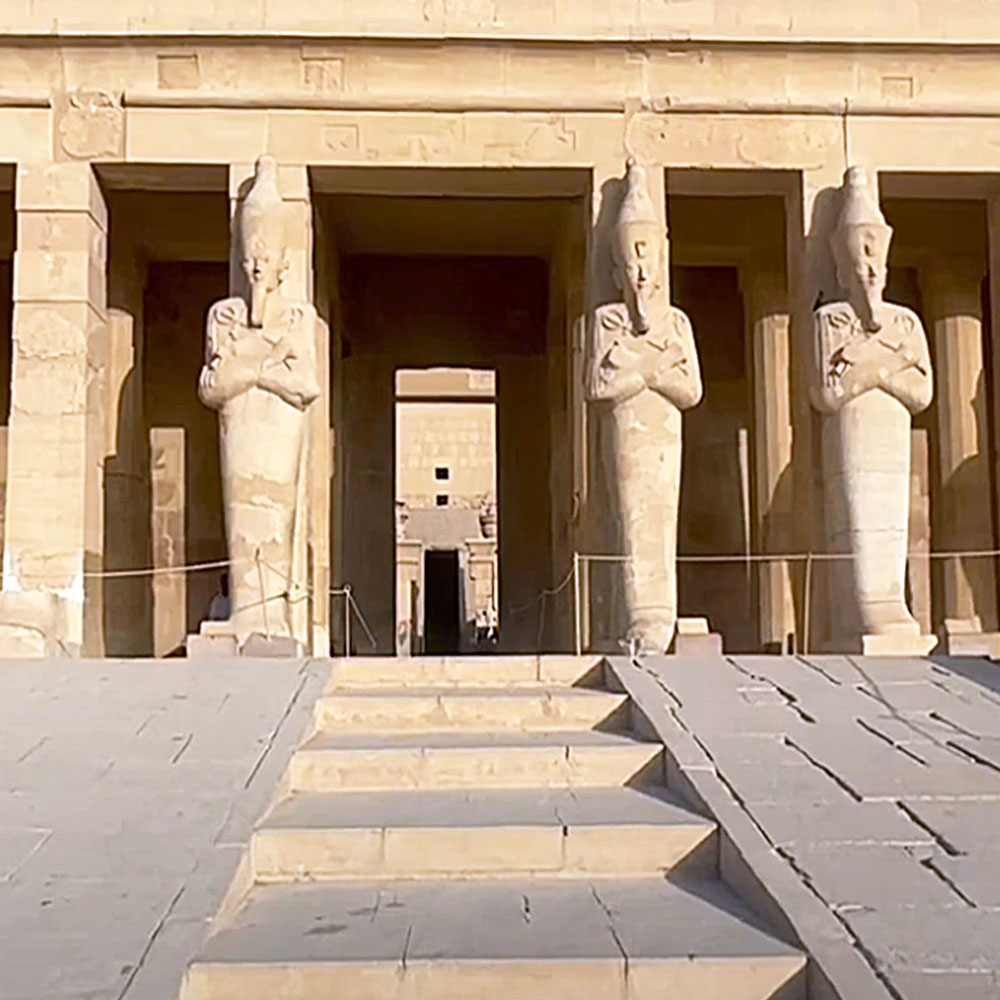
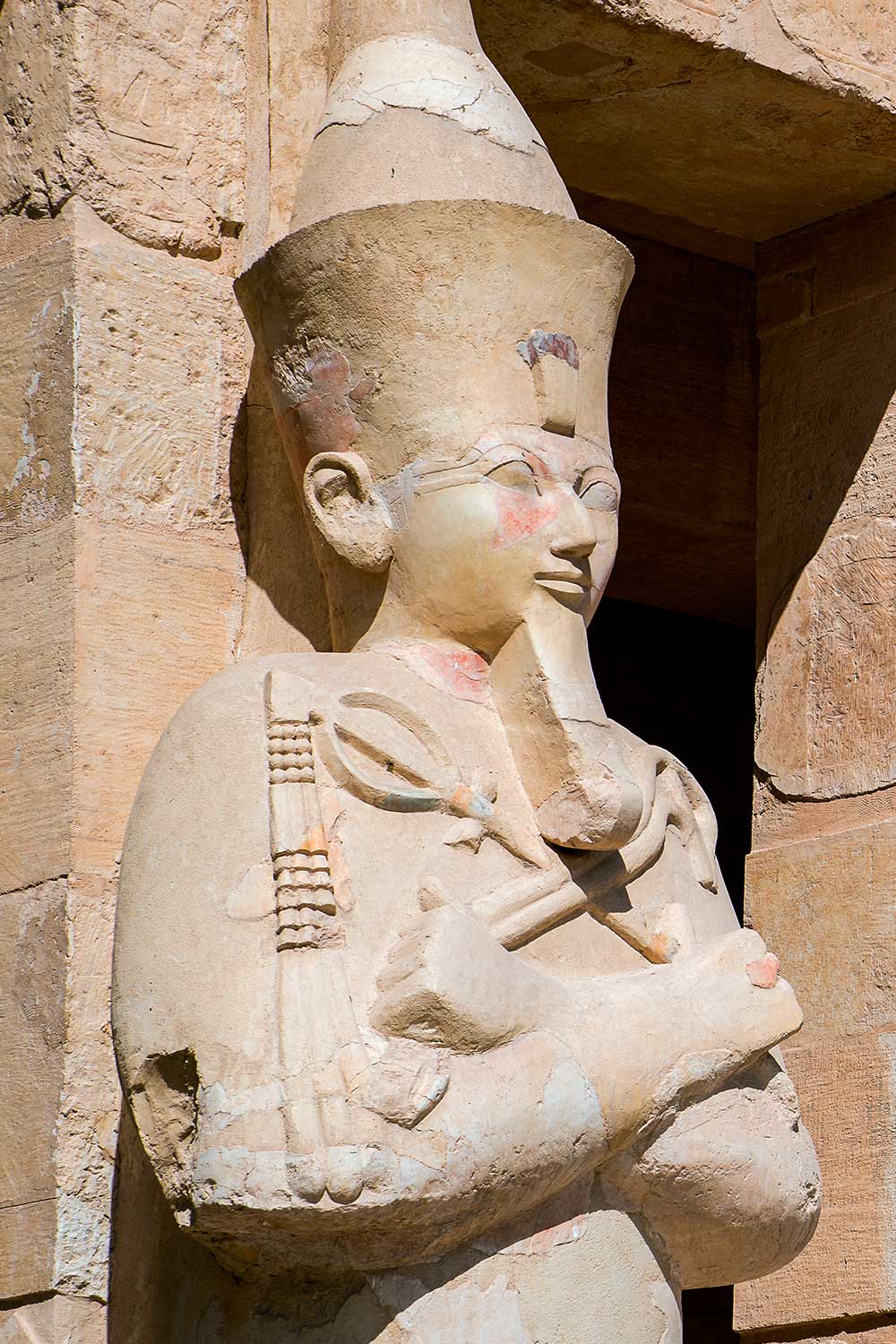
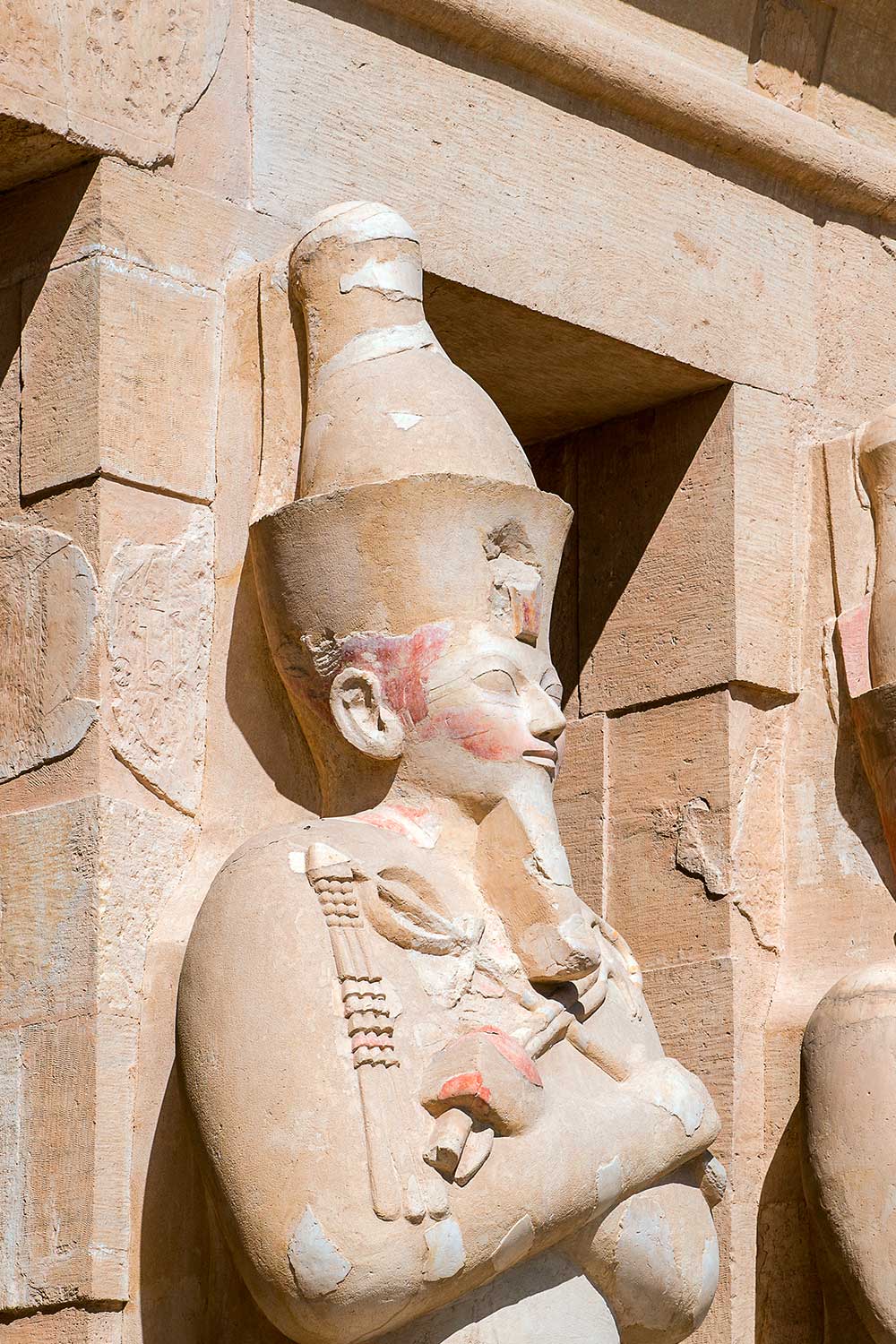
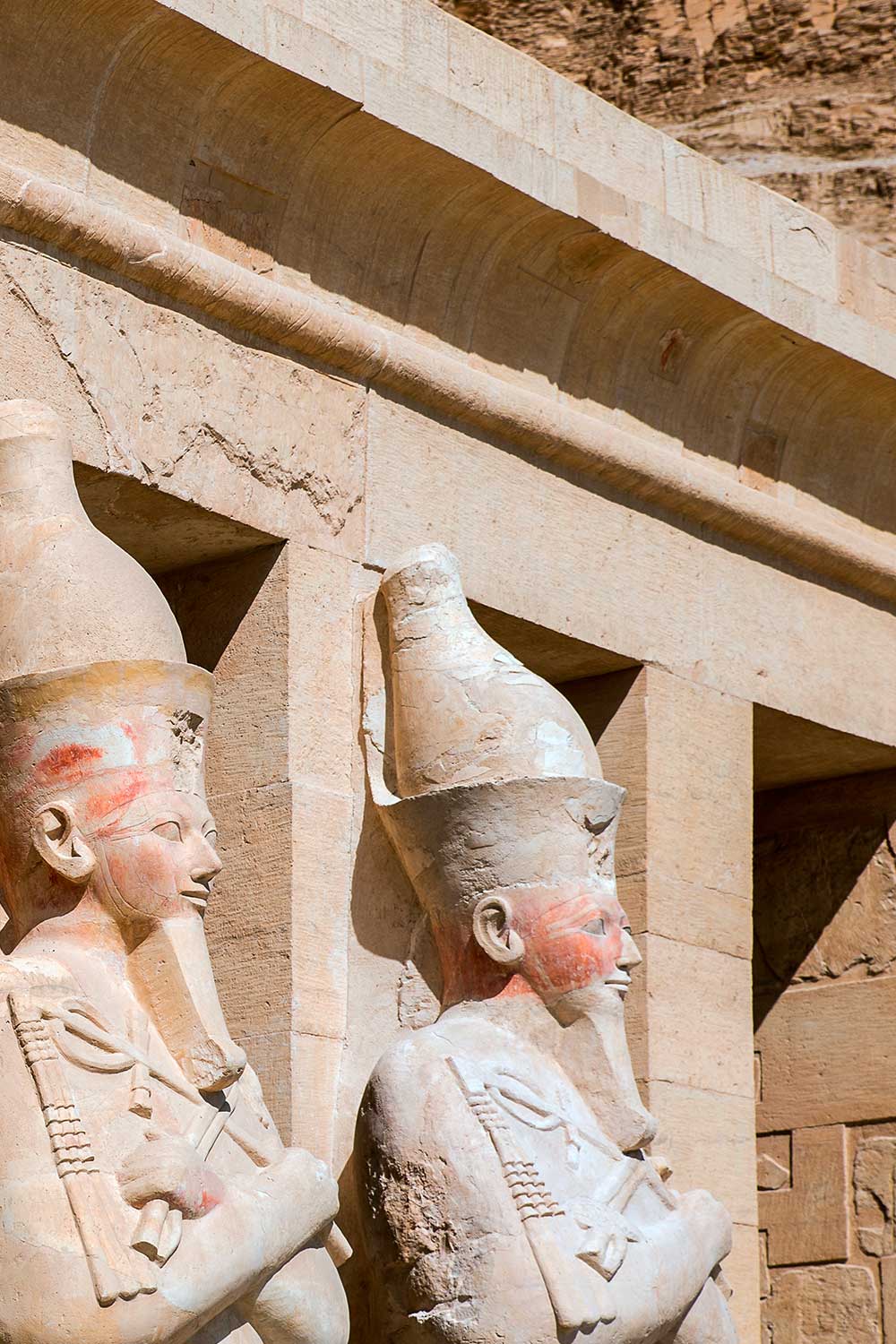
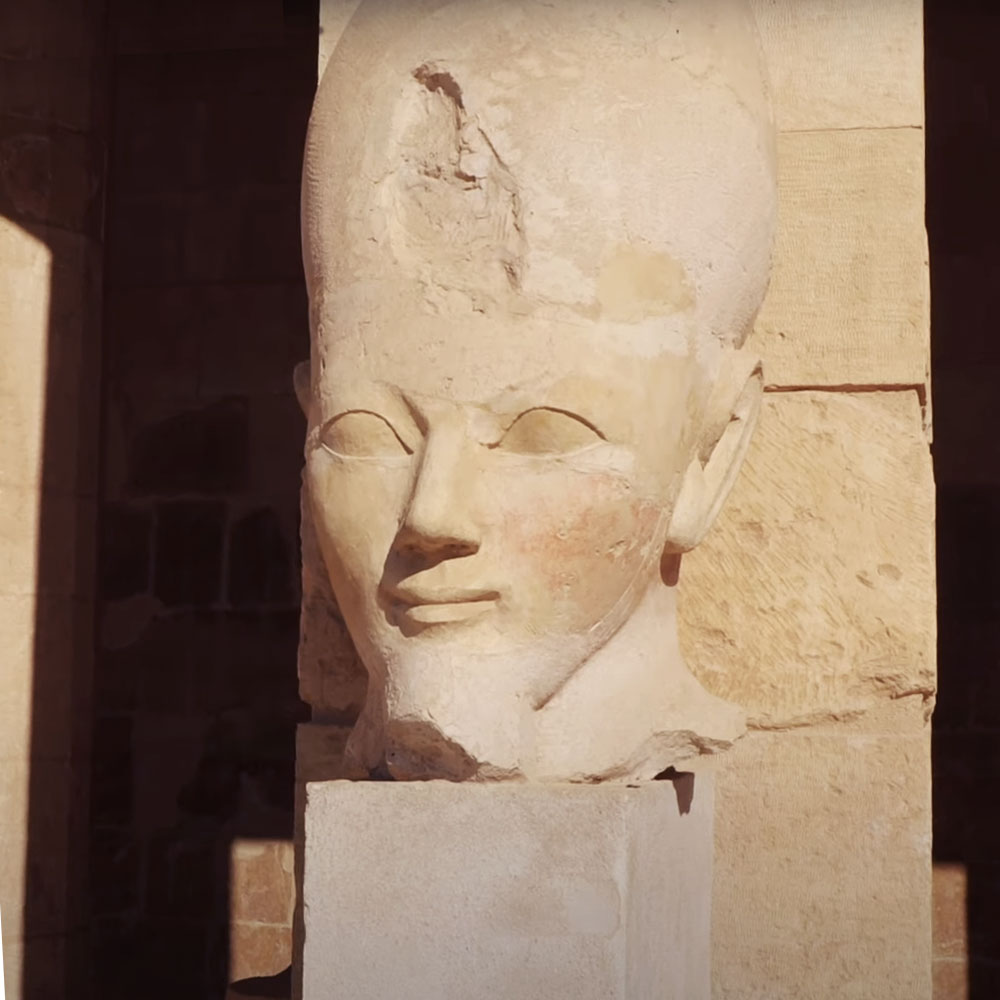
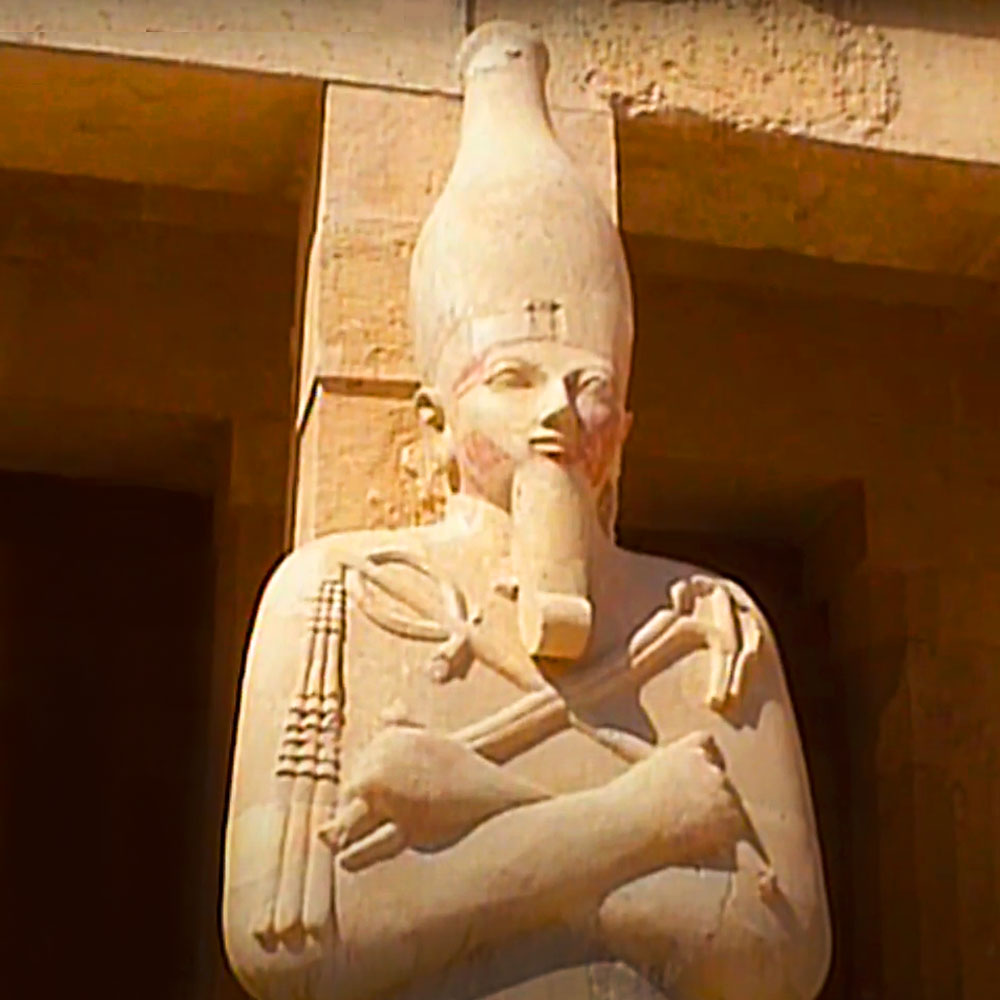
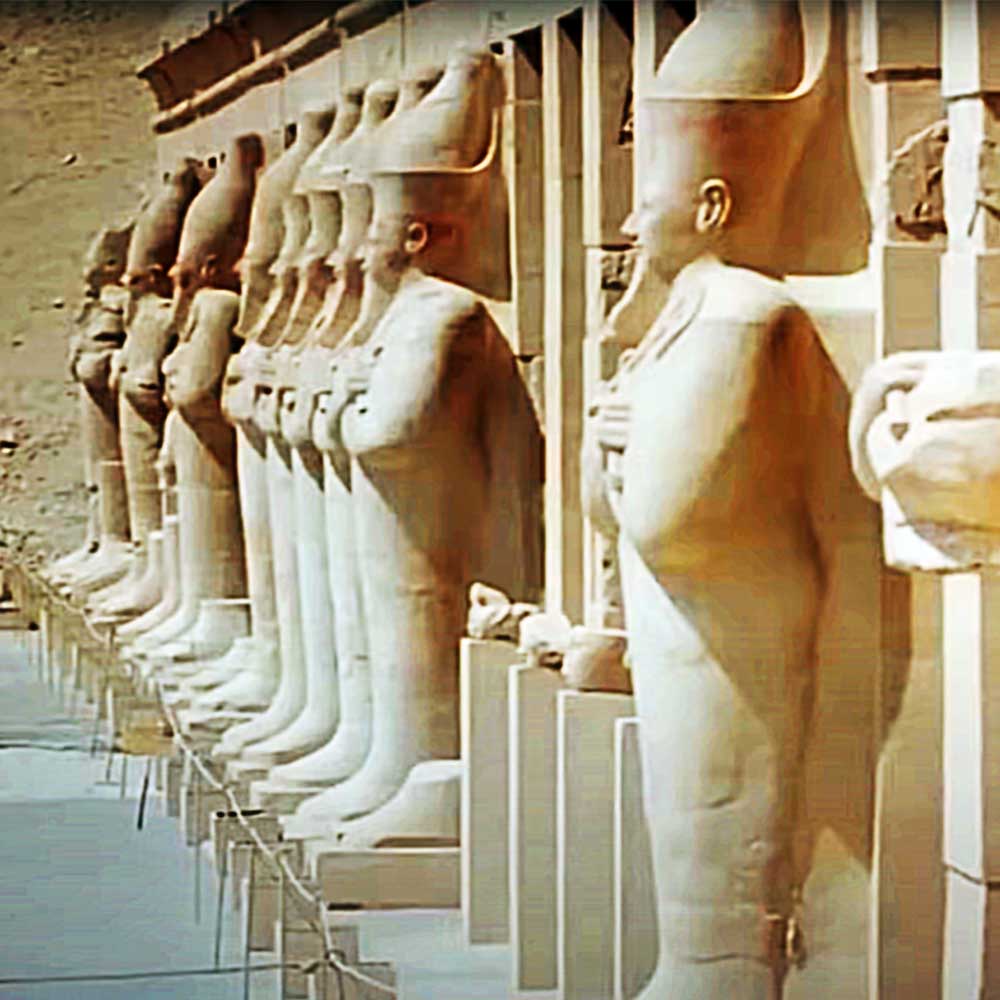
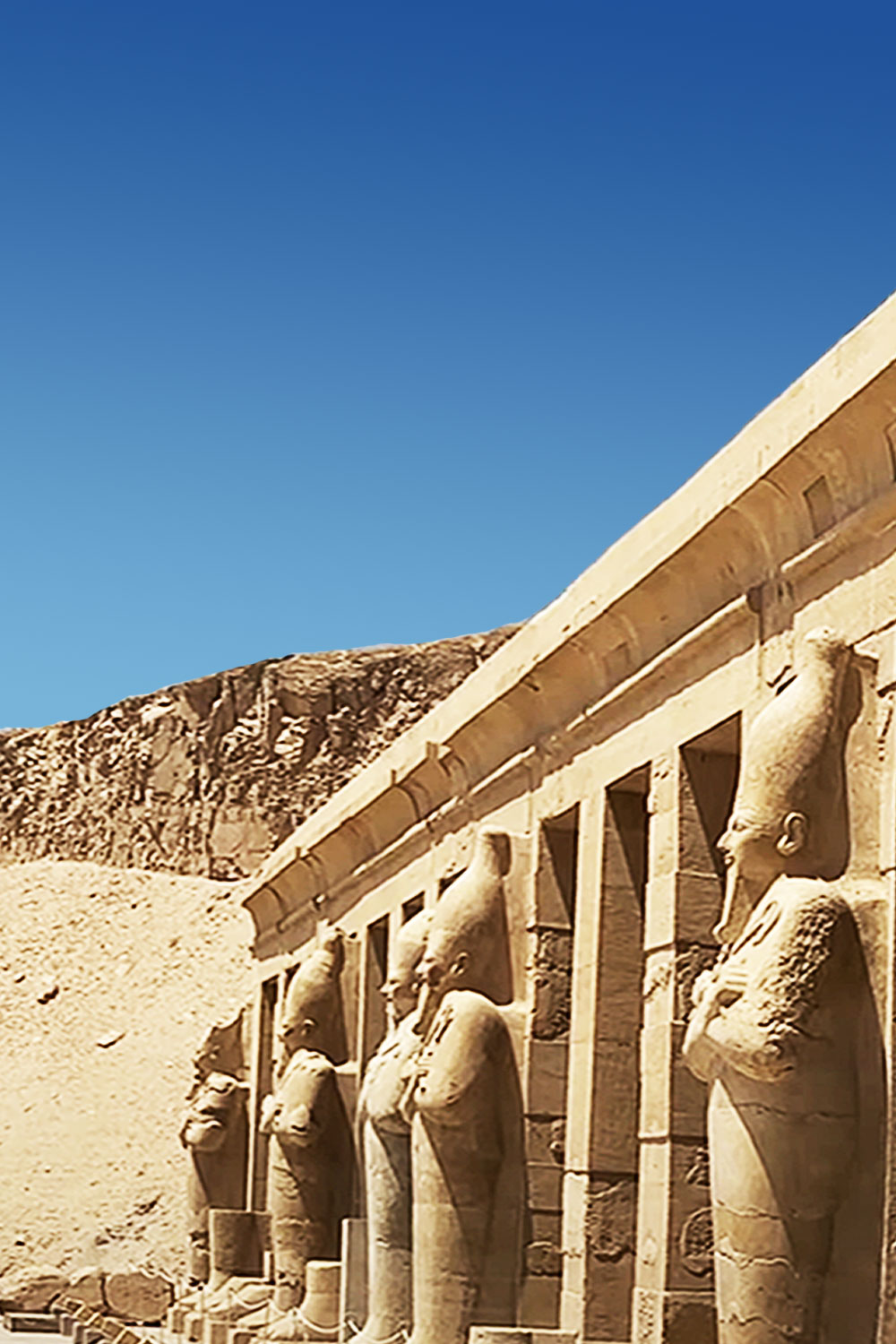
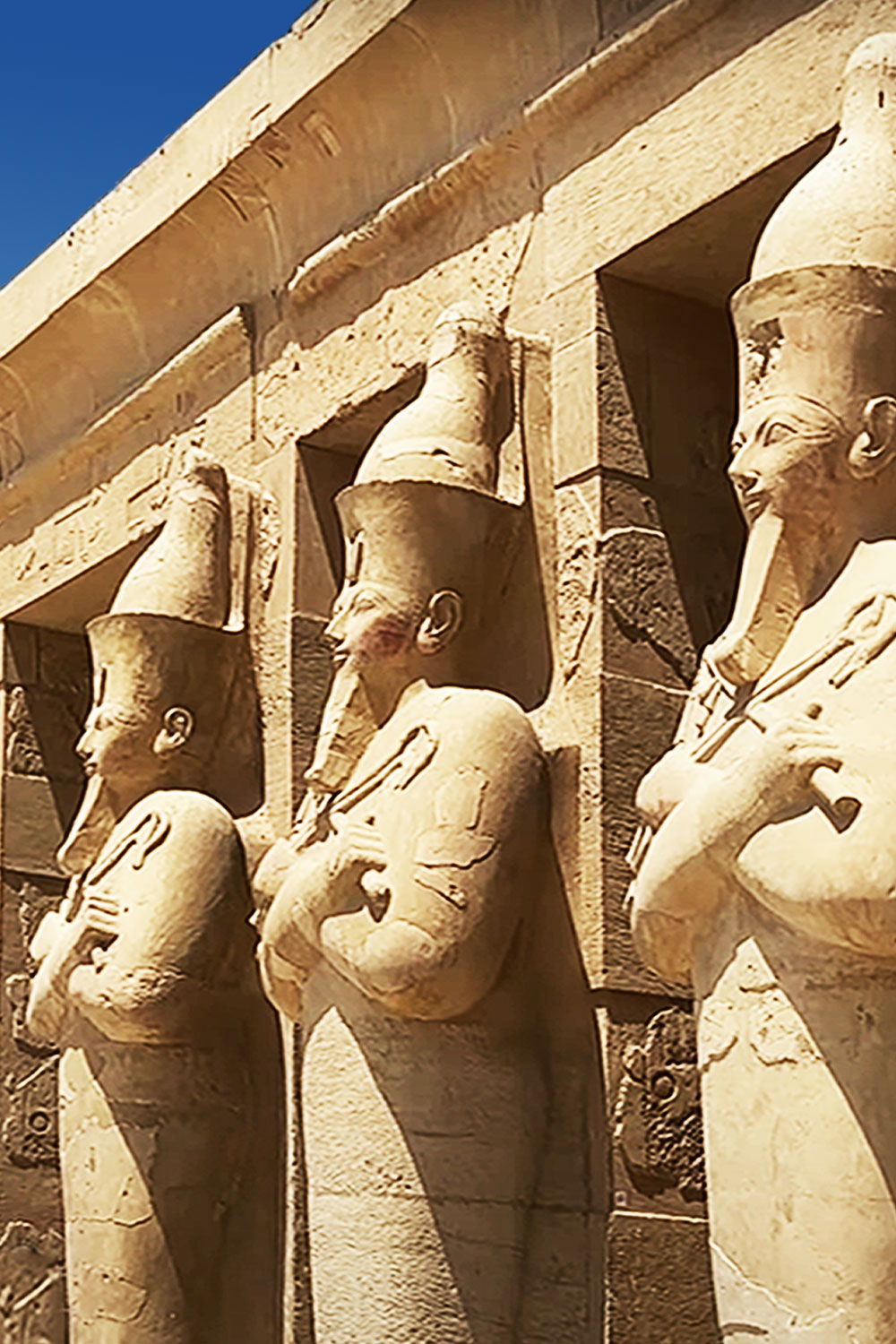
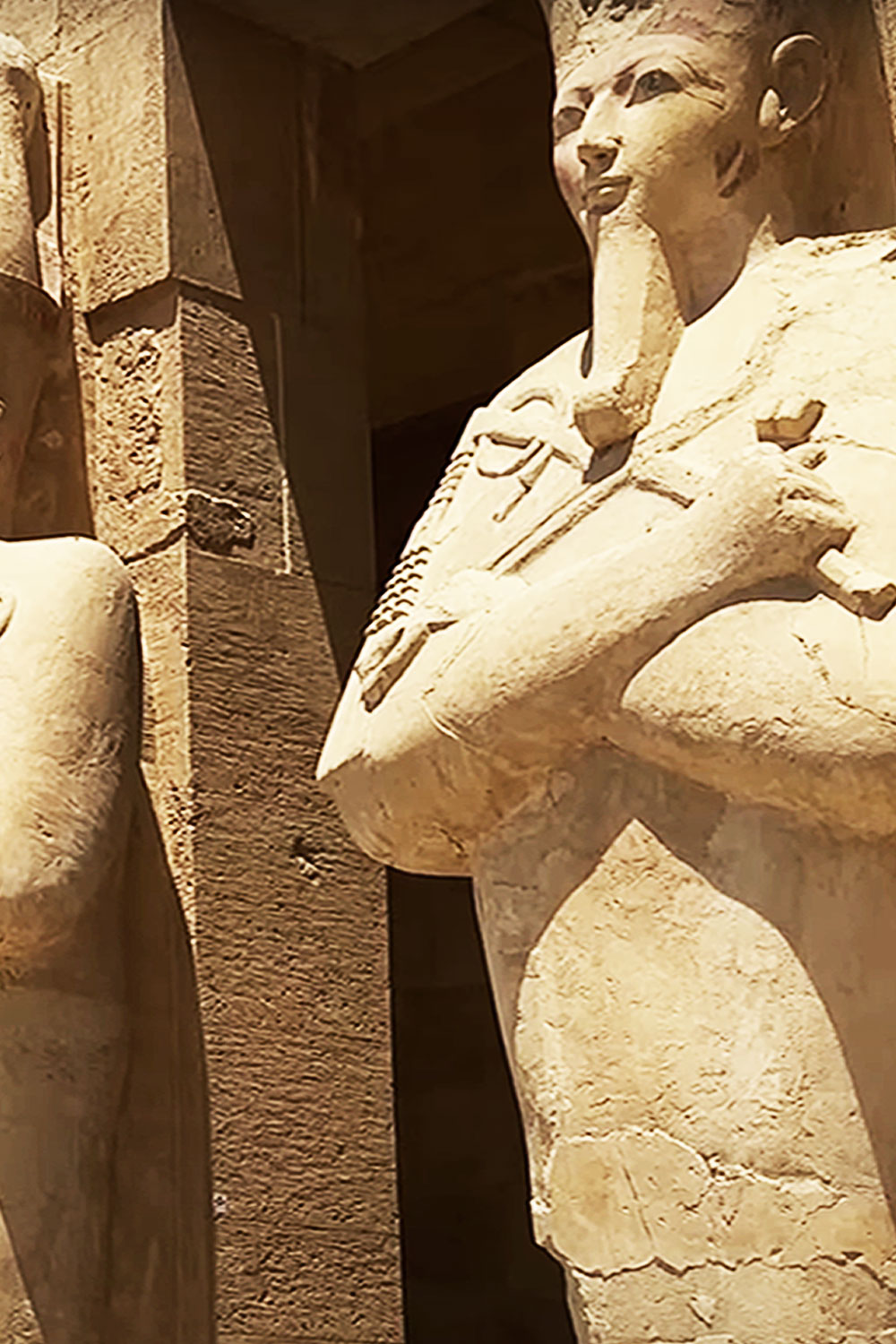
“Standing Osiris” statues, in which Hatshepsut appears in the form of Osiris—upright, mummiform, and carved as a pillar‑like figure. With crossed arms holding the
flail and crook, a braided ceremonial beard, and the Atef crown with its protective cobra, these sculptures emphasize her divine authority and her transformation
in the afterlife.
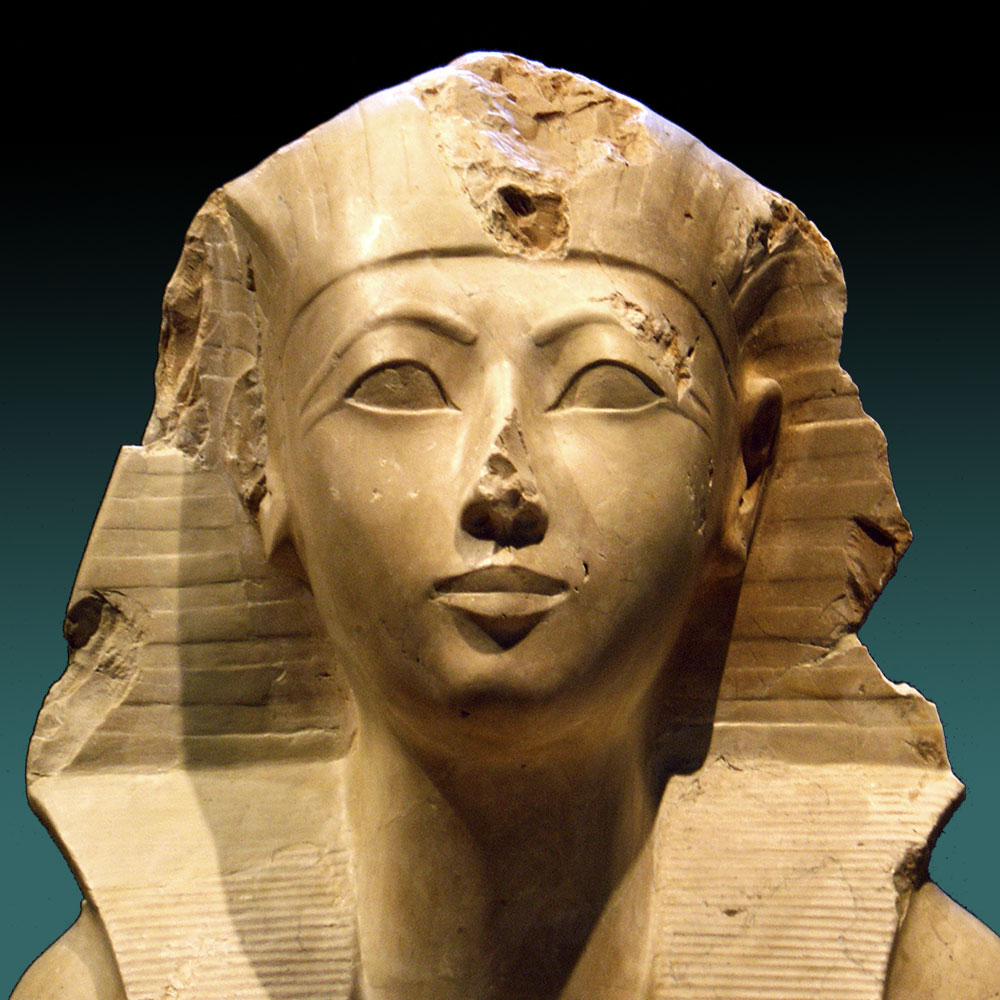
 Metropolitan
Museum of Art, New York City
Metropolitan
Museum of Art, New York City 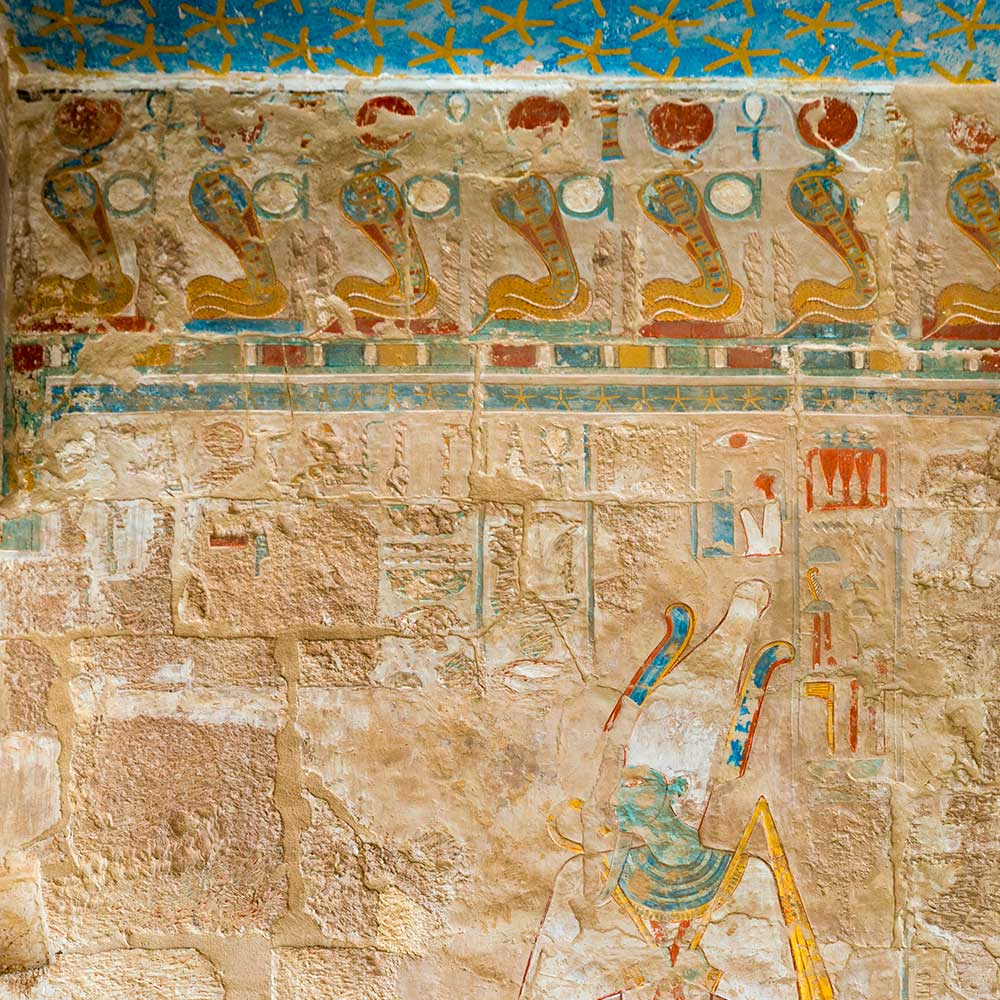
 Top
Top