TOMB OF NEFERTARI, QV66

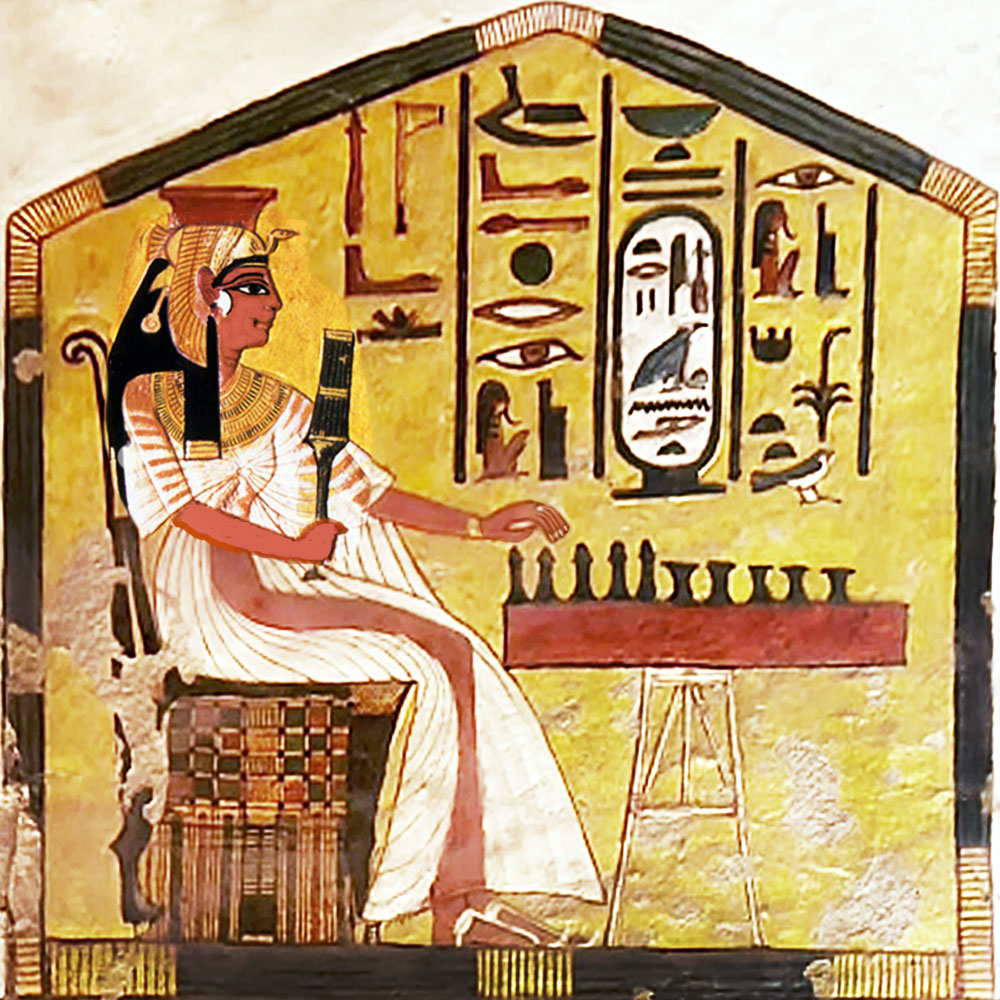
Often called the Sistine Chapel of Ancient Egypt, the Tomb of Nefertari was created around 1255 BCE. Nefertari, whose name means “beautiful companion,” was the favored wife of Pharaoh Ramesses II. His devotion to her was unmistakable—he referred to her as “the one for whom the sun shines” and commissioned the Temple of Hathor to honor her as a goddess. He also ordered the creation of elaborate wall paintings to immortalize her legacy. Located in the Valley of the Queens, the tomb offers rich insight into ancient Egyptian beliefs about the afterlife. The detailed scenes reveal ceremonial practices and highlight the roles of numerous deities during the 19th Dynasty of the New Kingdom. Gods depicted on the tomb walls include Isis, Osiris, Anubis, Hathor, Neith, Serket, Ma’at, Wadjet, Nekhbet, Amunet, Ra, Nephthys, Khepri, Amun, and Horus—each playing a part in guiding Nefertari’s soul through the underworld and into eternity. After the tomb was discovered in 1904, scientists noted significant deterioration in many of its paintings. The damage was caused by water infiltration, bacterial growth, salt crystallization, and more recently, the humidity from visitors’ breath. Two major factors accelerated the decay: capillary absorption of trapped floodwaters into the tomb’s walls and the direct entry of floodwaters. In 1986, the Egyptian Antiquities Organization, in partnership with the Getty Conservation Institute, launched a restoration project to preserve the tomb’s artwork. They carefully removed over 3,000 years of accumulated dust and soot, and applied protective paper to the fragile walls and ceilings to safeguard the paintings. By 2006, access to the tomb was restricted to private tours of no more than 20 people, each requiring a special license costing US$3,000. As of December 2023, however, visitors holding a 2,000 EGP entry ticket or a premium Luxor Pass are permitted to enter
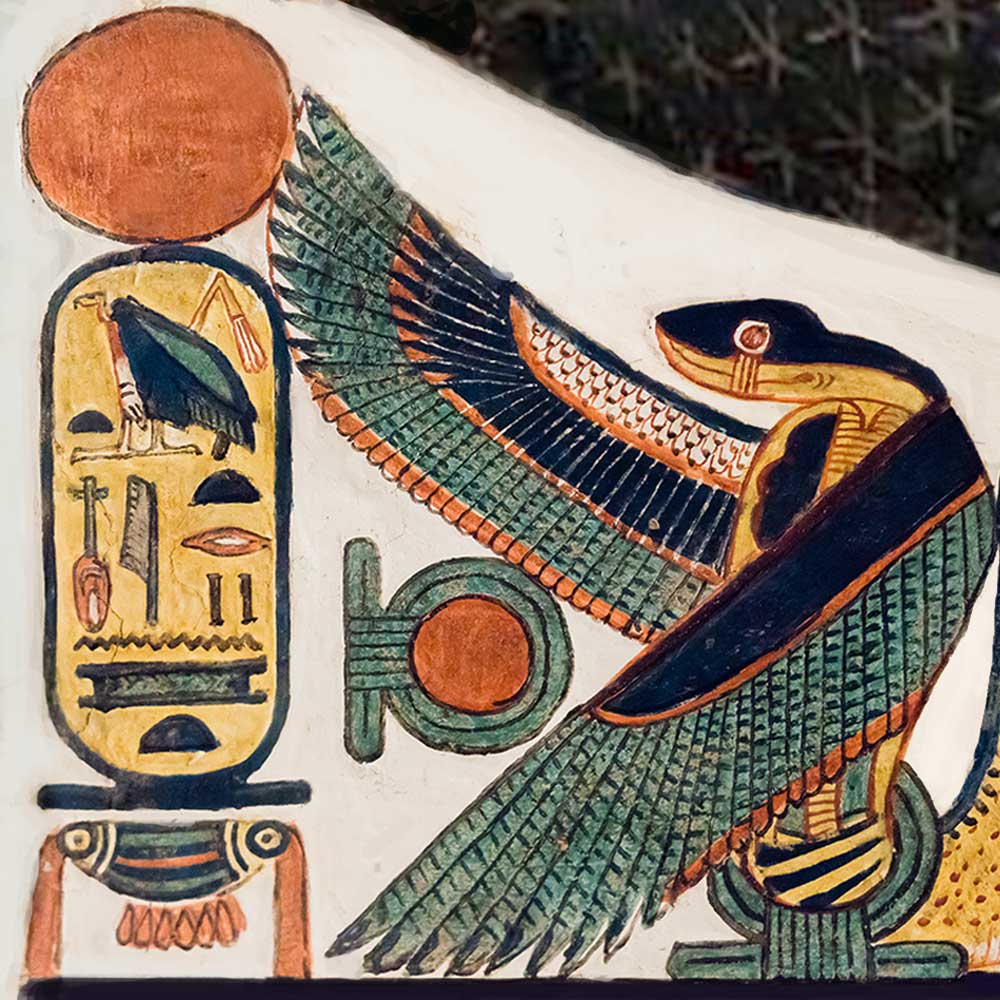
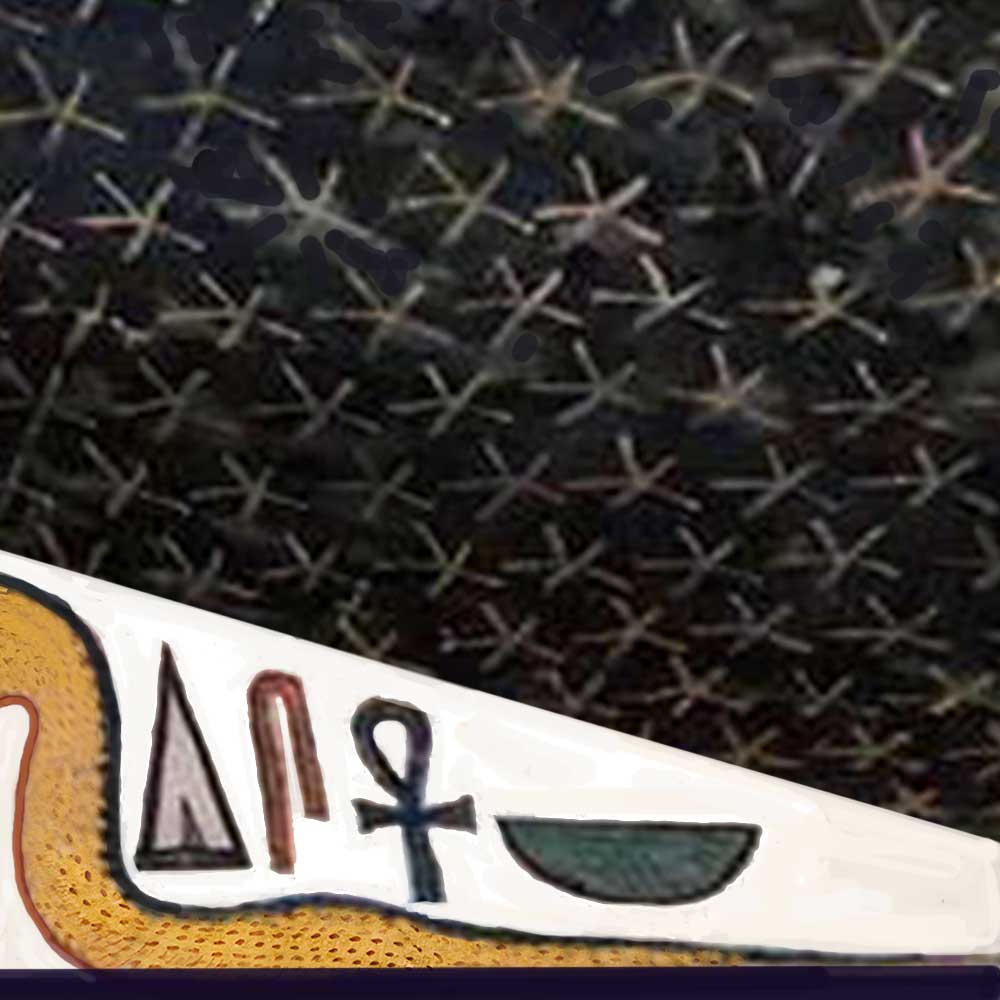
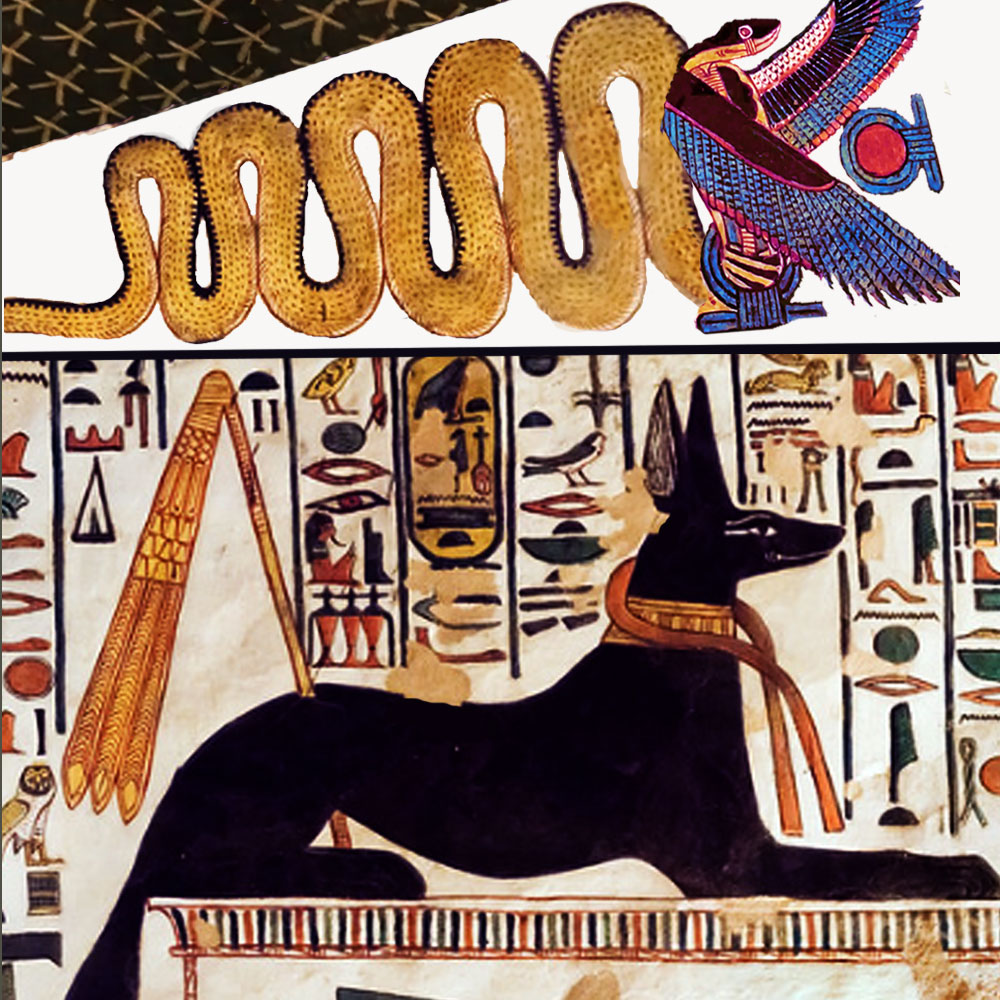
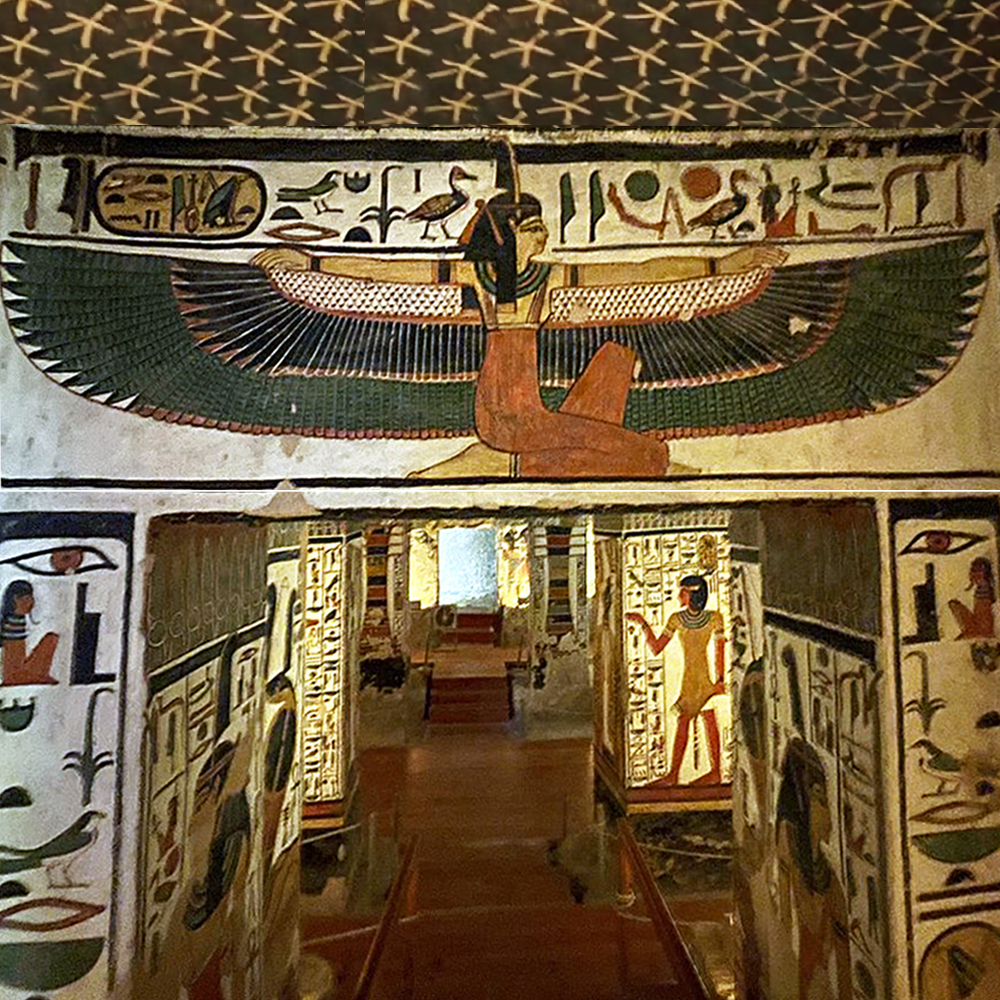
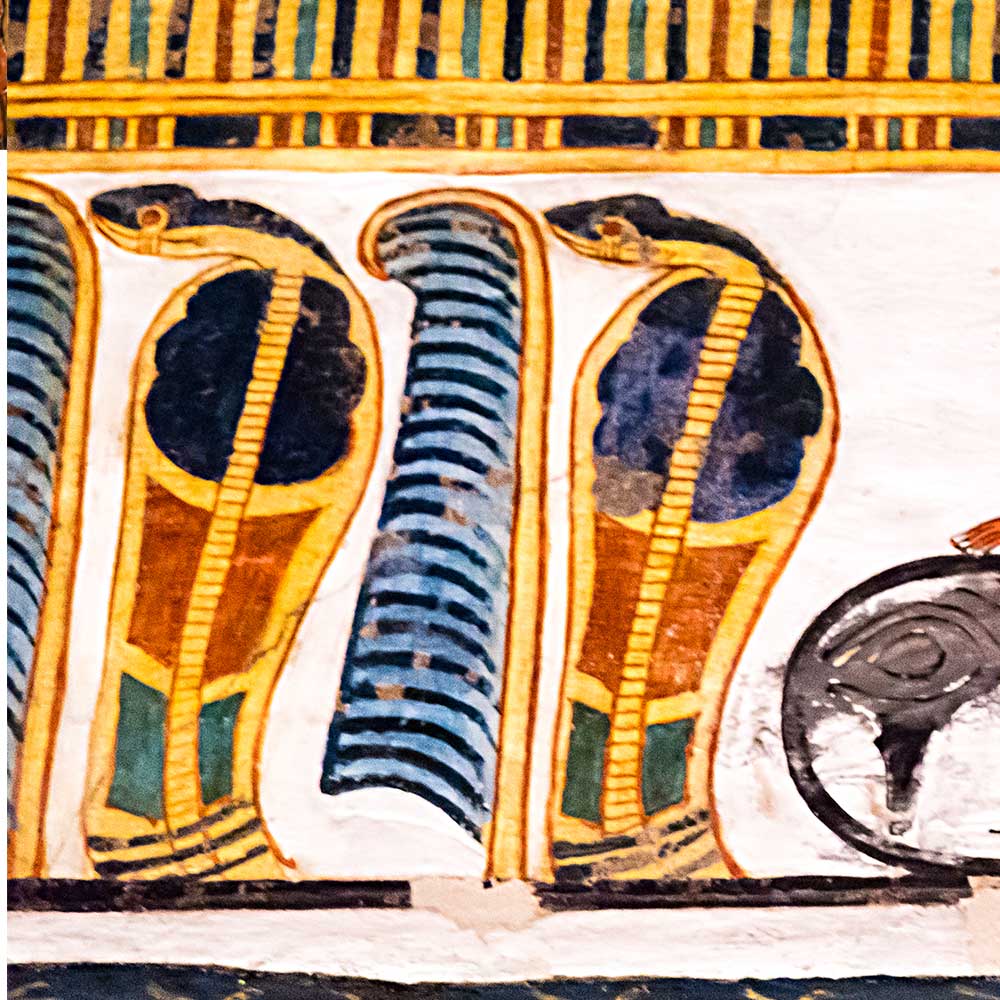
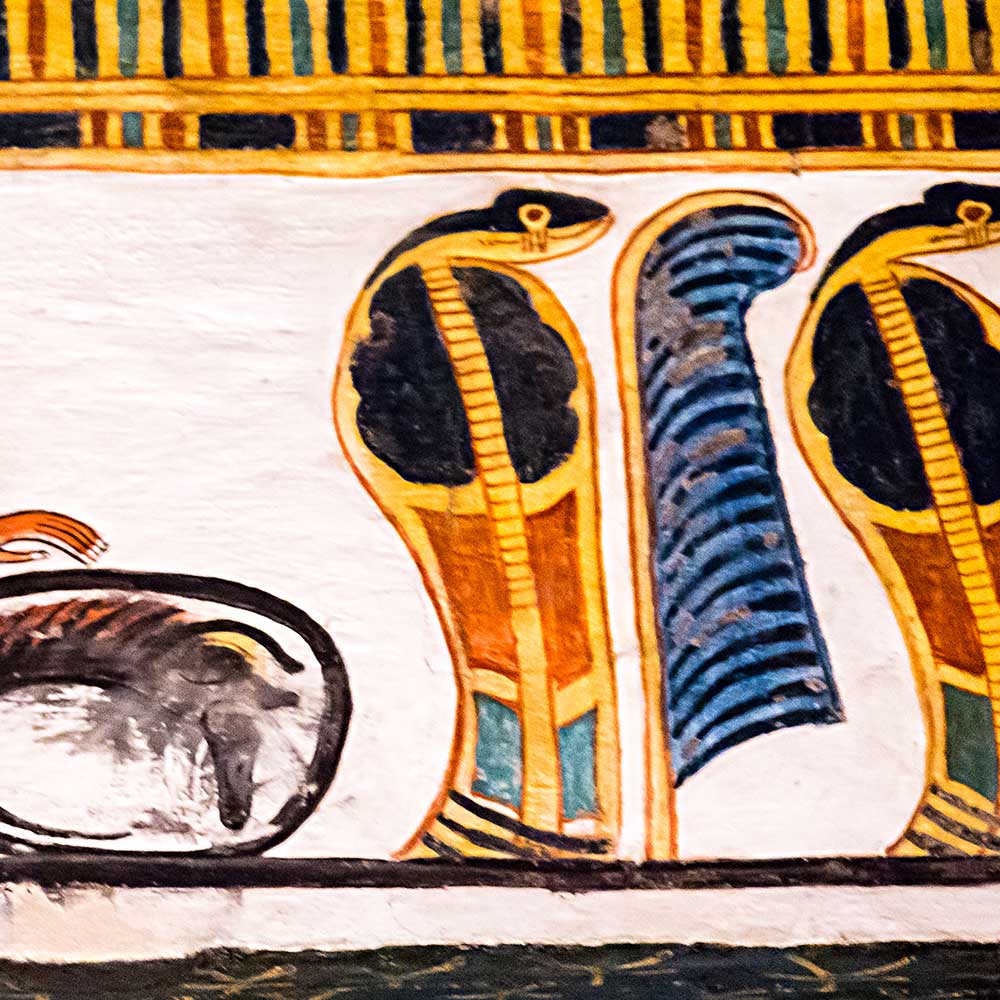
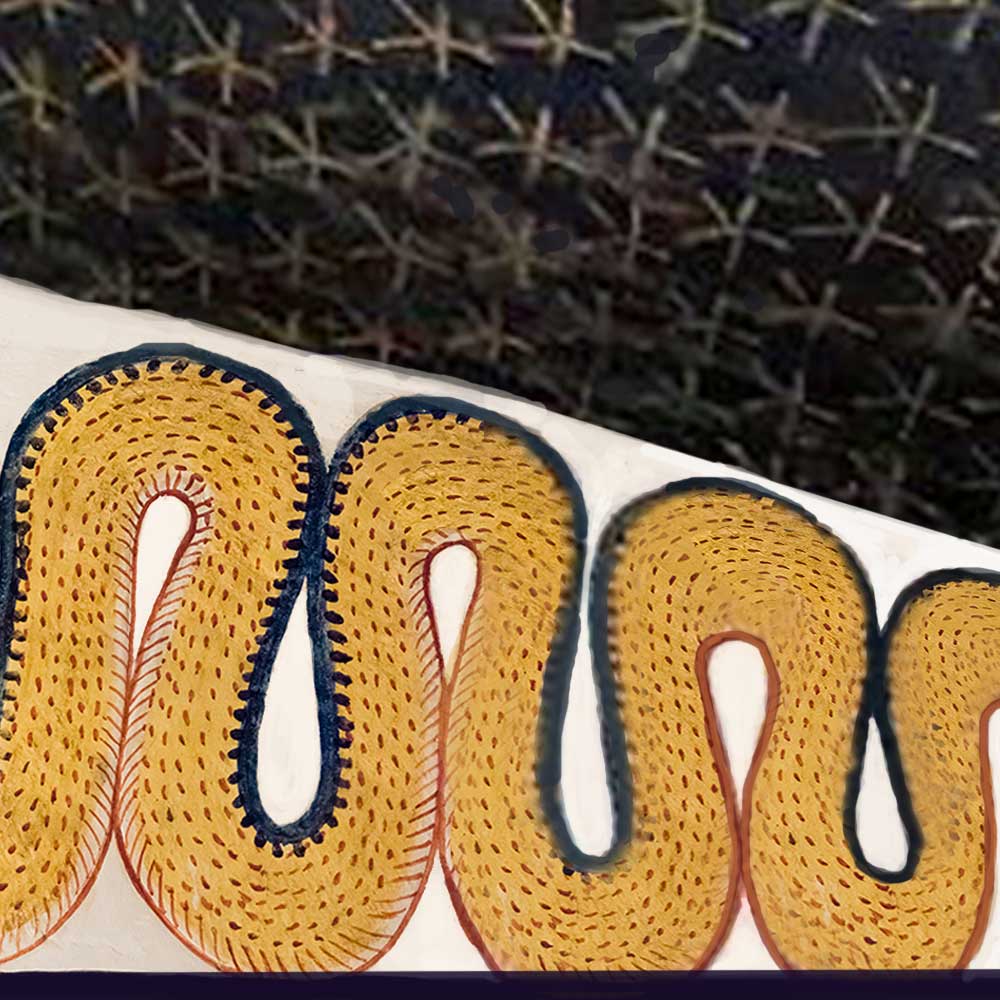
1.) Wadjet in the form of a winged cobra as protector, on the staircase to the Tomb of Nefertari
2.)
3.)
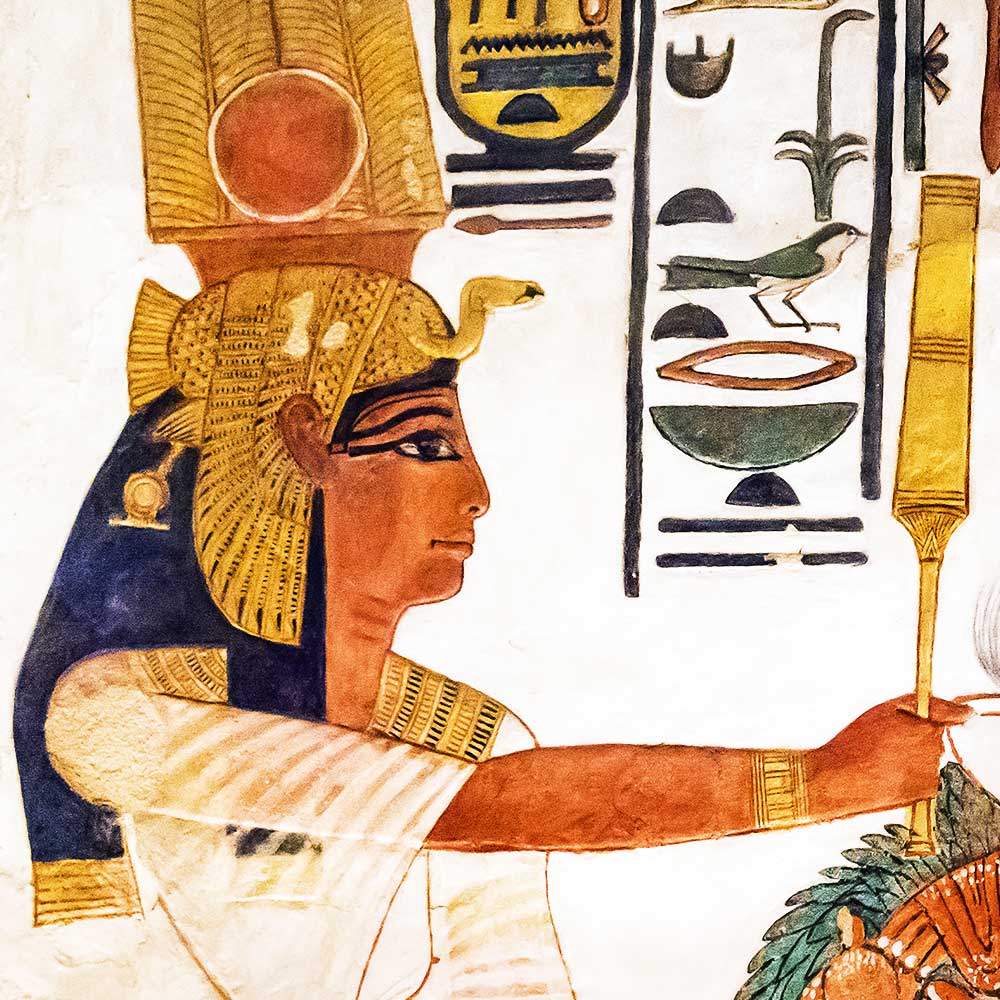
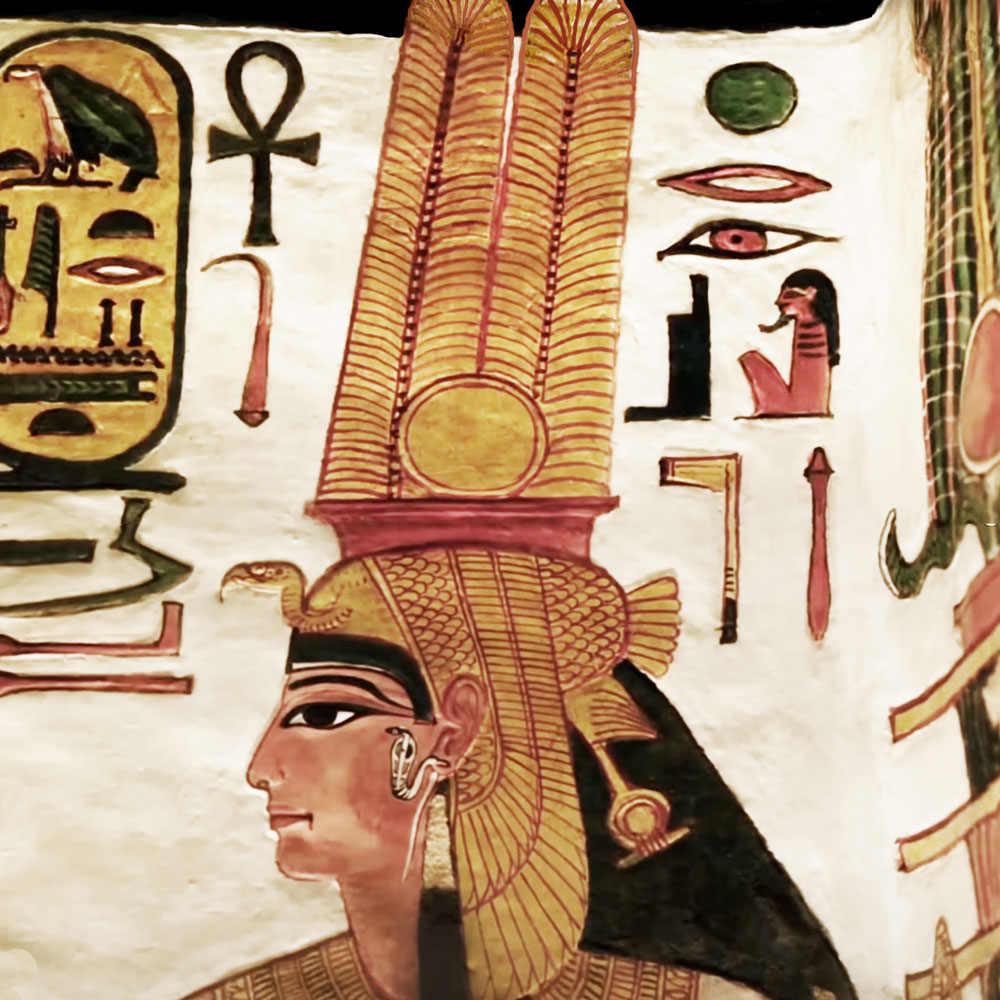
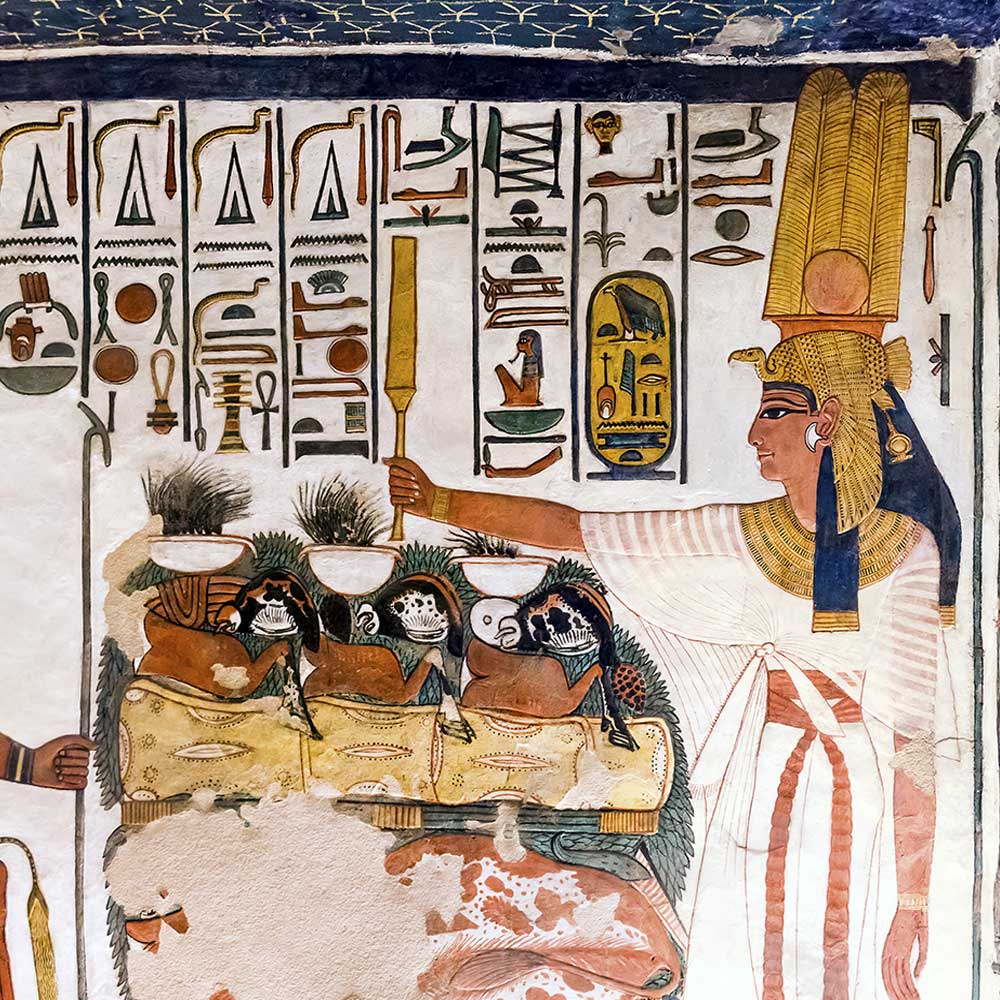
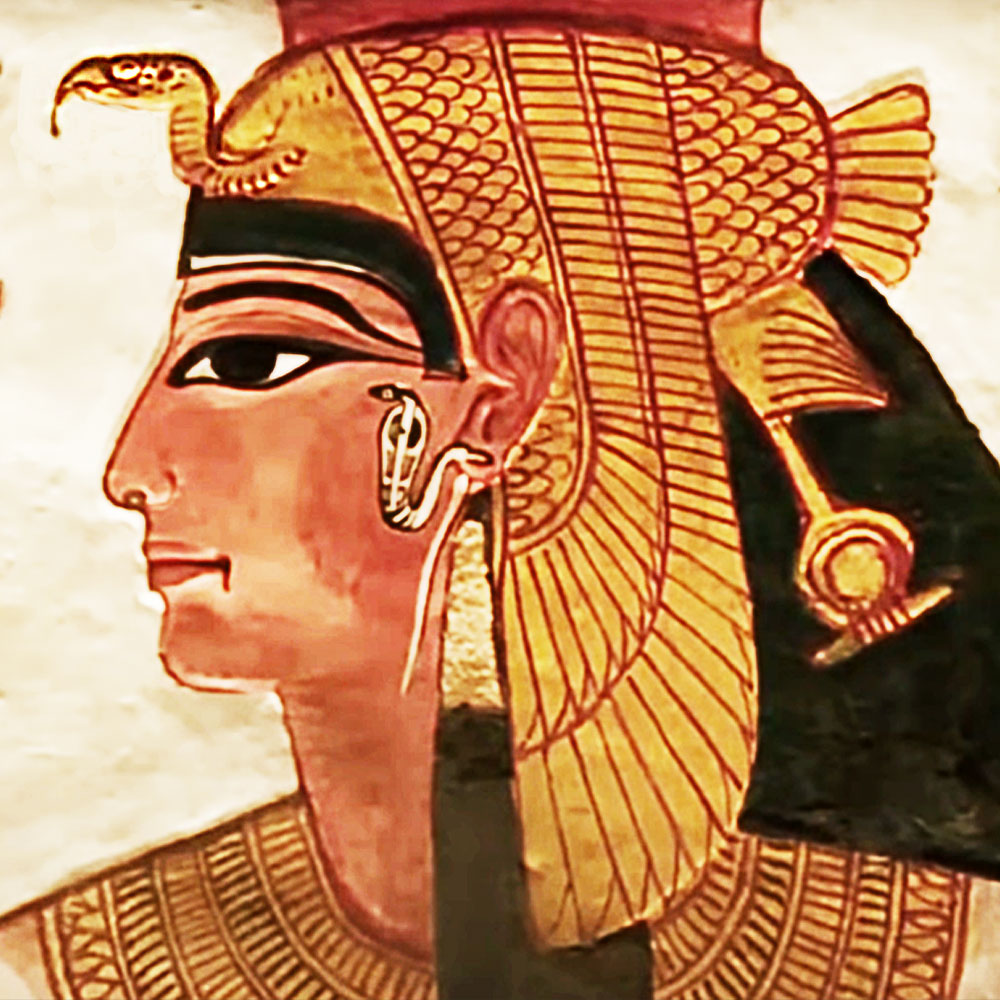
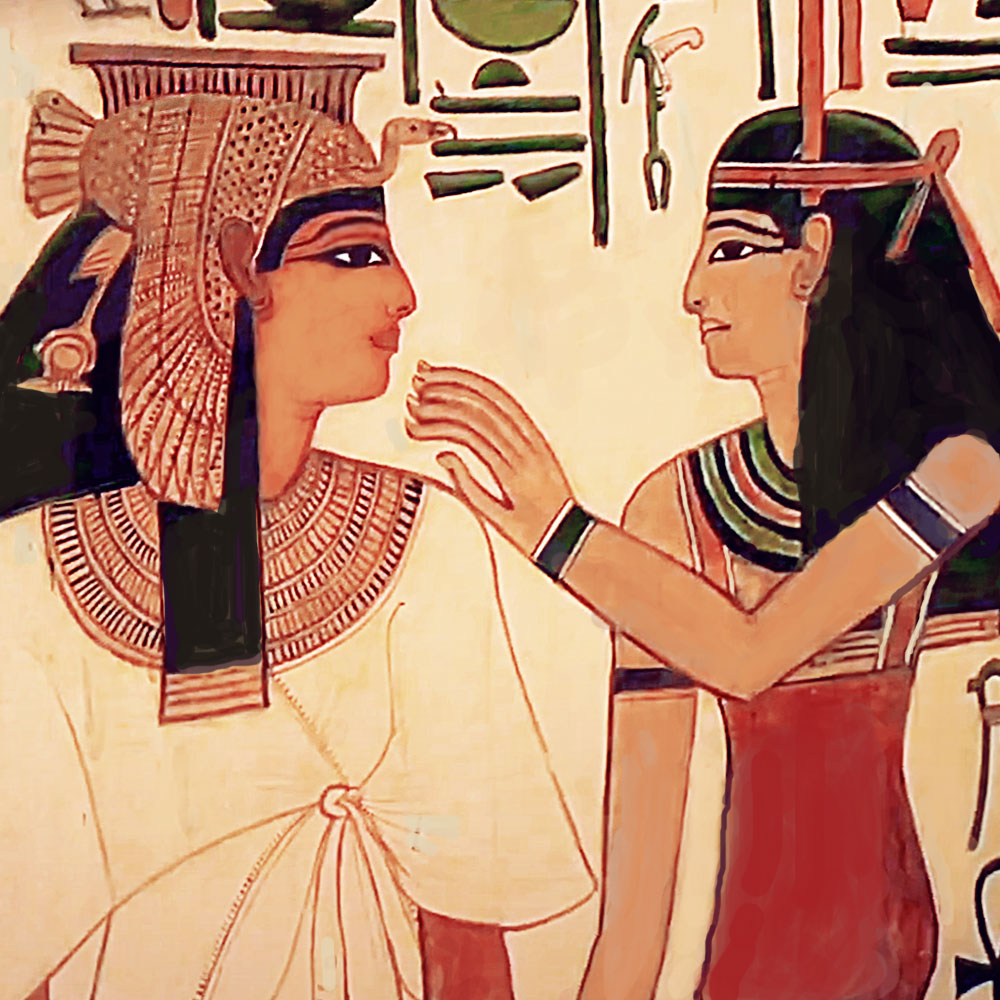
1.) The queen is often shown wearing a headdress
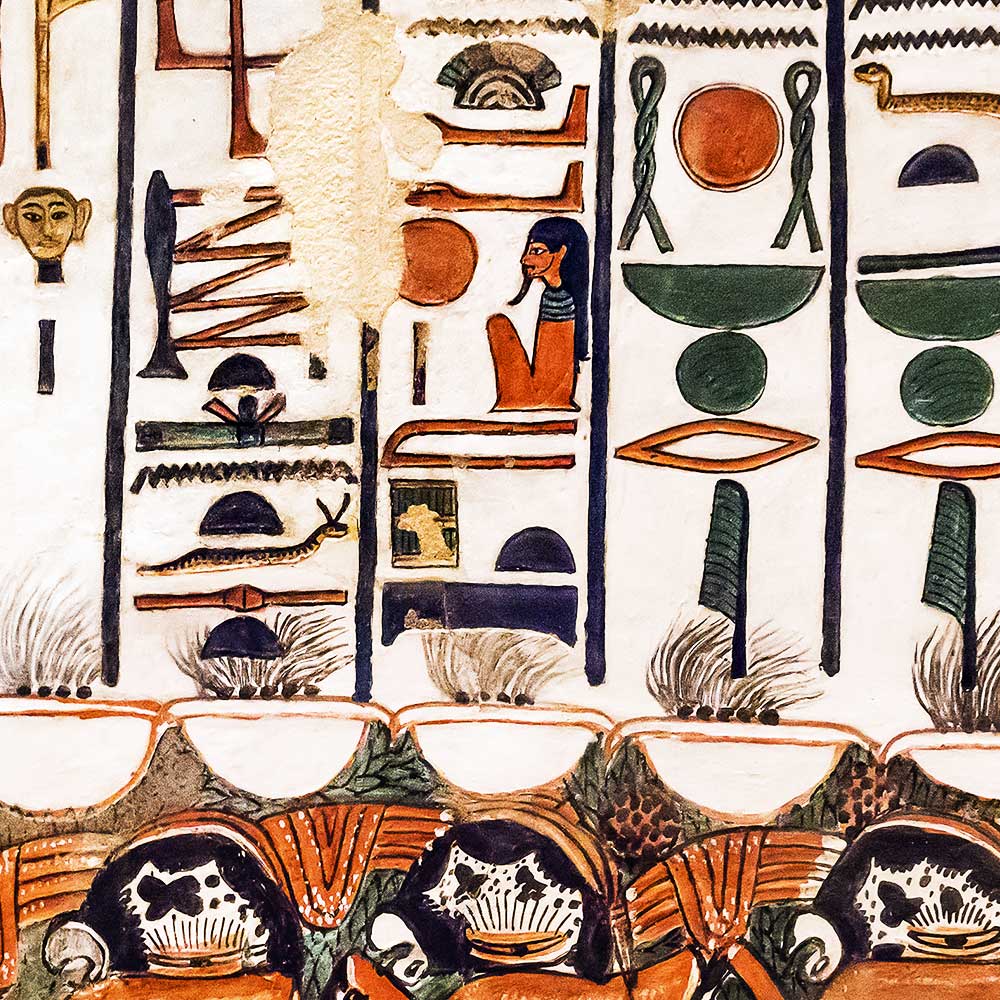
2.) in the shape of the protective vulture goddess, Nekhbet
3.)
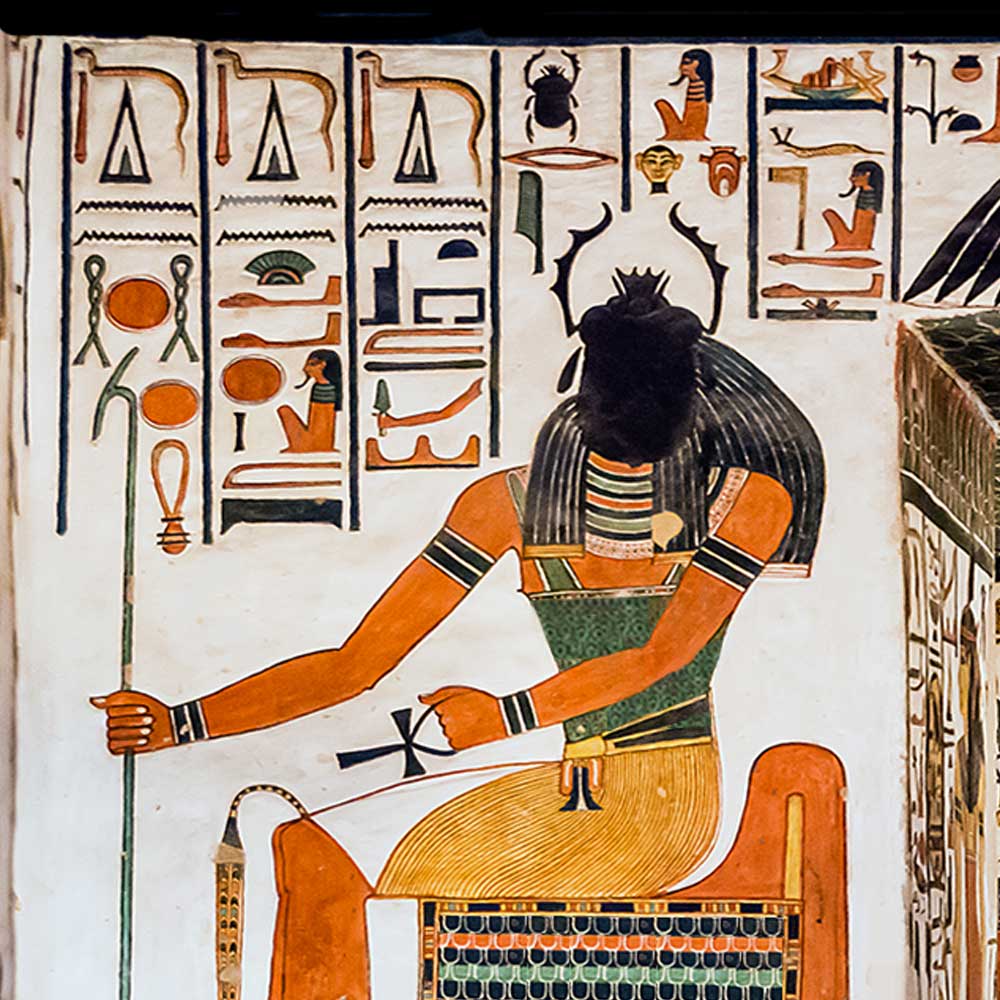
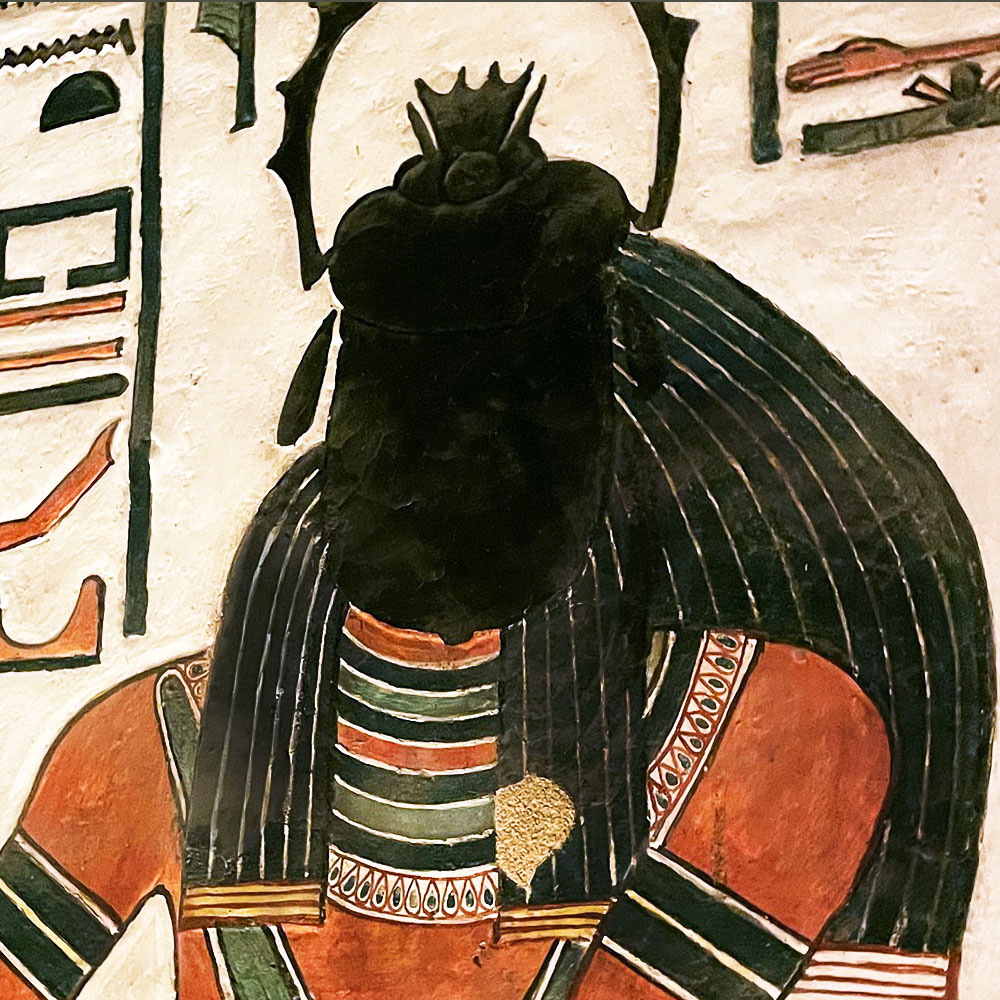
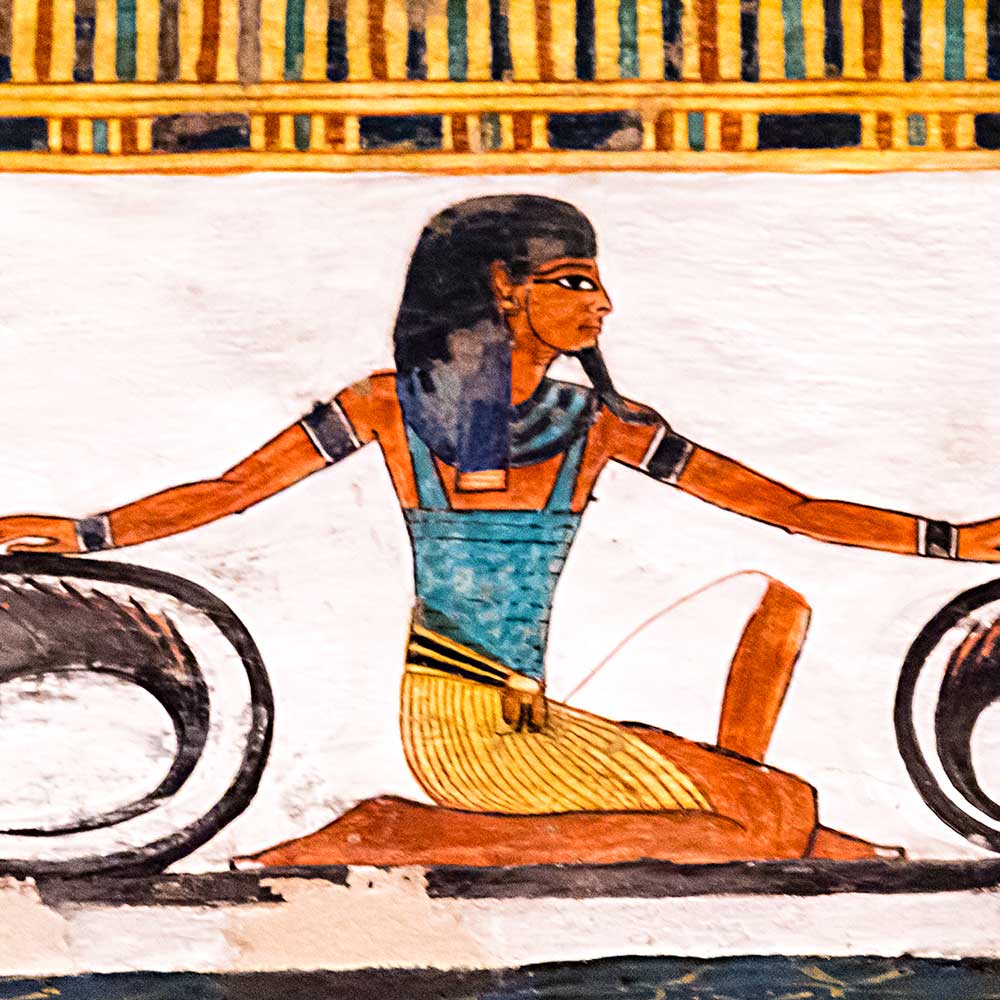
1.) The God Khepri, depicted with the head of a scarab beetle (or as a scarab pushing the sun)
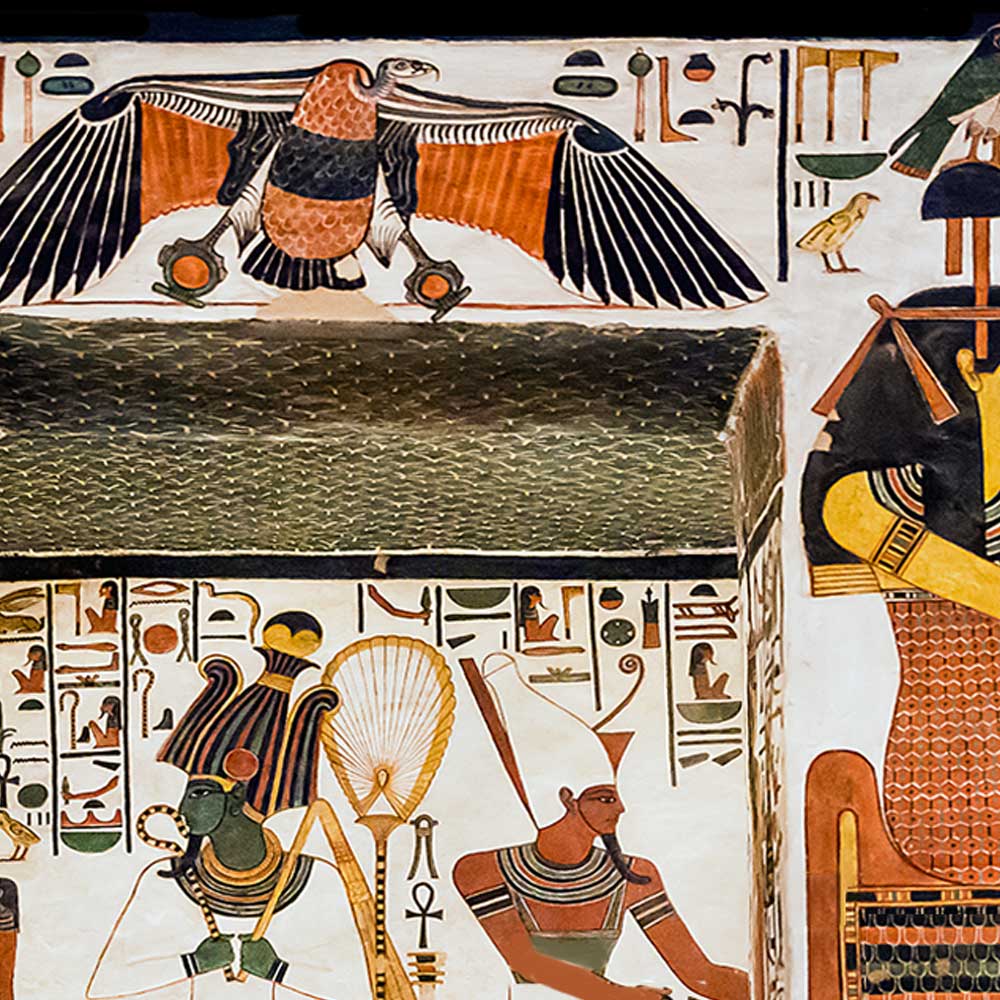
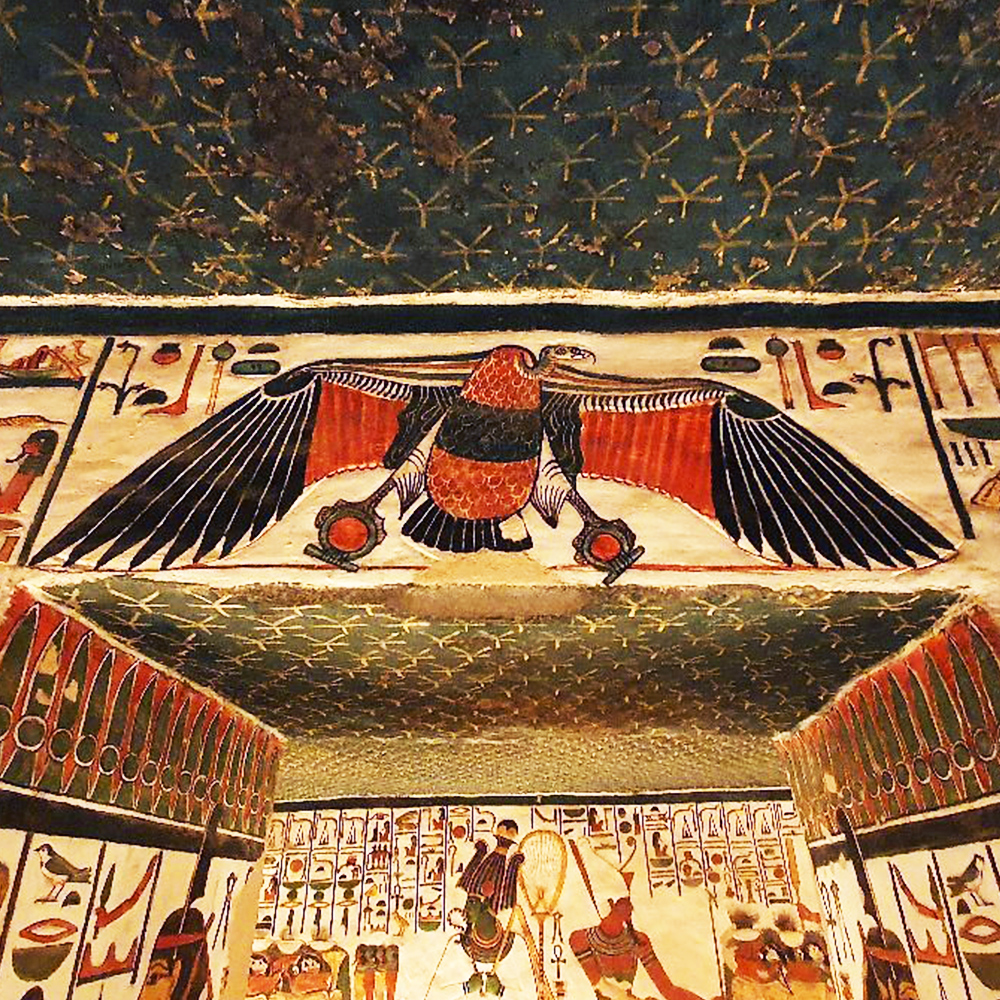
2.) A large winged figure at the top is likely the goddess Nekhbet, depicted as a vulture, who was a protector deity of Upper Egypt and the pharaoh
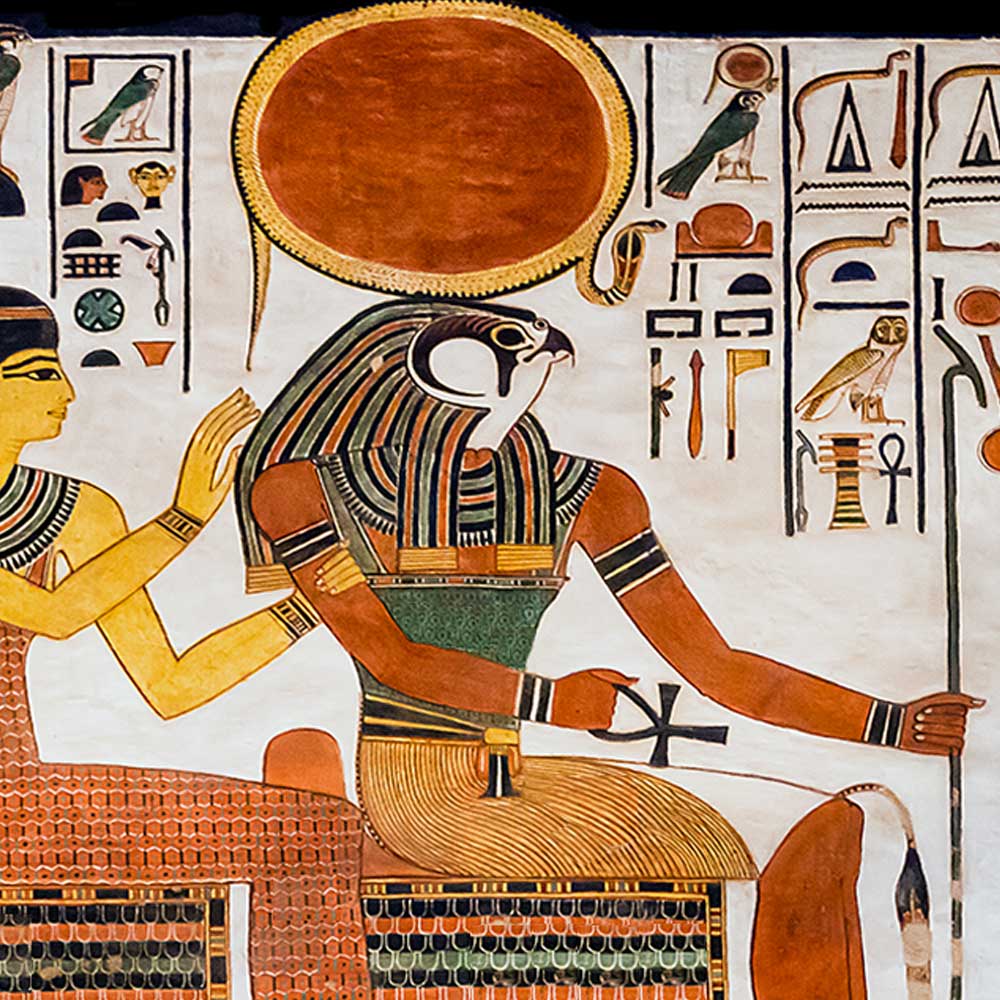
3.) The falcon head and sun disk headdress is the sun god Ra or Ra-Harakhty
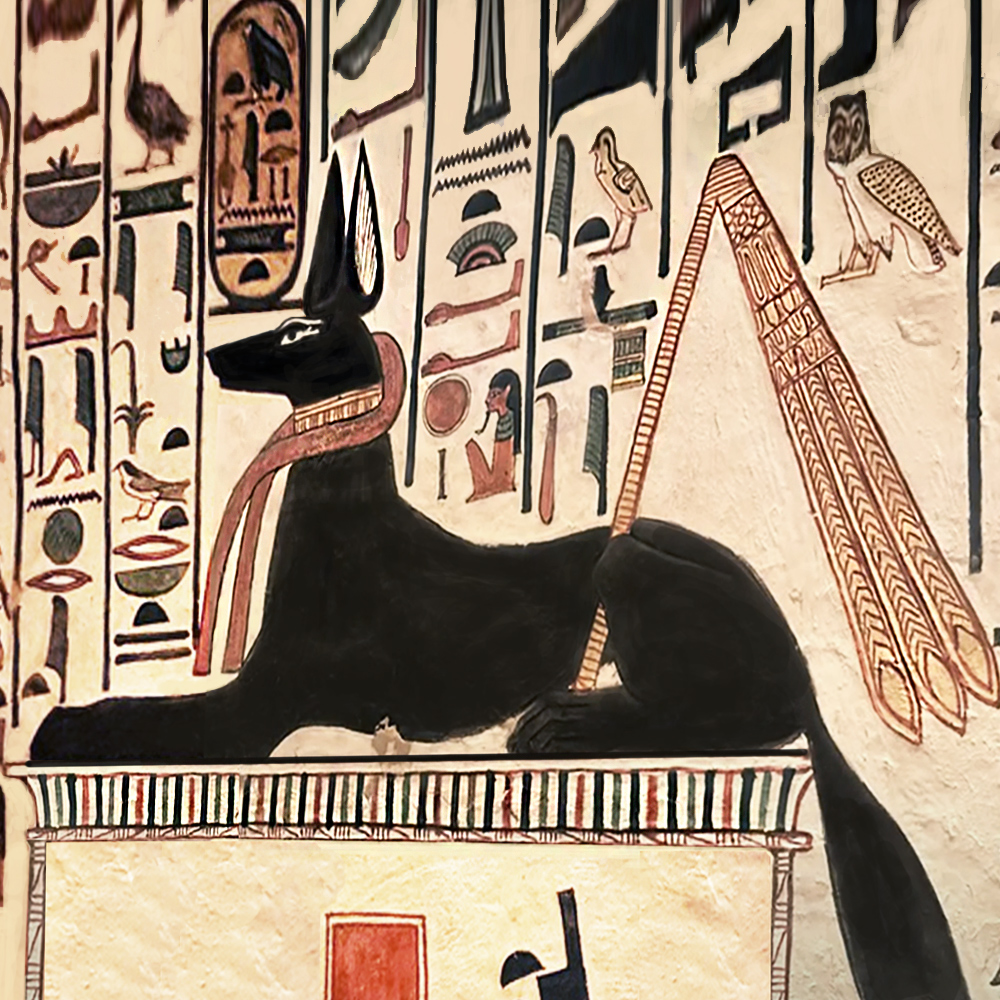
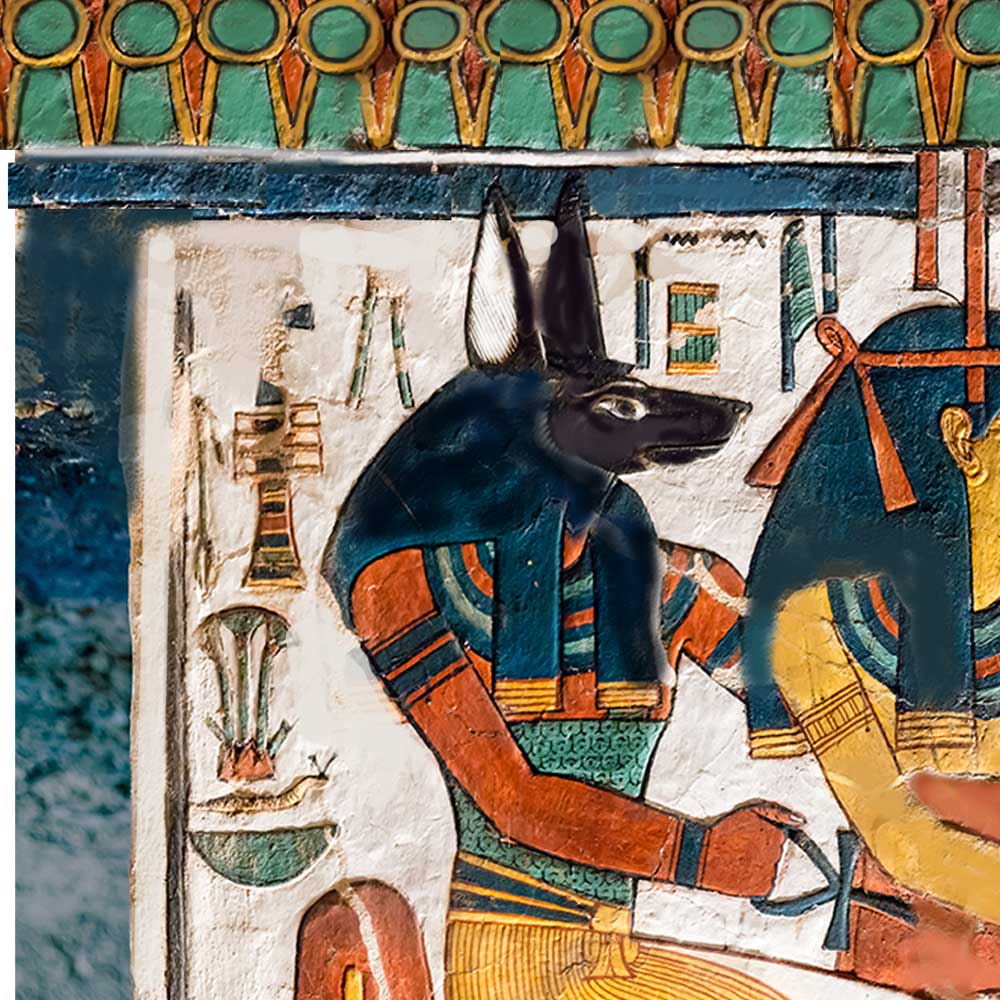
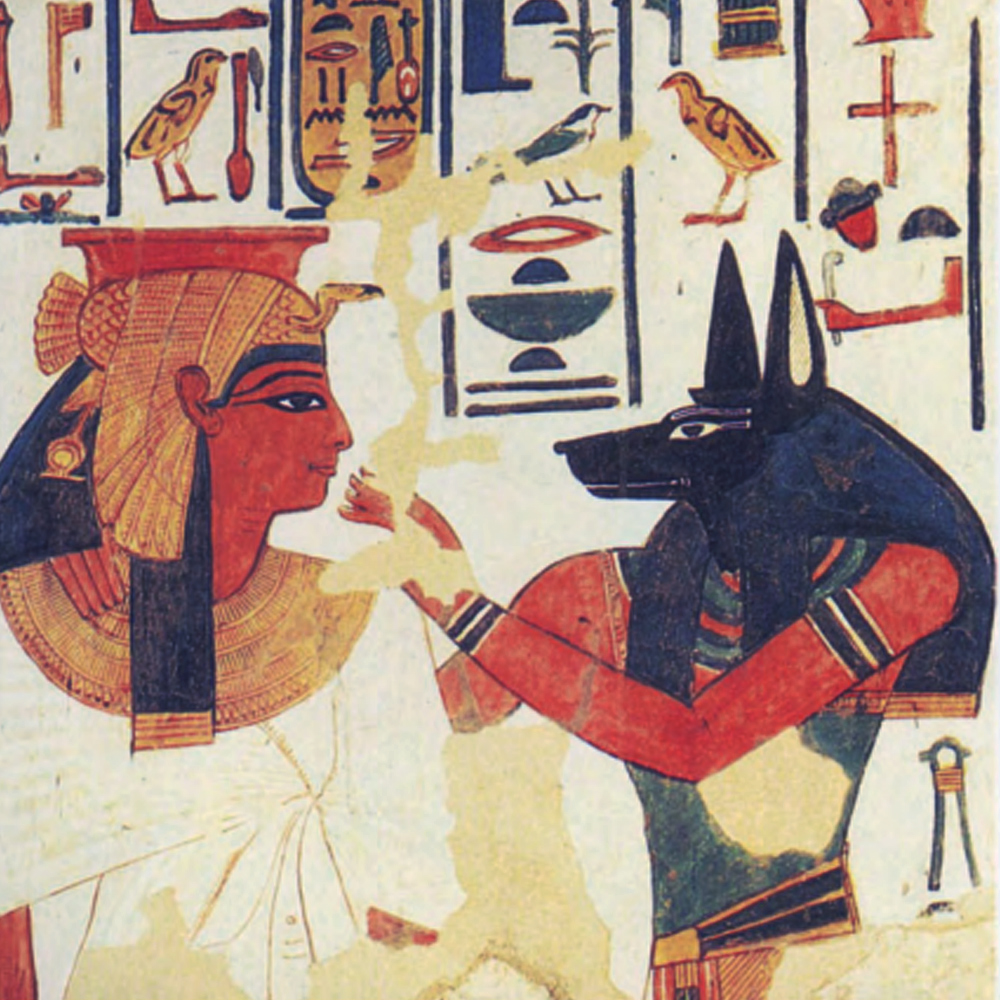
Anubis is the god of embalming and mummification, he is often portrayed as a jackal, or as a jackal-headed man
Nefertari plays Senet the oldest game in the world while on her journey to immortality
Anubis is the god of embalming and mummification, he is often portrayed as a jackal, or as a jackal-headed man
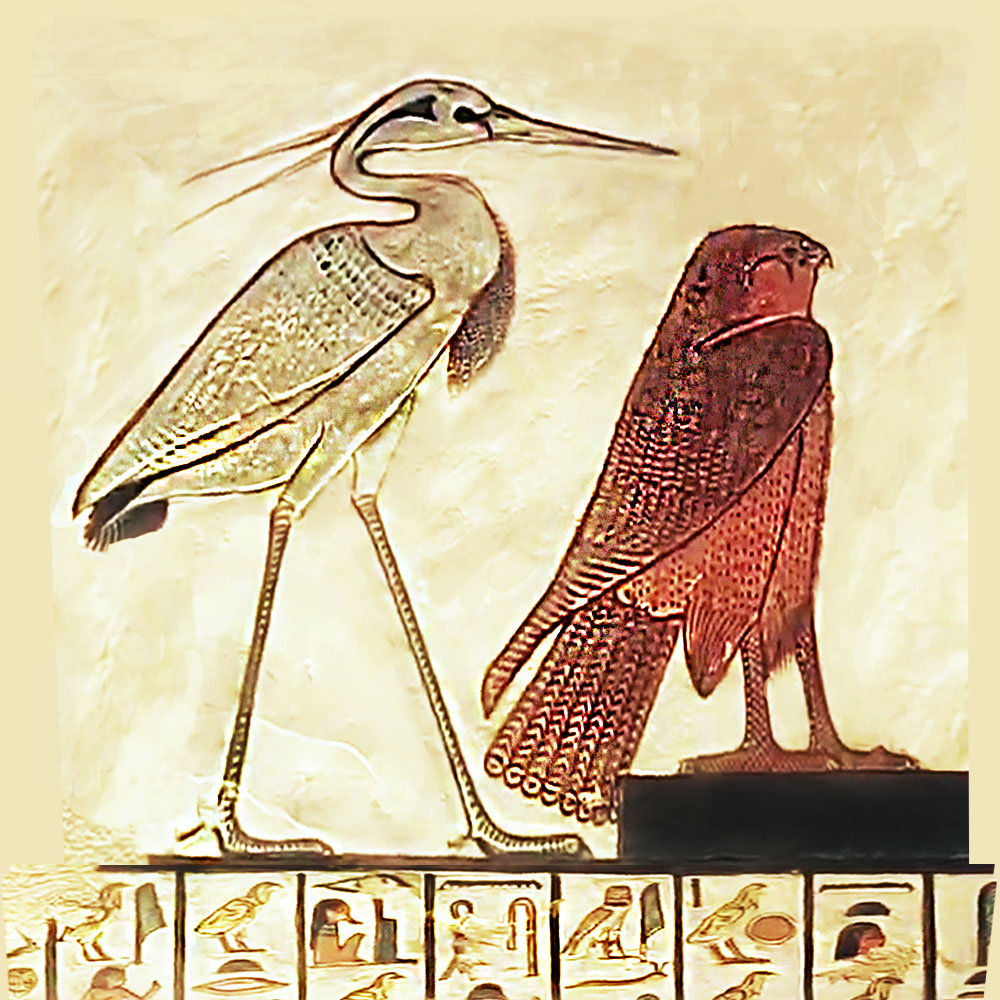
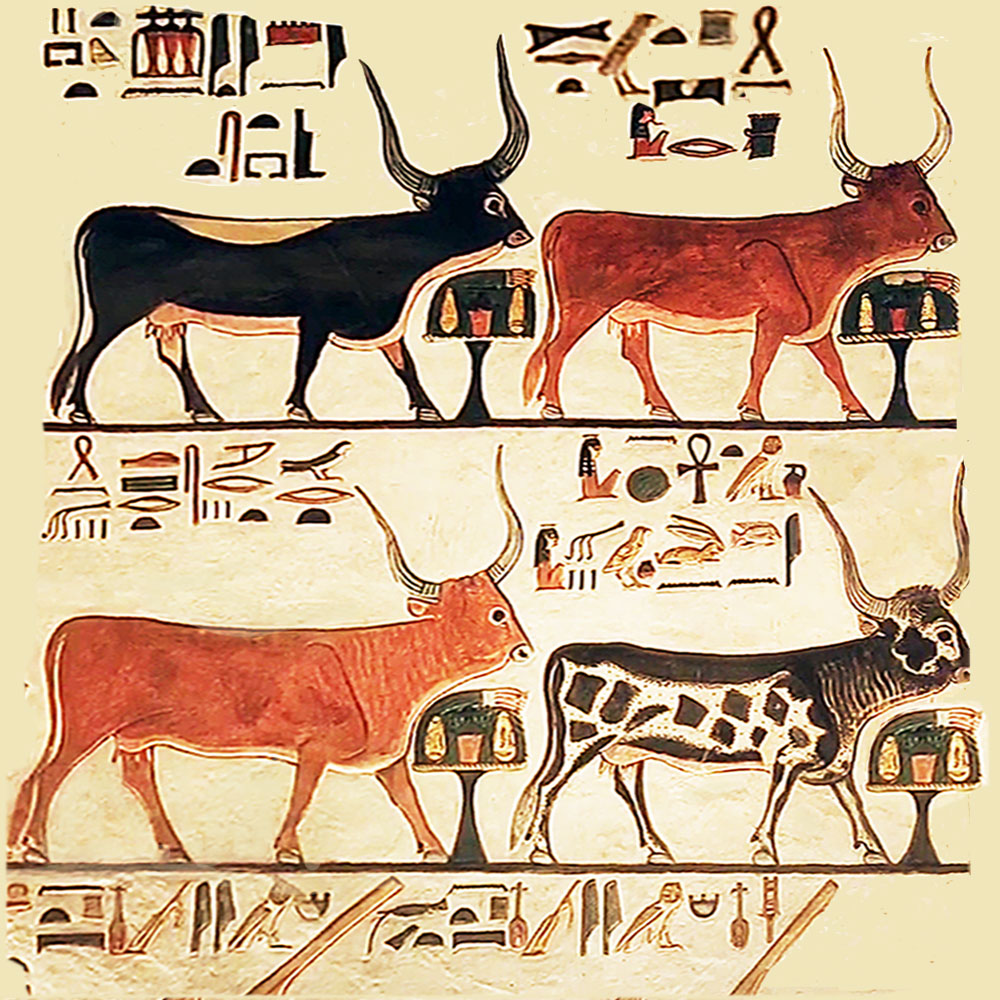
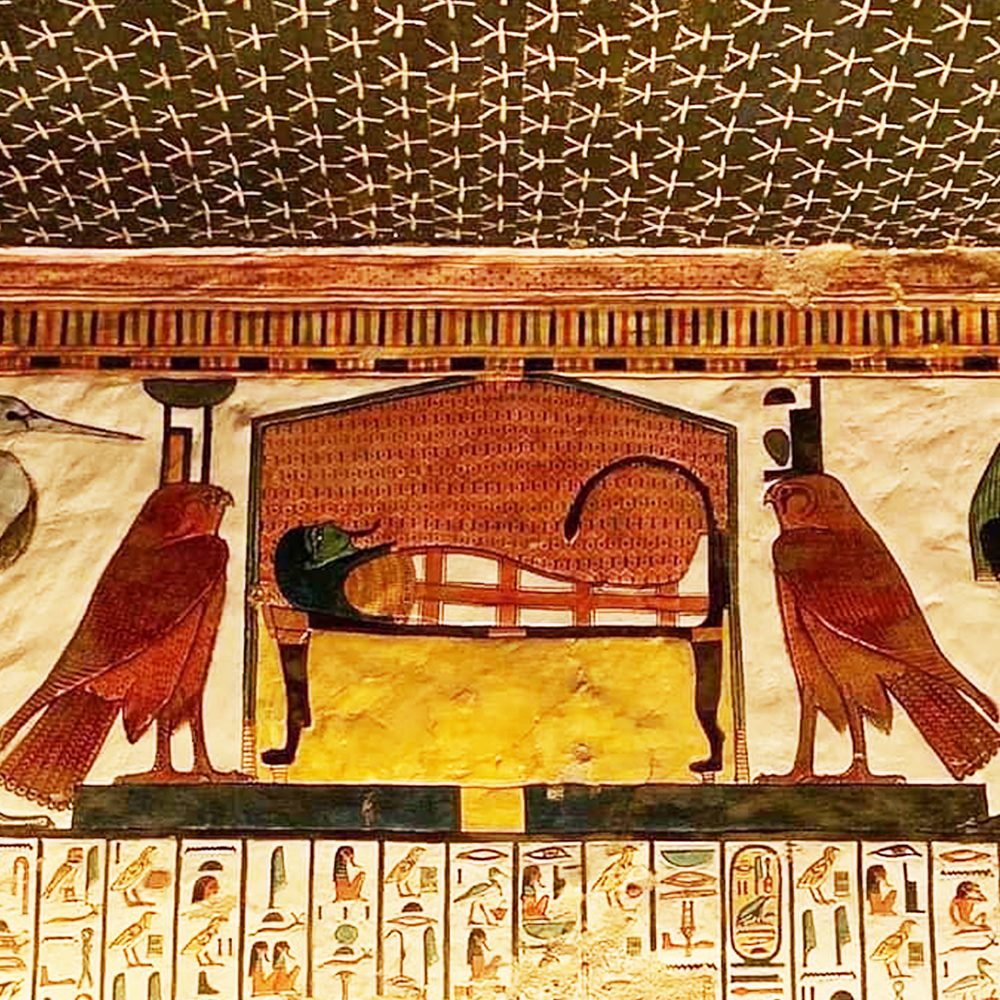
Egret and a Falcon guarding a bull and seven cows
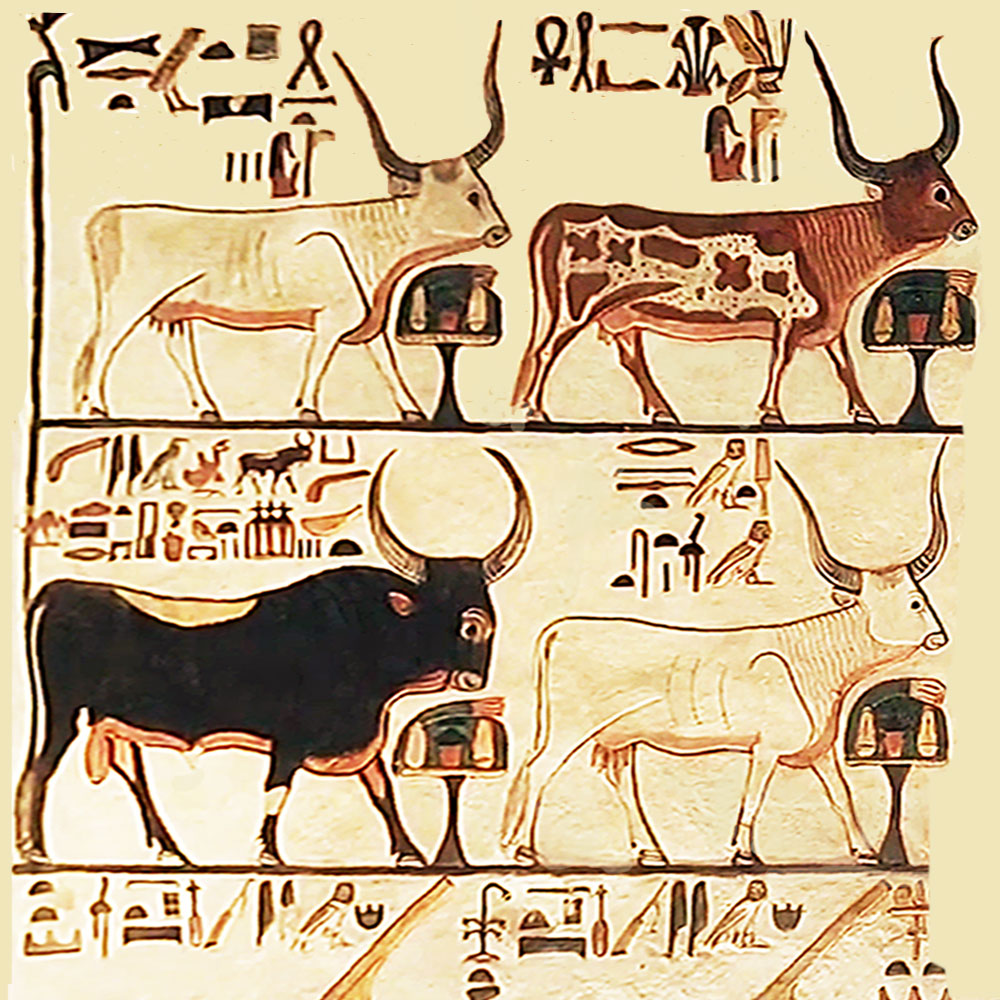
Mural Painting of Heavenly Bull and Seven Cows
Mural Painting, eight mythological bovine cows of different colors in profile face offering tables
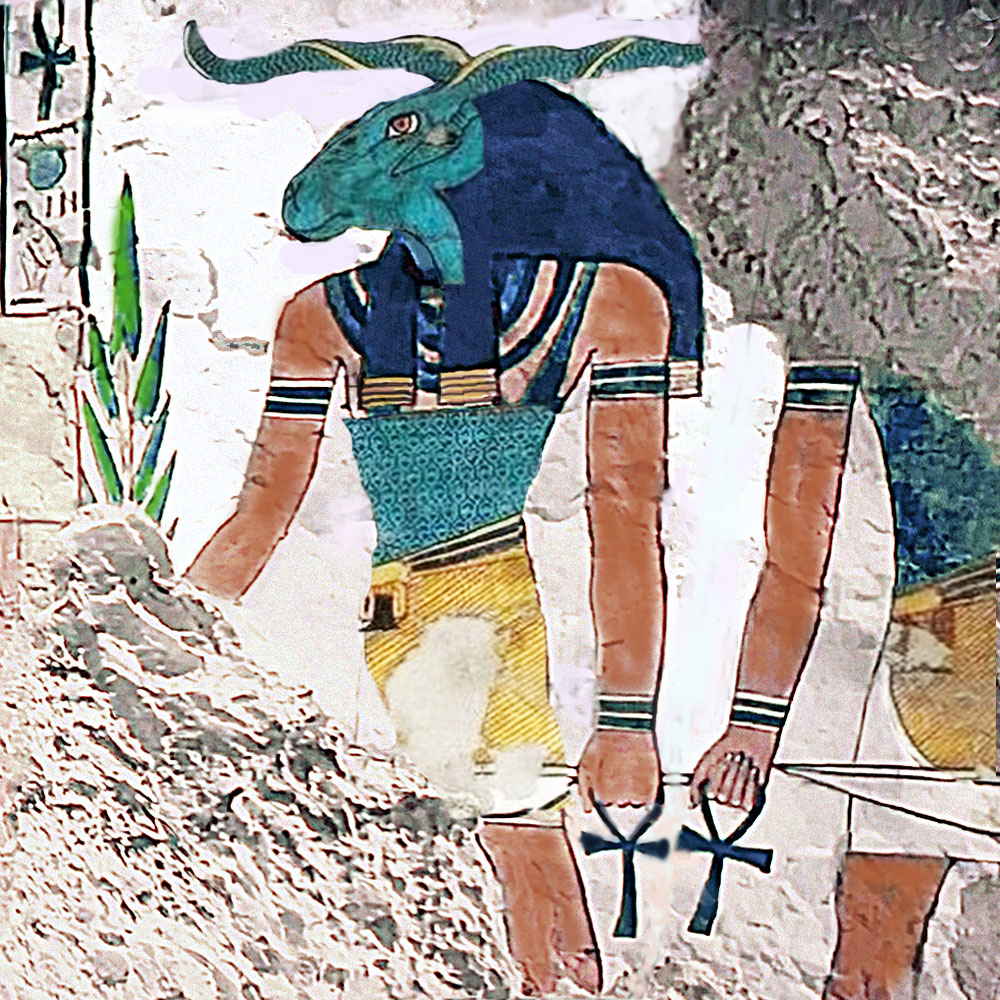
Guardians of the underworld: The messenger with a ram’s head, third door of the Kingdom of Osiris, chapter 144 of the Book of the Dead
Guardian At Fifth Gate Of Osiris' Kingdom Henty-reki
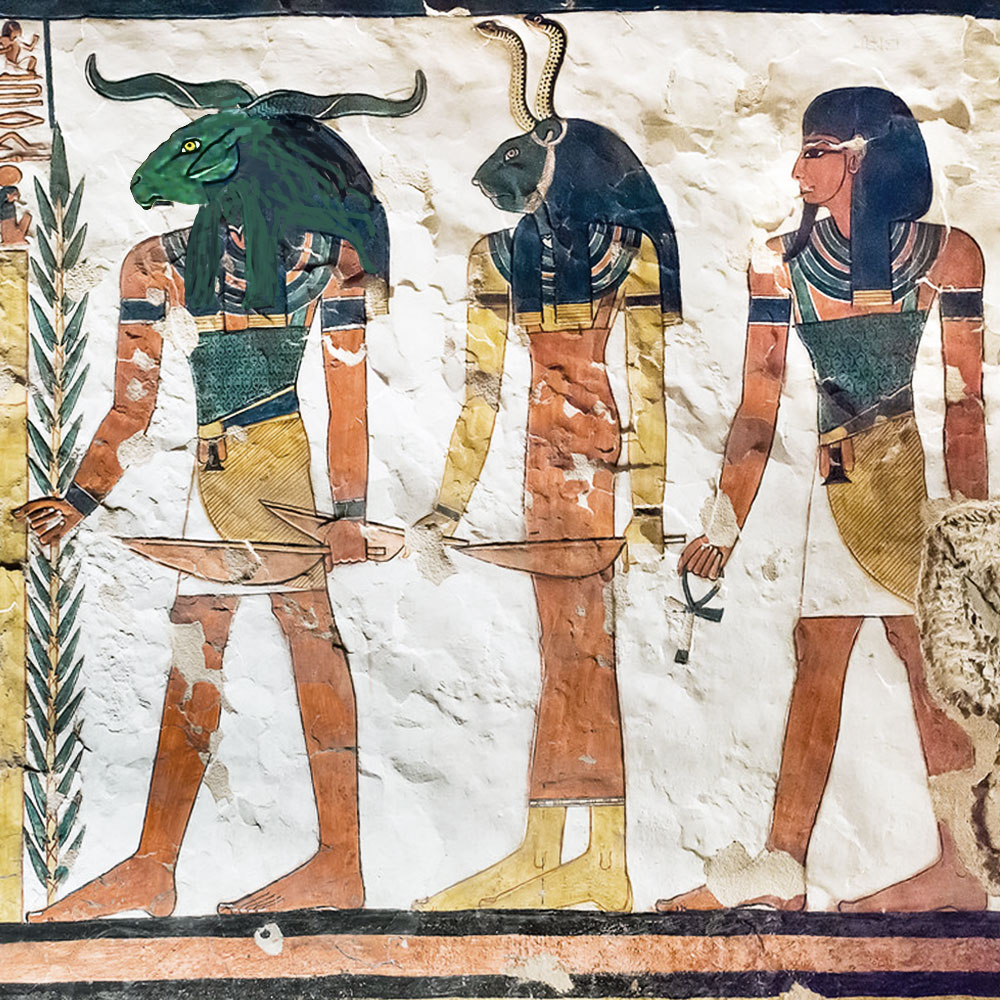
Taken from Spell 144 of the ‘Book of the Dead’, they were the keepers of the gates of the Underworld, menacing the enemies of order with their sharpened knives
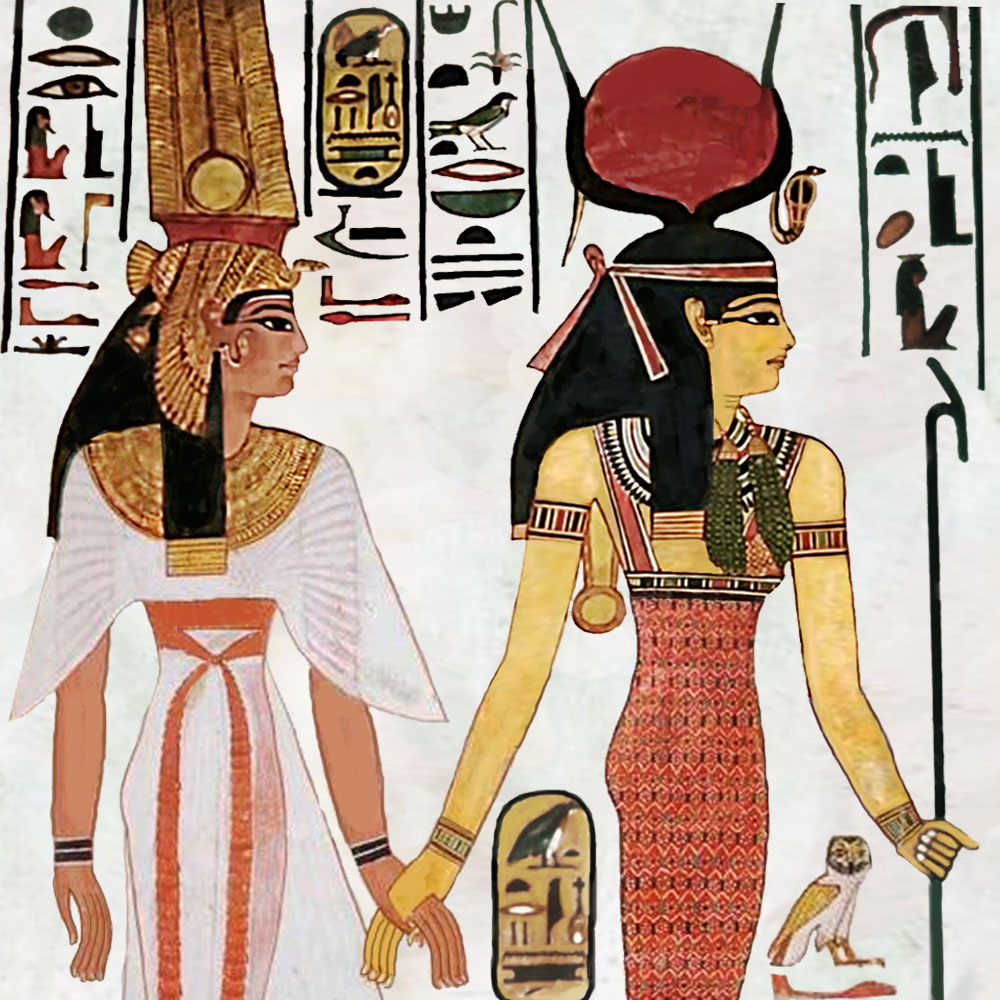
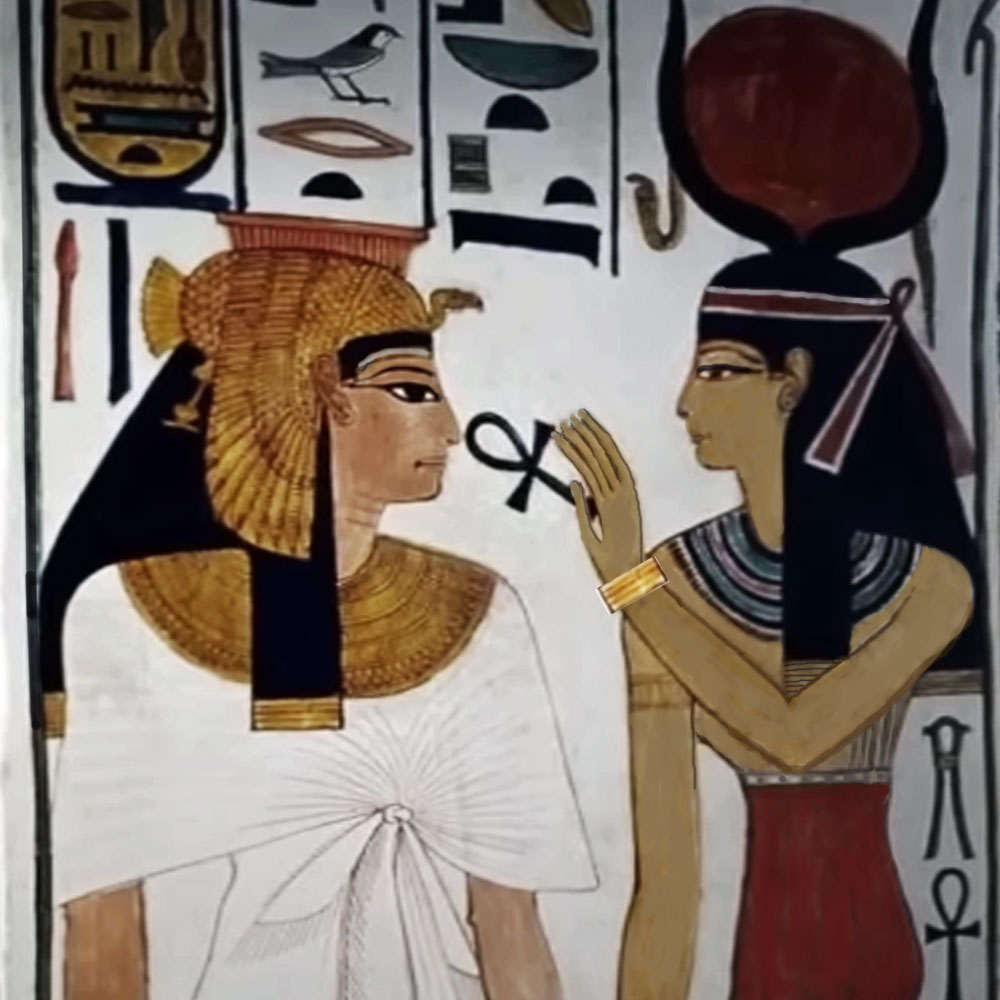
Nefertari's journey to immortality, led by Isis a protector of the dead in the afterlife
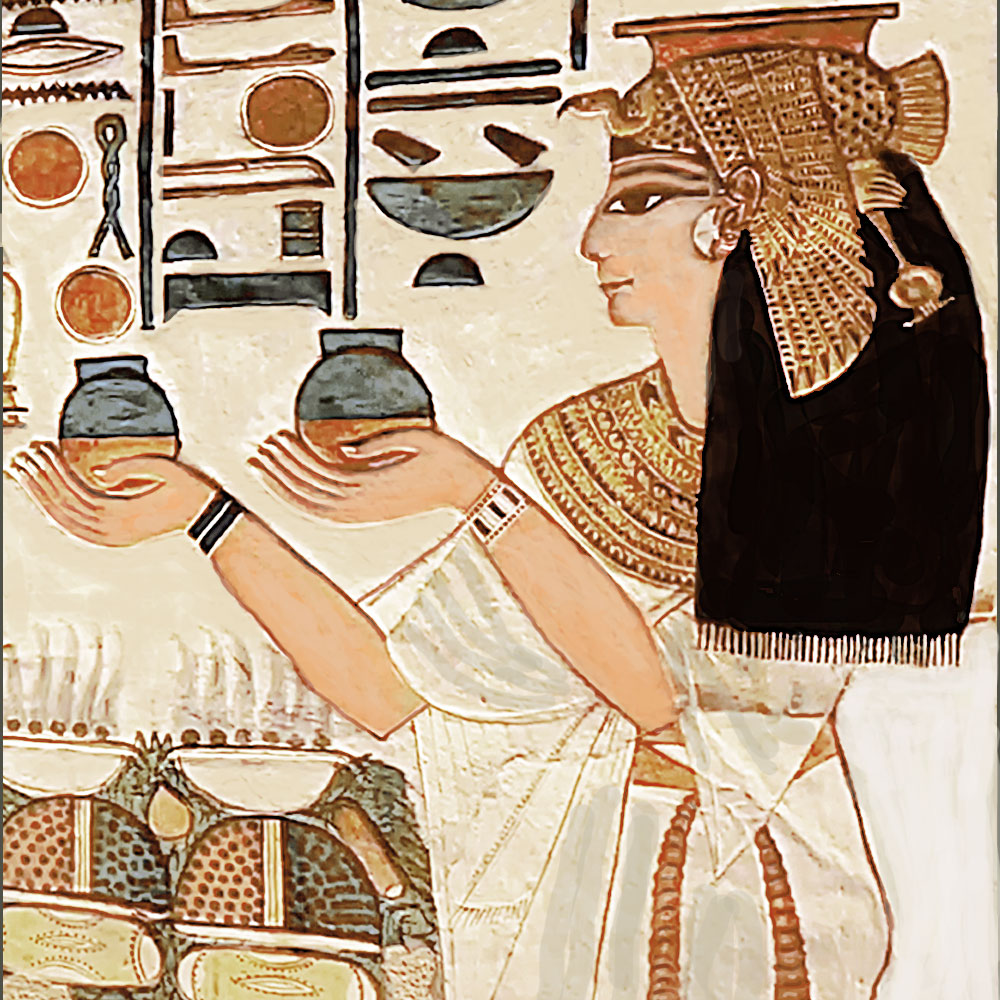
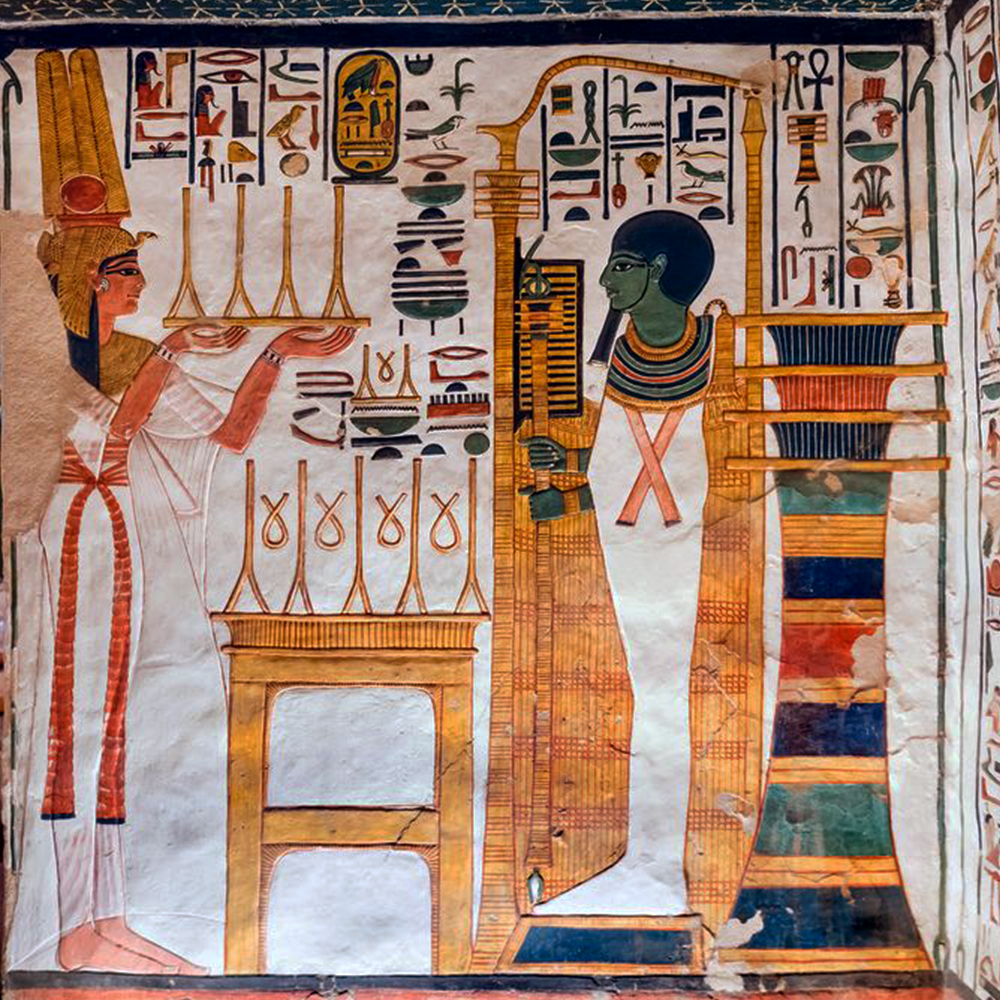
Mural Painting of Queen Nefertari presenting nu jars before the offering table
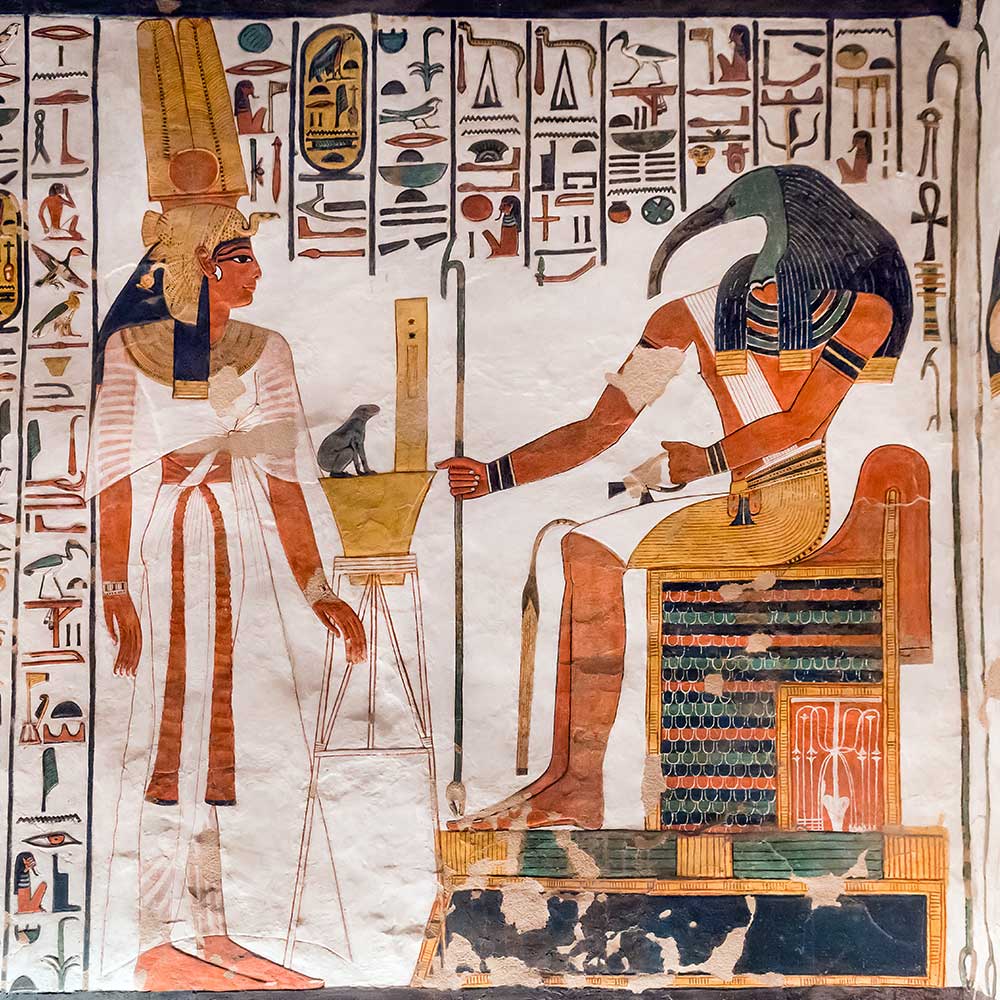
Queen Neferati presenting scrolls to the Egyptian god Thoth, the inventor of writing and a scribe to the gods, he is depicted as a man with the head of an ibis
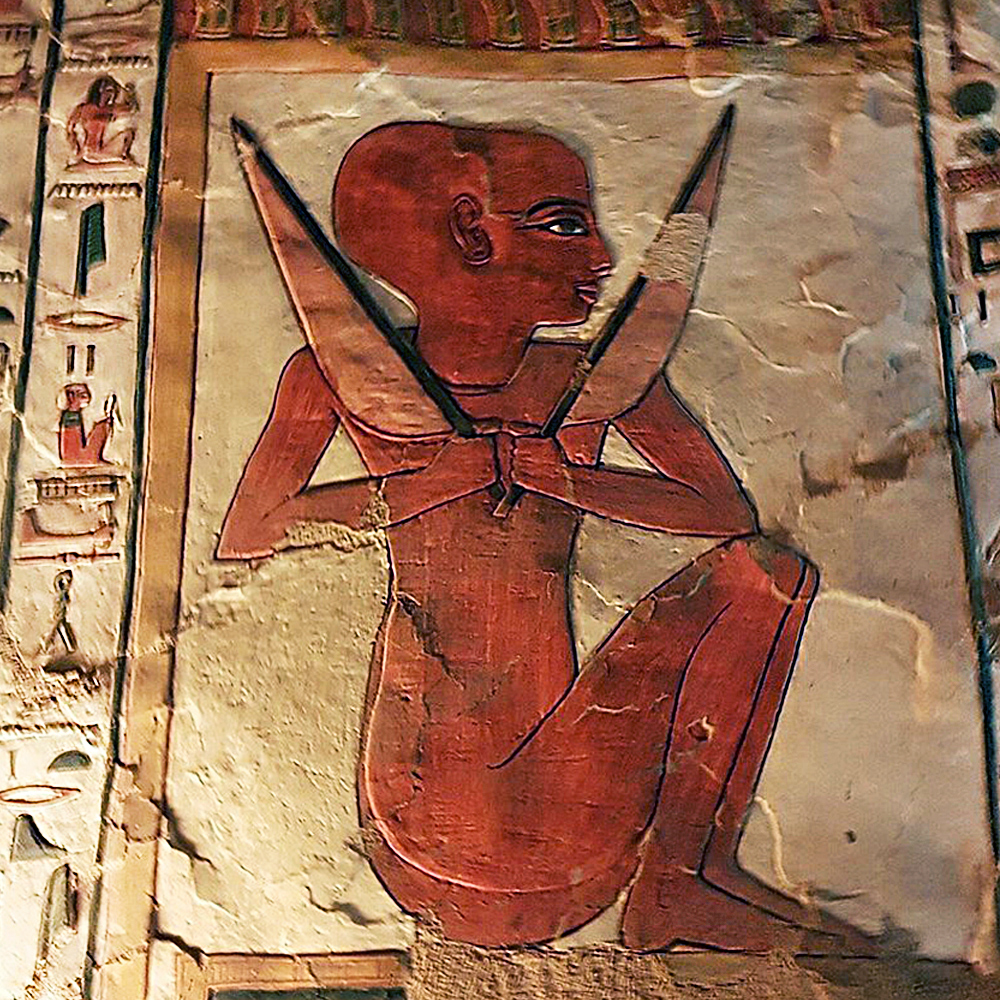
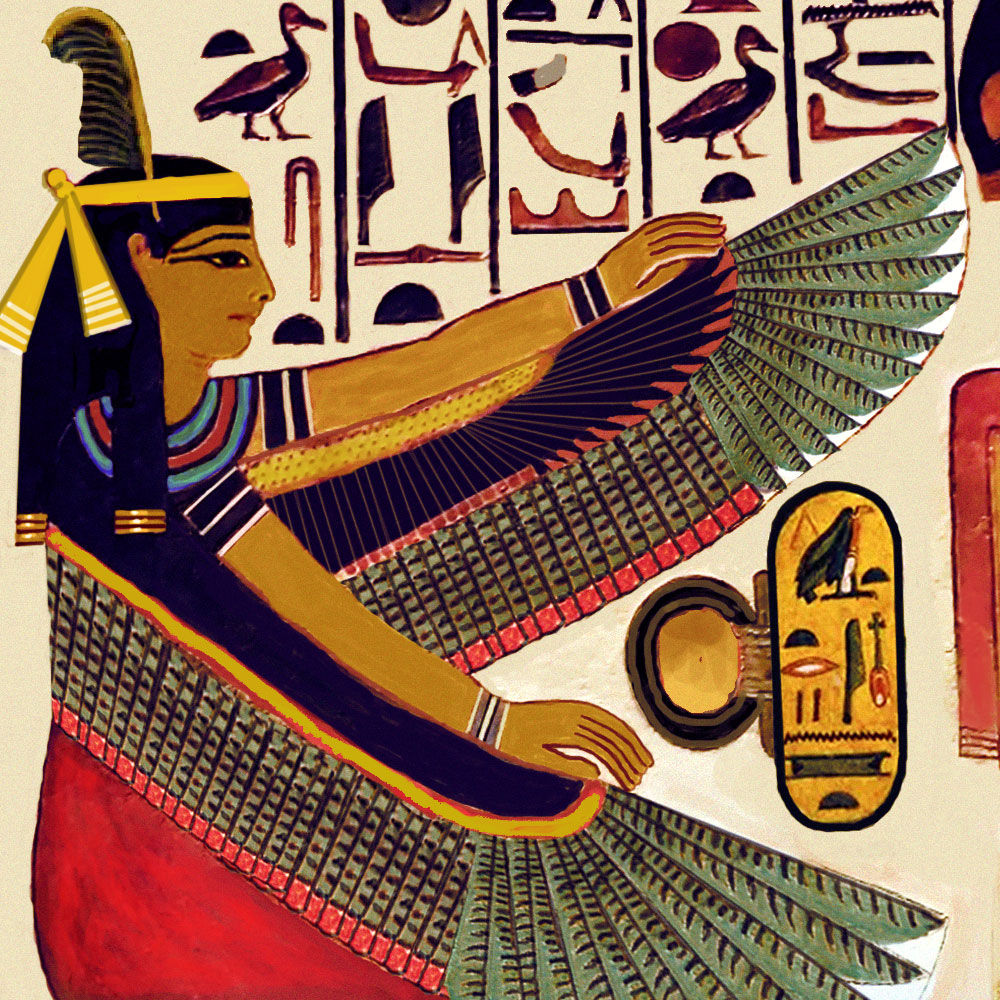
The Goddess Maat kneeling and spreading Her wings in protection toward the cartouche of Queen “Nefertari Beloved of Mut” at left of the cartouche, the ‘shen’-ring of protection
Egyptian god Khepri symbolises the Sun, rebirth, renewal and resurrection, he is depicted as a man with the head of a dung beetle
Nefertari's tomb staircase, the Goddess Maat guards the entrance to the Burial Chamber
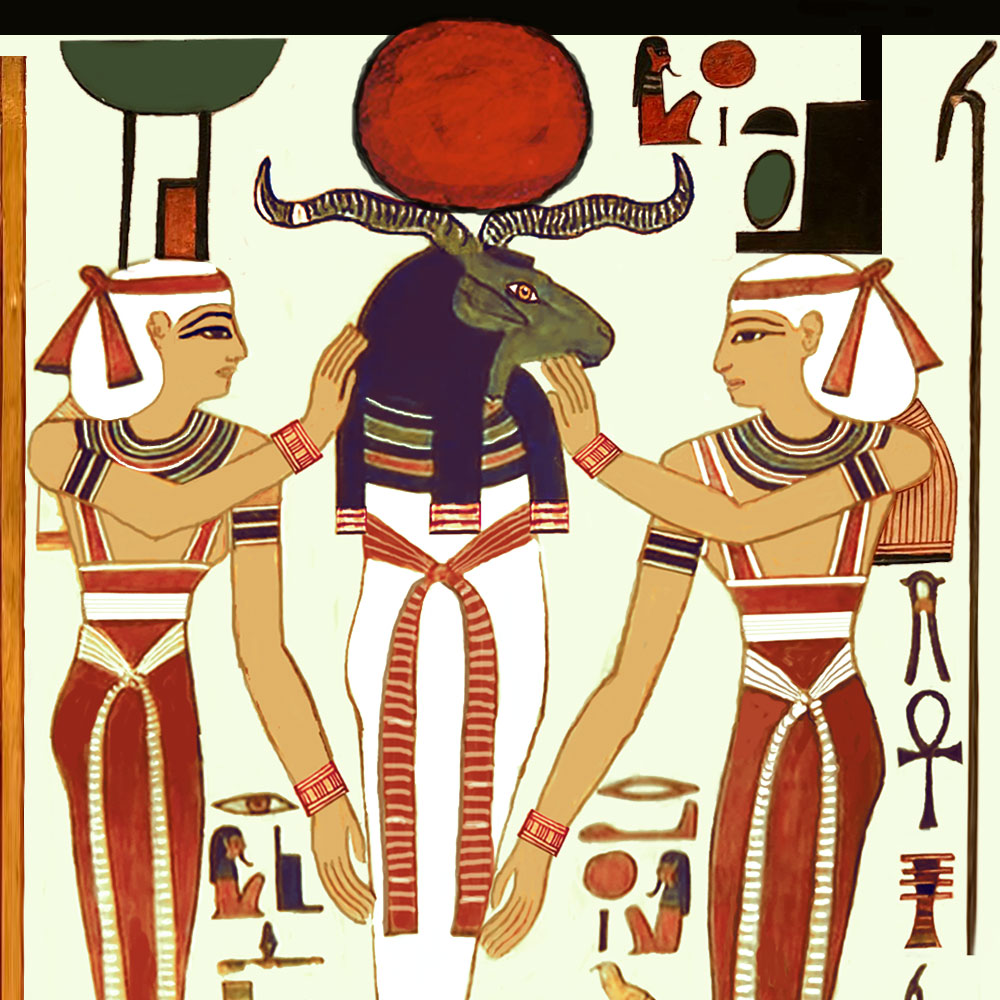
Ra'a in a mummiform, Rams head and solar disc as a crown. Ra'a is flanked by Ises (Aset) (Iset) on the right and Nephthys (NbtHwt) on the left
Nekhbet guards the side chamber’s entrance, the vulture god appears on the antechamber’s lintel
The Queen wearing the falcon headdress is a Shuti consisting of two, tall ostrich or falcon feathers combined with a sun disk a symbol of divine law
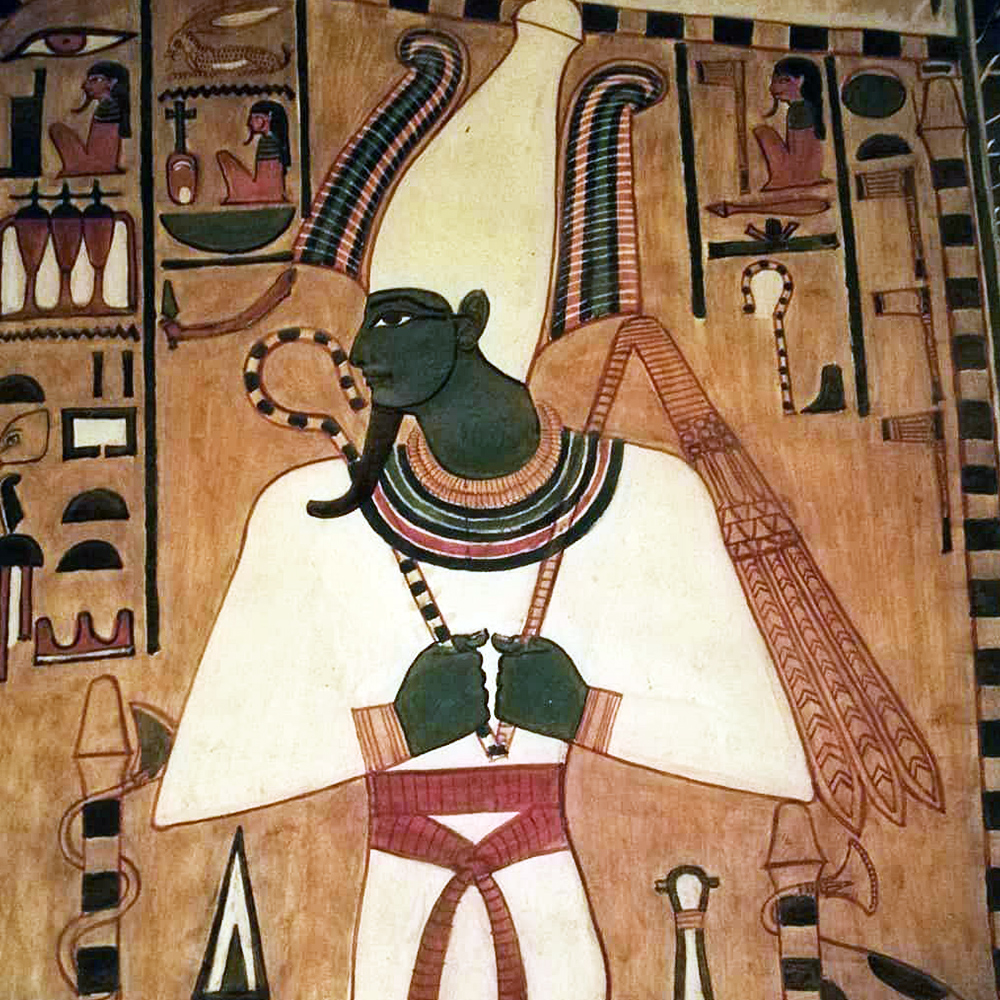
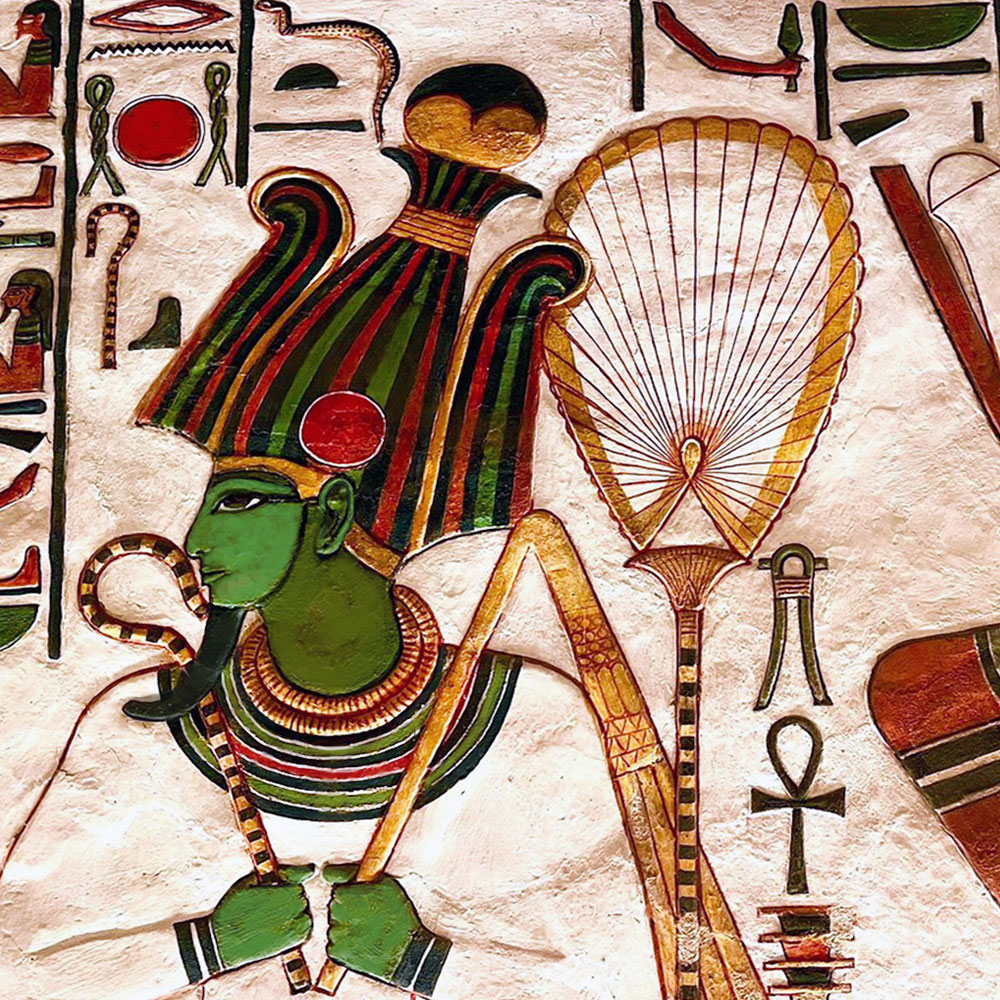
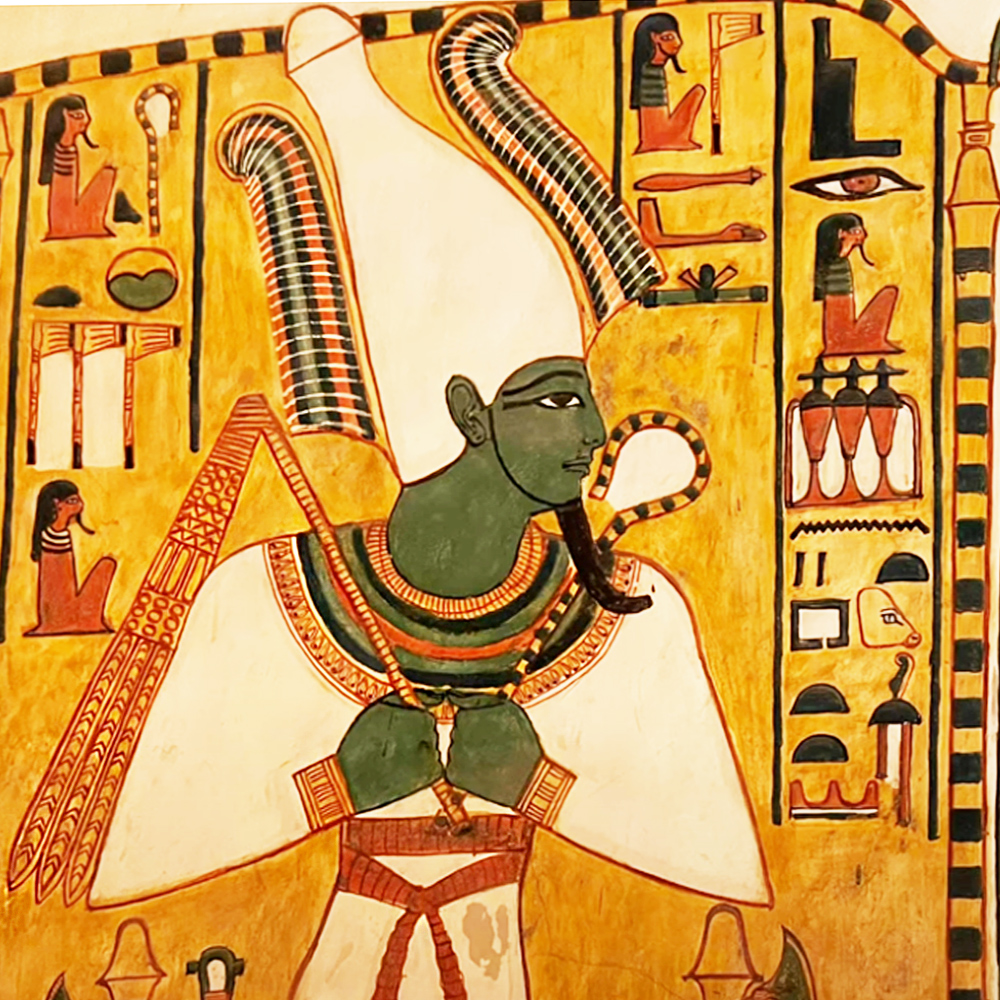
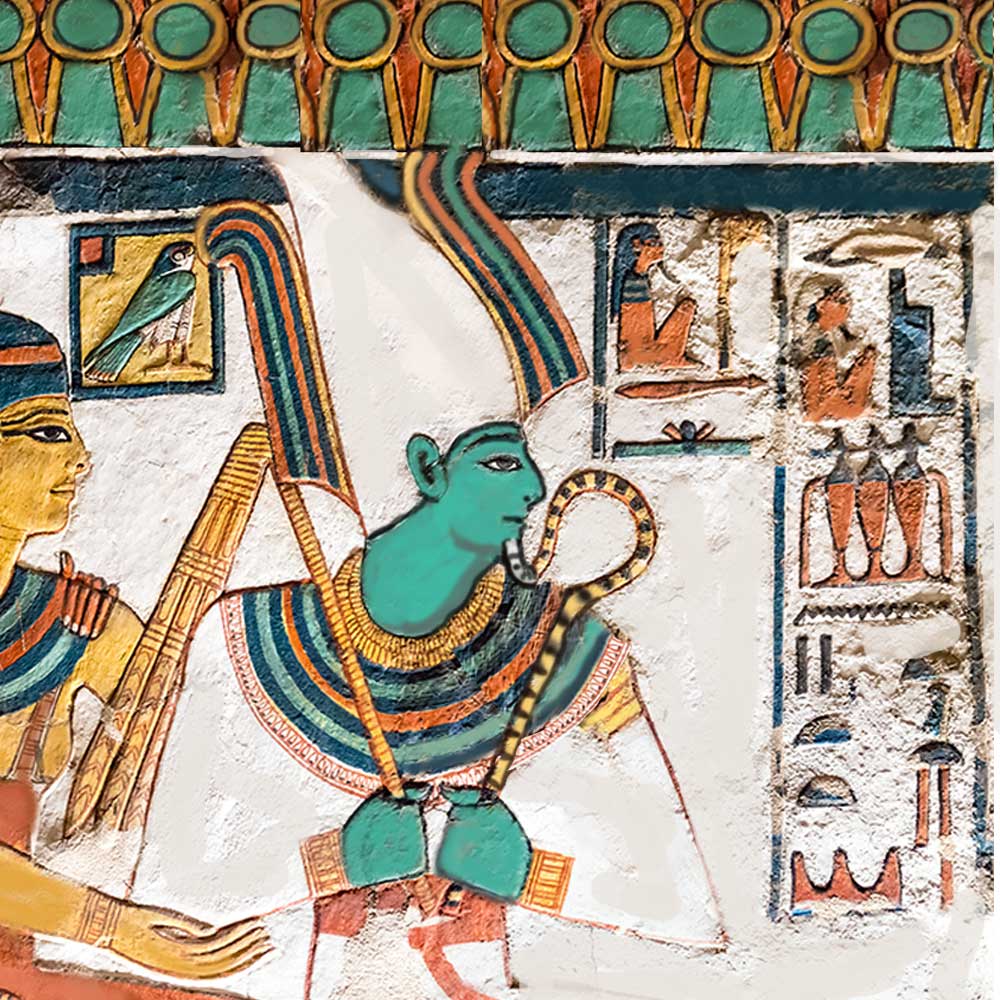
Osiris God of the Underworld and Judge of the Dead, brother-husband to Isis
Mummiform Osiris, his skin is green, he clutches the emblems of power and wears the Atef crown and a false beard
Naos deity, guardian at fifth gate of Osiris
Anubis depicted as a jackal-headed deity or a man with a canine head,
Mummiform Osiris, his skin is green, he clutches the emblems of power and wears the Atef crown and a false beard
Nefertari making an offering of two containers to a deity.
Wadjet is depicted as a cobra a protective deity associated with the king's royal diadem and the Eye of Ra.
The goddess Neith associated with a wide range of domains, including fate, wisdom, water, rivers, mothers, childbirth, hunting, weaving, and war.
Wadjet depicted in the form of a cobra, known as the uraeus, which became a powerful symbol of royalty and sovereignty.
The keepers of the gates of the Underworld, menacing the enemies of order with their sharpened knives,
Queen Nefertari wearing a Vulture Headdress dating to the 4th and 5th Dynasties, a symbol of their divinity
Queen Nefertari before God Anubis in the Burial Chamber
The queen is making offerings of linen to the god Ptah, the creator god of weaving and crafts
Antechamber to burial chamber from Illustrated Book of the Dead depicting an egret and a falcon
Anubis, god of funerary practices, represented by a jackal or the figure of a man with the head of a jackal, Tomb of Nefertari, QV66, Thebes
Website & Website & Content Created by Richard Brafford, © 2025, All Rights Reserved, Fair Use Disclaimer for Non-Commercial Use for Educational & Entertainment Purposes OnlyTop