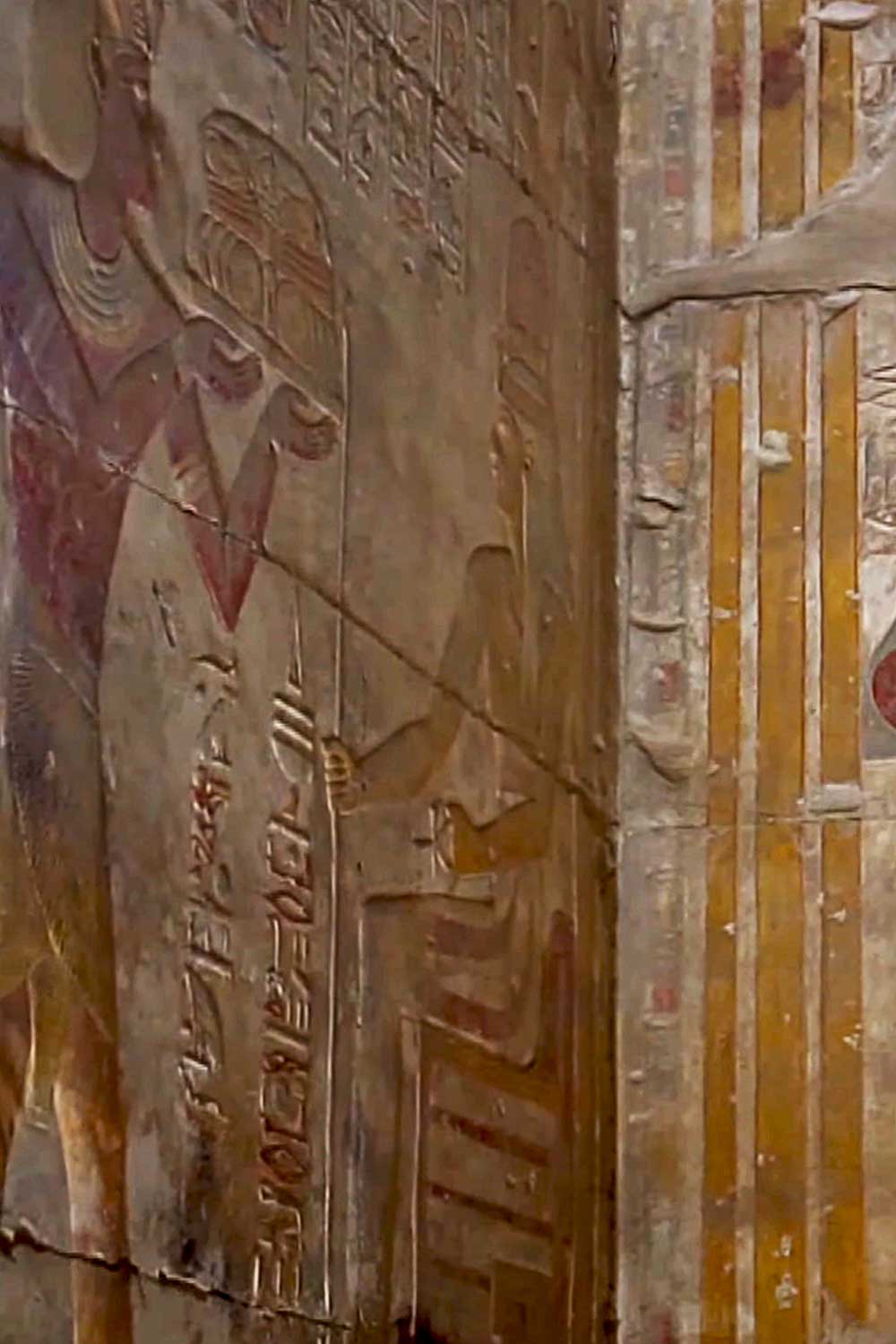
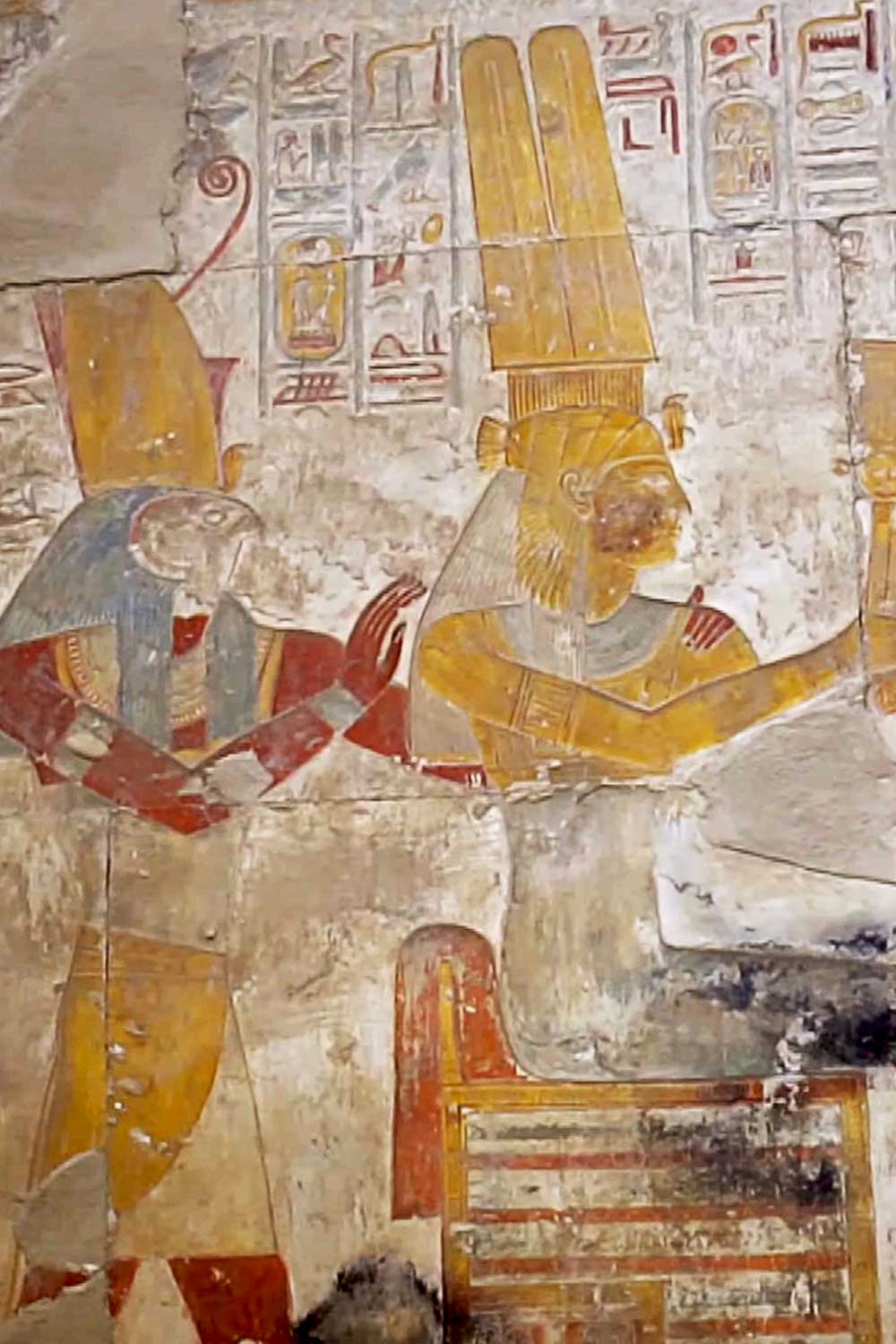
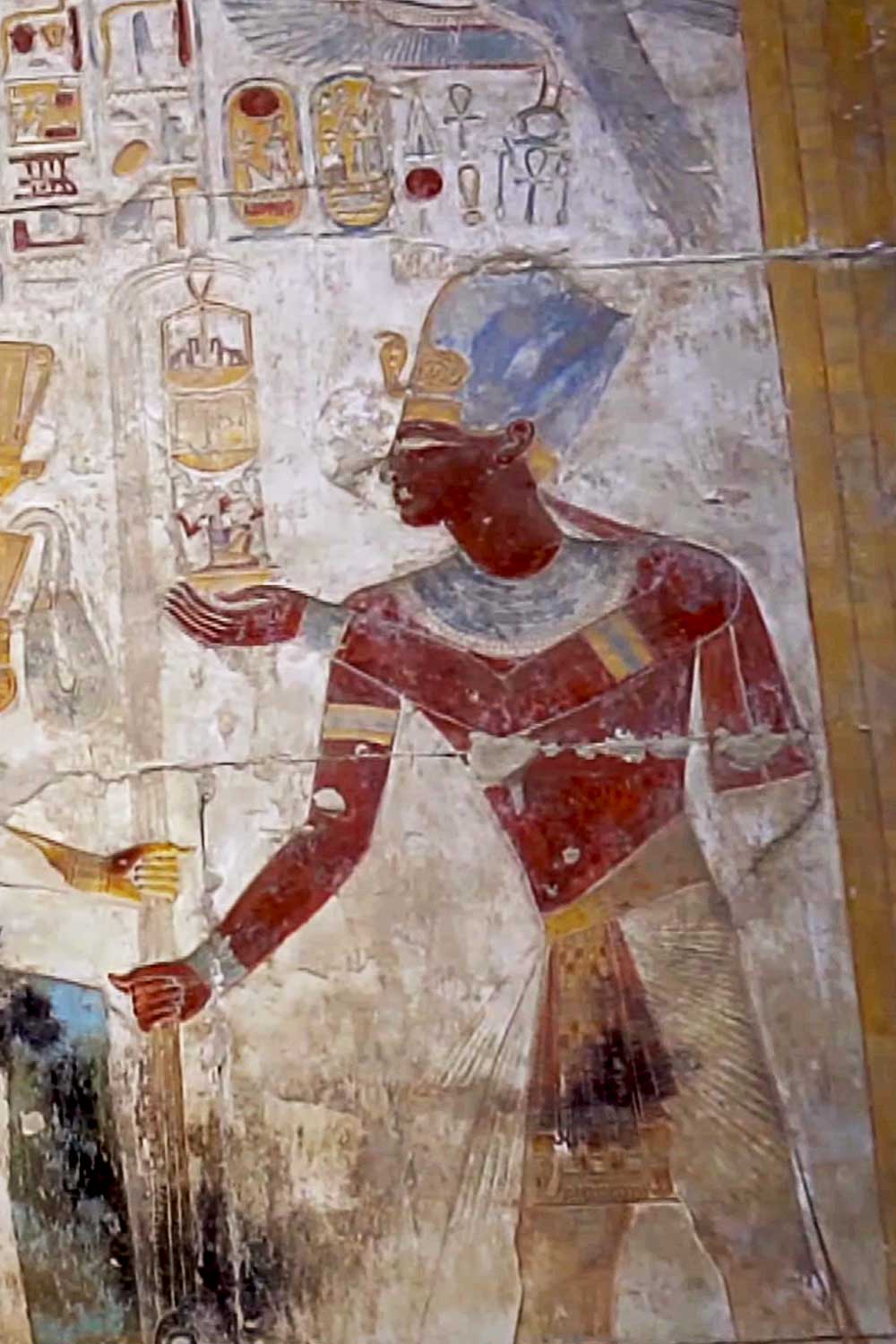
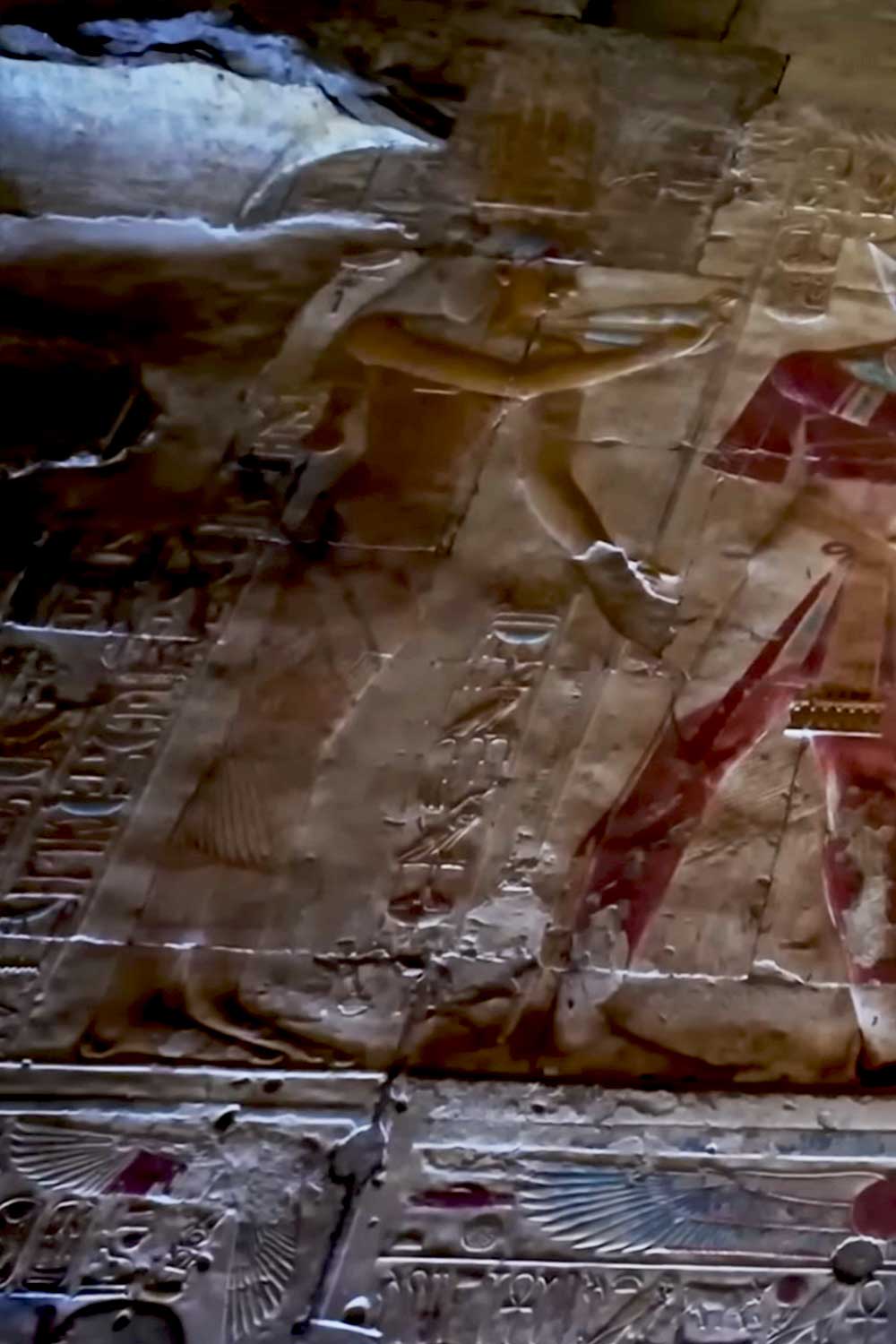
Seti I at Abydos & KV17

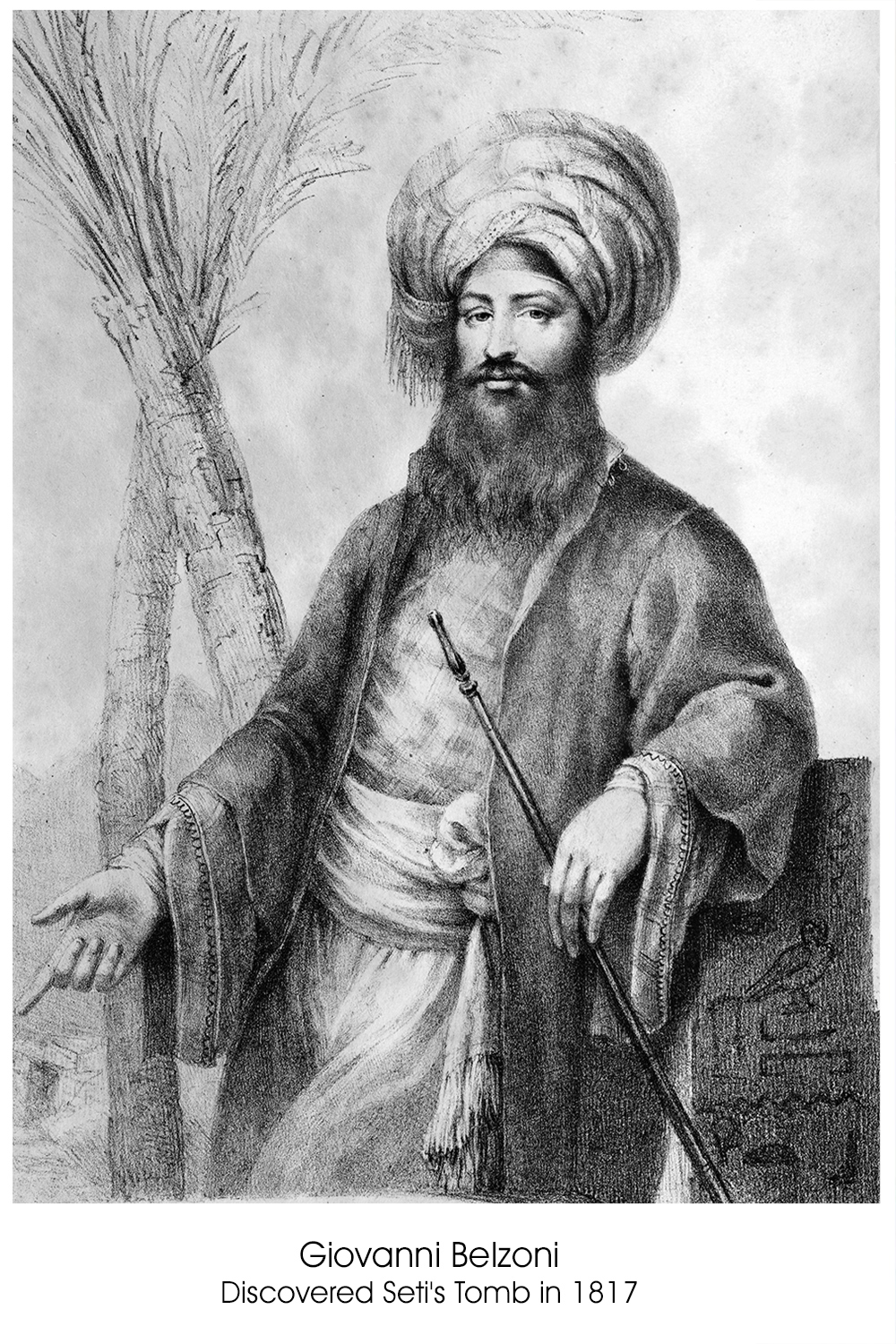
Portrait of Giovanni Battista Belzoni (1778-1823), Italian explorer and archaeologist - engraving by Unknown artist
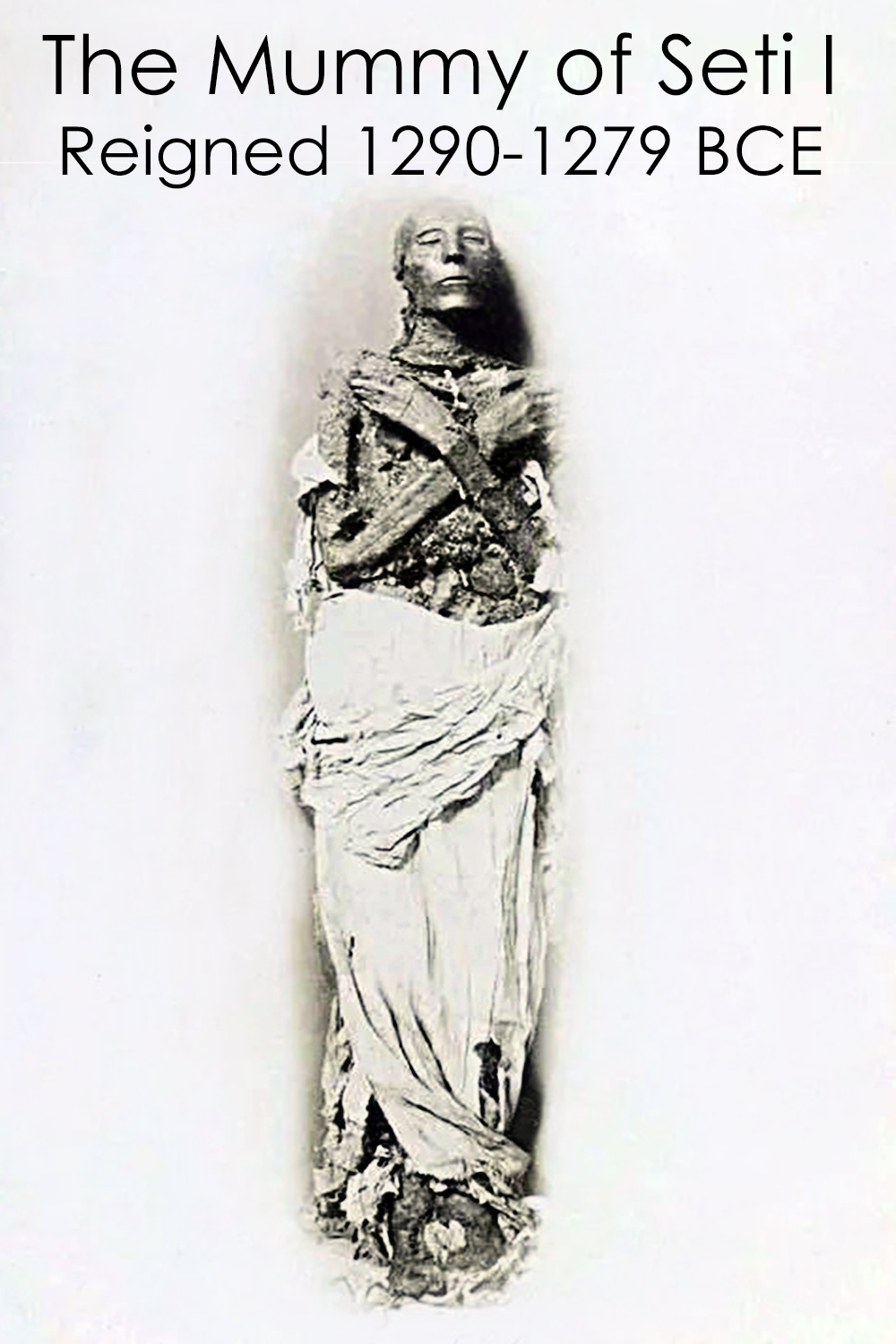
Mummy of Seti I from the 13th Century BC
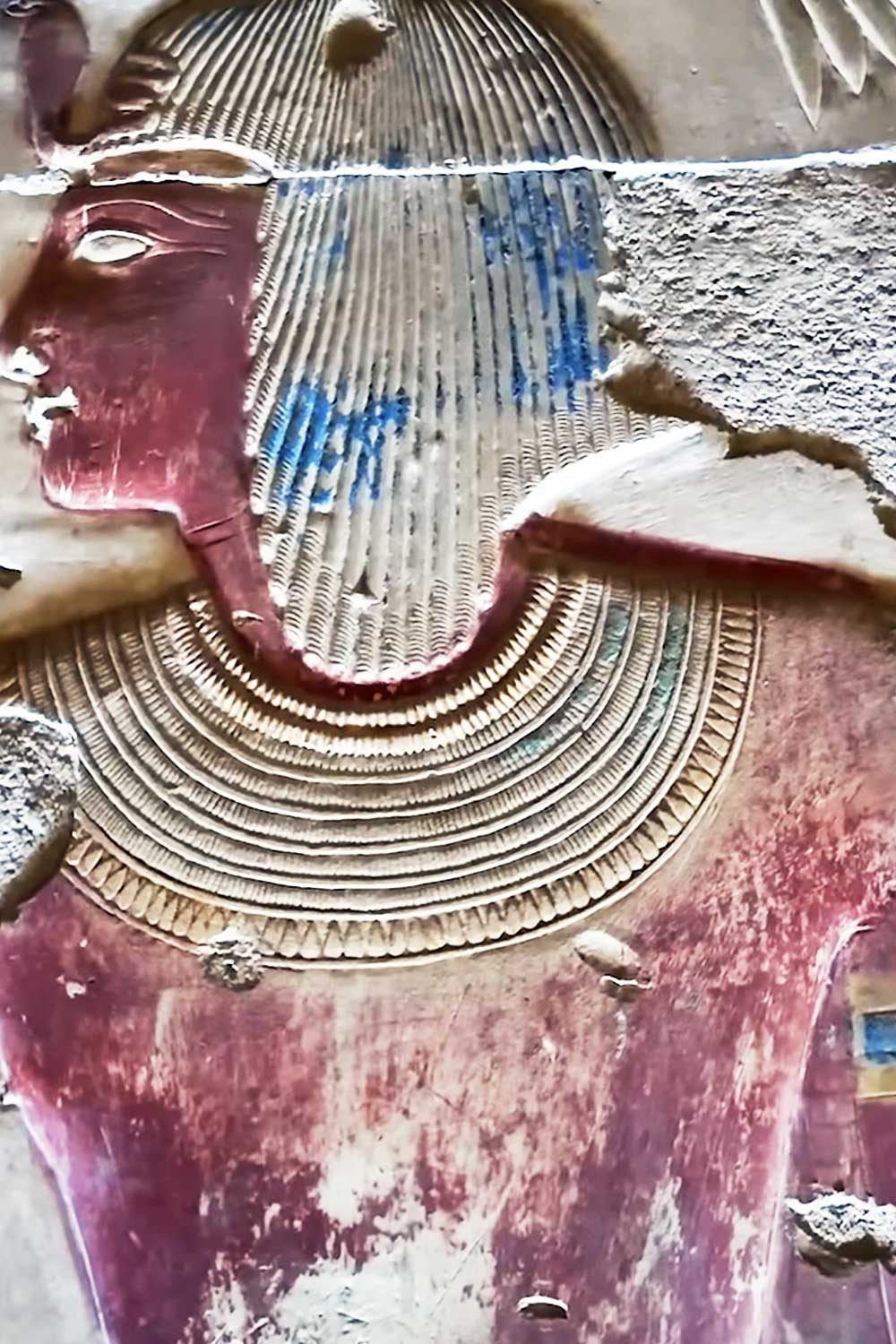
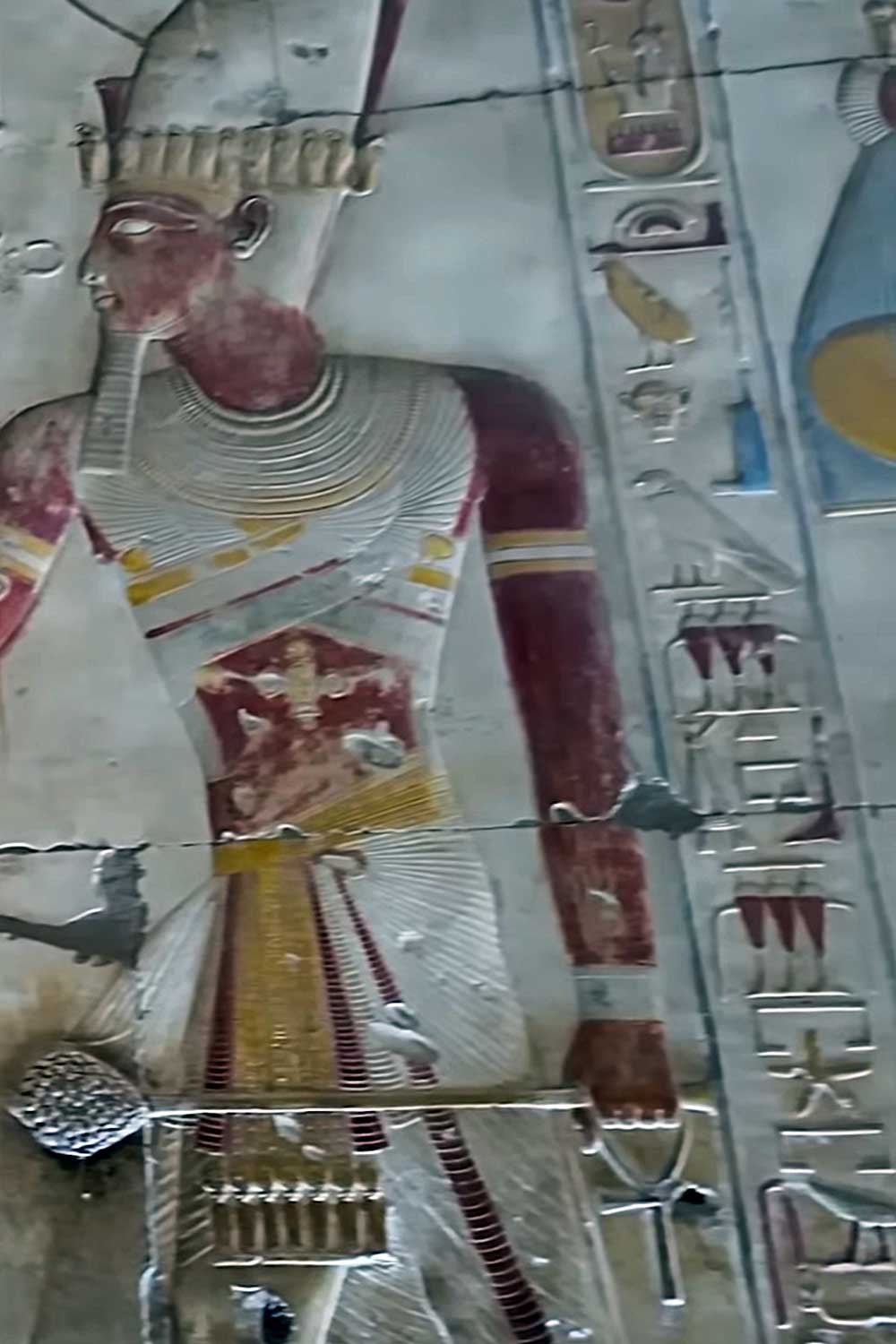
Portrait of Seti I from his temple in Abydos
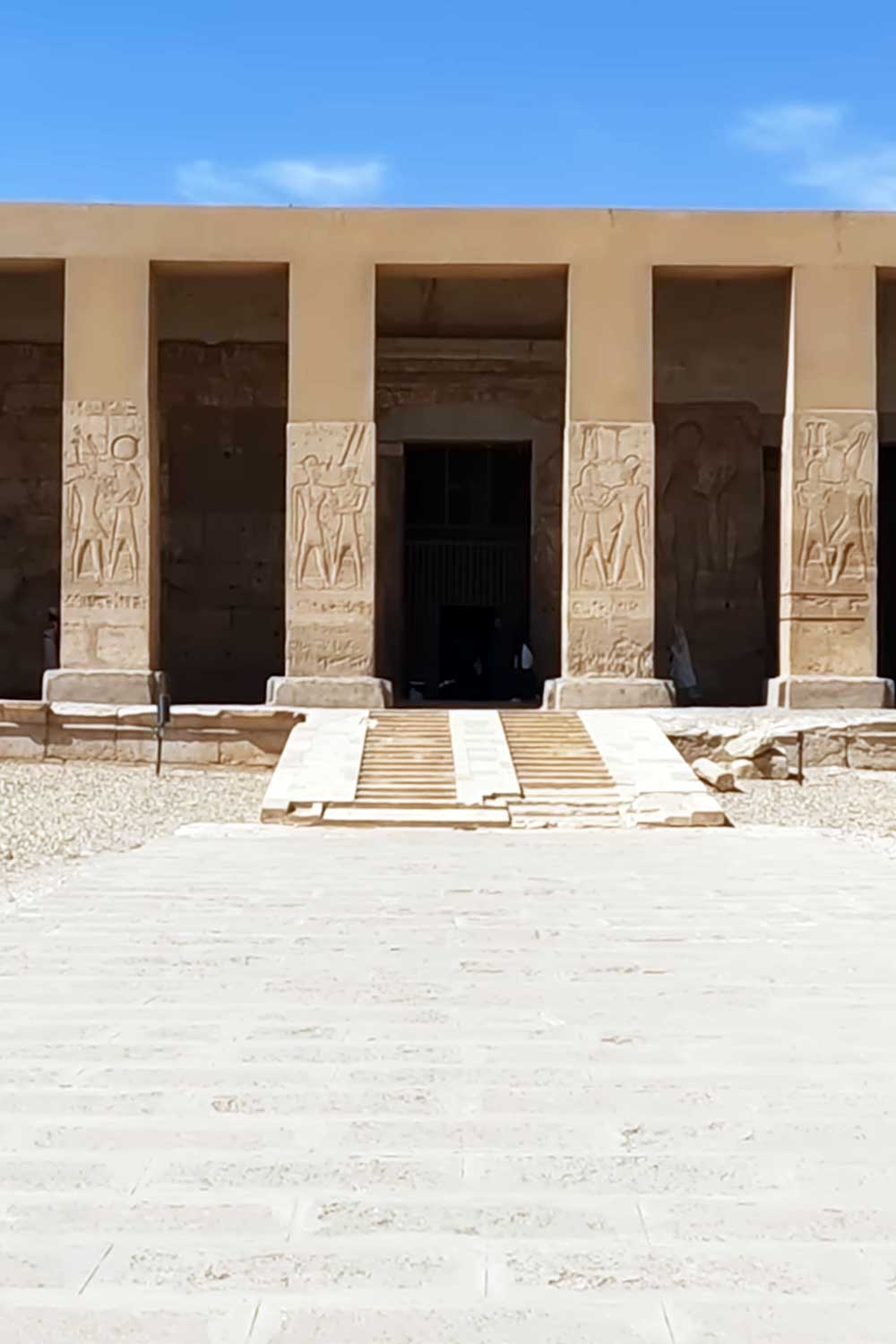
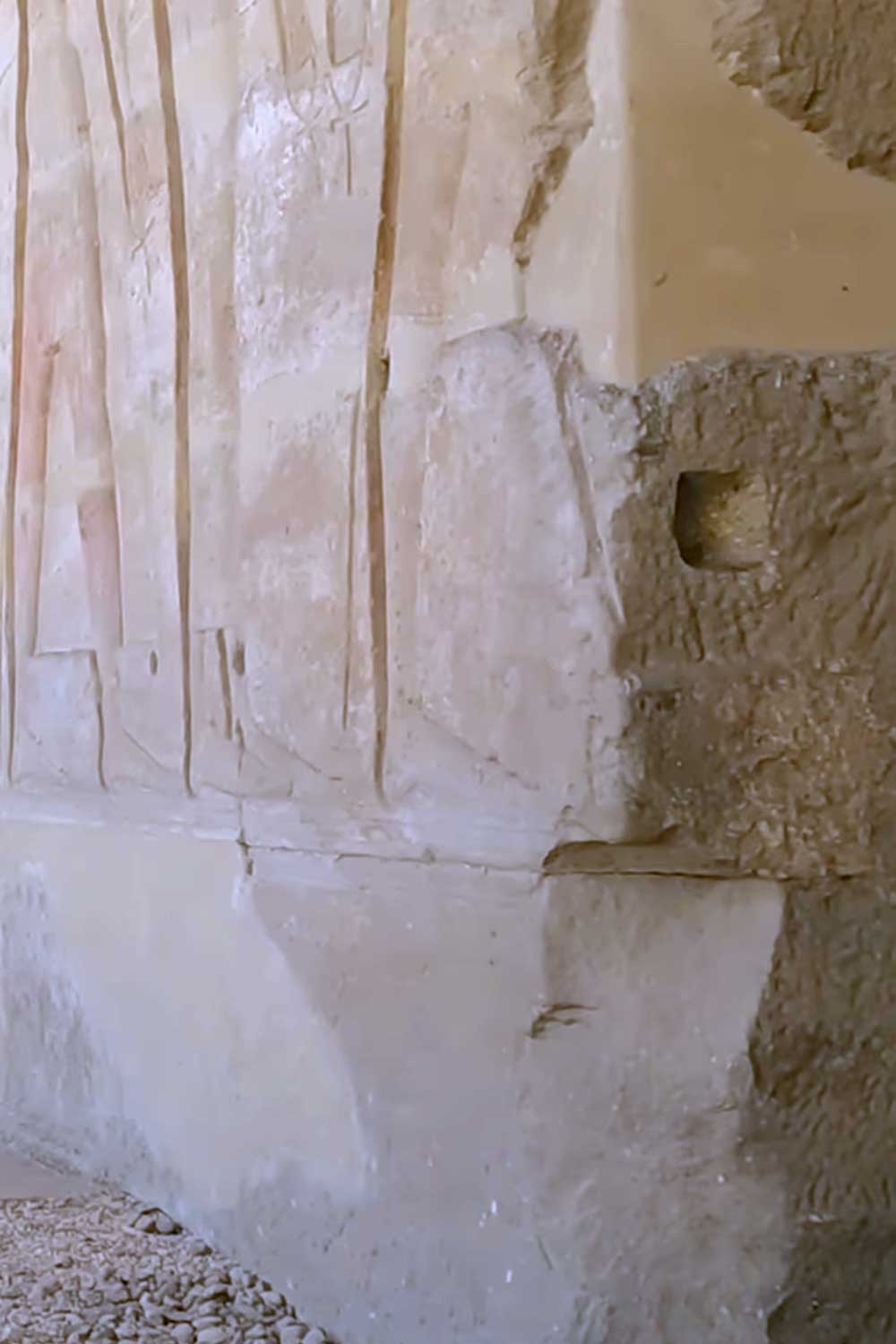
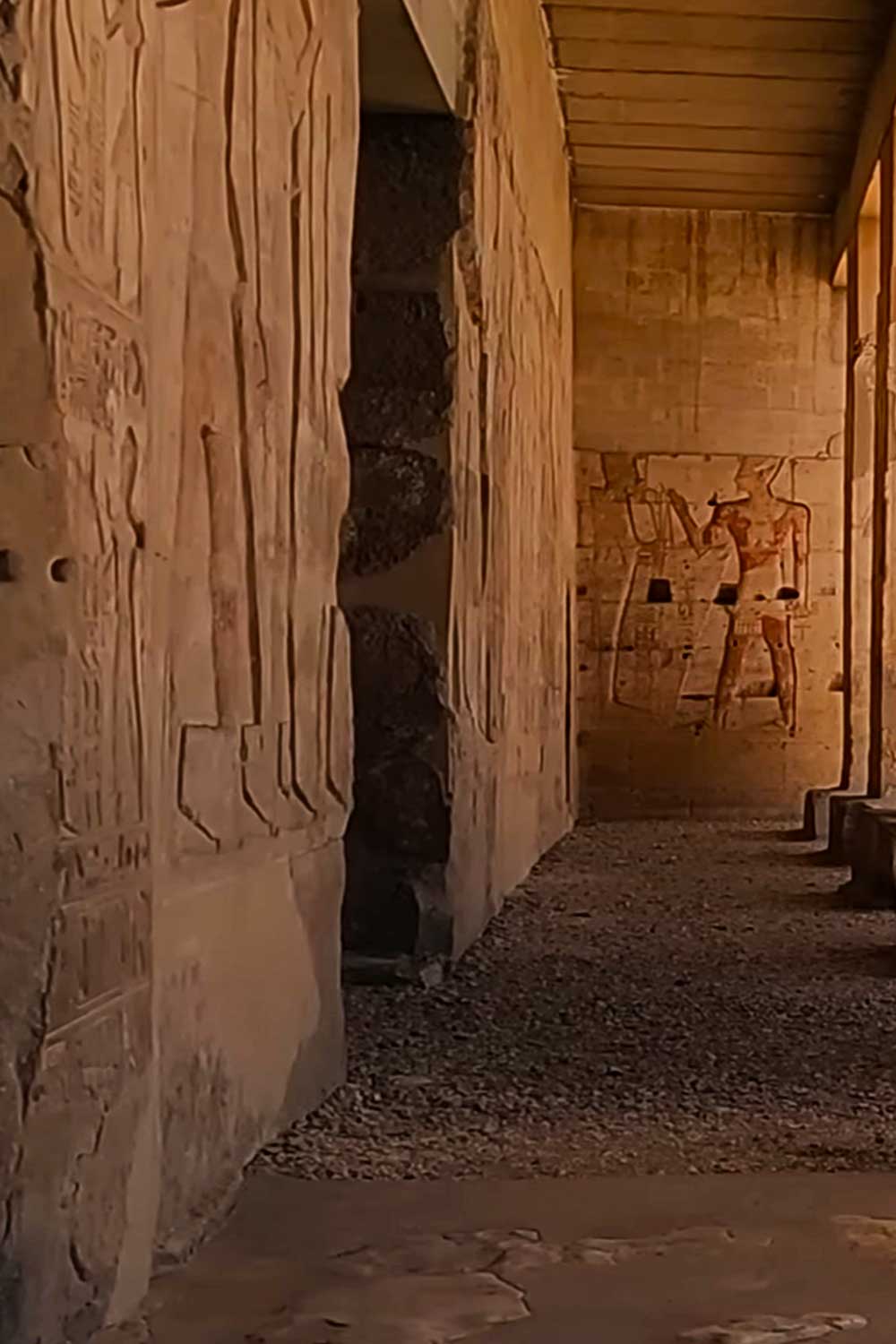
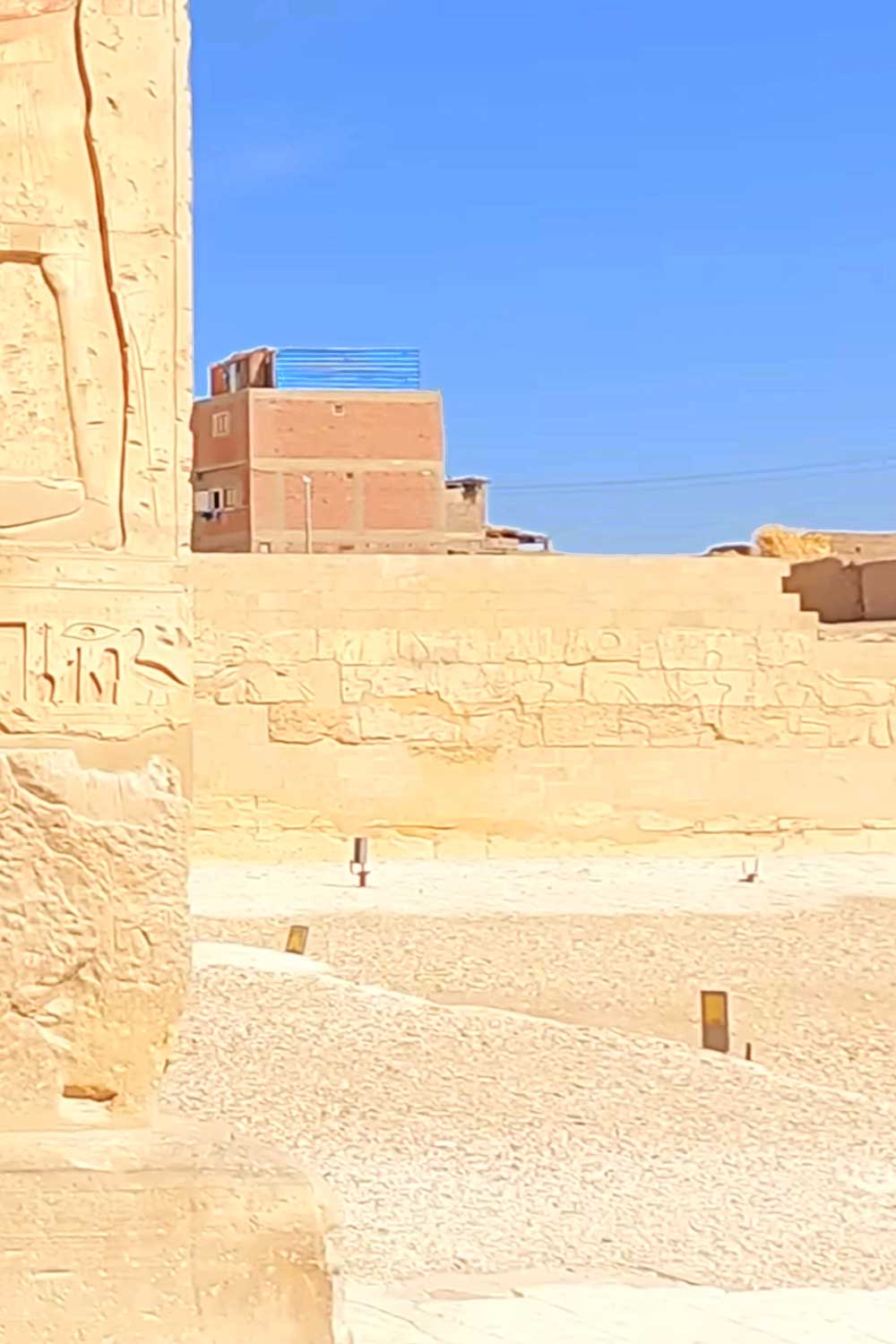
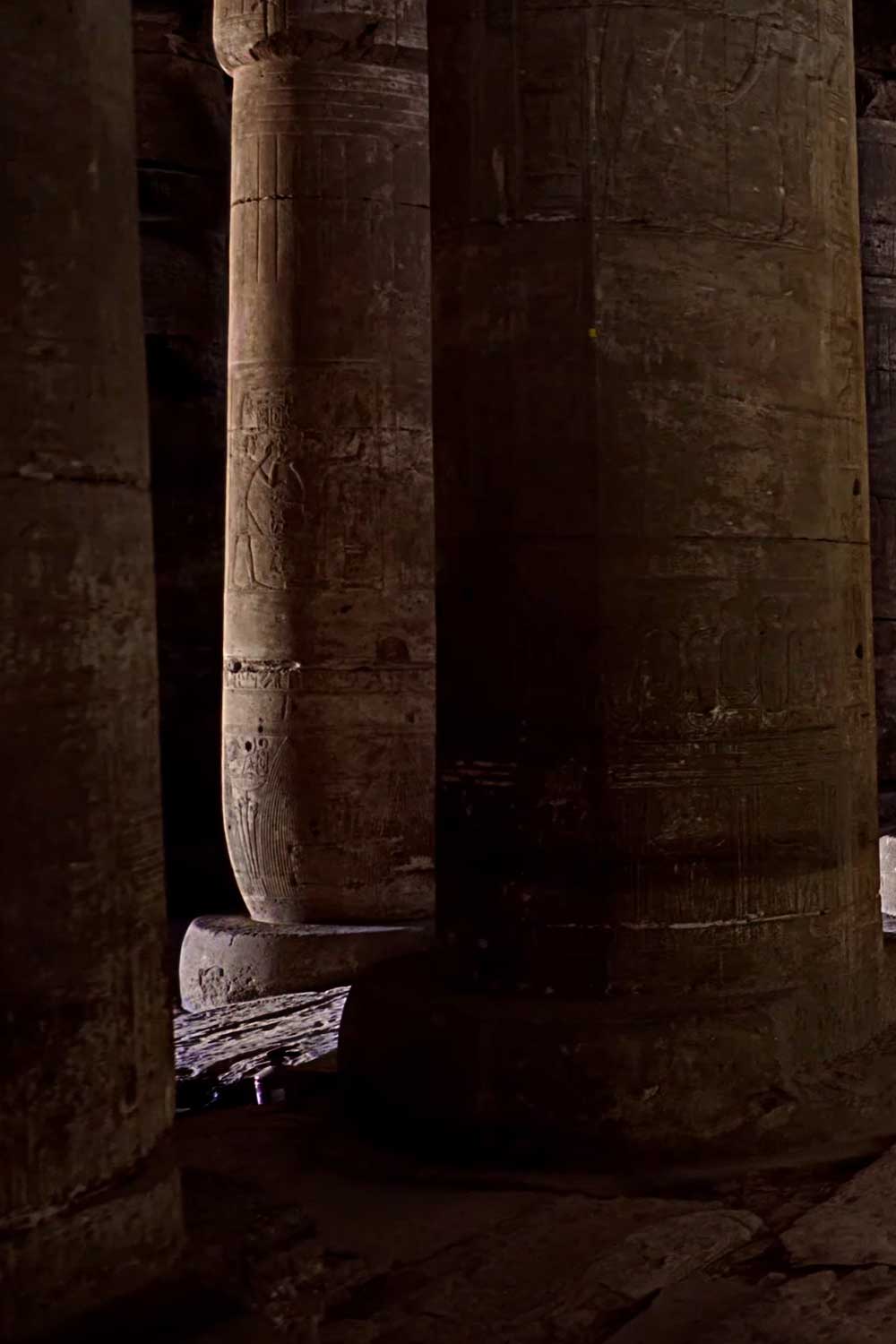
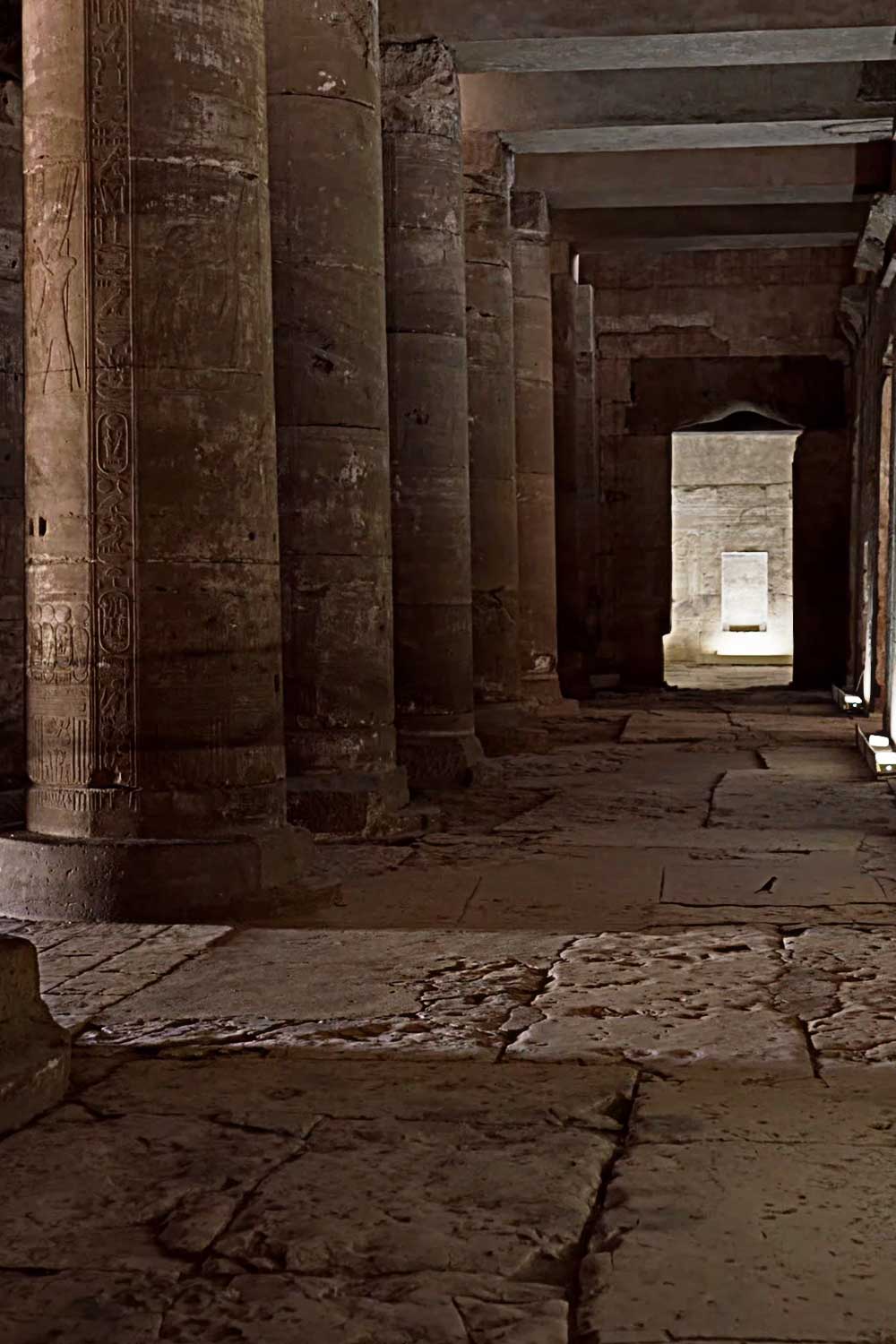
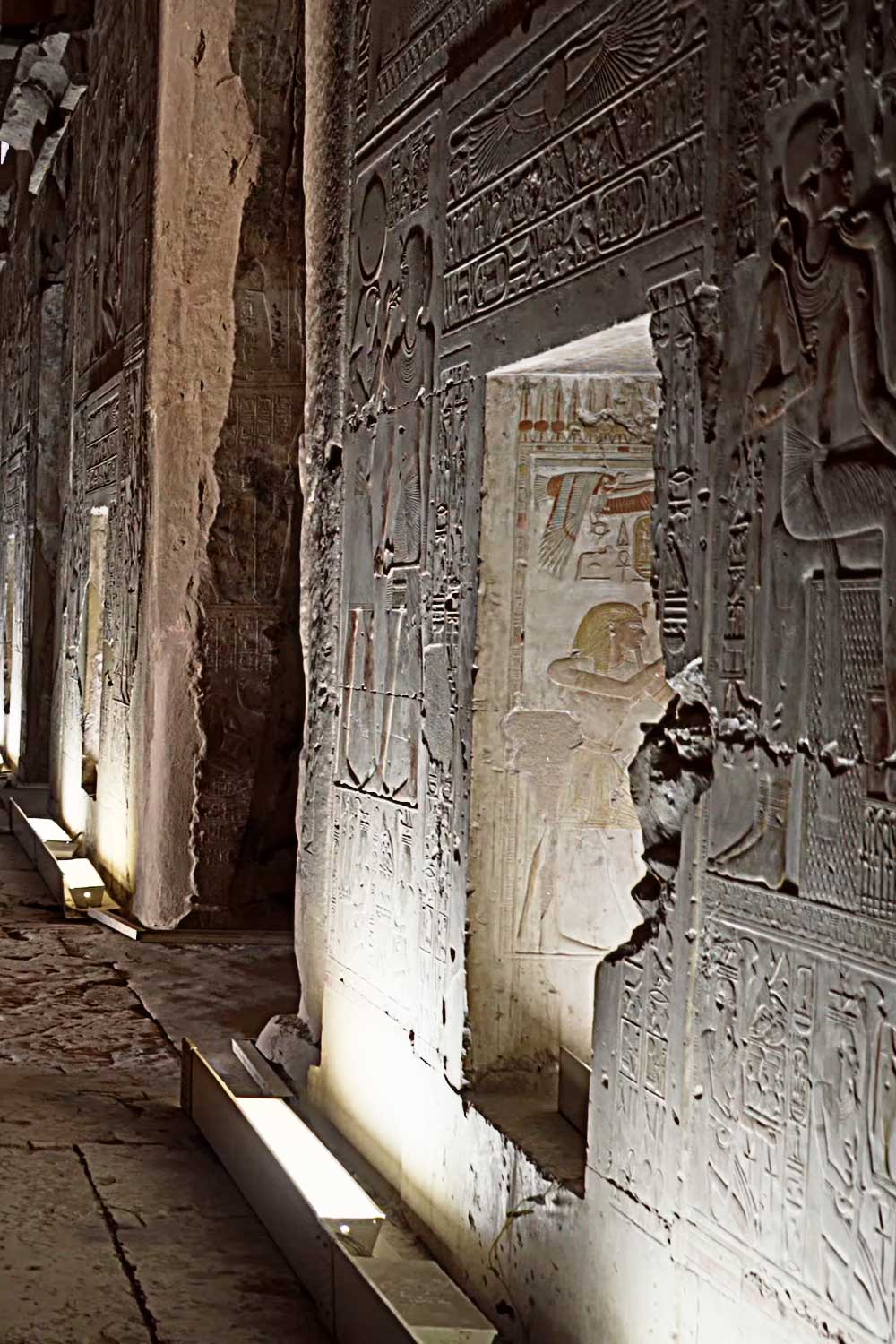
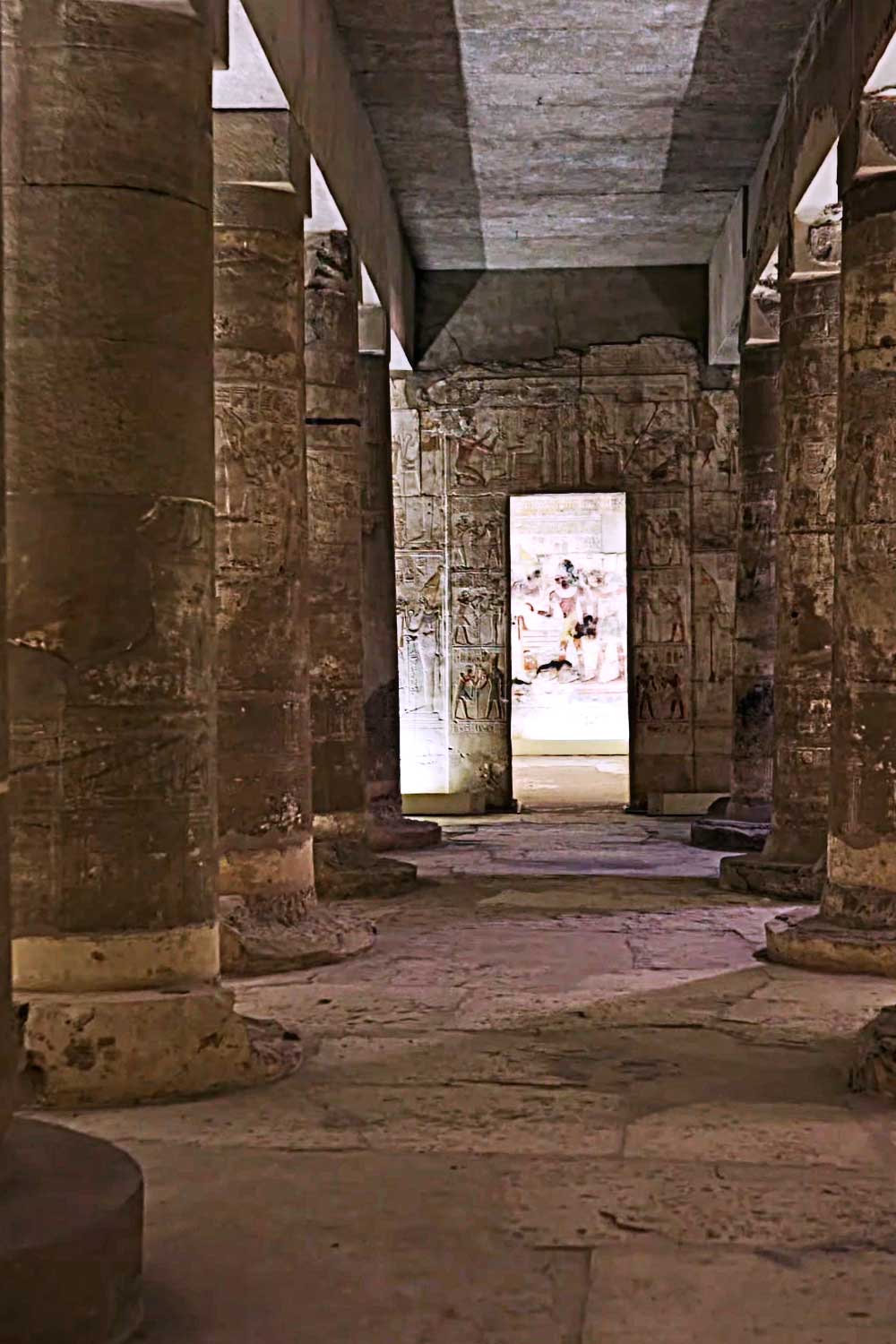
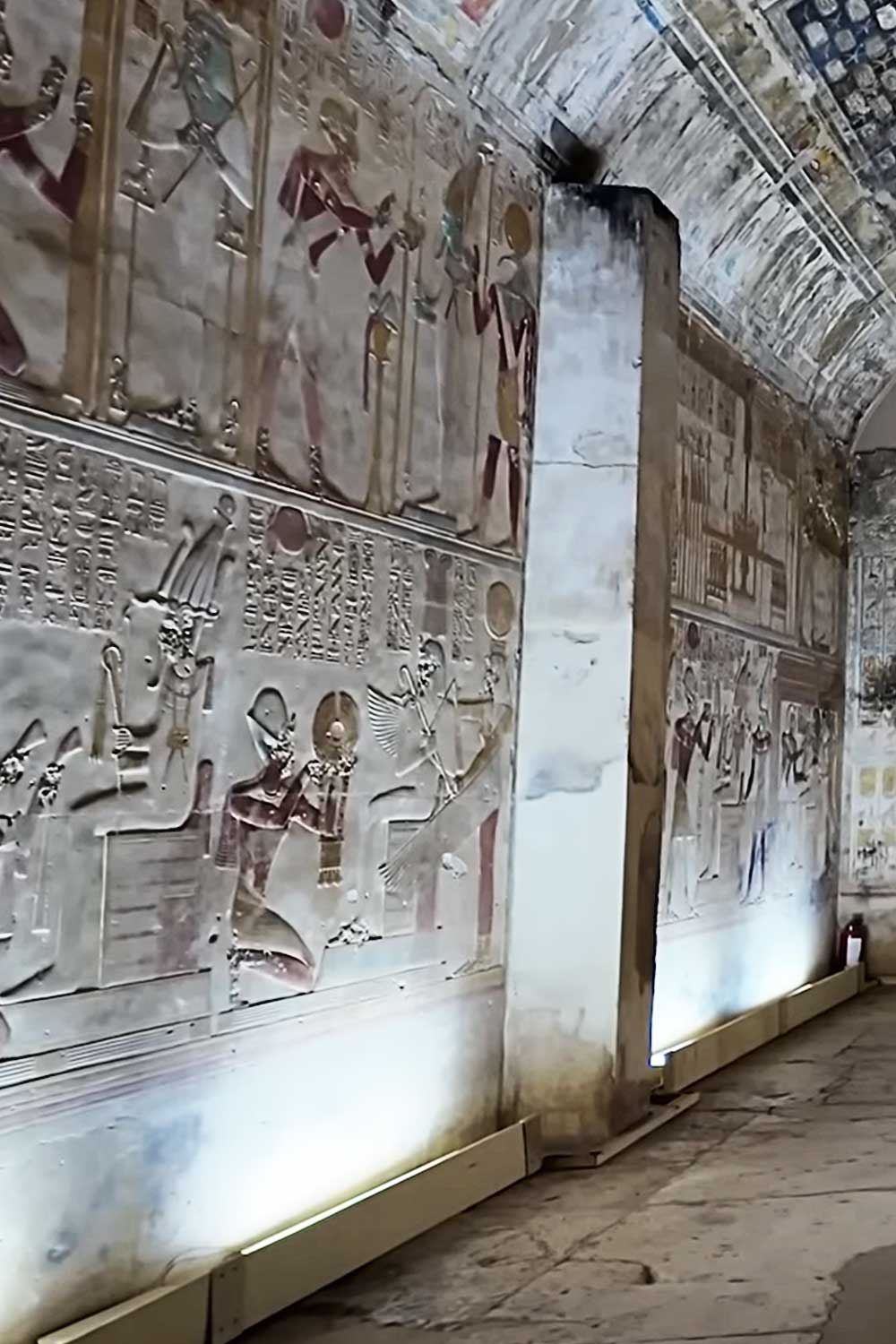
The Temple of Seti I is situated in Abydos, one of the most important archaeological sites of Ancient Egypt. Abydos lies in Upper Egypt, about 10 km from the Nile River. It served as a necropolis for Egypt’s earliest kings and later became a pilgrimage center dedicated to the worship of Osiris. Construction of the temple began during the reign of Seti I (1290–1279 BC) and was completed by his son, Ramesses II (1279–1213 BC). The temple complex comprises a series of courtyards, hypostyle halls, and chapels, all richly decorated with intricate carvings and hieroglyphs depicting scenes from Egyptian history and mythology. The Mortuary Temple of Seti I is divided into two main sections: the outer court and the inner court. Outer Court: This area contained several chapels dedicated to deities such as Amun-Ra, Ptah, Osiris, Isis, Horus, Anubis, and Hathor. Smaller shrines honored gods including Khonsu and Sobek, while statues of other deities were placed throughout the court. Inner Court: The inner section housed three principal structures: a hypostyle hall (a vast hall supported by numerous columns), an offering chapel (where ritual offerings were made), and a sanctuary (reserved for priestly ceremonies). The walls were adorned with reliefs depicting episodes from Seti I’s reign and mythological scenes, such as Ra-Horakhty’s battle against Apophis and Isis mourning the death of Osiris.

Temple of Abydos

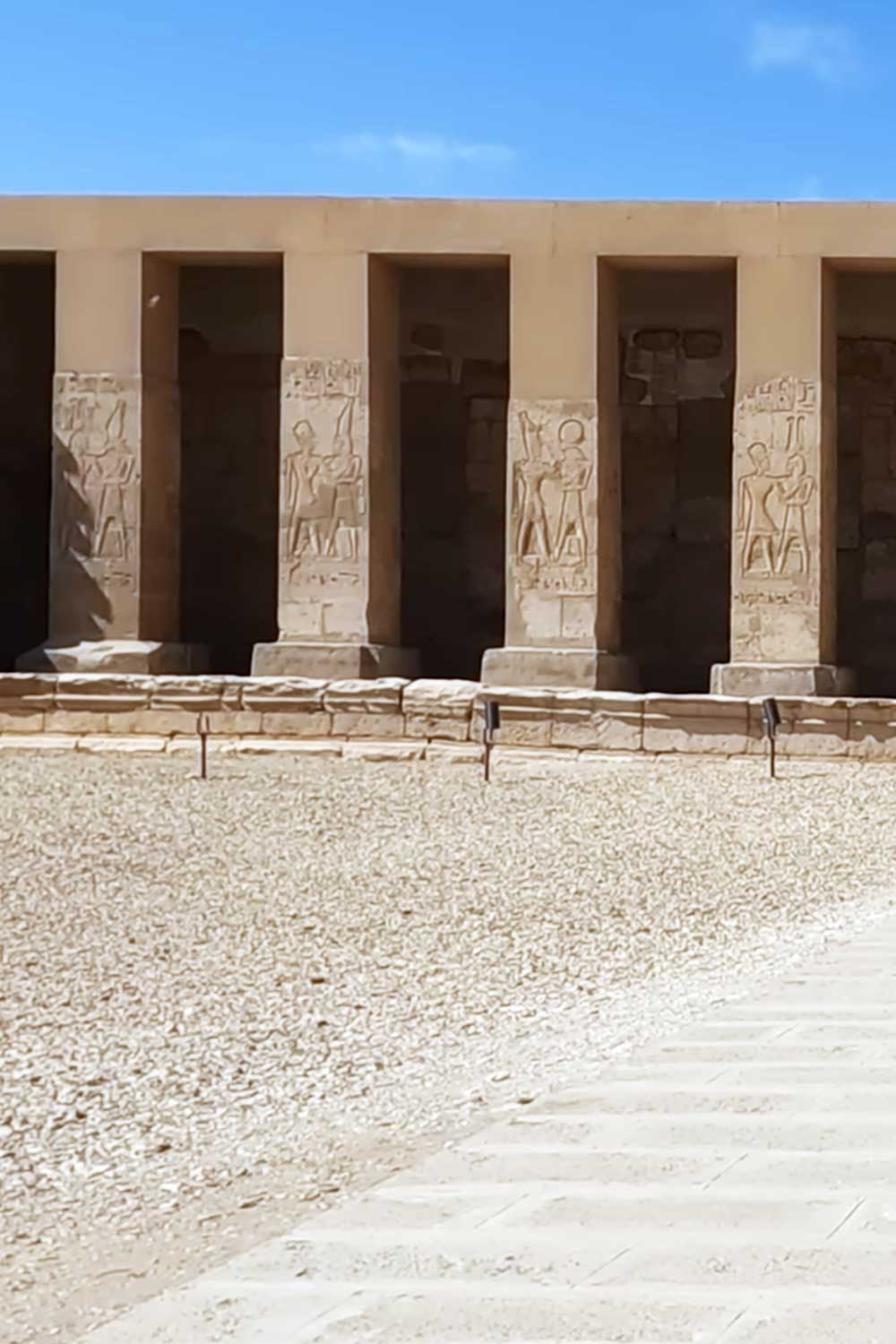
1.) Entrance to the Temple of Seti at Abydos
2.)
3.)
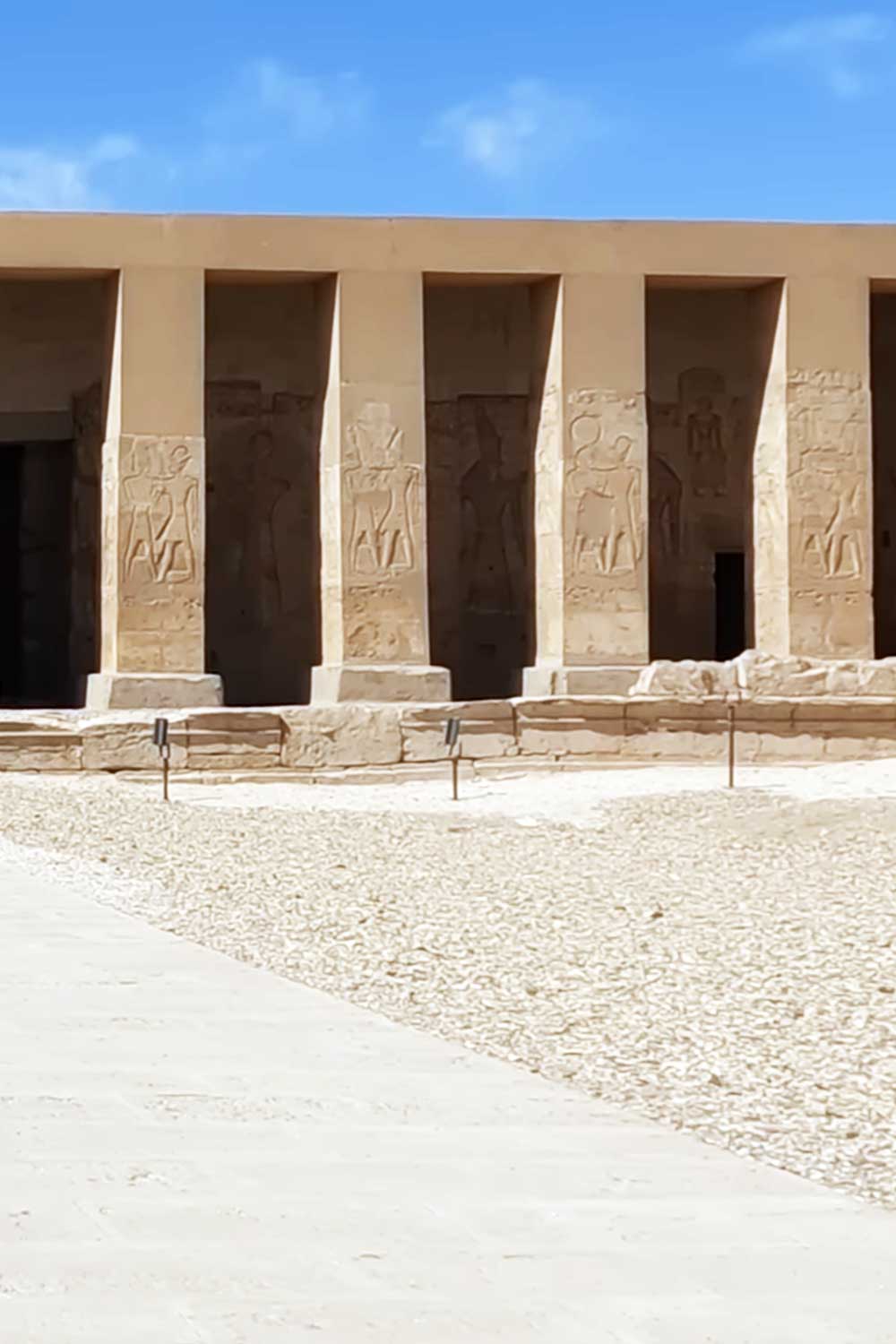
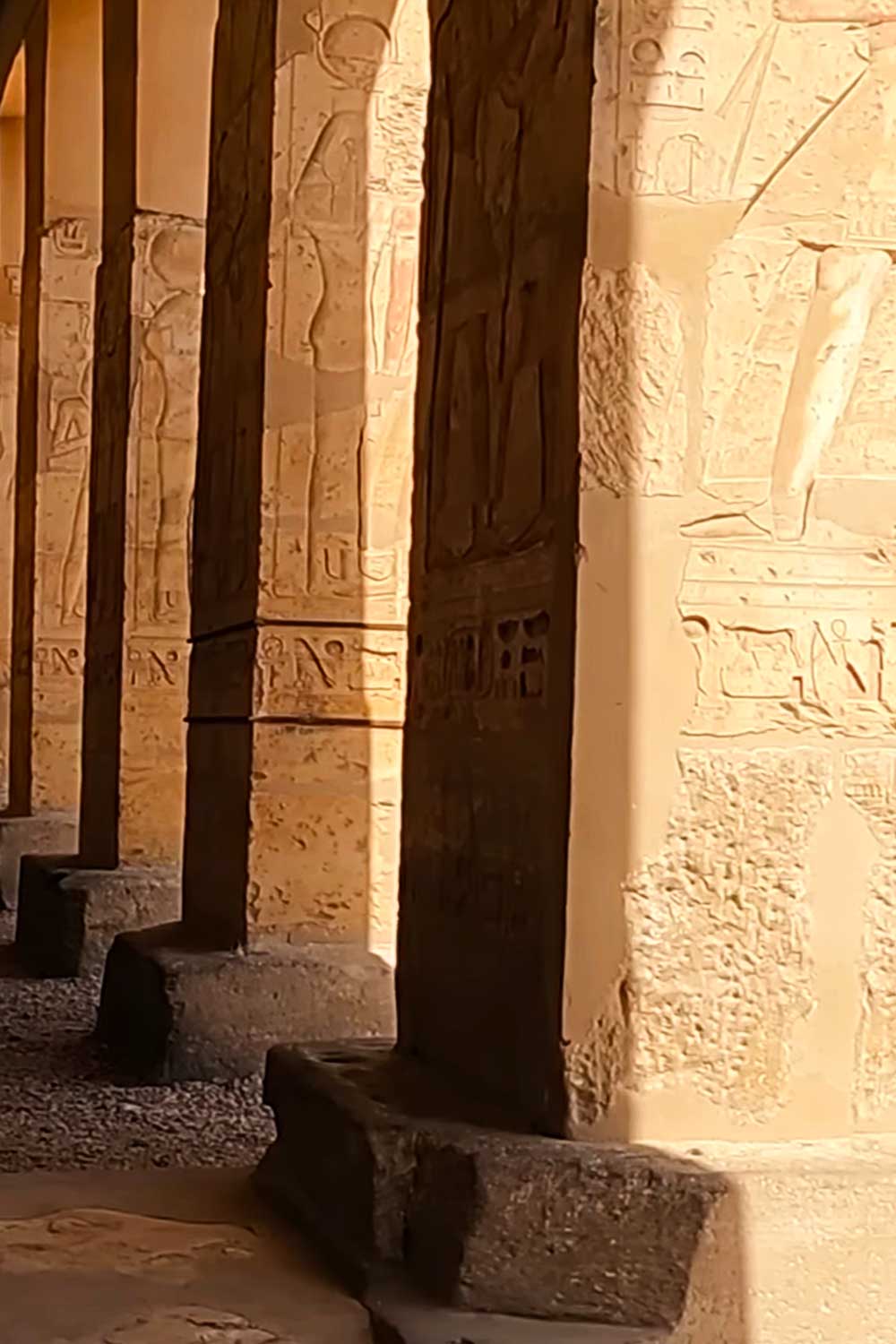
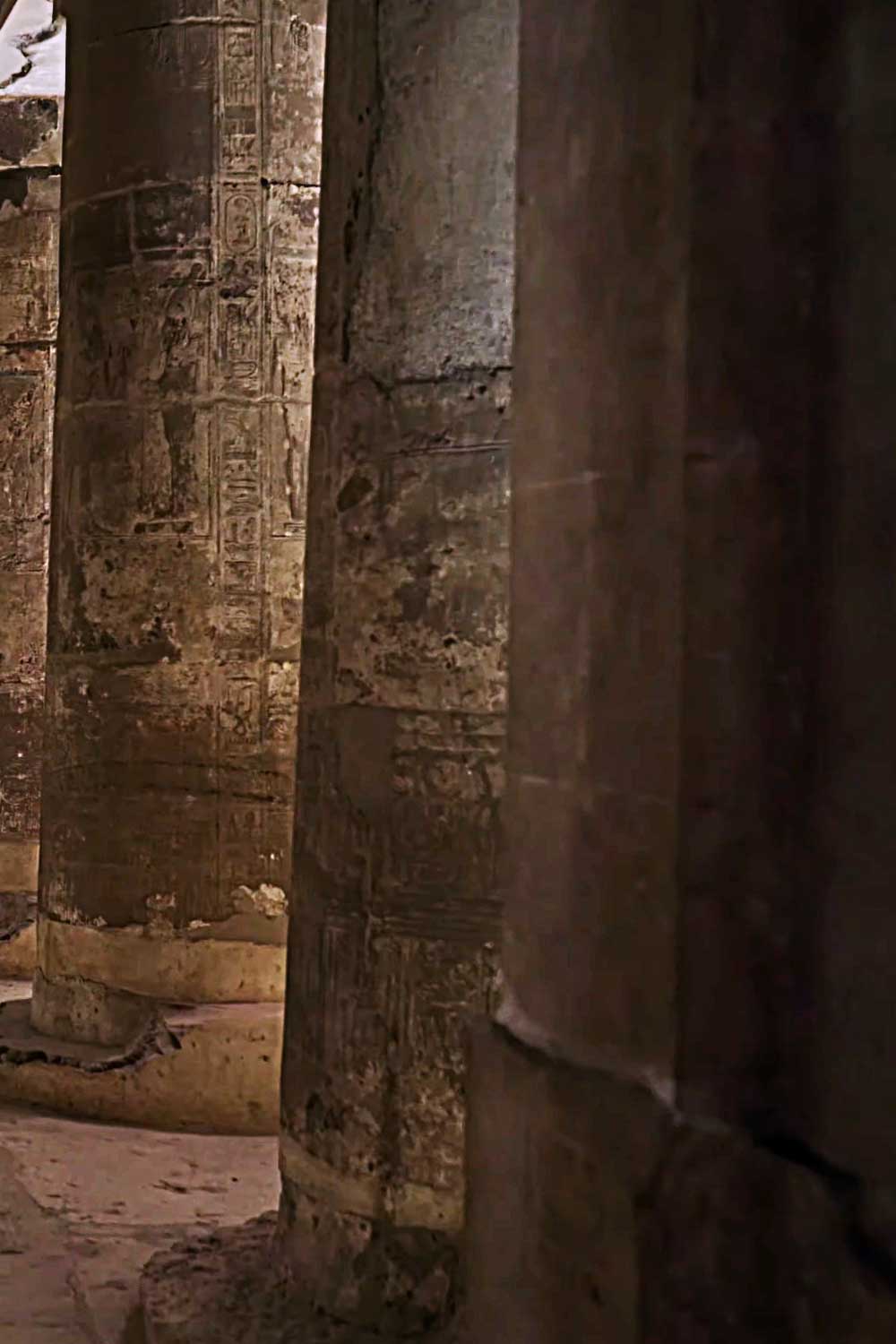
1.) The left colonnade at the entrance to the Temple of Seti
2.)
3.)
1.) The right colonnade at the entrance to the Temple of Seti
2.)
3.)
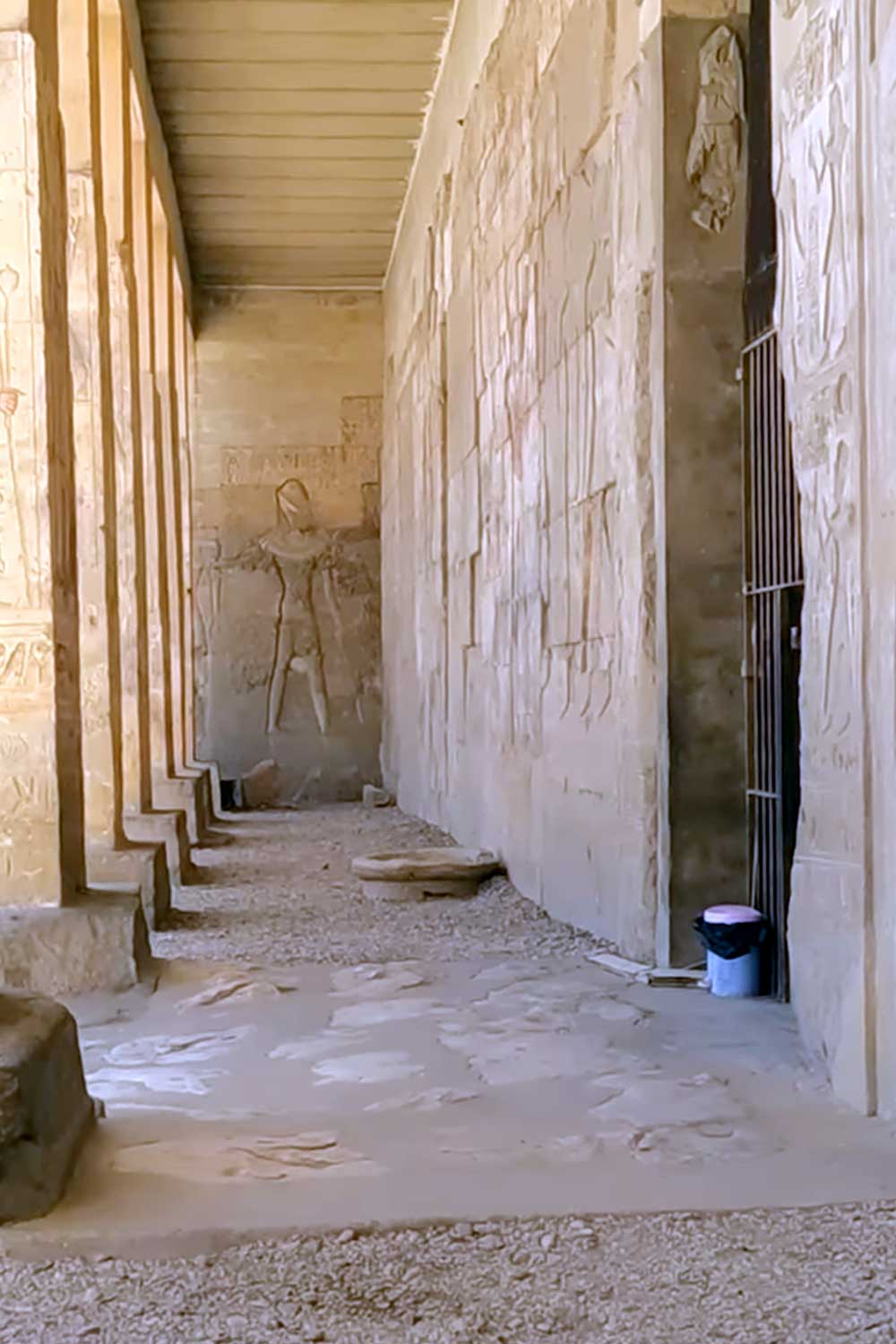
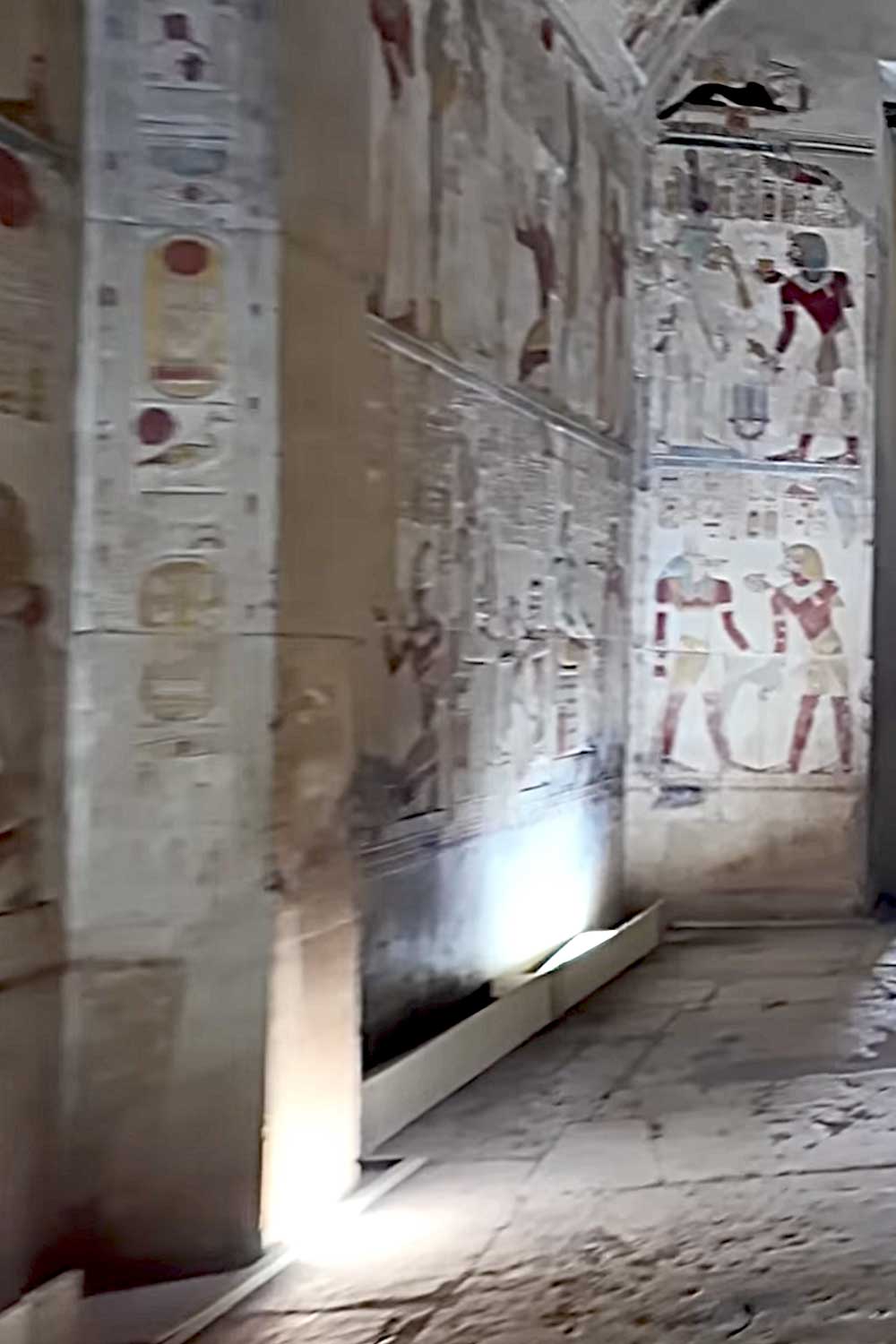
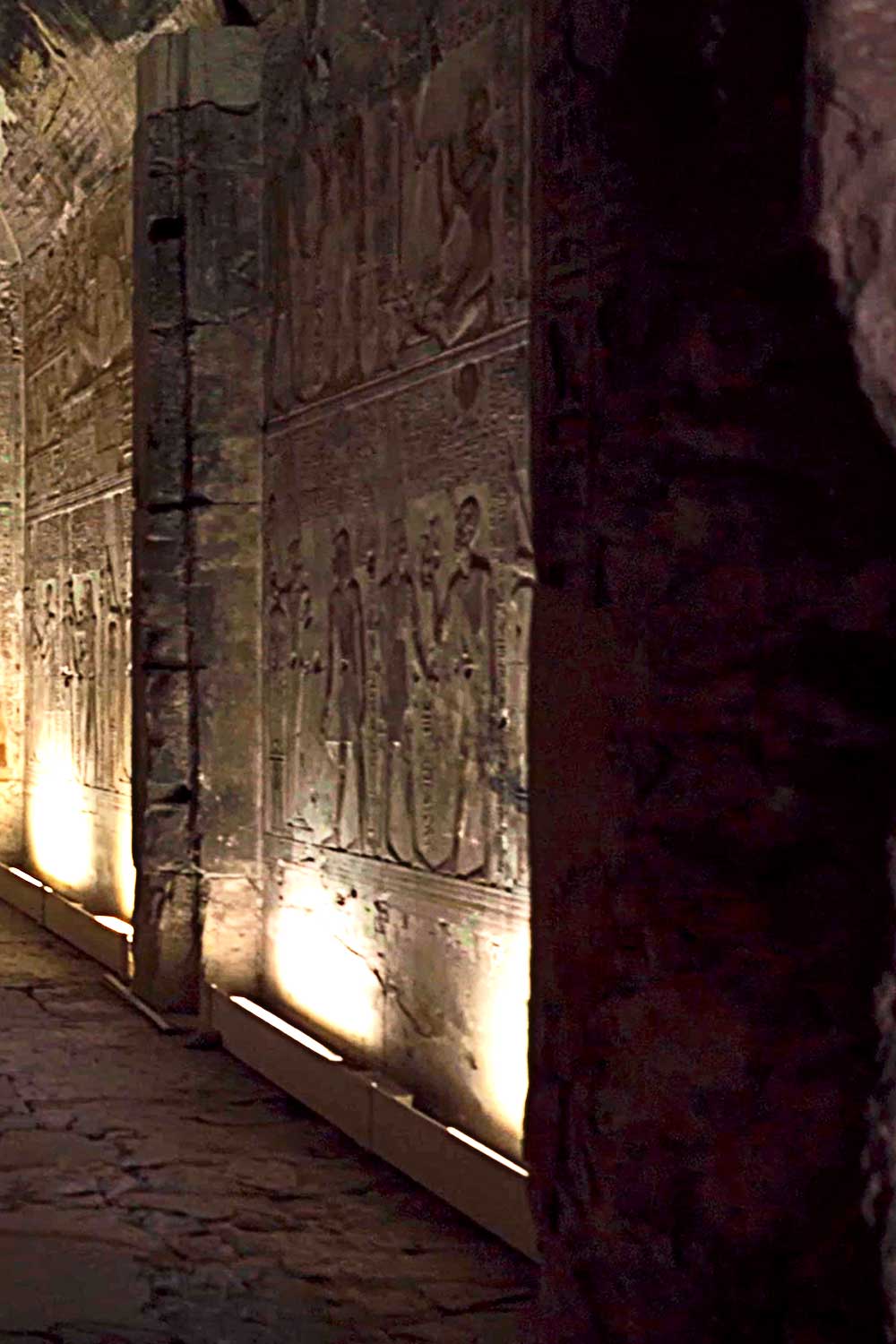
1.) Corridors connecting to other temples, chapels, and to other rooms 
2.) and spaces
3.)
1.) Corridors connecting to other temples, chapels, and to other rooms
2.) and spaces
3.)
1.) Corridors connecting to other temples, chapels, and to other rooms
2.) and spaces
3.)
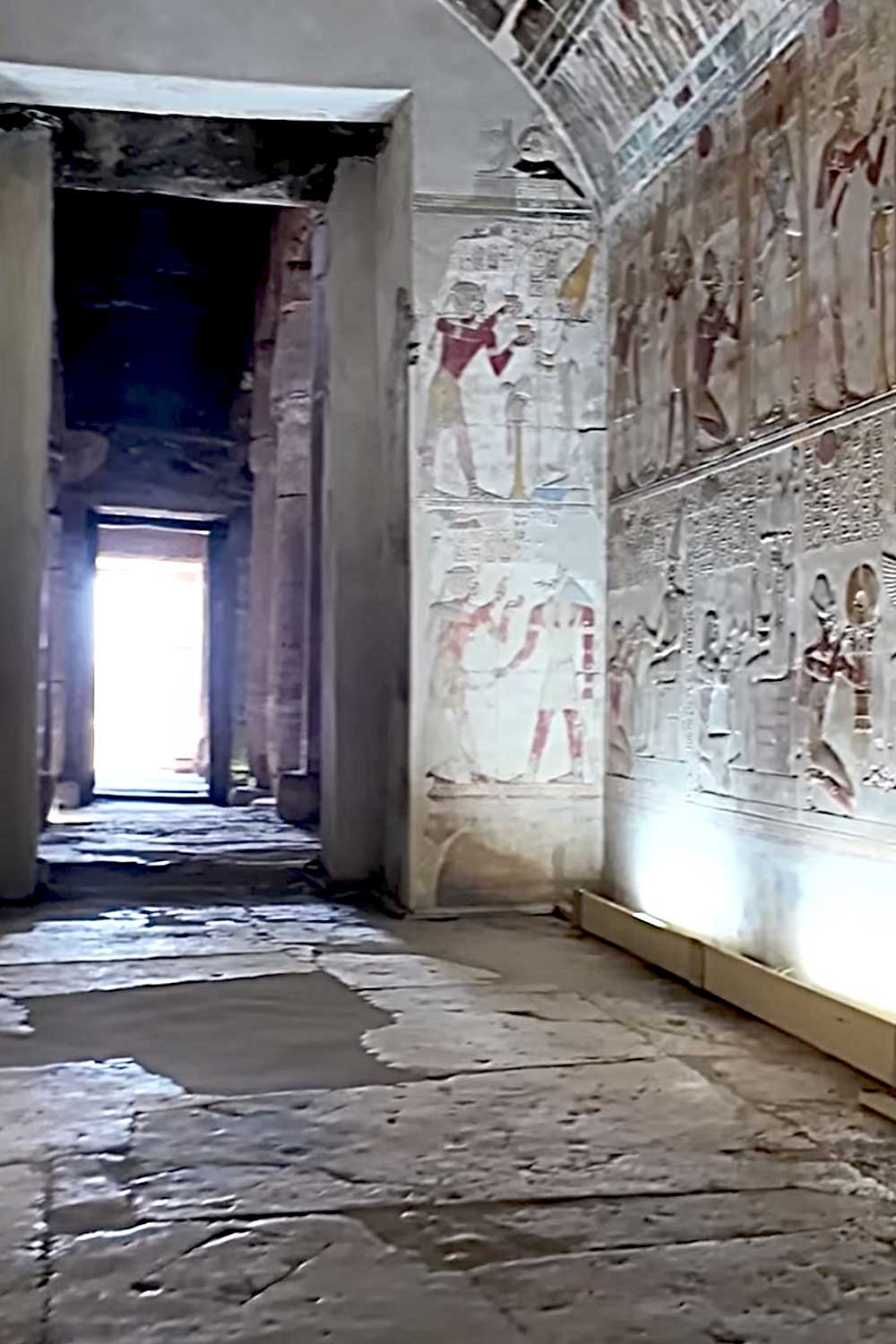
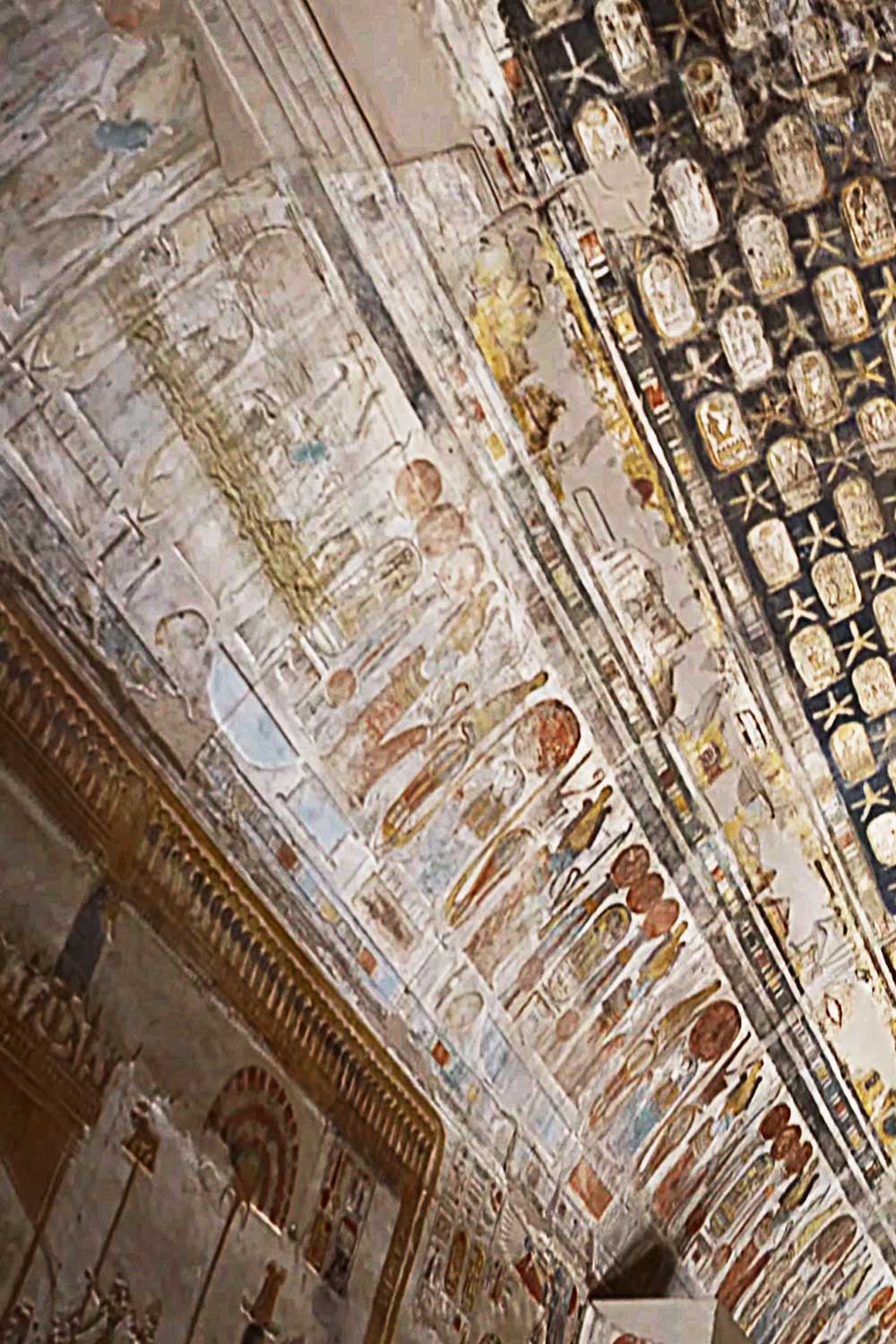
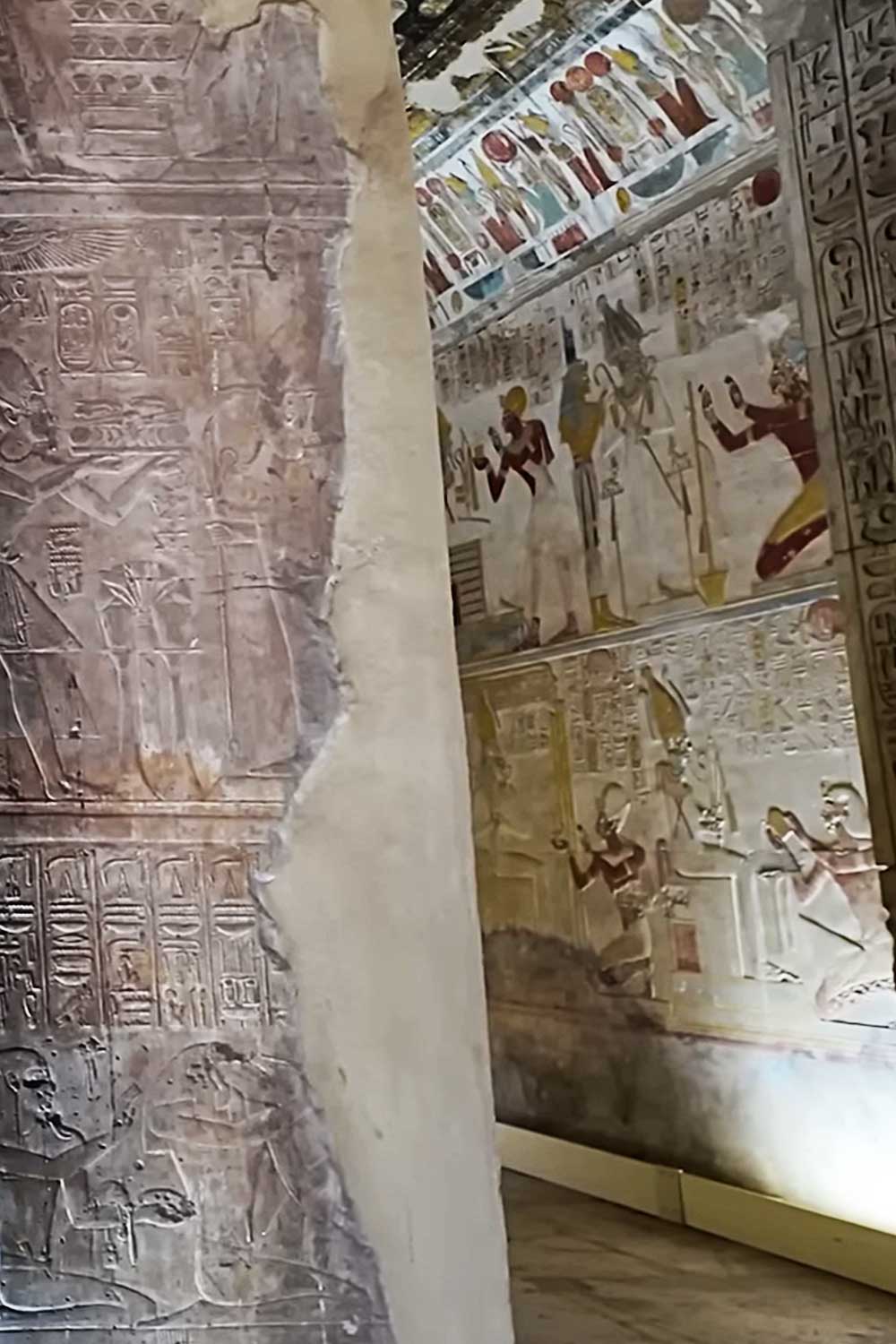
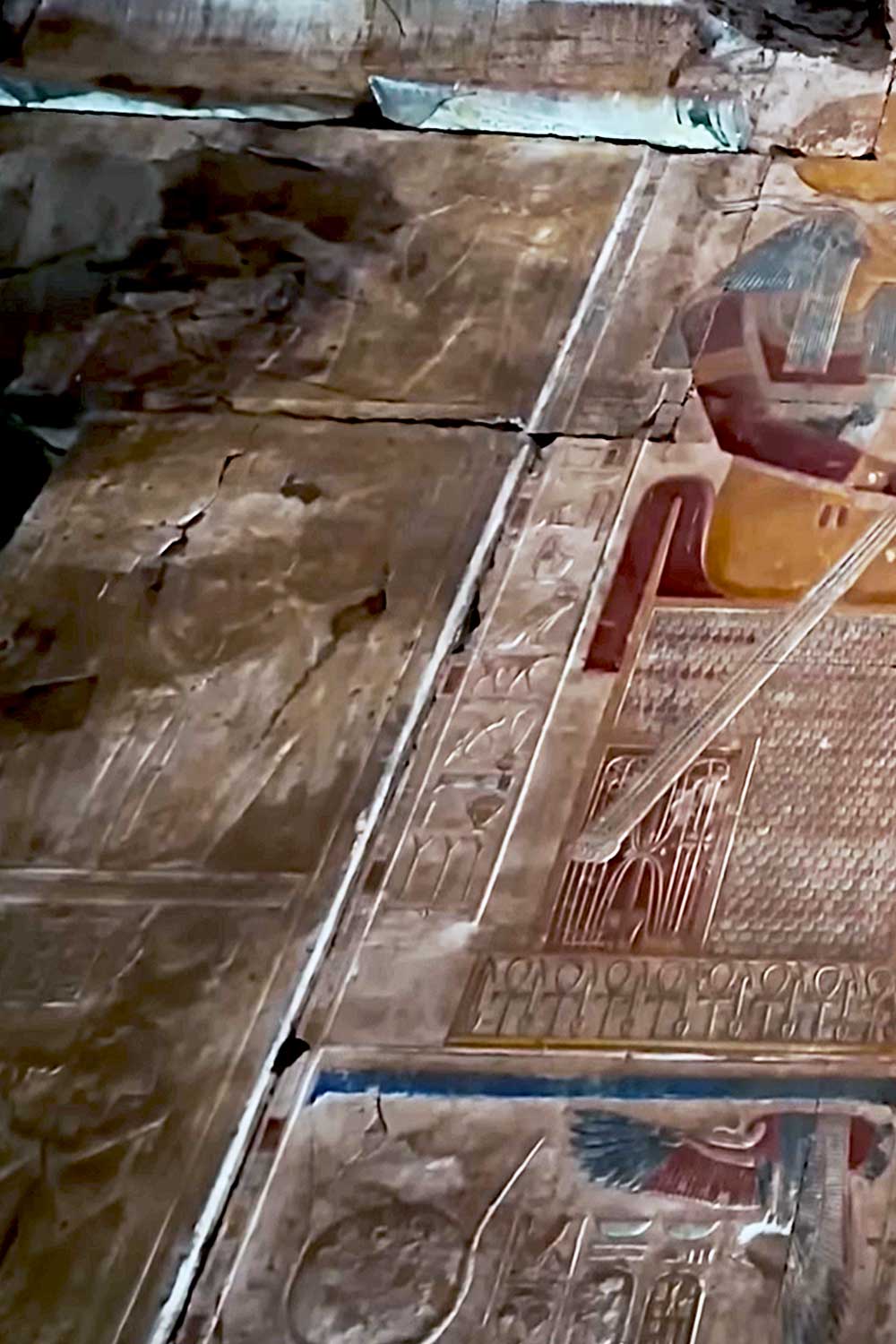
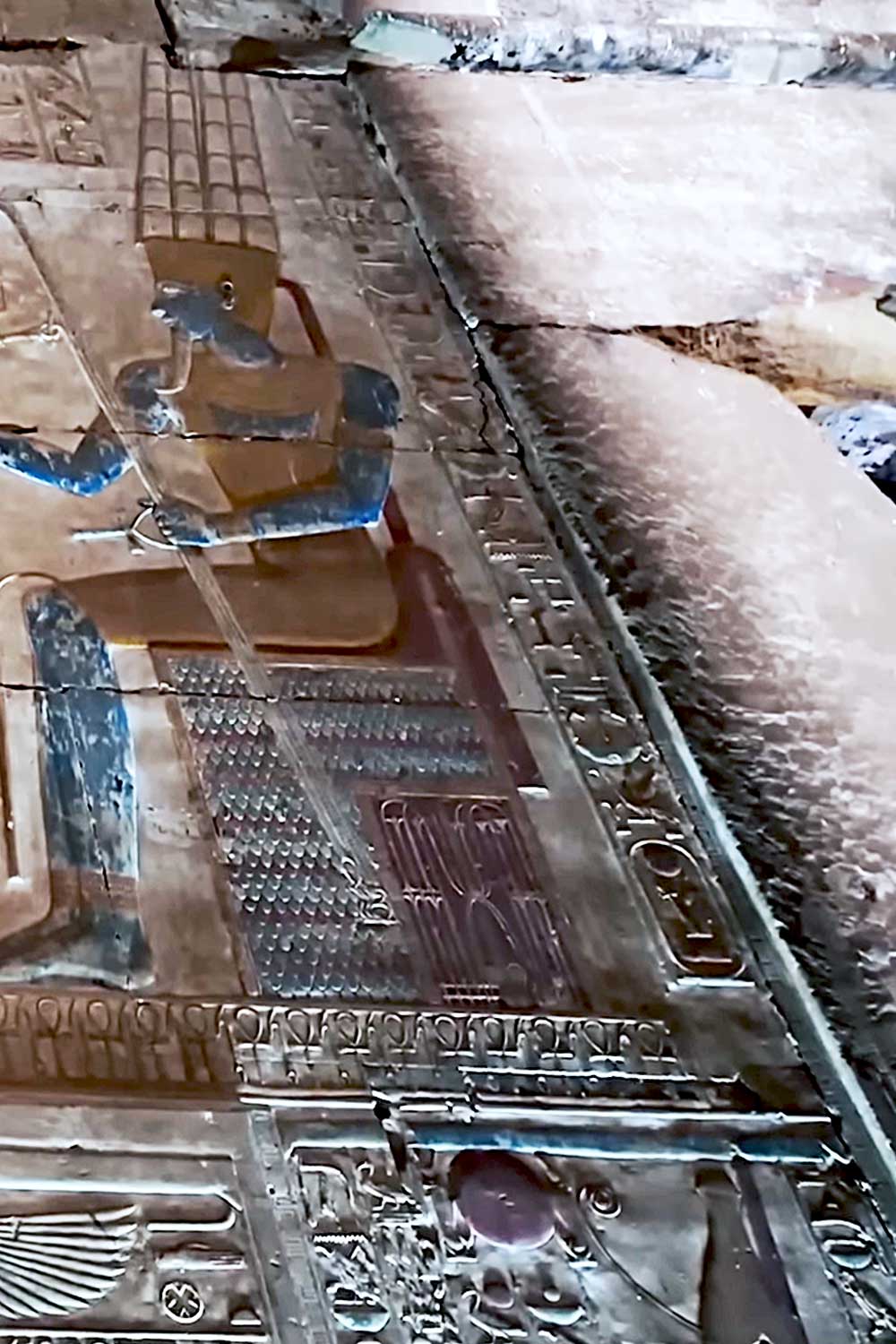
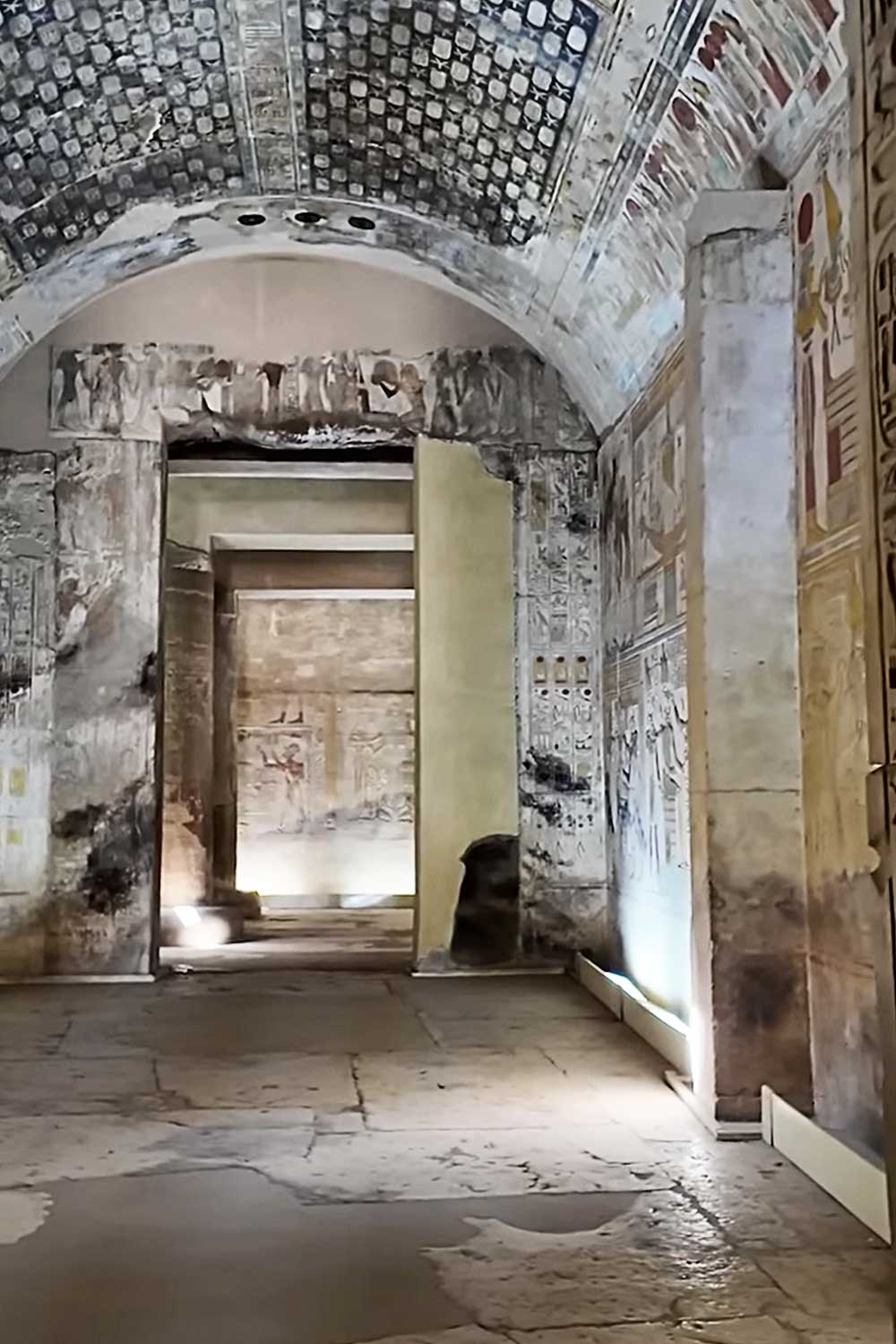
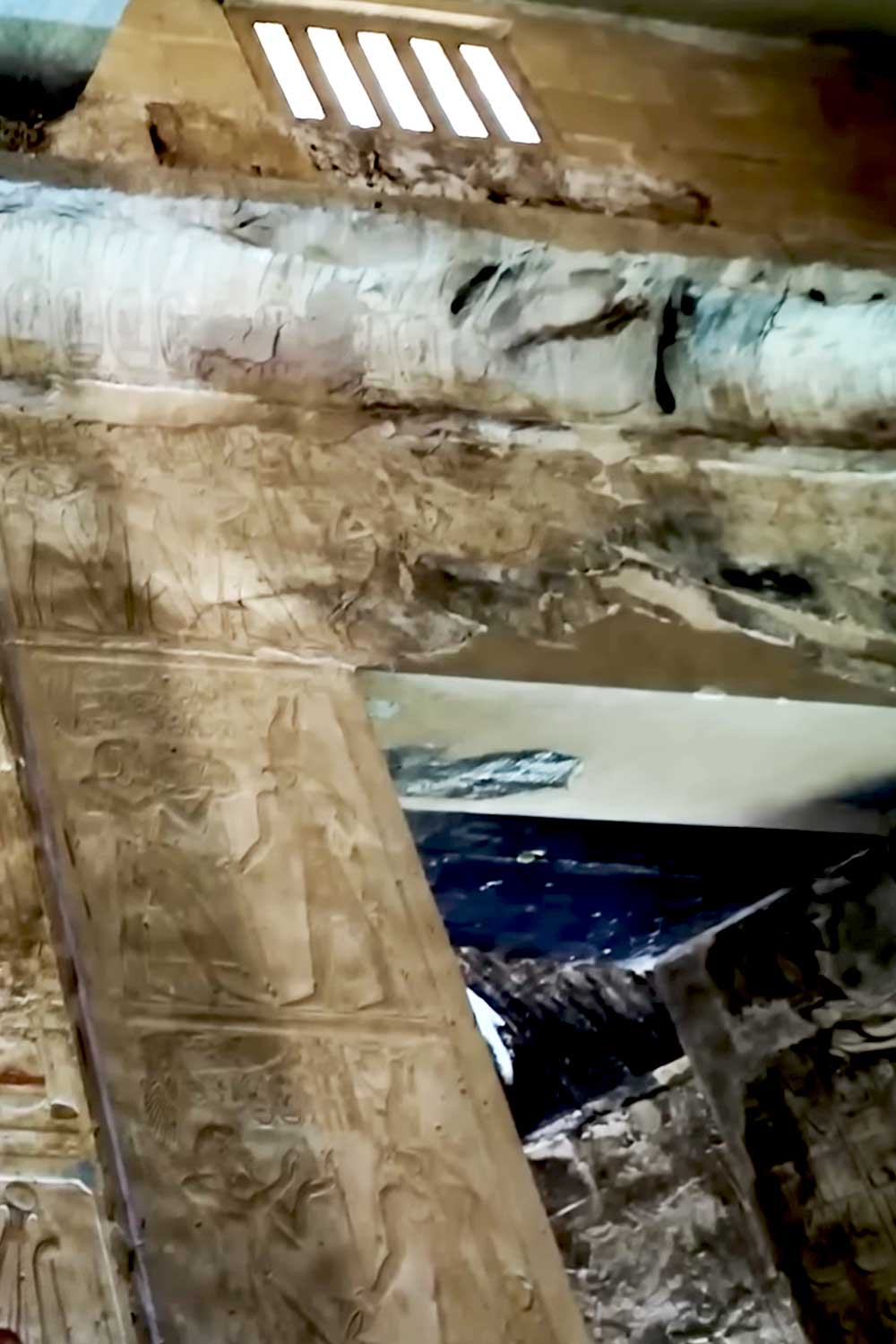
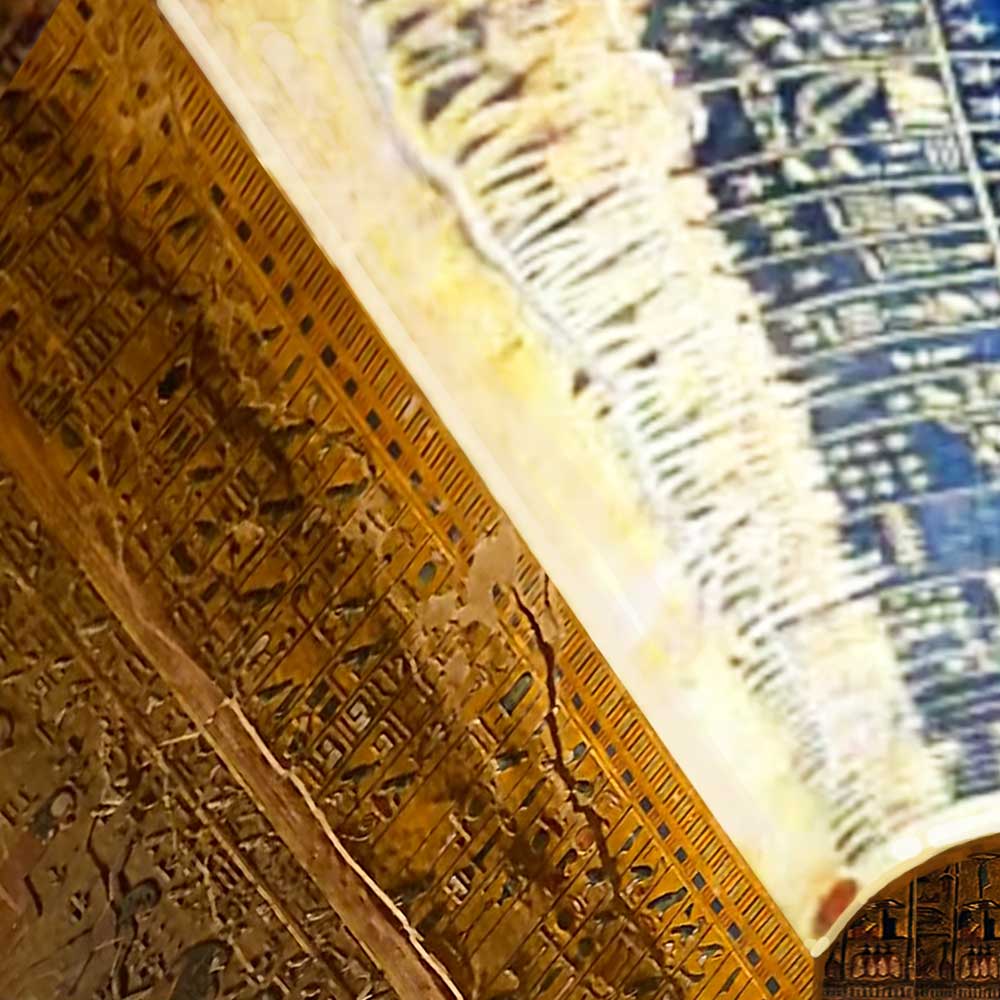
1.) Magnificent painted ceilings of the corridors
2.)
3.)
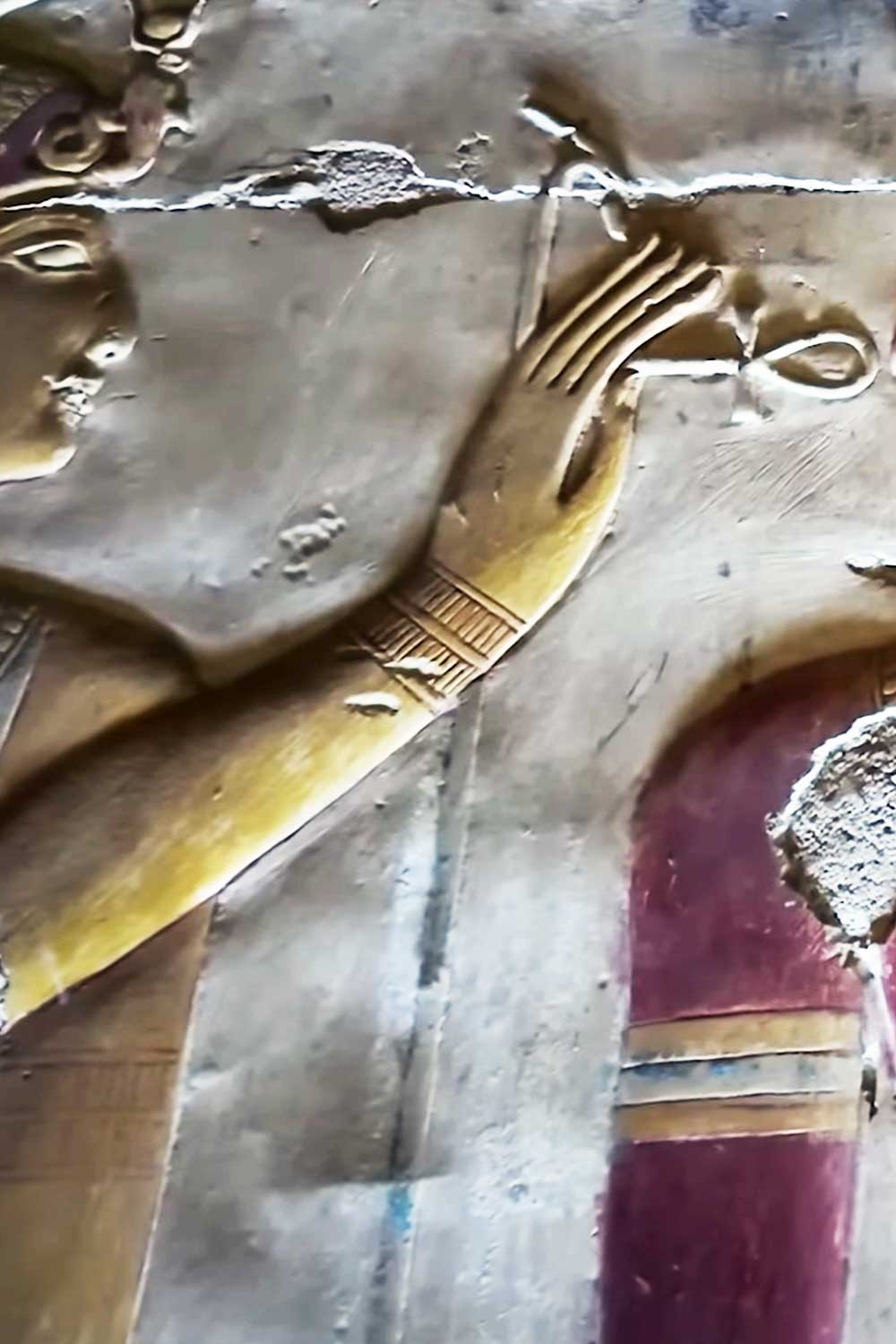
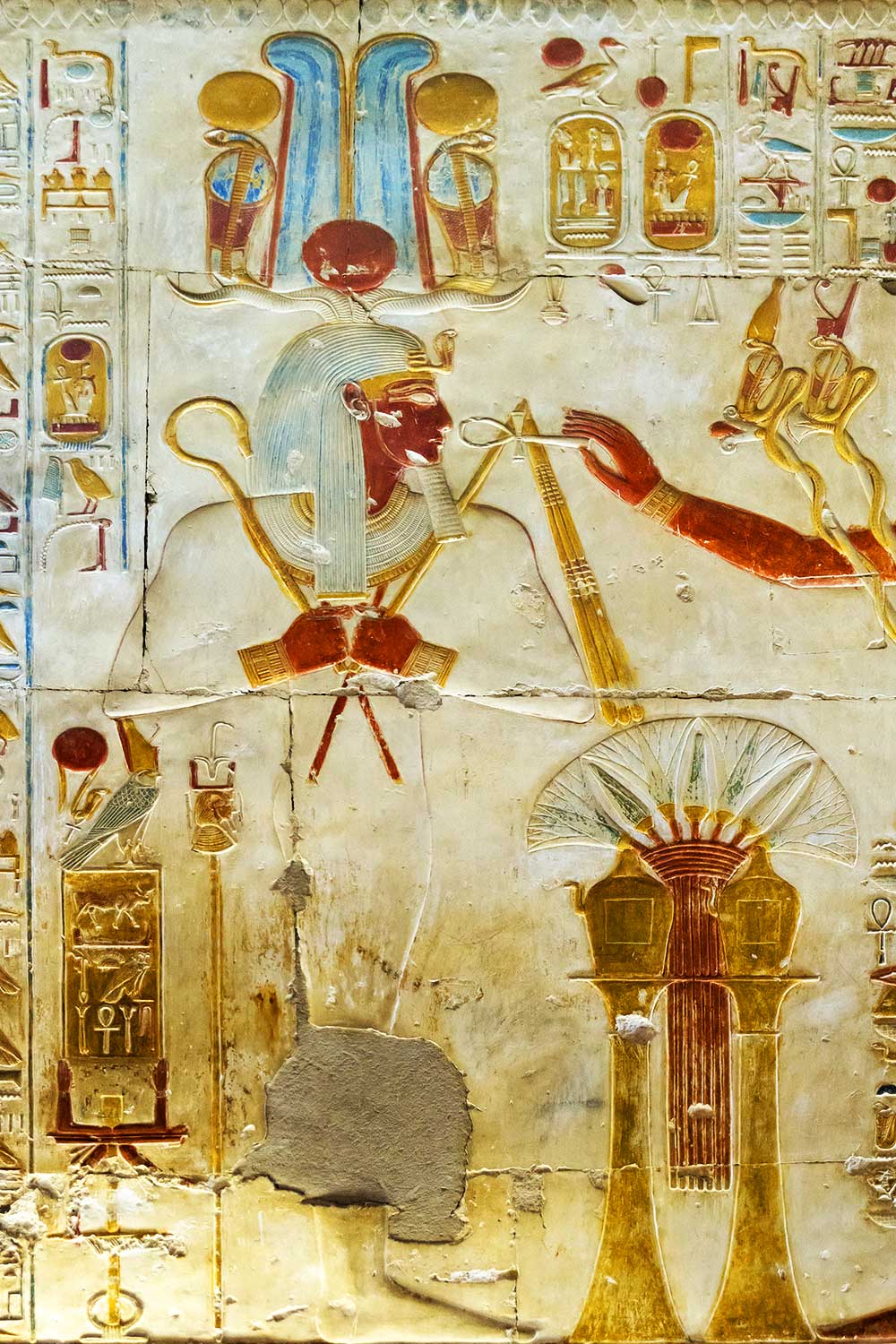
1.) Pharaoh Seti I with attributes associated with Osiris,
2.) such as a divine wig and a broad collar, being offered the
3.) ankh symbol of life
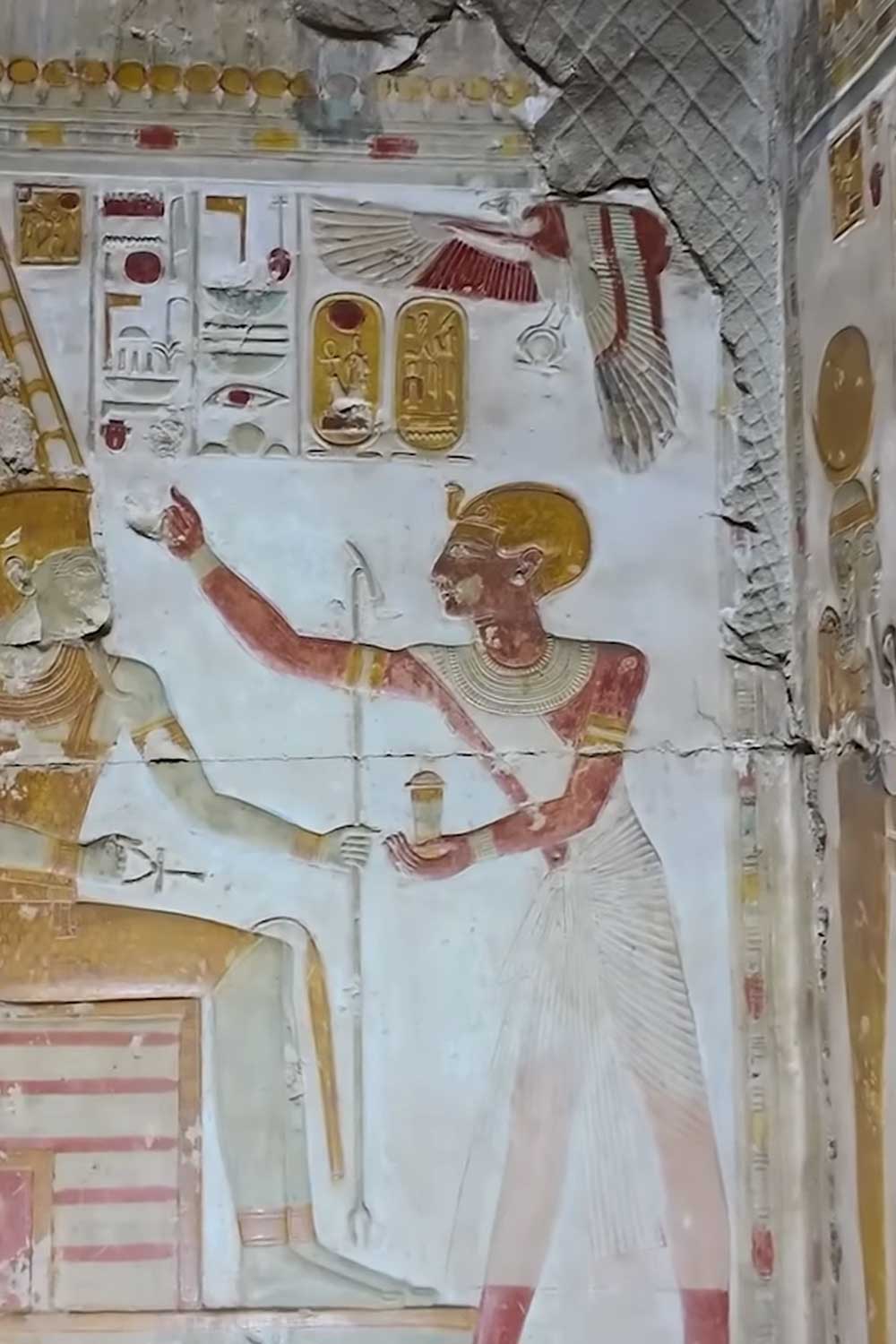
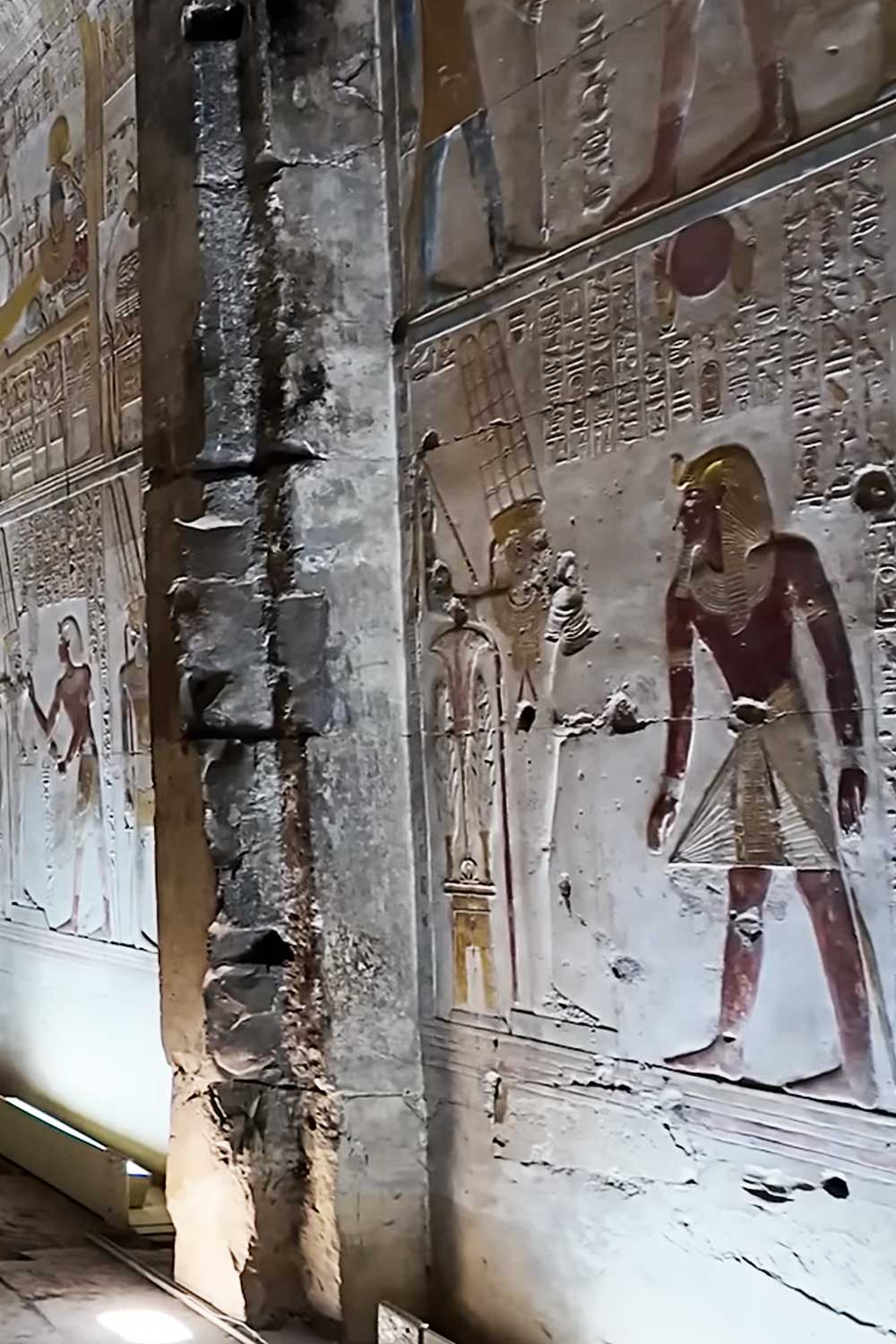
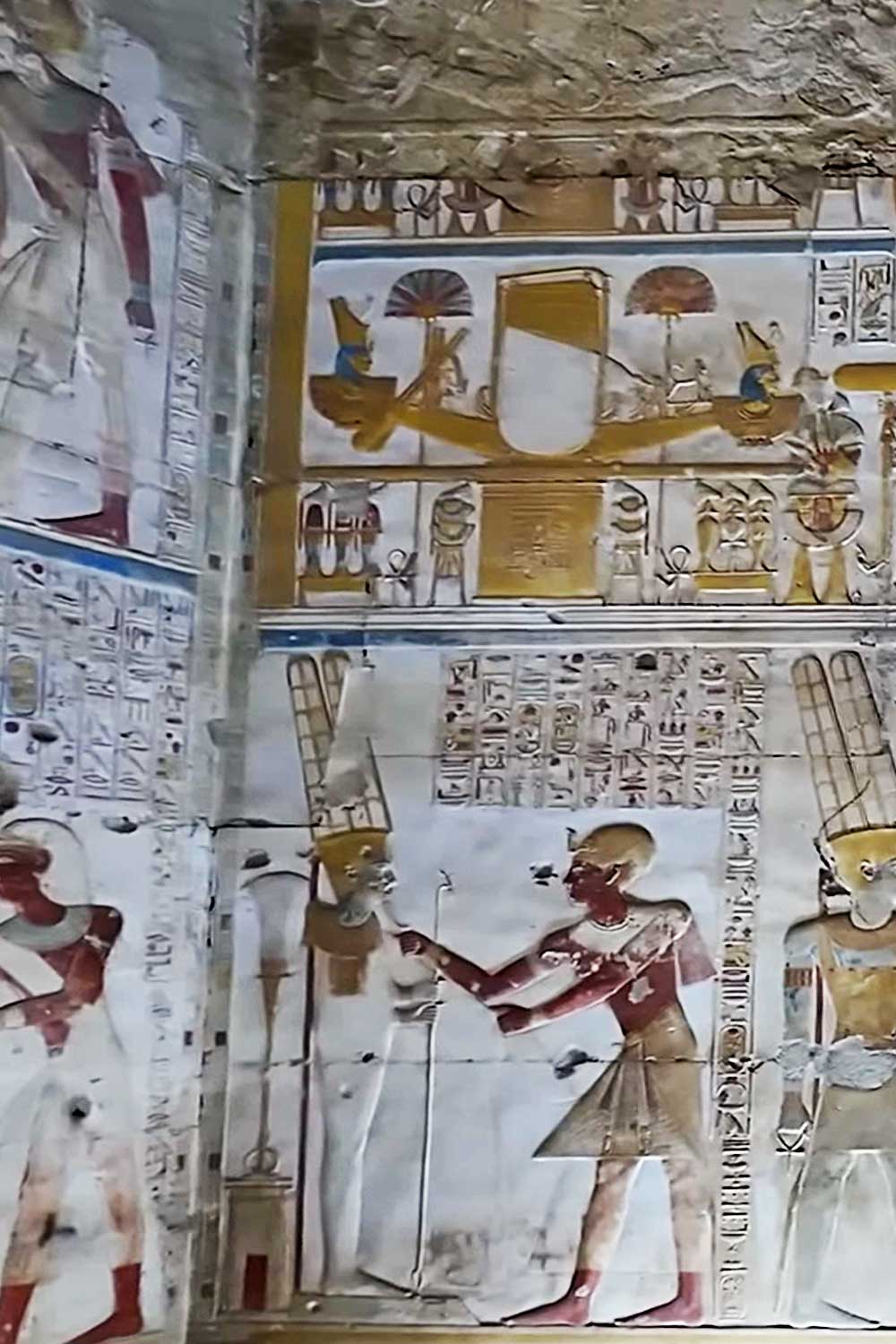
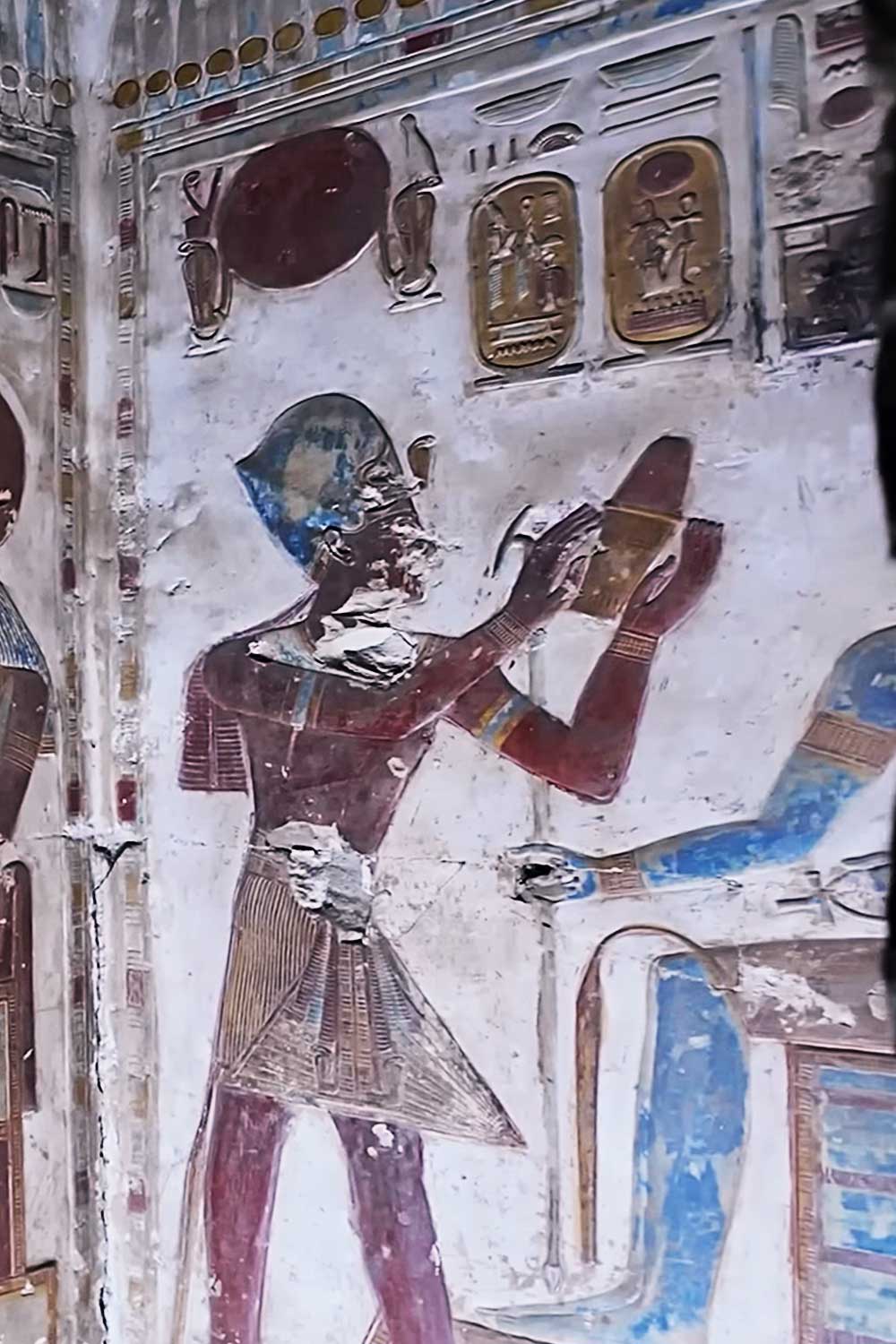
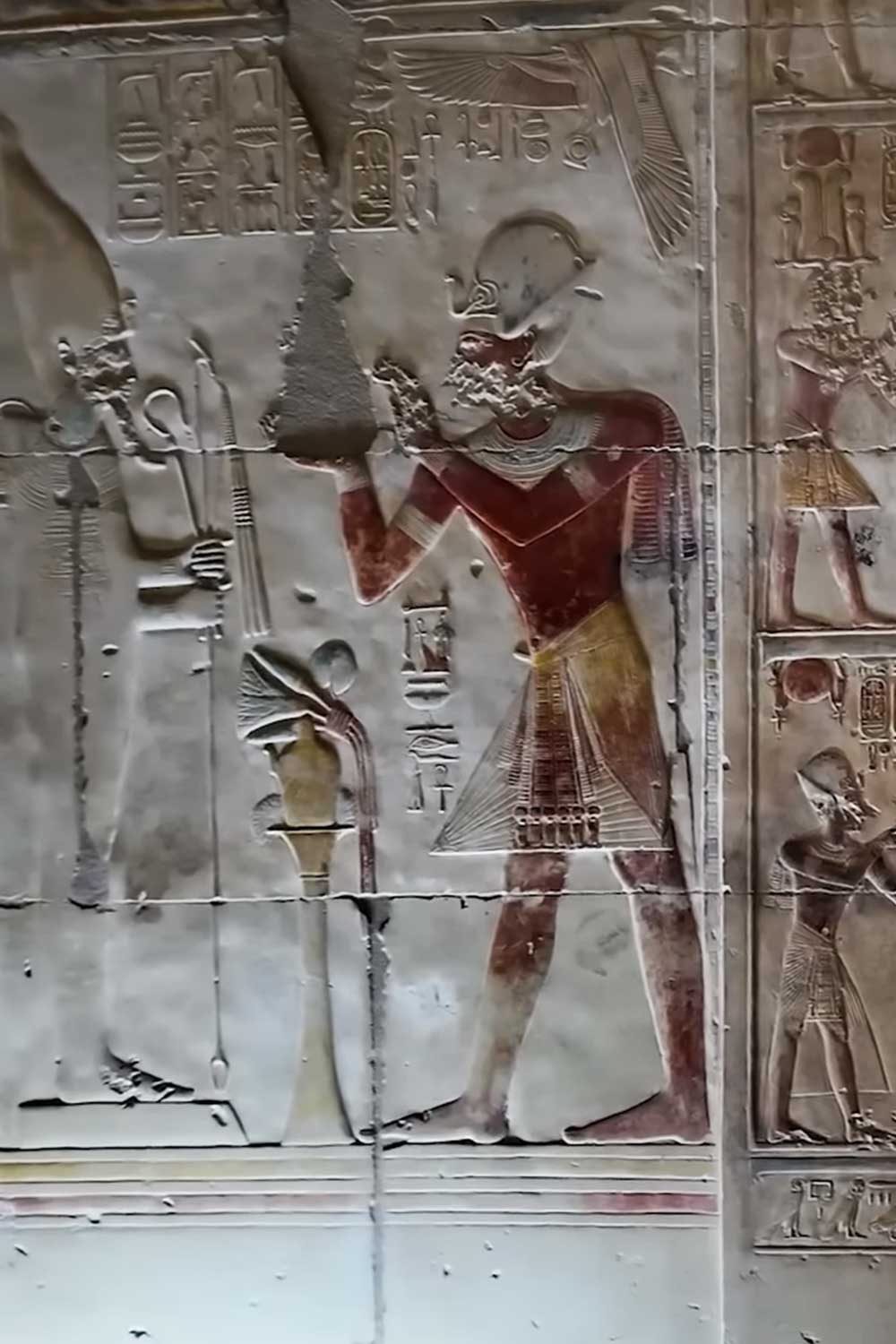
1.) Seti I with a golden cap crown, next to the god Amun-Ra, He holds a
2.) nemset vessel for sprinkling water during purification rites and
3.) making an offering of four pellets of incense to the deity
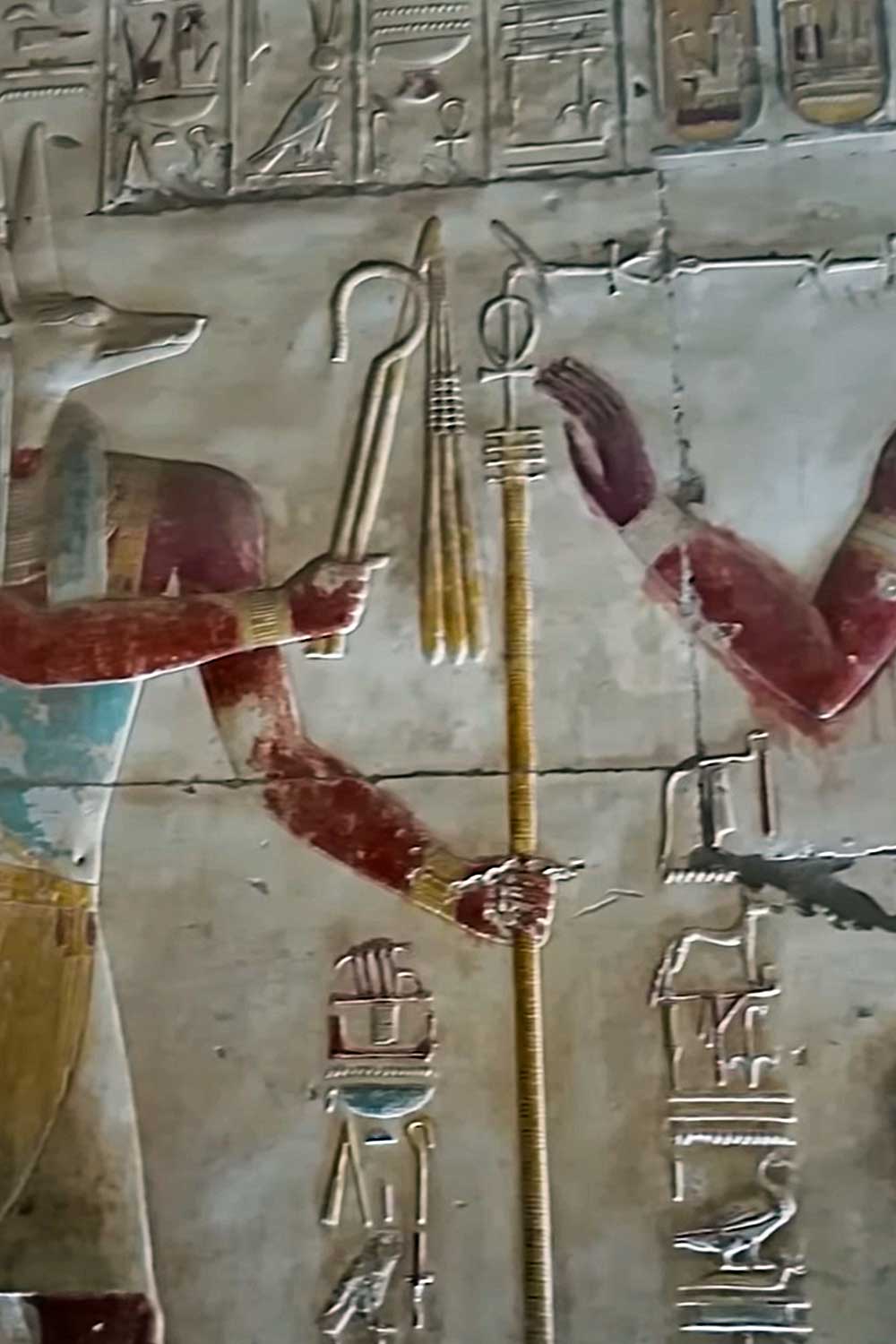
1.) King Seti I receiving life from the Jackal (Anubis) the god of 
2.) mummification and the afterlife
3.)
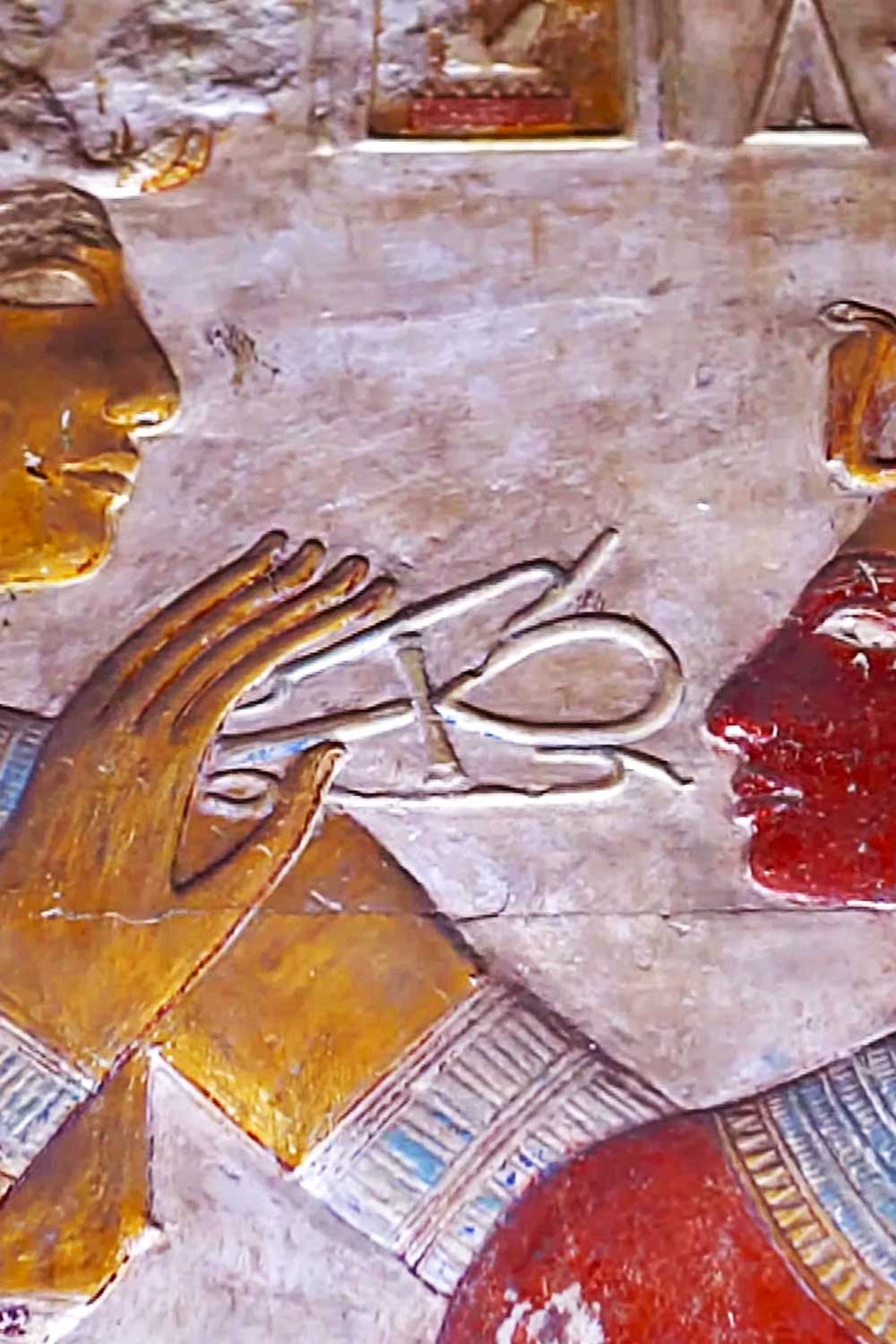
1.) King Seti I receiving the ankh symbol, the ancient Egyptian
2.) hieroglyphic character that represents eternal life
3.)
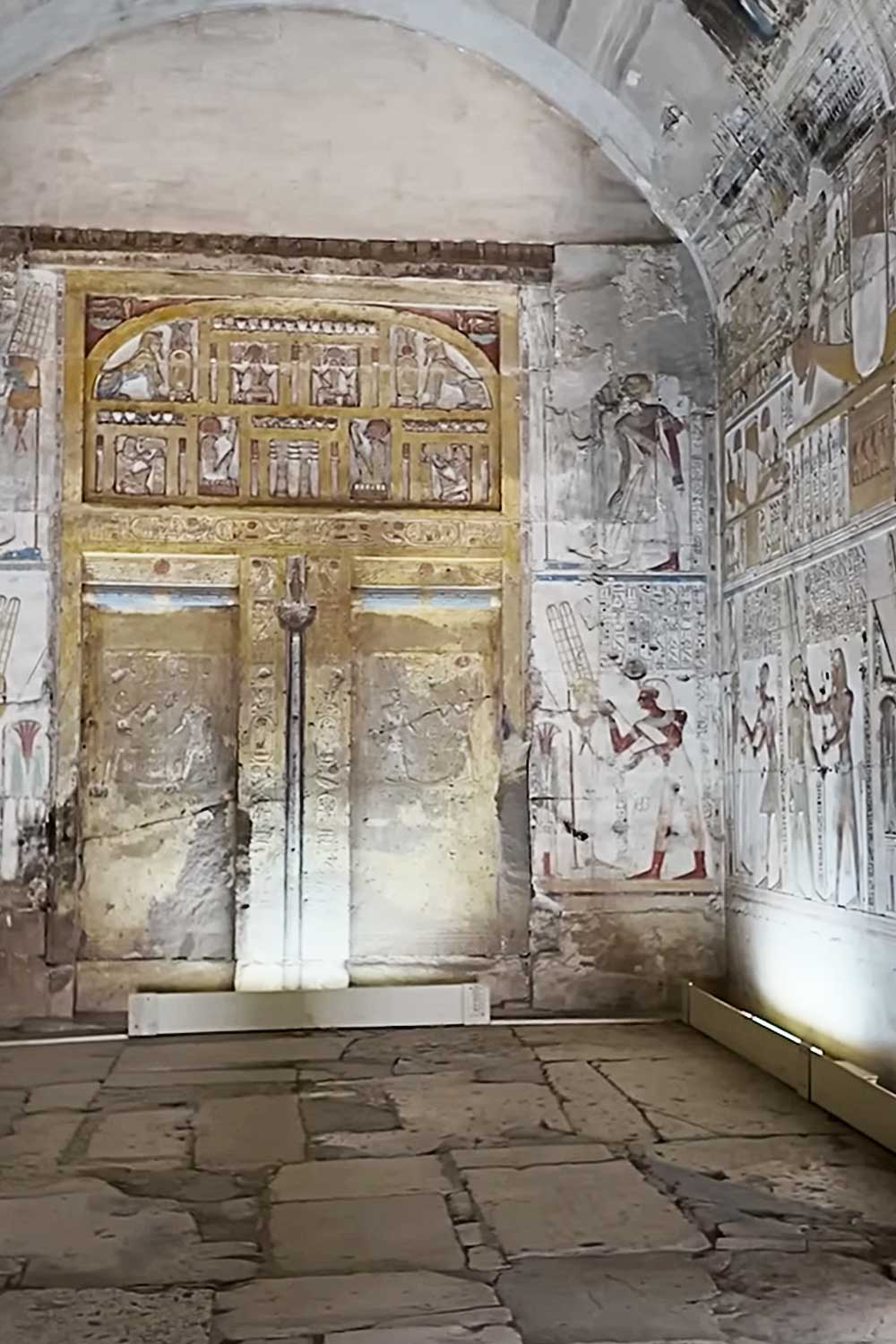
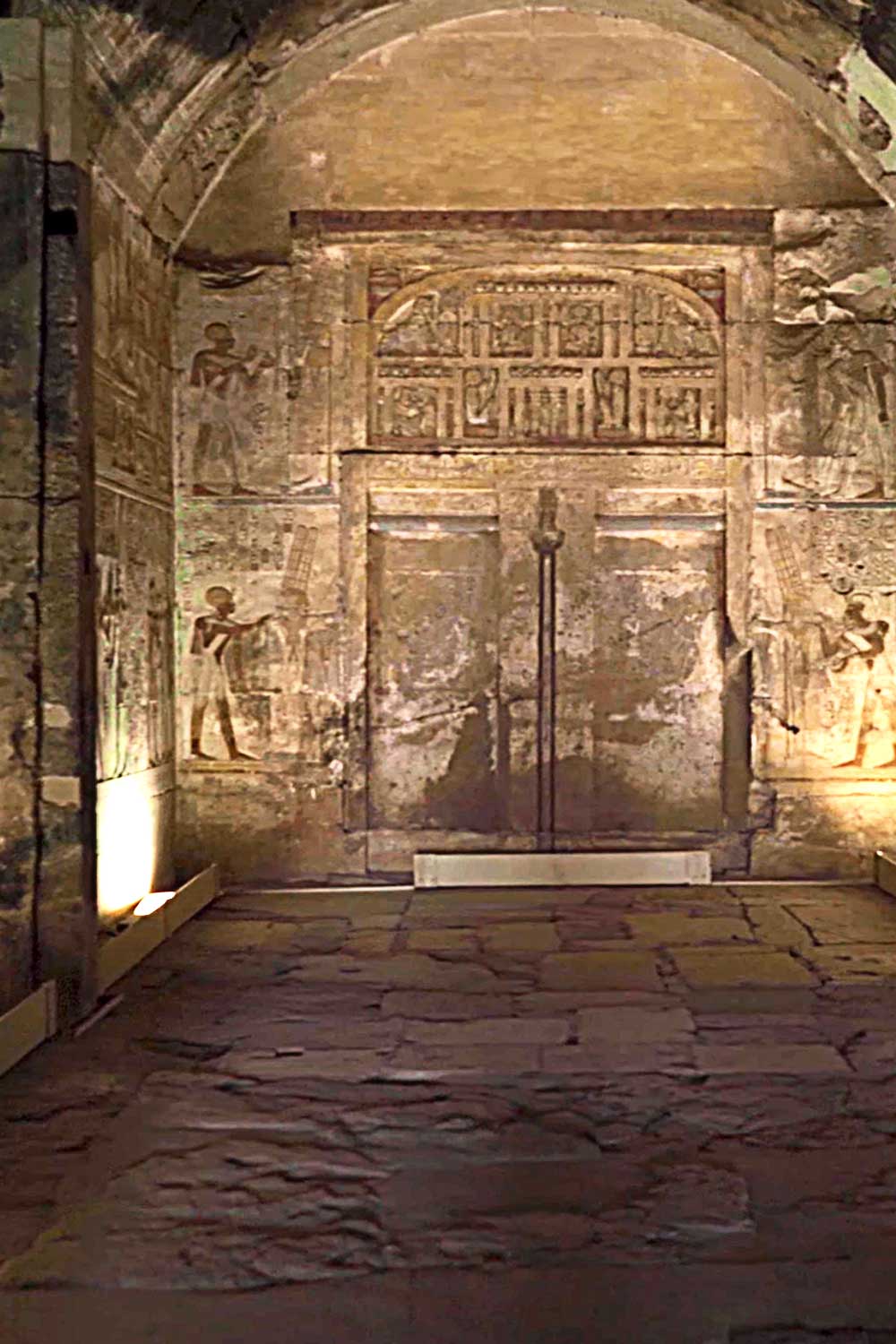
1.) False door of Seti I his threshold between the world of the living and
2.) the realm of the dead, allowing his spirit known as the ka
3.) to pass through
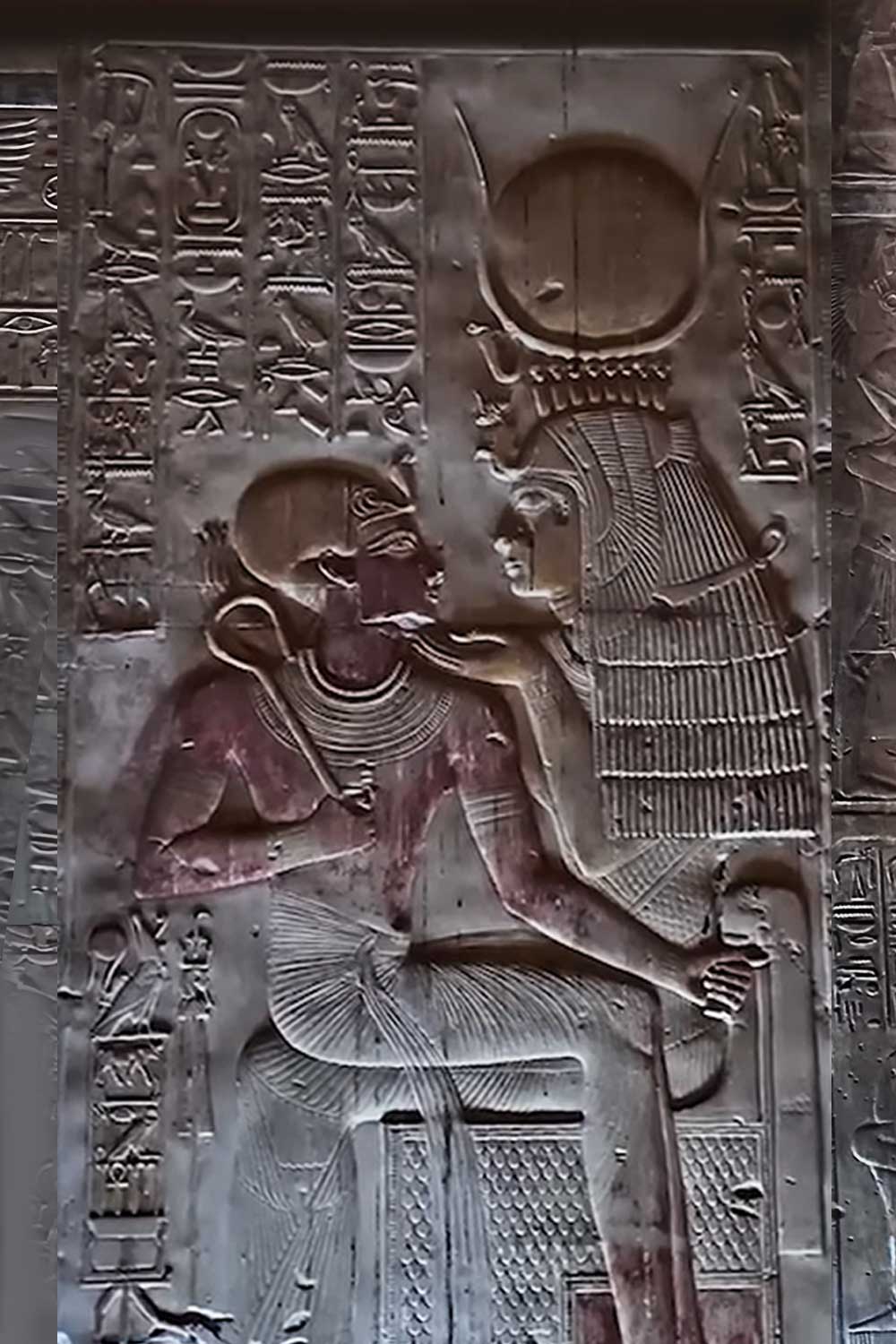
1.) Isis is shown giving the ankh, the ancient Egyptian symbol of life,
2.) to the king Seti I
3.)
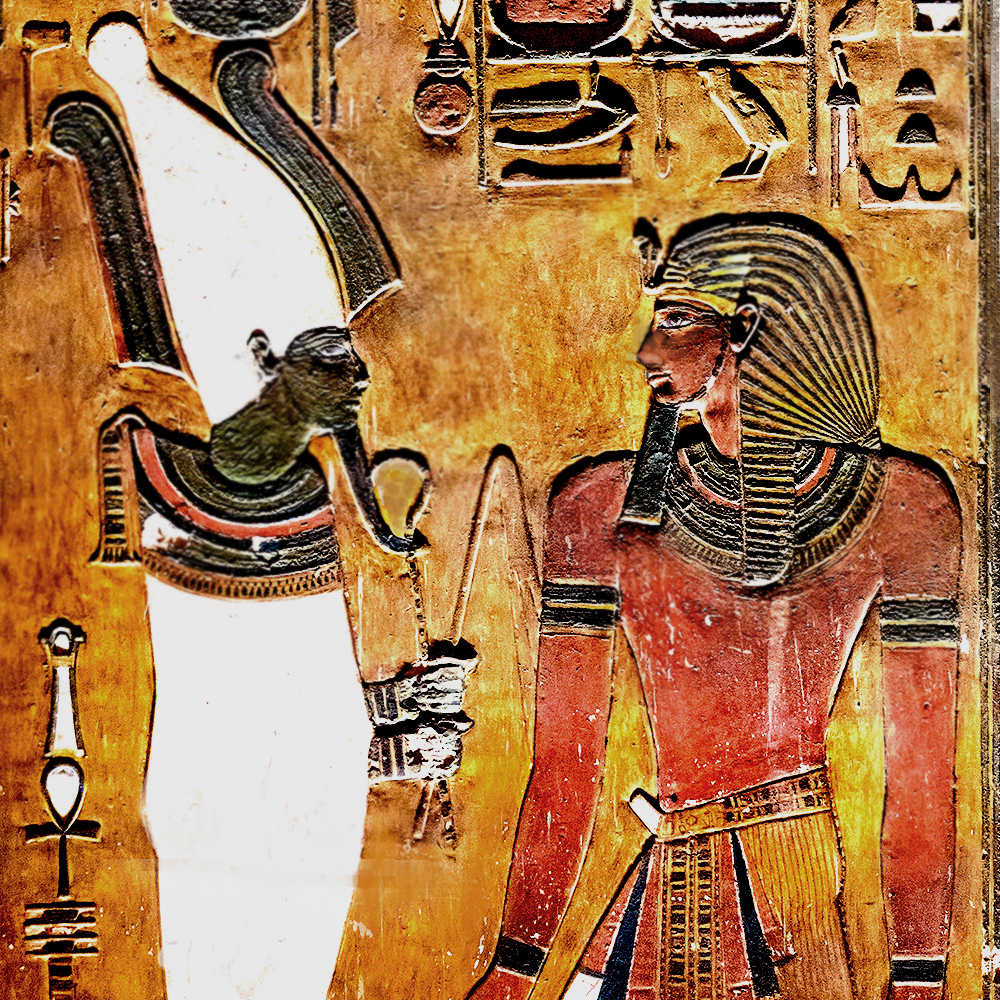
1.) King Seti I interacting with various gods, including Osiris and Horus
2.)
3.)
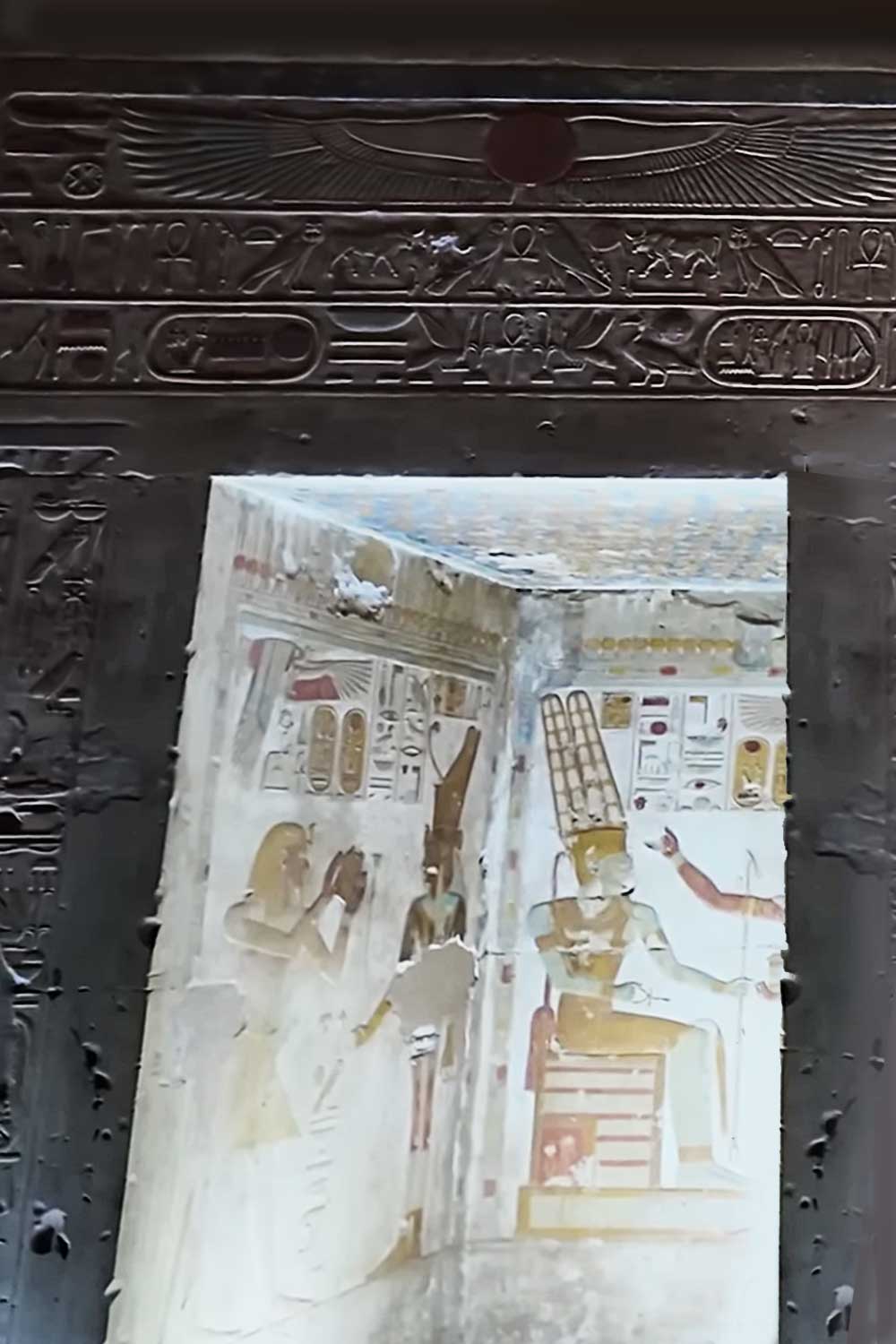
1.) False door of Amun-Re a feature in the temple offering chapel
2.) and are typically found on the west wall,
3.) the direction associated with the land of the dead
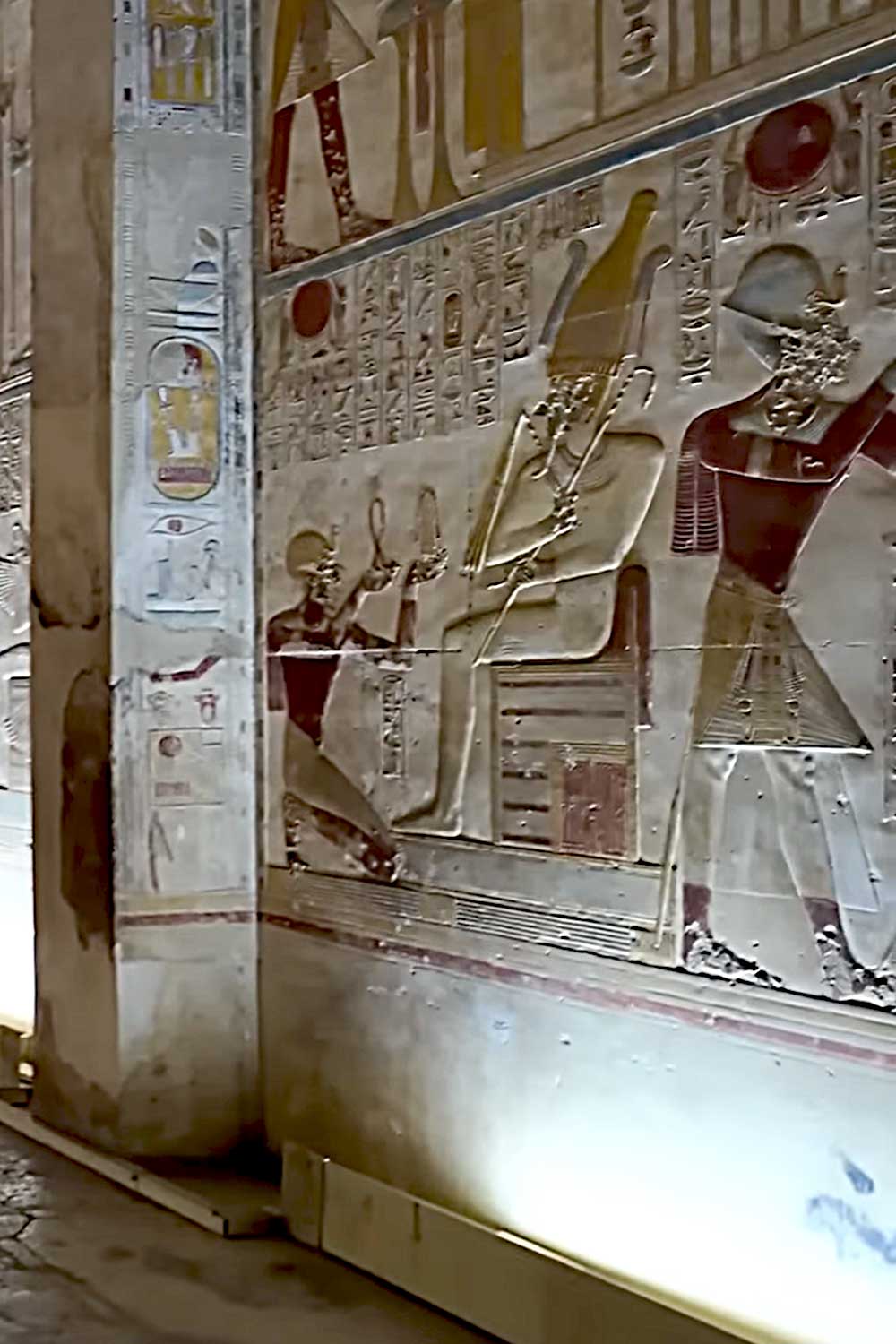
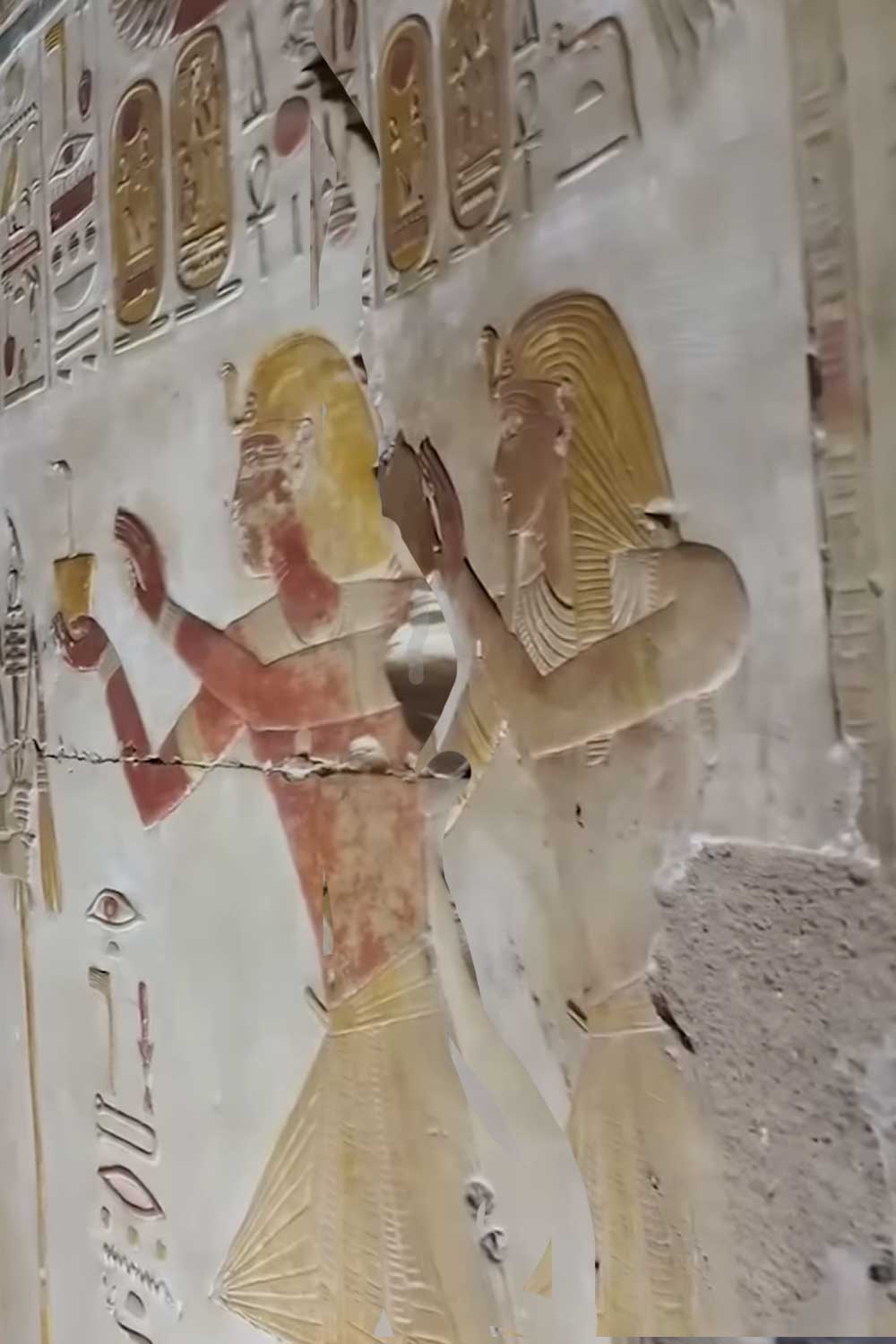
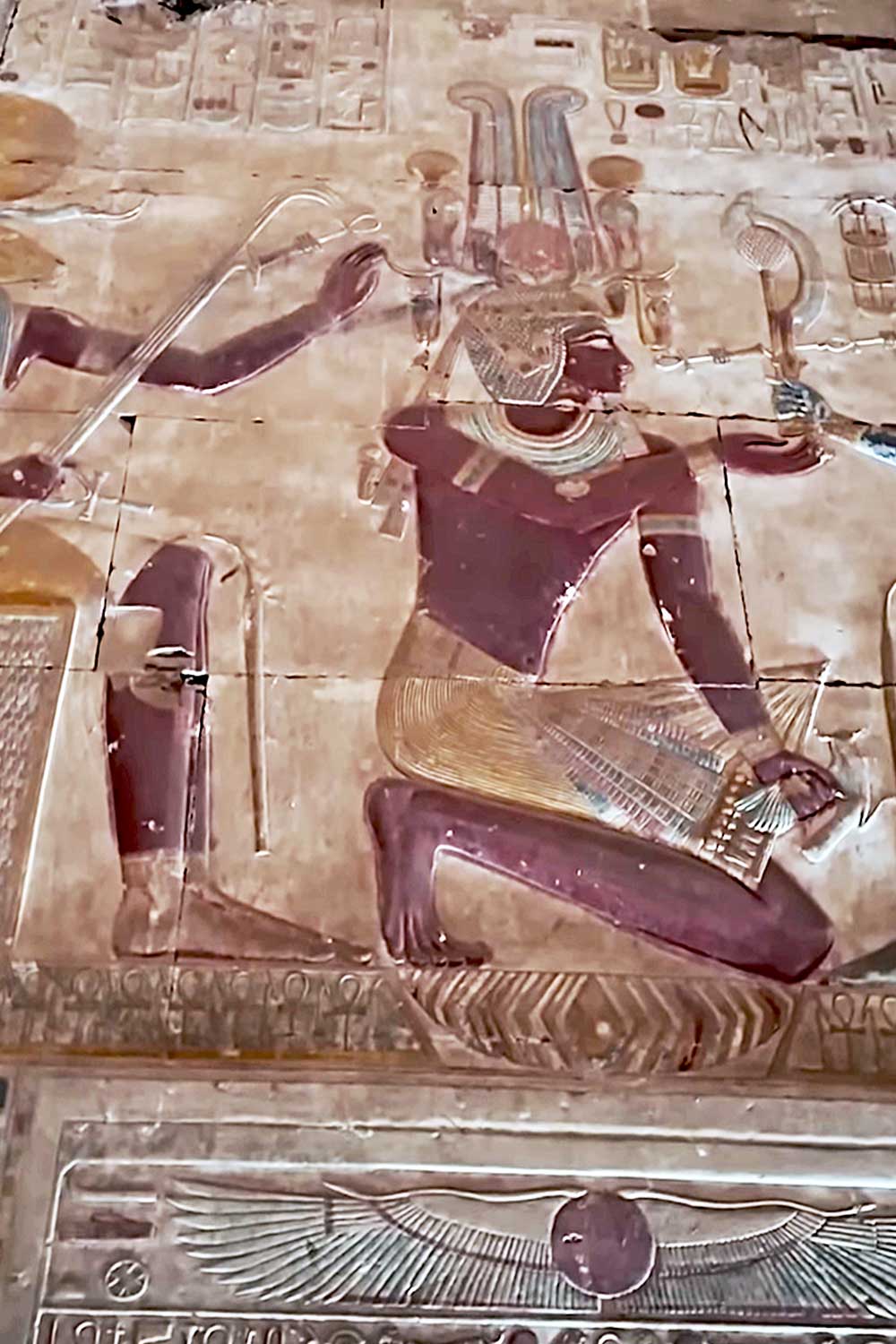
1.) Seti I kneeling and presenting an offering to Osiris (right)
2.) (left) Anubis depicted with an animal head holds a scepter and
3.) an ankh symbol, representing power and life
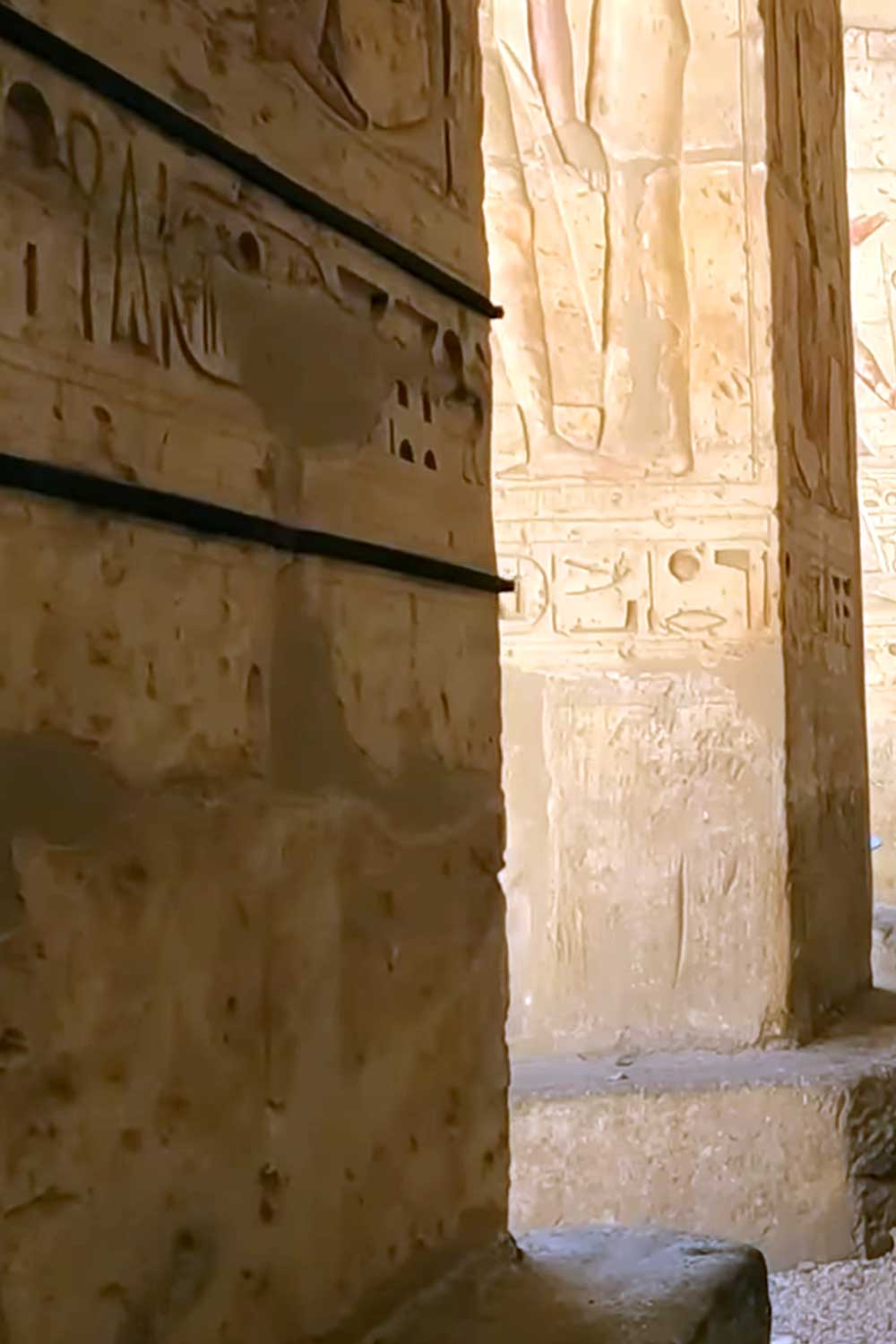
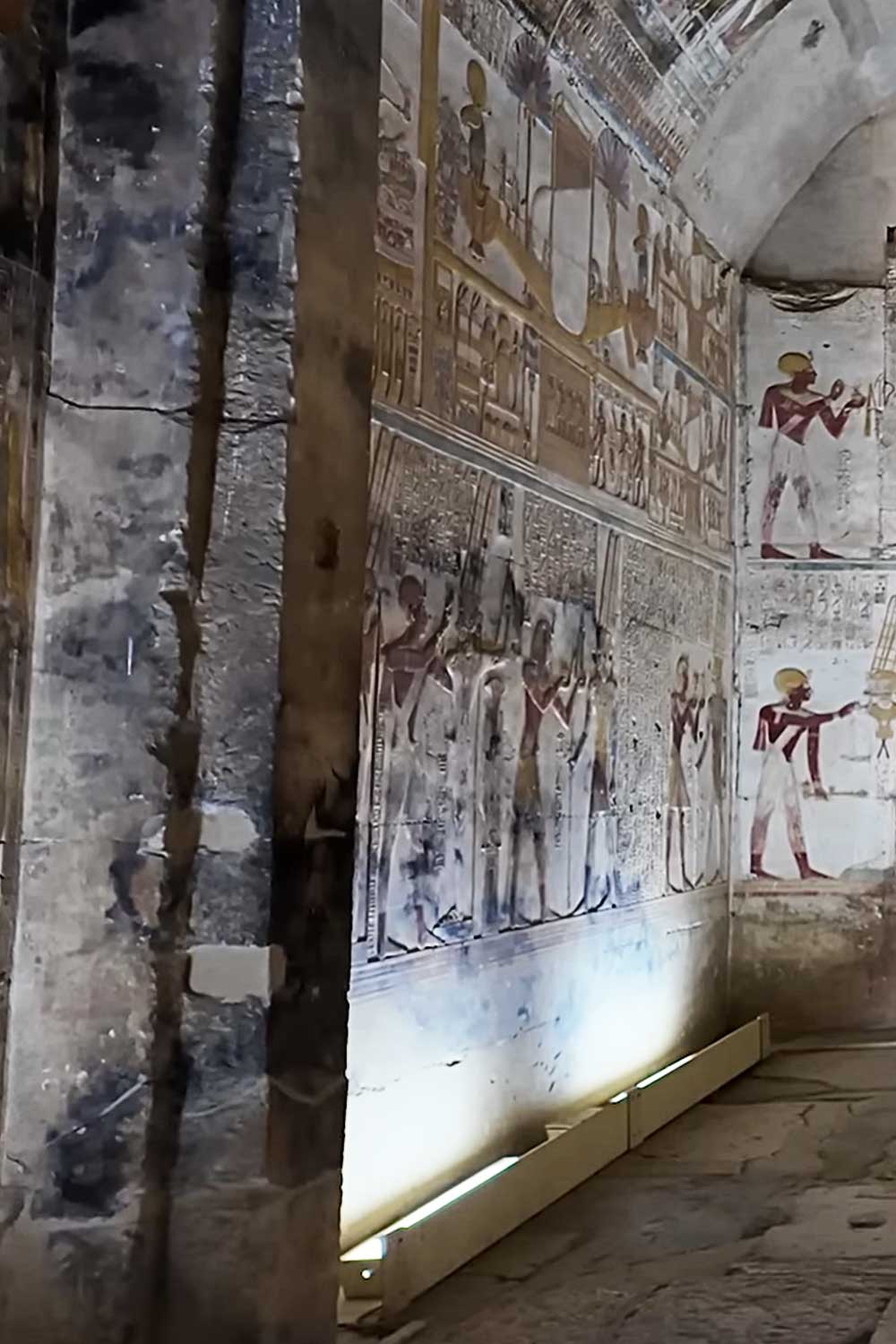
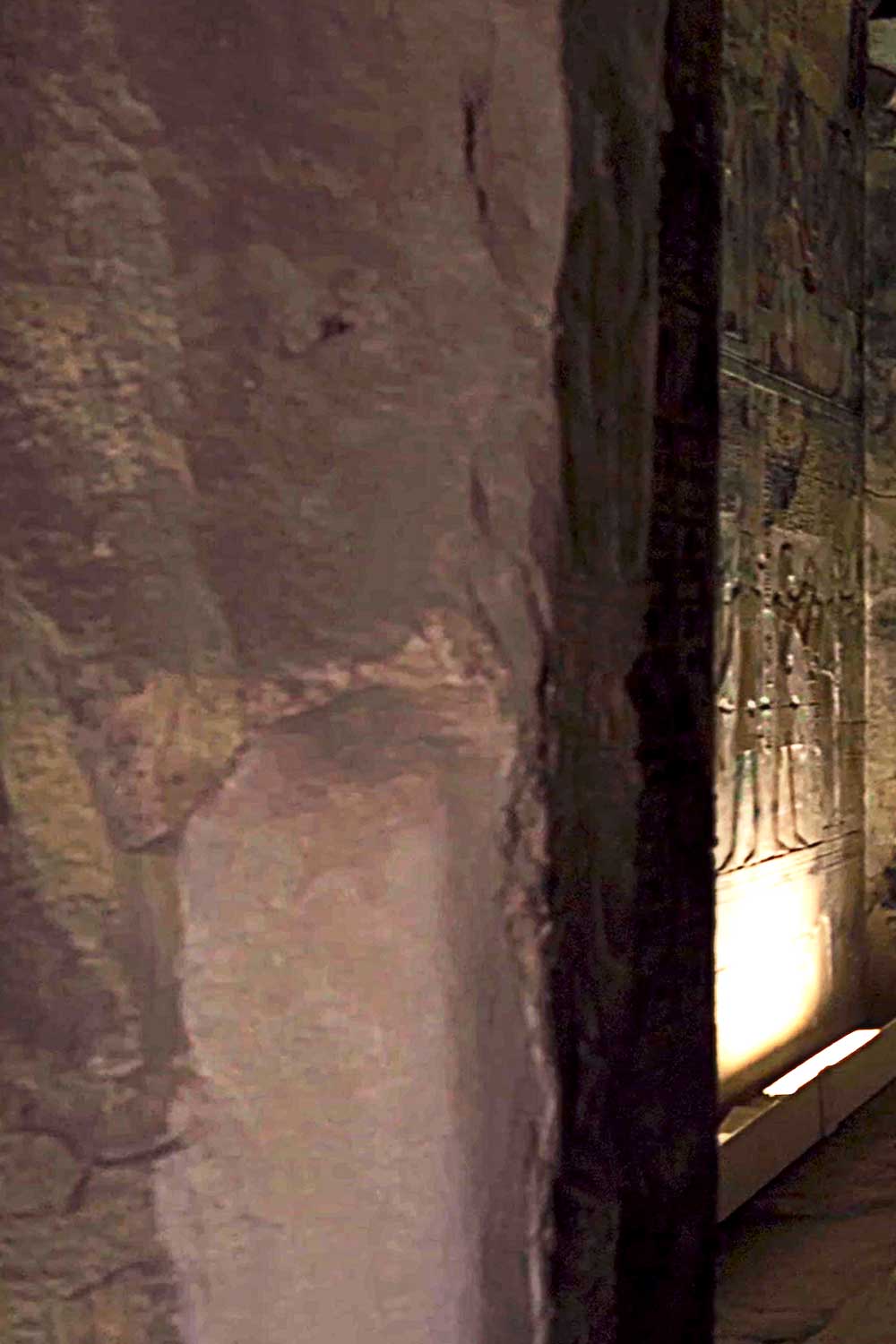
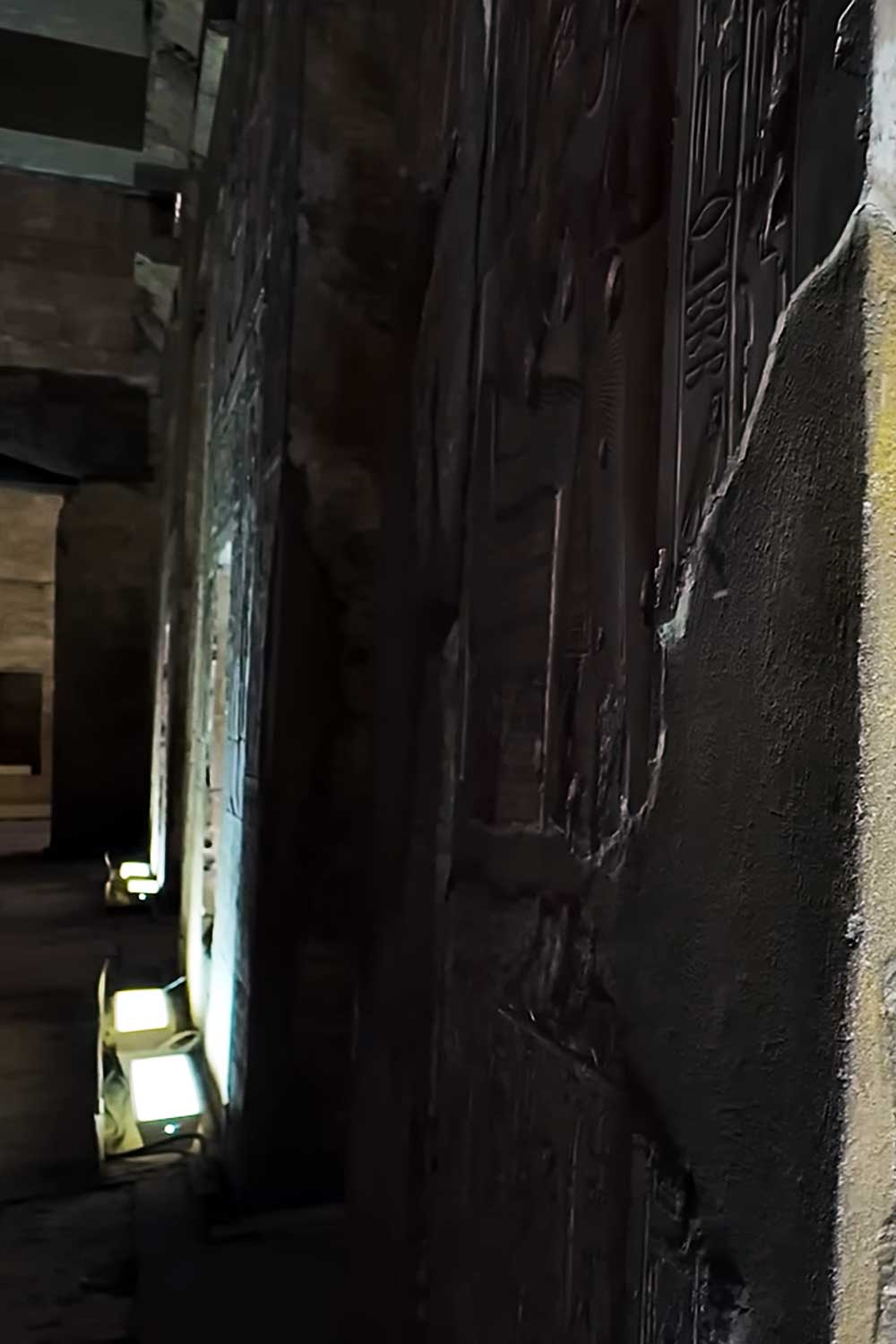
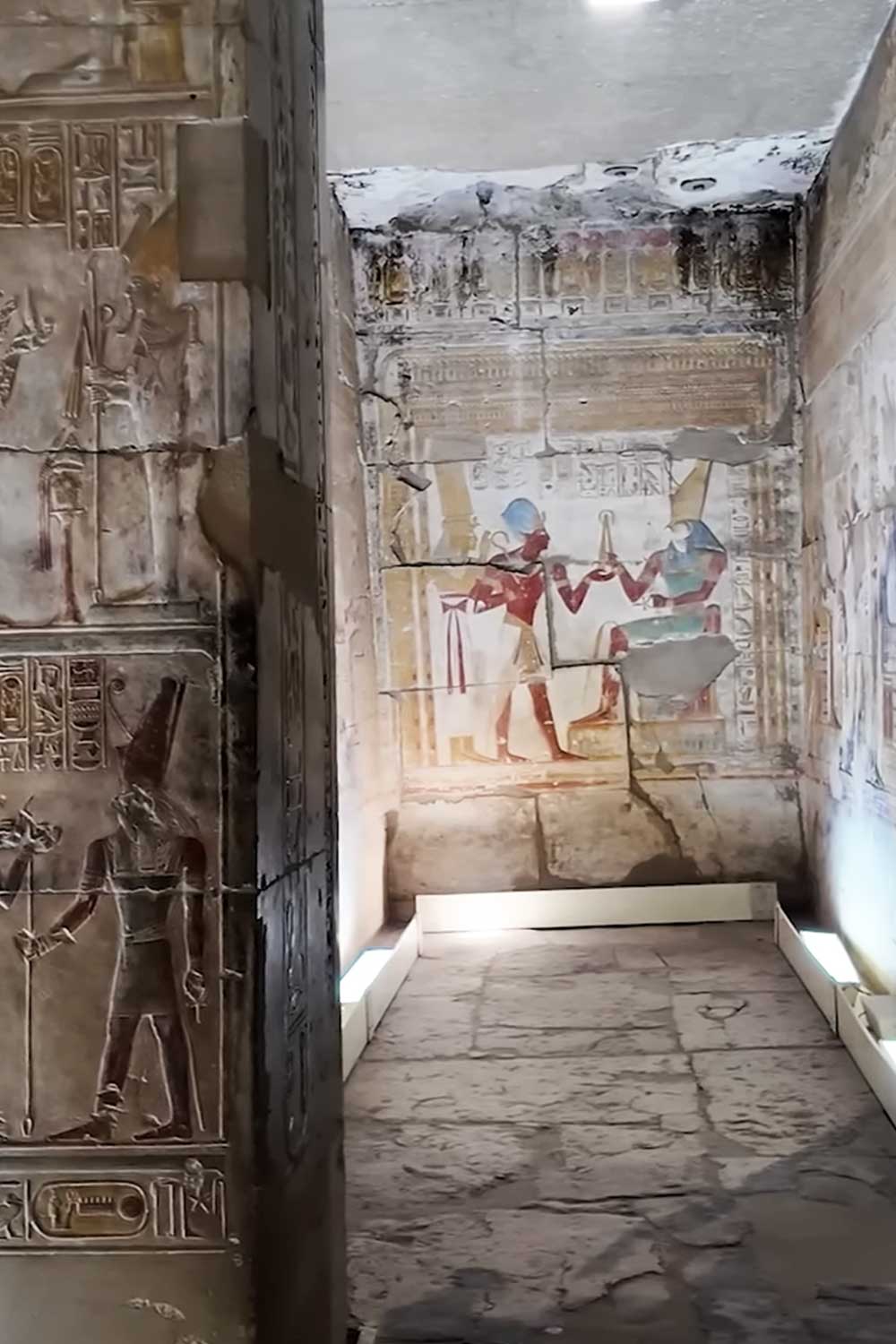
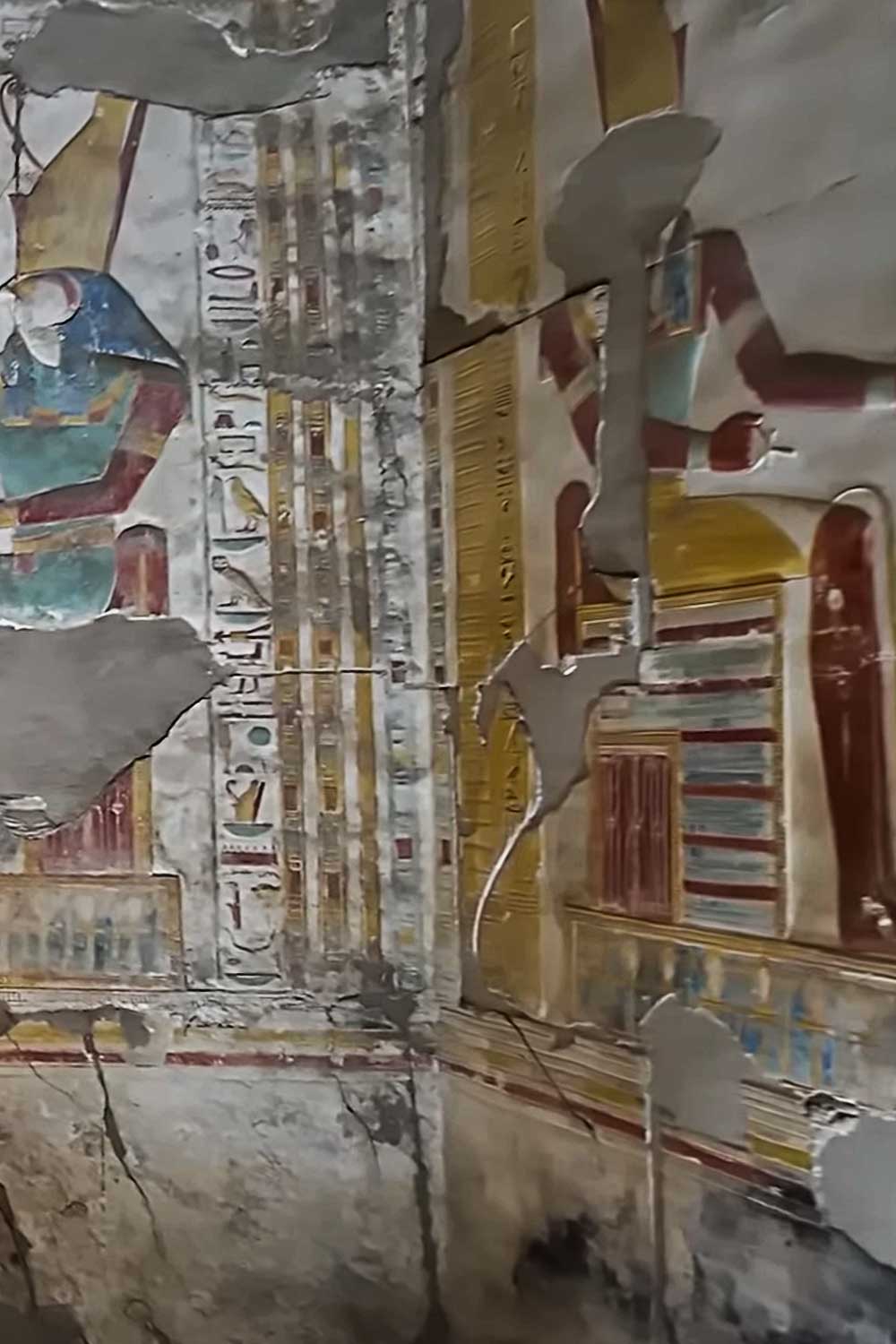
1.) Shows how dark it is inside Abydos
2.) Seti I making an offering to god Horus intended to ensure a
3.) successful transition to the afterlife
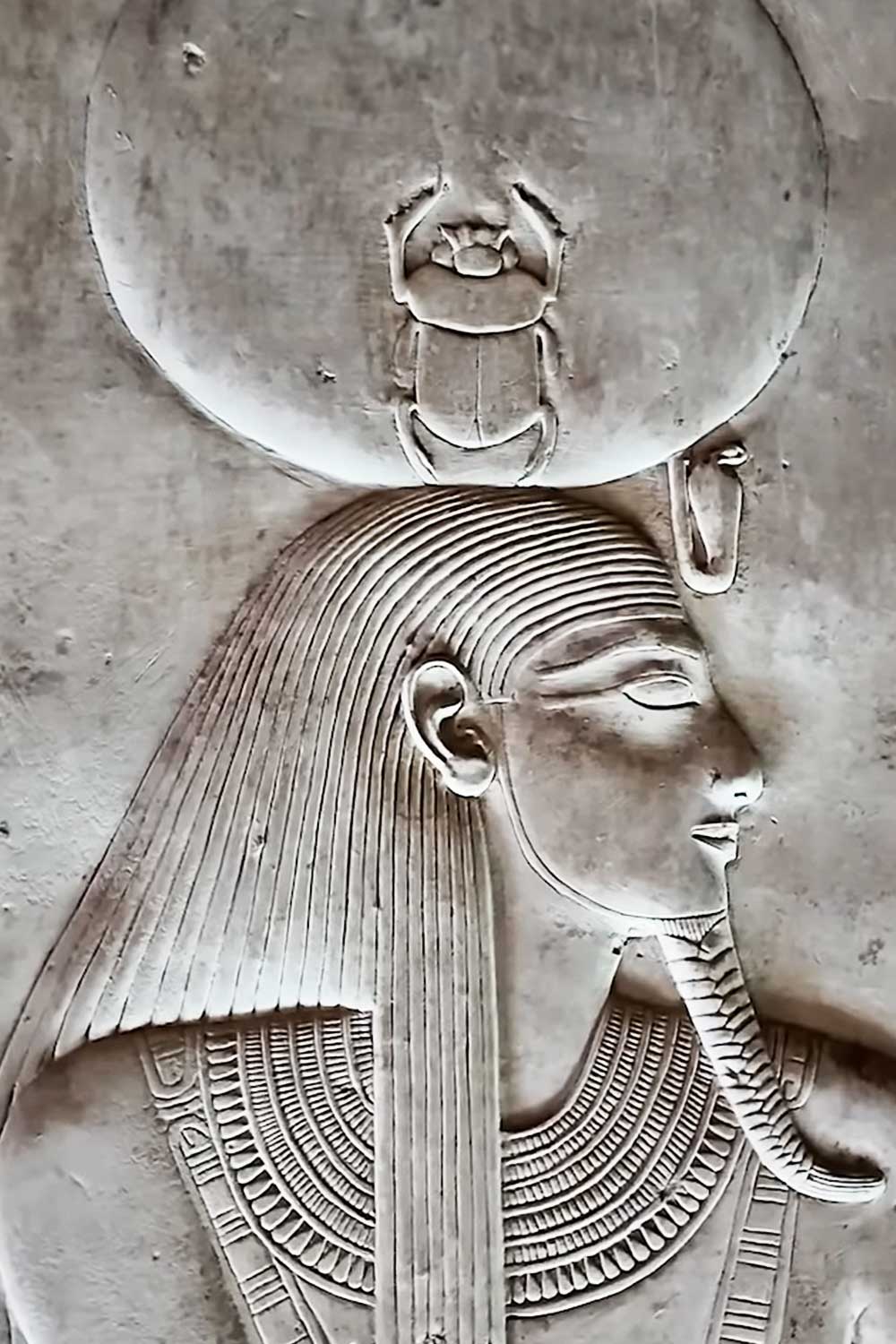
1.) Seti I carved in profile, a common artistic convention in ancient
2.) Egypt known as frontalism, the scarab beetle was a symbol of
3.) rebirth and the morning sun, while the disk represents sun god Ra
1.) Temple of Seti I in Abydos, which features several significant
2.) corridors and halls
3.)
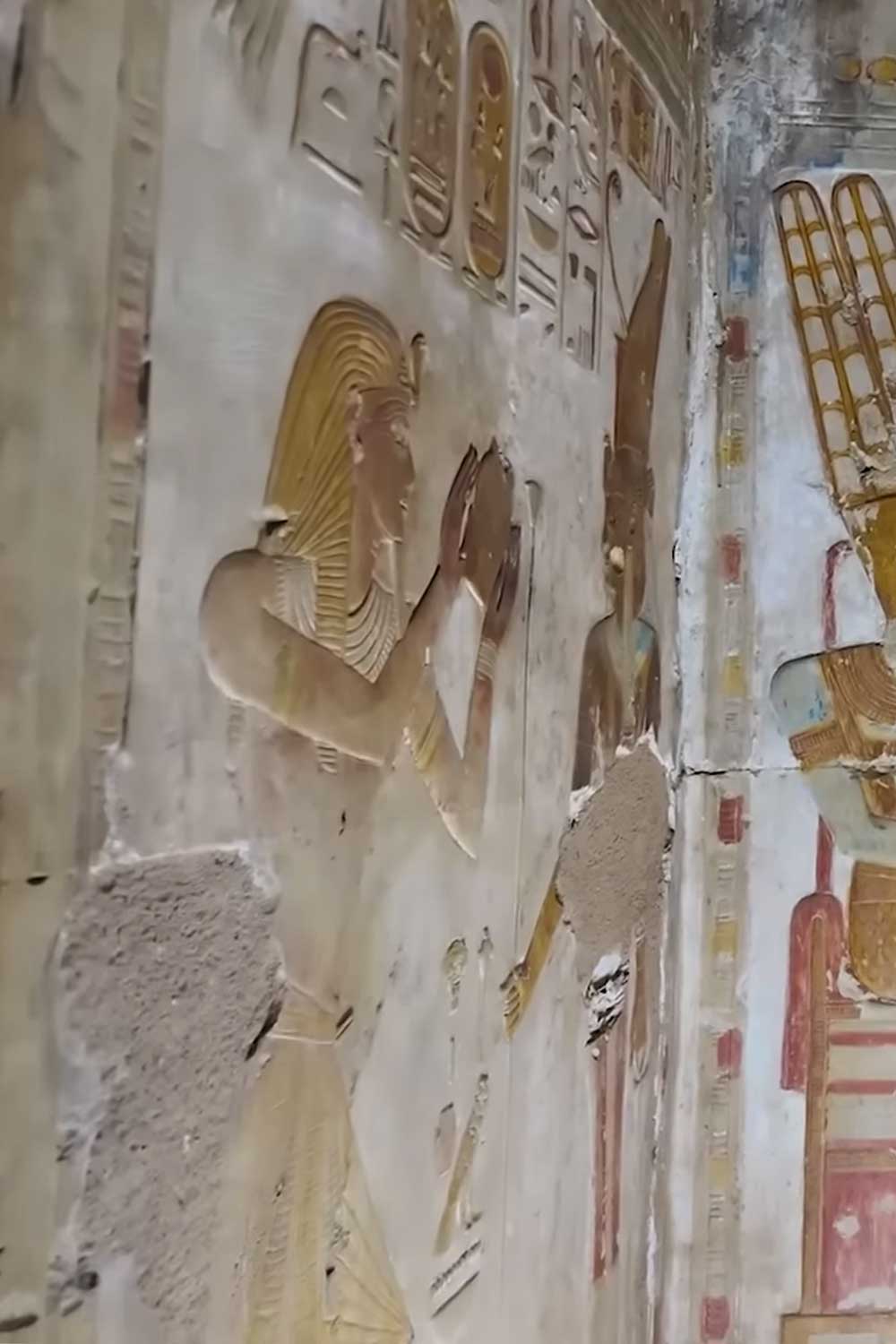
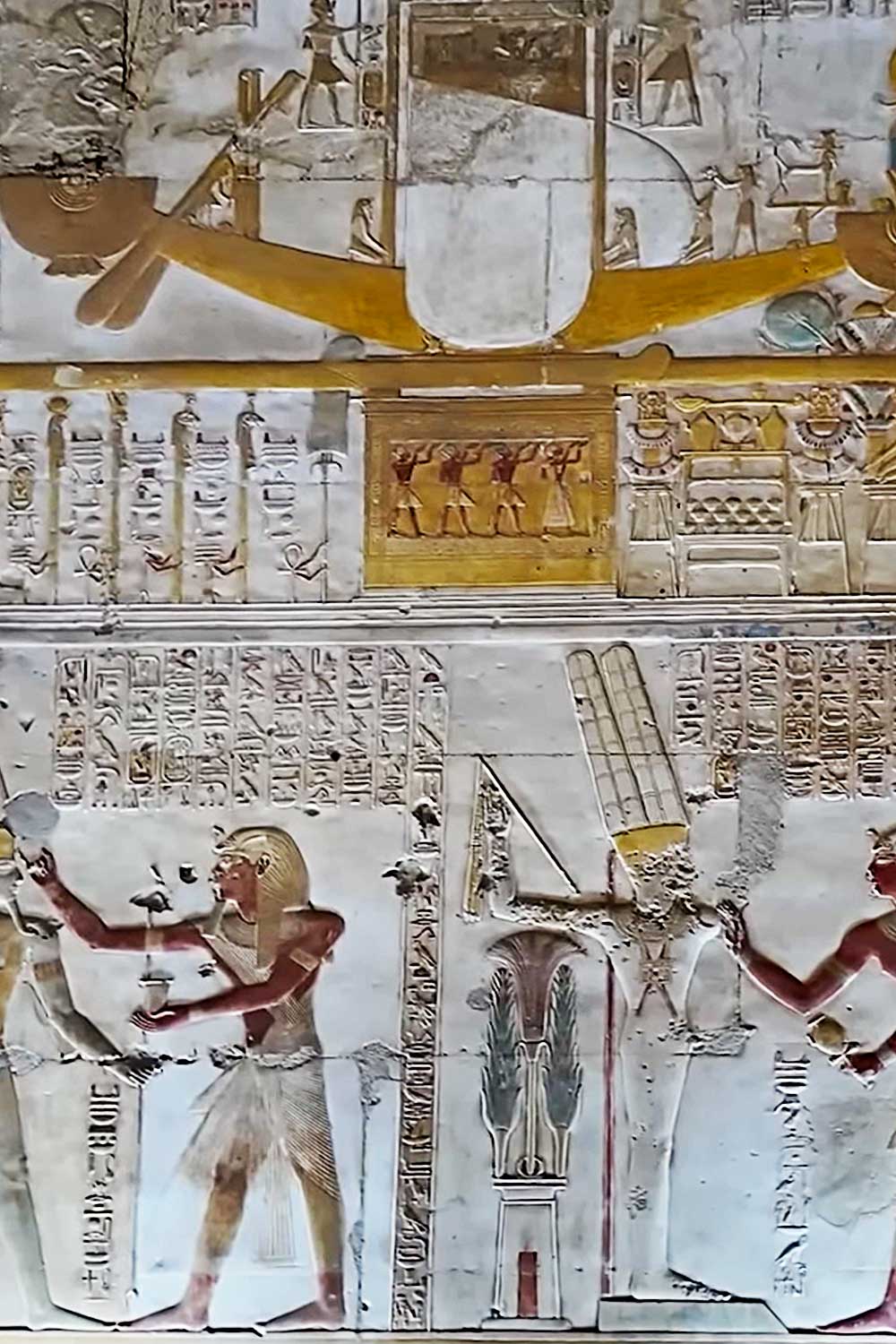
1.) From the hallway Pharaoh Seti I presenting an offering
2.) to the god Horus
3.)
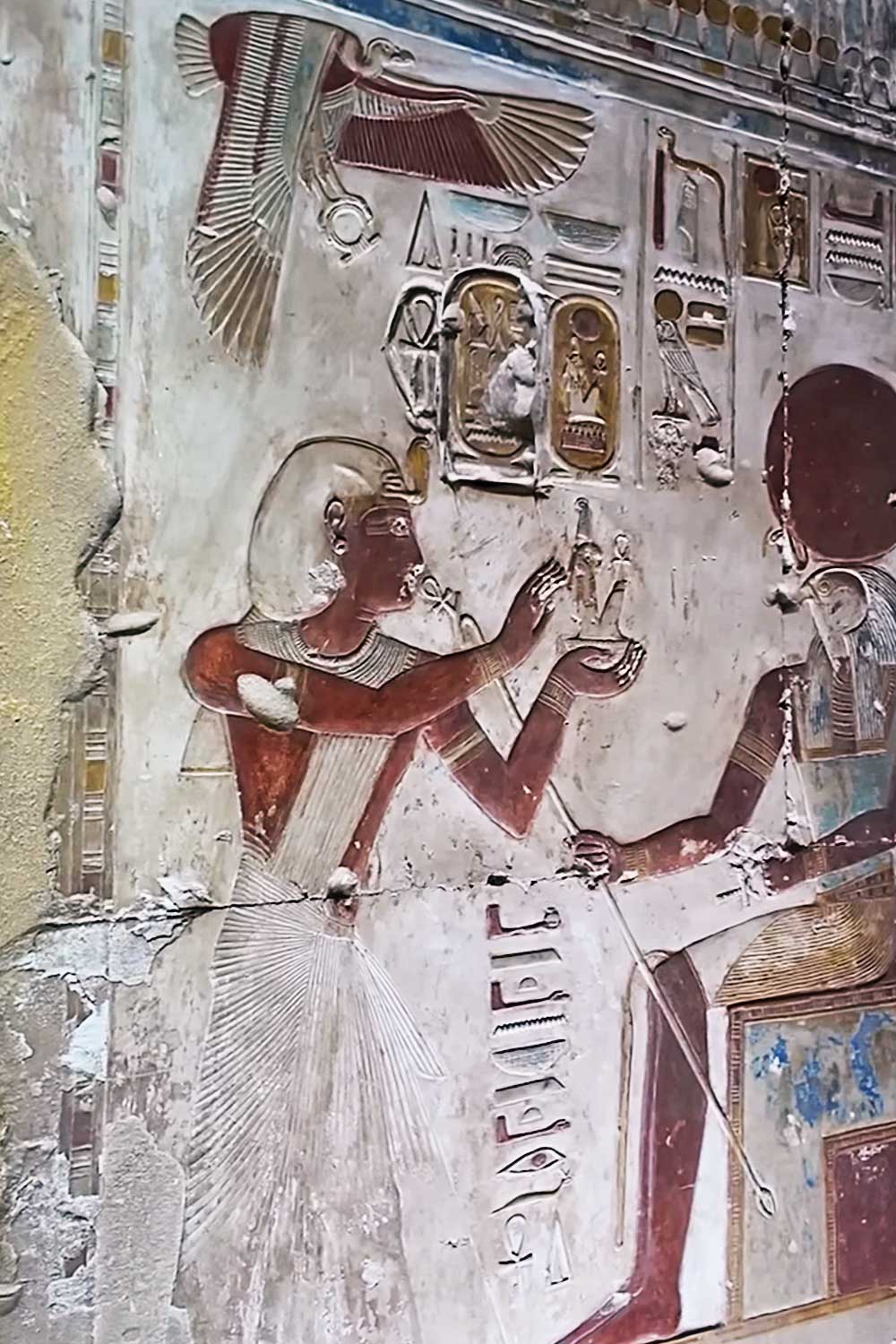
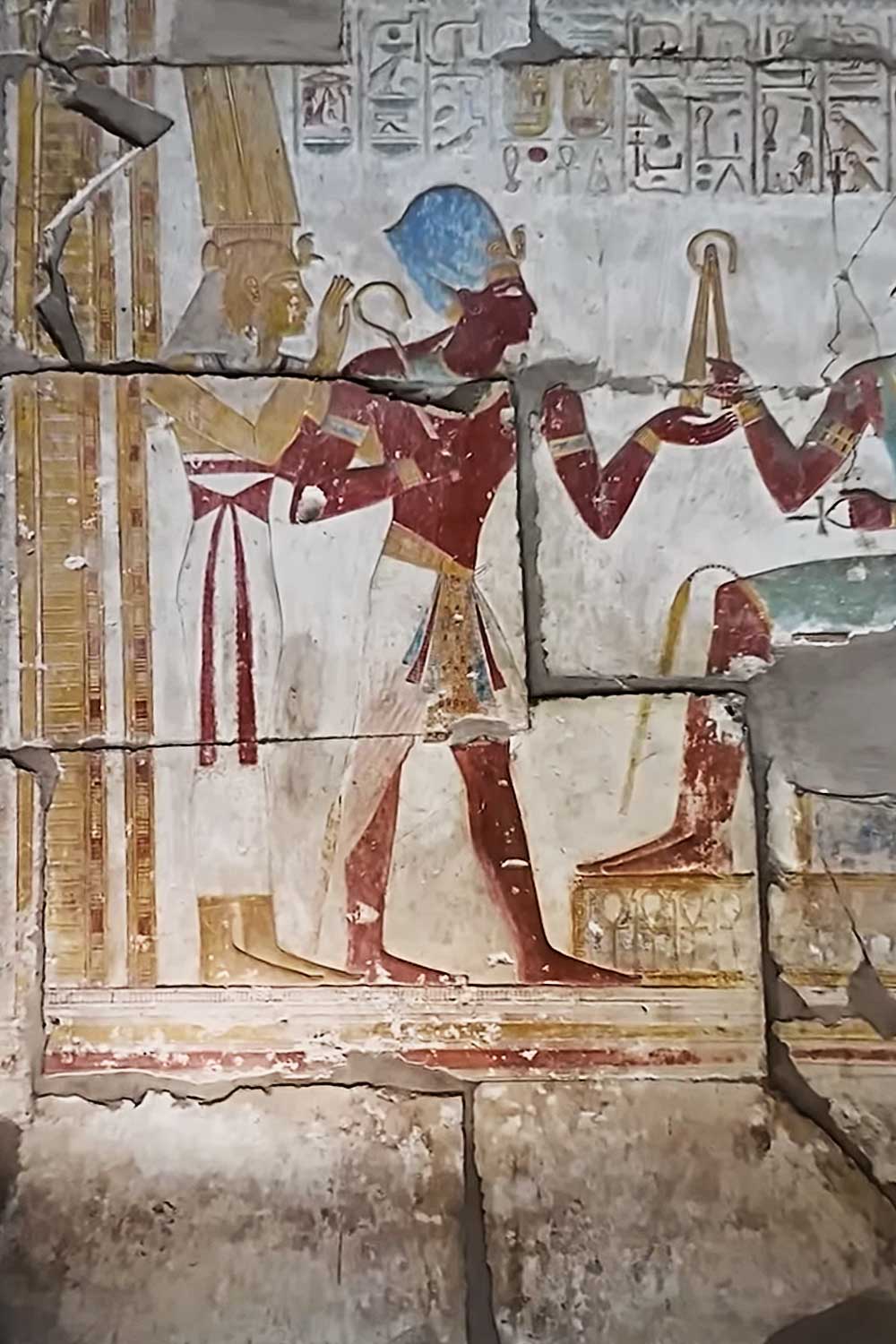
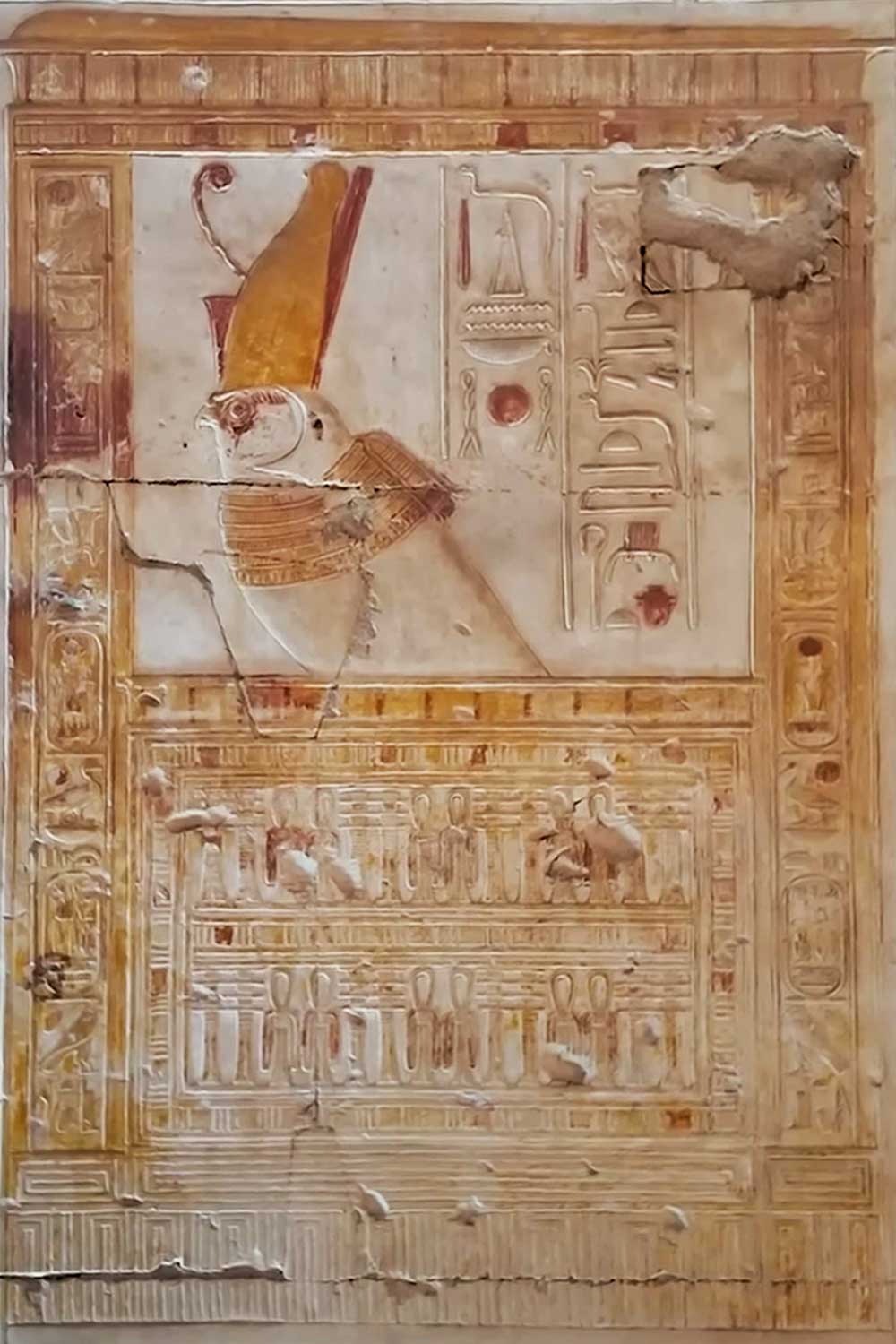
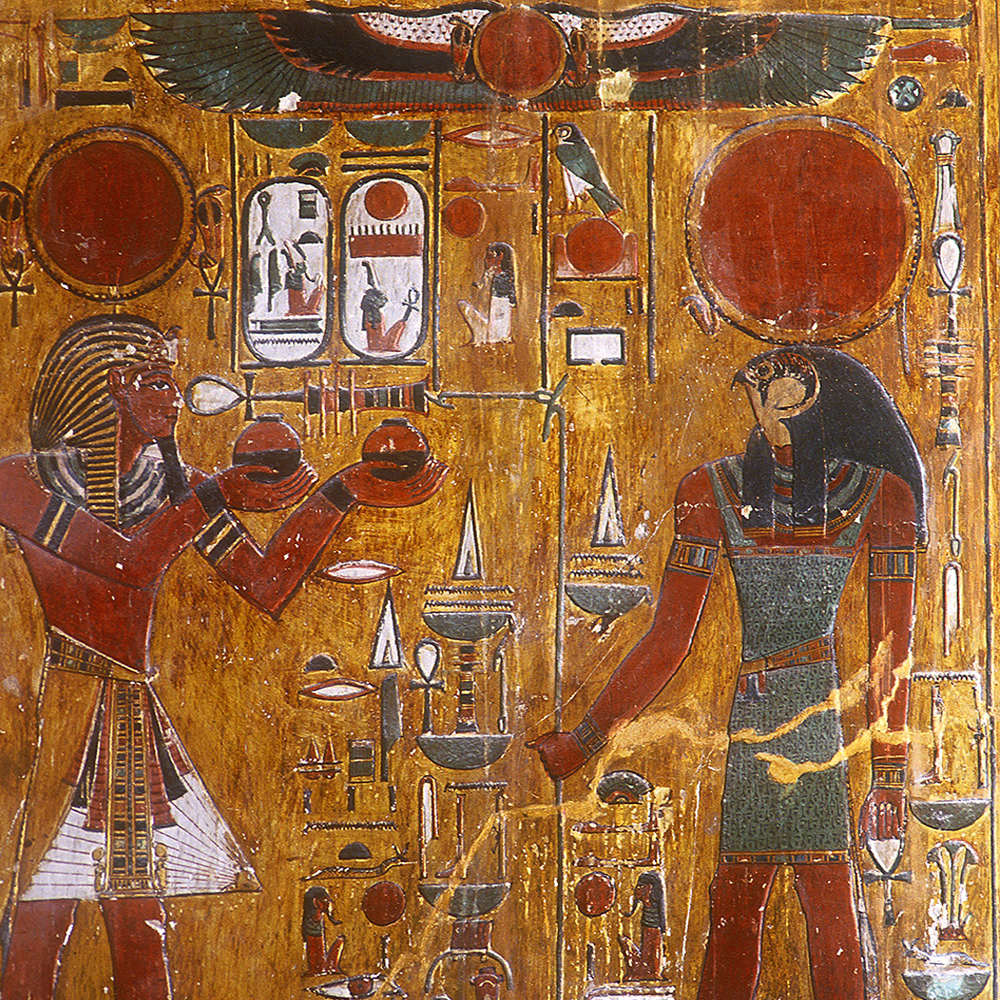
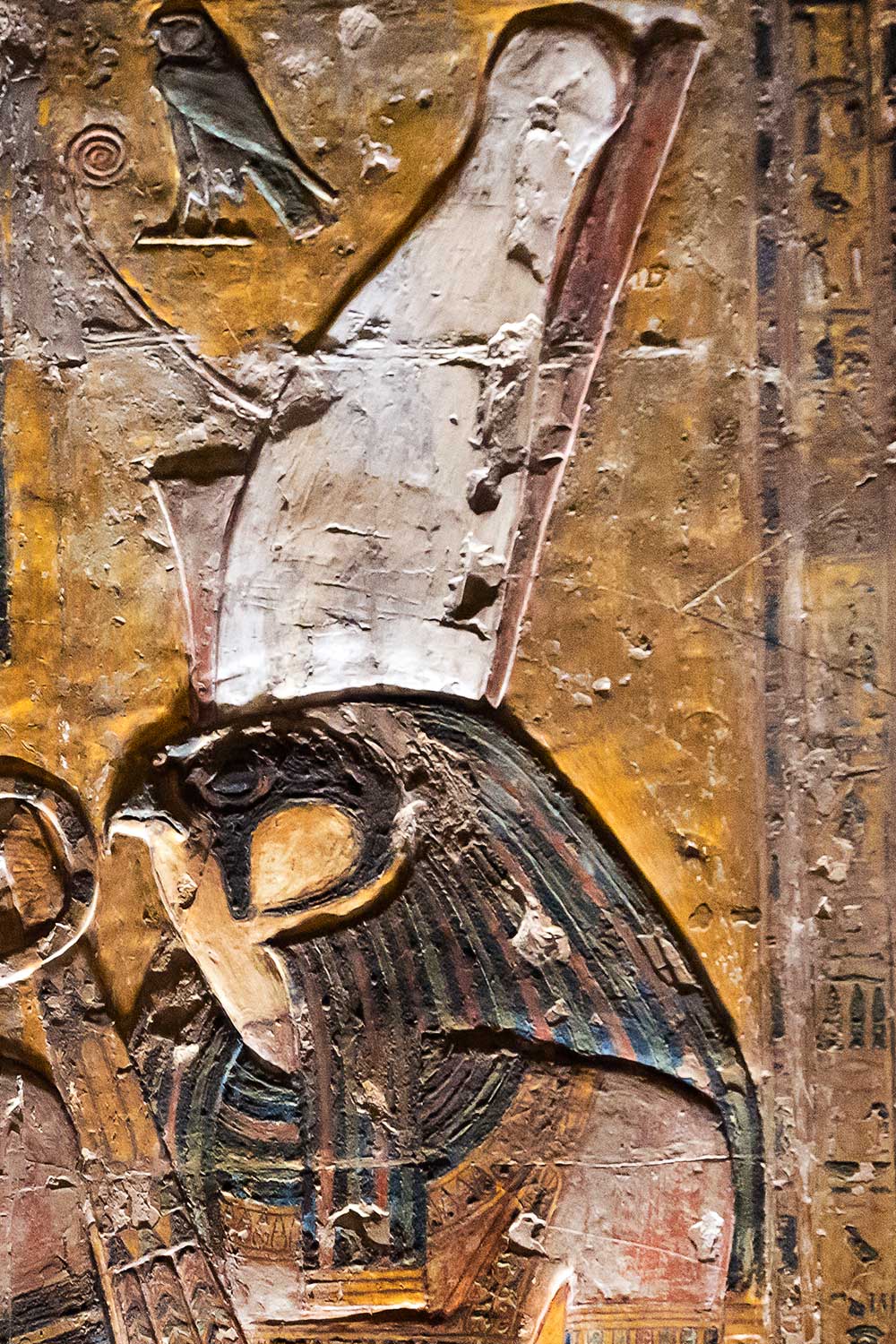
1.) Pharaoh Seti I presenting an offering to the god Horus
2.)
3.)
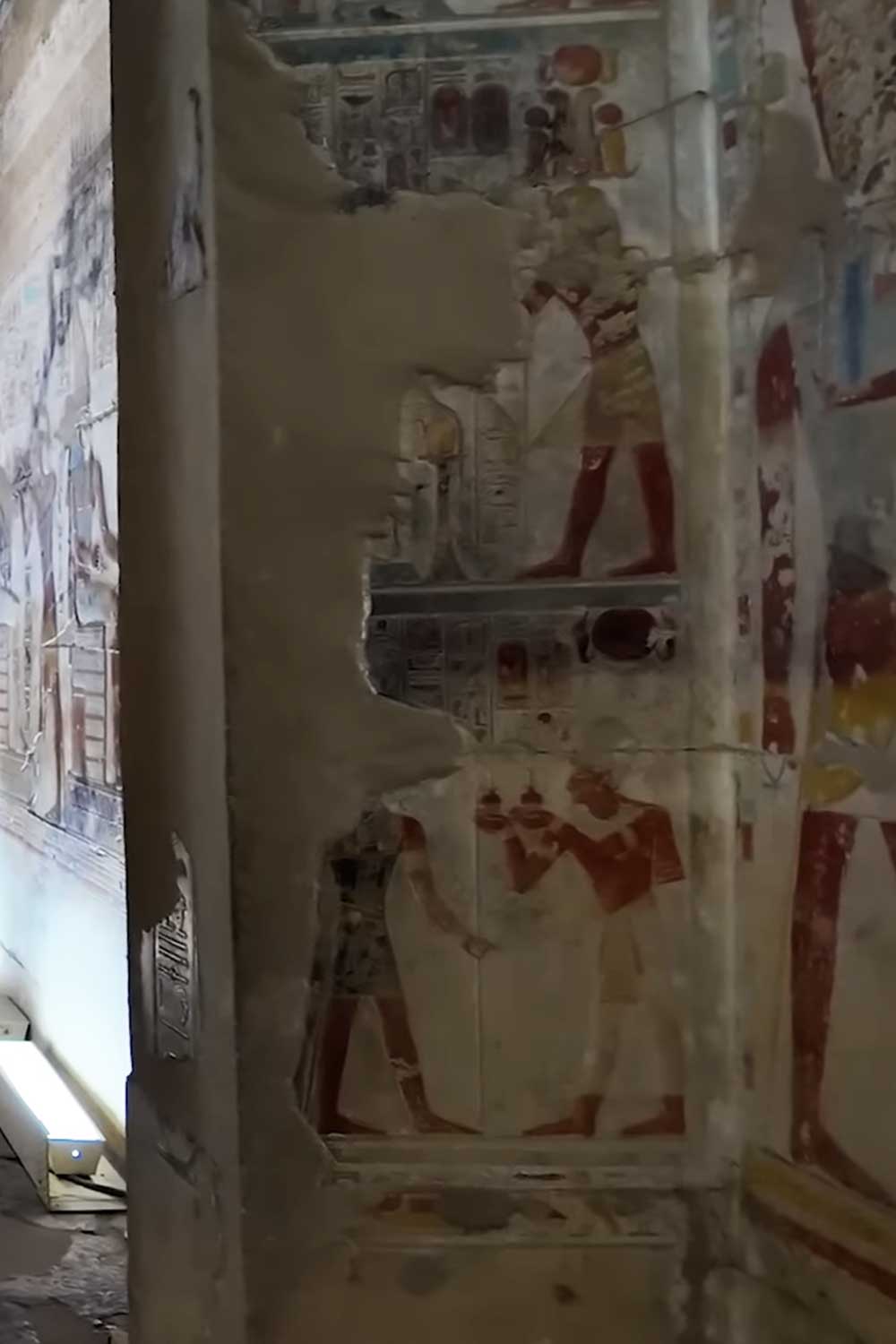
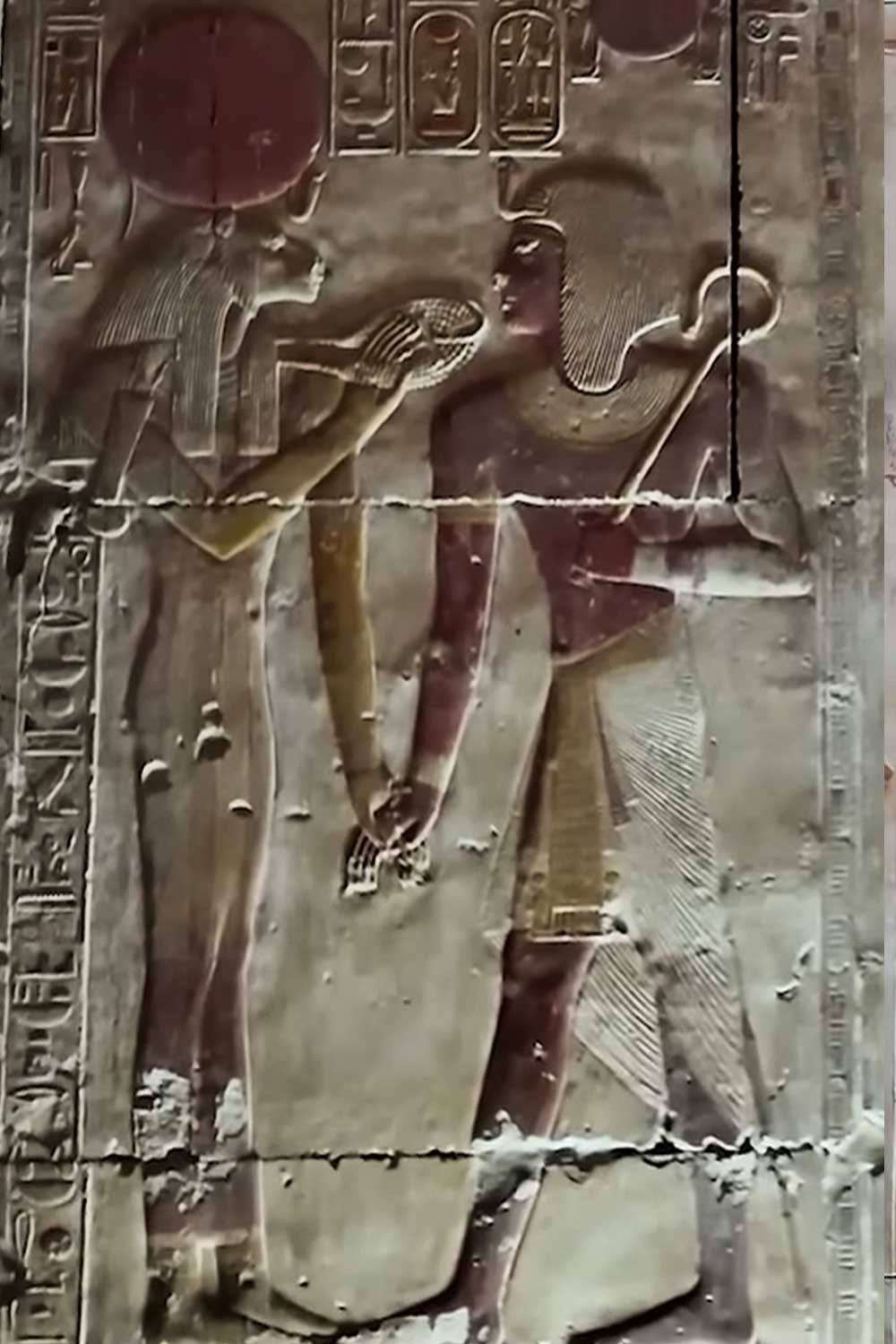
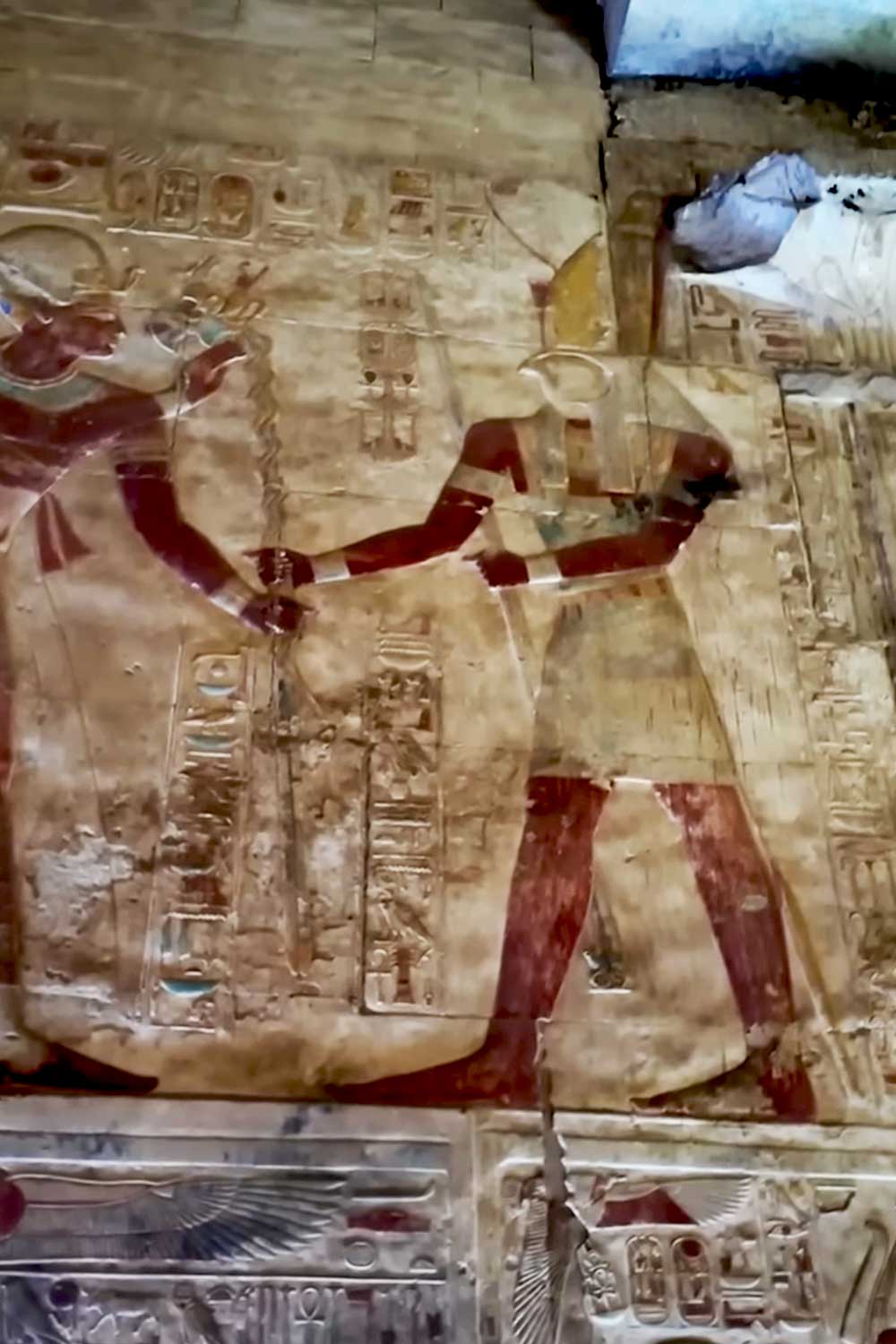
1.) Pharaoh Seti I before the goddess Sekhmet shown presenting a menat necklace and an ankh symbol of life
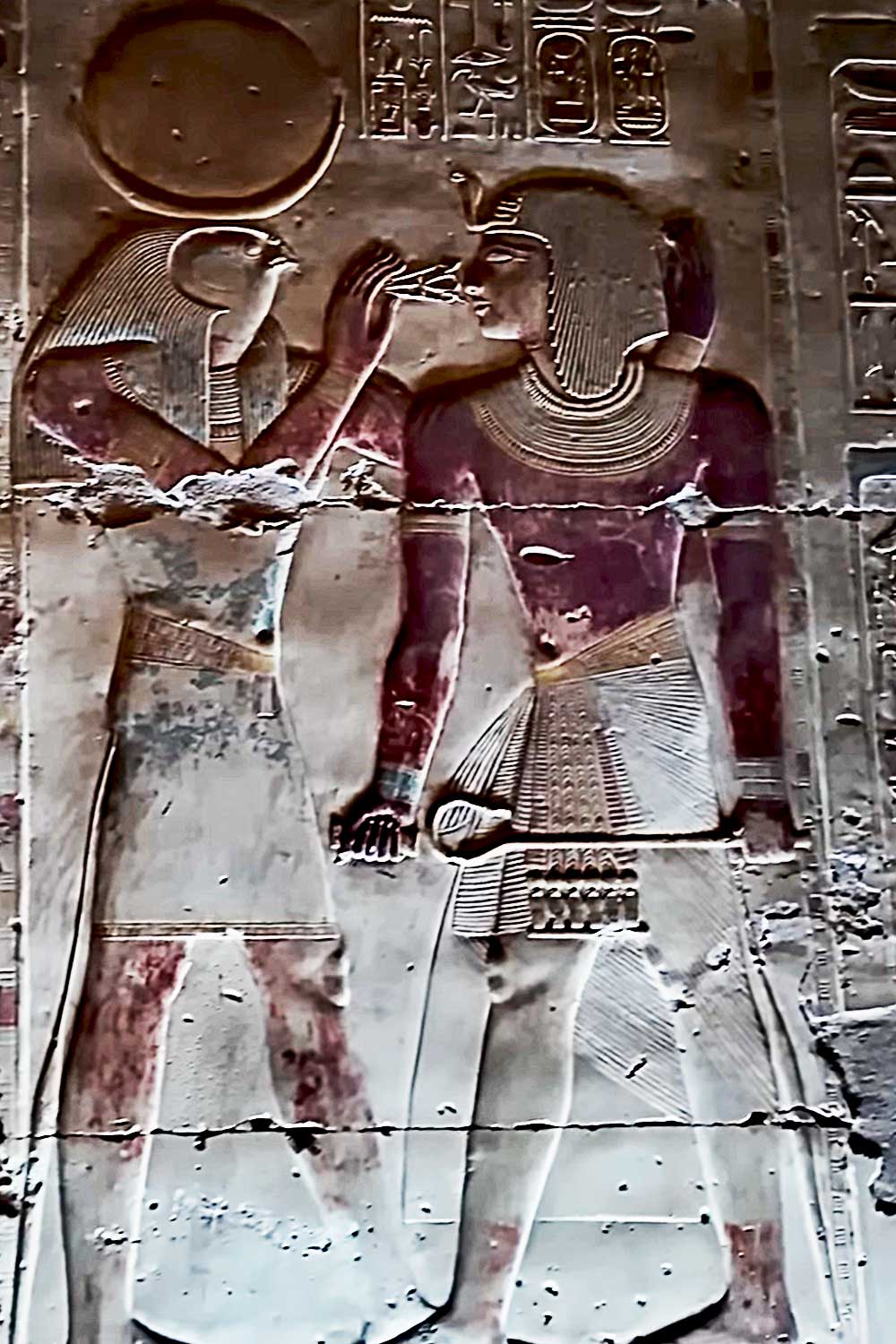
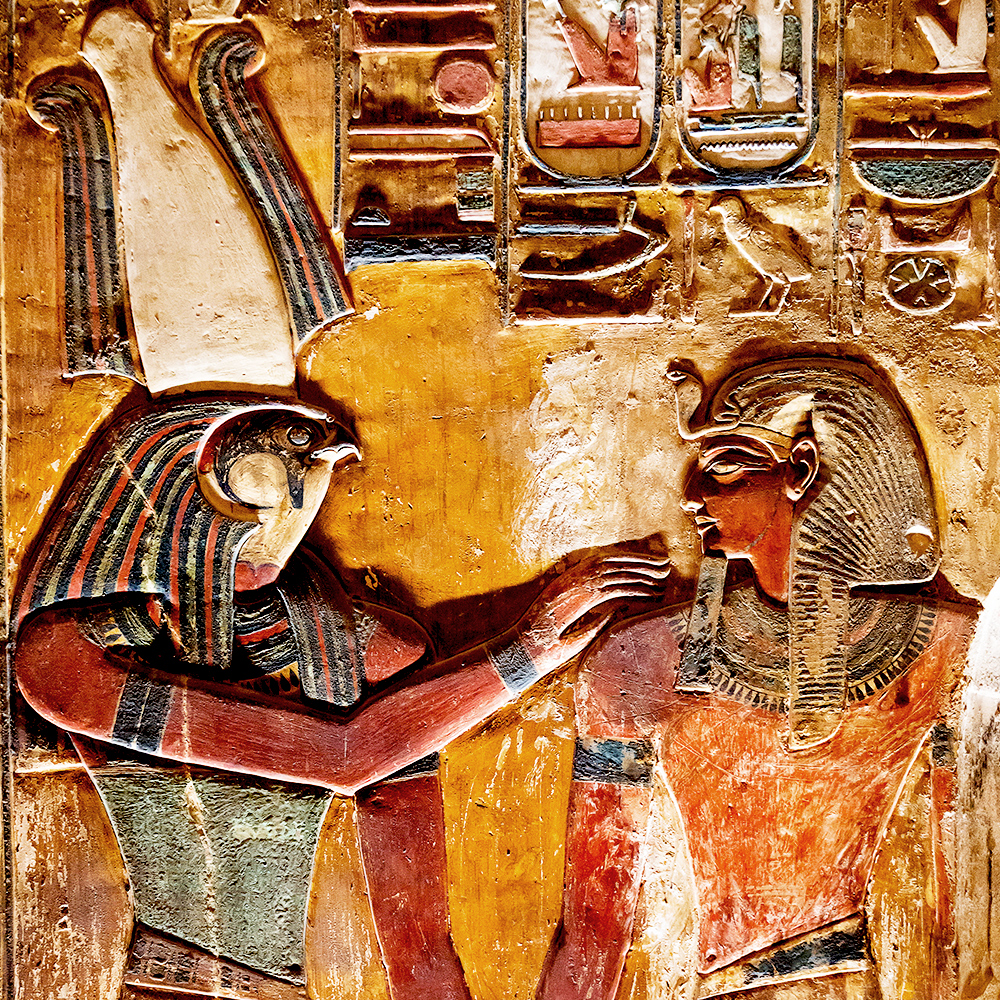
2.) The falcon-headed god Horus presenting an ankh, the symbol of life, to a pharaoh Seti I
3.) The god Horus wearing a sun disk headdress giving life to Seti in the after life
1.) The god Horus and goddess Isis with weighing scales of
2.) offerings to Pharaoh Seti I for the after life
3.)
1.) Pharaoh Seti I with the goddess Isis-Hathor and god Horus
2.)
3.)
1.) The relief features the distinctive tall, flat-topped
2.) "blue crown" of Pharaoh Akhenaten, known for his religious
3.) revolution centered on the worship of the Aten, the sun disk
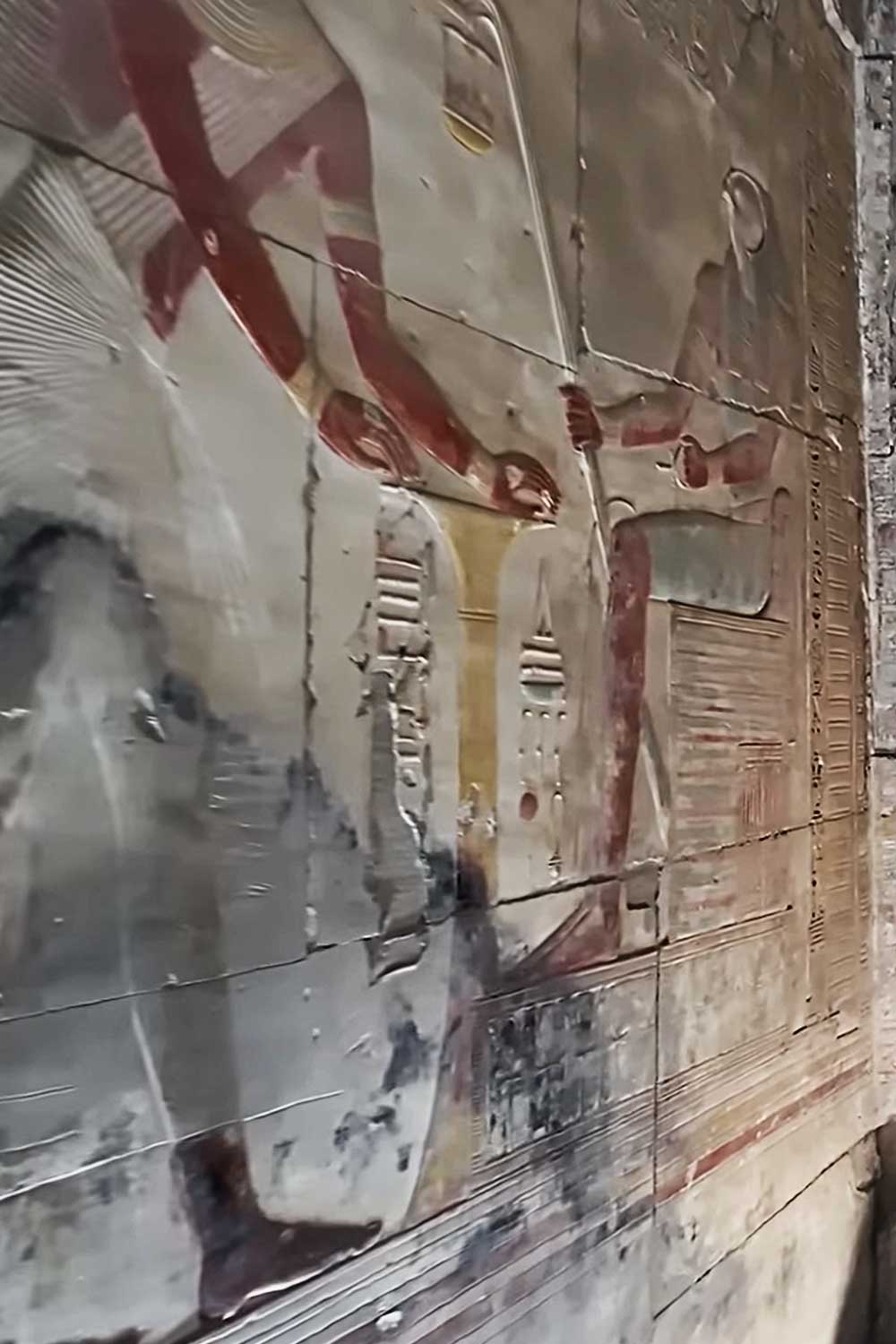
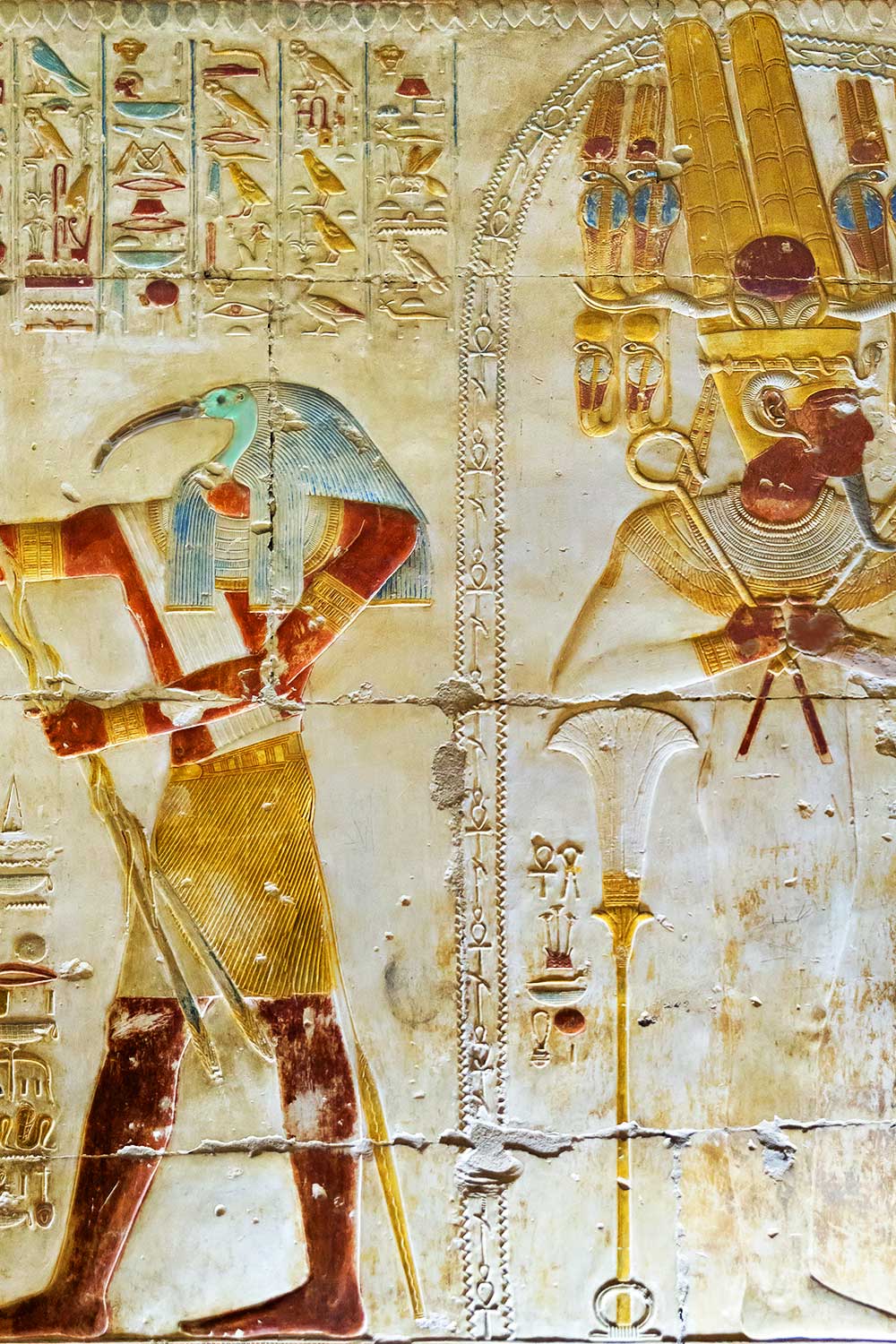
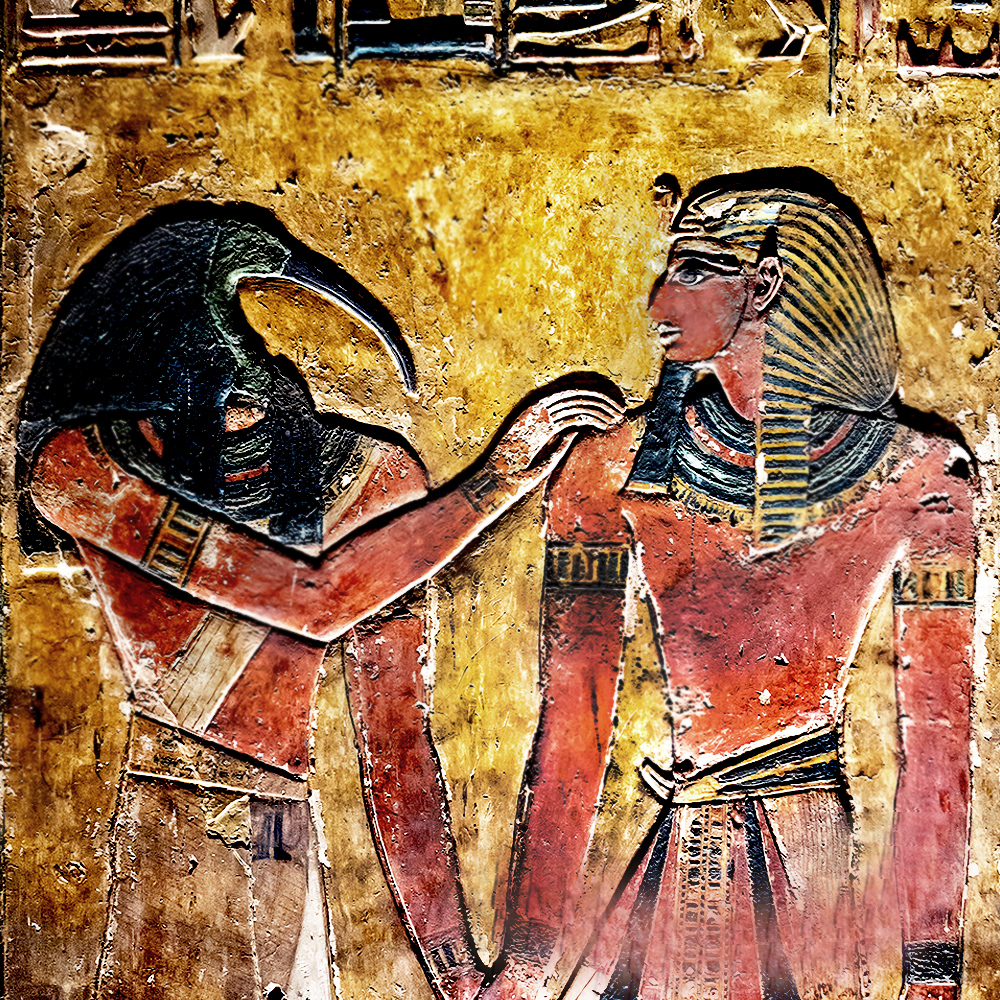
1.) Painted Relief of King Seti I facing Thoth to receive the ankh egyptian symbol of the afterlife representing the ability to pass through the gates of death
2.) The Pharaoh receives from Thoth the royal emblems of the crook and flail insignia of pharaonic authority
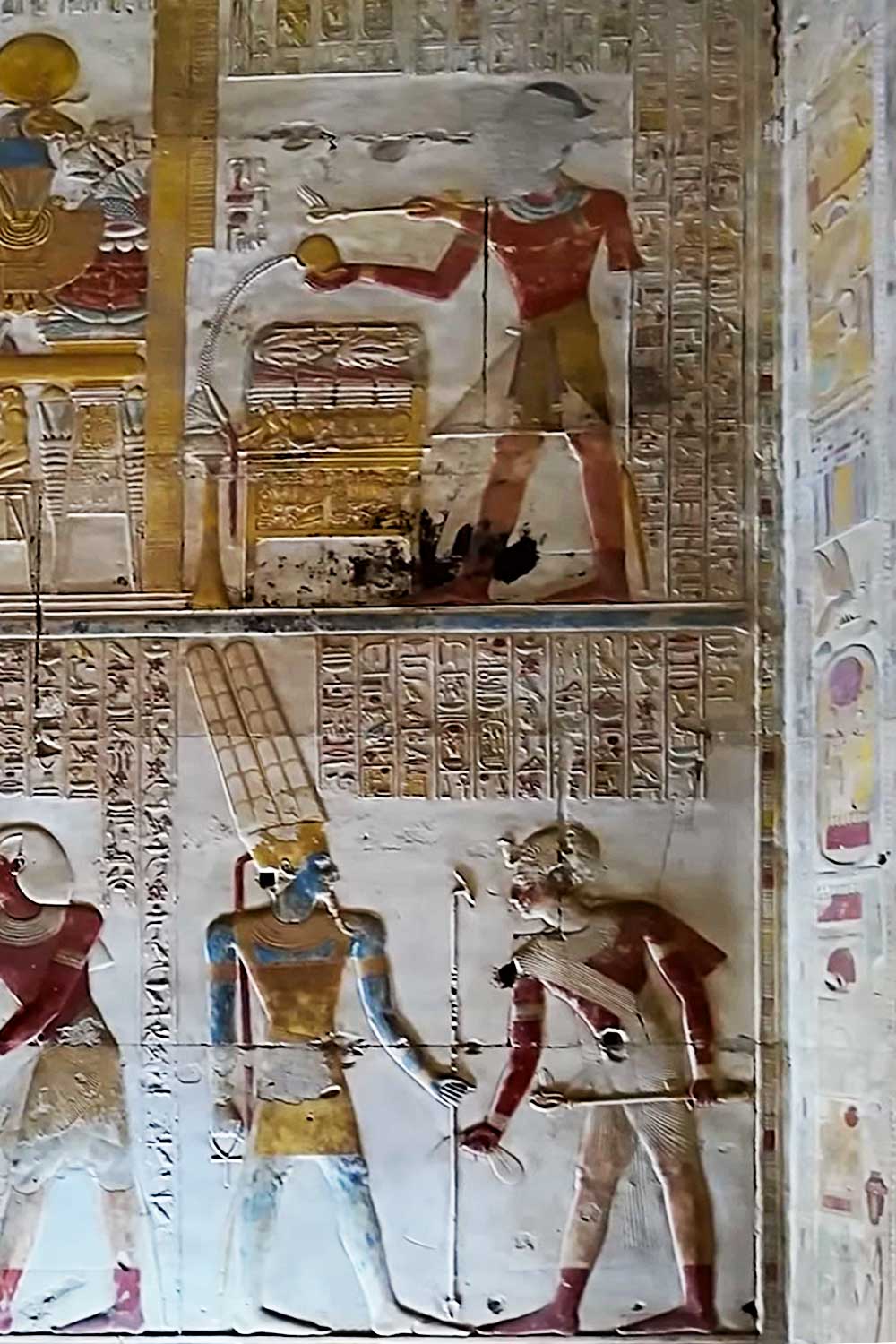
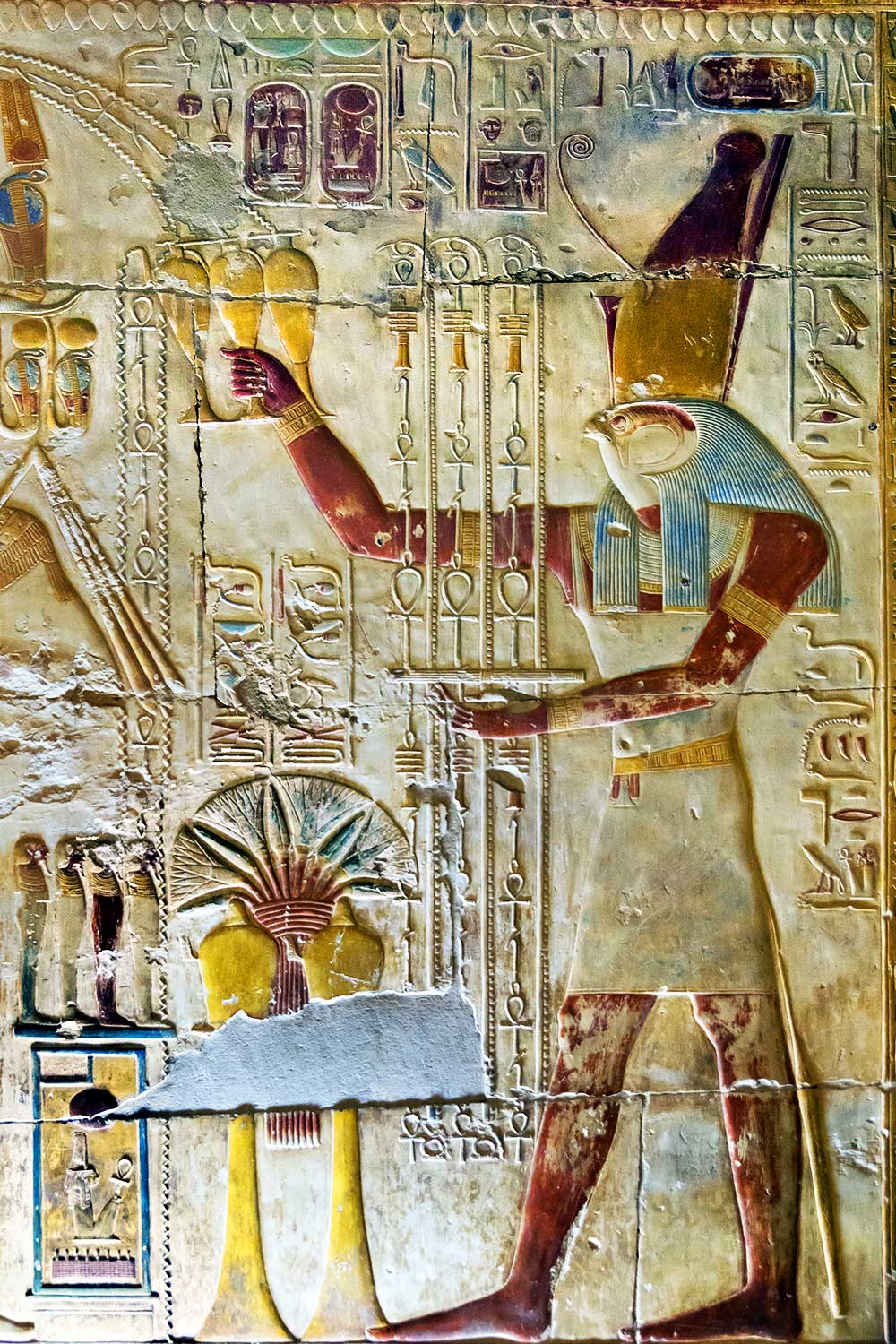
3.) Horus performing the purification rite on "Osiris Seti", sprinkles a lustration of natron and water from three conjoined golden vases, Seti's Temple of Abydos

Tomb KV17

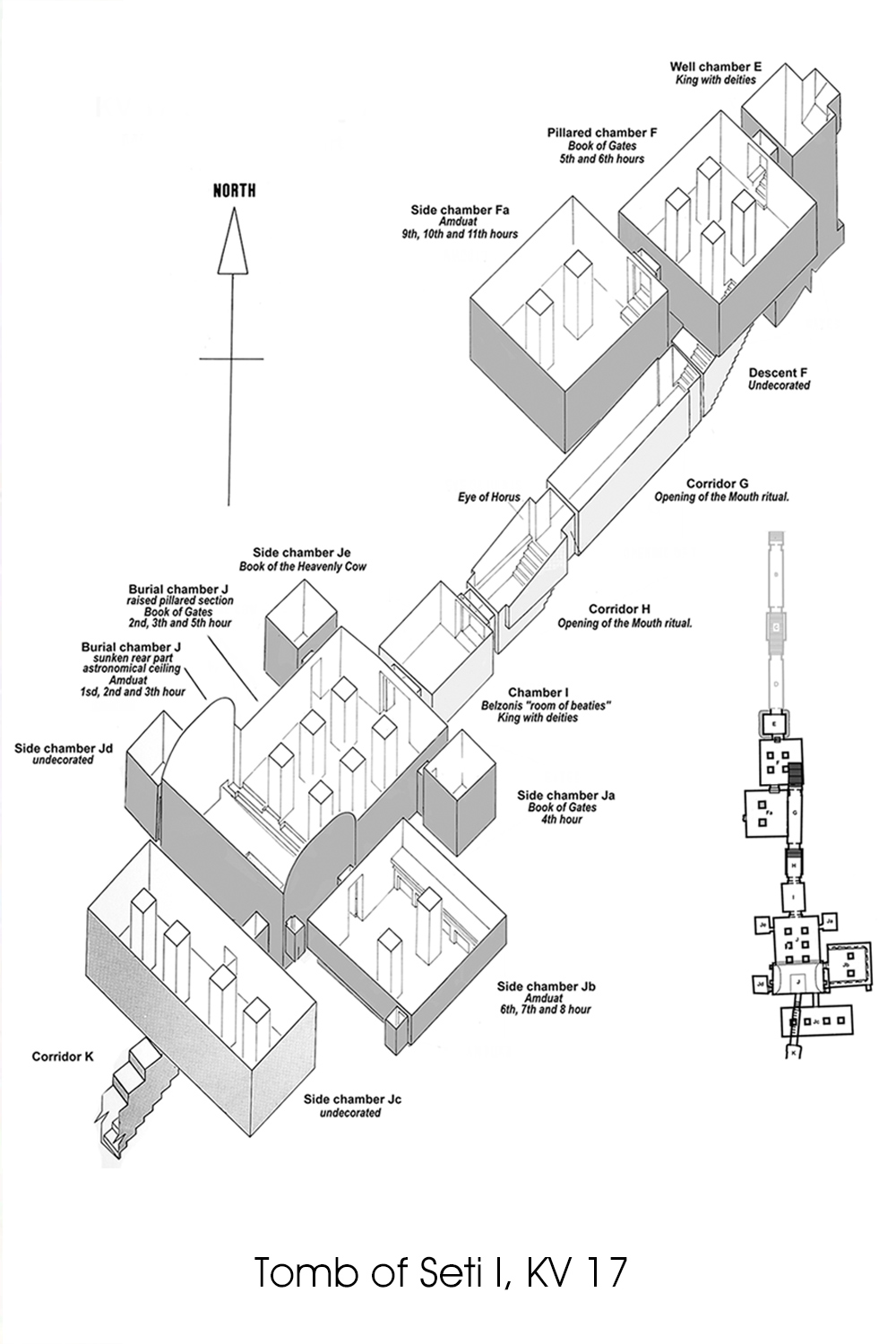
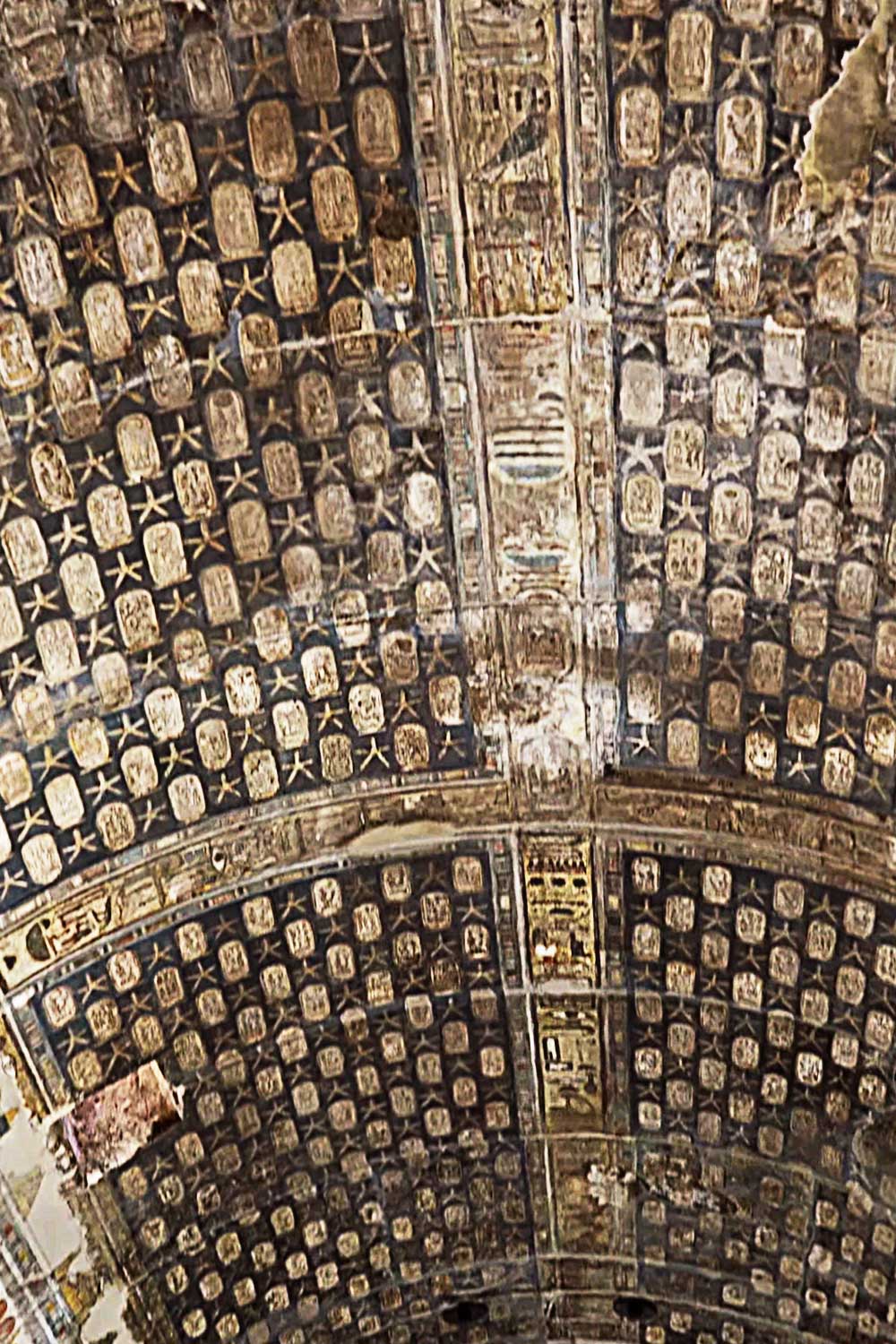
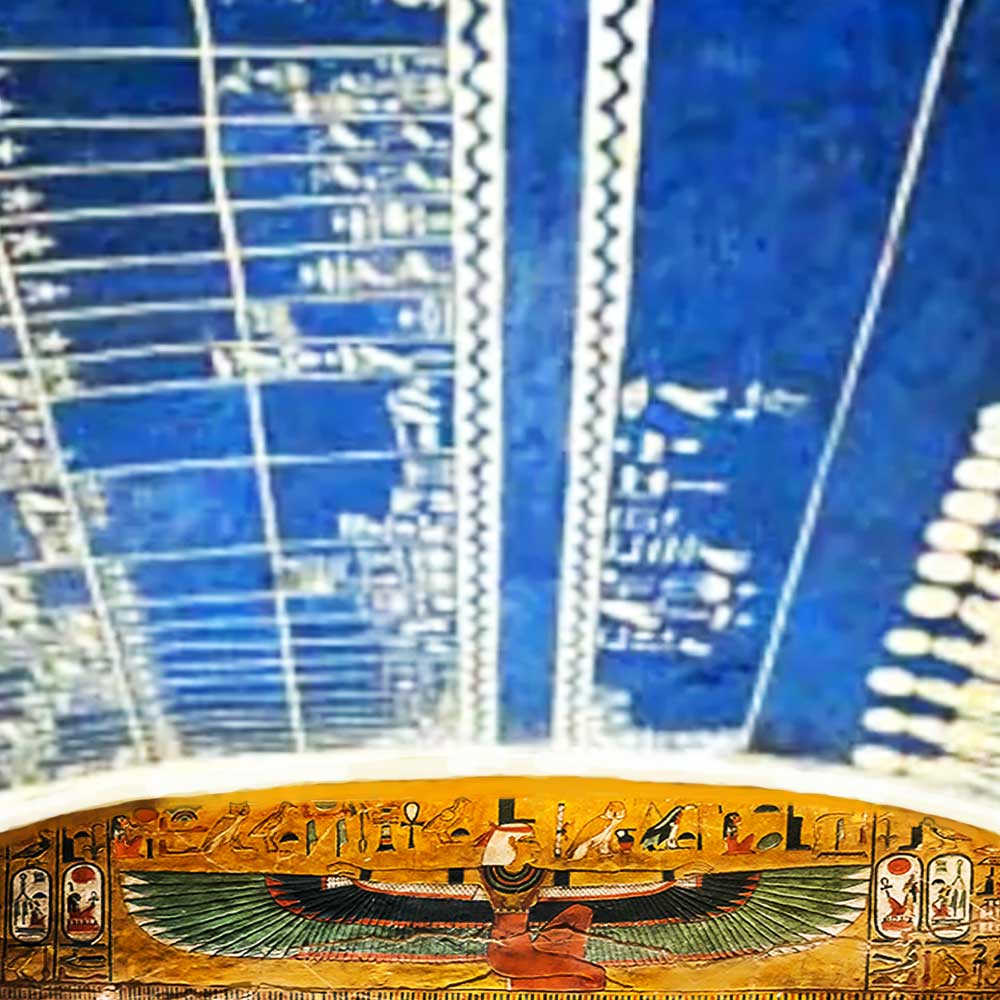
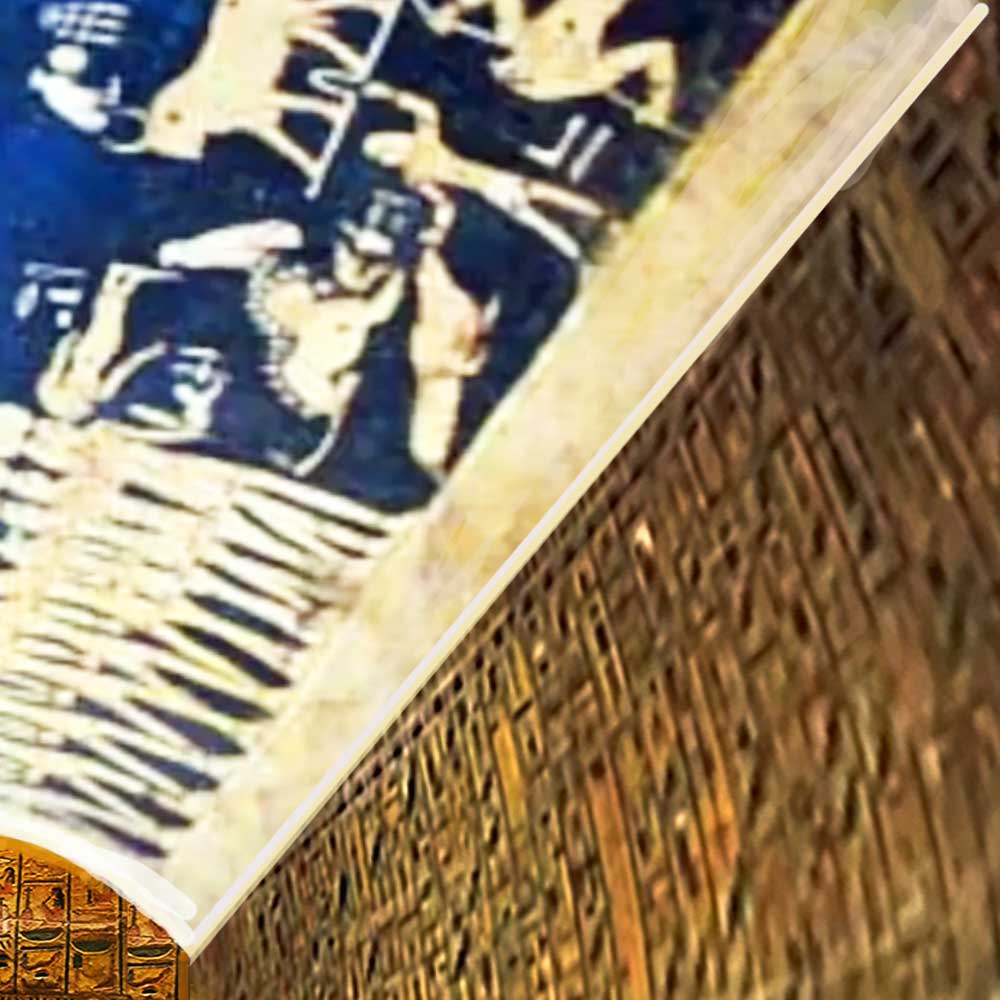
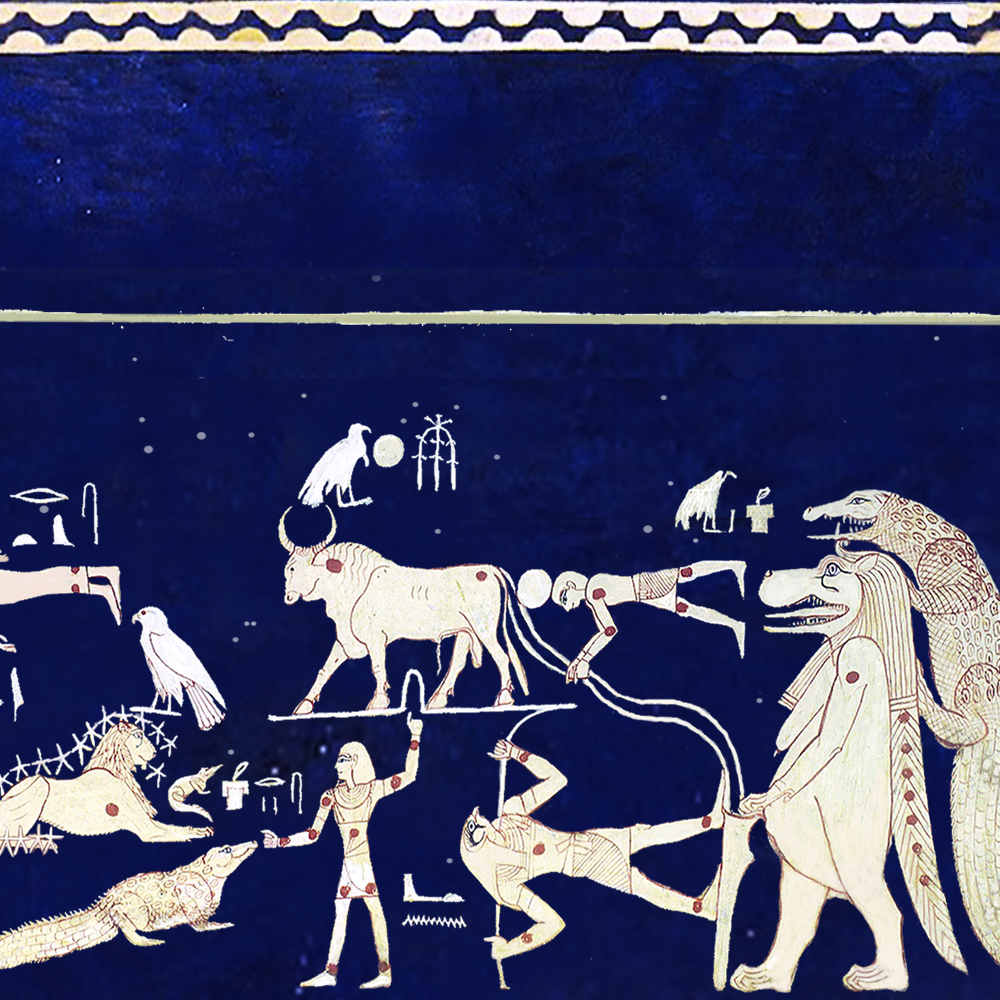
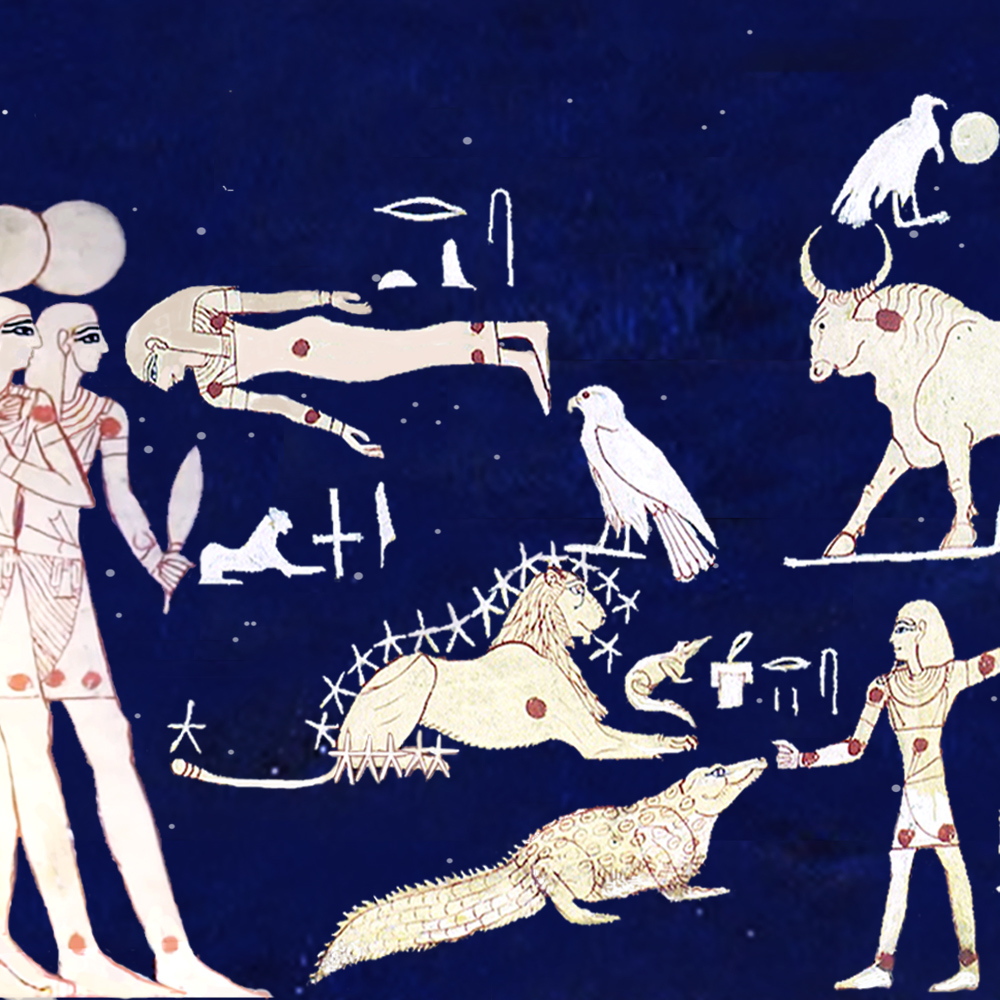
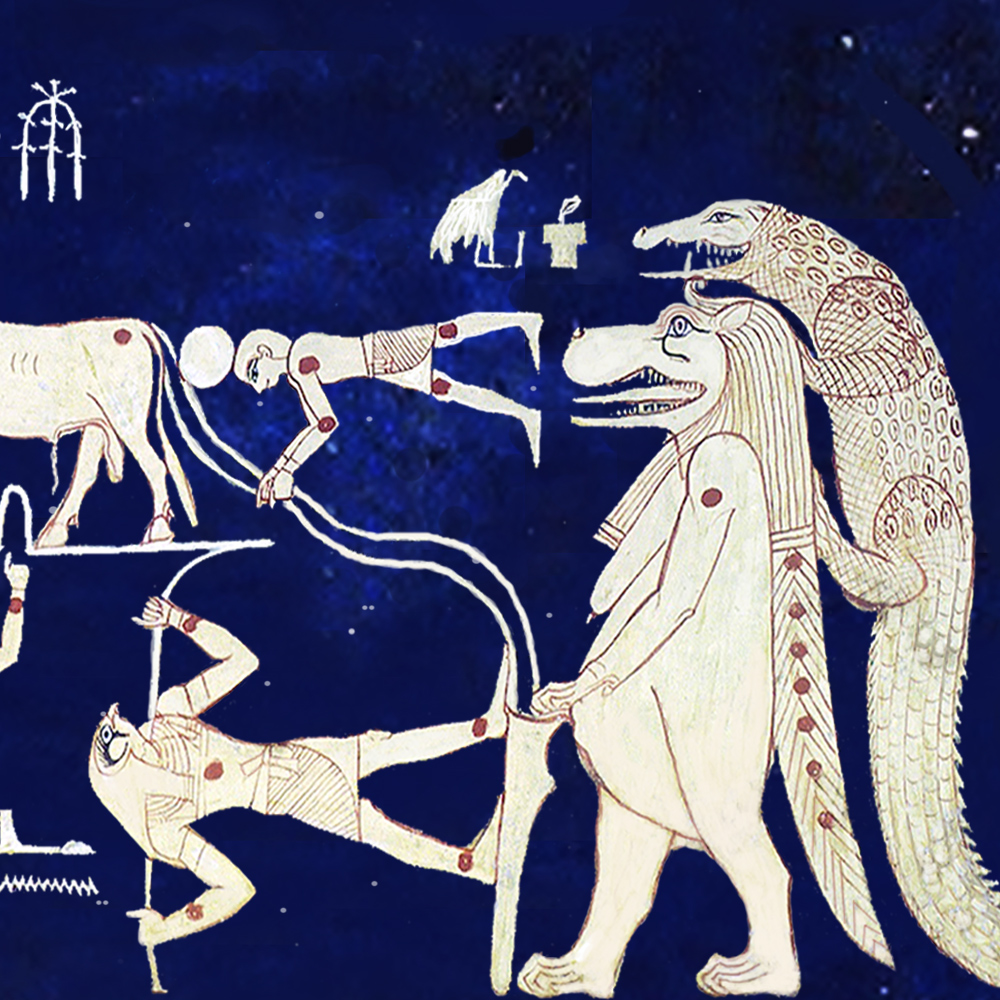
The Valley of the Kings serves as the majestic burial site of Pharaoh Seti I of the Nineteenth Dynasty, who reigned from 1290 to 1279 BC. His tomb, known as Belzoni’s Tomb, was discovered by the Italian explorer Giovanni Battista Belzoni on October 16, 1817. It remains one of the largest, deepest, and most elaborately decorated tombs in the Valley. Measuring 137.19 meters (446 feet) in length, it features remarkably well-preserved reliefs in all but two of its seventeen chambers and side rooms. Seti I—called Sethos I in Greek—was the second pharaoh of the Nineteenth Dynasty during Egypt’s New Kingdom, ruling approximately from 1294/1290 BC until 1279 BC. The son of Ramesses I and Sitre, he left a legacy that continues to fascinate scholars and visitors alike. His tomb is unique in the Valley of the Kings for its vaulted ceiling, decorated with celestial motifs representing the female hippopotamus constellation. This constellation was believed to guard the northern sky, warding off evil and preventing unworthy souls from entering. The imagery depicts a hybrid goddess encircling the north celestial pole, with the head of a hippopotamus, the paws of a lion, and the body of a stellar serpent. Nearby, a hippopotamus appears alongside a crocodile holding a cane, with two ropes tied to a bull’s tail—symbolizing the “Big Dipper.” In front of this celestial tableau stands the goddess Serqet, accompanied by a falcon at her feet. Below the falcon are figures of a lion, a crocodile, and a man in combat. The man, crowned with a solar disk, grasps the ropes, while Anu stands upon the cane. These figures represent circumpolar stars, a powerful metaphor for the Afterlife: stars that never set, eternally circling the pole star. Known as the “undying” or “imperishable” stars, they were regarded in Egyptian belief as the eternal destination of the king’s soul. According to the Pyramid Texts of the third millennium BC, the deceased pharaoh ascends to heaven and becomes one of these imperishable stars.
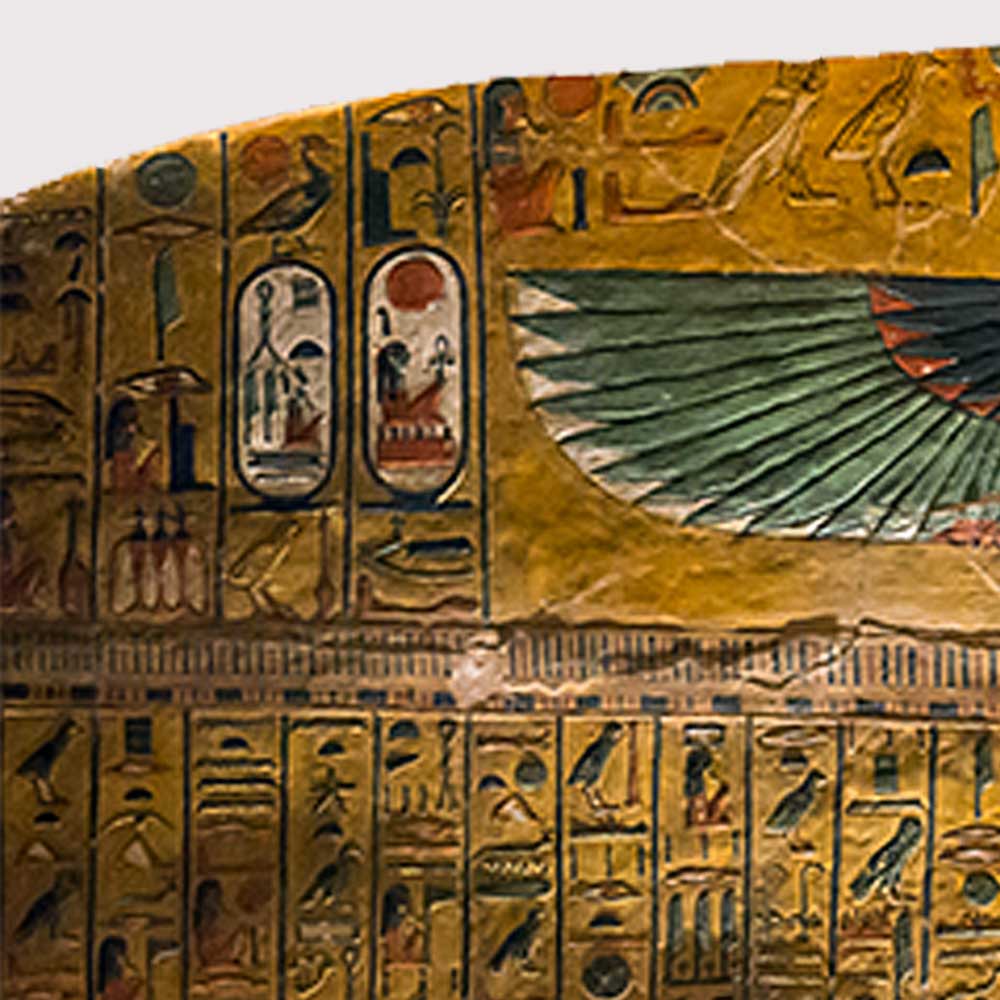
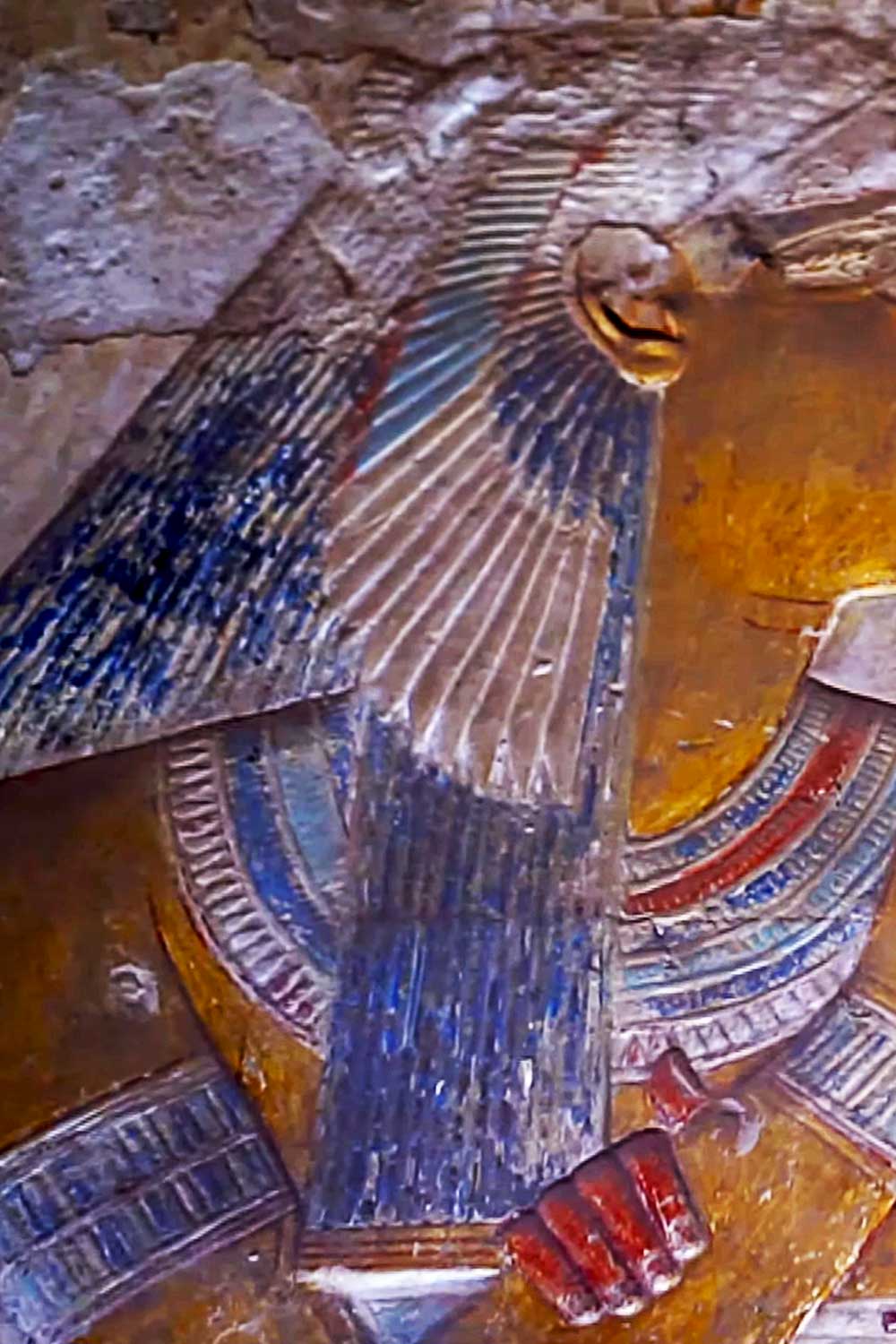
1.) In ancient Egypt, the wings of the goddess Isis symbolize protection, embracing, and transformation. Isis is one of the oldest gods in the ancient Egyptian pantheon.
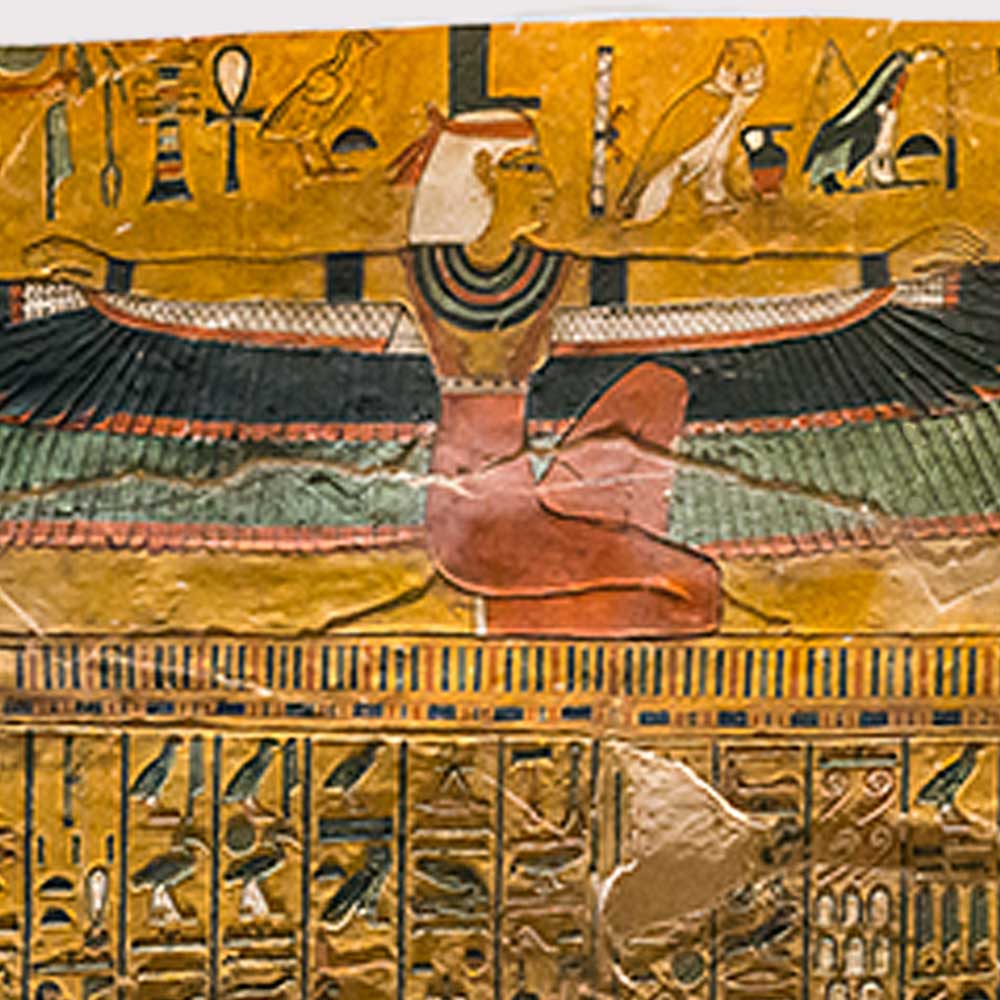
2.) Isis's protective wings are seen in an Egyptian mourning posture that mimics Osiris's embrace. The wings also symbolize safety because they are depicted as spread out, which is a protective gesture in Egyptian art.
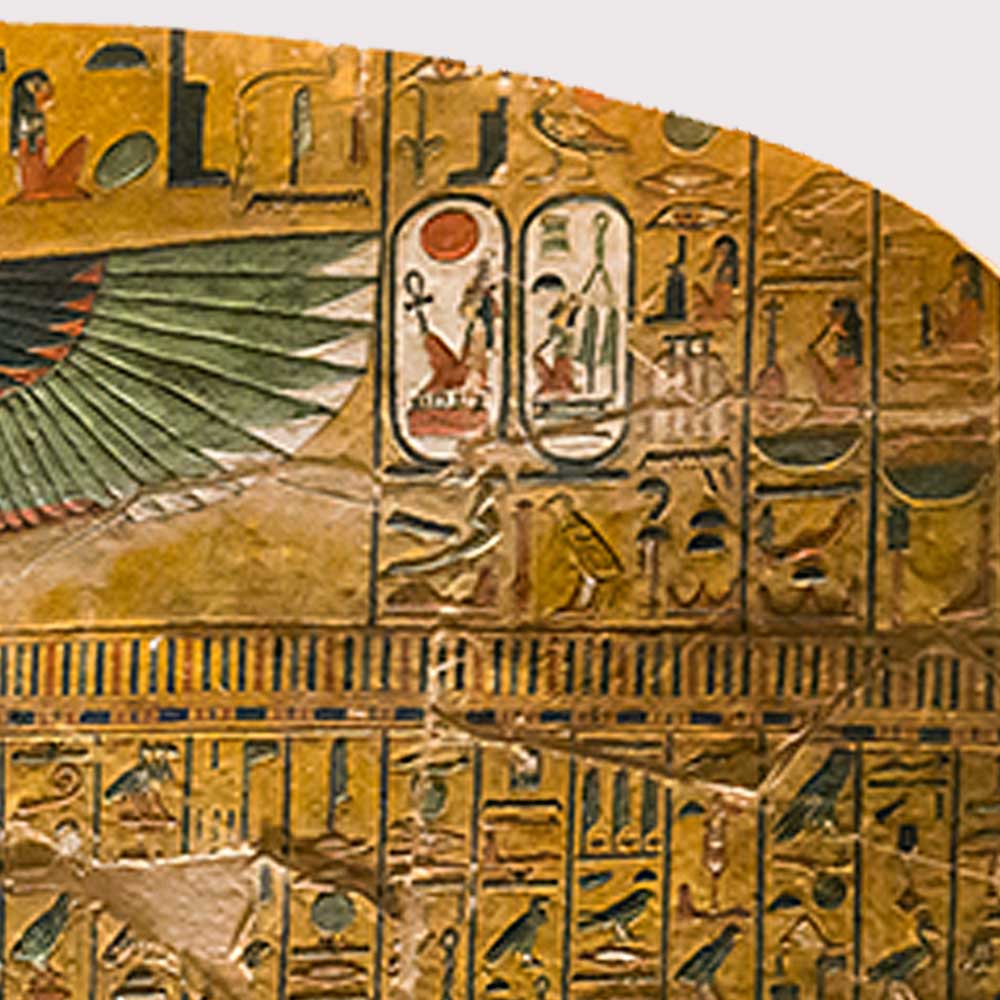
3.) Isis is connected to the symbol of the kite hawk and wings because of her ability to transform into a bird. She is often depicted with a moon disk and cow horns. Tomb of Pharaoh Seti I, KV17
1.) Paintings of hieroglyph prayers and offerings on the vaulted ceiling over the Tomb of Pharaoh Seti I, with the open wings of protection from goddess Isis,
2.) Isis's wings were thought to sweep away negative energies, shield her followers from harm, and guide them toward enlightenment.
3.) Isis' name is first attested in the fifth dynasty in the Pyramid texts. She was the wife of Osiris and the mother of Horus,
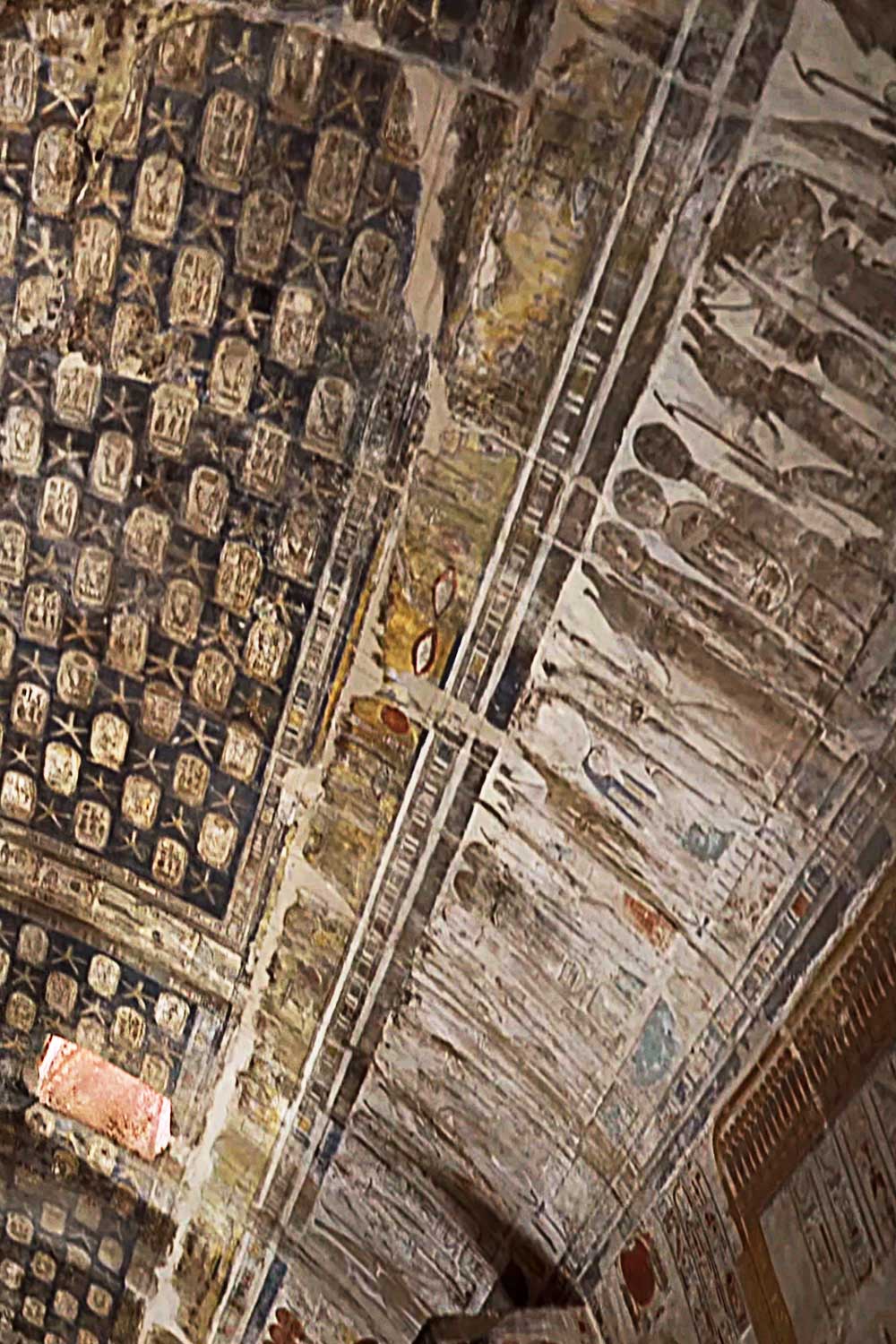
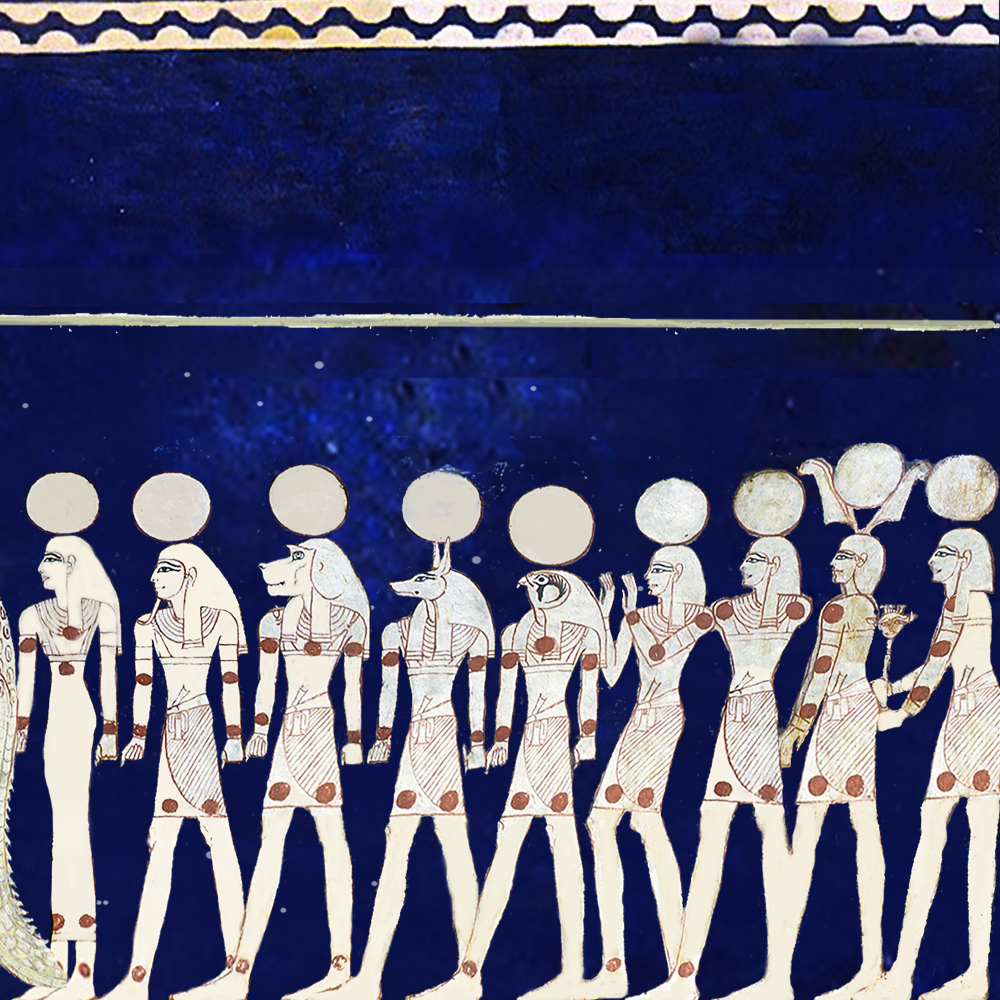
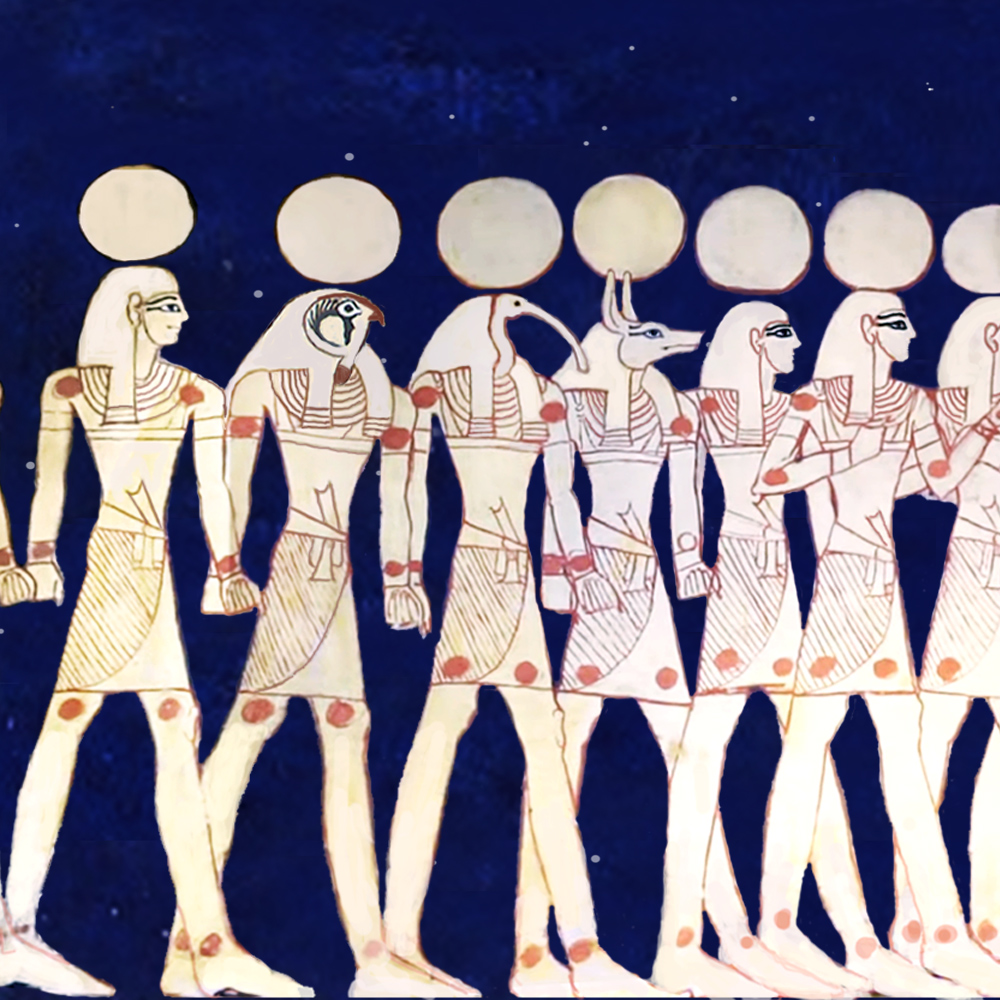
1.) The vaulted ceiling over Seti's tomb is painted with motifs and symbols of Circumpolar stars,
2.) which are stars that, due to their proximity to a celestial pole, never set below the horizon,
3.) for a given observer's location, appearing to circle the pole and remain visible all night, every night of the year.
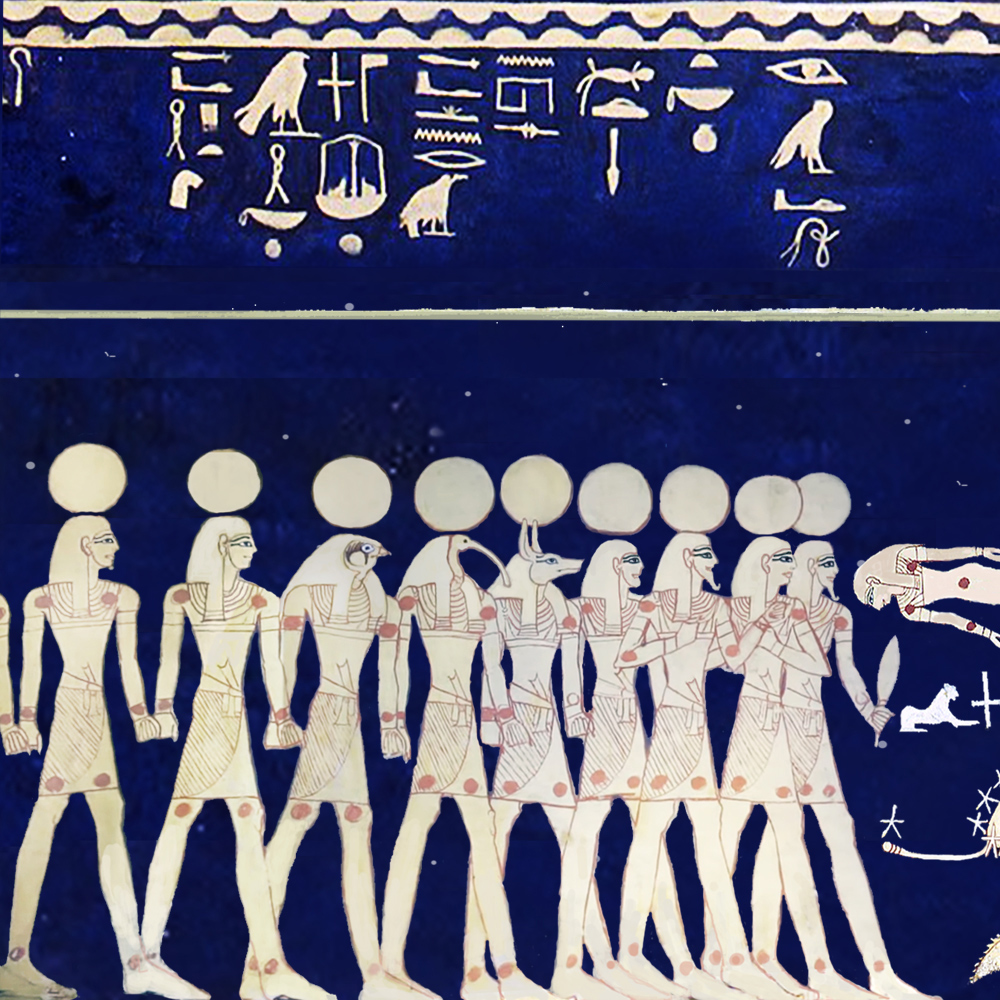
1.) Detail of above, Fellow judges of Seti come to weigh his heart against a feather of Maat to determine his fate in the afterlife,
2.) If Seti's heart is lighter than the feather his soul passes into the afterlife,
3.) If Seti's heart is heavier than the feather his soul is consumed by Ammit, the "Devourer", and cast into darkness, KV17, Tomb of Pharaoh Seti I, 1292-1191 BCE.
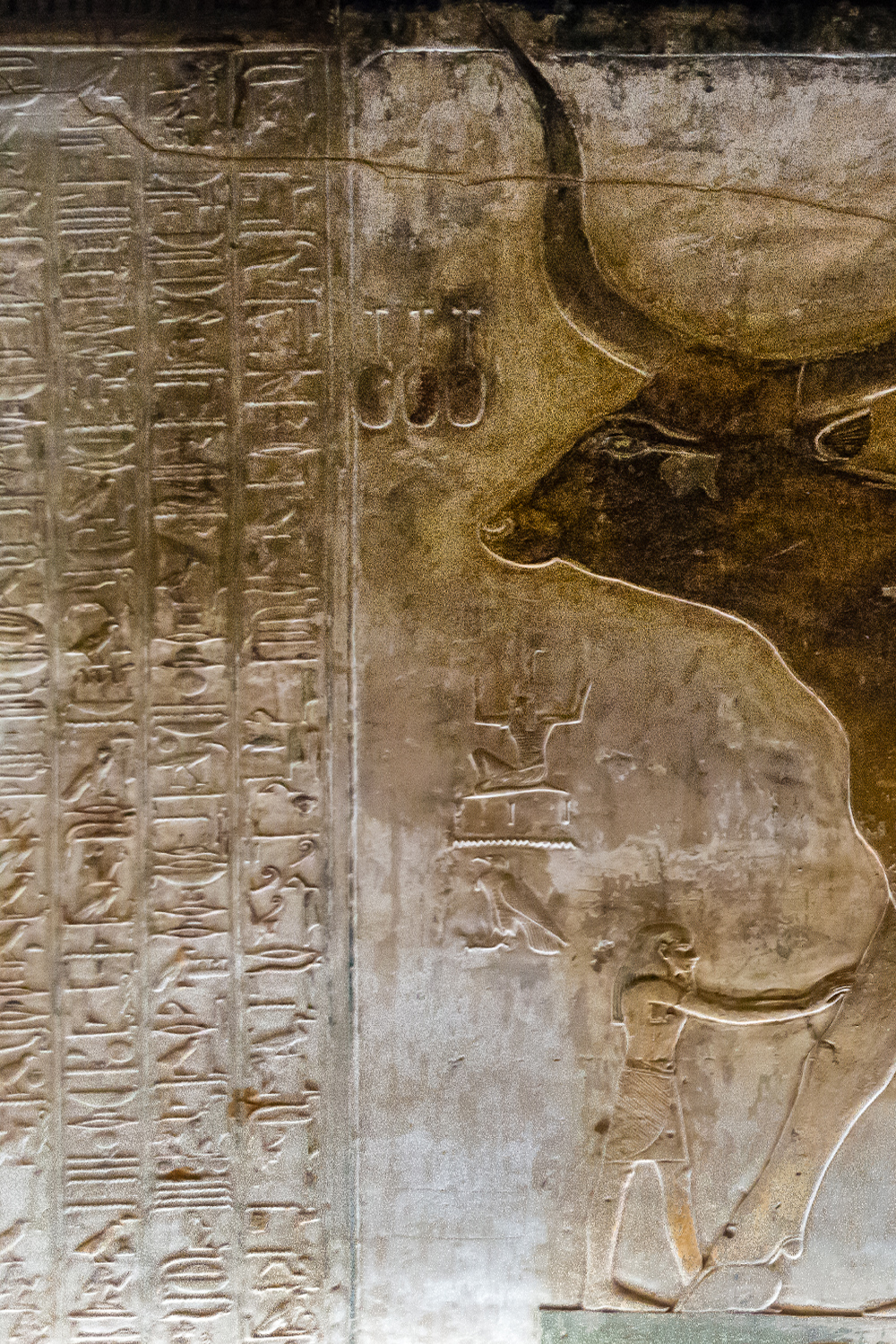
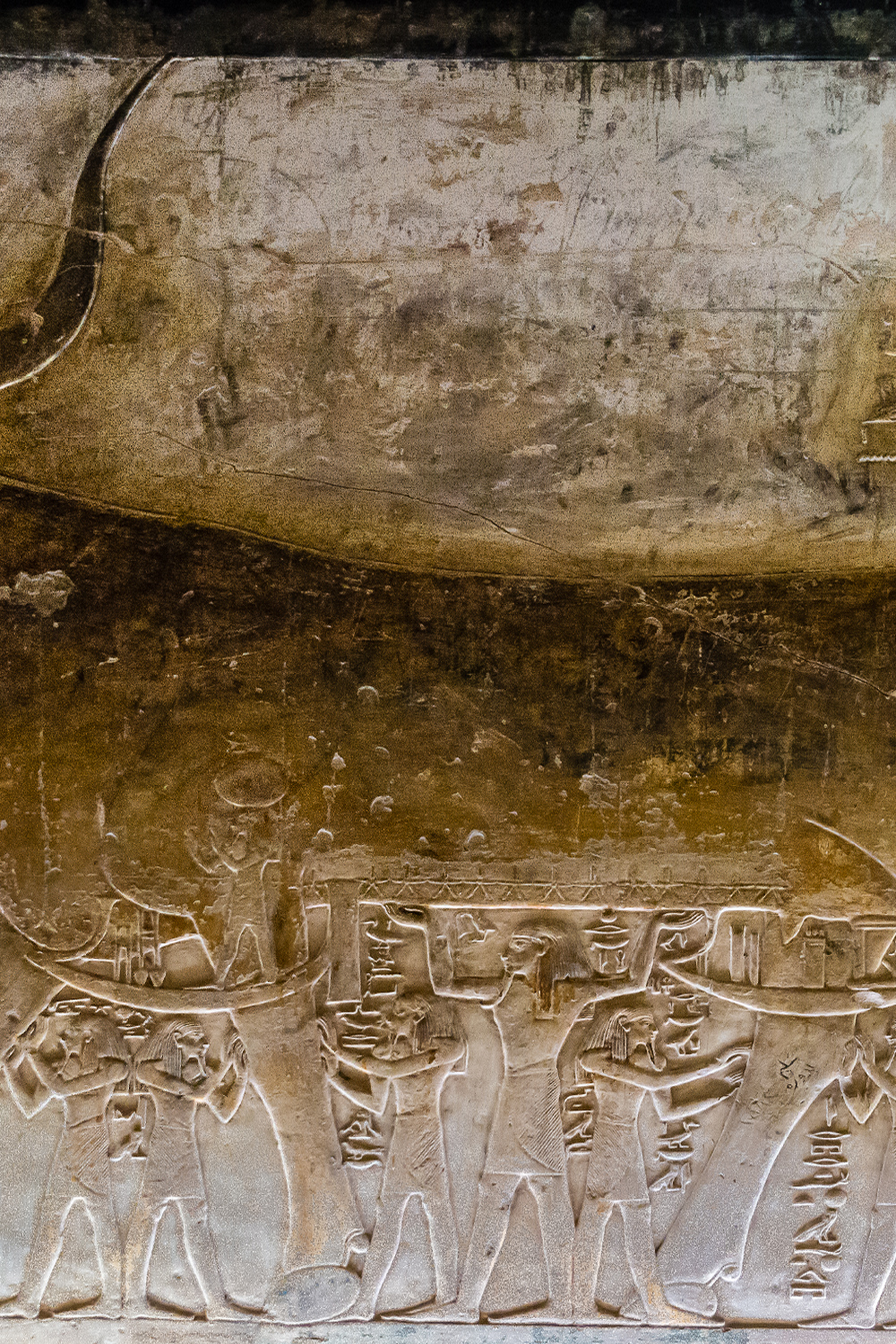
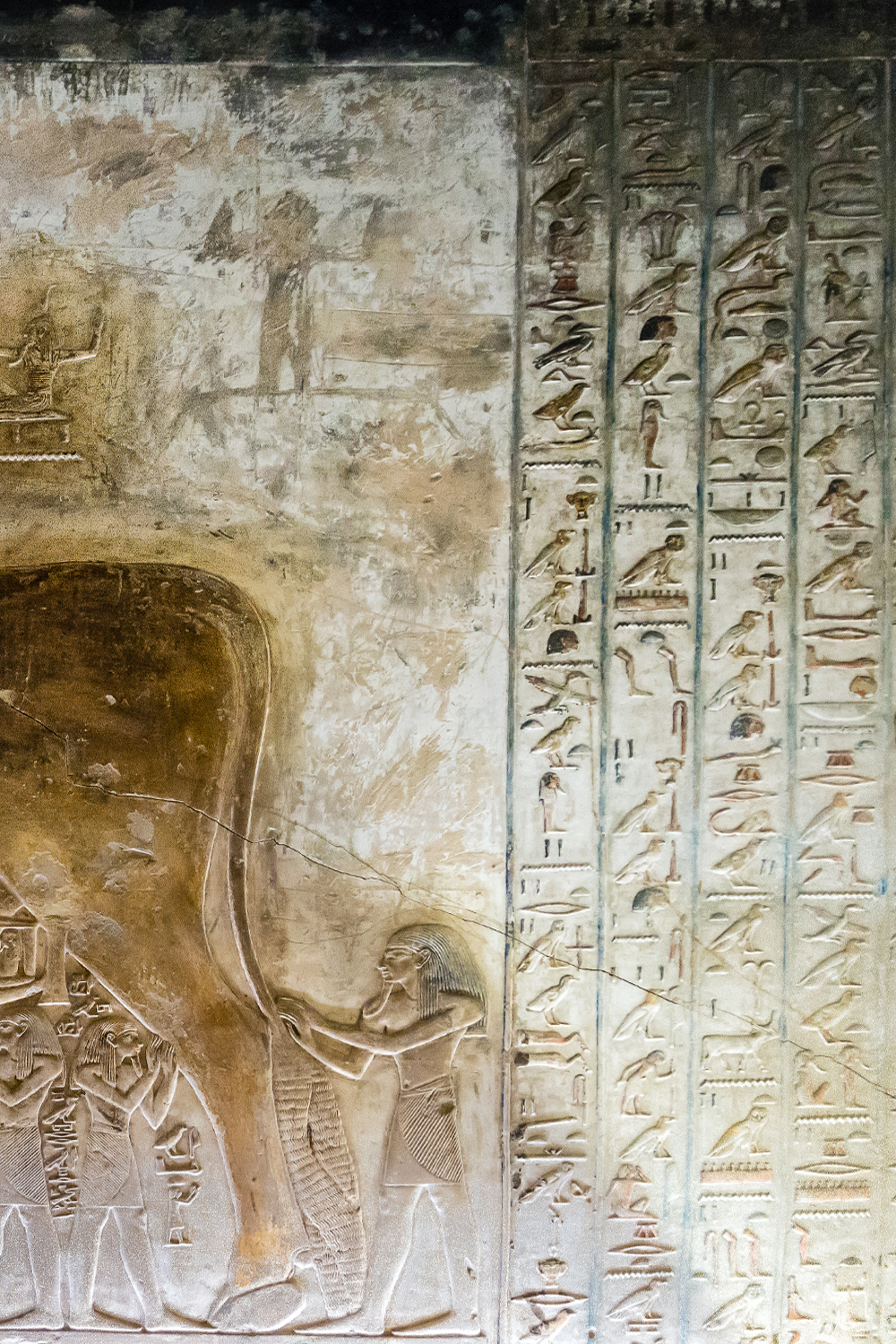
1.) The sky goddess Nut depicted as a cow and supported by the eight Heh gods,
2.) the Book of the Heavenly Cow was discovered in the outermost gilded shrine of Tutankhamun,
3.) Three complete versions of the ancient text were discovered on the walls of the tombs of Seti I, Ramesses II, and Ramesses III.
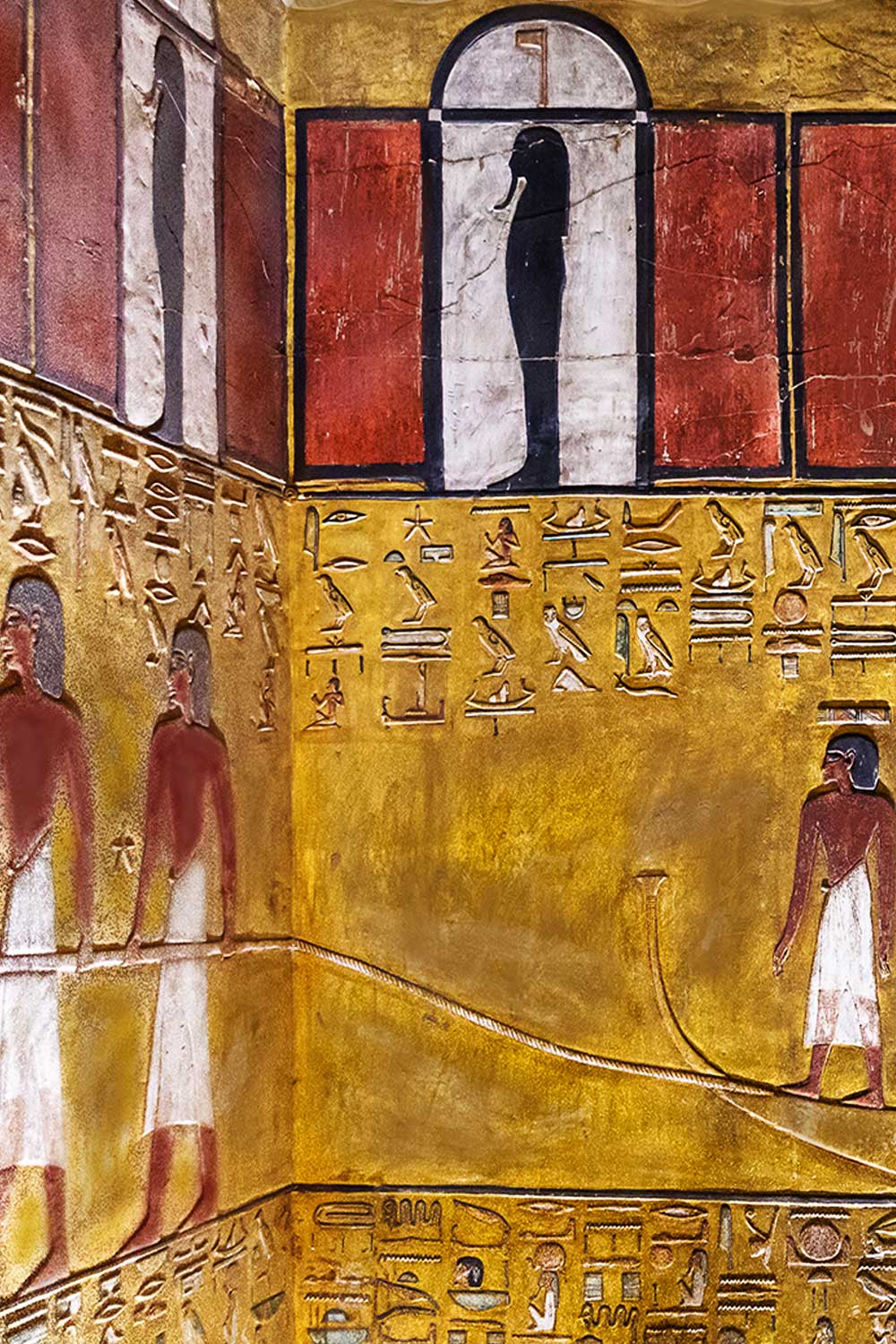
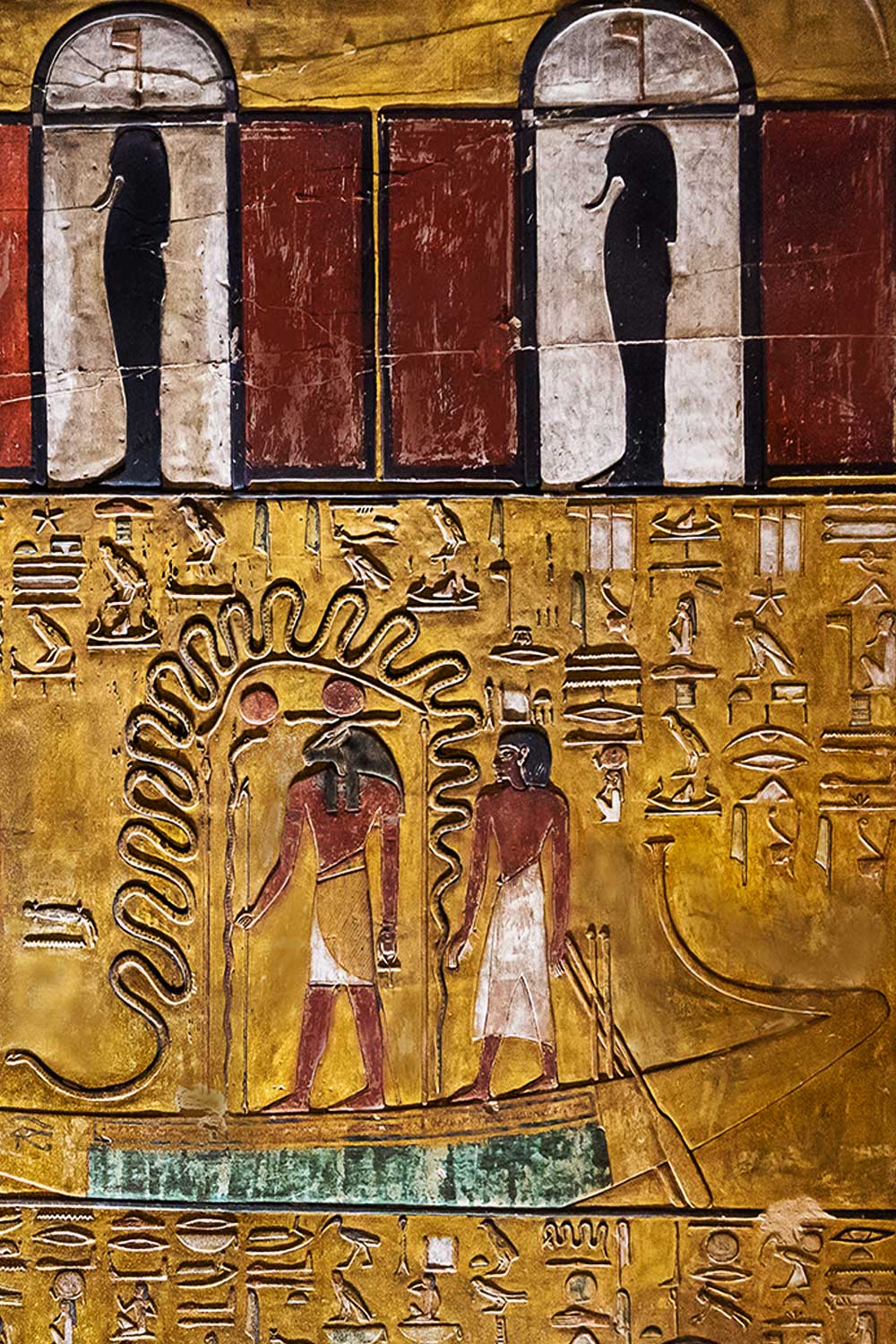
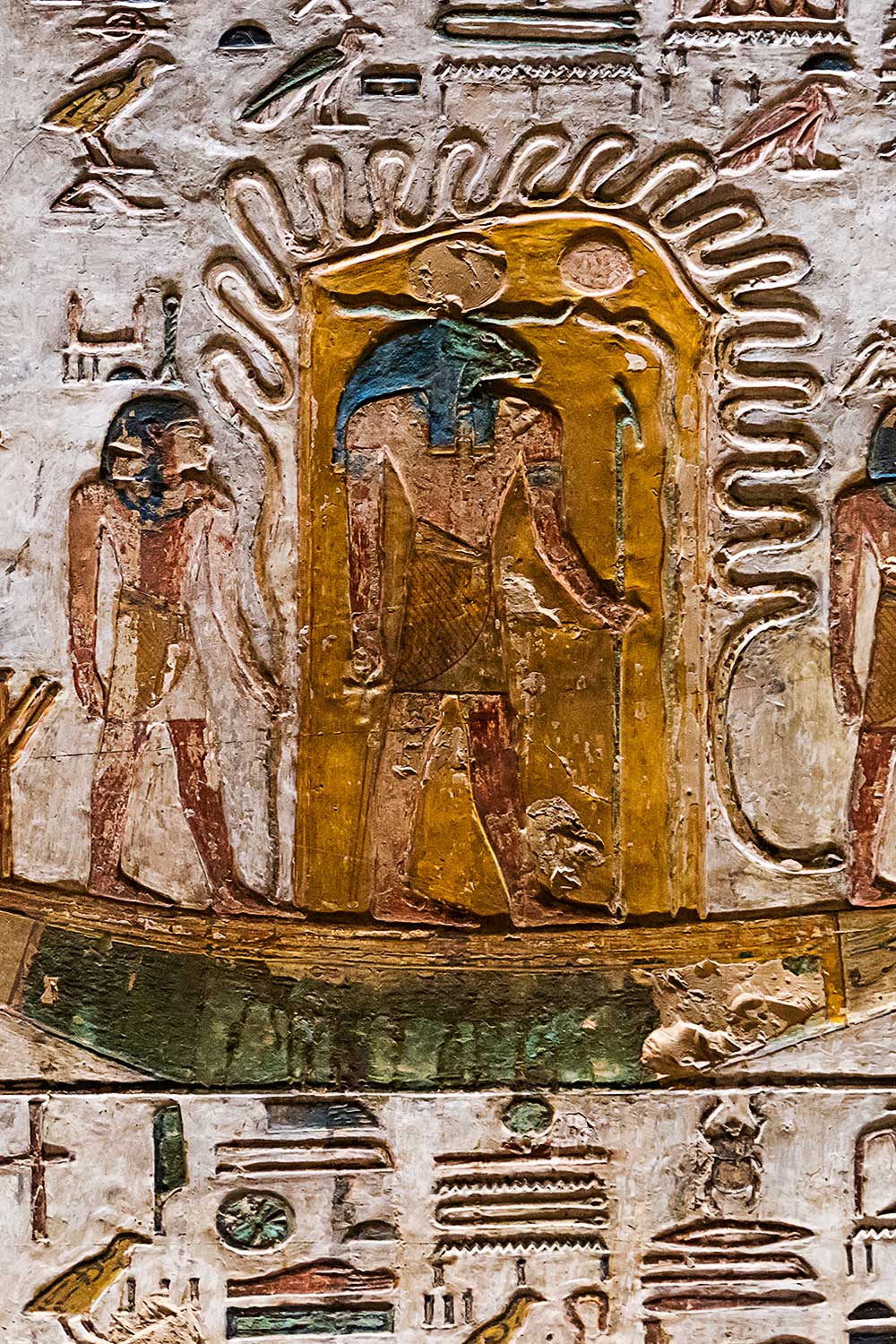
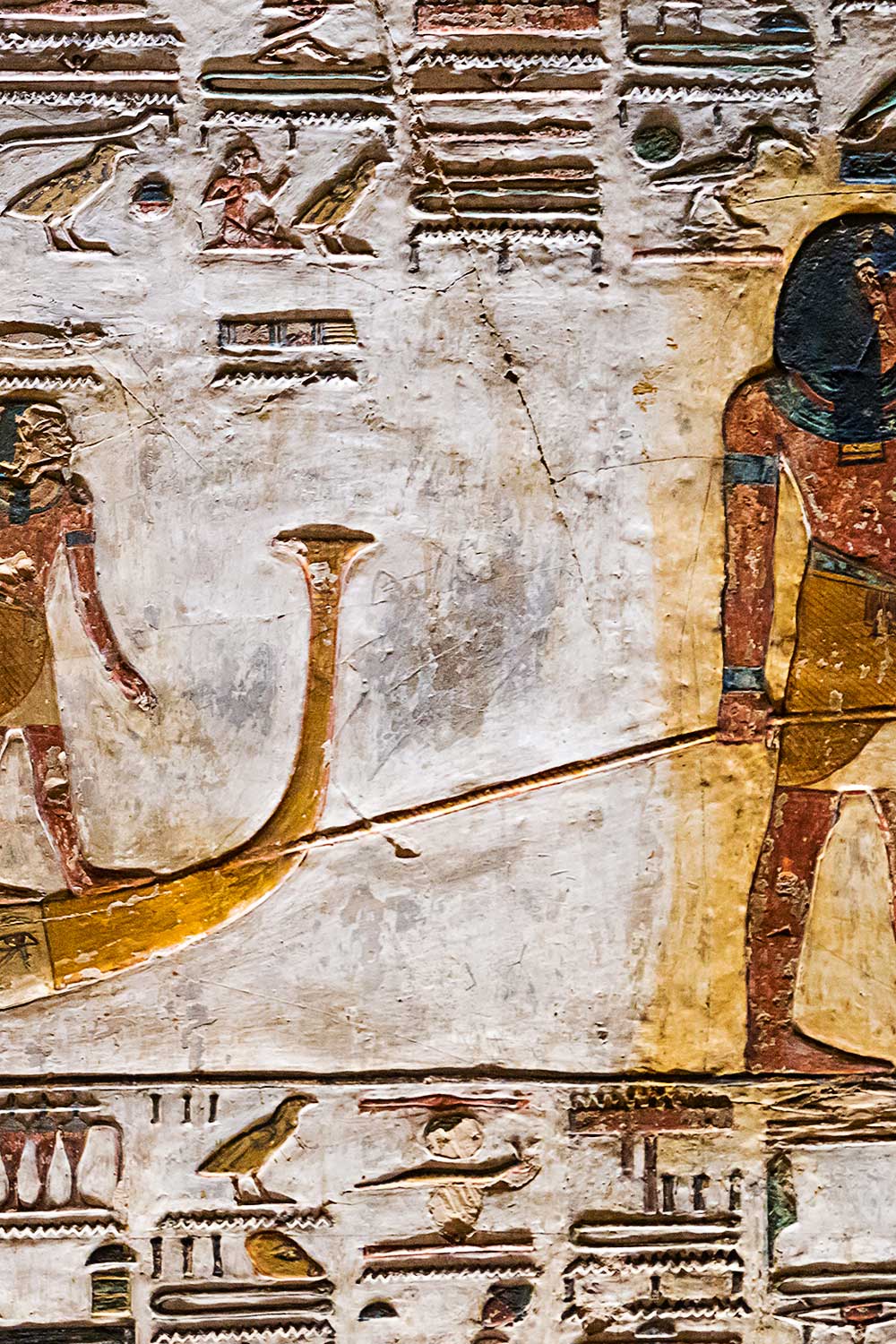
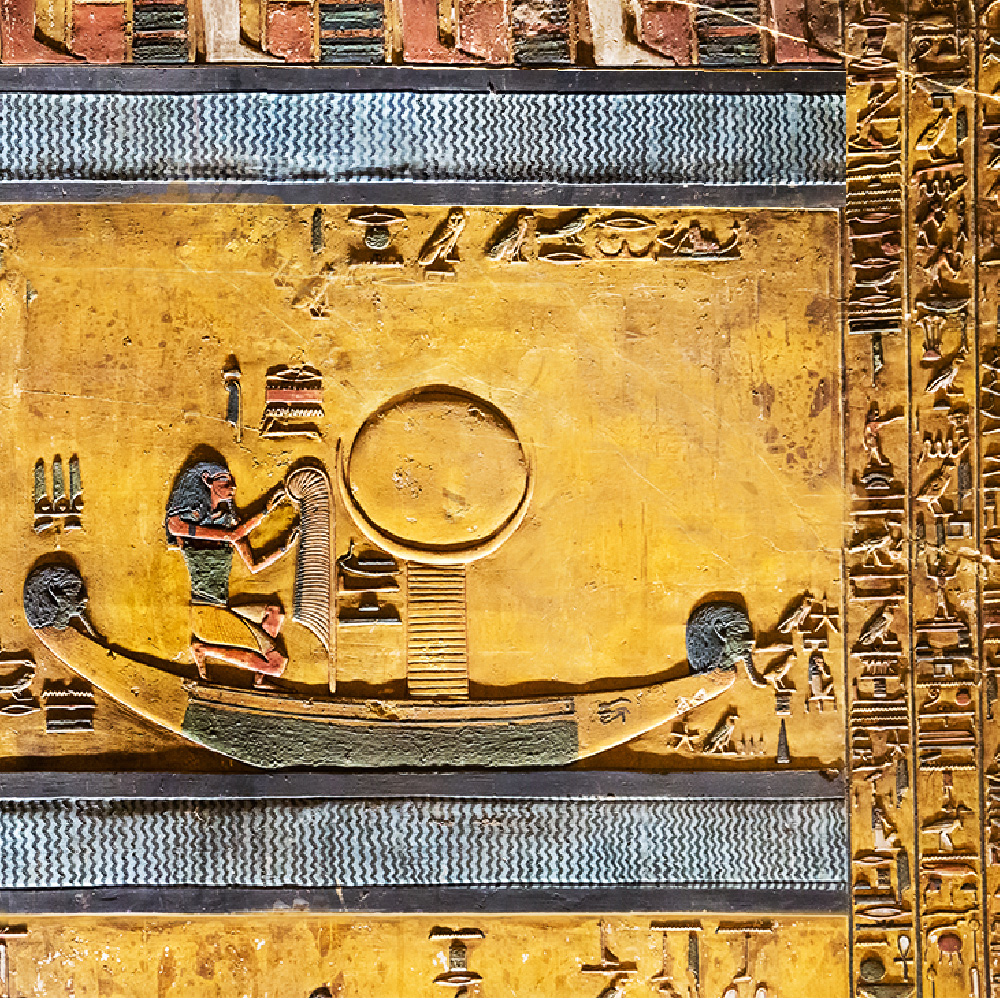
1.) Fresco releif Depicting the Sun Boat with a Ram-Headed God,
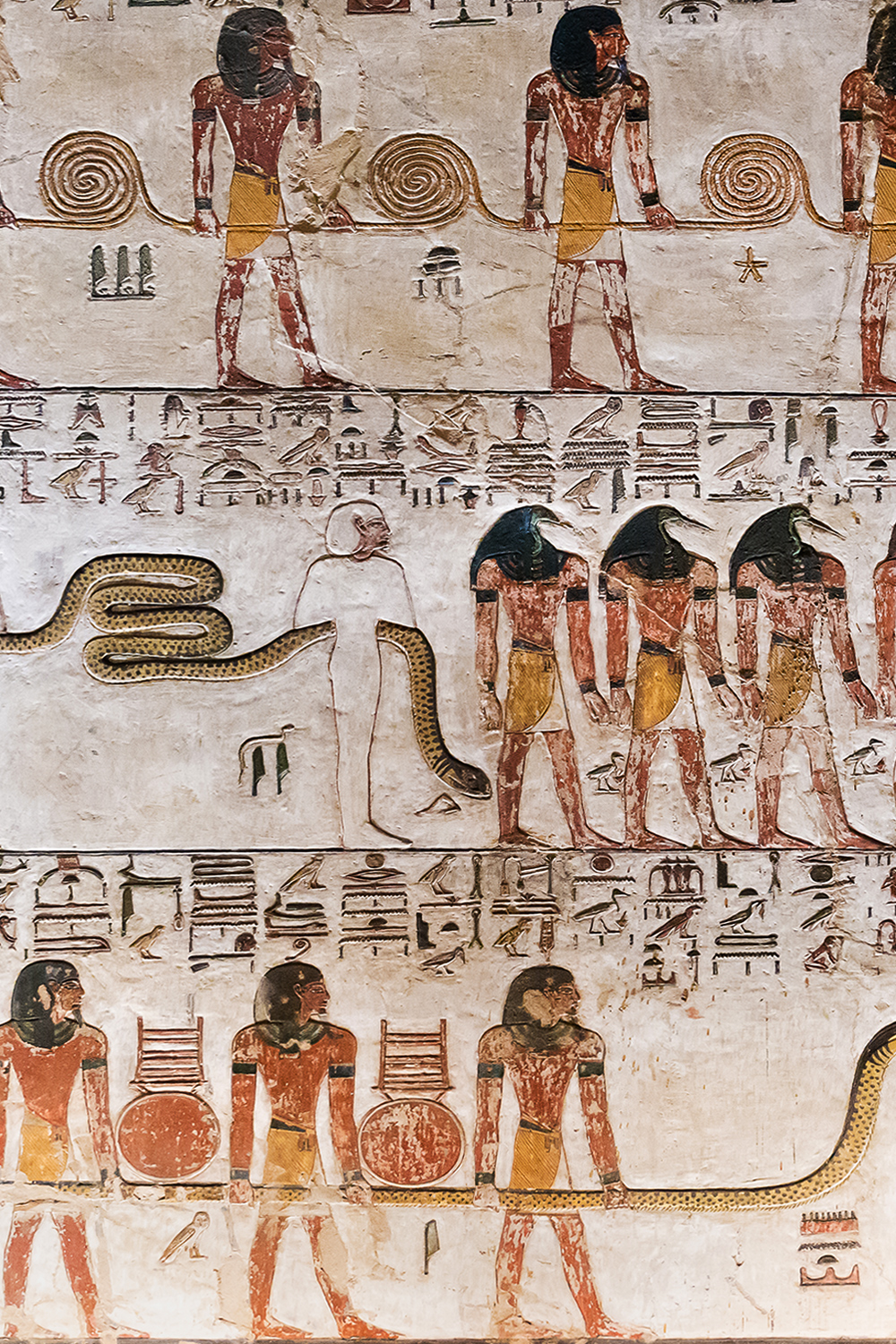
2.) Book of Gates, second division (P)/third hour (H) solar bark, The snake represents royalty, divinity, and protection,
3.) Book of Gates, second division (P)/third hour (H) solar bark, The snake represents royalty, divinity, and protection,
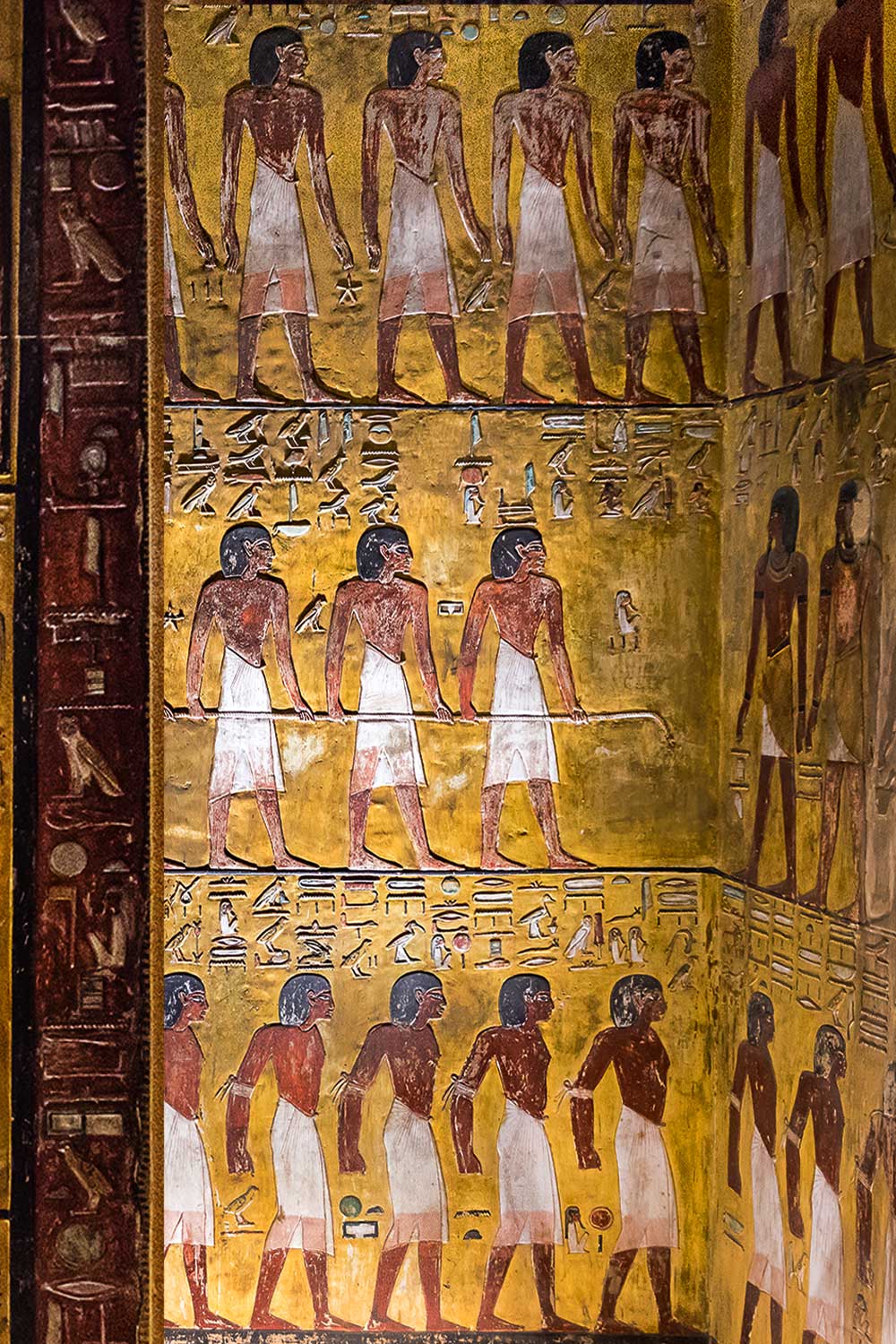
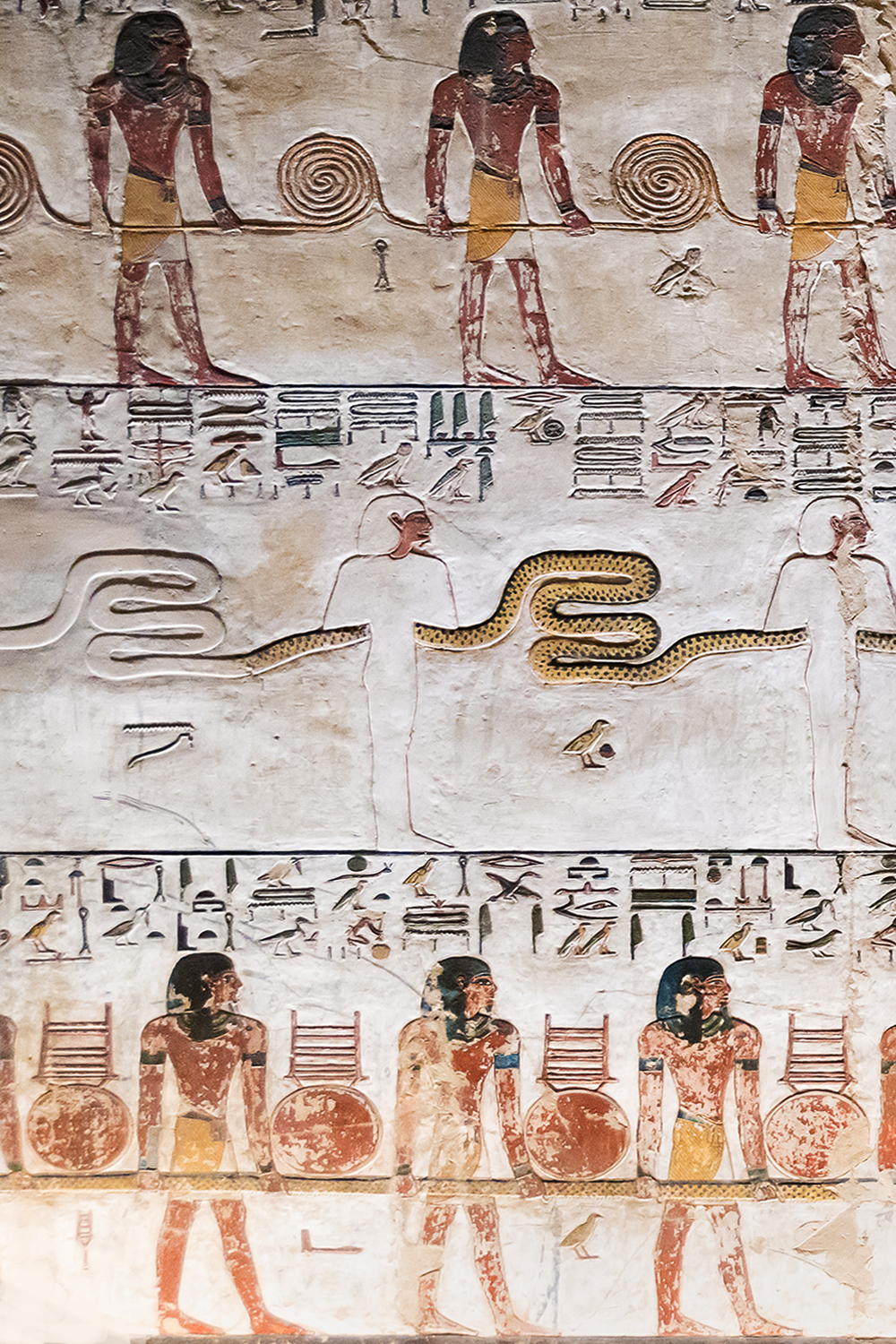
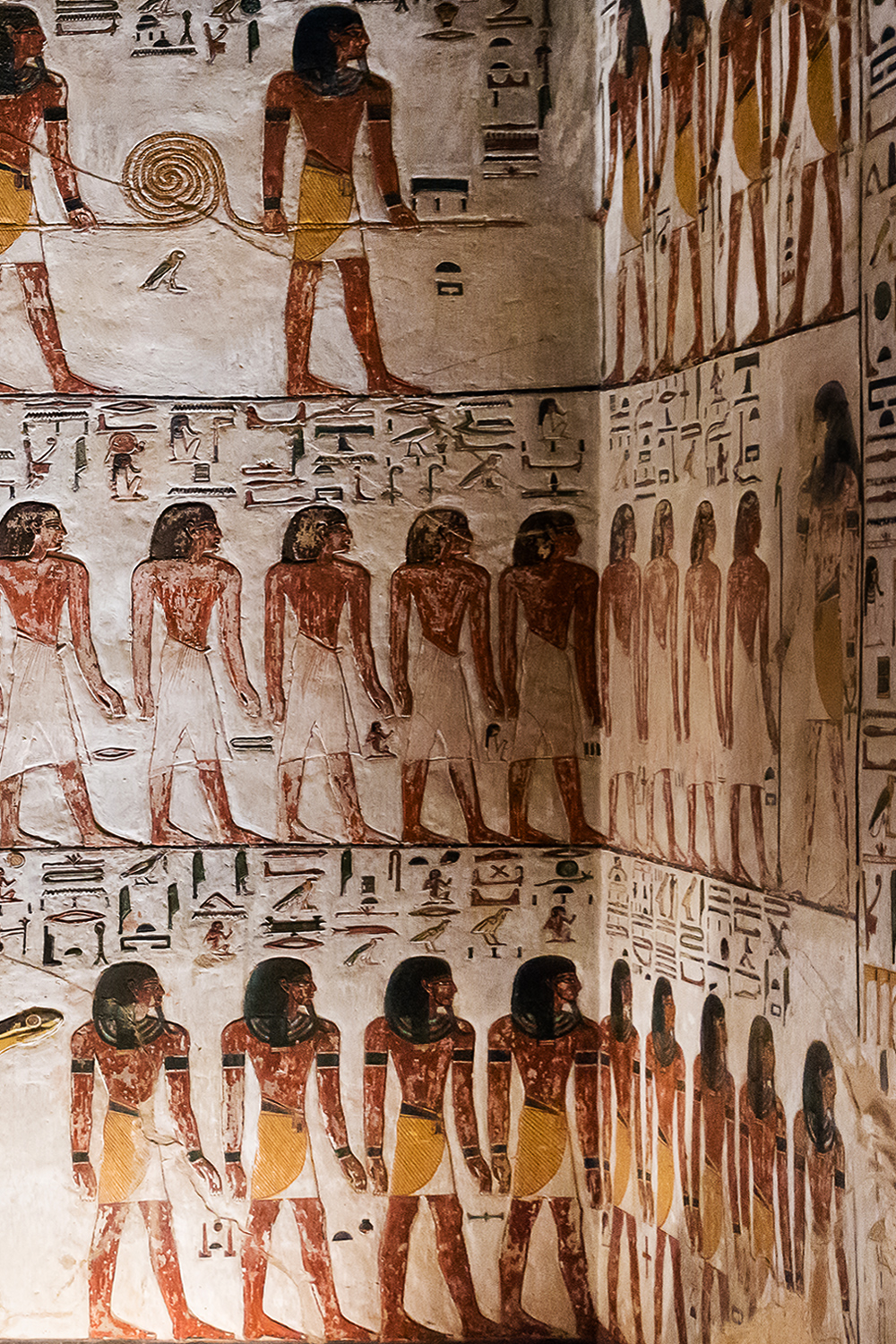
1.) Book of Gates, second division (P)/third hour (H): solar bark.
2.) Book of Gates first and fourth divisions (P)/second and fifth hours (H). Courtesy of Uni Dia Verlag; Uni Dia Image Nr. 35771,
3.) Interior view of the famous Seti I, the first tomb decorated with god figures and hieroglyphs
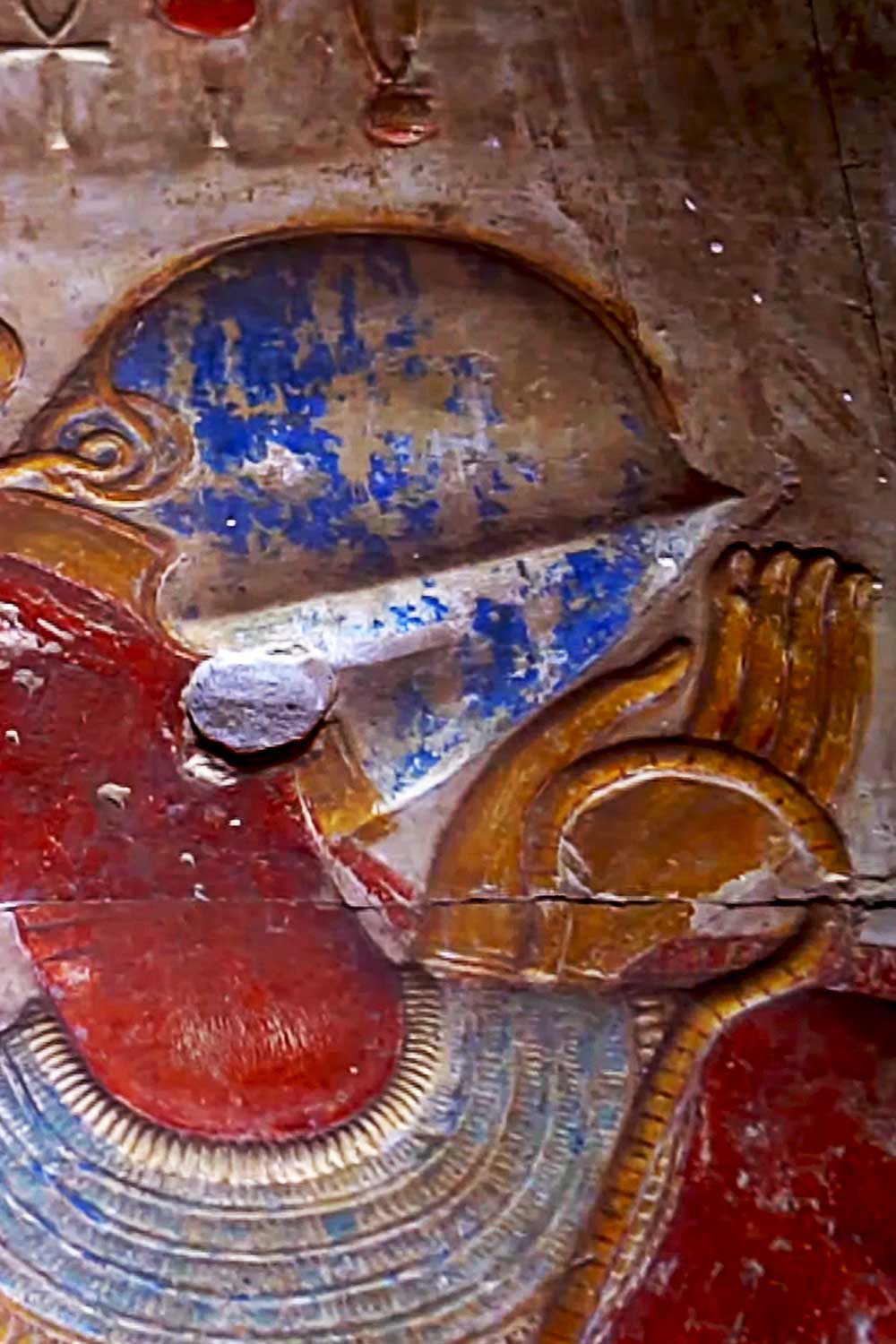
3.) The ram-headed figure standing within the coils of a serpent is a
2.) manifestation of the sun god Ra, in his night form, his journeys
3.) through the underworld is referred to as 'Afu-Ra' or 'Efu Ra'
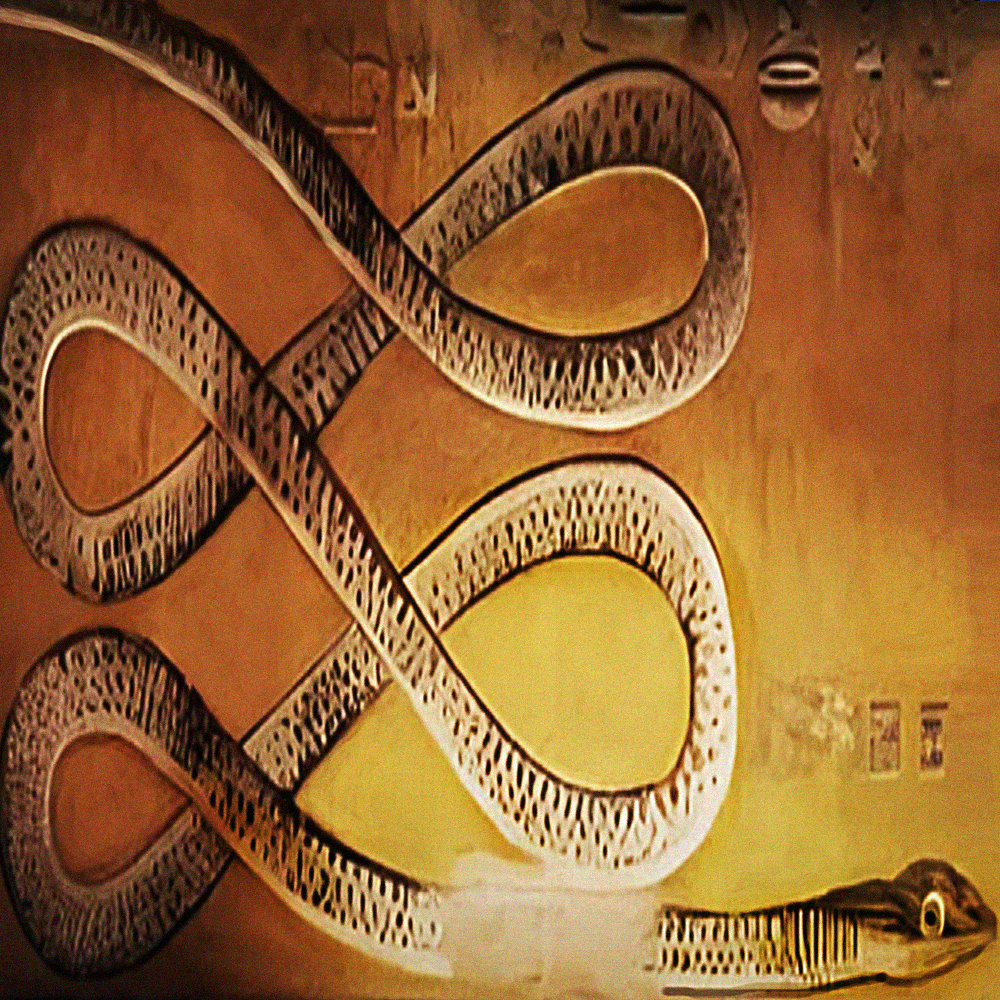
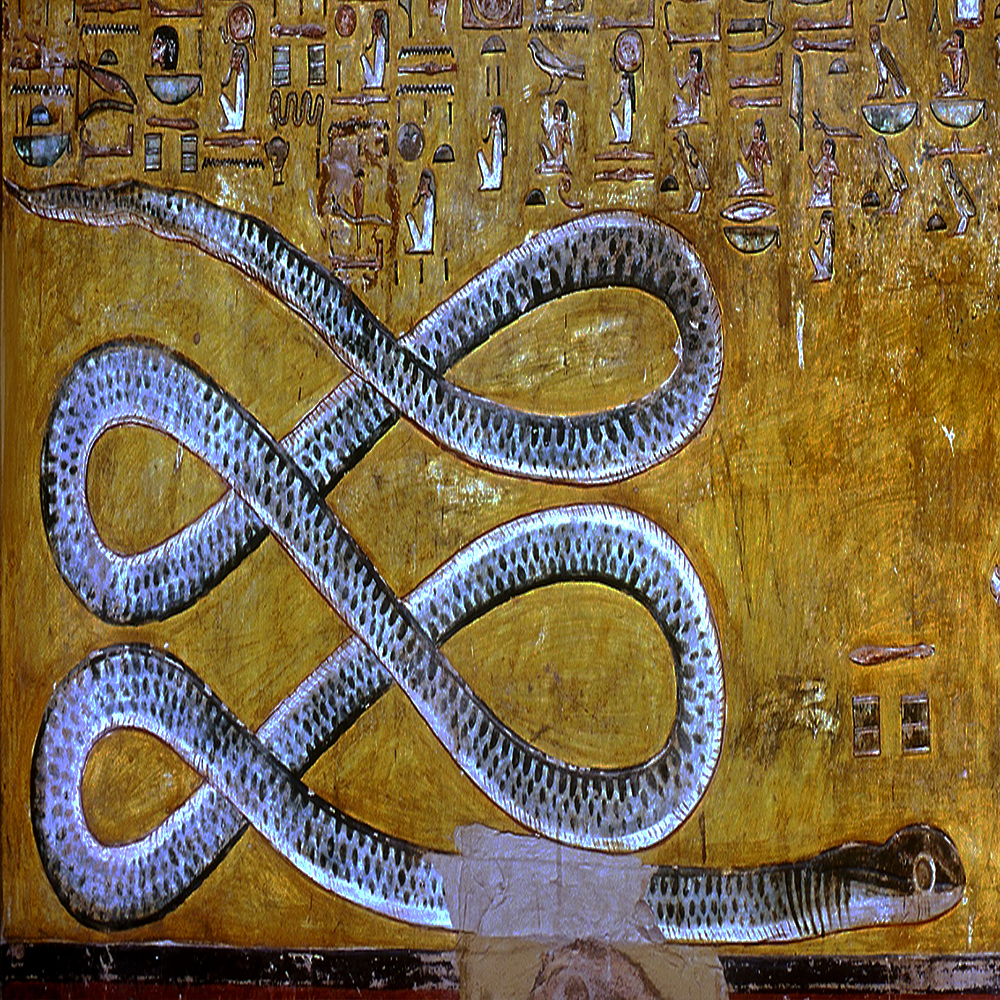
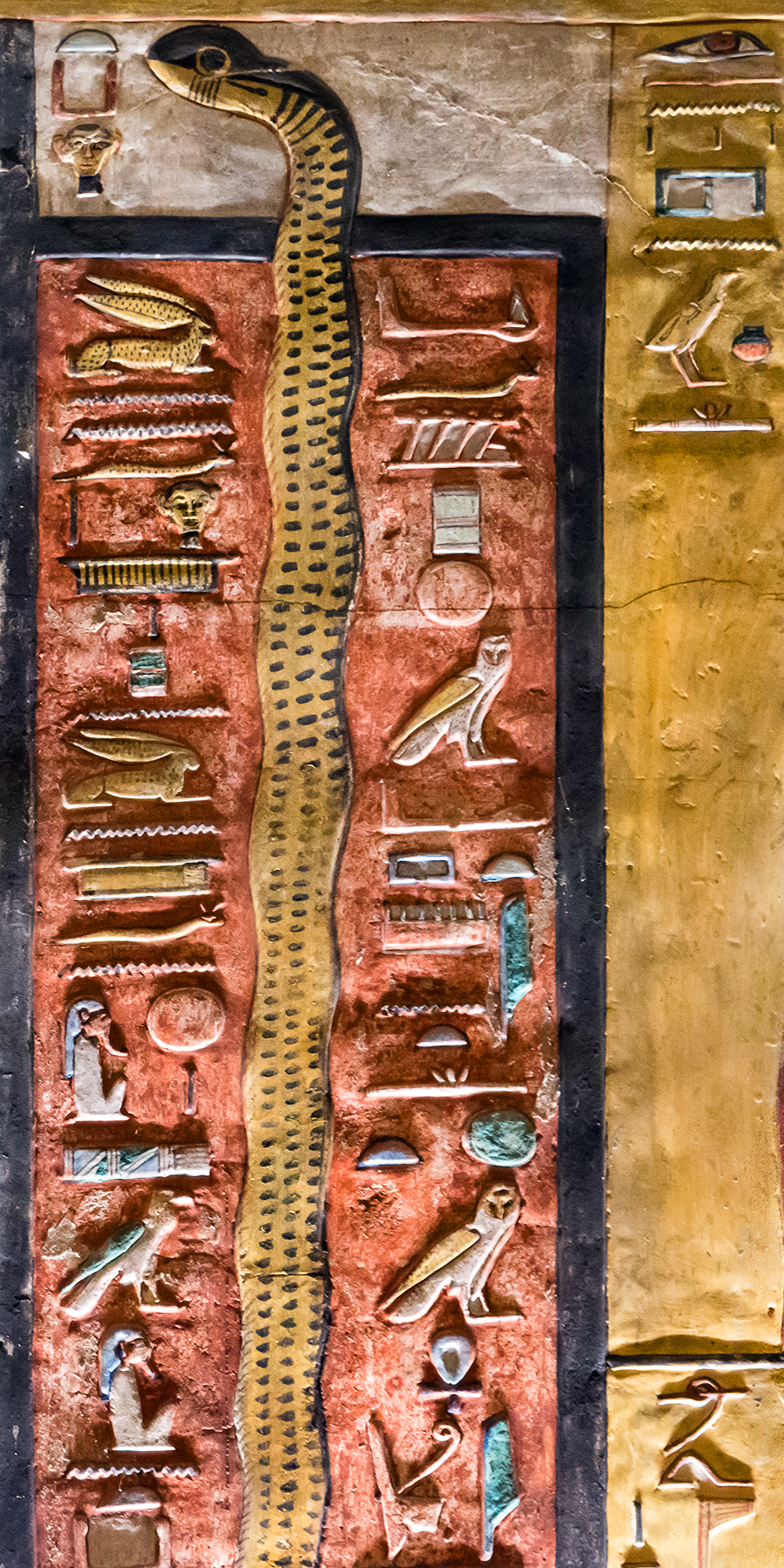
Interior painting of Apopis, or Rerek, an ancient Egyptian demon of chaos, who had the form of a serpent snake, at the tomb of Seti I
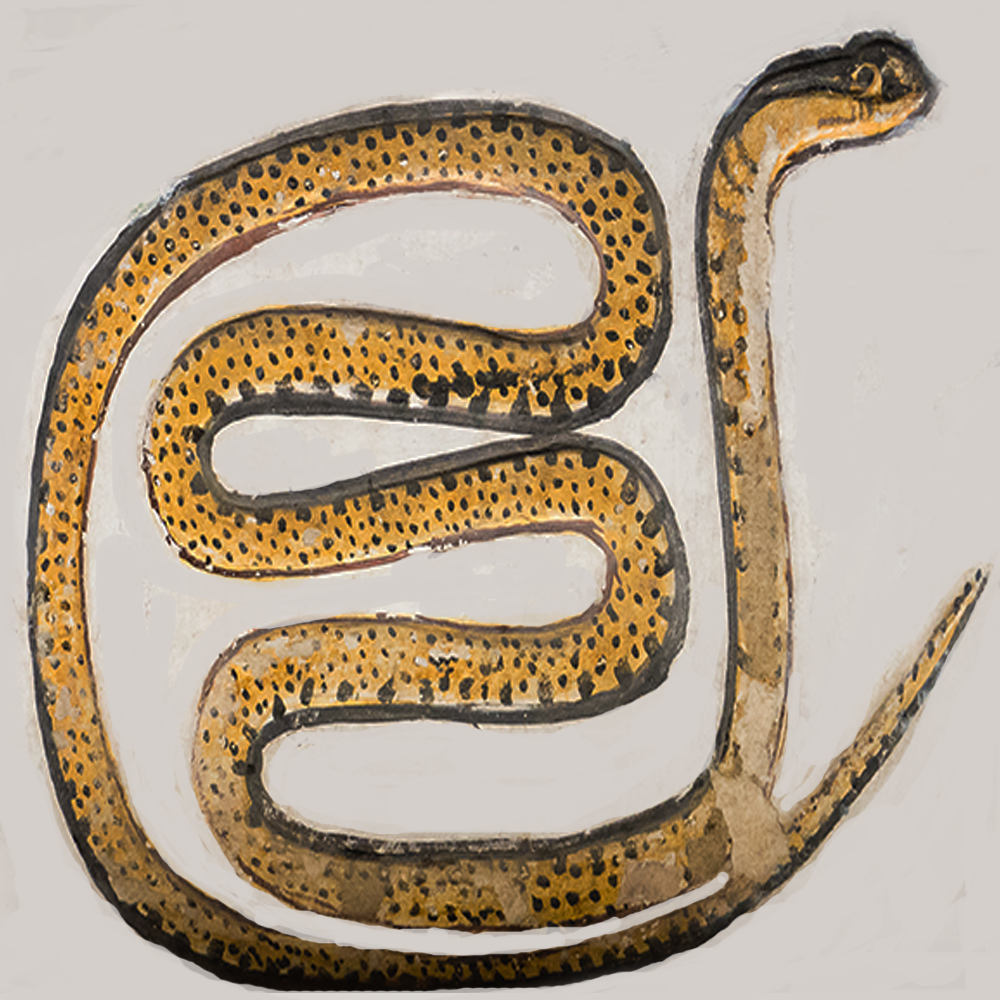
The serpent held a complex and multifaceted role in ancient Egyptian culture, viewed with both fear and reverence. It served as a potent symbol of protection, royalty, divinity, and the cyclical nature of life and death
The serpent is a fascinating animal when it comes to Egyptian mythology. Their power with ancient Egyptians, was reflected in the duality of the serpent.
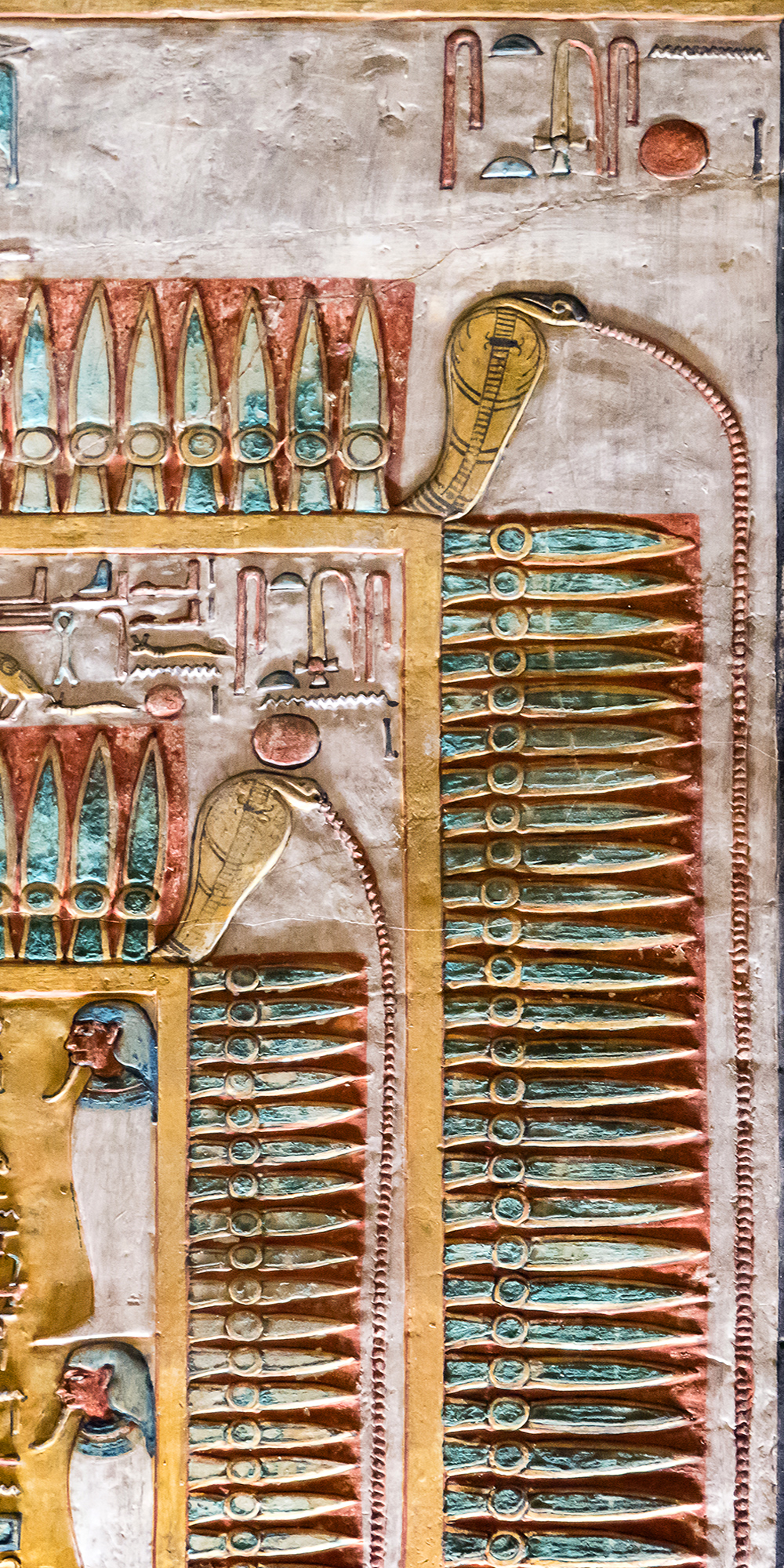
1.) Relief Depicting the Path Which the Dead Must Cross to the Afterlife, from the Tomb of Seti I Relief from KV17 Burial chamber J: Book of Gates, end of the 2nd hour, 4th gate and beginning of the 5th hour
2.) Uraeus serpents spitting fire, Our own Lady of Holy Fire… for Isis is a fiery Goddess
3.) Relief Depicting the Path Which the Dead Must Cross to the Afterlife, from the Tomb of Seti I
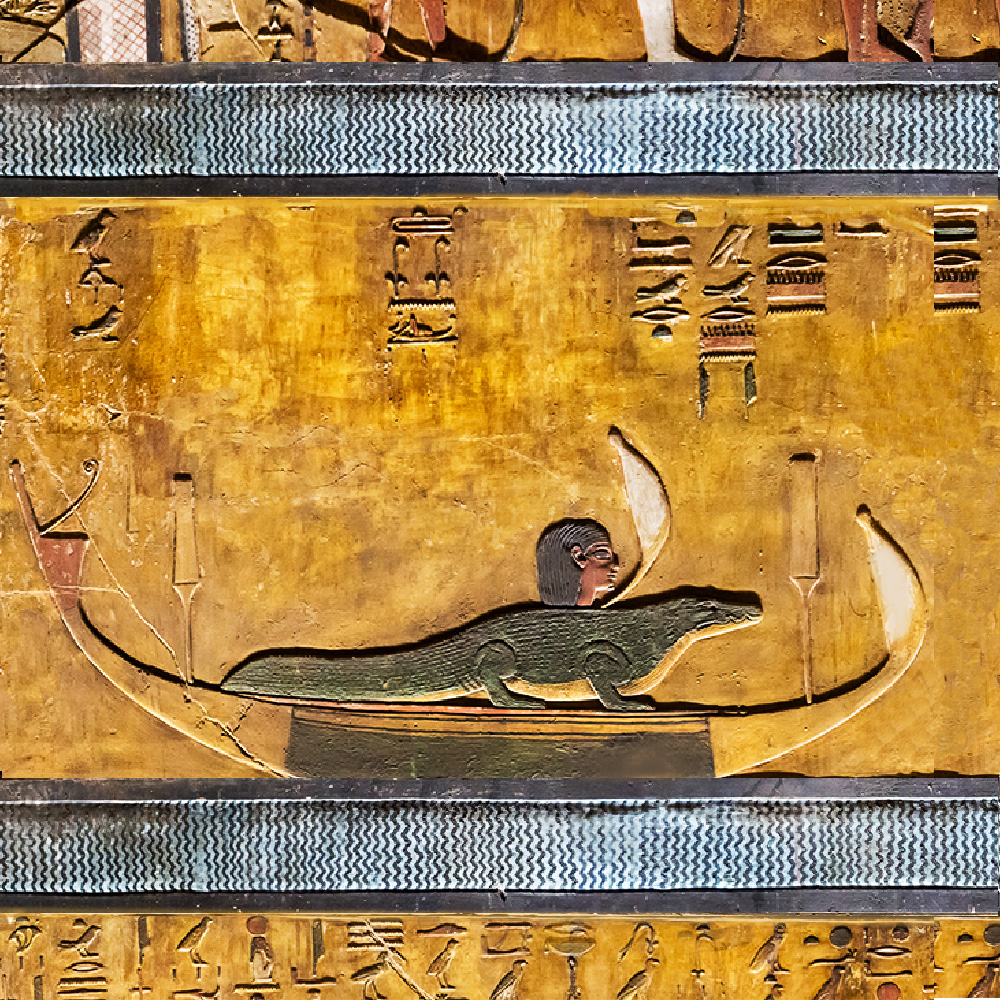
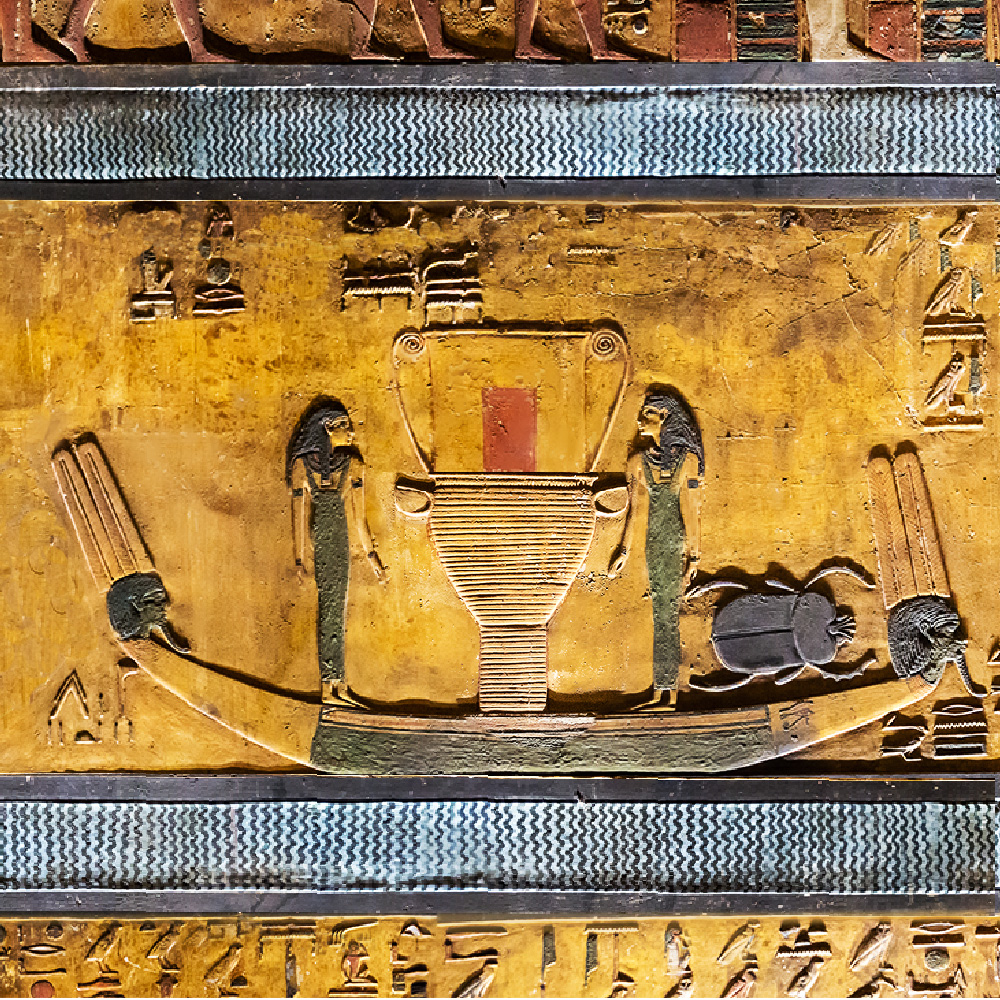
1.) Amduat, "Book of the Hidden Chamber" second hour, Boat with big lizard, Tomb of Pharaoh Seti I
2.) Imydwat, second hour Scarab Beetle, Tomb of Pharaoh Seti I,
3.) Imydwat, second hour, Hour 2, Ra officially enters the underworld, Tomb of Pharaoh Seti I
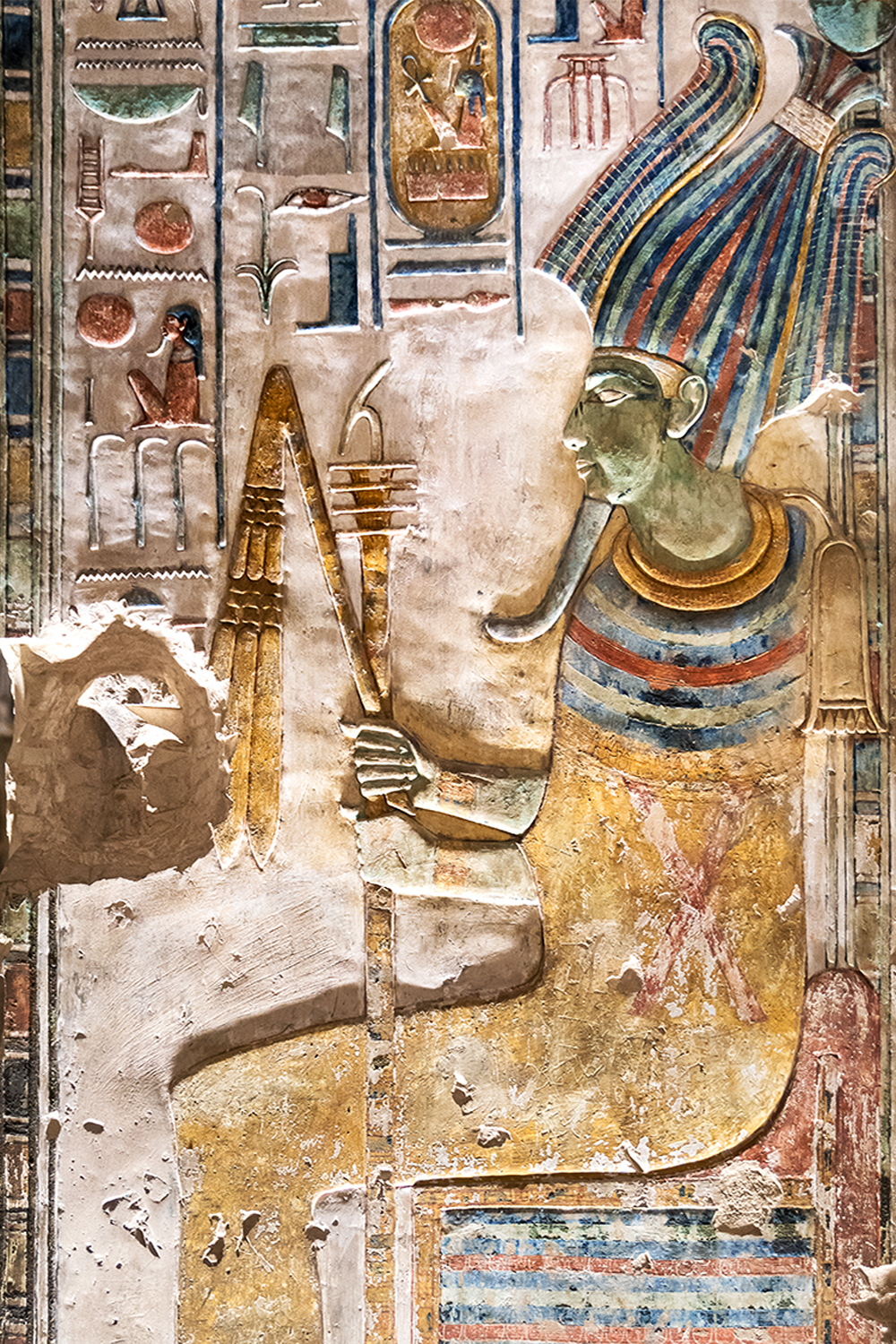
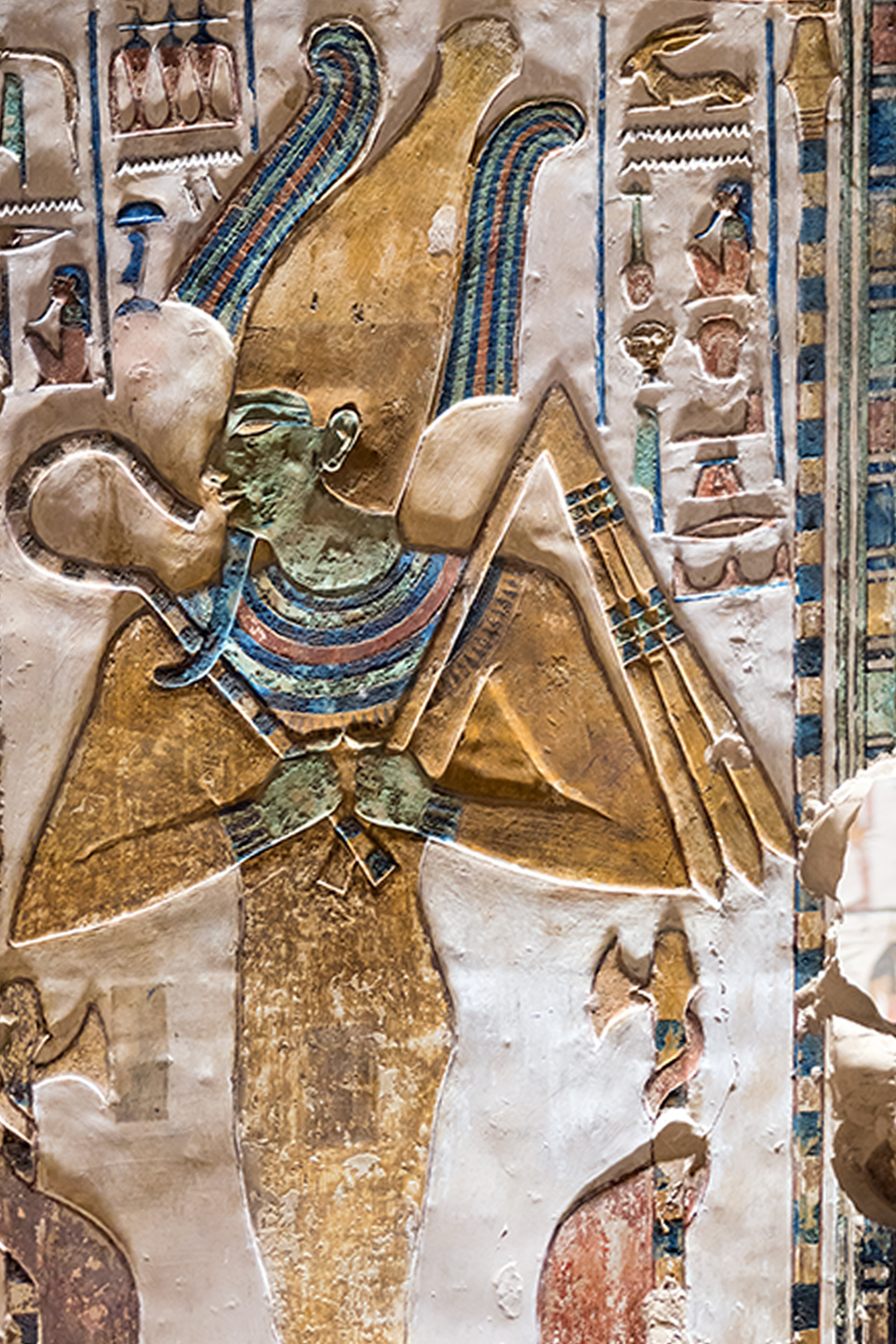
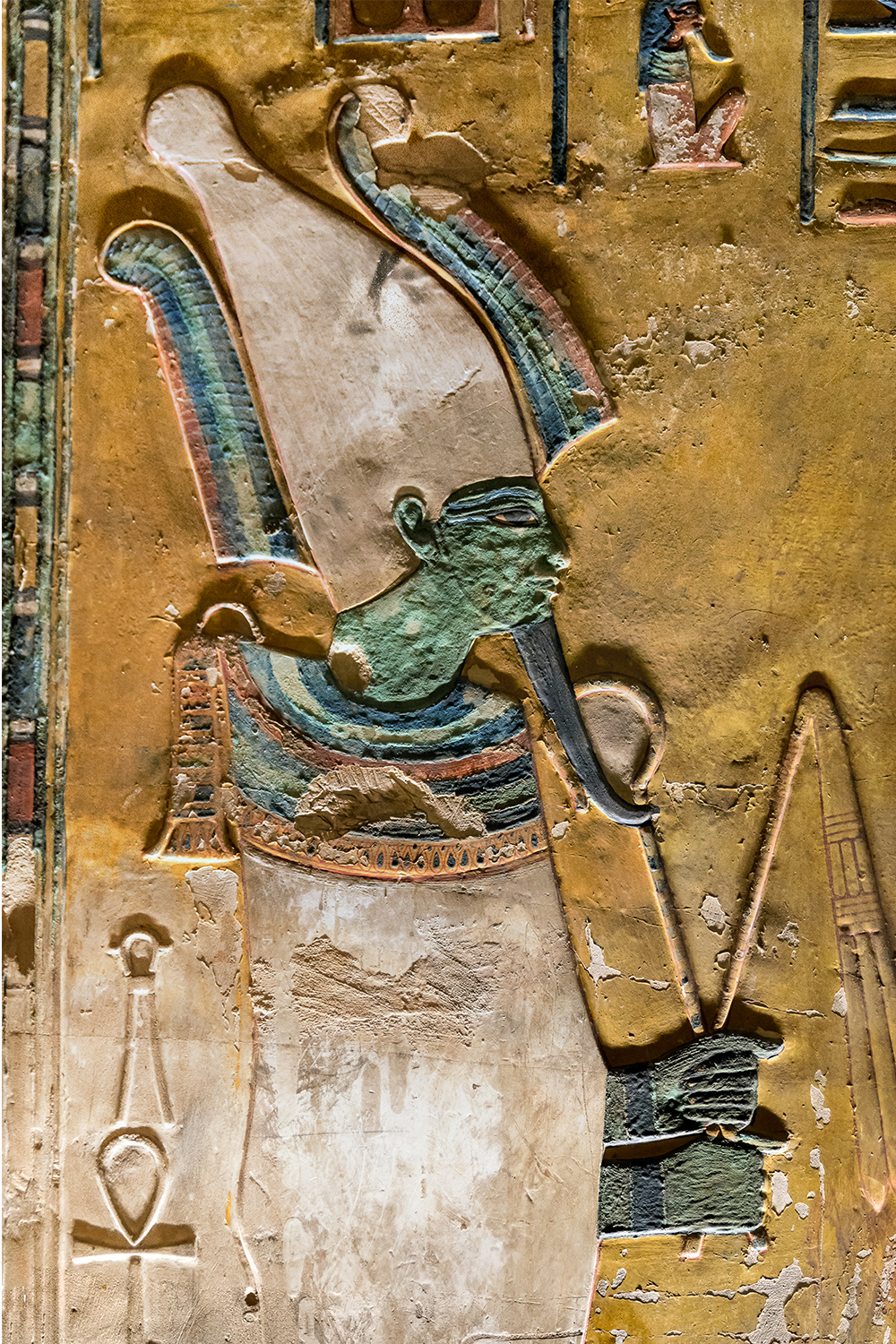
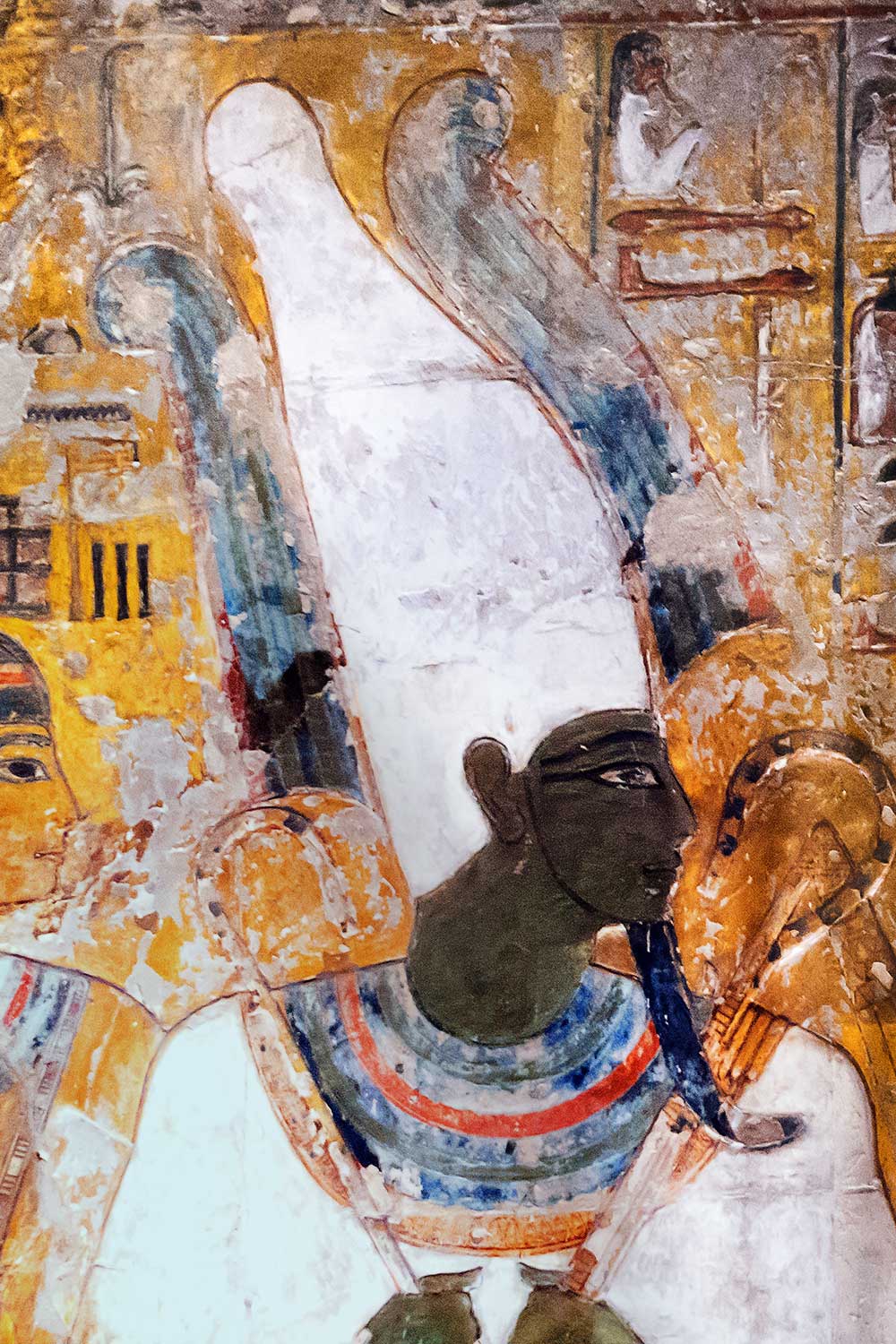
Osiris side chamber Jb Relief from KV17, the Tomb of Seti I side chamber Jb, face of pillar 1
The deceased Seti I as Osiris side chamber Jb Relief from KV17, the Tomb of Seti I side chamber Jb, face of pillar 2 Osiris between Imyut emblems
The deceased Seti I as Osiris. KV17, The Tomb of Seti I
1.) Chapel of Amun-Ra at Abydos of Osiris
2.) and Horus presenting Pharaoh Seti with the royal emblems of the crook and flail
3.) Seti's Temple of Abydos
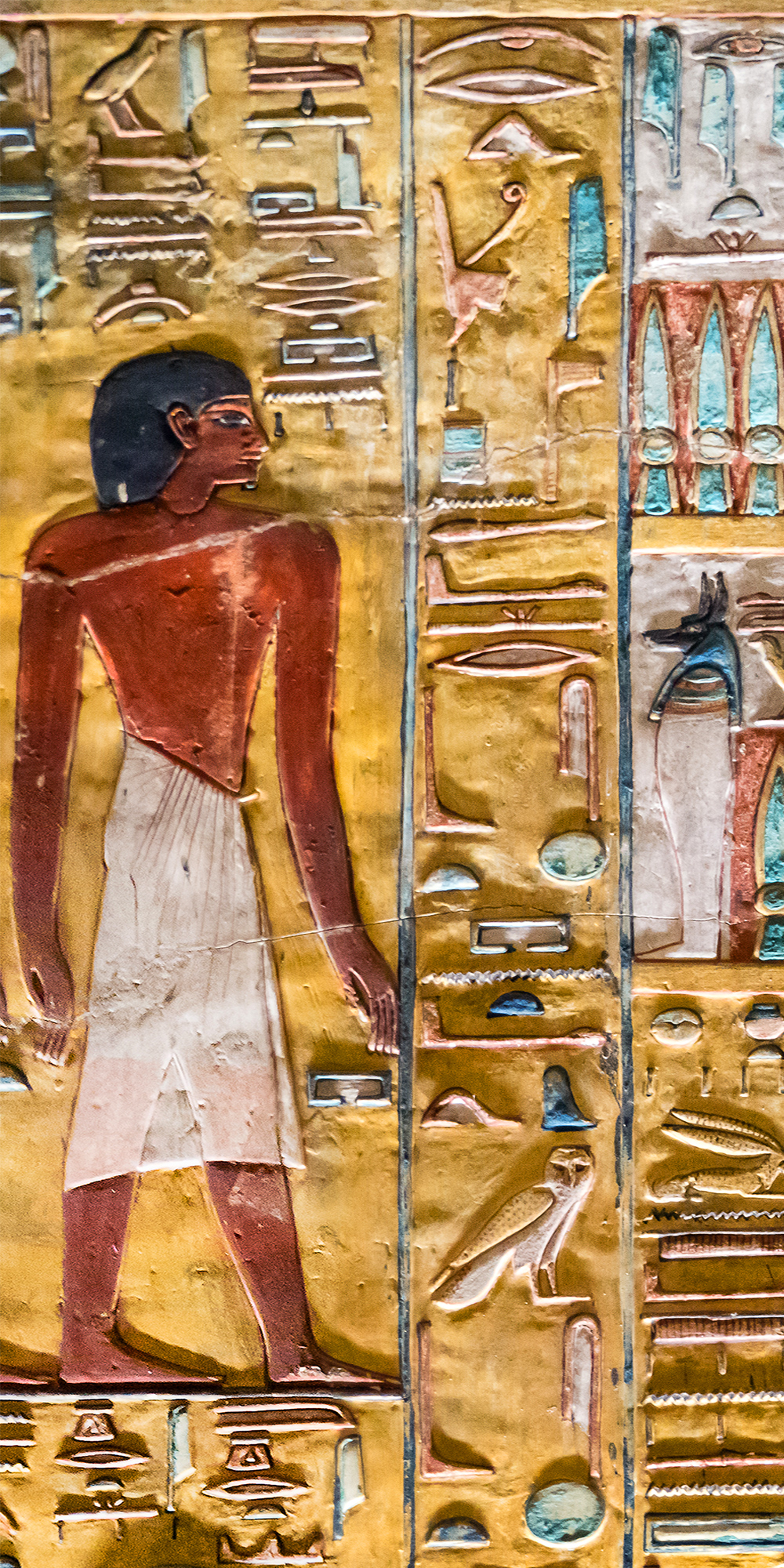
Relief from KV17, the Tomb of Seti I, Burial chamber J, Face of pillar, Seti I before Osiris
Relief from KV17, the Tomb of Seti I, Burial chamber J, Seti I before Thoth
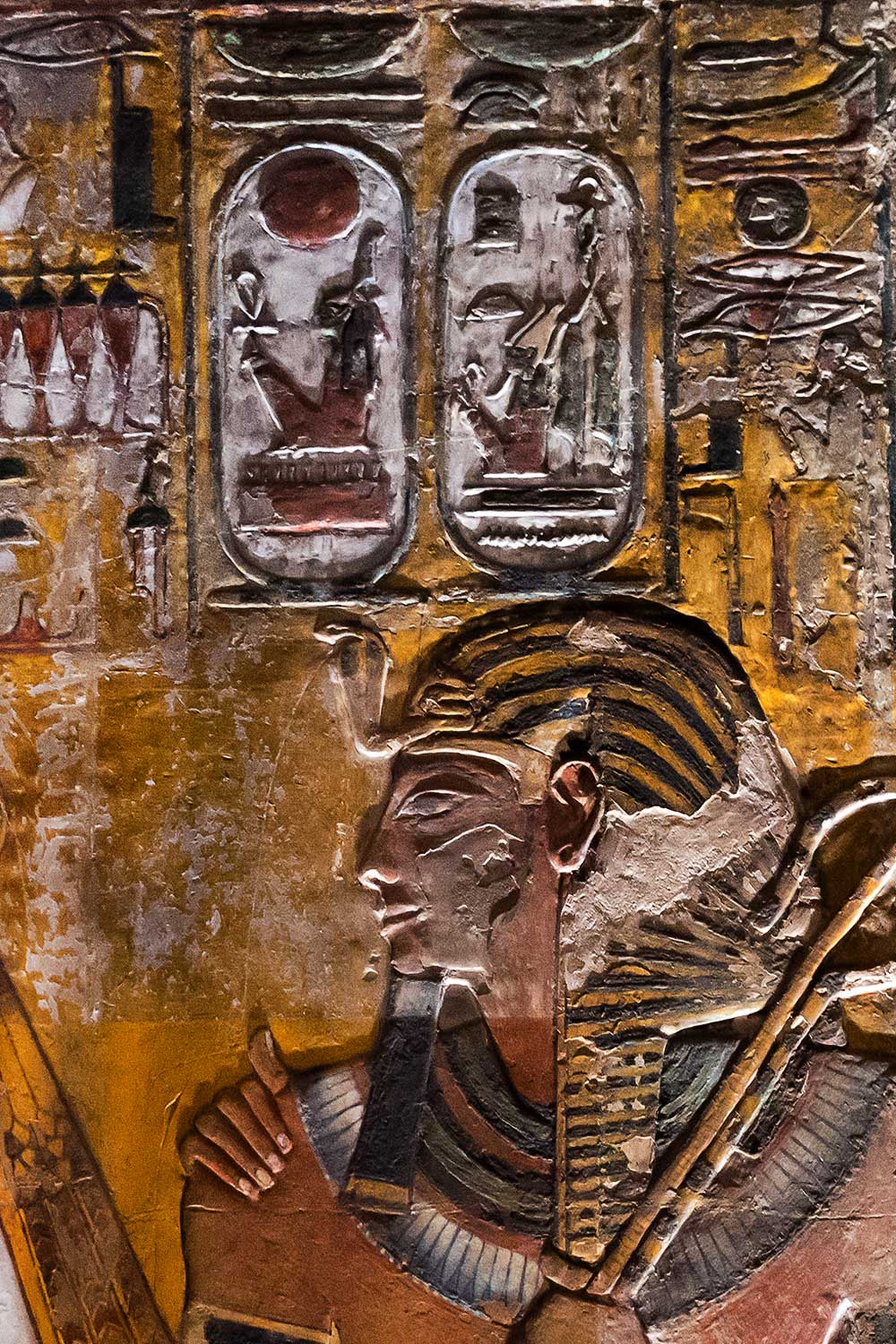
Relief from KV17, Tomb of Seti I, Pharaoh & Re-Horakhty, Pillared Hall:All Seti images kairoinfo4u
Website & Website & Content Created by Richard Brafford, © 2025, All Rights Reserved, Fair Use Disclaimer for Non-Commercial Use for Educational & Entertainment Purposes OnlyTop