Lhasa, TIBET, China
After a three day jeep ride from Kathmandu—hours of switchbacks, dust, and high altitude acclimation—I finally reached Lhasa. It remains one
of the most extraordinary journeys I’ve ever taken. The road carried me out of the Kathmandu Valley, over narrow mountain passes, and across the stark, wind carved
plains that lead toward Tibet. I crossed the Chinese border on the Friendship Highway, a spectacular high altitude pass rising above 5,000 meters (16,400 ft),
where the air thins, the sky sharpens, and the landscape turns almost lunar above the tree line.
The title “Dalai Lama” was first conferred in 1578 on the Tibetan spiritual leader Sonam Gyatso by the Mongol ruler Altan Khan, whose patronage helped elevate
the Gelug school’s influence across Inner Asia. Lhasa, the traditional capital of Tibet and a major center of Tibetan Buddhism, lies at 3,650 meters (11,975 ft) on
the Tibetan Plateau. Known as the “City of Sunshine” for its more than 3,000 hours of annual sunlight, it is home to two of Tibetan Buddhism’s most revered sites:
the Potala Palace, the historic seat of the Dalai Lamas, and the Jokhang Temple, regarded as Tibet’s spiritual heart. Tibet itself is often called the
“Roof of the World” and shares Mount Everest with Nepal.
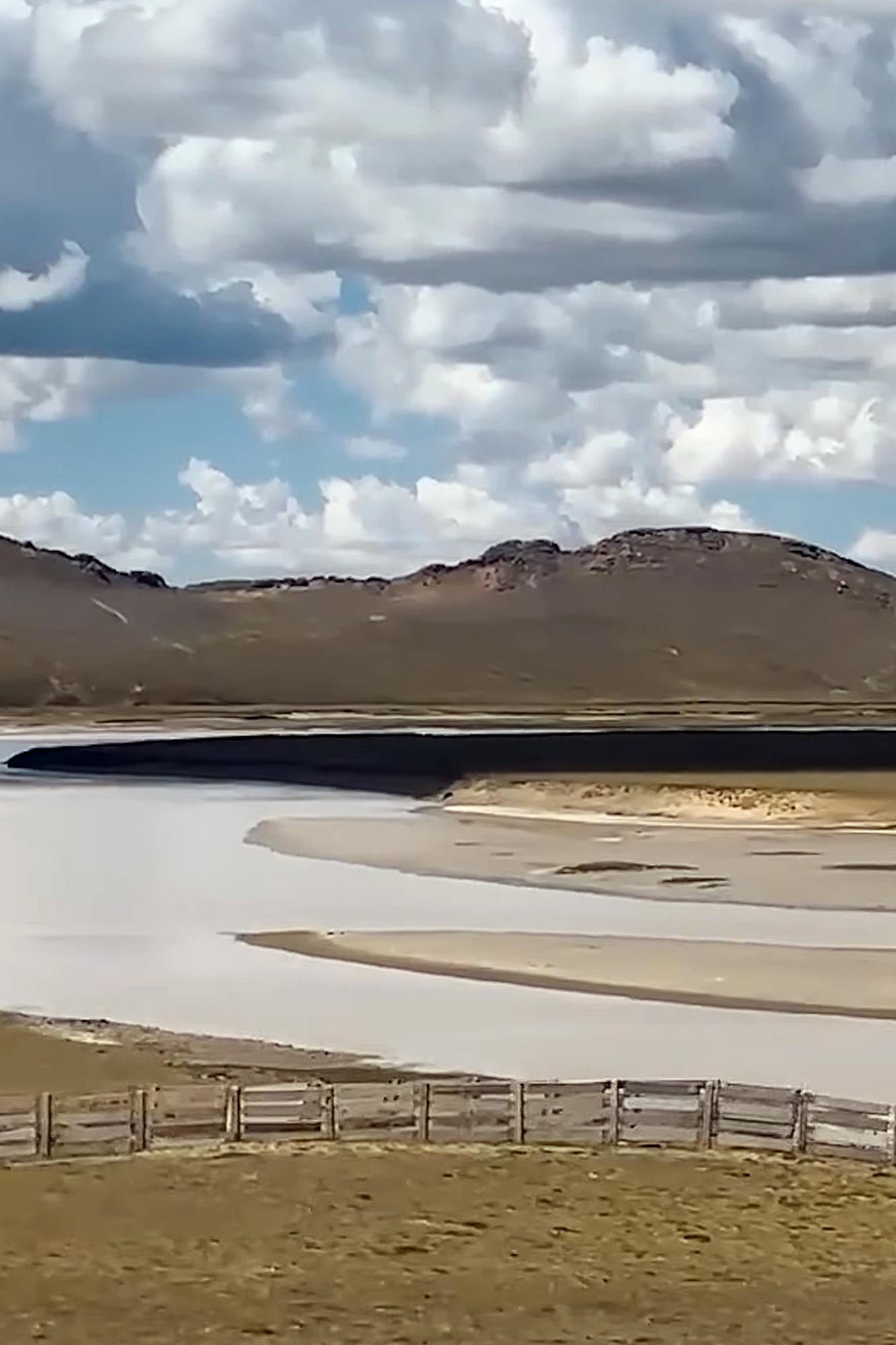 Crossing the Tibetan Plateau by jeep, surrounded by the Himalayas with windswept alpine steppes, rivers and meadows, it takes 3 days from Kathmandu to Lhasa
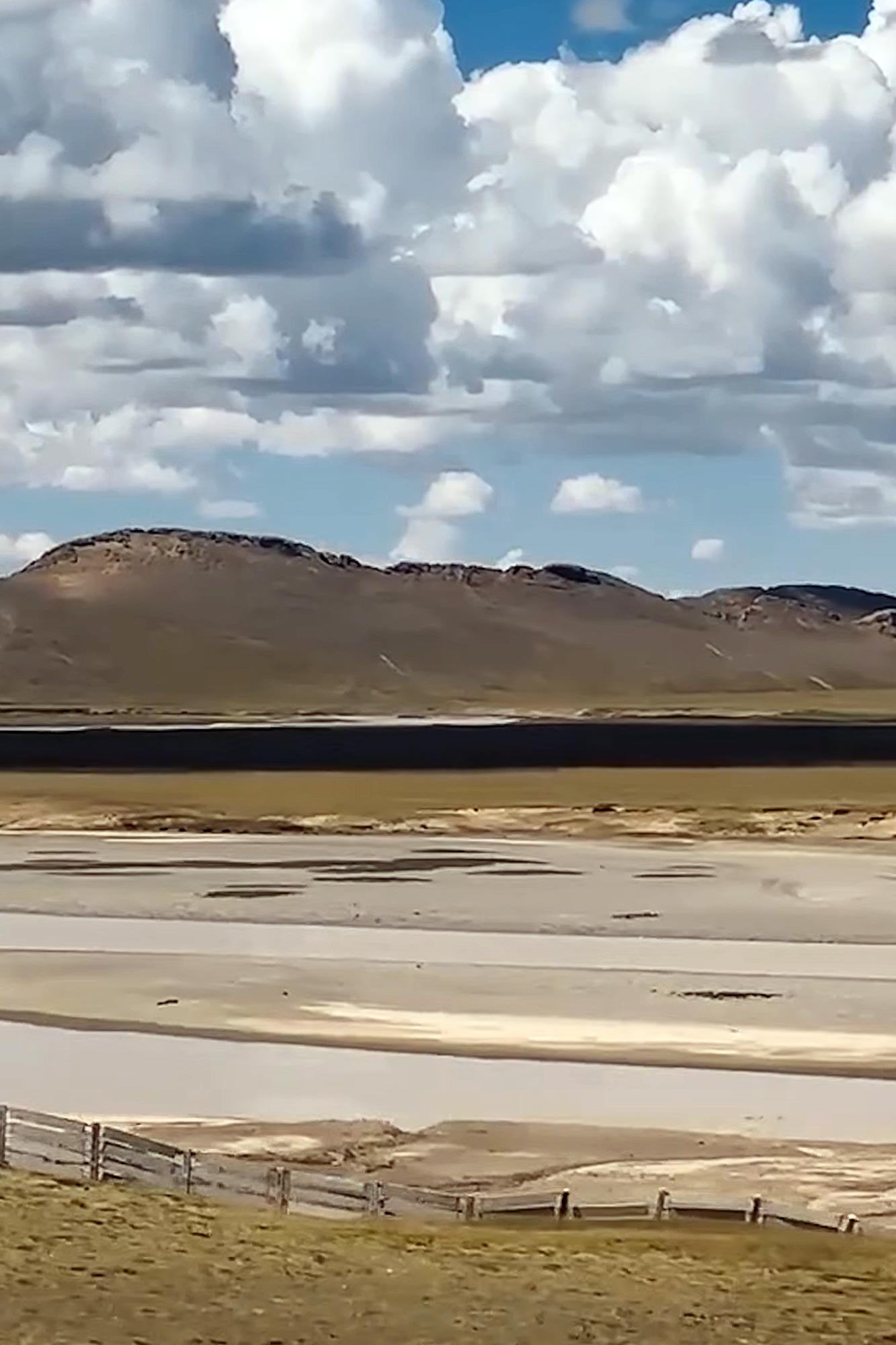 Often called the "Roof of the World," is the world's highest and largest plateau, with an average elevation exceeding 4,500 meters (14,800 feet)
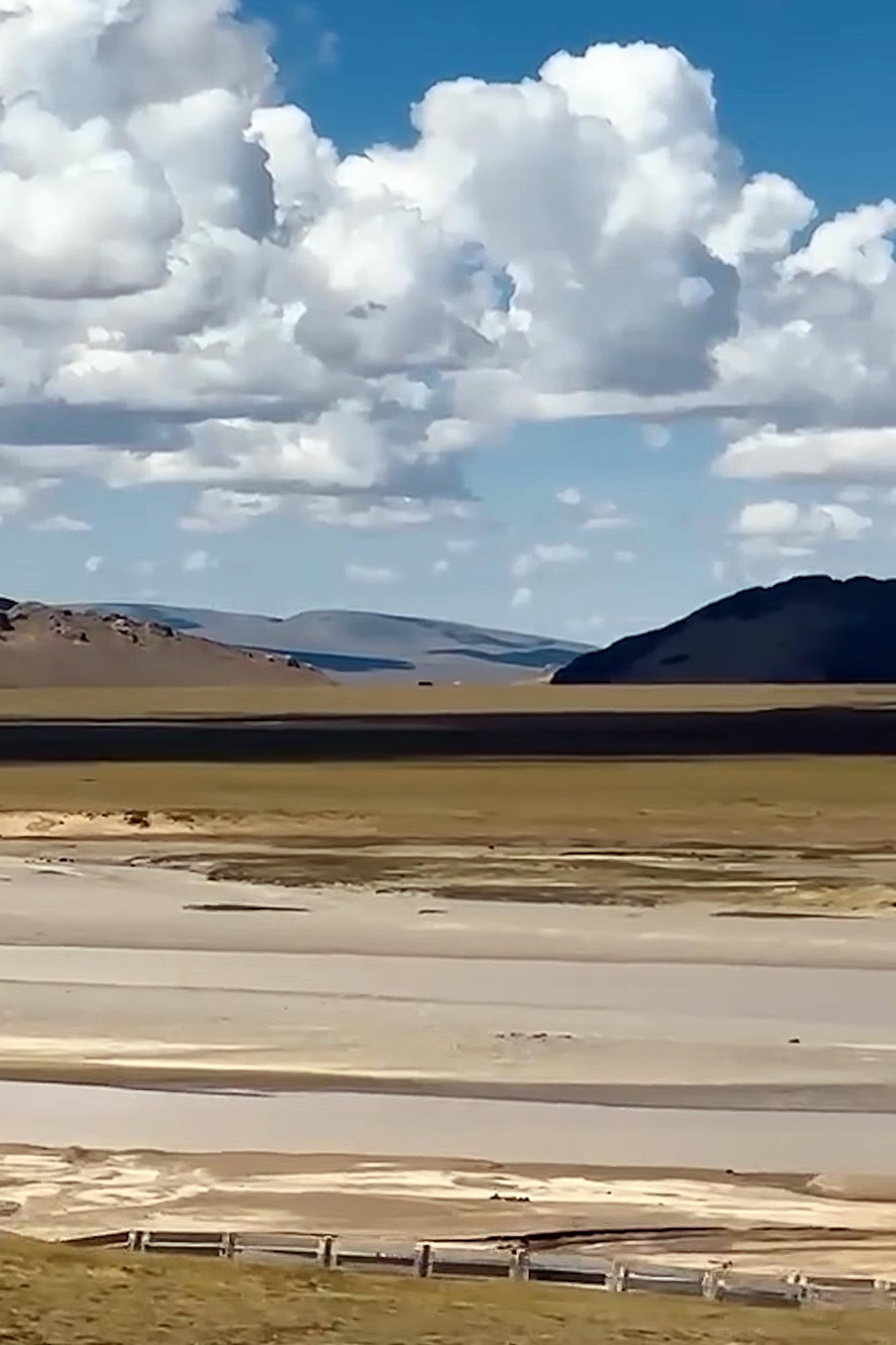 The Tibetan Plateau is characterized by thin air (low oxygen), high winds, and rapid temperature fluctuations
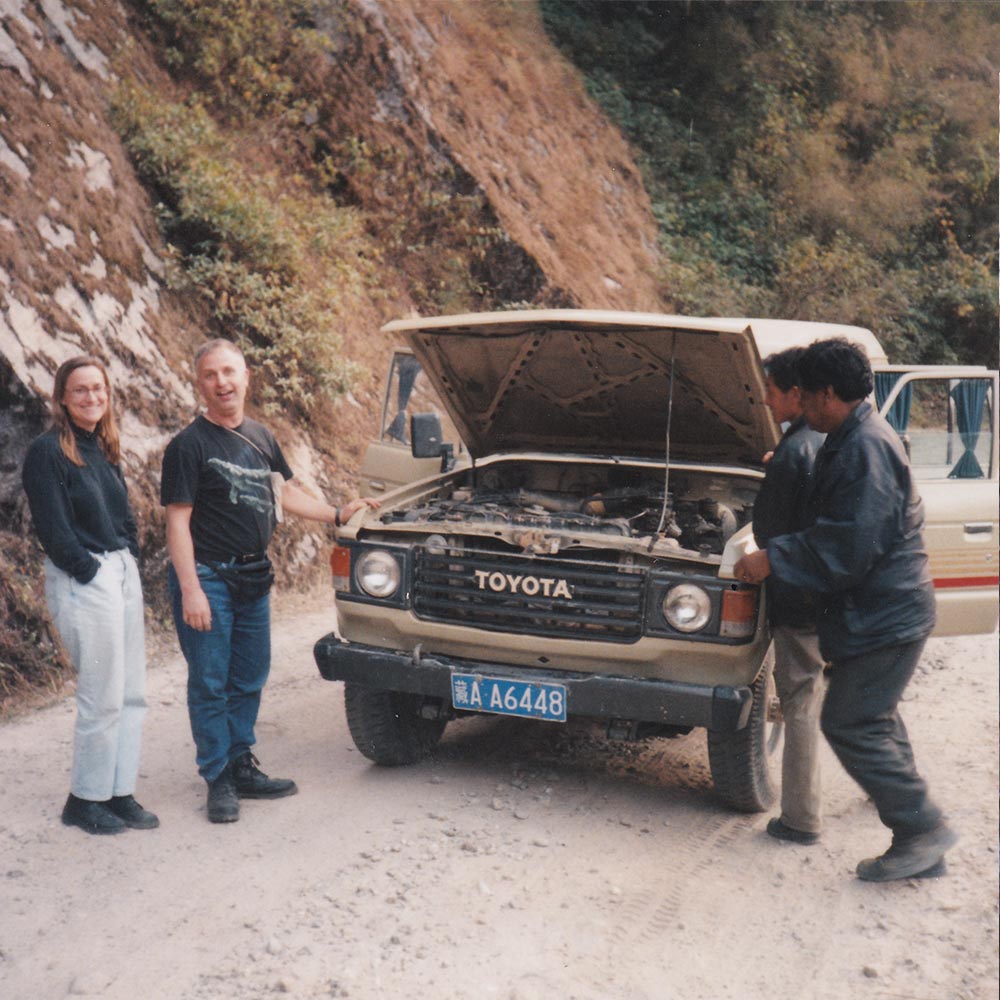 Jeep troubles half way there
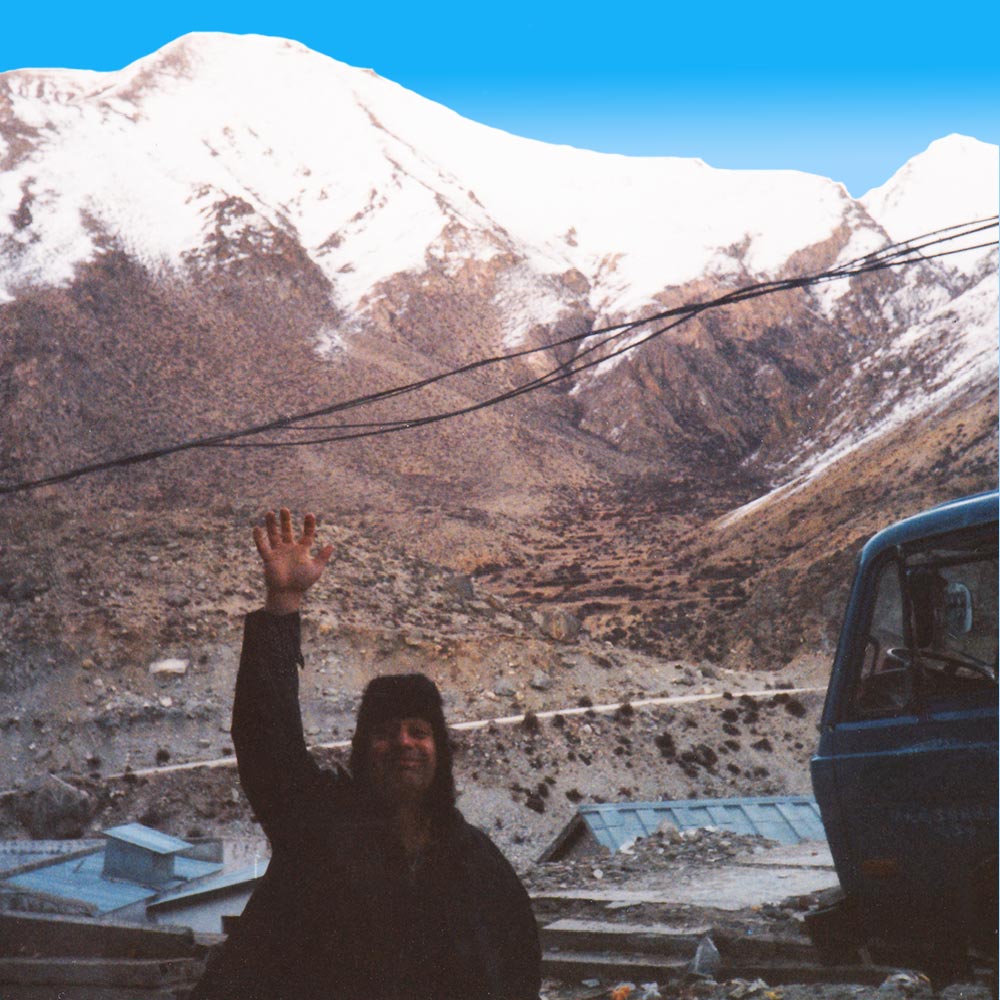 I on the the Friendship Highway at the top of the world at 5 000 meters or 16,404 feet
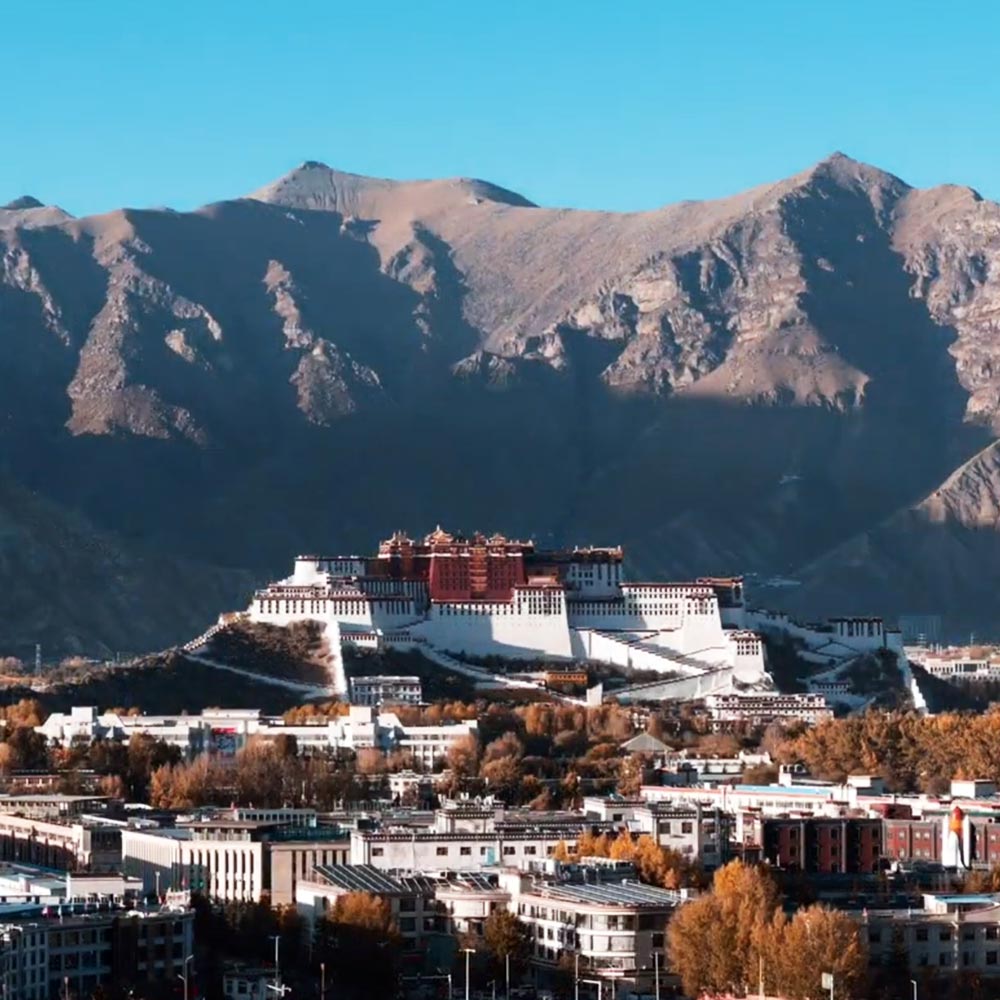 After three days we arrive in Lhasa and see the Potala Palace
The Potala Palace, Lhasa
The Potala Palace has served as the winter residence of the Dalai Lamas since the 7th century, symbolizing Tibetan Buddhism and its central role in Tibet’s traditional
administration. It stands on Red Mountain in the center of the Lhasa Valley at an altitude of about 3,700 meters or 12,139 feet. The complex consists of the White Palace and the Red Palace, along with extensive
ancillary buildings. Construction of the original palace dates to the reign of Songtsen Gampo in the 7th century, though the structure seen today was largely rebuilt and expanded in the 17th century
under the 5th Dalai Lama. Architecturally, the Potala Palace is considered a masterpiece of Tibetan design, integrating palace and temple forms. It rises 13 stories, contains over 1,000 rooms, and
houses thousands of shrines and statues. The site is part of the UNESCO World Heritage listing “Historic Ensemble of the Potala Palace, Lhasa,” inscribed in 1994 with extensions in 2000 and 2001,
recognized for its outstanding religious, historical, and artistic significance.
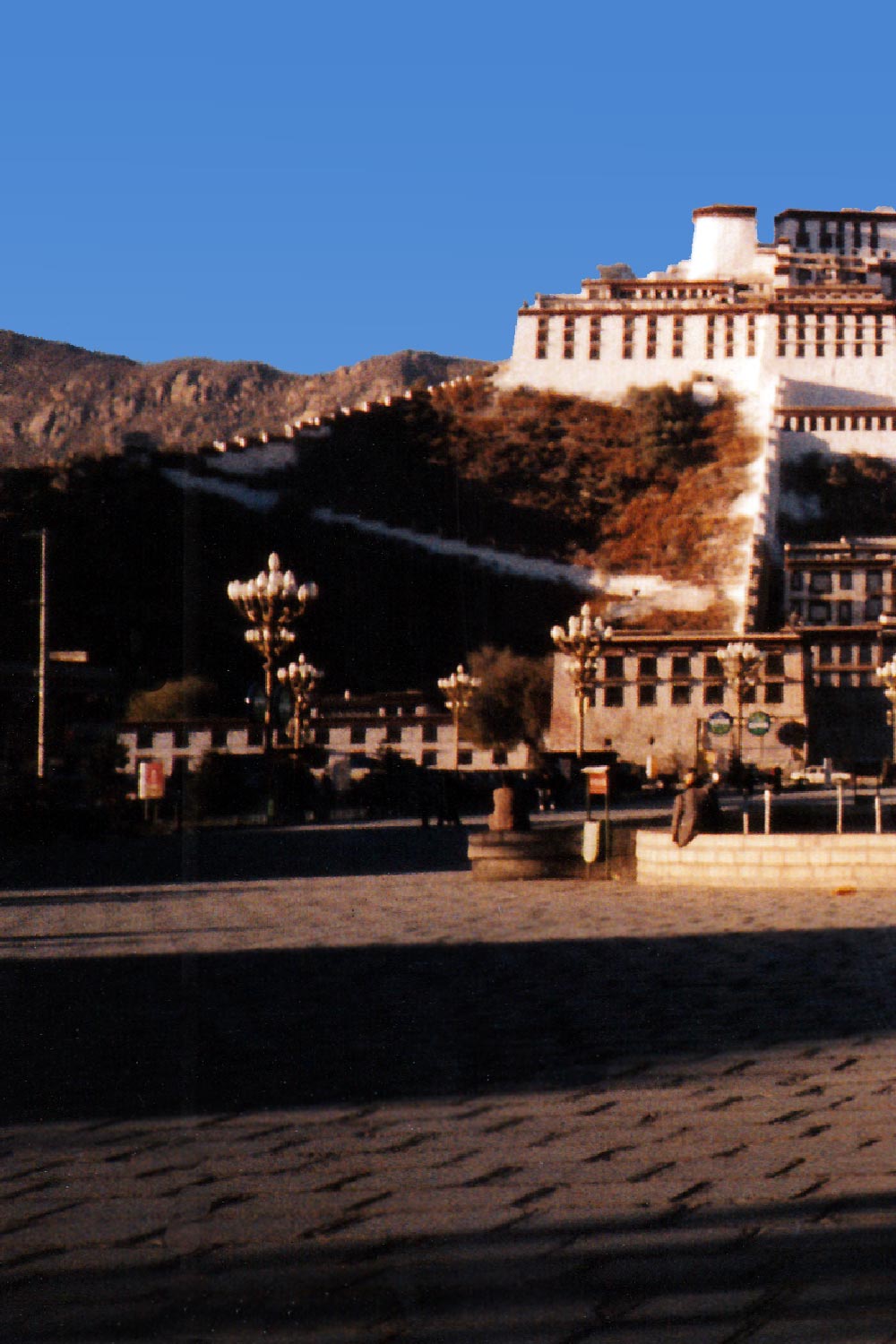 The Potala Palace in Lhasa Tibet is named after Mount Potalaka, the mythical abode of the bodhisattva Avalokiteśvara, The 5th Dalai Lama started its construction in 1645.
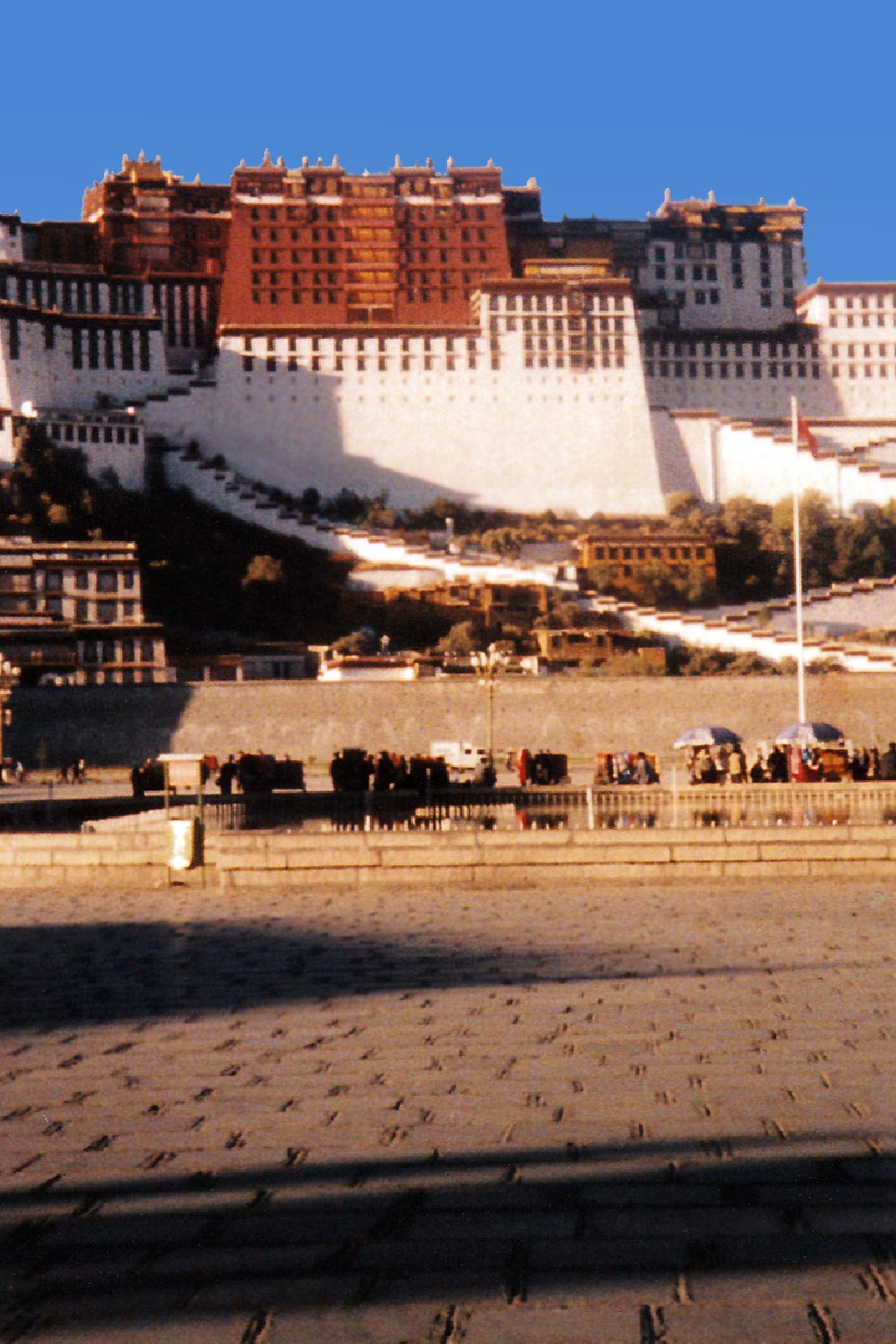 The Potala Palace is a fortress built in the style of Dzong architecture and was home of the Dalai Lamas from 1649 to 1959, until Tibet came under the control of the Communist Party of China in 1951
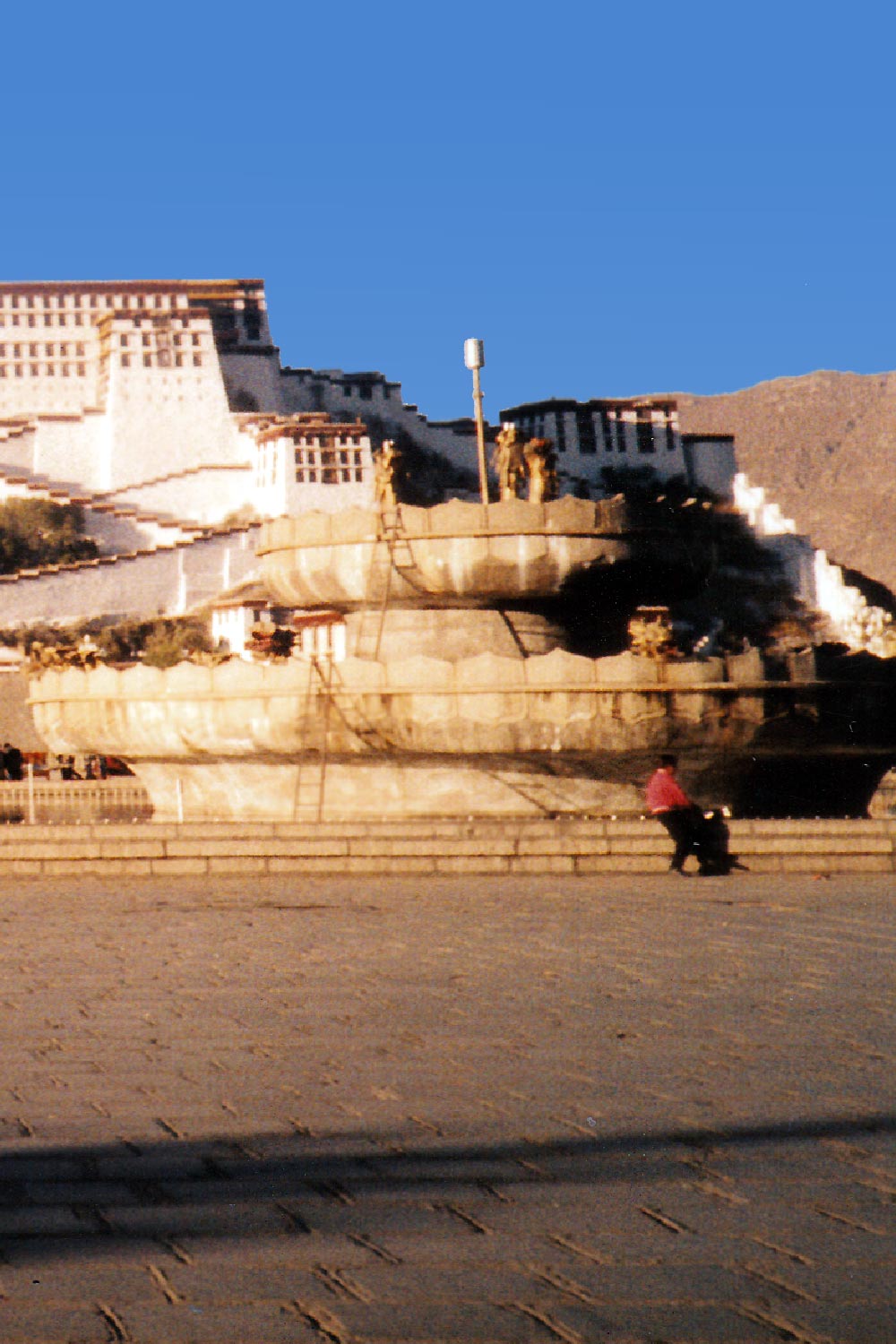 The Potala Palace is part of The People's Republic of China and has been a museum since 1959
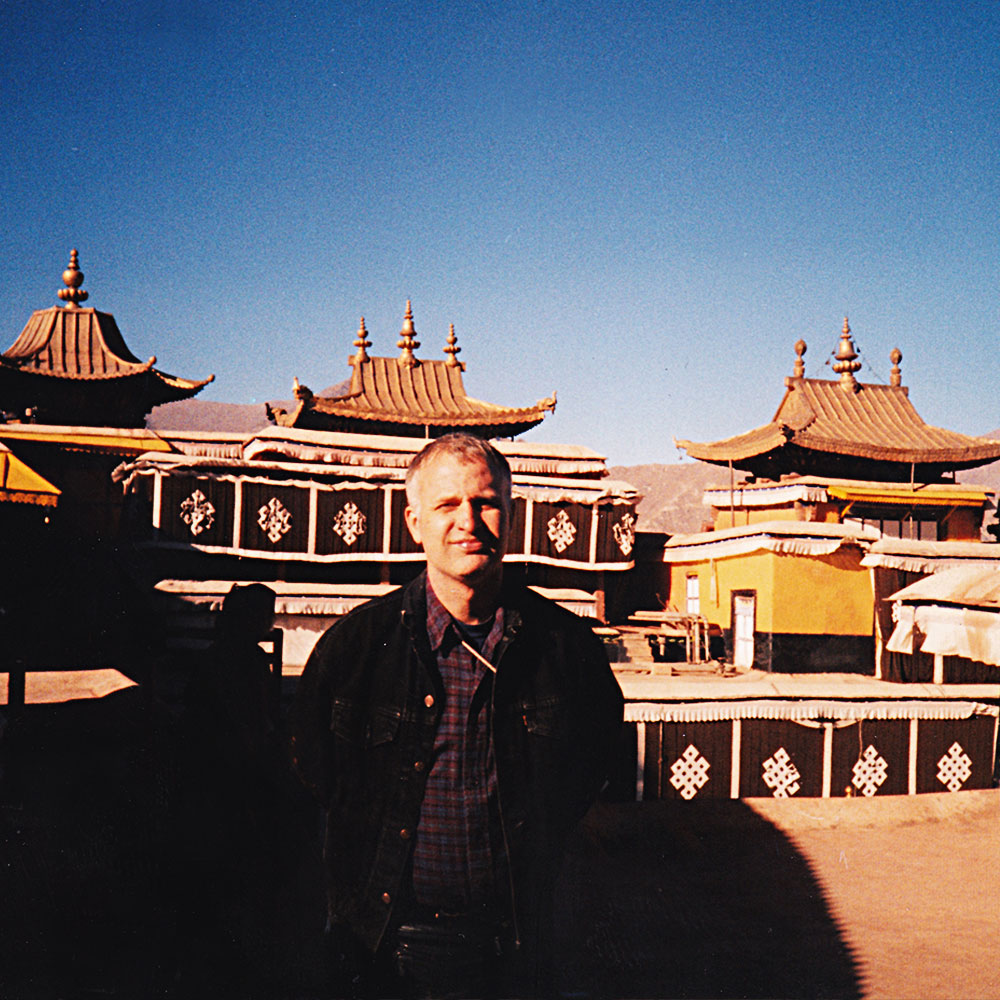 I on the golden roof of the Potala Palace
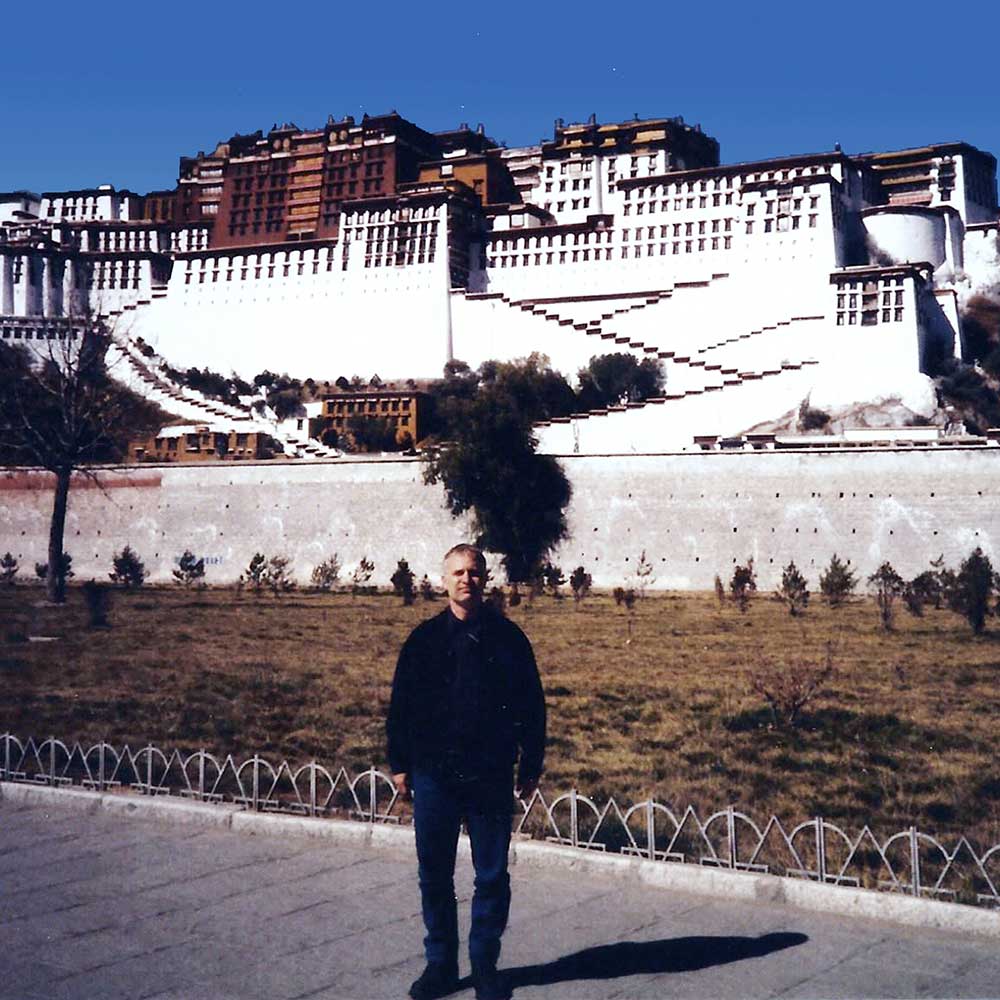 I and The Potala Palace
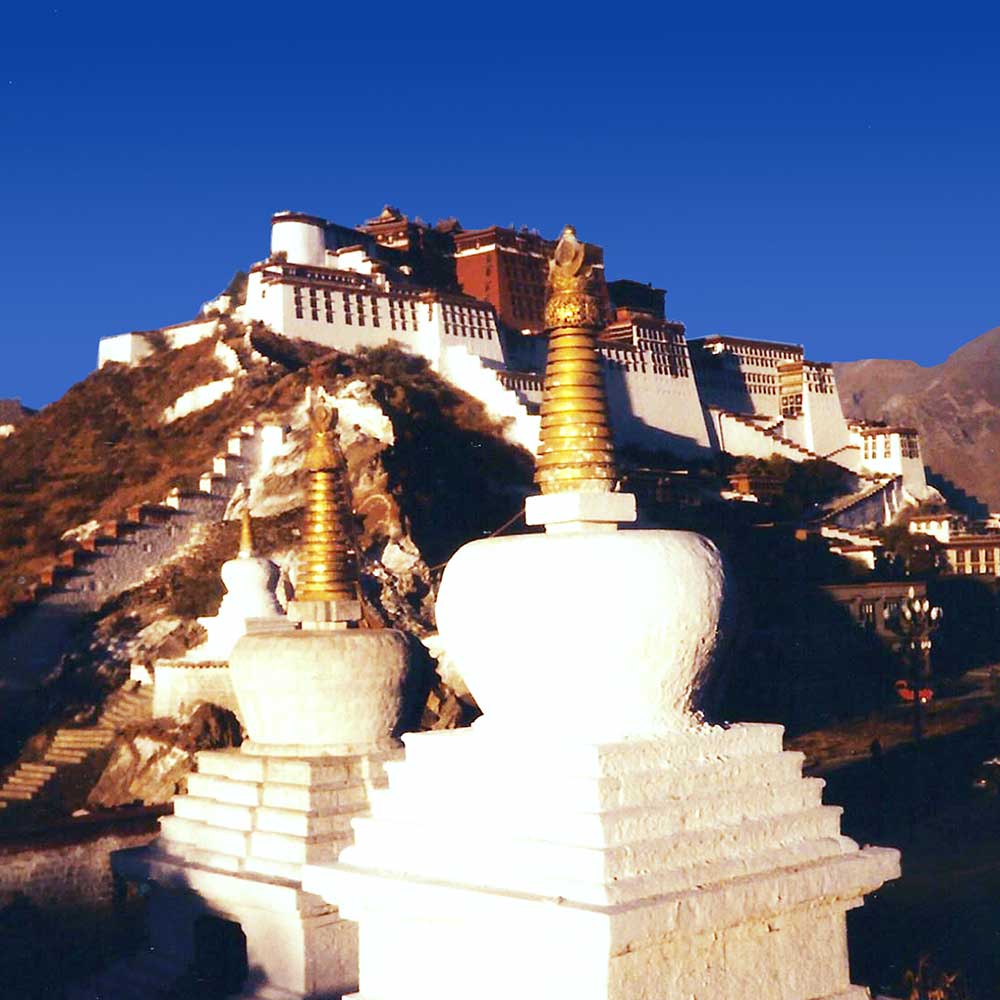 White stupas in front of the Potala Palace, the once winter home of the Dalai Lama, now a UNESCO World Heritage Site
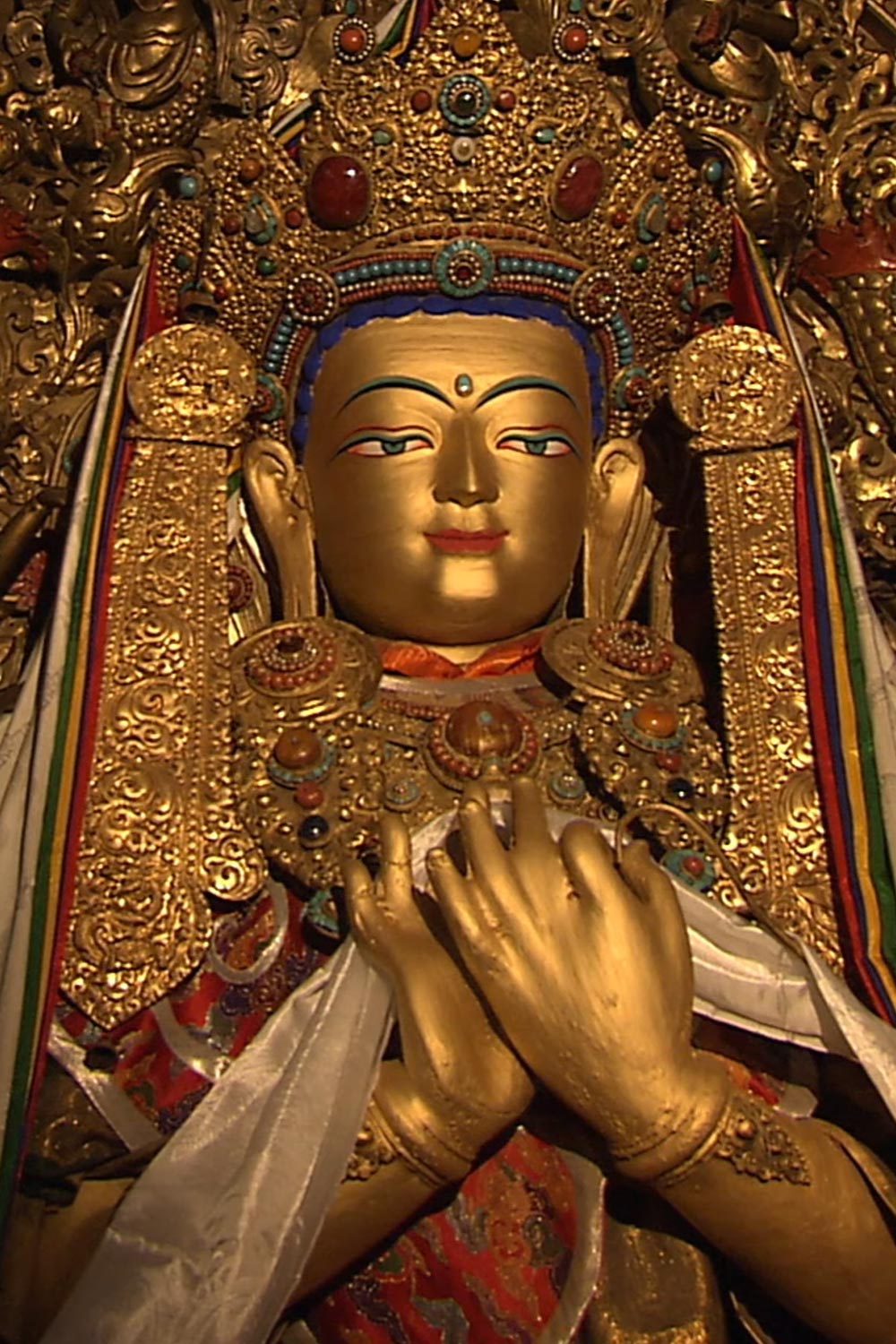 The gilded statue of Avalokiteśvara (Chenrezig) the Bodhisattva of Compassion in the Potala Palace with hands crossed at the chest in the prayer mudra, it symbolizes respect, devotion, unity, and an offering of the self
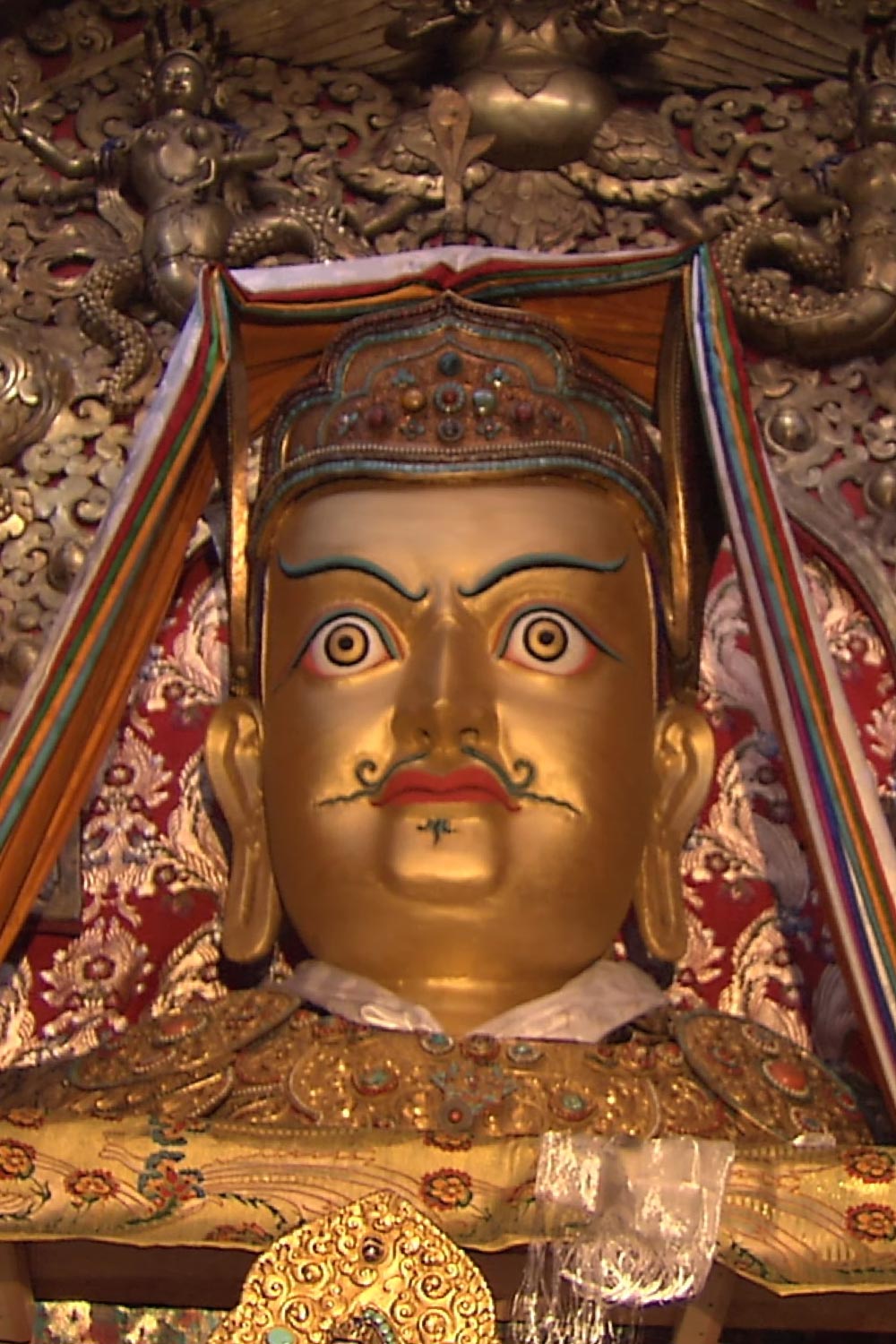 Padmasambhava is an 8th-century Indian Buddhist master credited with bringing Vajrayana Buddhism to Tibet, also known as Guru Rinpoche, located within the Potala Palace
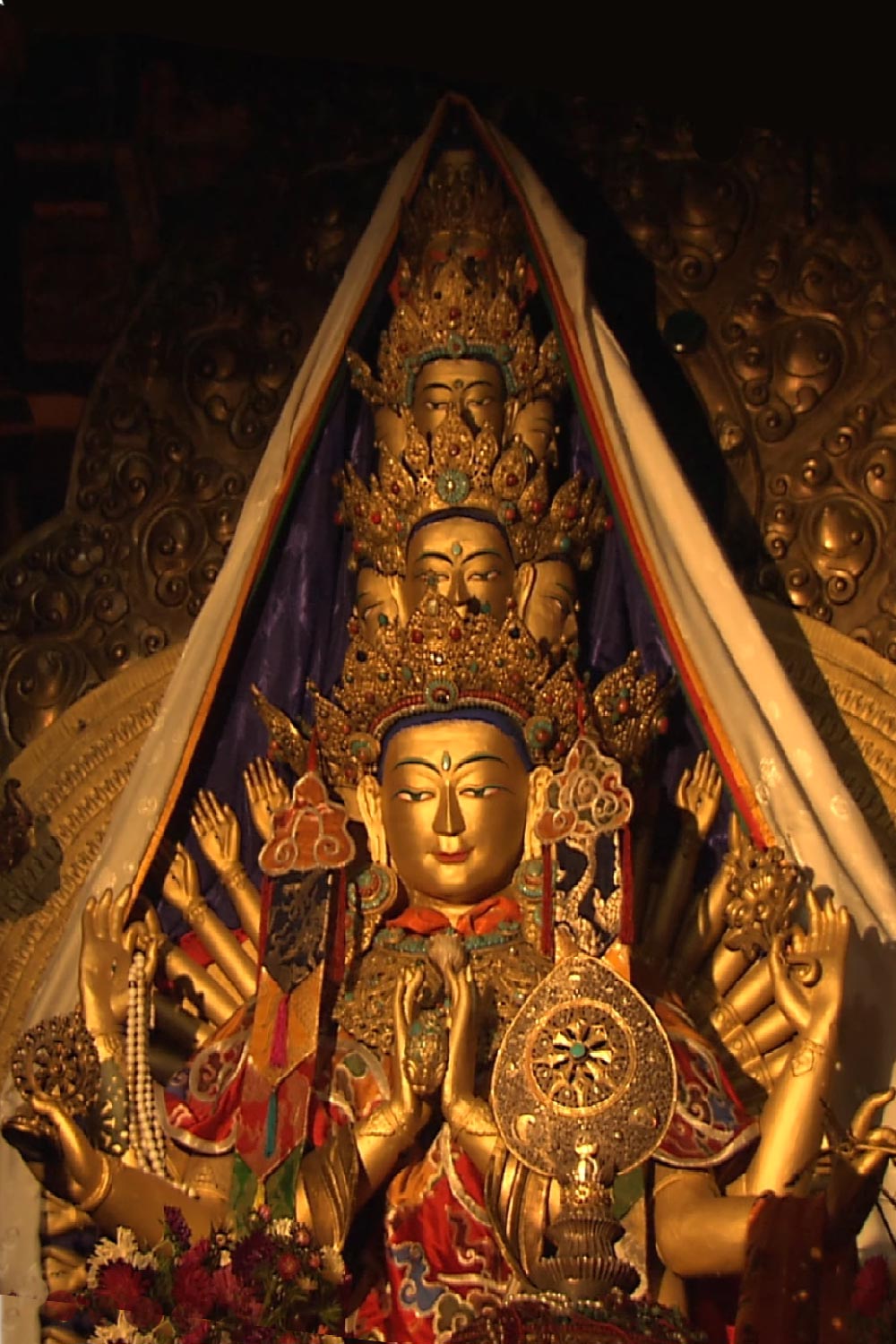 The statue of Avalokiteśvara (Chenrezig) becomes another form of the multi‑headed, multi‑armed Bodhisattva of Compassion, one of the most revered figures in the Potala Palace
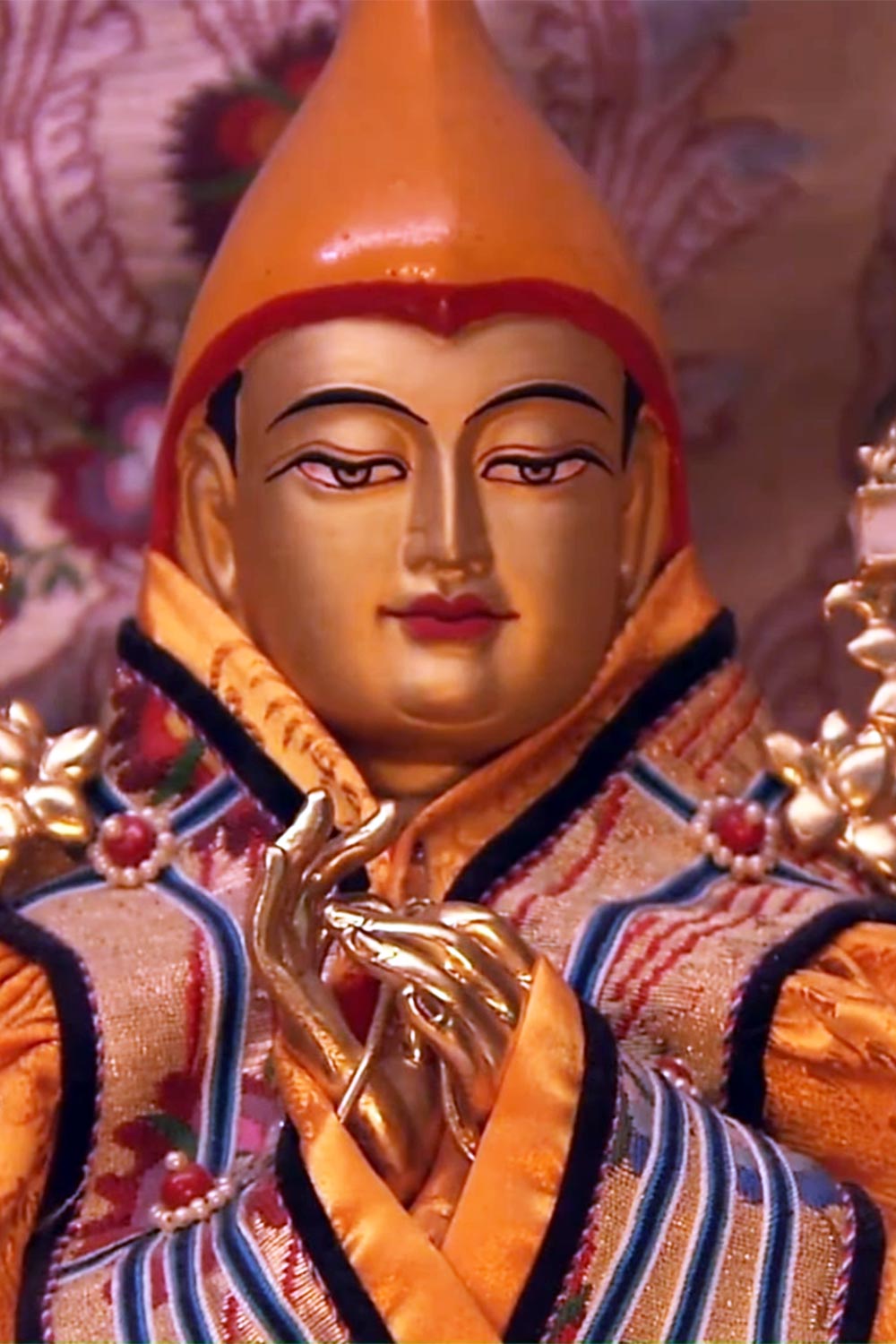 Statue of Je Tsongkhapa (1357–1419), a revered Tibetan philosopher and the founder of the Gelug school of Tibetan Buddhism, located in the Potala Palace in the East Chapel
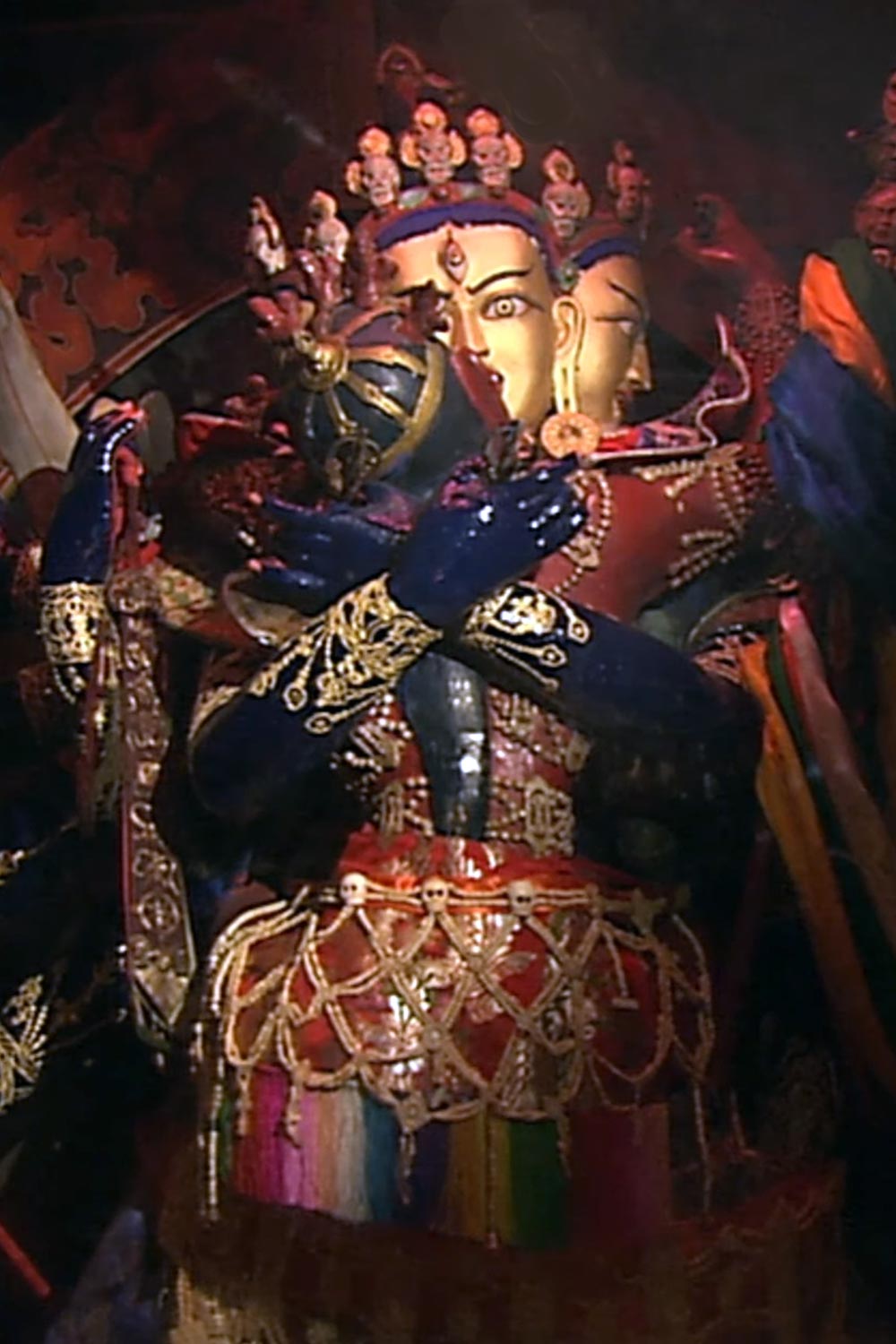 Yab-Yum (Tibetan: "father-mother") statue, a central symbol in Tibetan Buddhist art representing the primordial union of wisdom and compassion.
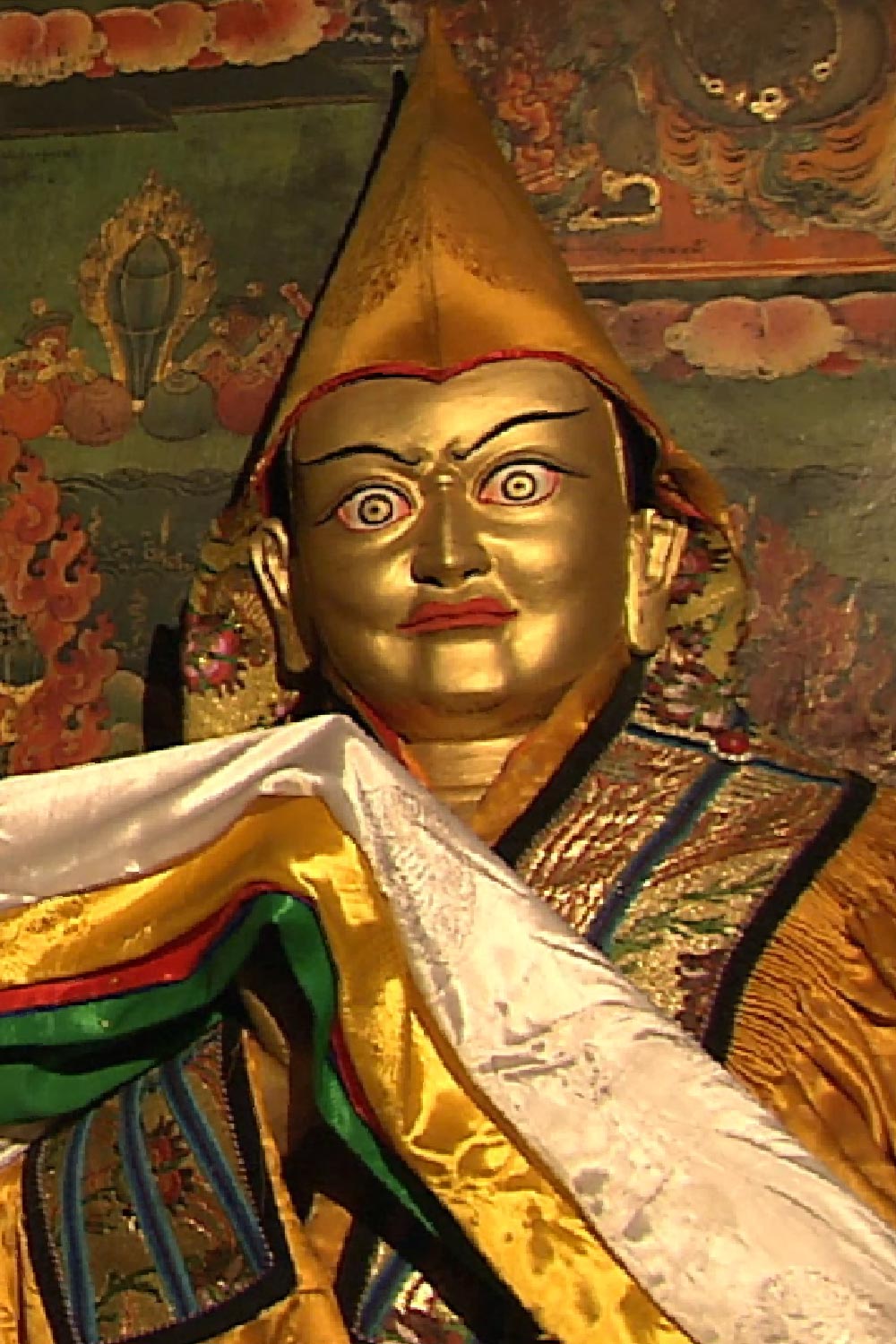 Je Tsongkhapa (1357–1419) revered as the "Second Buddha" for his role in reforming monastic discipline and founding the lineage to which the Dalai Lamas belong, Within the Potala Palace, the East Chapel is specifically dedicated to Tsongkhapa.
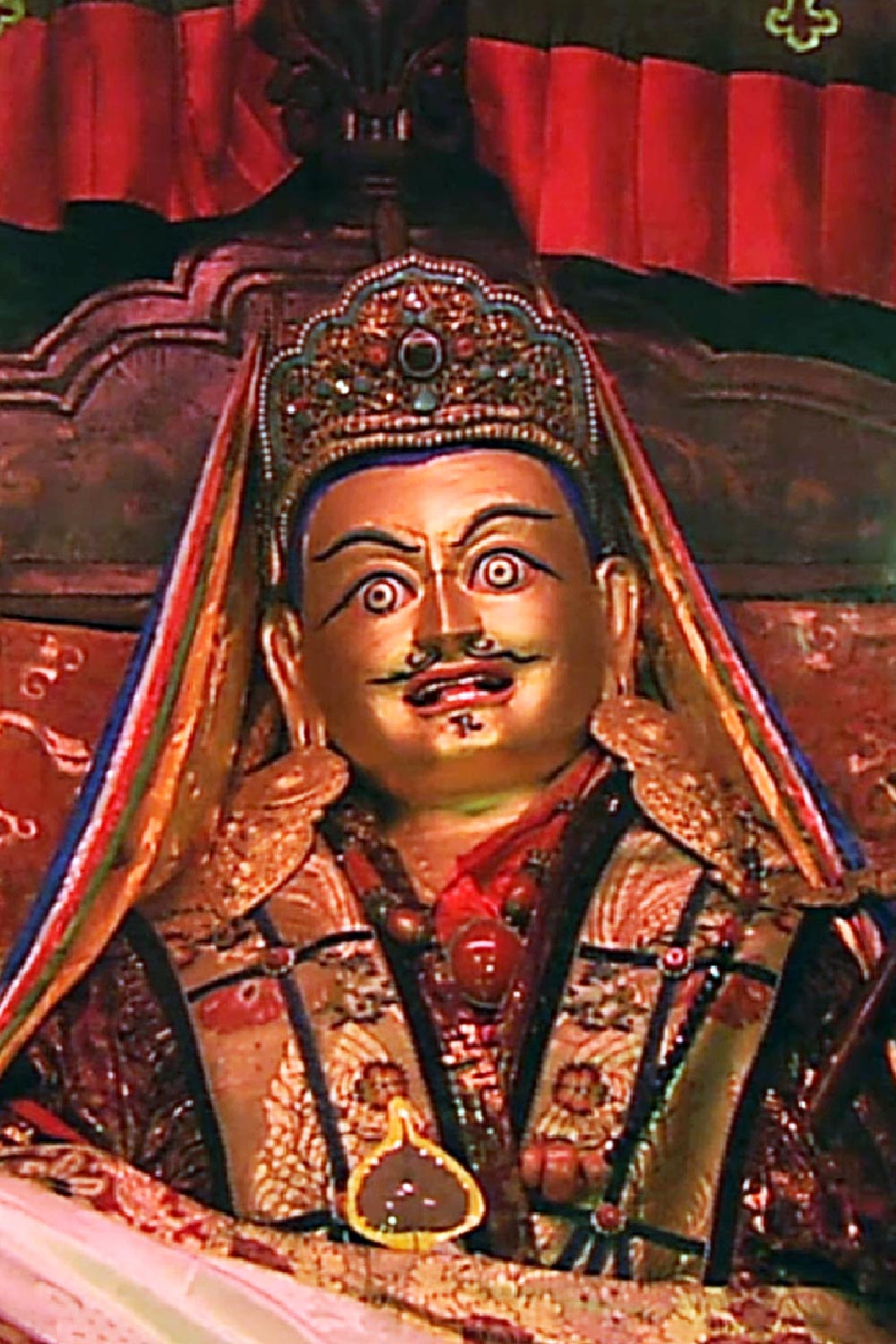 A revered statue of Guru Rinpoche (also known as Padmasambhava), the Indian master who established Vajrayana Buddhism in Tibet during the 8th century, located in the Potala Palace
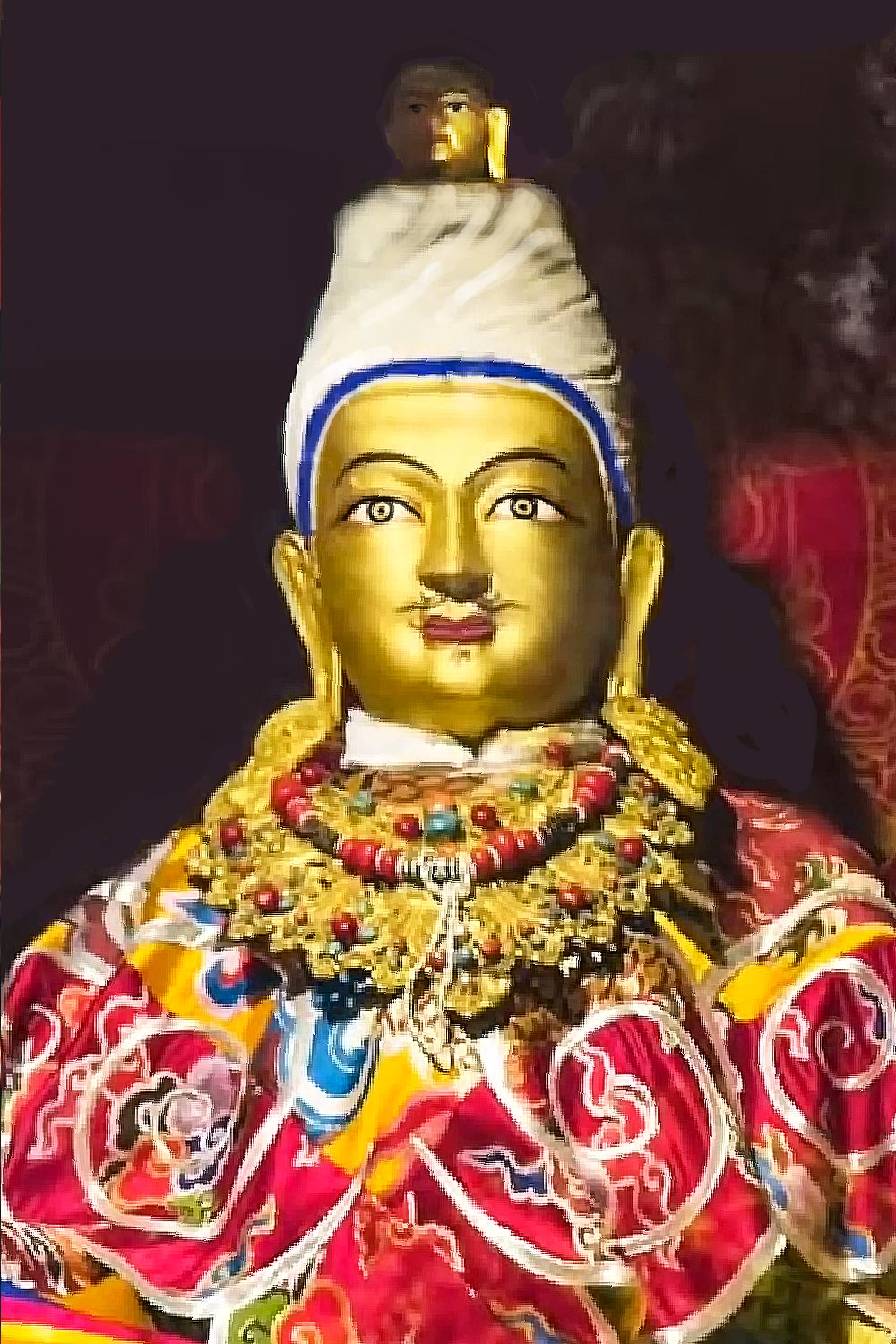 This image depicts a sacred statue of King Songtsen Gampo (r. 617–650 AD), the 33rd ruler of the Yarlung Dynasty and the founder of the Tibetan Empire, he is located within the Potala Palace
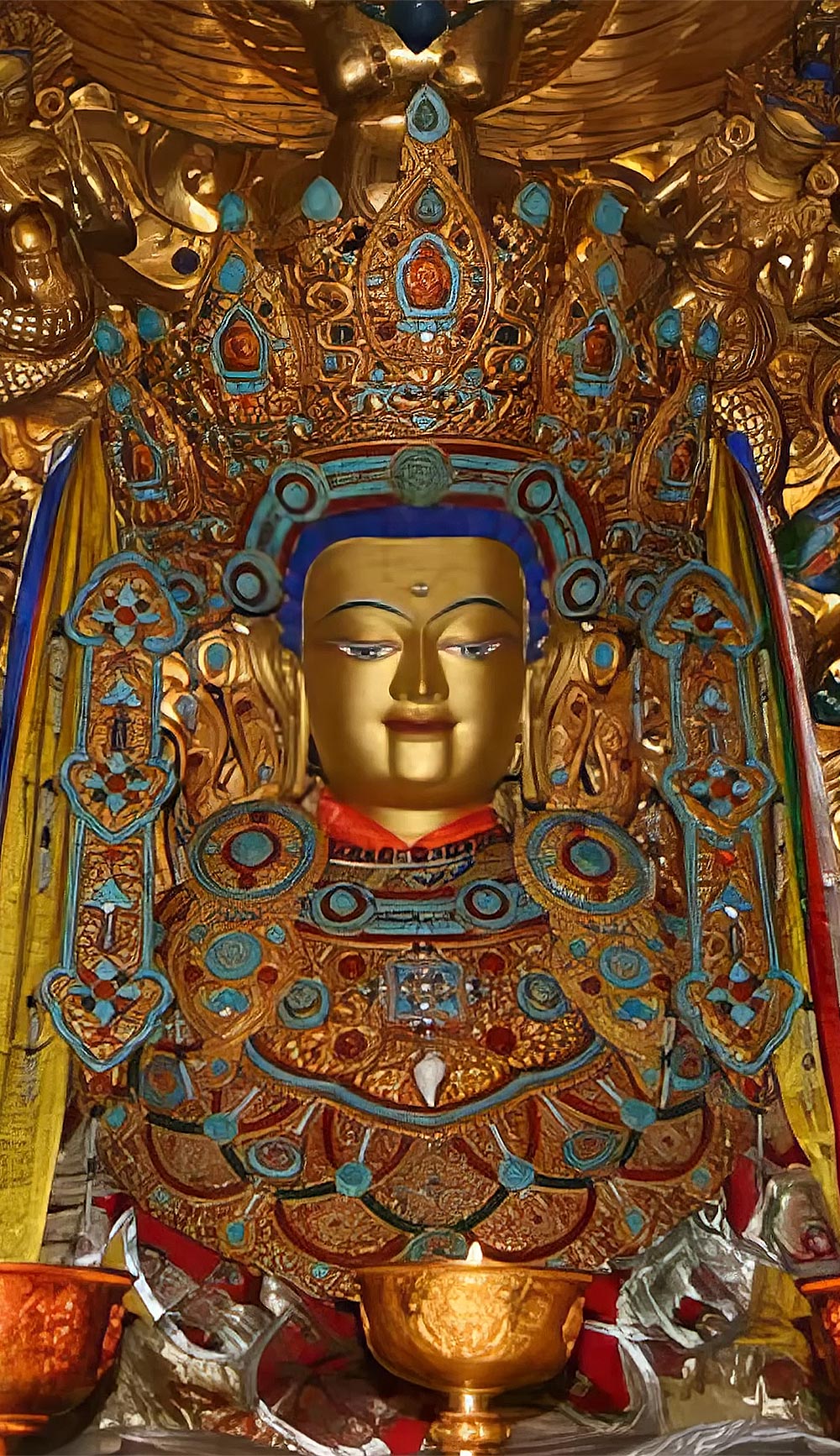
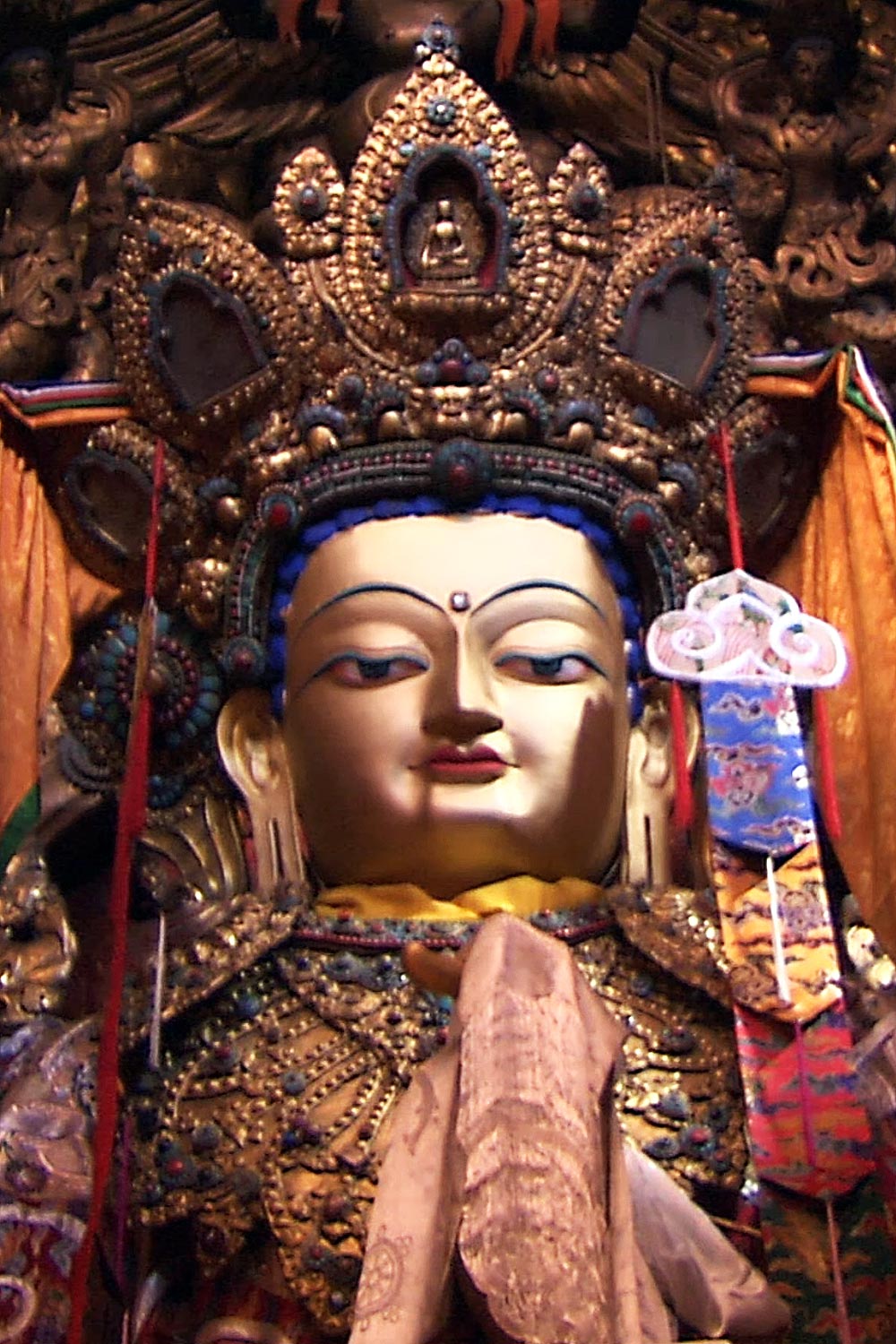 Jowo Rinpoche (also known as Jowo Shakyamuni), which is the most sacred and revered Buddha statue in Tibet
Jokhang Temple: जोखांग मंदिर
The Jokhang Temple is the most sacred site in Tibetan Buddhism and the spiritual heart of Lhasa.
Located at the center of Barkhor Square, it was founded in 652 CE by King Songtsen Gampo to enshrine a revered Buddha statue brought to Tibet by his Chinese wife,
Princess Wencheng. The temple’s name—Jokhang, “House of the Lord”—refers to its central image, the Jowo Shakyamuni, a life‑sized statue of the Buddha at age twelve,
believed to have been carved and blessed during his lifetime. For many Tibetan Buddhists, seeing the Jowo is a once‑in‑a‑lifetime pilgrimage. Architecturally, the Jokhang
blends Indian vihara, Tibetan, and Han Chinese styles, reflecting Tibet’s early cultural exchanges. It is revered across all schools of Tibetan Buddhism, making it a uniquely
pan‑sectarian site. In 2000, it was inscribed as part of the UNESCO World Heritage listing for the Potala Palace Ensemble. The temple remains a living center of devotion.
Pilgrims circle it on the Barkhor kora, spinning prayer wheels, burning juniper incense, and performing full‑body prostrations outside its gates—daily rituals that have
animated the heart of Lhasa for more than a millennium.
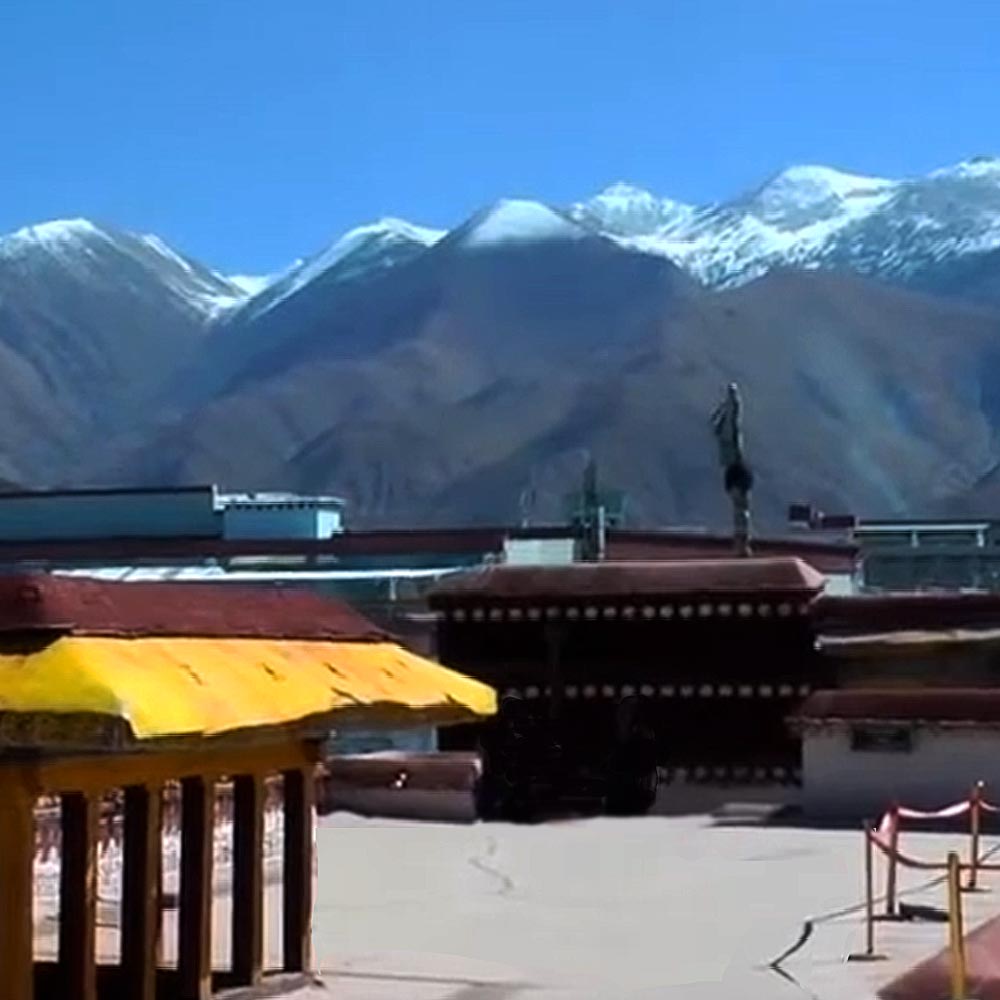
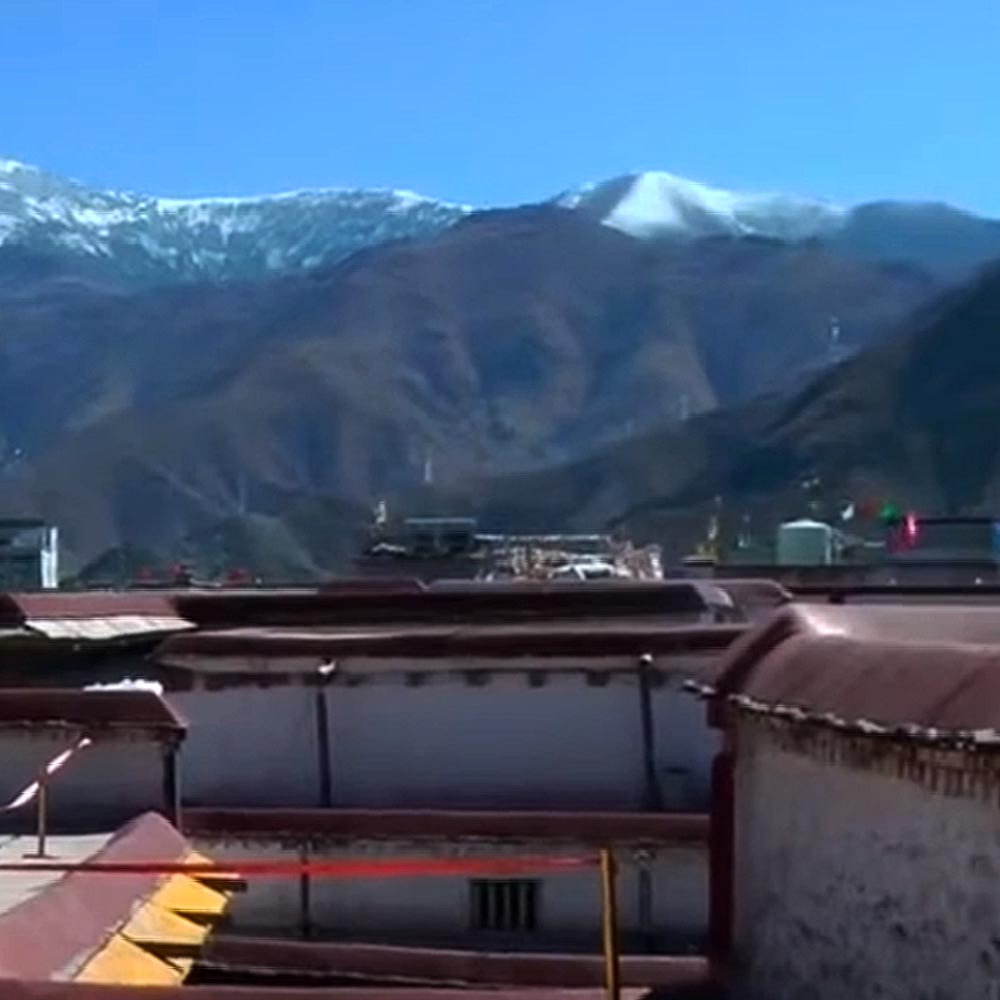
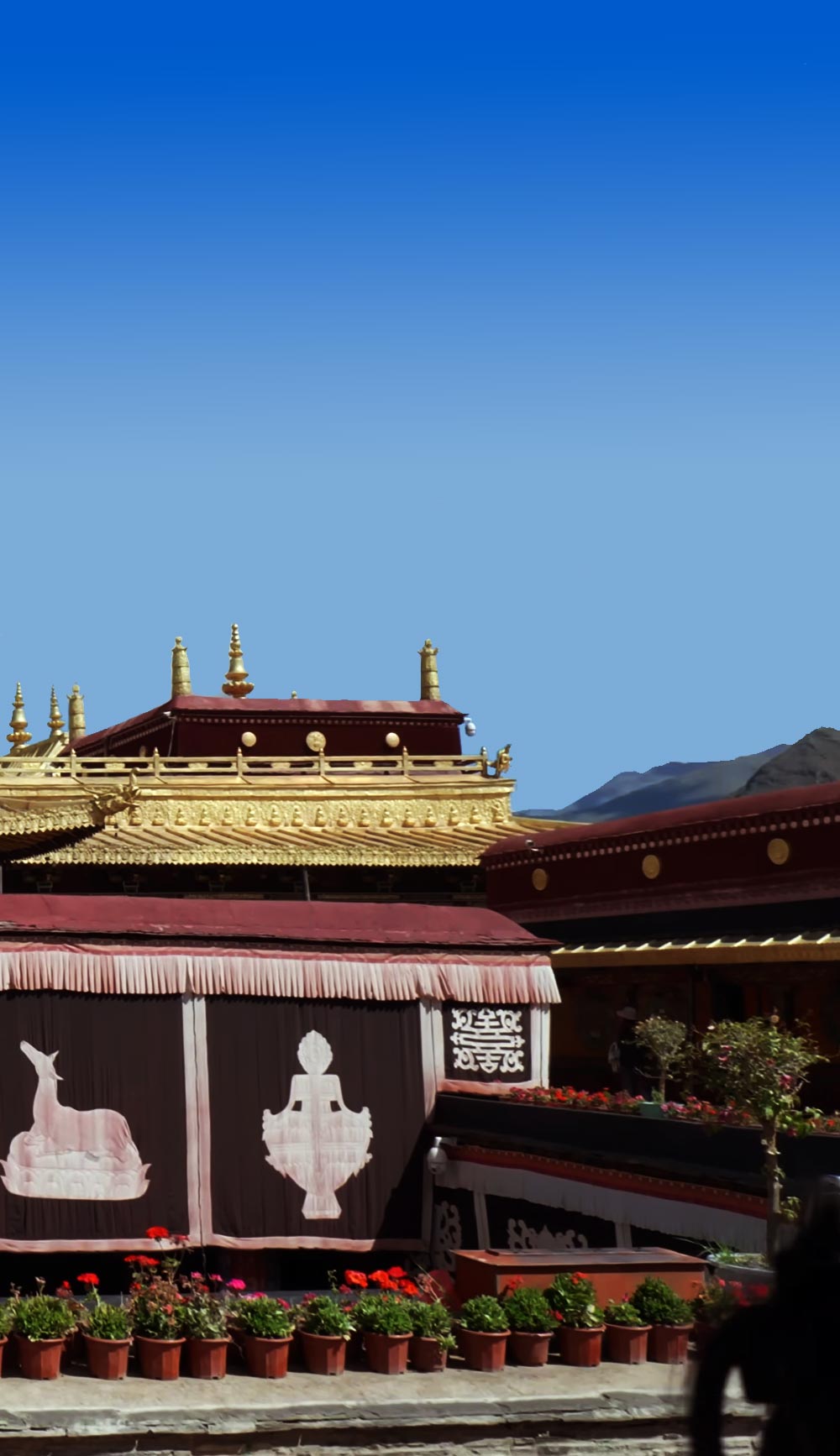
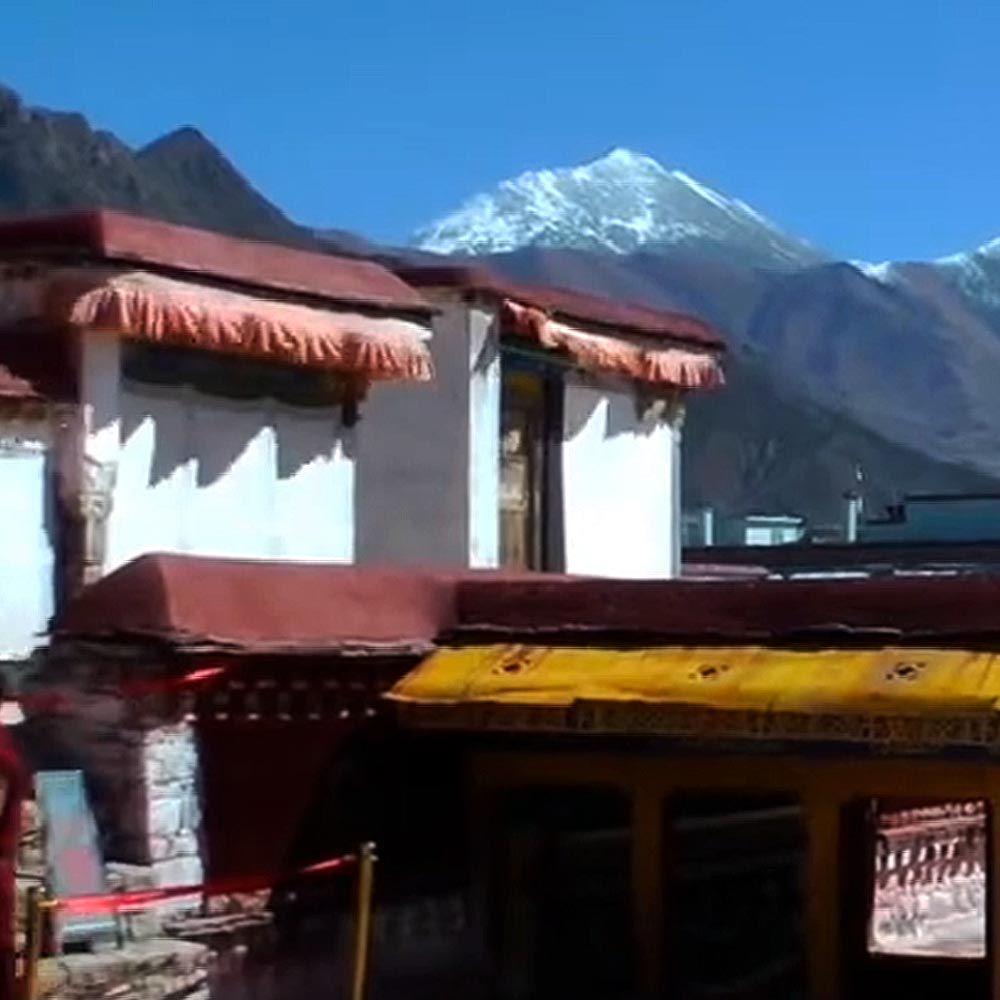 View of the mountains on top of Jokhang Temple
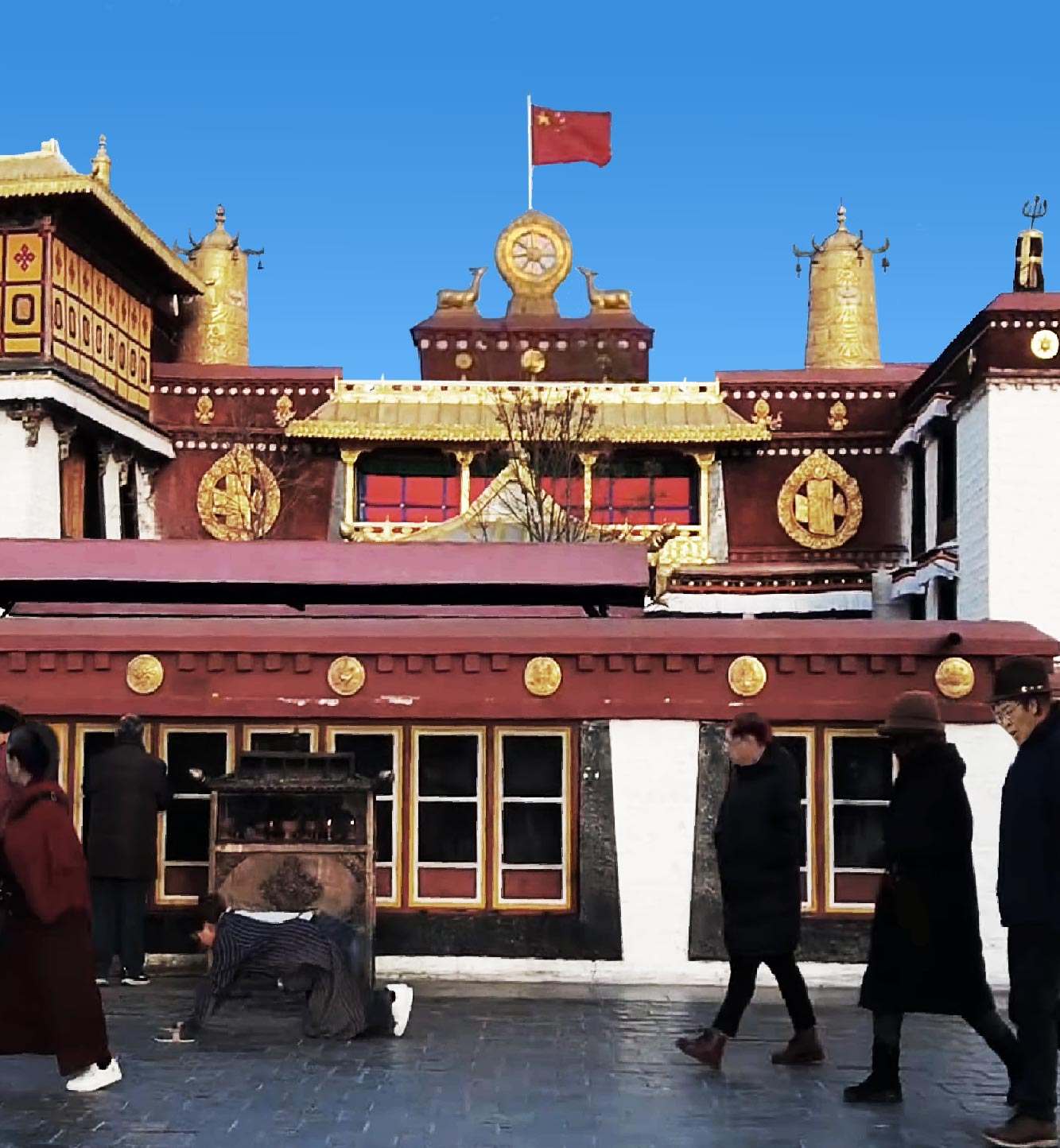
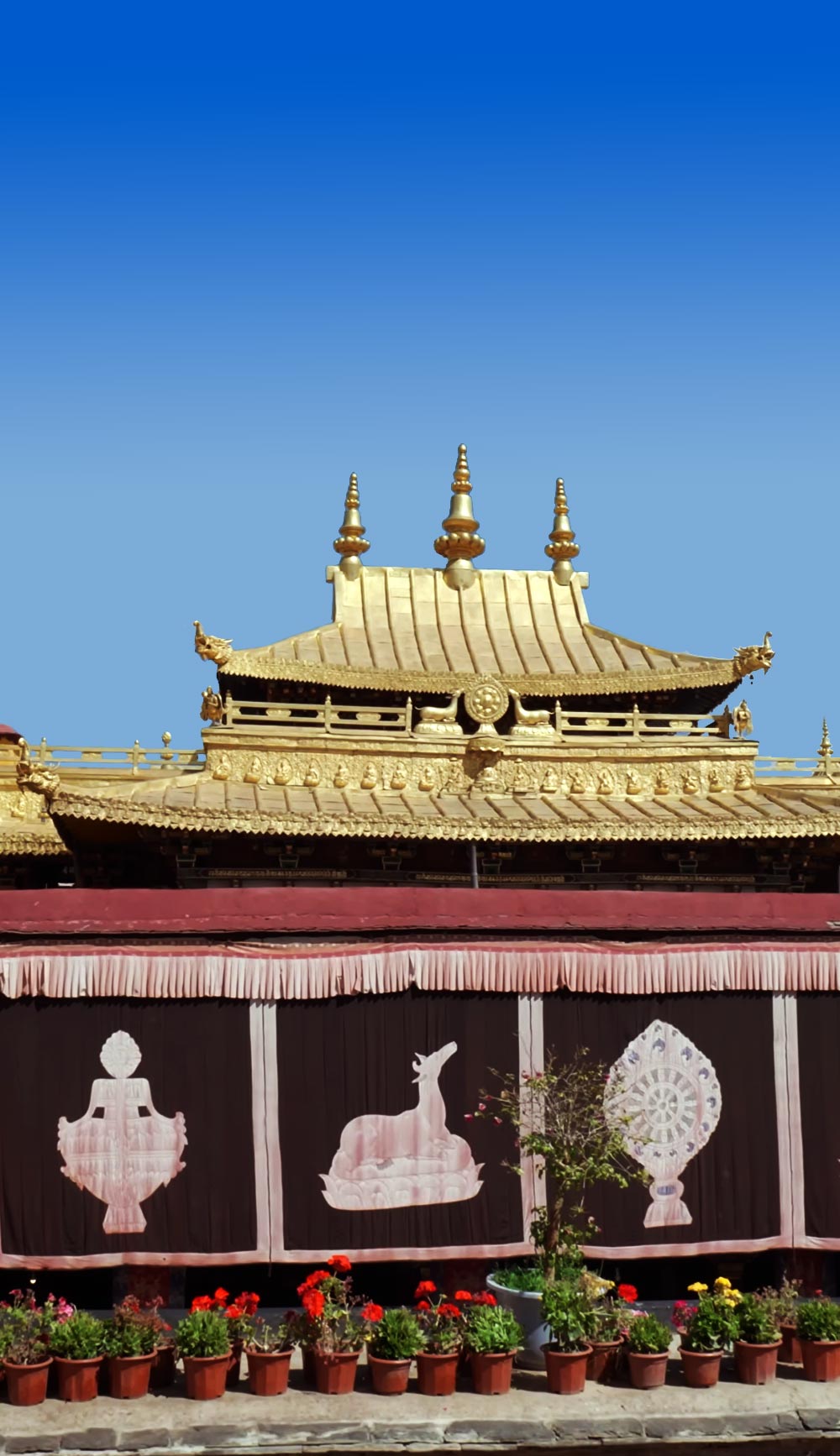
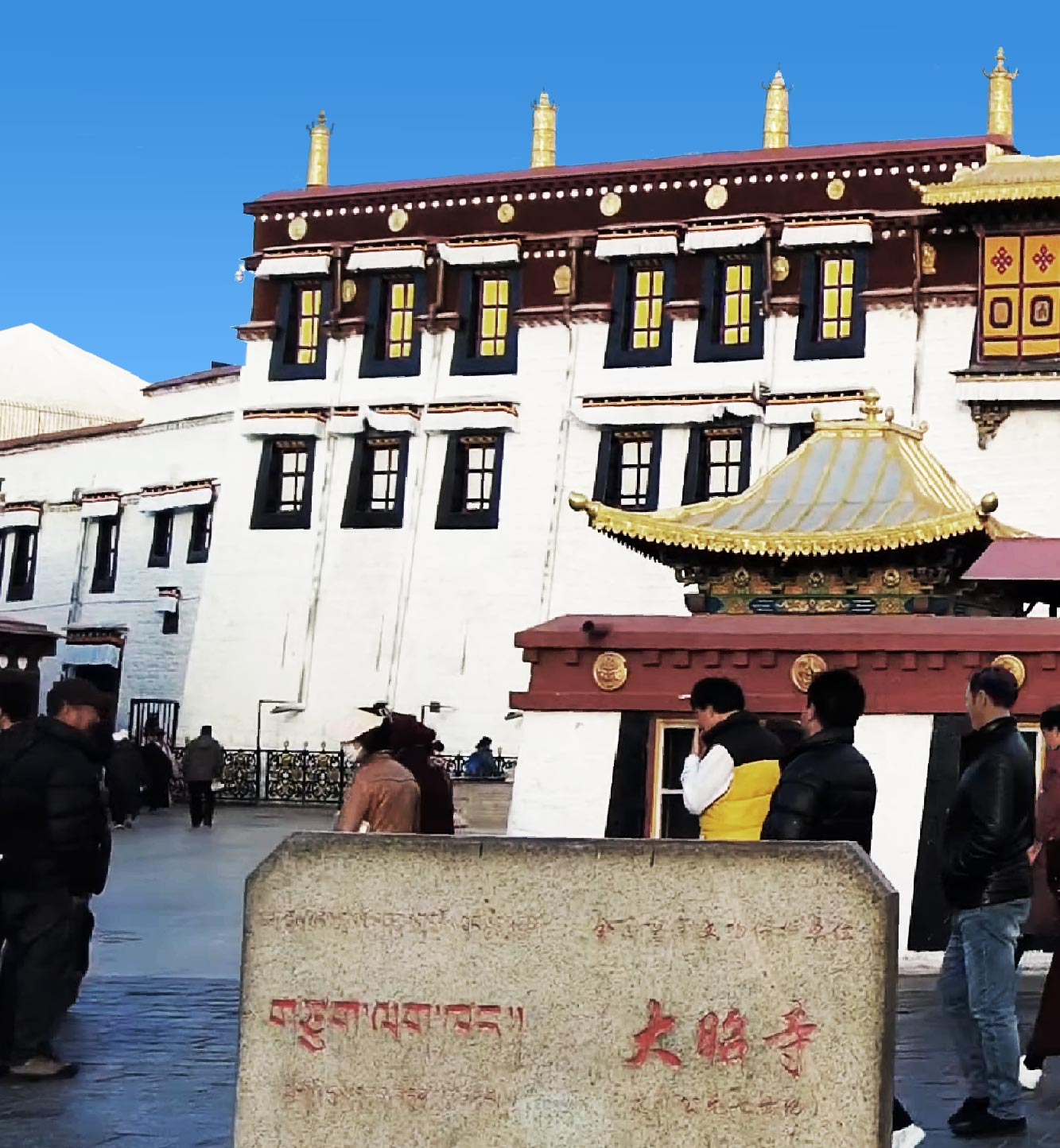 Jokhang Square, in front of the Jokhang Temple with its iconic rooftop statues of the Dharma wheel and the two golden deer are considered one of the most sacred images in Tibet
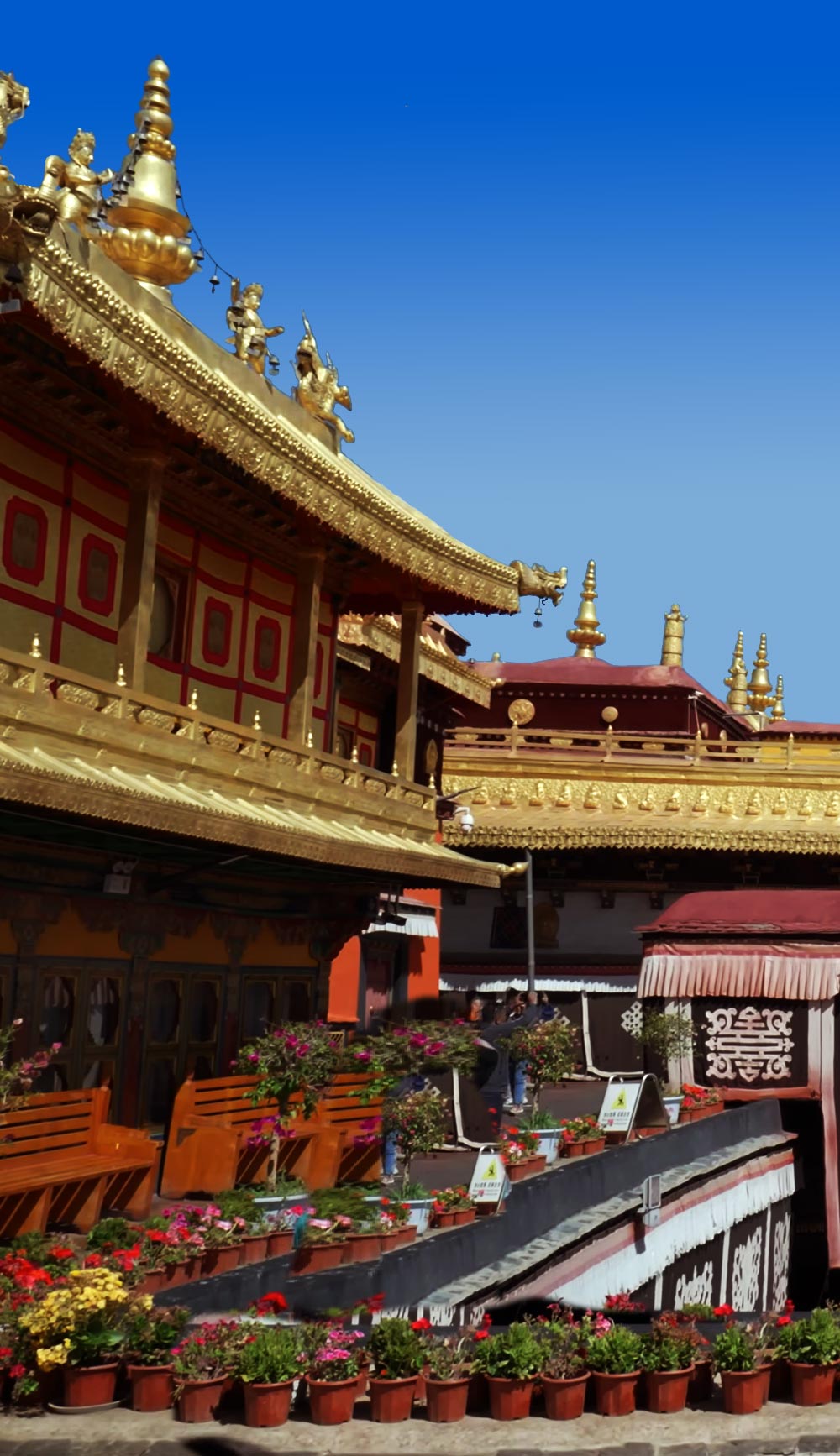 Jokhang Square, in front of the Jokhang Temple with its iconic rooftop statues of the Dharma wheel and the two golden deer are considered one of the most sacred images in Tibet
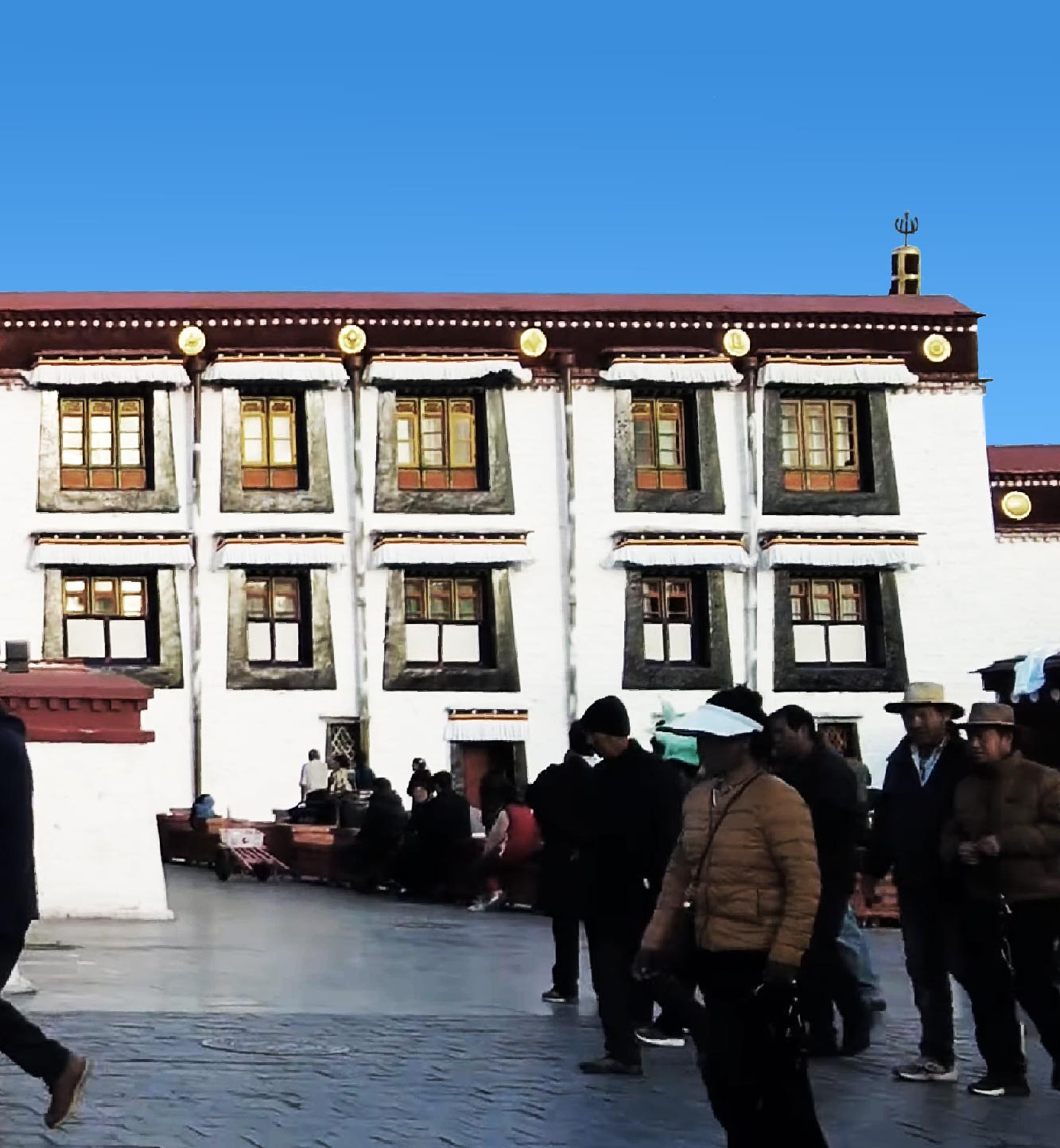
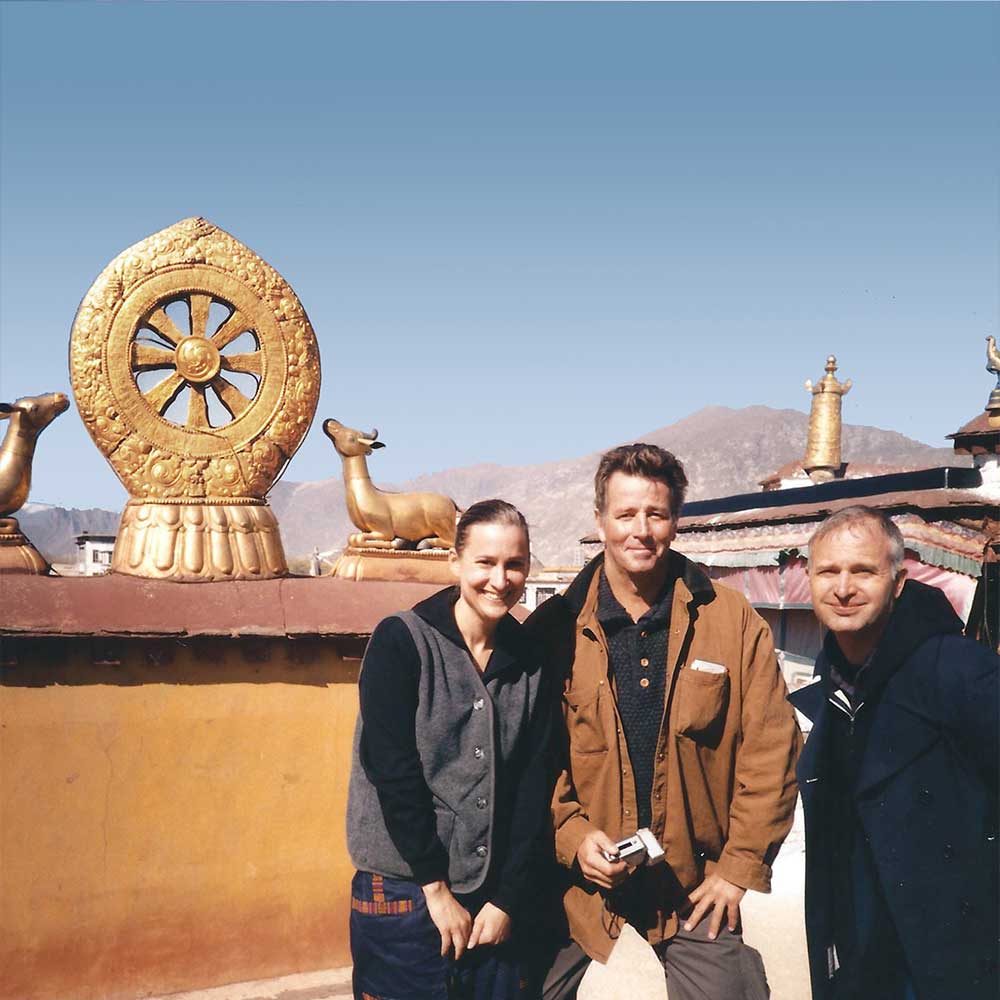 The Jokhang Temple in the heart of Lhasa located on Barkhor Street, built in the 7th century.
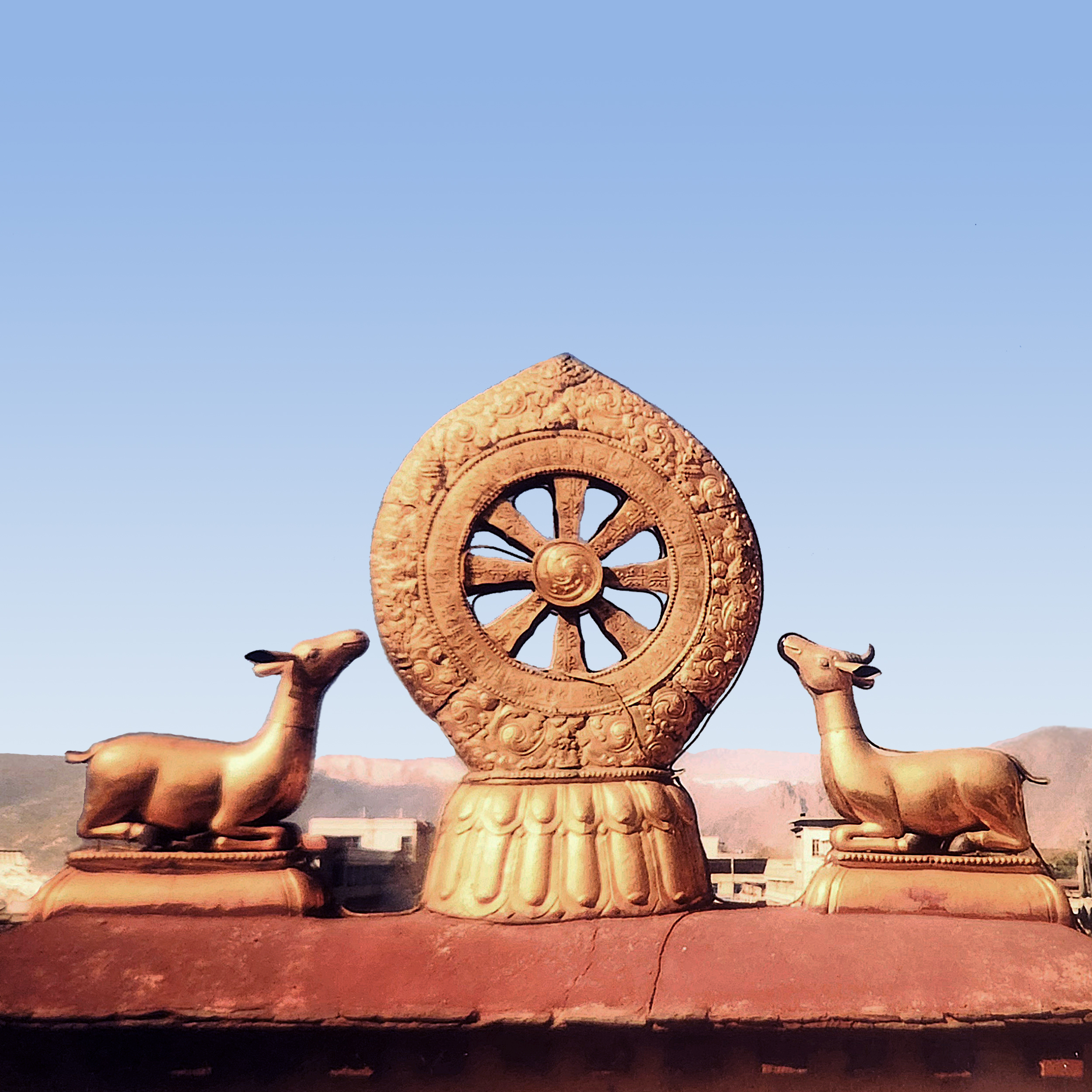 The Jokhang Temple iconic rooftop statues of the Dharma wheel and the two golden deer are considered one of the most sacred images in Tibet
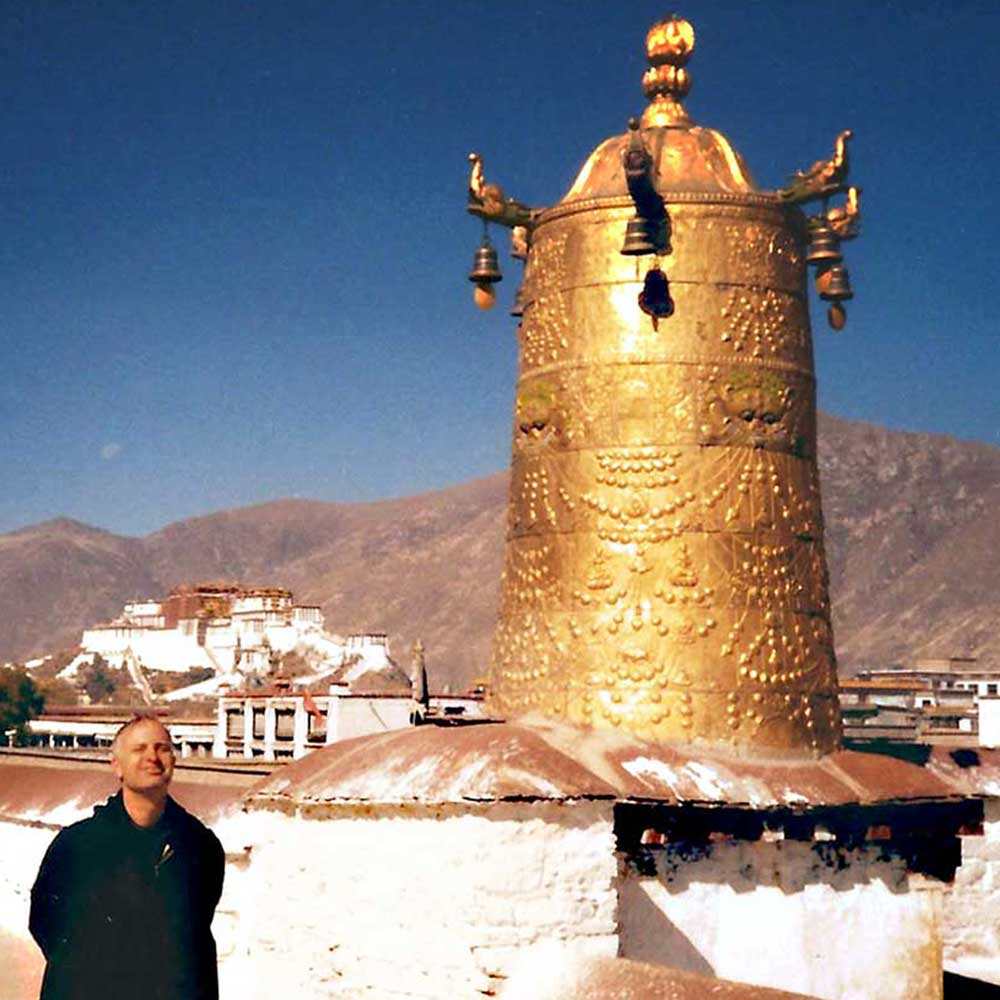 I next to, 7th century Dhvaja Golden Victory banner
with Potala Palace in the distance from rooftop of Jokhang Temple, Lhasa, Tibet, China
I next to, 7th century Dhvaja Golden Victory banner
with Potala Palace in the distance from rooftop of Jokhang Temple, Lhasa, Tibet, China
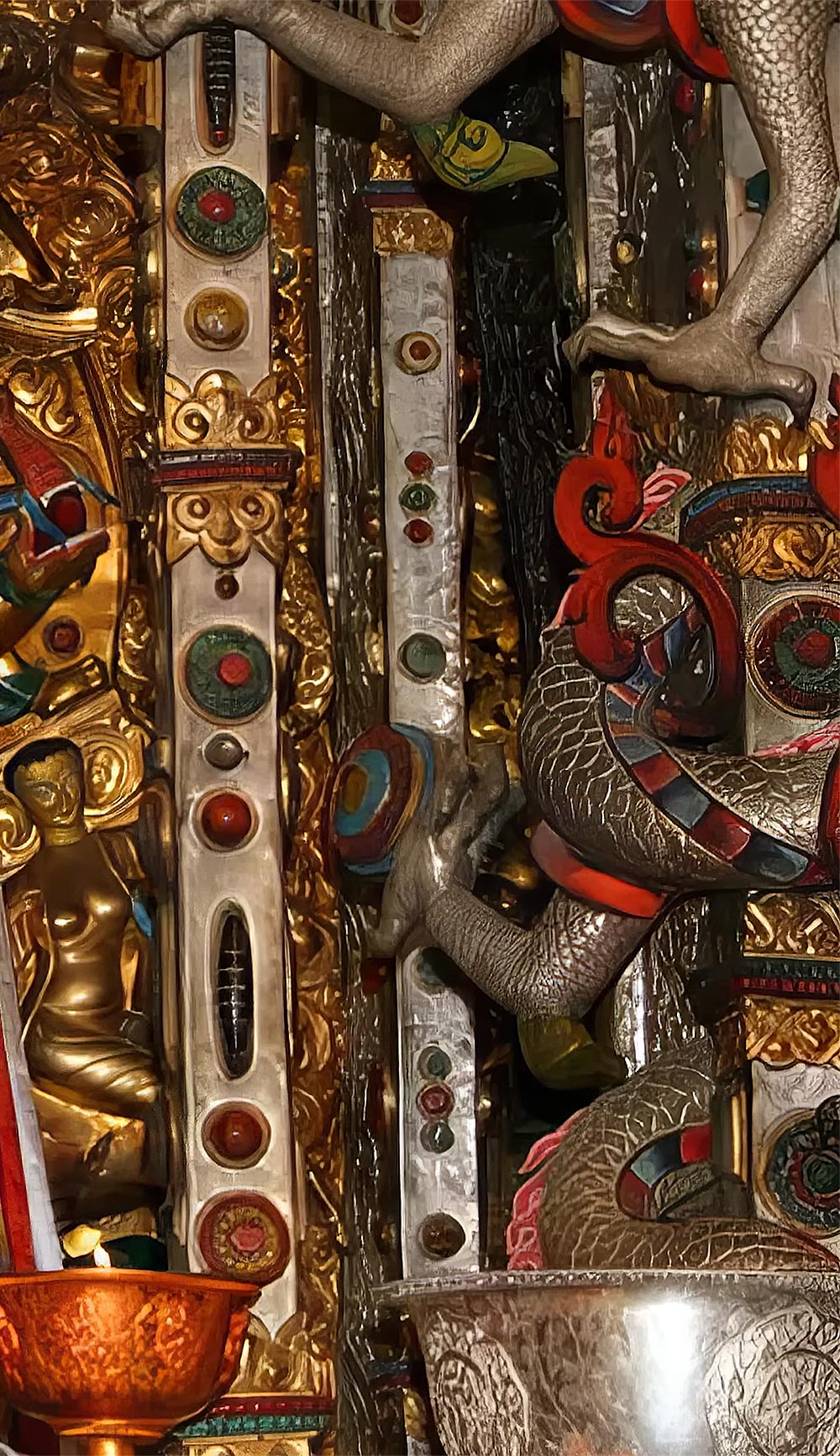
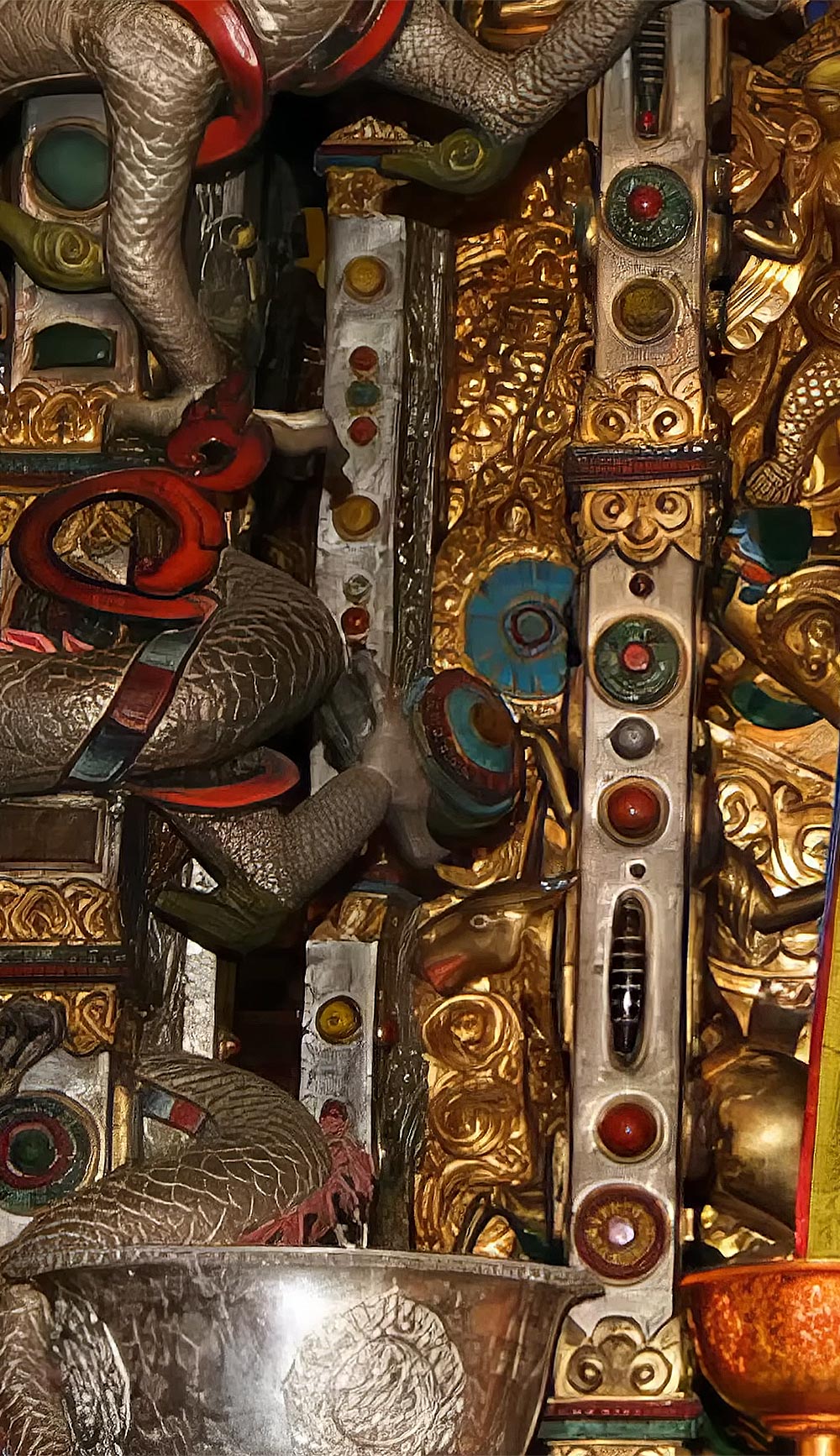 Jowo Shakyamuni, Jokhang Temple, Lhasa, Tibet, Yarlung Dynasty, brought to Tibet in 641 AD, gilt metals with semiprecious stones, pearls, and paint and various offerings
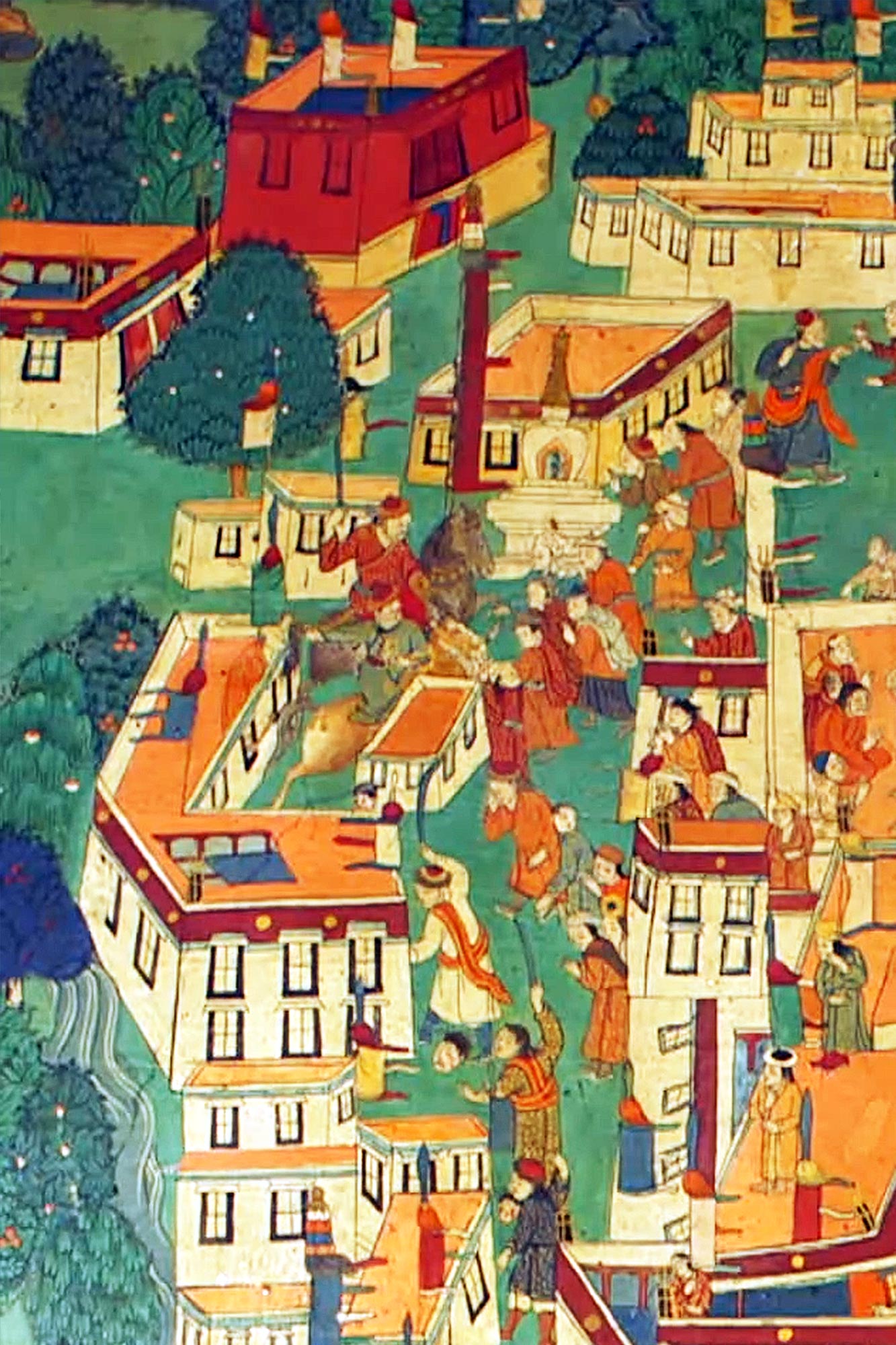 Tibetan mural located in the Jokhang Temple, depicts the Dzungar Mongol invasion of 1717
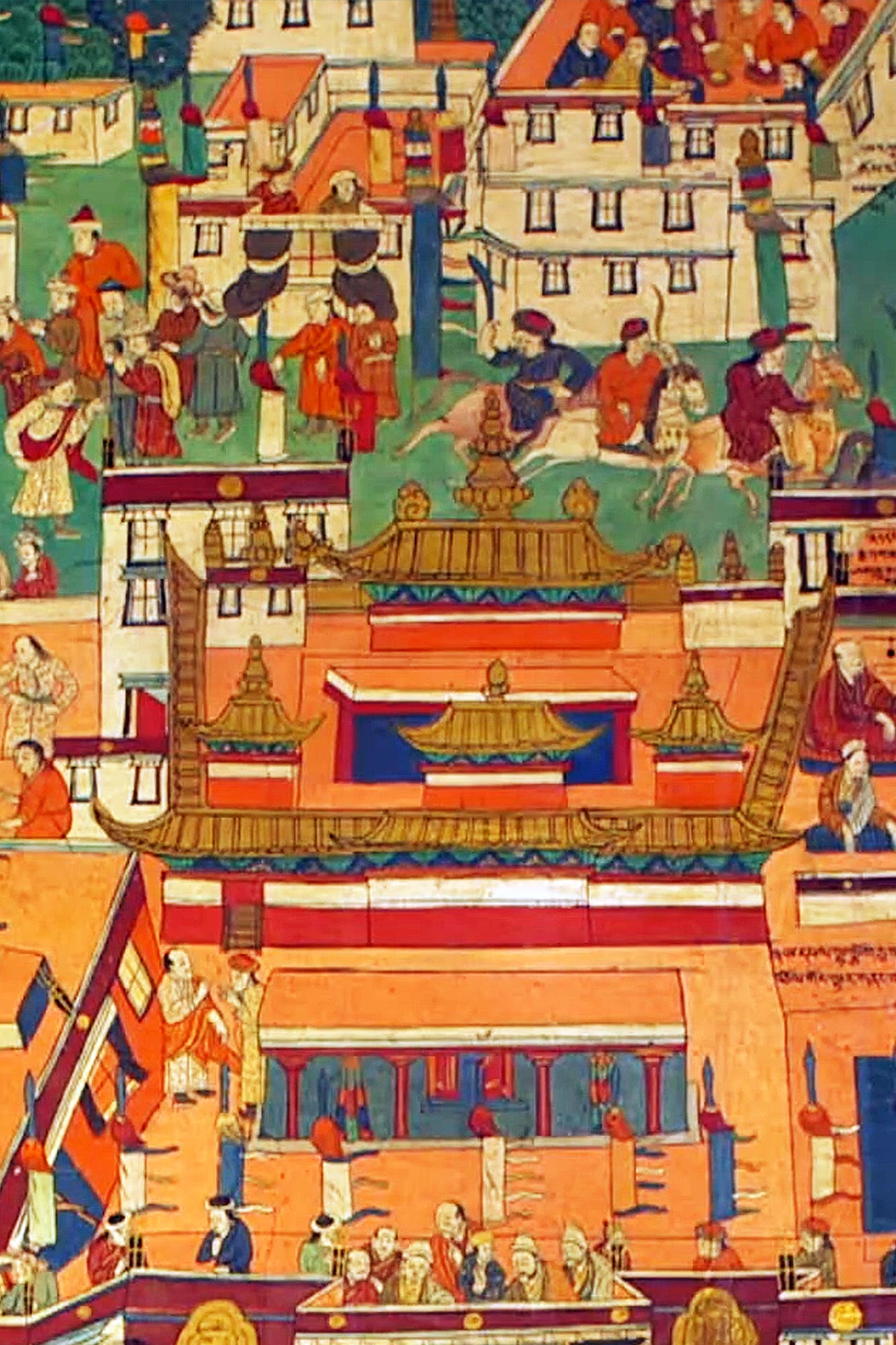 Dzungar Mongols, led by Tsering Dhondup, invaded Tibet to overthrow the Khoshut Khanate
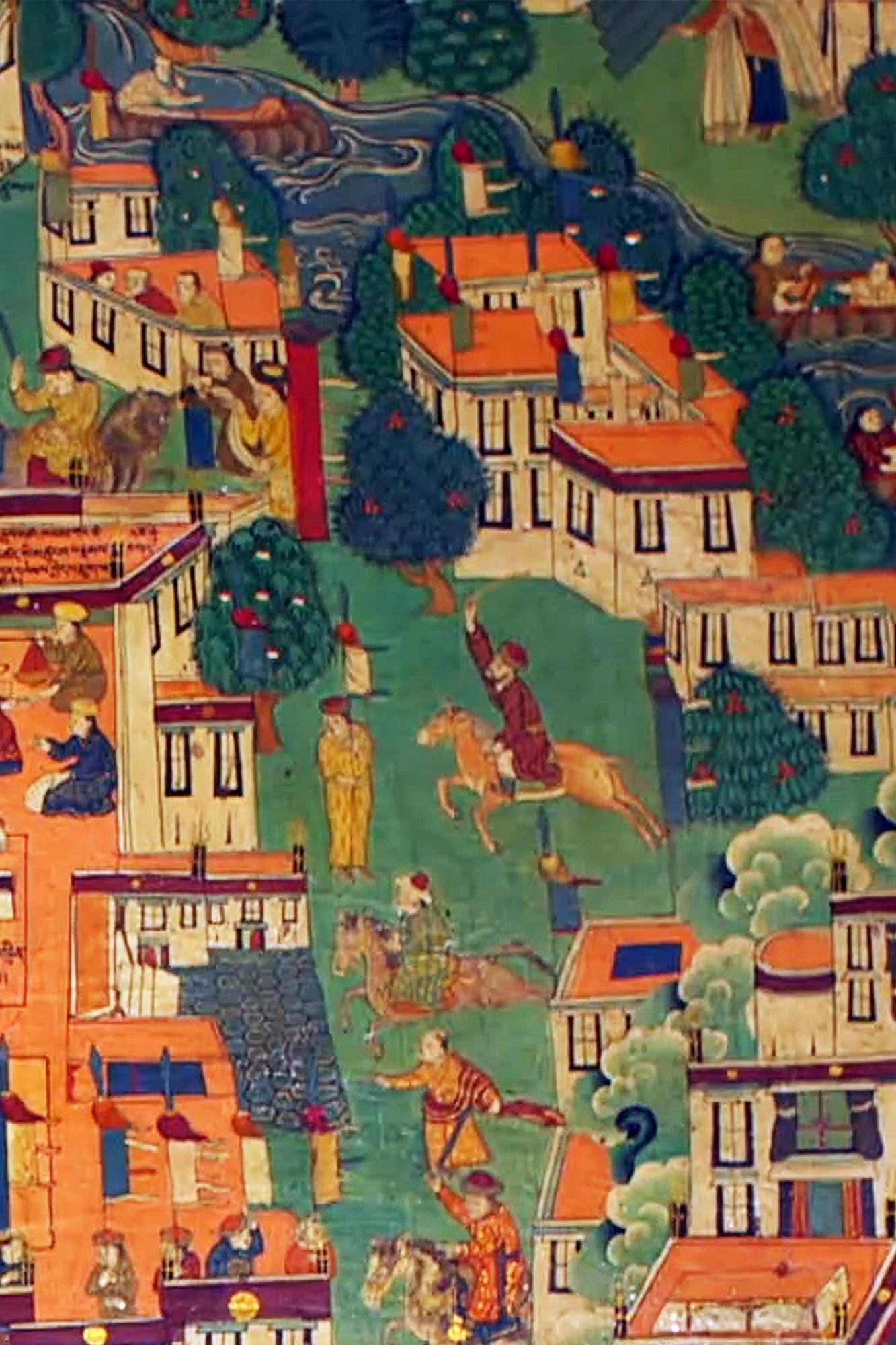 The mural serves as a rare historical record of the city’s 18th-century architecture and the chaotic events of the raid
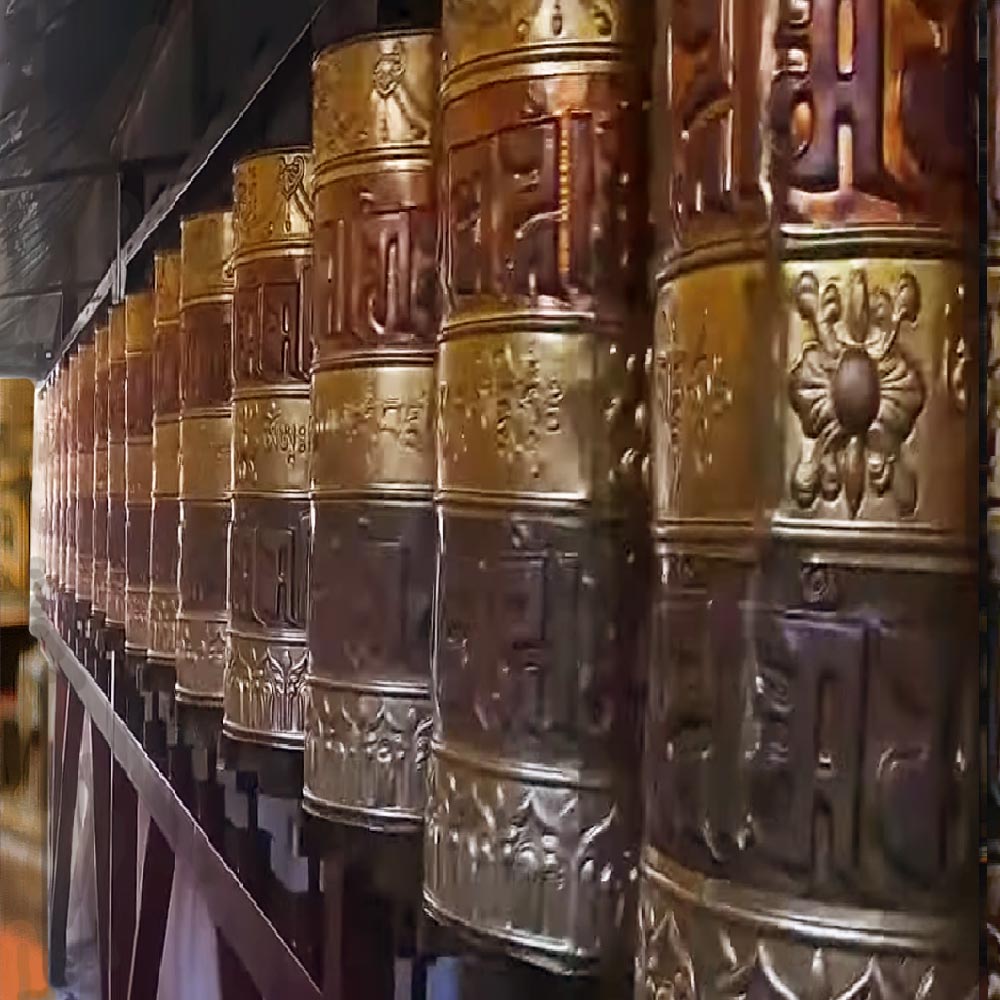
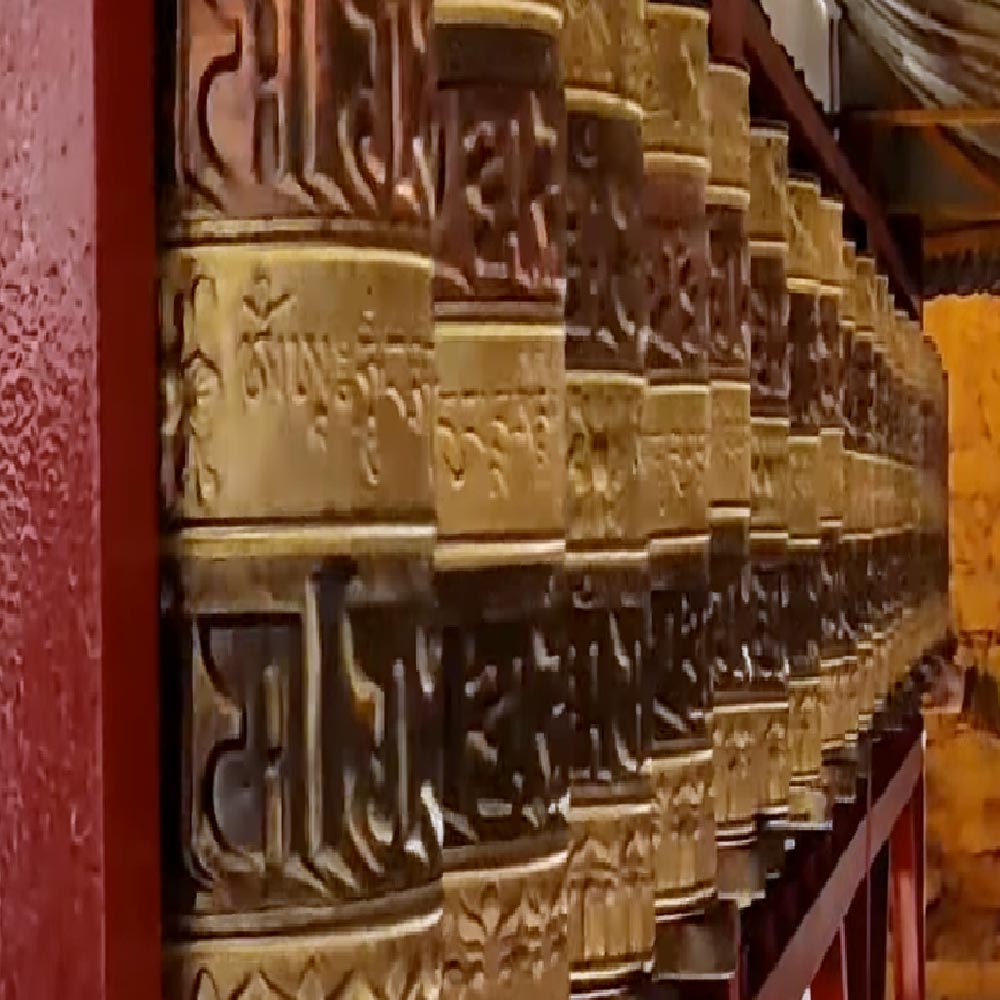
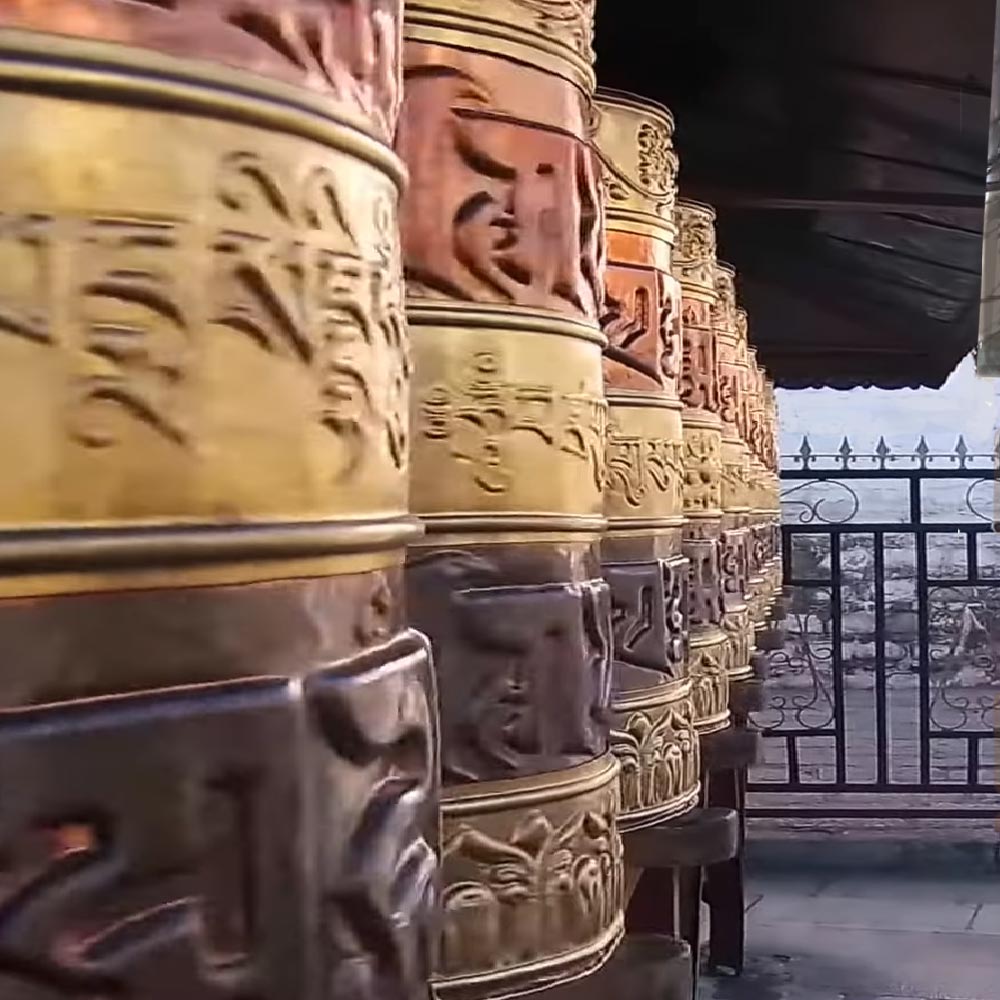 Prayer Wheels in Lhasa
THE TIBETAN HOLOCAUST
China, officially the People’s Republic of China (PRC), is East Asia’s largest country and the world’s second most populous, with more
than 1.4 billion people. Its territory spans five time zones and borders fourteen countries. After the Chinese Civil War, Mao Zedong’s Communist forces defeated
Chiang Kai shek’s Kuomintang (KMT). On October 1, 1949, Mao declared the founding of the PRC, while Chiang and the Nationalist government retreated to Taiwan,
where they continued to govern as the Republic of China. Following the 1959 uprising, the 14th Dalai Lama fled to India and in 1960 established the Tibetan
Government in Exile in Dharamsala, now the political and cultural center of the Tibetan diaspora. Some scholars describe China’s governance of Tibet
through frameworks such as settler colonialism, cultural assimilation, or internal colonialism, reflecting concerns about the impact of state policies on
Tibetan identity, language, and religious life. The Central Tibetan Administration (CTA) argues that these policies have contributed to a profound erosion
of Tibetan culture, which it characterizes as “cultural genocide.”
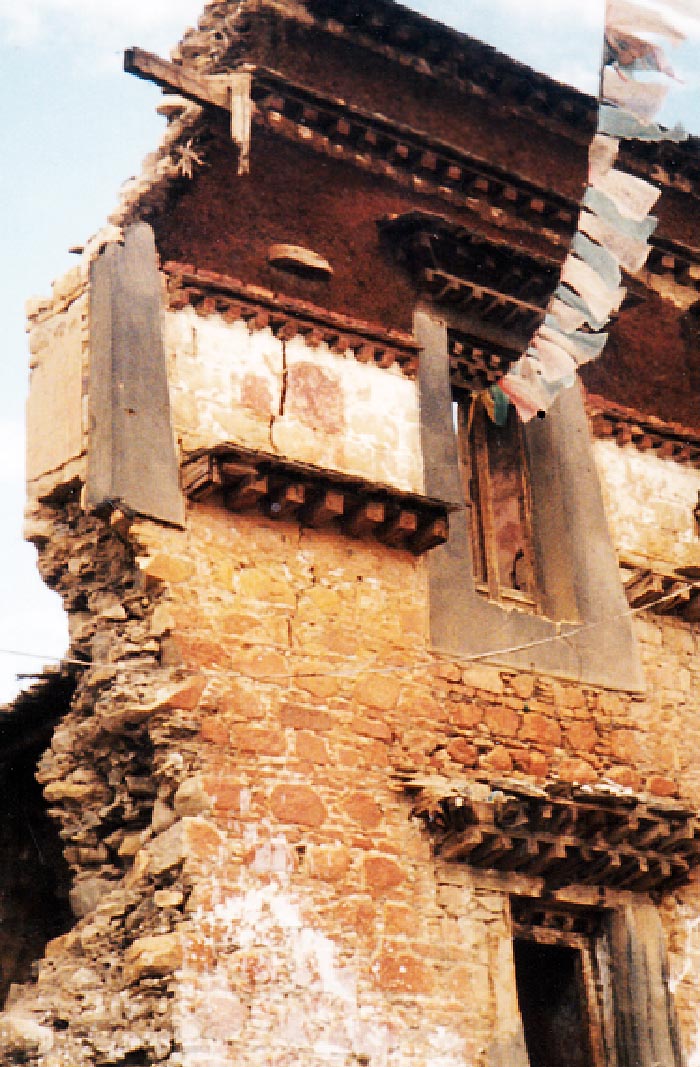
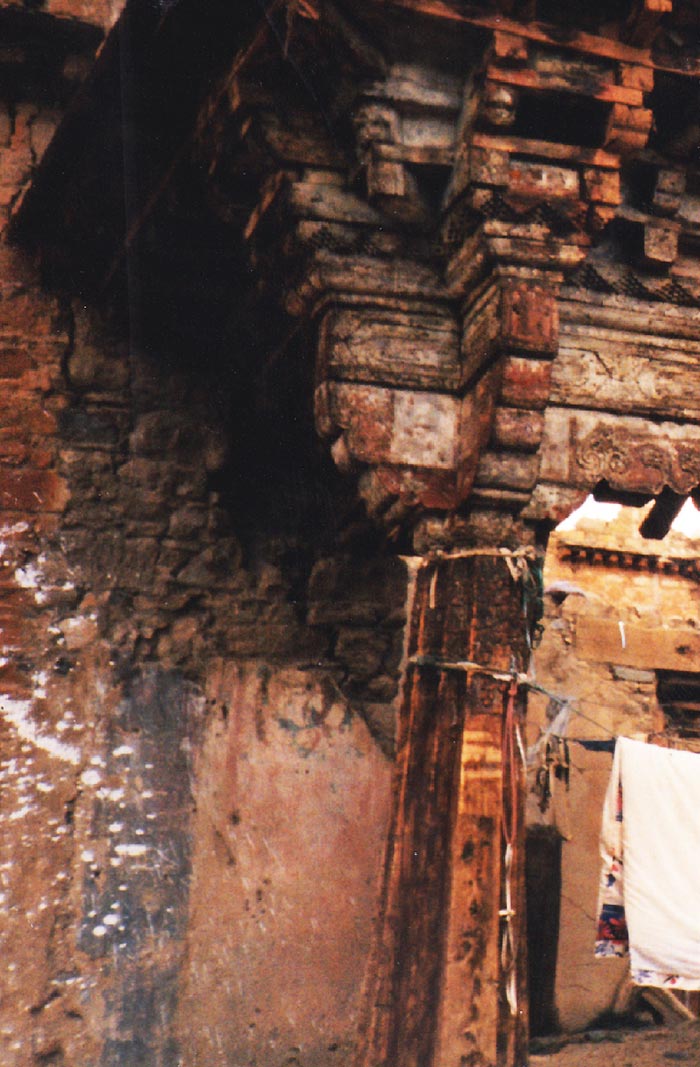 Between 1959 and 1976 all but a dozen of the
approximately 6,000 monasteries, temples and shrines in Tibet were physically destroyed by the Chinese Cultural Revolution, often by dynamiting the
ceilings
Between 1959 and 1976 all but a dozen of the
approximately 6,000 monasteries, temples and shrines in Tibet were physically destroyed by the Chinese Cultural Revolution, often by dynamiting the
ceilings
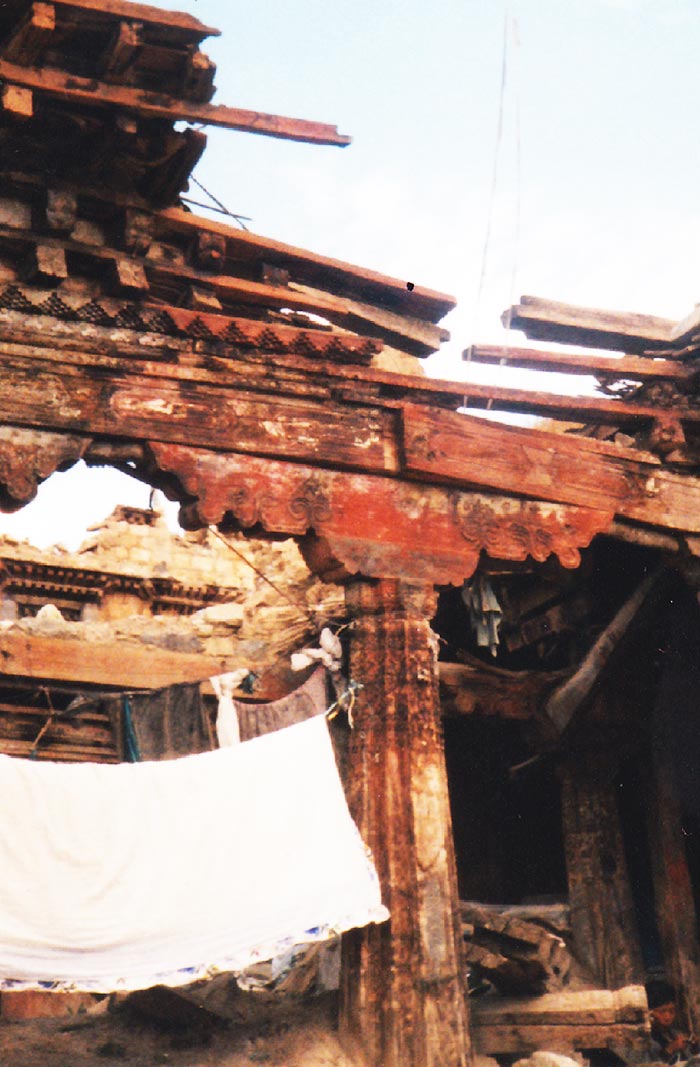 The Chinese Communist Party, was initiated by Mao and
from 1962 to 1976 during the Cultural Revolution thousands of monks and nuns were forced to leave and "live a normal life", those who resisted were
imprisoned or killed
The Chinese Communist Party, was initiated by Mao and
from 1962 to 1976 during the Cultural Revolution thousands of monks and nuns were forced to leave and "live a normal life", those who resisted were
imprisoned or killed
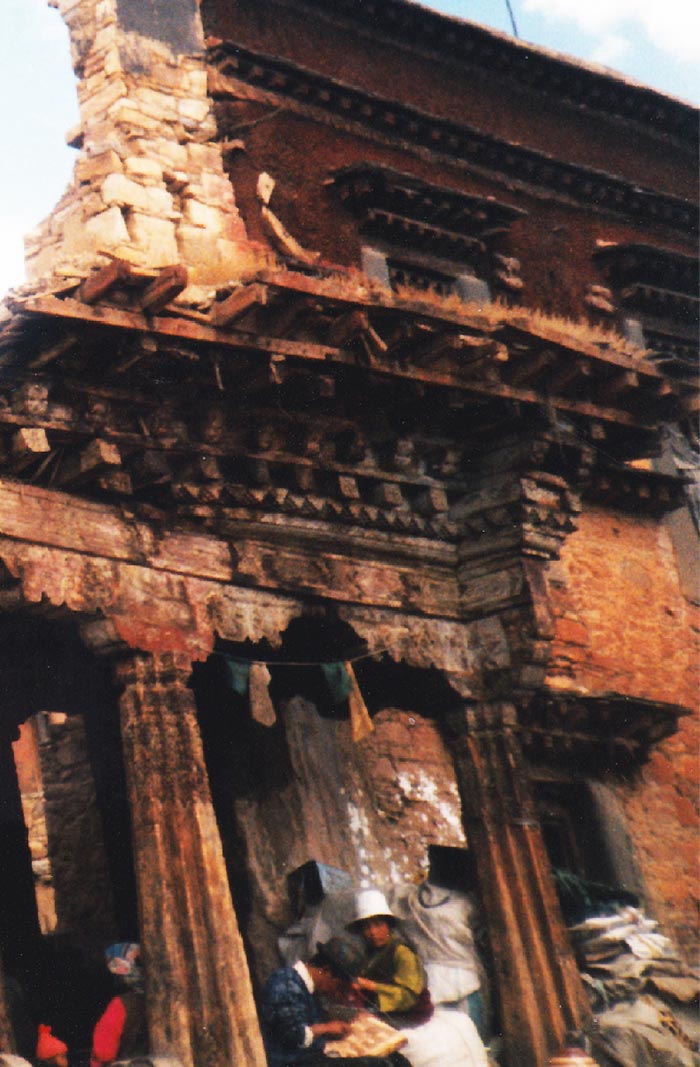 The Cultural Revolution in China during the 1960's
was characterized by violence and chaos, it is estimated that there was 15 million Tibetian murders
The Cultural Revolution in China during the 1960's
was characterized by violence and chaos, it is estimated that there was 15 million Tibetian murders
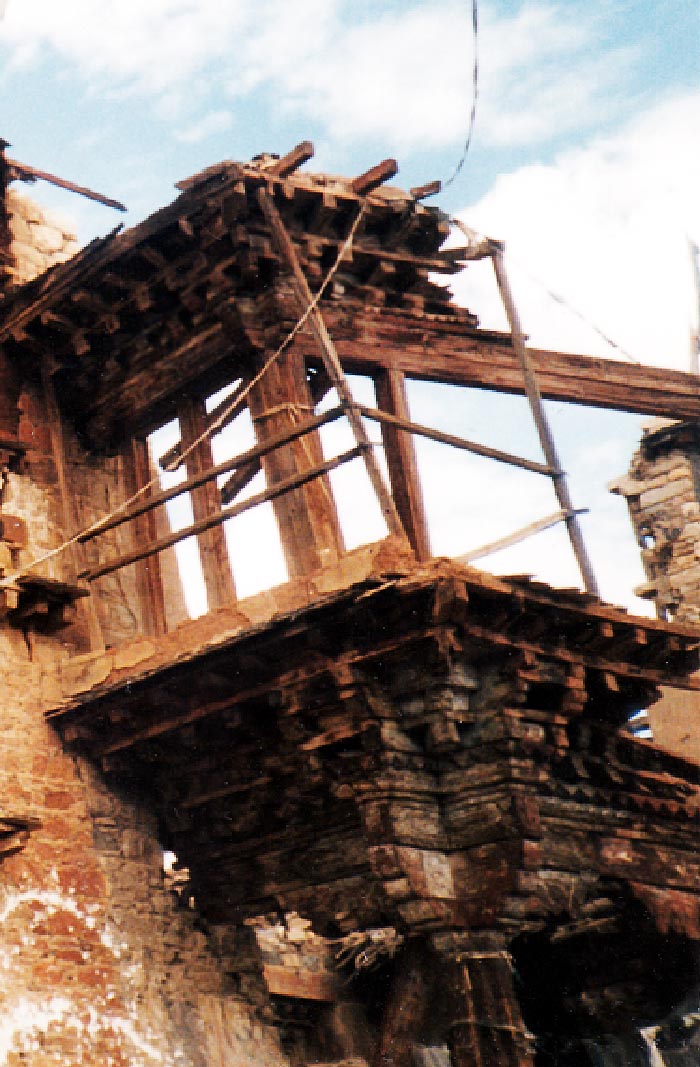
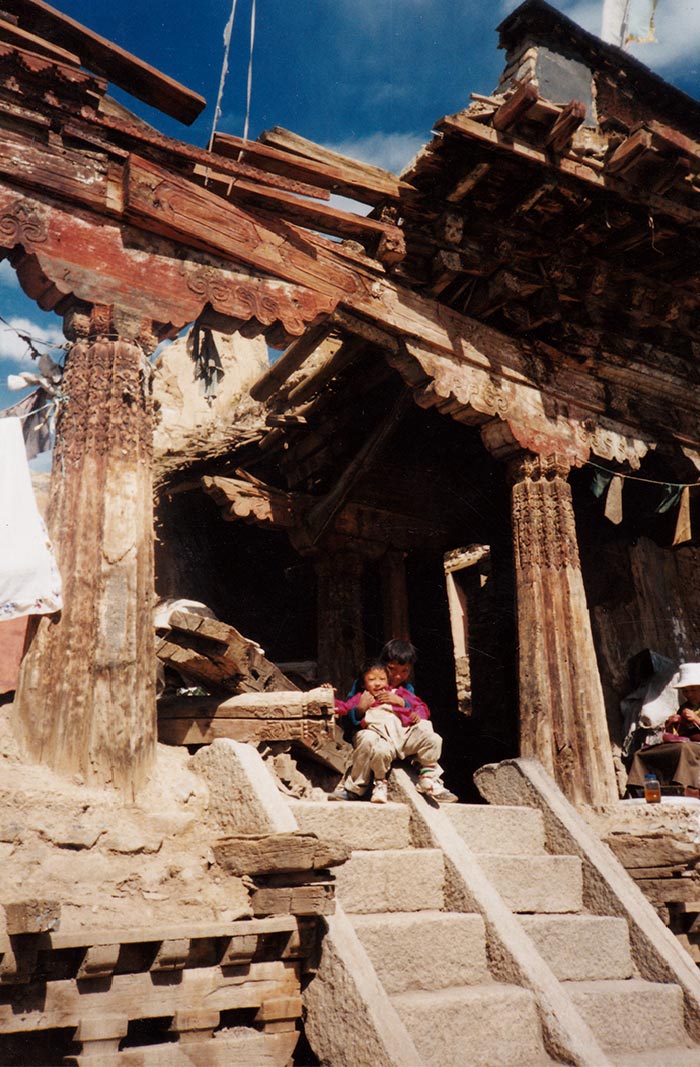 Ruins of a 12th century Tibetan Temple with only a
part of a support column left after the Chinese Communist Party dynamited the ceilings
Ruins of a 12th century Tibetan Temple with only a
part of a support column left after the Chinese Communist Party dynamited the ceilings
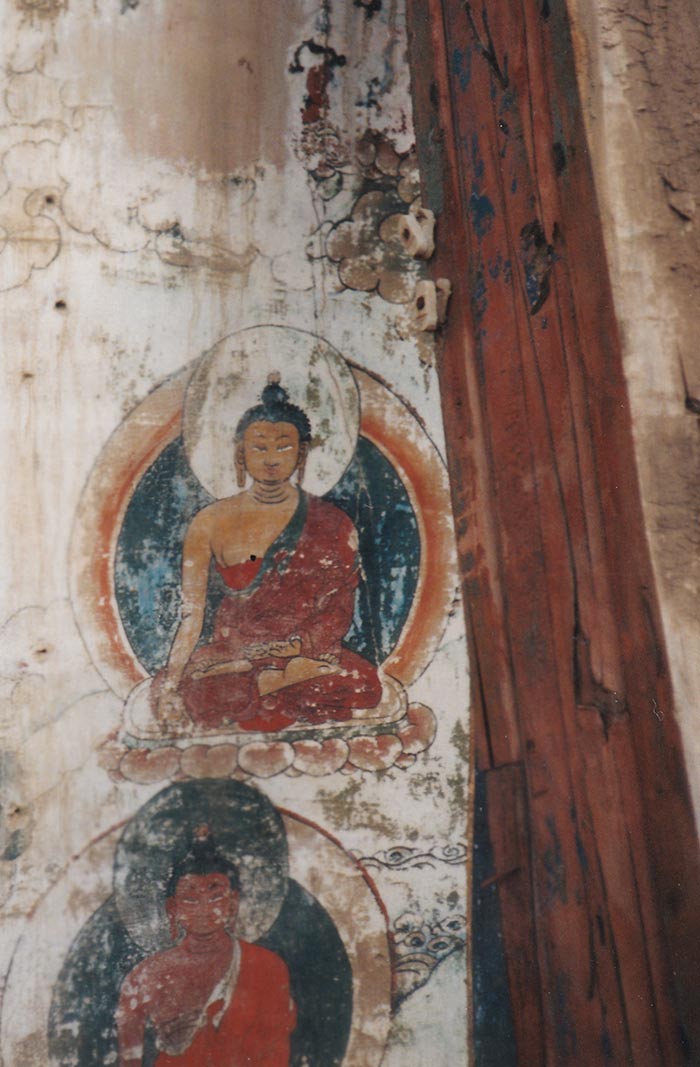 Ruins of a 12th century Fresco depecting Buddha's
teachings on a wall of a Tibetan Temple after the Chinese Communist Party dynamited the ceilings
Ruins of a 12th century Fresco depecting Buddha's
teachings on a wall of a Tibetan Temple after the Chinese Communist Party dynamited the ceilings
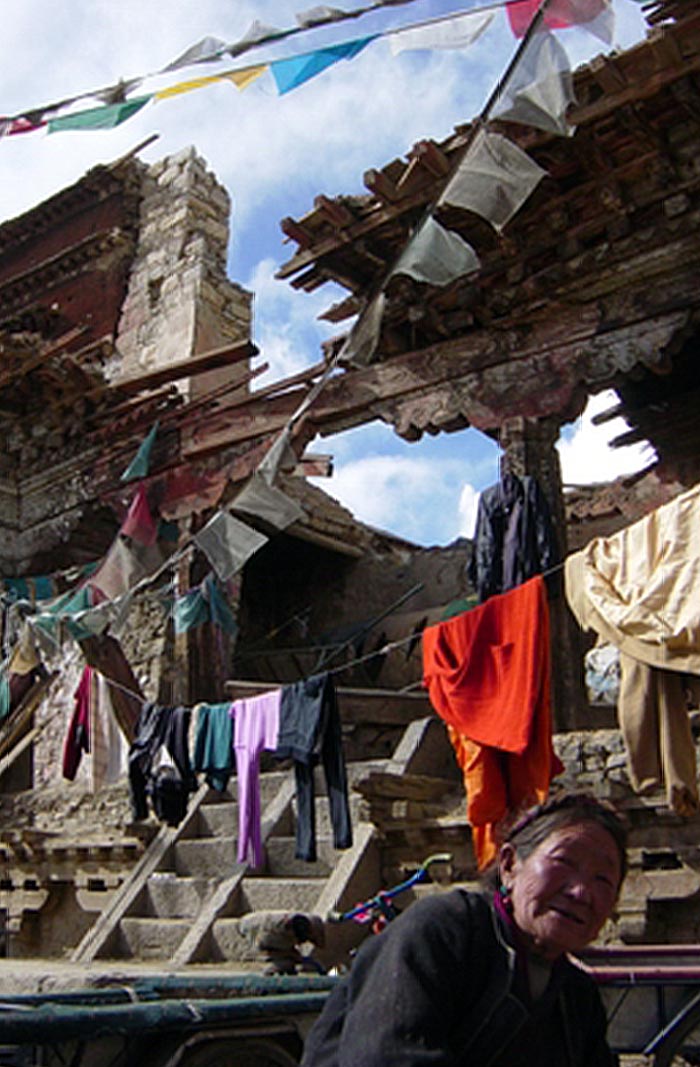 Ruins of Shideling Monastery, The monastery was originally founded in the 9th century
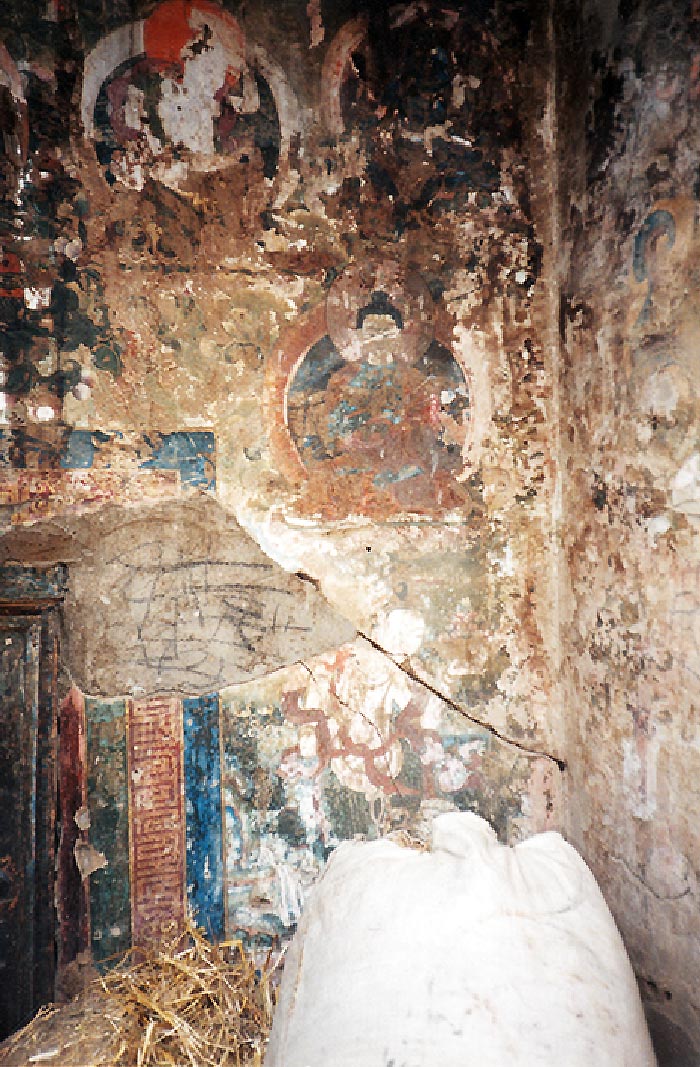 Severely damaged Buddhist murals have been discovered in historic sites like the Ajanta Caves in India, which contain Buddhist art dating from the 2nd century BCE to the 6th century CE.
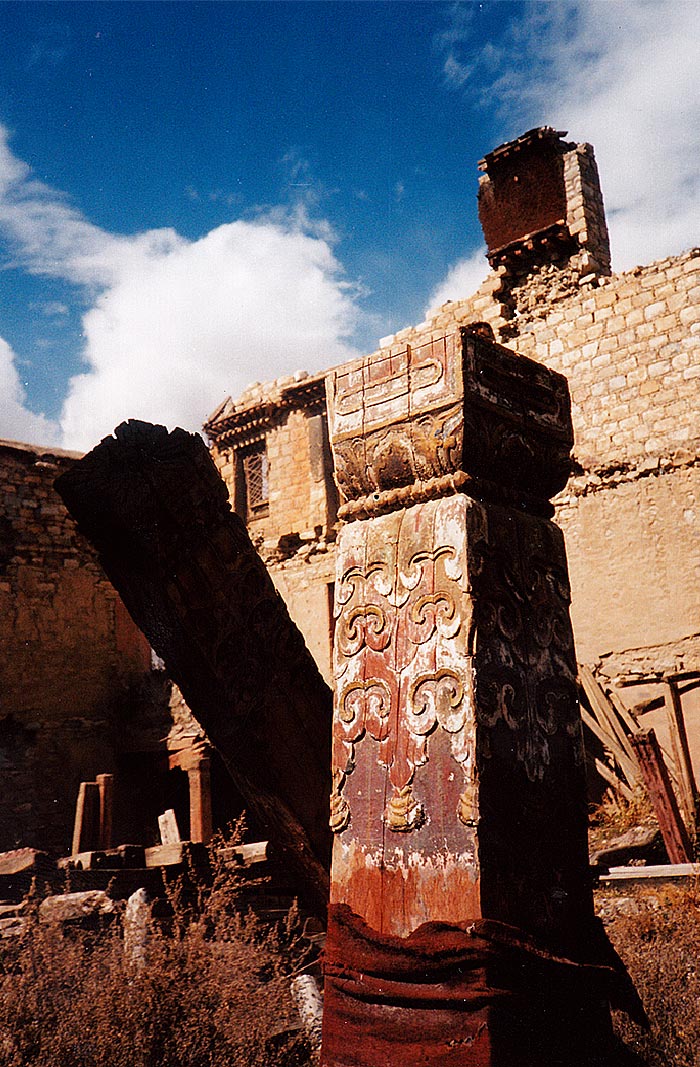 Ruins of a 12th century Tengyeling Monastery:
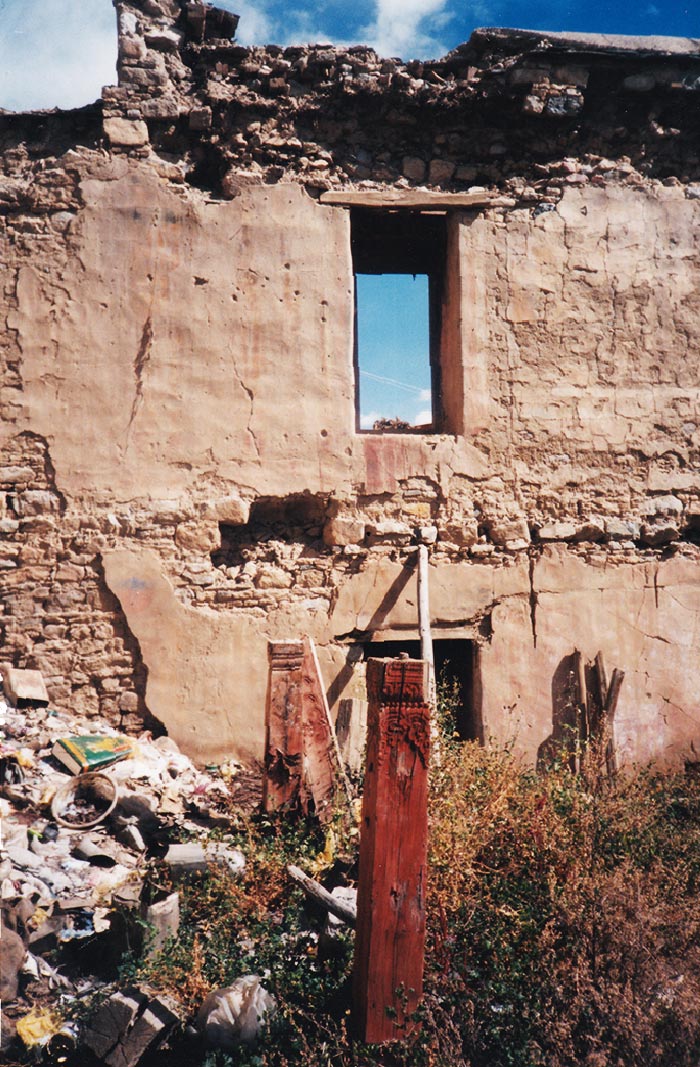 Ruins of a 12th century Tengyeling Monastery:
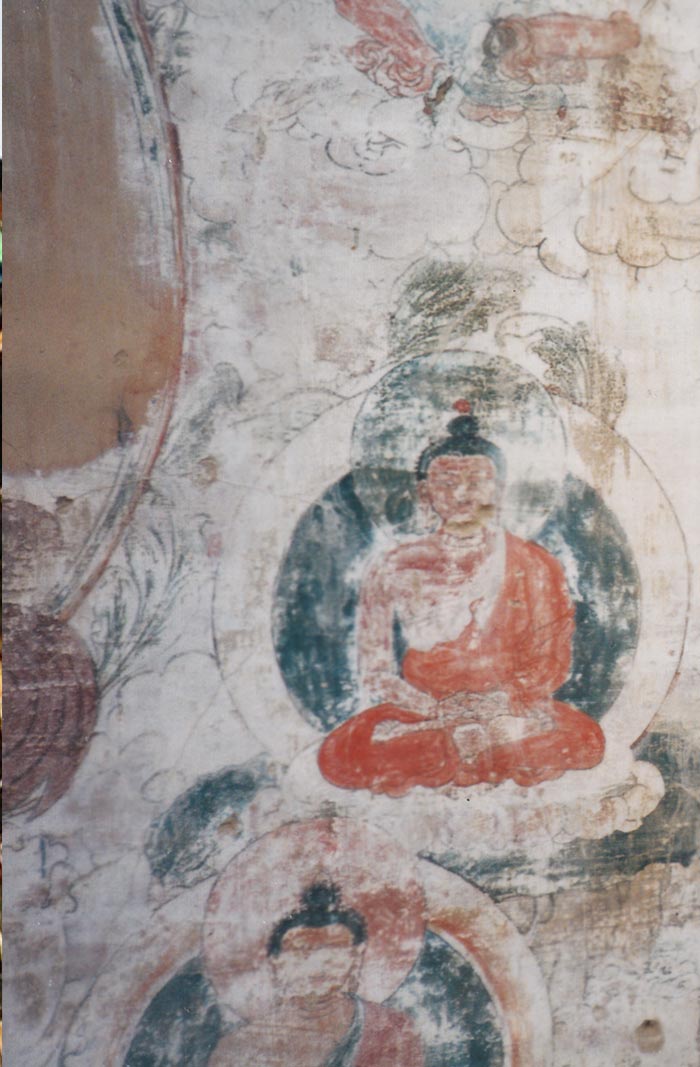 (Ruins of a 12th century Fresco painting depecting Buddha's life) About 94% of the Chinese population is ethnically Han. Tibetans although very small in numbers, present a threat to the homogeneous Chinese national identity
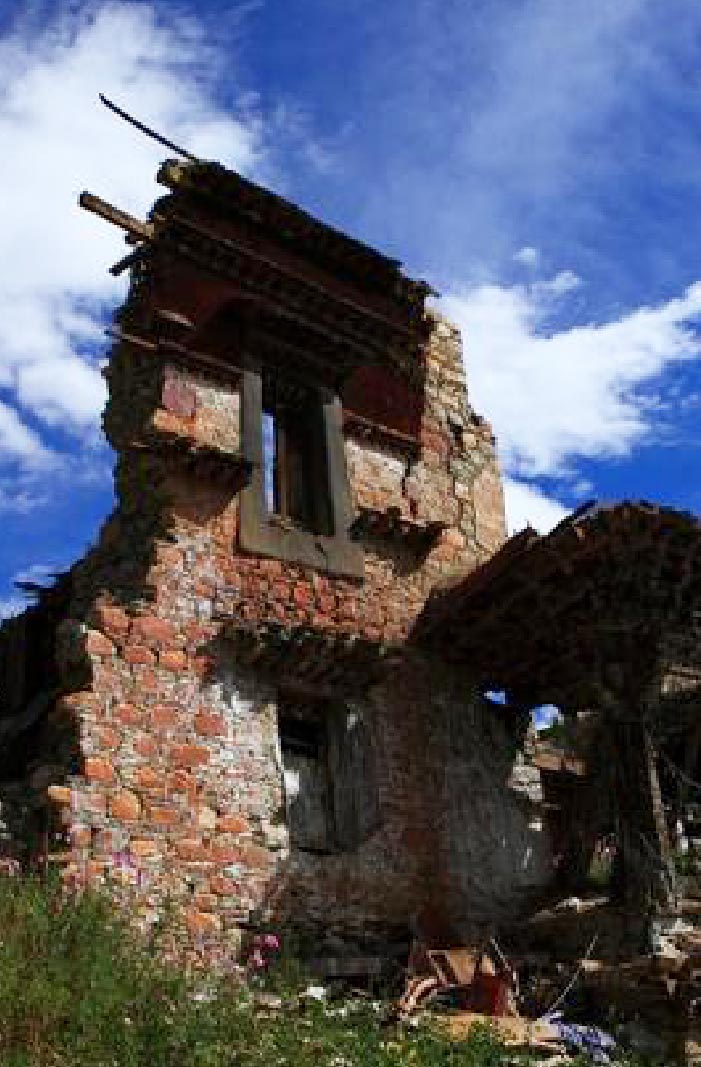 Ruins of the Xideling Temple, founded in the 9th century, Lhasa
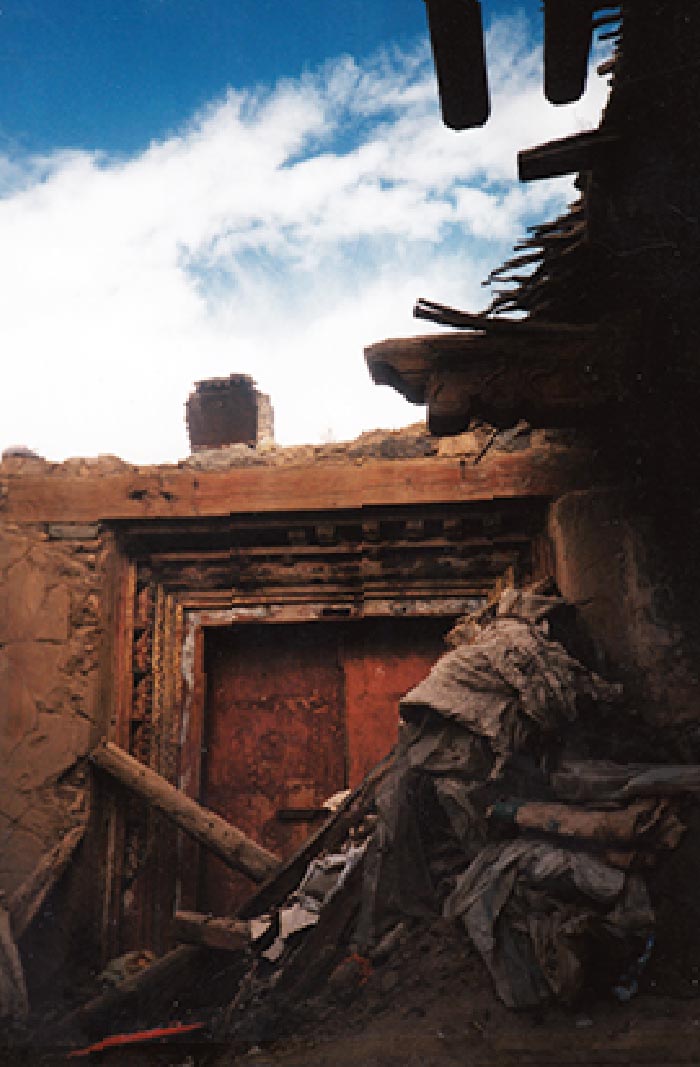 Shalu Monastery, an ancient Tibetan Buddhist monastic complex located near Shigatse in Tibet.
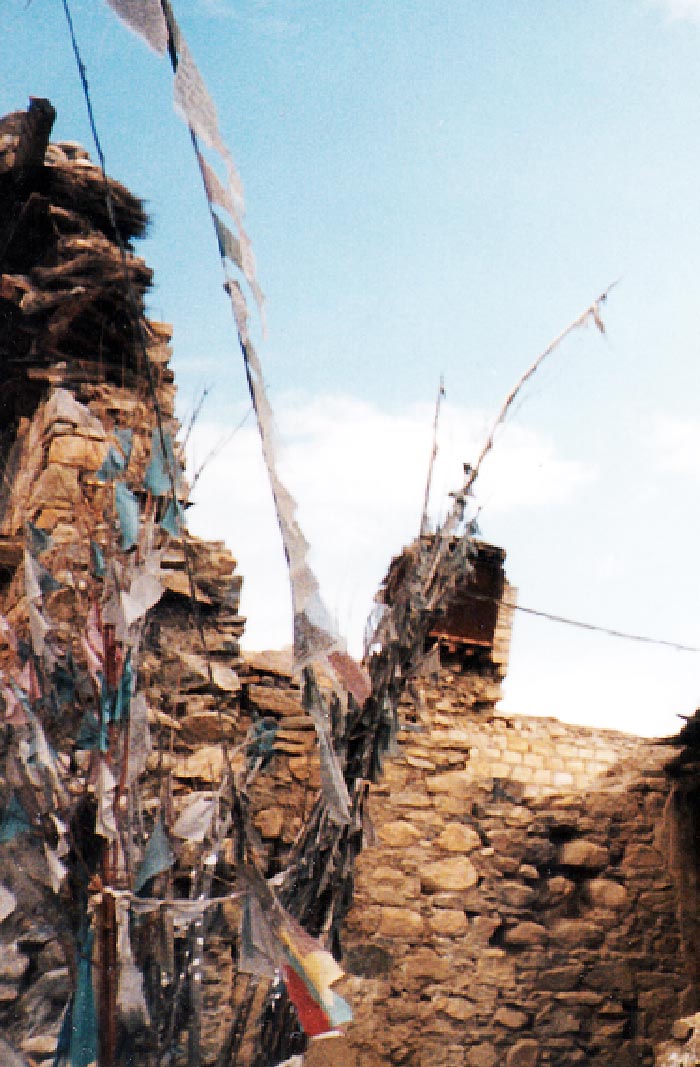 Historic Ruins of Shide Dratsang monastery, Lhasa, originally founded in the 9th century, in 1966, The main temple structure was heavily vandalized and gutted at the start of the Cultural Revolution,
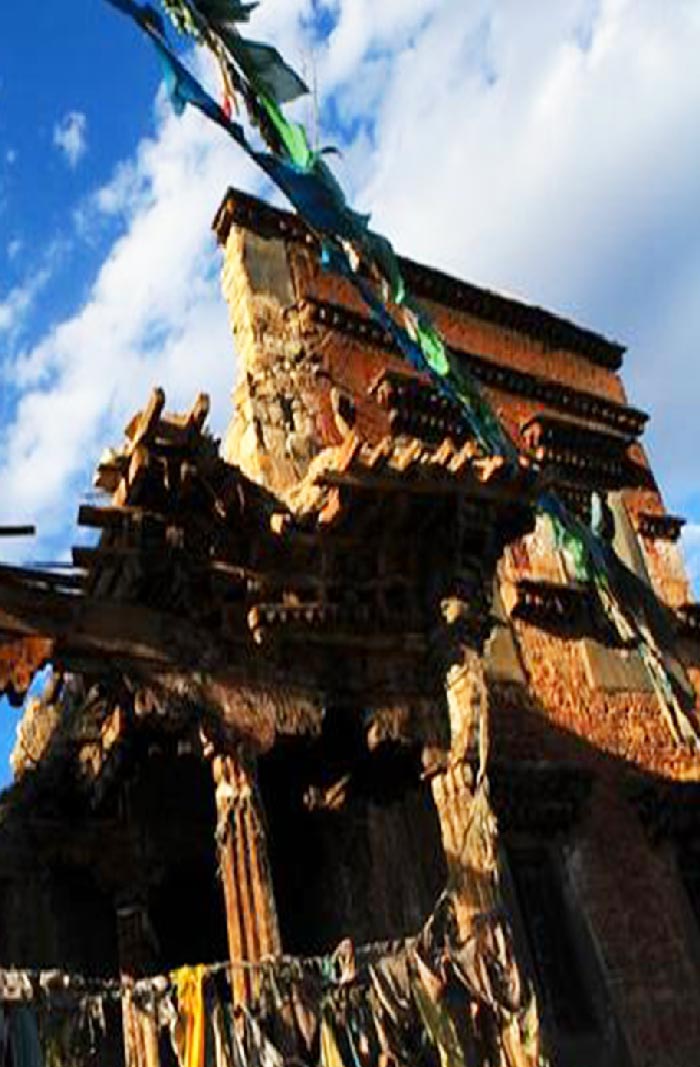 Historic ruins of Shideling Monastery, located in Lhasa, founded in the 9th century, severely damaged during the Cultural Revolution in the 1970s,
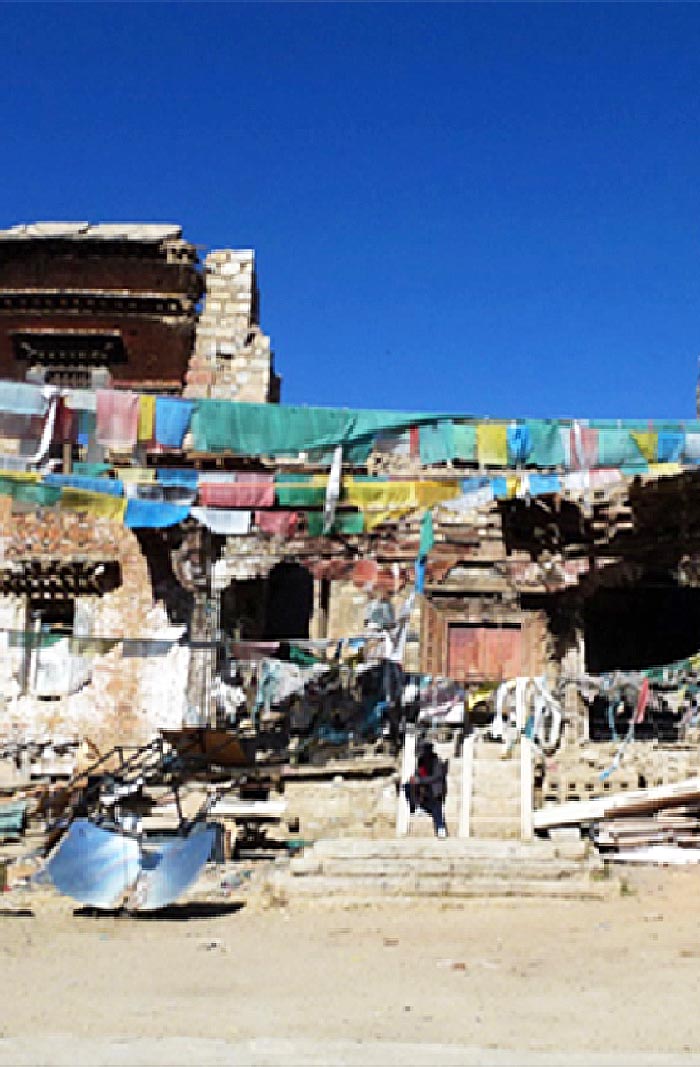 Historic ruins of Shideling Monastery,
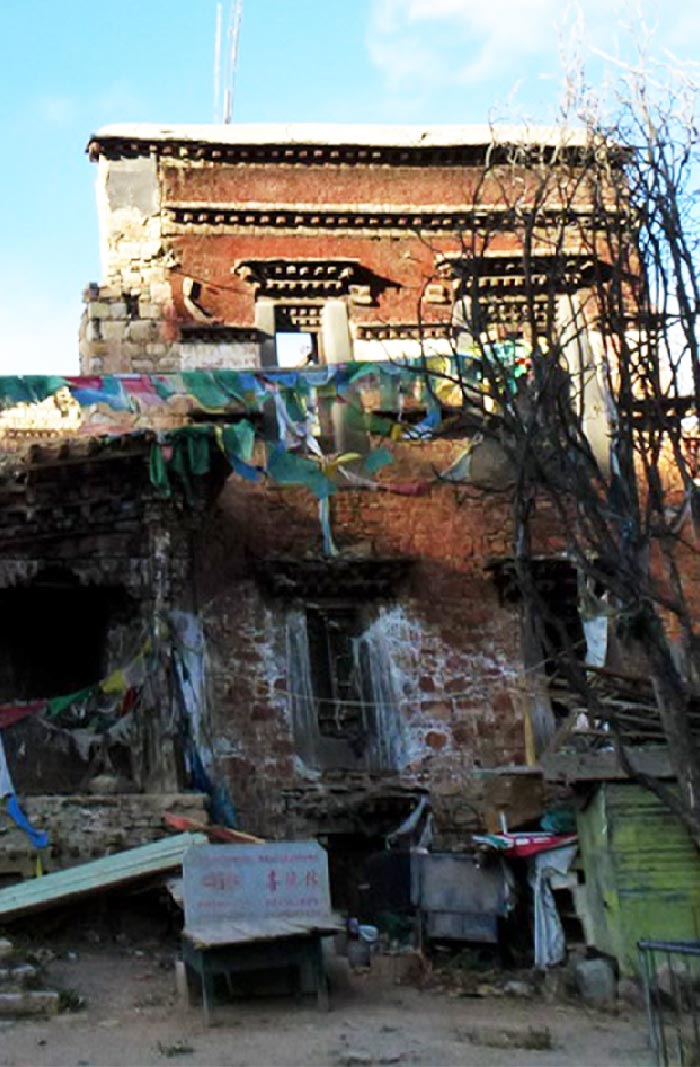 Historic ruins of Shideling Monastery,
Website & Content Created by Richard Brafford, © 2025, All Rights Reserved, Fair Use Disclaimer for Non-Commercial
Use for Educational & Entertainment Purposes Only Top
Top