Museum of Qin Terra-cotta Warriors and Horses, Xi'an, China
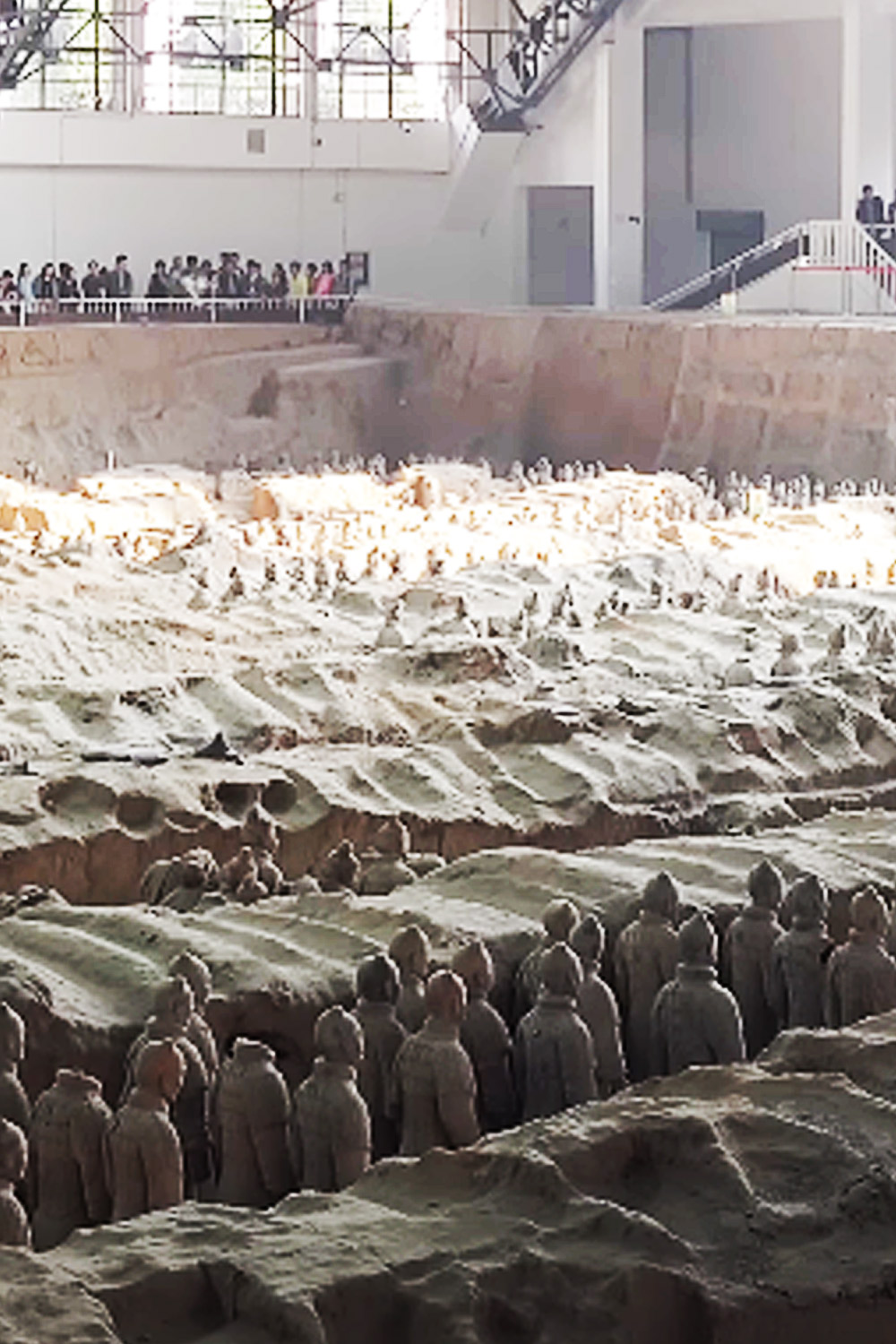
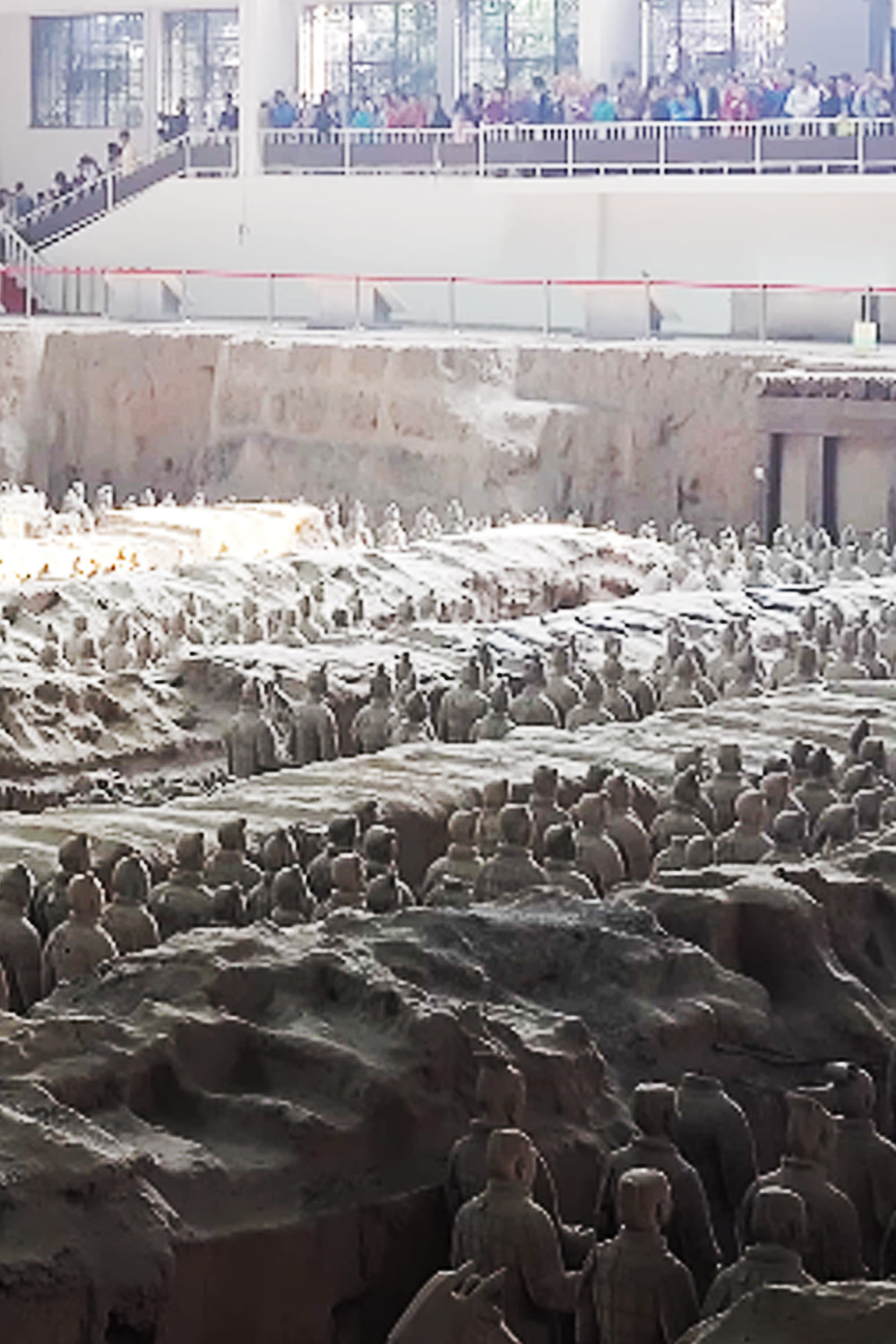
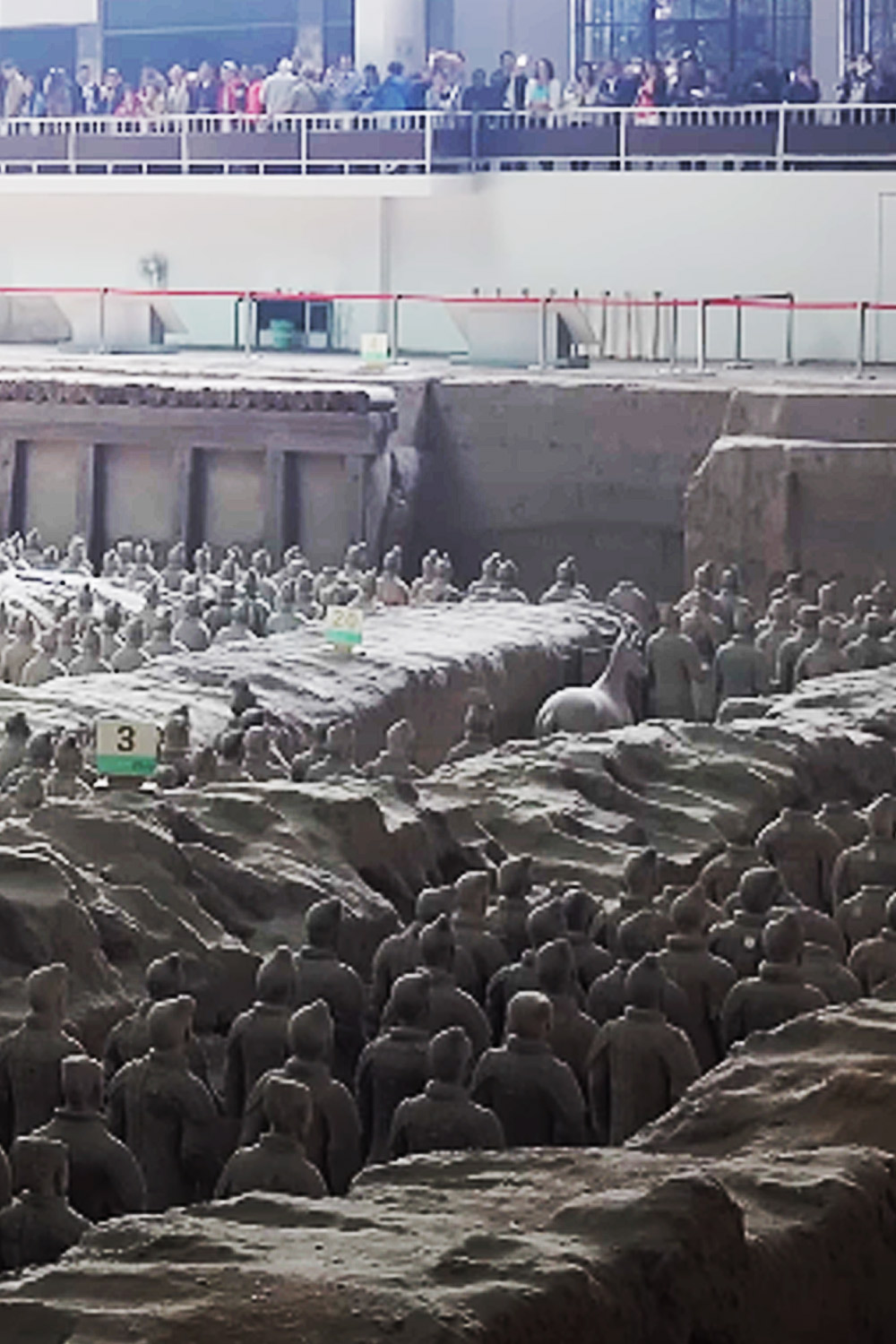
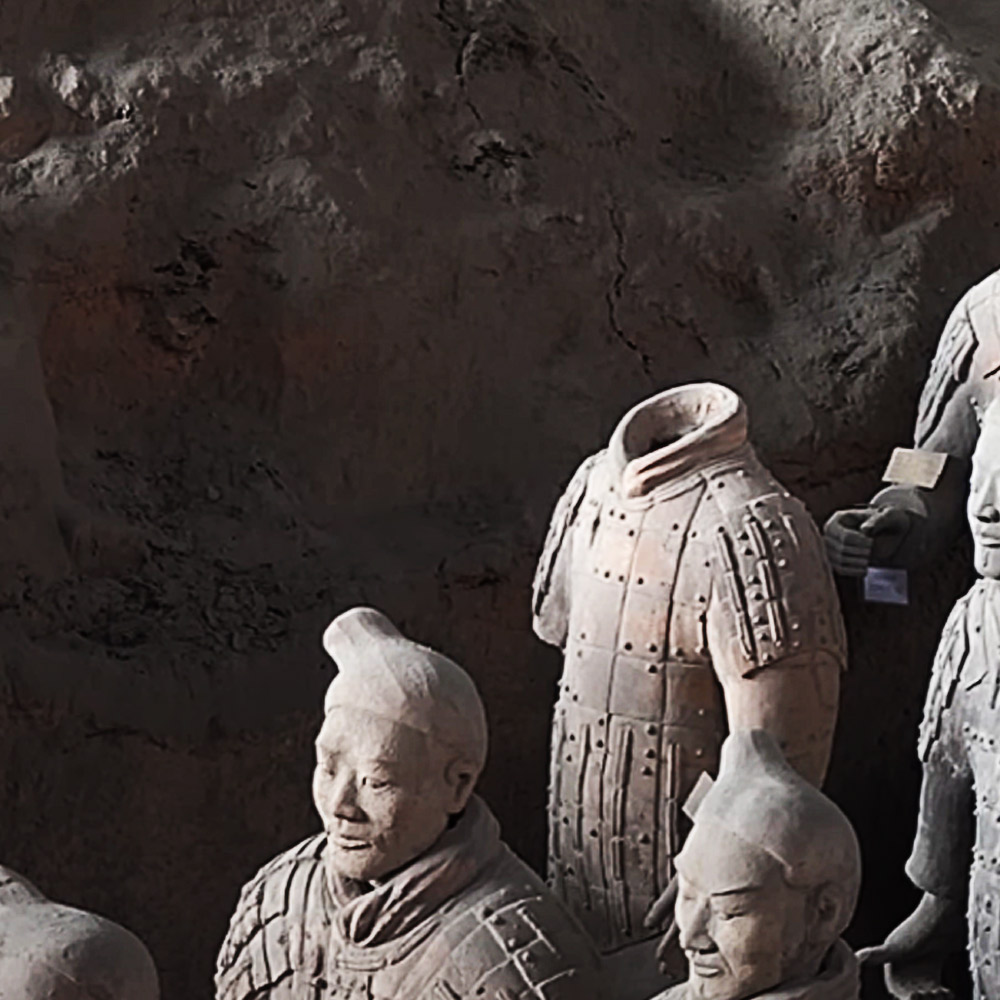
The Three Main Excavation Pits
The Terracotta Army is an extraordinary archaeological complex created around 210–209 BCE to accompany Qin Shi Huang, China’s first emperor, into the afterlife. Discovered
in 1974 by farmers digging a well near Xi’an, the site revealed thousands of life‑size clay soldiers arranged in precise military formation. Now recognized as one of the most
significant archaeological discoveries of the twentieth century, it became a UNESCO World Heritage Site in 1987. The figures are housed today in the Museum of Qin Terracotta
Warriors and Horses, where three main pits reveal different aspects of the emperor’s imagined afterlife army. Pit 1 contains the primary battle formation with thousands of
infantry and chariots. Pit 2 showcases specialized units such as archers, cavalry, and elite troops. Pit 3, the smallest, appears to function as a command headquarters,
housing officers and a ceremonial chariot. Together, the pits form a complete military system, reflecting the organizational brilliance and imperial ambition of the Qin state.
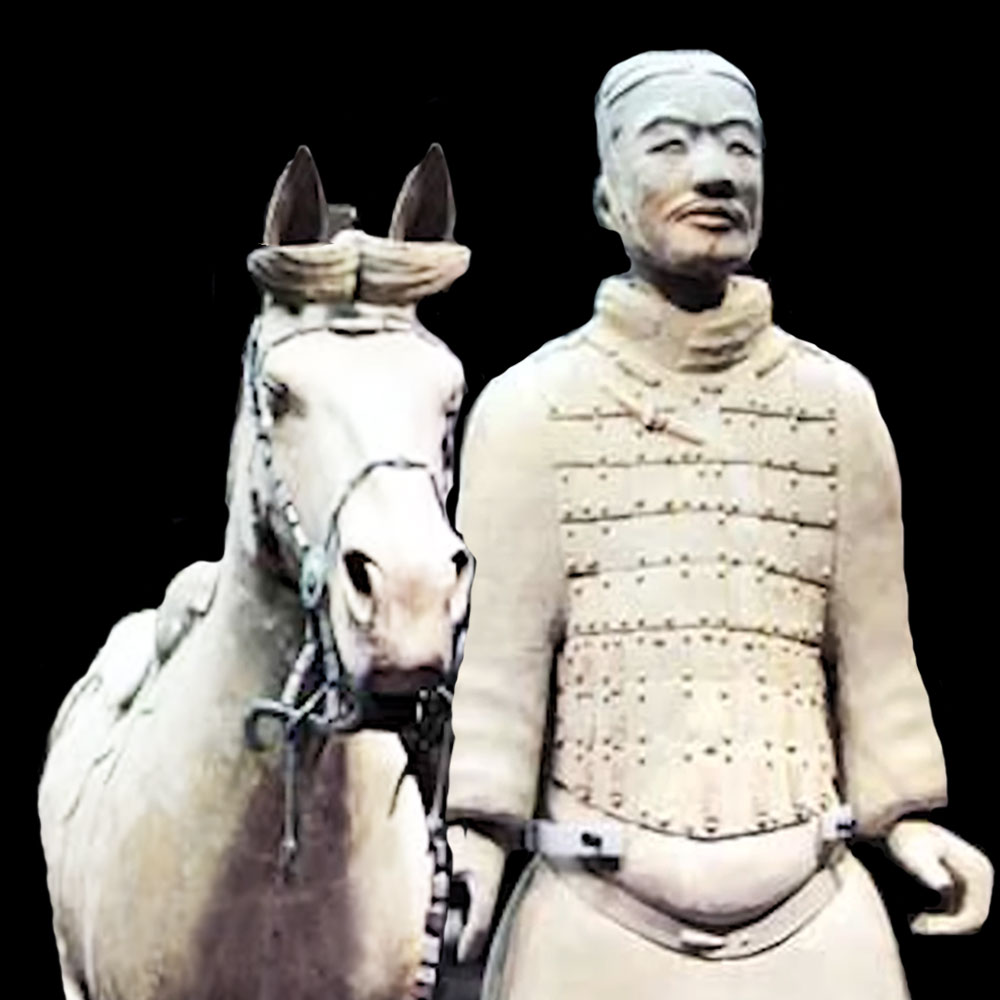
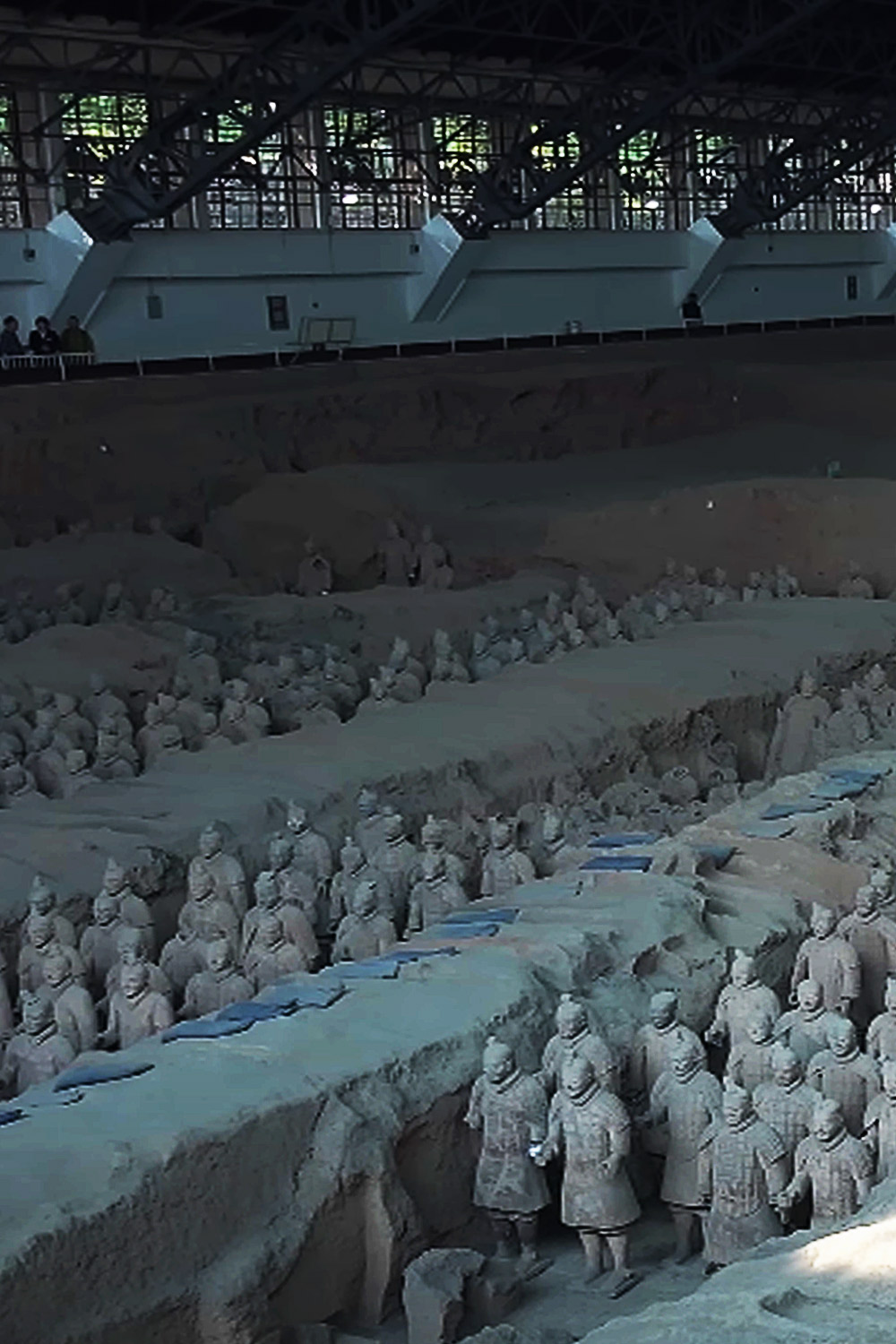 Cavalry figures in Pit 2 wear short
armors, long tight pants as well as jackboots, with a crossbow and a bridle on the hands respectively.
Cavalry figures in Pit 2 wear short
armors, long tight pants as well as jackboots, with a crossbow and a bridle on the hands respectively.
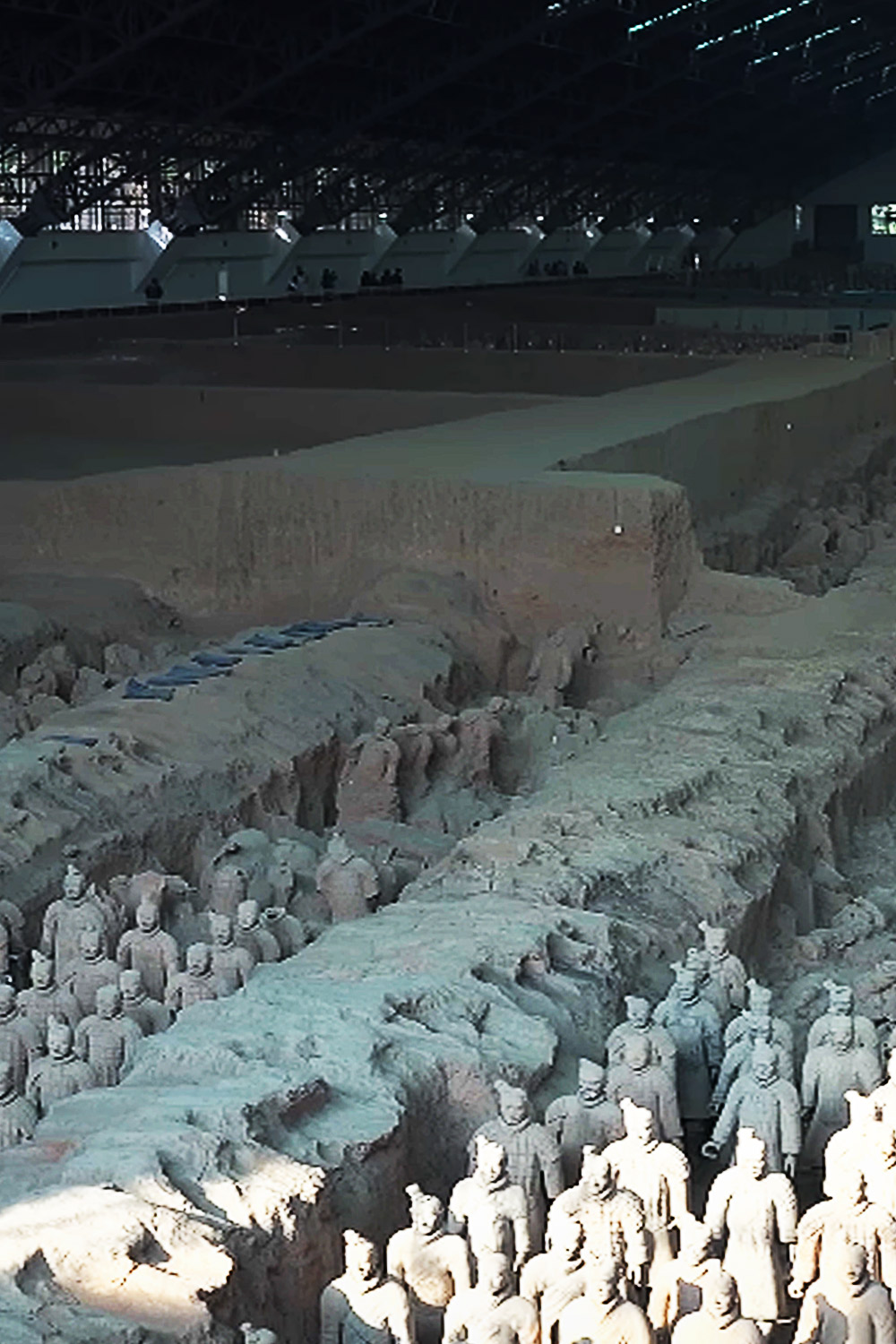 The Terracotta Army of the First of the
Emperor, Qin dynasty
The Terracotta Army of the First of the
Emperor, Qin dynasty
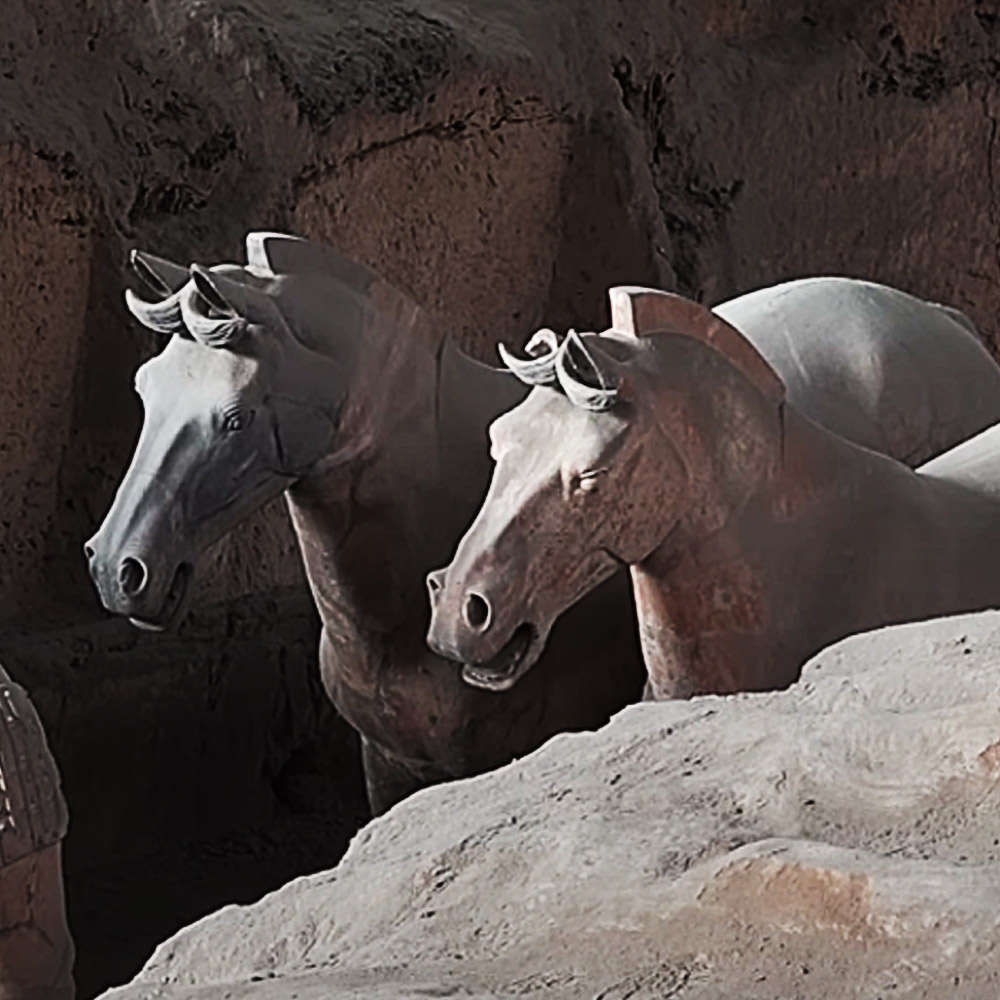
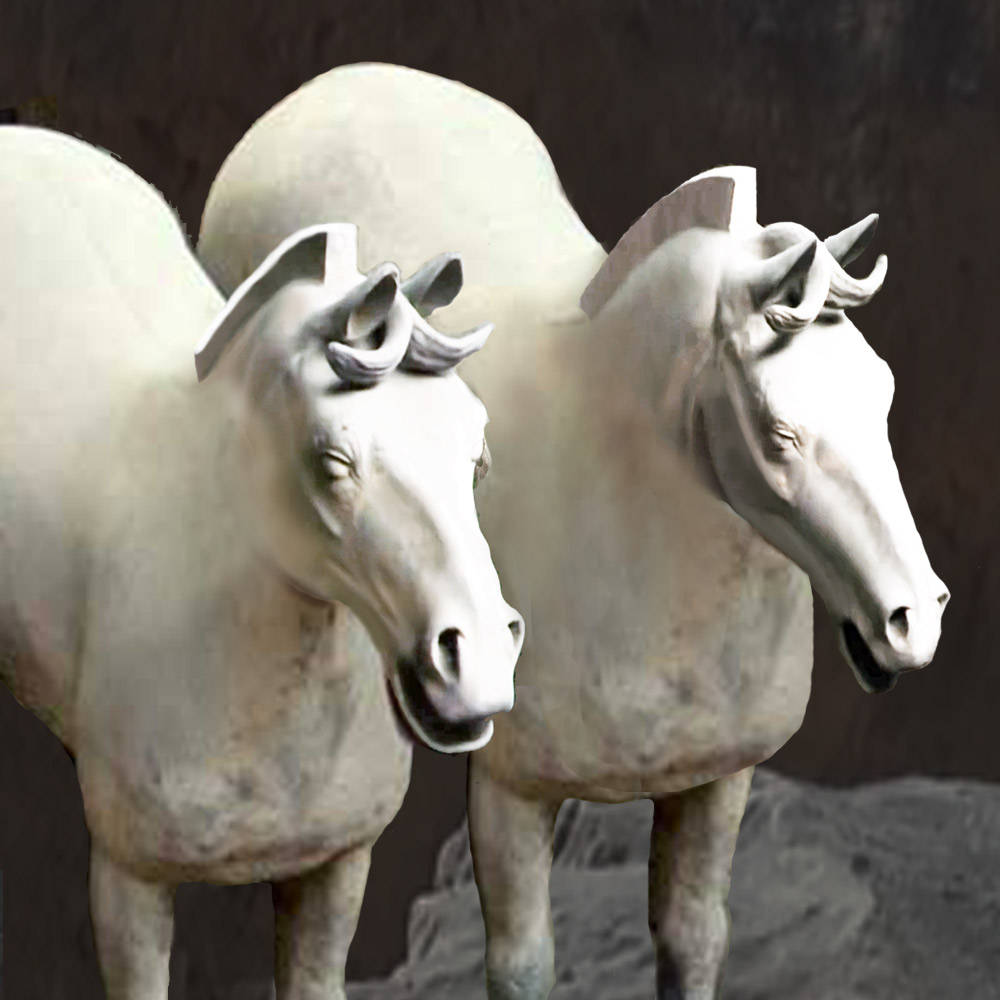
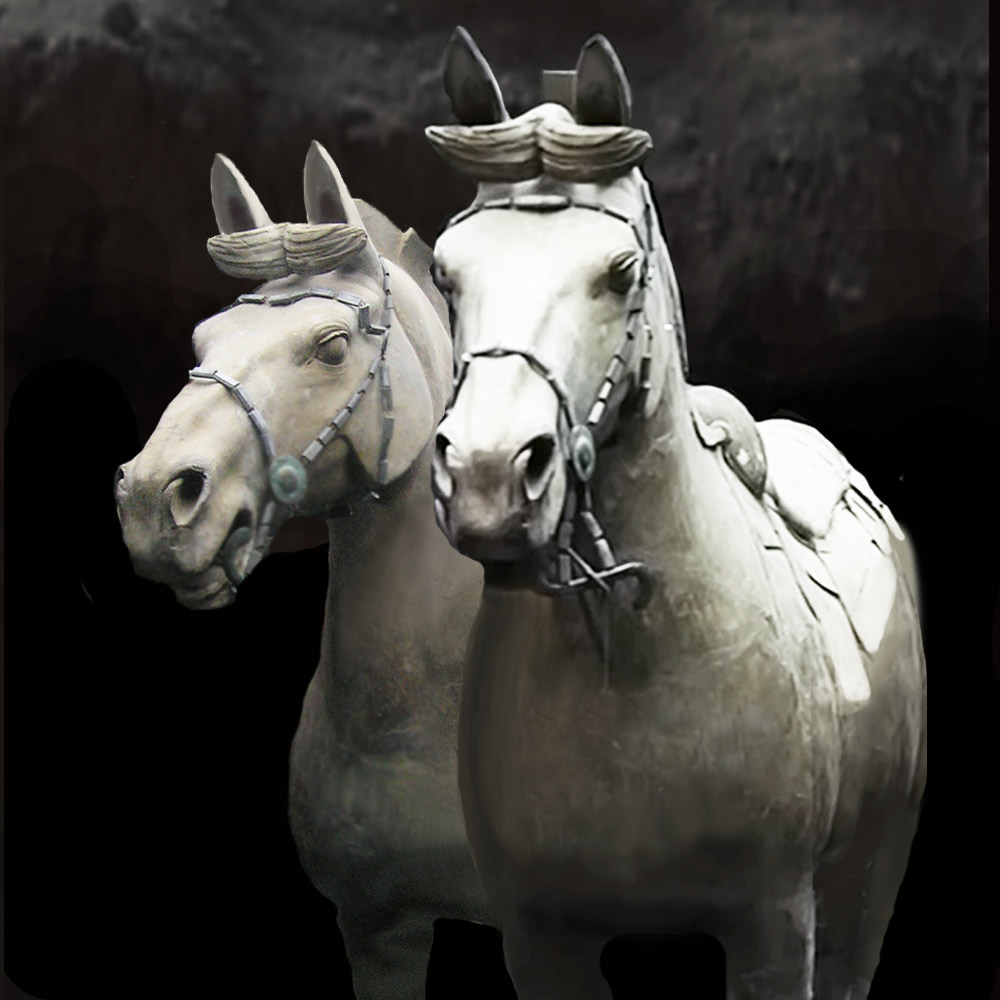
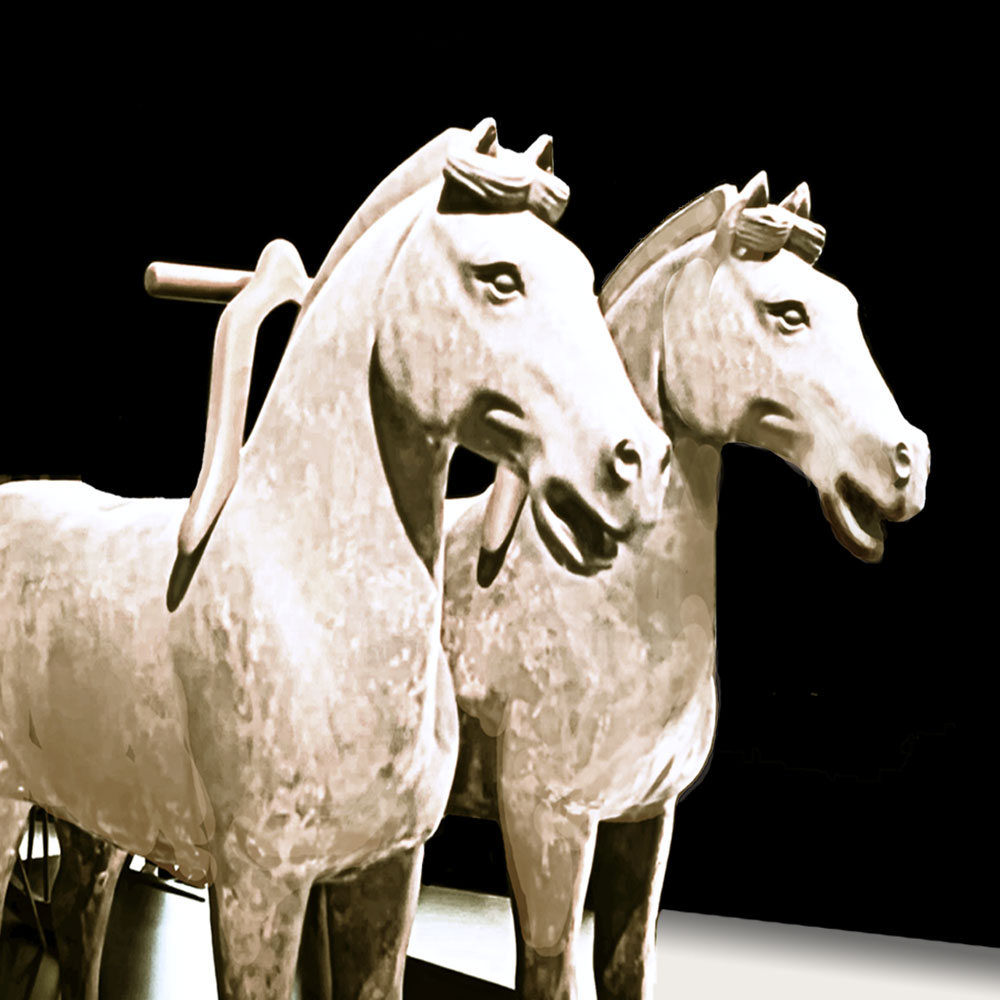
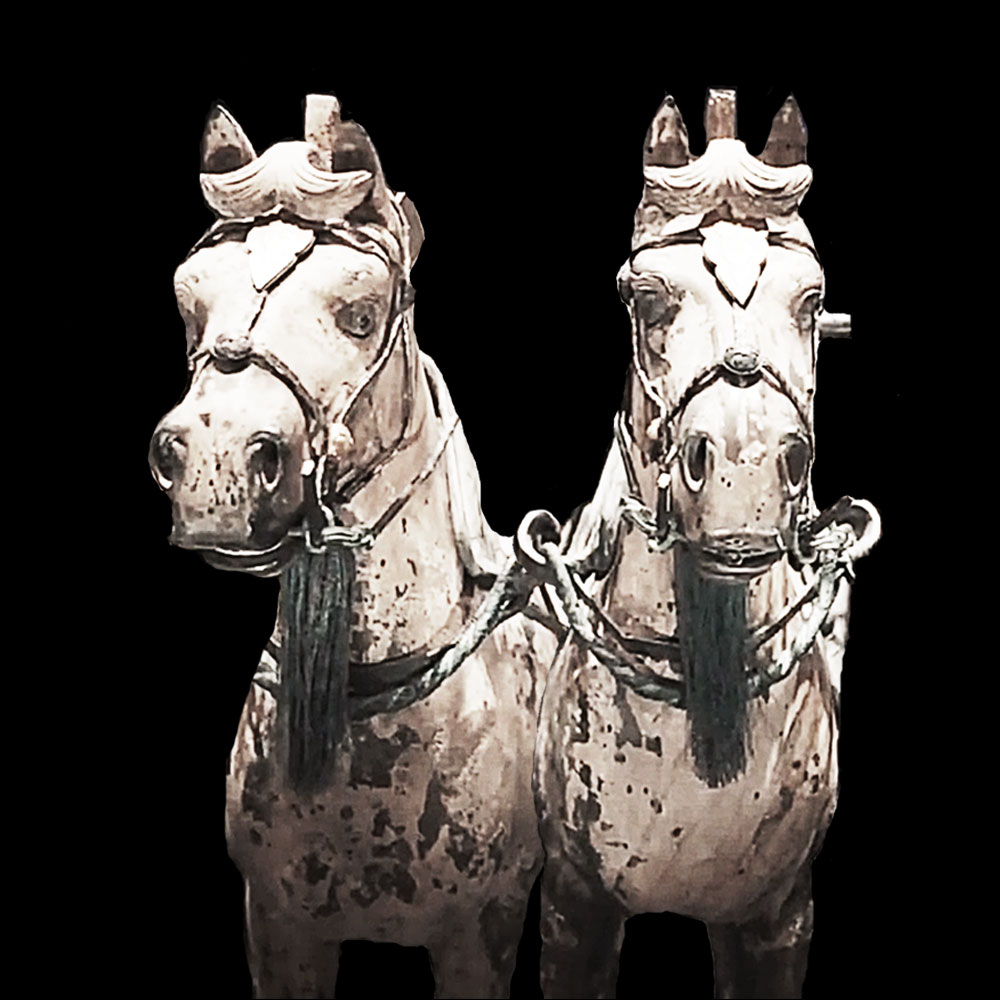
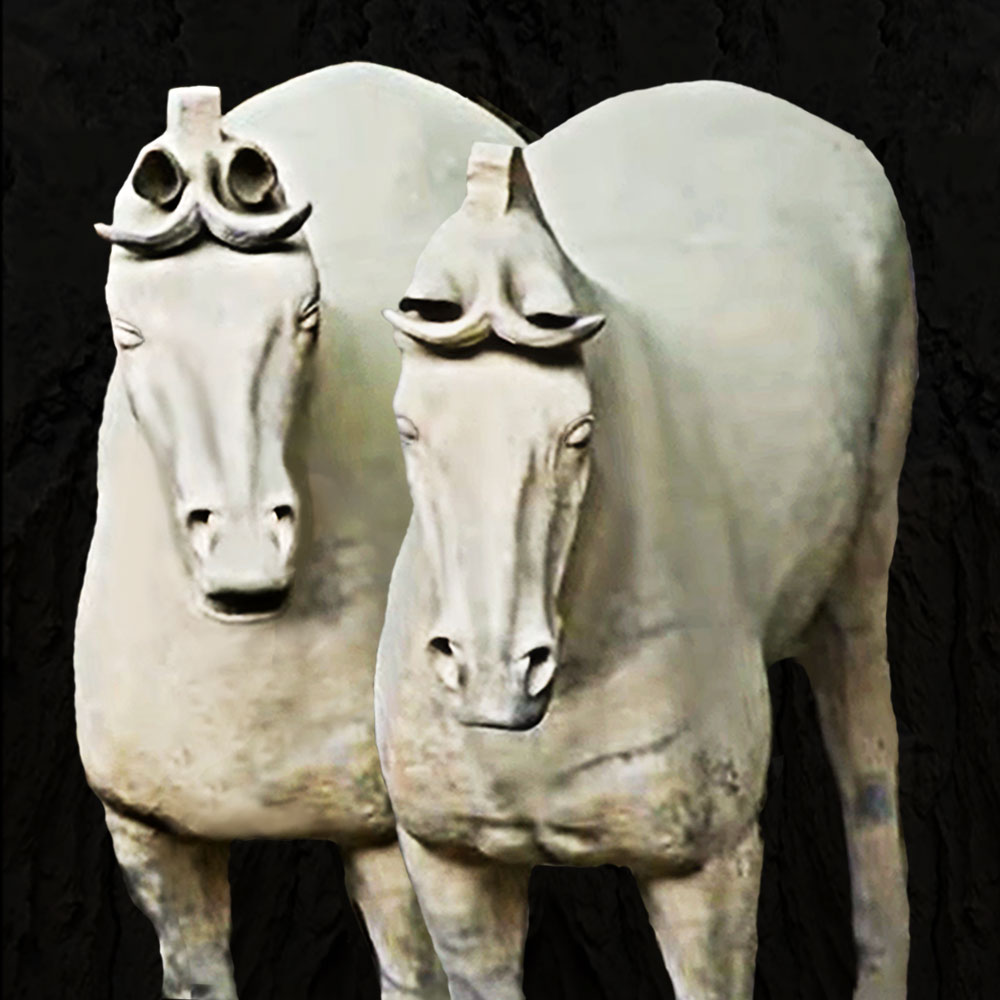
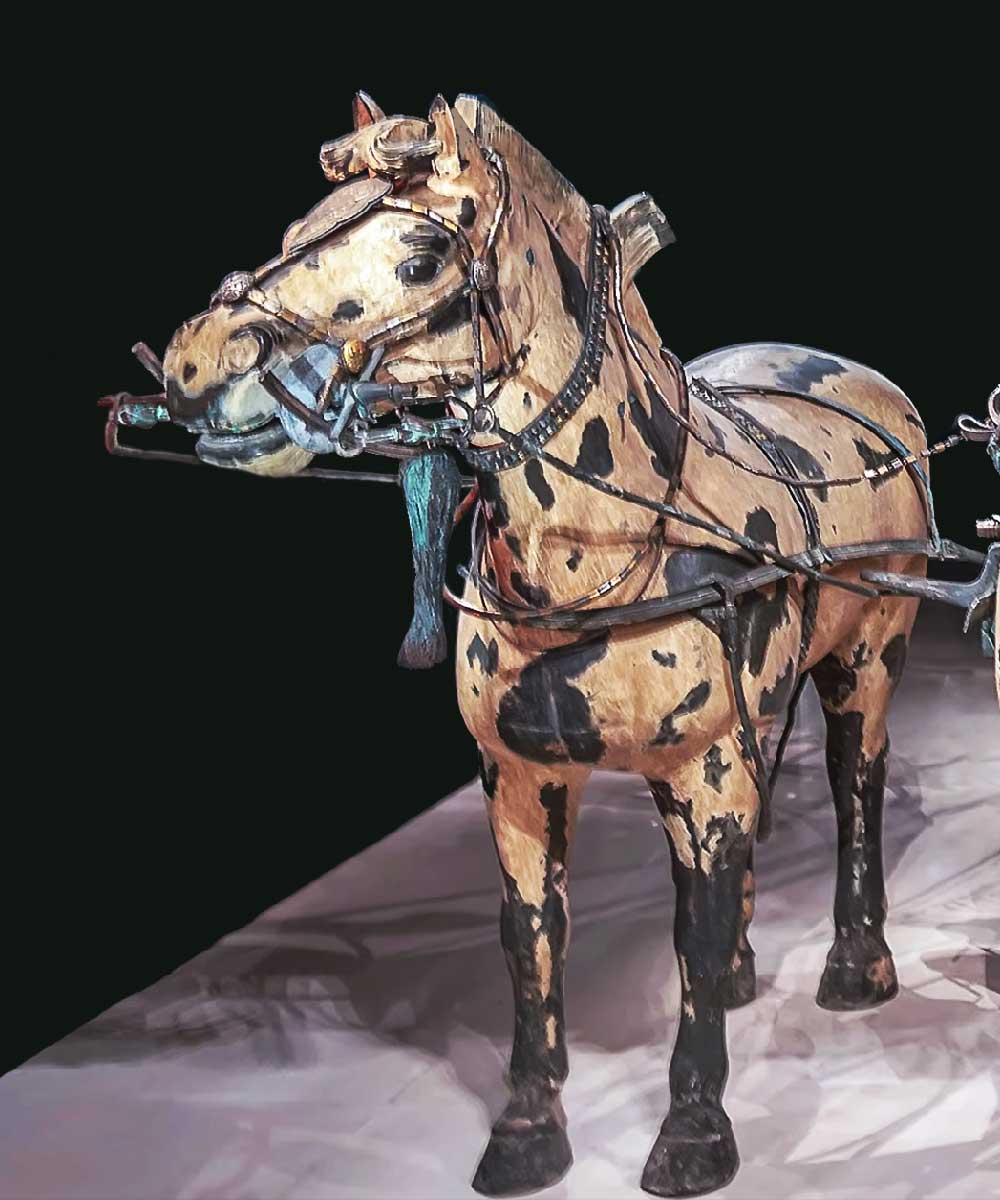
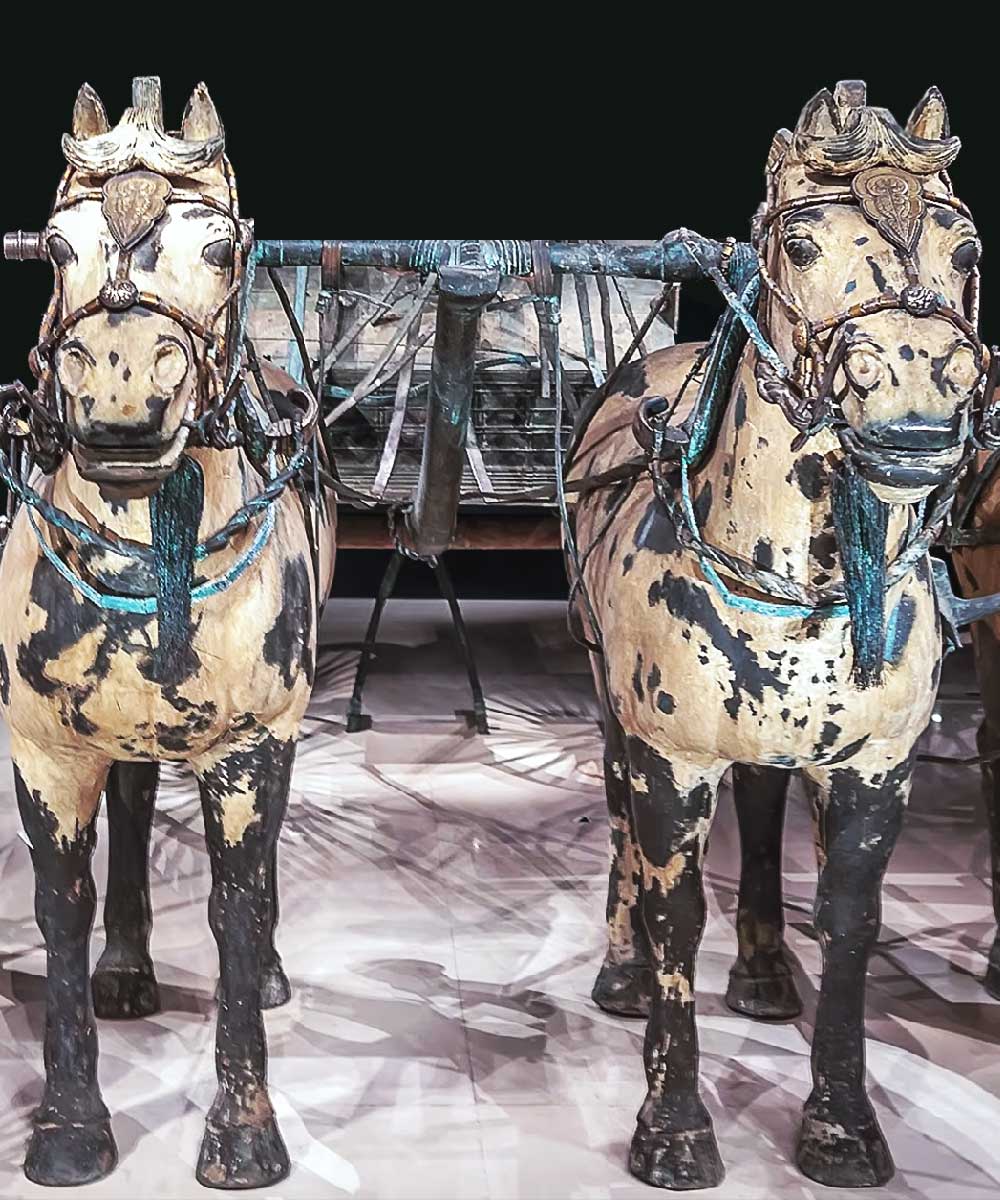
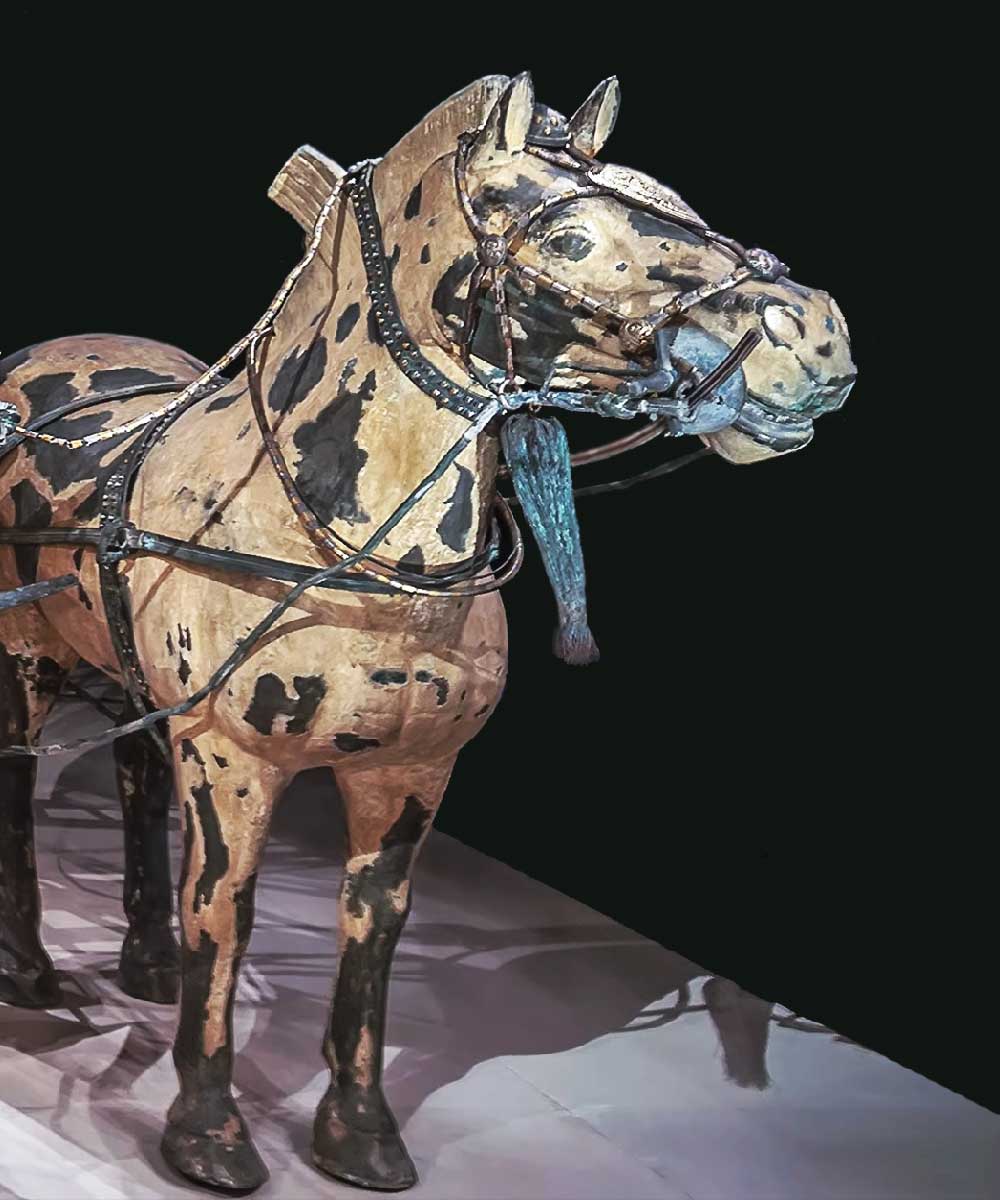
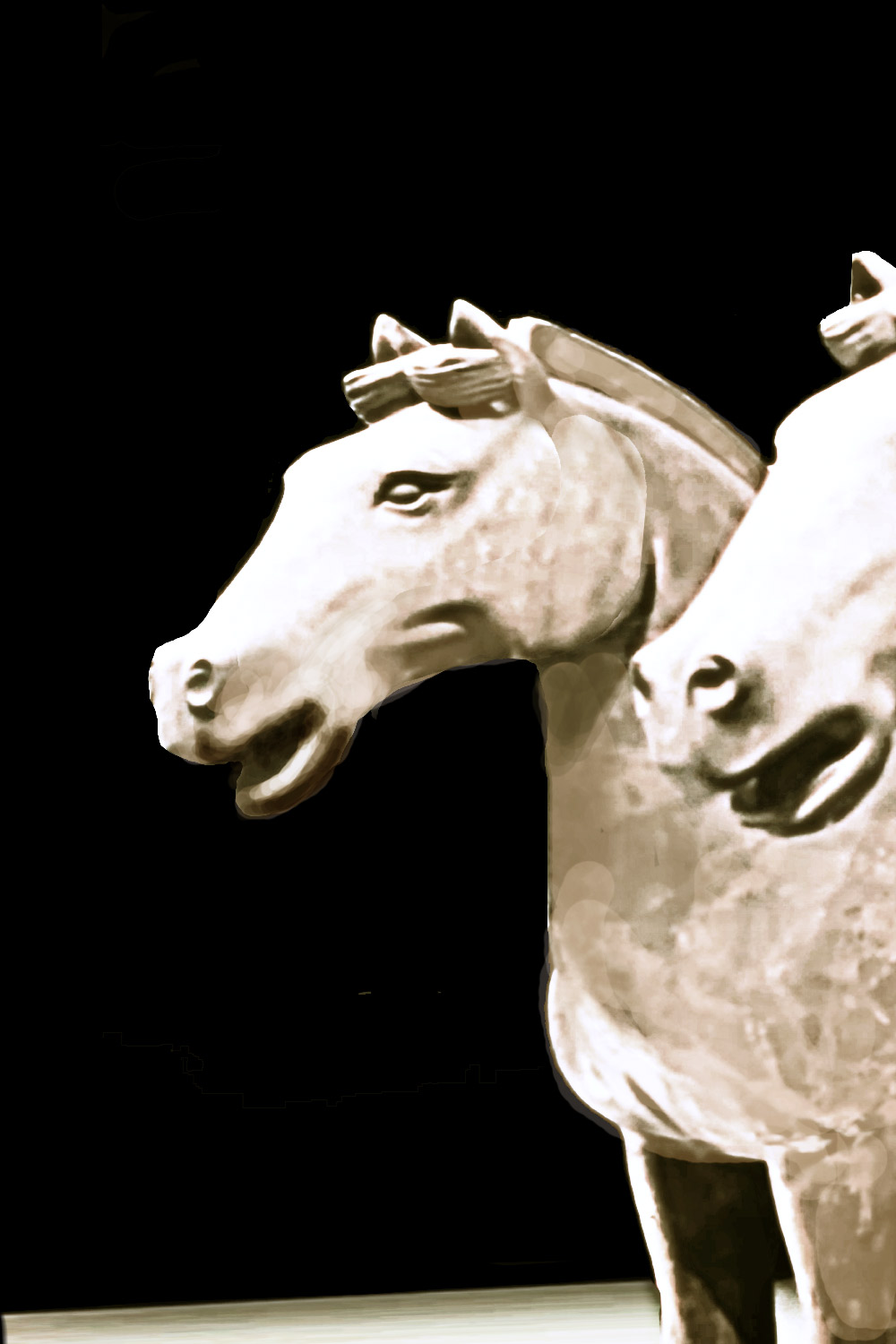
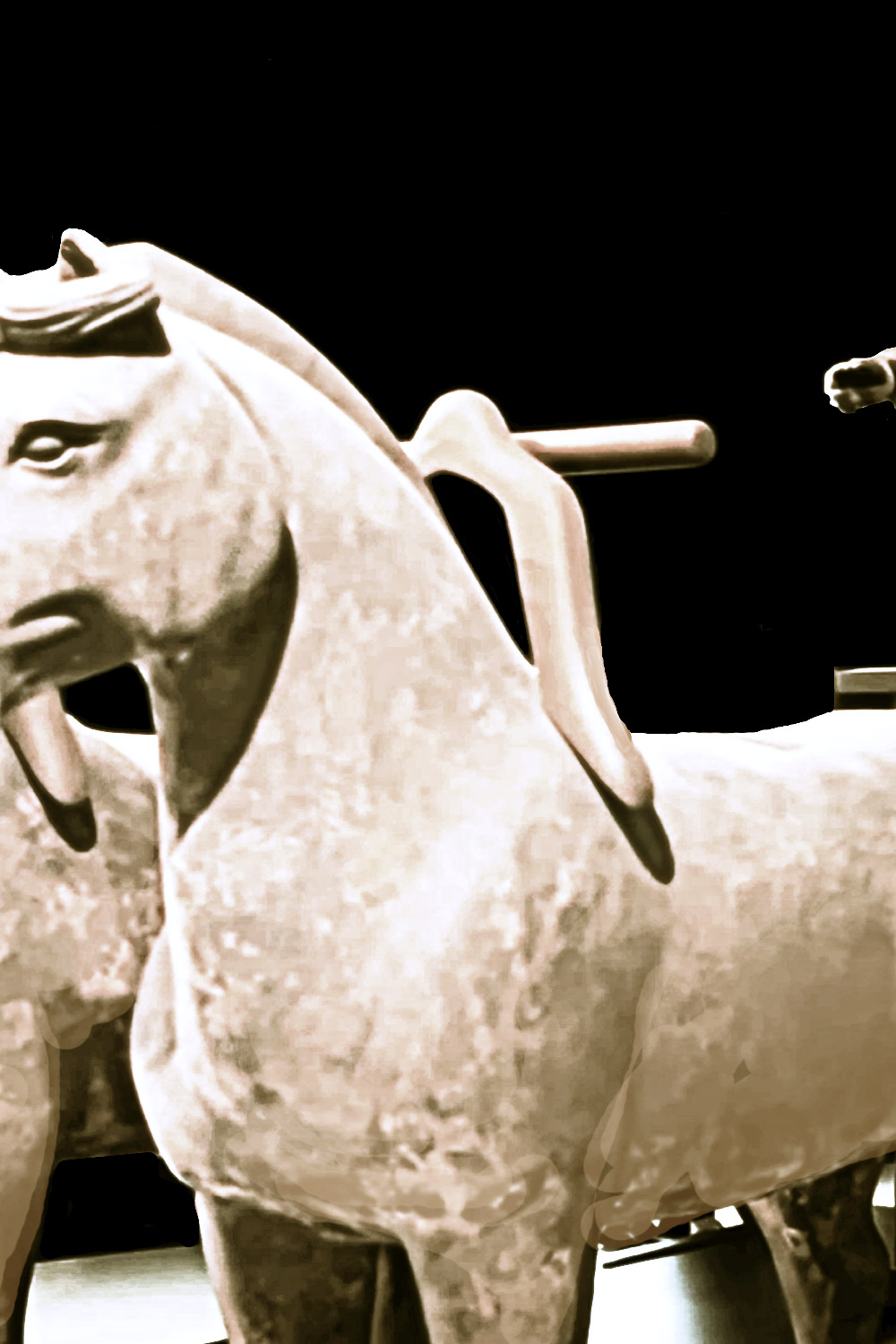
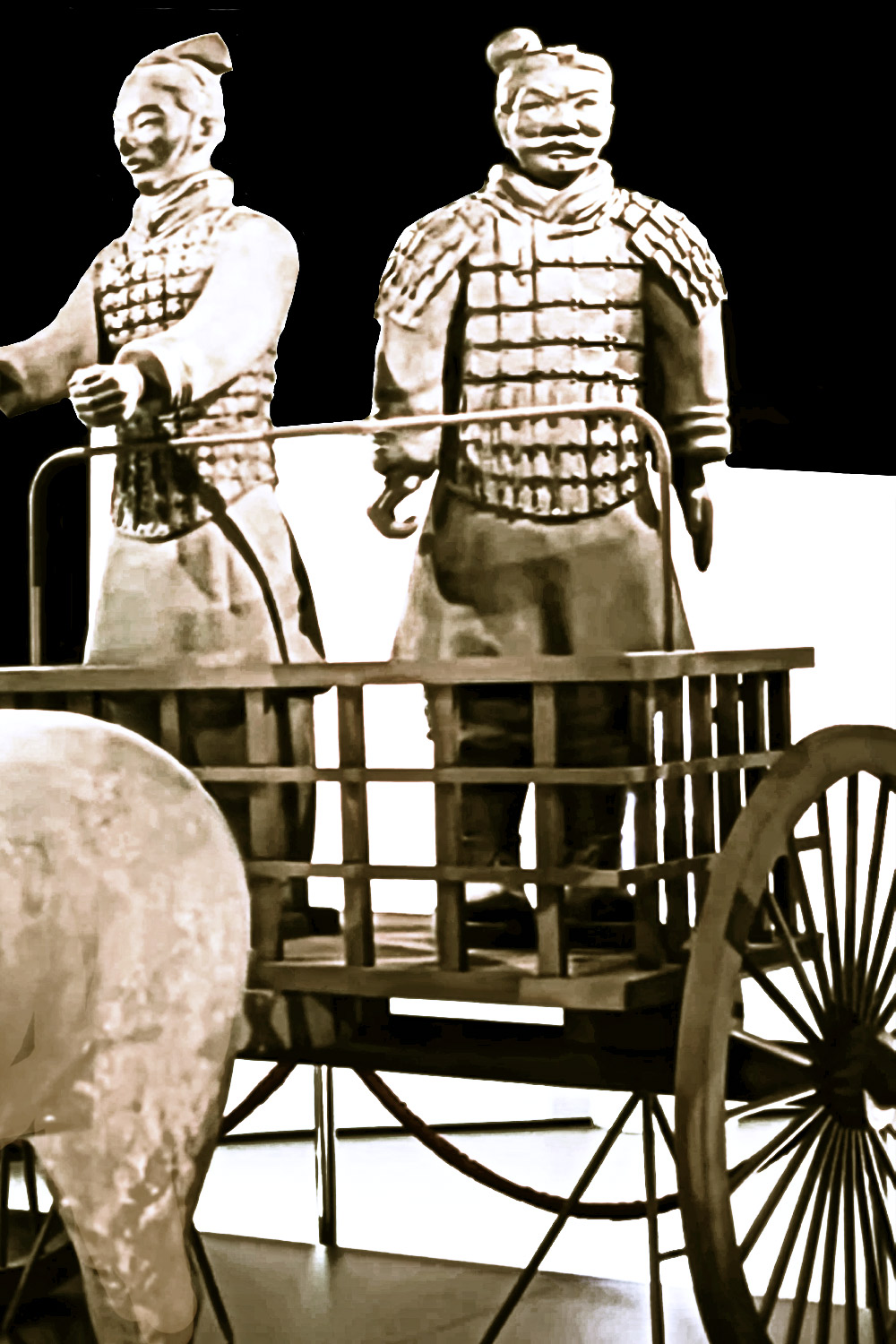
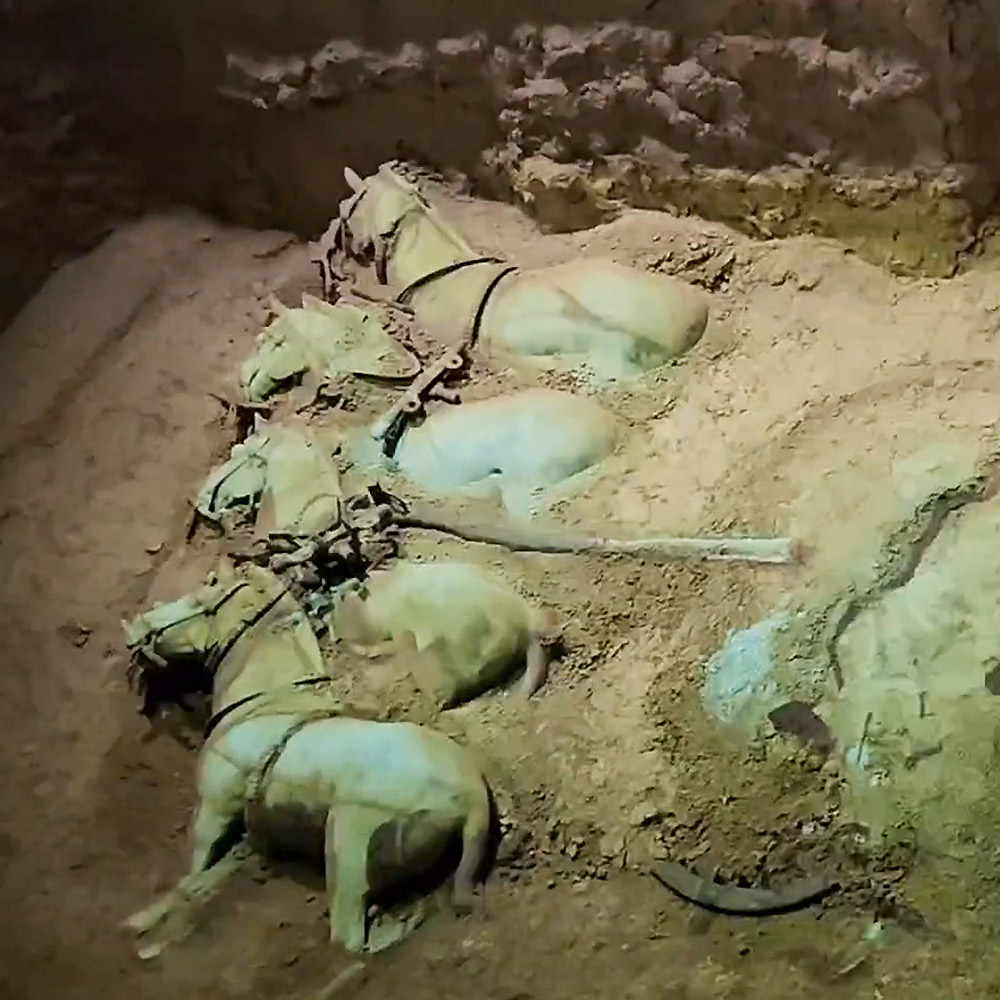
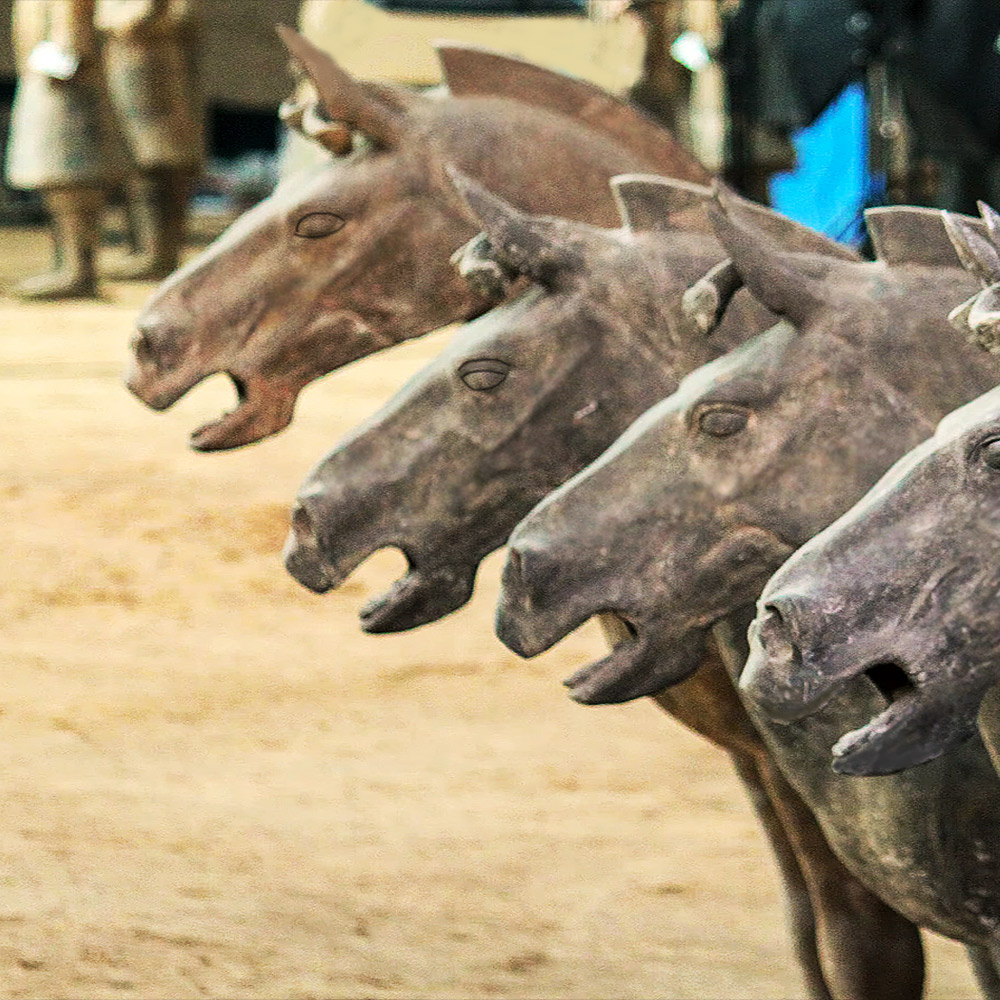
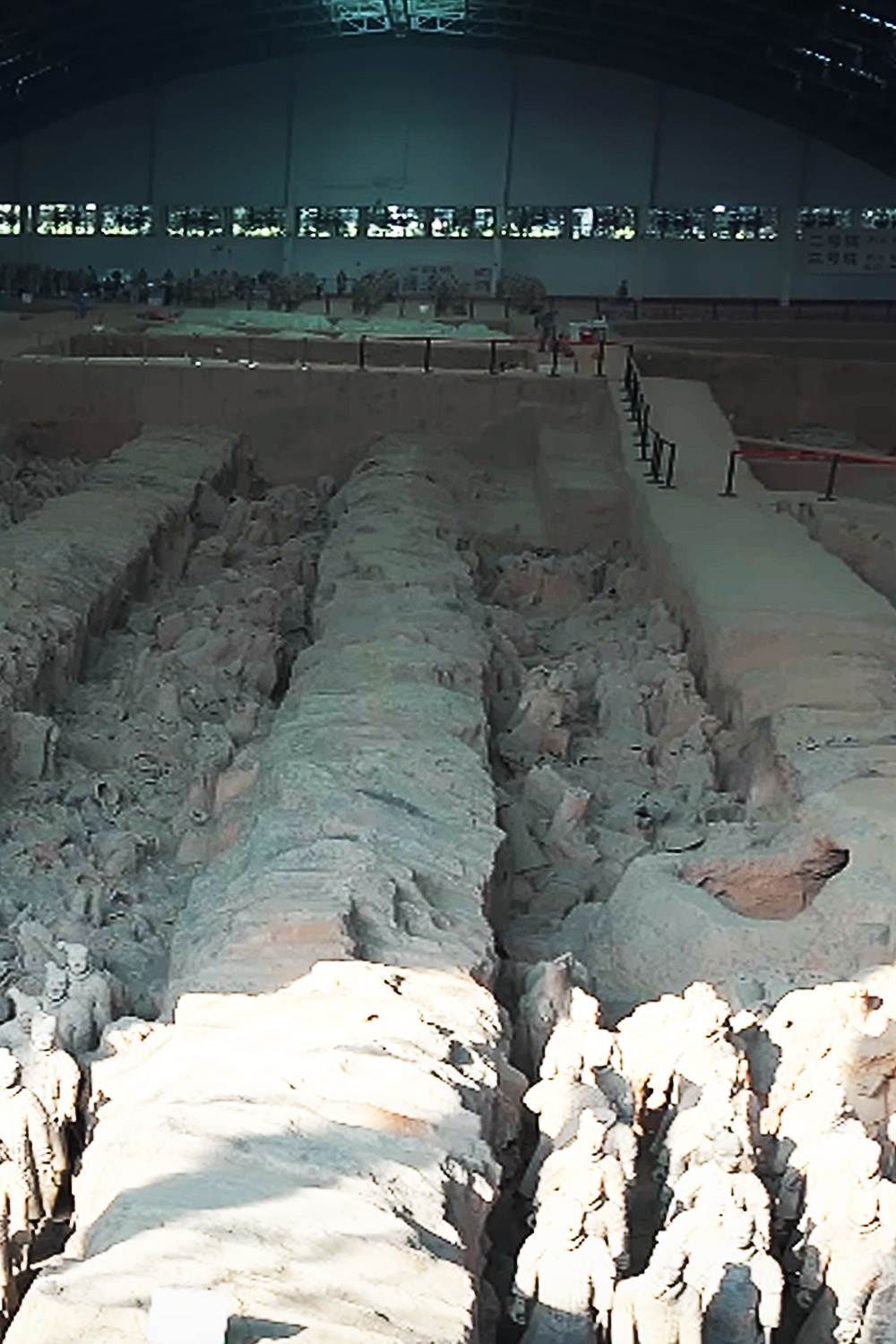 About 8,000 warriors, 100 chariots, 400
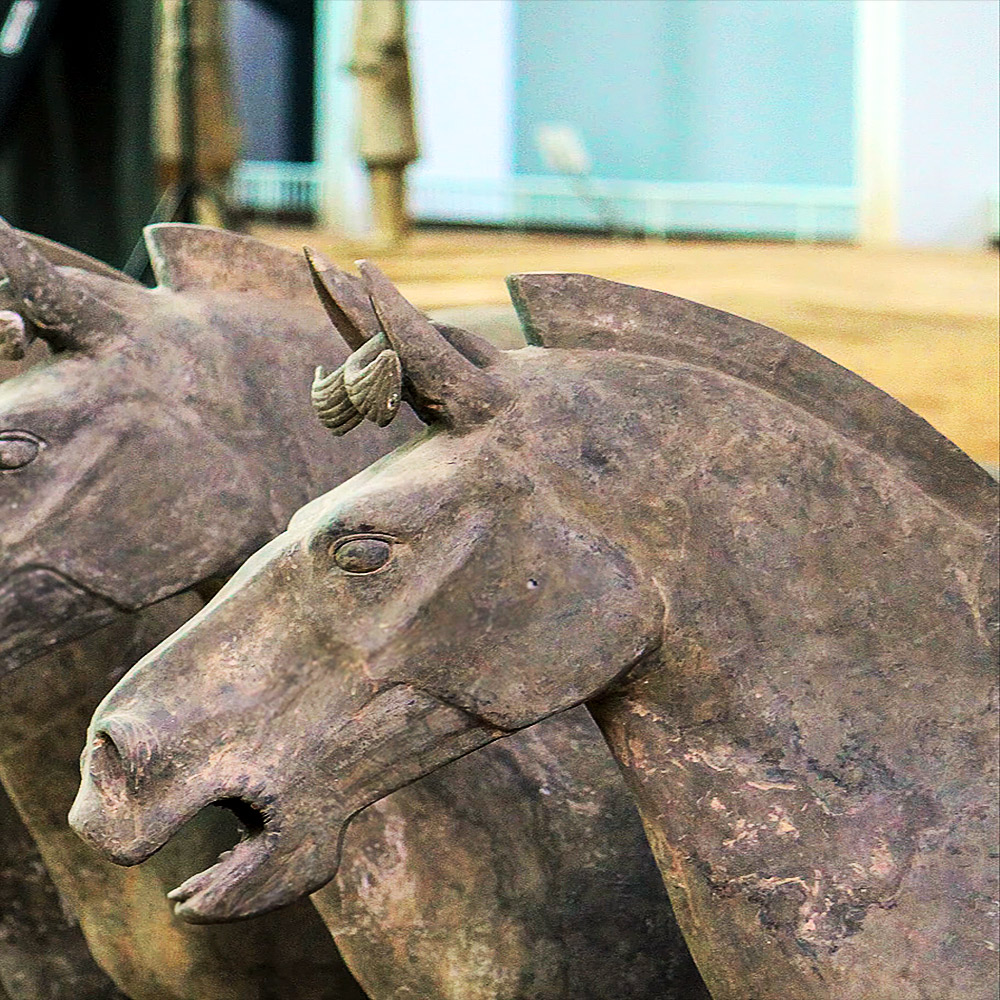
horses, and more than 100,000 weapons have been unearthed from the three pits so far.
About 8,000 warriors, 100 chariots, 400
horses, and more than 100,000 weapons have been unearthed from the three pits so far.
Terra-cotta Warriors
The Terracotta Army includes not only infantry, cavalry, charioteers, and archers but also a full suite of non‑military attendants—officials, acrobats, strongmen, and
musicians—indicating that Qin Shi Huang envisioned an entire imperial entourage accompanying him into the afterlife. Each figure was originally coated in lacquer and painted in vivid
mineral pigments—reds, purples, greens, blues, blacks, and whites—though most color vanished within minutes of excavation due to rapid oxidation. Every warrior is individually modeled,
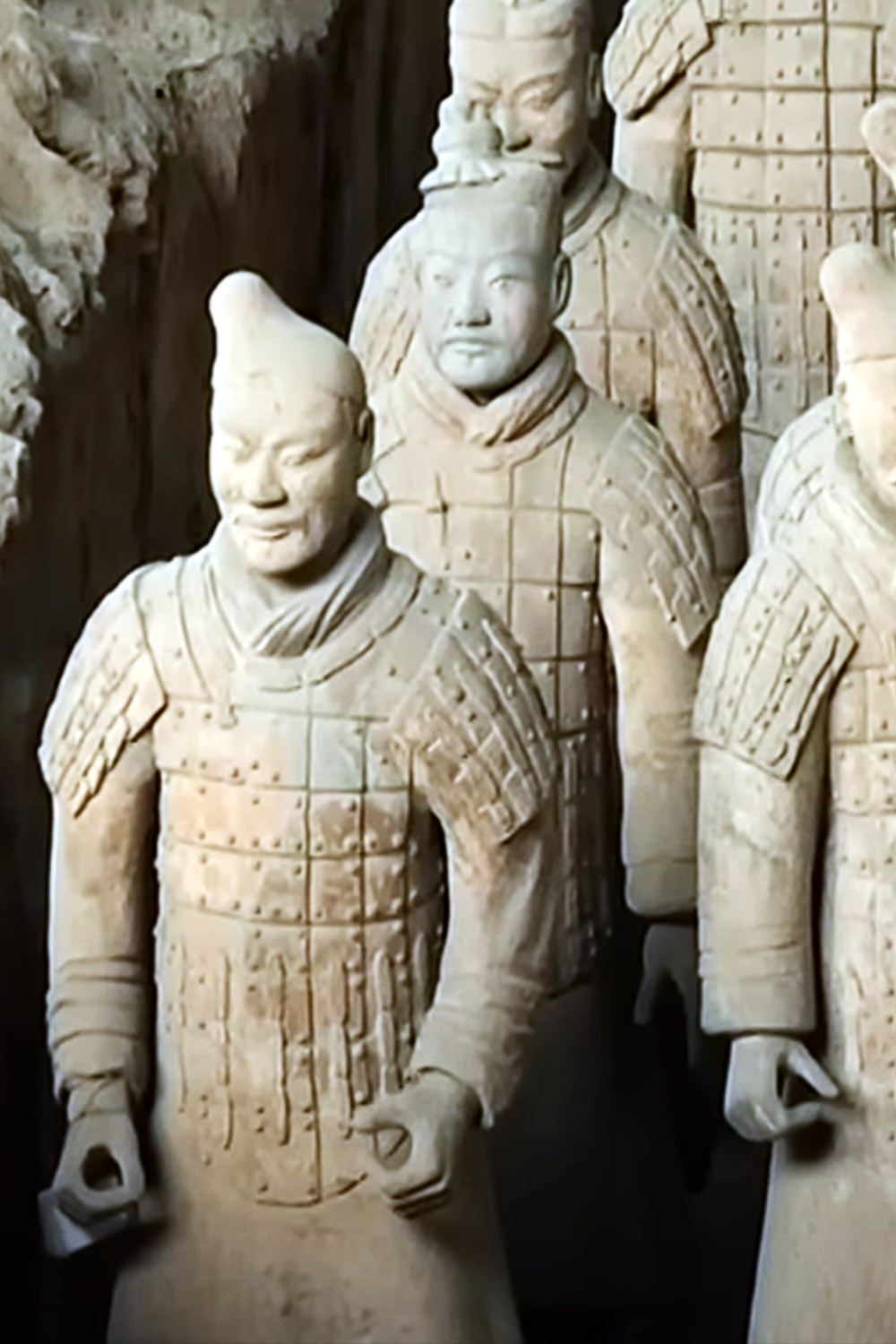
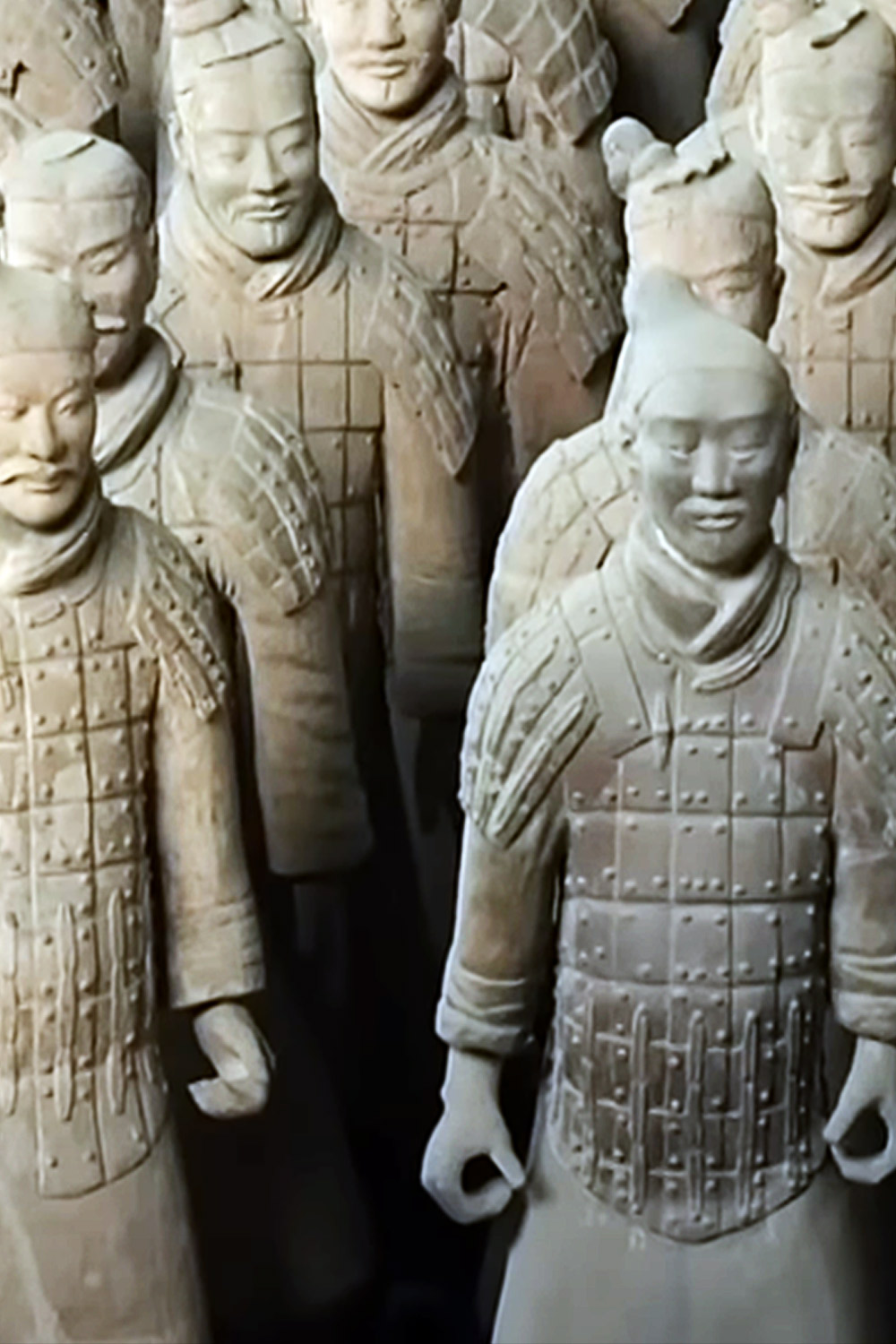
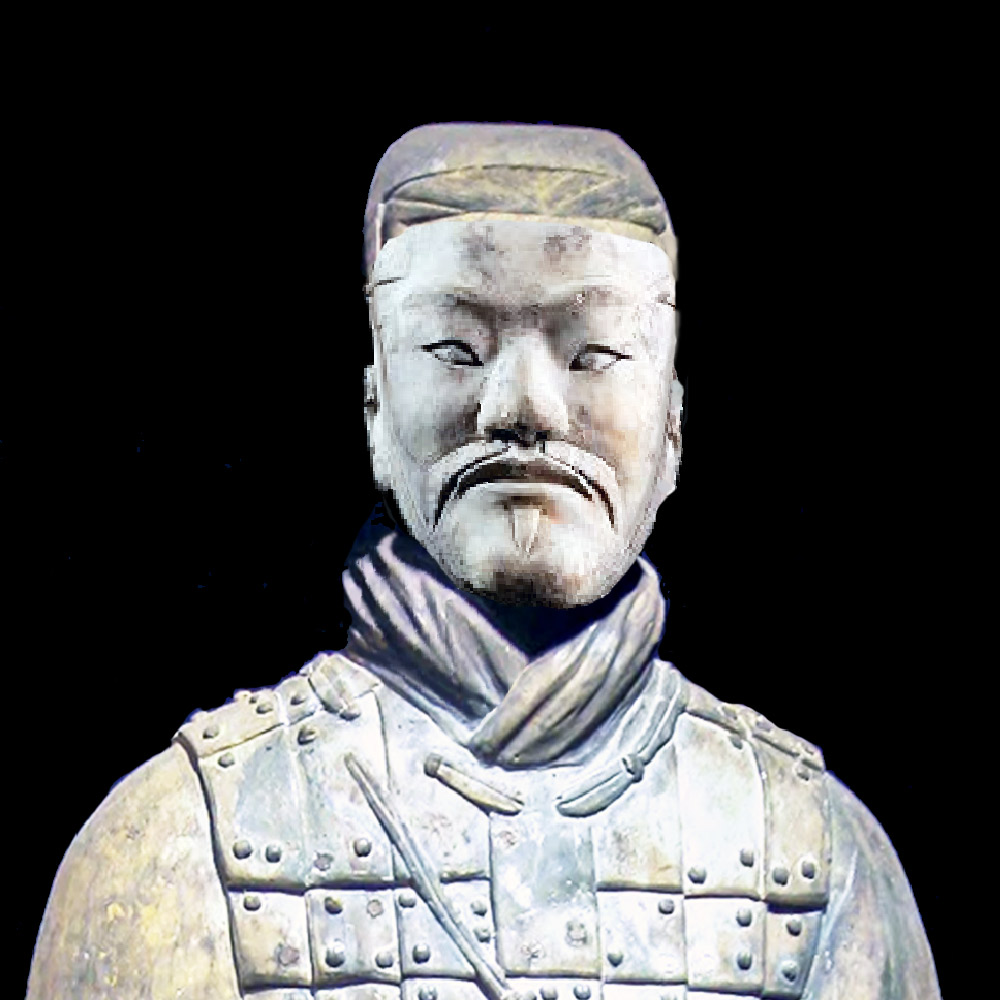
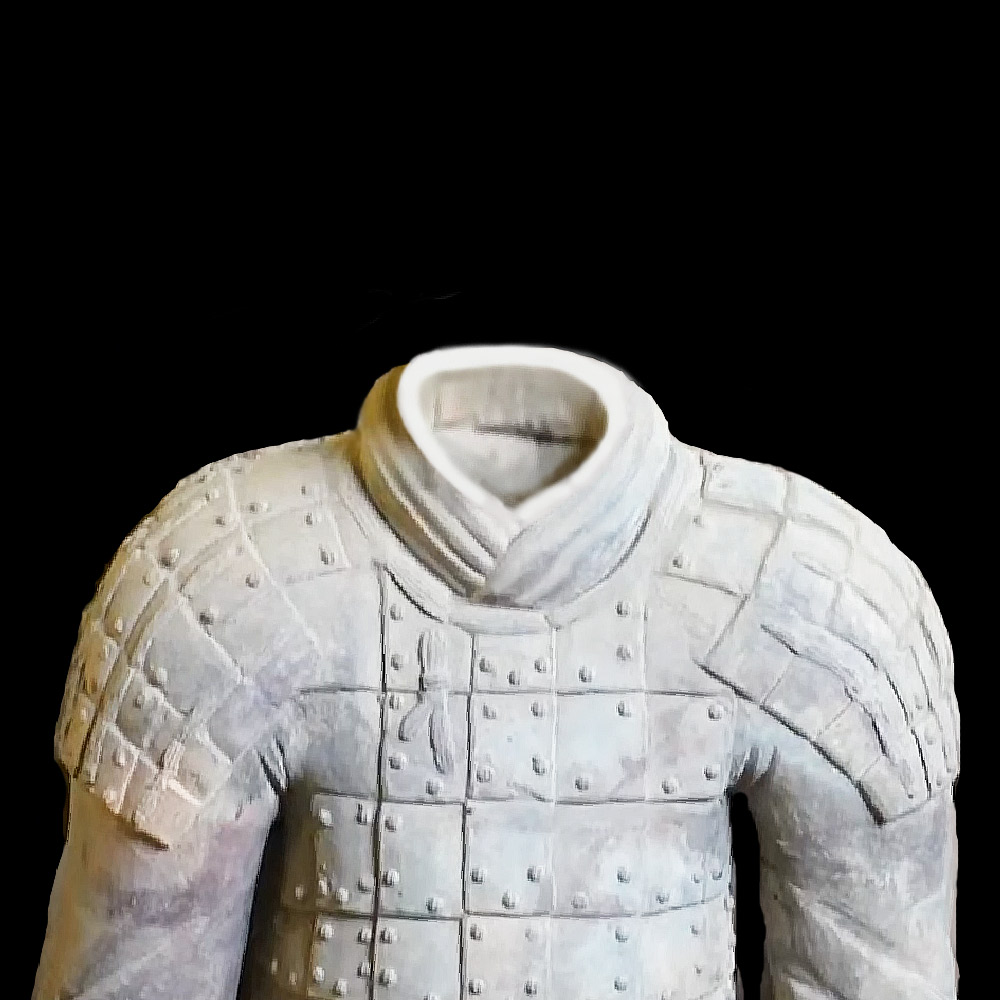
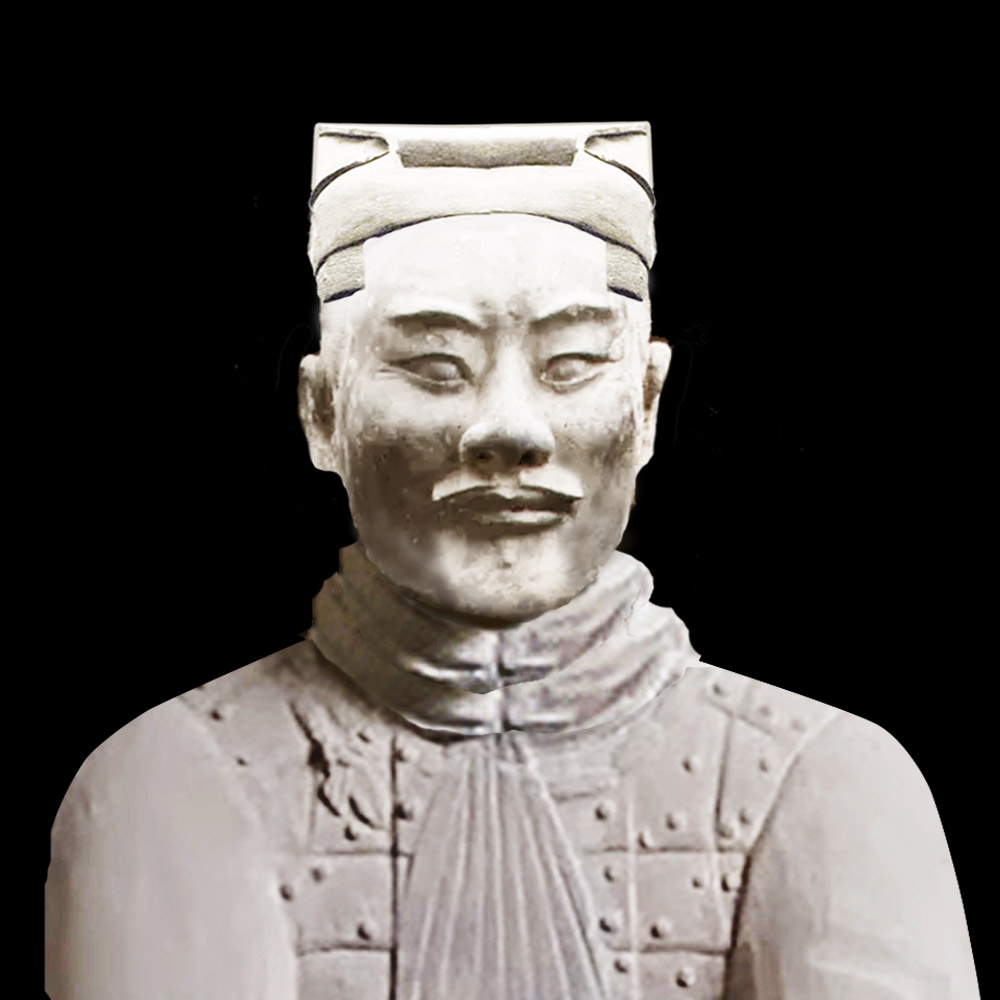
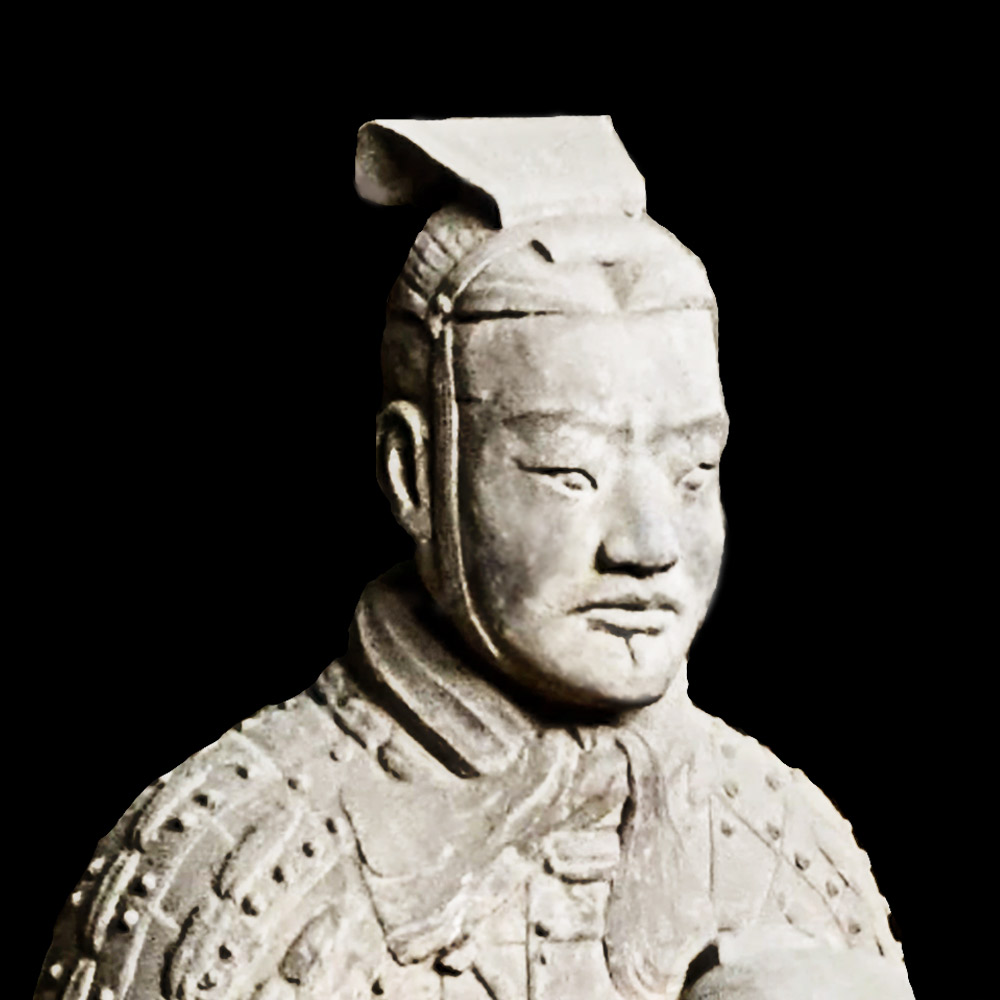
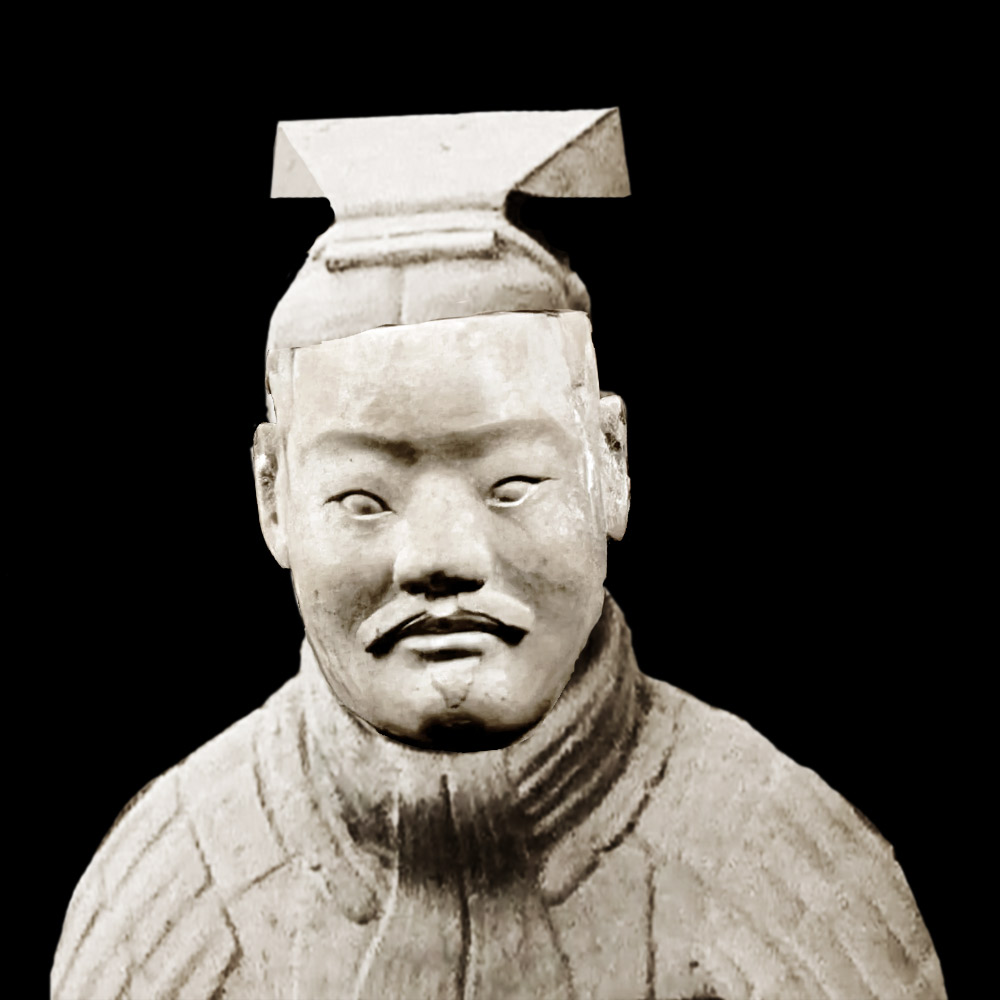
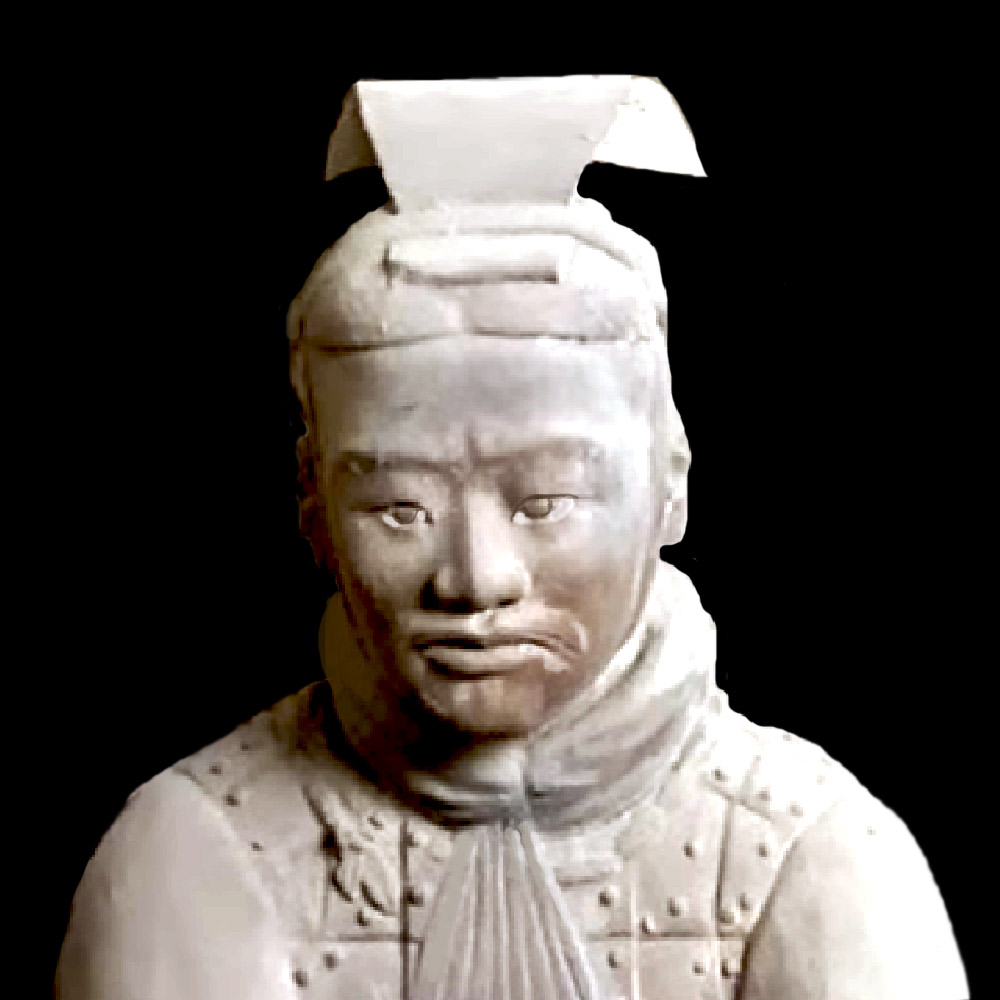
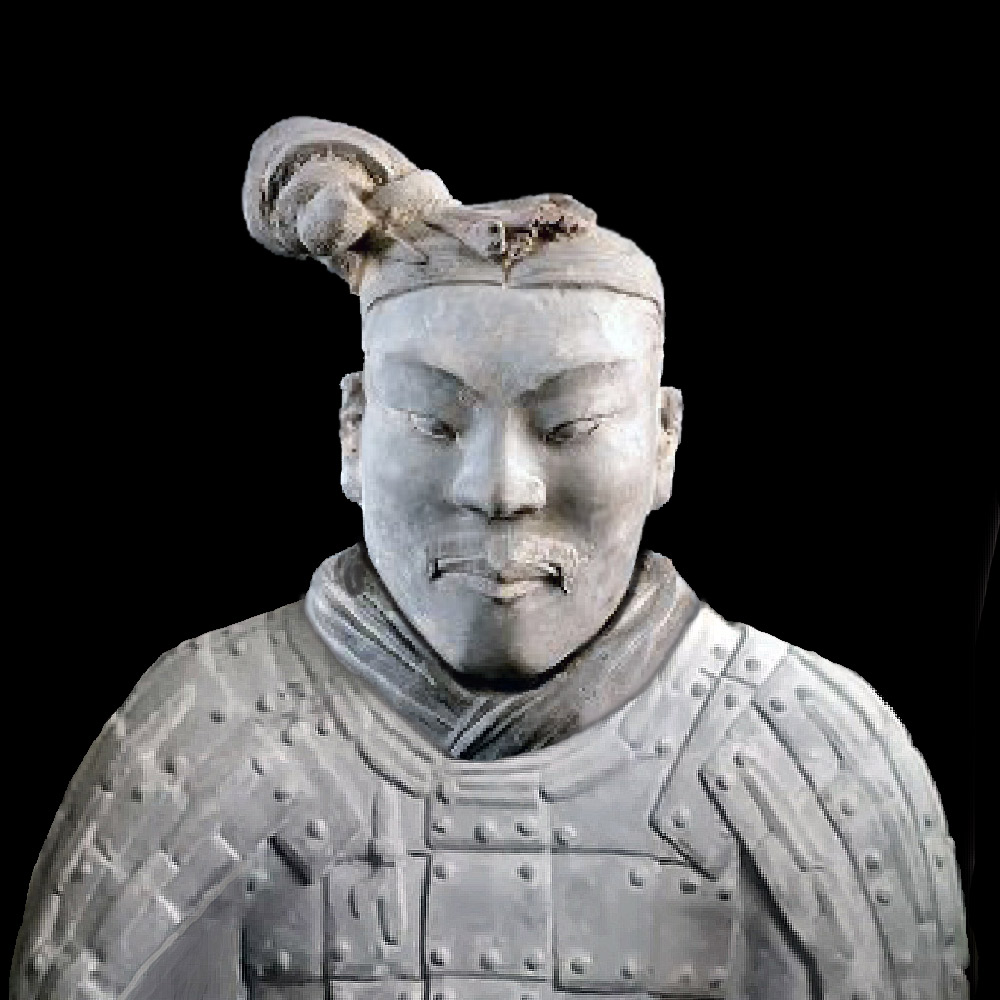
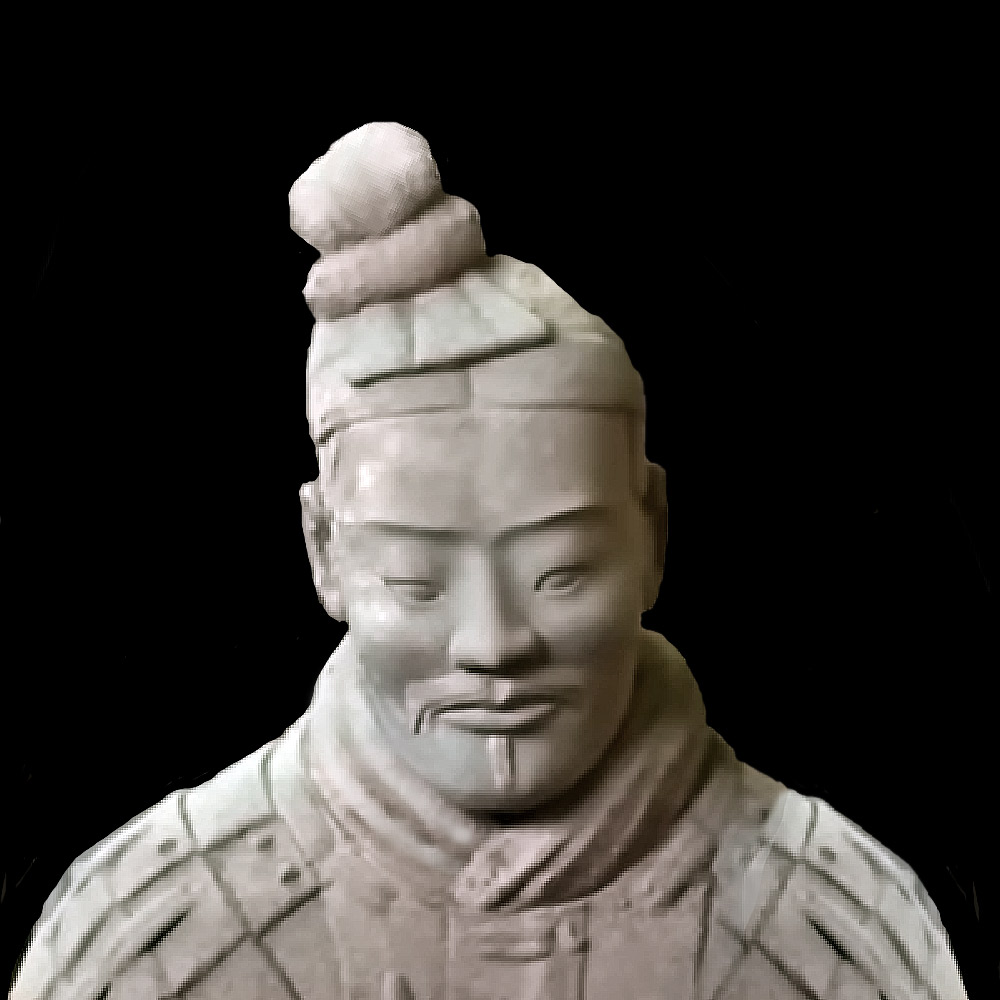
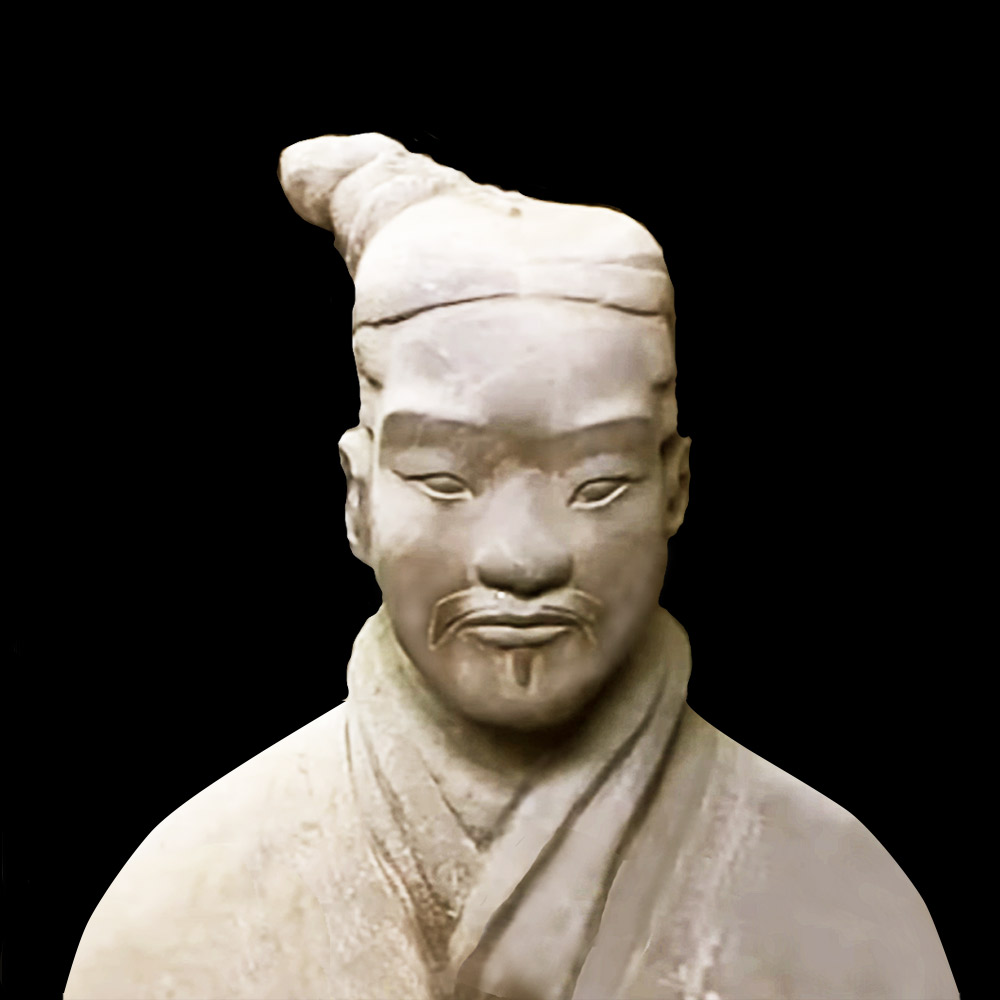
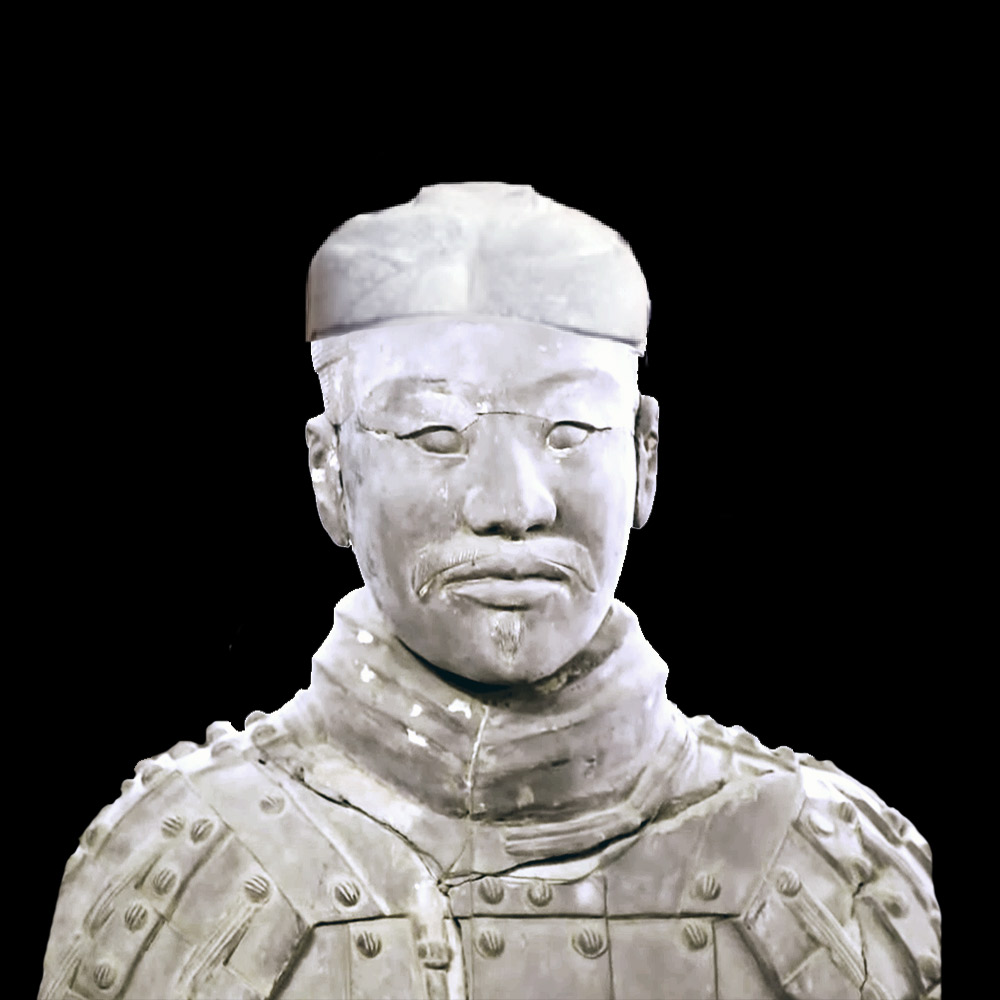
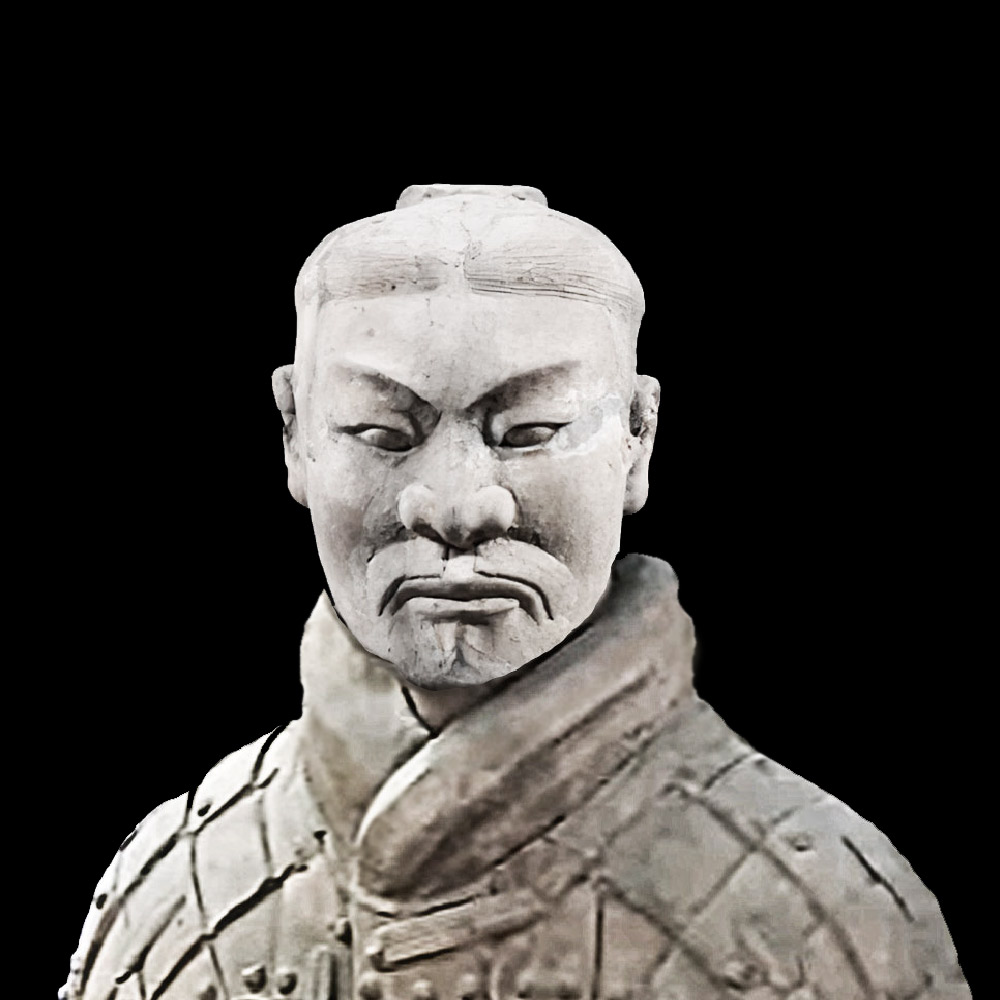
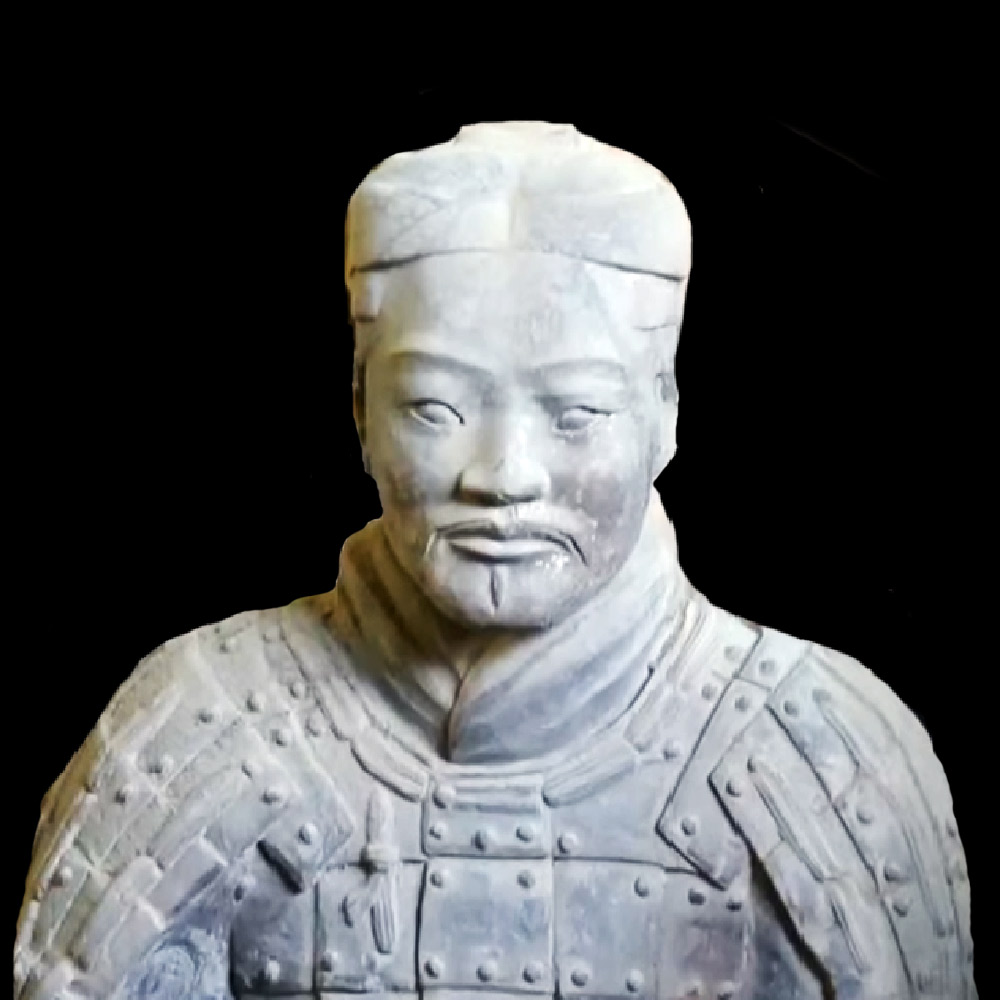
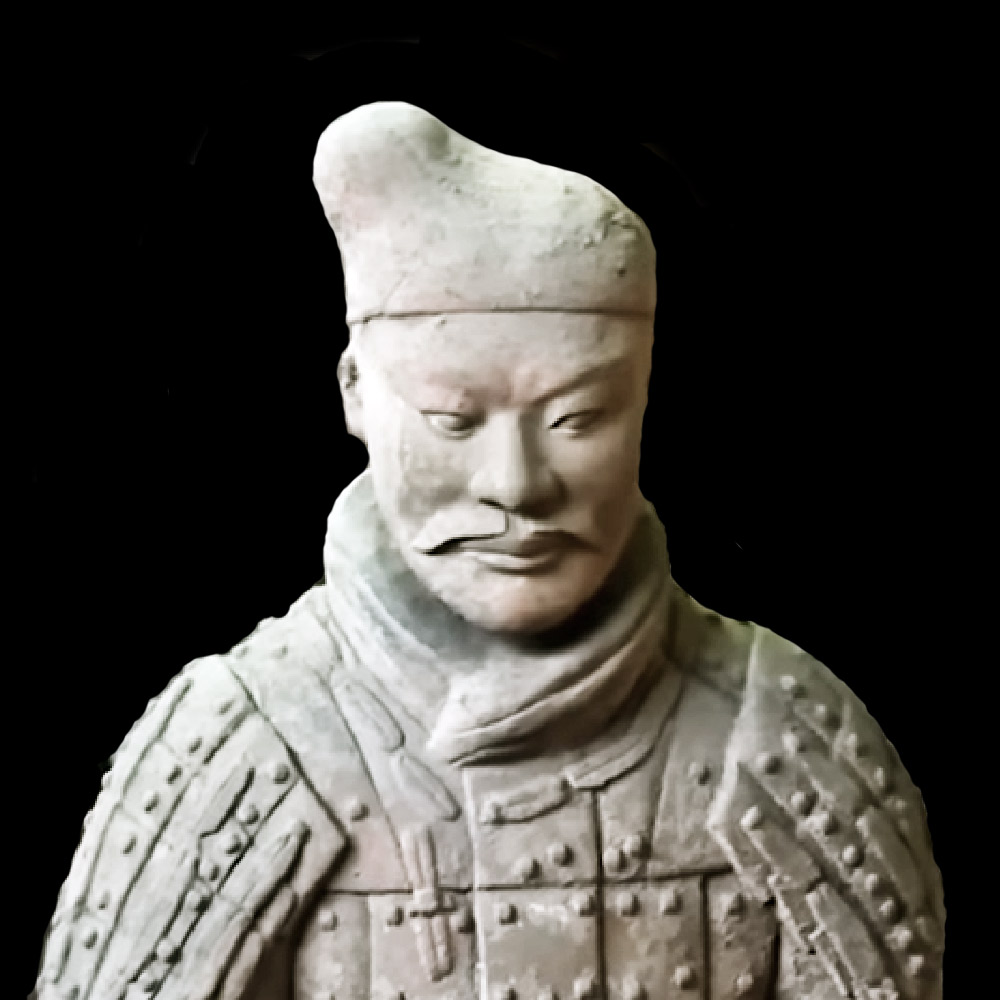
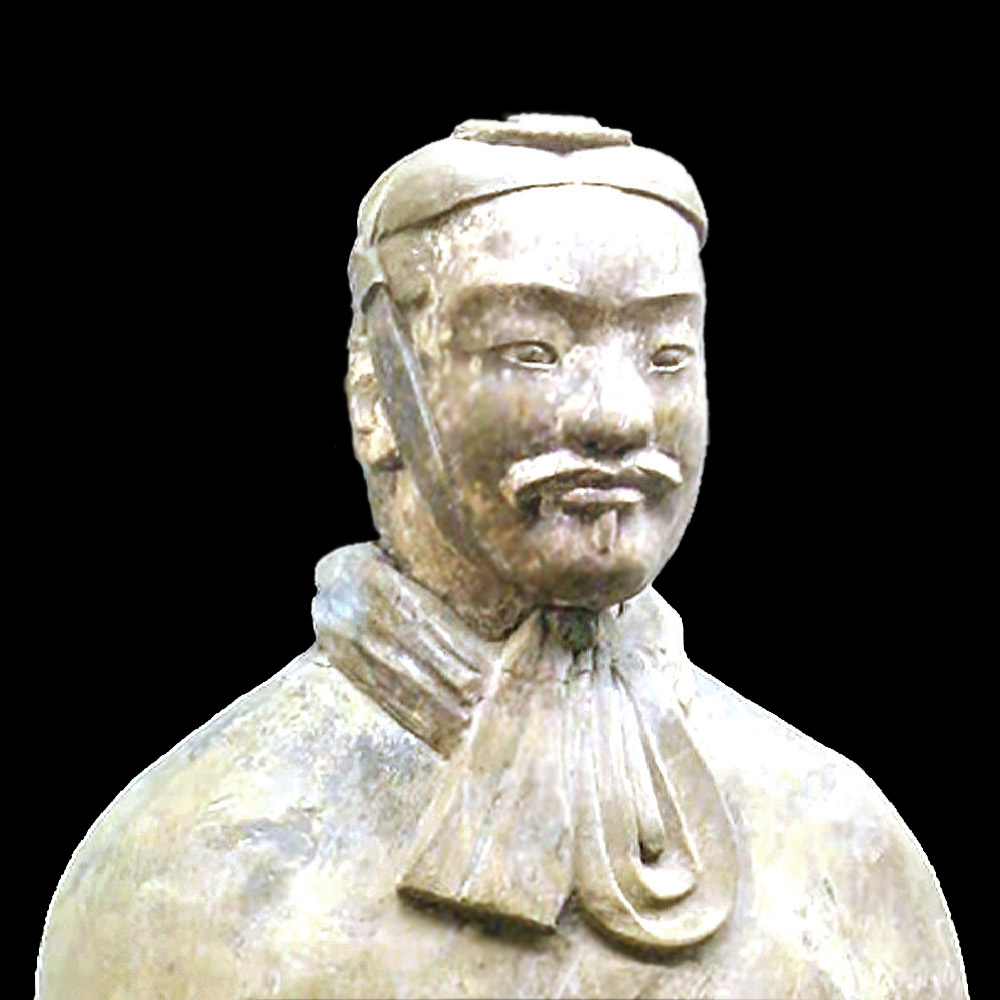
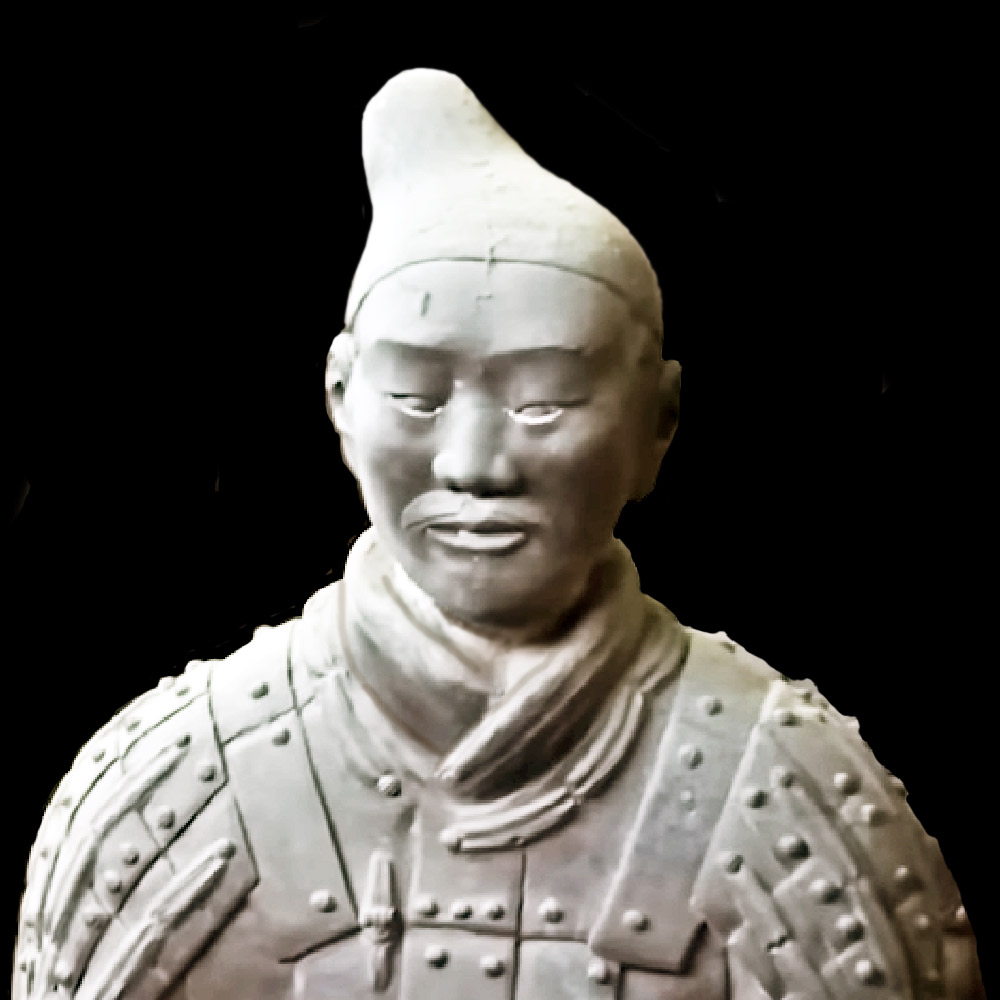
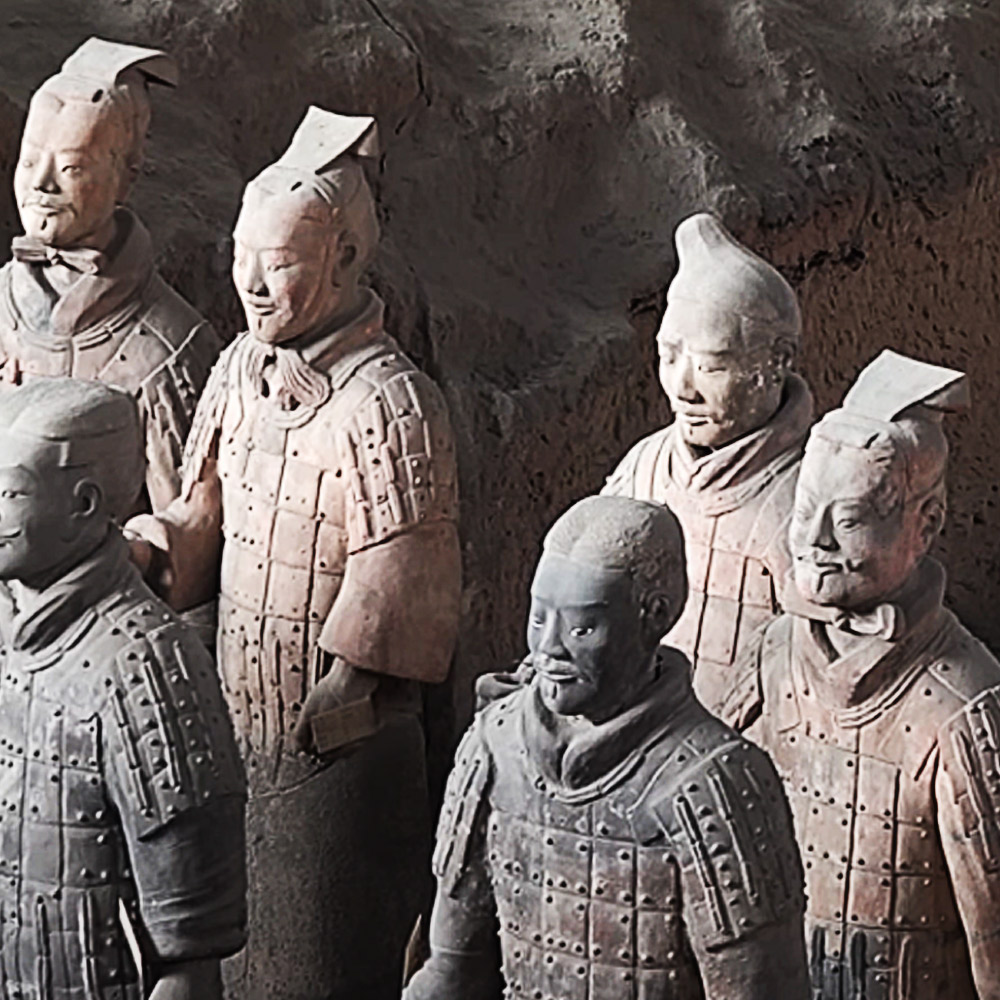
with distinct facial features, hairstyles, armor types, and postures that reflect rank, role, and regional diversity within the Qin military. Scholars typically classify the figures
into ten principal categories, including armored and unarmored infantry, kneeling and standing archers, cavalrymen, charioteers, mid‑ranking officers, high officers, and generals.
This typology underscores the army’s organizational complexity and the emperor’s ambition to replicate, in clay, the full hierarchy of his terrestrial command.
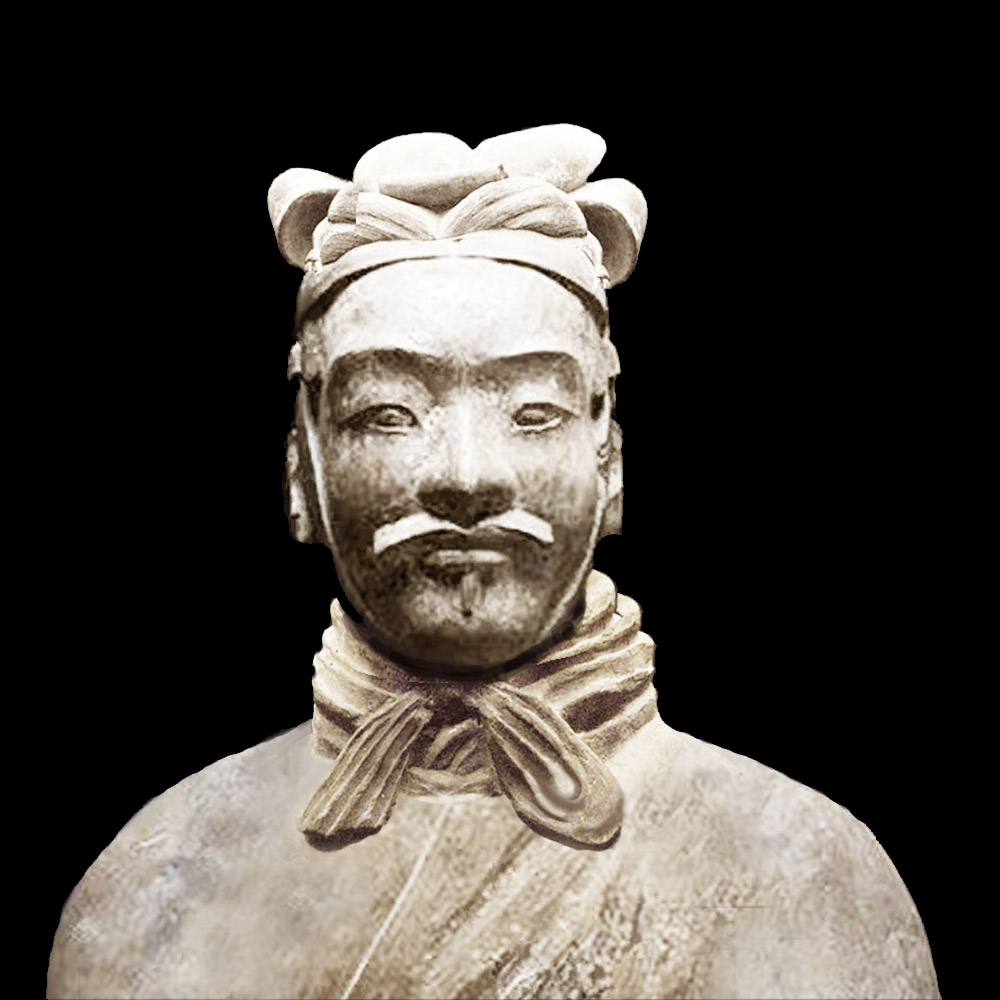 Terracotta Warrior Armored General wearing the pheasant-feather crown, also called the He crown
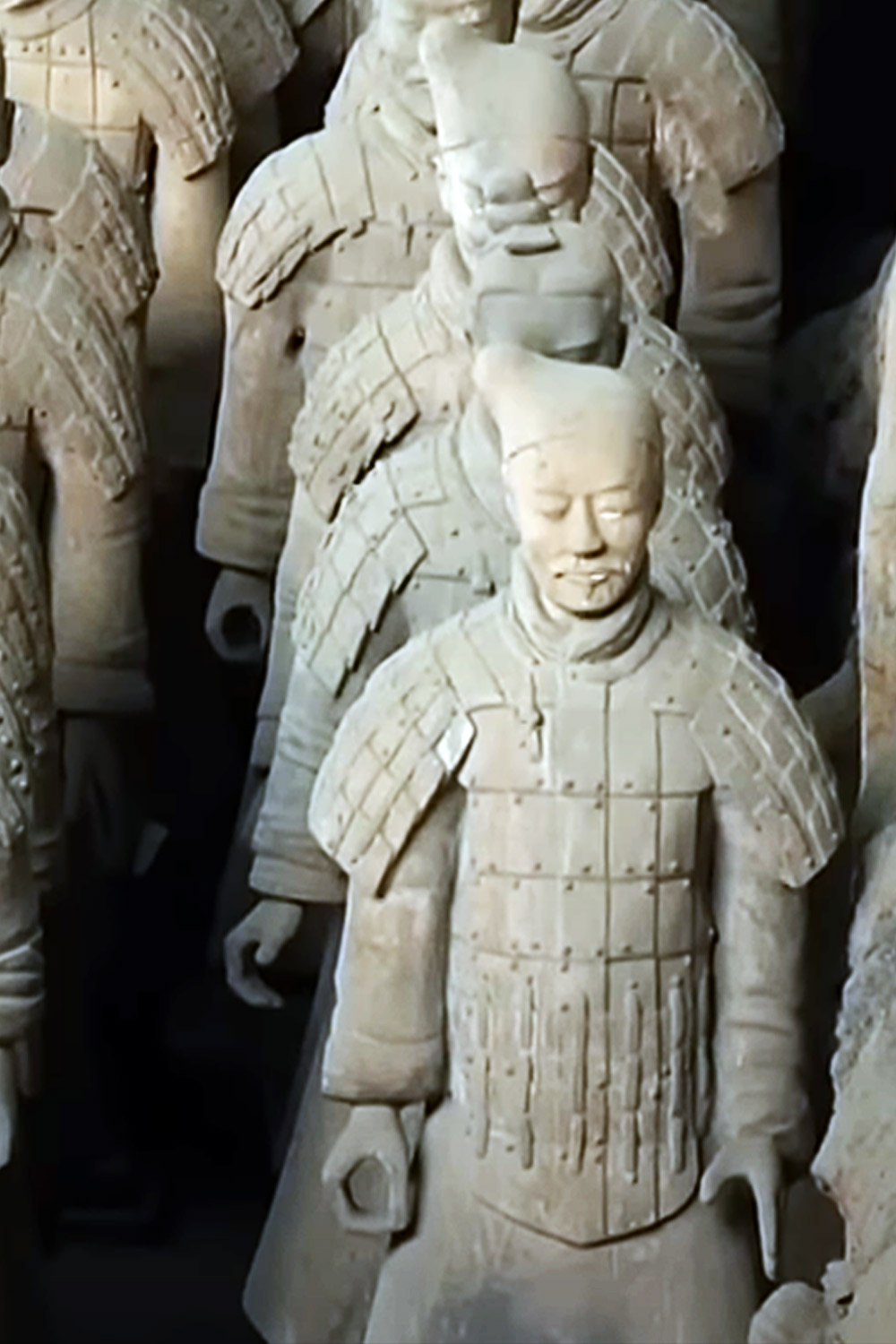
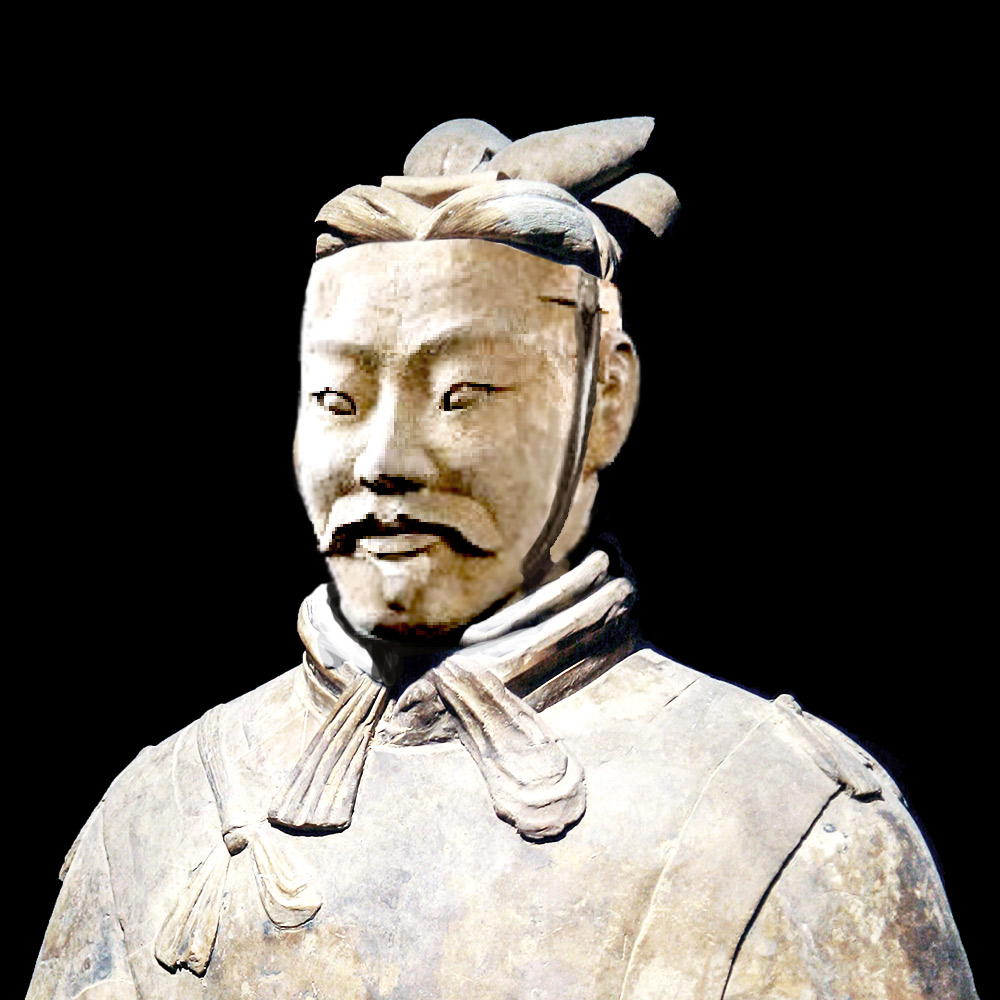 Terracotta Warrior high-ranking officer, wearing a pheasant-feather crown
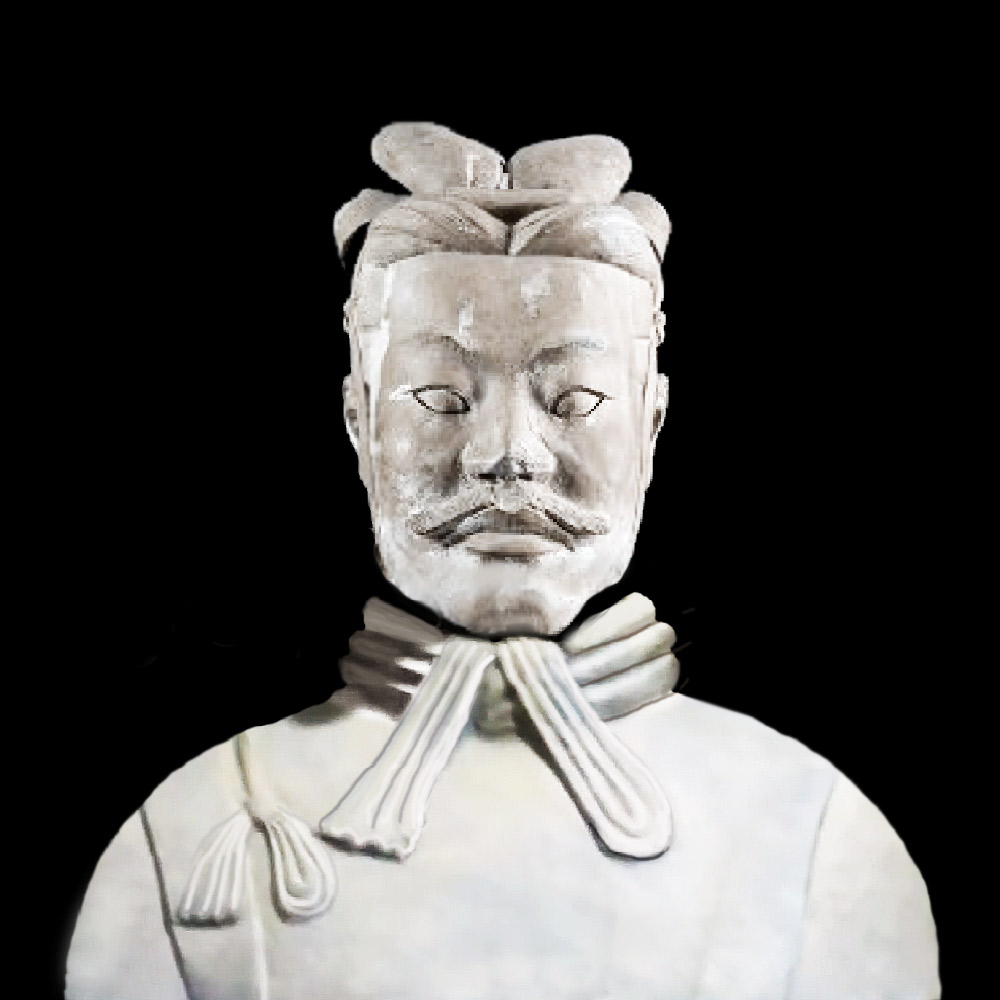 Terracotta Warrior high-ranking officer, wearing a pheasant-feather crown
 Top
Top