The Taj Mahal

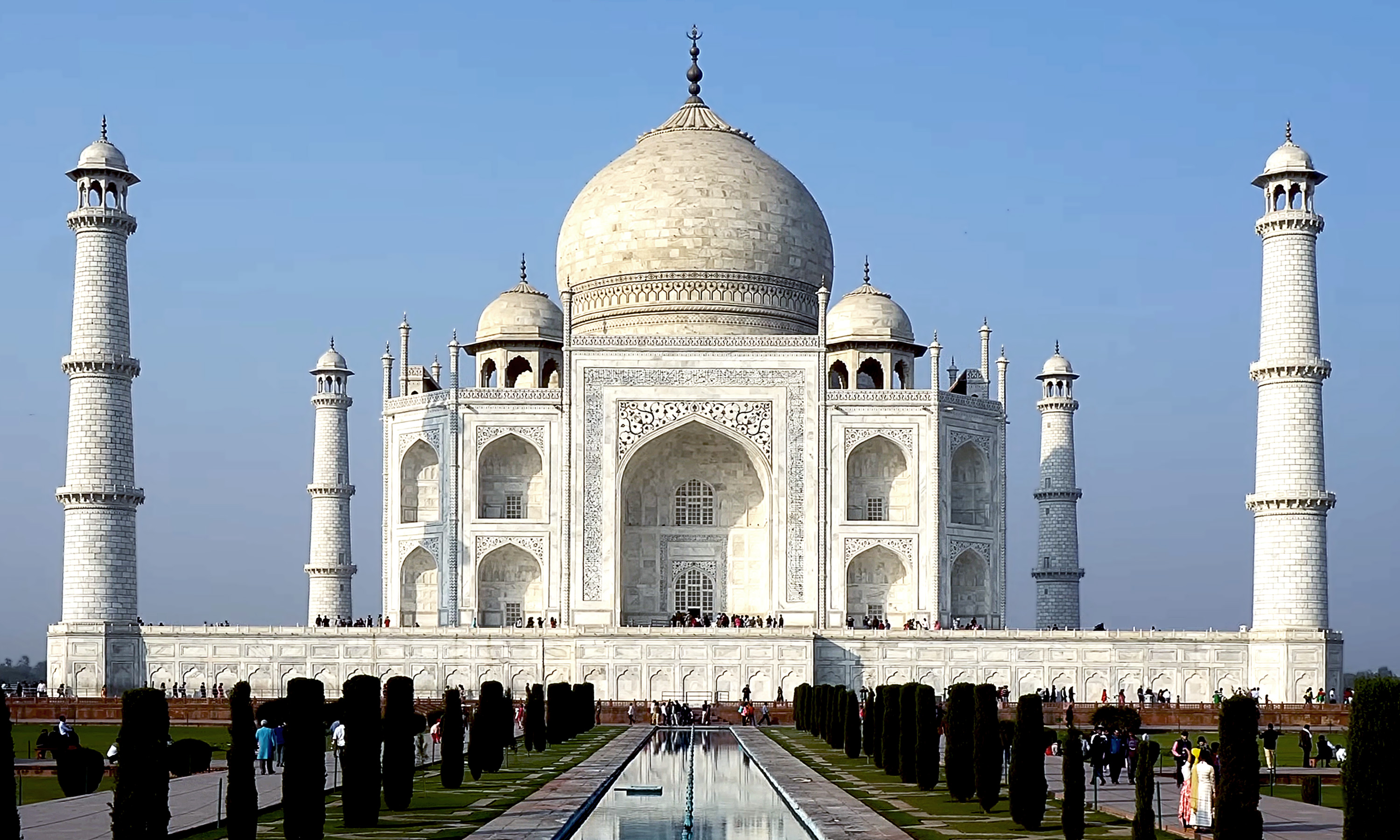
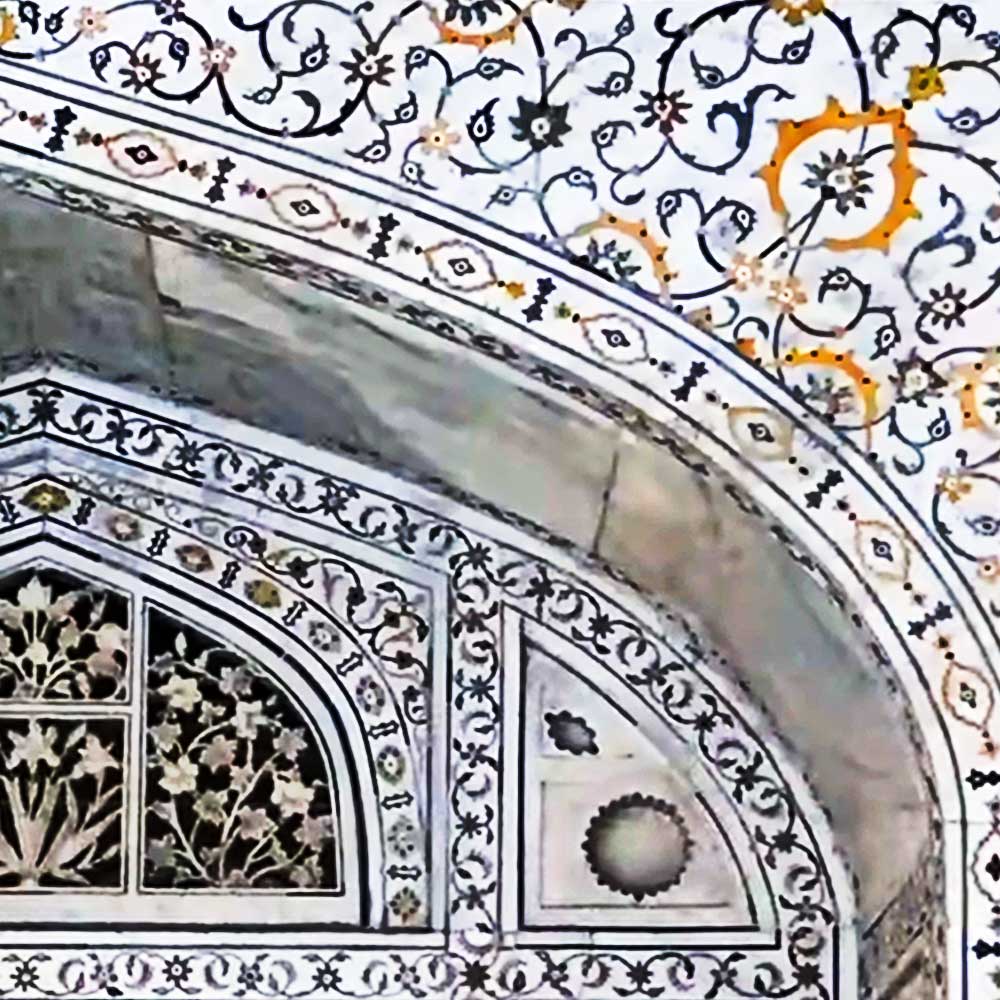
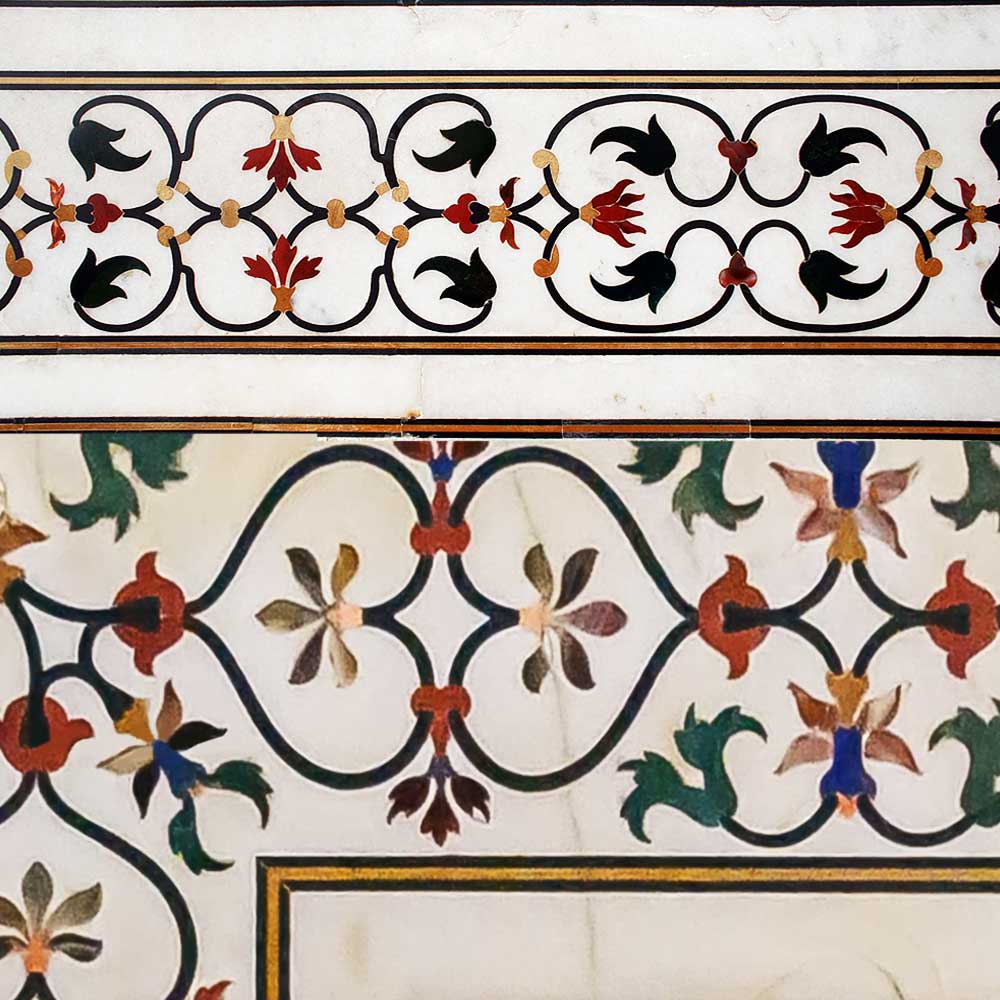
The Taj Mahal’s celebrated perfection rests on its extraordinary use of balance and symmetry. Organized along a strict central axis, the entire complex—its gardens, water channels, and architectural elements—mirrors itself to create a sense of flawless visual harmony. This symmetry, a hallmark of Mughal aesthetics, is enhanced by the monument’s exquisite decoration: Qur’anic inscriptions in flowing calligraphy and marble surfaces adorned with stylized floral motifs in pietra dura inlay. Semi‑precious stones such as lapis lazuli, carnelian, coral, onyx, and amethyst evoke the lush gardens of paradise described in Islamic tradition. Although widely known as a “symbol of love,” the Taj Mahal’s meaning has long been debated. Some scholars view it as an expression of Shah Jahan’s imperial vision rather than personal grief; others interpret it as a representation of the Divine Throne on the Day of Judgment, a celestial house of paradise, or a paradisiacal mansion proclaiming Mughal power. Together, these interpretations reveal the Taj Mahal as a monument of layered significance—devotional, political, imperial, and aesthetic. Its perfect symmetry, luminous materials, and symbolic richness continue to make it one of the world’s most admired architectural achievements.
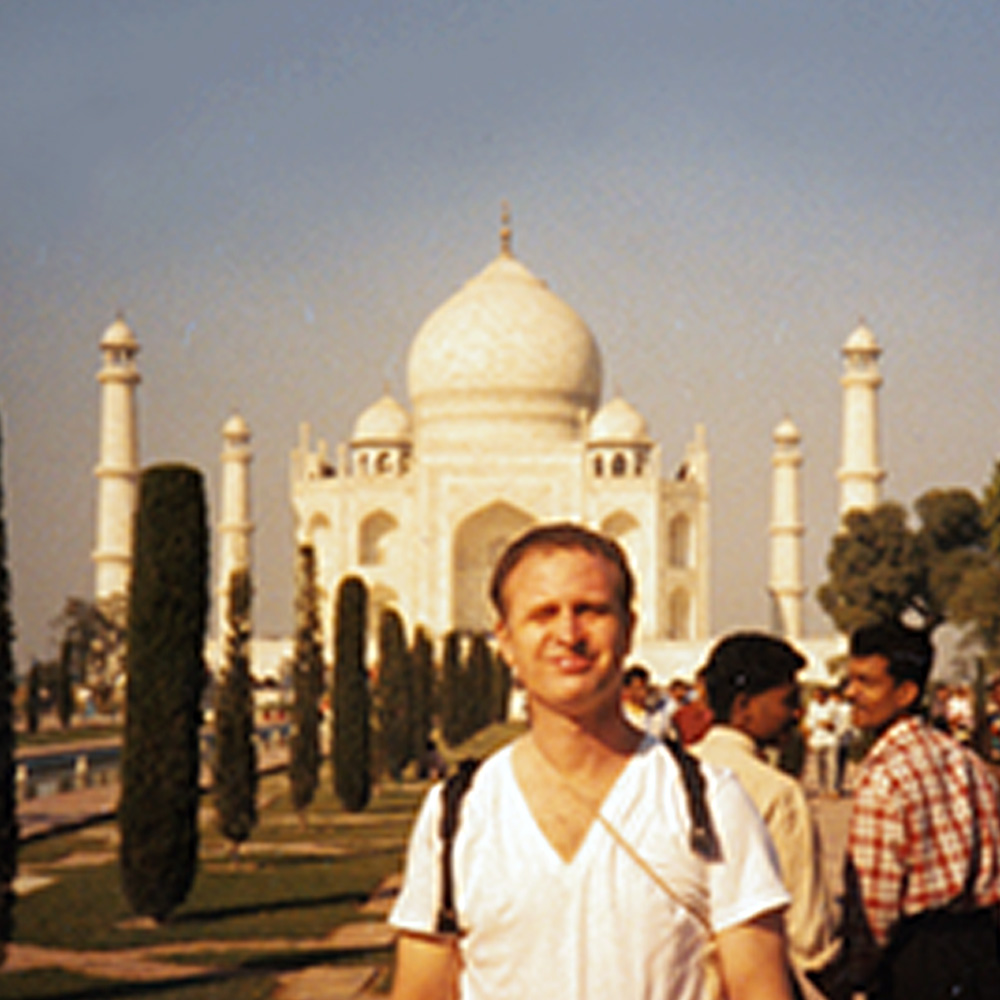
Moi and the Taj Mahal mid-morning
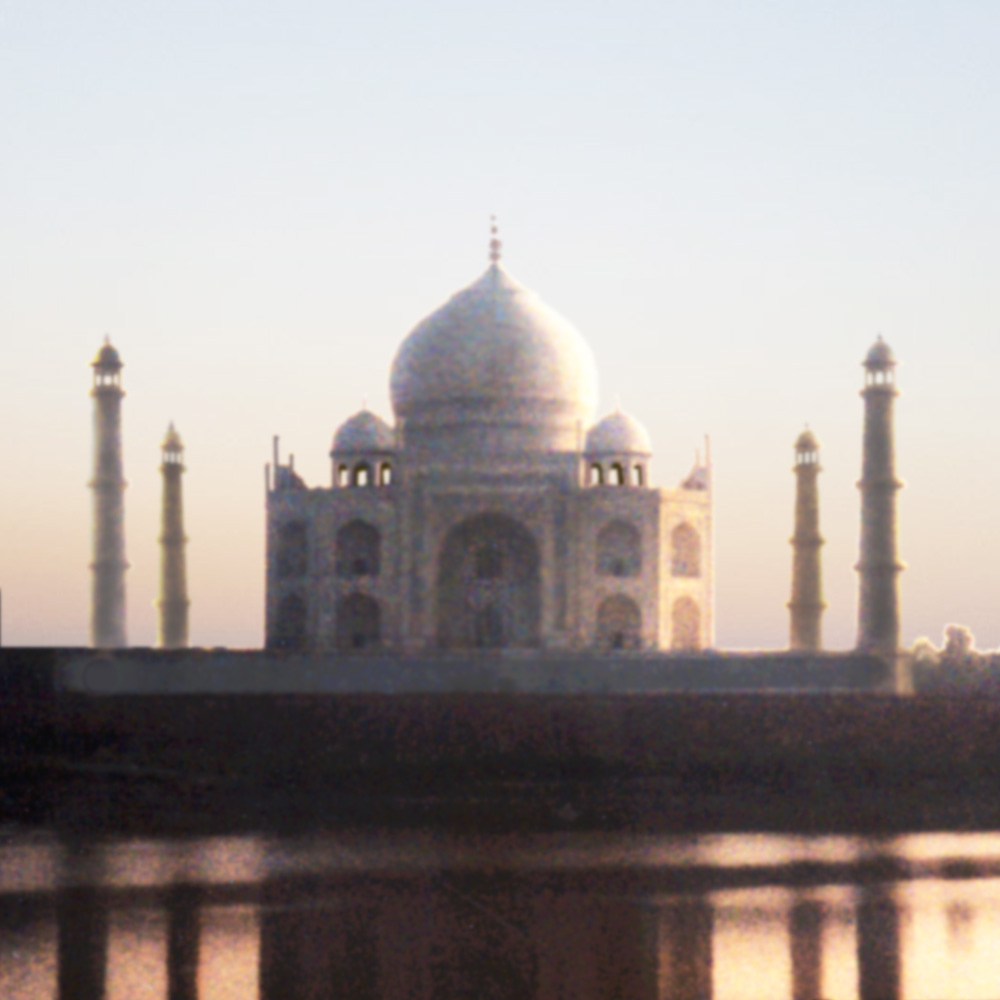
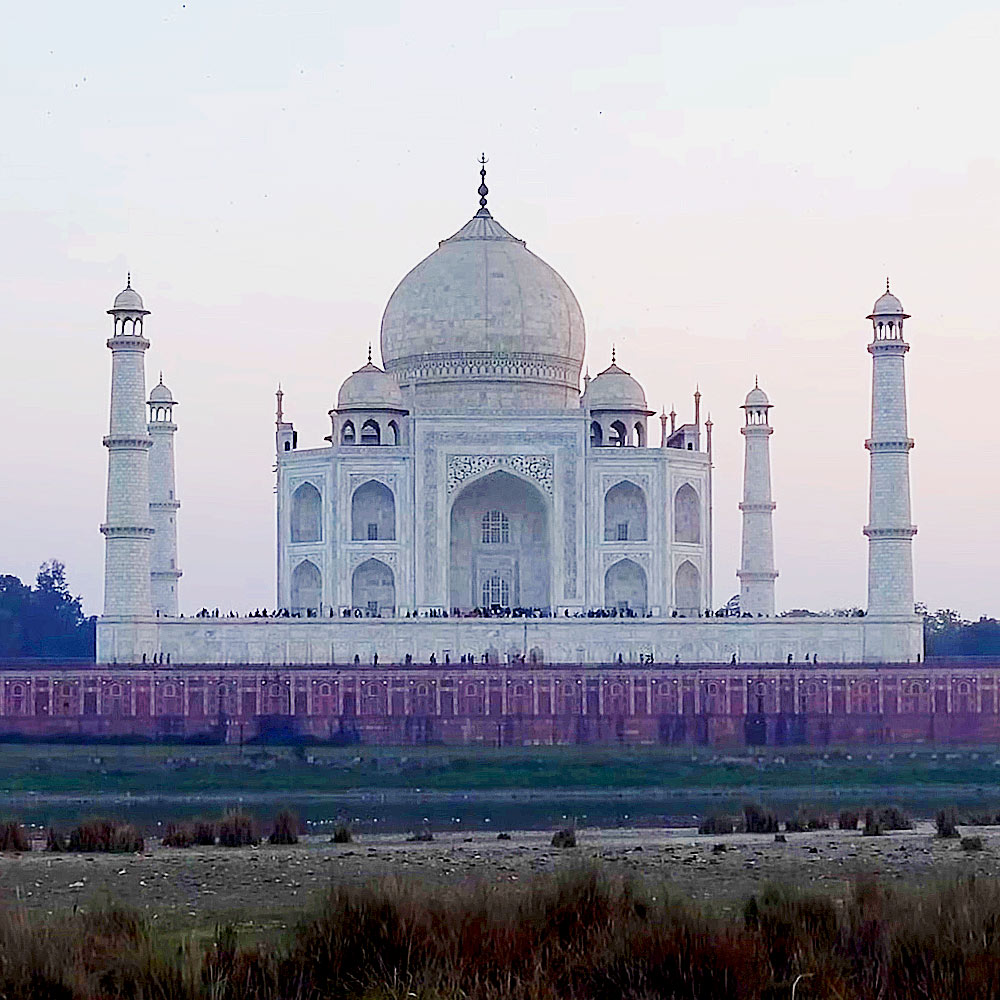
The Taj Mahal on the Yamuna River at sunset
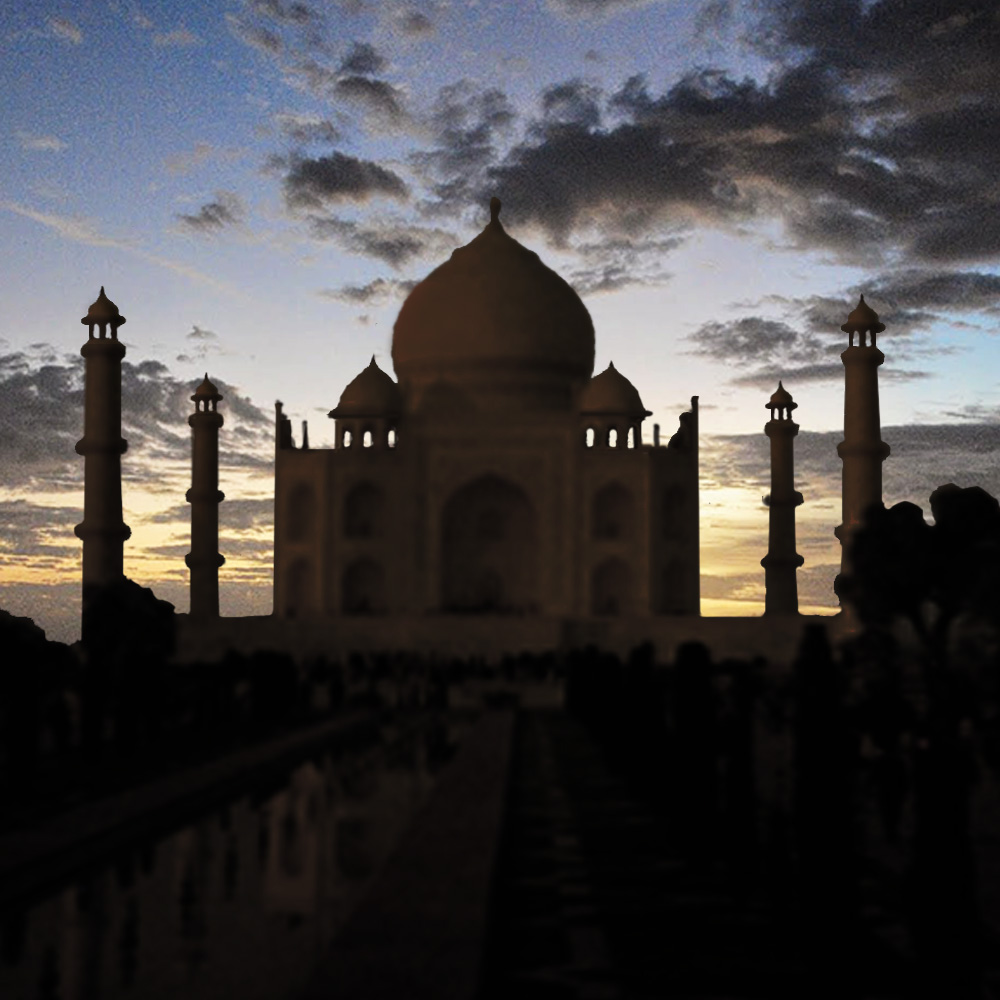
Sunset at the Taj Mahal
One of the Taj Mahal's most remarkable qualities is its ability to change color with the shifting light: soft pink at dawn, radiant white at midday, and warm golden tones at sunset
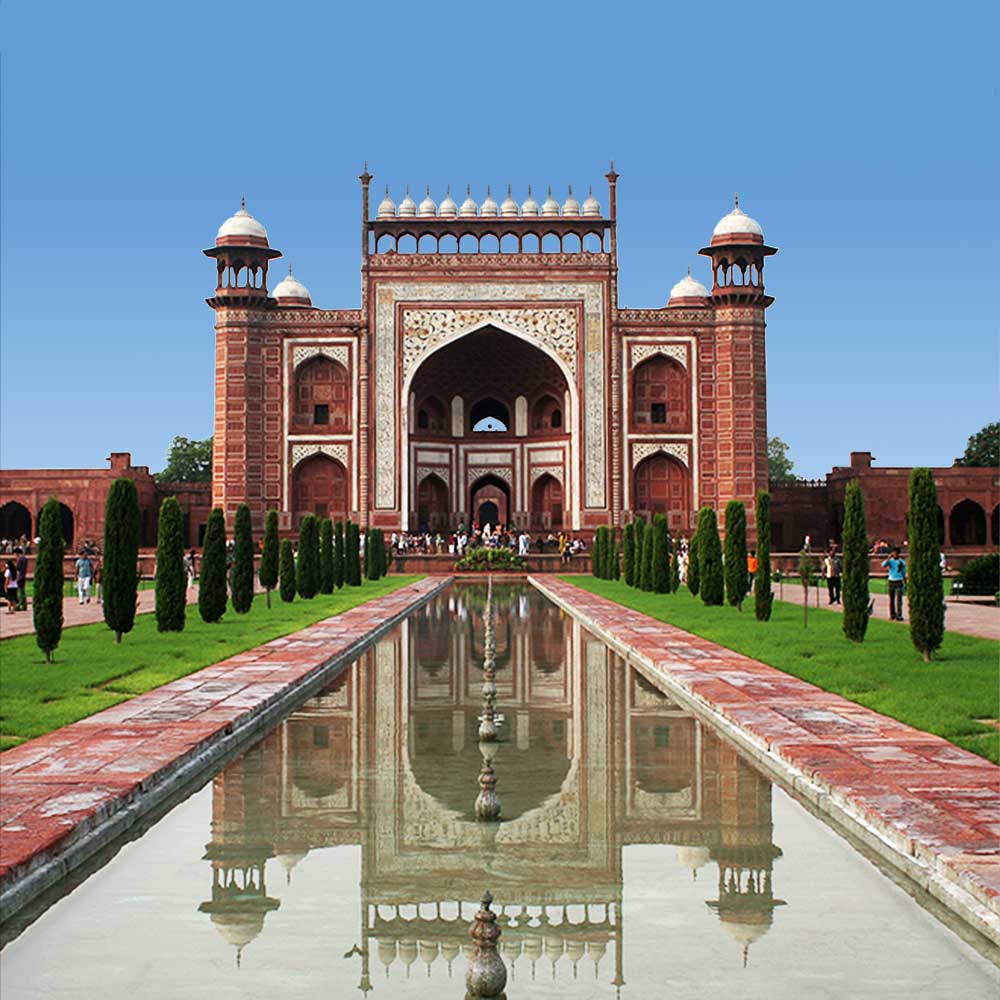
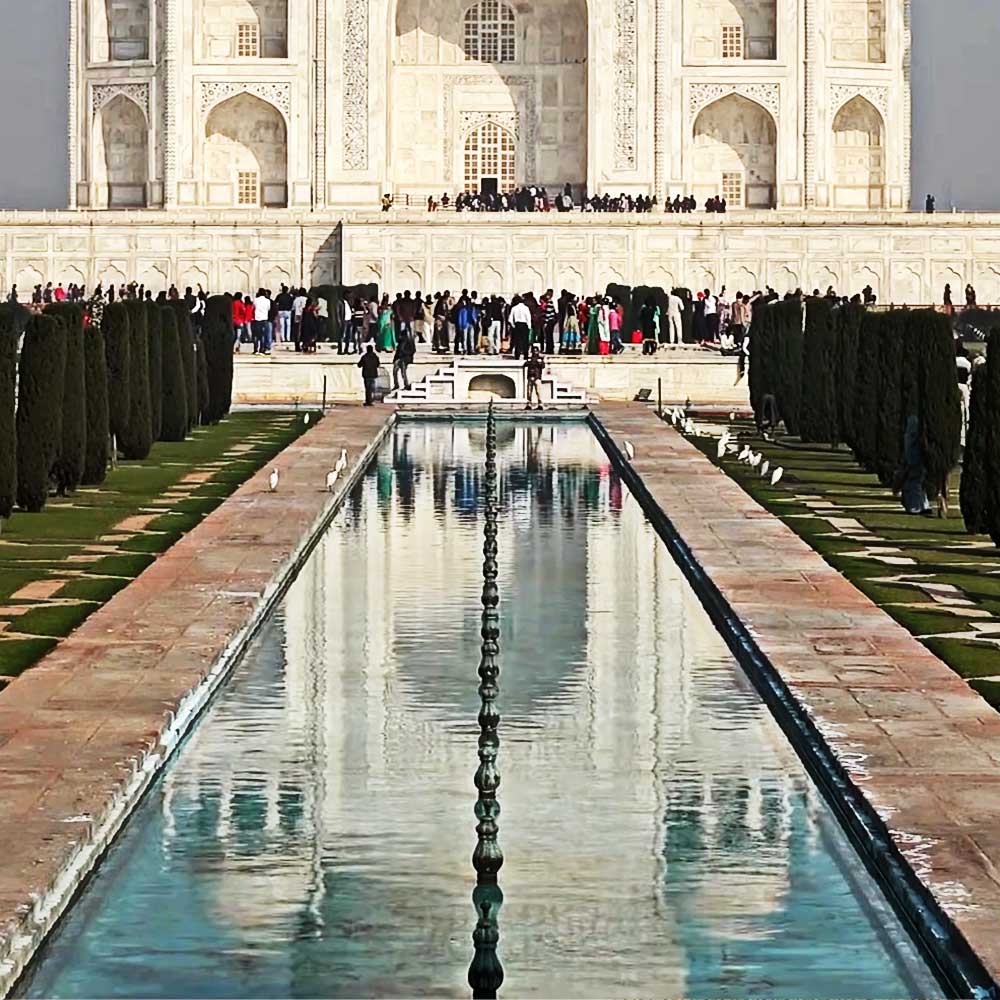
Looking directly at the Taj Mahal through the main gateway of the (darwaza)
The main gateway (darwaza) entrance mirroring the Taj Mahal
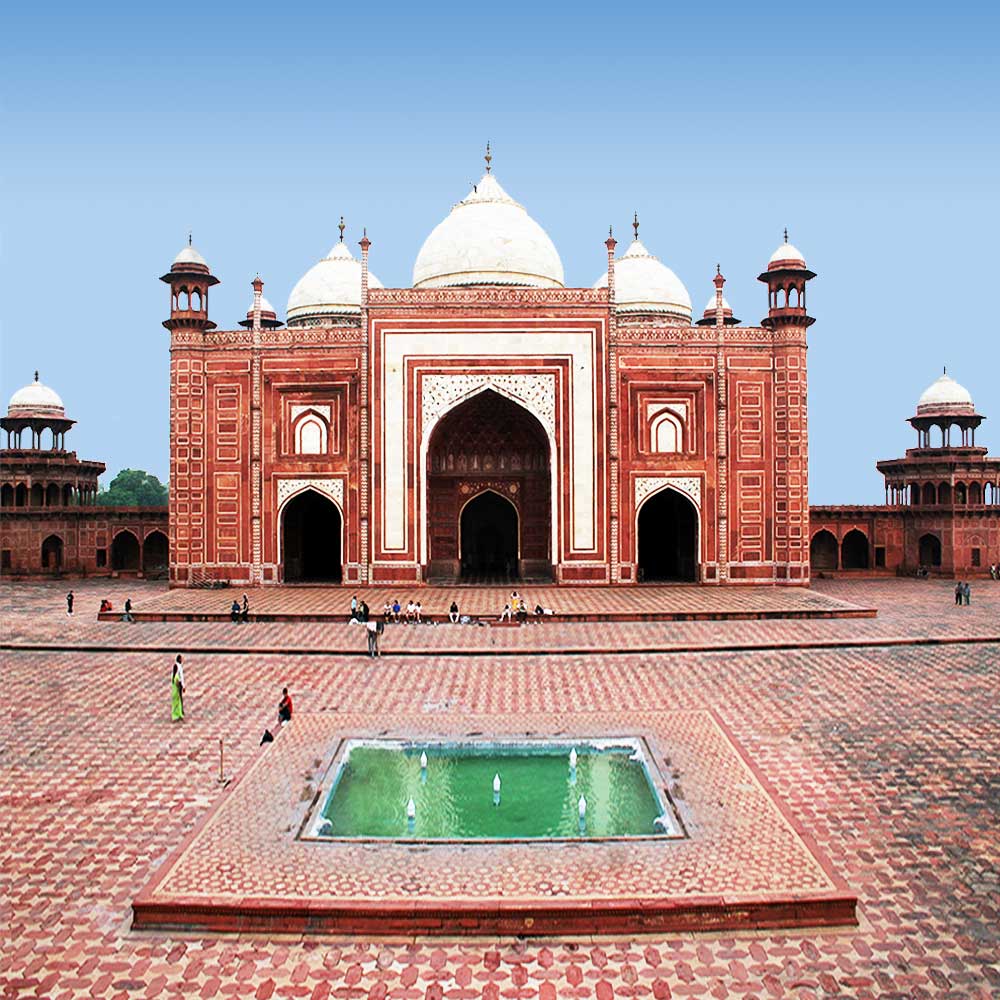
The Taj Mahal Kali Mosque on the western side facing the tomb
Details of the Taj Mahal The Taj Mahal is built from luminous white marble quarried in northern India, chosen for both its beauty and its symbolic associations with purity and transcendence. More than thirty varieties of precious and semi‑precious stones—jade from China, lapis lazuli from Afghanistan, turquoise, sapphire, carnelian, jasper, and others—are set into its surfaces using the intricate pietra dura technique, enriching the monument with imagery of paradise and imperial luxury. Architecturally, the Taj Mahal fuses Persian, Indian, and Islamic traditions, unified by a rigorous commitment to symmetry, geometric order, and axial alignment. Reflective pools and proportioned gardens extend this harmony outward, creating a serene environment that mirrors the monument’s perfect balance. Rising 220 feet (67 meters) to the top of its great onion‑shaped dome, the structure commands the landscape with both elegance and monumental scale. One of its most enchanting qualities is its shifting color: soft pink at dawn, radiant white at midday, and warm gold at sunset. This subtle transformation enhances its ethereal presence and contributes to its reputation as one of the world’s most captivating architectural masterpieces.
Detail of the reflecting pool a key design element that enhances the symmetry and creates a stunning mirrored image
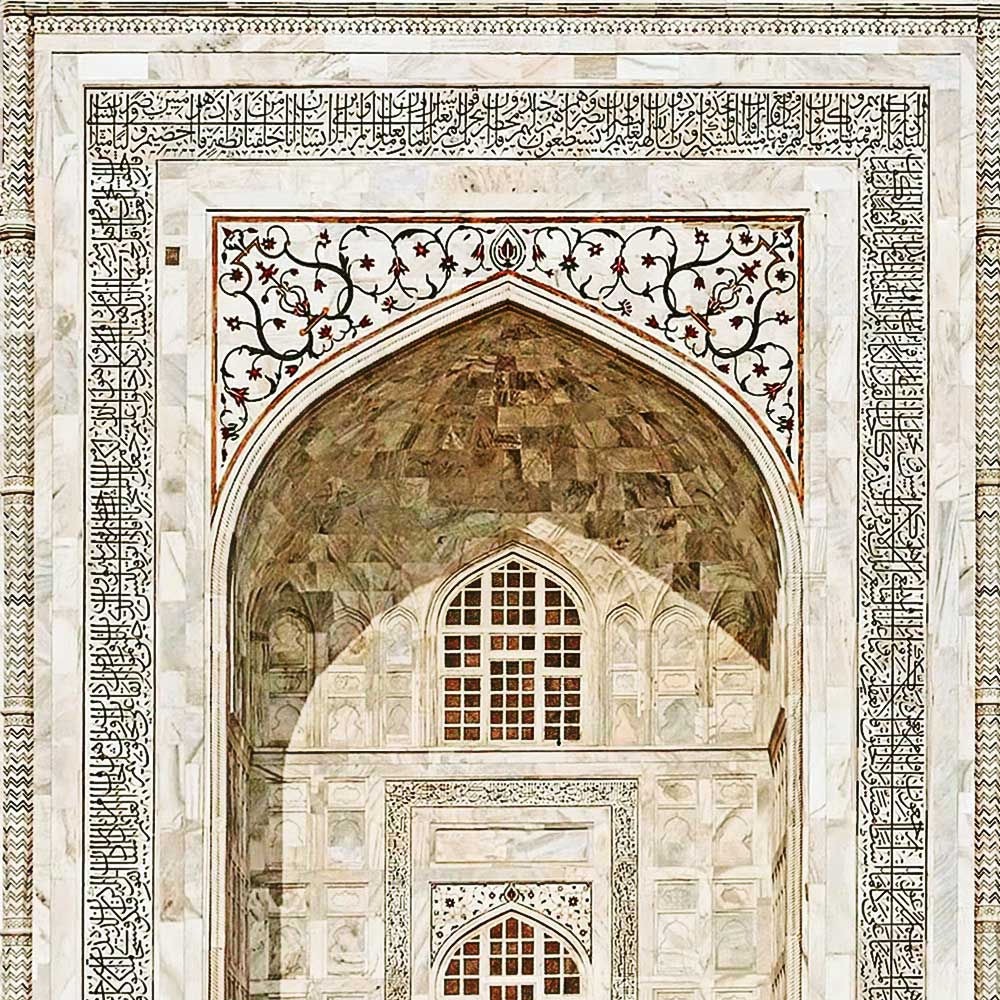
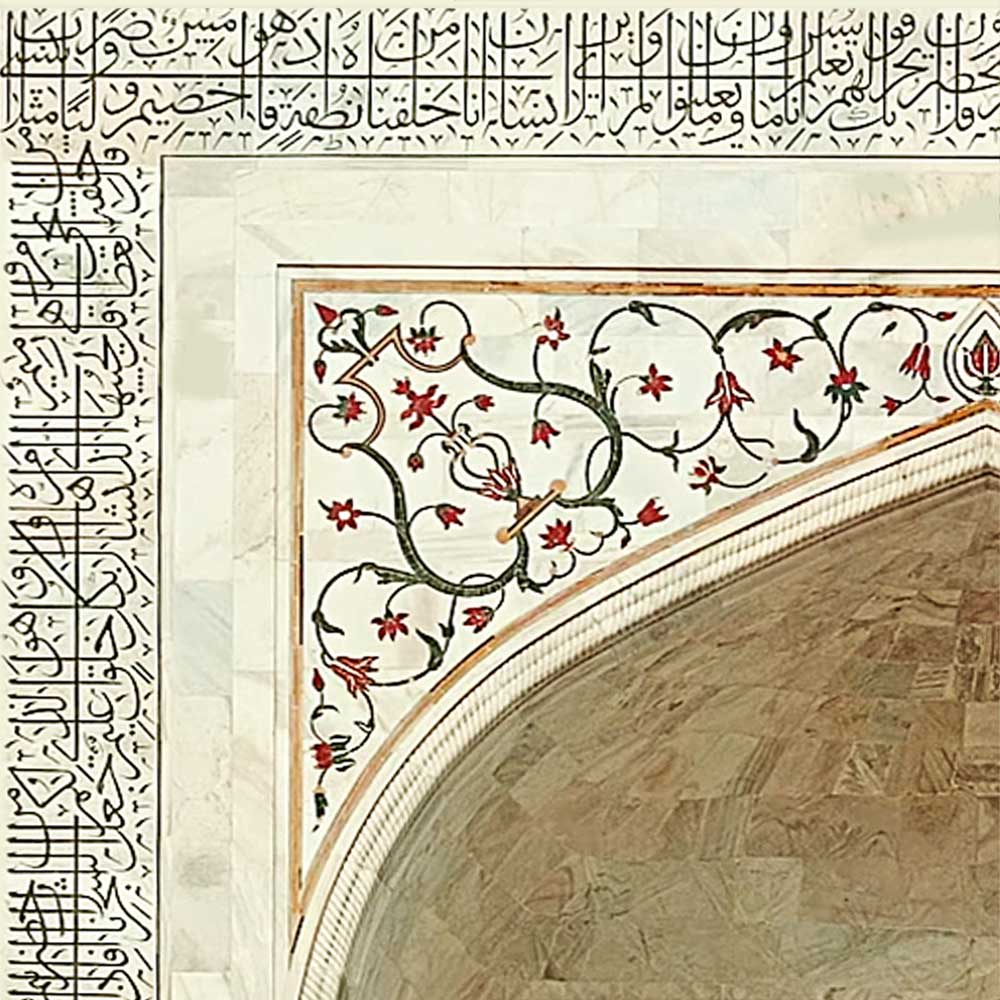
““Detail of the Taj Mahal front facade showing the great pishtaq (a vaulted space with a facade), showing relief of floral designs, geometric shapes, and Arabic calligraphy, inlaided with semi-precious stones.
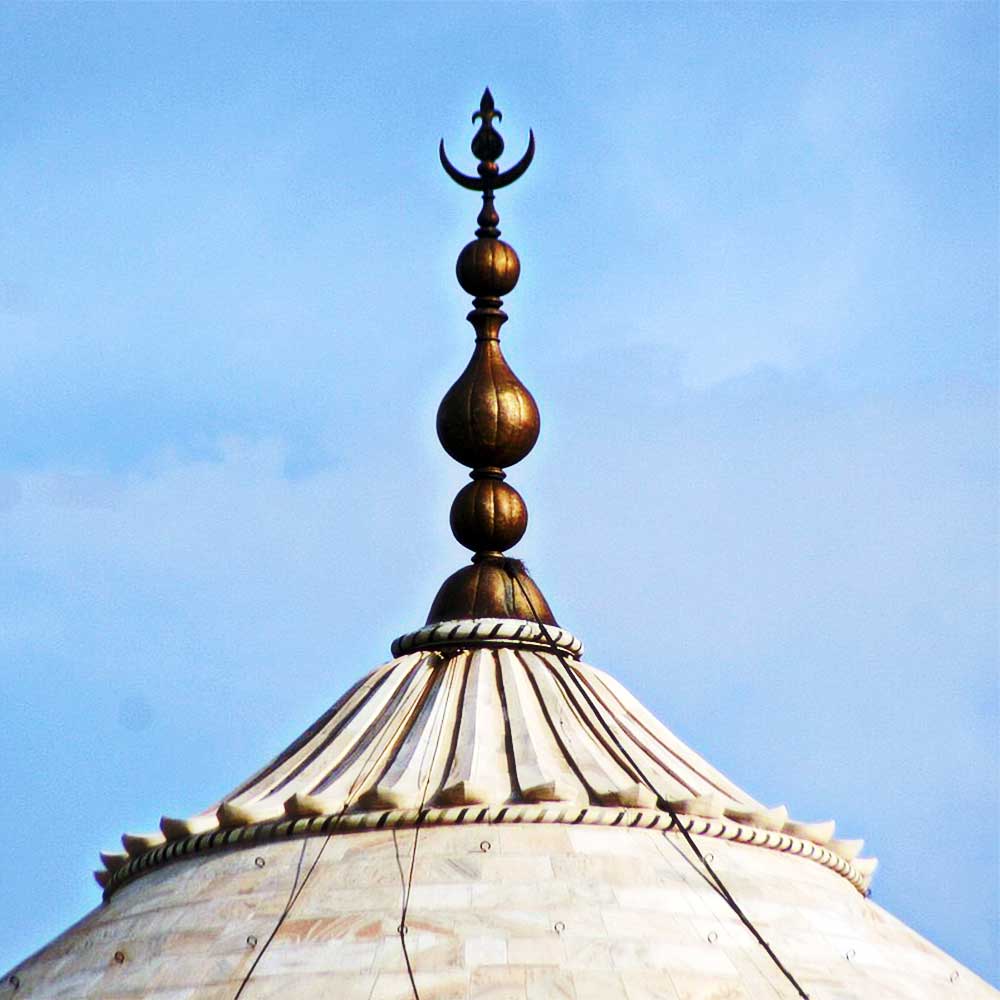
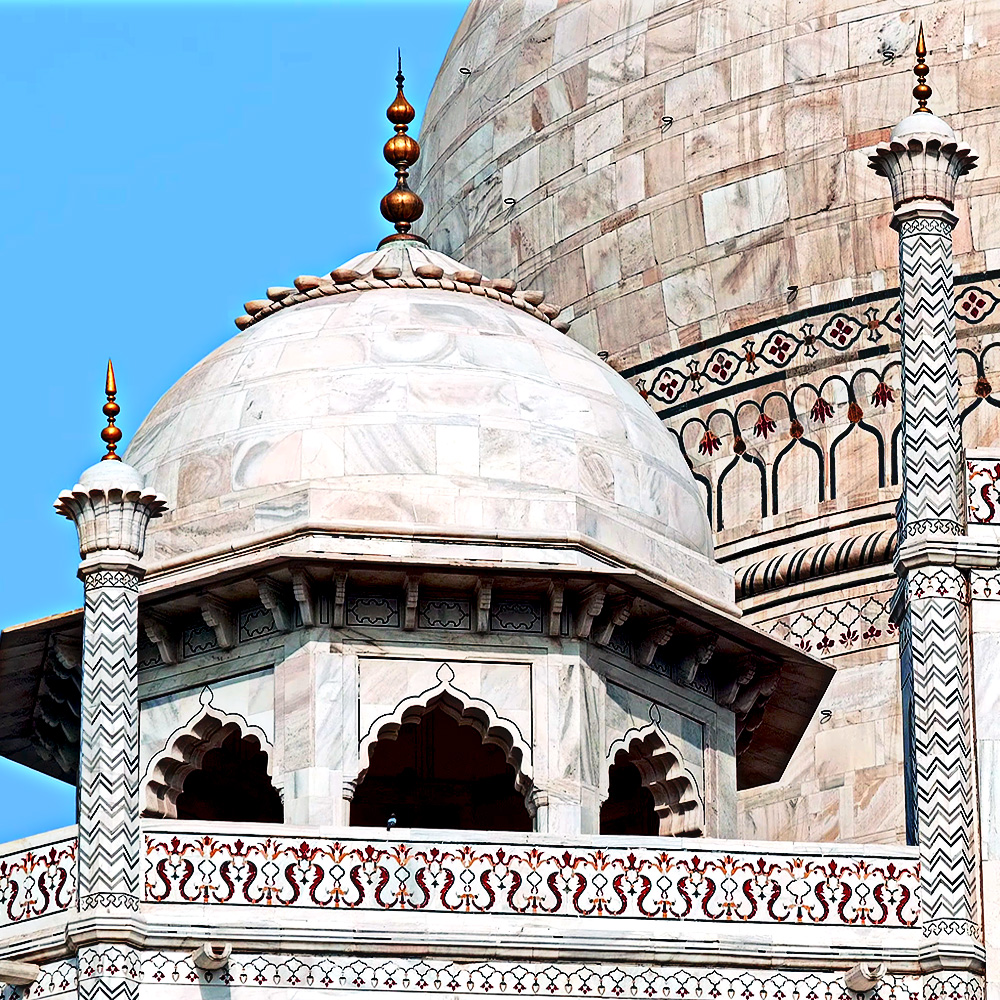
The Taj Mahal finial; the onion dome is perched by a gold gilded lotus bud and a crescent moon, it reaches 220 feet [67 meters] above ground.
Detail of the Taj Mahal front facade and dome showing relief of floral designs, geometric shapes, and Arabic calligraphy, inlaided with semi-precious stones.
““Detail of the Taj Mahal front facade showing the great pishtaq (a vaulted space with a facade), relief of floral designs, geometric shapes, and Arabic calligraphy, inlaided with semi-precious stones.
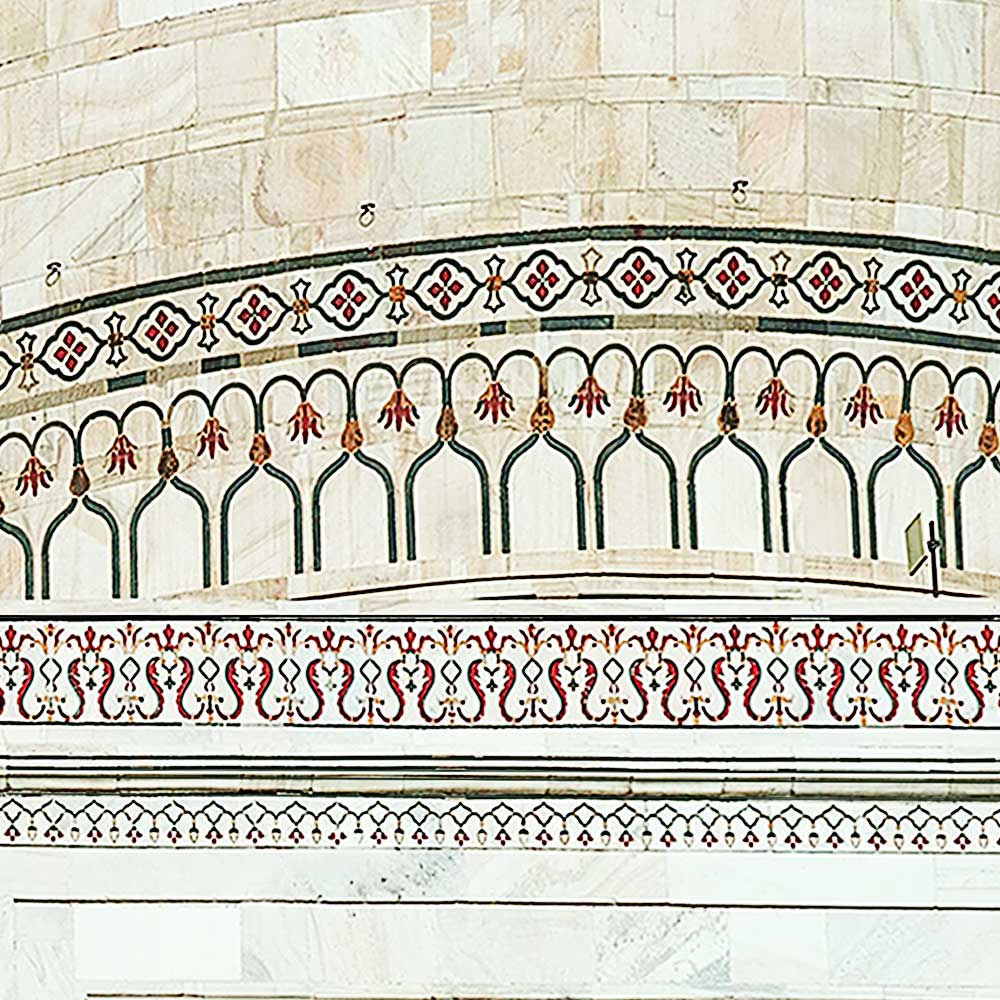
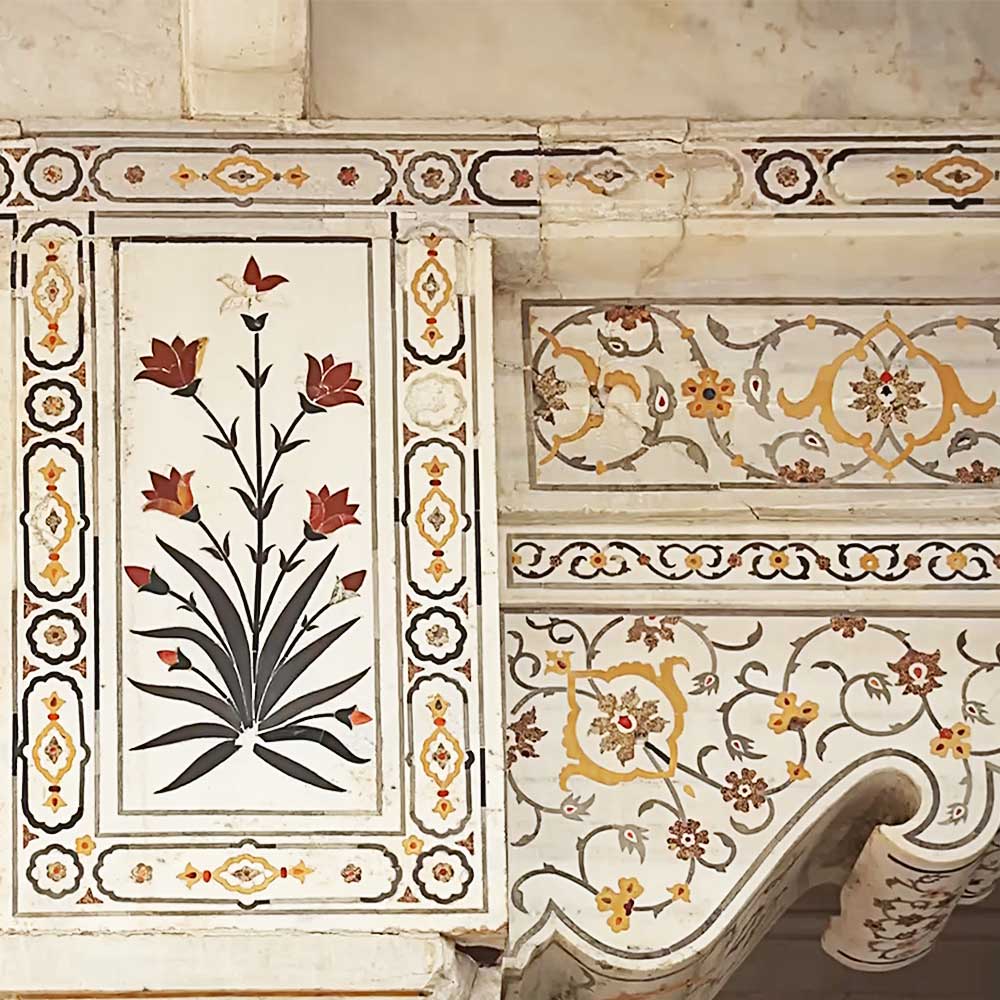
Detail of colorful impressions of floral design and geometric shapes inlaid with semi-precious stones
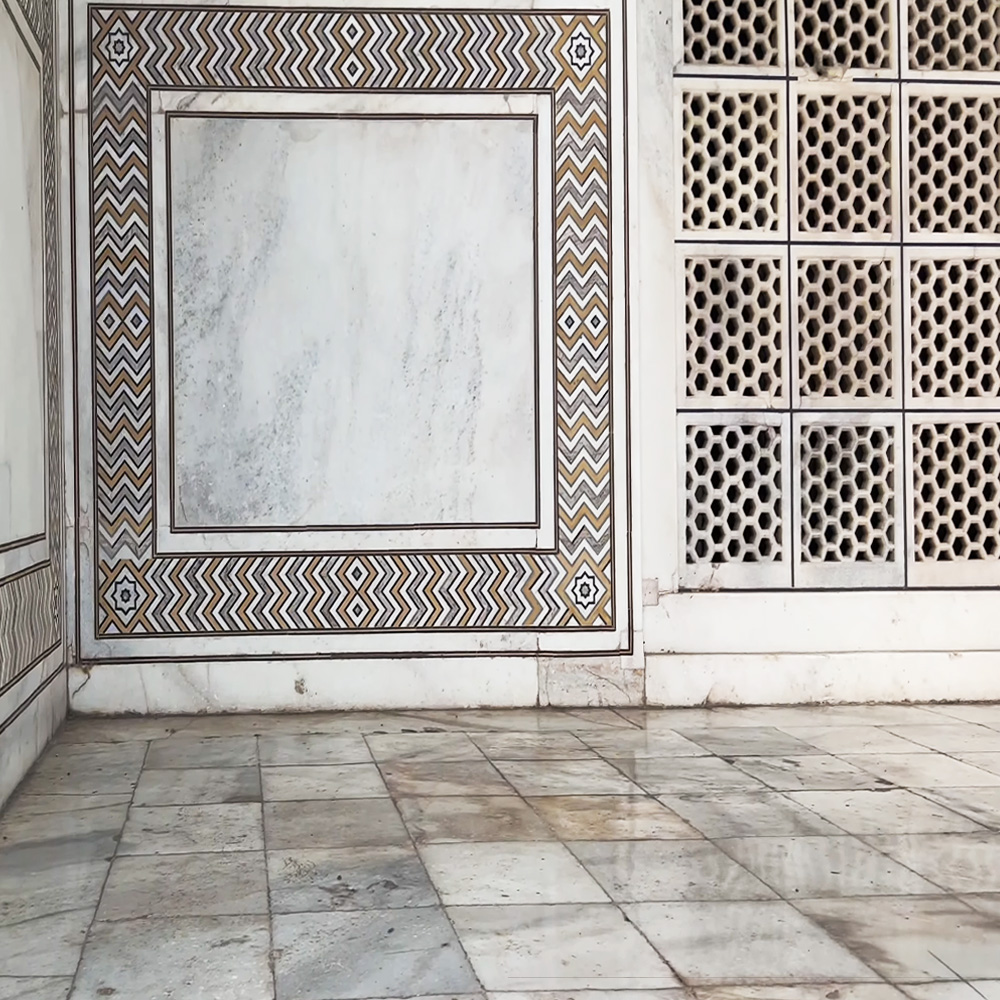
Detail of geometric shapes inlaid with semi-precious stones, 
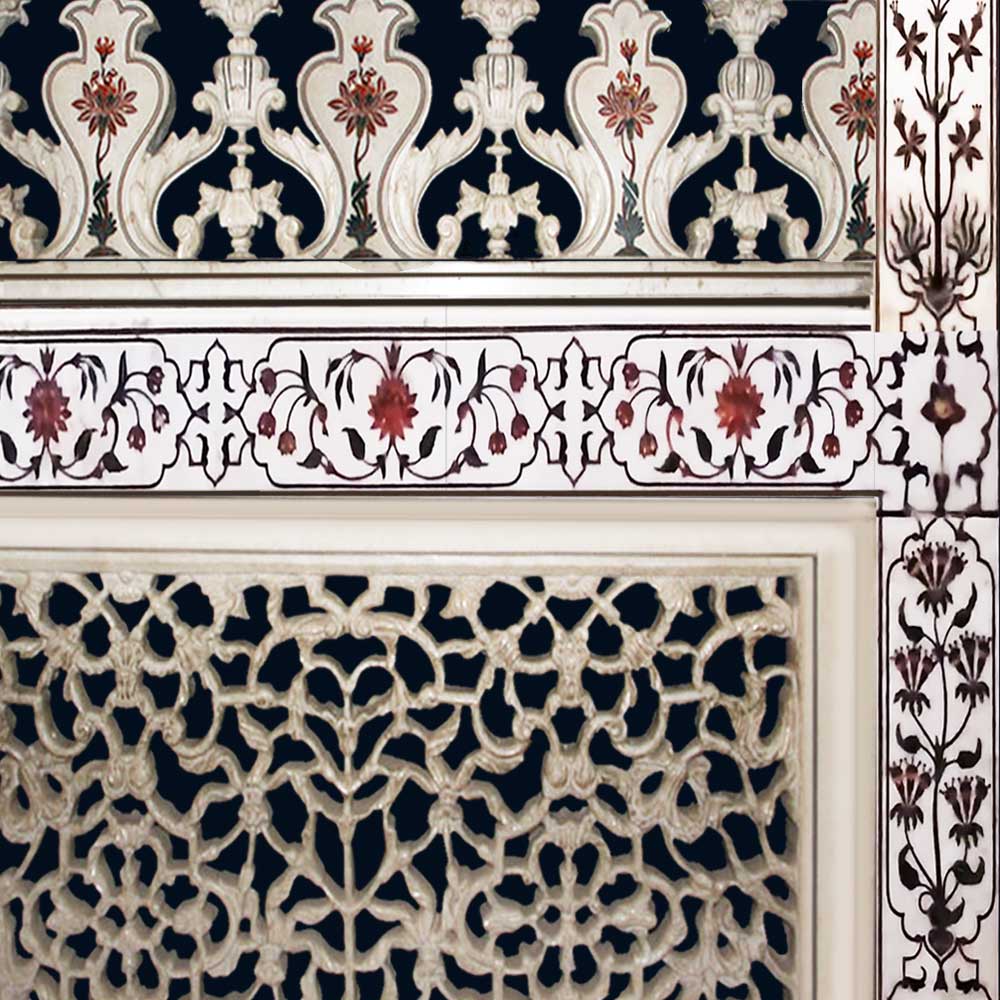
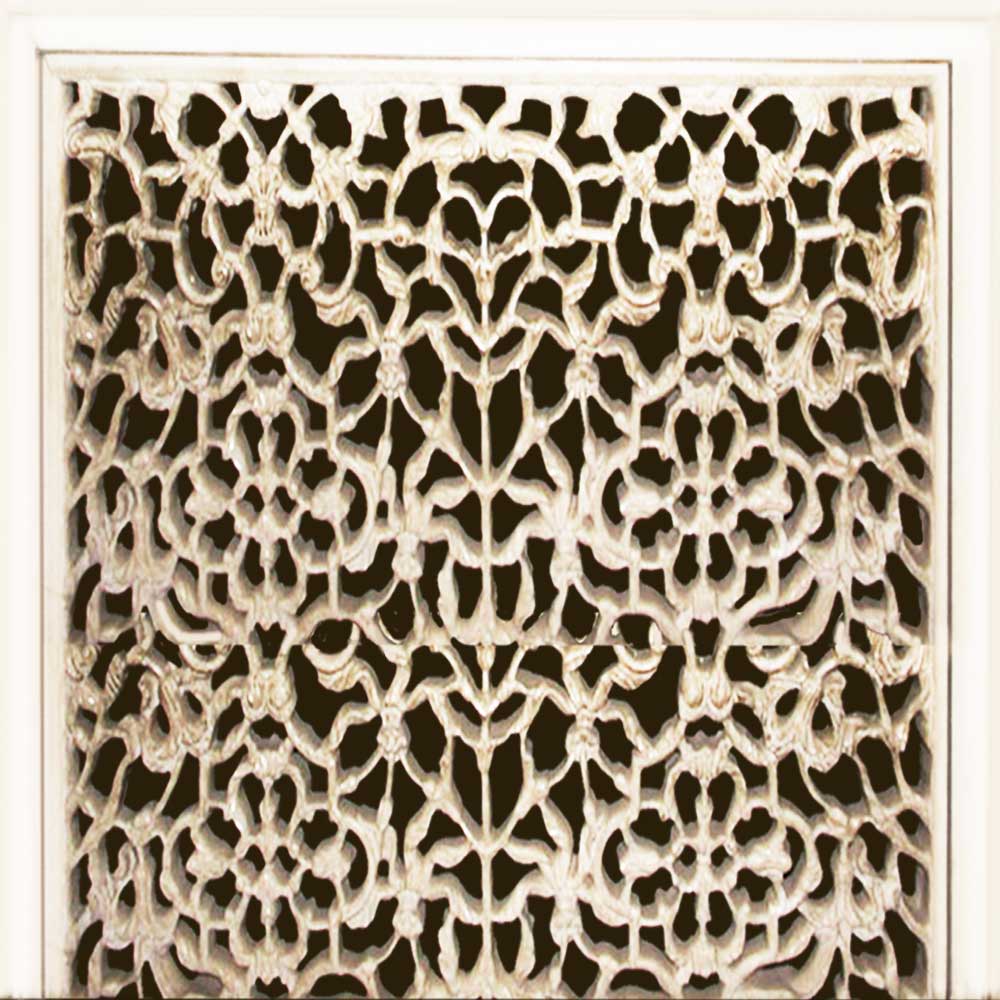
““Detail of the inlaid flower blooms and jali latticed screen of perforated stone surrounding the tomb
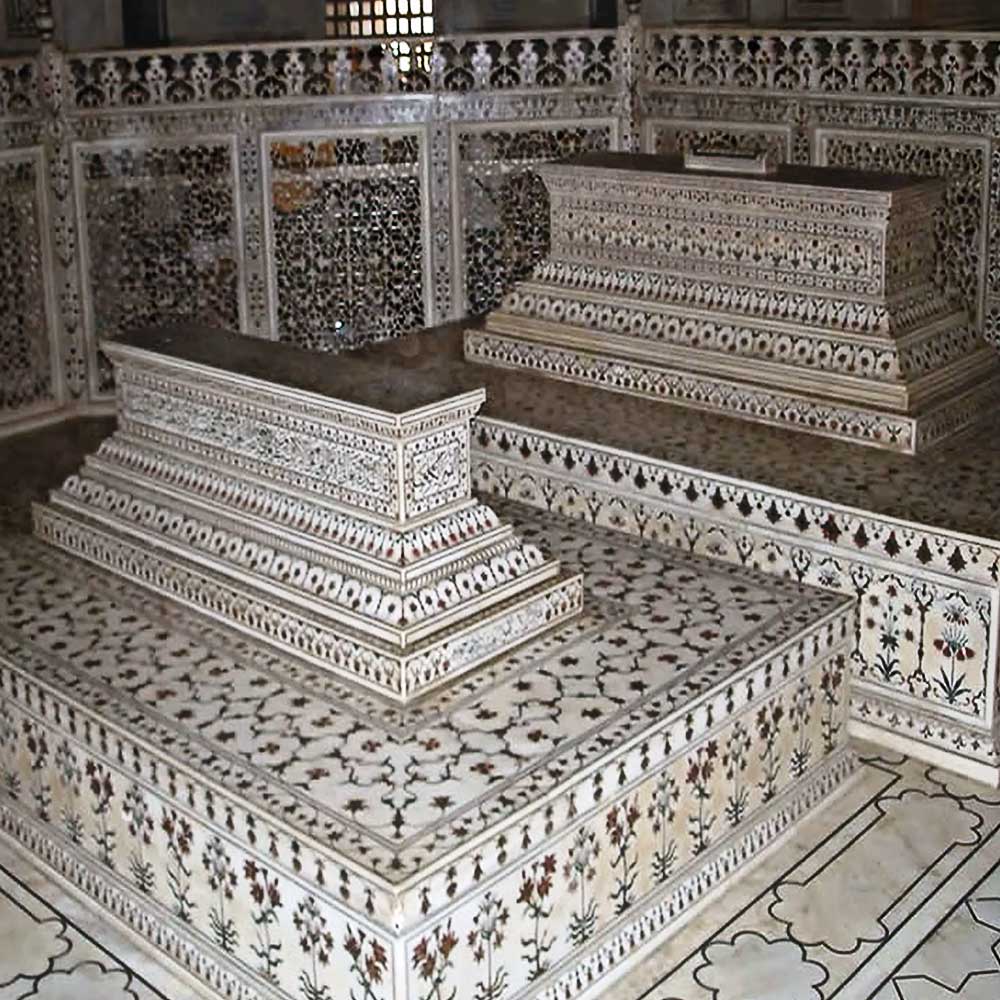
Detail of the Tomb for Mumtaz Mahal and her husband Shah Jahan, colorful floral design and geometric shapes inlaid with semi-precious stones,
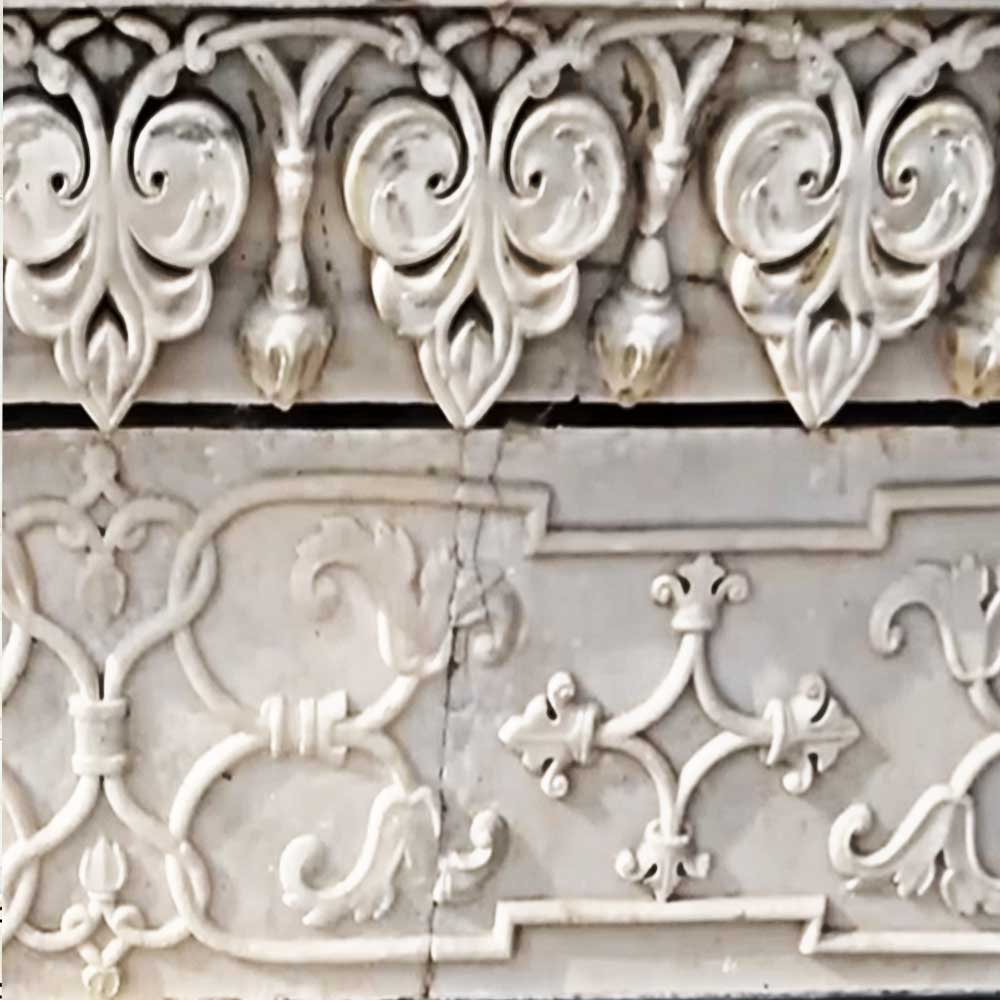
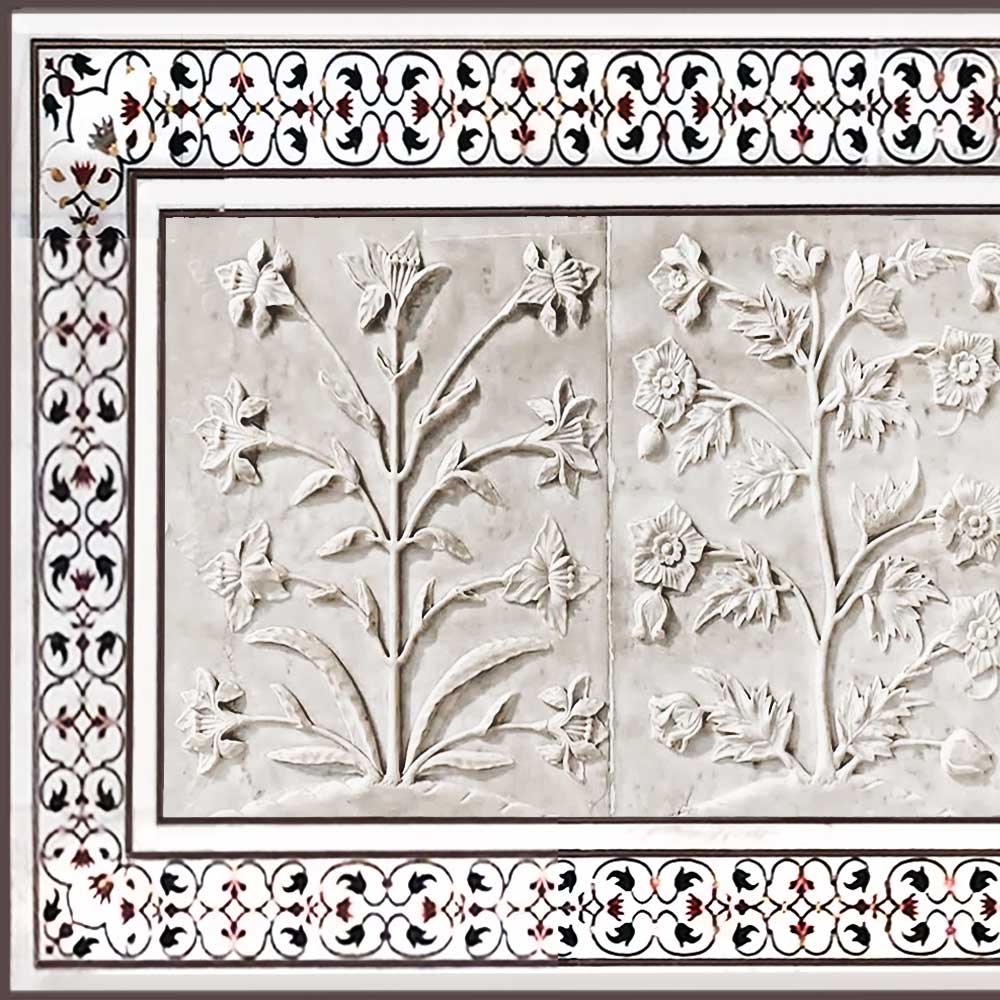
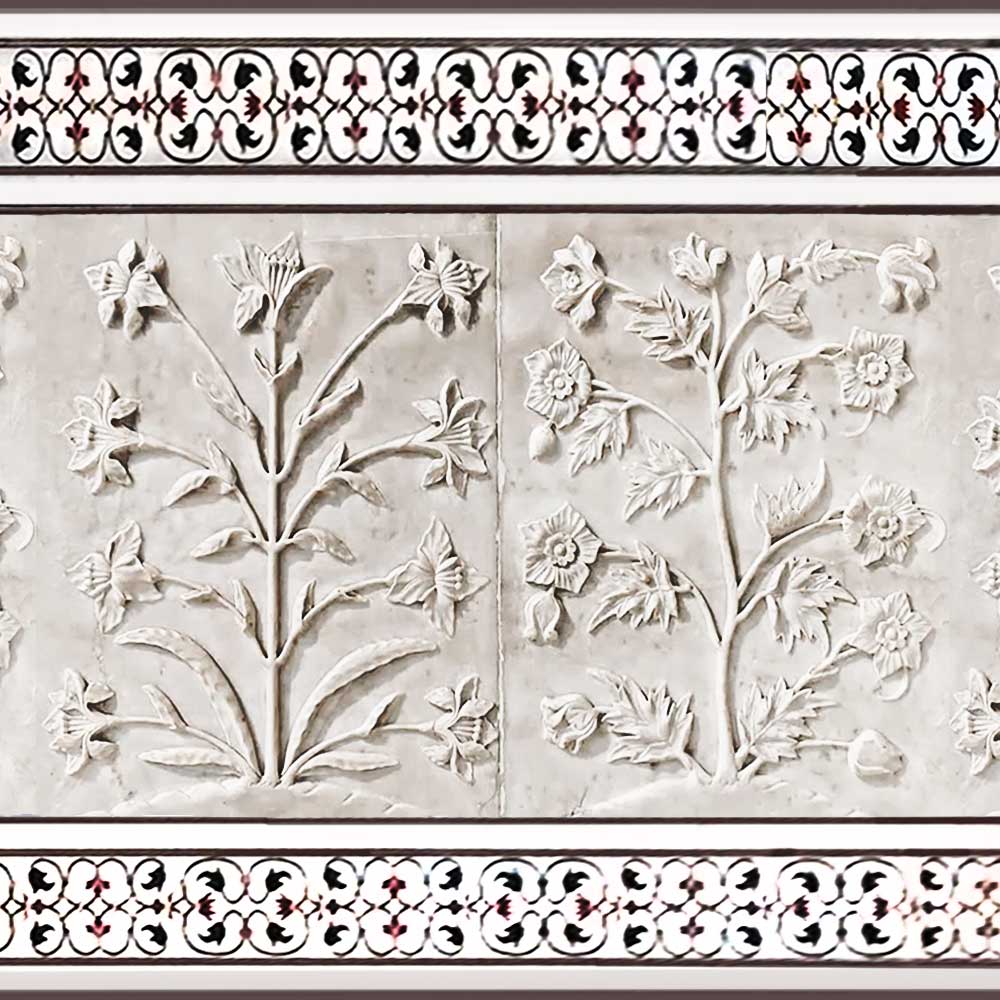
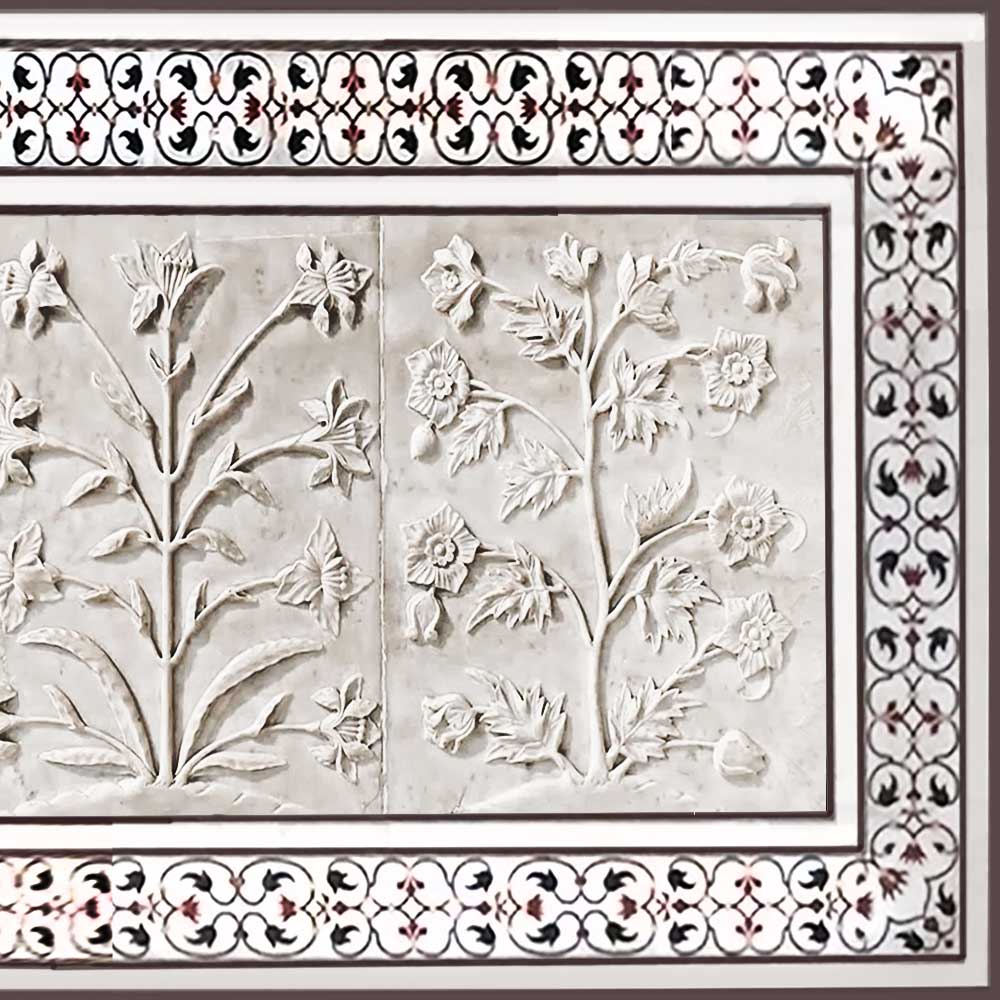
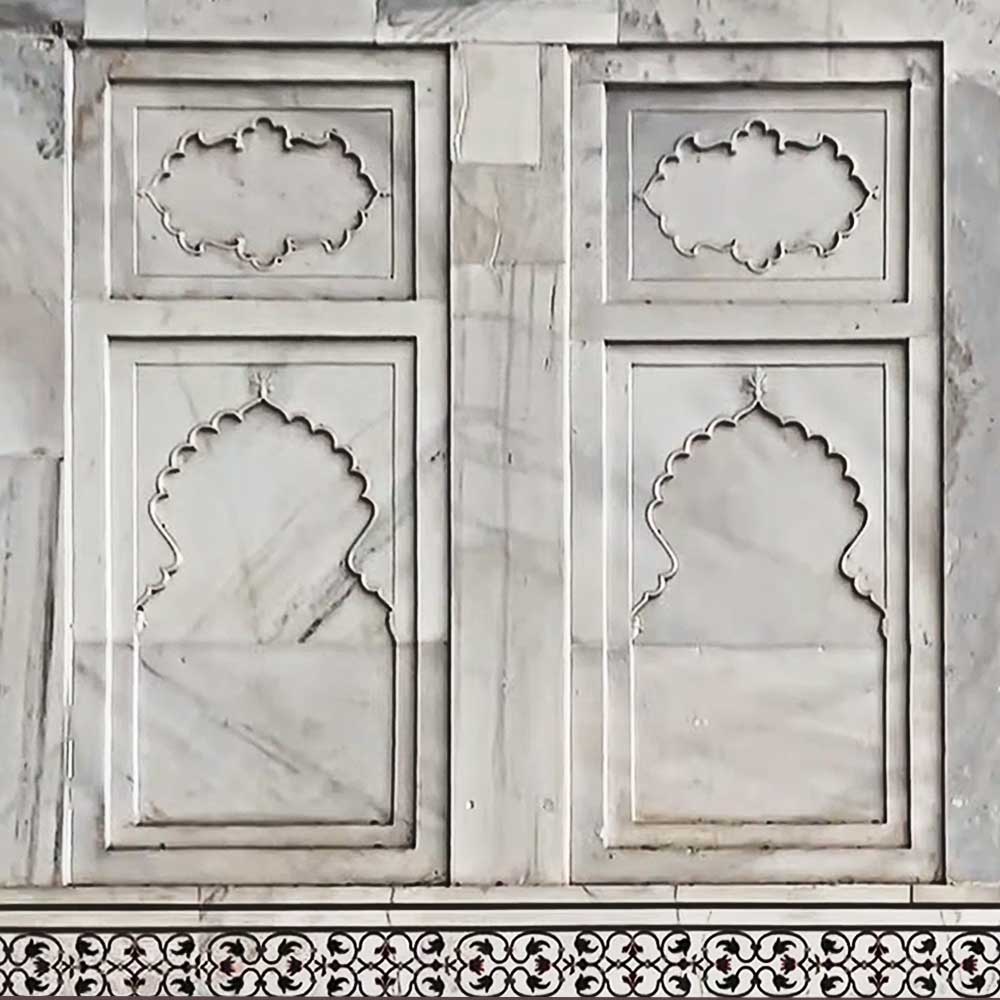
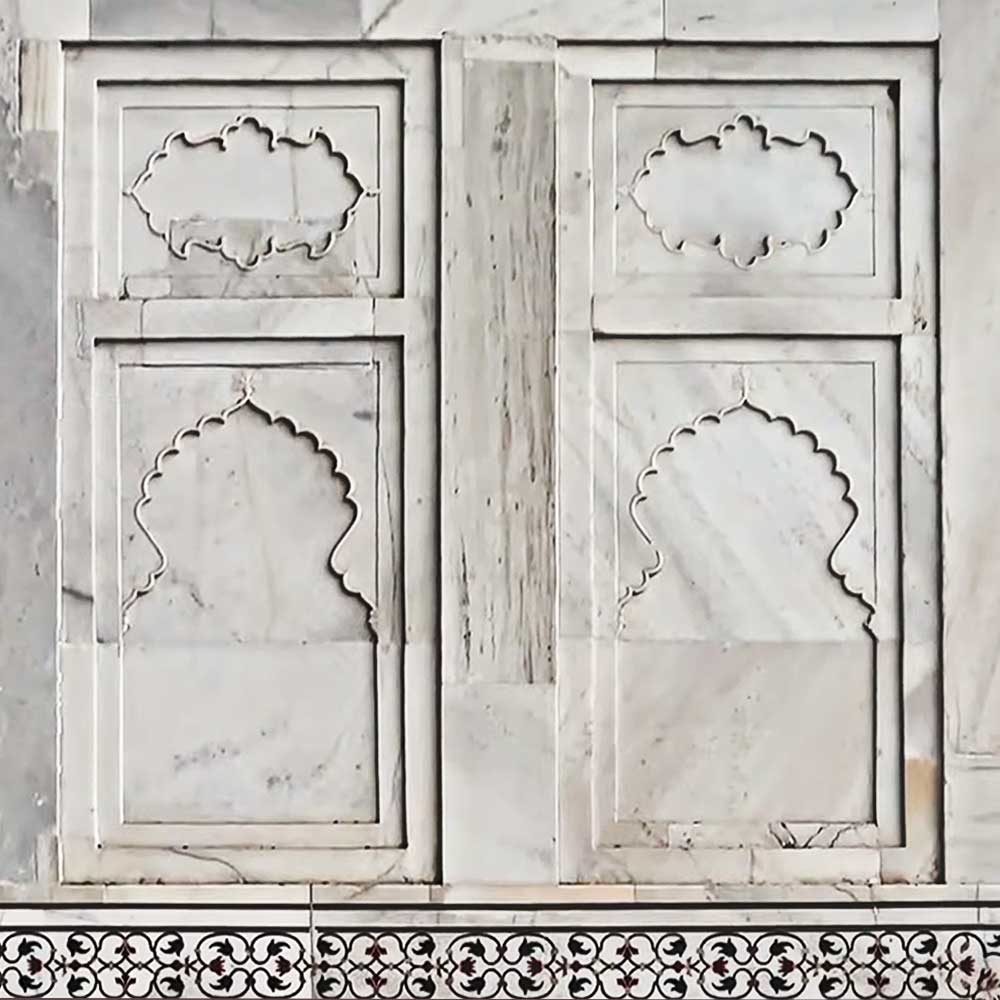
Detail of marble relief floral design on a wall panel,
““Detail of colorful floral design and geometric shapes inlaid with semi-precious stones
Detail of a column capital wih colorful impressions of flowers hanging from a trellis frameworks
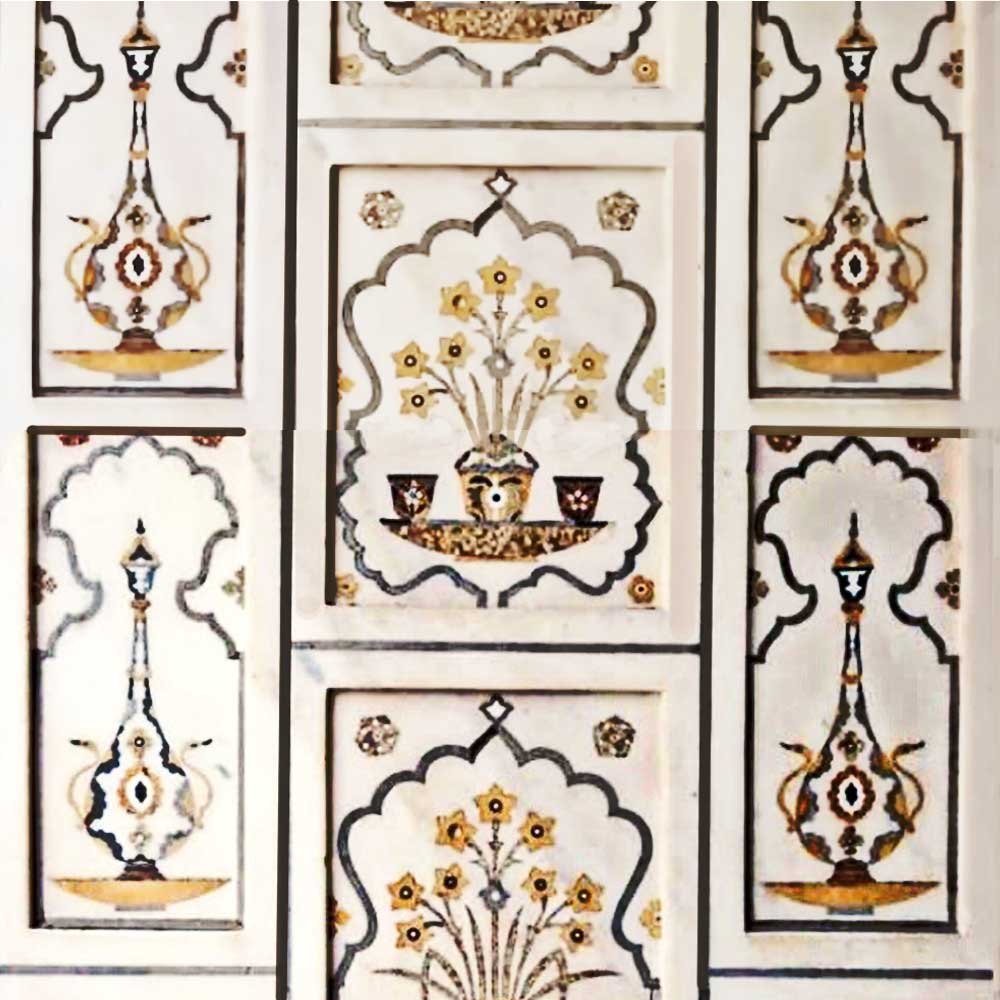
Detail of colorful wall tiles with simple impressions of flowers and tea pots on a white background
““Detail of the Taj Mahal side facade showing the pishtaq (a vaulted space with a facade), painted relief, inlaid Arabic calligraphy and jali screen windows
Detail of a cut marble border
Detail of jali latticed screen of perforated stone surrounding the tomb
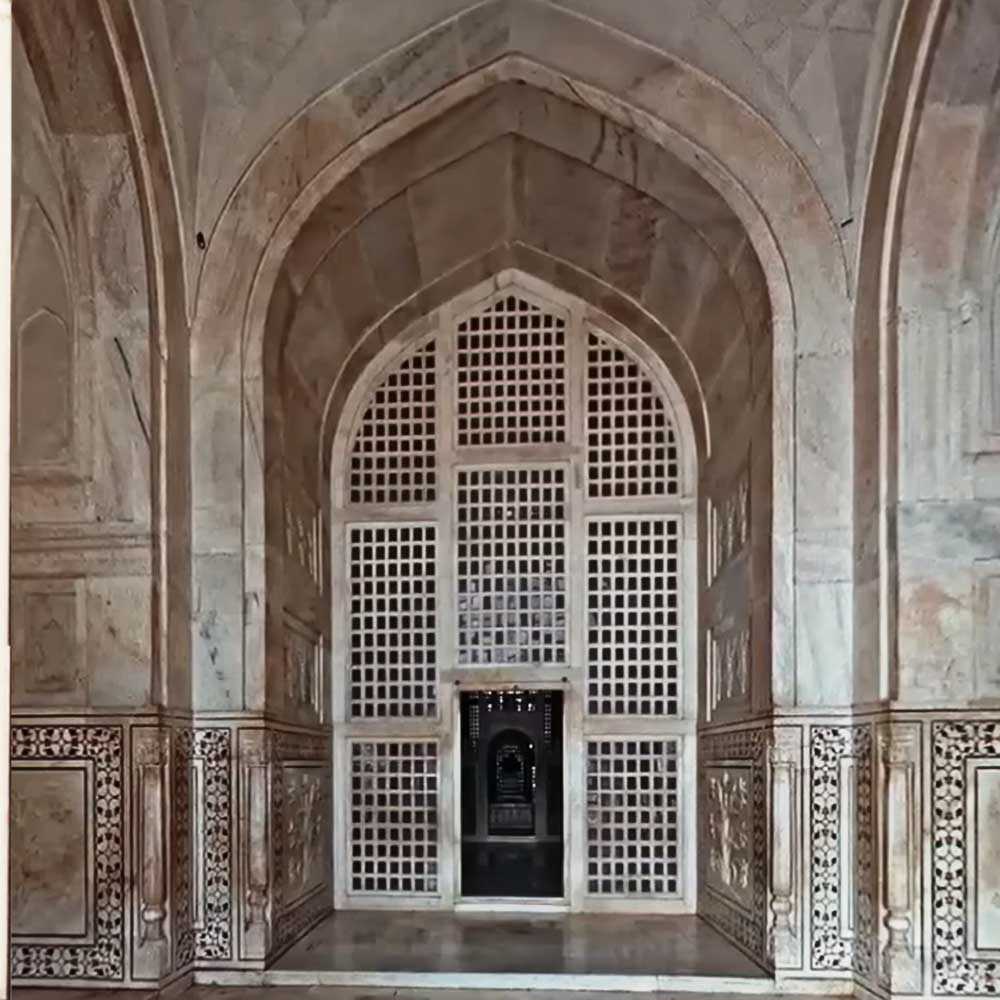
““Detail of jali screen window and entrance to the inter tomb
Detail of marble relief floral design on a wall panel
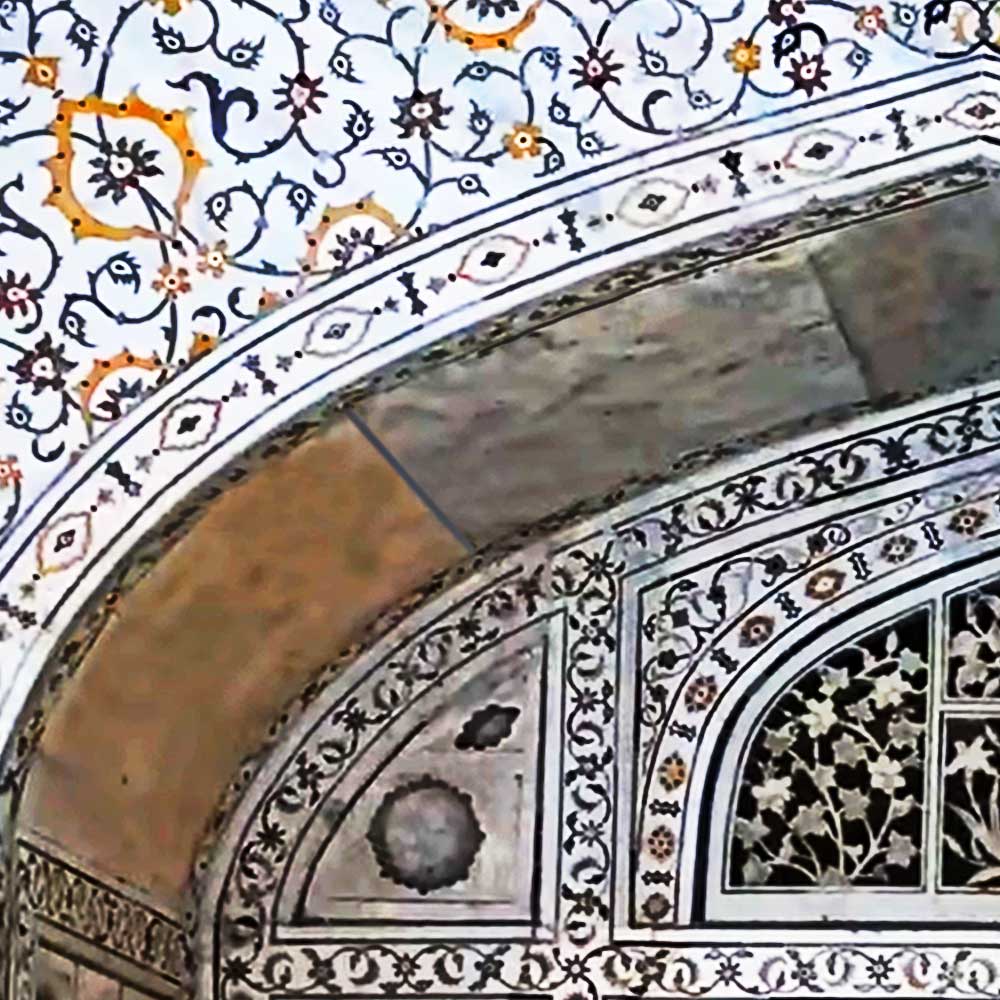
Colorful floral and geometric design border inlaid with semi-precious stones
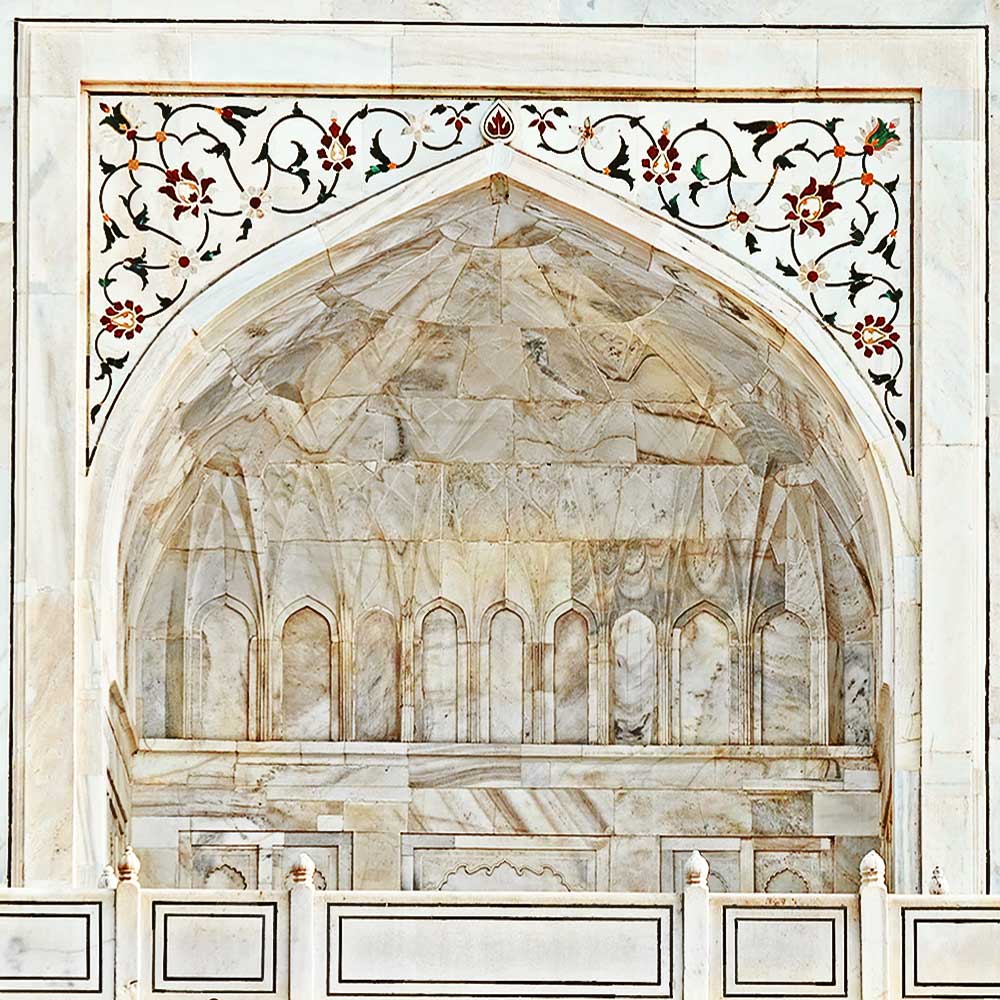
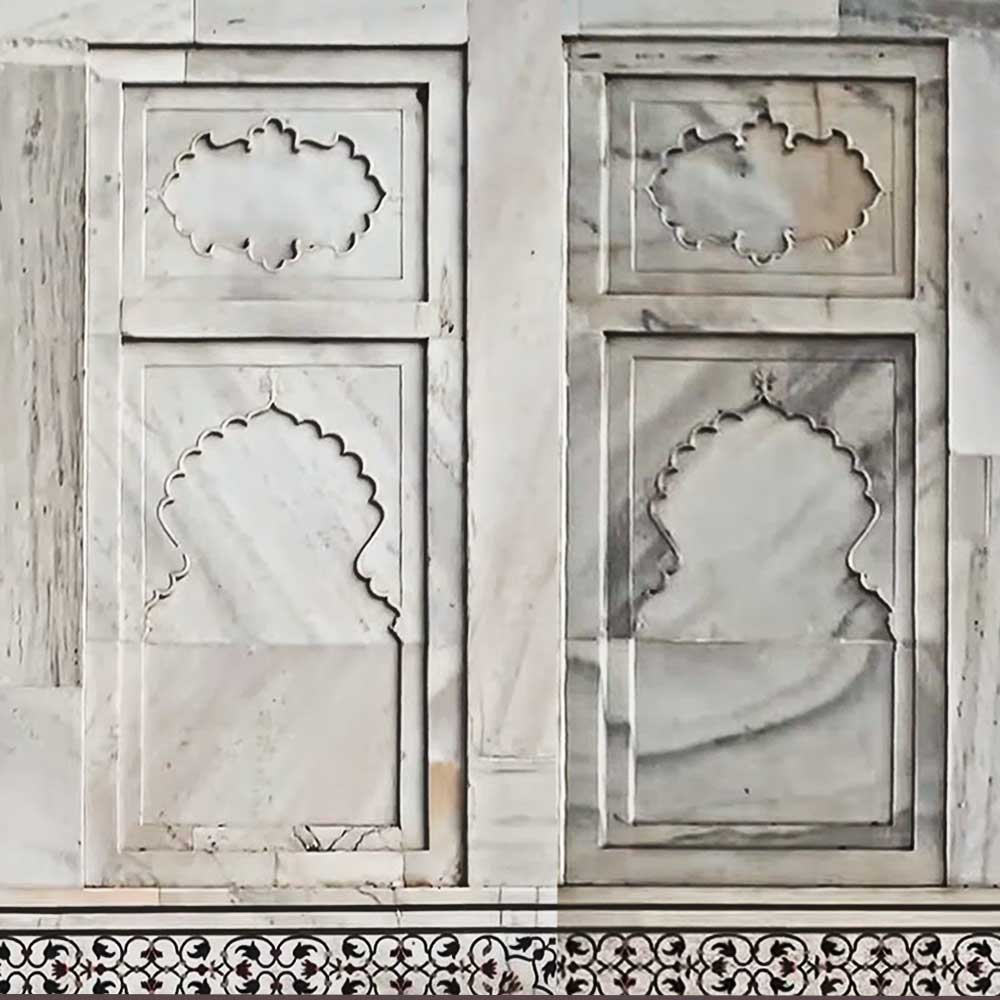
““1.) Detail of a arch wih colorful impressions of floral borders, the shapes of the flowers remain simple,
2.) but display a fluidity of line typical of Mughal design, 1653, Agra, India
1.) Detail of a marble relief floral design on the wall with rows of naturalistic flowers of mixed botanical species,
““2.) representing heavenly flowerbeds, framed with inlaid floral borders with semi-precious stones,
3.) Taj Mahal, 1653, Agra, India
1.) A repeating jharokha stone window motif,
““2.) A jharokha is a ornate oriel window or balcony,
3.) often found in Indian architecture, Taj Mahal, Agra, India
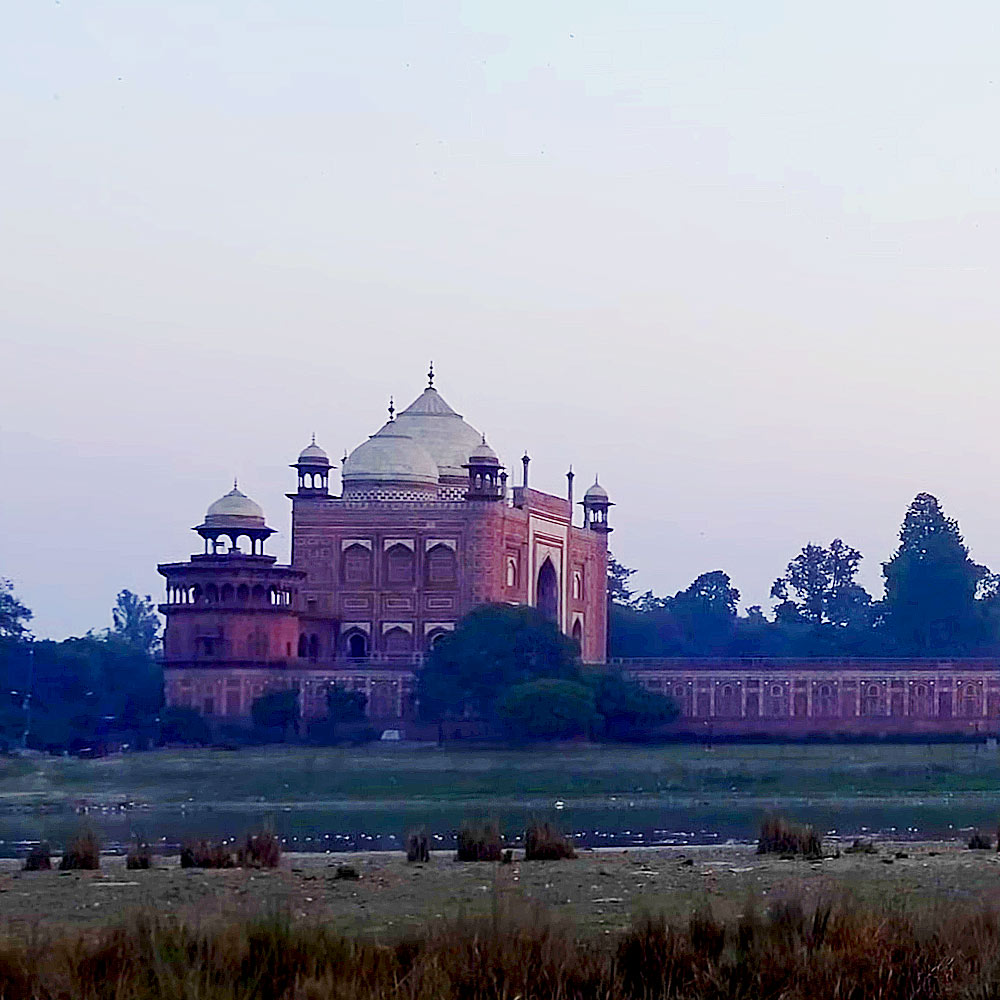
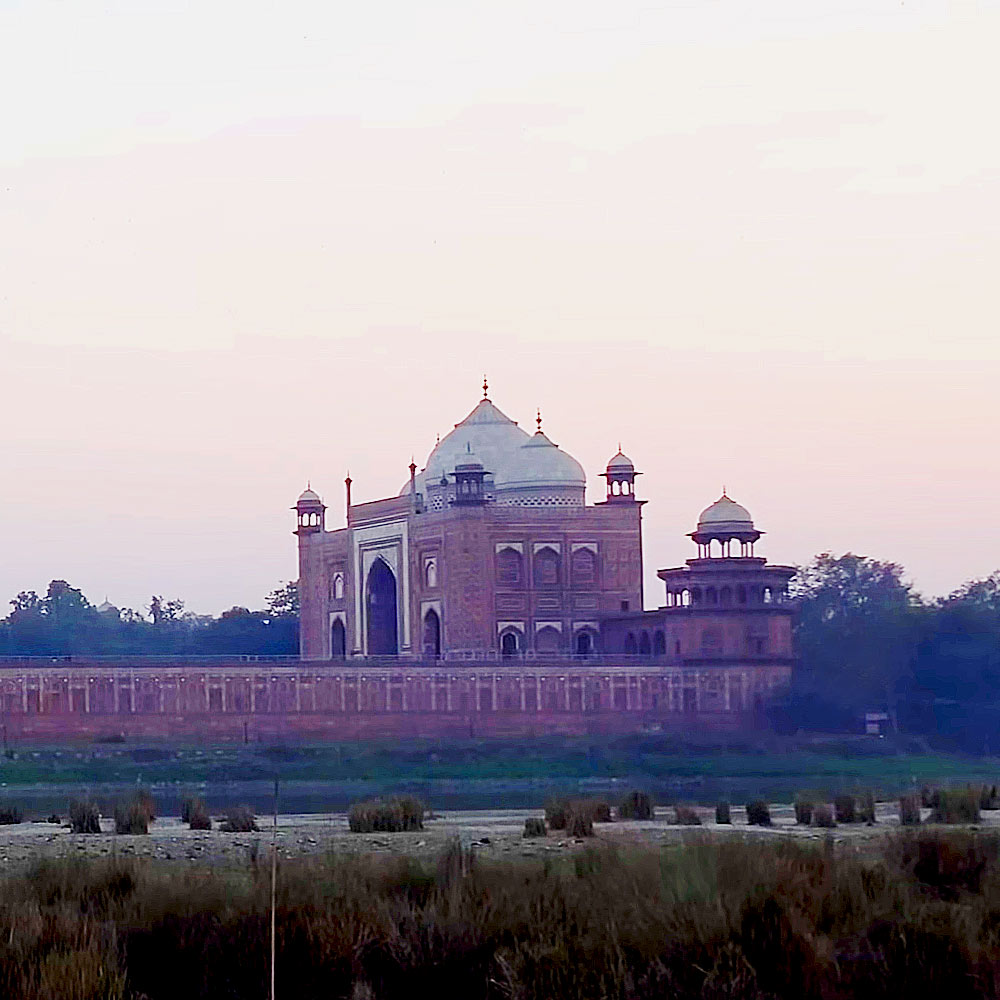
Back side of the Taj Mahal on the Yamuna River at sunset
1.) Left side from here of the Taj Mahal is a Jawab, a structure to provide architectural symmetry that resembles a mosque and has floors with inlaid patterns while lacking a mihrab.
2.) Back side of the Taj Mahal on the Yamuna River at sunset.
3.) Right side from here of the Taj Mahal is a real mosque, Kali Mosque with a mihrab for prayer.
Website & Content Created by Richard Brafford, © 2025, All Rights Reserved, Fair Use Disclaimer for Non-Commercial Use for Educational & Entertainment Purposes OnlyTop