Kathmandu, the capital of Nepal, sits in a valley ringed by the Himalayas. Nepal’s landscape ranges from fertile plains to forested hills and includes eight of the
world’s ten tallest mountains, among them Mount Everest the tallest in the world on the border with China. At the center of the old city lies Durbar Square, one of three UNESCO‑listed Durbar
Squares in the Kathmandu Valley. Many historic structures were damaged in the 2015 earthquake, but restoration continues. Nepali temples are known for their pagoda
architecture, with tiered roofs, carved wooden struts, and a blend of Hindu and Buddhist influences. Famous examples include Nyatapol and Kumbheshwar Temples. These
sites become especially vibrant during Indra Jatra, a festival celebrated with colorful masked dances.
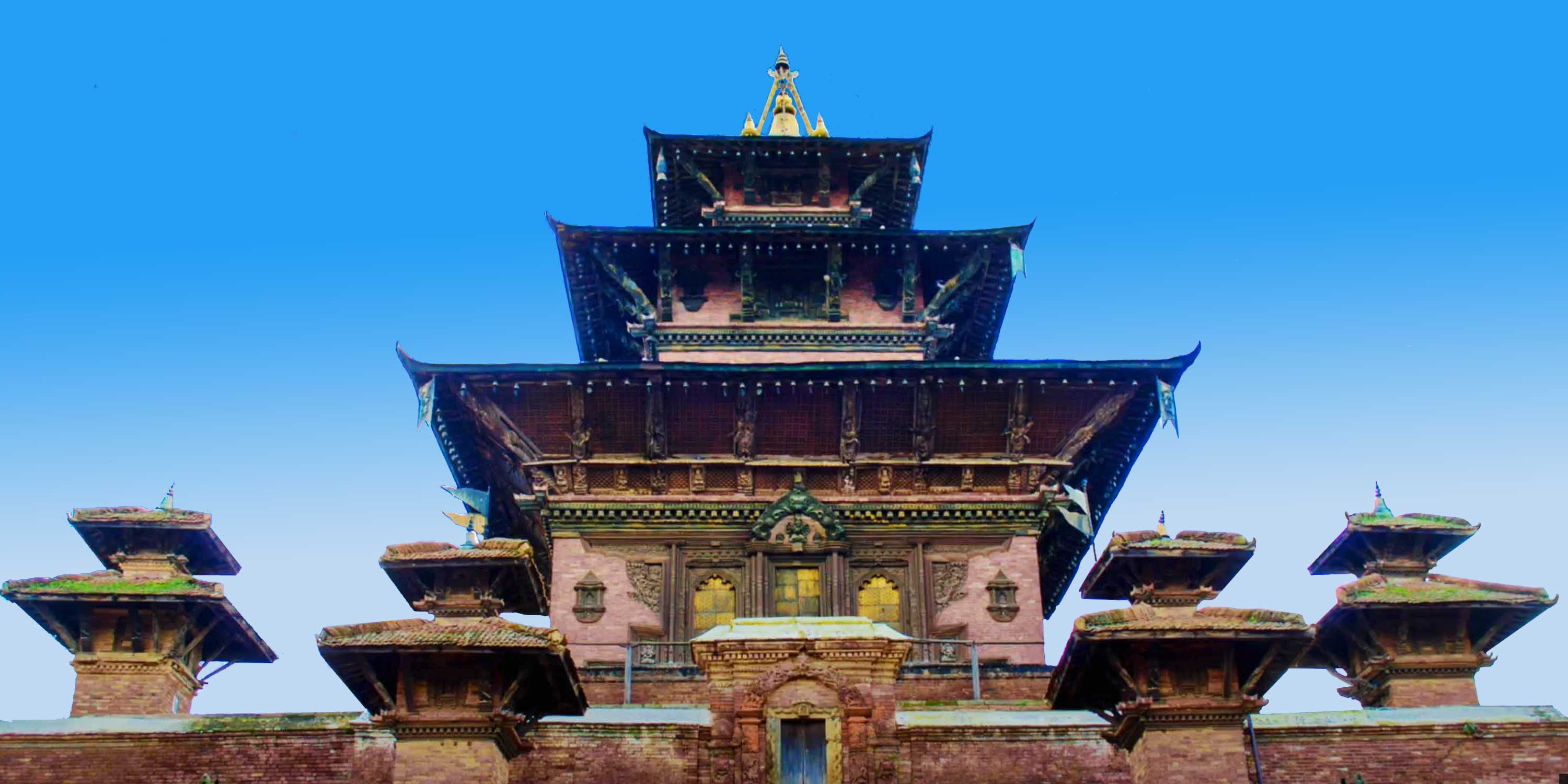
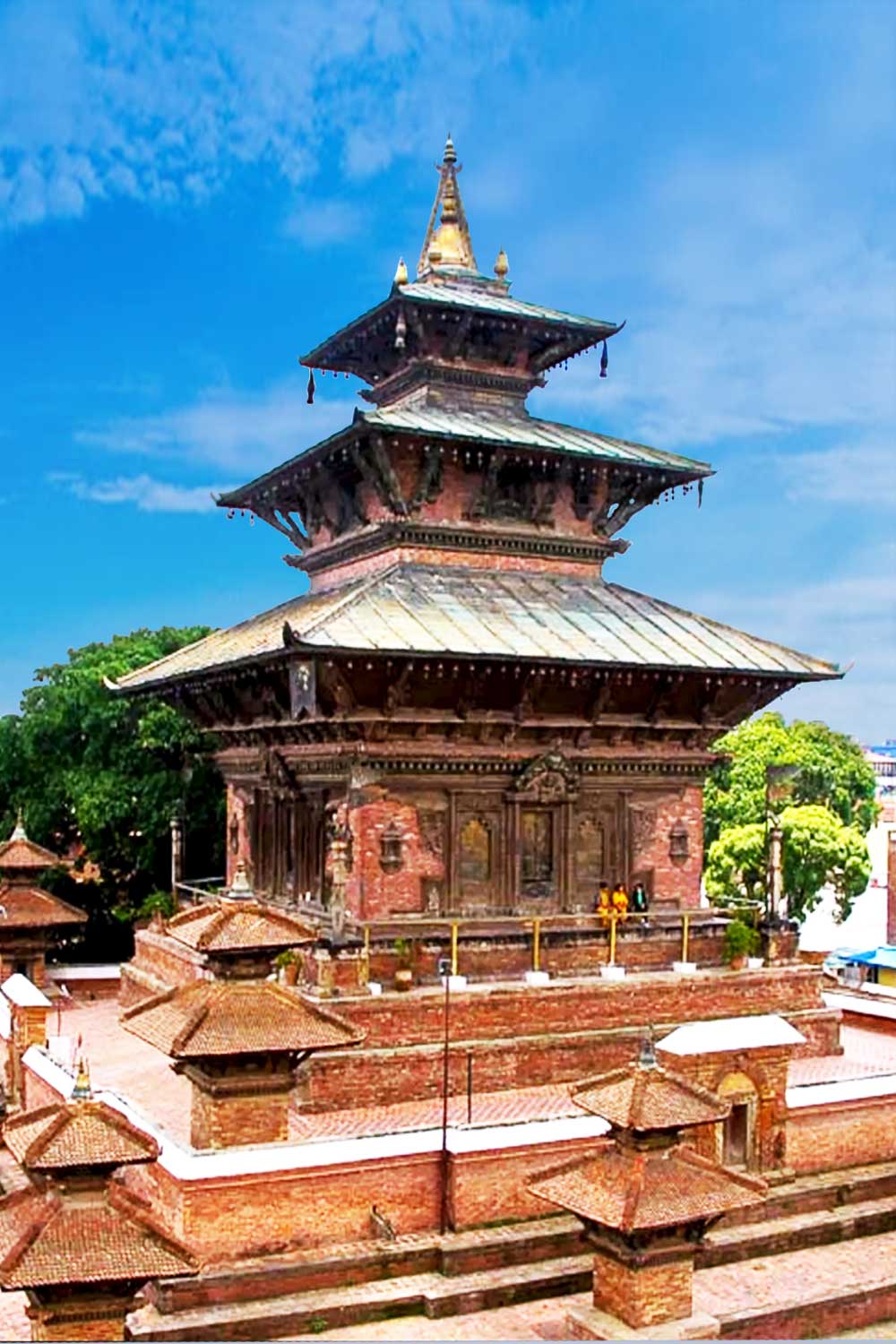
Hindu temple dedicated to Taleju Bhawani, the royal patron goddess of the Malla dynasty, constructed in 1564 CE
by King Mahendra Malla and features a pagoda-style architectural, it is a masterpiece of Newar architecture,
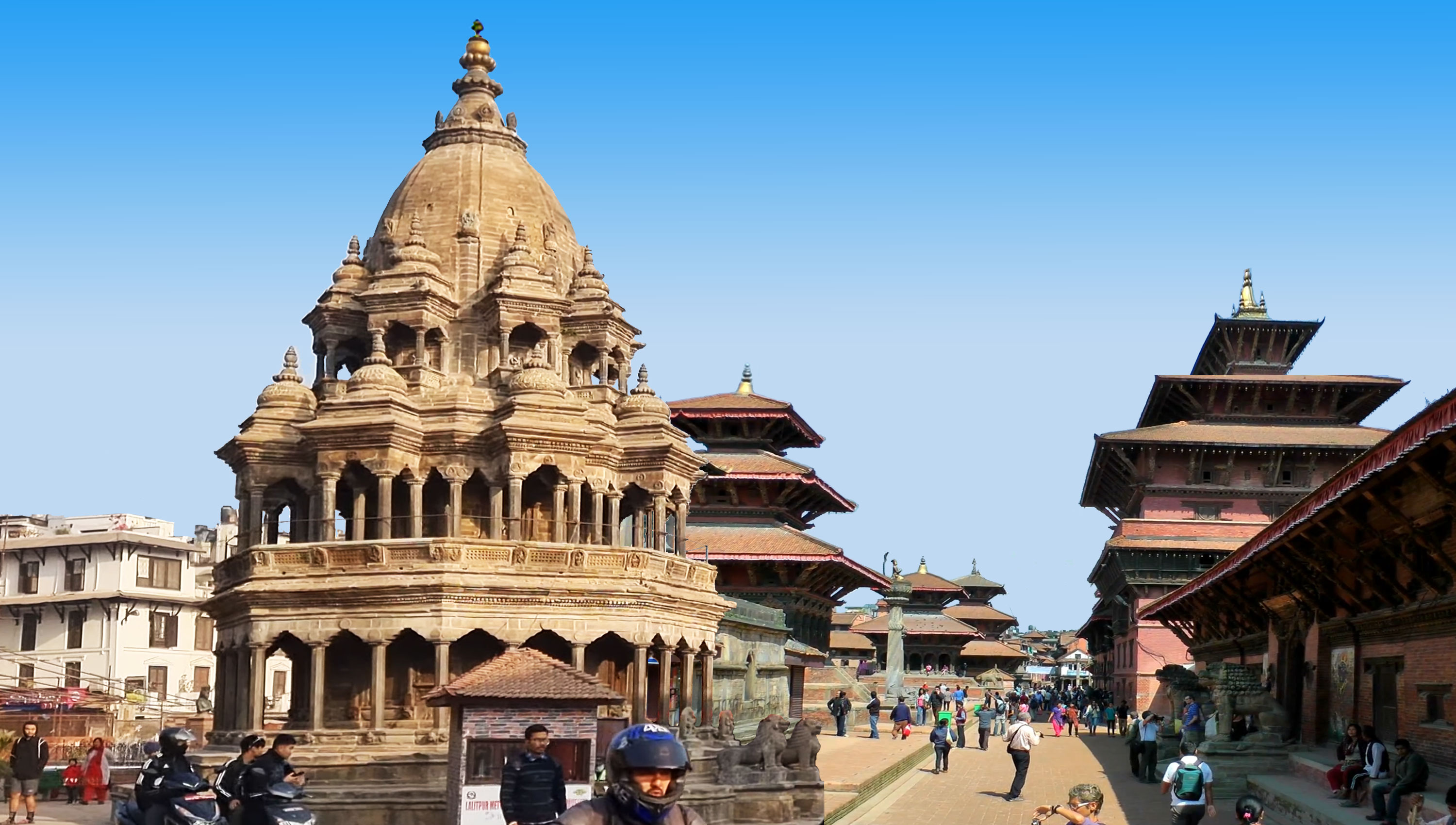
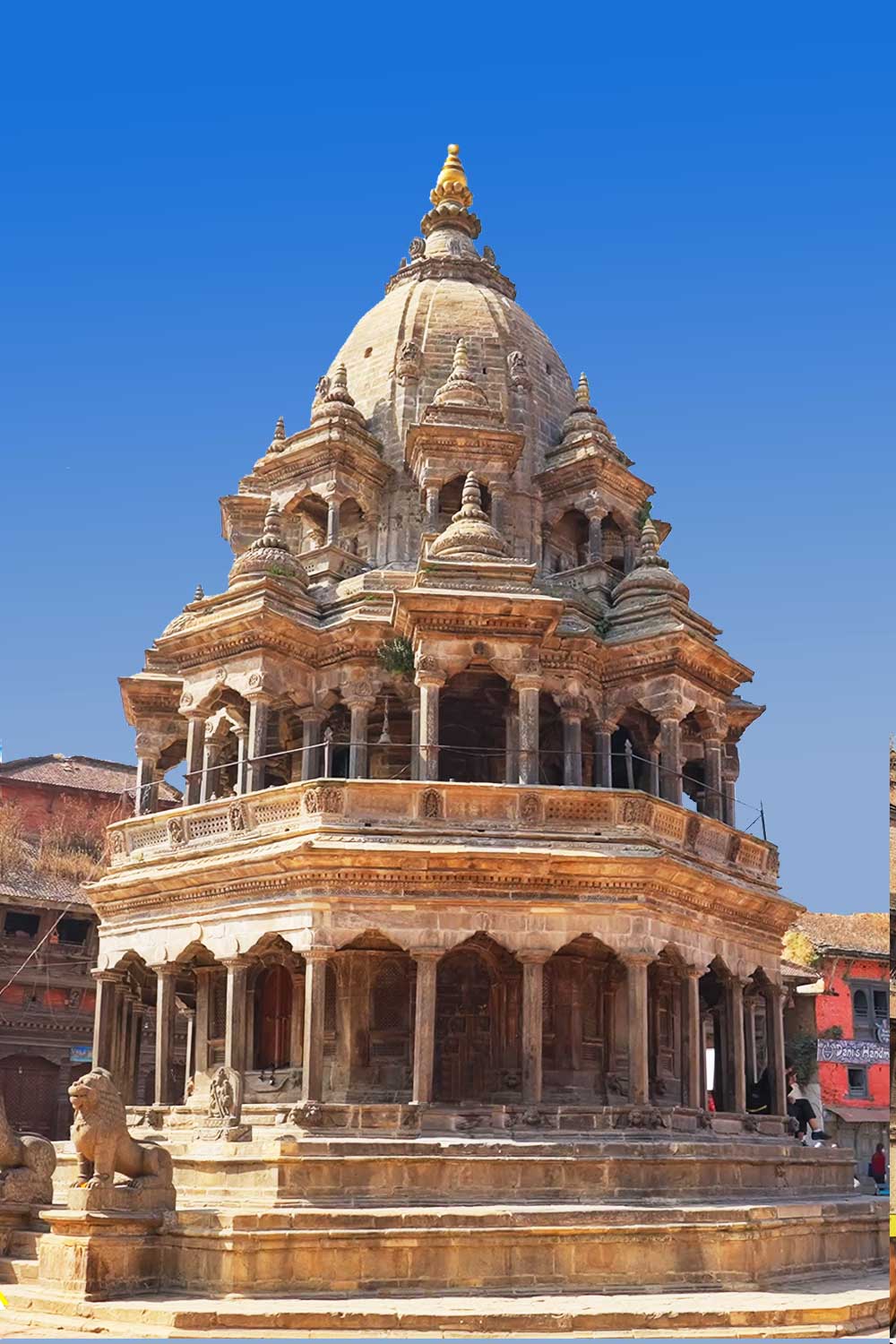
Patan Durbar Square in Lalitpur, Nepal, one of three Durbar Squares in the Kathmandu Valley, all of which are designated UNESCO World Heritage Sites.
The square features traditional Newari architecture, including ancient royal palaces and temples built during the Malla dynasty established from 1201-1769, the octagonal Krishna Temple in the image was built in 1648-49 by King Pratap Malla.
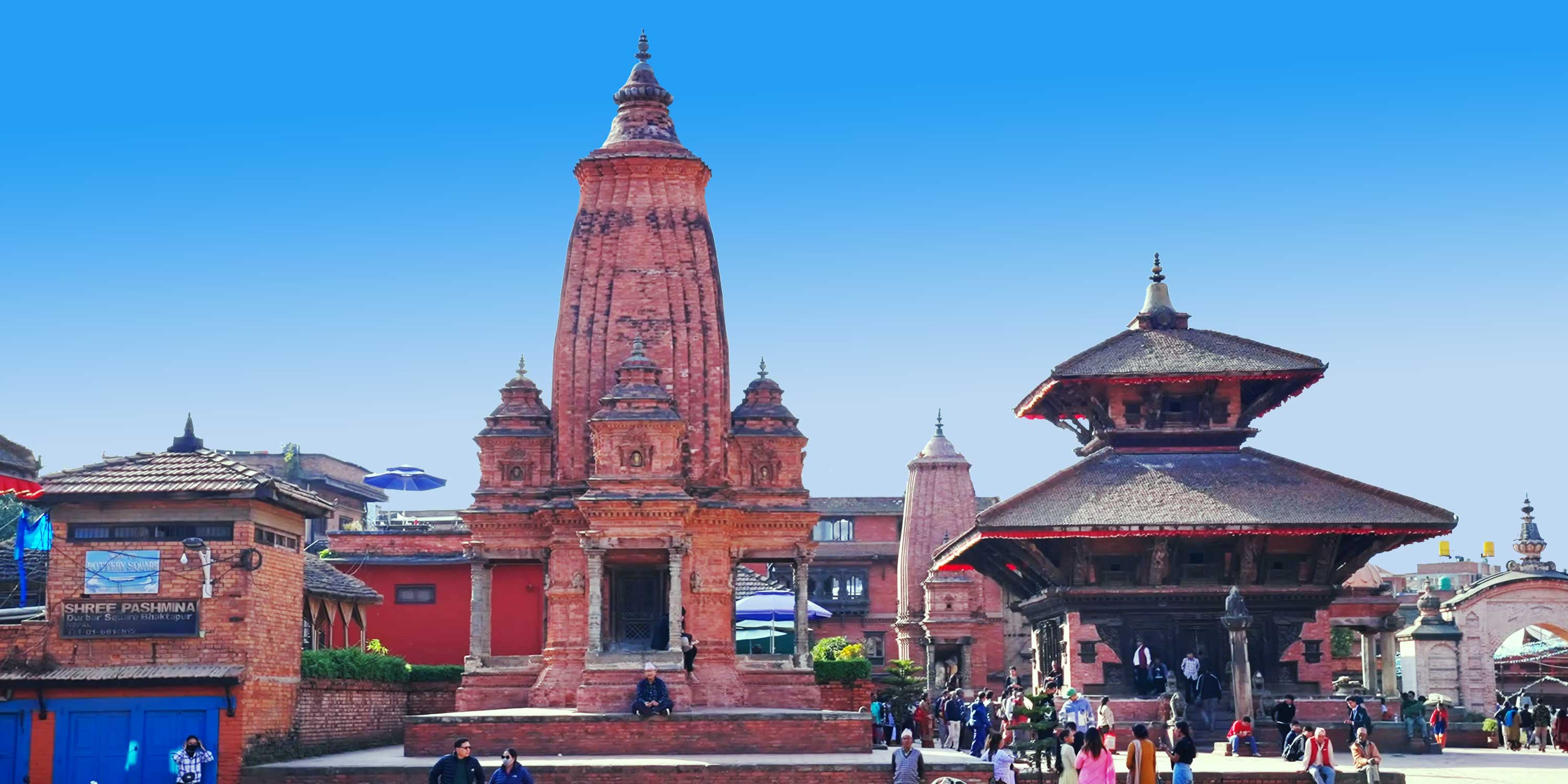
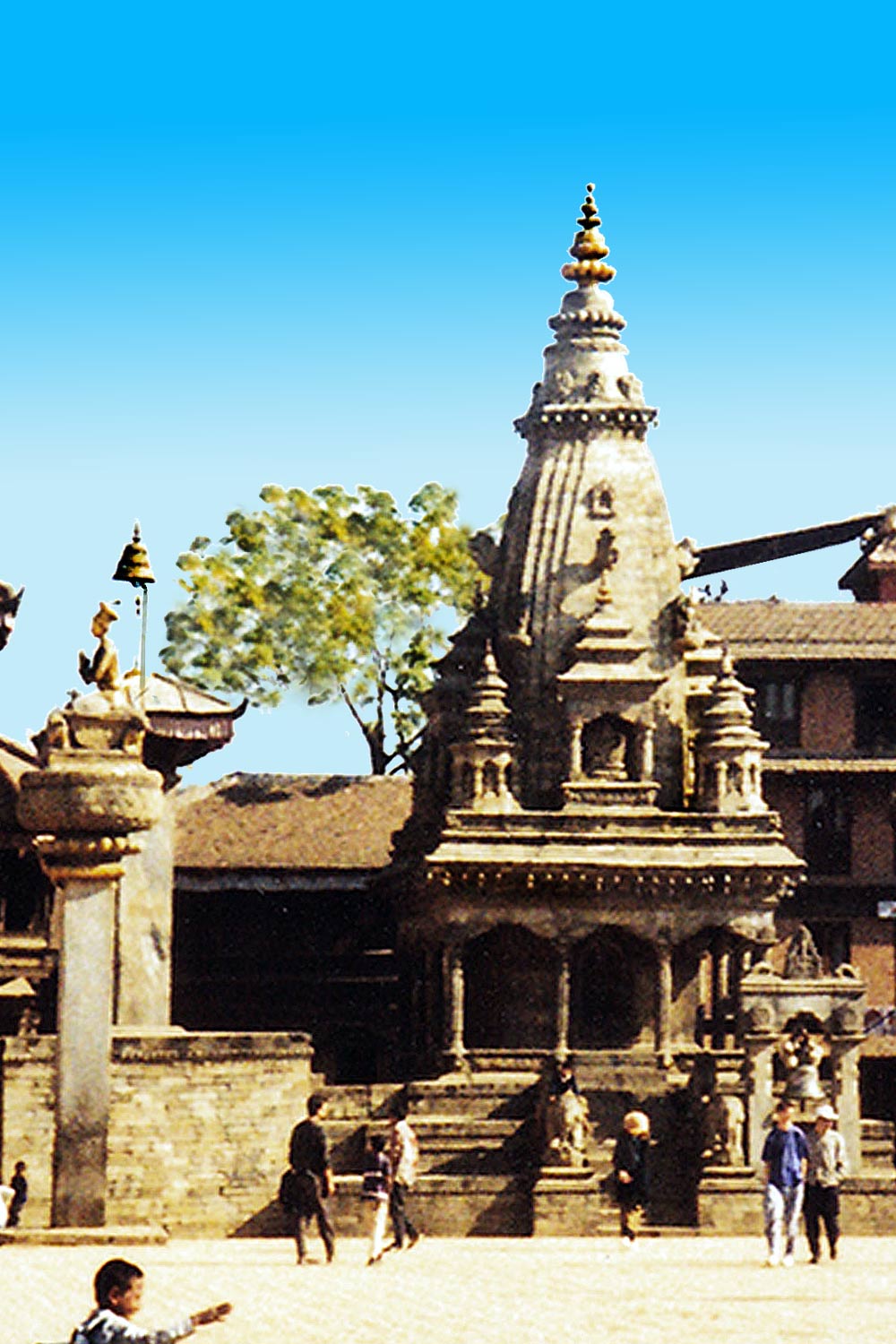
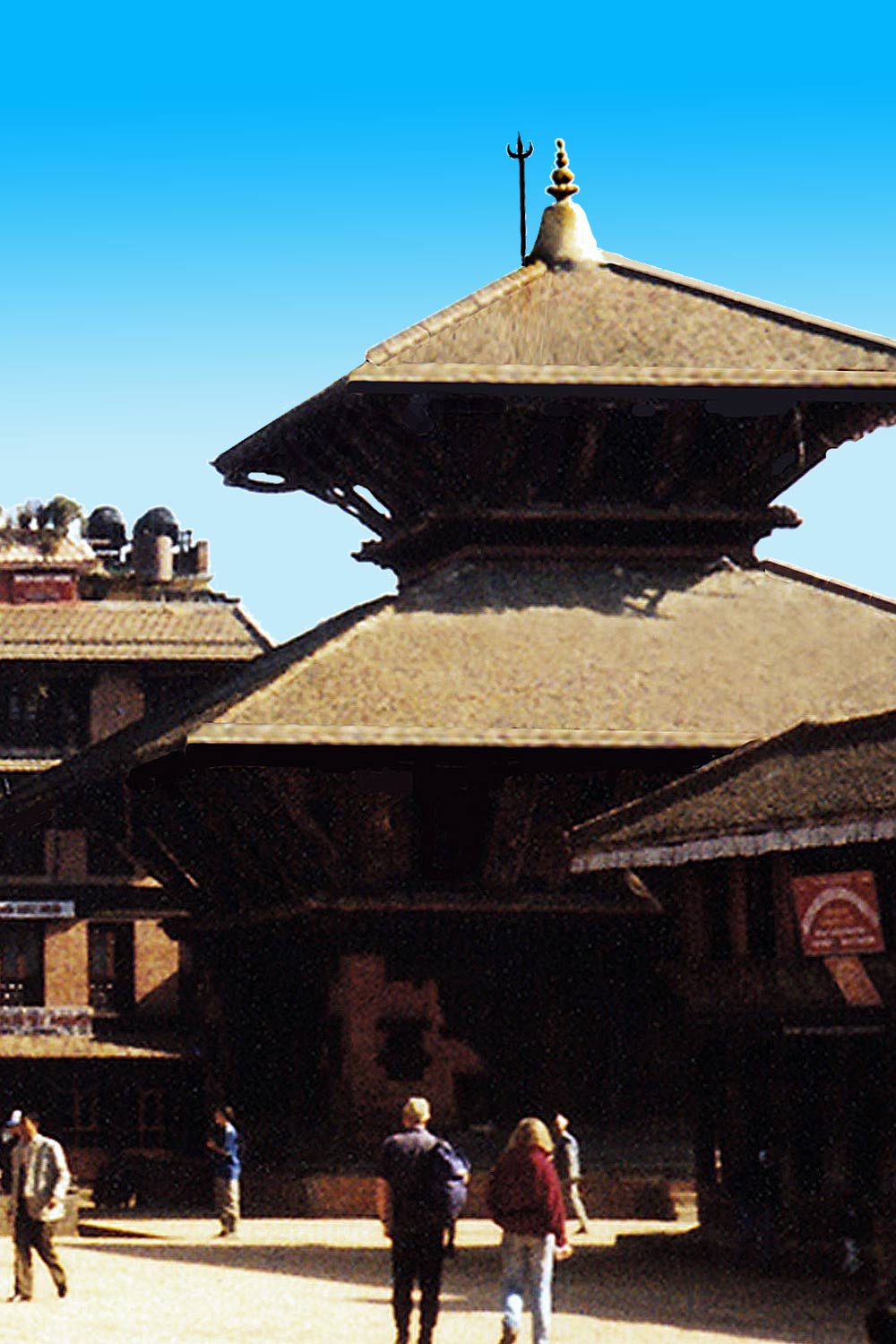
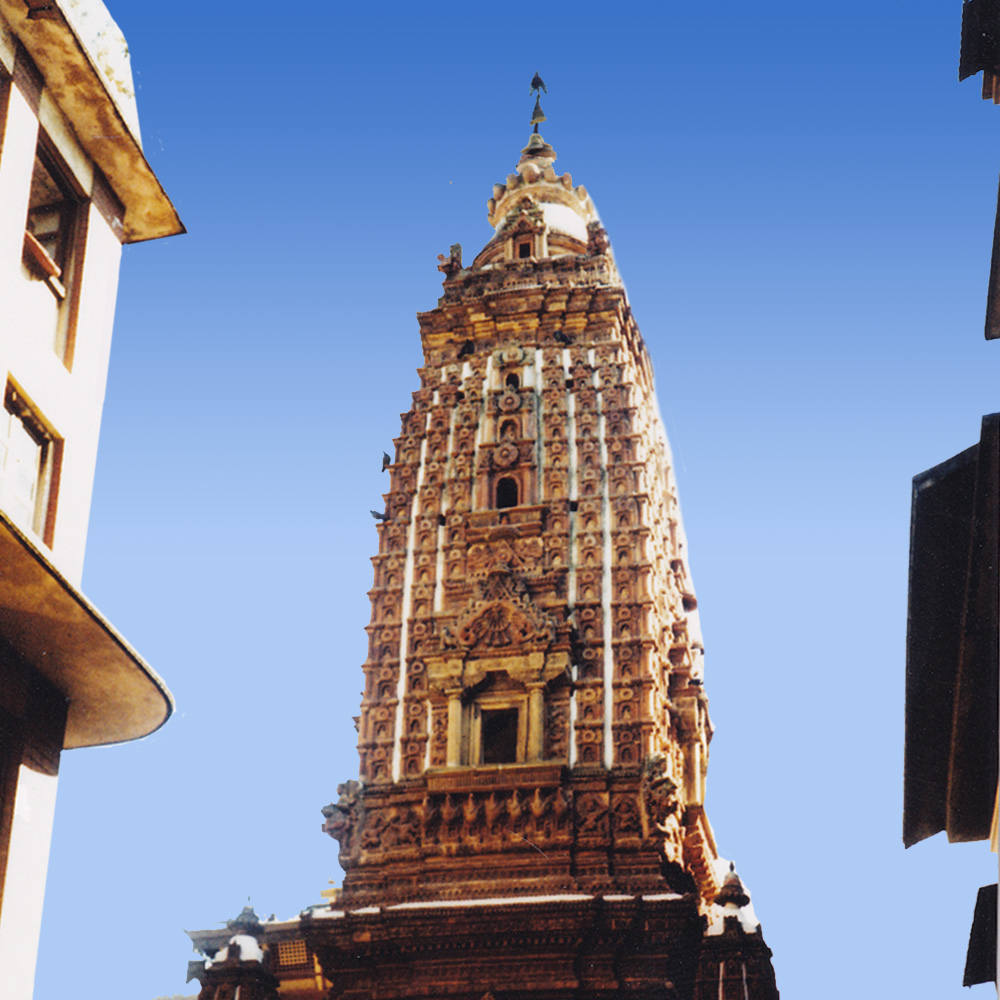
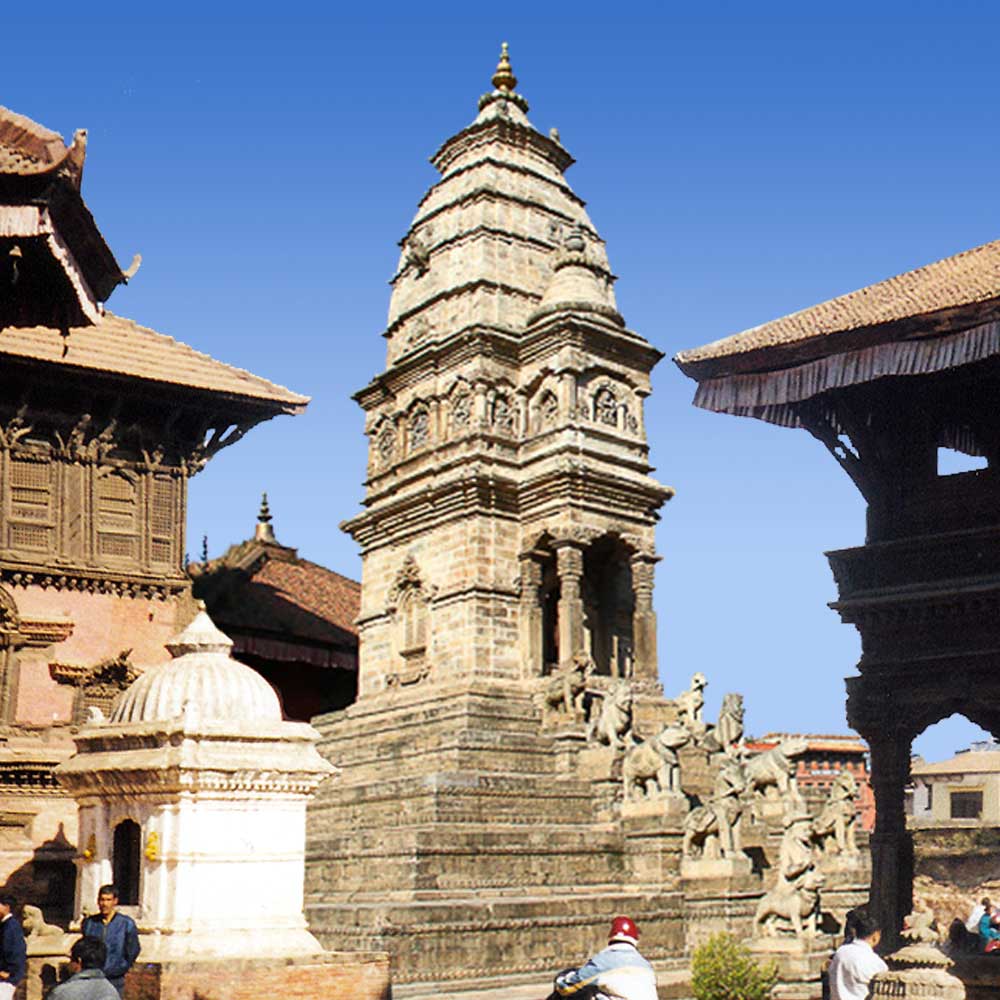
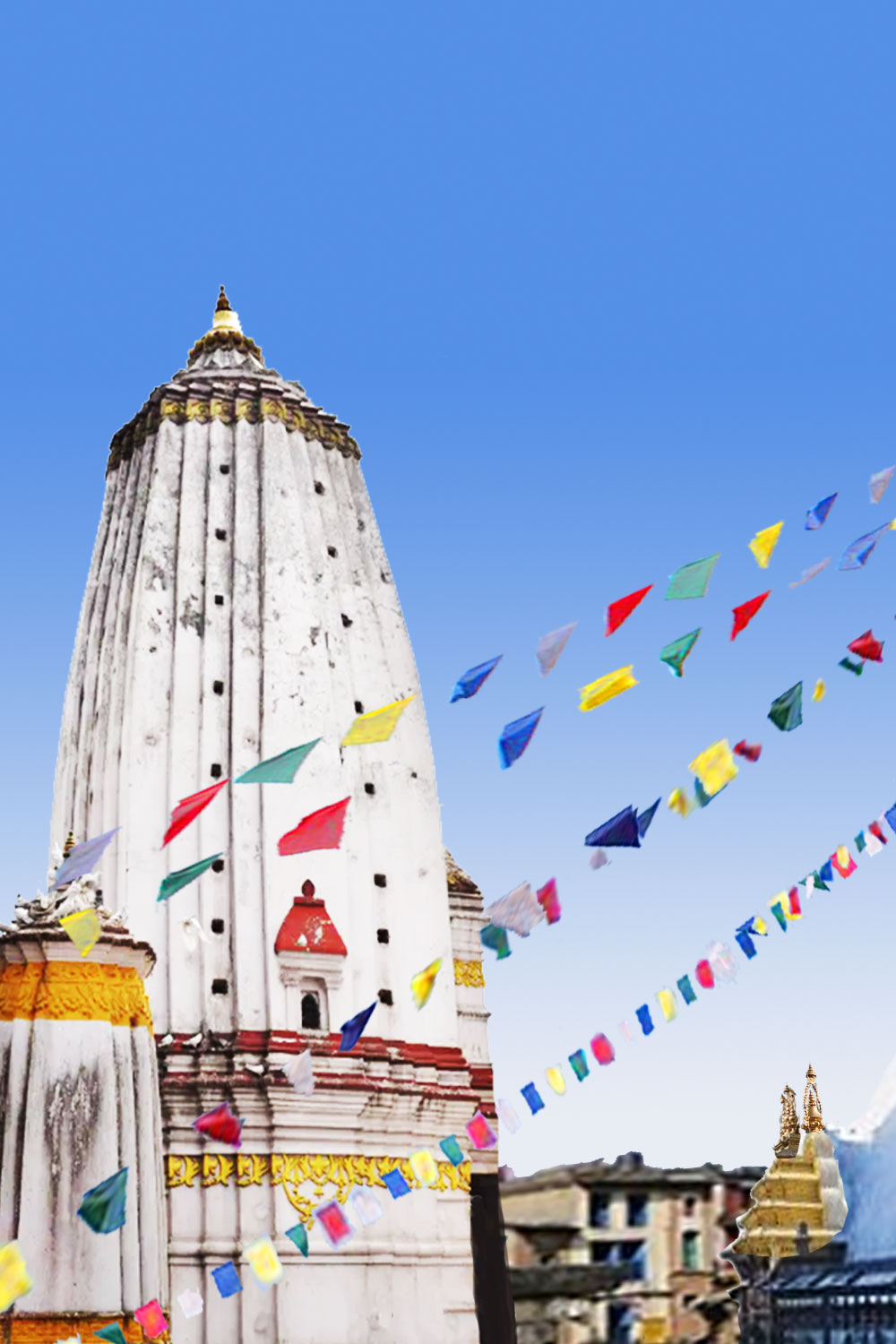
Rameshwor Temple: The tall, peak-style (shikhara) brick temple on the left, it is one of the "Char Dham" temples in Bhaktapur Durbar Square, which are replicas of four famous holy sites in India, a UNESCO World Heritage Site in Nepal, The prominent pagoda-style temple is a prime example of the intricate craftsmanship found throughout the square.
1.) Bhaktapur Durbar Square (Nepali: भक्तपुर
दरबार क्षेत्र) is a former royal palace complex located in Bhaktapur, Nepal.
2.) It housed the Malla kings of Nepal from 14th
to 15th century and the kings of the Kingdom of Bhaktapur from 15th to late 18th century until the kingdom was conquered in 1769.
3.) The Durbar Square can also be found in
Kathmandu and Patan as well. The one in Bhaktapur is the biggest and the grandest among the three
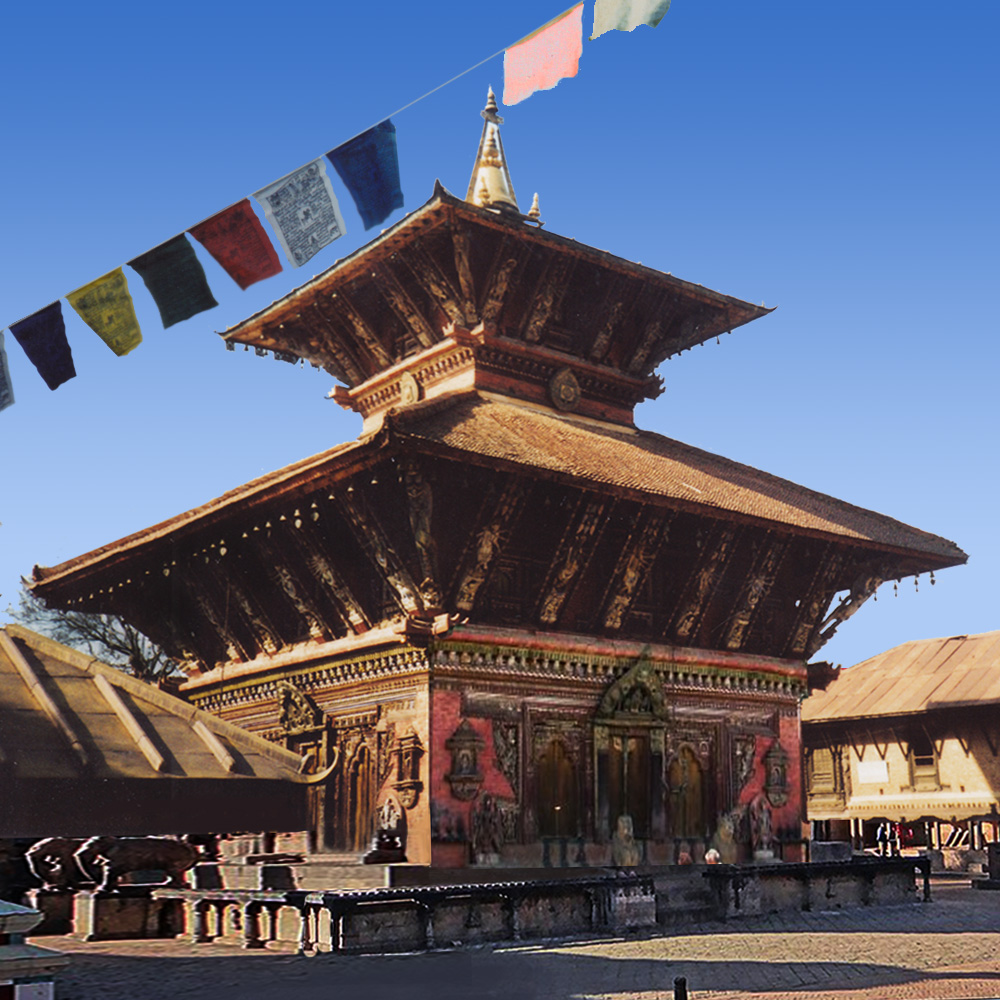
Changu Narayan Temple, considered the first pagoda
of Nepal dated 464 AD, became known as the valley's trademark for the multiple-roofed pagoda.
Siddhi Laxmi Temple (17th century) in Durbar
Square, Bhaktapur, Nepal
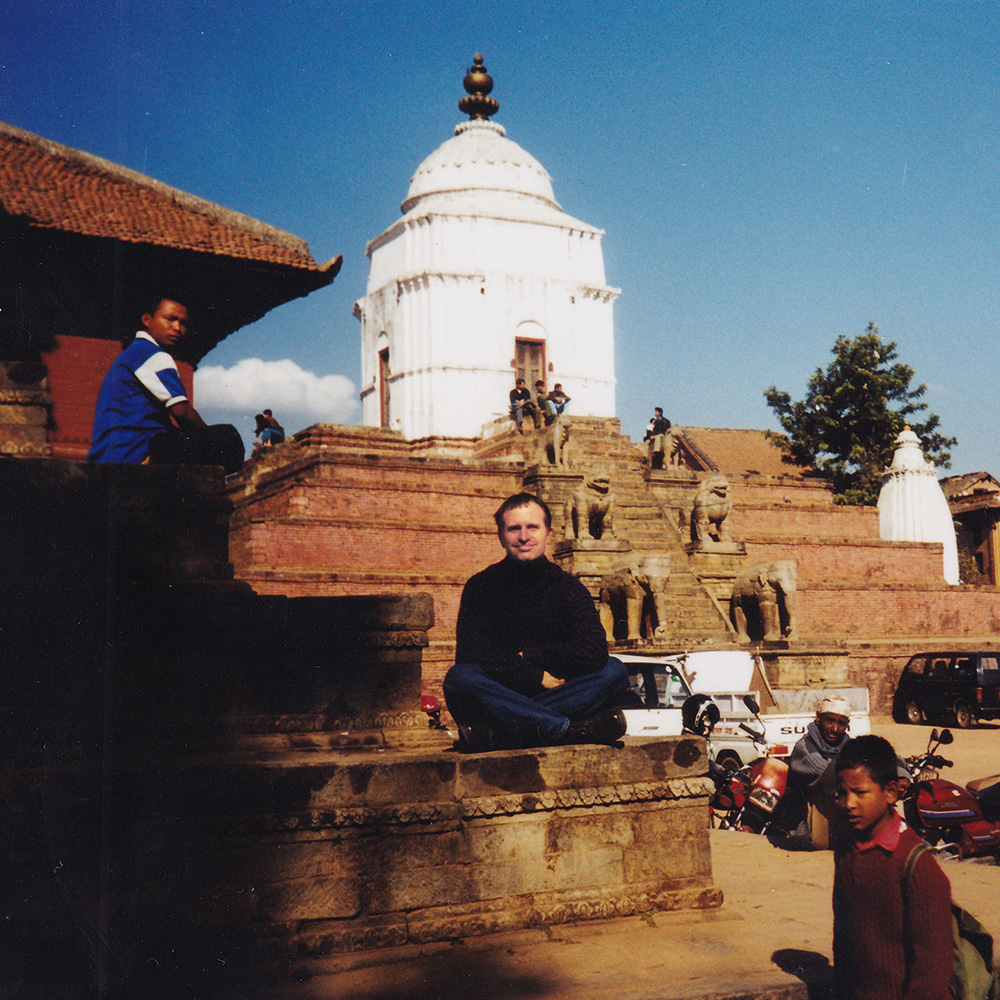
Fasidega Temple of Shiva in Durbar Square, made
of terracotta, Bhaktapur, Nepal.
17th-century stone temple is dedicated to the Hindu goddess, Siddhi Lakshmi Temple, also known as the Lohan Dega, located in Bhaktapur Durbar Square, Nepal
Patan Durbar Square, a UNESCO World Heritage Site located in Lalitpur near Kathmandu, Nepal
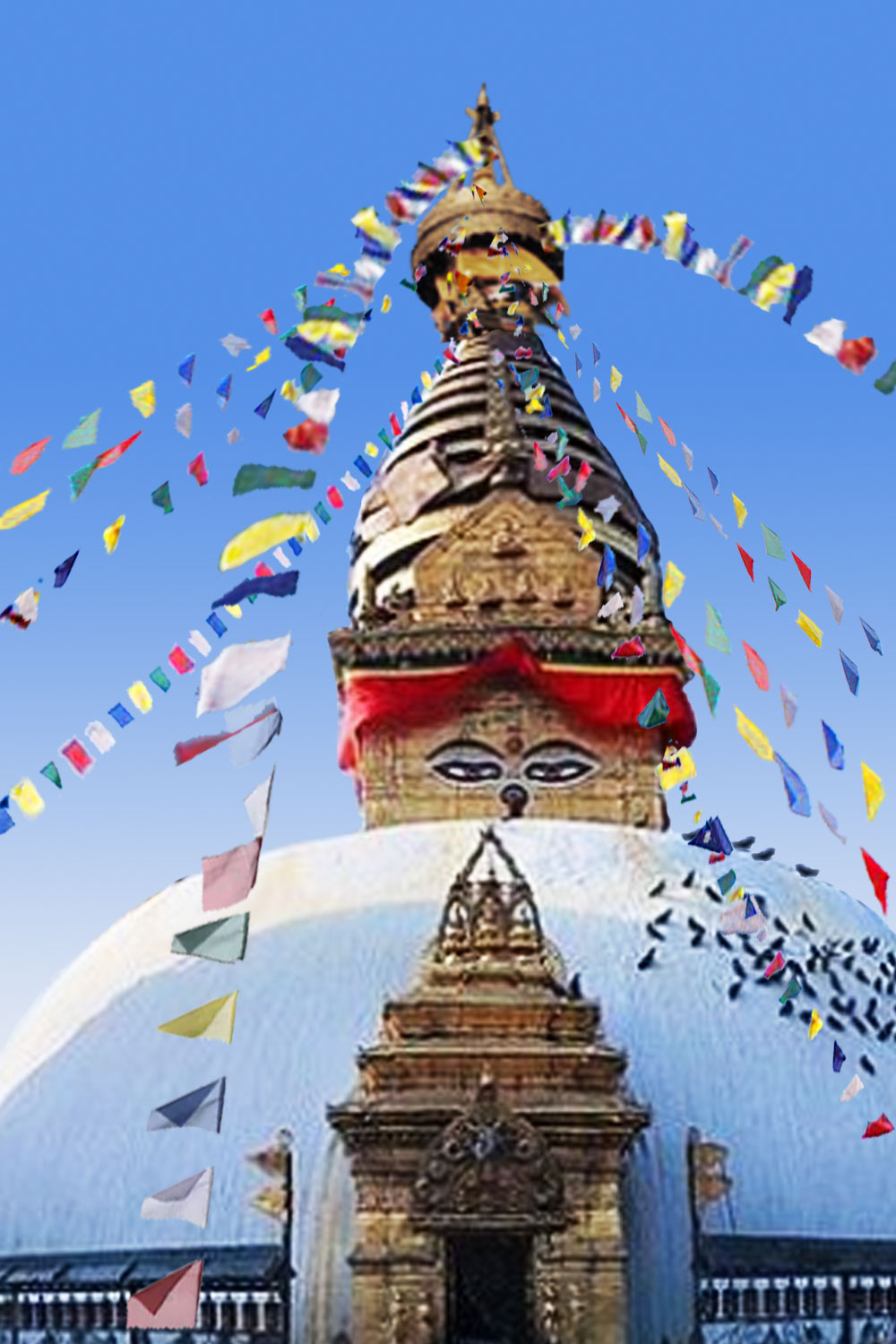
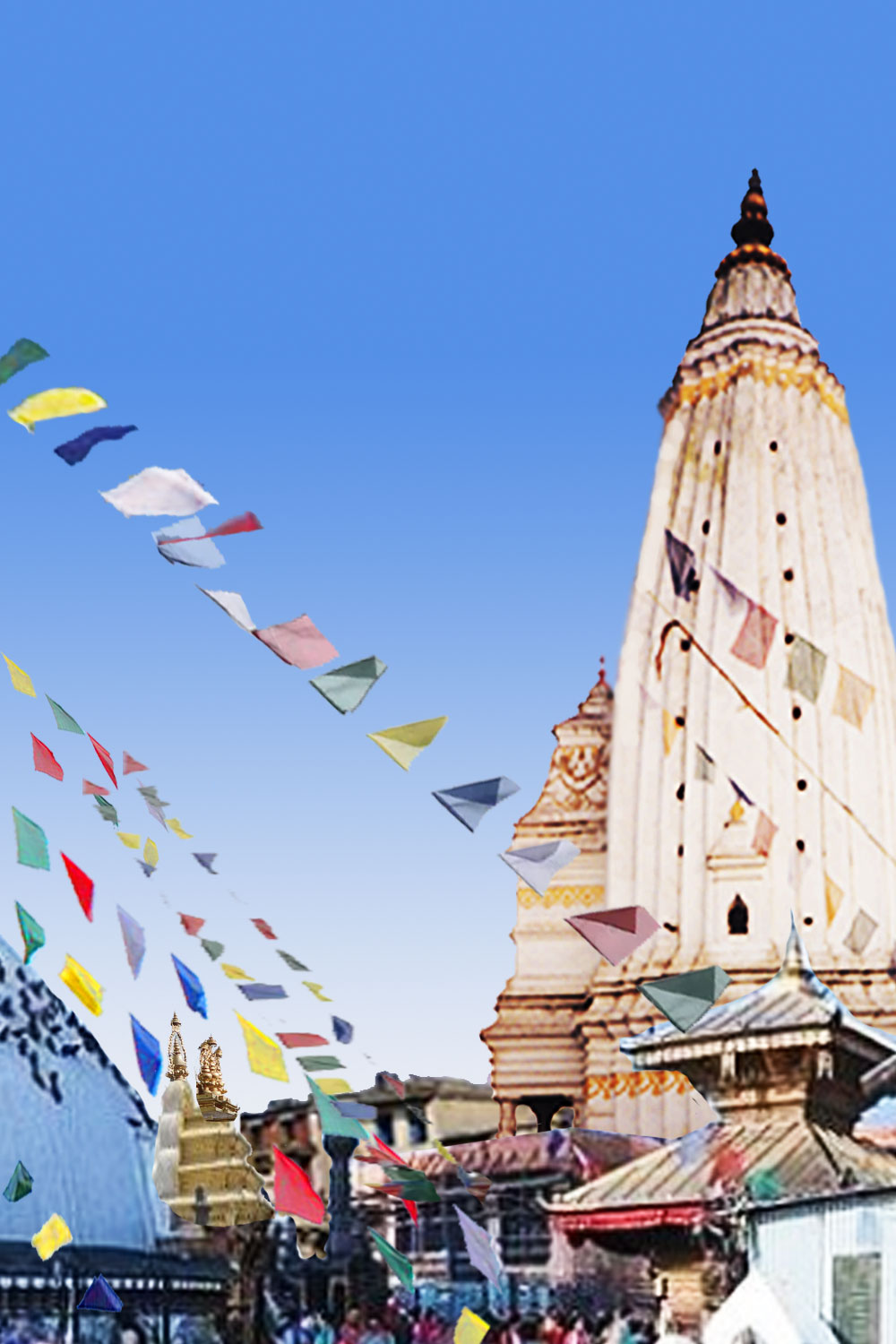
Swayambhunath Stupa, also known as the "Monkey Temple," located in the Kathmandu Valley, Nepal
Hindu temple dedicated to Taleju Bhawani, Built in 1564 by King Mahendra Malla, it features a unique triple-layered roof and stands on a tall stepped platform, located in Kathmandu Durbar Square,
The Chyasim Deval (or Chyasin Dega) temple dedicated to Lord Krishna, 18th century, famous for its unique eight-sided (octagonal) design and intricate Shikhara-style architecture, Patan Durbar Square, Lalitpur, Nepal
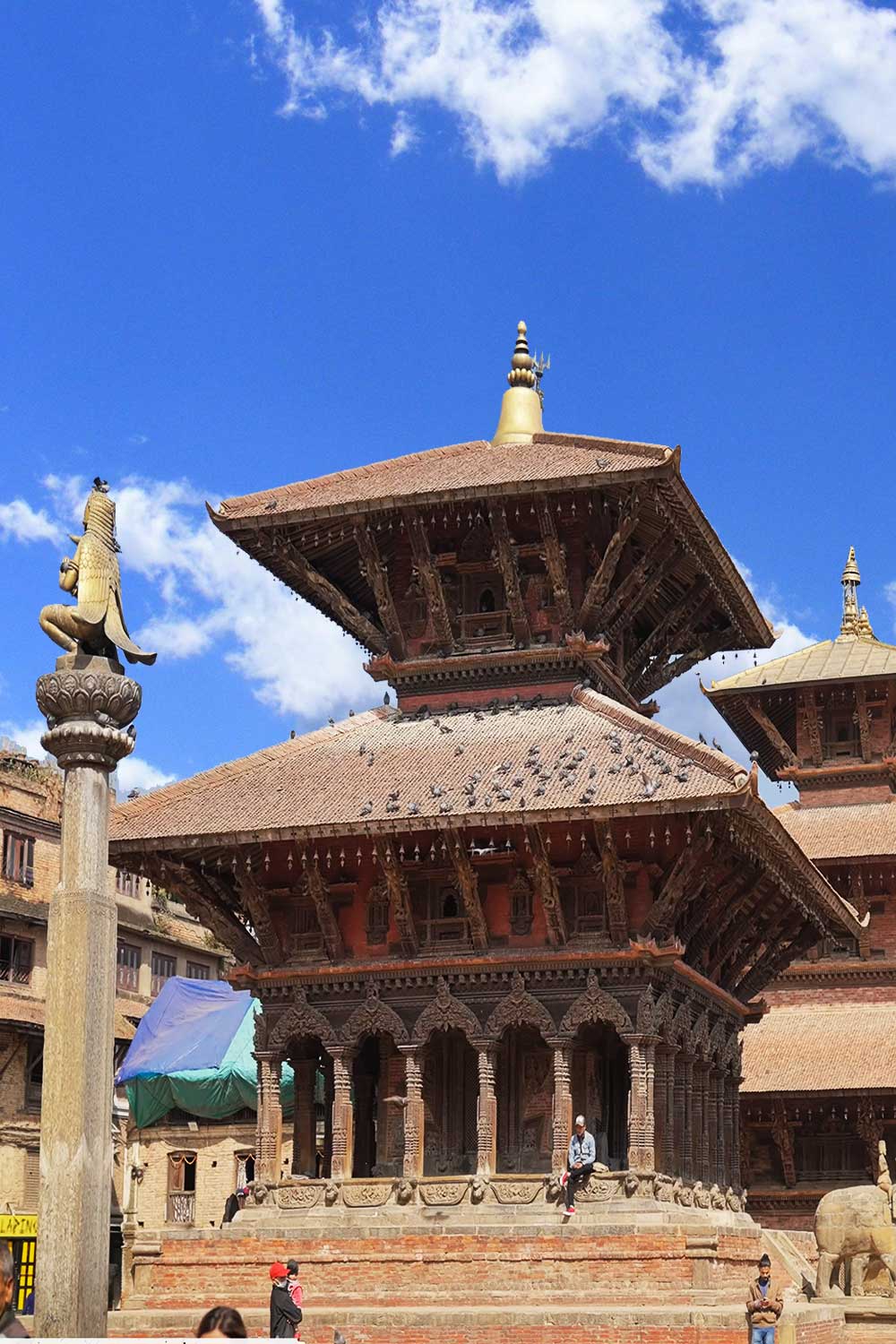
The Vishwanath Temple, Built in 1627, dedicated to Shiva, traditional Pagoda style, featuring intricate wood carvings, entrance is famously guarded by two stone elephants, Patan Durbar Square, Lalitpur, Nepal
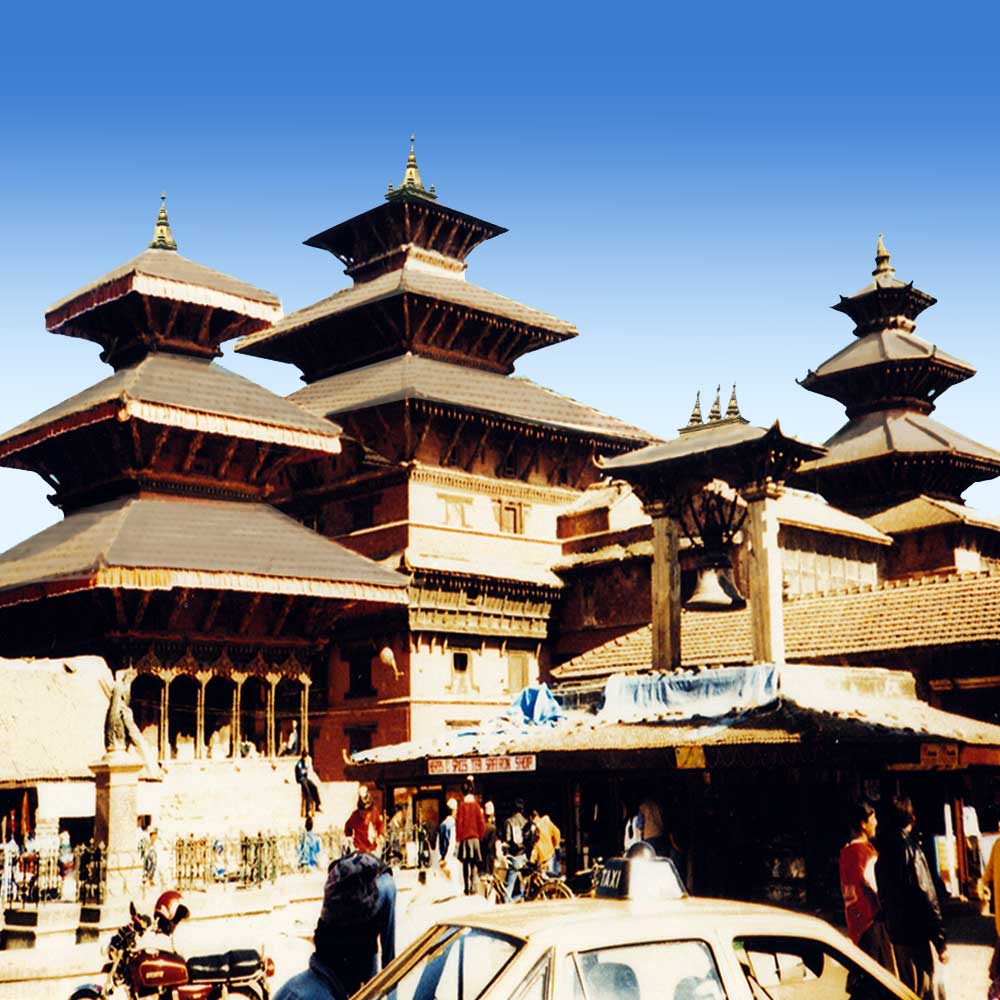
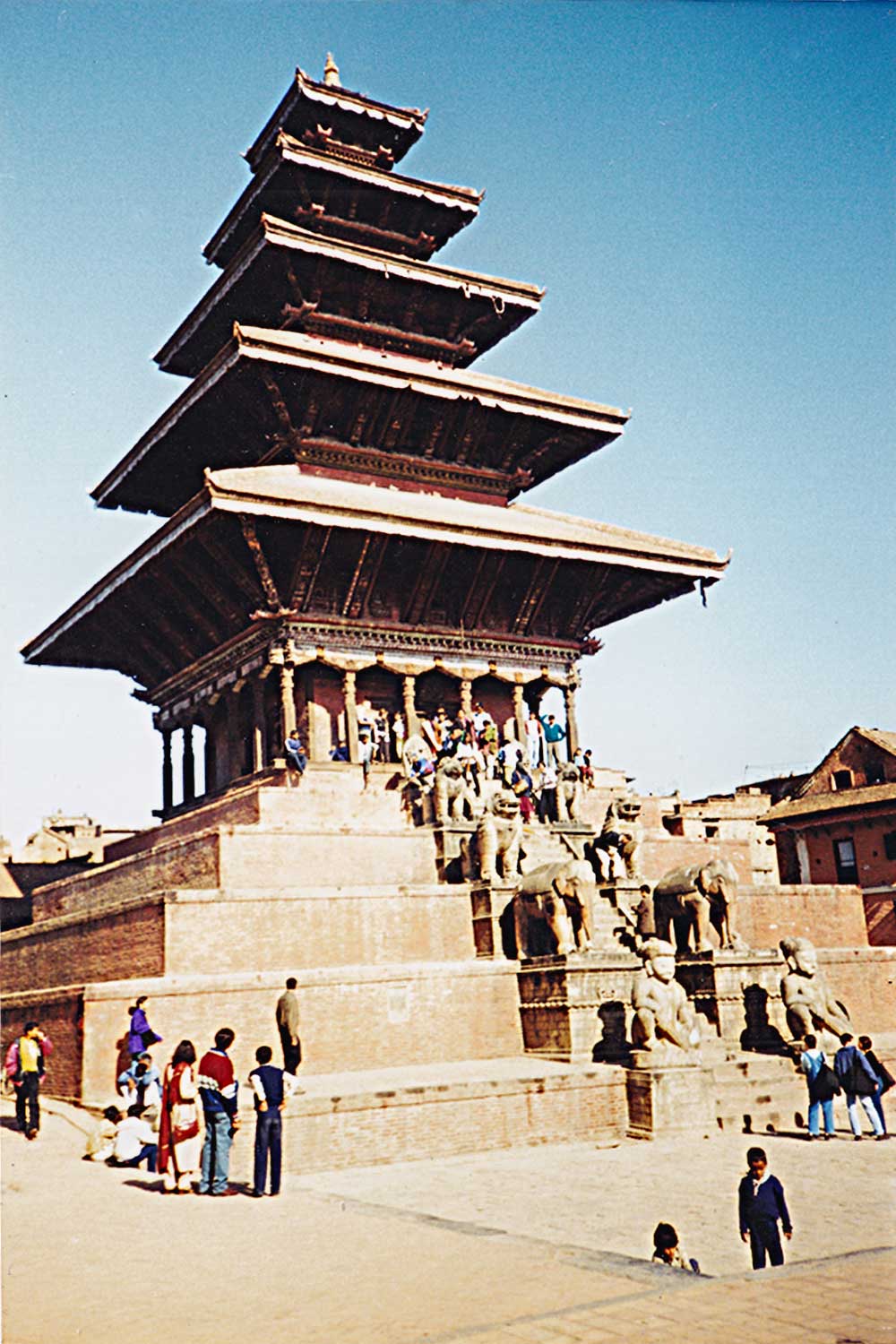
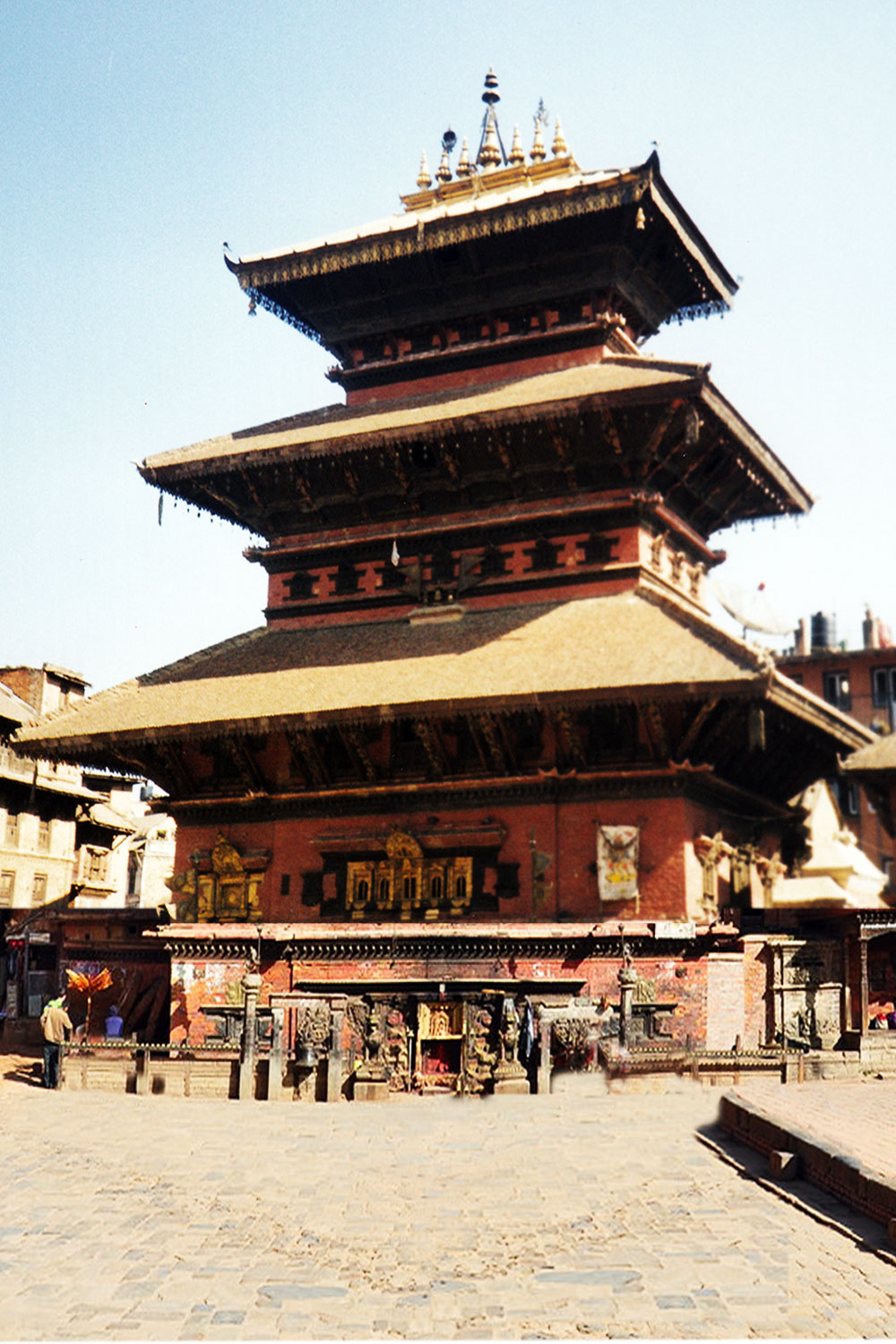
Nyatapola, the tallest pagoda temple in
Nepal, Height (max) 33.23 m, 108.26 ft, located in Bhaktapur, erected in 1702 by Nepali King Bhupatindra Malla, it has survived four major
earthquakes the recent 7.8 magnitude April 2015.
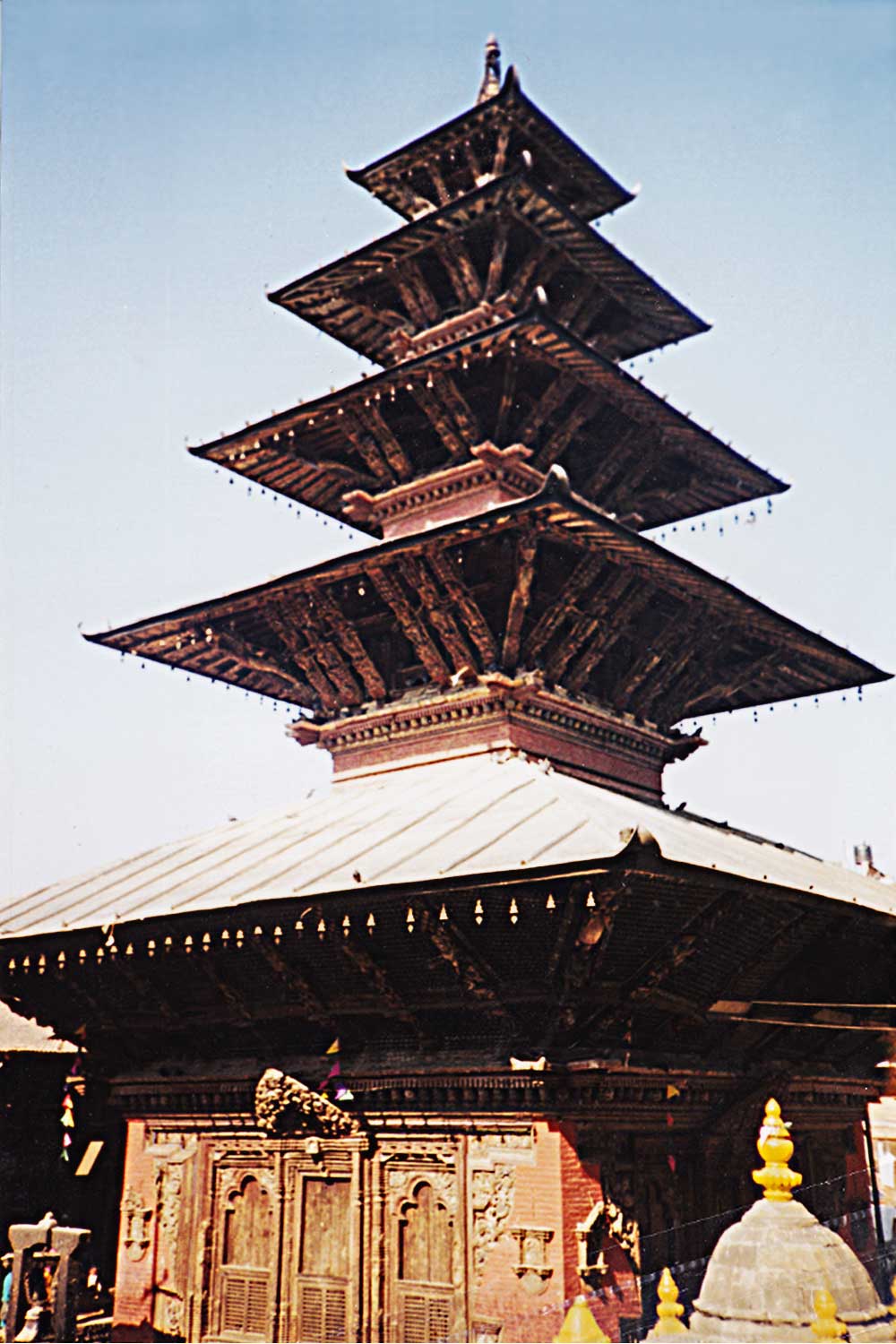
Bhairavnath 5-story Pagoda Temple in
Bhaktapur Durbar Square, is dedicated to Lord Shiva, built by King Jagjjyoti Malla in 1614
Kumbheshwar Pagoda Temple (Mahadev), is one
of the oldest Hindu temples in Nepal, part of Patan Durbar Square, built in 1392 by King Jayasthiti Malla
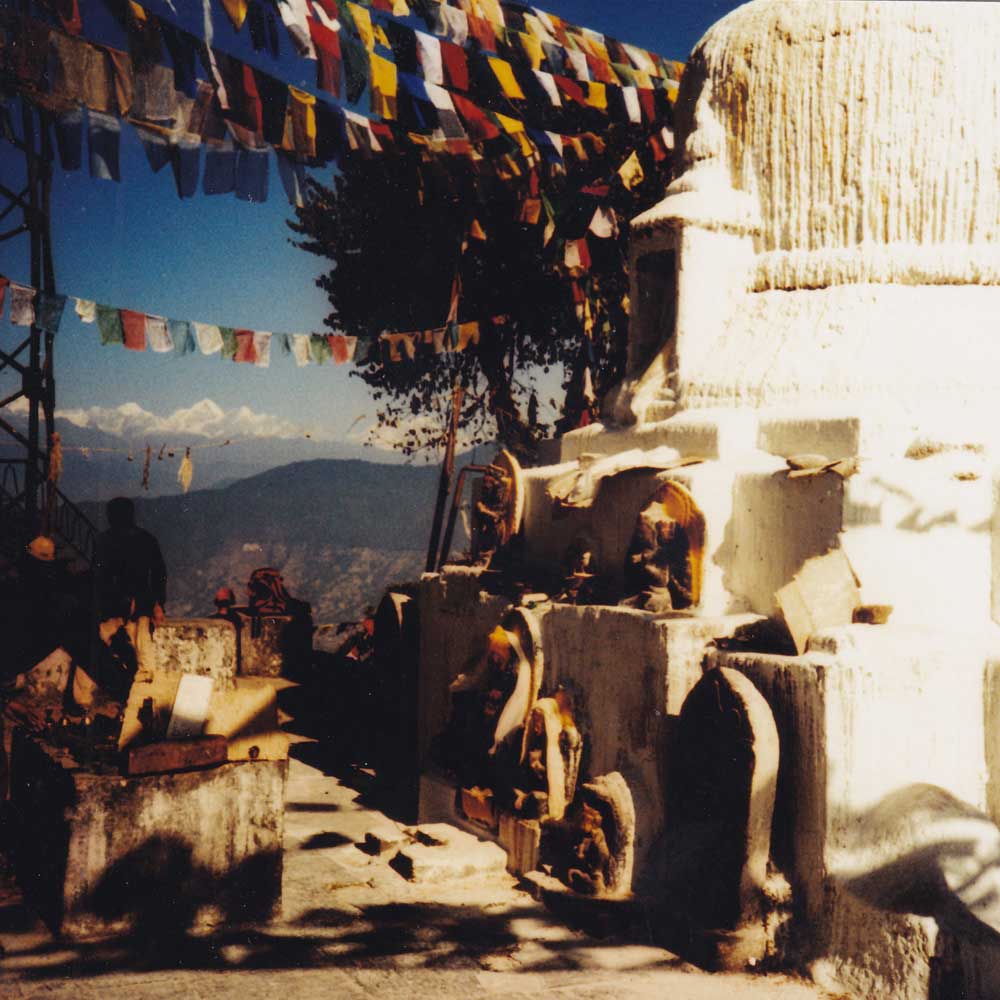
1.) Swayambhunath (means 'Sublime Trees') is
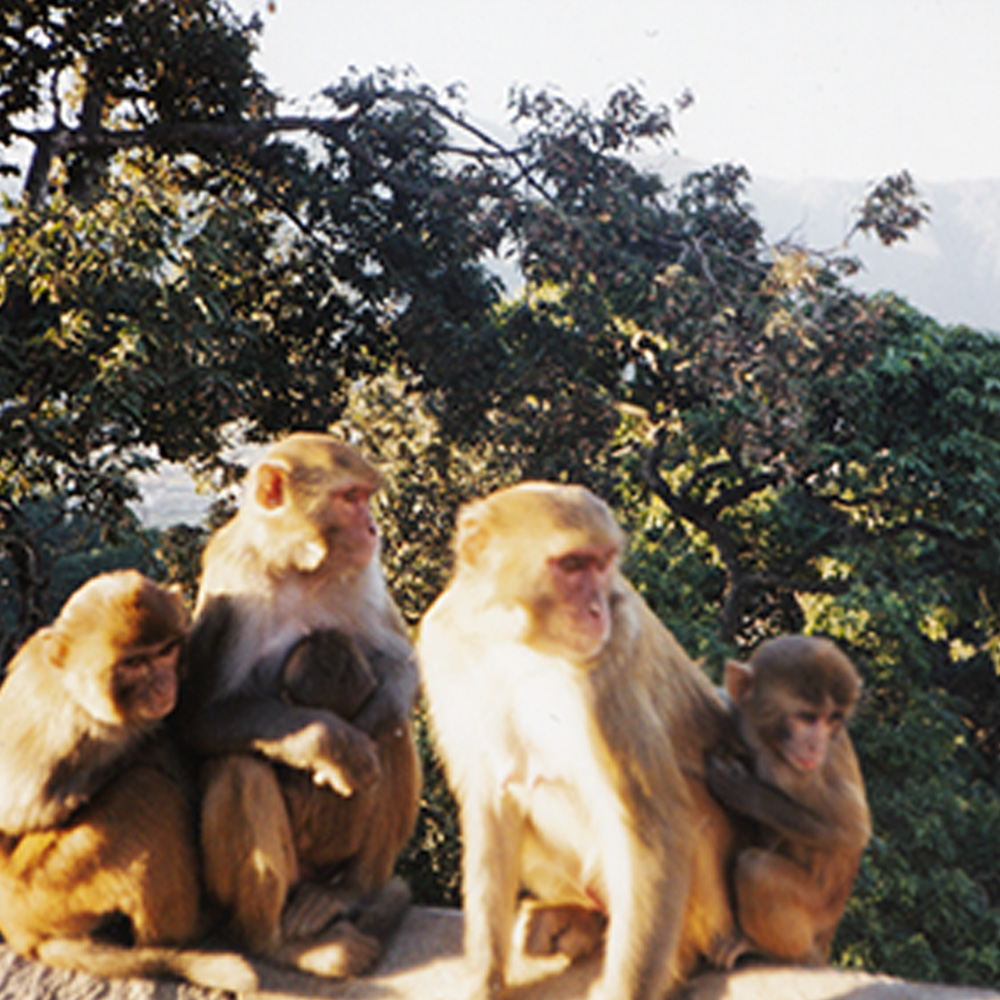
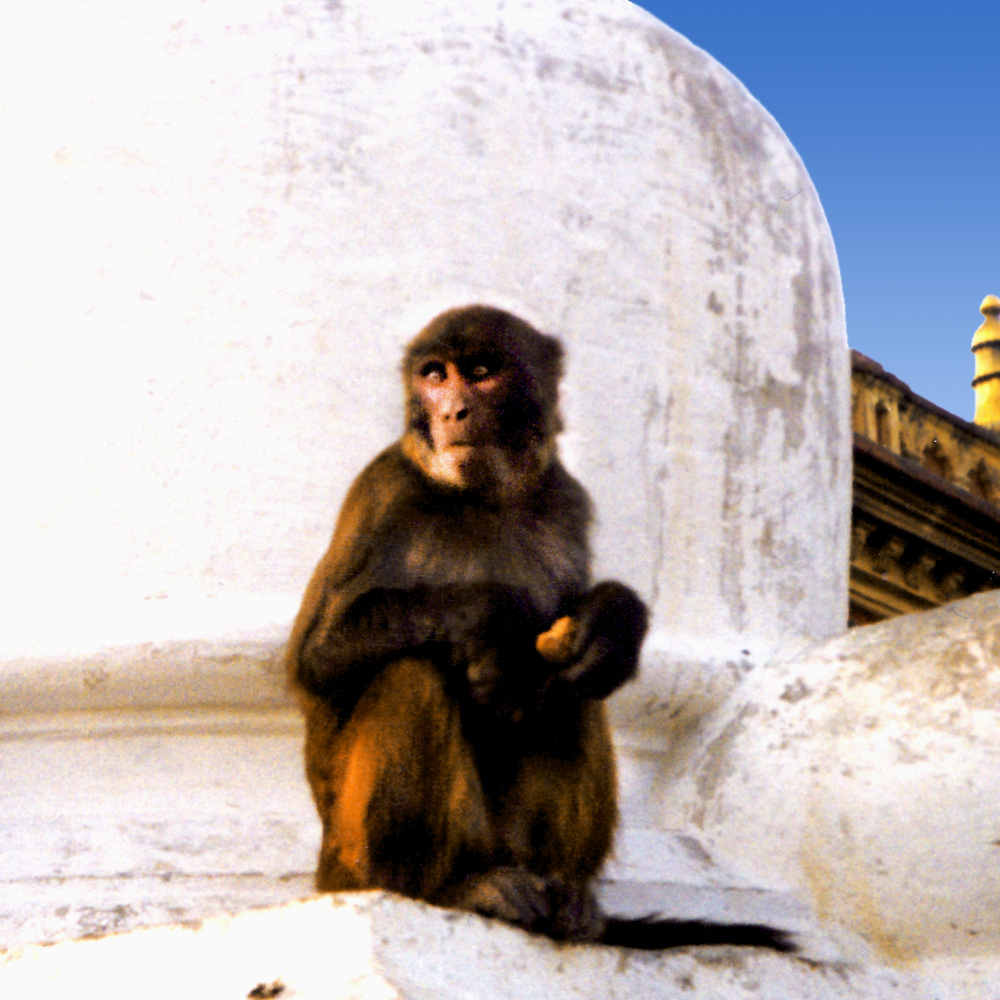
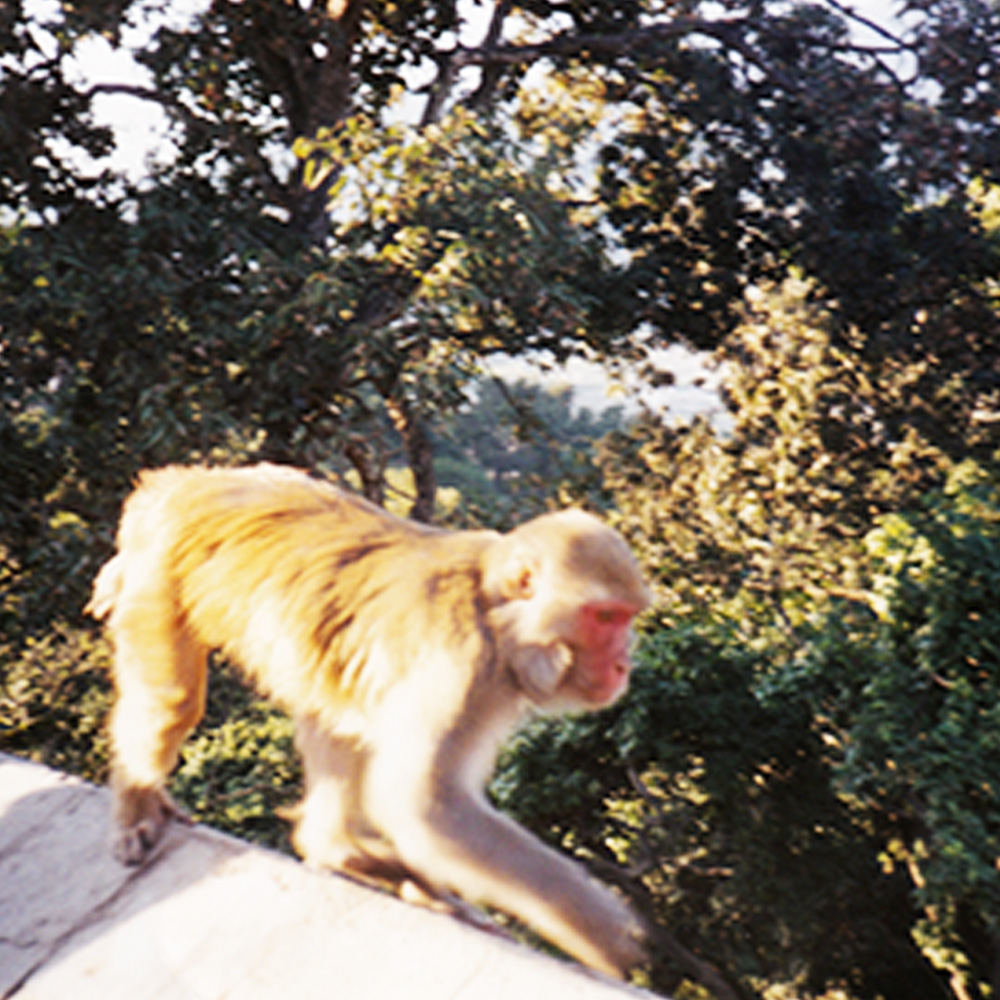
commonly referred to as “monkey temple” due to the abundance of monkeys that live in the many varieties of trees found on the hill
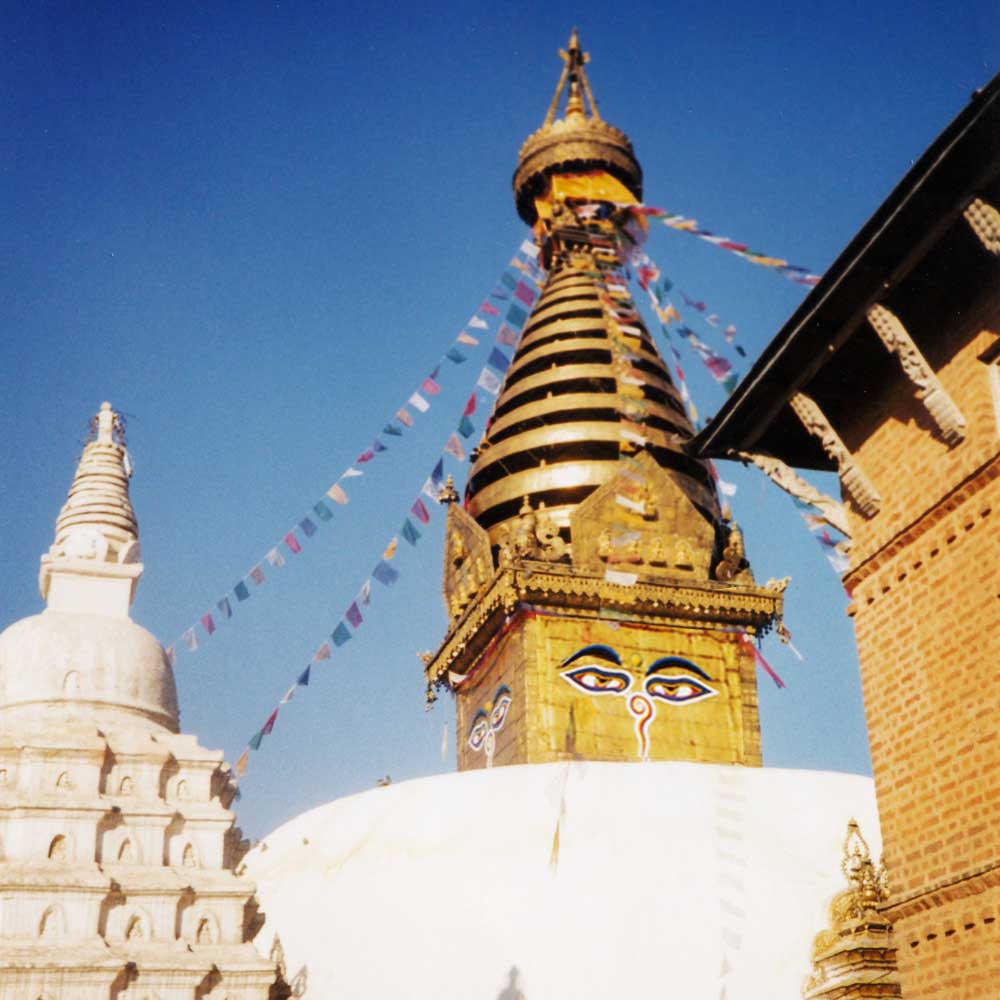
2.) Swayambhunath Stupa in Kathmandu, founded in
464 CE, is an temple complex atop a steep hill with a whopping 365 steps, the white on round dome base represents the earth and the pair of eyes on
the stupa mound represent wisdom and compassion of the Buddha
3.) The white tall spire temples on opposite sides
of the Stupa, Anantapur (left no.1) and Pratapur, (here no.3) were erected by king Pratap Malla in 1646, both were damaged by the 2015 Nepal
earthquake, both have been completely restored
4.) The Swayambhunath Temple monkeys are Arunachal
macaque (Macaca munzala) is native to Eastern Himalayas of Bhutan, Nepal, China and India
5.) The Arunachal macaque is a relatively large
brown primate with a short tail. They live at high altitudes above 2000 m (6,500 ft) to 3500 m (11,500 ft) above sea level, making it one of the
highest-dwelling primates
6.) The Arunachal macaque species name comes from
mun zala, literally meaning “deep forest monkey”
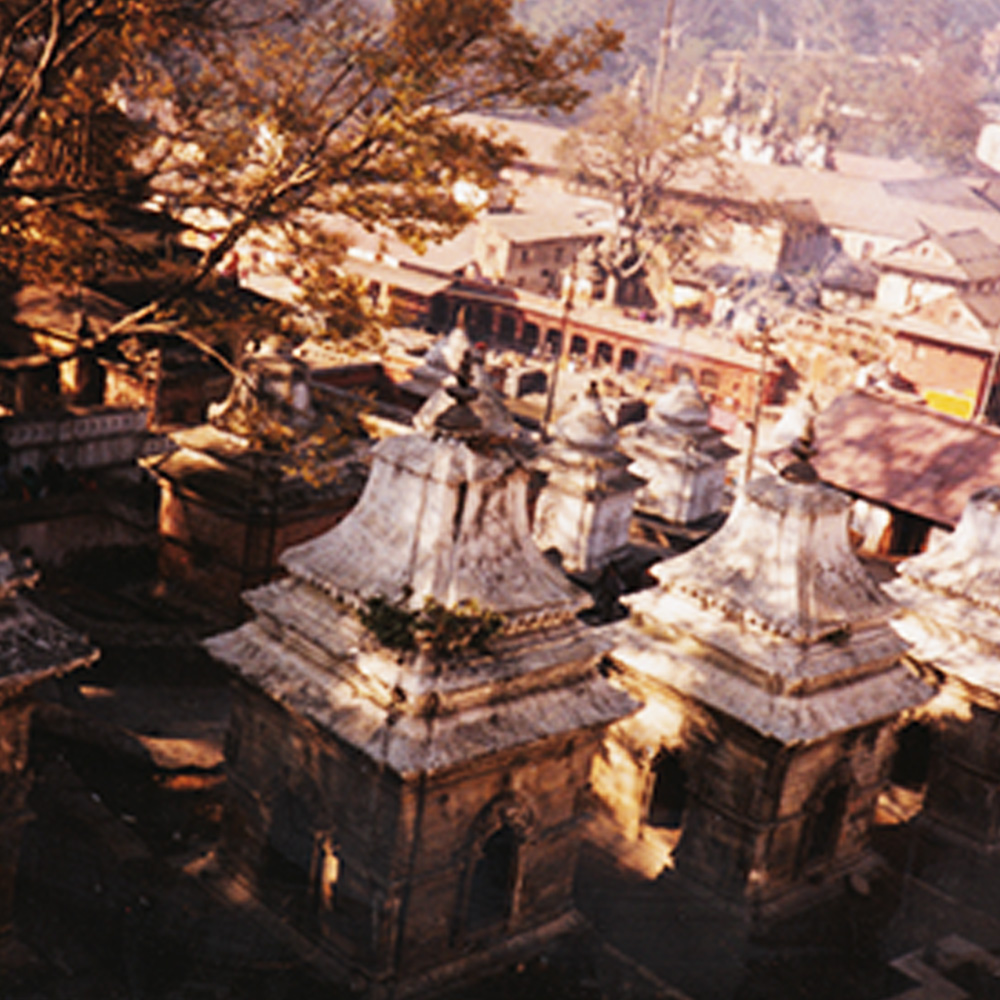
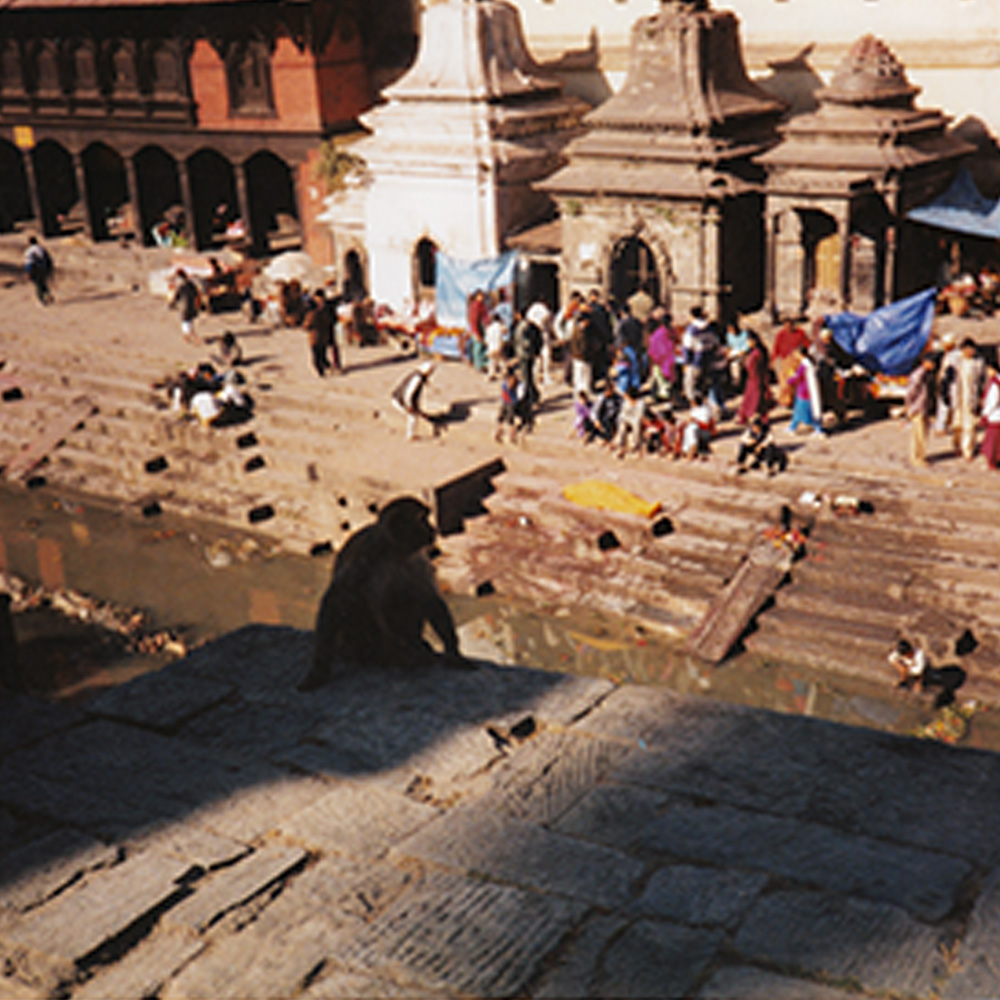
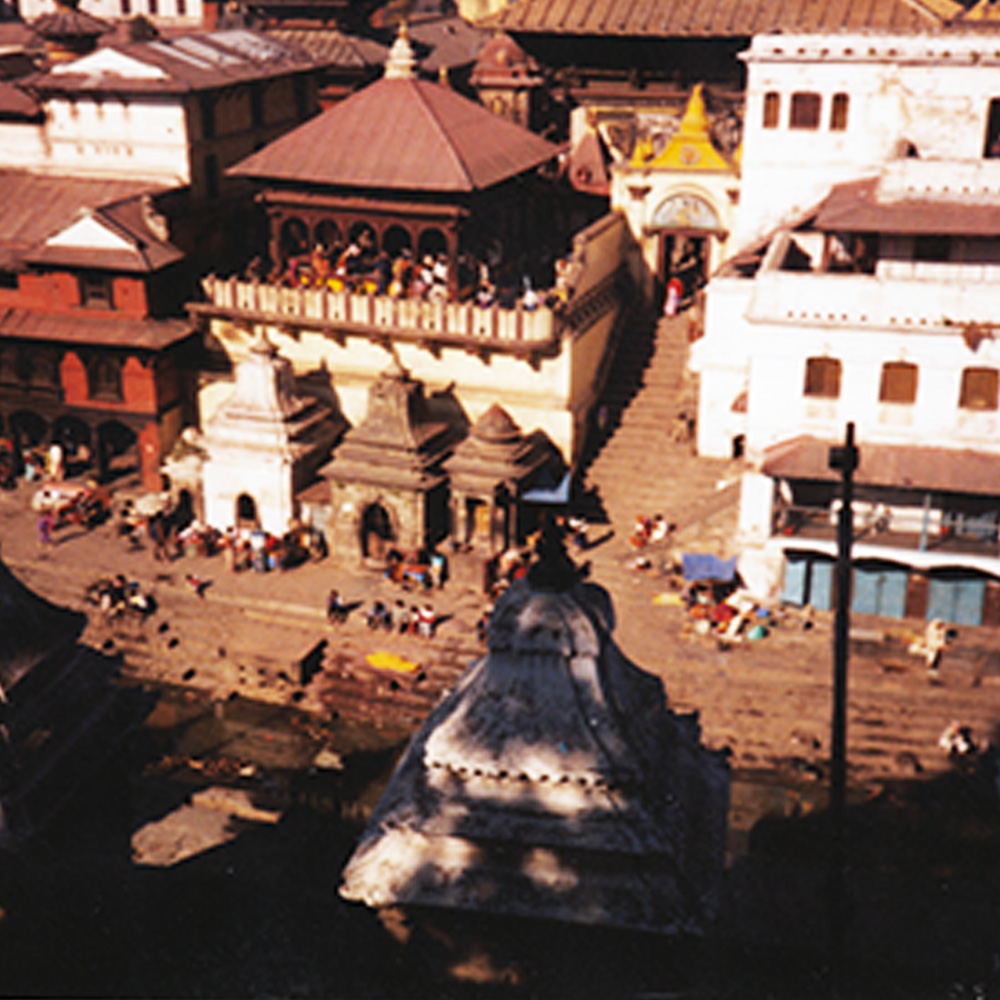
The Pashupatinath Temple, a Hindu temple dedicated
to Pashupati, a form of Shiva. It is located in Kathmandu, Nepal near the Bagmati River.
Pashupatinath, Hindu temple on the banks of the
Bagmati River, built in 1692 CE. classified as a World Heritage Site, 1979, an "extensive Hindu temple precinct" Kathmandu, Nepal
Pashupatinath Temple, has a "sprawling collection
of temples, ashrams, images and inscriptions raised over the centuries along the banks of the sacred Bagmati river",
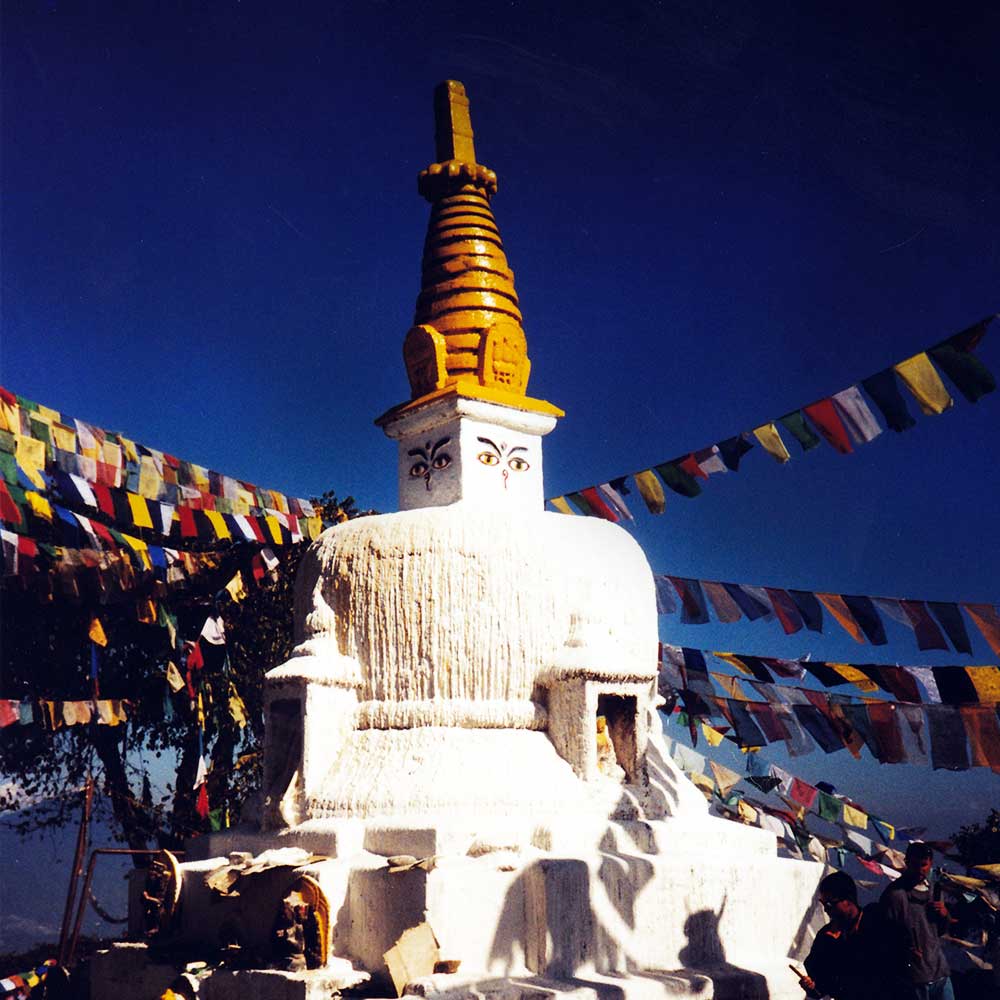
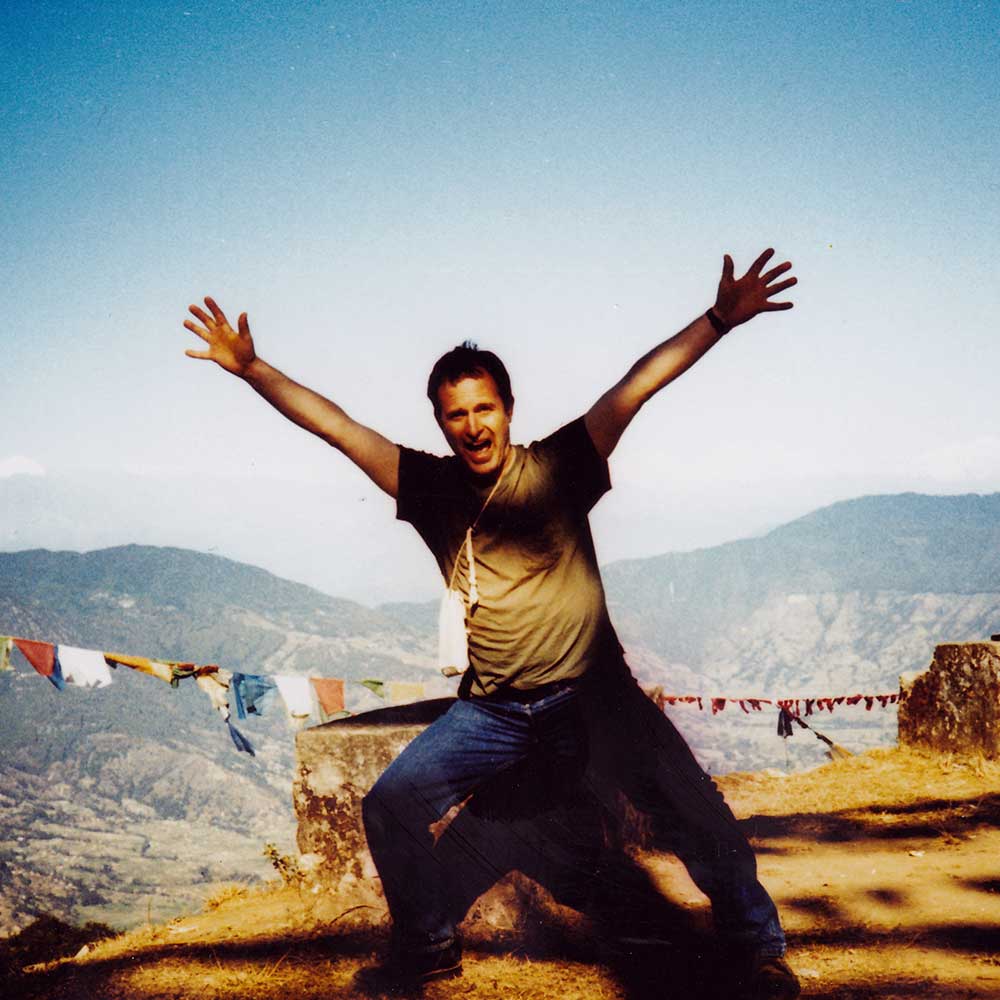
1.) Nagarjun Hill View Point Hike Tour, Nagarjun
is the nearest hill site of the Kathmandu Valley covered by thick forest with historical as well as natural settings. Situated north-west of
Kathmandu it’s a part of Shivapuri National Park
2.) It's a 2 hour or more hike up 7,000 feet to
the top of Nagarjuna hill the trail passes through Raniban Forest where you find a well-known sacred Buddhist stupa.
3.) Nagarjun hill's main attraction is the Jamacho
view point (2128 m) or 7,000 feet that has spectacular Himalayan scenery and views of the Kathmandu valley
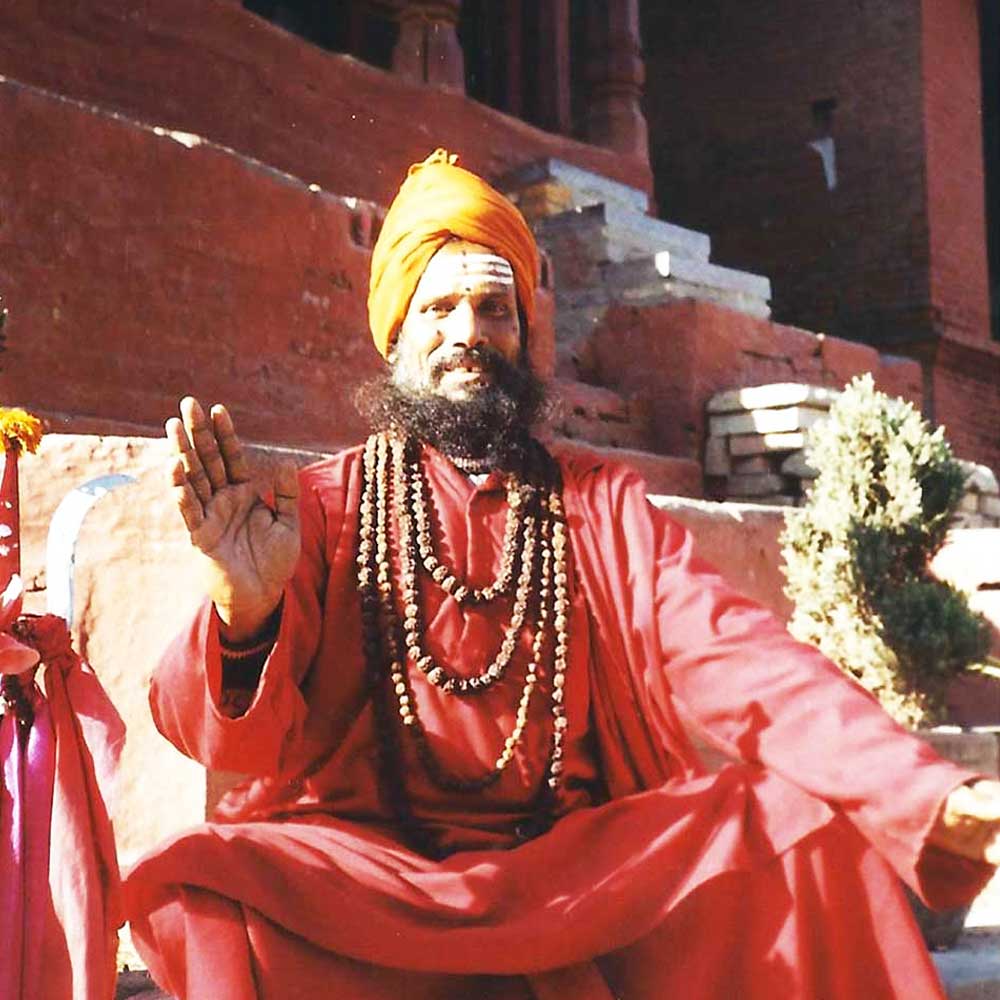
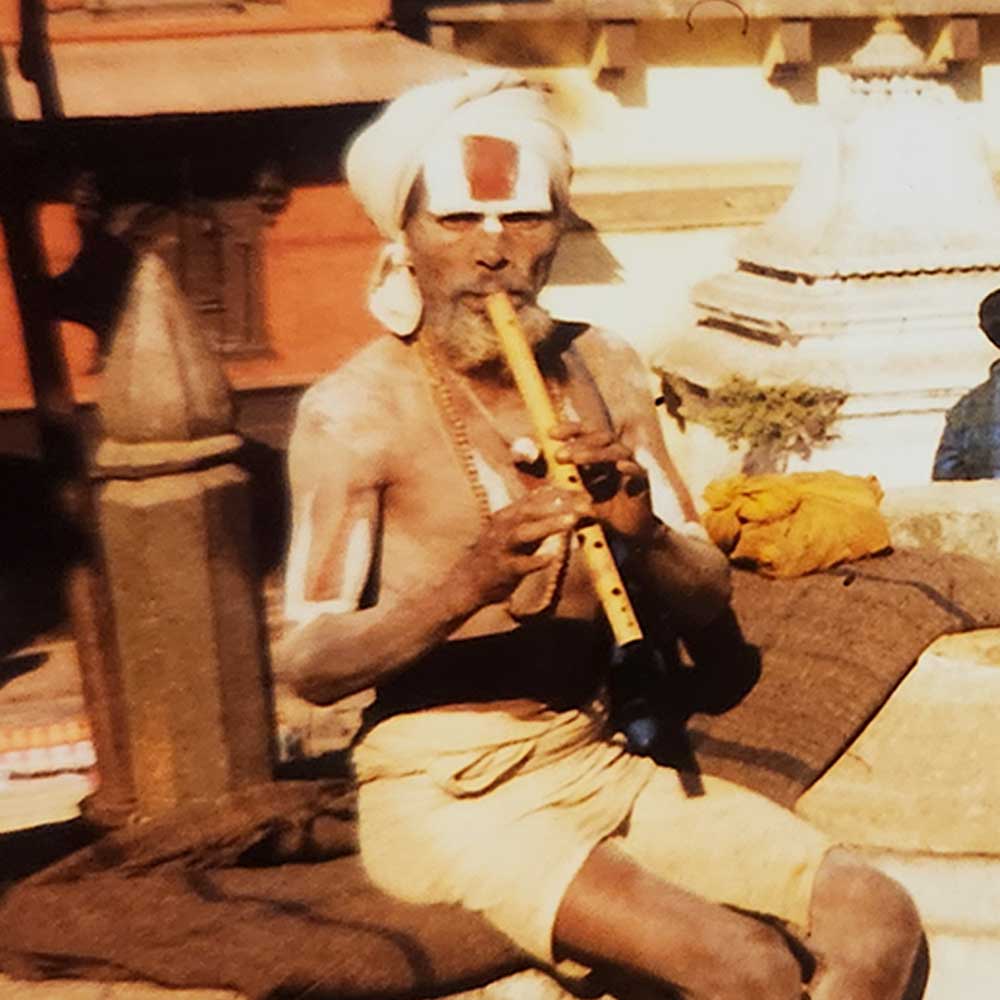
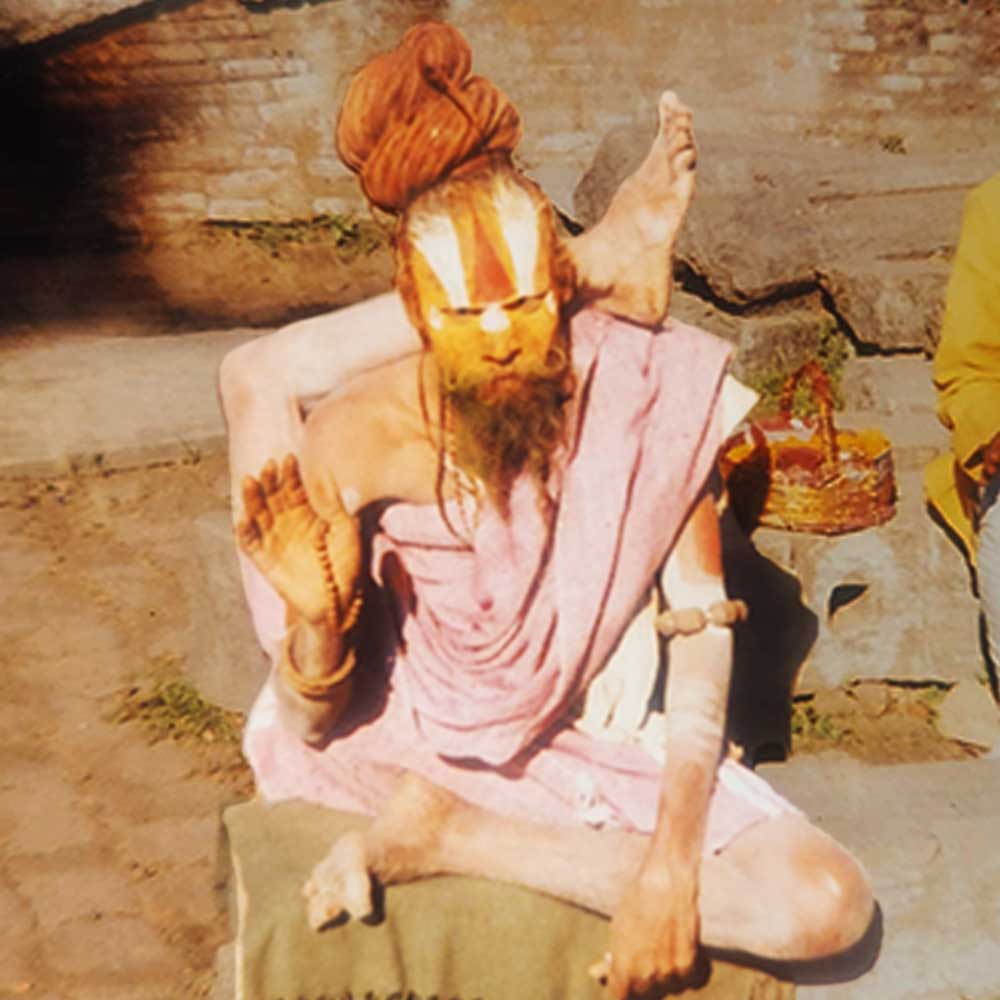
The holy men of Kathmandu known as Sadhu is solely
dedicated to achieving the fourth and final Hindu goal of life, moksha (liberation), through meditation and contemplation of Brahman.
The holy men of Kathmandu (Sadhus)often wear
ochre-colored clothing, symbolizing renunciation with traditional painted face
Wandering through the cities and forests the holy
men (Sadhus) have left all materialistic pleasures behind to live a life devoted to God