MEXICO CITY

Mexico City—the world’s sixth‑largest metropolis—unfurls across a high mountain valley more than 7,000 feet above sea level, framed by the volcanic silhouettes of Popocatépetl and Iztaccíhuatl, each rising above 17,000 feet. Home to over 22 million people, the city balances its challenges—pollution, congestion, and persistent economic inequality—with an extraordinary cultural vitality. Across its vast urban expanse, Mexico City offers a dense tapestry of museums, archaeological sites, theaters, markets, and restaurants, all linked by an efficient and remarkably affordable metro system. Among its greatest treasures is Teotihuacan, the ancient Mesoamerican city whose monumental 1st‑century pyramids rival the scale of those in Egypt. Climbing the Pyramid of the Sun or standing before the Pyramid of the Moon provides a rare, visceral encounter with a civilization that shaped the region’s cultural foundations long before the Aztecs arrived.
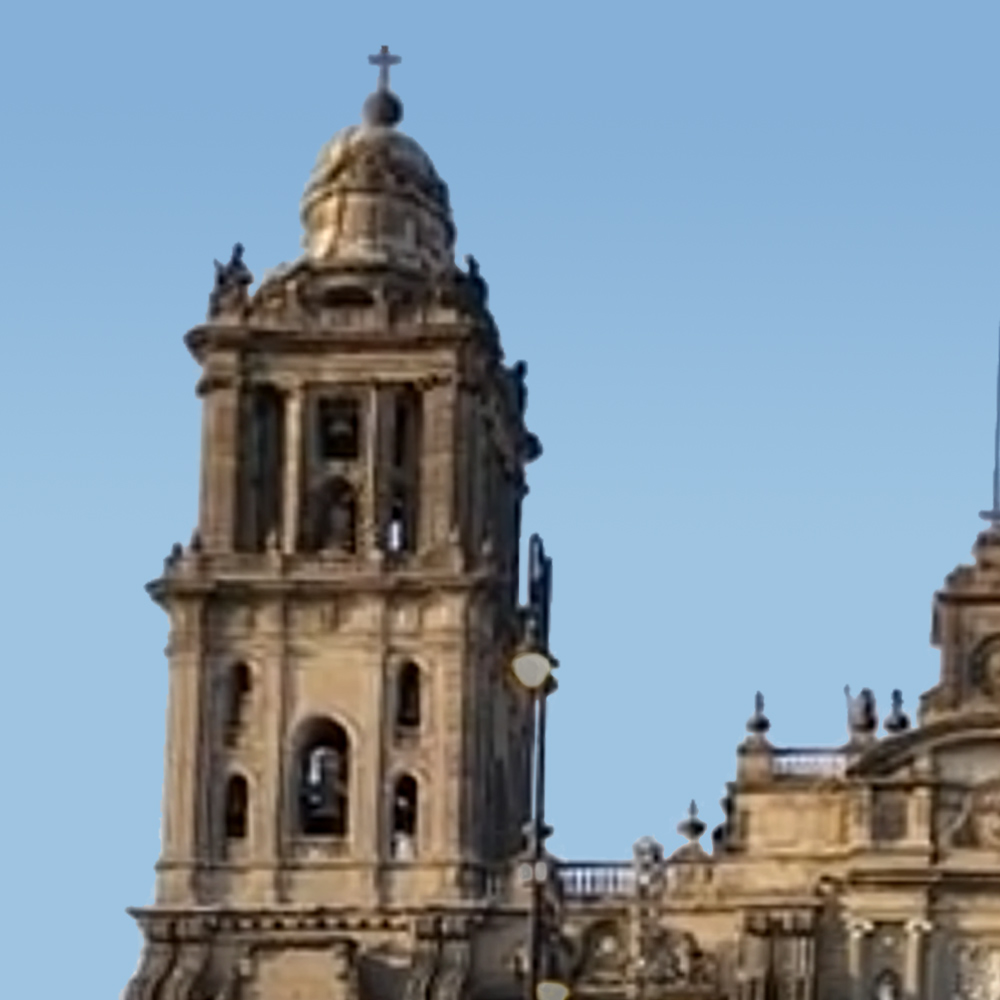
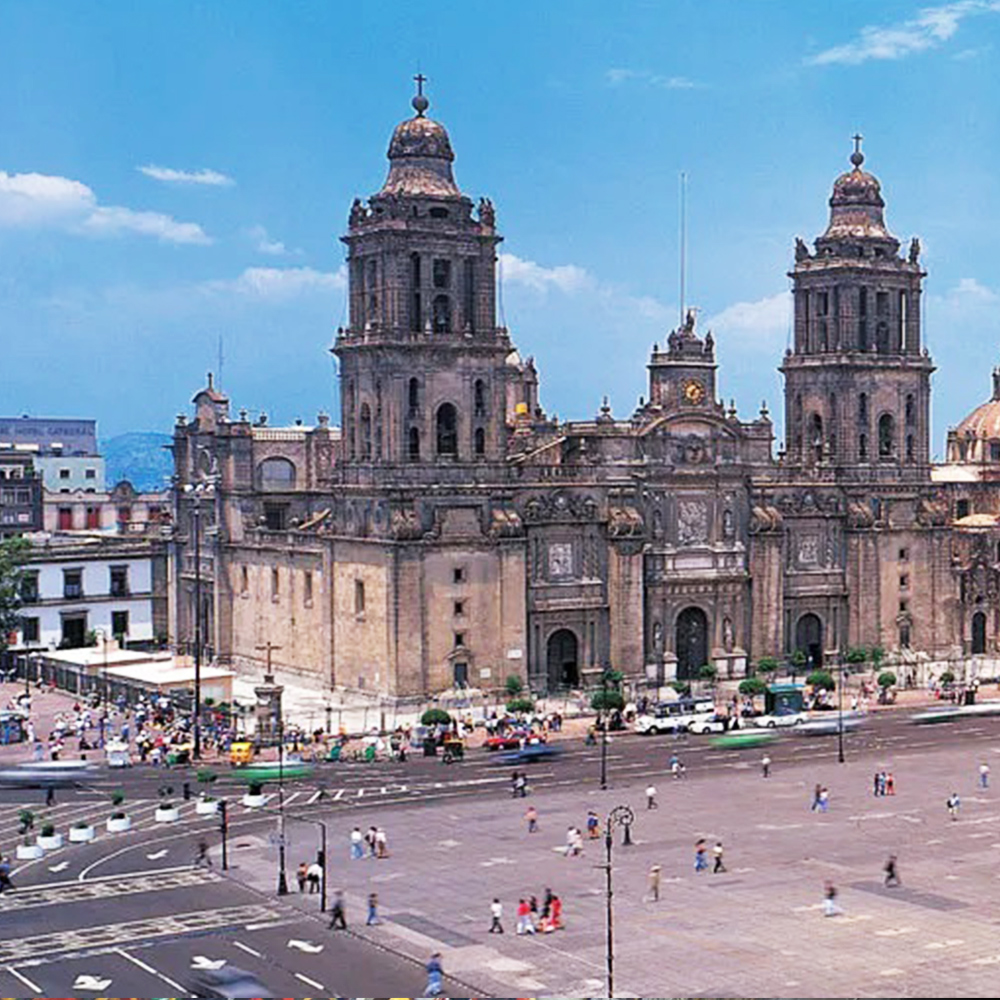
““ Metropolitan Cathedral, built in sections from 1573 to 1813, just under 250 years, however the long construction time,
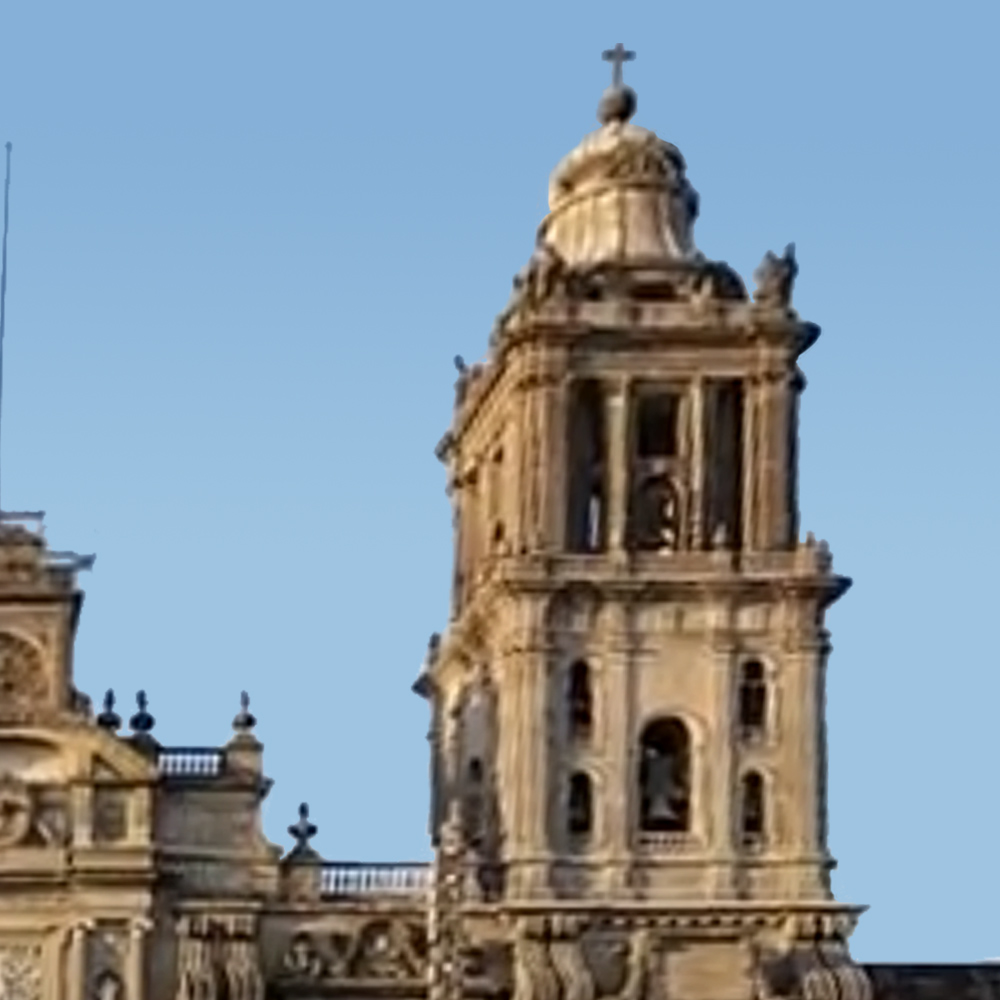
““ led to the integration of a number of architectural styles, including the Gothic, Baroque, Churrigueresque, and Neoclassical
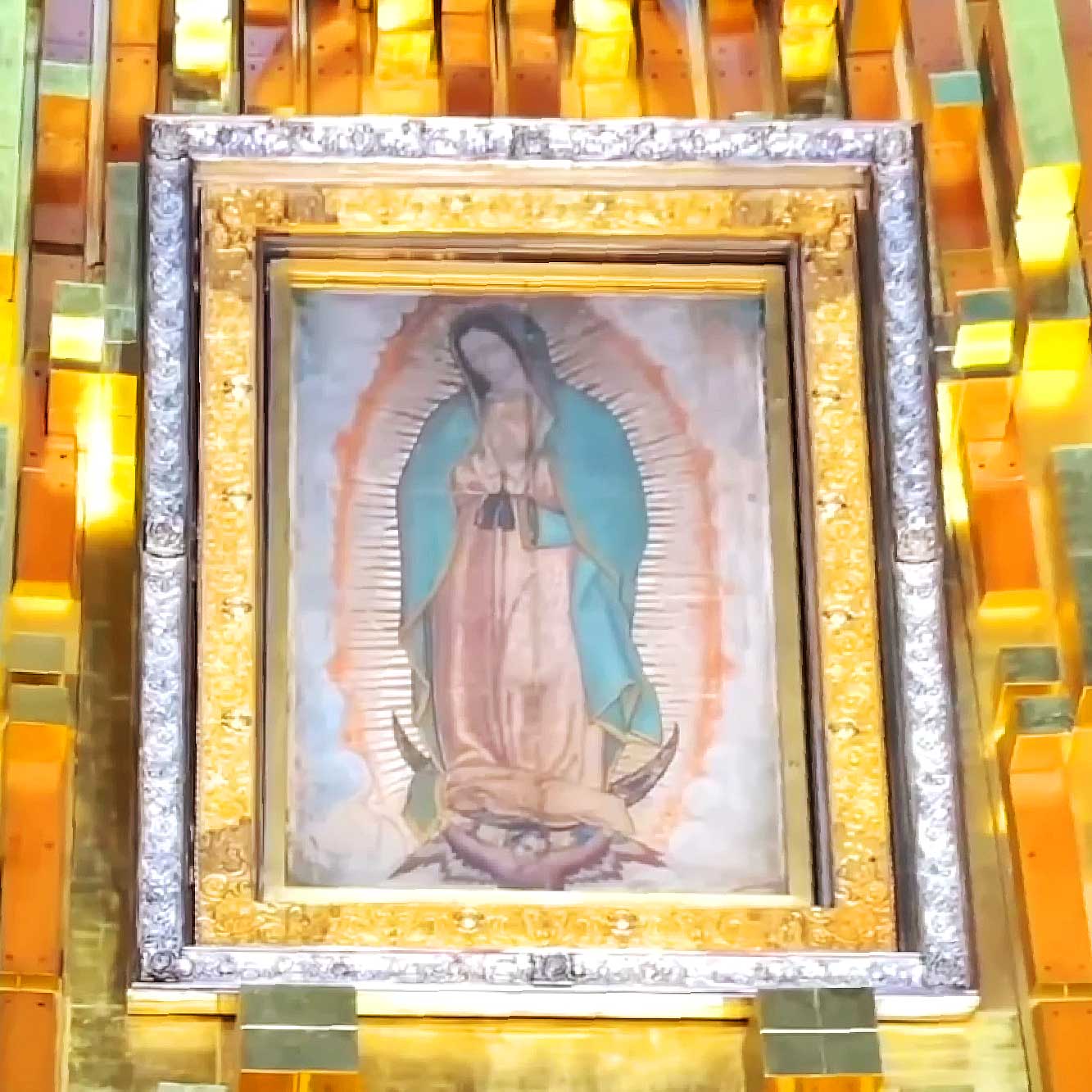
““The Basilica of Our Lady of Guadalupe a historic 18th-century premier pilgrimage site that houses the miraculous image of the Virgin
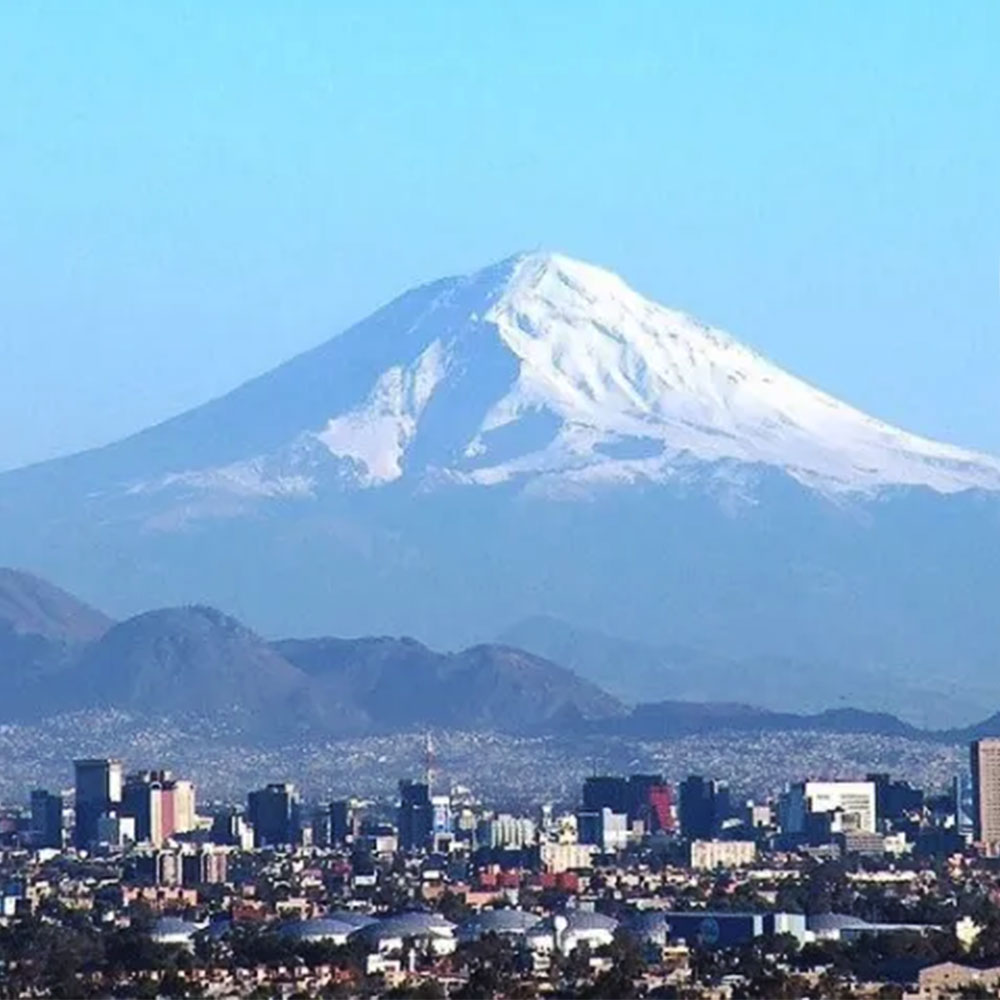
““Popocatépetl one of two volcanoes, located  40 miles, or 70 kilometers southeast of Mexico City, elevation of 5,426 meters (17,802 feet)
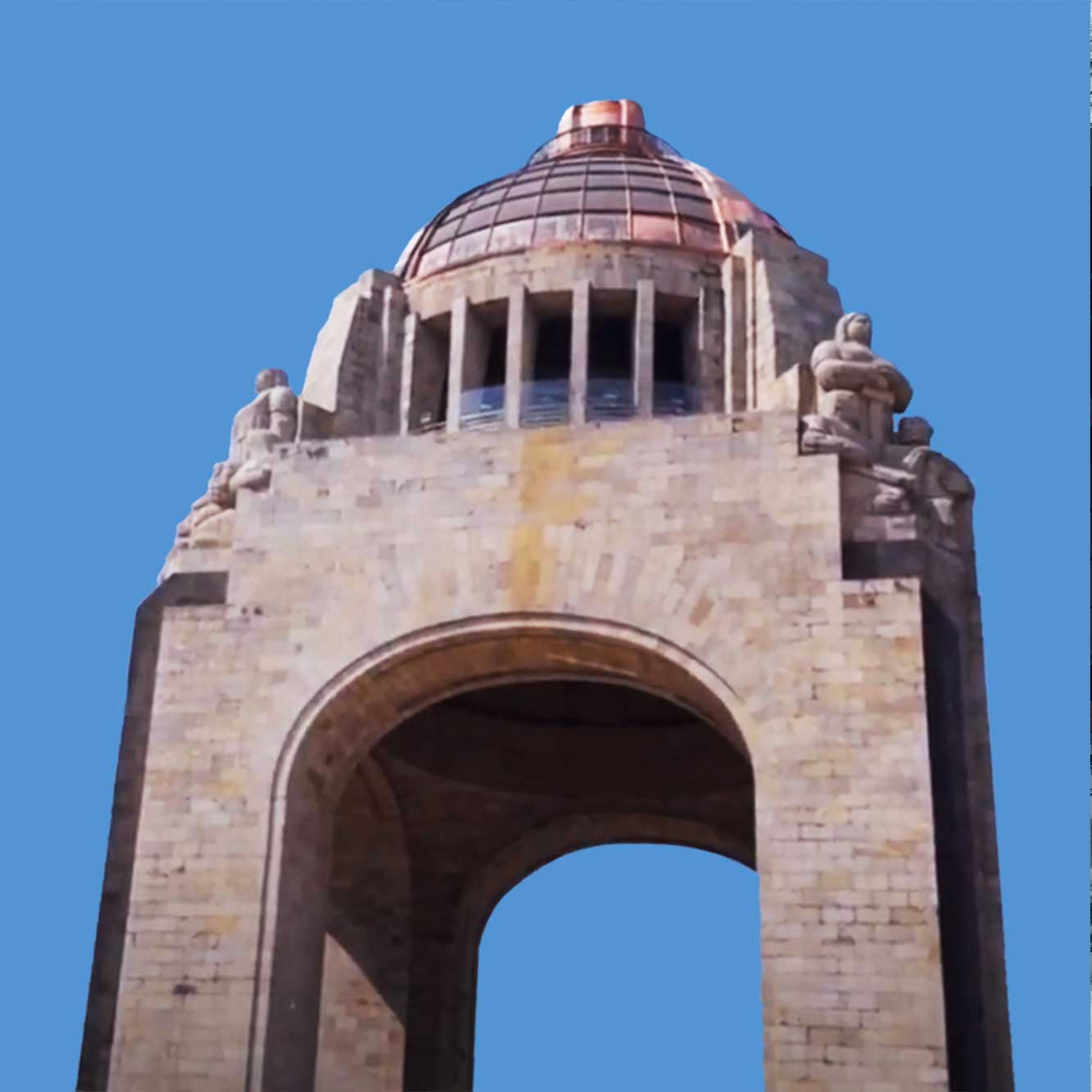
““Monument to the Revolution, 1910-20, Plaza de la República, the tallest memorial arch in the world, 220 ft high, Mexico City
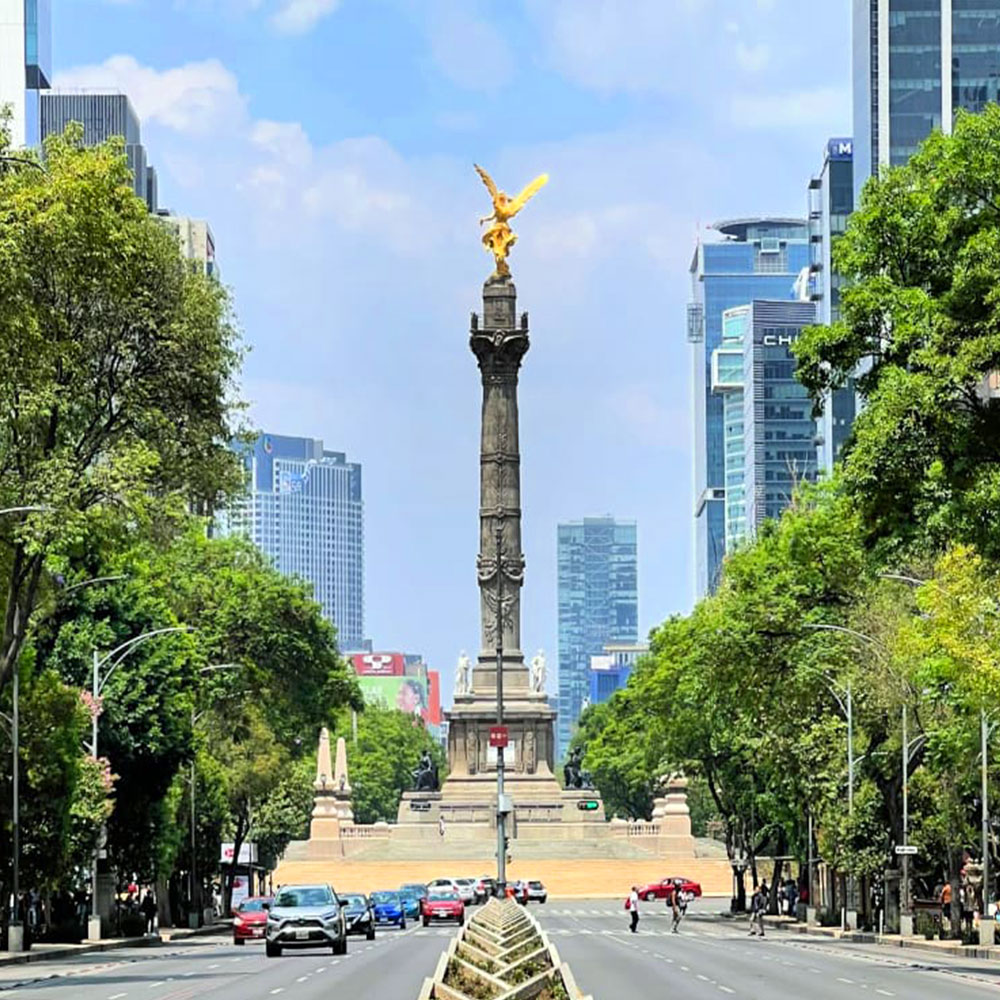
““Angel of Independence, a victory column, Paseo de la Reforma, built in 1910, Mexico City
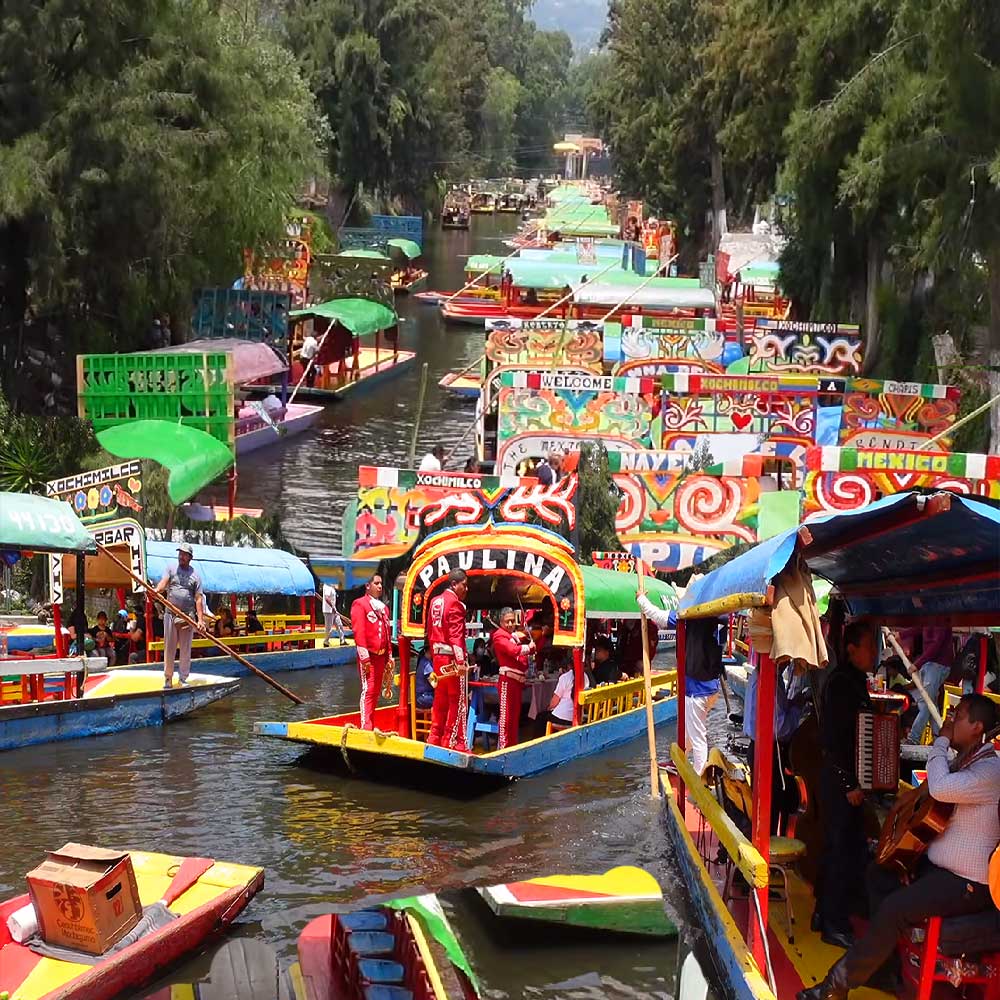
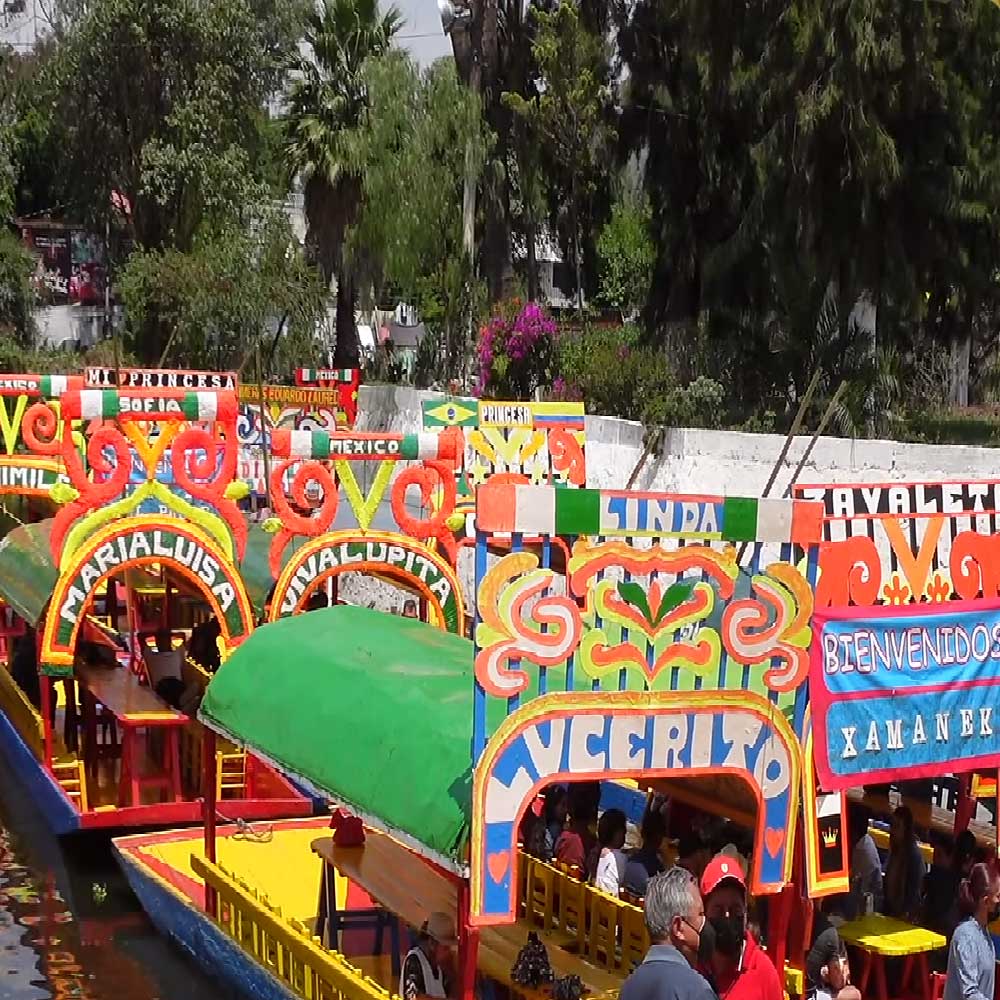
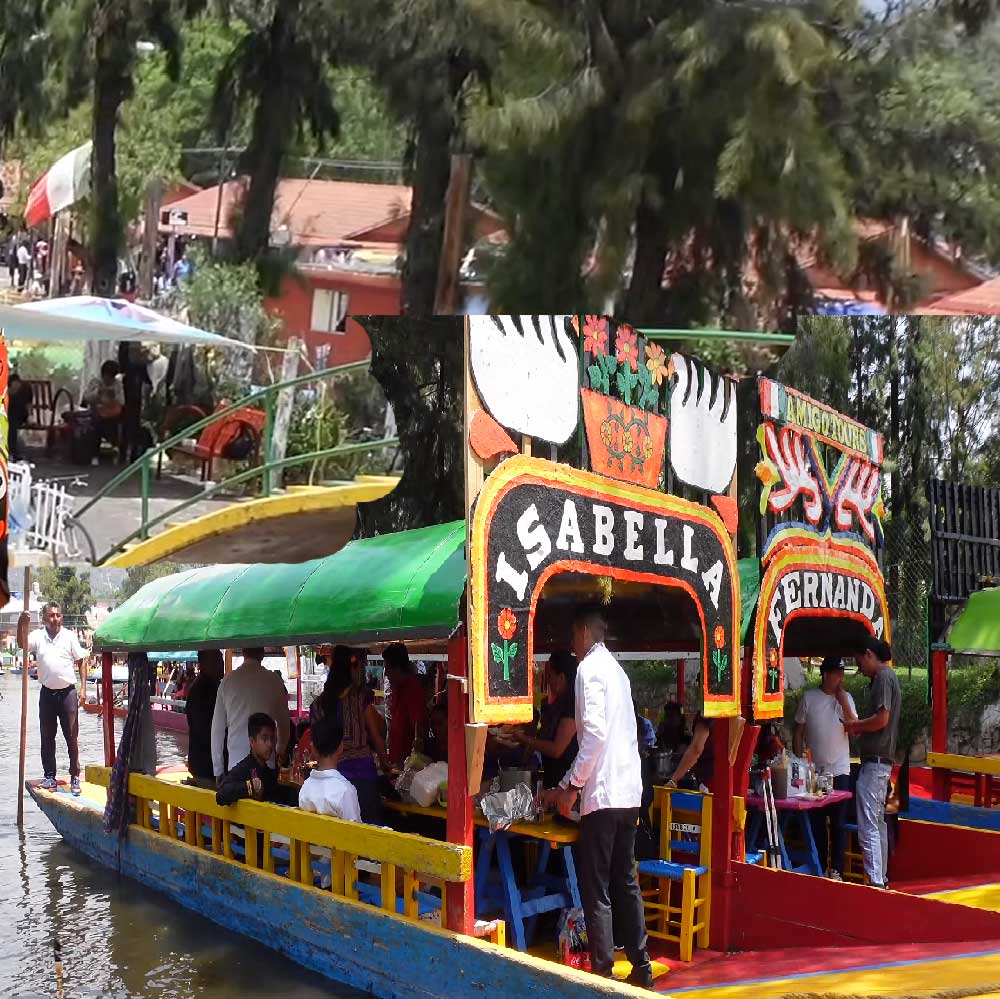
““Floating Gardens of Xochimilco is best known for its canals with artificial islands called chinampas, 
““tourists and other city residents  ride the colorful gondola-like boats called trajineras, while enjoying music from passing mariachi boats 
““and purchasing snacks or souvenirs from vendor boats. 
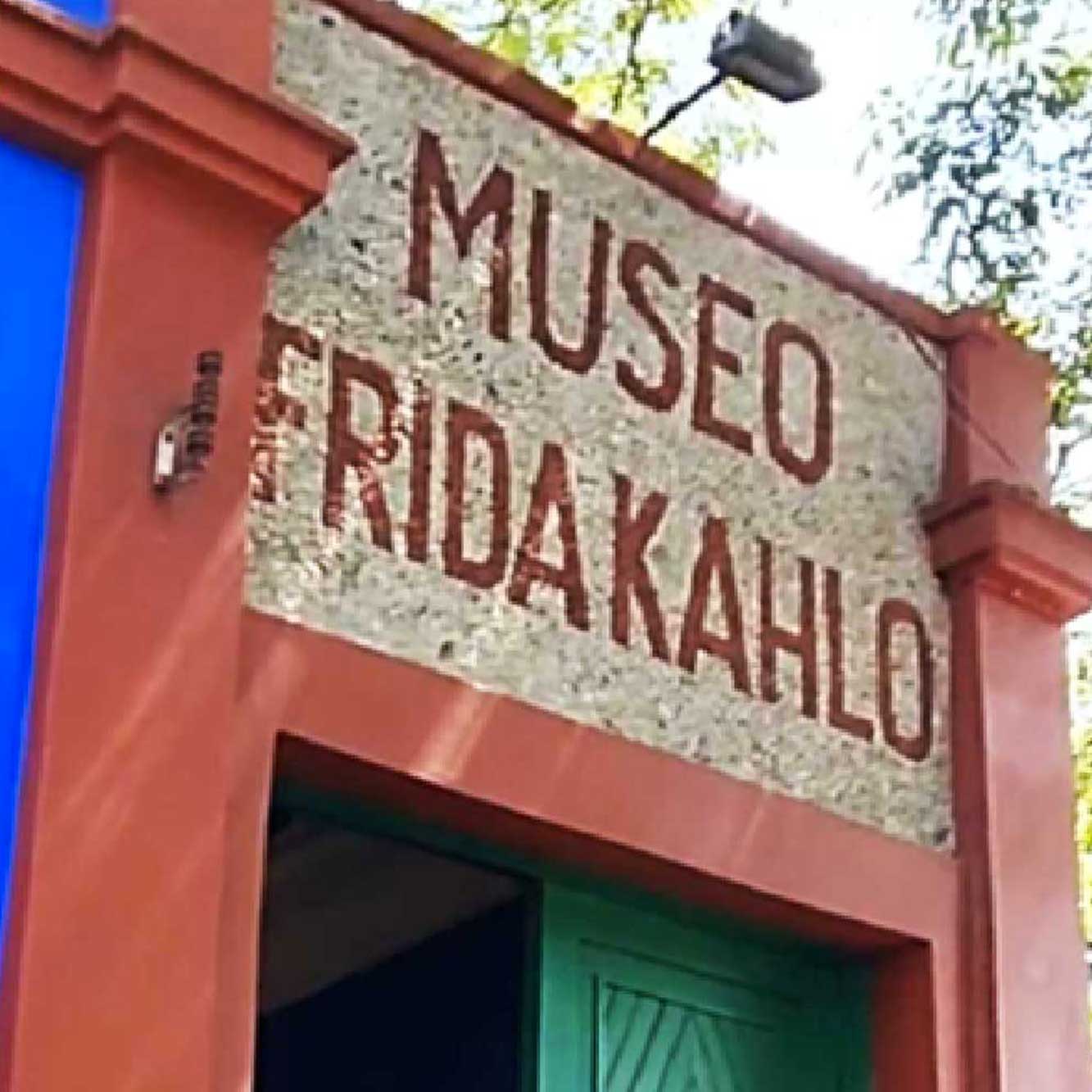
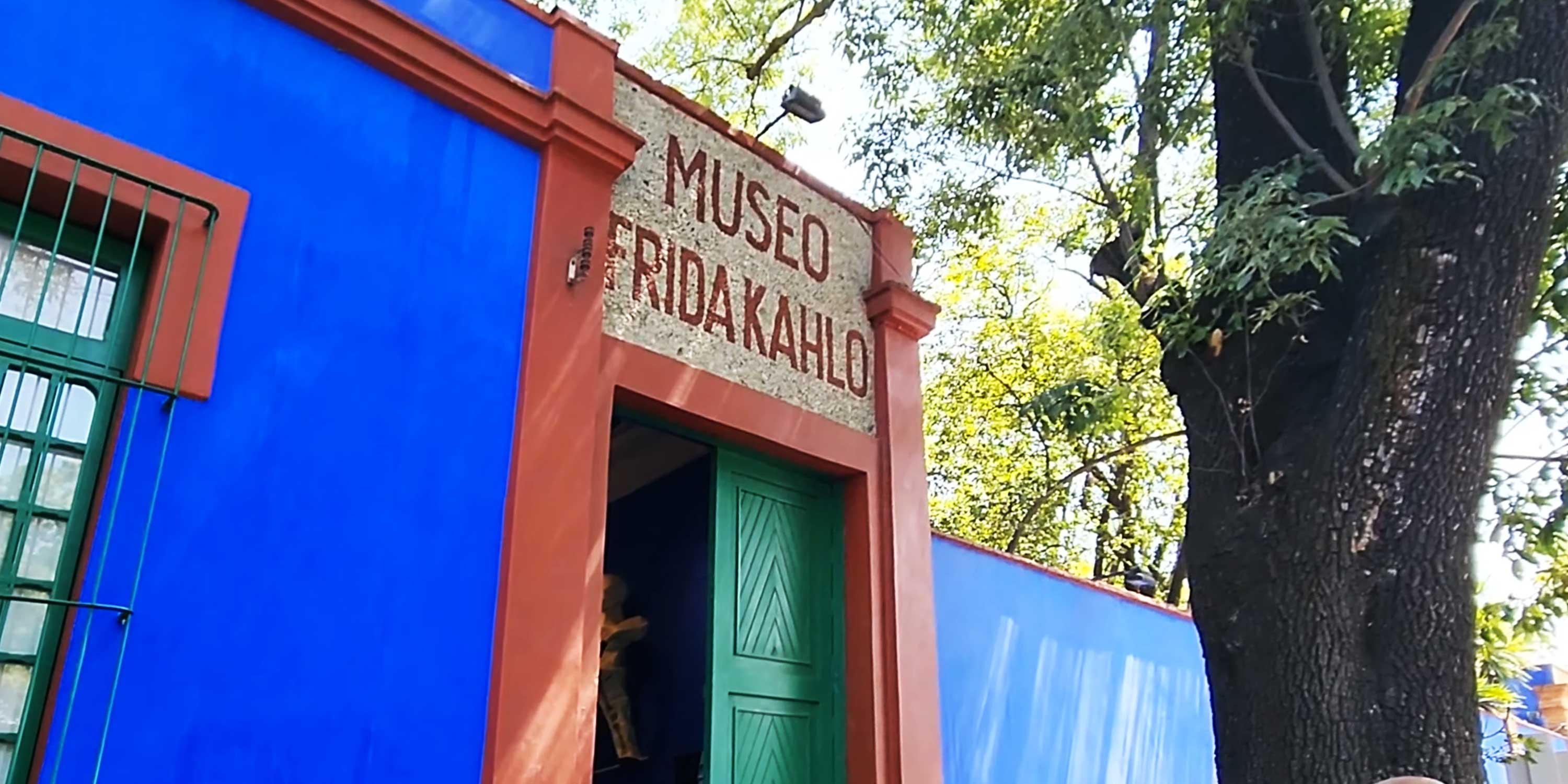
““The Frida Kahlo Museum, located in the Coyoacán neighborhood of Mexico City, Coyoacán means "place of the coyotes"
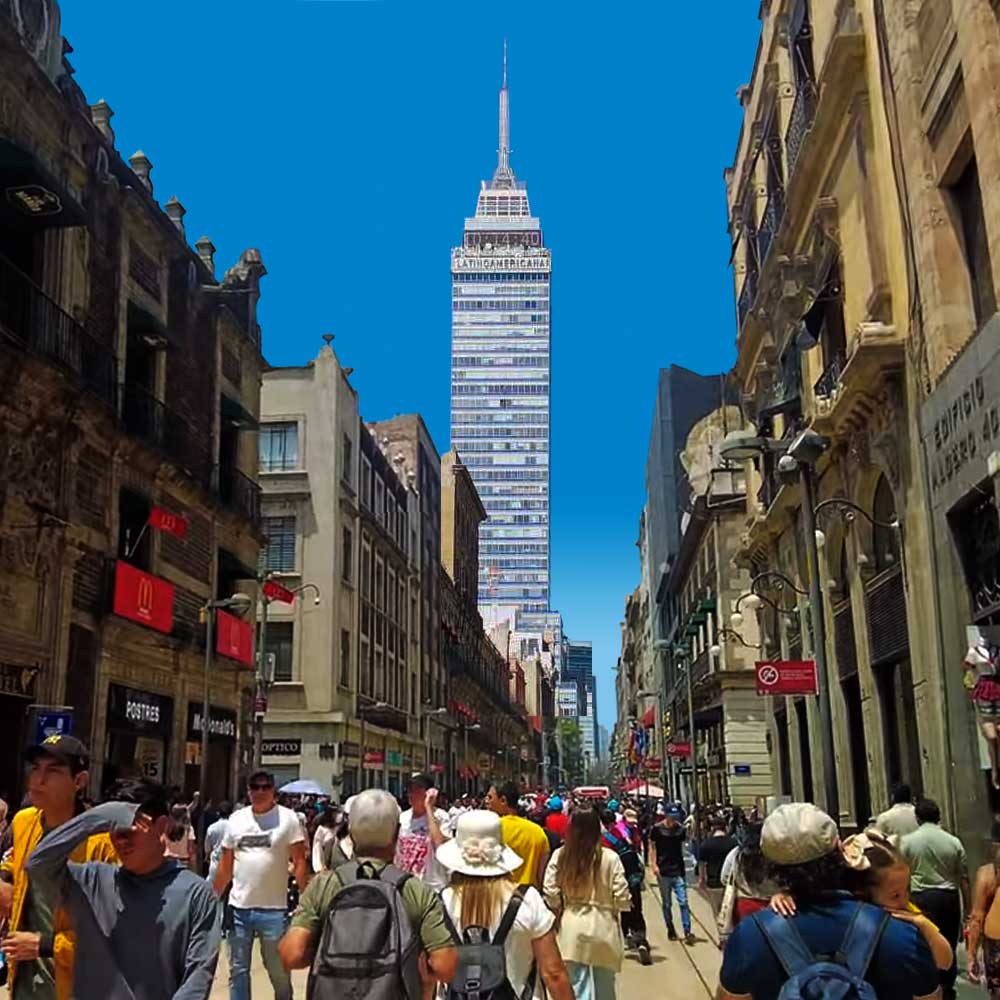
““Madero Street in the historic center of Mexico City, looking towards the iconic Torre Latinoamericana.
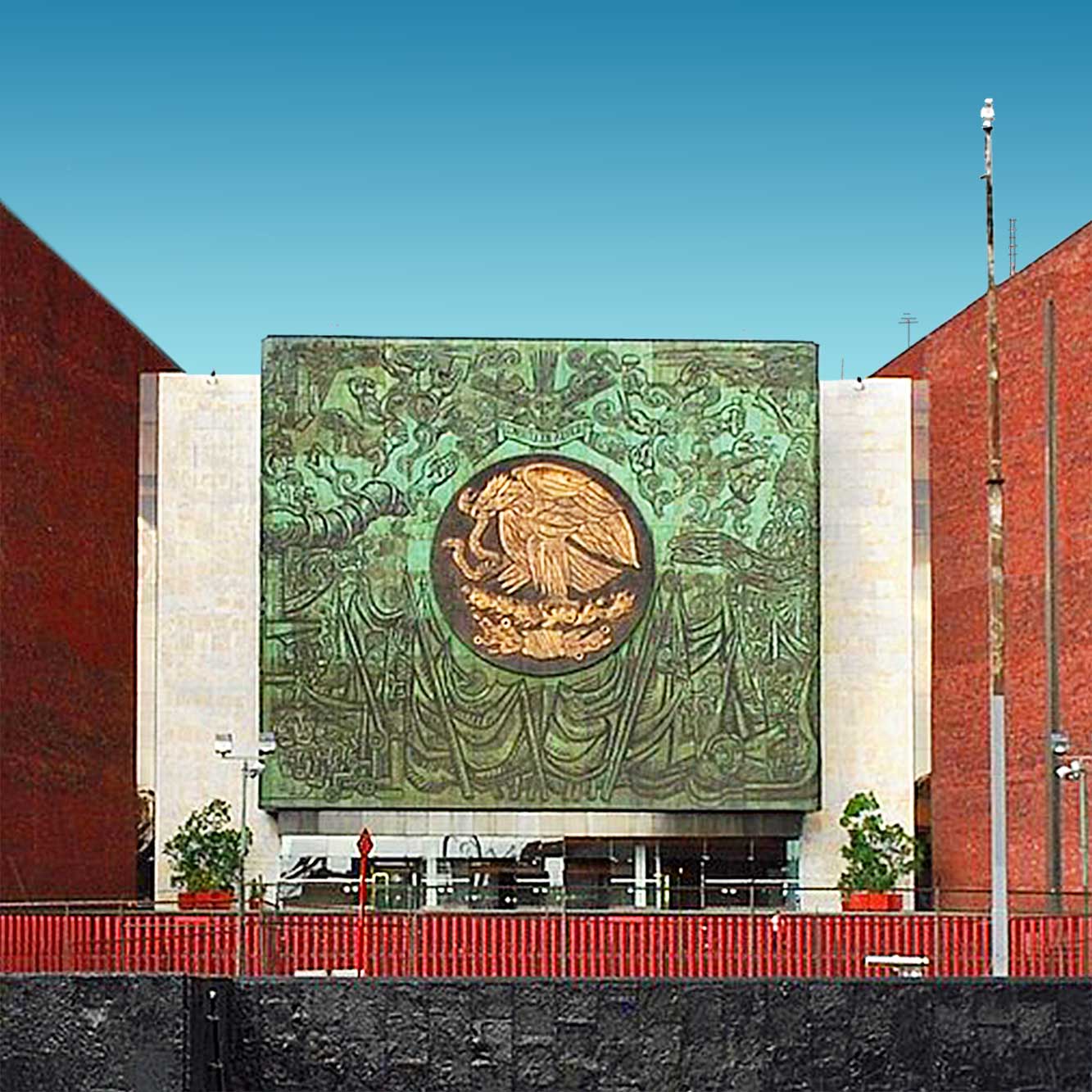
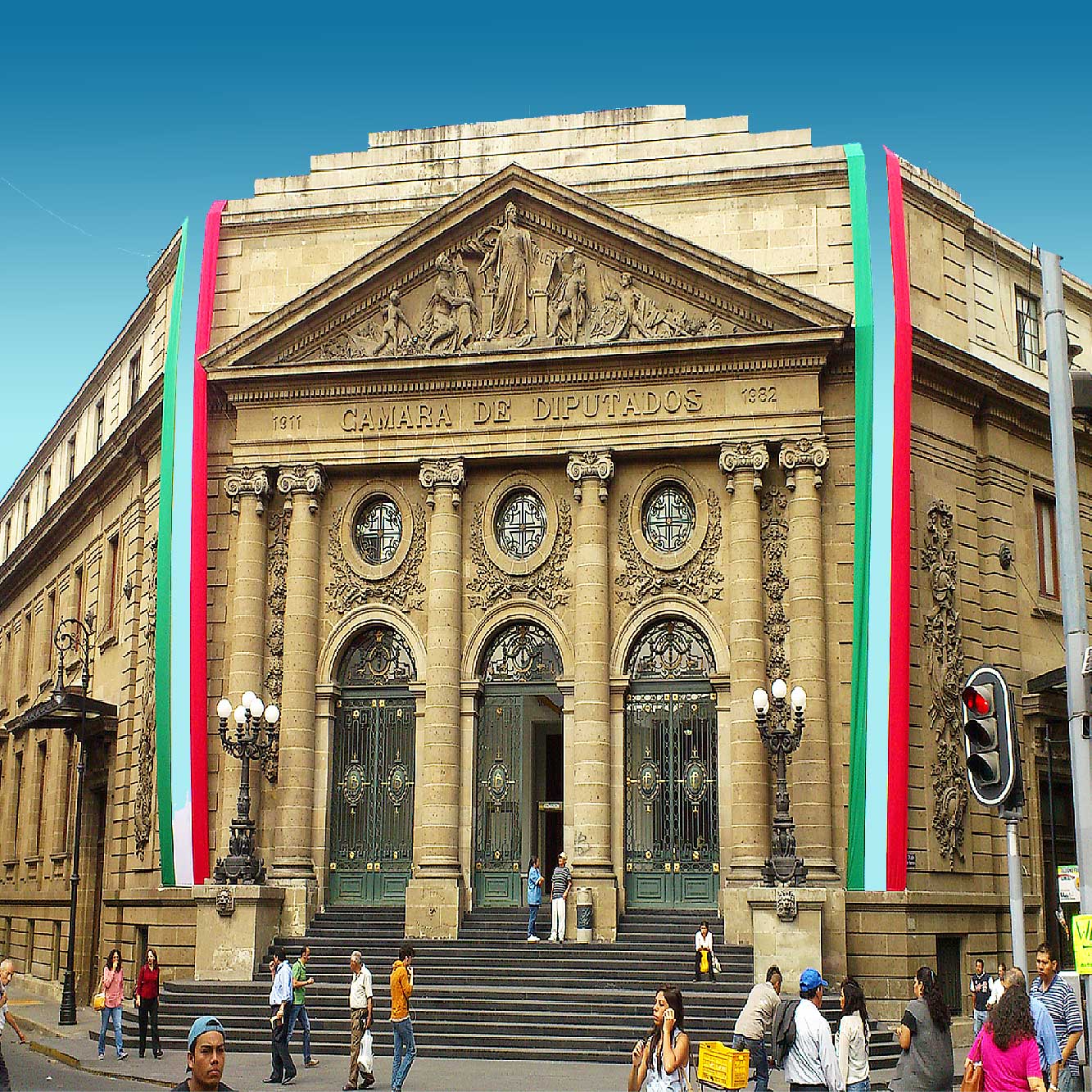
““Legislative Palace of San Lázaro, Avenida Congreso de la Unión No. 66, Colonia El Parque, Mexico City
““Mexico City's Legislative Assembly building
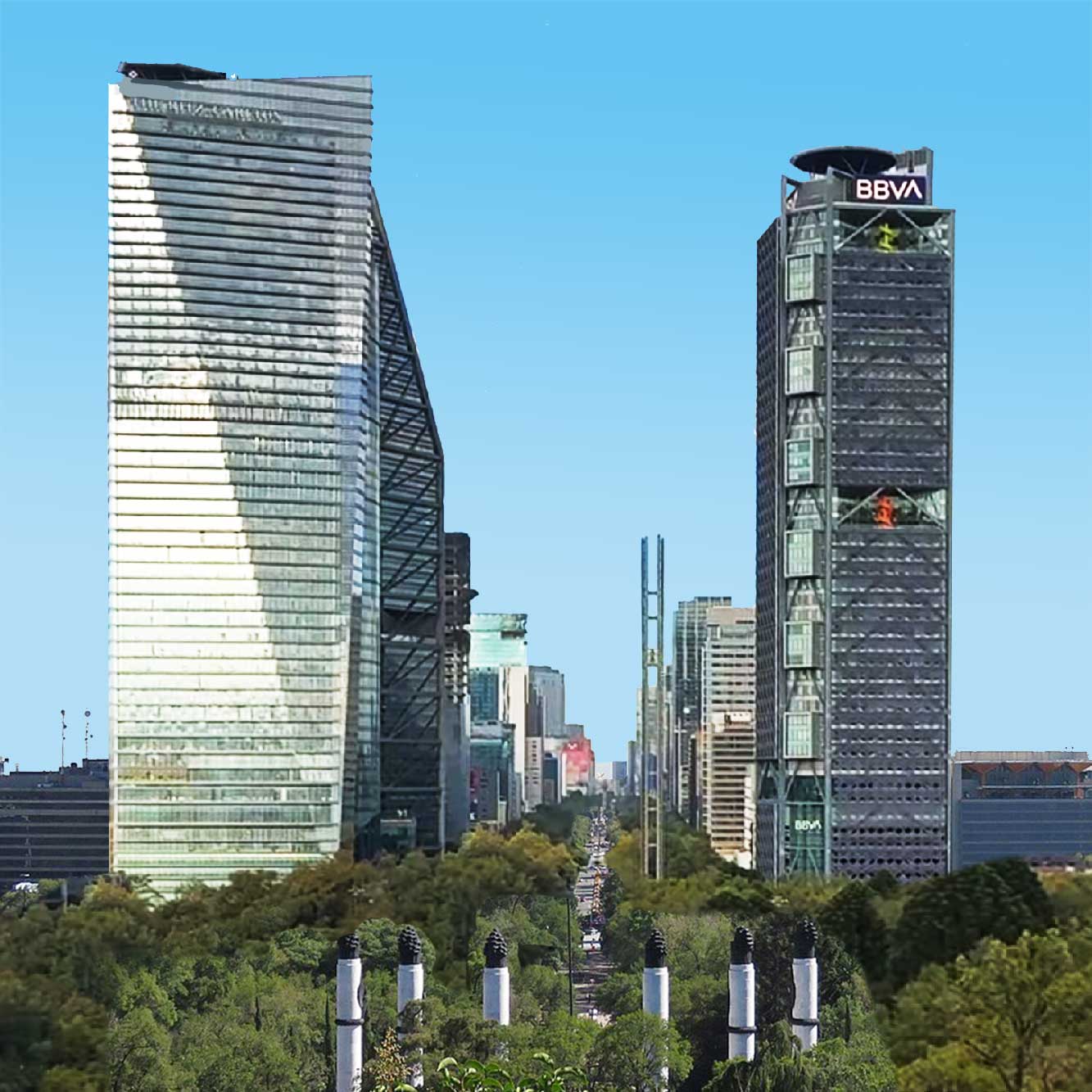
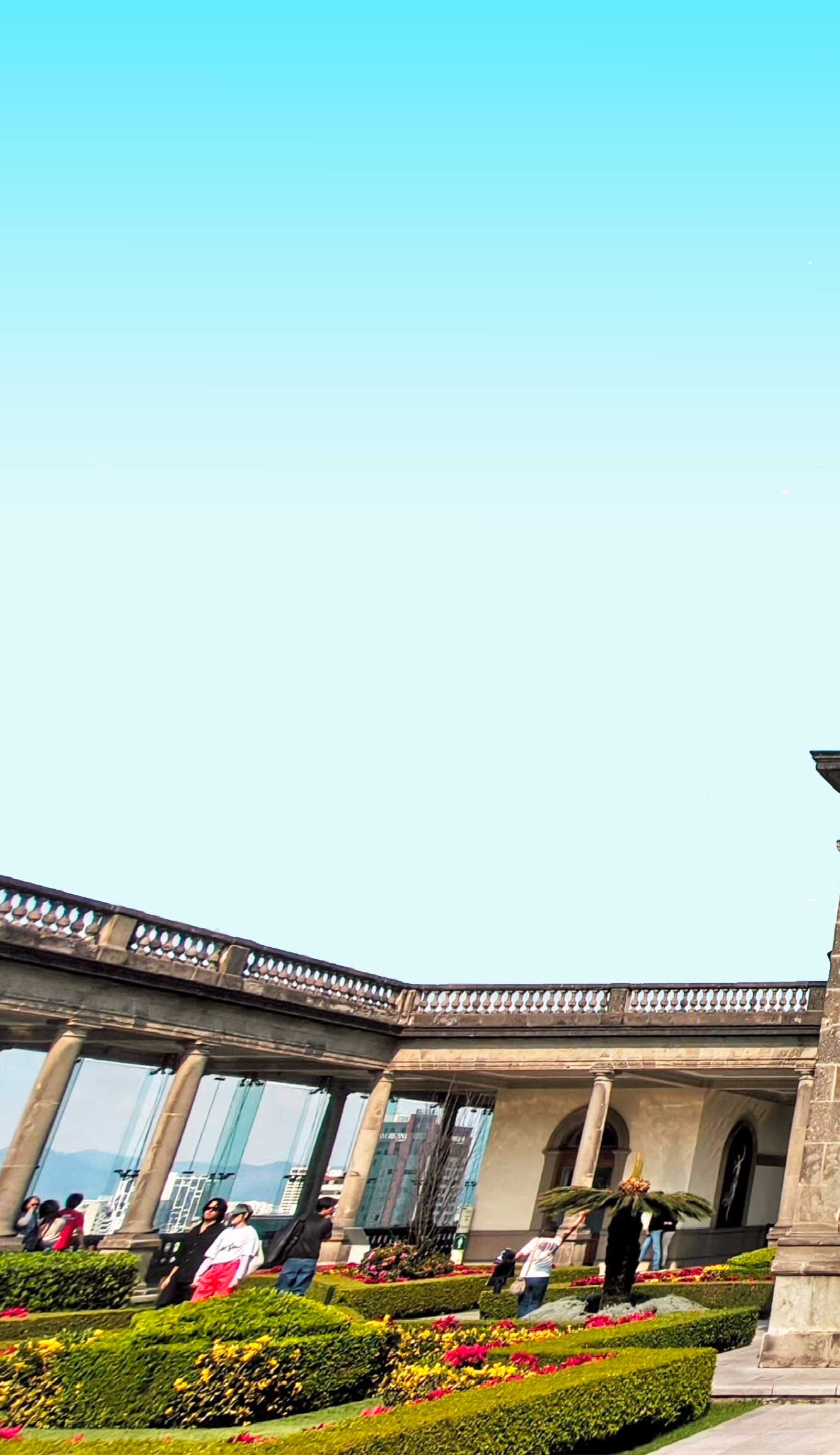
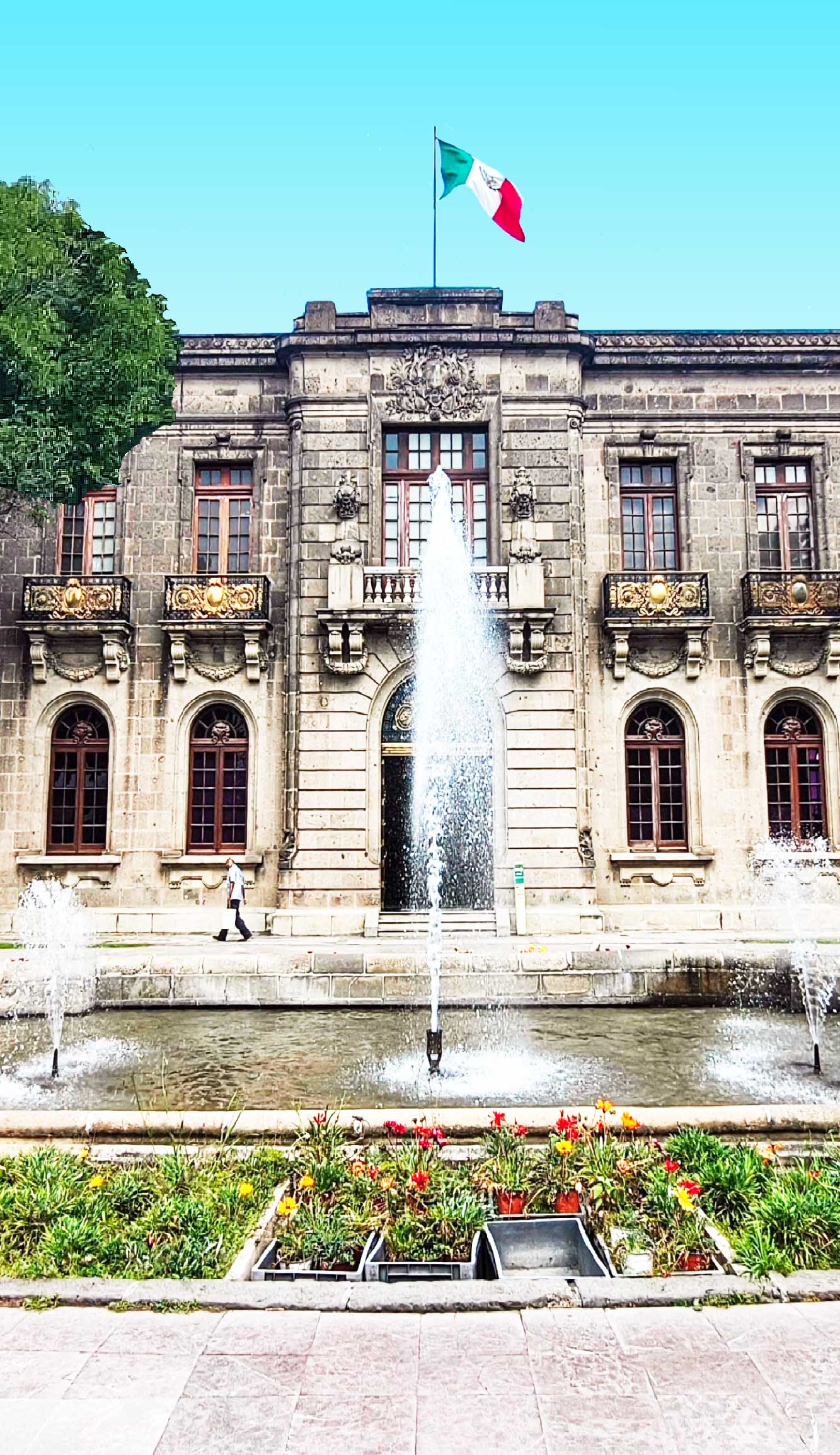
““Paseo de la Reforma seen from Chapultepec Castle
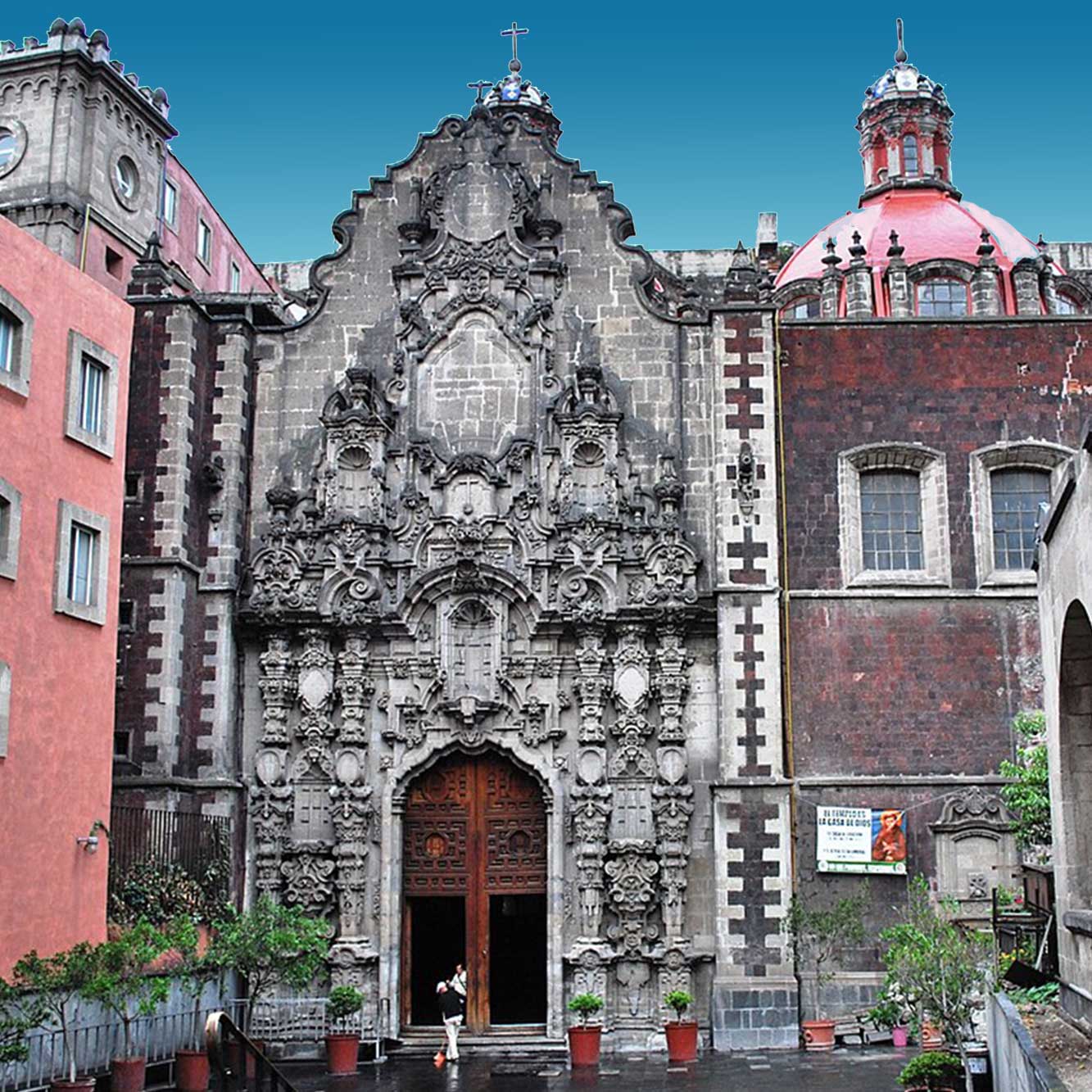
““Iglesia de San Francisco, built in 1710, near Madero Street in the historic center of Mexico City
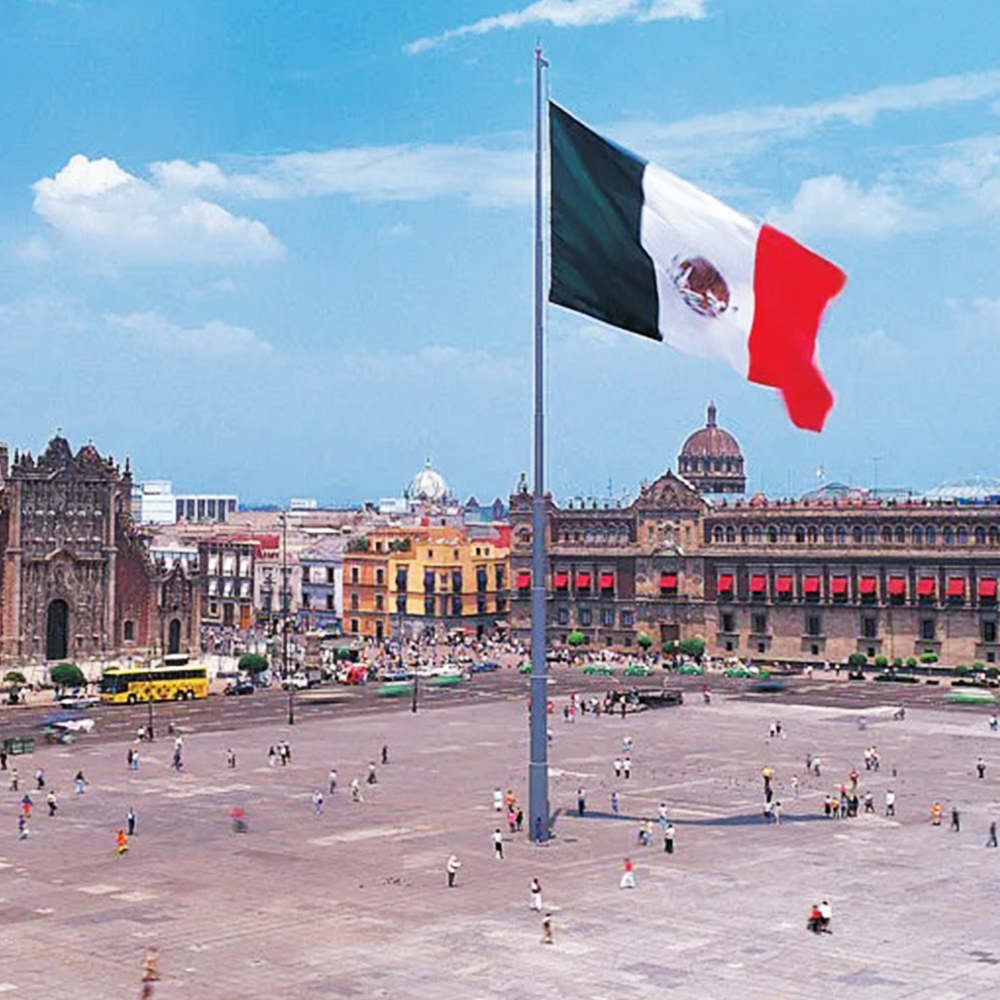
““1.) The Zocalo is the largest city square in the Americas, built over the central, sacred ceremonial grounds of the Aztec city of Tenochtitlan.
““2.) A central flagpole with a massive flag, surrounded by key landmarks like the Metropolitan Cathedral and the National Palace.
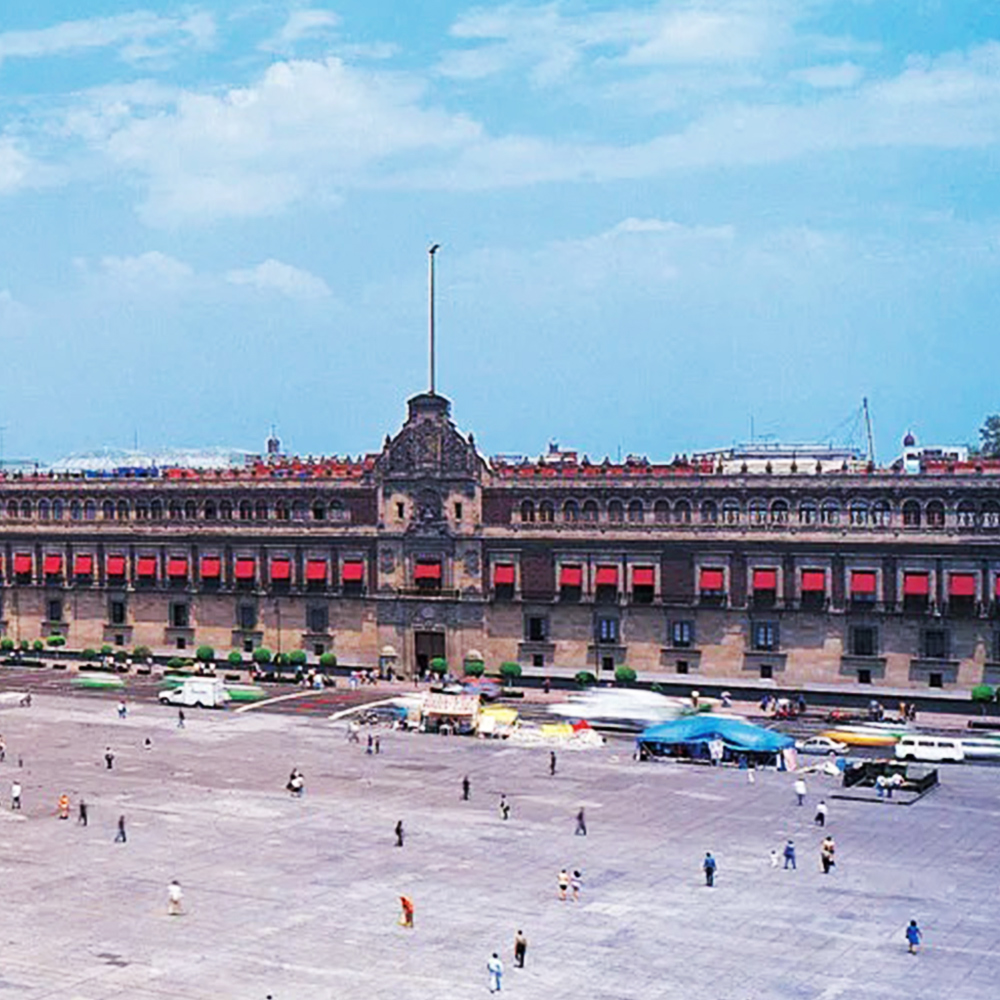
““3.) Plaza de la Constitución, National Palace, Mexico City
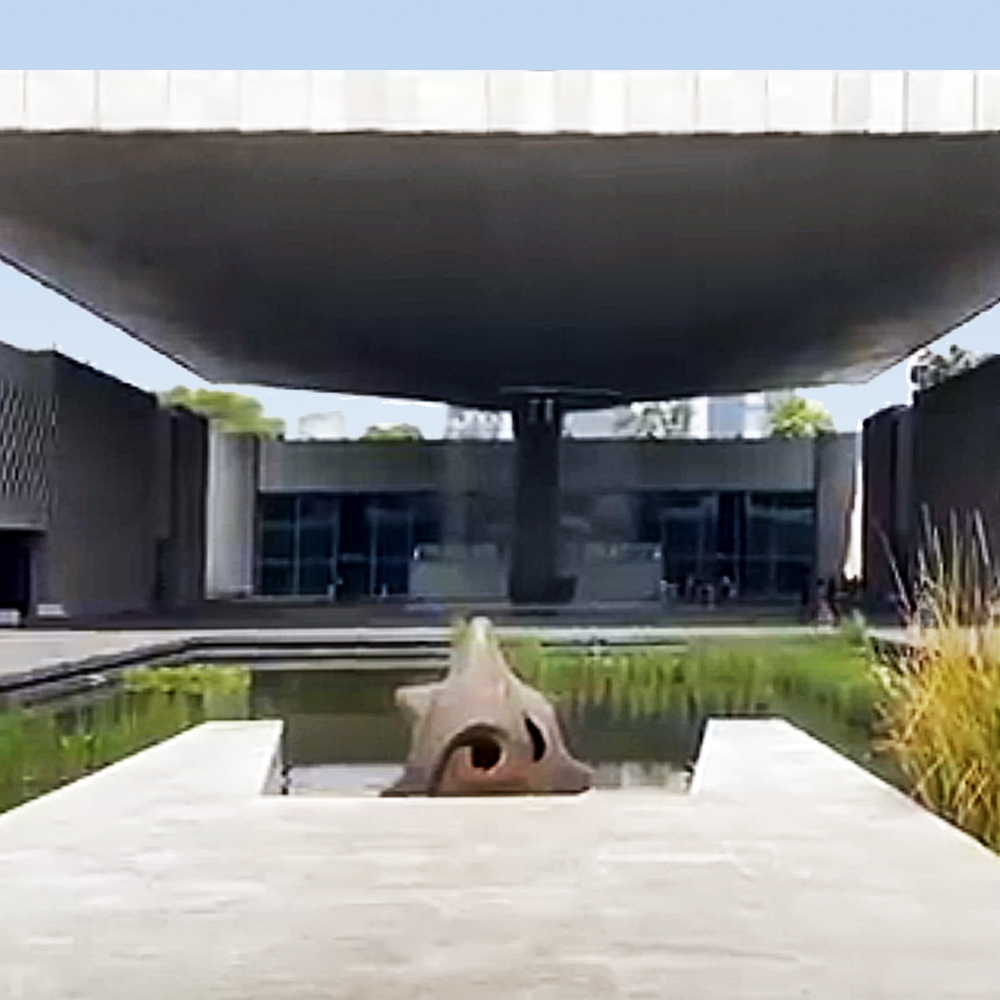
““National Museum of Anthropology, Mexico City, Mexico, contains the world's largest collection of ancient Mexican art
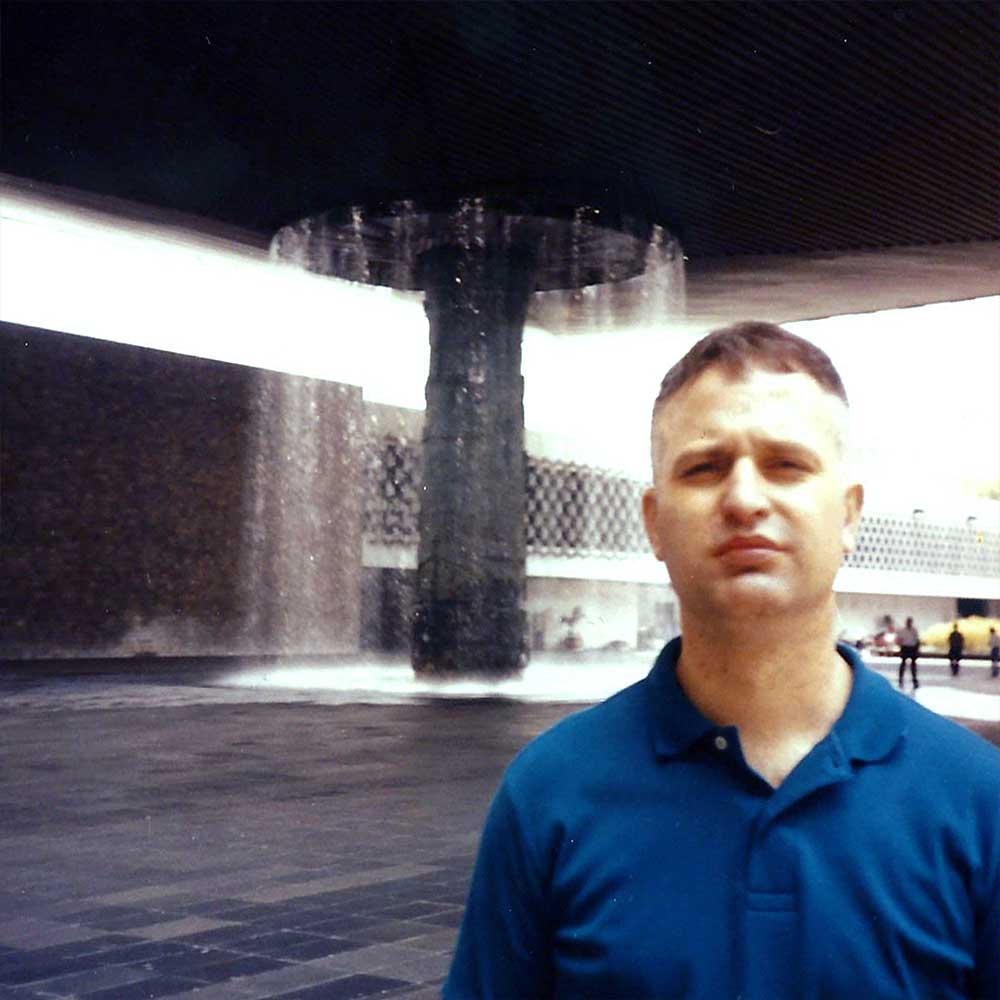
““(Me in front of) The Anthropology Museum, with the great fountain in the background, Mexico City Mexico
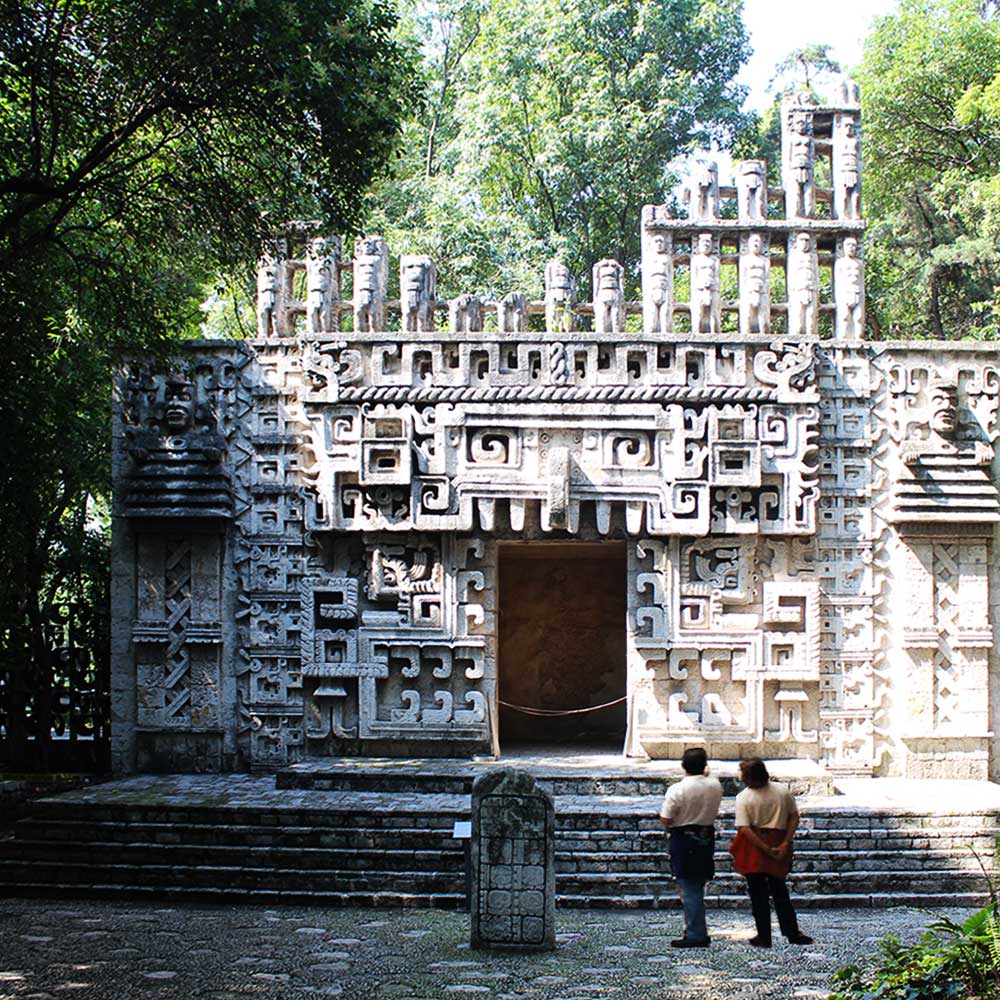
““Reconstructed Mayan Temple, 250 AD, The Anthropology Museum, Mexico City
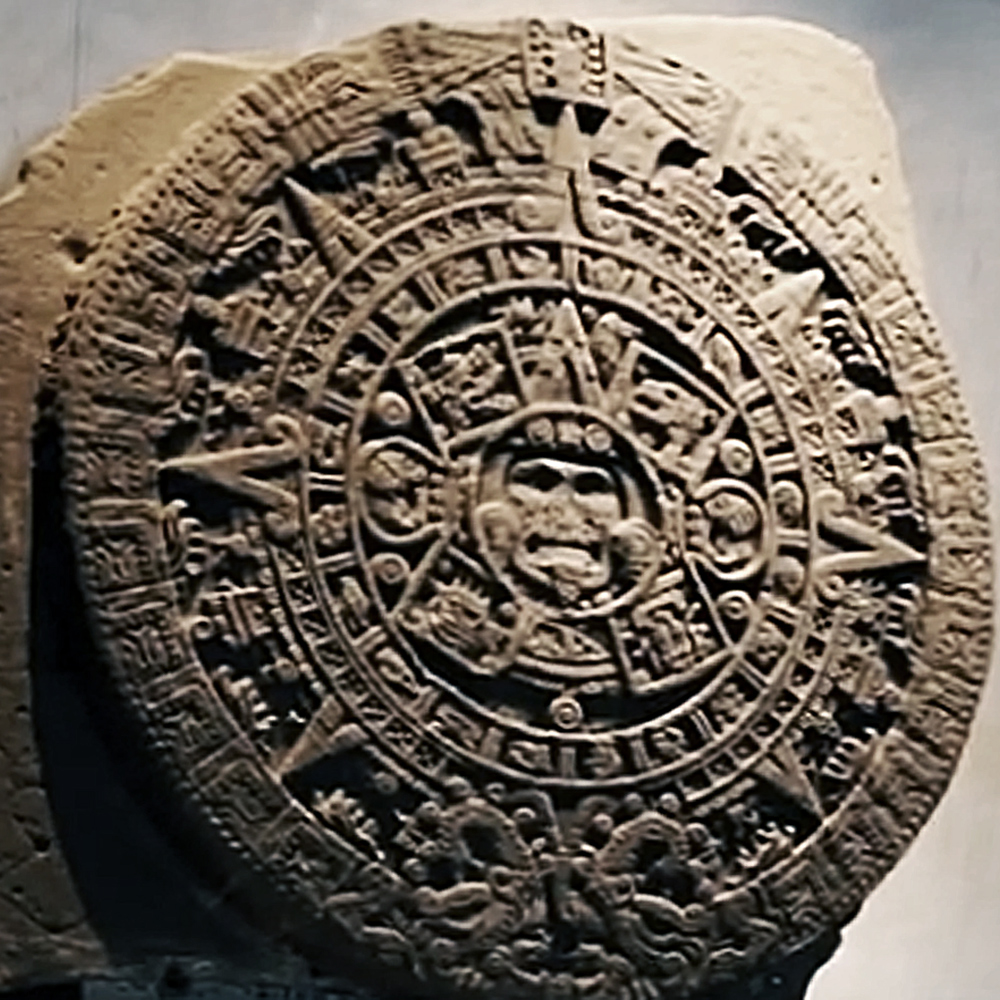
““The Aztec Sun Stone Calendar, weighs over 54,210 lb, and measures 12 ft in diameter, created in 1520, The Anthropology Museum, Mexico City
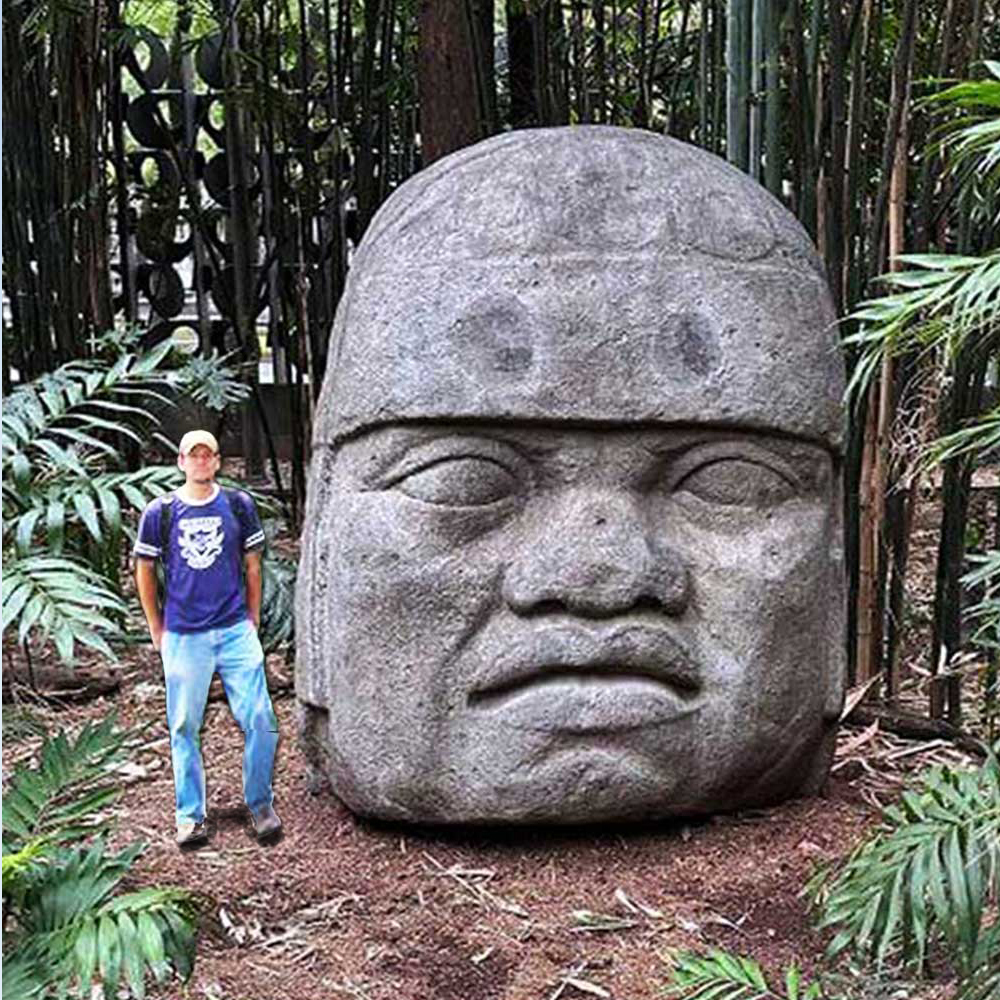
““Olmec Colossal Head 6, 900 BCE, The Anthropology Museum, Mexico City
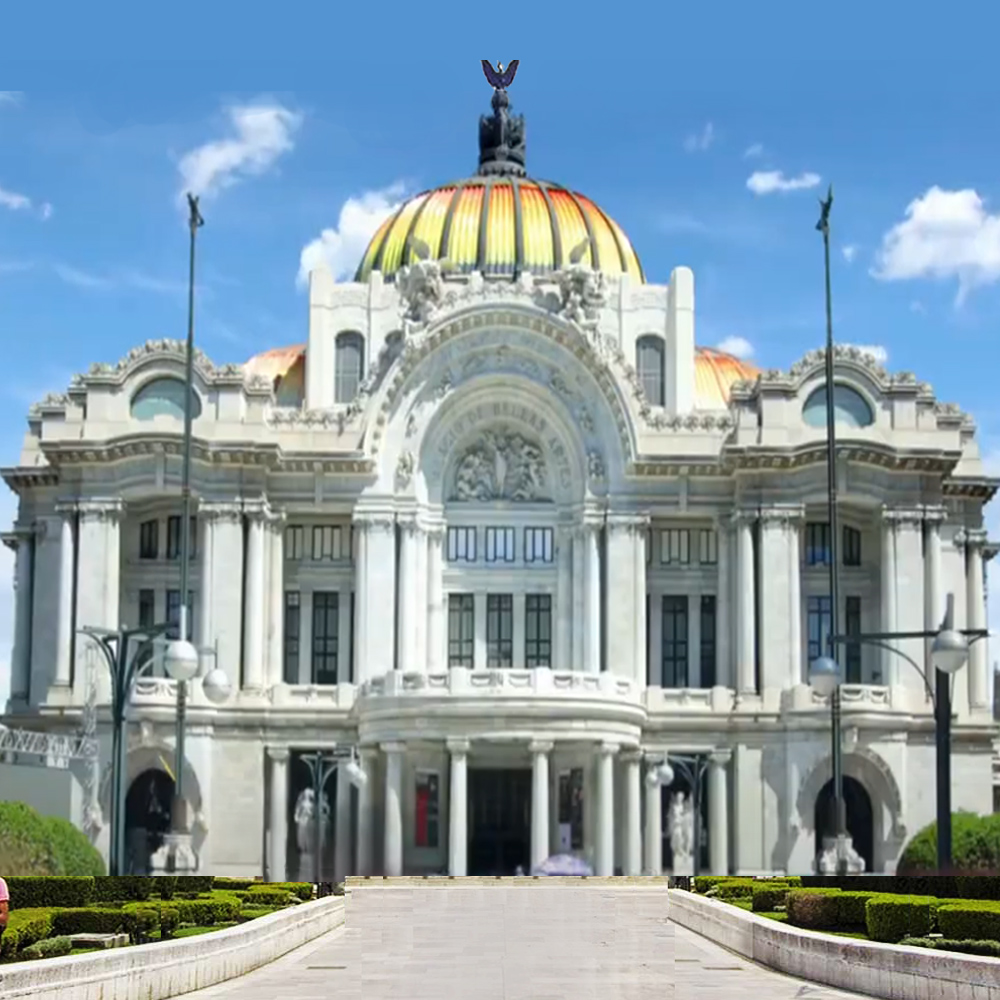
““Palacio de Bellas Artes, Mexico City, The building houses exhibition halls for sculpture and painting. It is also home to the National Museum of Architecture, and the National Theater.
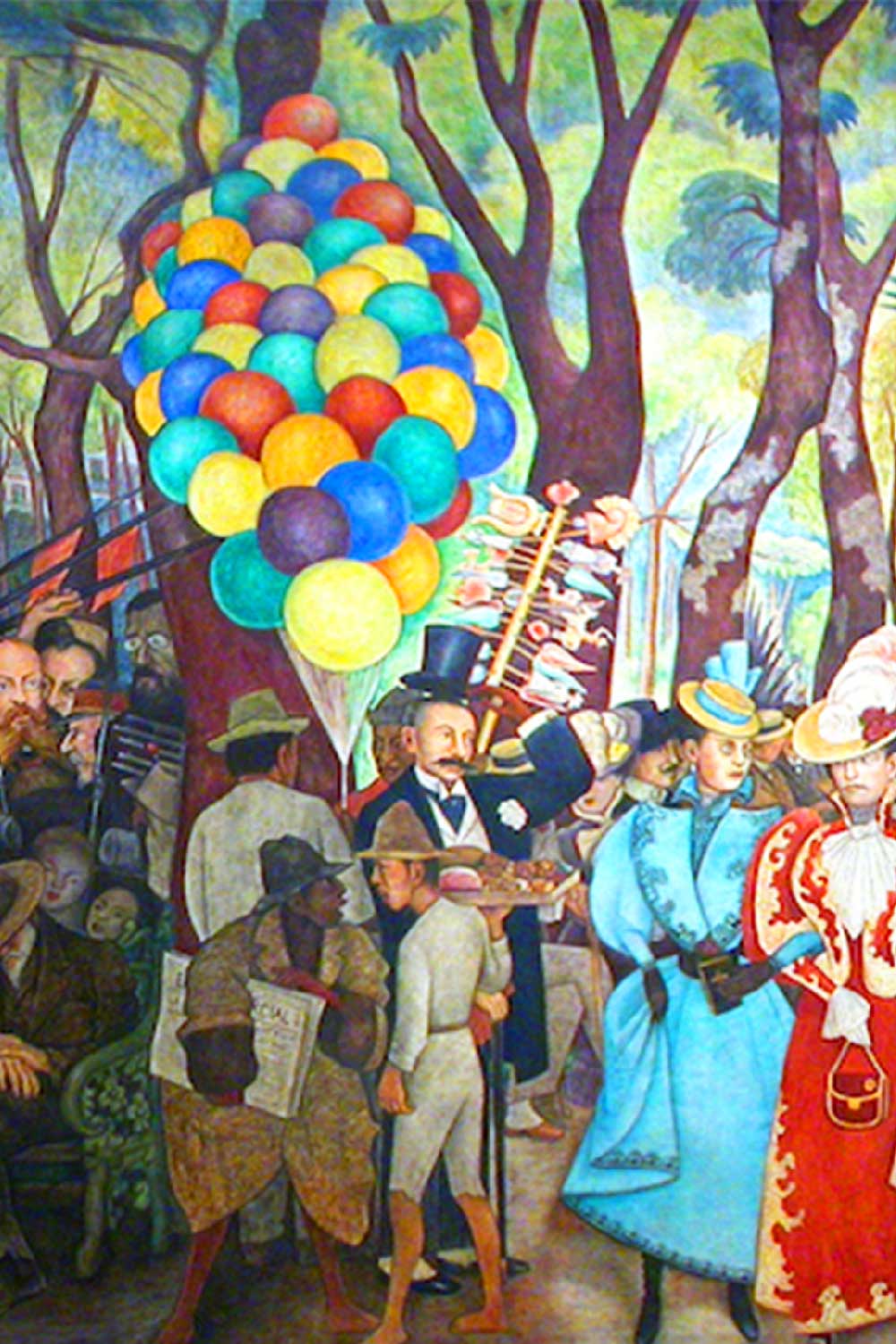
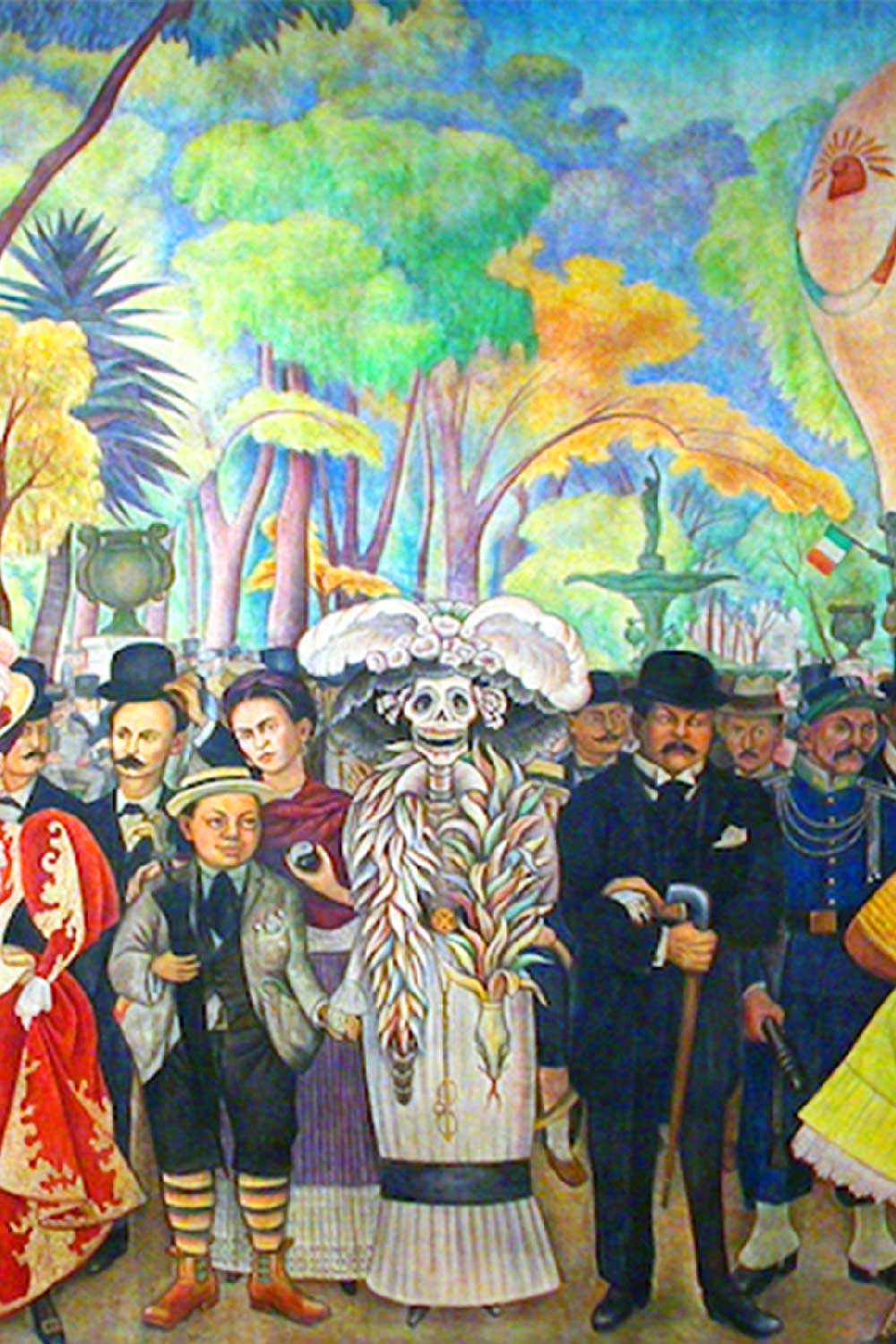
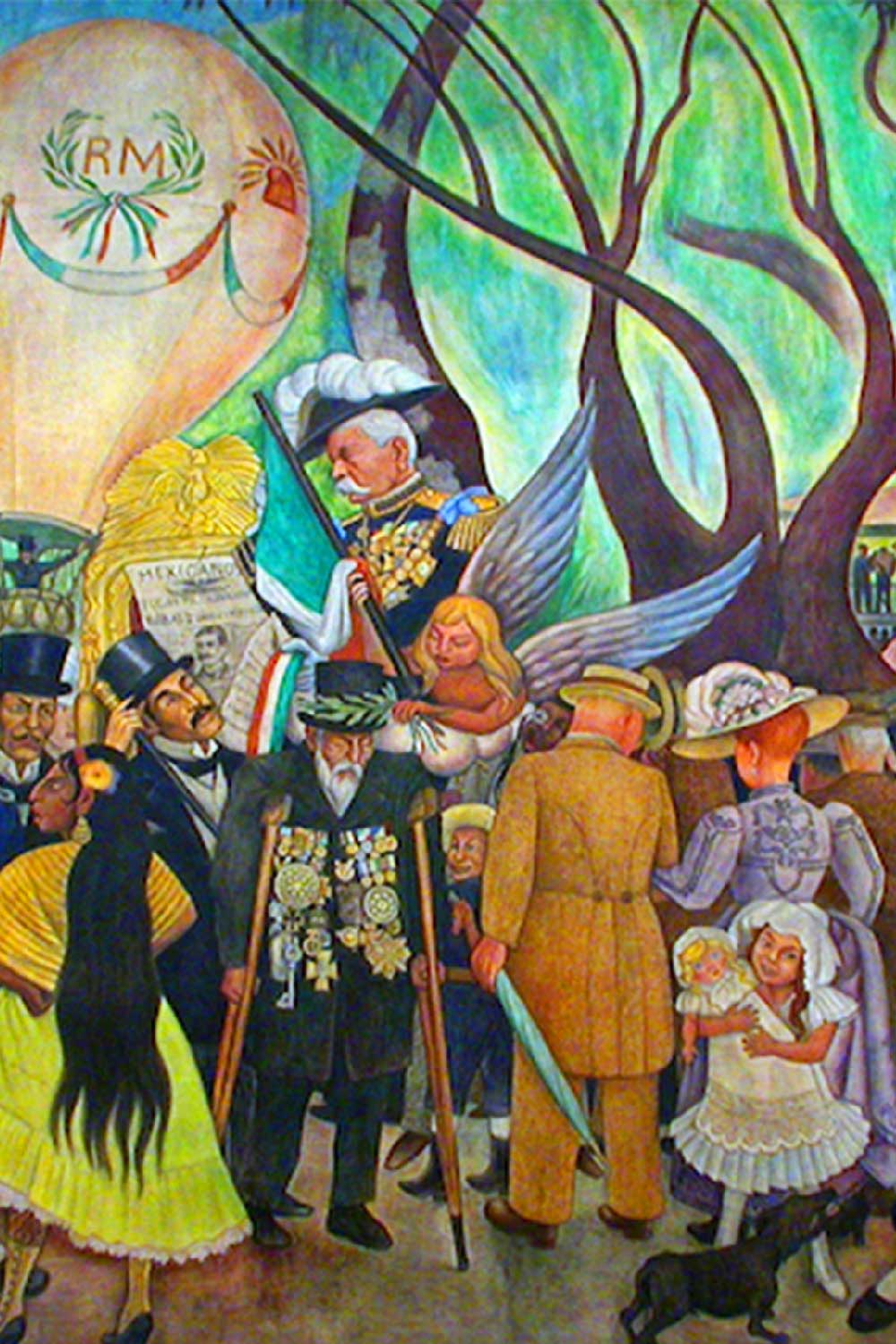
Dream of a Sunday Afternoon in Alameda Park,
by Diego Rivera, 1947, Museo Mural Diego Rivera, Mexico City
This is a 25 foot cropped center section of this fifty-foot fresco. It depicts a sunday walk through Alameda Park, Mexico City's first city park that was built on the grounds of an ancient Aztec marketplace. Four rightmost figures (right to left) being the printmaker José Guadalupe Posada (right), La Catrina (the Skeleton), the painter Frida Kahlo (behind La Catrina), and the artist Diego Rivera as a young man (in front of Kahlo)
““Dream of a Sunday Afternoon in Alameda Park by Diego Rivera, 1947, Museo Mural Diego Rivera, Mexico City
““
““
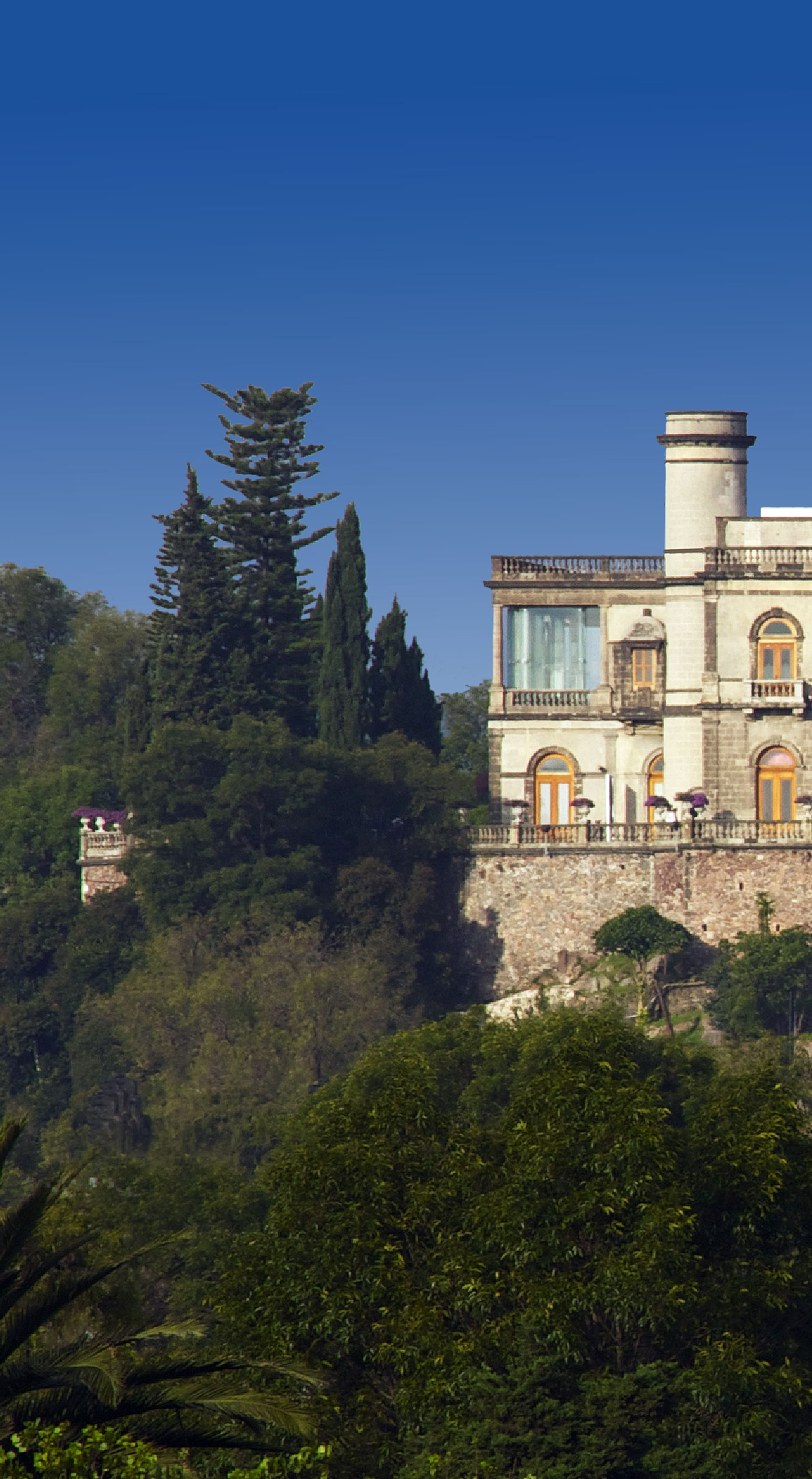
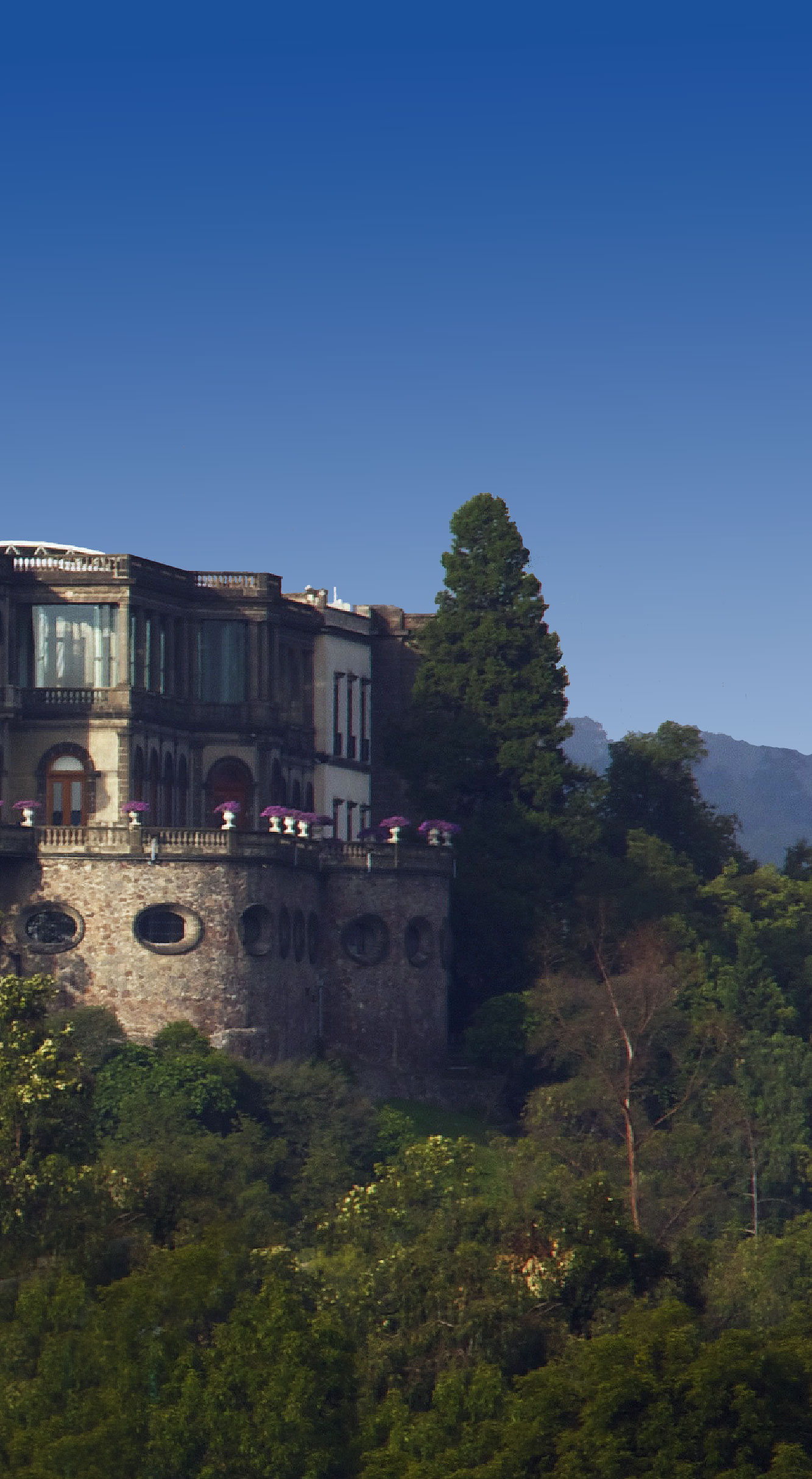
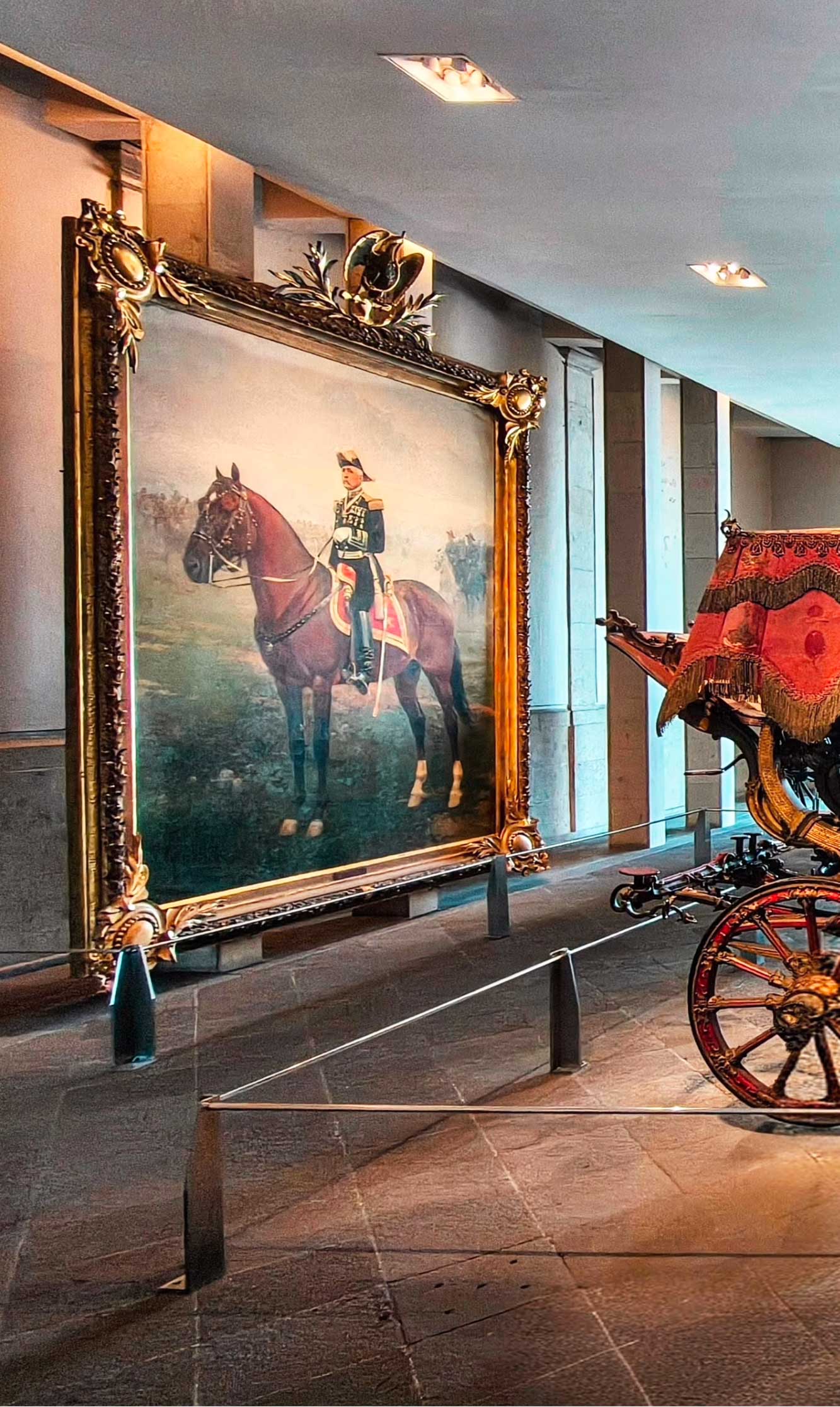
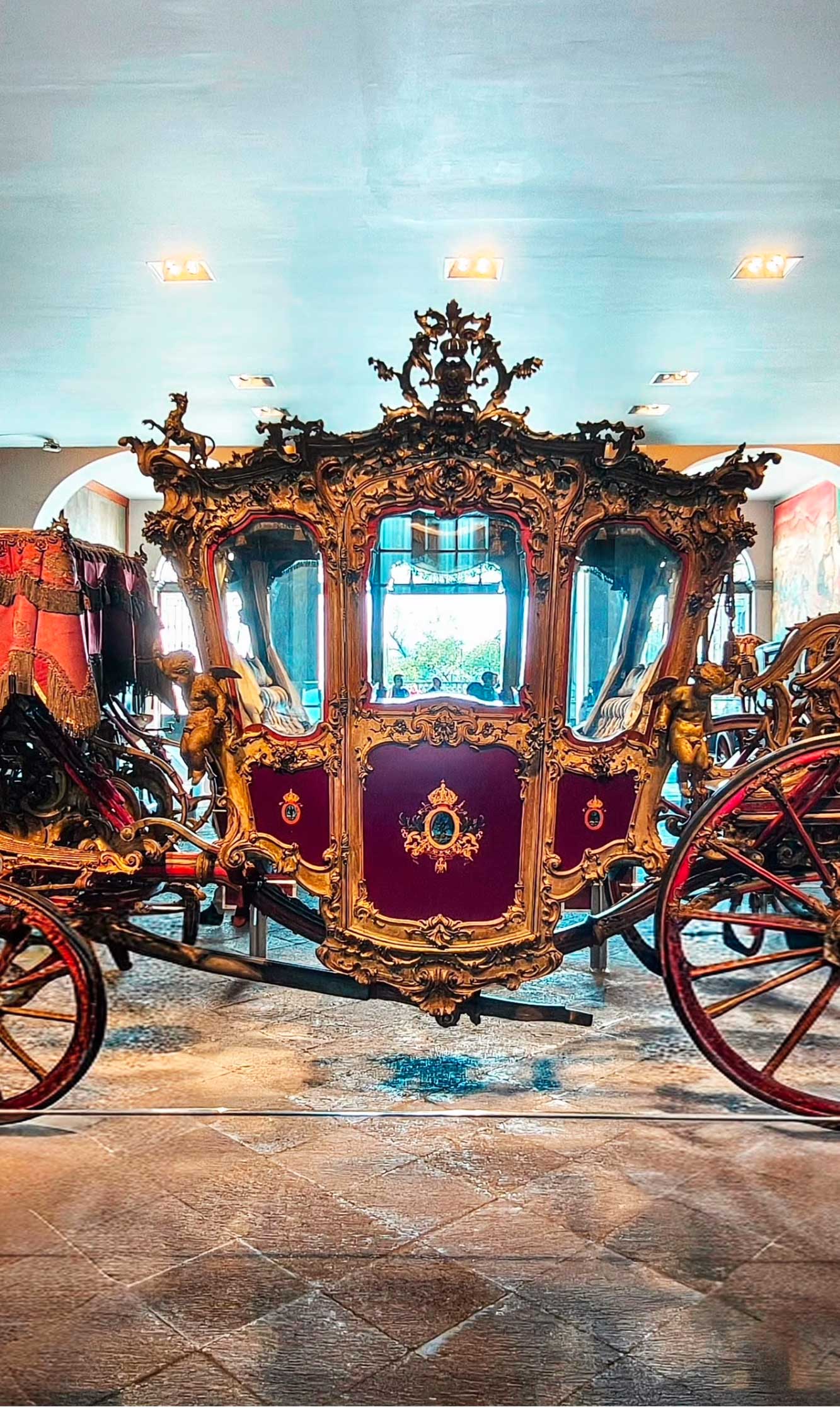
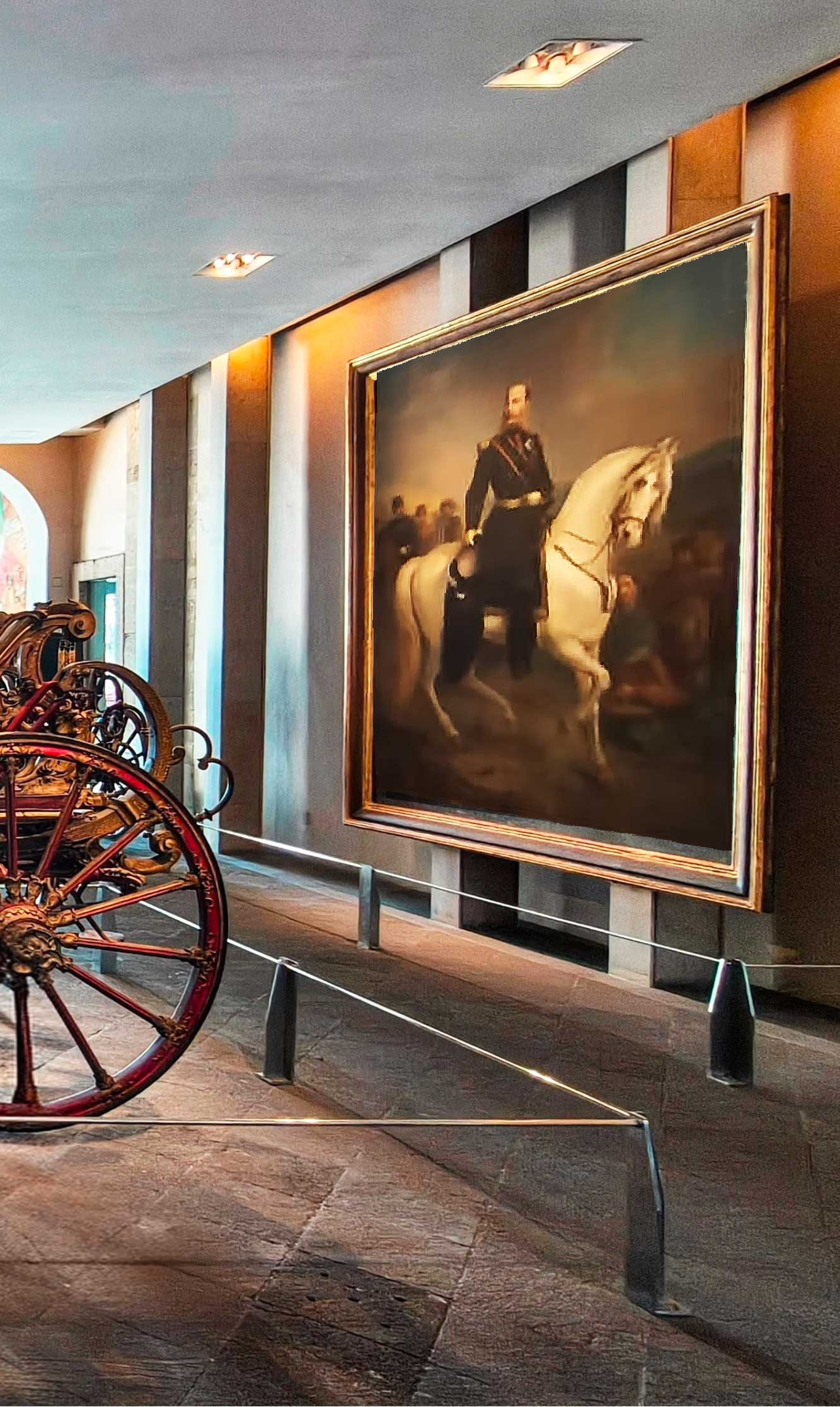
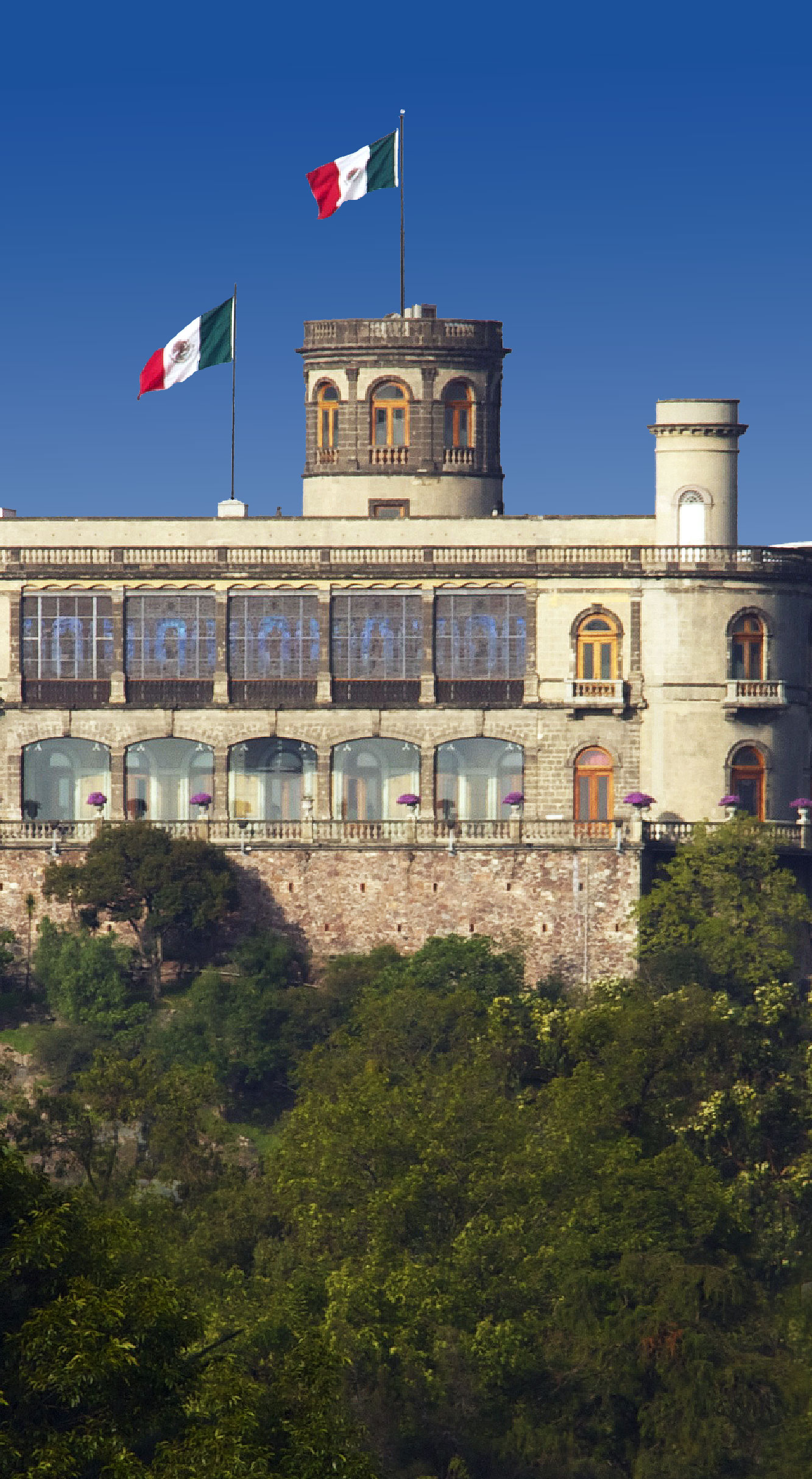
Chapultepec CastlePerched atop Chapultepec Hill (“Grasshopper Hill”) in the heart of Chapultepec Park, Chapultepec Castle is one of Mexico’s most storied landmarks, its history spanning empire, republic, and nation‑building. Original Construction (1785): Begun in 1785 as a residence for the Spanish viceroy, the castle was conceived in a late‑colonial idiom, long before its later imperial associations. Though the project stalled, its elevated site and commanding views made it a natural seat of power. Imperial Residence (1864–1867): During the Second Mexican Empire, Emperor Maximilian I of the Habsburg dynasty selected the castle as his official residence. He transformed it with Neoclassical renovations—formal salons, grand staircases, and landscaped terraces overlooking the valley—asserting a European courtly aesthetic atop a pre‑Hispanic sacred hill. Key Features: The castle today preserves Maximilian’s opulent rooms, sweeping terraces with panoramic views of Mexico City, and a carriage hall that includes an ornate baroque carriage, underscoring the ceremonial life of the imperial court. Transformation and Later Uses: After the fall of the empire, the castle became a military academy, later the presidential residence (from 1882), and in 1939 was designated the National Museum of History, a role it continues to hold.
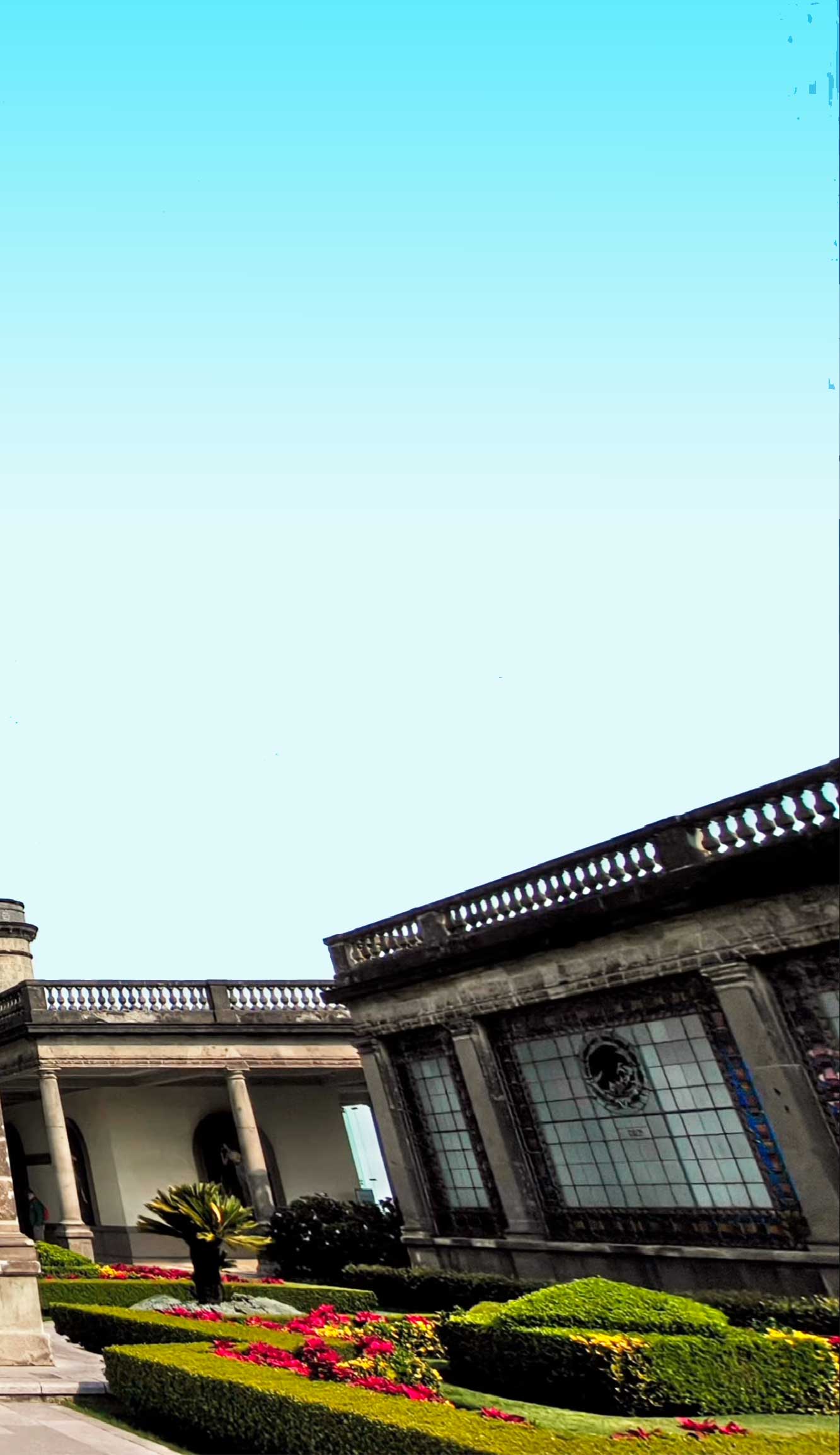
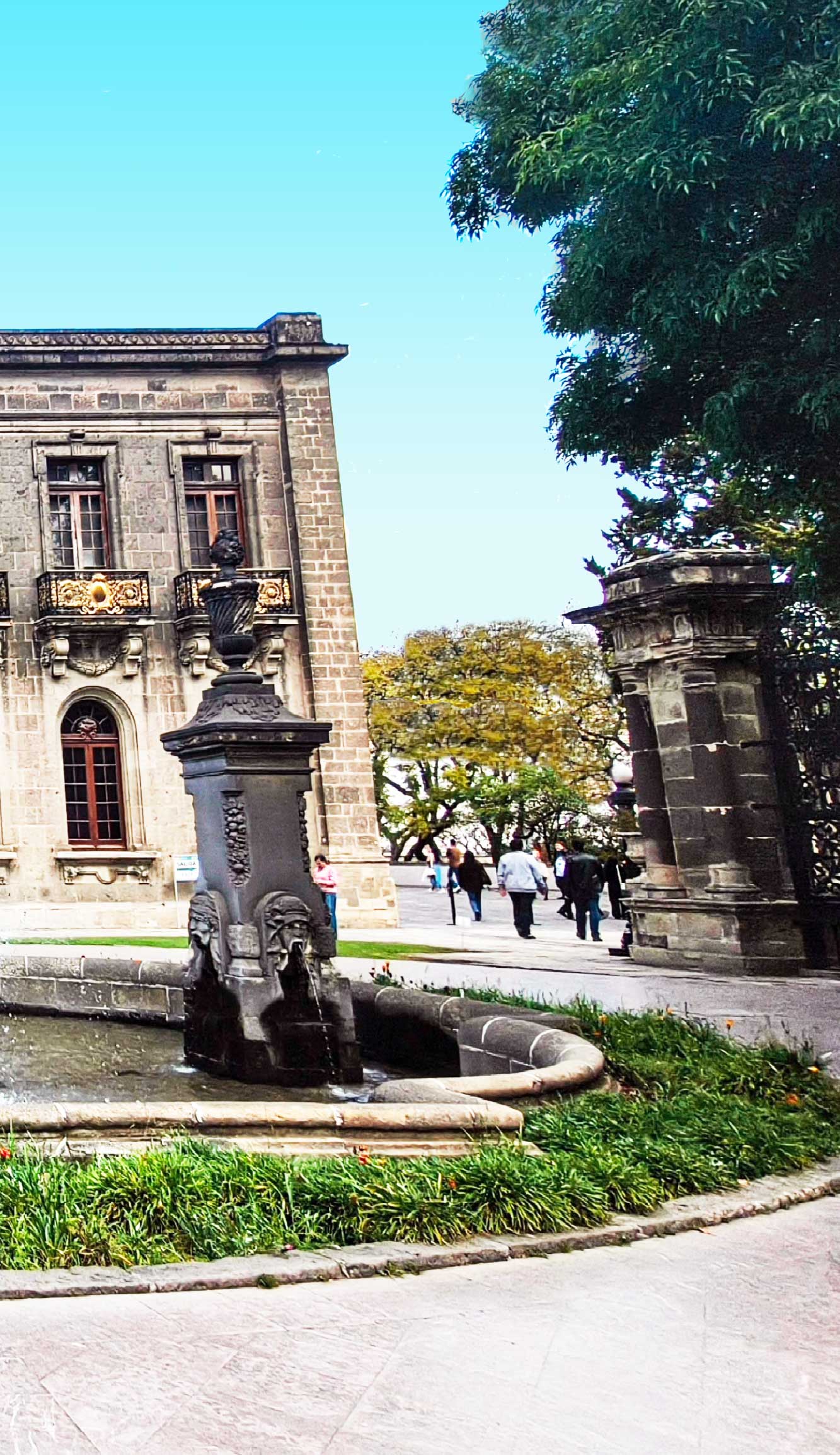
““ Chapultepec Castle, built 1864, is a historic landmark and houses the National Museum of History.
““
““  
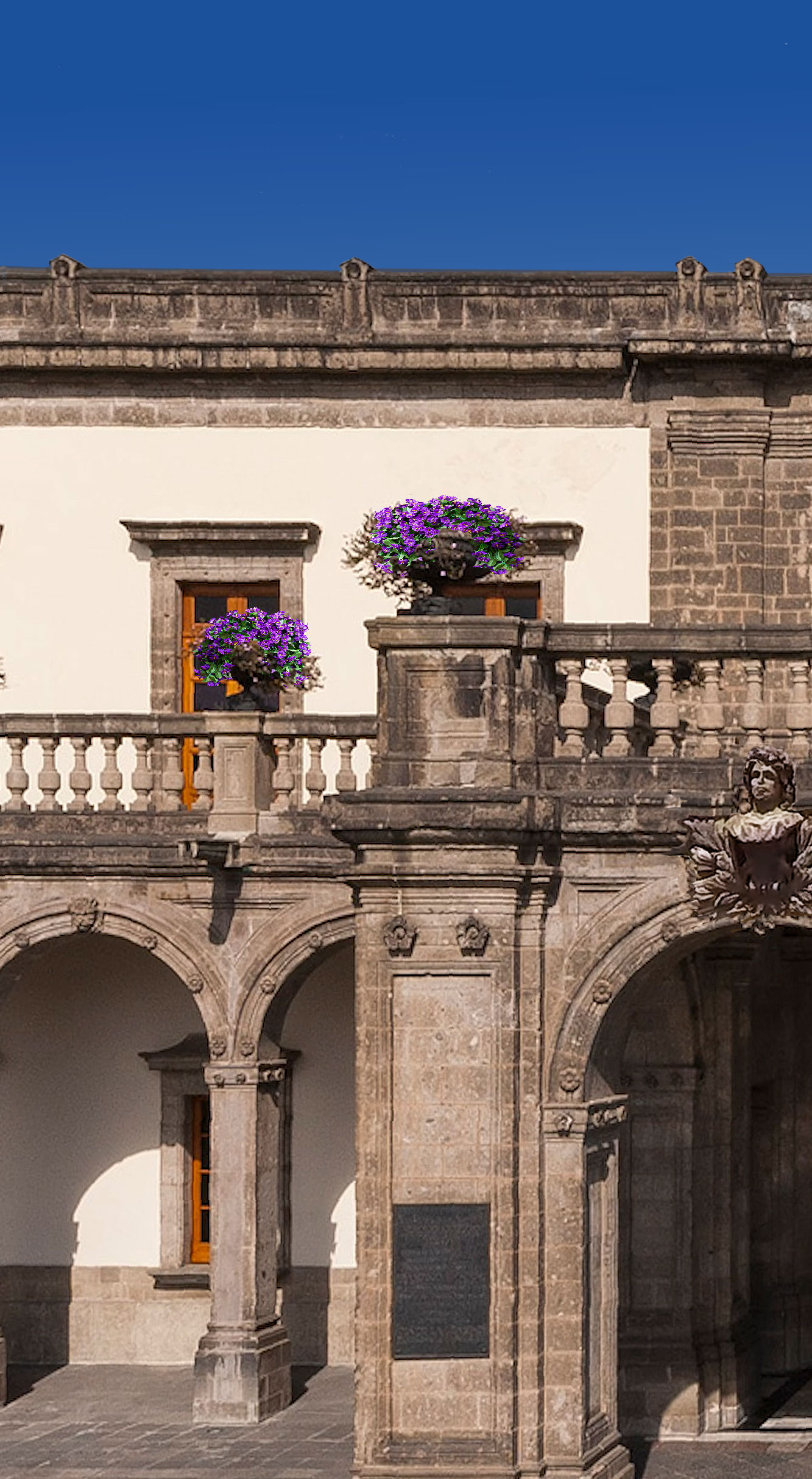
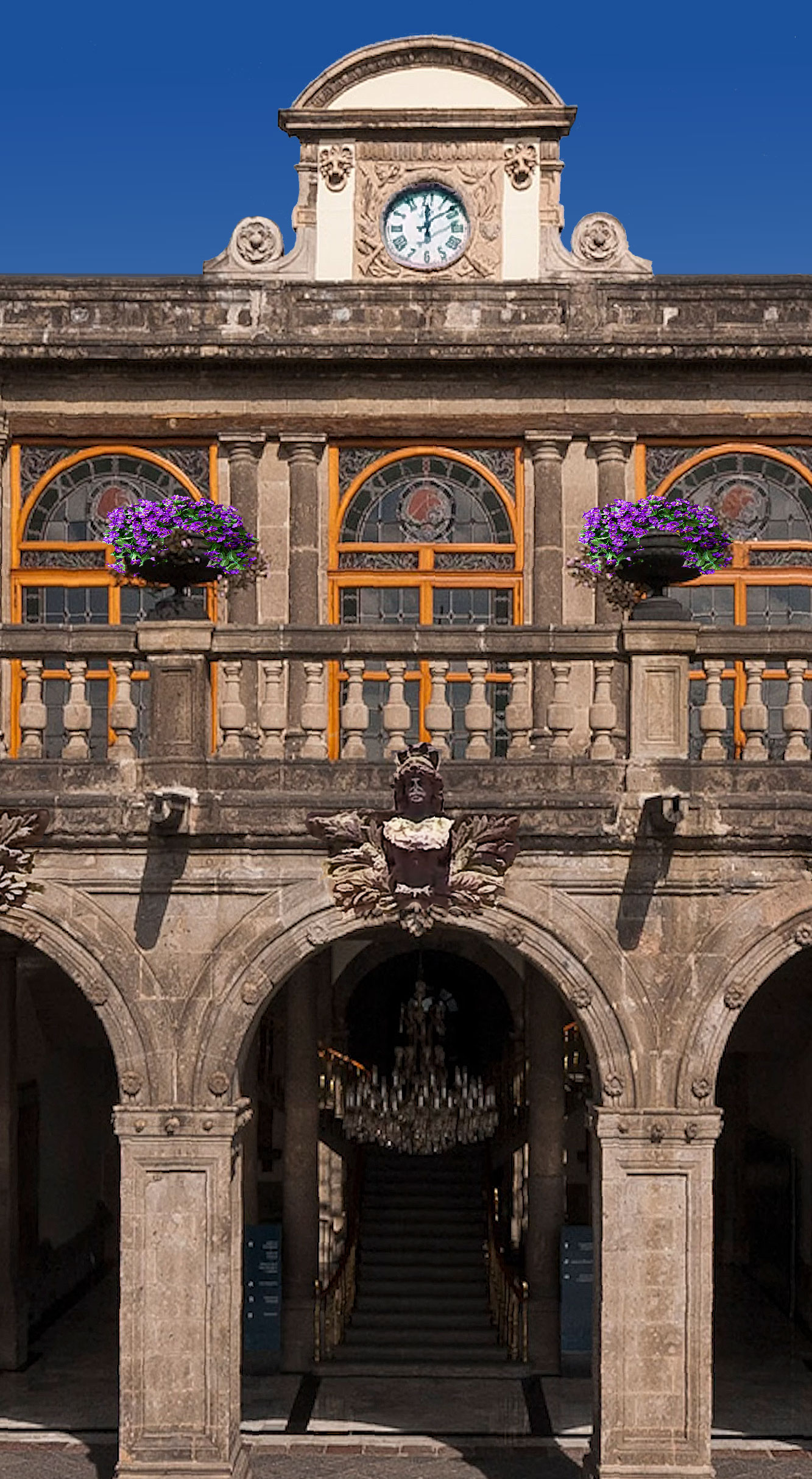
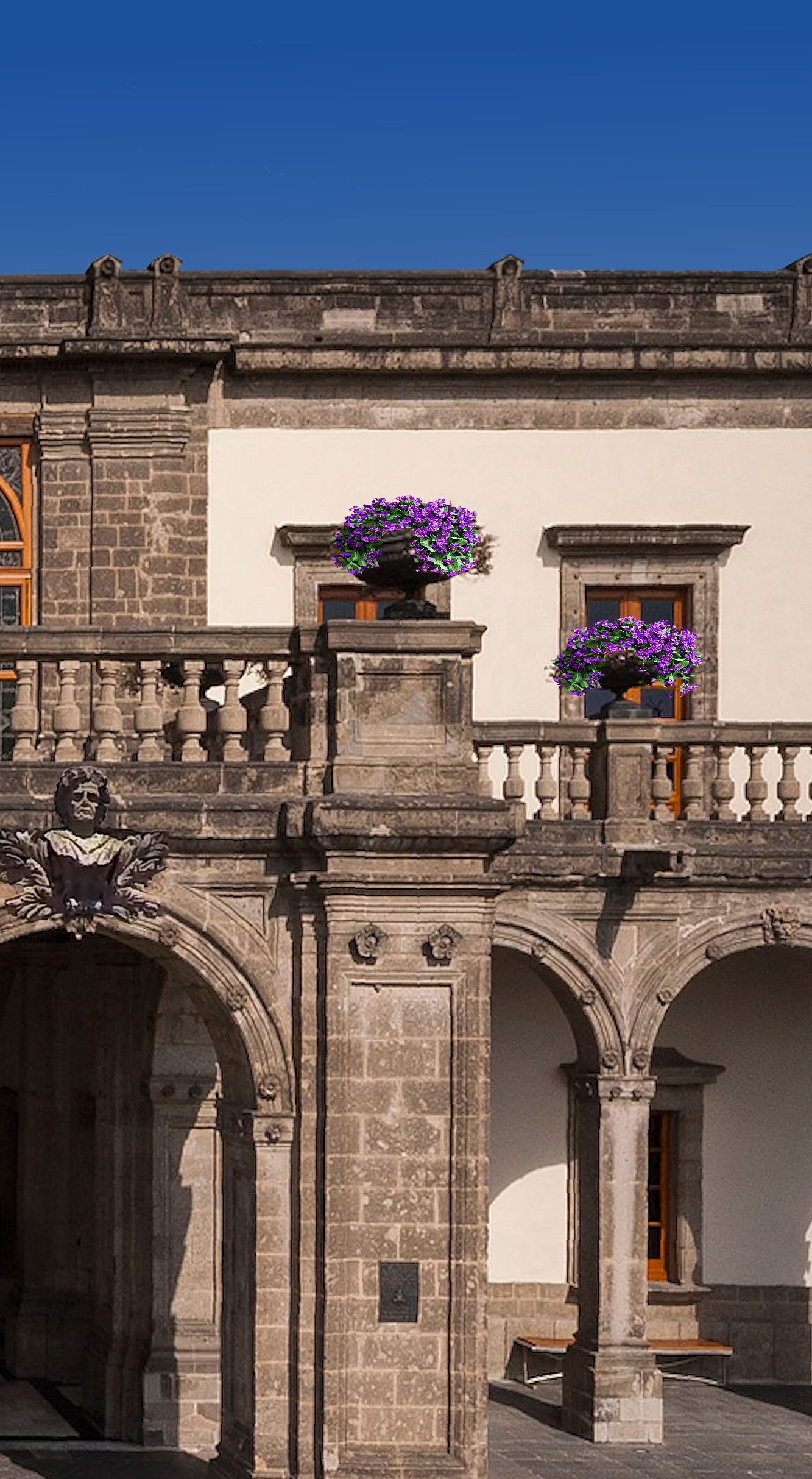
““The main entrances to Chapultepec Castle
““ 
““
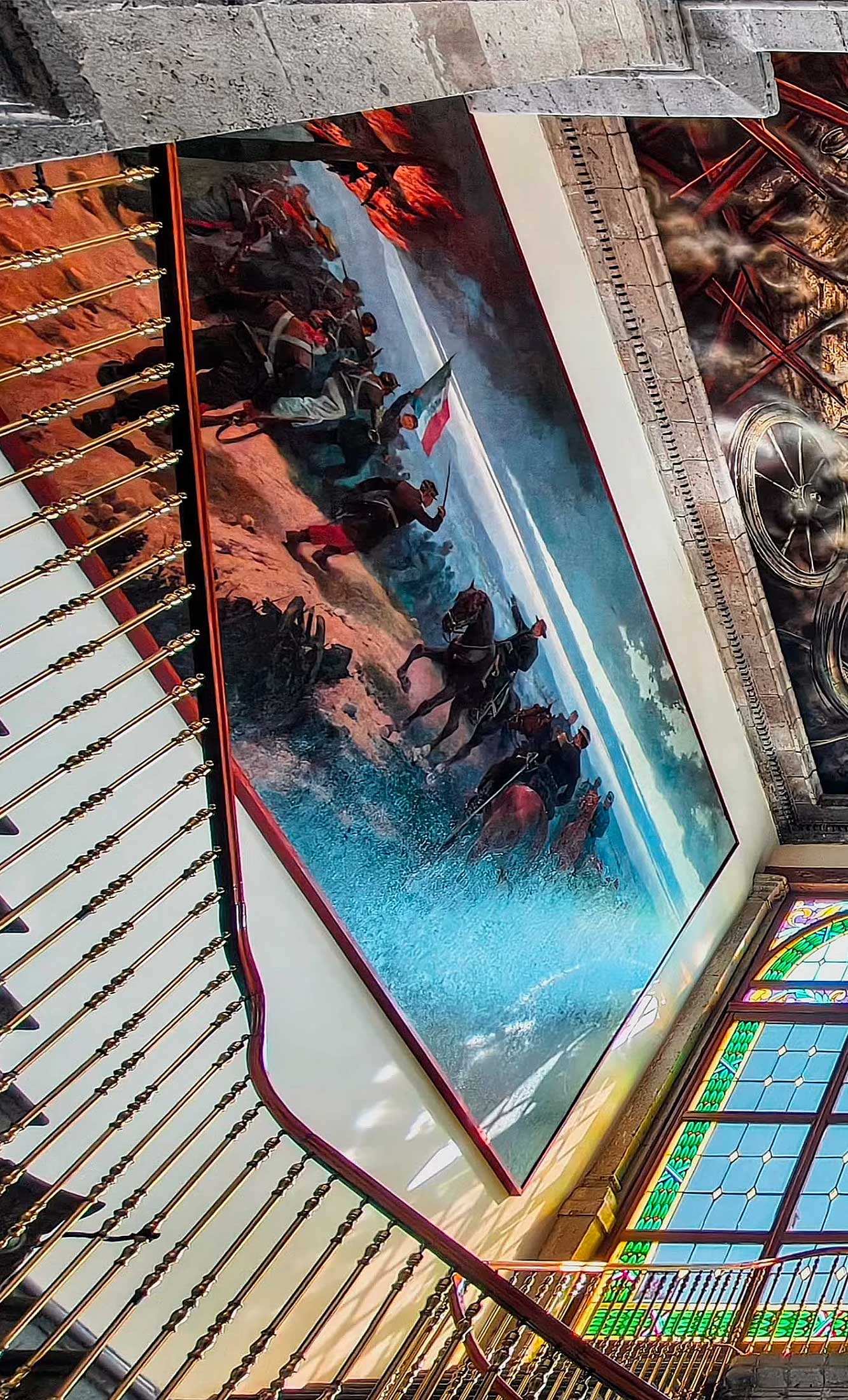
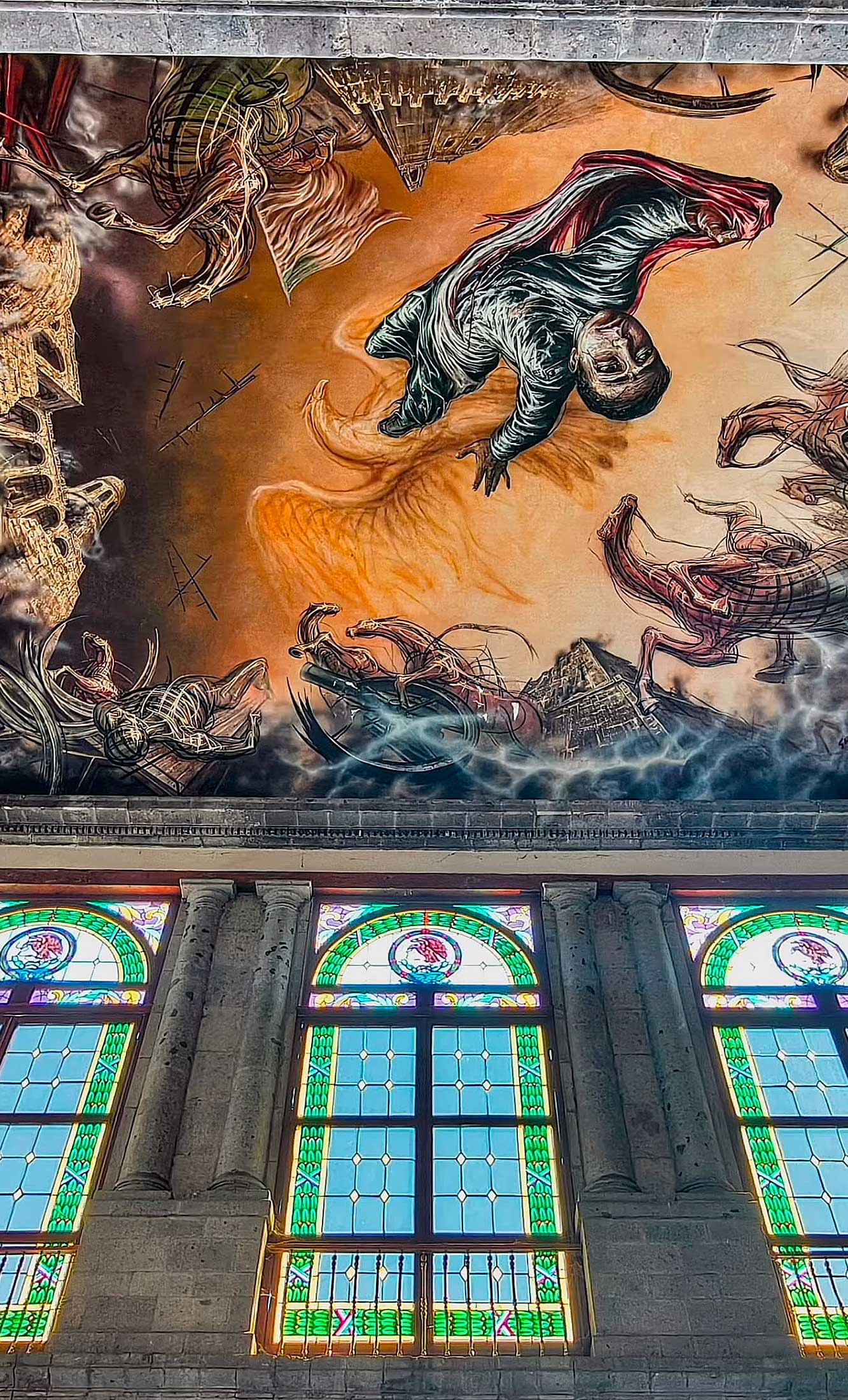
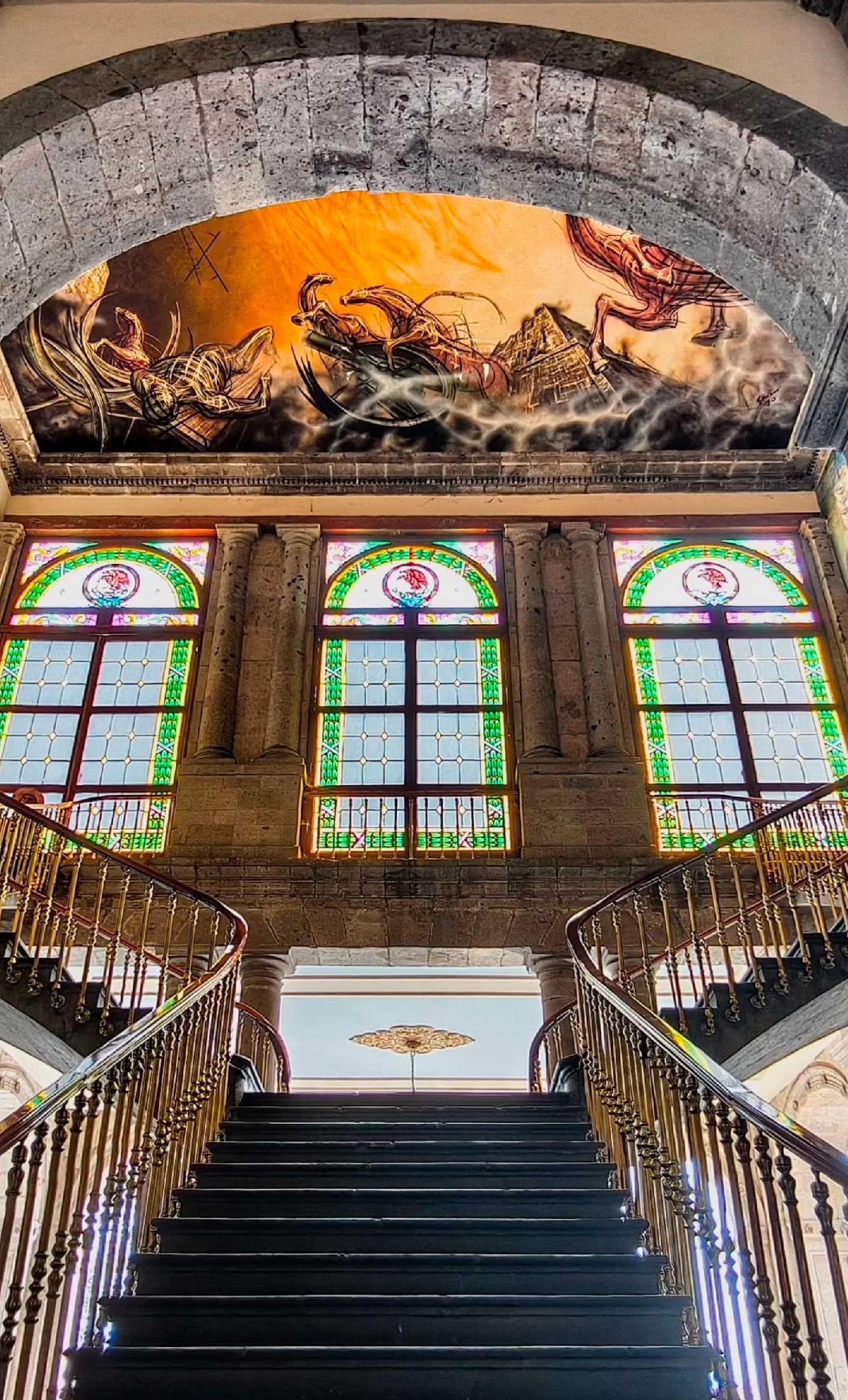
““ Ceiling Mural by Gabriel Flores, it depicts Juan Escutia, one of the Niños Héroes (Boy Heroes), leaping from the castle wrapped in the Mexican flag during the Battle of Chapultepec in 1847
““
““  
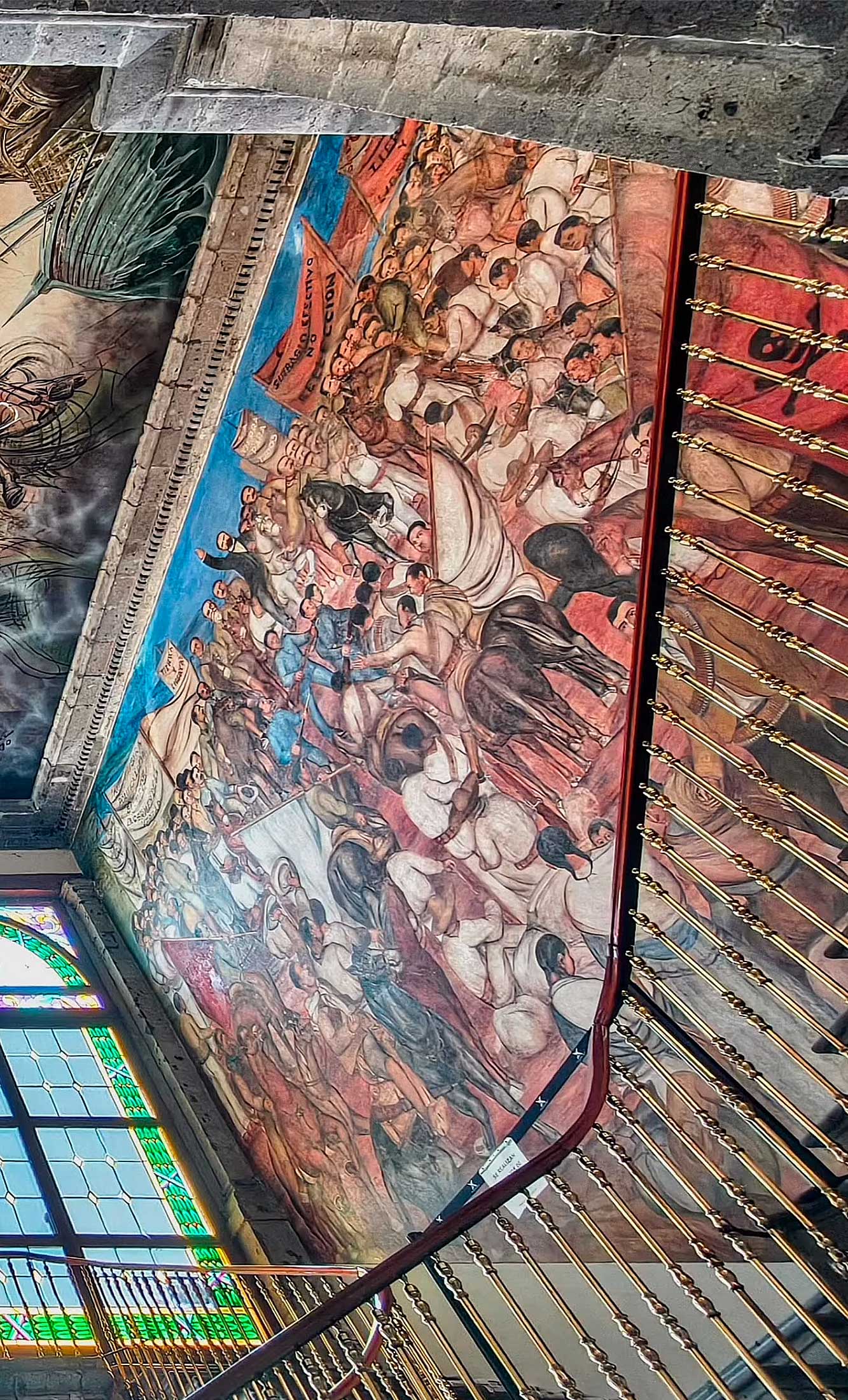
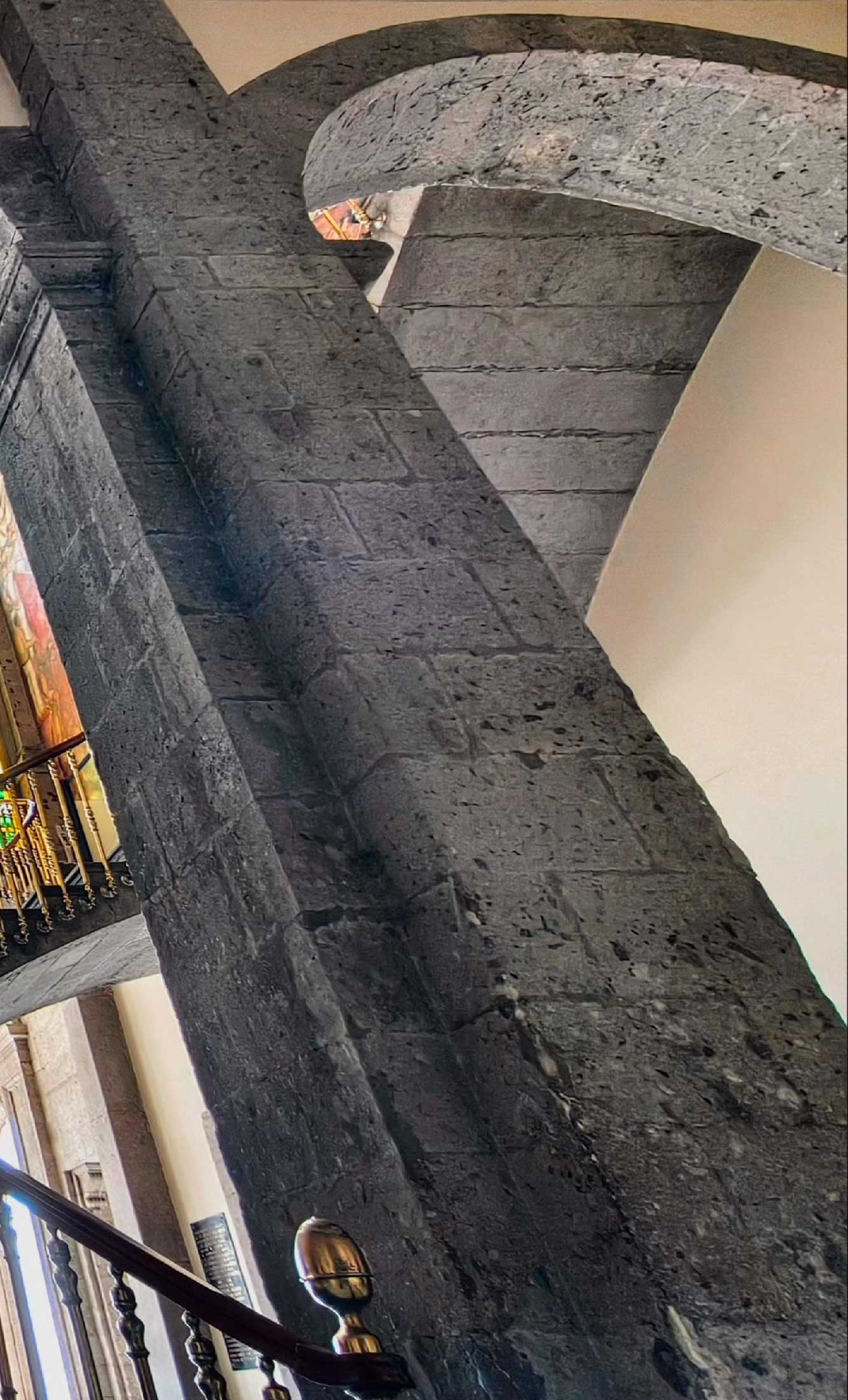
““ A grand ornate marble staircase, stained glass windows, and decorative ceiling mural are details typical of the castle's interior
““
““
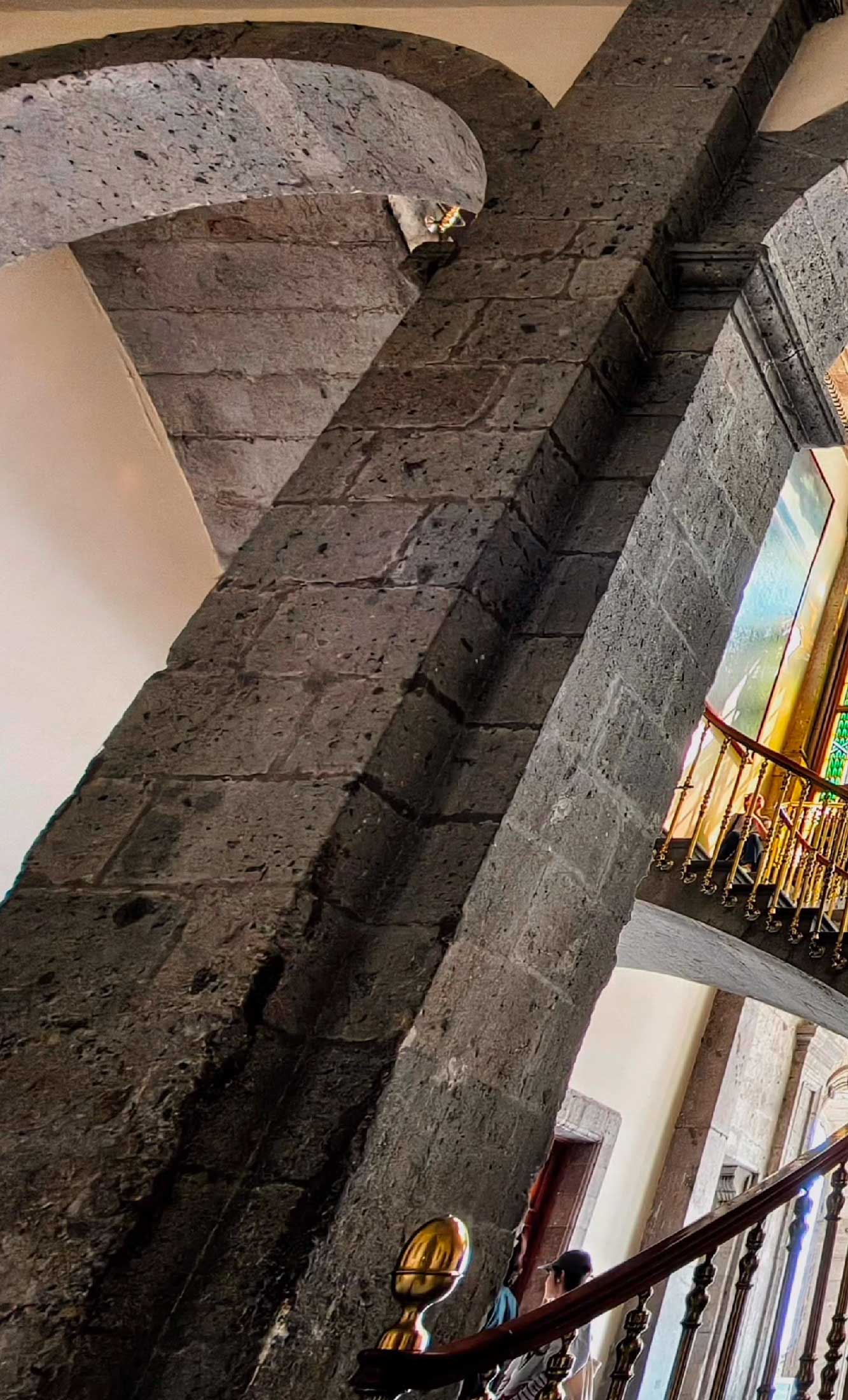
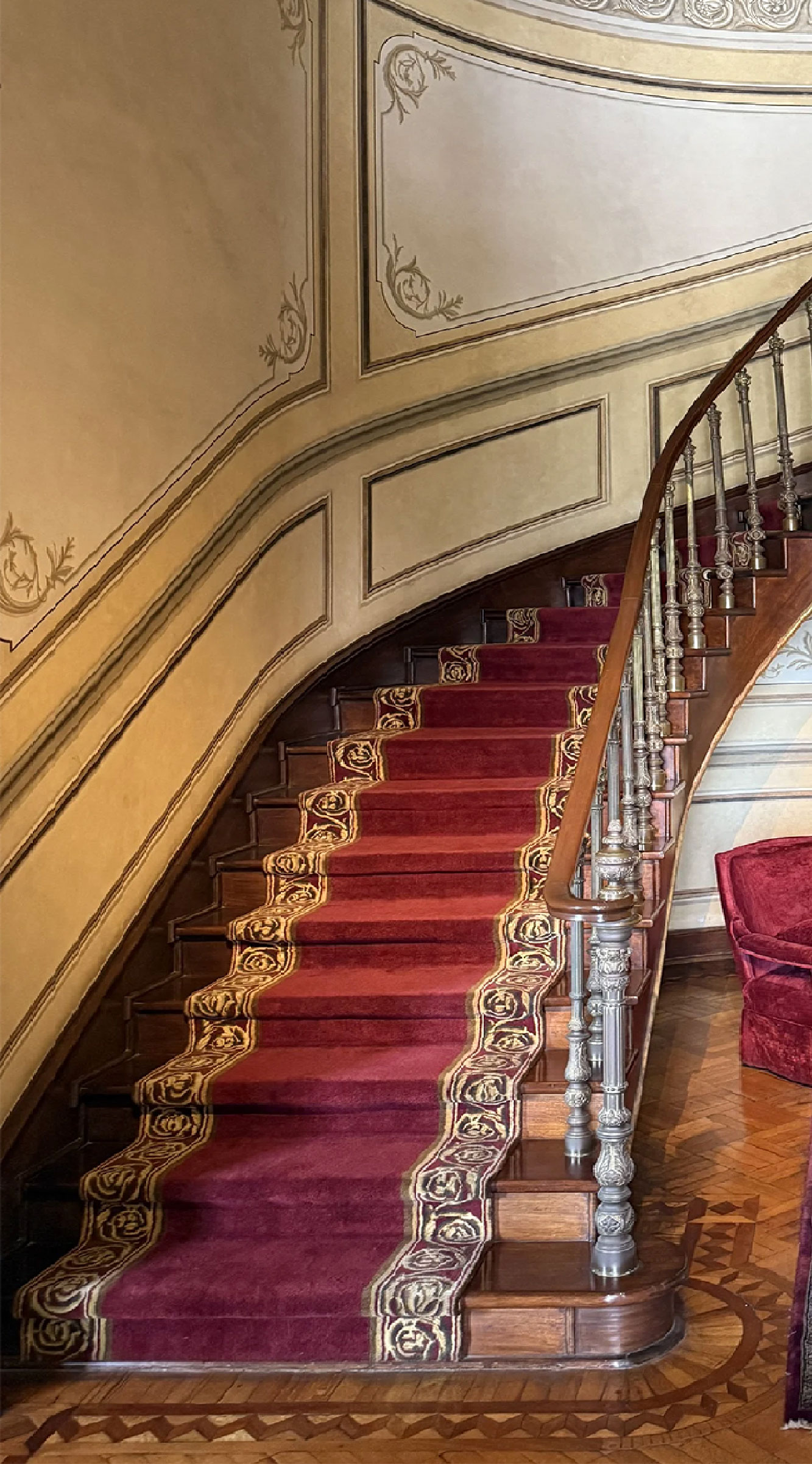
““ The spiral staircase was designed by architect Antonio Rivas Mercado in 1903. He contributed to the castle’s neoclassical design, transforming it into a grand structure suitable for use as a presidential residence
““
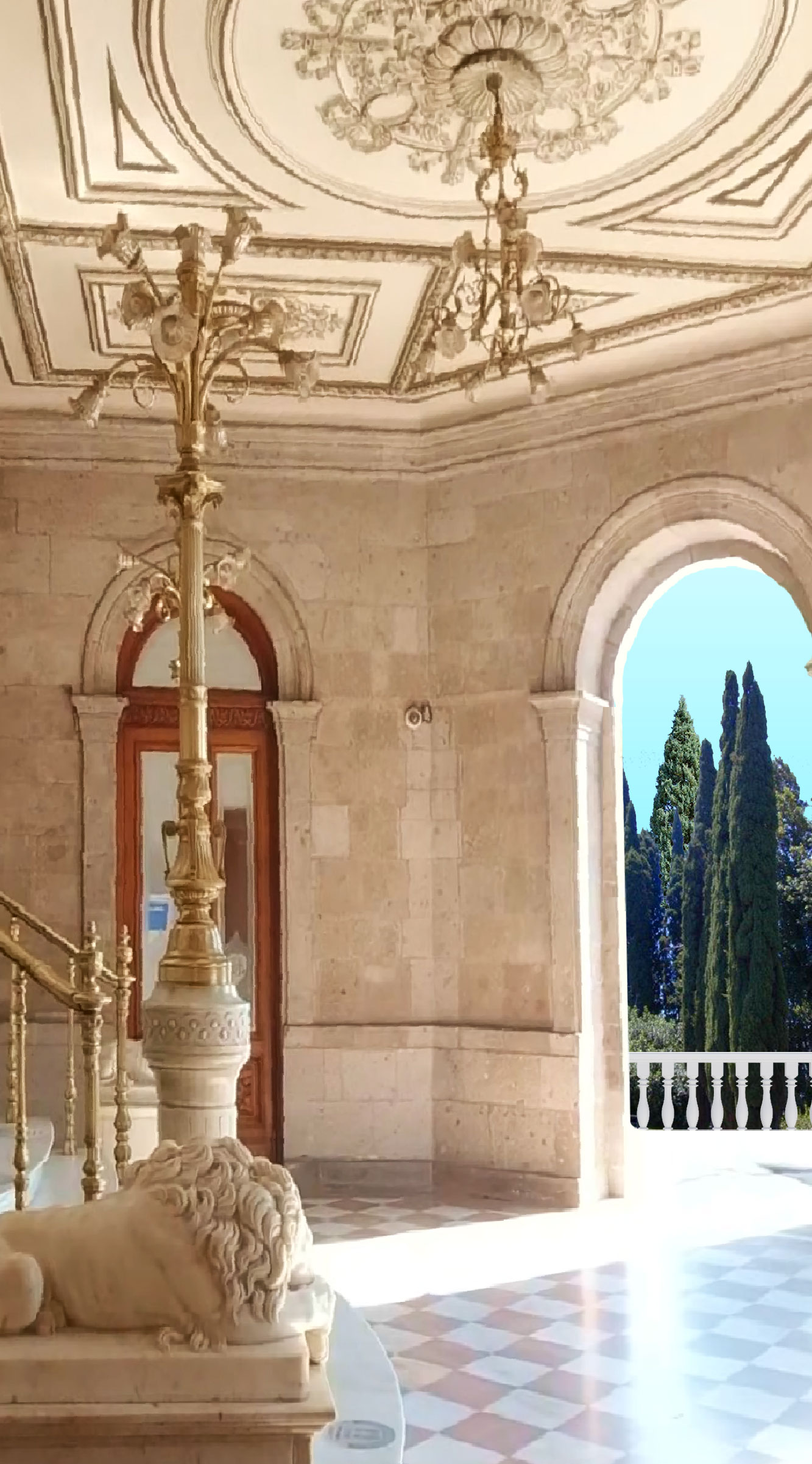
““ The Main entrance with the Lions Staircase 
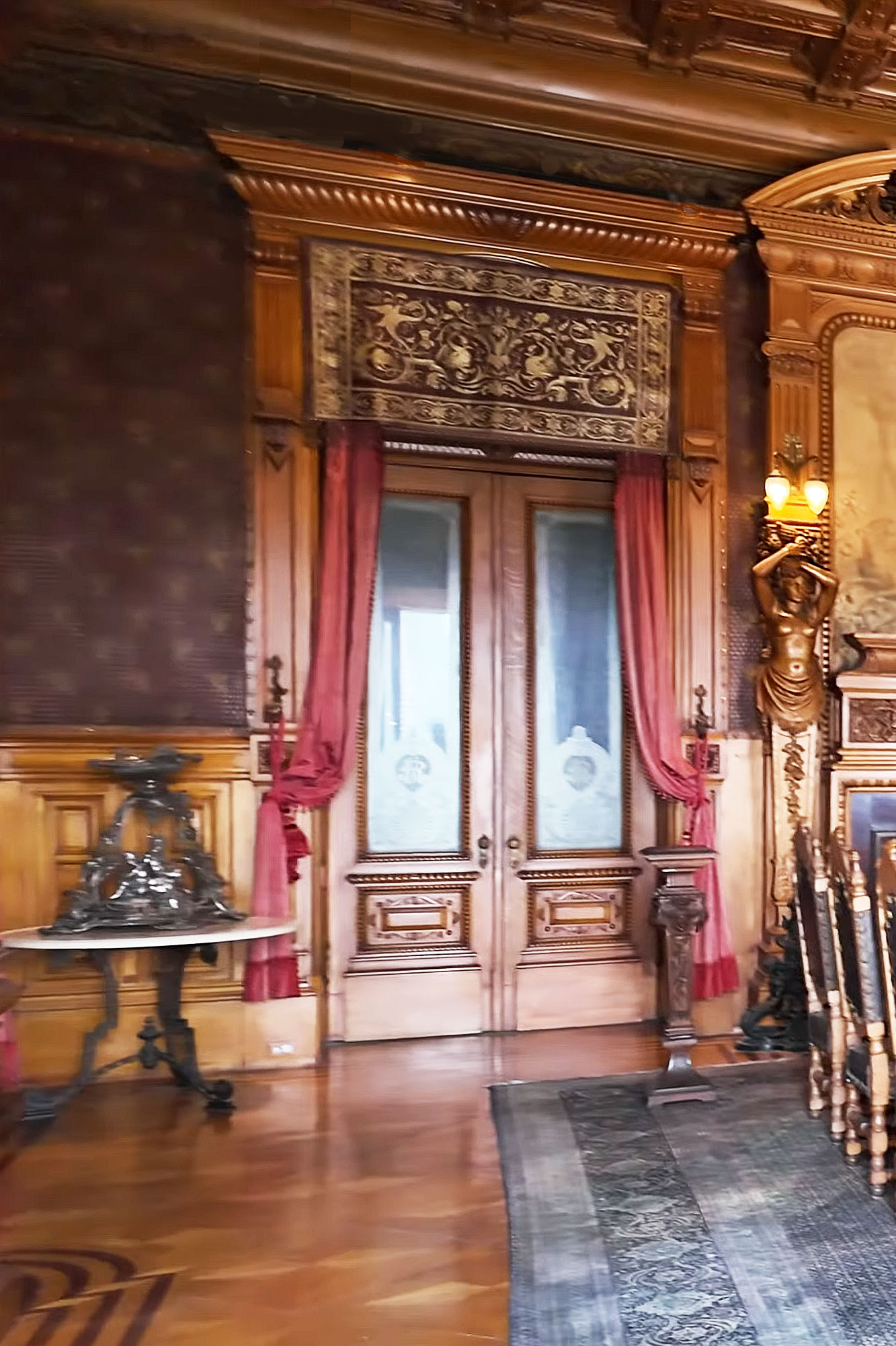
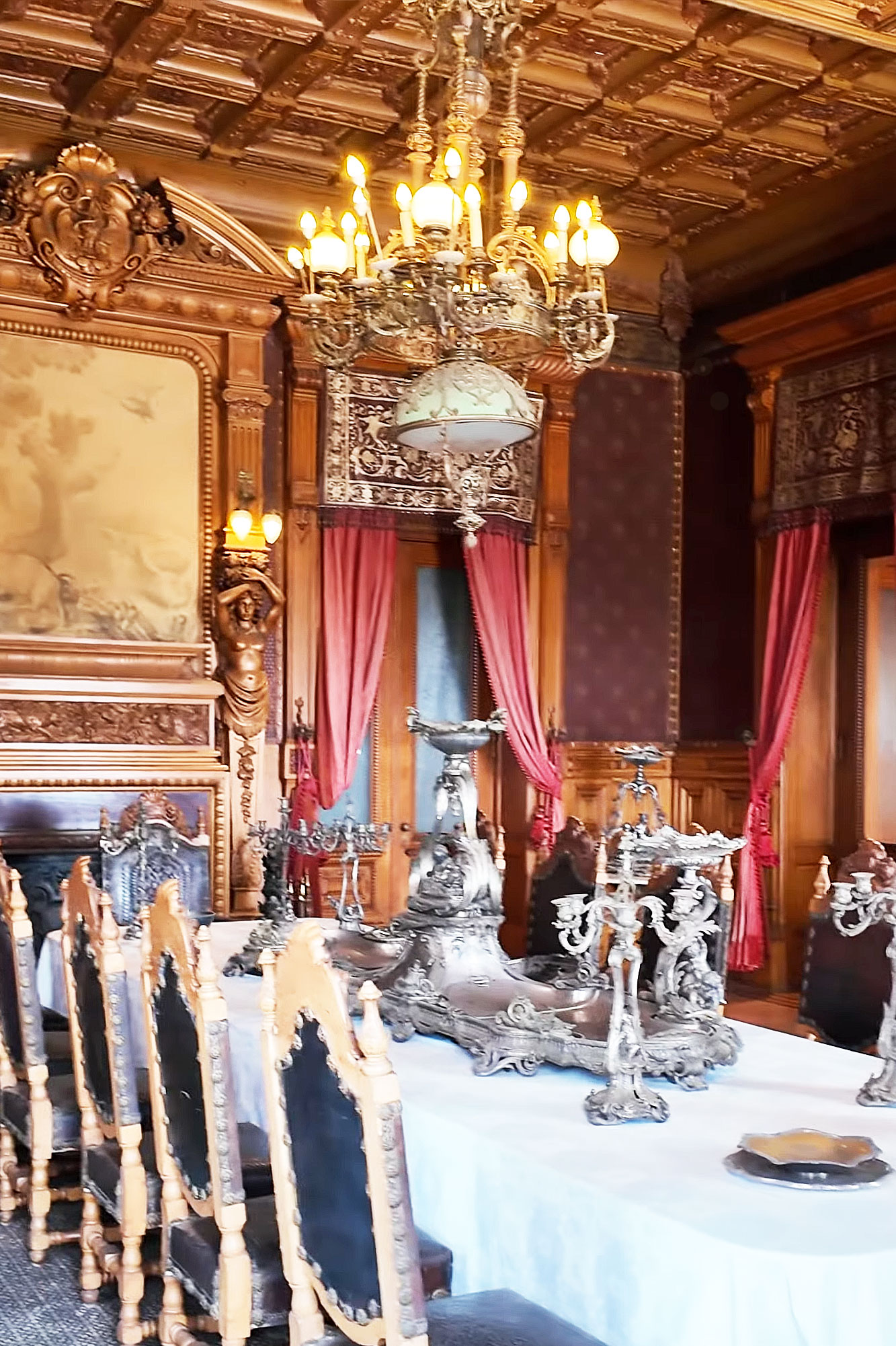
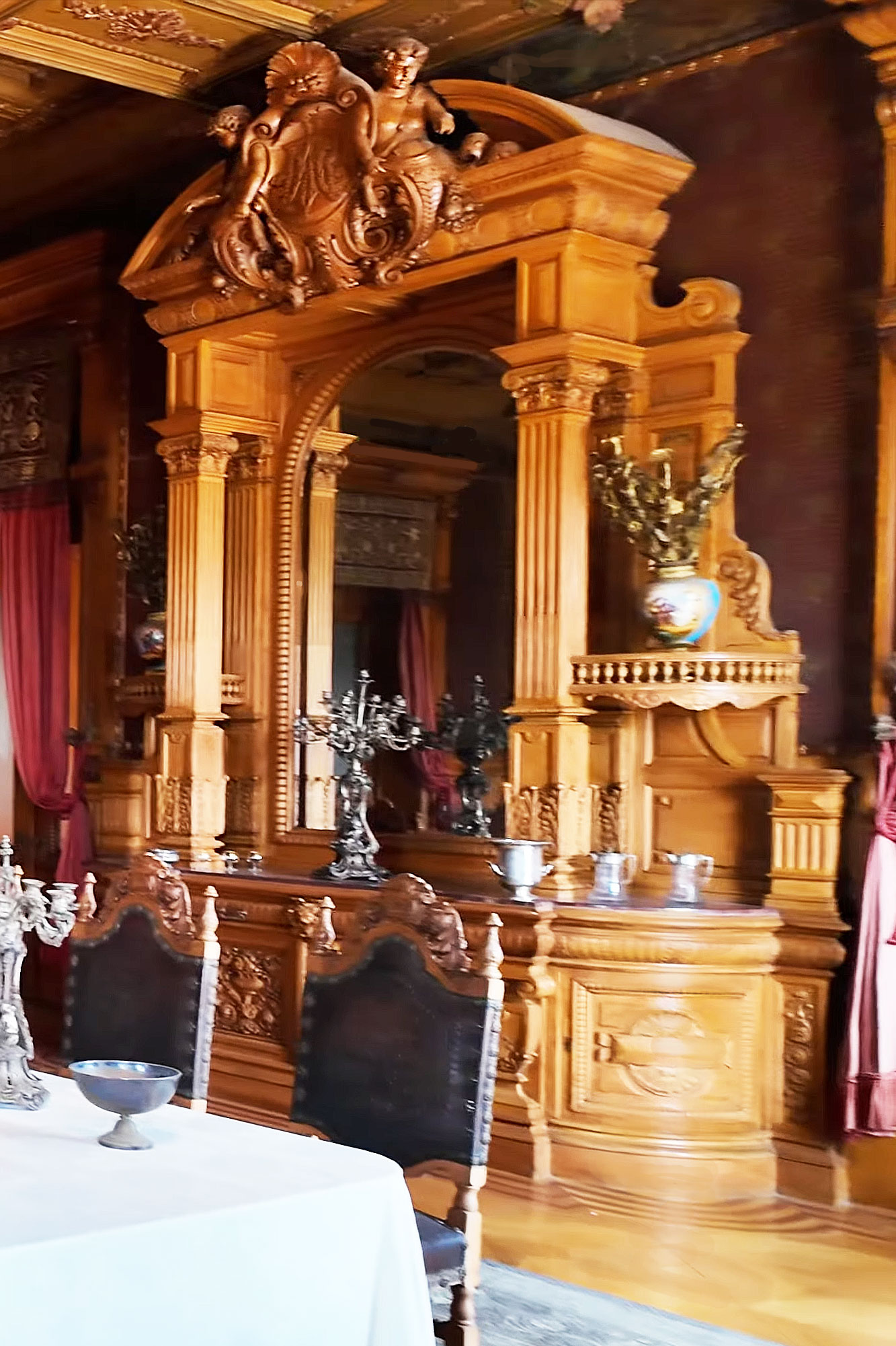
““ The Comedor (Dining Room) The overmantle bears the eagle and snake coat of arms, while the sideboard features a pair of putti holding Díaz’s seal, ‘RM,’ which stands for República Mexicana.
““
““ 
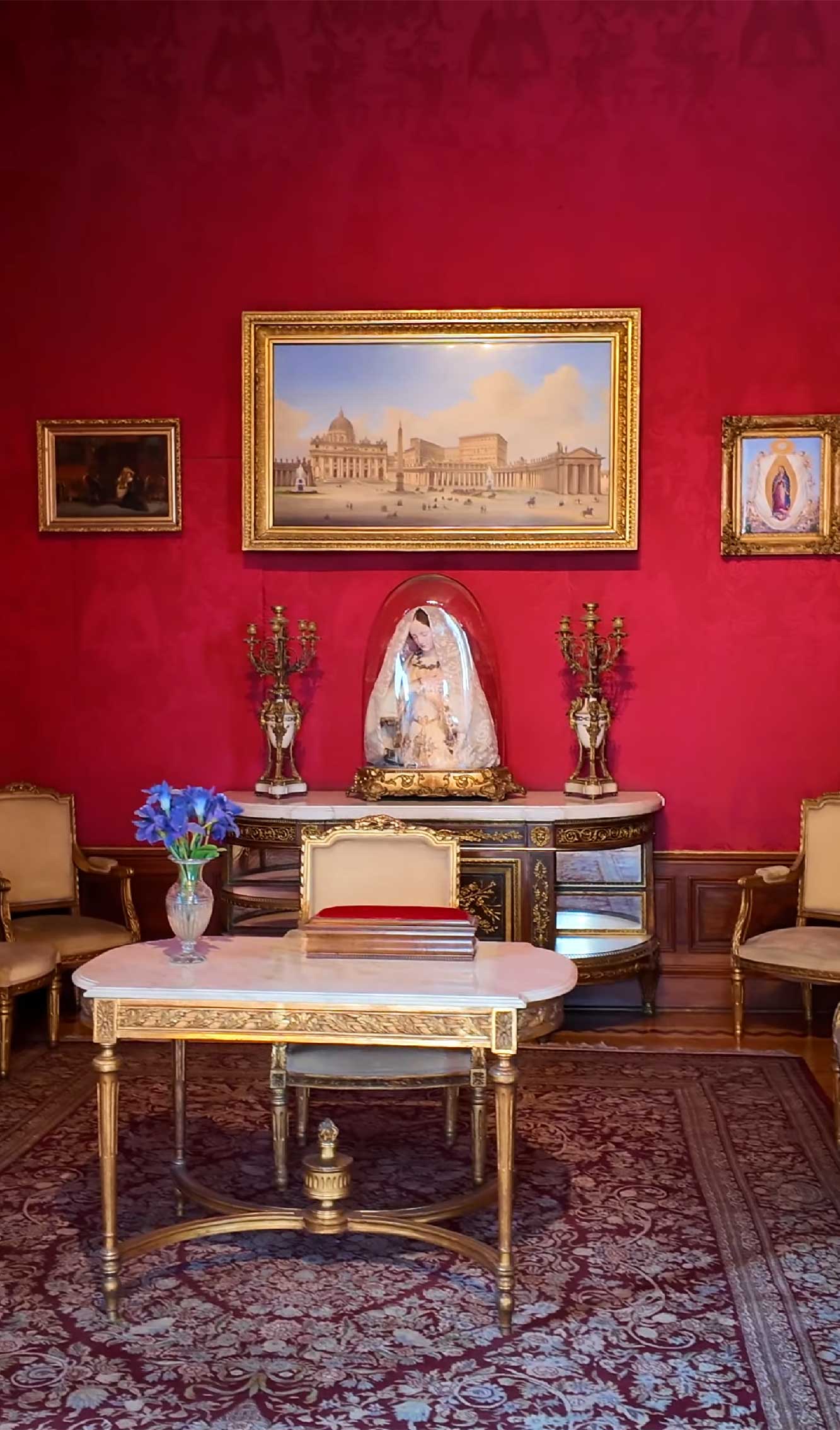
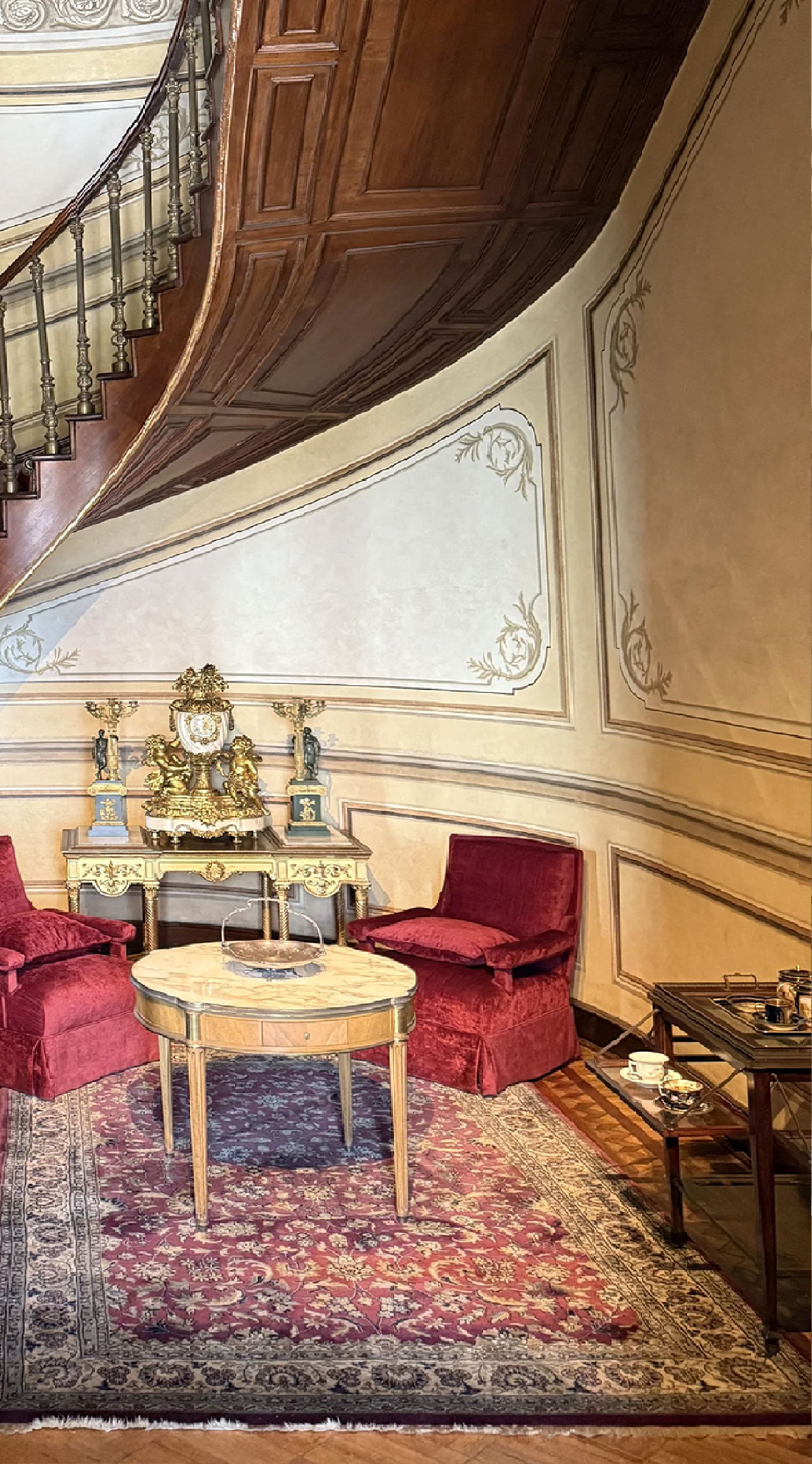
““Sala de Estar Carlota, (Charlotte’s Sitting Room) reflected her devout faith, with a rare bust of the Virgin Mary under glass and one of the earliest known images of Our Lady of Guadalupe in the castle’s collection.
““
““ 
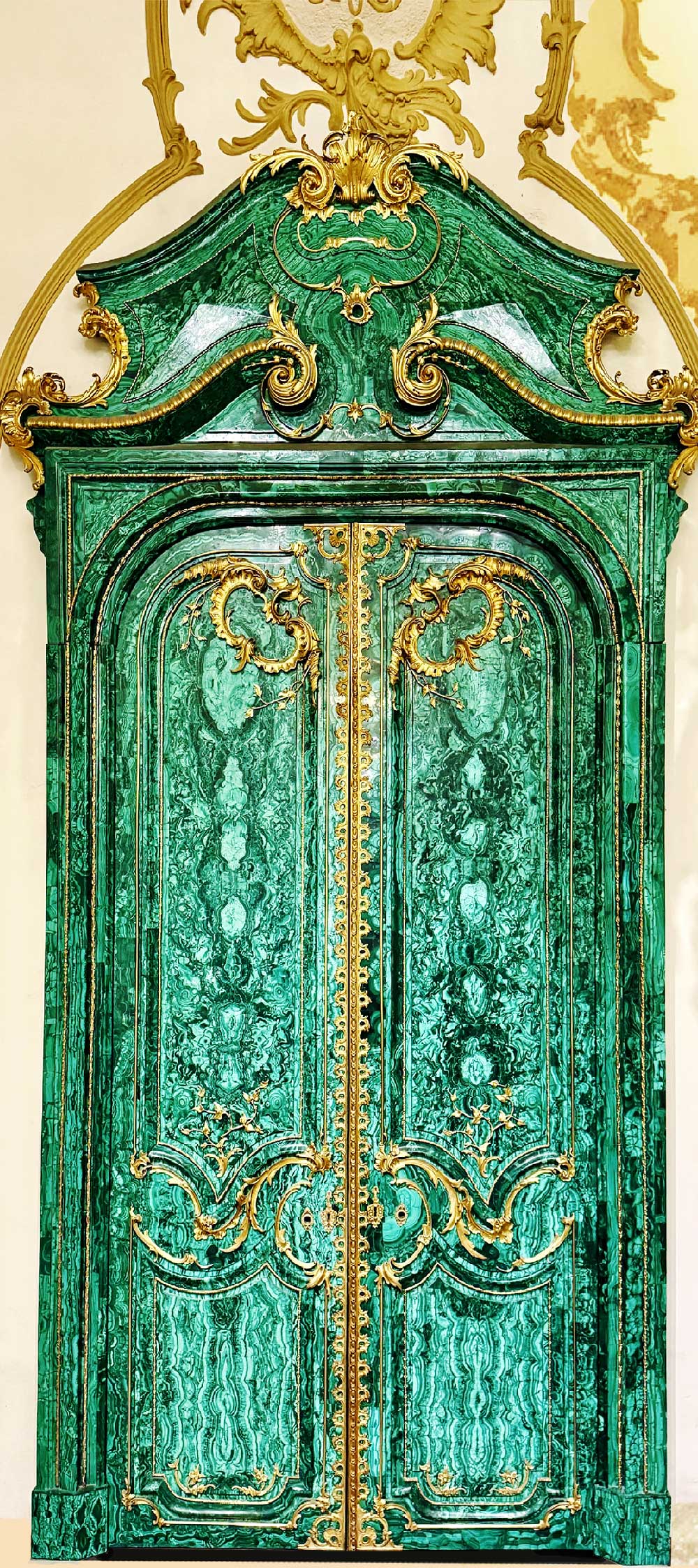
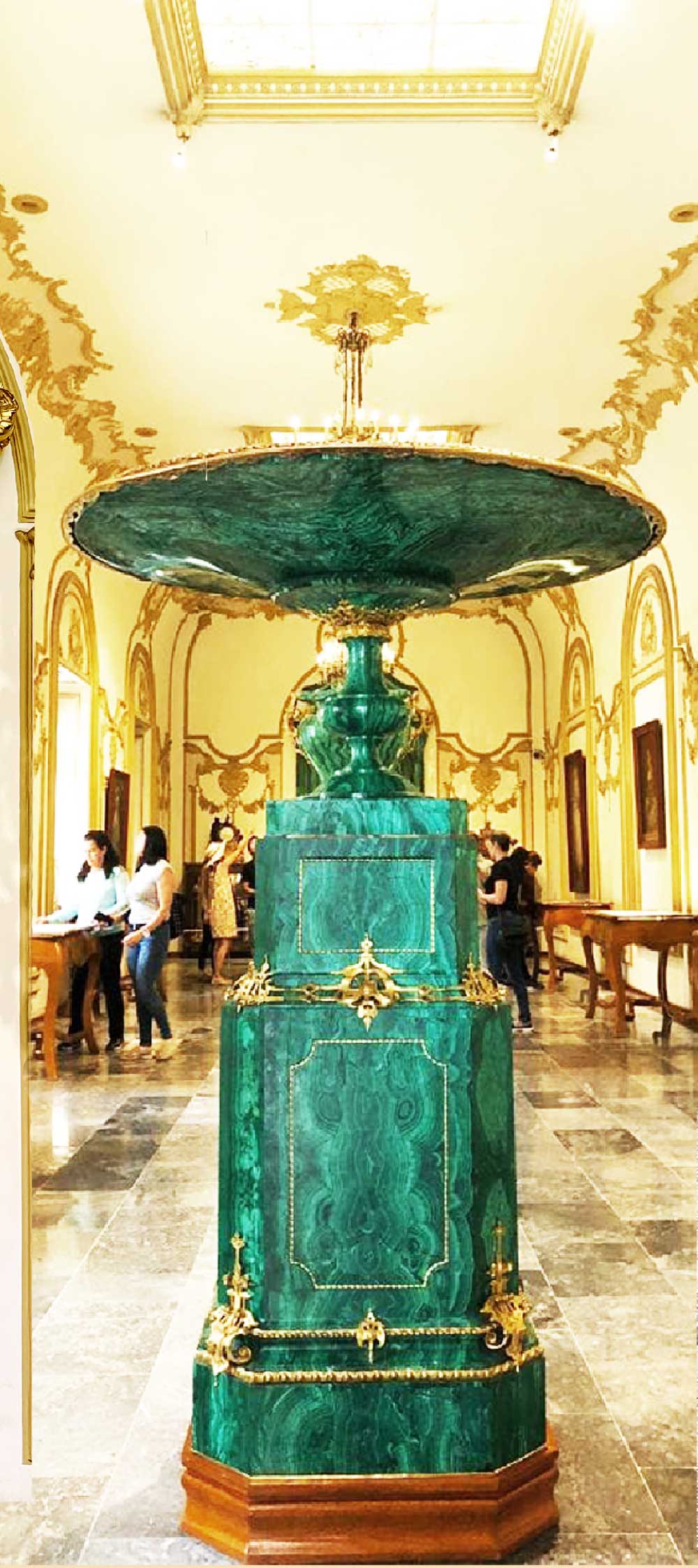
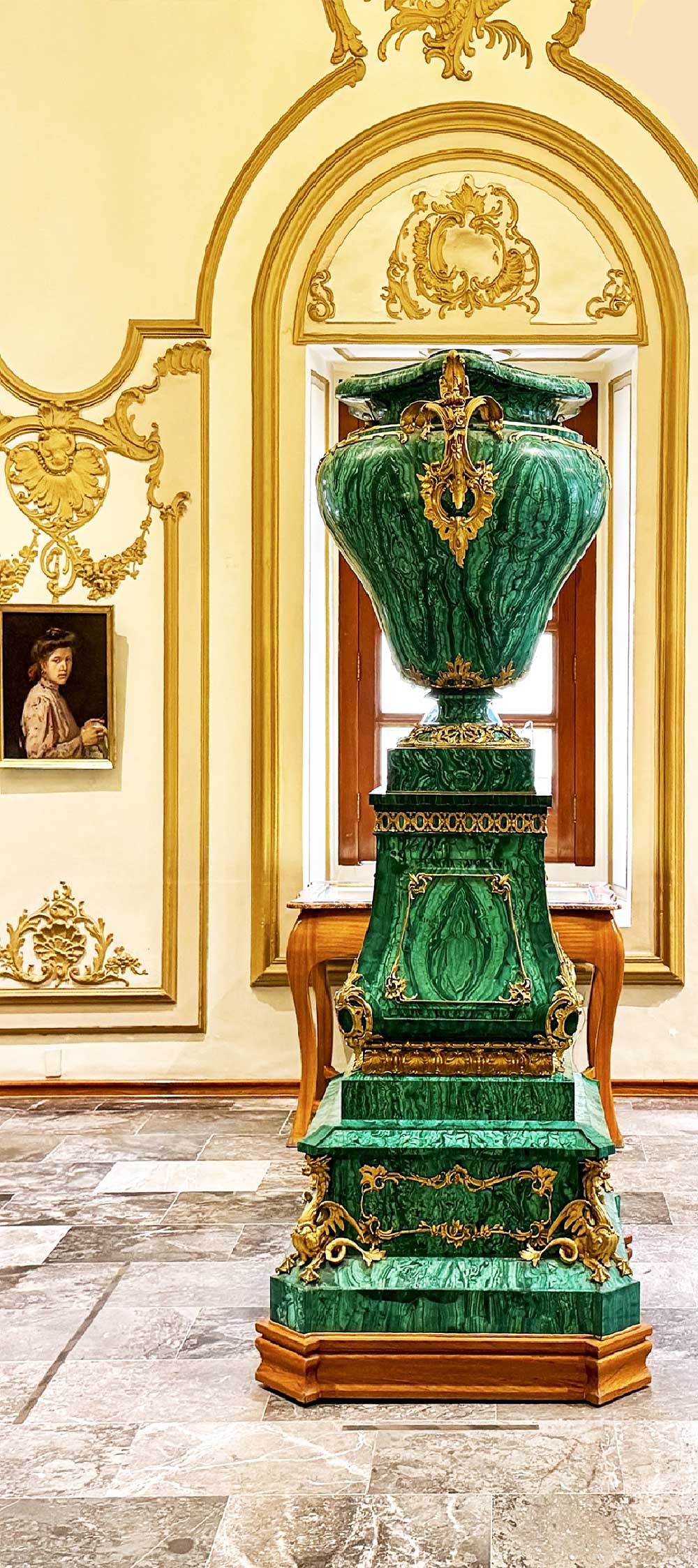
““Malachite Room (Salón de Malaquitas), Russian malachite and gilt metal, featuring a rococo-style design
““
““ 
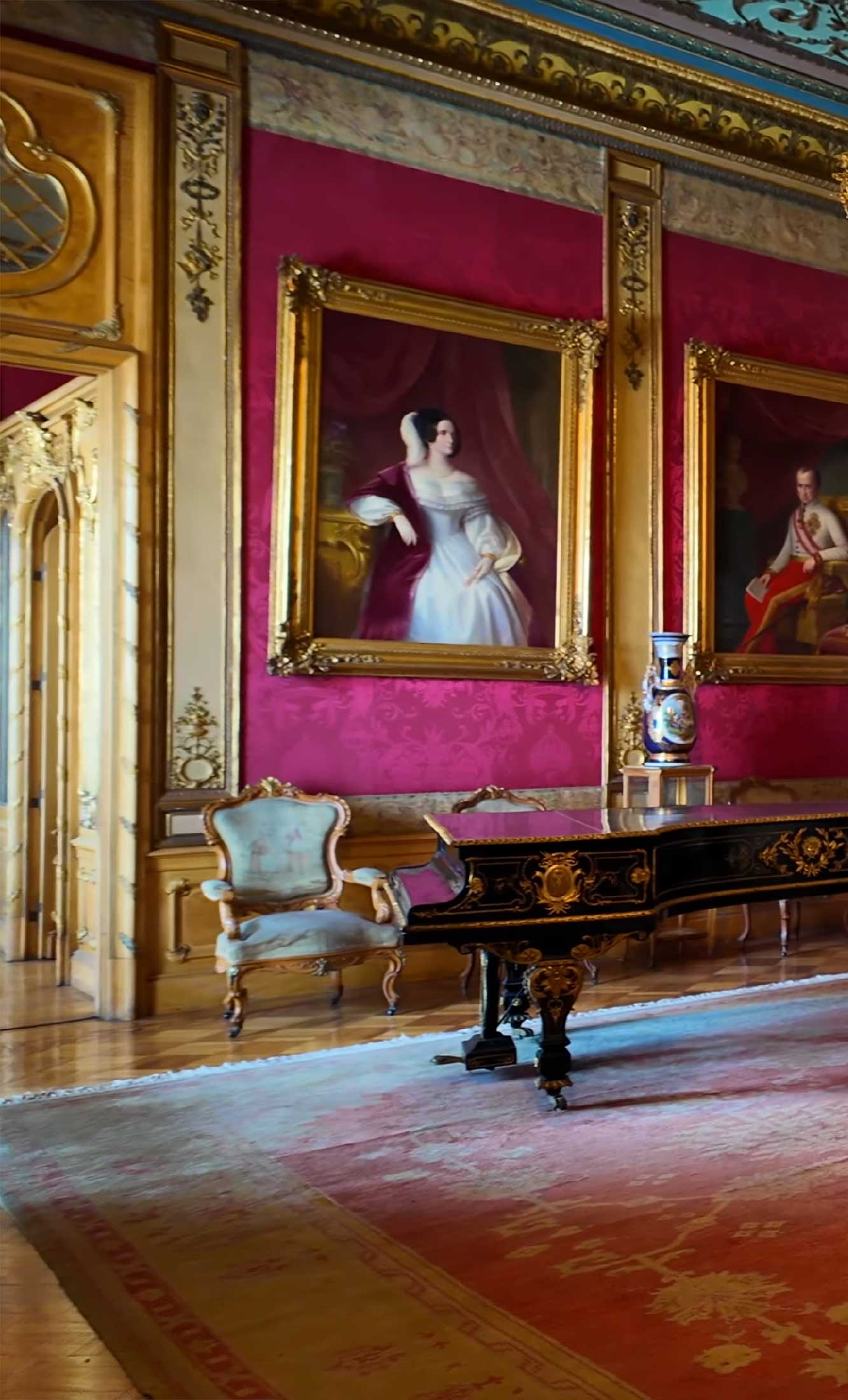
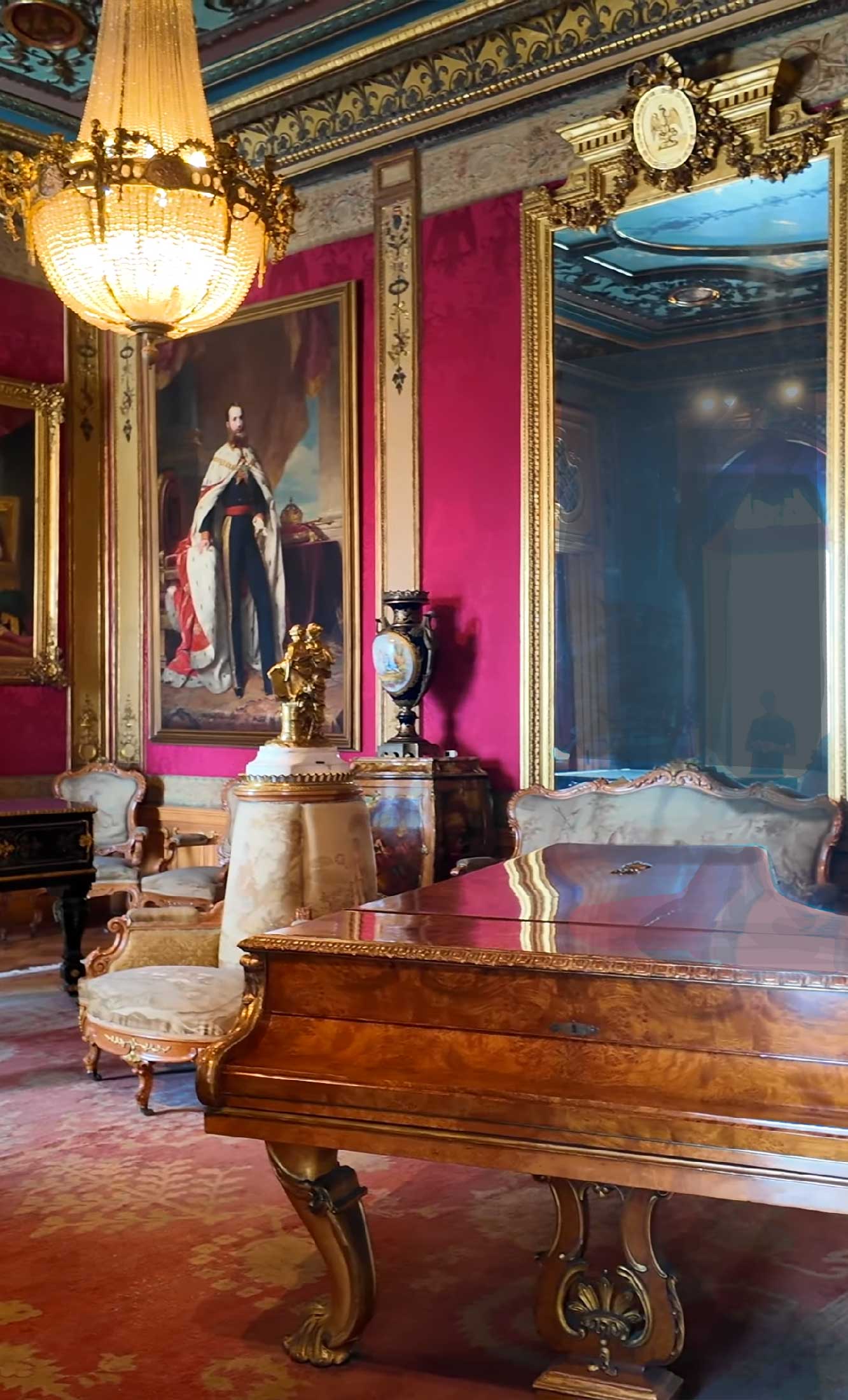
““The Music Room includes chairs upholstered with tapestries depicting the fables of Jean de La Fontaine and two grand pianos.
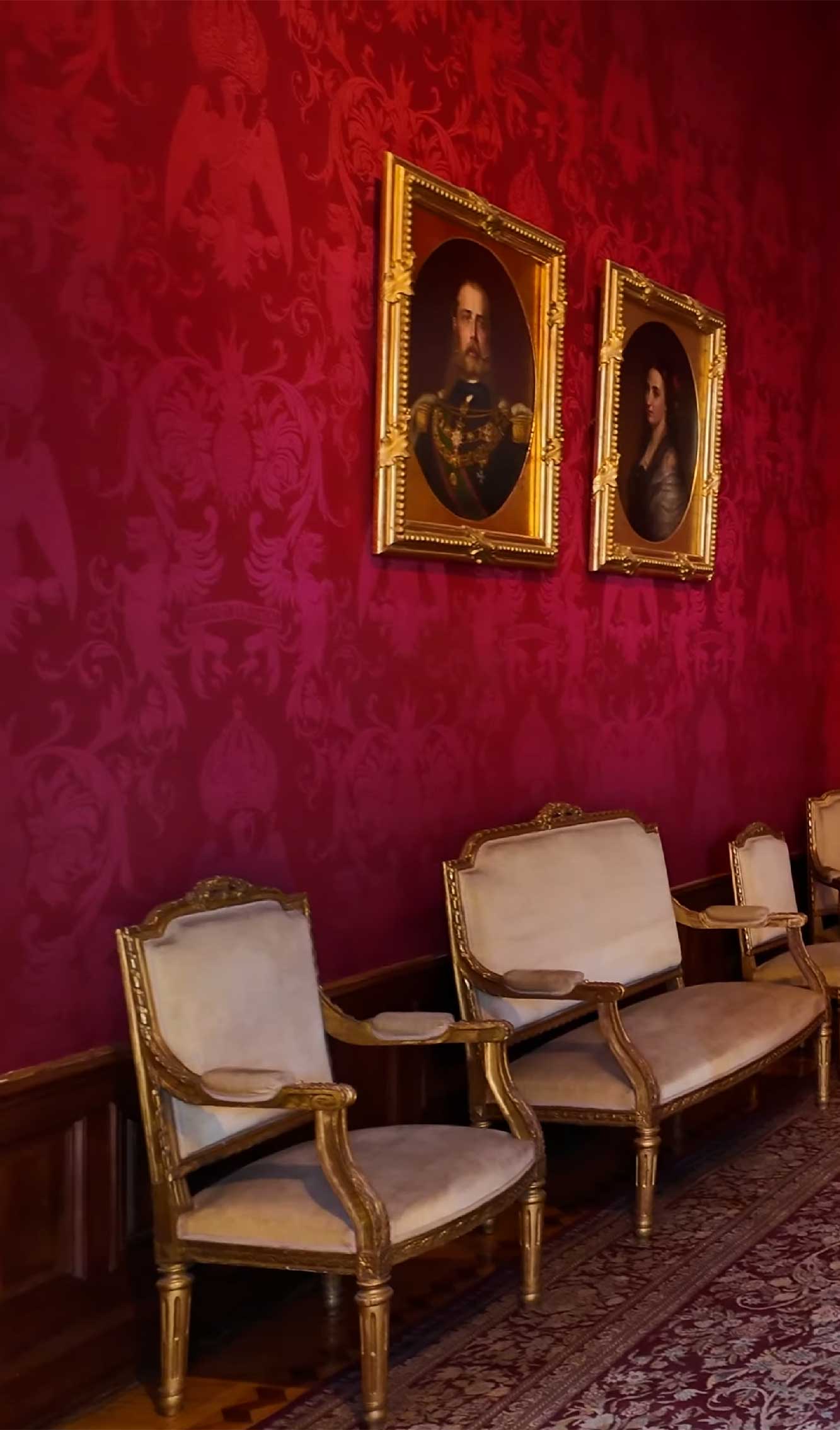
““Portrait of Emperor Maximilian I, in the left corner
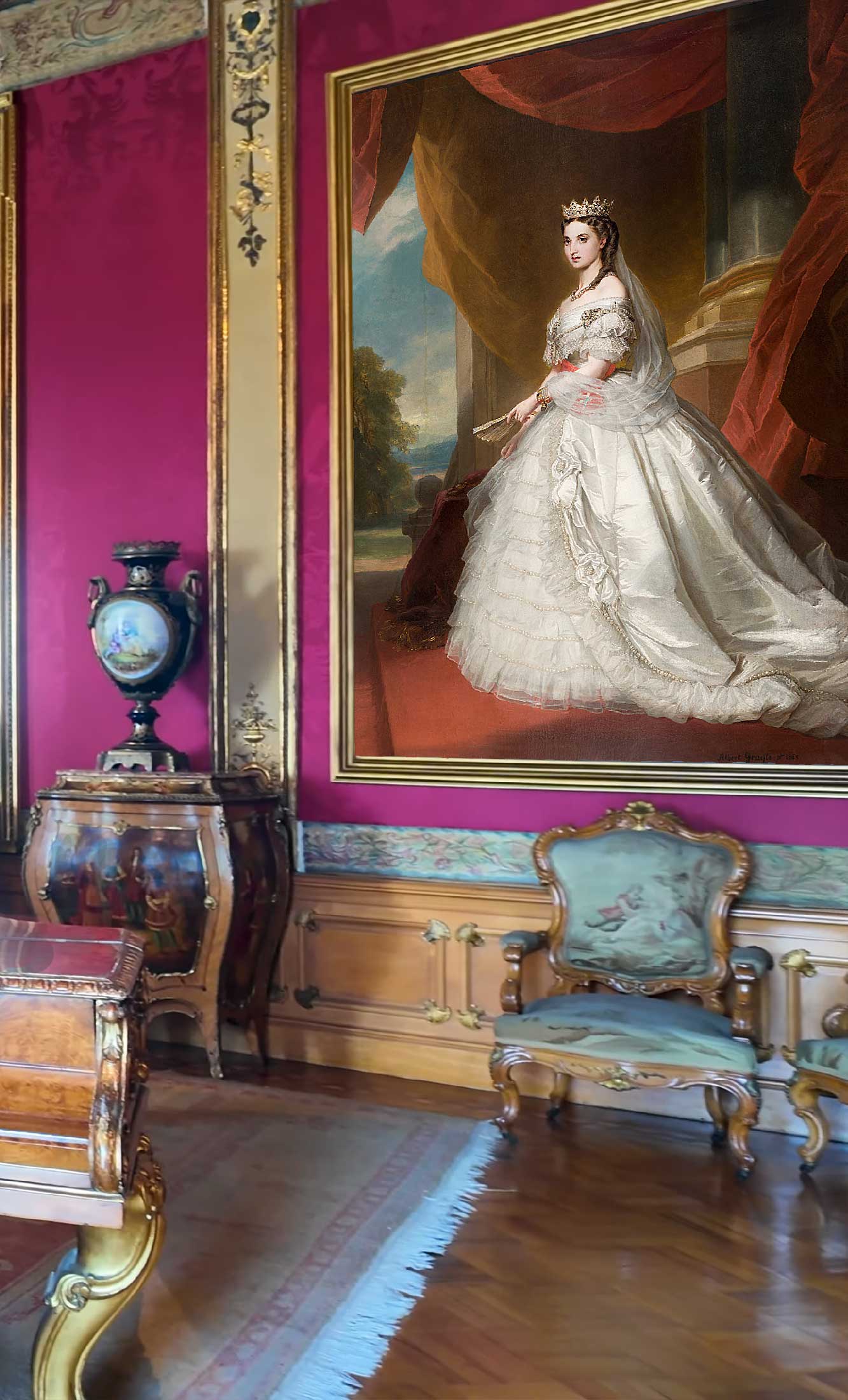
““Portrait of Empress Carlota (Charlotte of Belgium)
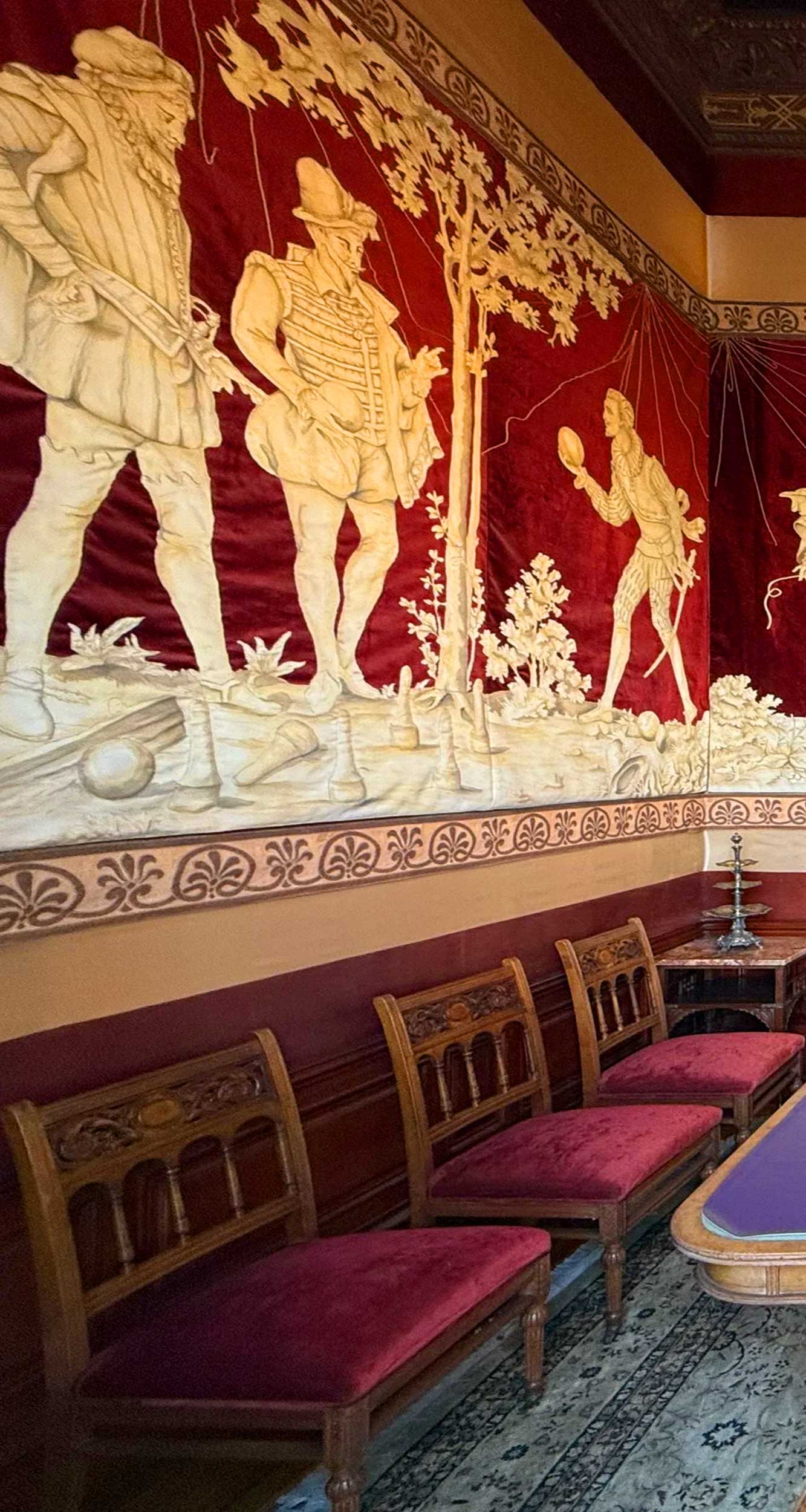
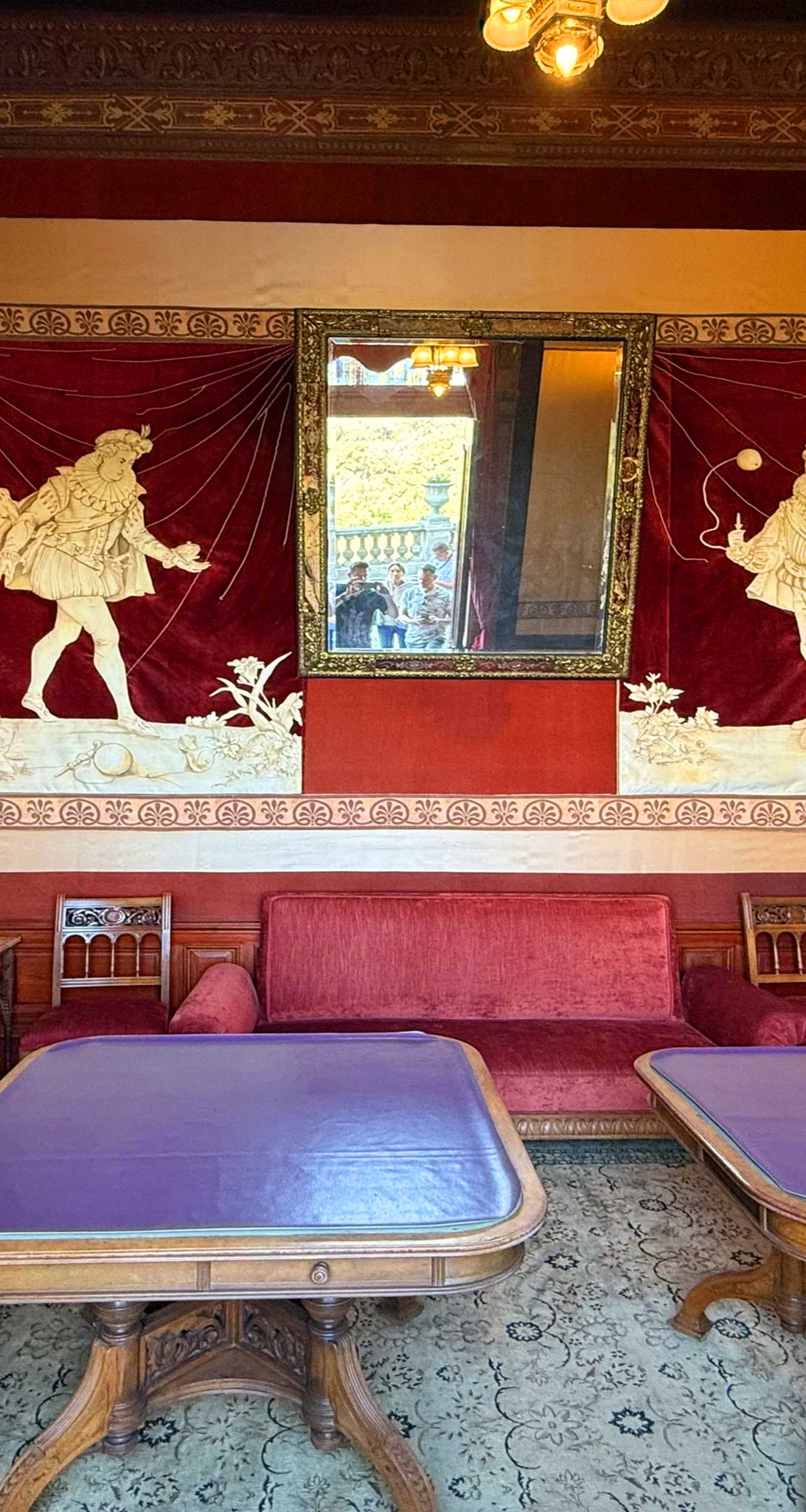
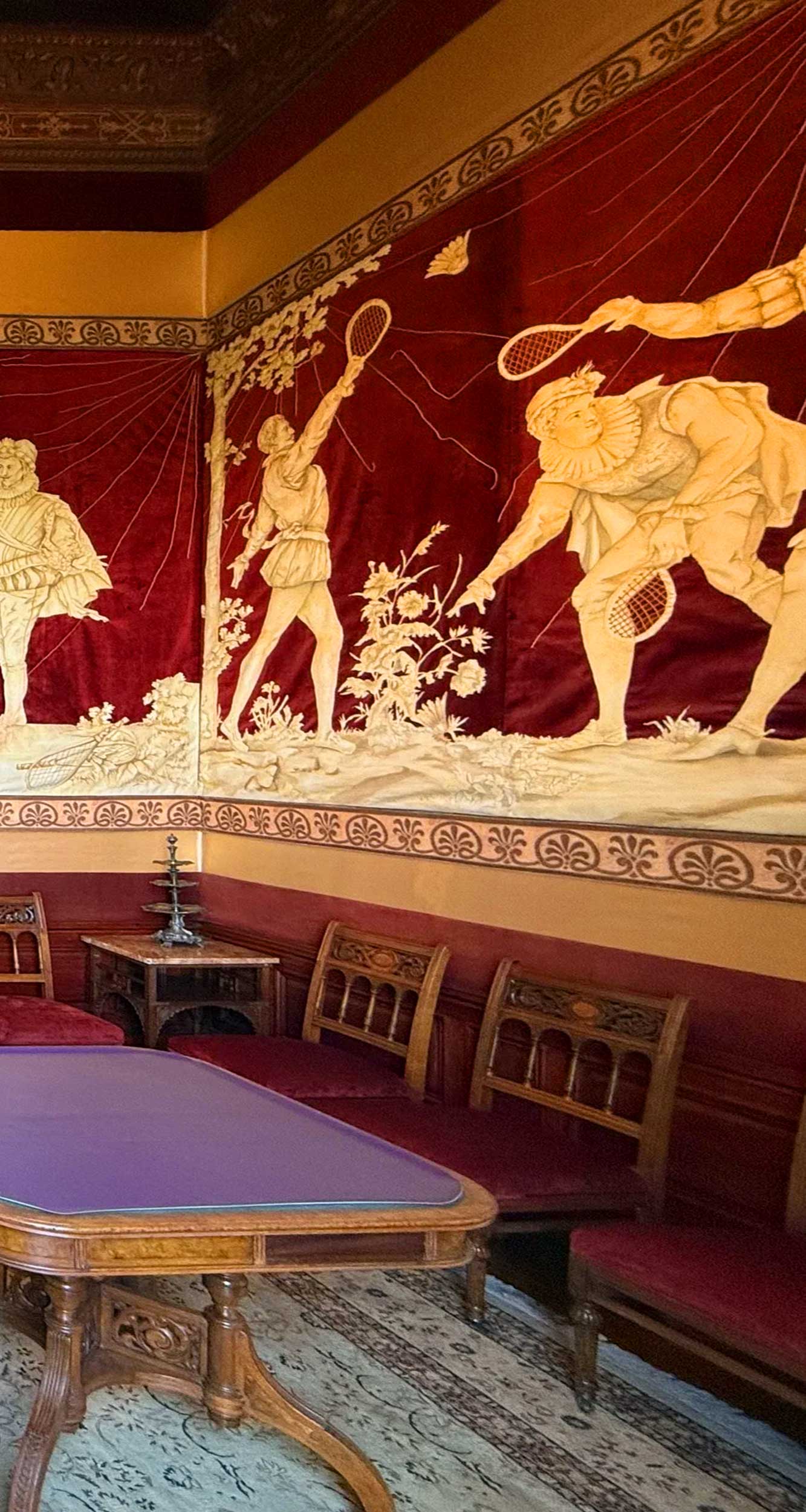
““Salón de Juego (Game Room), The set of tapestries depicting nobleman dressed in elaborate 16th century finery — frilly pleated collars, puffed-out pumpkin breeches and cloaks — engaged in games such as badminton, bilboquet (a cup and ball toy) and the aforementioned skittles.
““ 
““
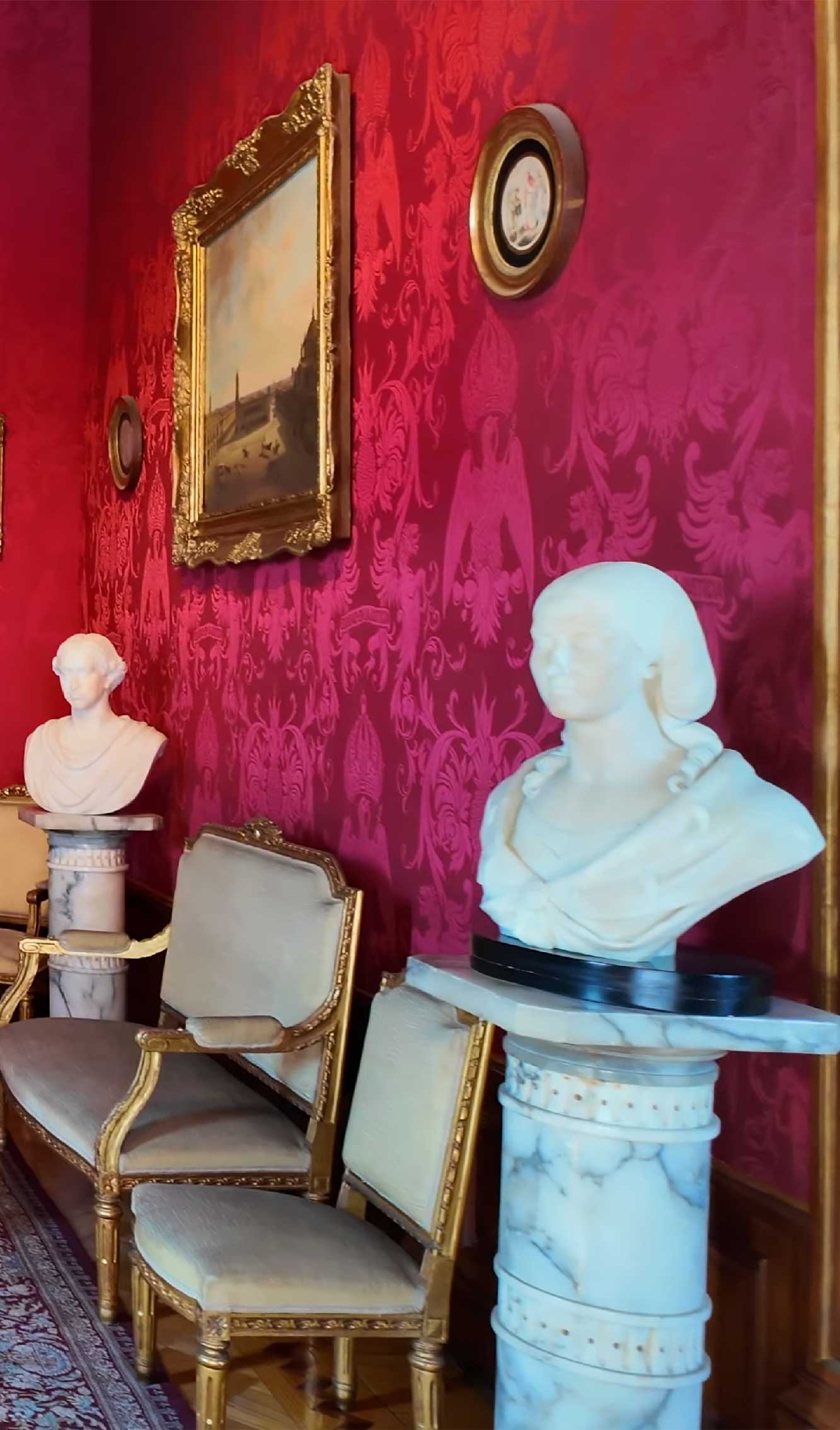
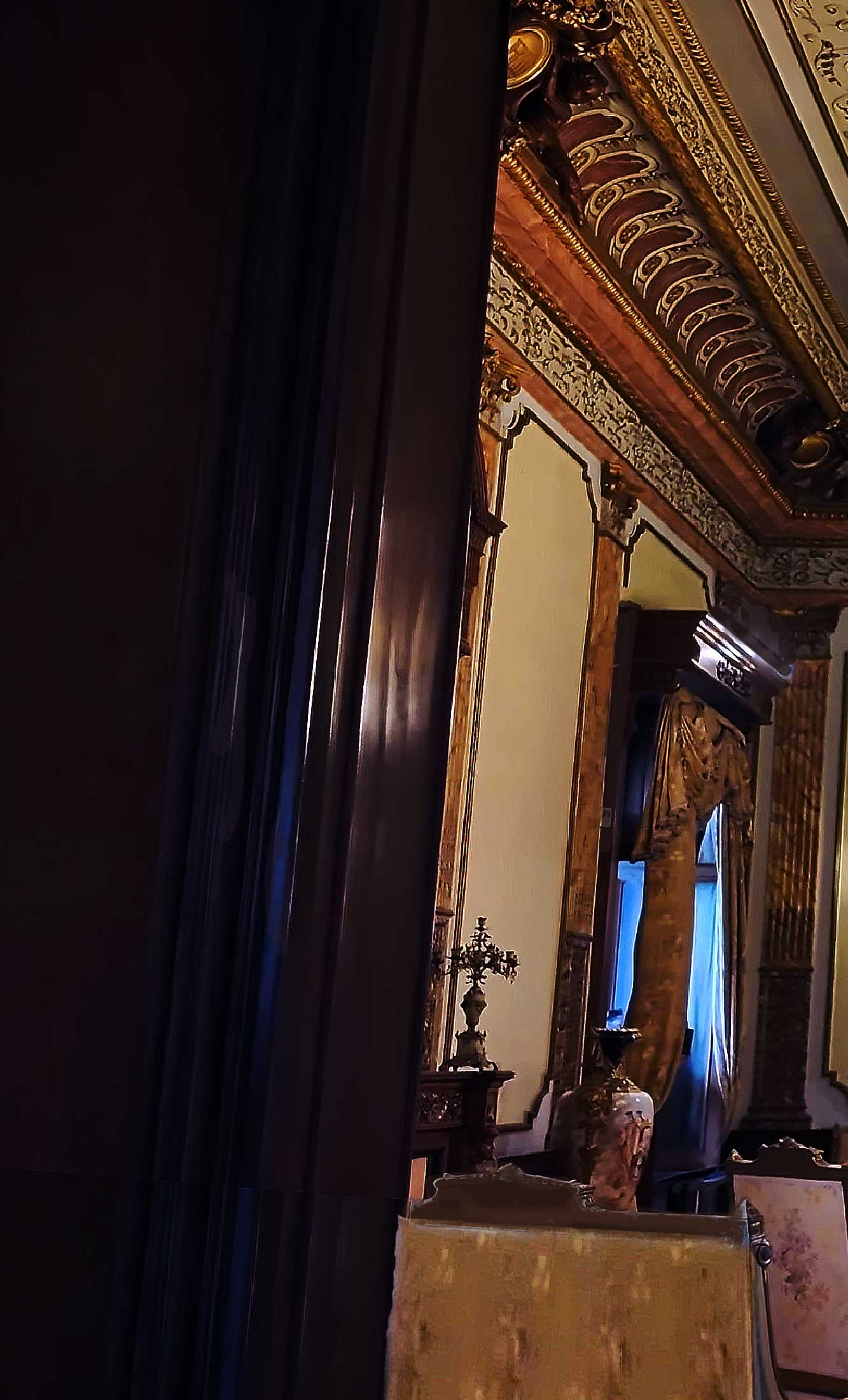
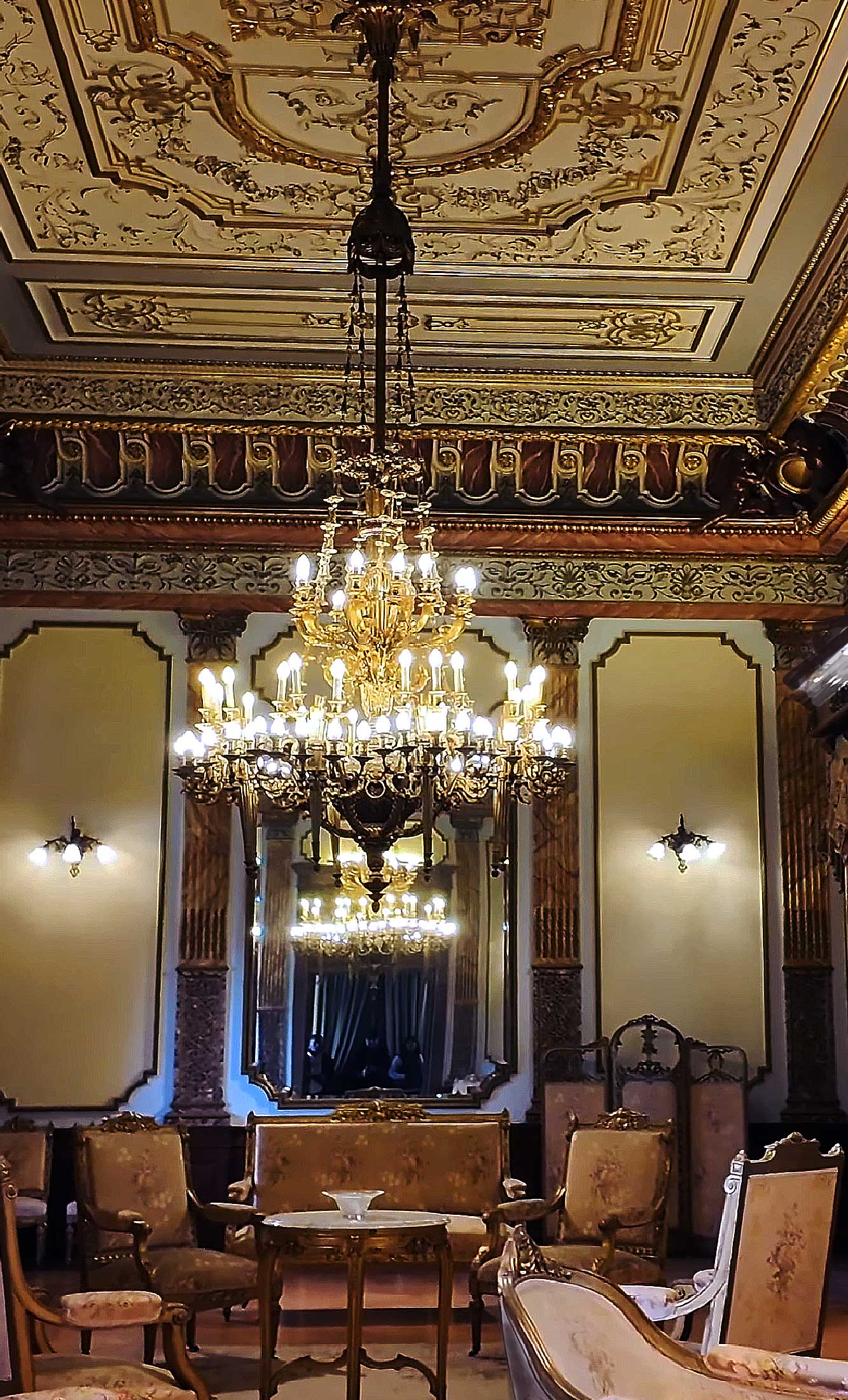
““Salón de Embajadores (Hall of Ambassadors) features furniture in the Louis XVI style and plaster painted to look like marble.
““
““
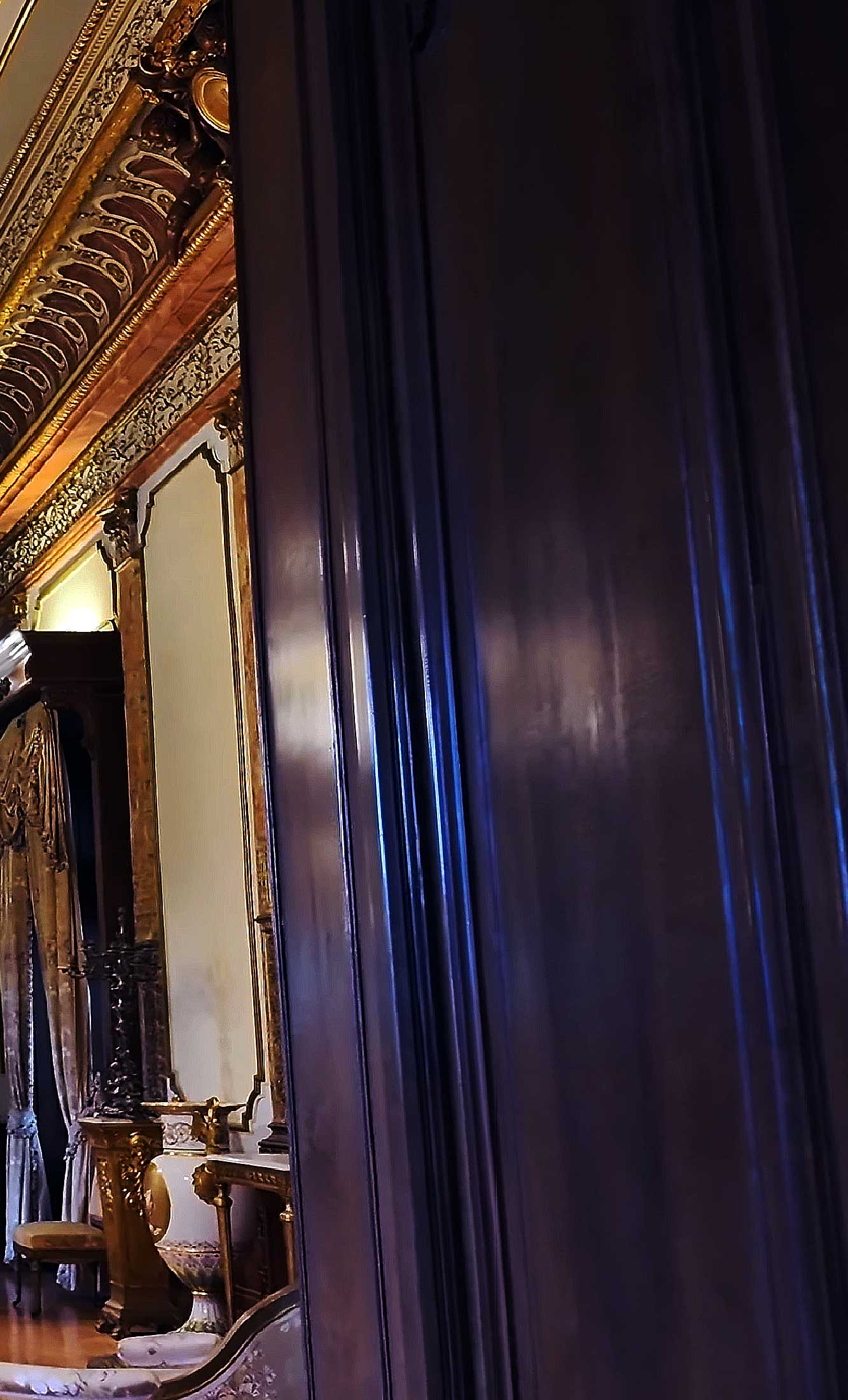
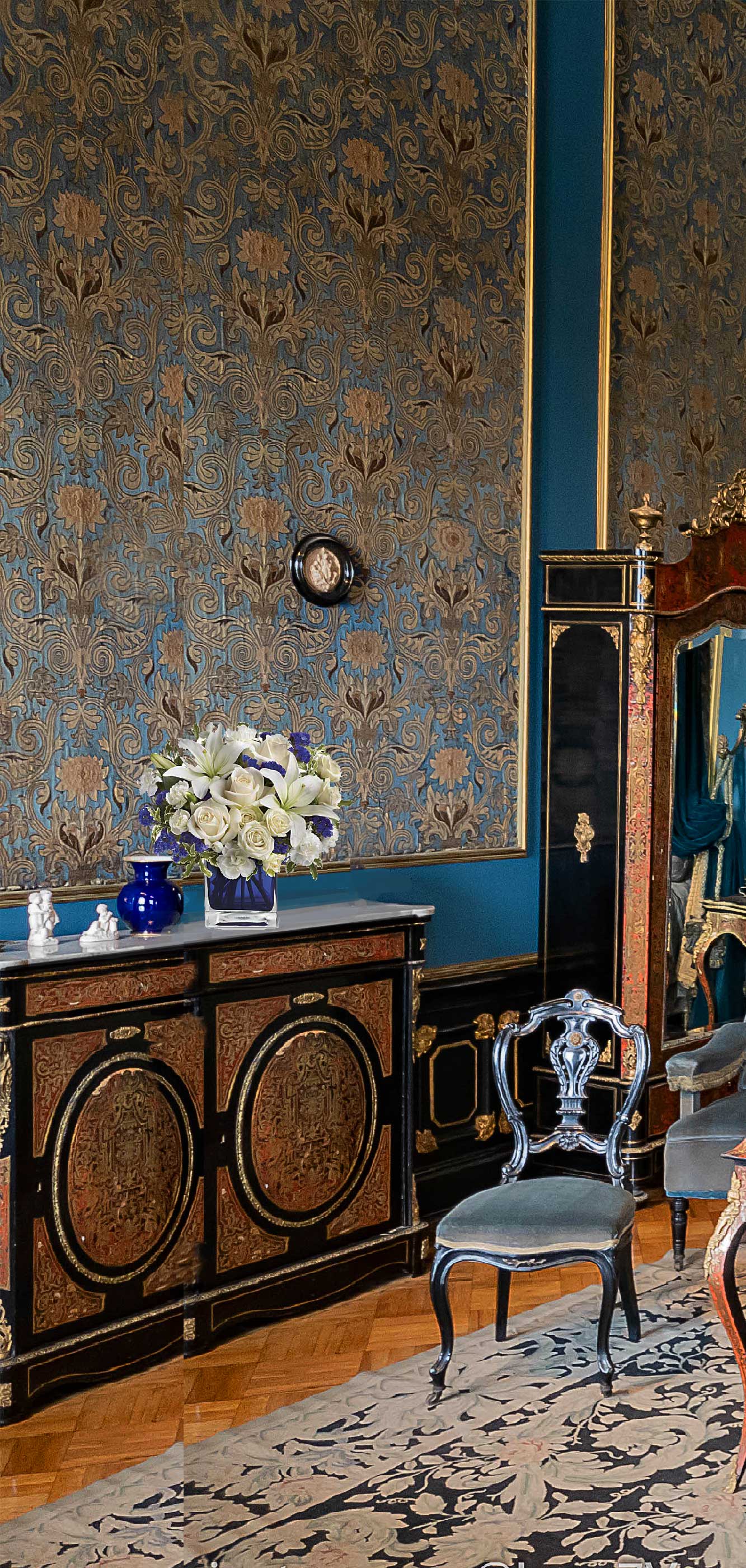
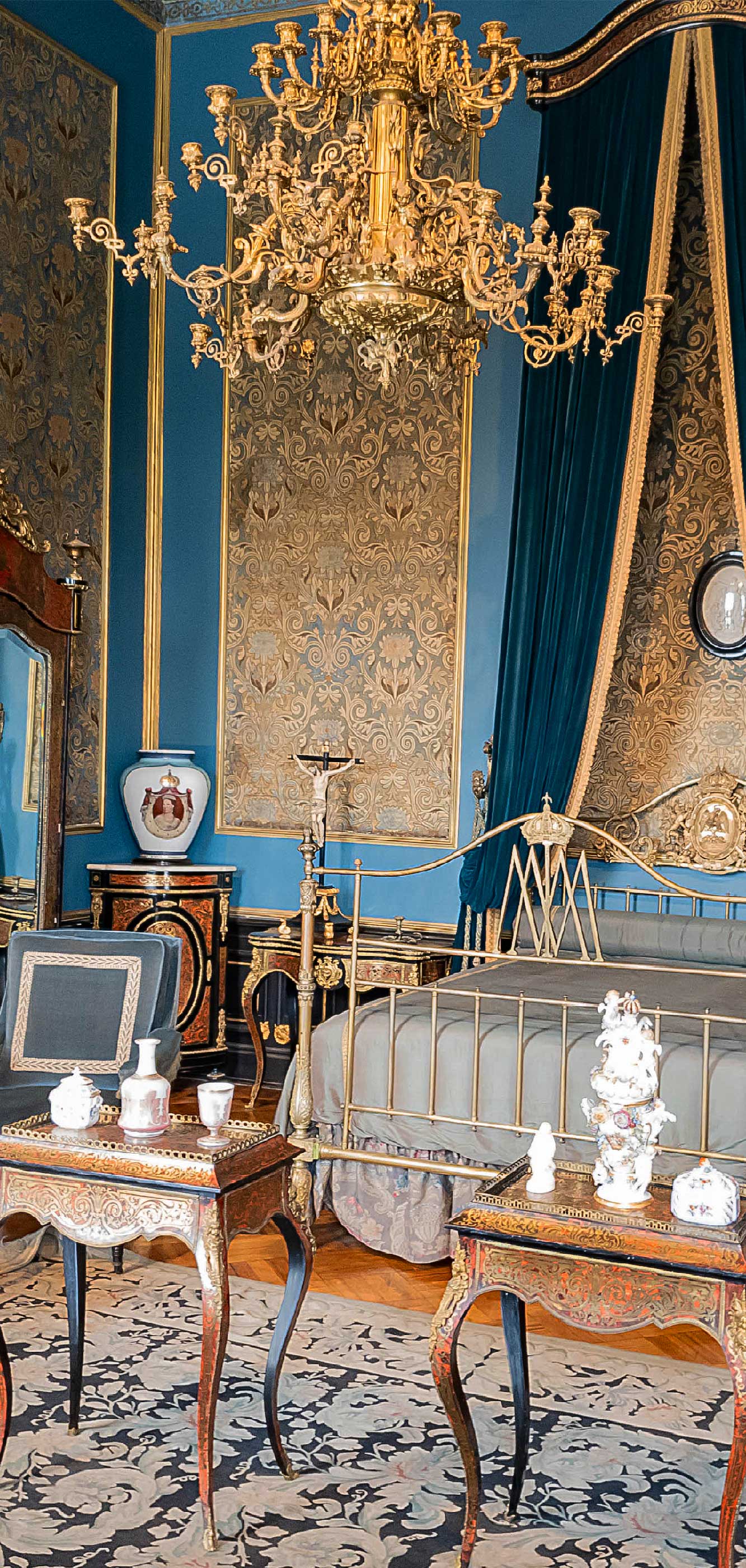
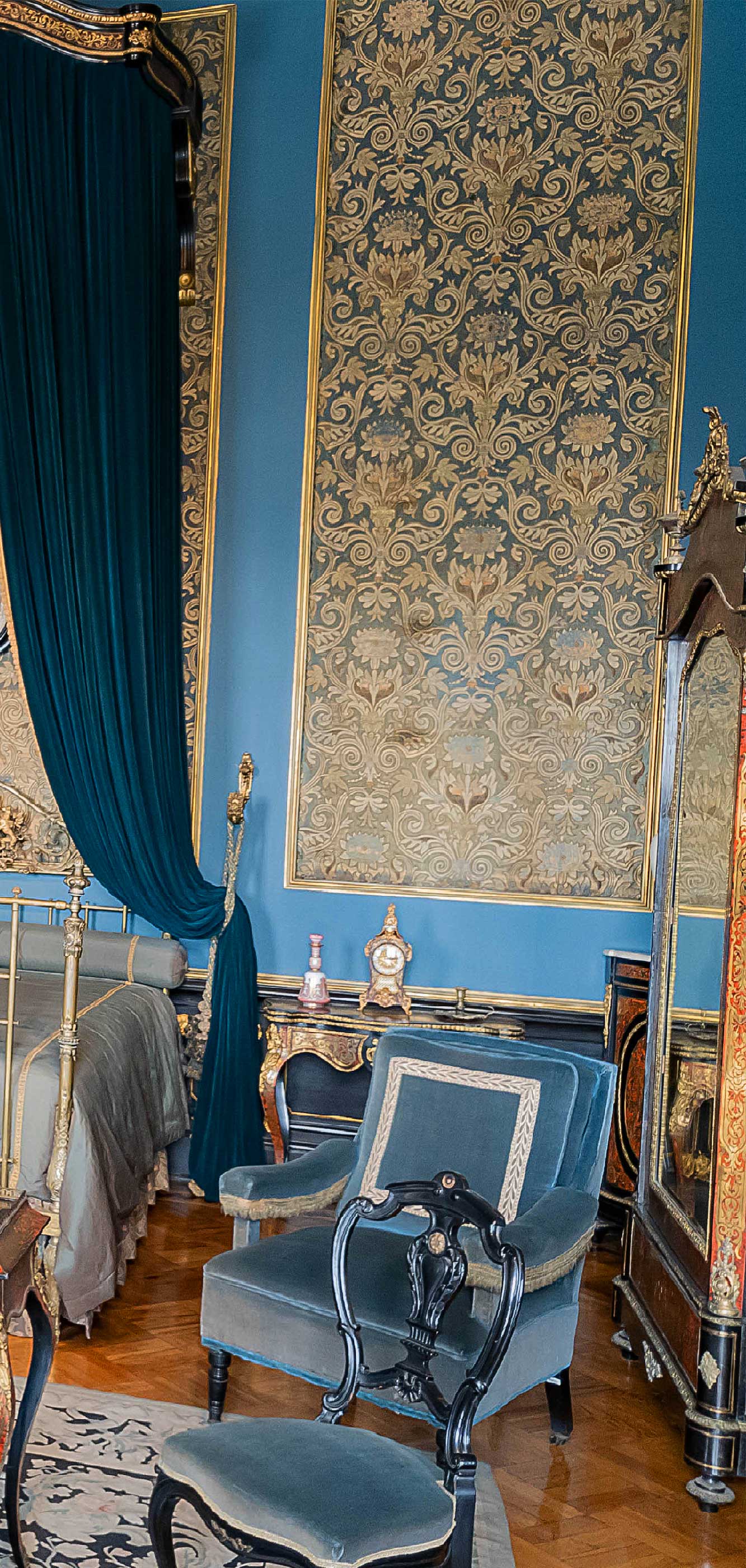
““ The bedroom used by Emperor Maximilian I and Empress Carlota during the Second Mexican Empire.
““ 
““
““The historic carriage used by Emperor Maximilian I and Empress Carlota of the Second Mexican Empire 
““ 
““
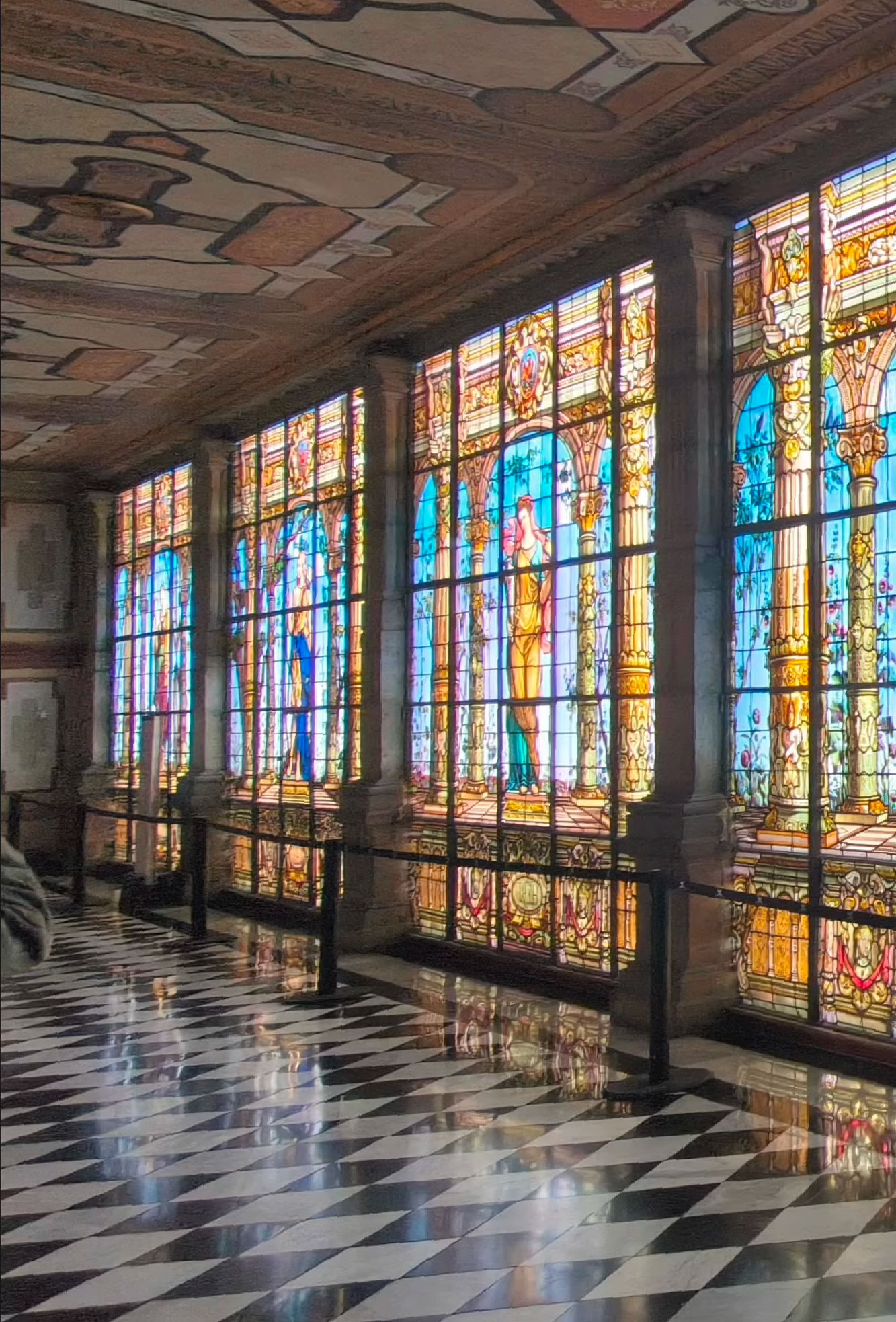
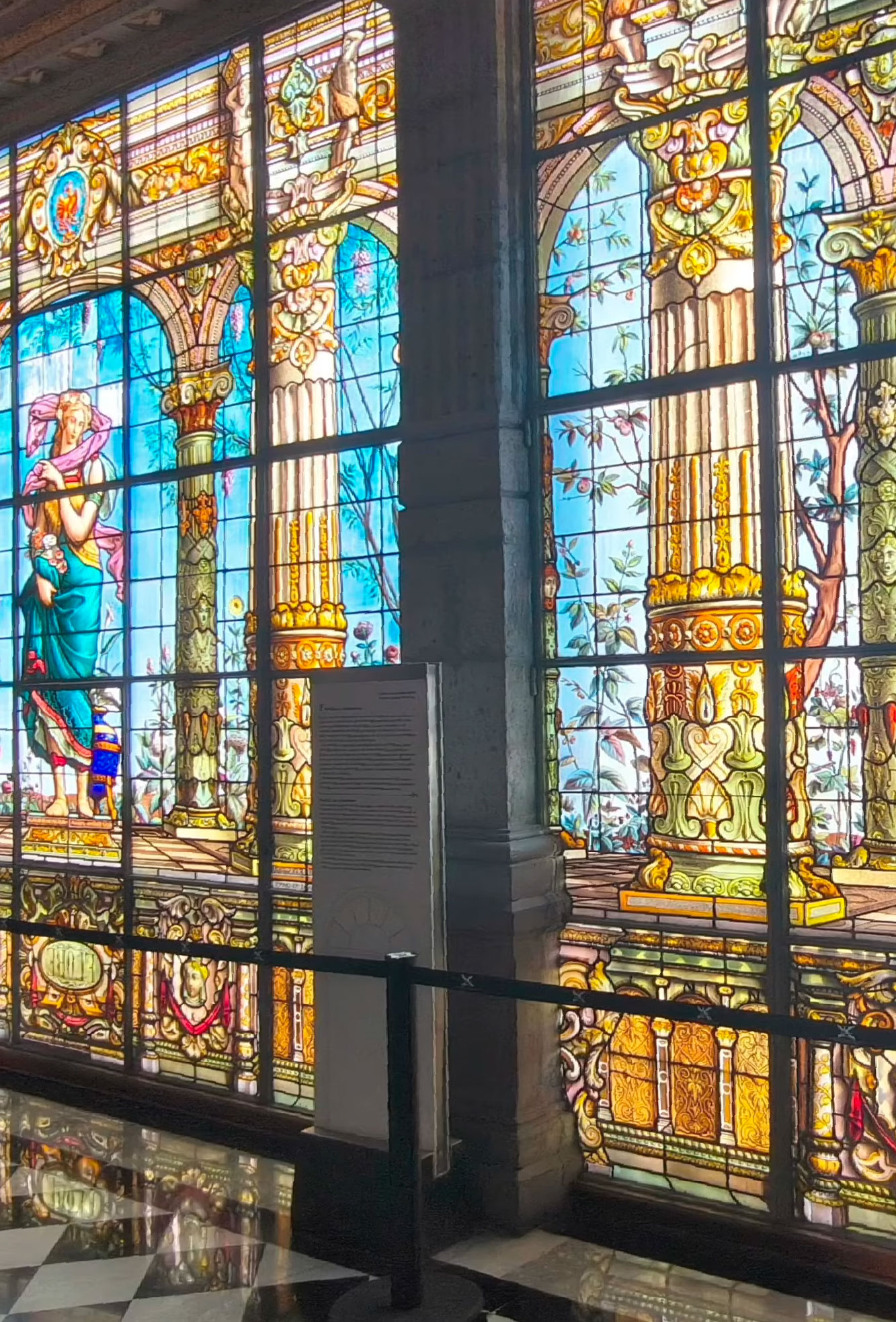
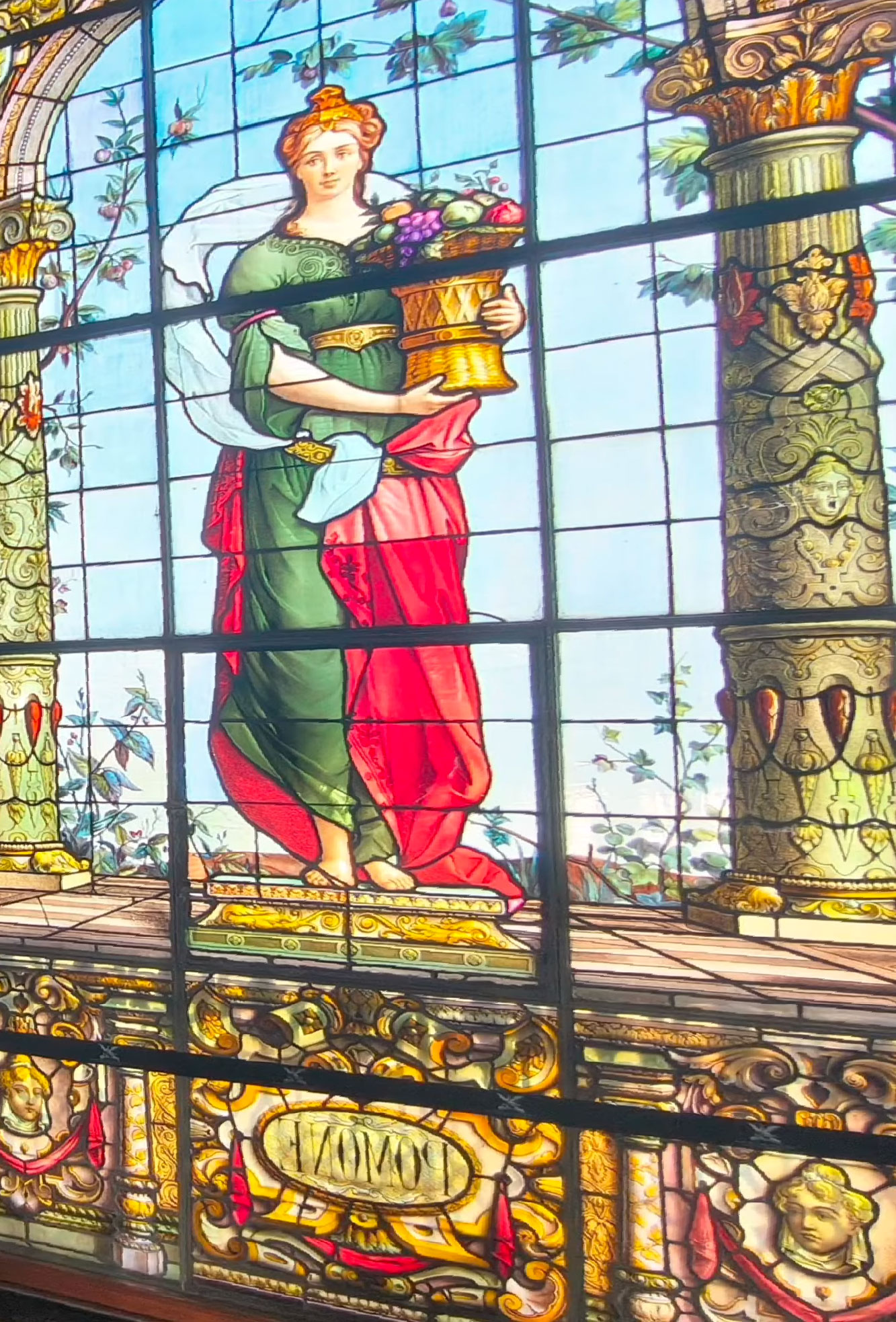
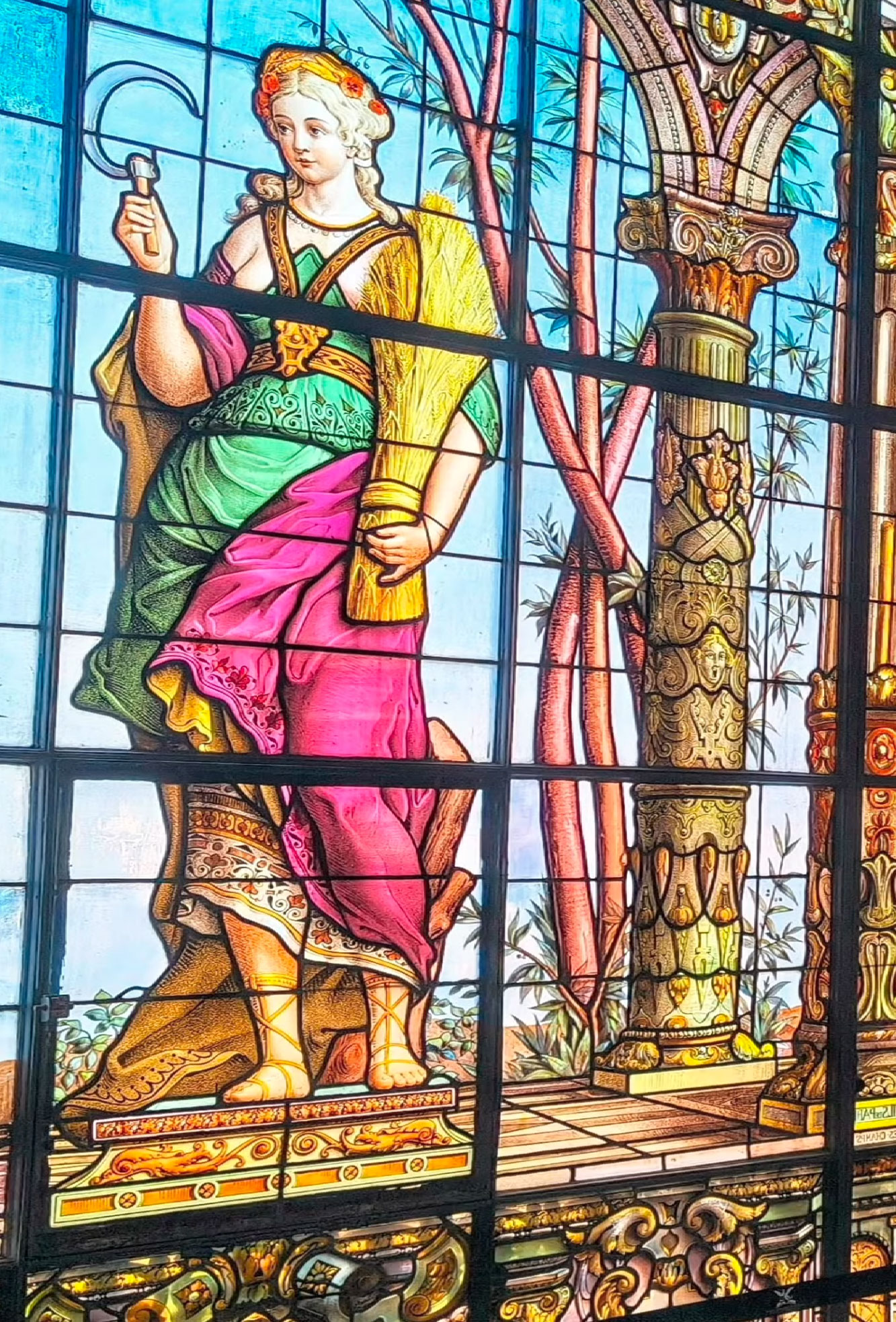
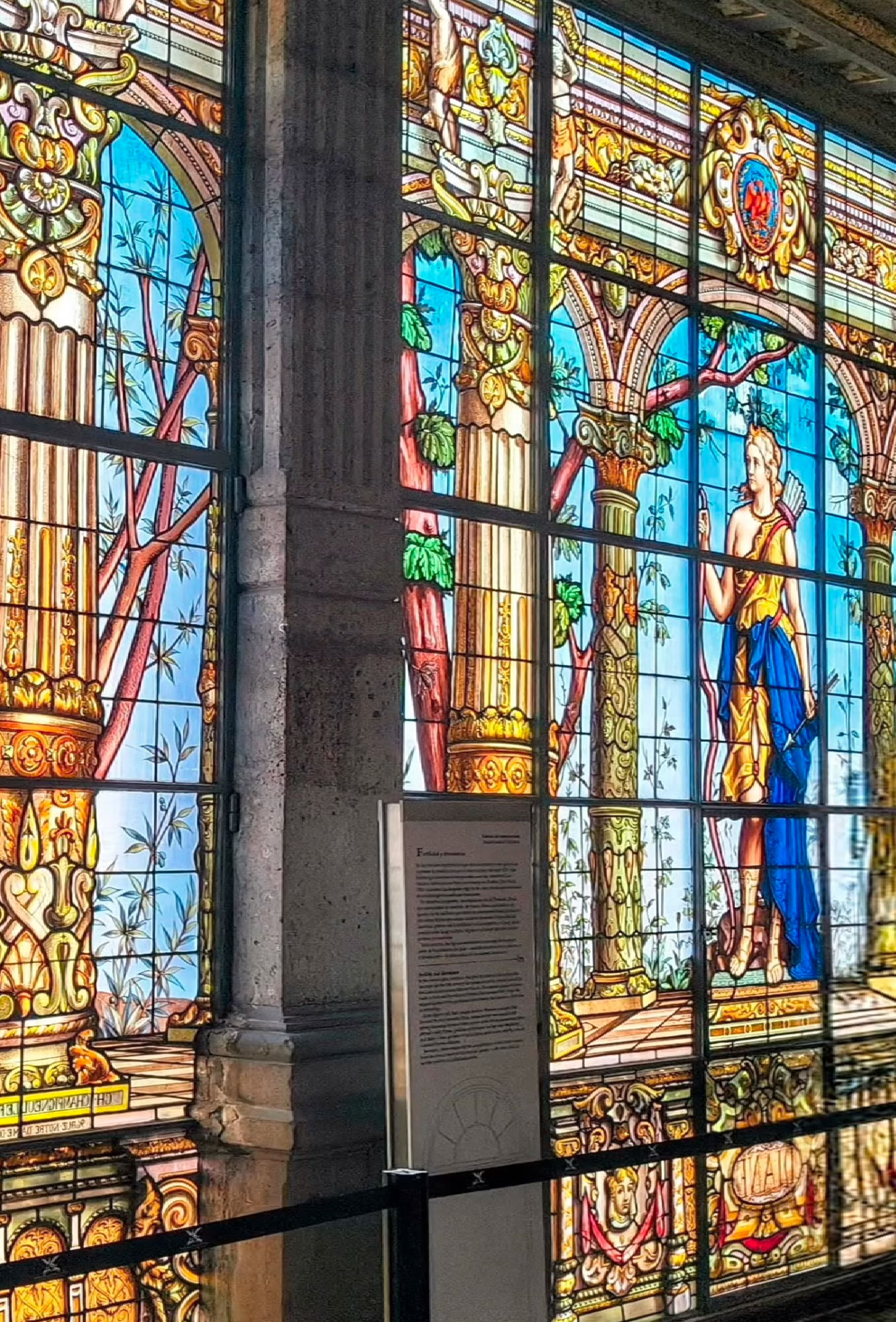
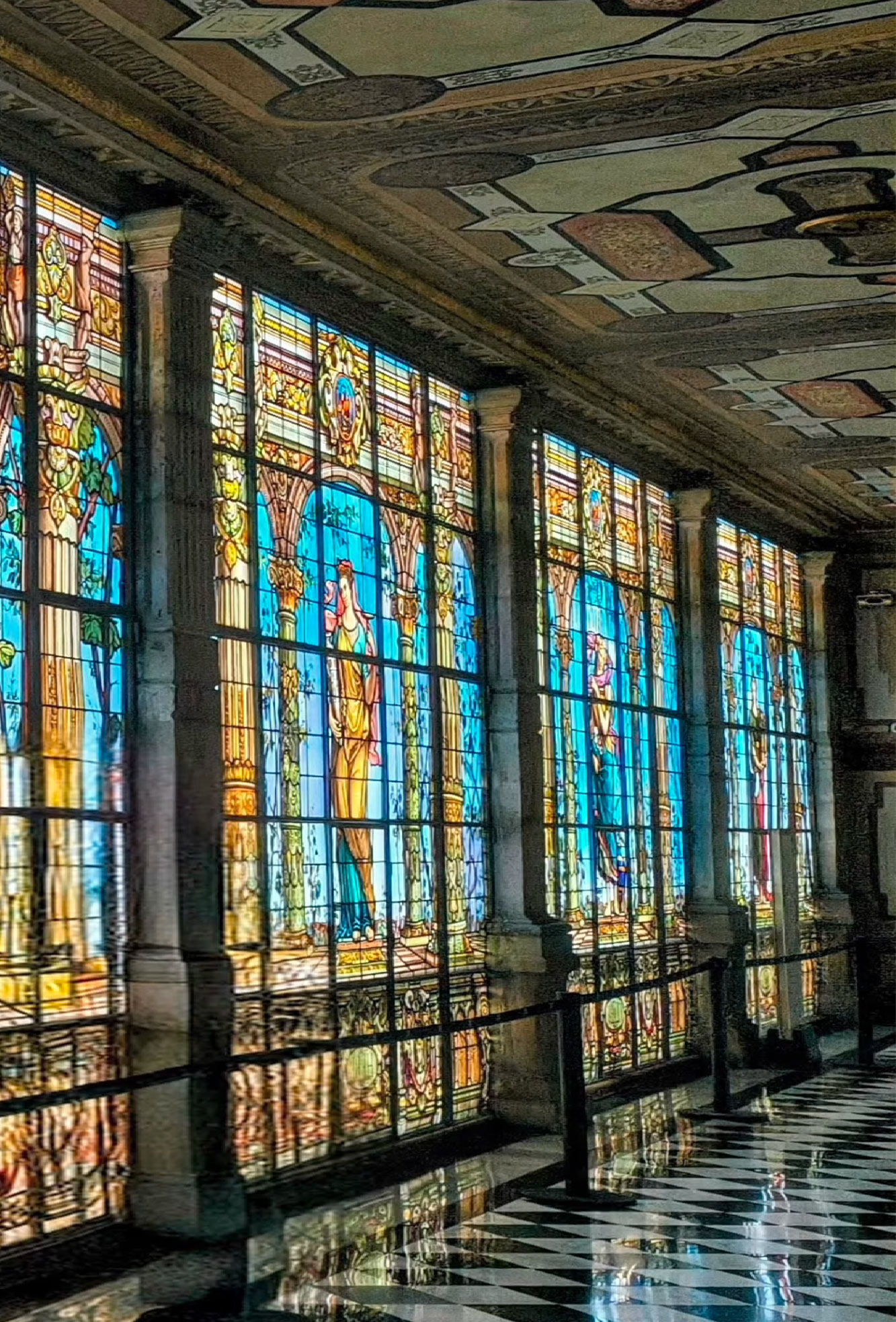
““Galería de Emplomados (Stained Glass Gallery) hallway lined with stained glass windows created by the French firm Champigneulle Fils, and were installed in 1901.
““ 
““
““
““ 
““
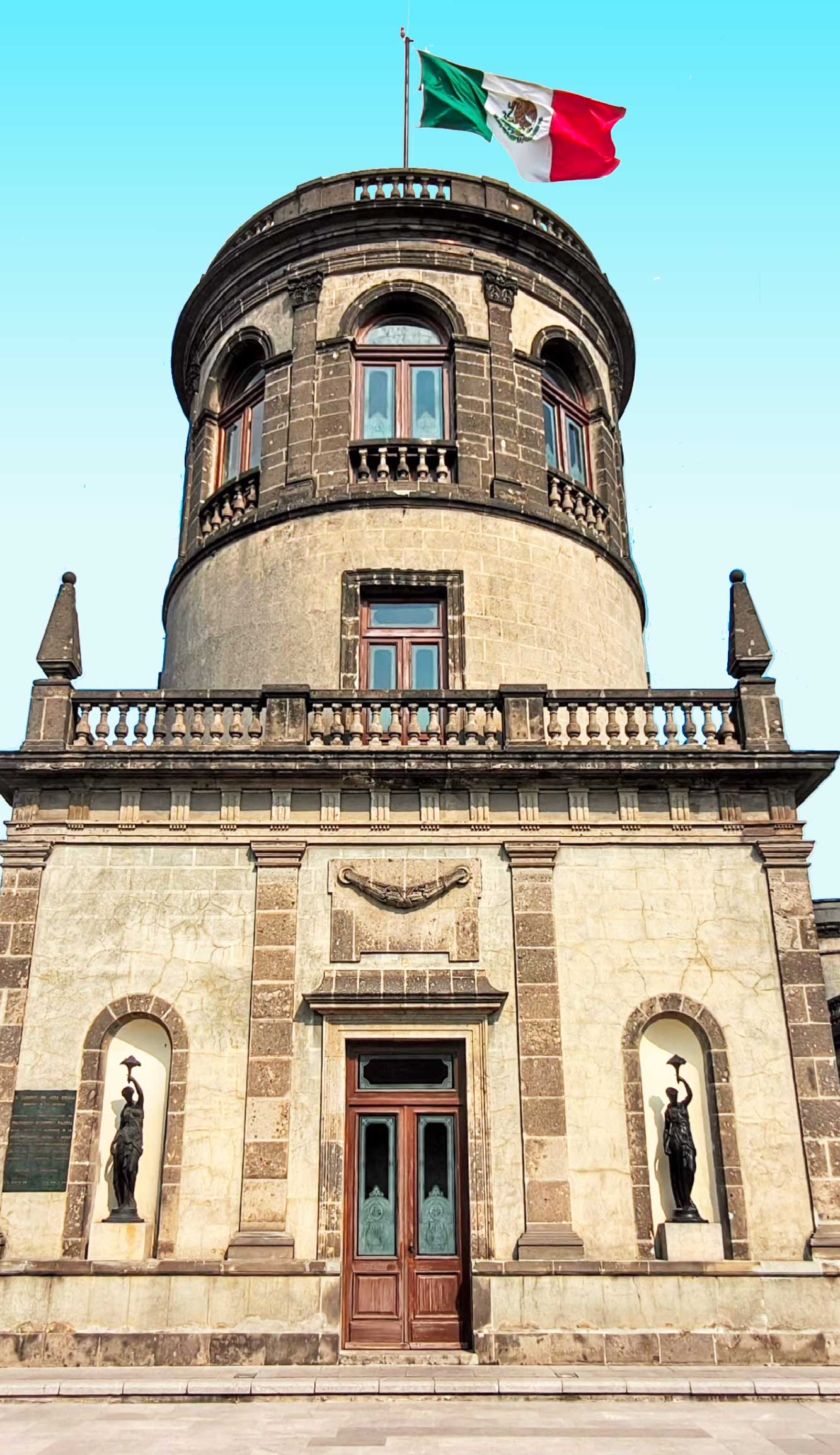
““The Caballero Alto watchtower and observatory in the garden of the Alcázar, Chapultepec Castle
““ 
““
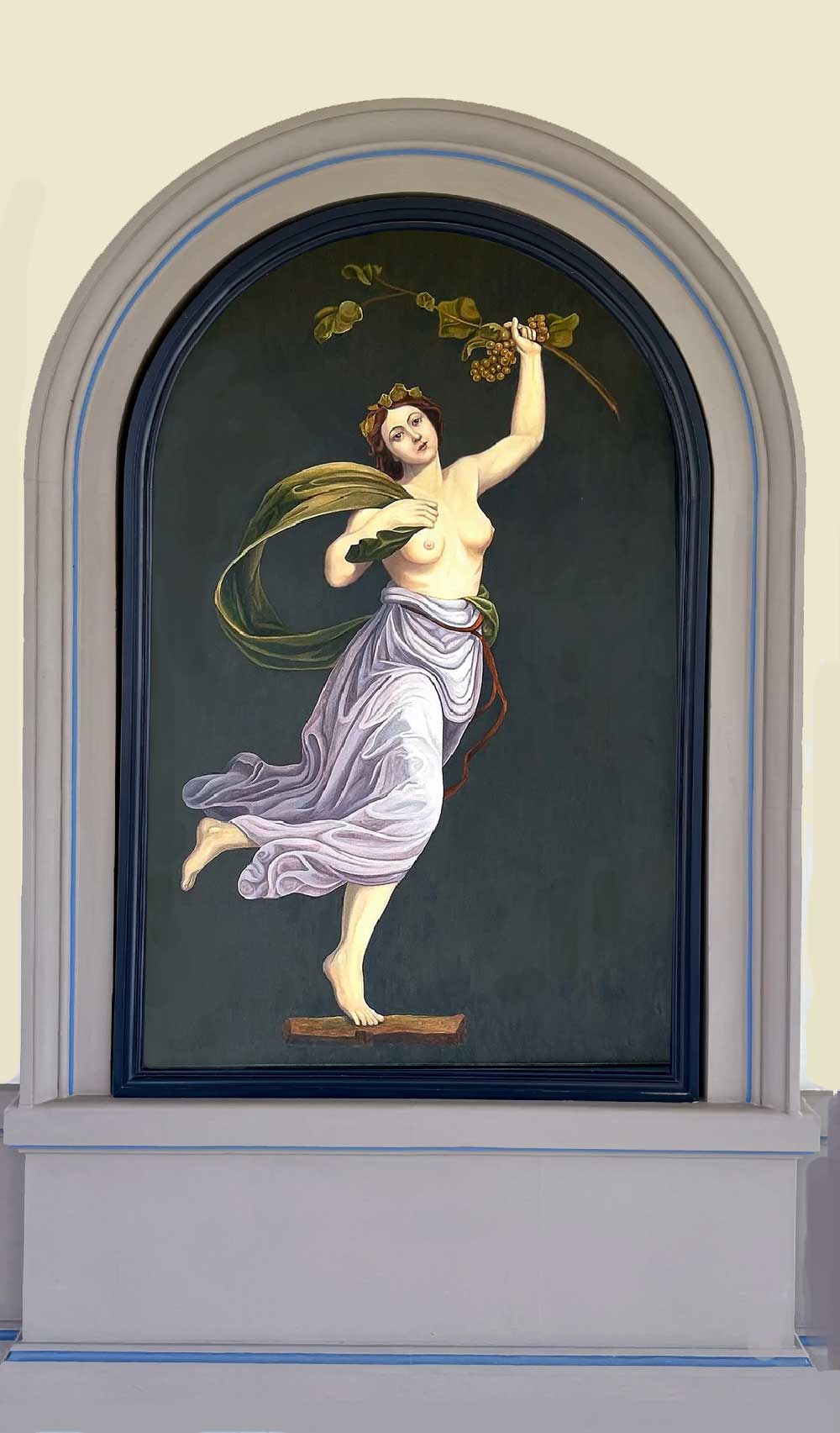
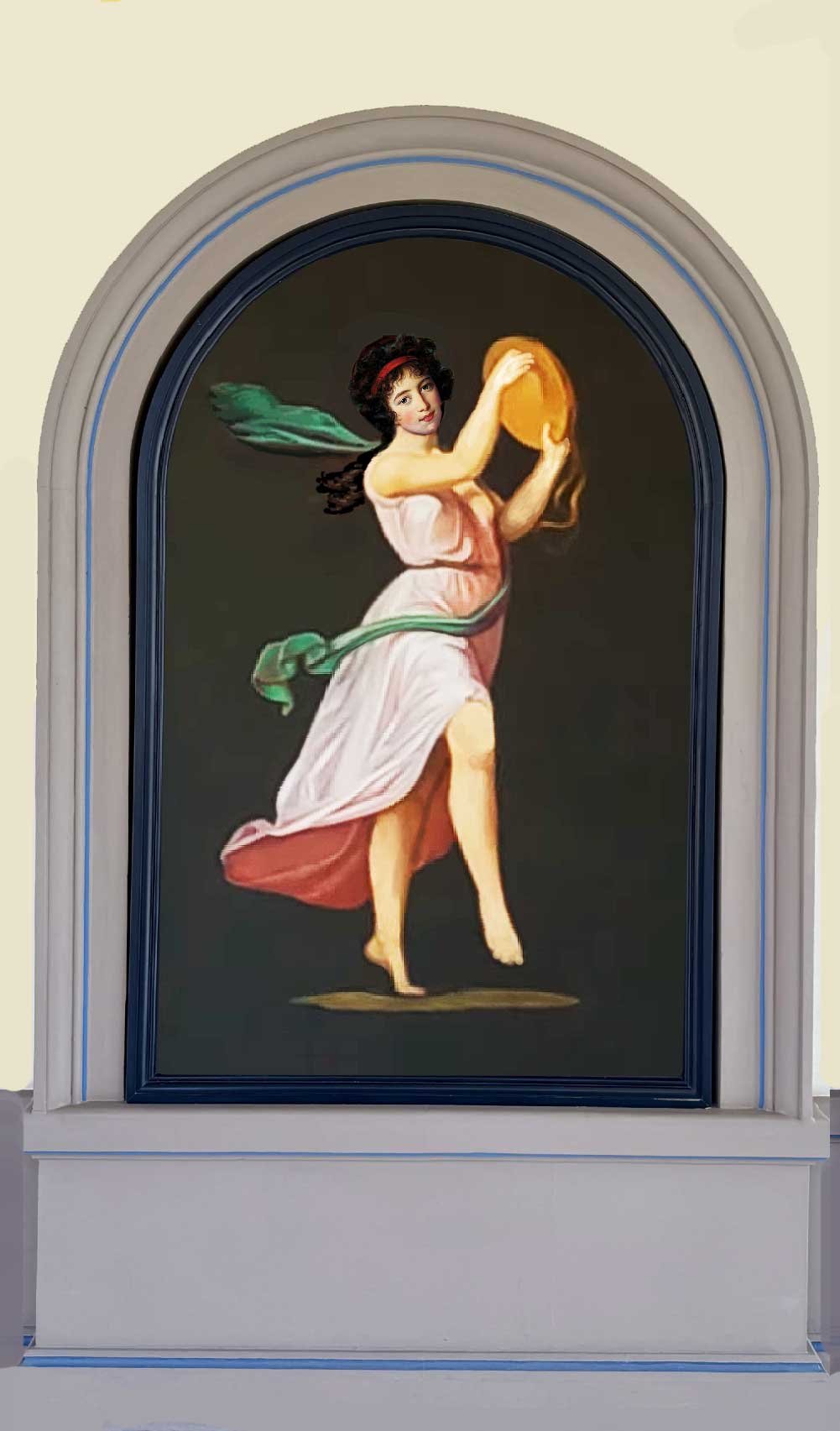
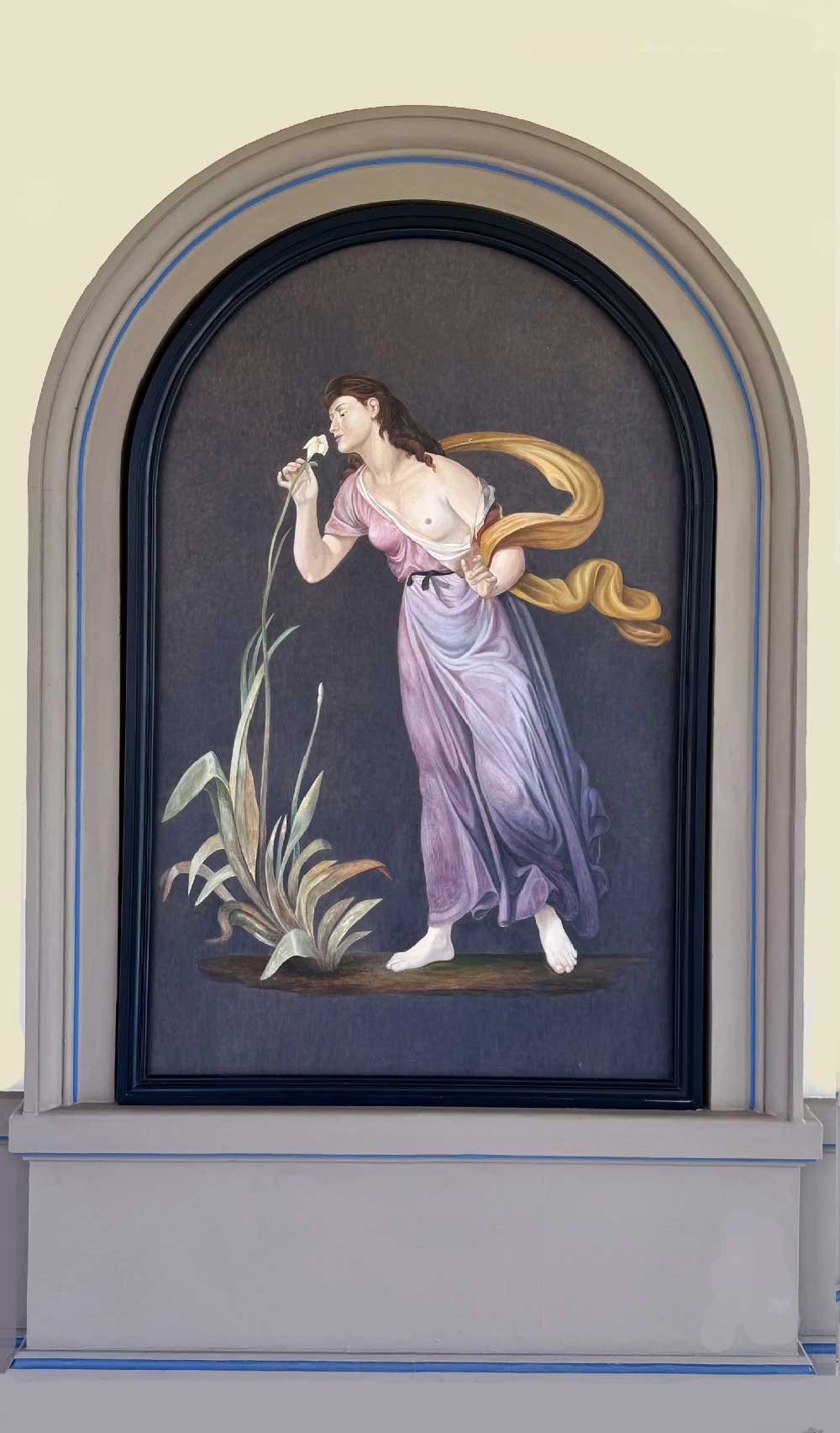
““The bacchae depicted on the walls of the upper terrace were painted by Santiago Rebull in the Neoclassical style, inspired by the 18th century rediscovery of the ancient ruins at Pompeii and Herculaneum.
““ 
““
““Side entrance to Chapultepec Castle
““ 
““
Frida Kahlo MuseumThe Frida Kahlo and Diego Rivera Museum—better known as La Casa Azul—offers one of the most intimate encounters with the artist’s world. Since opening in 1958, the cobalt‑blue home has preserved Kahlo’s personal belongings: embroidered Tehuana dresses, corsets and medical devices, early paintings, and objects that reflect her deep connection to Mexican, Indigenous, and broader Latin American culture. The museum’s immersive installations trace her journey “from pain to triumph,” at times incorporating large‑scale projections, archival material, and music to evoke the emotional landscape of her life. A major expansion of the collection followed the unsealing of long‑locked rooms in 2004, revealing more than 20,000 documents and 300 personal items—letters, photographs, clothing, and medical records—that offer a more nuanced understanding of her daily routines, relationships, and creative process. A new companion institution, Museo Casa Kahlo (Casa Roja), is slated to open in late 2026, further exploring the artist’s family history and the cultural context that shaped her work.
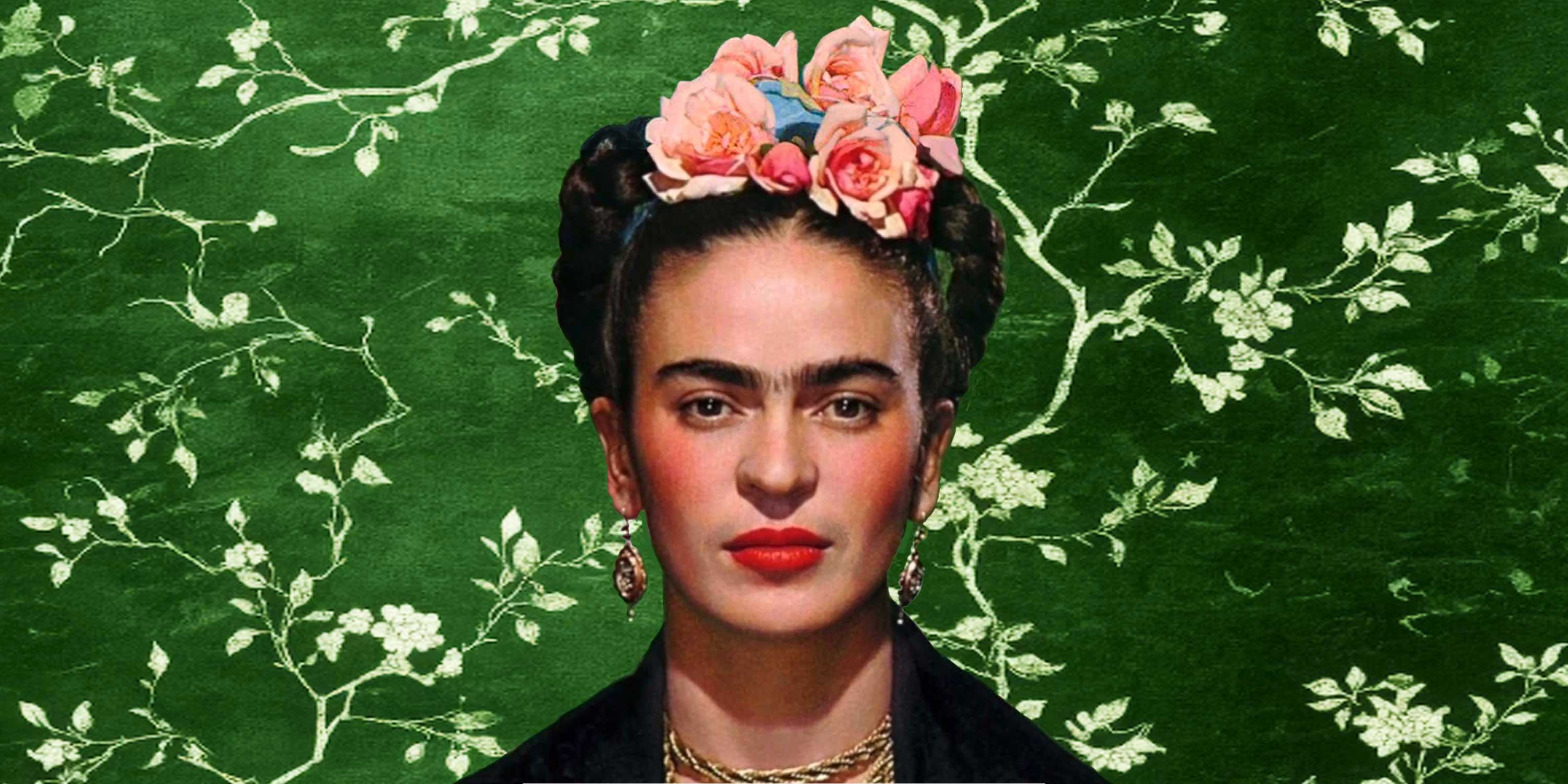
Self portrait of the iconic Mexican painter Frida Kahlo, renowned for her vibrant self-portraits and exploration of identity and heritage, her signature style often included elaborate floral crowns and intricate Mexican attire.
Entrance to the Frida Kahlo Museum, also famously known as La Casa Azul (The Blue House), located in the Coyoacán neighborhood of Mexico City, Coyoacán means "place of the coyotes"
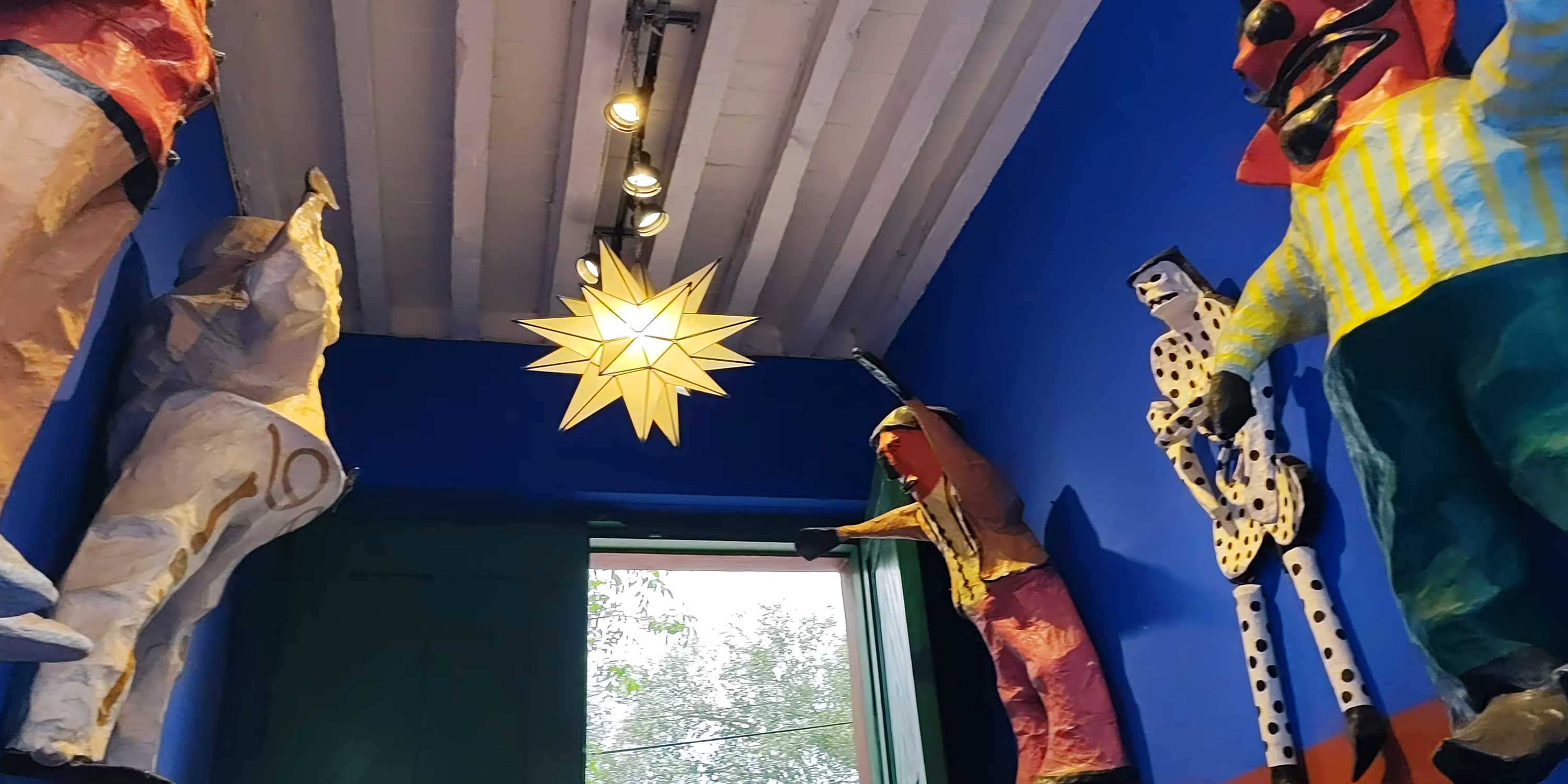
Entrance to the Frida Kahlo Museum, being greeted by colorful puppets hanging from the ceiling.
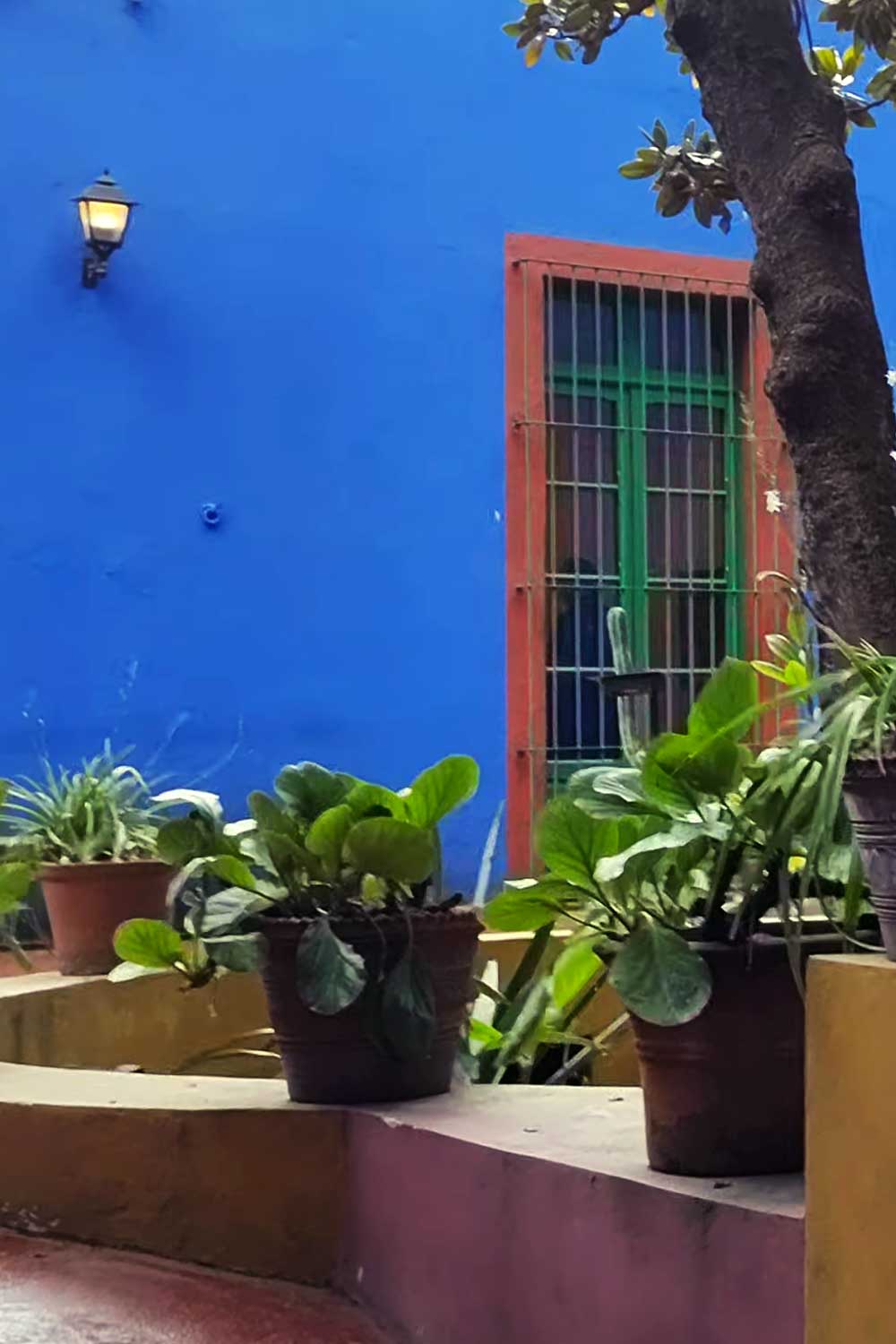
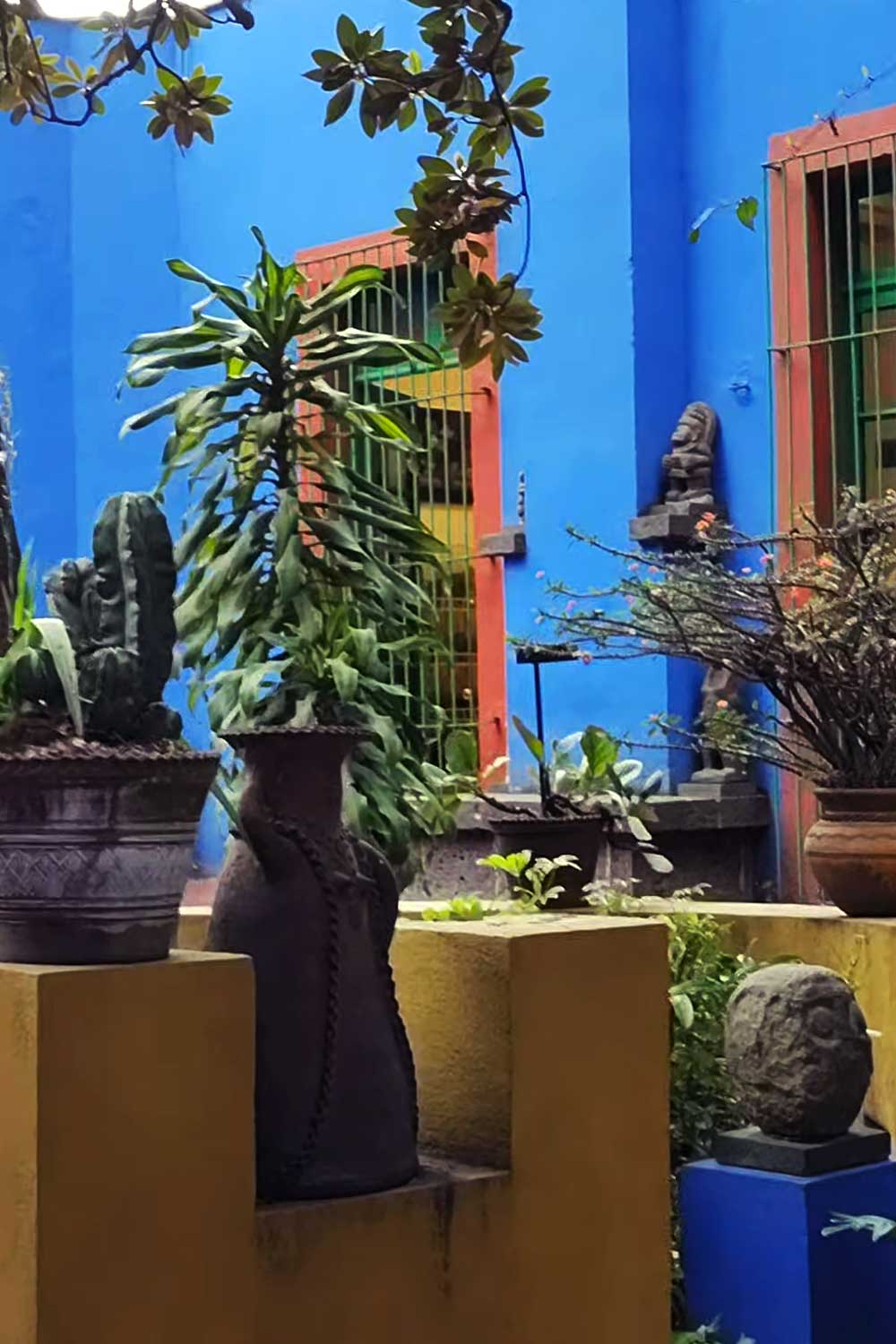
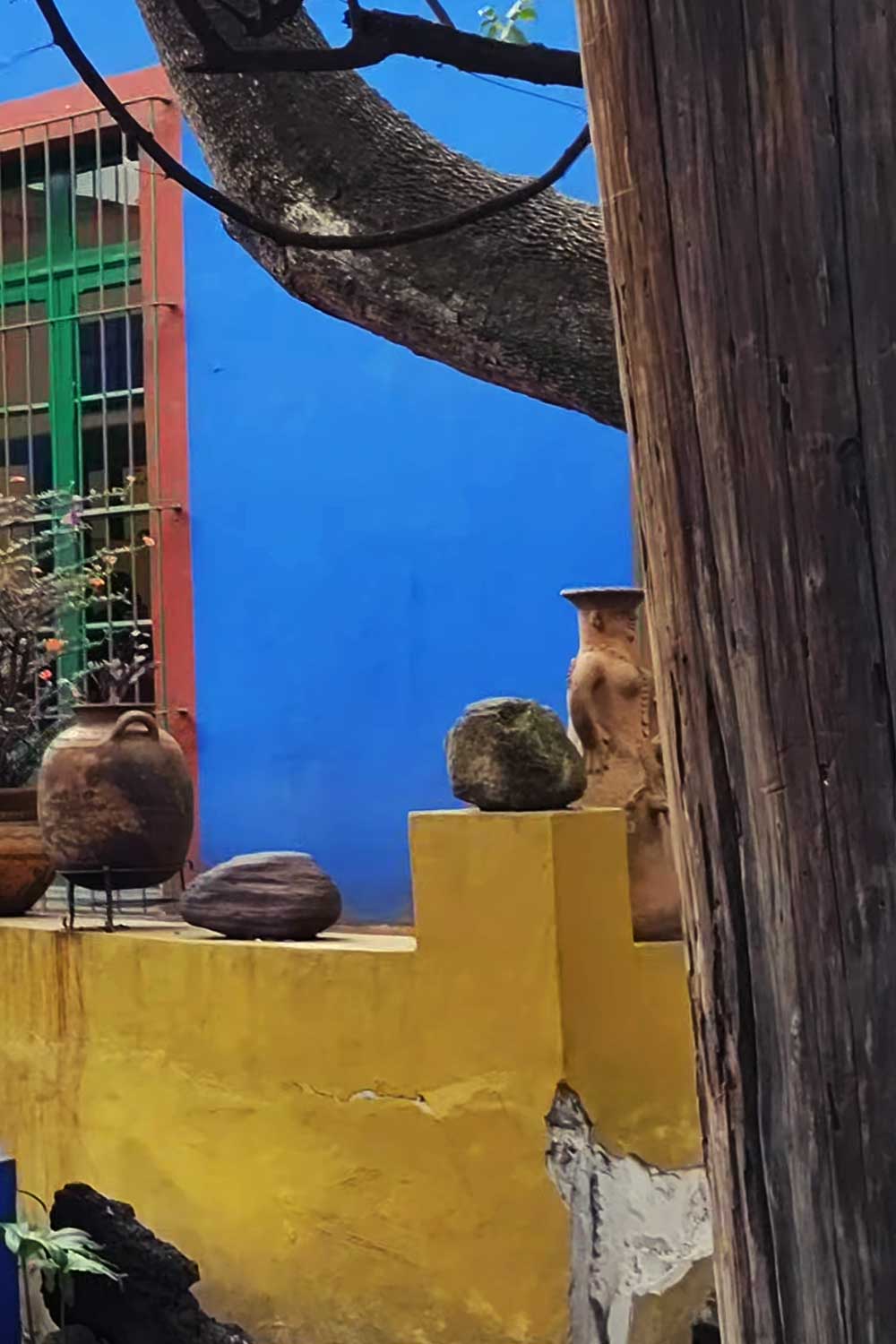
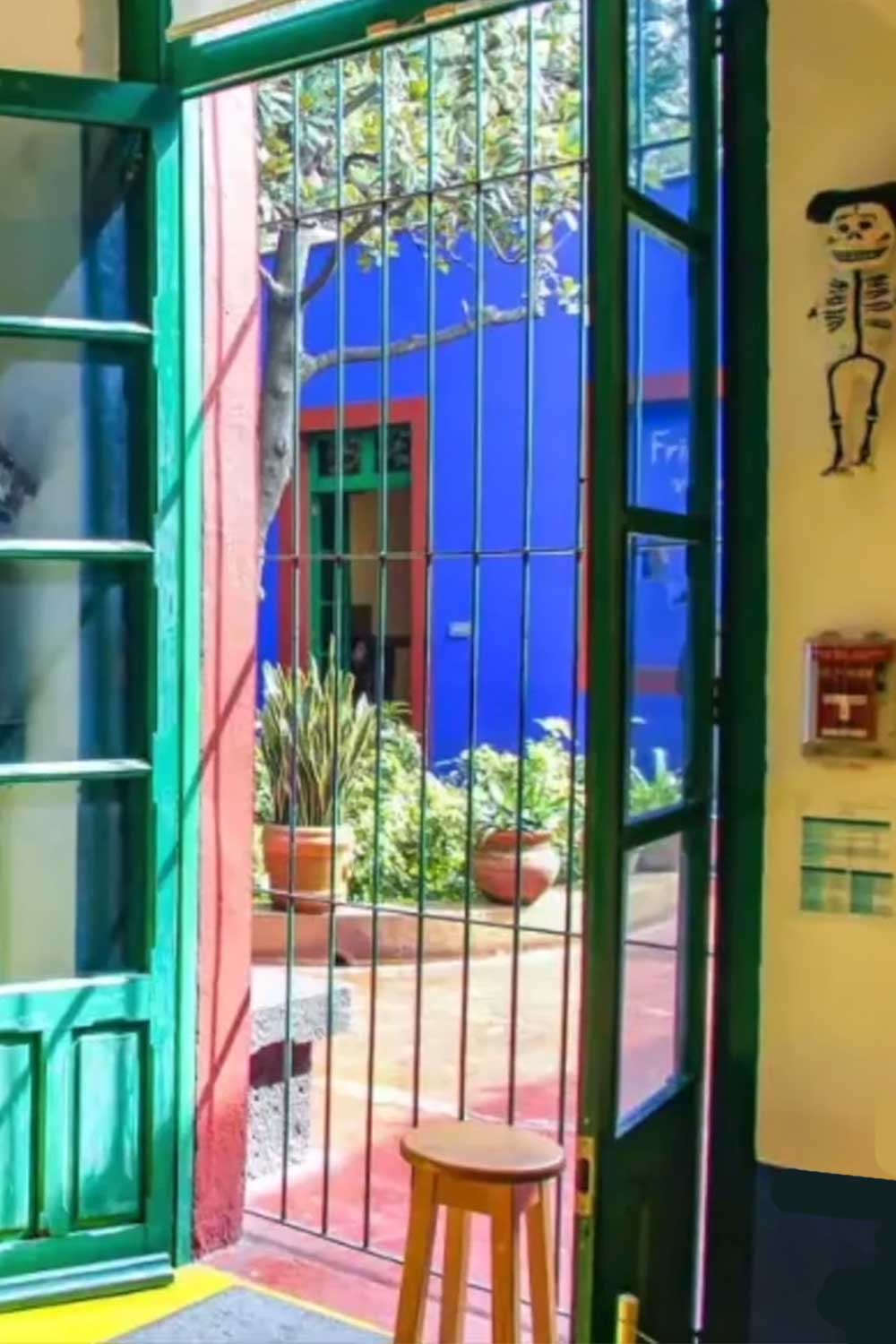
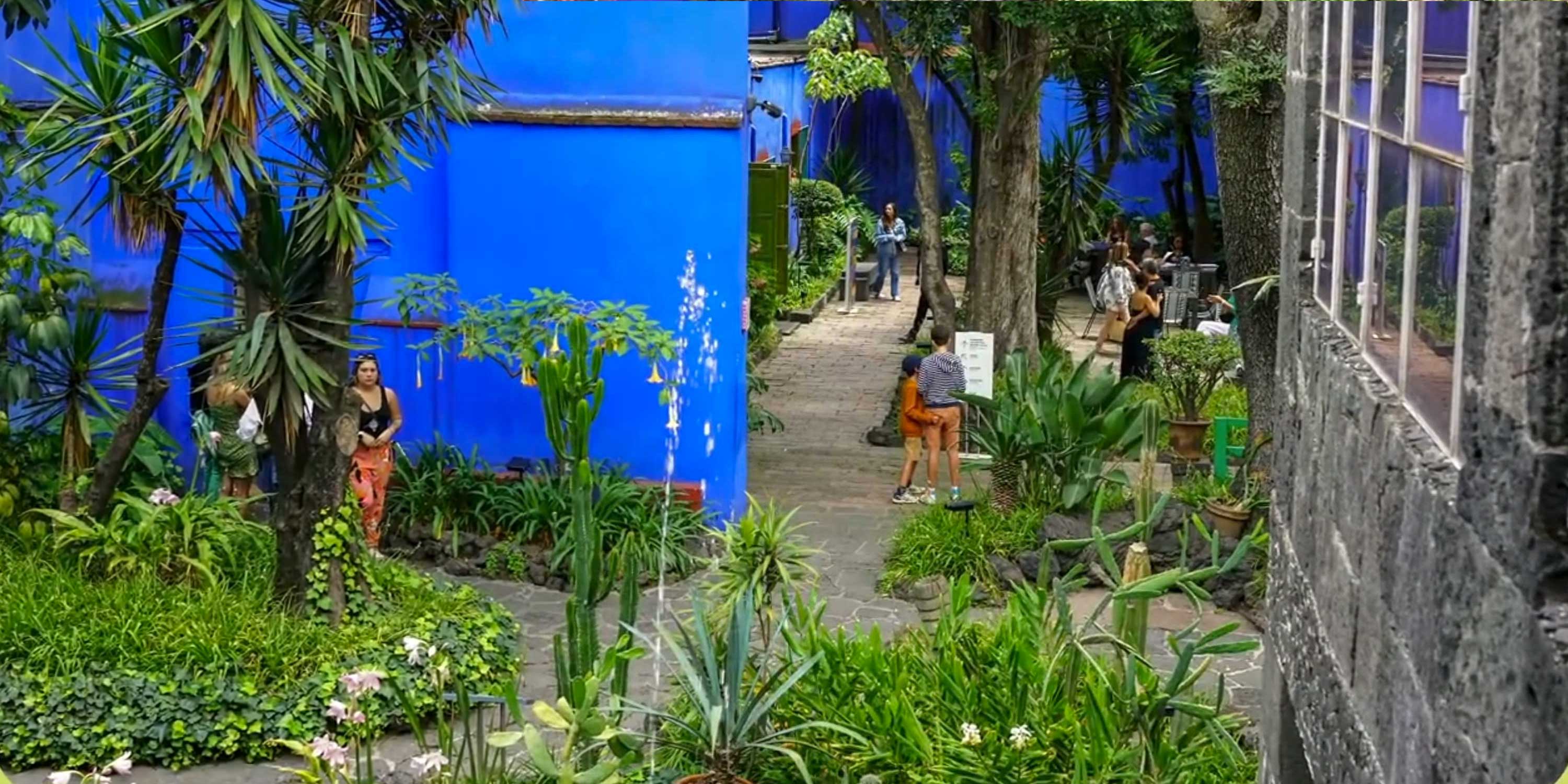
““1.) The vibrant courtyard garden of La Casa Azul (The Blue House)
““2.)
““3.)
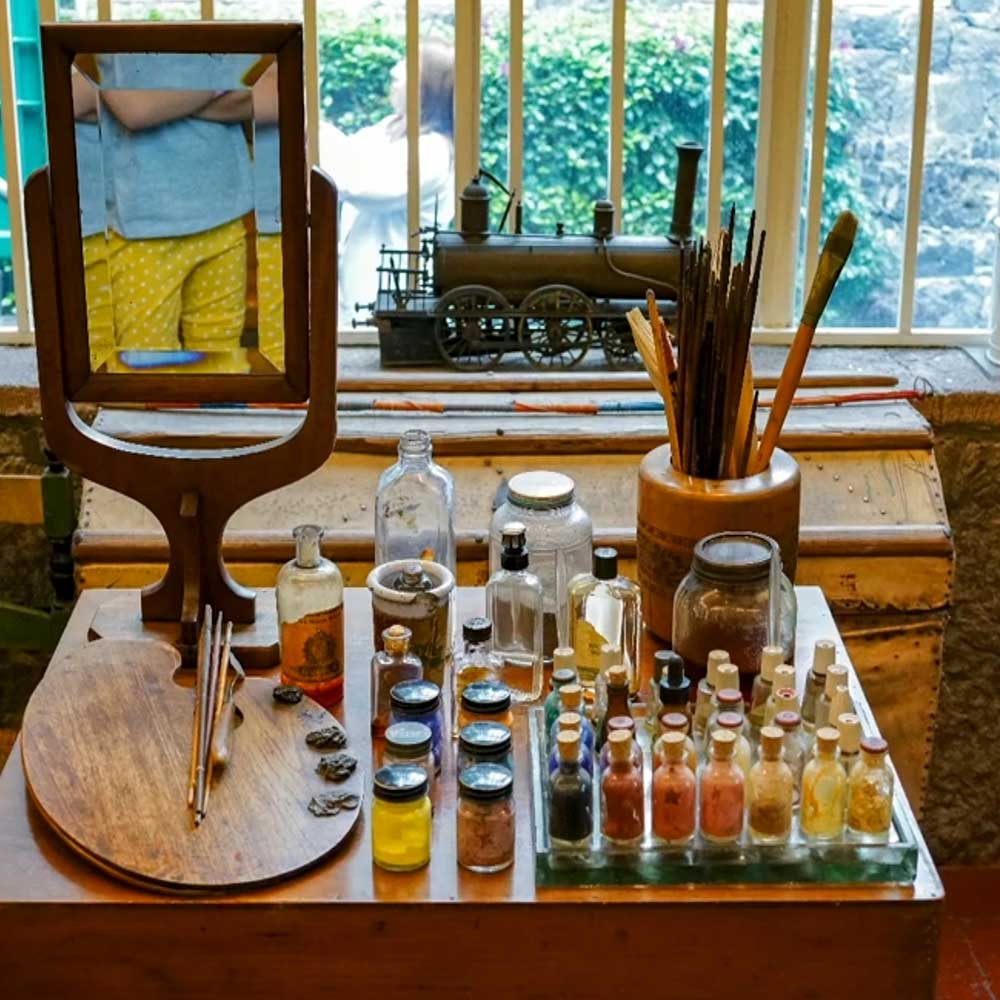
““ Image depicts a moment in time capturing the preserved workspace of iconic Mexican artist Frida Kahlo.
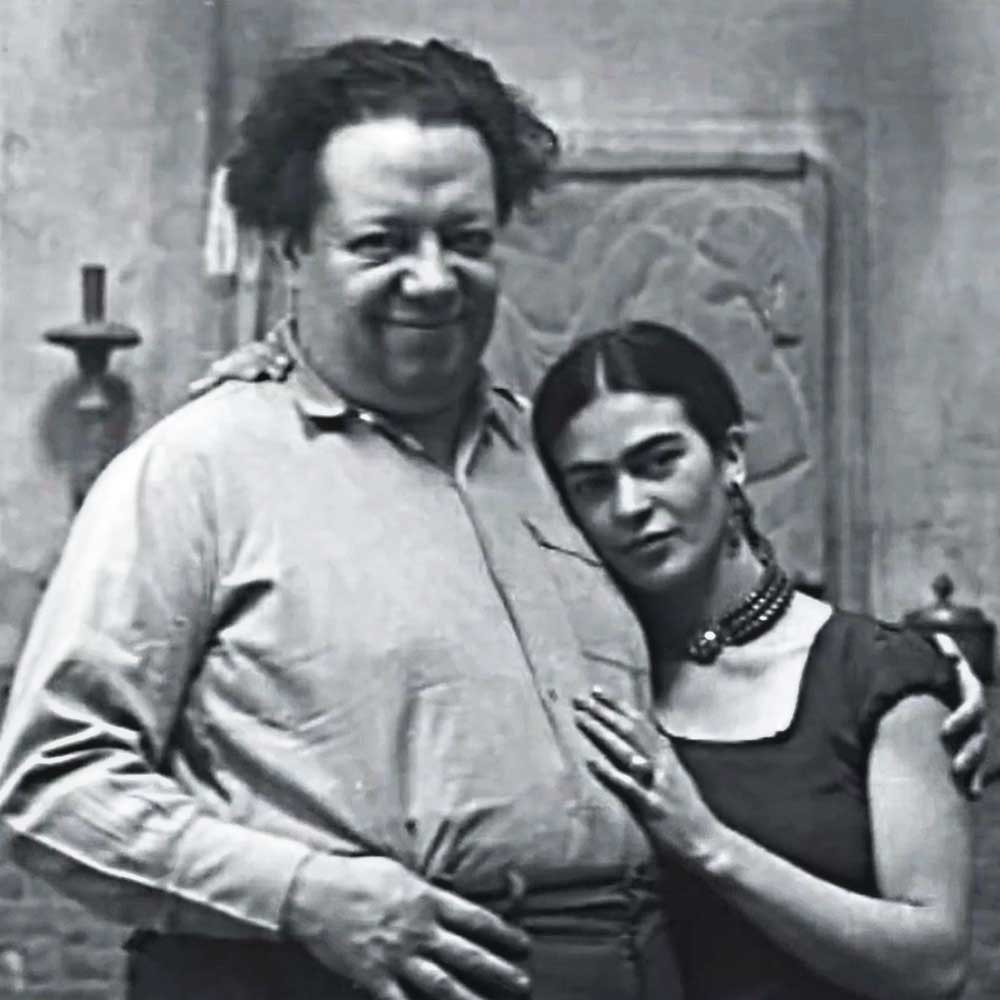
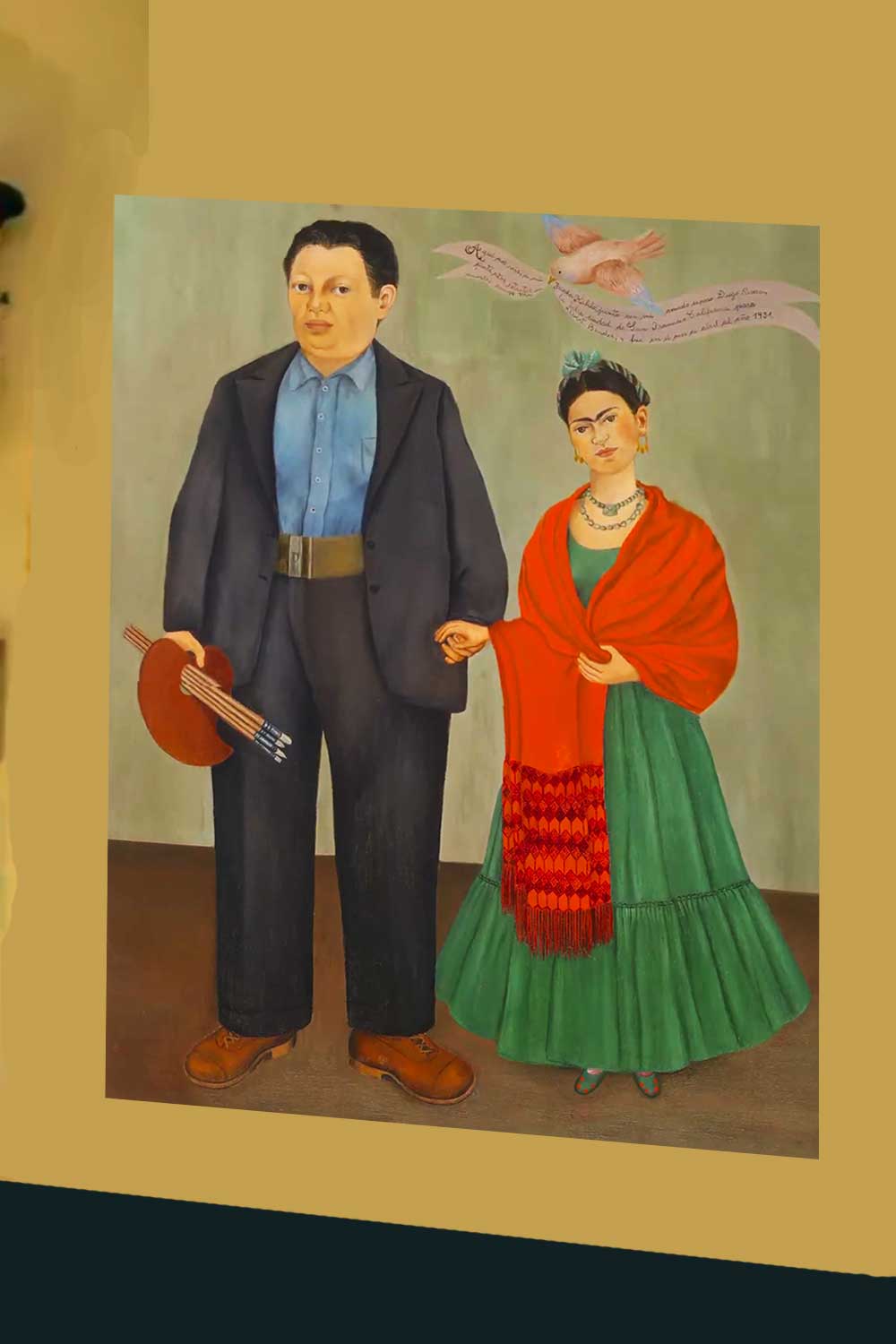
““ This Photograph captures the iconic Mexican artistic couple Frida Kahlo and Diego Rivera together in San Francisco, 1930
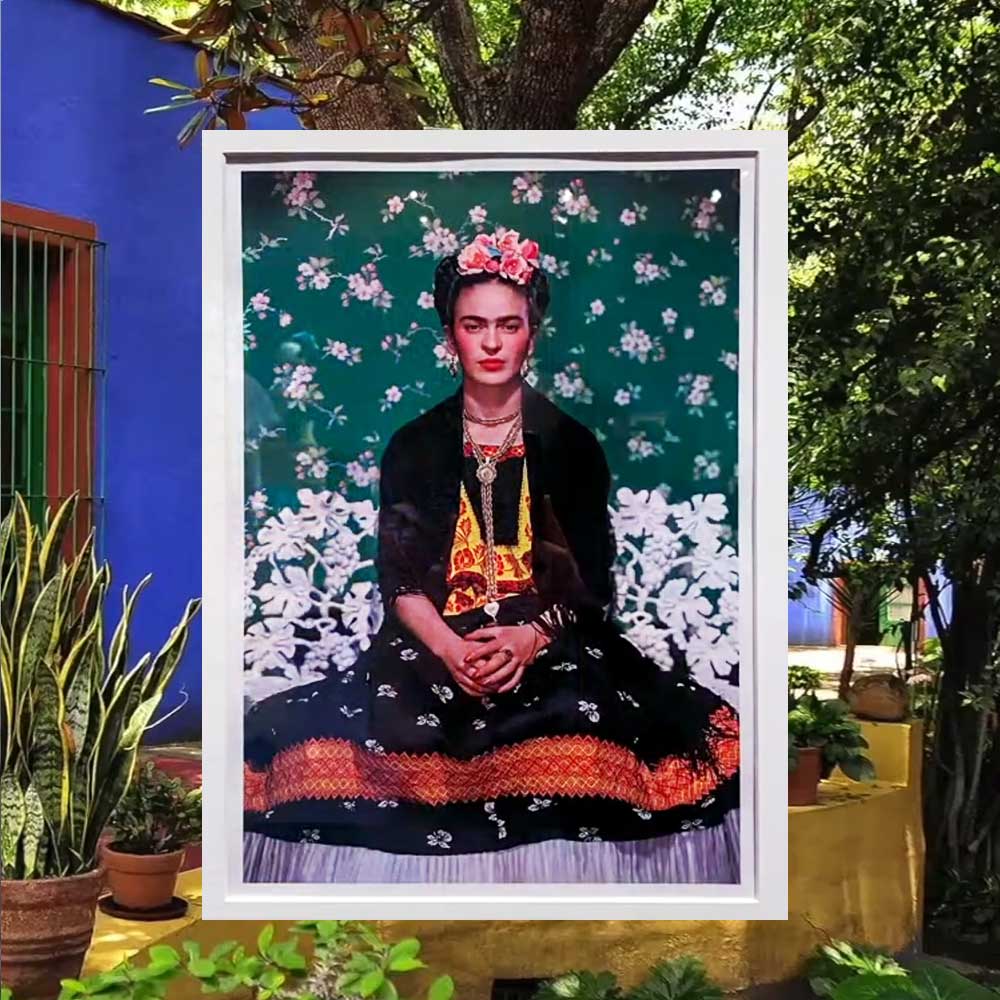
““ The image is based on a famous 1939 photograph titled "Frida on Bench, New York City" taken by her friend and lover, Hungarian-born photographer Nickolas Muray.
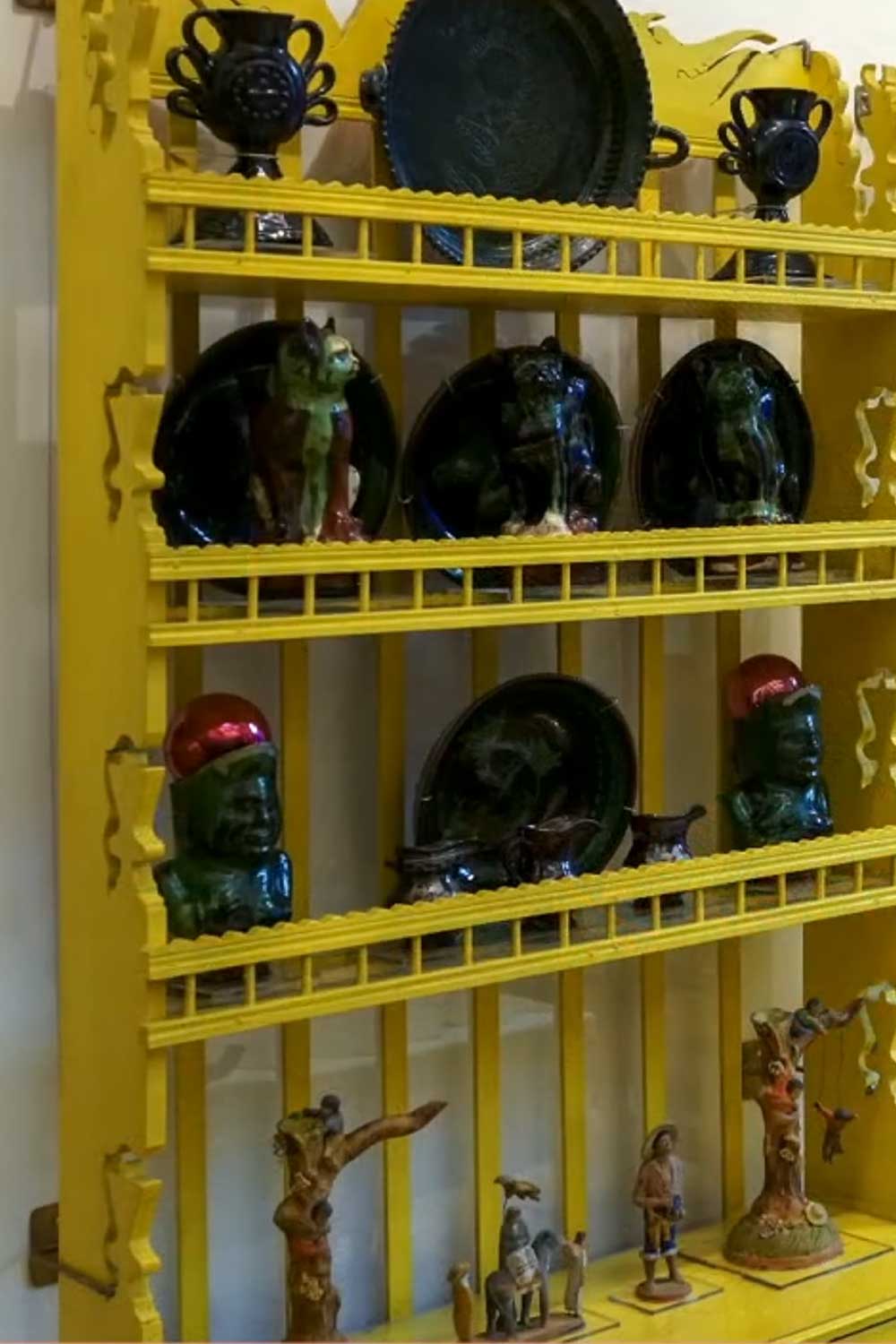
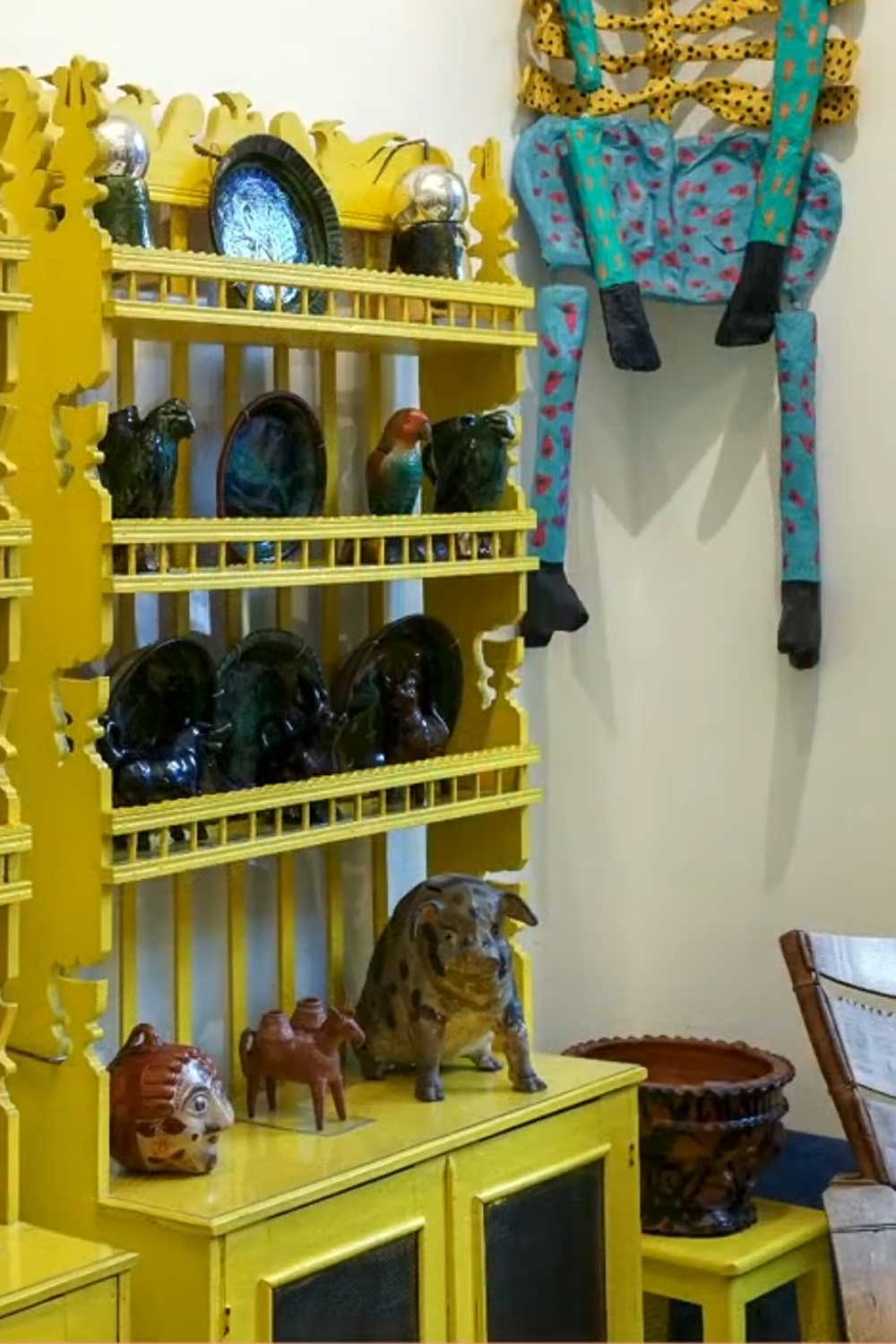
““ This vintage yellow wooden shelving unit, hold traditional pottery and figures that reflect the Mexican identity
““and culture celebrated by Frida Kahlo and Diego Rivera.
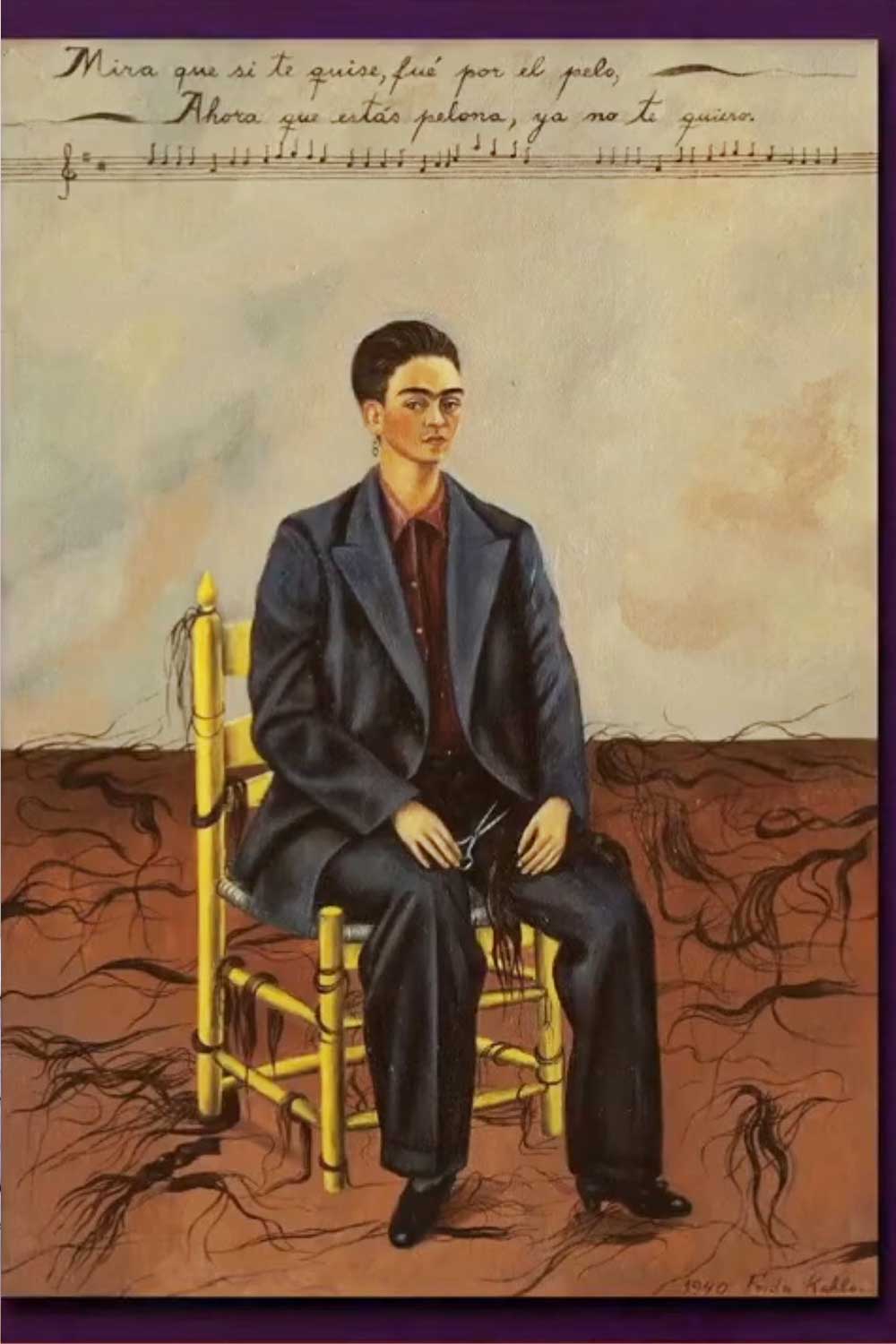
““A painting titled Self-Portrait with Cropped Hair (1940) by Mexican artist Frida Kahlo, following her divorce from Diego Rivera.
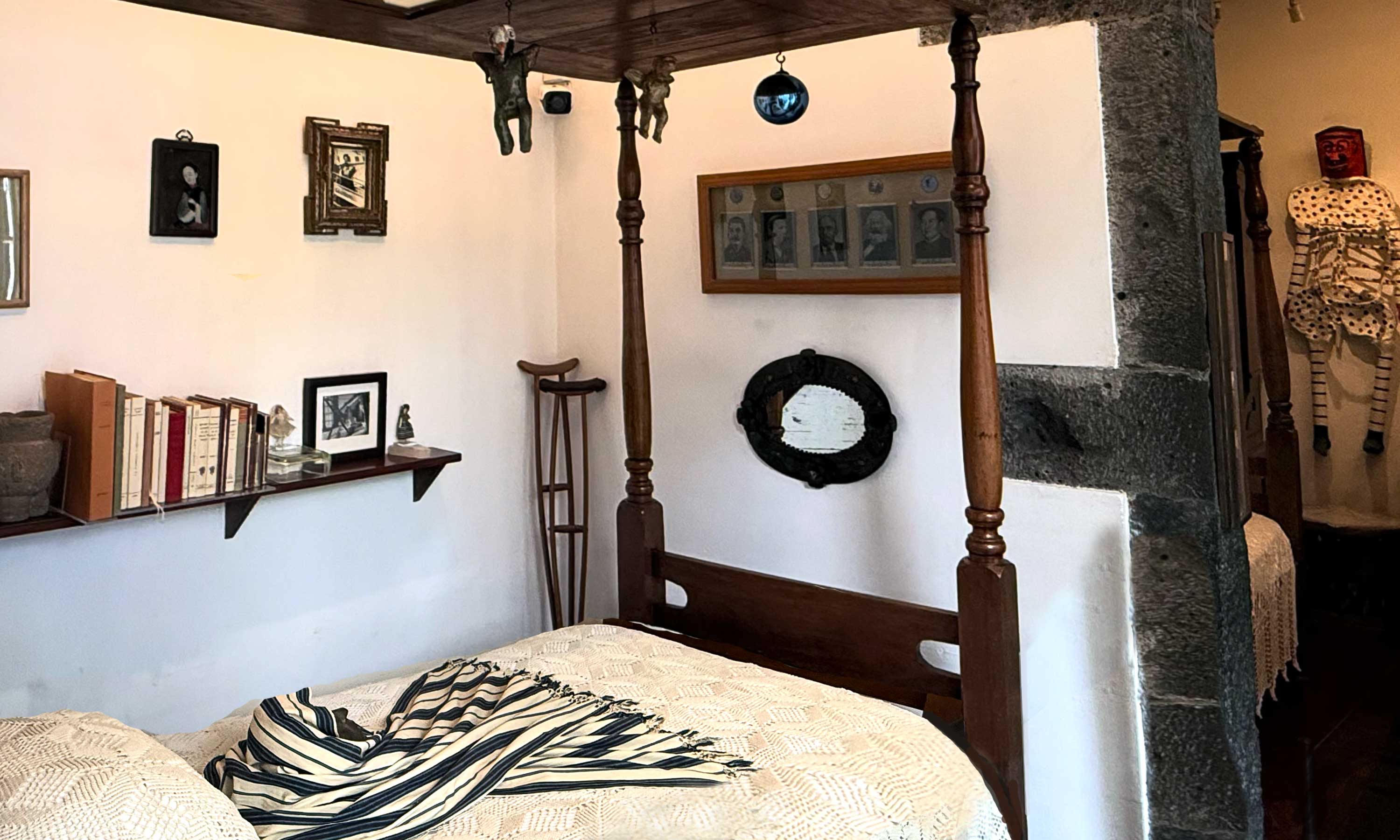
The prominent wooden four-poster bed is where Kahlo painted many of her self-portraits while recovering from a serious accident.
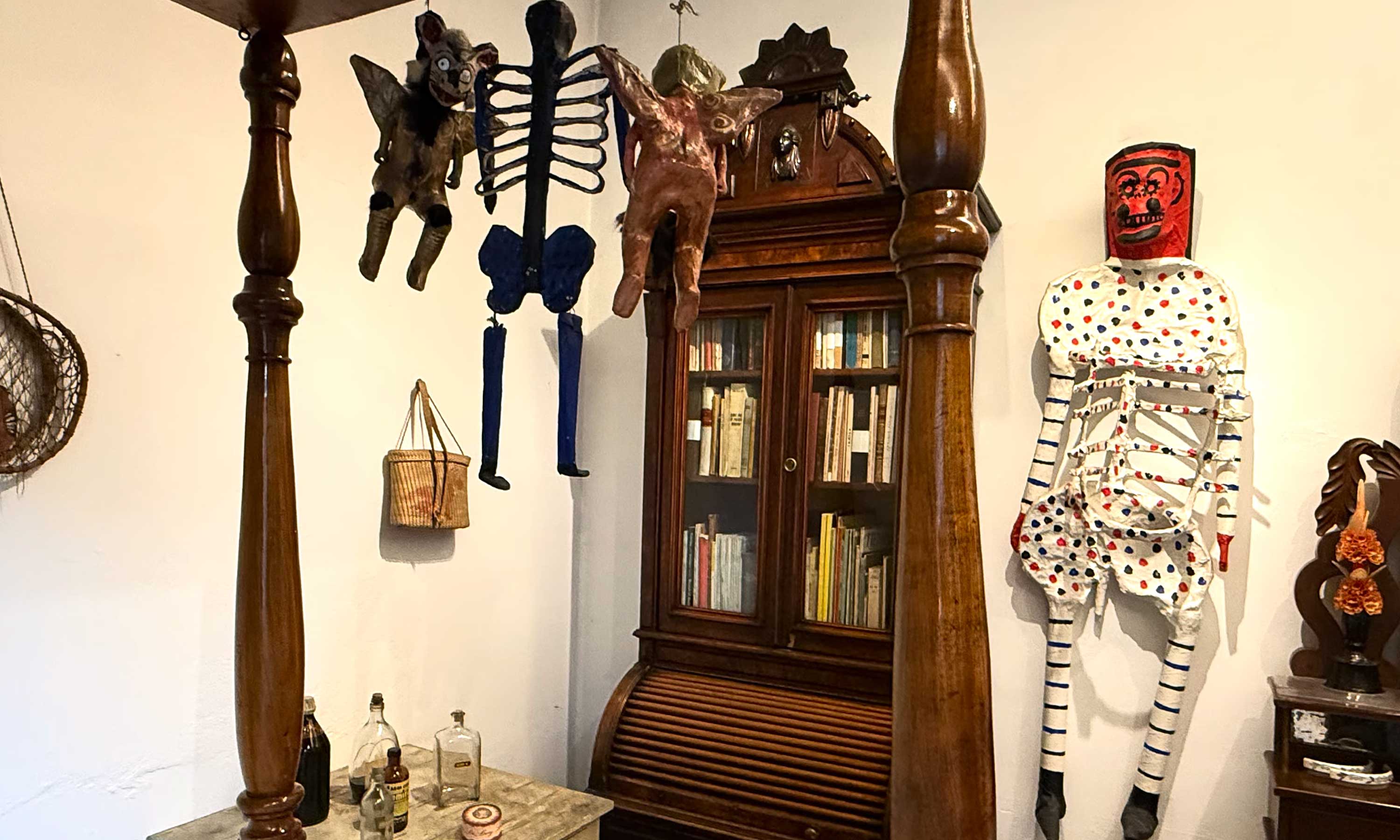
A moment in the bedroom of Frida Kahlo's Blue House, numerous personal items, including folk art skeletons (calacas) suspended from the ceiling and a traditional Mexican bookshelf.
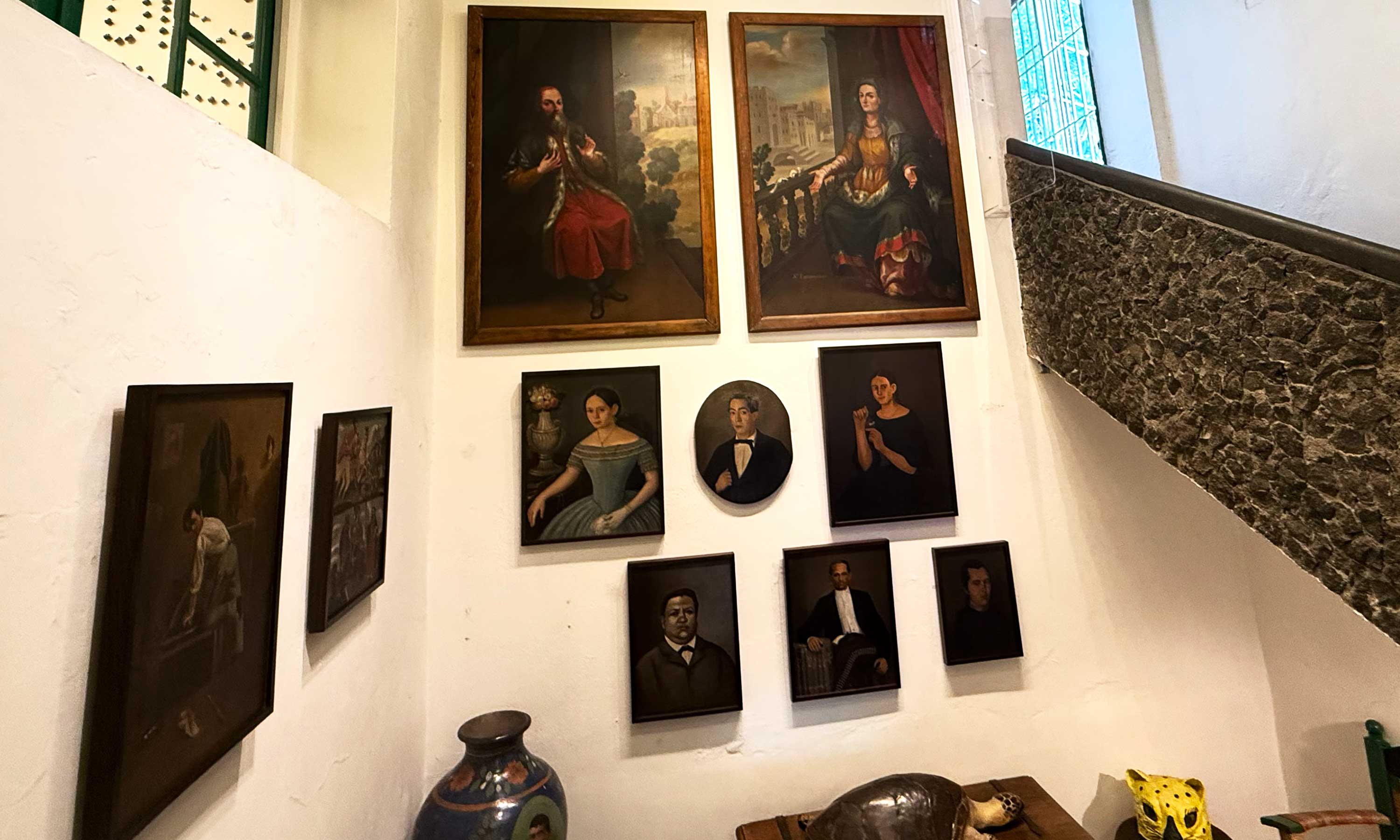
Image shows a staircase inside the Frida Kahlo Museum, the paintings on the wall include family portraits and works by the artists themselves.
““he interior of La Casa Azul (The Blue House) in Mexico City,
““ a museum dedicated to the life and work of Kahlo and her husband, muralist Diego Rivera.
““ It features their personal collection of Mexican folk art, pre-Hispanic artifacts, and photographs.
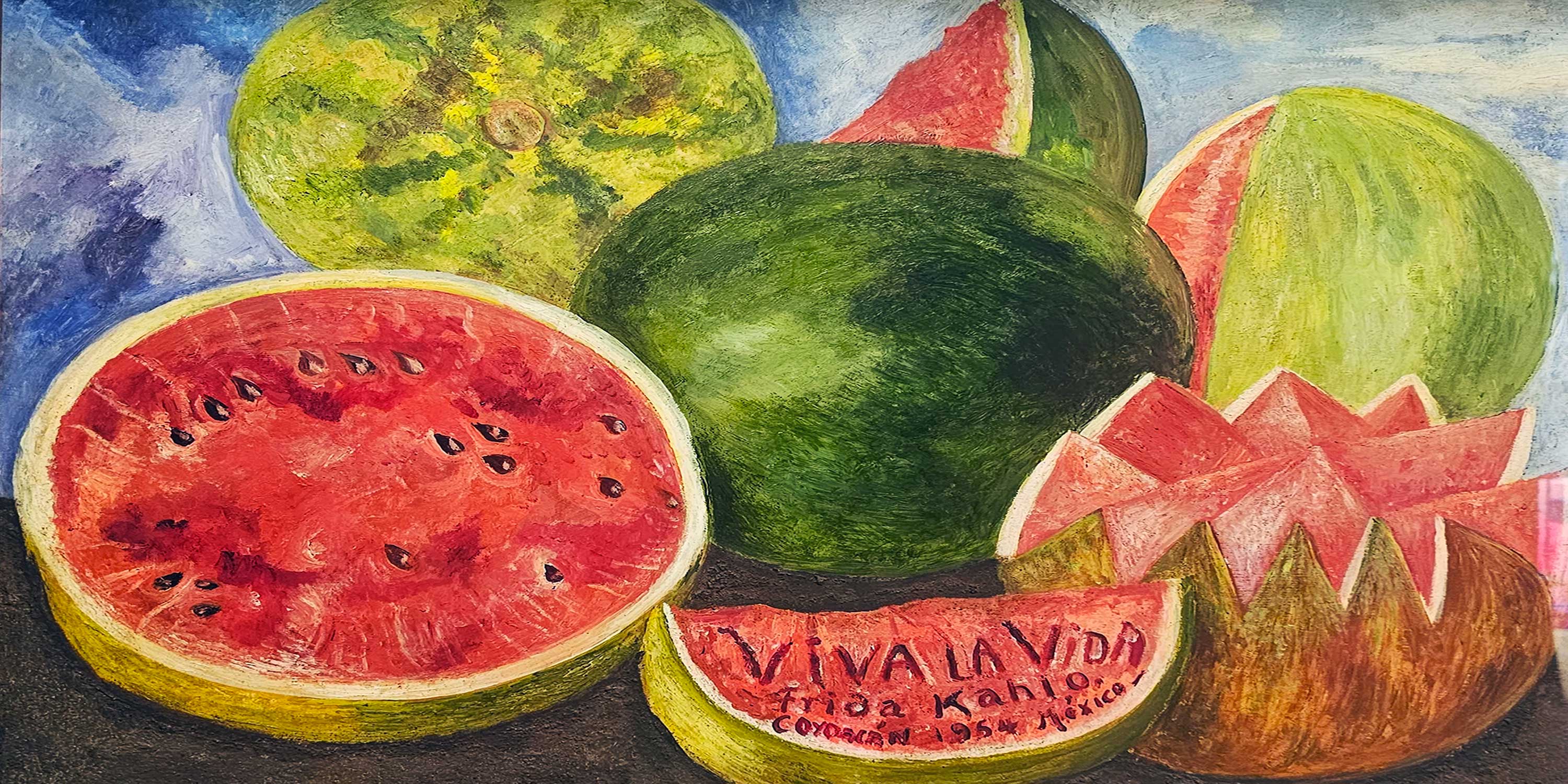
This artwork is "Viva la Vida, Watermelons" (1954), which is widely known as the final painting created by Mexican artist Frida Kahlo.
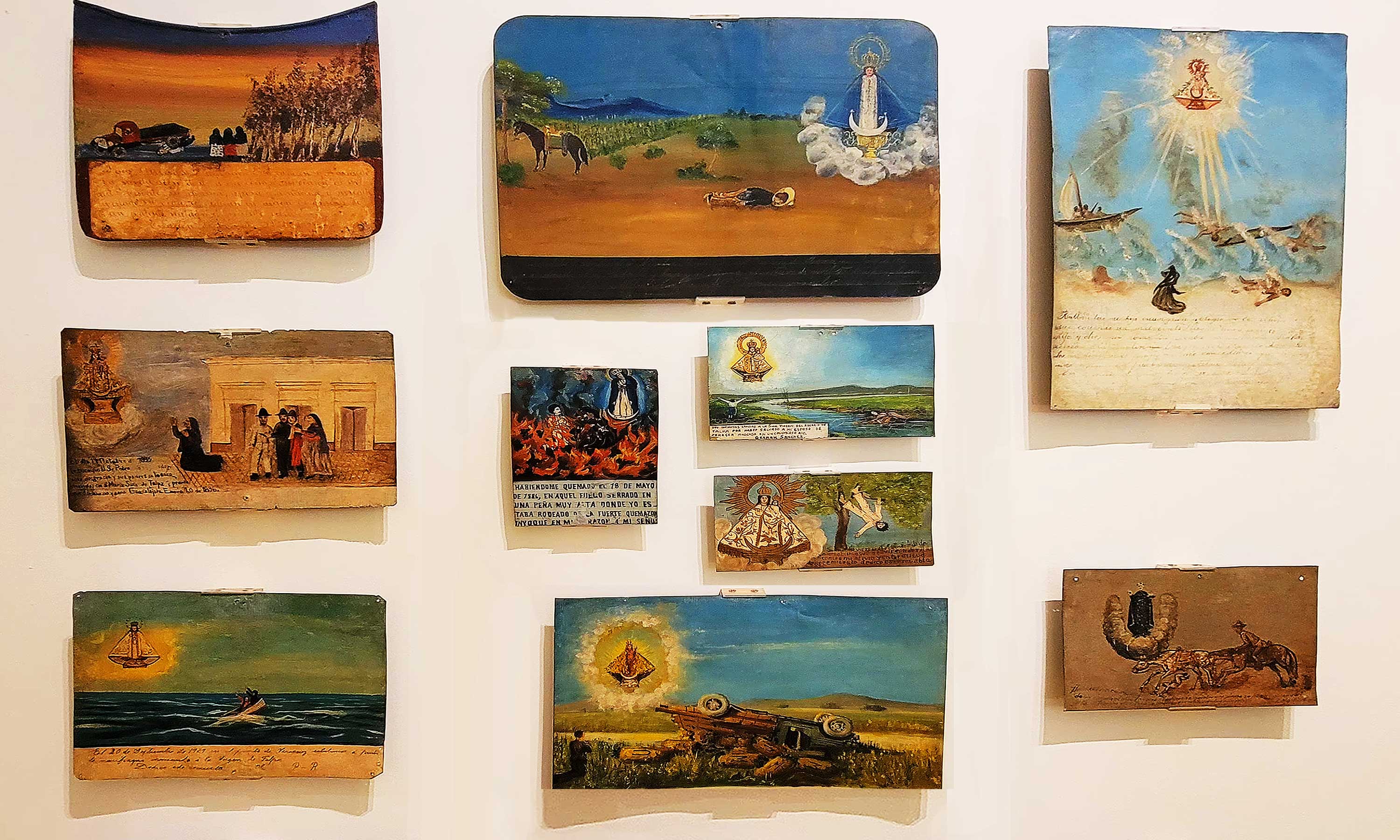
A collection of traditional Mexican retablos or ex-votos, which are small devotional paintings on metal sheets that were collected by Frida Kahlo.
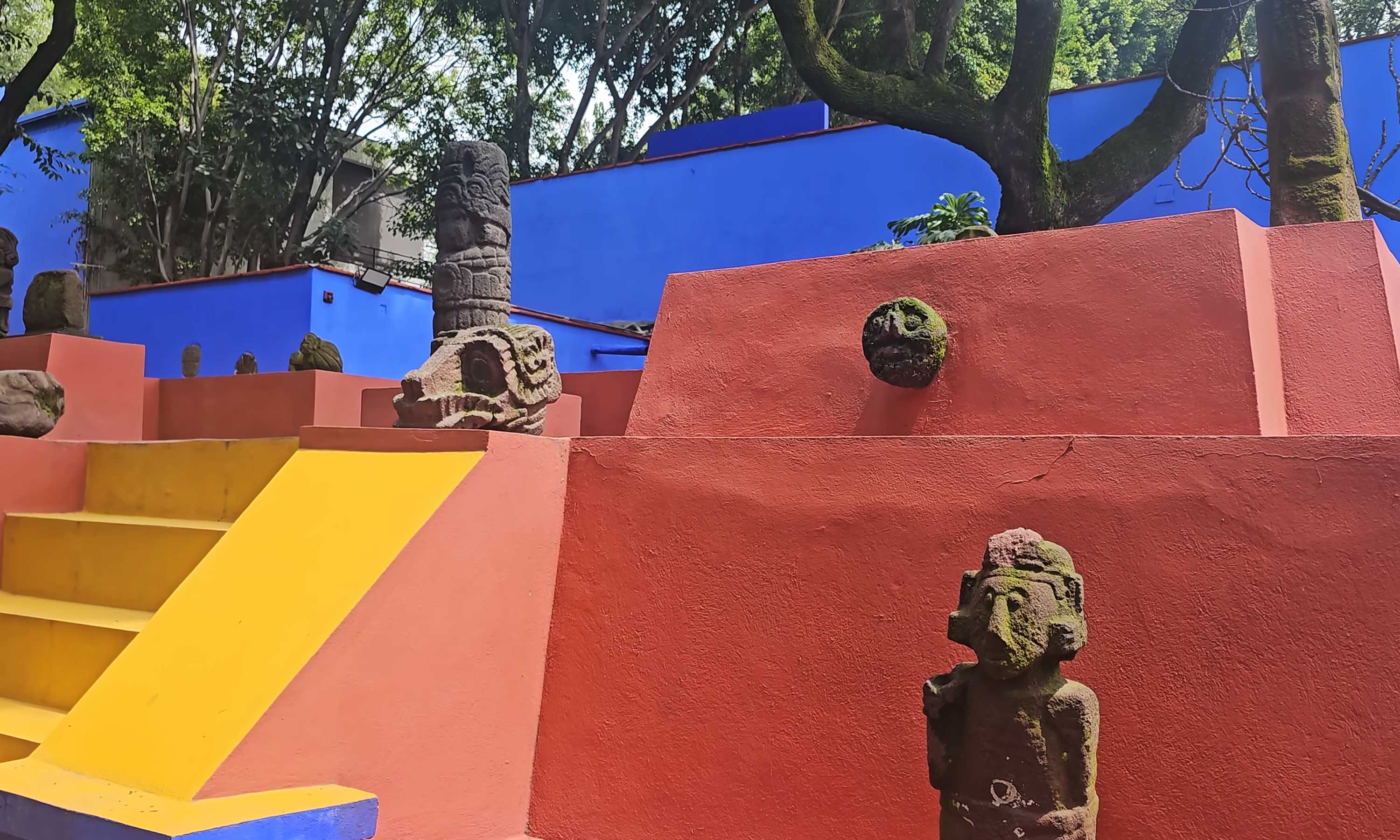
A scene from the garden of the Frida Kahlo Museum famous for its bright cobalt-blue walls, which define the exterior of the courtyard.
The vibrant museum courtyard features cobalt-blue walls and red-painted, pre-Hispanic style pyramid structures designed by her husband, artist Diego Rivera.
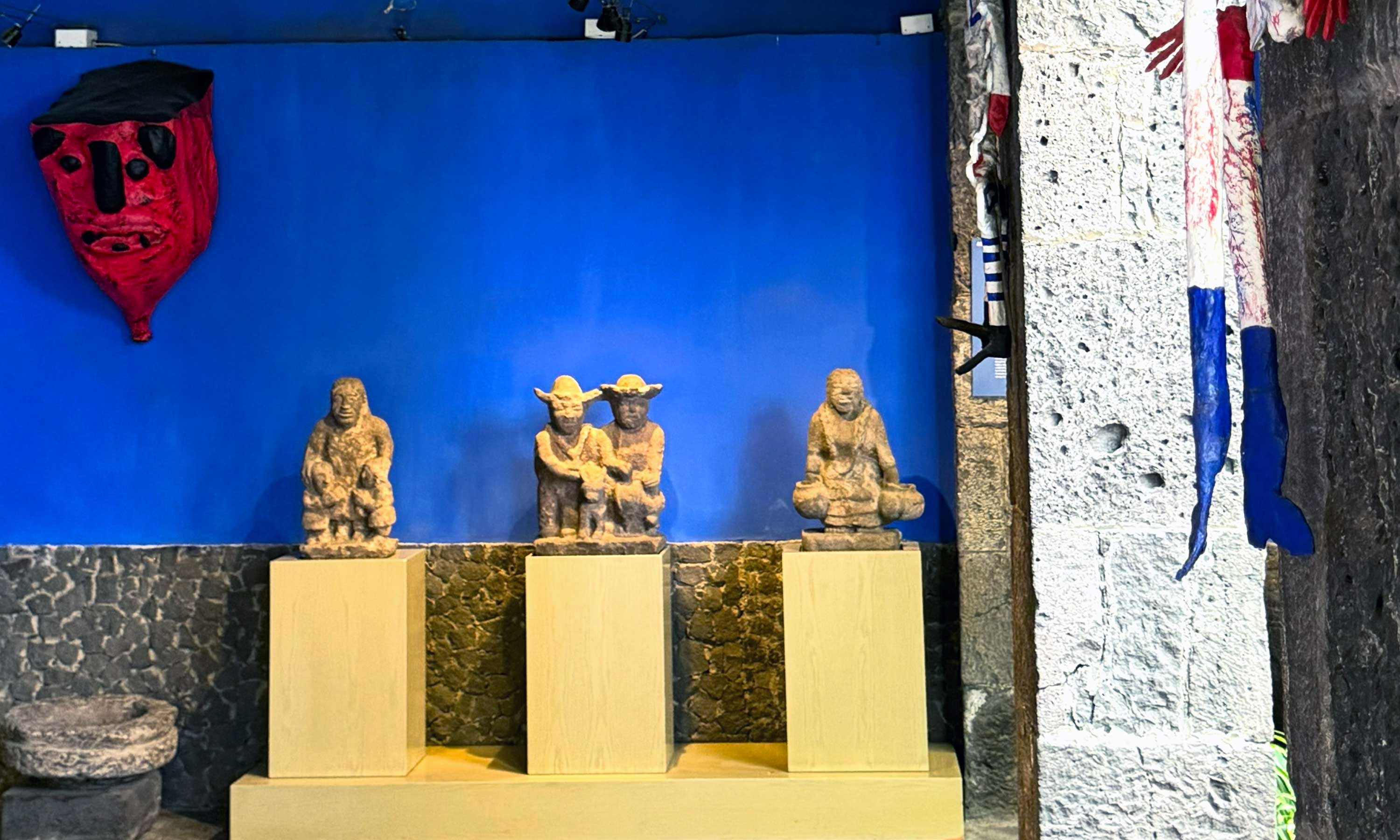
The museum room features a vibrant cobalt-blue wall adorned with a traditional red mask, three pre-Hispanic sculptural figures are arranged on wooden pedestals against the blue wall.
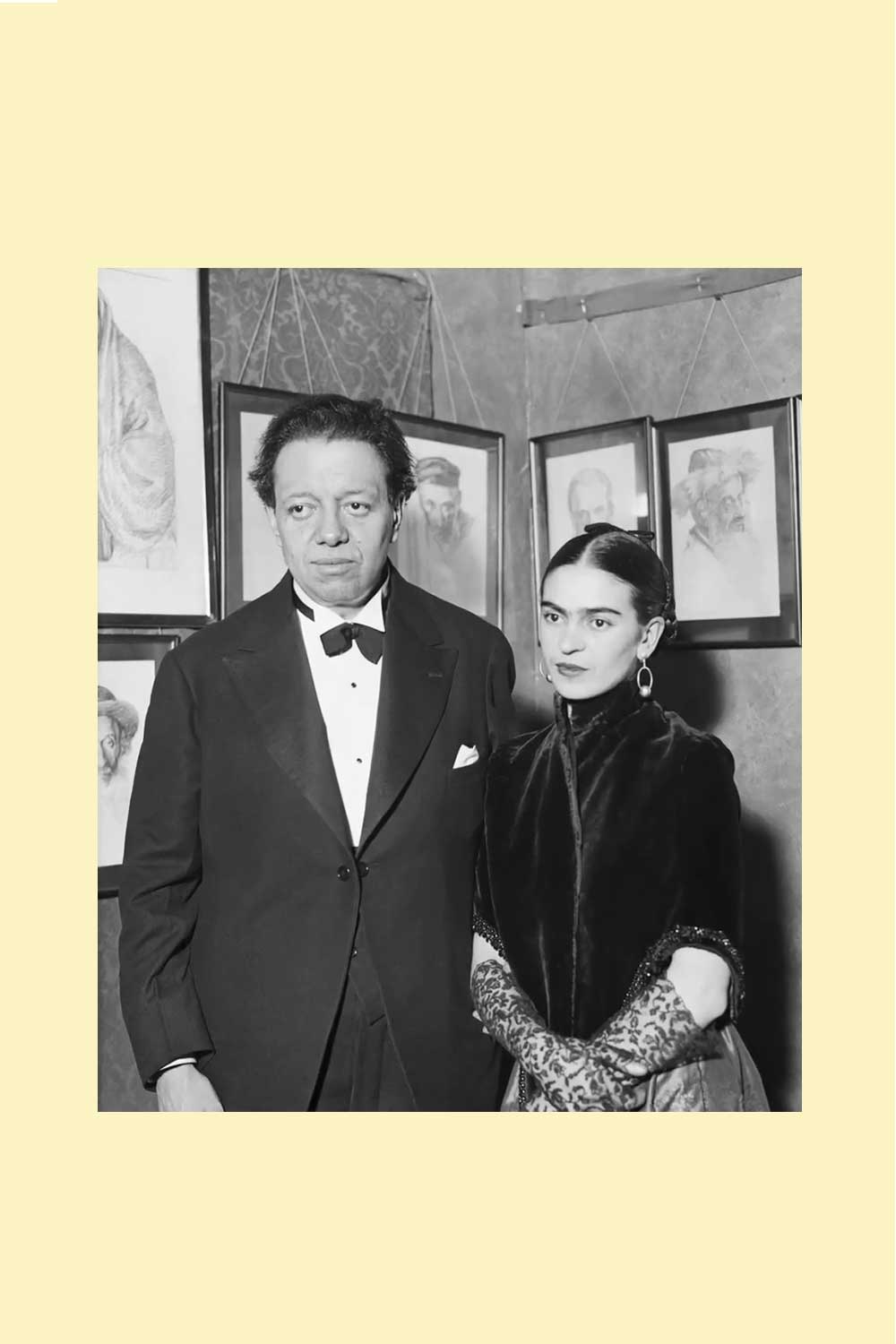
““ The photo captures the couple visiting an art gallery exhibition featuring Jewish portraits by Lionel Reiss in New York City in 1936.
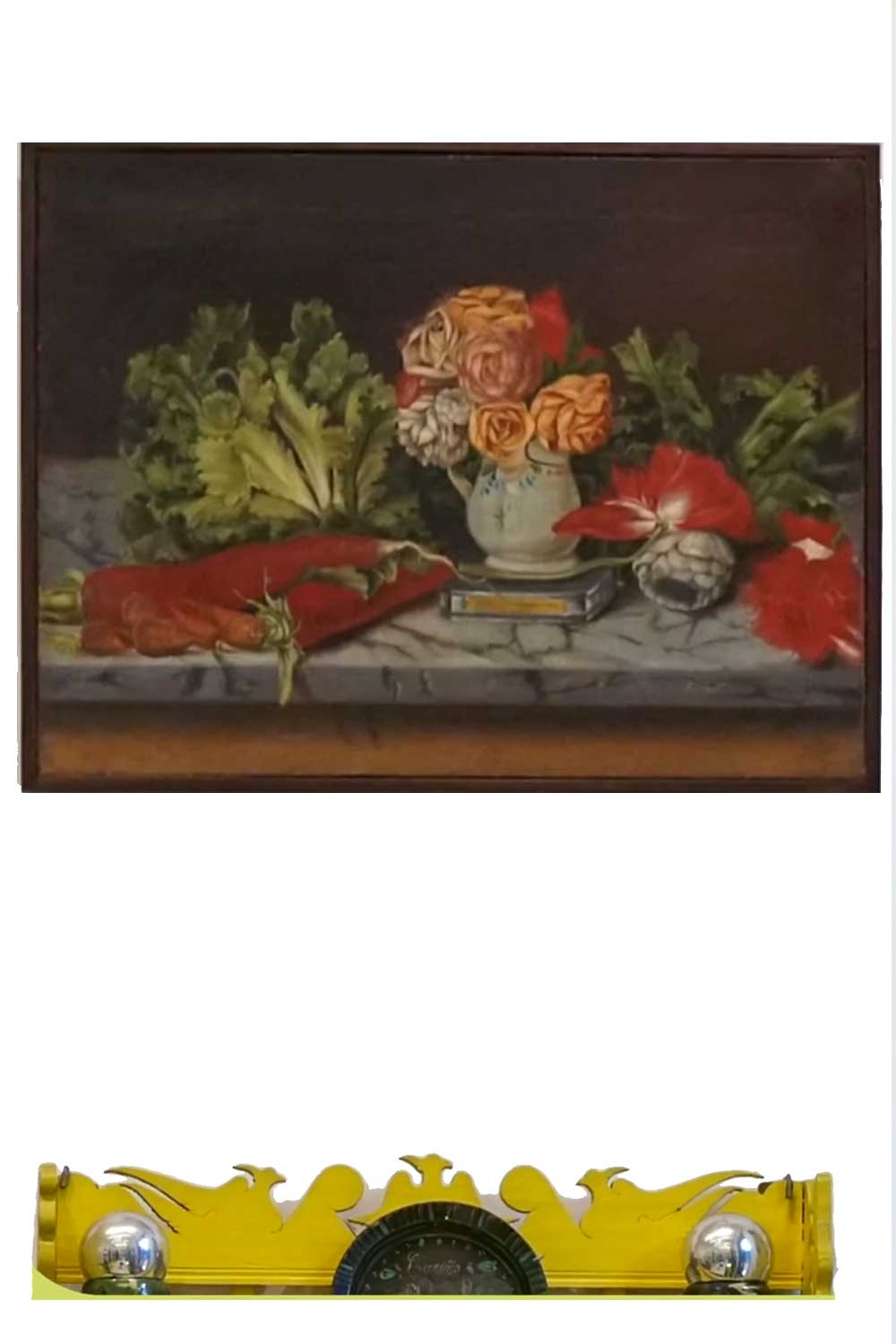
““ The image features a still life painting titled "Roses and nasturtiums" created in 1920 by the Swiss artist Félix Vallotton.
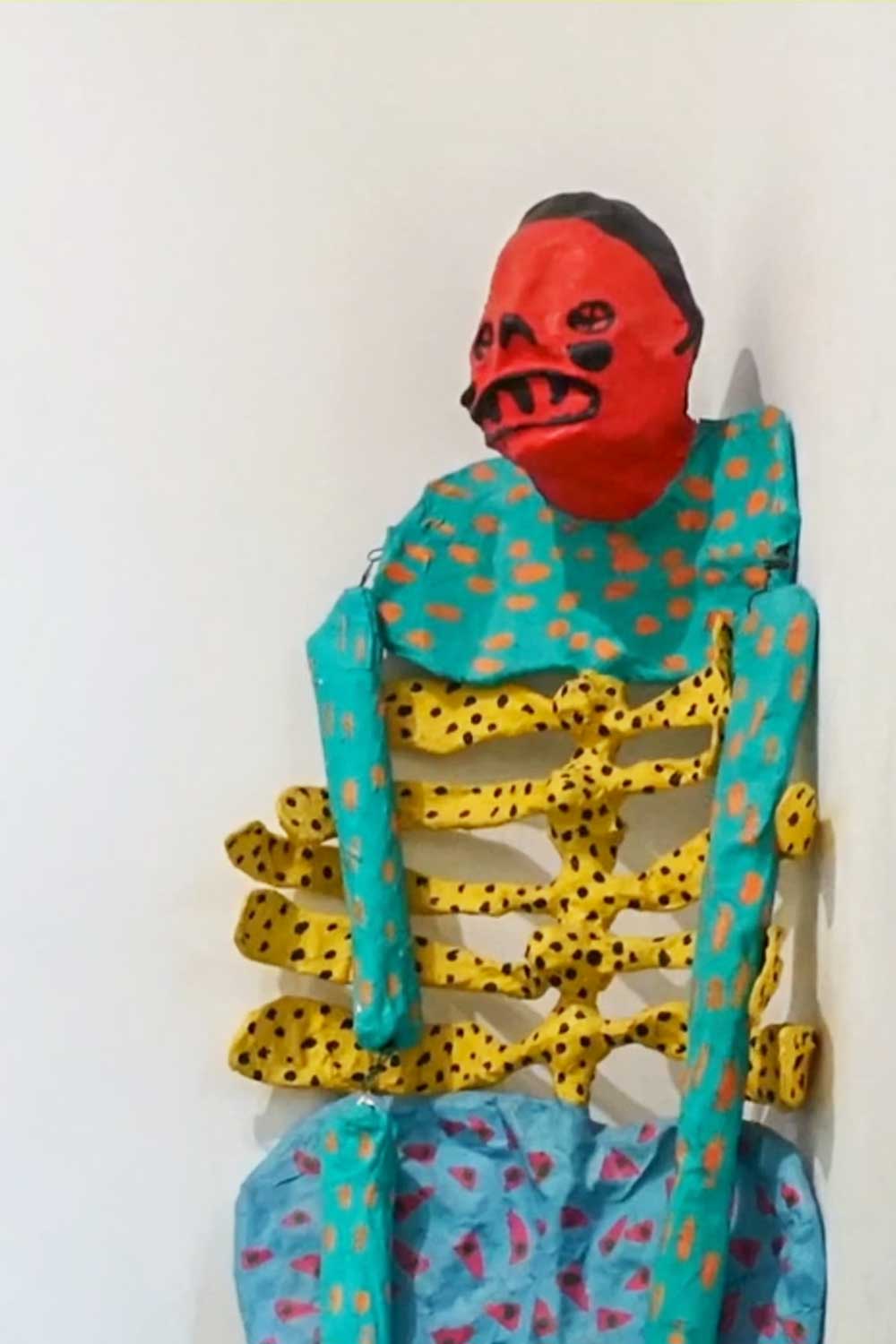
““A Mexican folk art alebrije sculpture made of papier-mâché, displayed at the Frida Kahlo Museum (La Casa Azul)
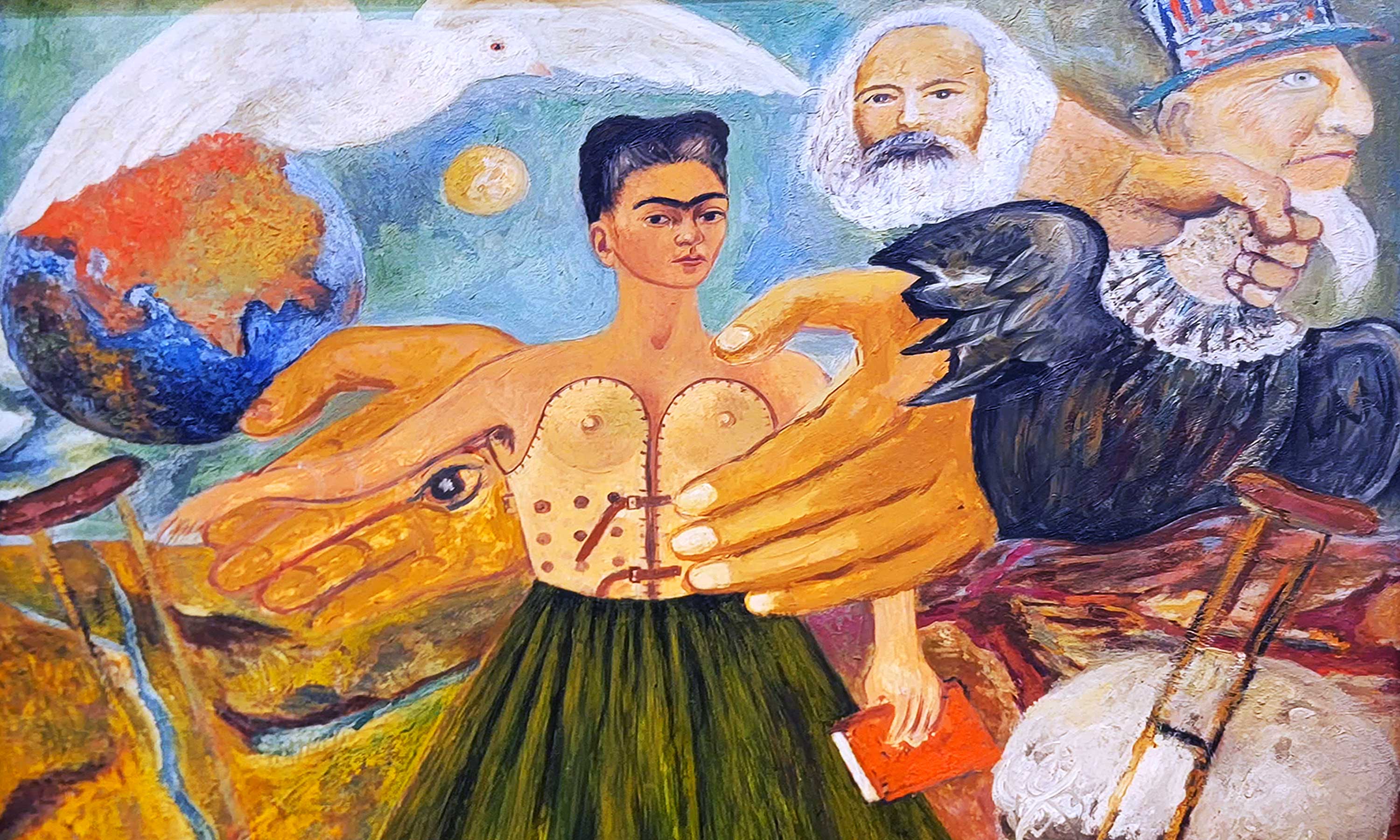
one of Kahlo's last paintings, produced shortly before her death, 1954, reflects her passionate belief in the political philosophy of Marxism to heal her personal physical suffering, Kahlo at the center, free of the crutches she utilized in life, held by oversized hands emerging from the sky, representing Karl Marx.
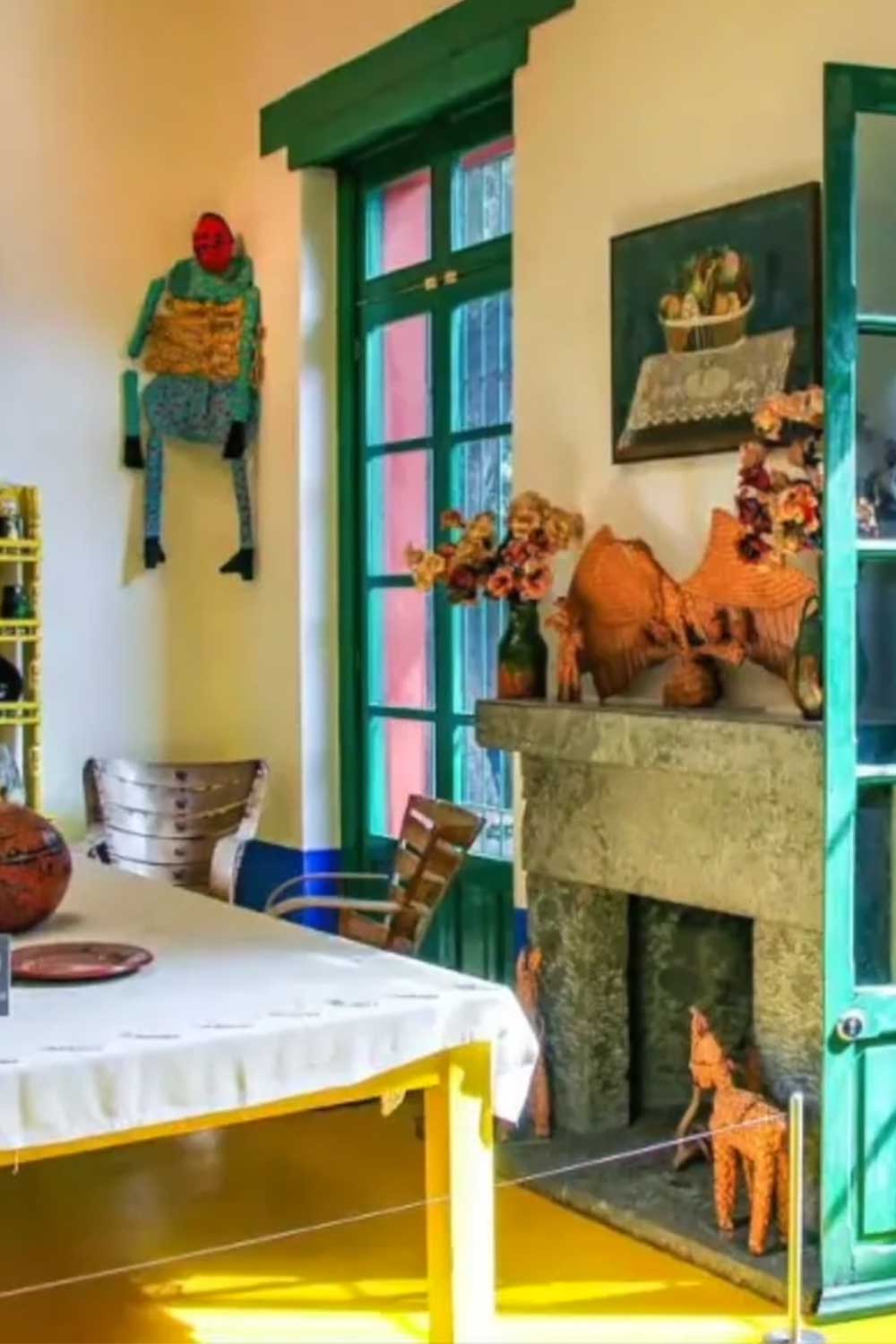
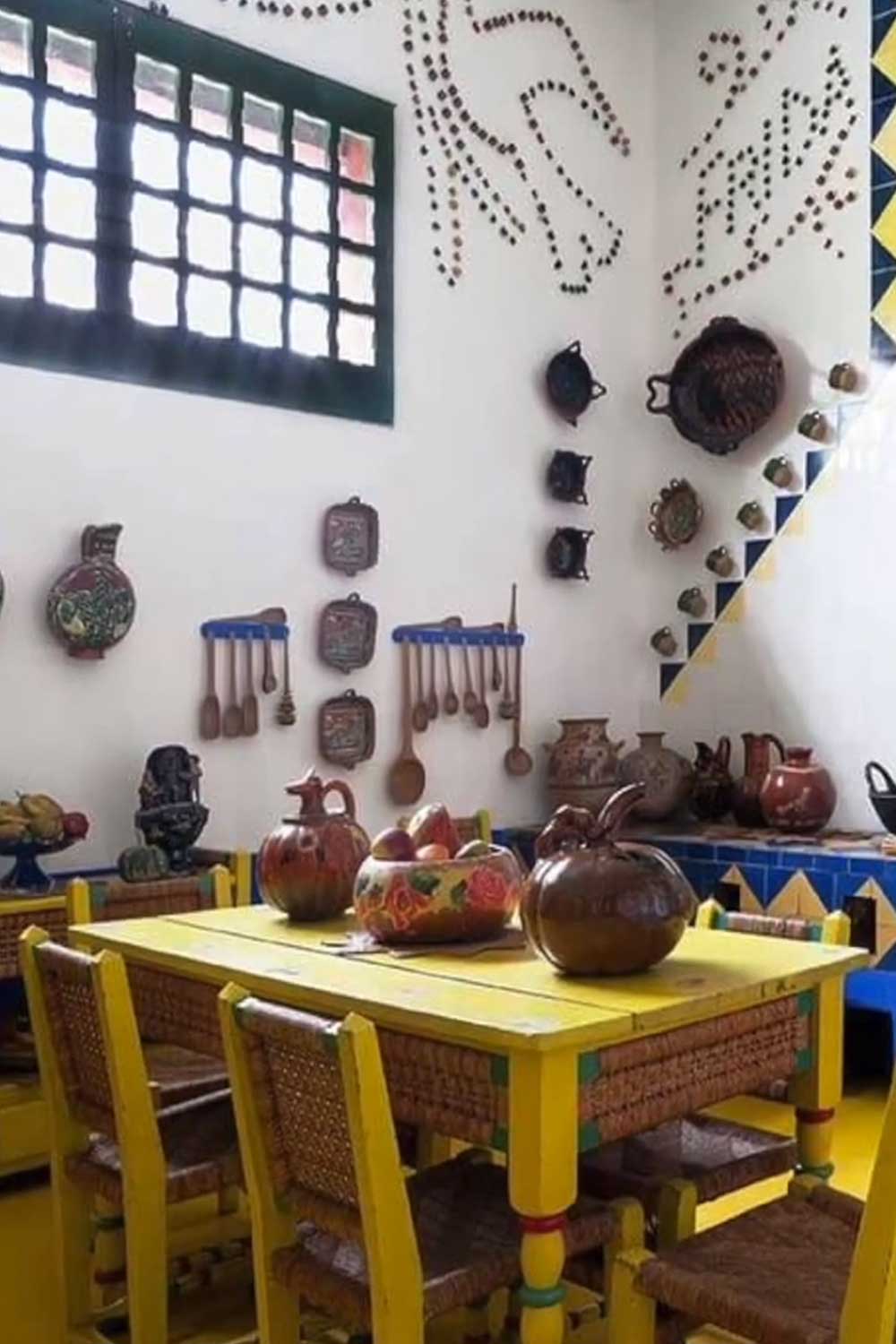
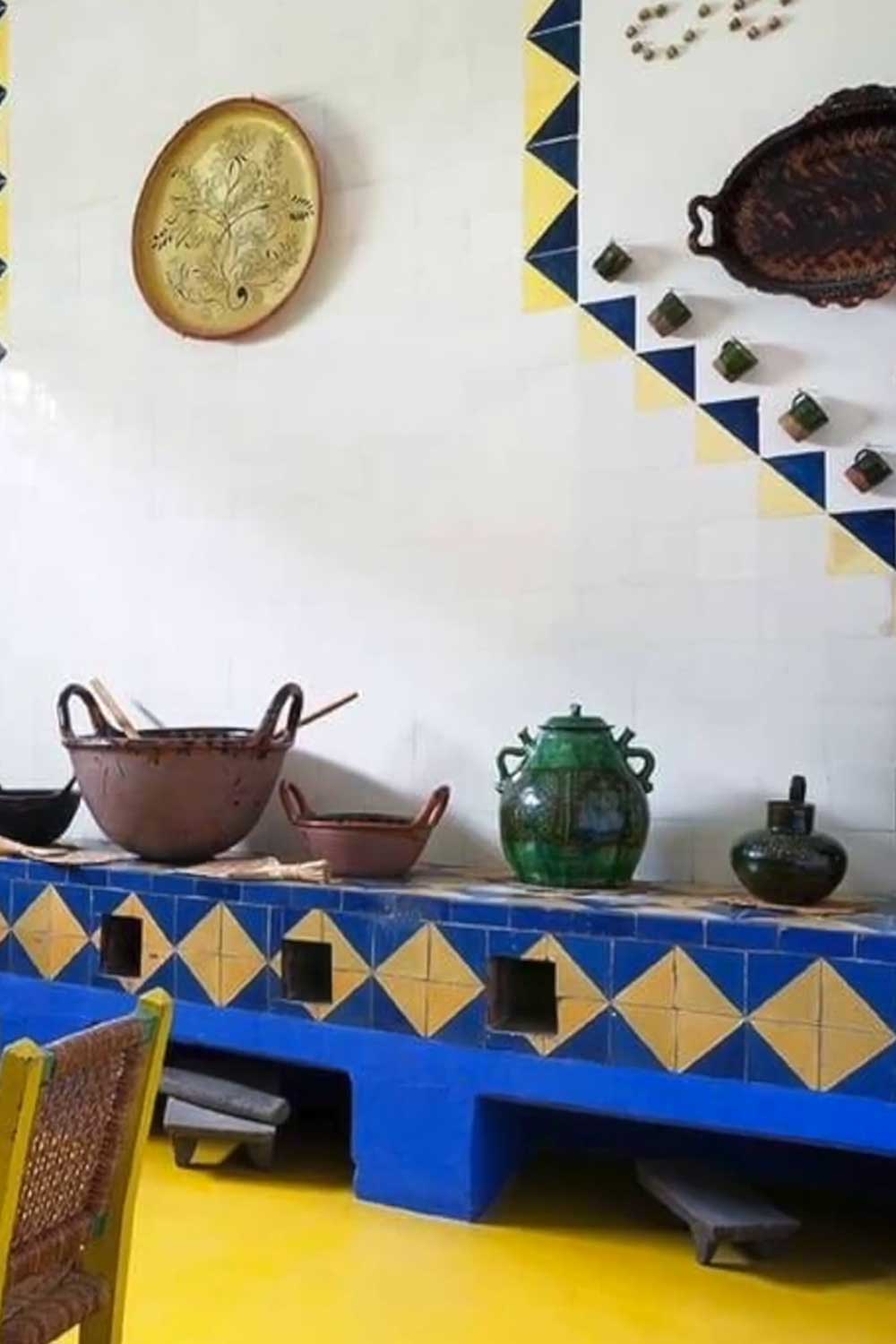
““ The kitchen inside La Casa Azul (The Blue House),
““ is famous for its vibrant aesthetic, featuring bright yellow painted furniture, cobalt blue tile countertops, and walls decorated with traditional Mexican folk art pottery.
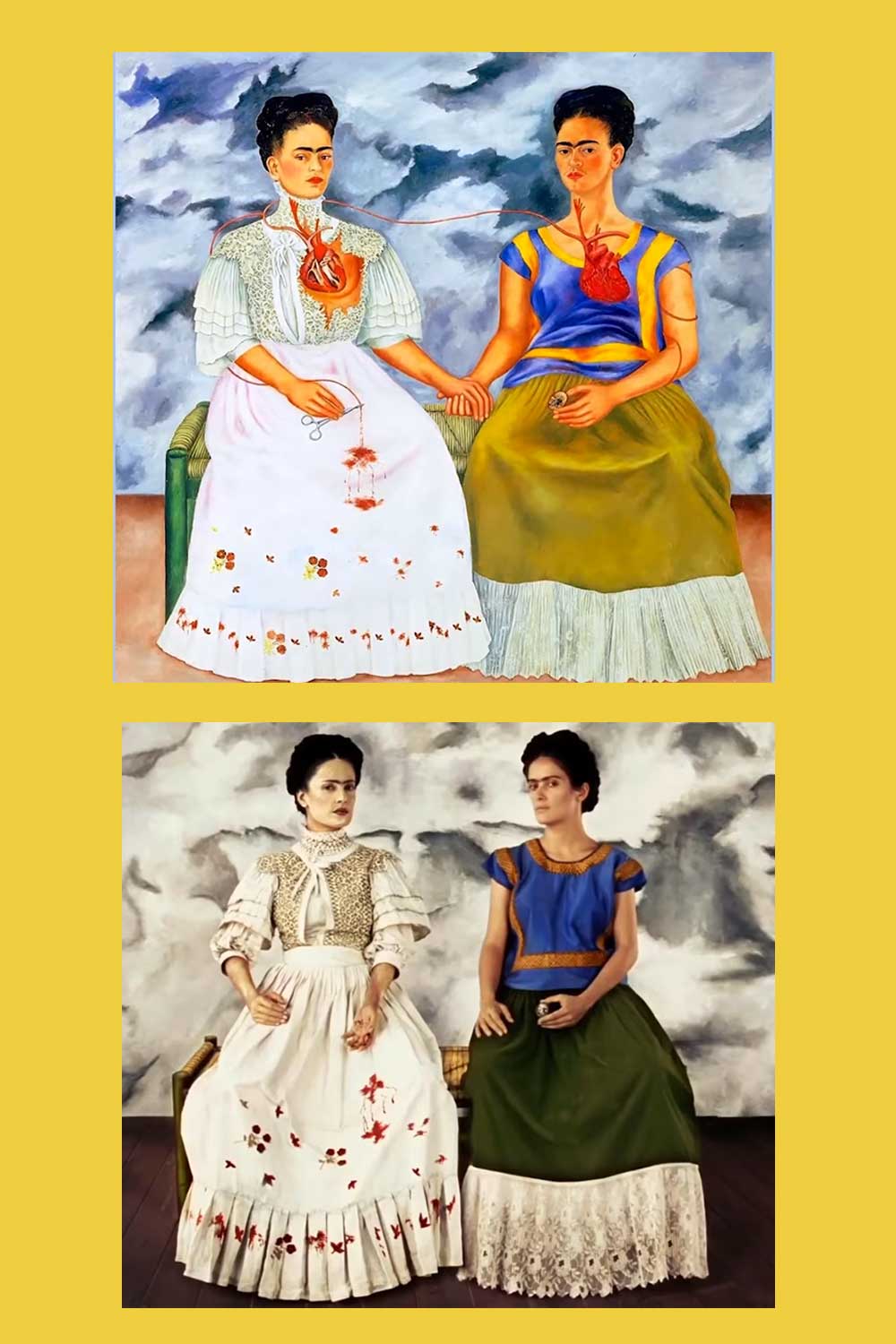
““This image shows "The Two Fridas" (Las dos Fridas), a double self-portrait painted by Frida Kahlo in 1939.  The second feature is Salma Hayek portraying the Mexican surrealist artist Frida Kahlo, from the 2002 biographical film Frida, directed by Julie Taymor.
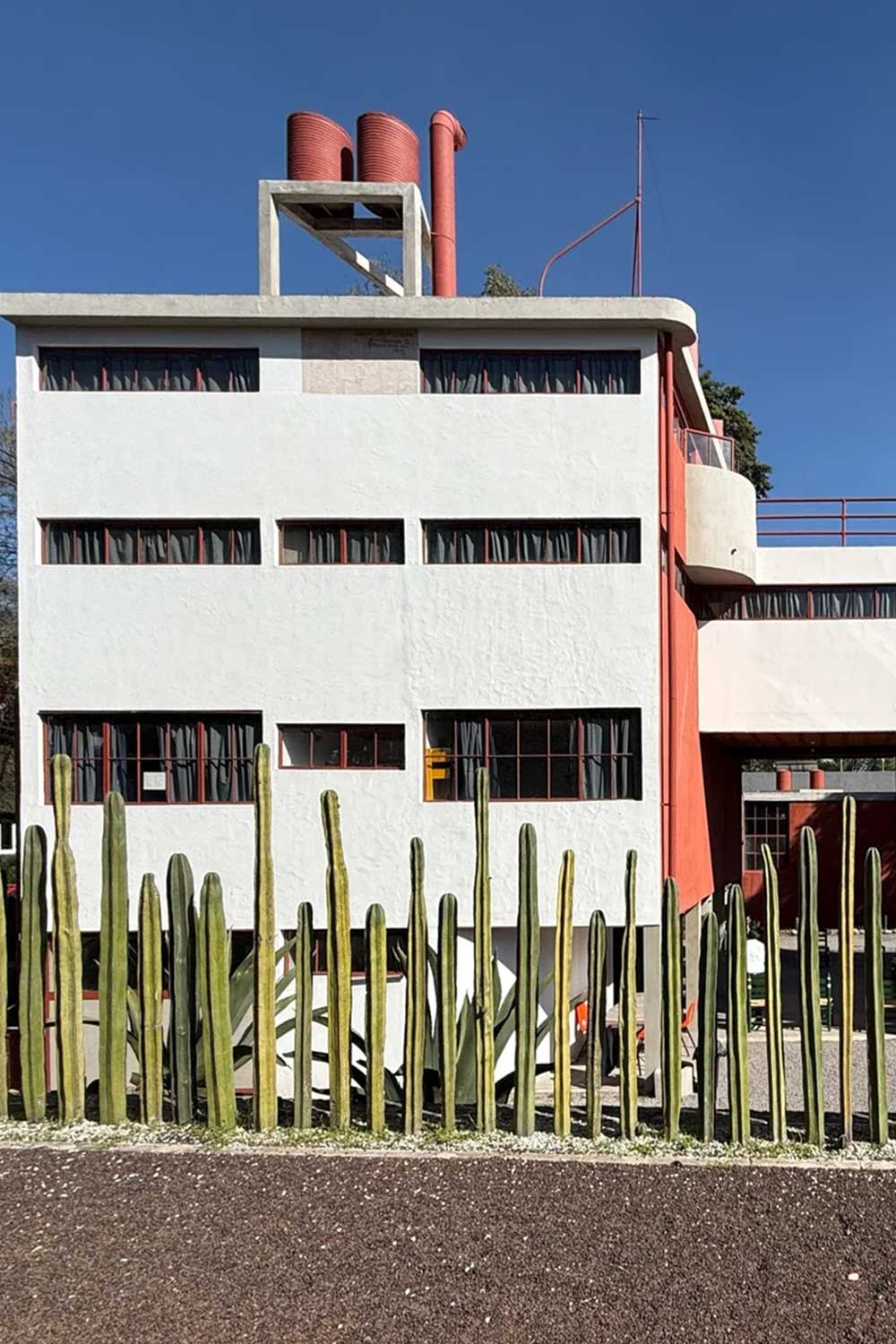
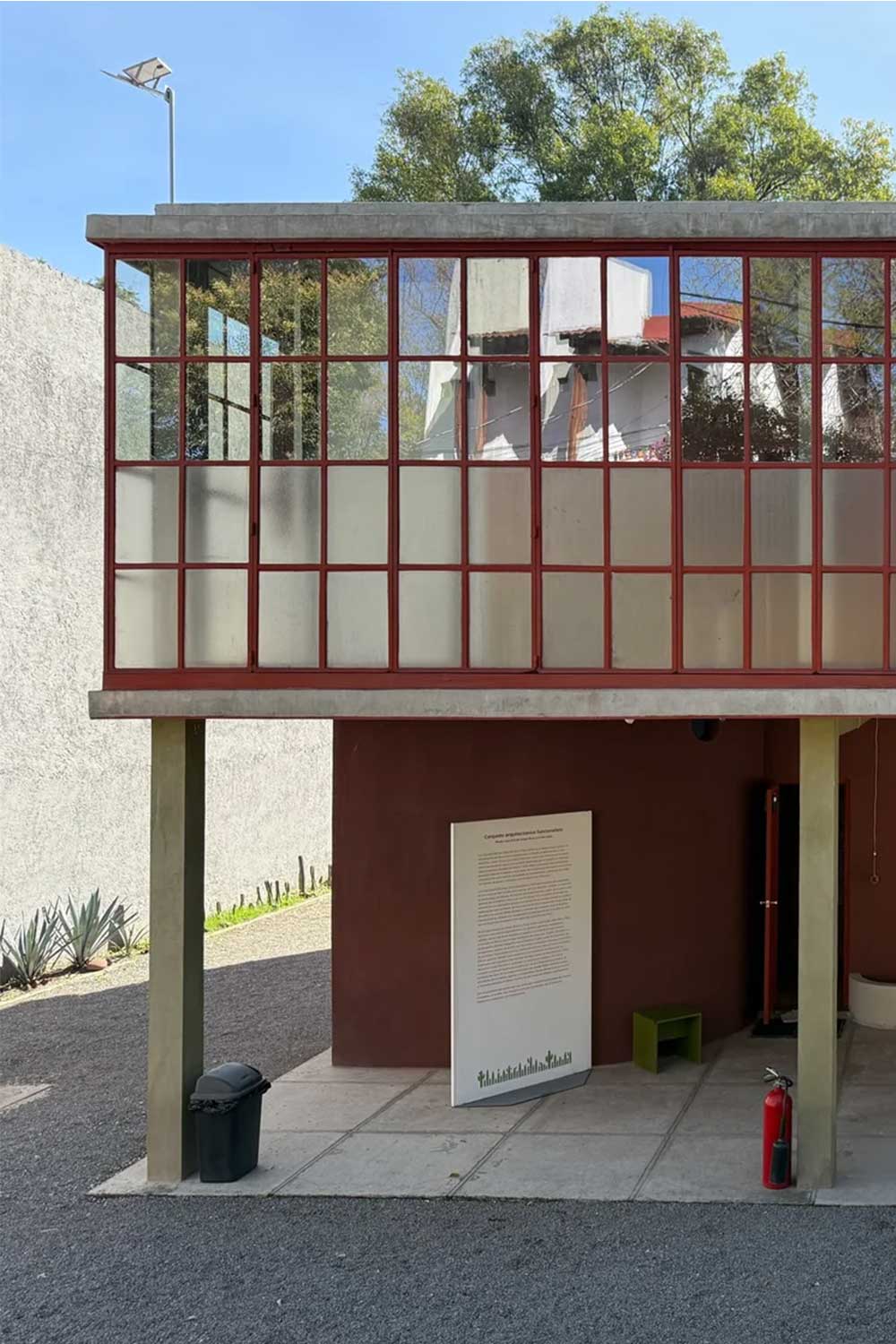
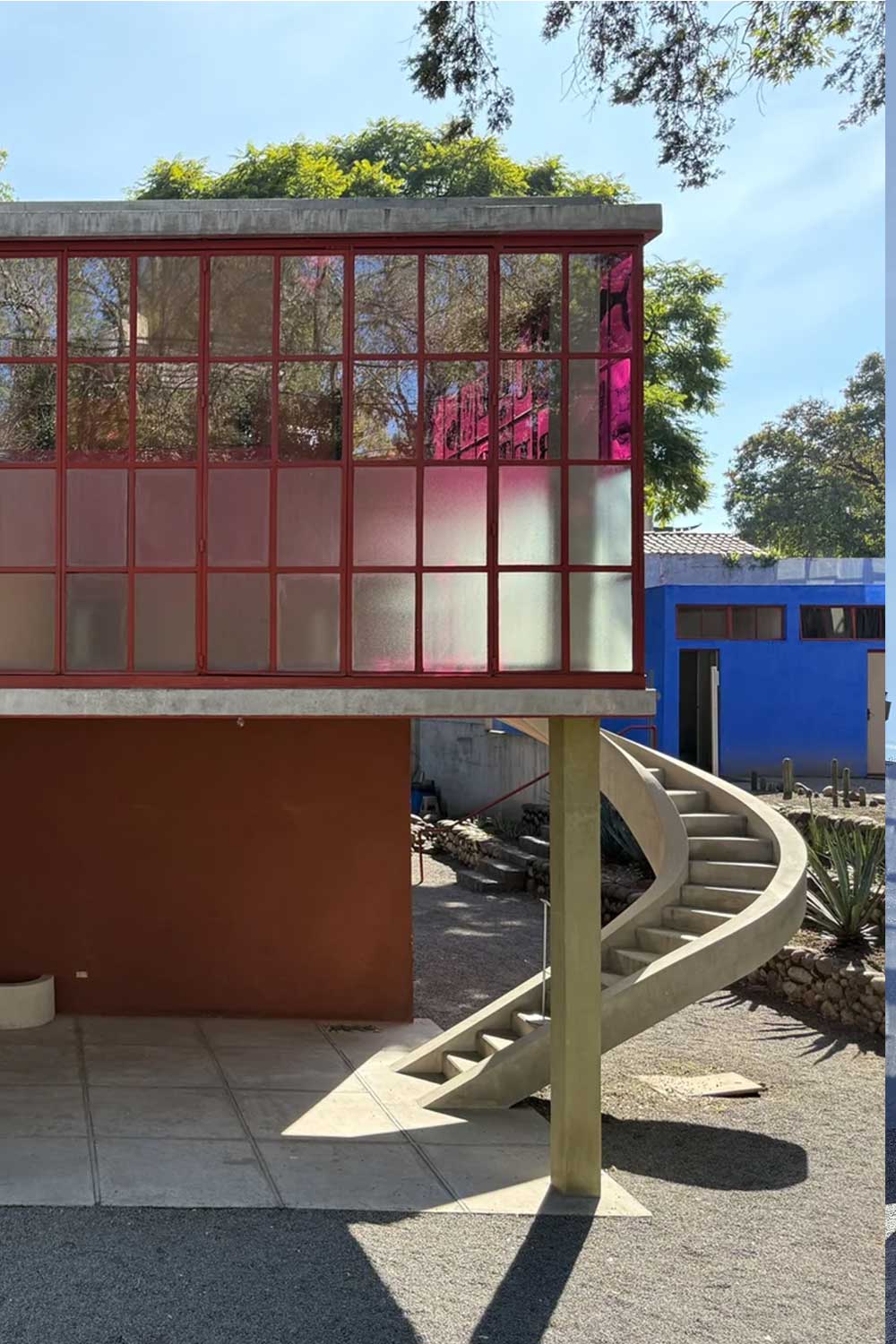
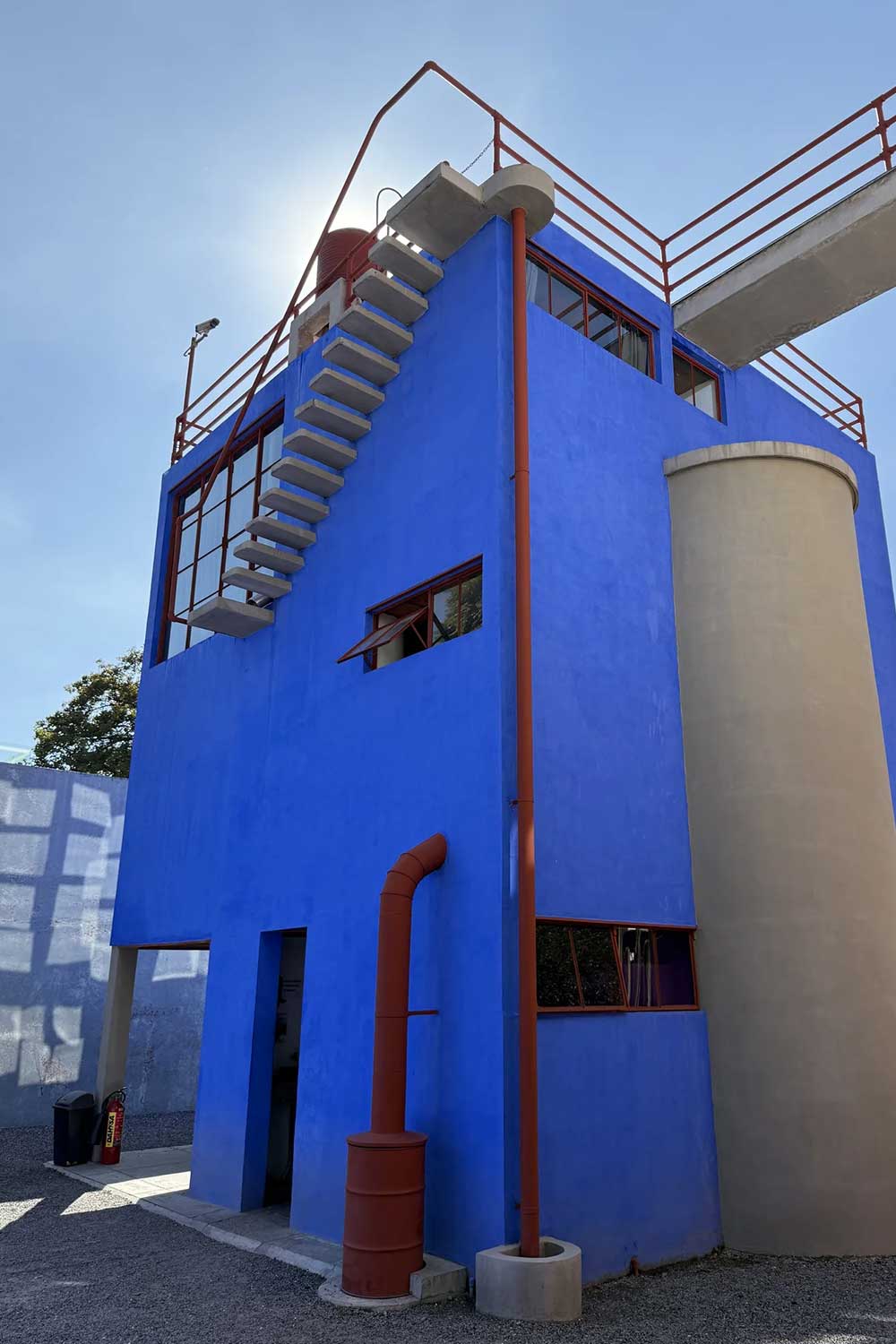
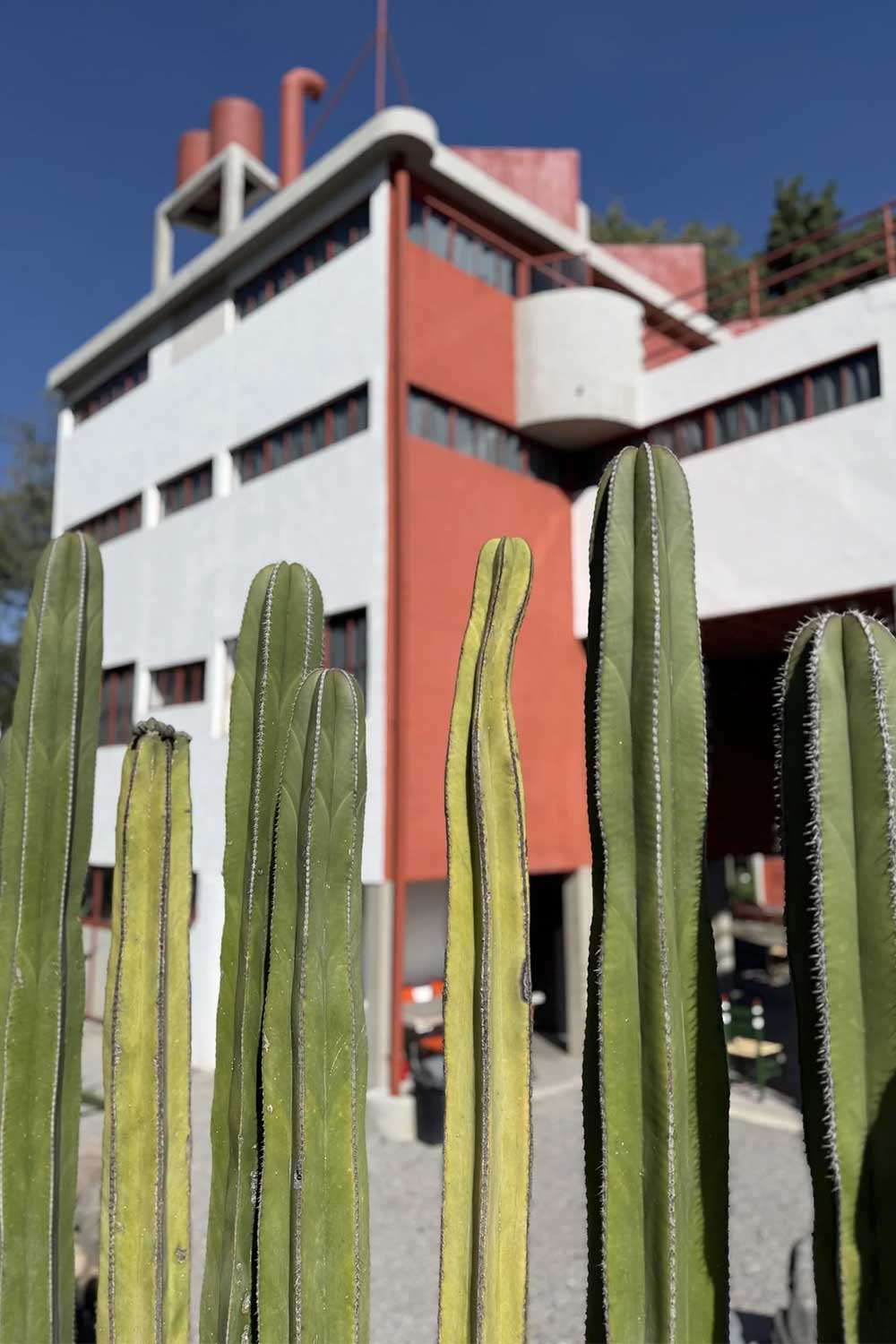
House-Studio Museums In the quiet neighborhood of San Ángel, the Diego Rivera and Frida Kahlo House‑Studio Museums preserve one of the most striking examples of early modern architecture in Mexico. Designed in 1931–1932 by architect Juan O’Gorman, the complex is considered the first functionalist residence in the country—an experiment in industrial materials, modular forms, and the belief that architecture should serve artistic labor. The site consists of two distinct structures: a larger, white‑and‑red studio‑house for Diego Rivera, and a smaller blue residence for Frida Kahlo, each tailored to their working habits and artistic identities. The two buildings are connected by a narrow roof‑level bridge, a gesture that captures the couple’s intertwined yet independent lives. Rivera’s studio, with its soaring windows and double‑height workspace, remains filled with his easels, pigments, and personal collections, while Kahlo’s house preserves a more intimate scale. The surrounding cactus fence—an O’Gorman signature—frames the ensemble as both fortress and sanctuary. Today, the complex functions as a museum dedicated to the artists’ daily routines, creative processes, and the architectural avant‑garde that shaped Mexico’s cultural landscape in the early 20th century.
““ Diego Rivera and Frida Kahlo House-Studio Museums Virtual Museum of Diego Rivera and Frida Kahlo  
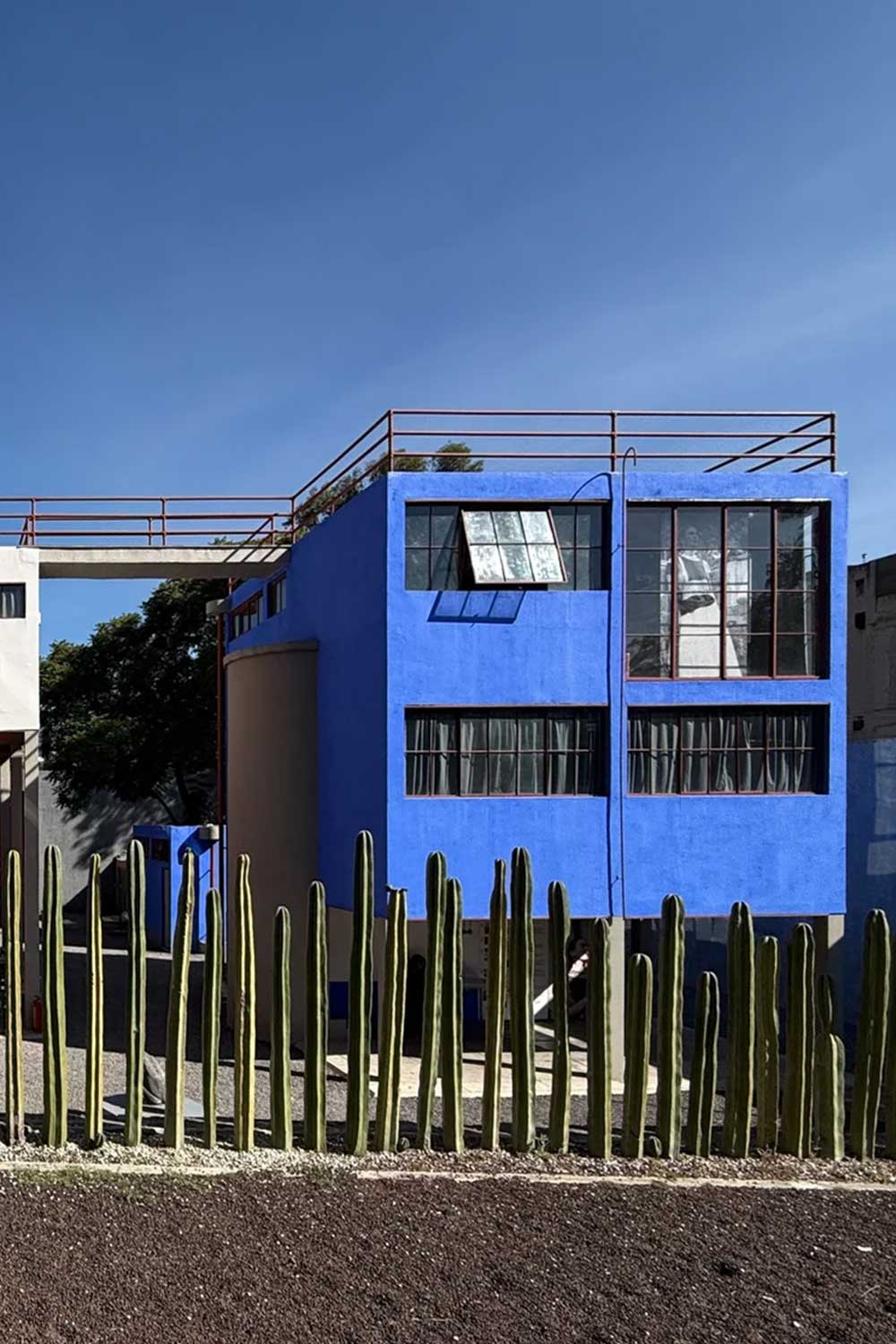
““ The museum complex consists of two separate house-studio structures linked by a narrow bridge, one for Rivera (white and red) and one for his wife Frida Kahlo (blue).
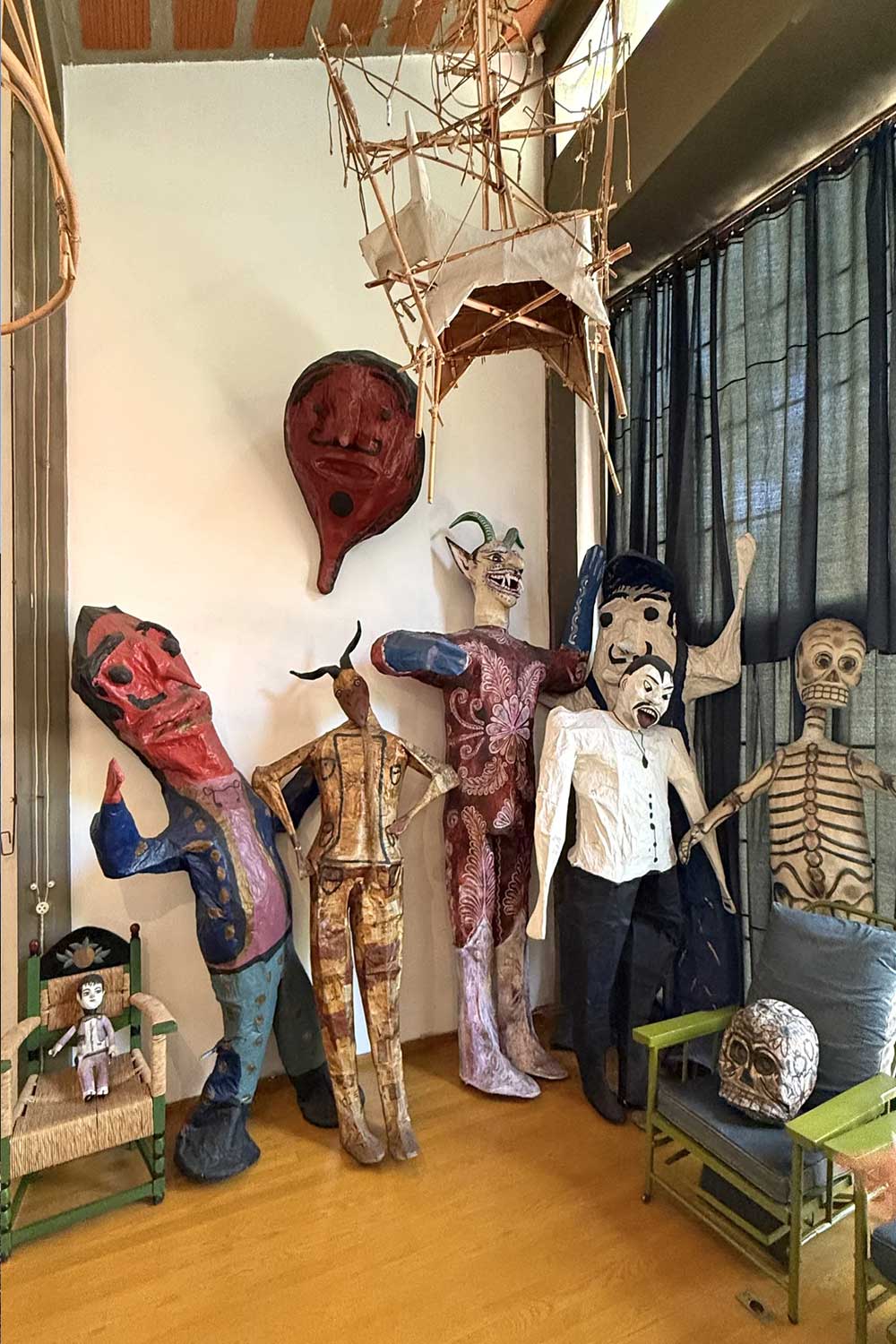
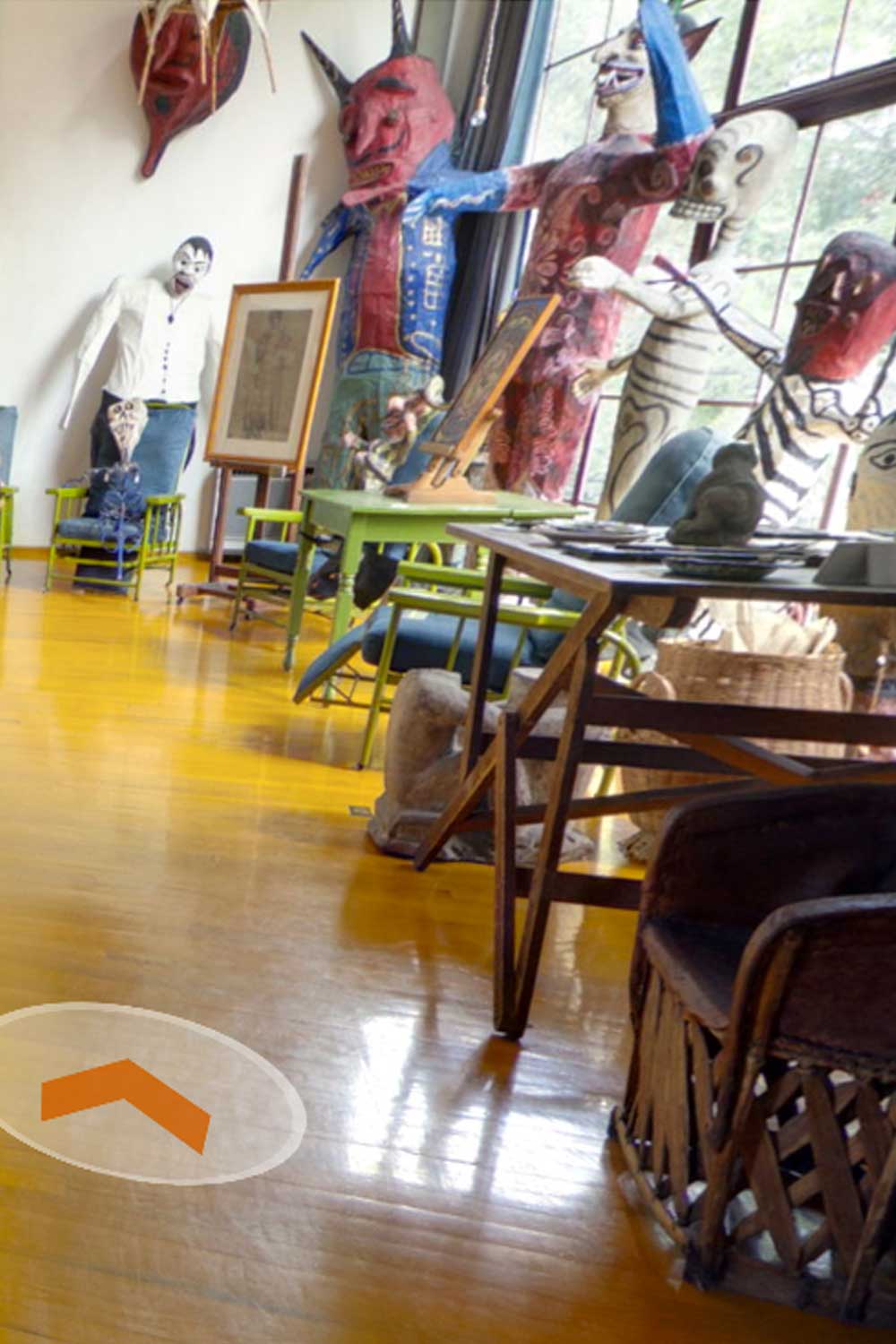
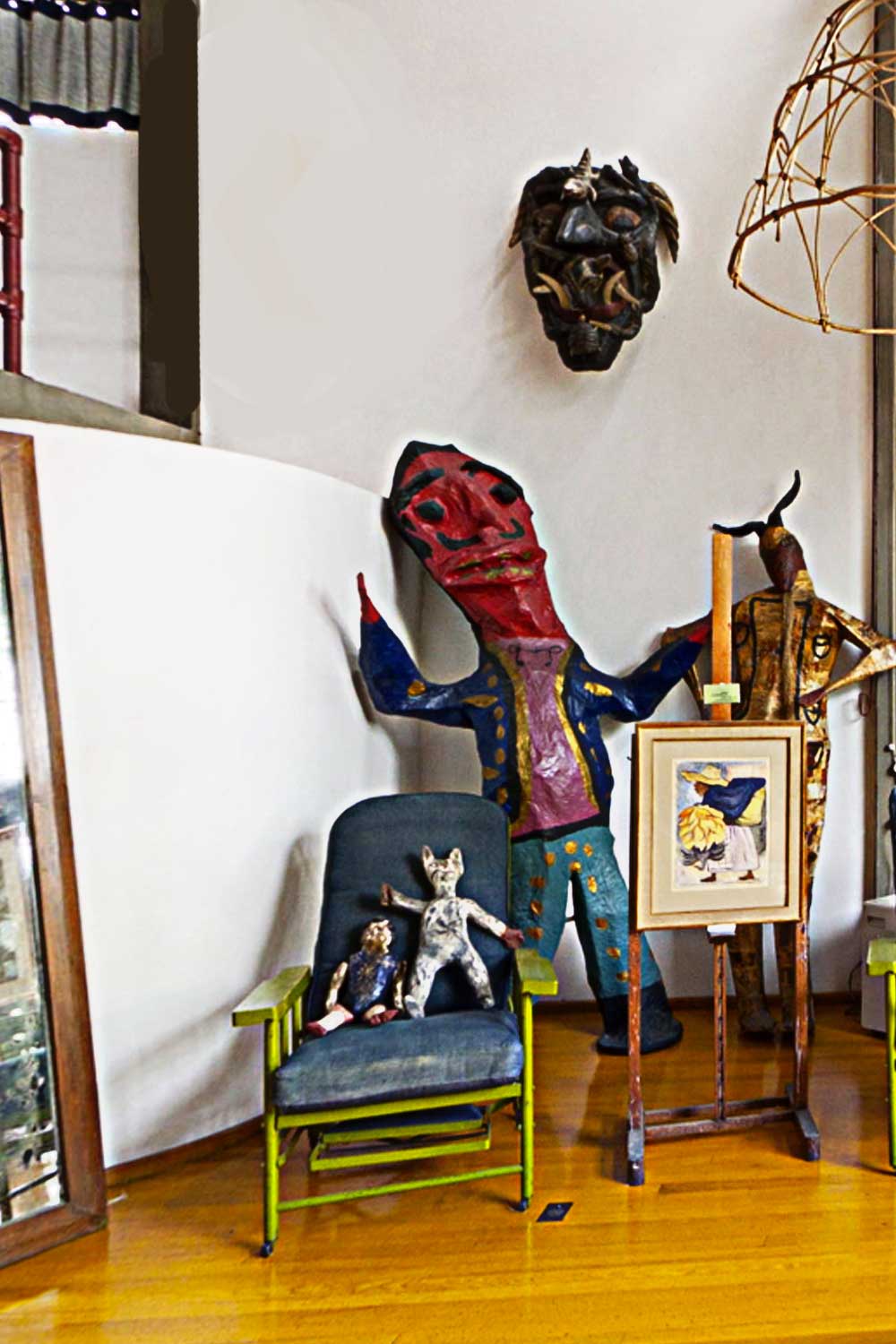
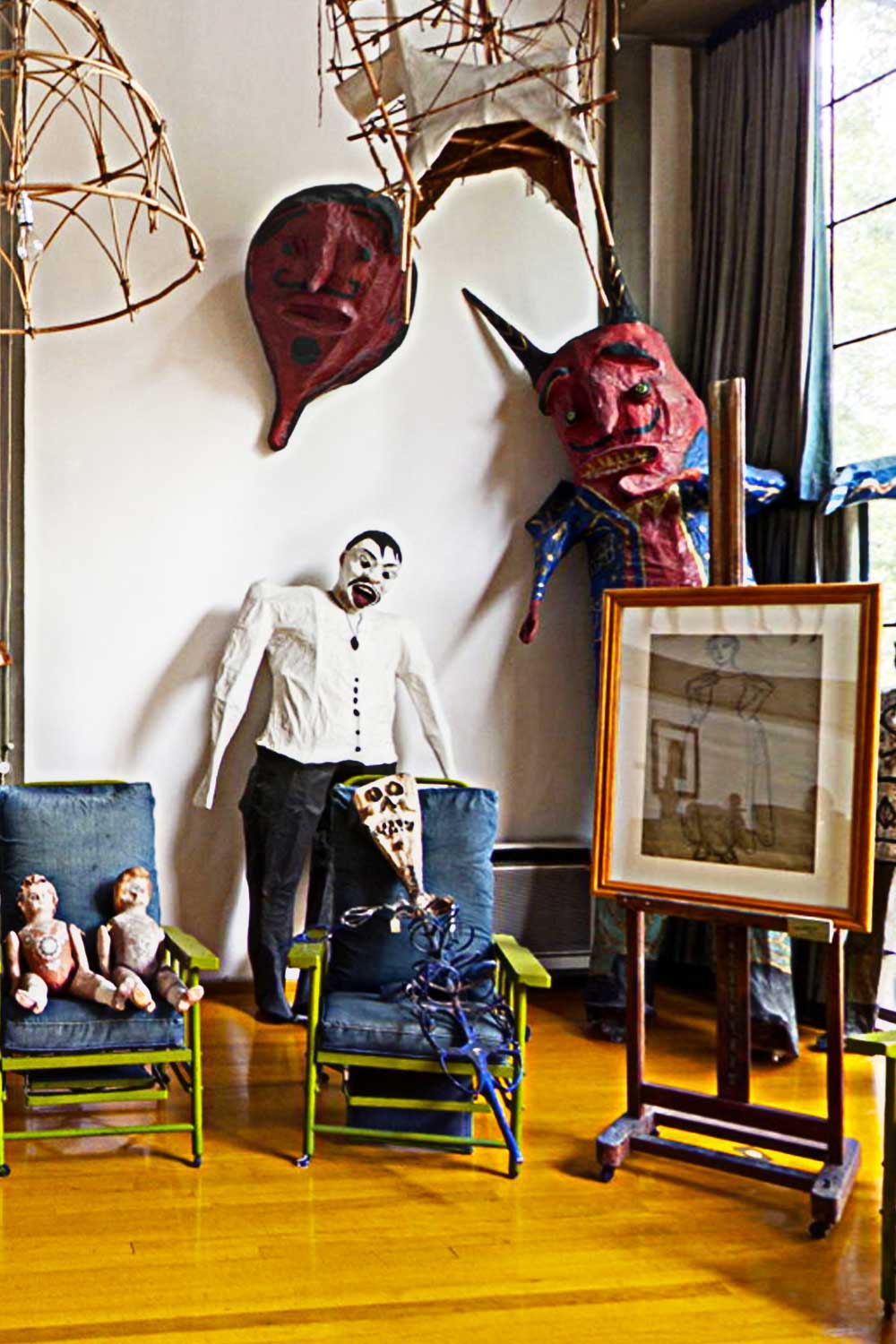
““ Rivera filled his studio with a large collection of cartonería popular (Mexican papier-mâché sculptures), which sit harmoniously alongside his canvases and papers.
““ The studios, designed by architect Juan O'Gorman, is known for its functionalist architecture and vibrant colors.
““ The museum complex consists of two separate house-studio structures 
““ Frida's blue studio contains various works of her art and original furnishings.
““ The Diego Rivera studio museum contains his works, works of folk art and original furnishings
““ Inside the studio Museo Casa Estudio Diego Rivera
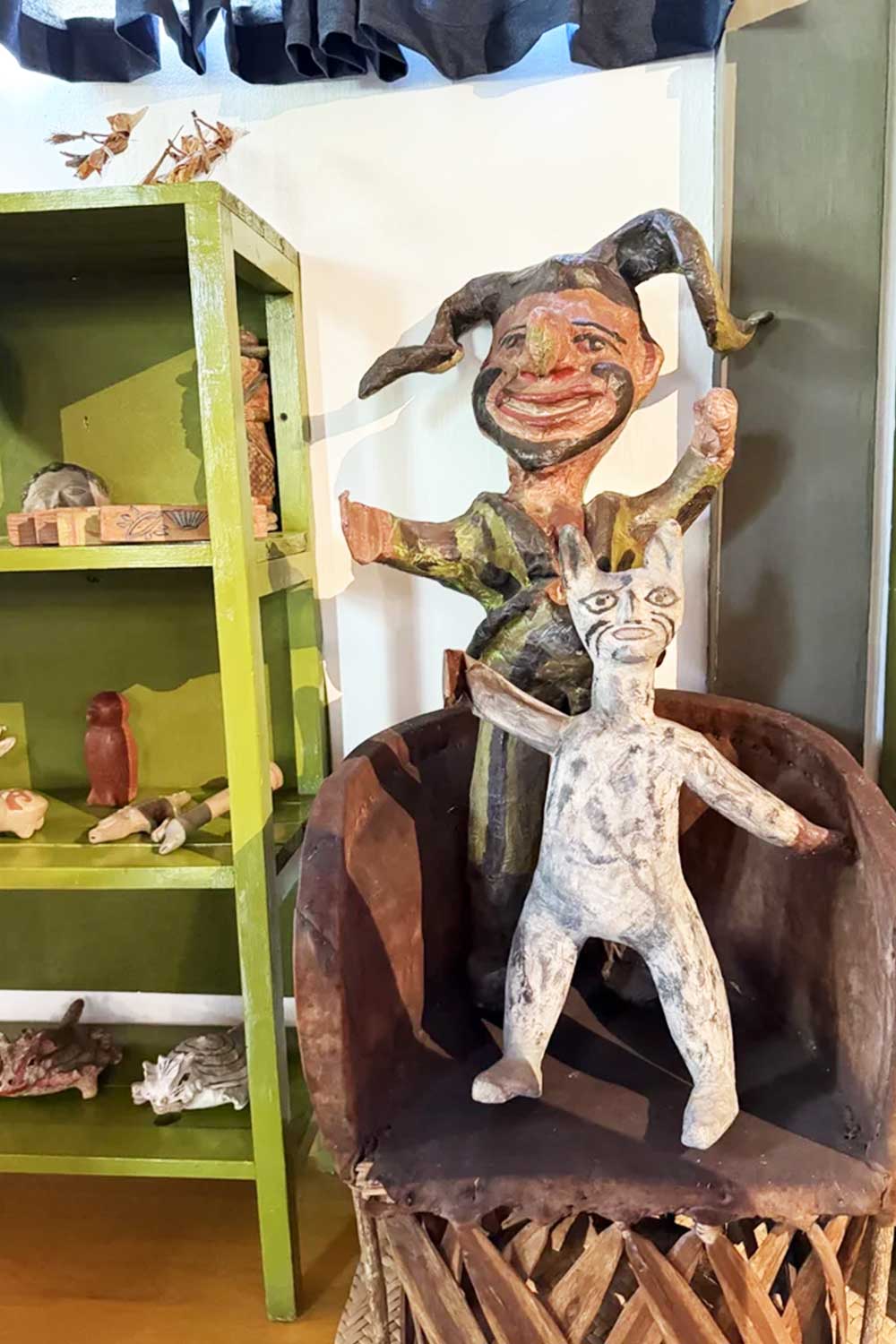
““ The prominent figure is a colorful, harlequin-style jester character with a prominent smile.
““ The tall, red-faced figure and the character behind the easel appear to be large-scale puppets or figures representative of Northeastern Brazilian folk theater.
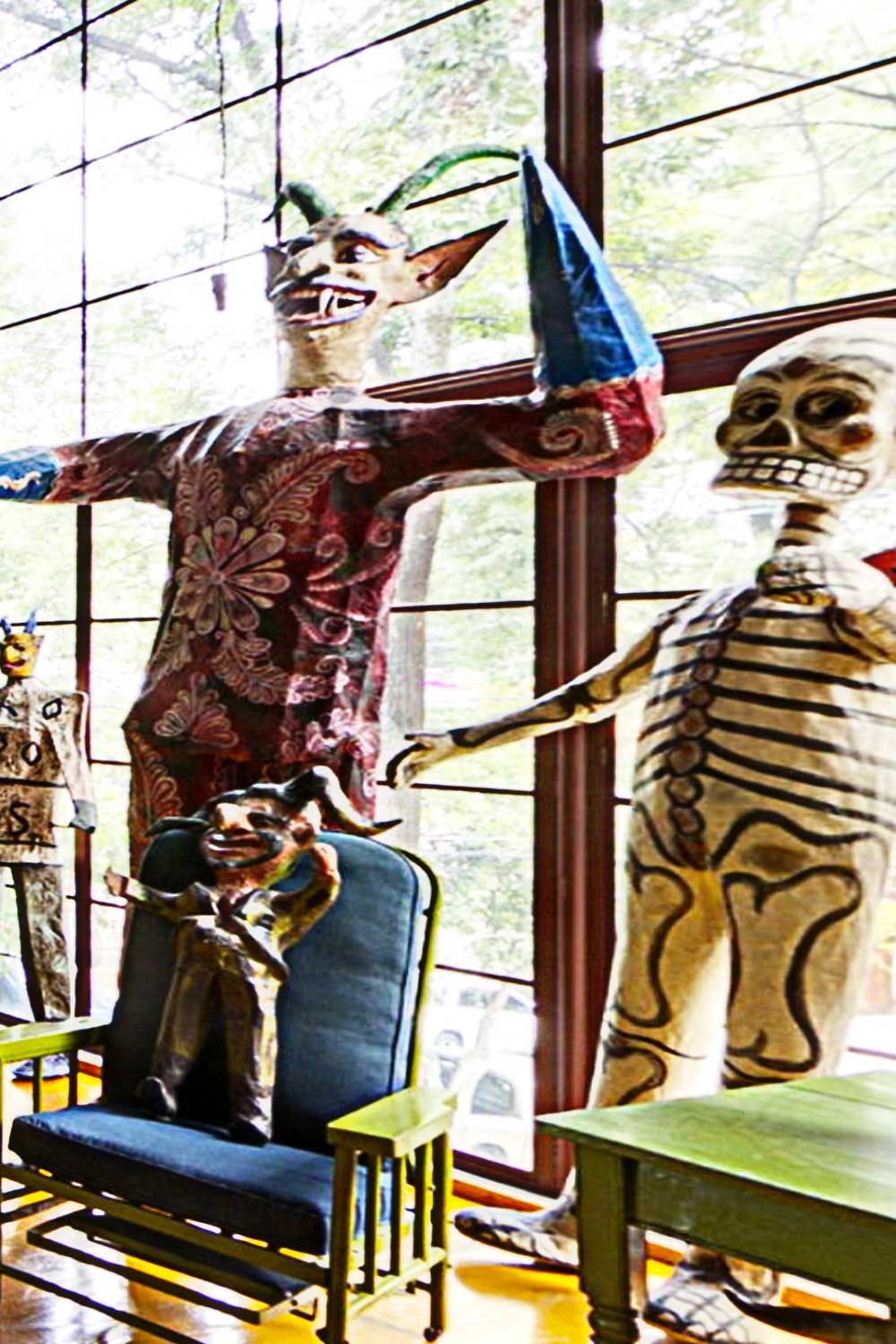
““ Diego's collection of papier-mâché figures of devils and skeletons,
““ are traditionally burned during Holy Week in Mexico
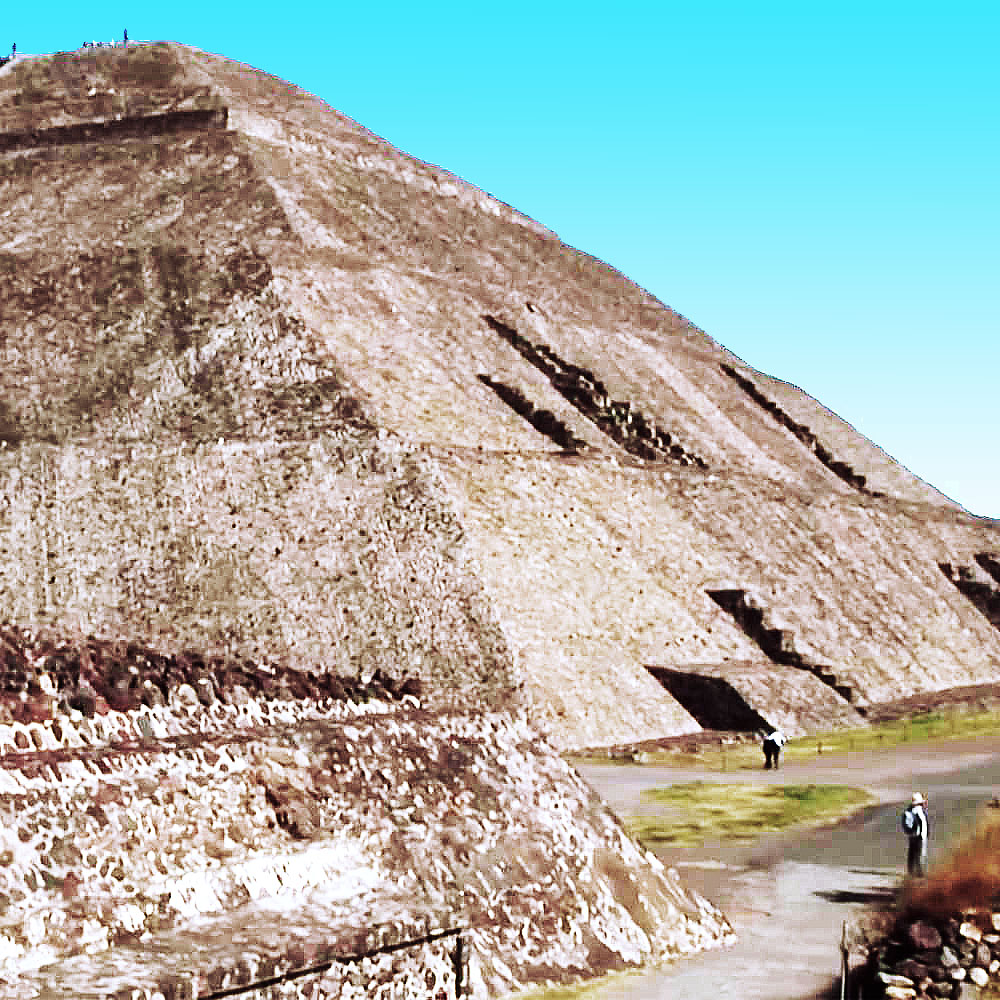
TeotihuacanA few miles northeast of modern Mexico City lies Teotihuacan, home to some of the most significant pre‑Columbian pyramids in the Americas, including the Pyramid of the Sun and the Pyramid of the Moon. Despite its proximity to today’s capital, Teotihuacan was not an Aztec city; it flourished more than a millennium before the Aztec Empire rose to power. At its height—likely between 1 CE and 500 CE—Teotihuacan was the largest city in the Americas, with a population of at least 25,000 and possibly exceeding 125,000, placing it among the world’s great urban centers of its era. Its broad ceremonial avenues, immense pyramids, and meticulously planned grid reveal a sophisticated metropolis whose influence radiated across Mesoamerica. The tallest structure at the site, the Pyramid of the Sun (Pirámide del Sol), rises approximately 63–66 meters (206–216 feet) and ranks among the largest pyramids in the Western Hemisphere. Anchoring the Avenue of the Dead, it dominates the city’s ceremonial core and underscores the monumental scale that defined Teotihuacan’s urban vision.
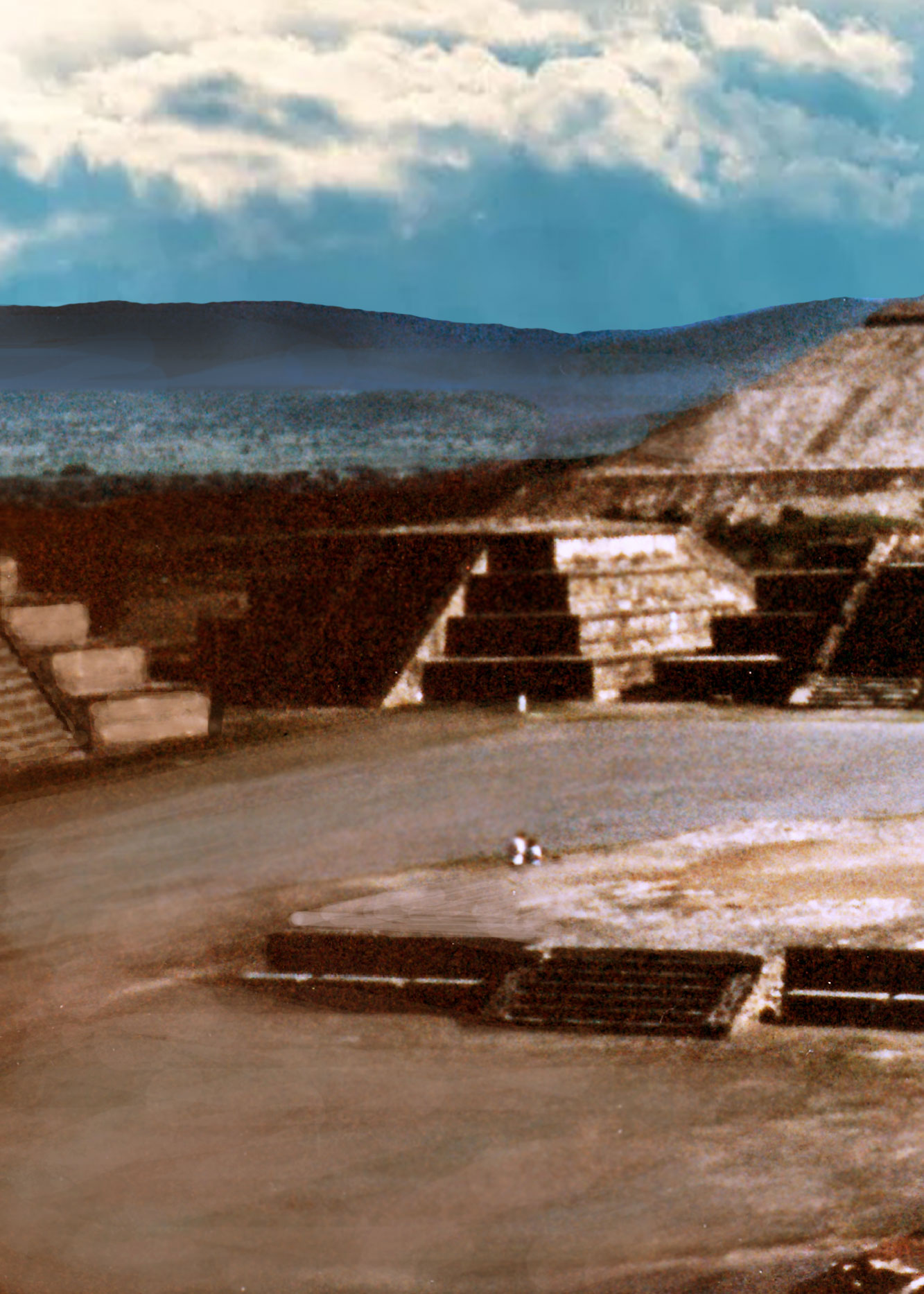
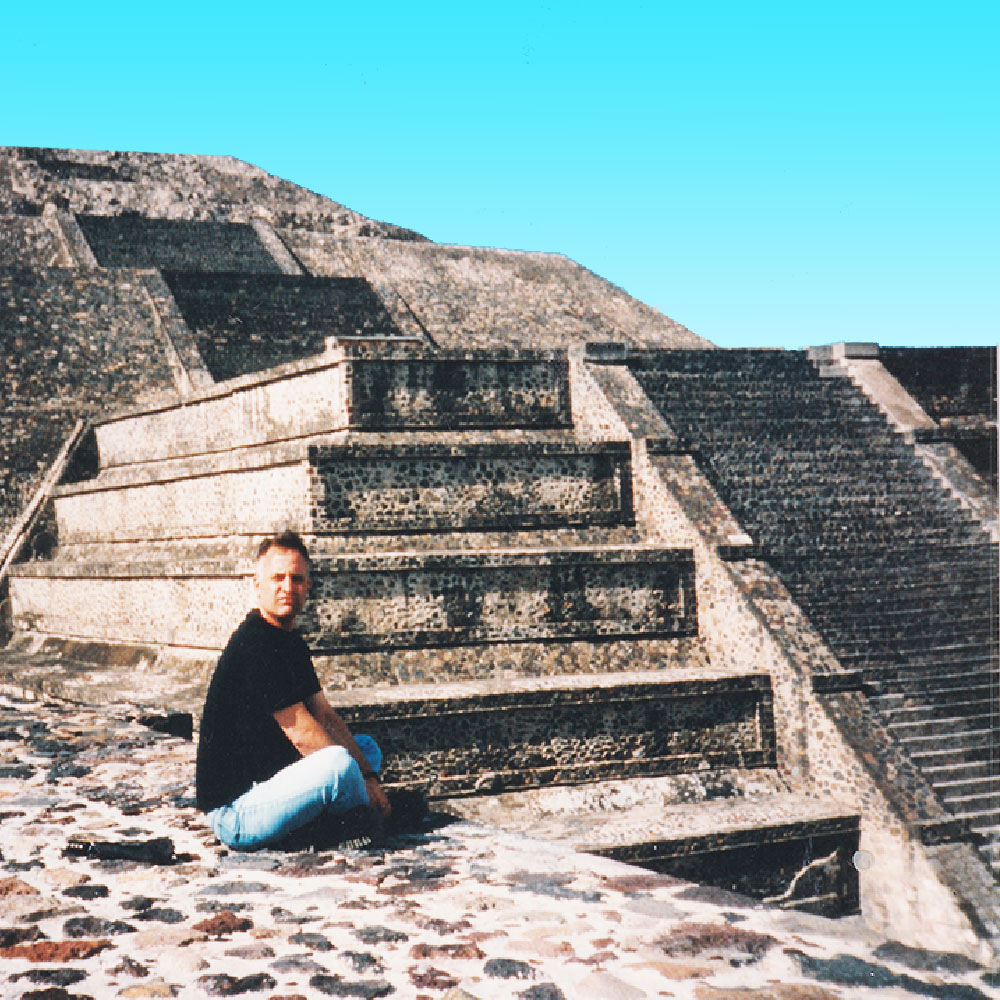
““The Great Ruins of Teotihuacan, with the side view of the Pyramid of the Moon. (me sitting down) At its zenith, in the first century AD Teotihuacan was the largest city in the Americas, with a population estimated 125,000 or more
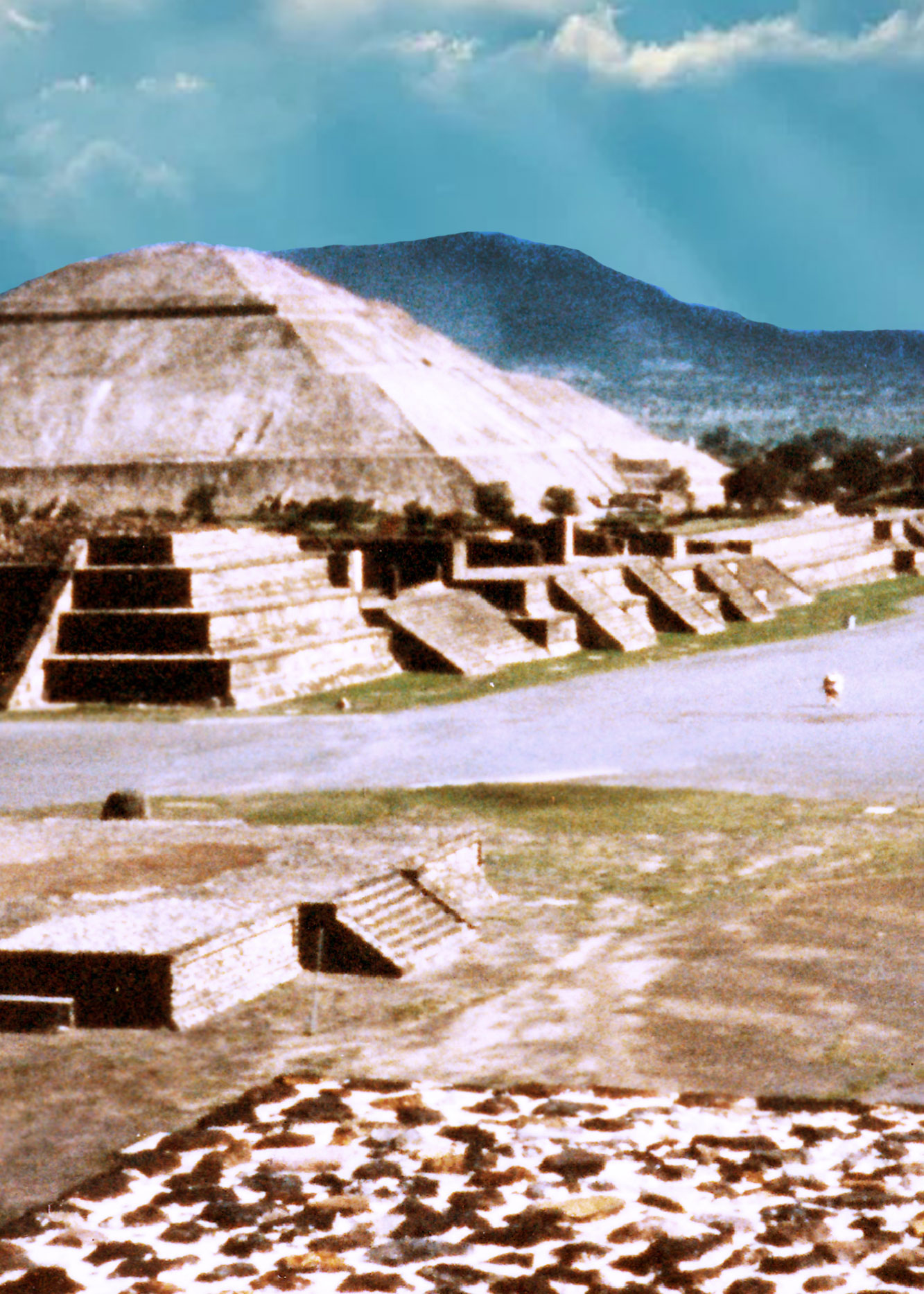
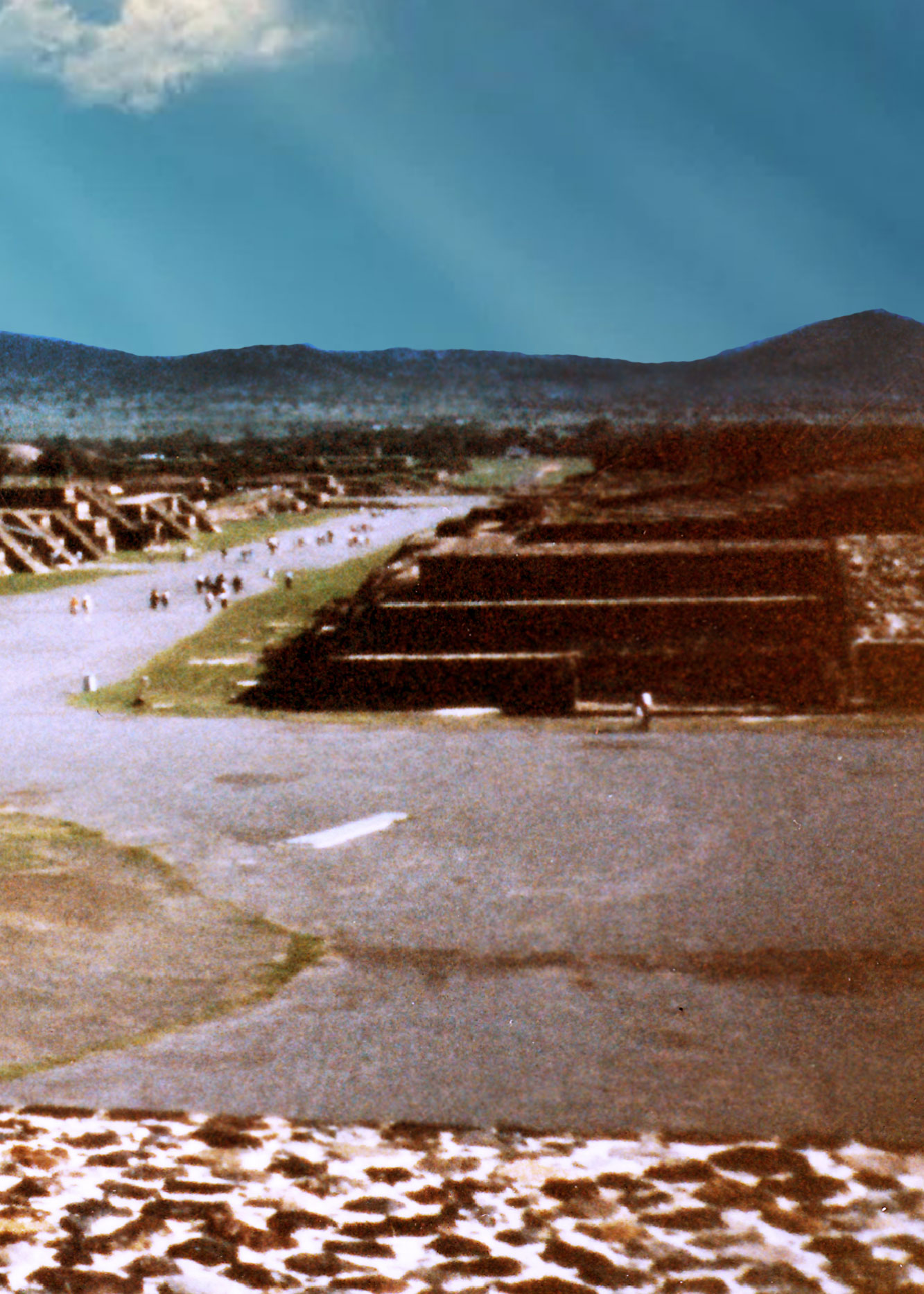
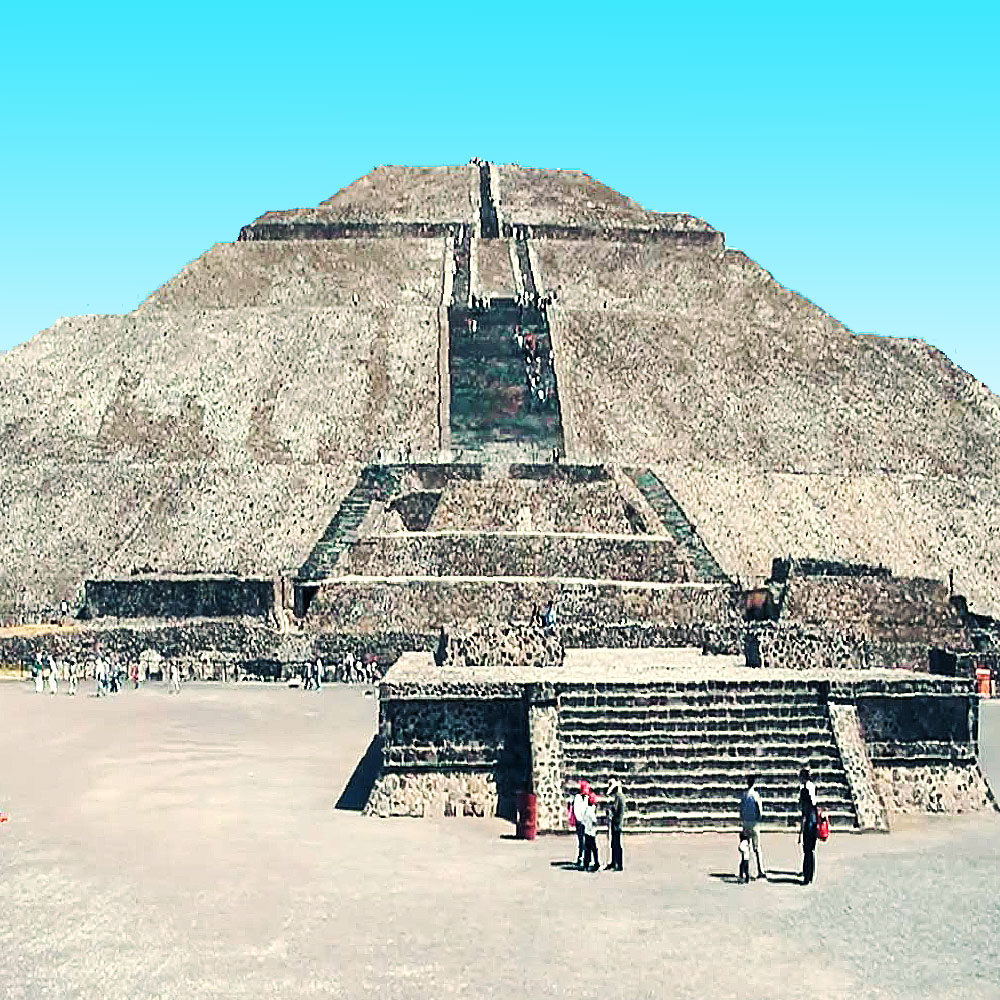
““The Avenue of the Dead and the Pyramid of the Sun Teotihuacan, built in the first century AD located in a sub-valley 25 miles from Mexico City
““Although close to Mexico City, Teotihuacan was not a Mexica, Aztec city, it predates the Mexica Empire by 5 hundred years, Teotihuacan was abandoned by 500 AD it's unclear why it collapsed, one theory is that poorer classes carried out an internal uprising against the elite
““ The highest pyramid in Teotihuacan is the Pyramid of the Sun (Pirámide del Sol), which stands approximately 63 to 66 meters (206 to 216 feet) tall. It is one of the largest structures in the Western Hemisphere, located along the Avenue of the Dead
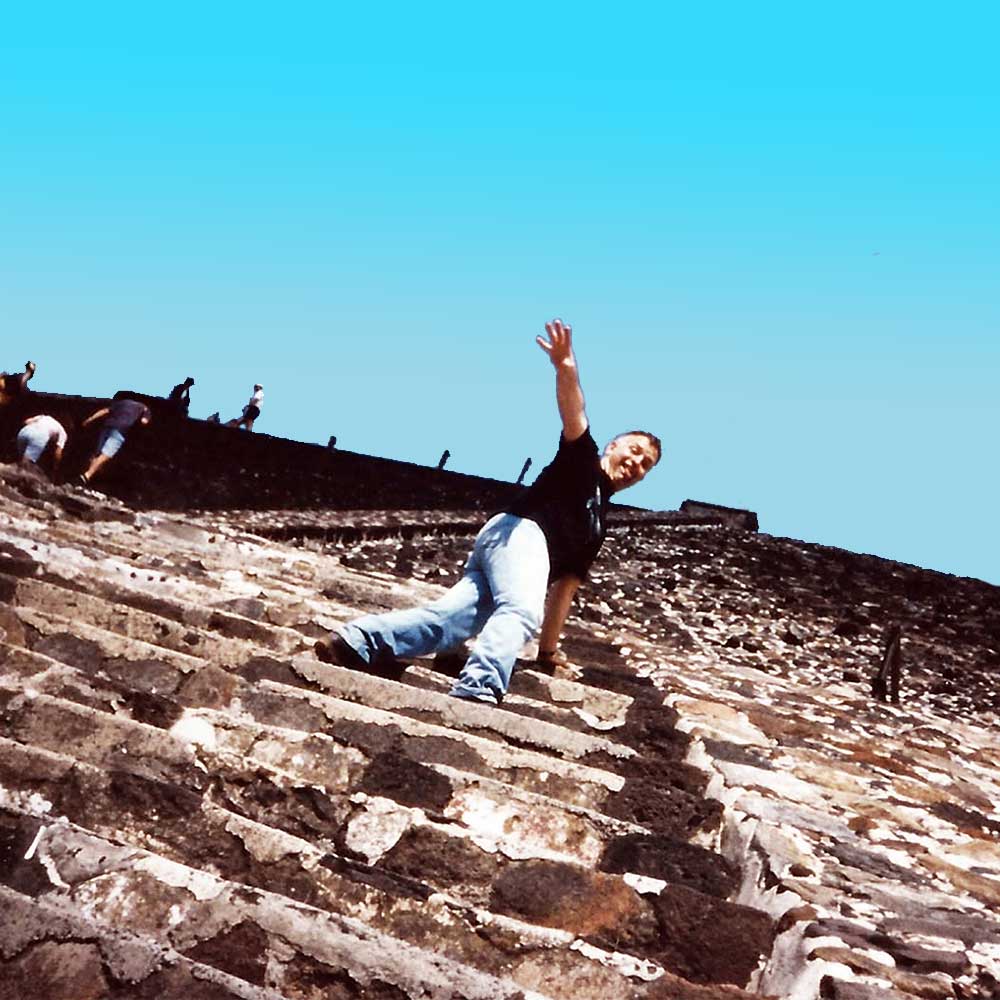
““ Teotihuacan, the steep Pyramid of the Sun, (me climbing the Pyramid)
““The  Pyramid of the Sun a direct view going up 216 feet.
““The Great Ruins of Teotihuacan, with the side view of the Pyramid of the Moon. (me sitting down) At its zenith, in the first century AD Teotihuacan was the largest city in the Americas, with a population estimated 125,000 or more
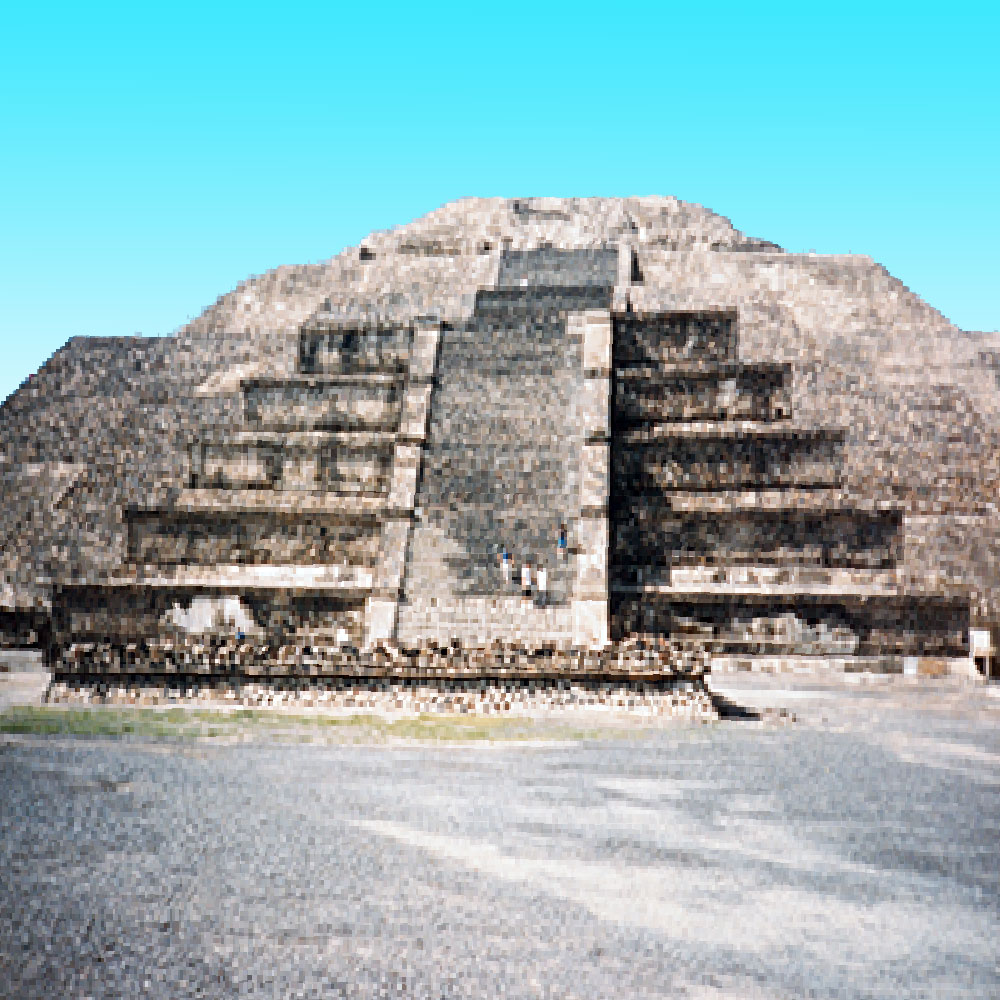
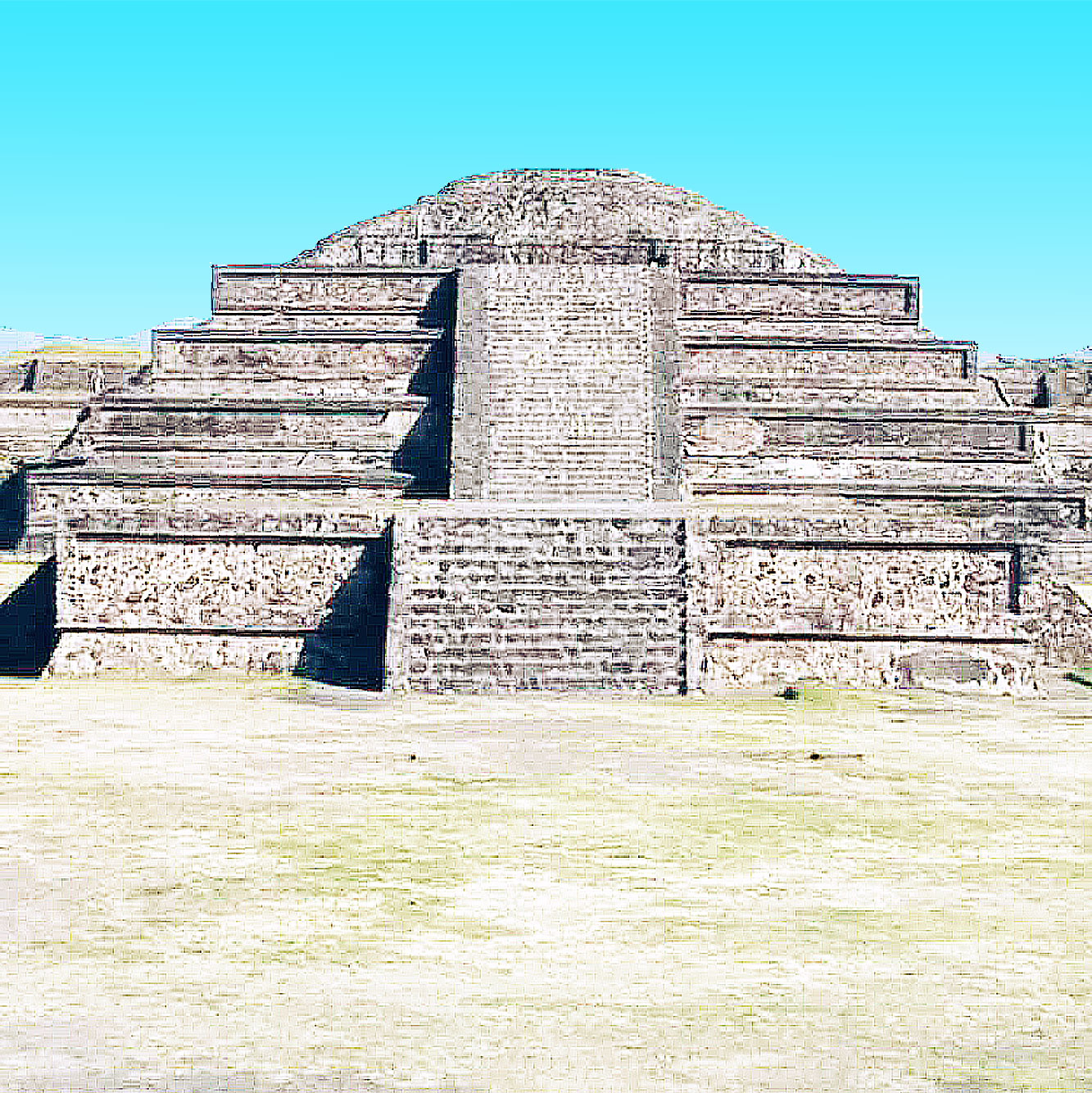
““The Pyramid of the Moon, the second largest pyramid in Teotihuacan, at approximately 140 to 141 feet (43 meters) tall.
““ The Temple of the Feathered Serpent is the third largest pyramid at Teotihuacan.
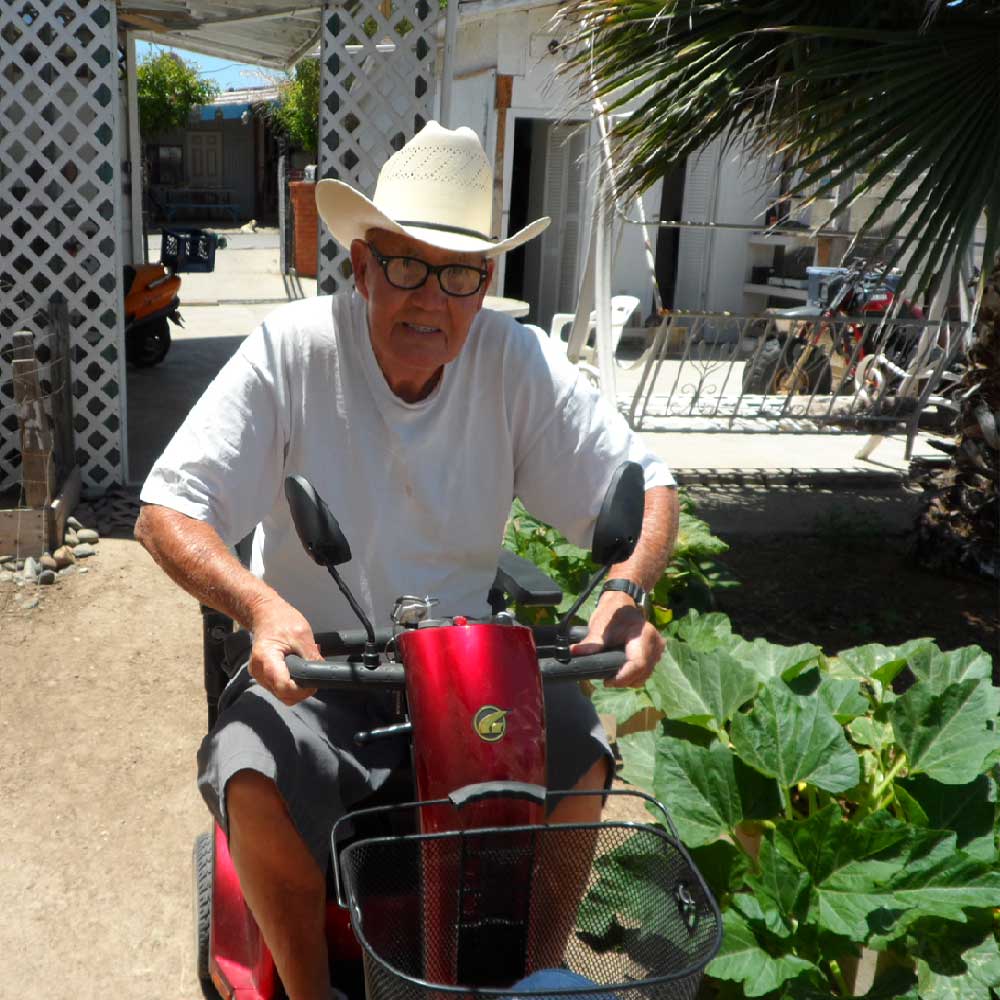
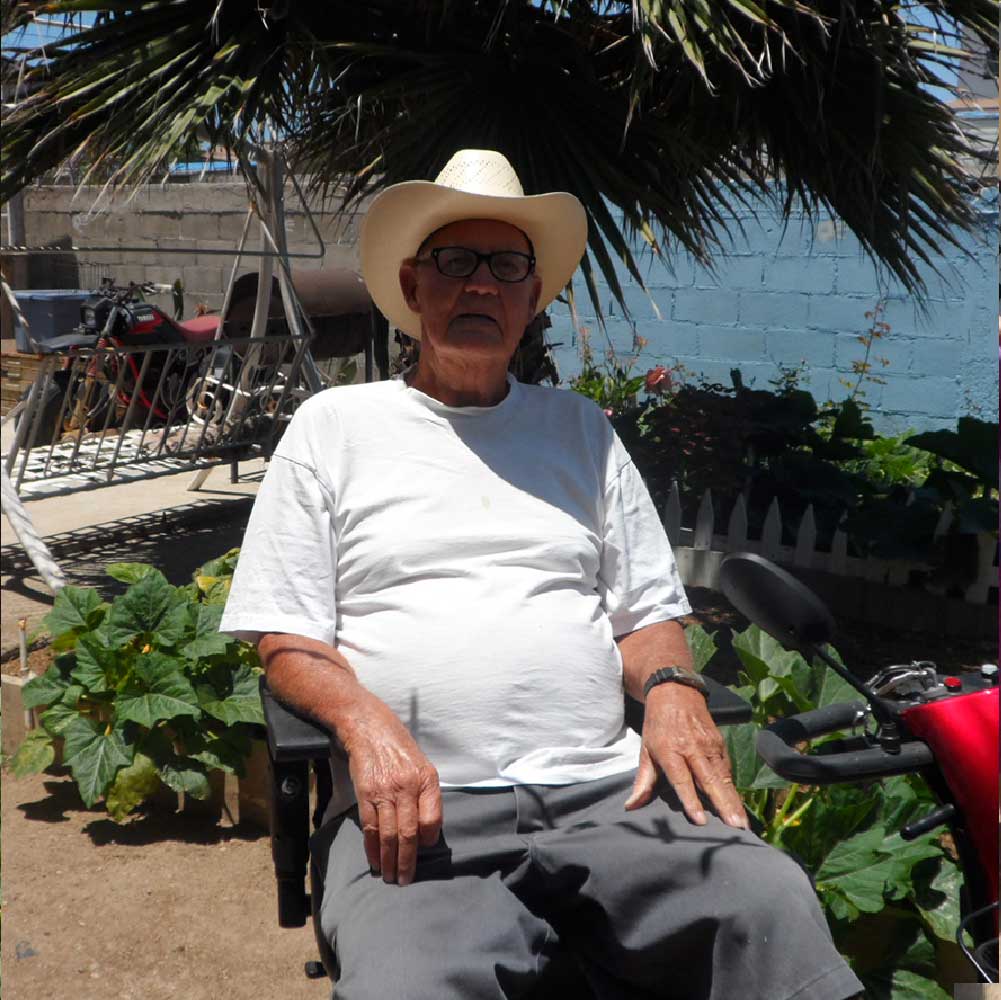
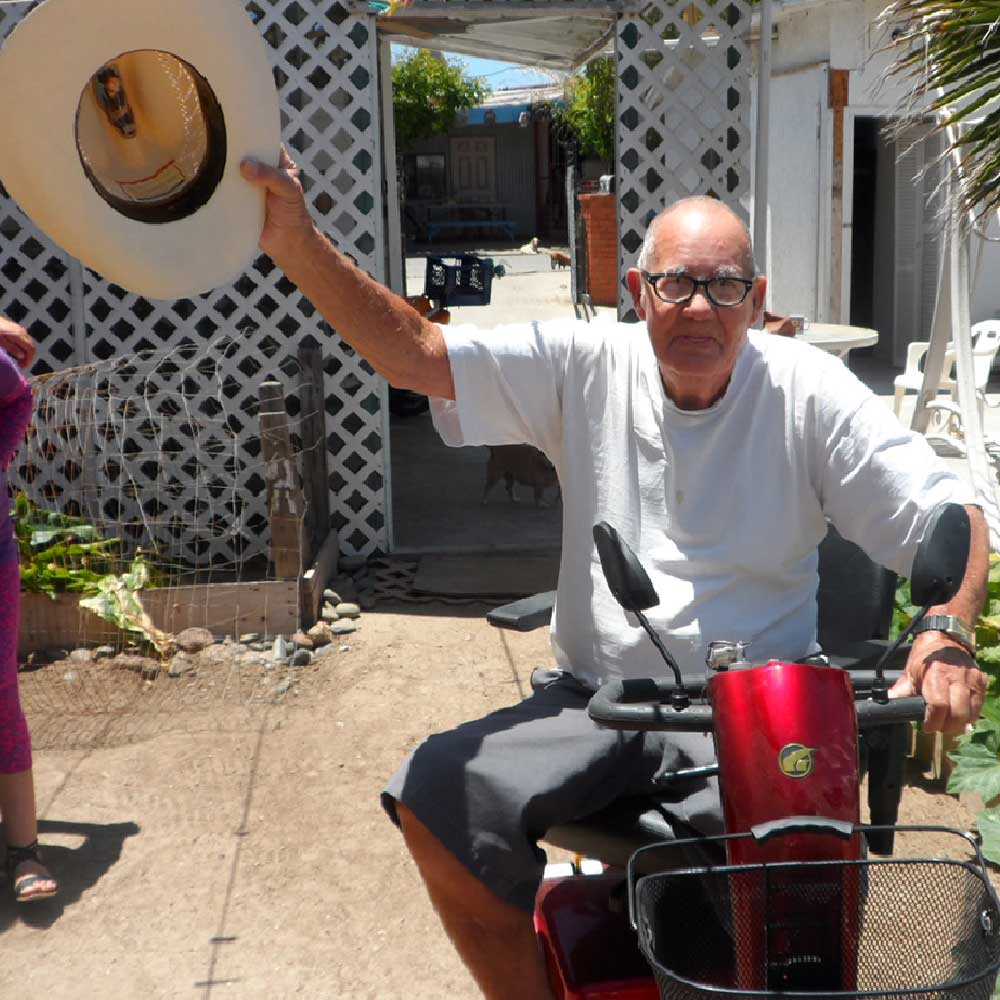
““Bill Brafford (Dad) at home in Ensenada, Mexico, 2009
““
““
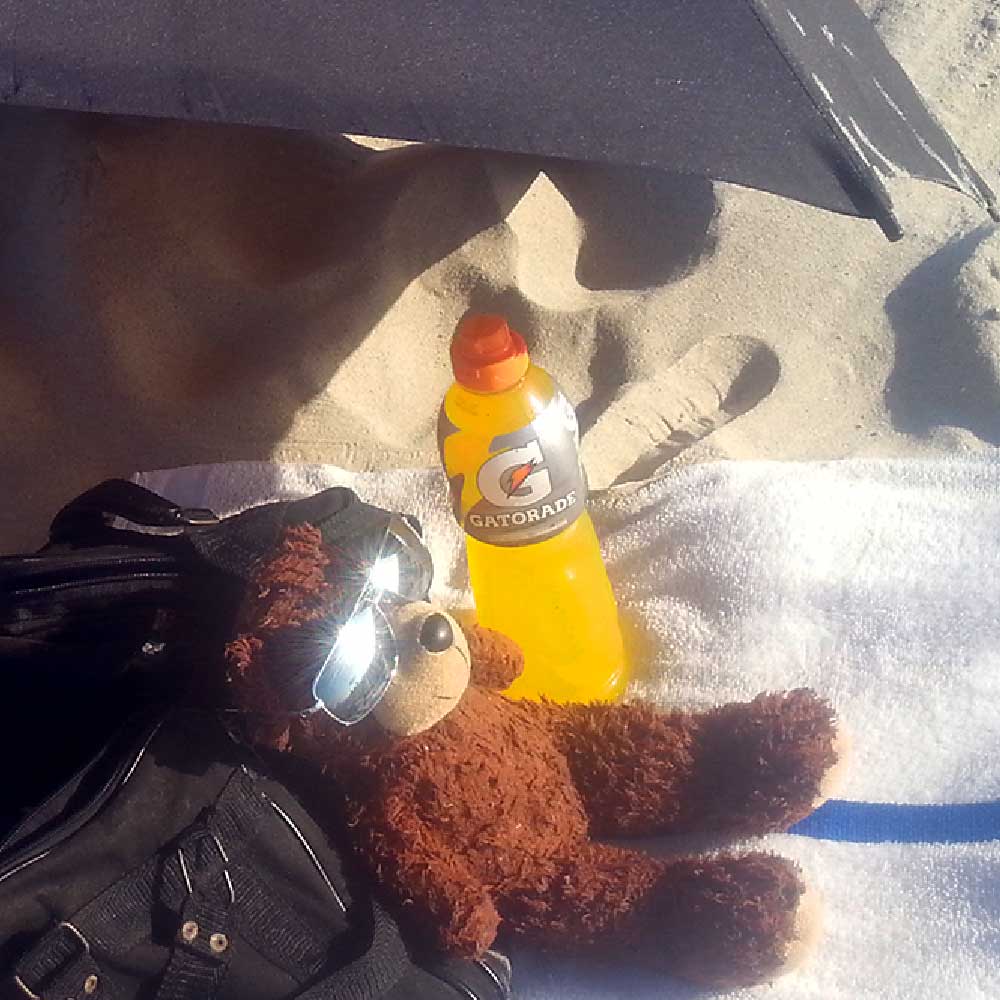
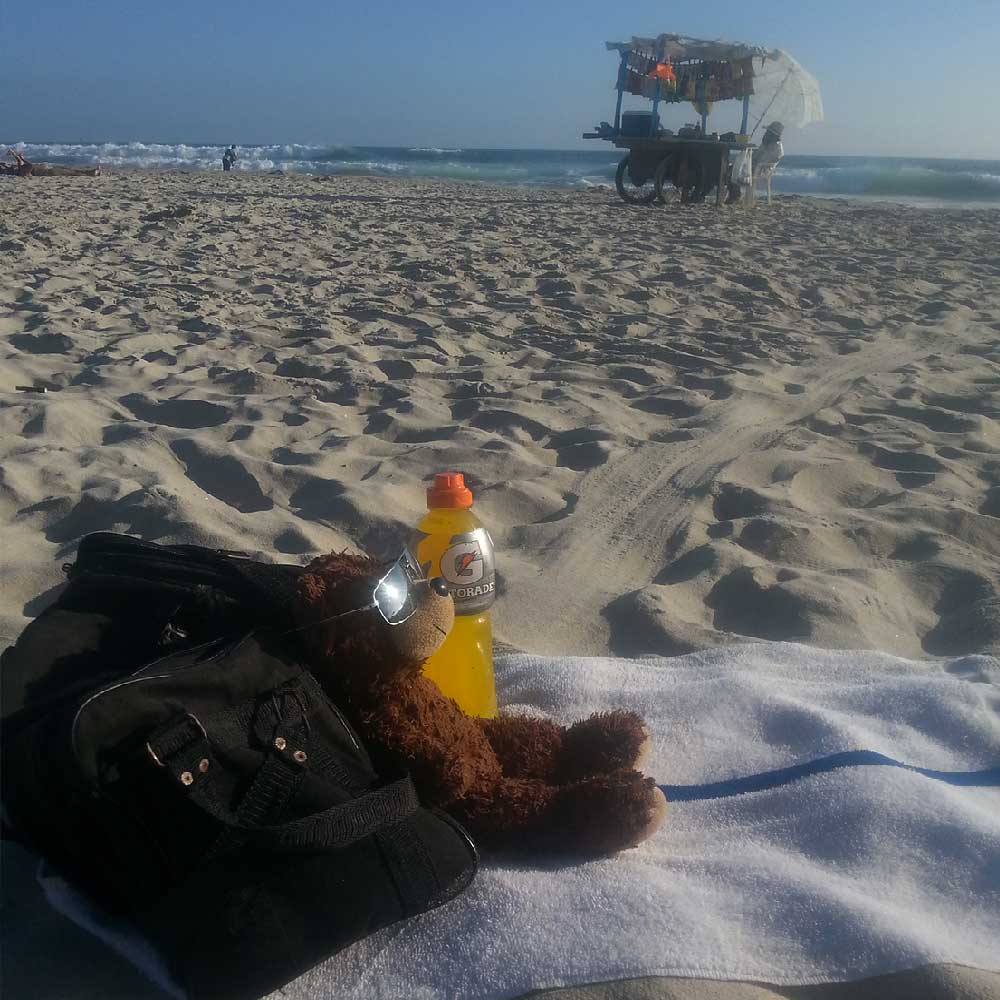
““ Rupert bear at Ensenada 2009
““
““
Website & Content Created by Richard Brafford, © 2025, All Rights Reserved, Fair Use Disclaimer for Non-Commercial Use for Educational & Entertainment Purposes OnlyTop