AMERICAN MUSEUM OF NATURAL HISTORY

The American Museum of Natural History, founded in 1869 and located at Central Park West and 81st Street in New York City, is one of the world’s leading scientific institutions. It houses some of the most impressive displays of carnivorous prehistoric reptiles—giant creatures that dominated Earth until an asteroid struck the Yucatán Peninsula 66 million years ago, triggering a mass extinction. Their power and presence still resonate today, a reminder of forces far larger than the challenges of modern life. 66 Million Years Ago-How The Dinosaurs Became Extinct
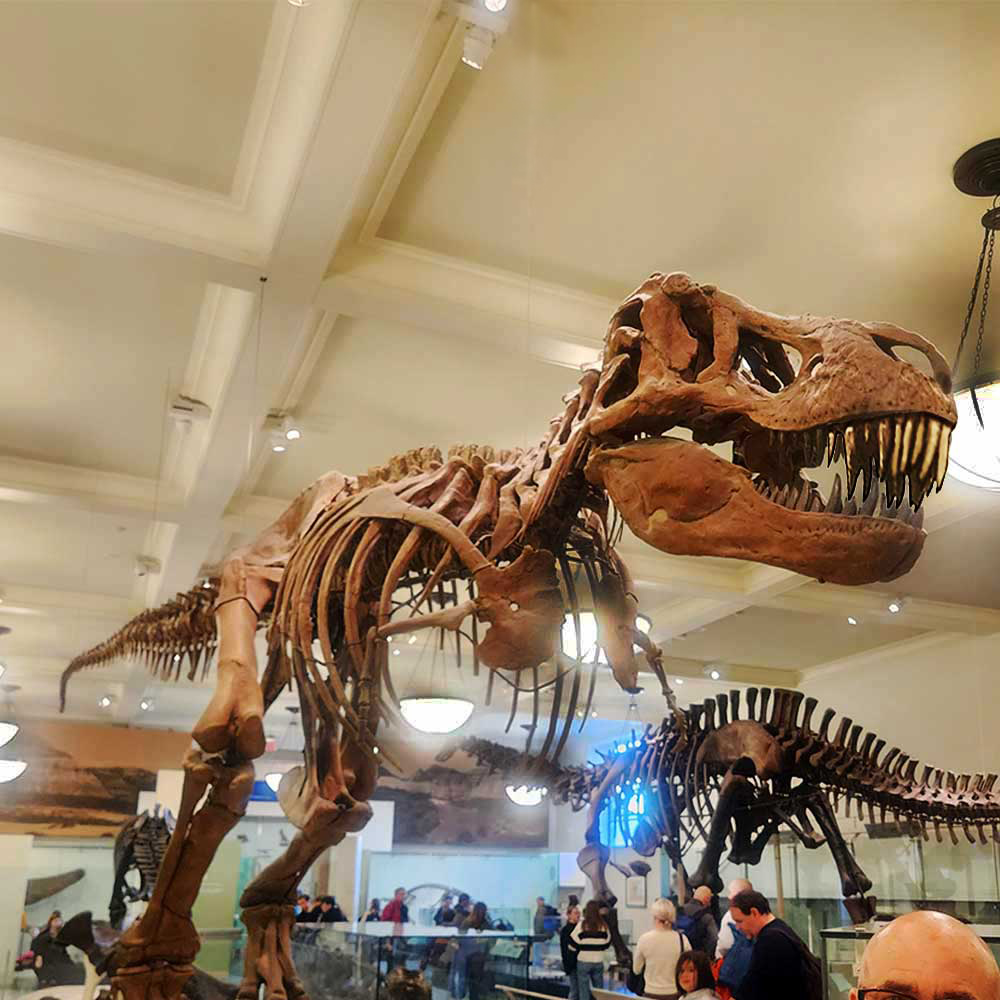
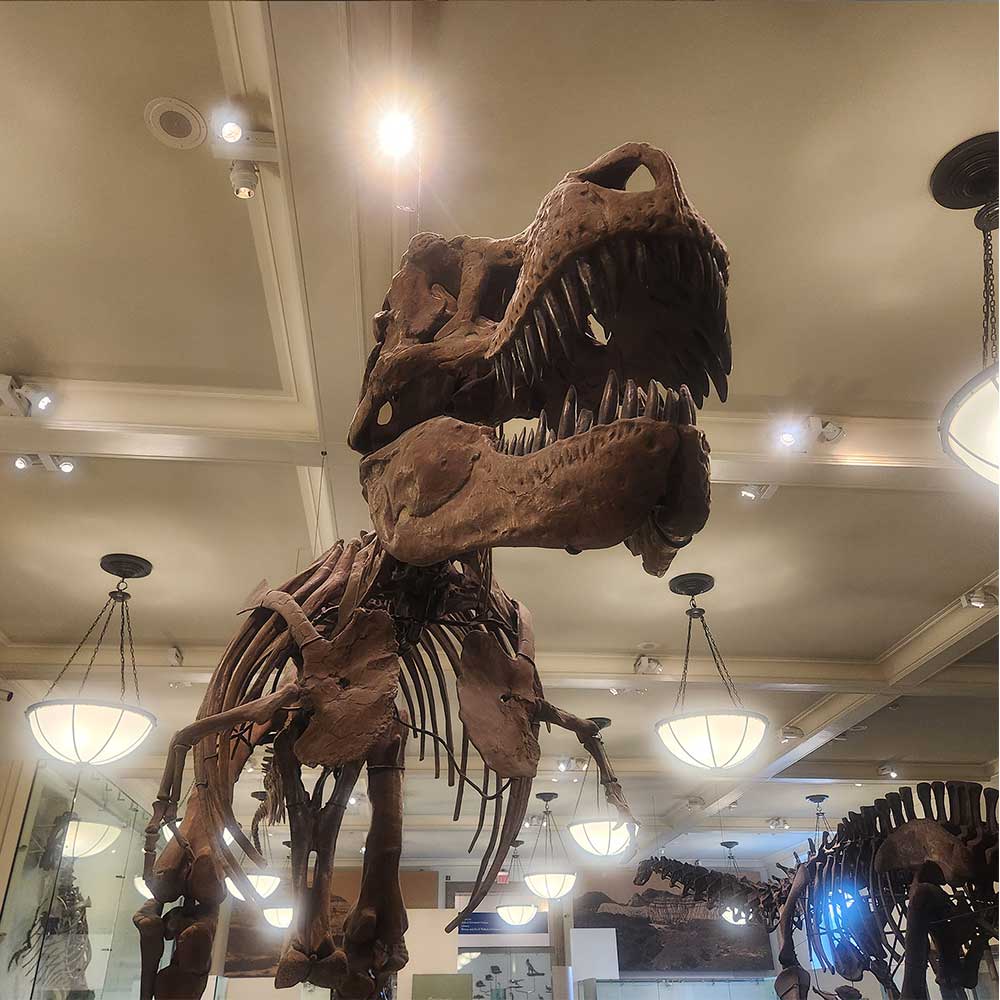
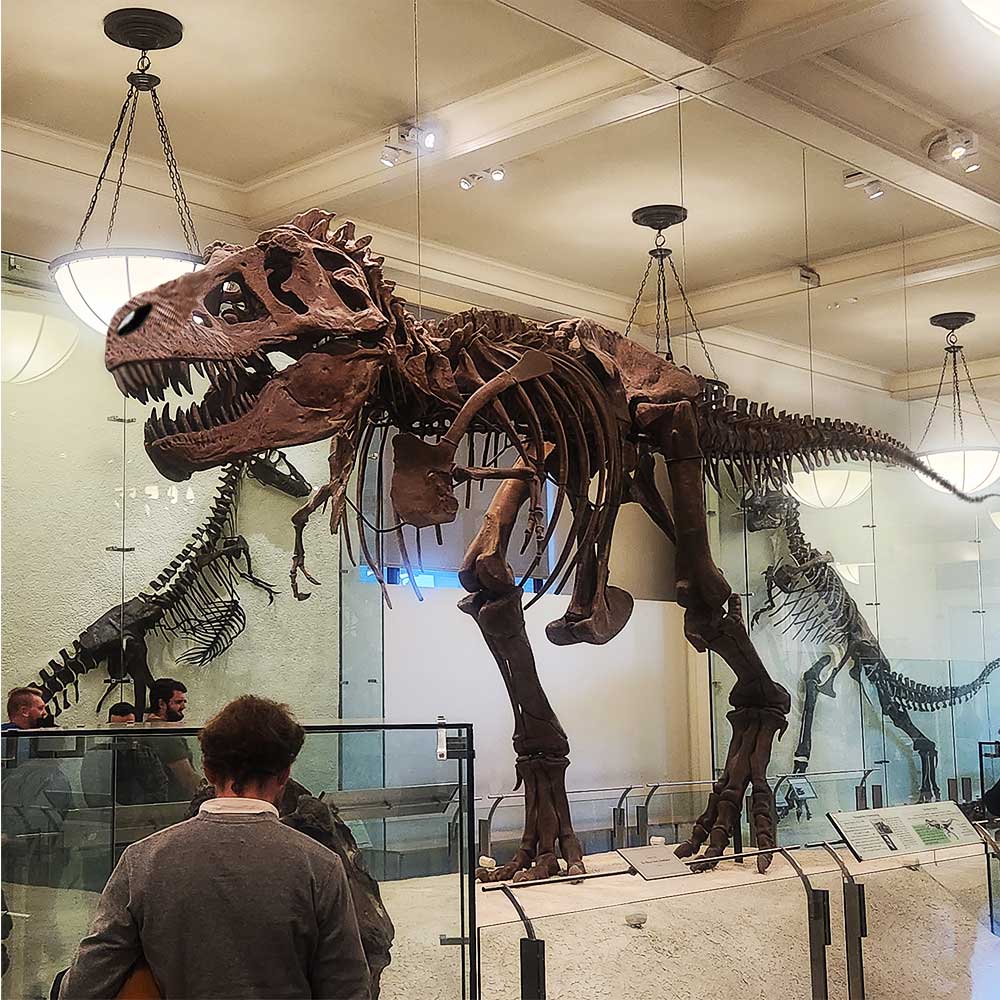
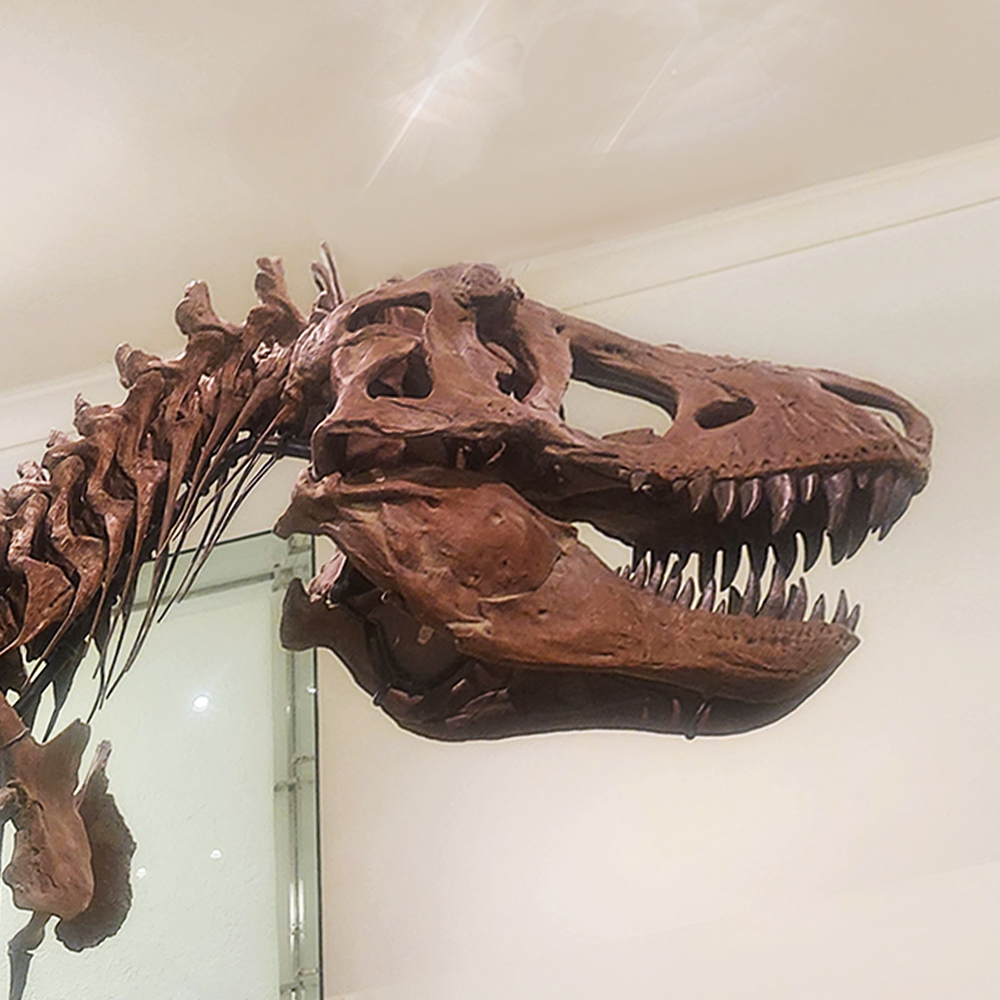
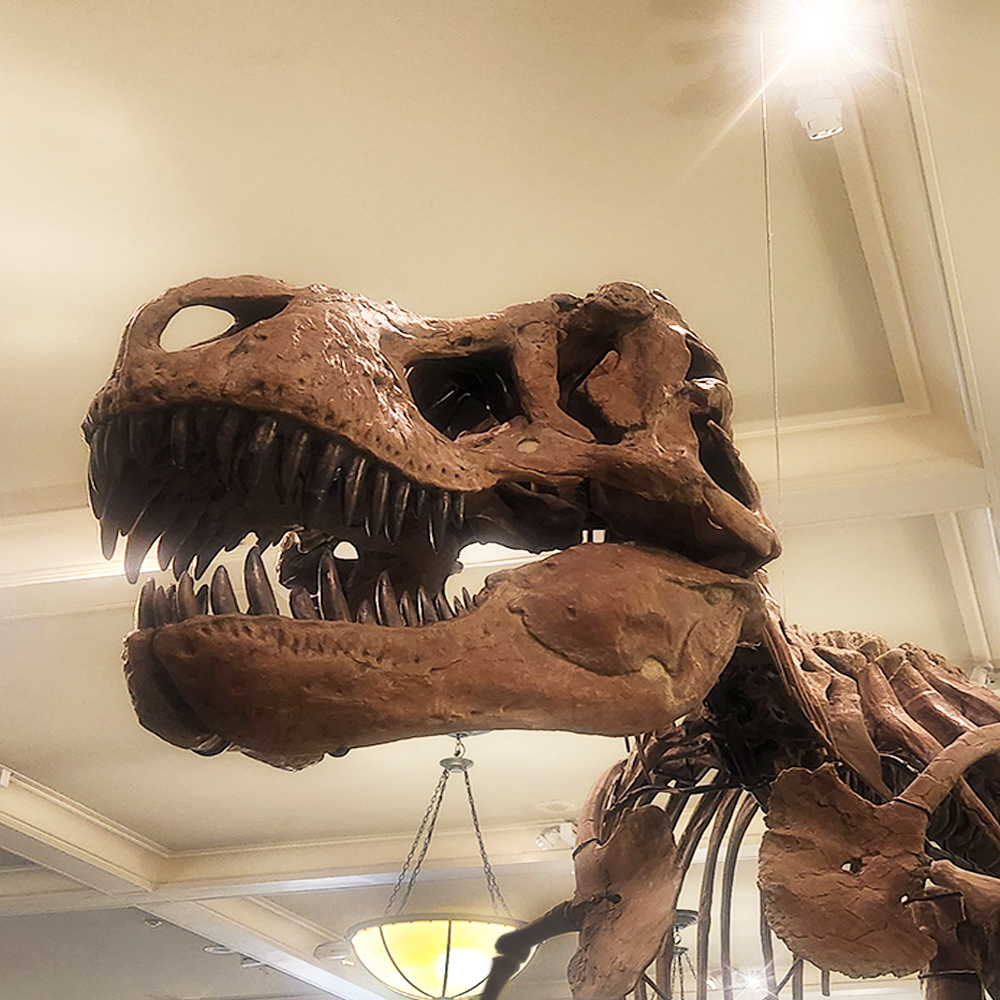
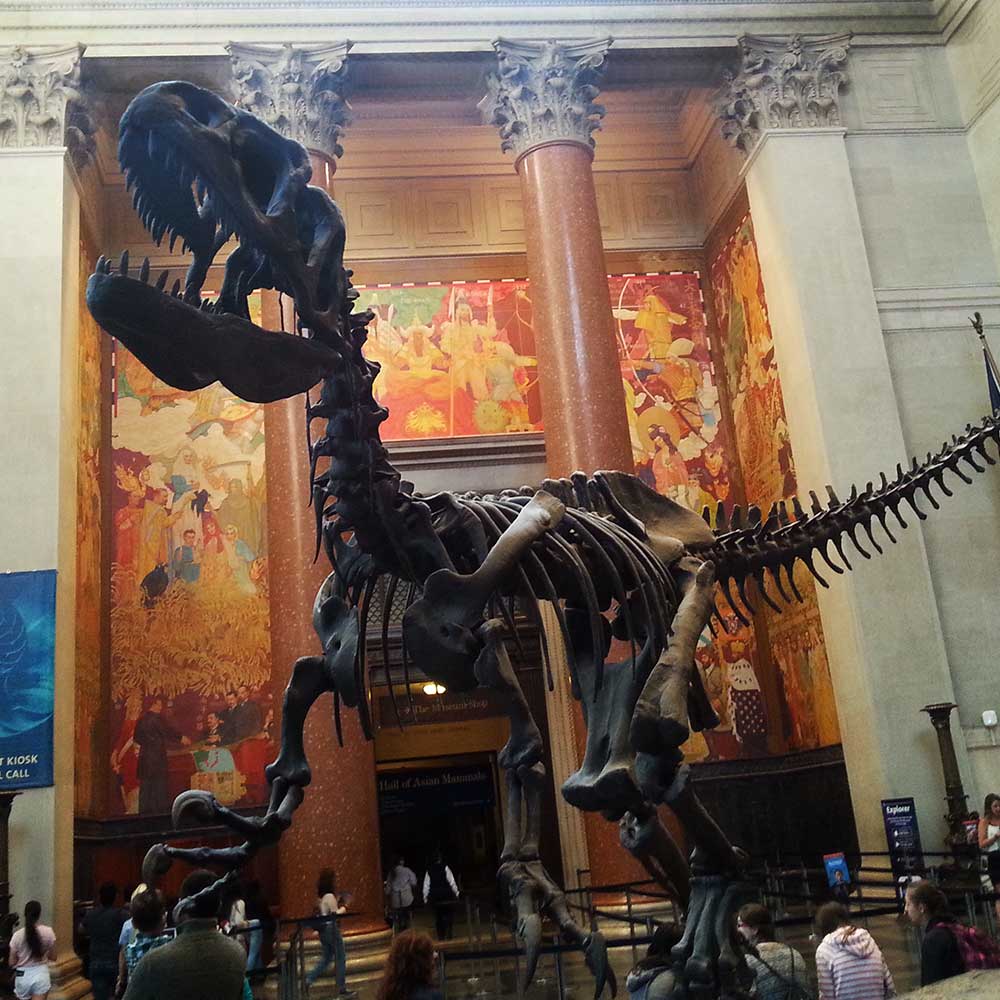
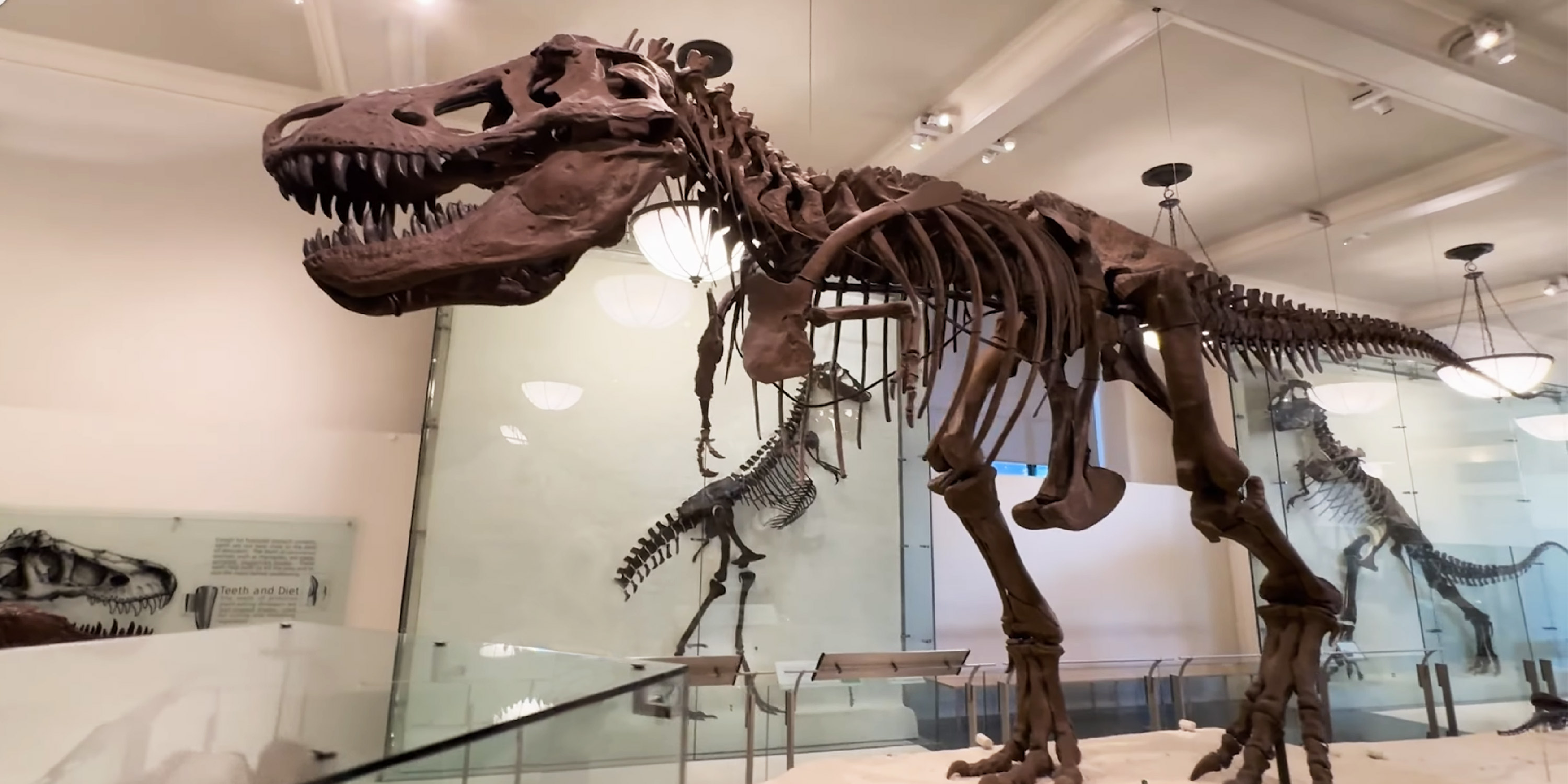
The Tyrannosaurus rex The Tyrannosaurus rex—its name meaning “tyrant lizard king”—was first discovered in 1902 in Hell Creek, Montana, by fossil hunter Barnum Brown of the American Museum of Natural History. Six years later, Brown uncovered a nearly complete skeleton at Big Dry Creek, blasting away rock to reveal a remarkably preserved specimen with an intact skull. T-rex lived about 83.6 million years ago, stood roughly 40 feet tall, and weighed between 9,000 and 18,000 pounds. Capable of running up to 45 miles per hour, it was a powerful carnivore with serrated, bone‑crushing teeth—making it one of the most formidable predators of its time. One of its preferred prey animals was the Triceratops.
Tyrannosaurus rex, American Museum of Natural History, NYC
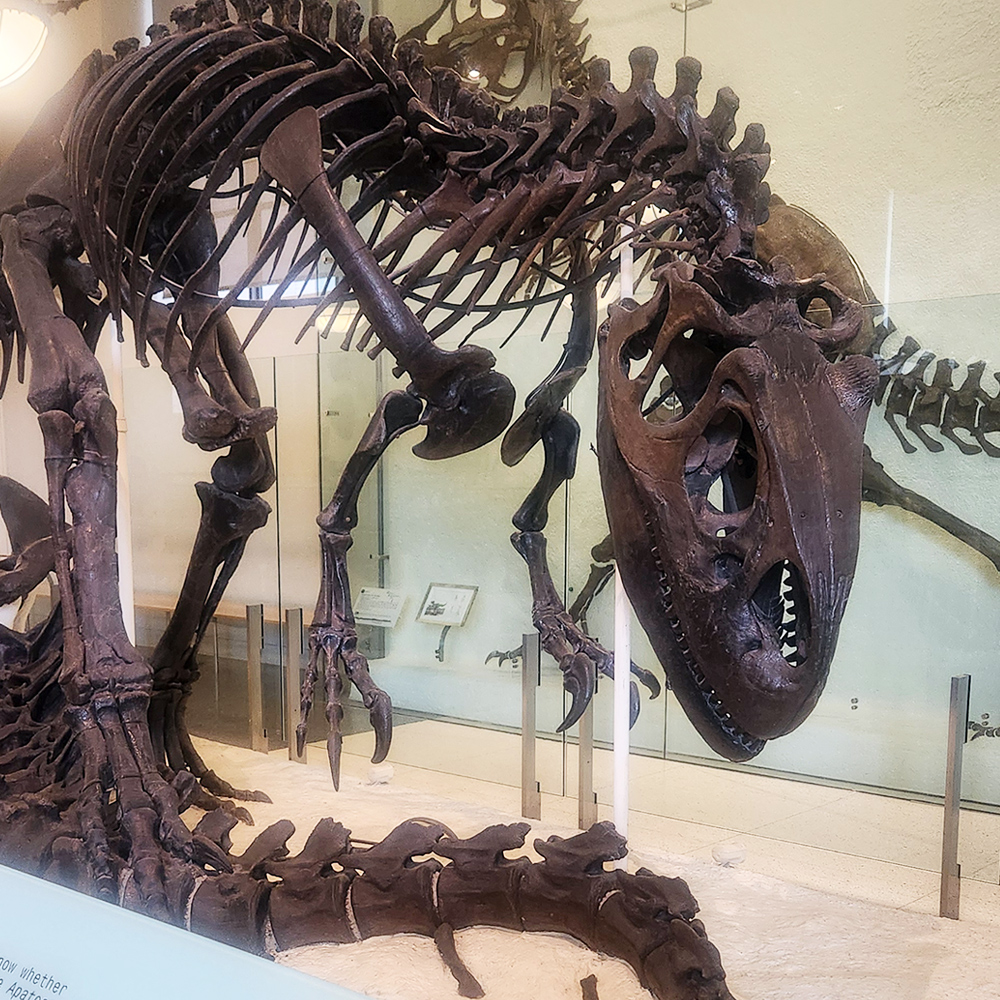
Allosaurus, carnivorous theropod dinosaur, lived 175 million years ago, American Museum of Natural History, NYC
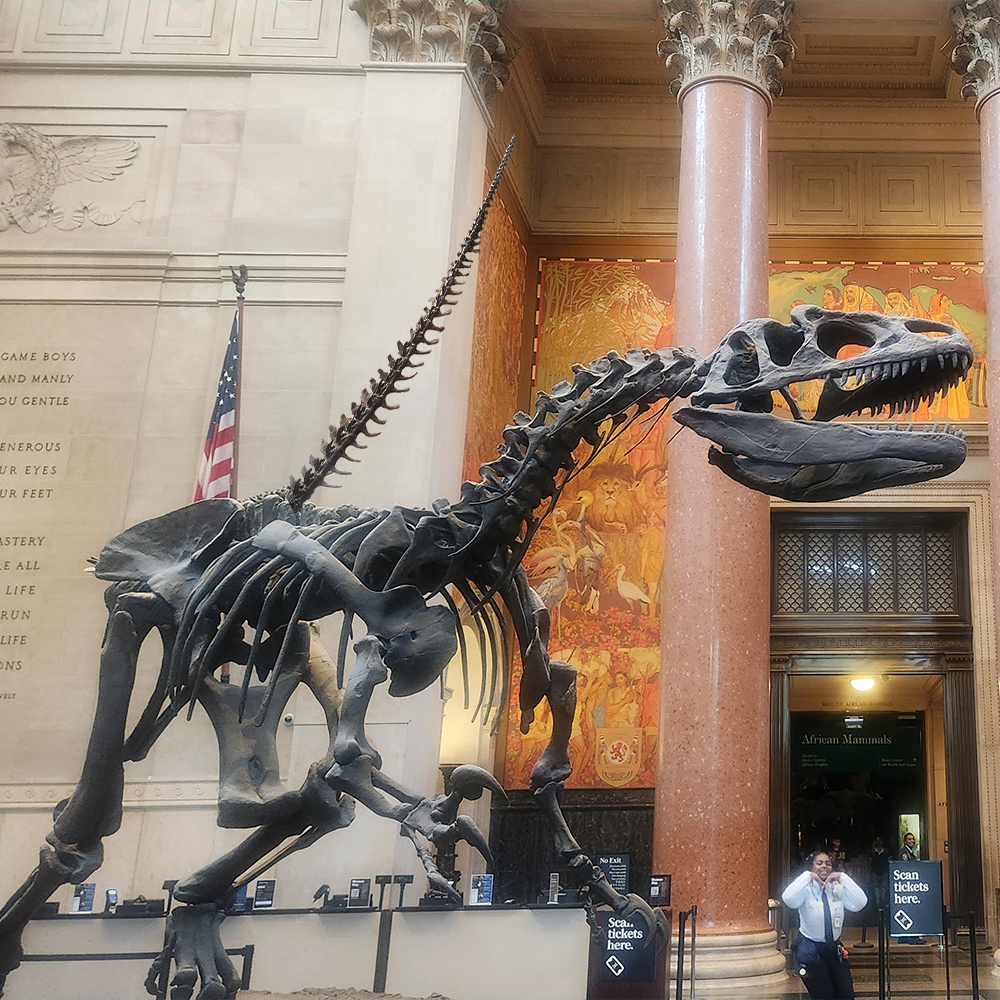
Exhibit: in the Theodore Roosevelt Rotunda, a carnivore Allosaurus attacking a Barosaurus defending its baby, American Museum of Natural History, NYC
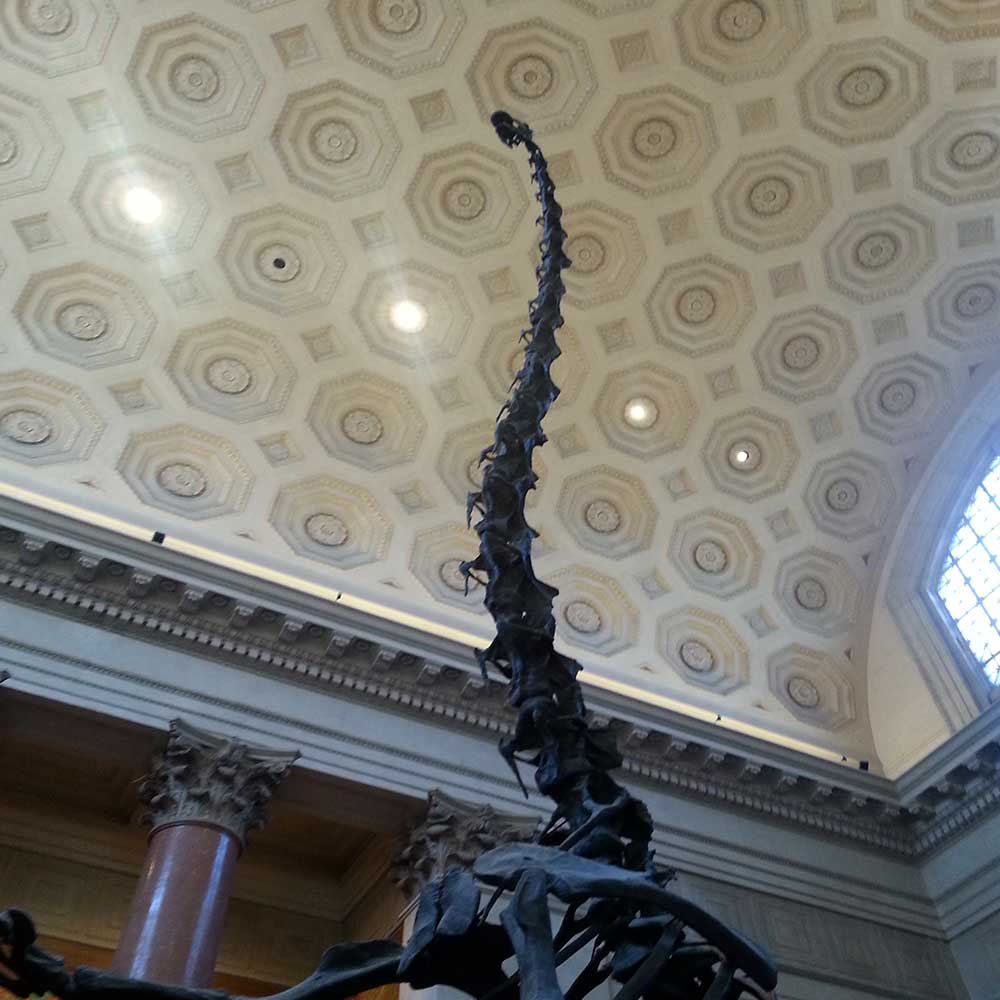
The enormous Barosaurus is the world's tallest freestanding dinosaur mount. It comprises casts of real bone since fossils are too heavy to support it in this way. American Museum of Natural History, NYC.
In a prehistoric encounter between predator and prey, a Barosaurus rears up to protect its young from an attacking Allosaurus, the Theodore Roosevelt Rotunda, American Museum of Natural History, NYC.
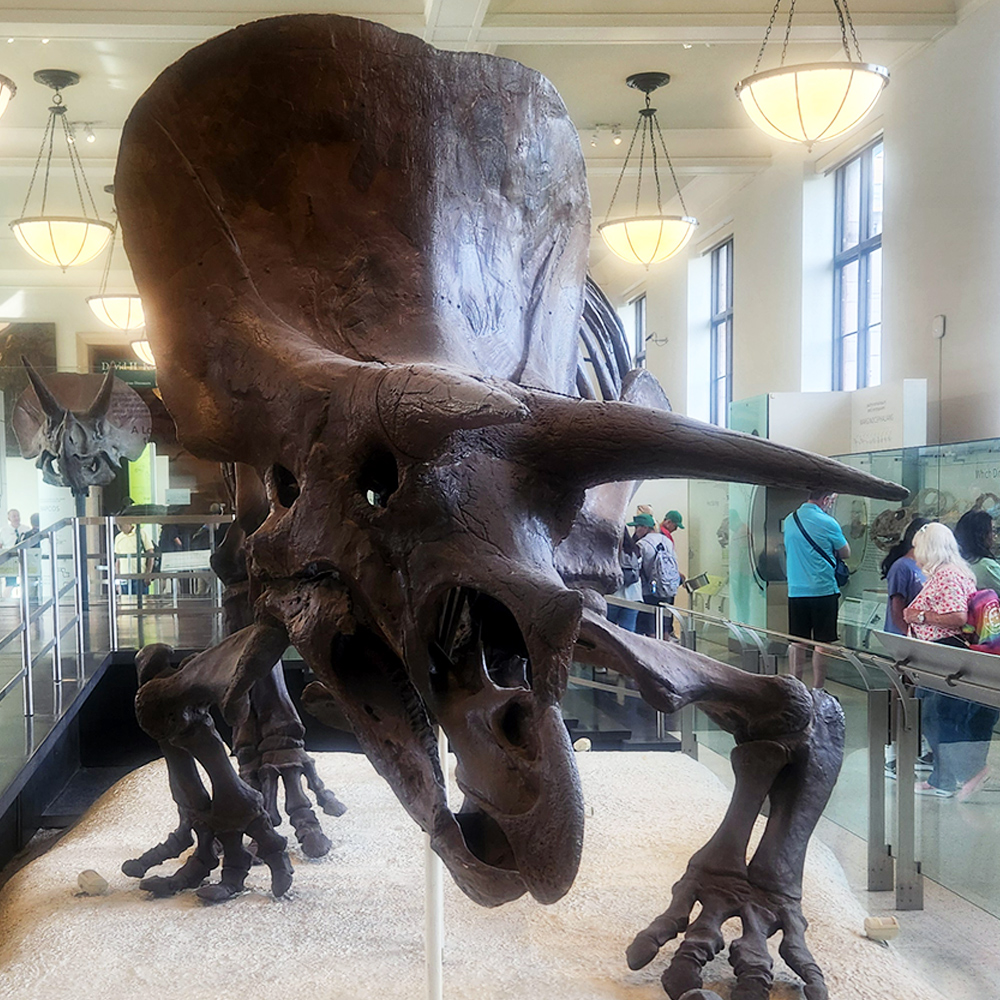
Triceratops, 'three-horned face', lived 66 million years ago, American Museum of Natural History, NYC.
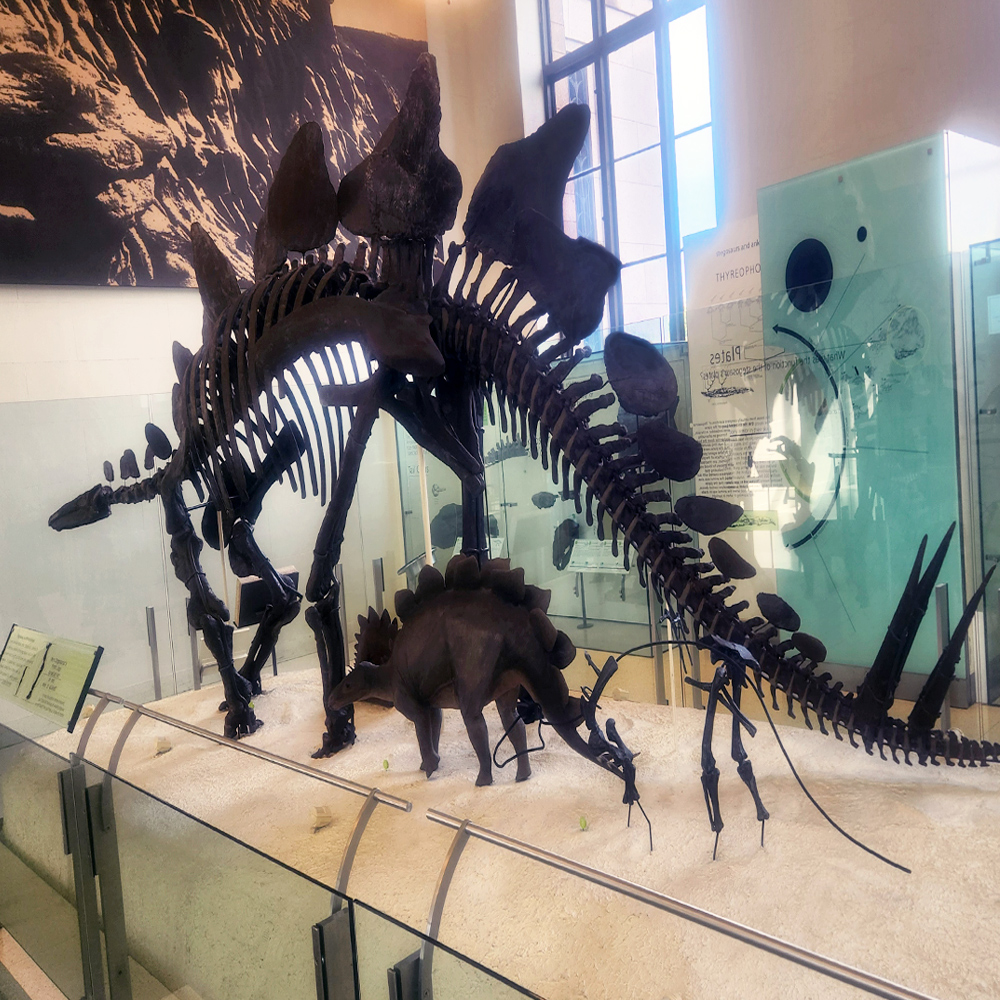
Stegosaurus, herbivorous, four-legged, armored dinosaur, lived 155 million years ago, American Museum of Natural History, NYC.
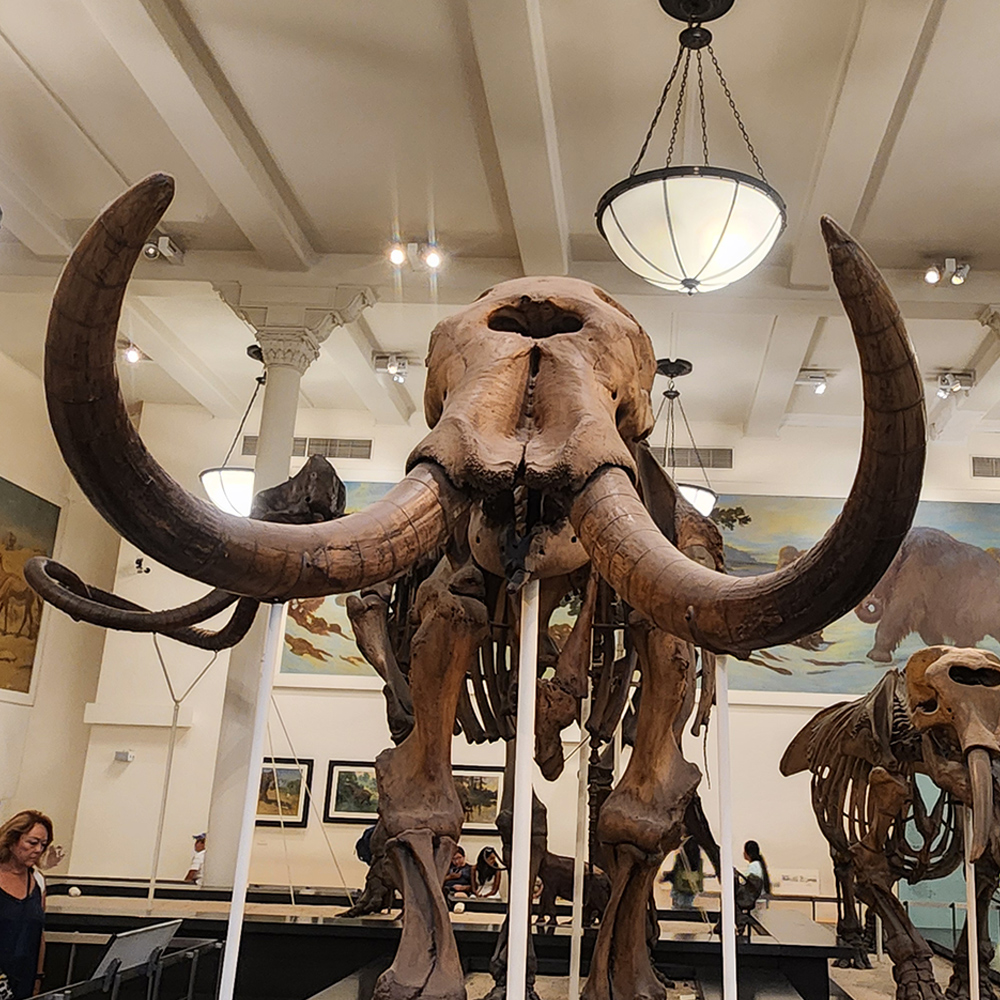
Woolly Mammoth, lived 10,000 years ago, American Museum of Natural History, NYC.
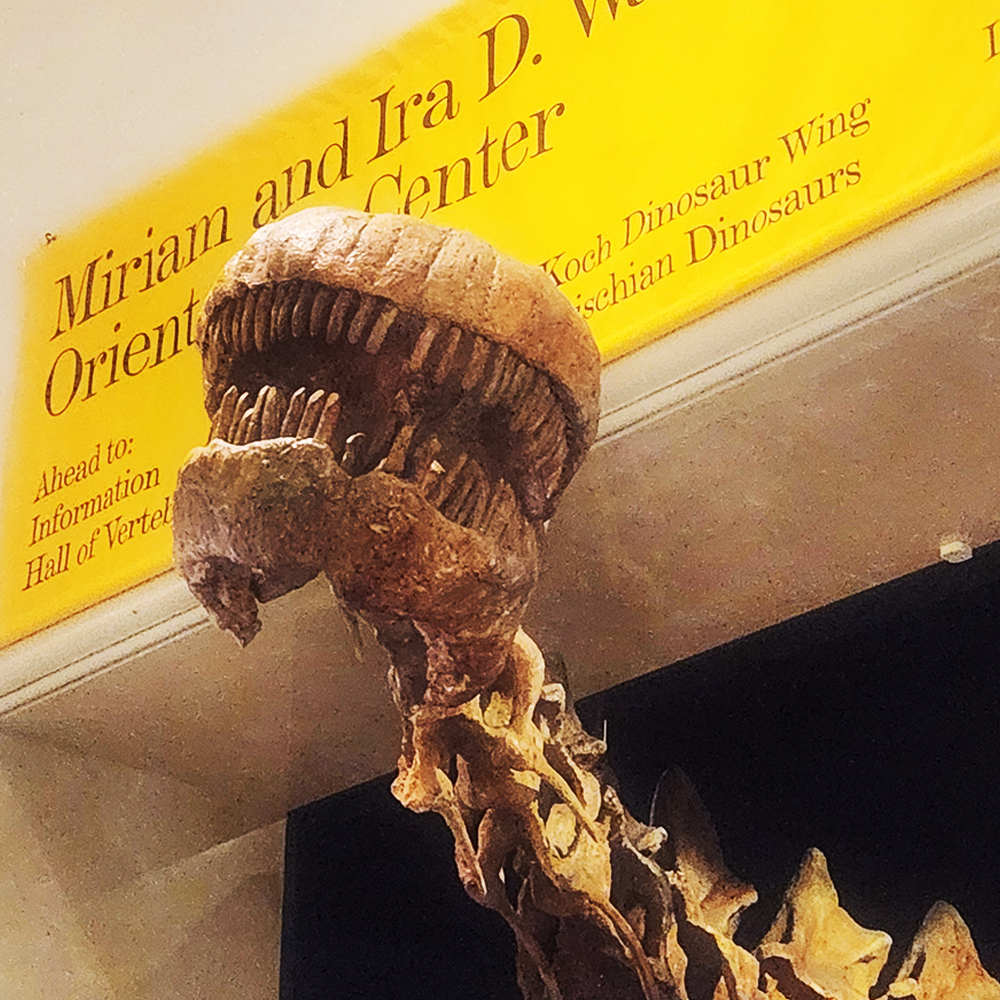
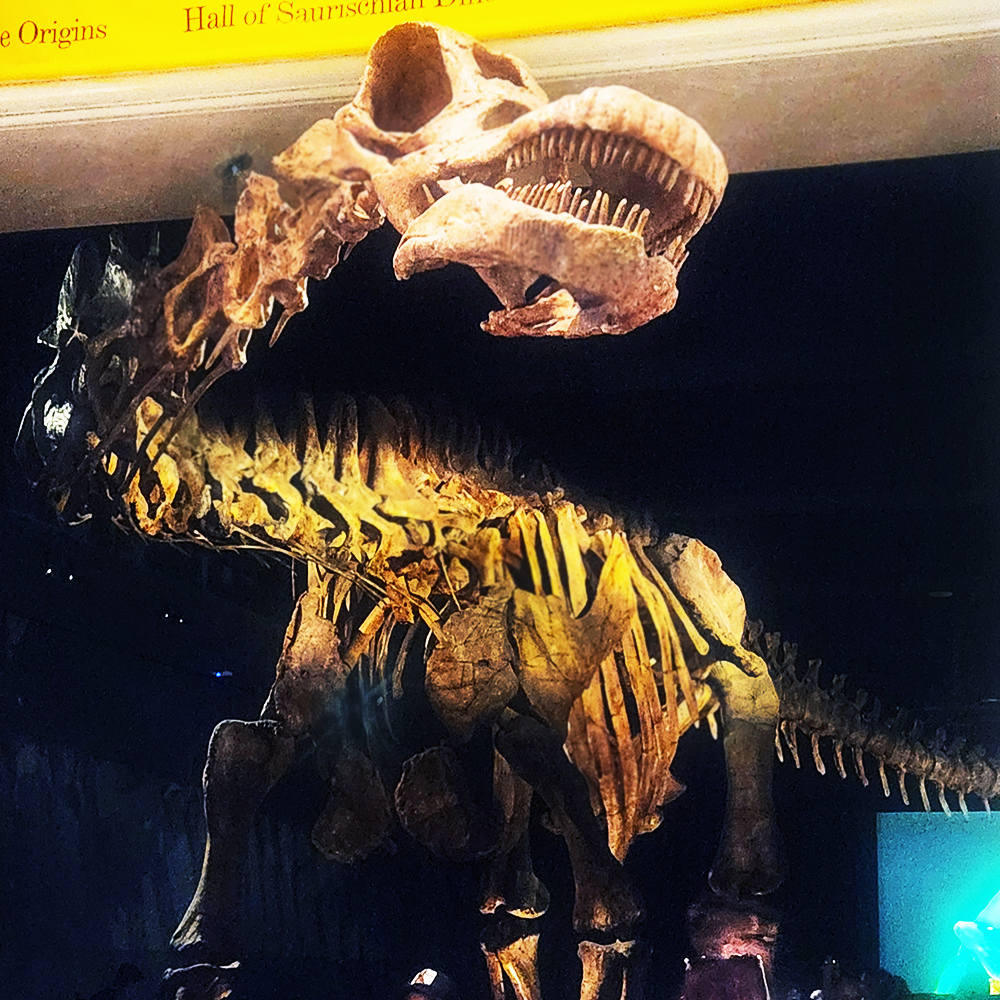
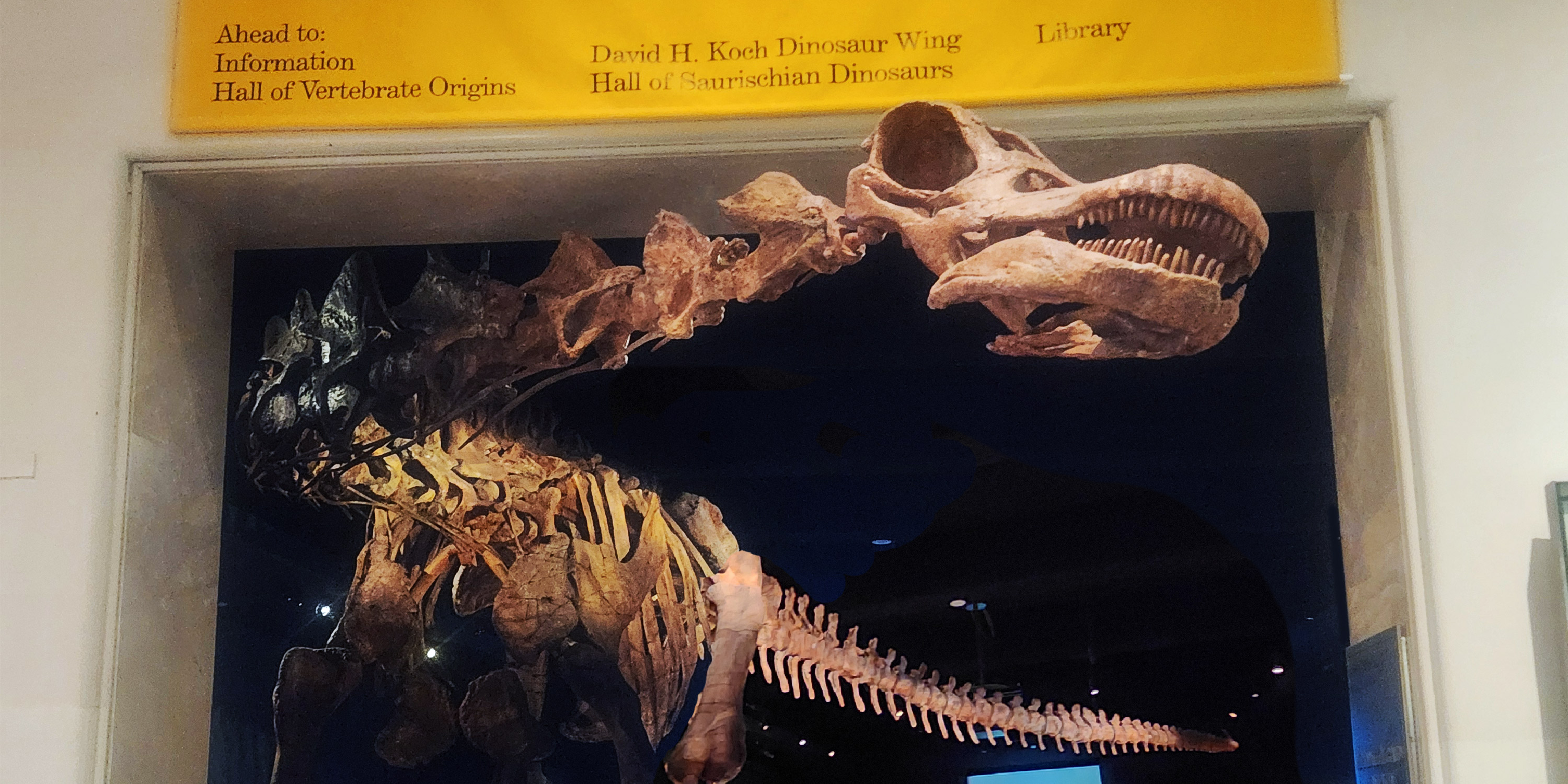
the Titanosaur The American Museum of Natural History now displays the Titanosaur, the largest prehistoric creature ever exhibited. Measuring 122 feet long, it’s so enormous that its small head extends beyond the gallery just to fit inside. Discovered in 100‑million‑year‑old Patagonian rock, the original bones were found scattered with no complete skeleton. The museum’s towering reconstruction uses casts of this new species combined with bones from close relatives to create the best scientific estimate of its full size.
c" a sauropod herbivore discovered by Paleontologists in the Patagonian Desert of Argentina in 2014, American Museum of Natural History, NYC
Titanosaurs" lived about 145 million years ago, weigh about 70 tons, are 17 feet tall, and are 122 feet long. They are found at the American Museum of Natural History, NYC.
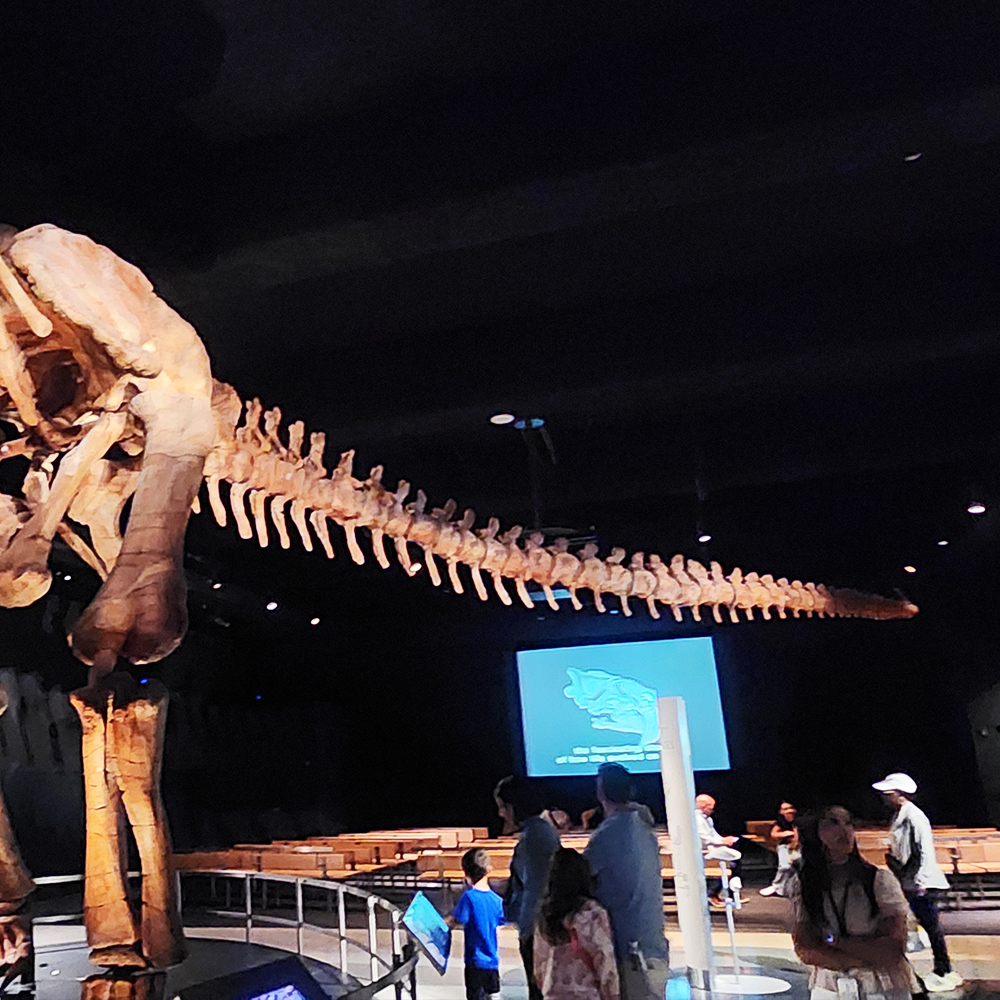
Titanosaur tail 82 feet" the exhibit features bones, fossils and a fibreglass replica of the creature, American Museum of Natural History, NYC.
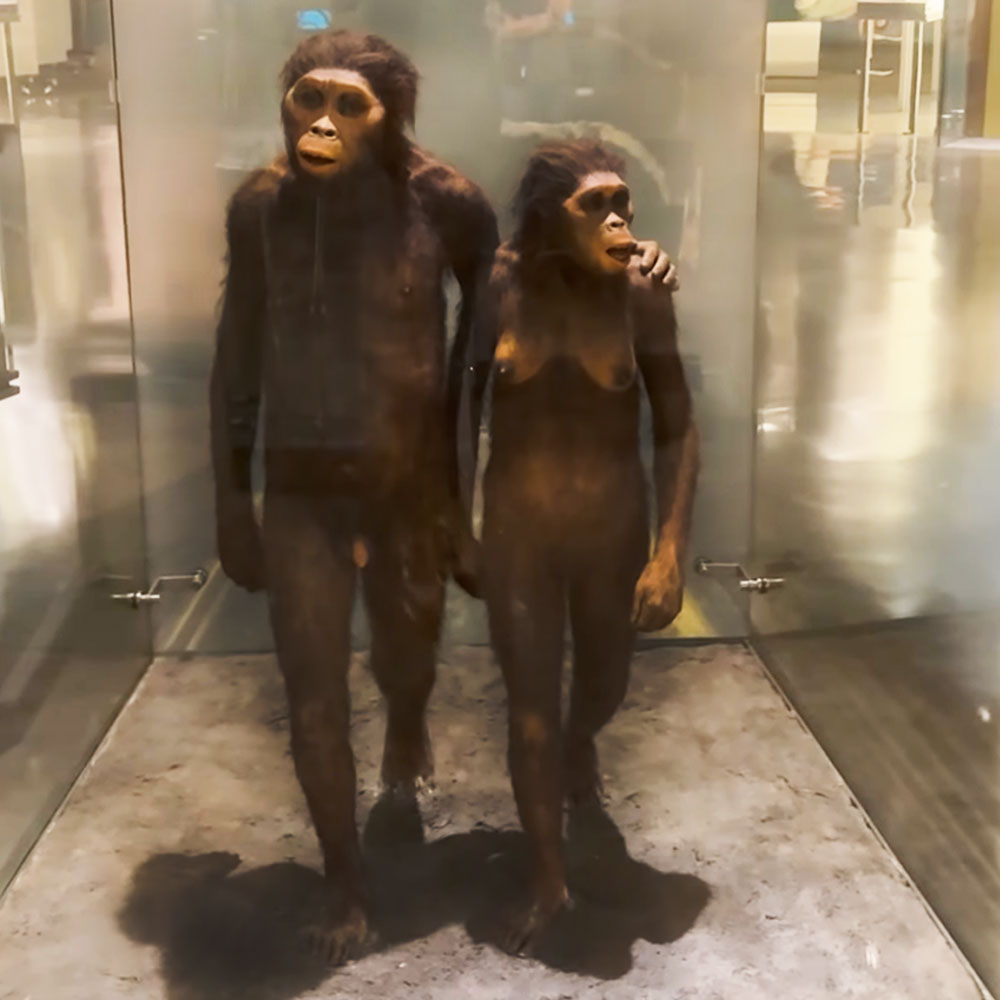
human evolution Biologically, humans are not descended from modern monkeys but share a common ancestor with chimpanzees (our closest living ape relatives). While humans are classified as primates, they belong to the Hominidae family (apes), not Cercopithecidae (monkeys). The phrase "man is a monkey" is often used metaphorically. For decades, Australopithecus afarensis—best known through the 1974 fossil “Lucy”—has been treated as a direct ancestor of all later human species.
Australopithecus afarensis—best known through the 1974 fossil “Lucy” has been treated as a direct ancestor of all later human species. New research now challenges that assumption.
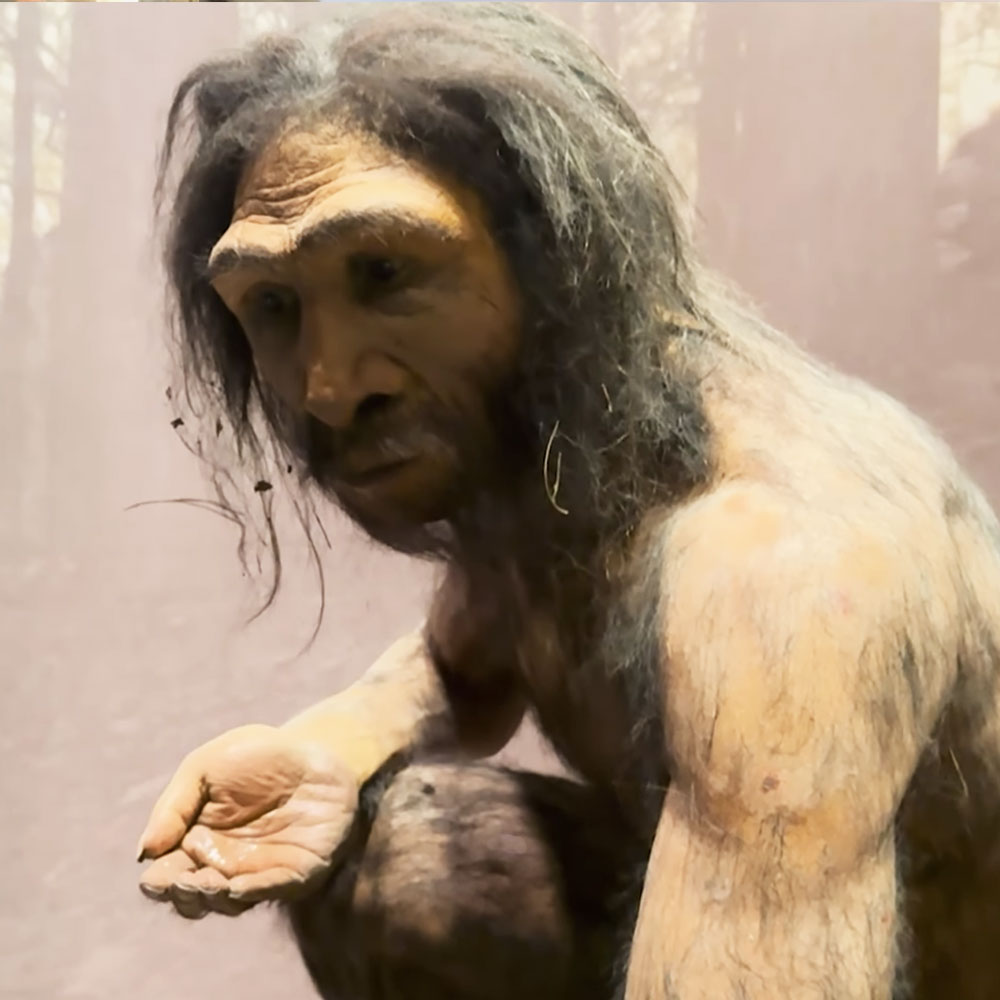
Homo neanderthalensis, Neanderthals, an extinct species of early human that lived in Europe and Western Asia approximately 400,000 to 40,000 years ago
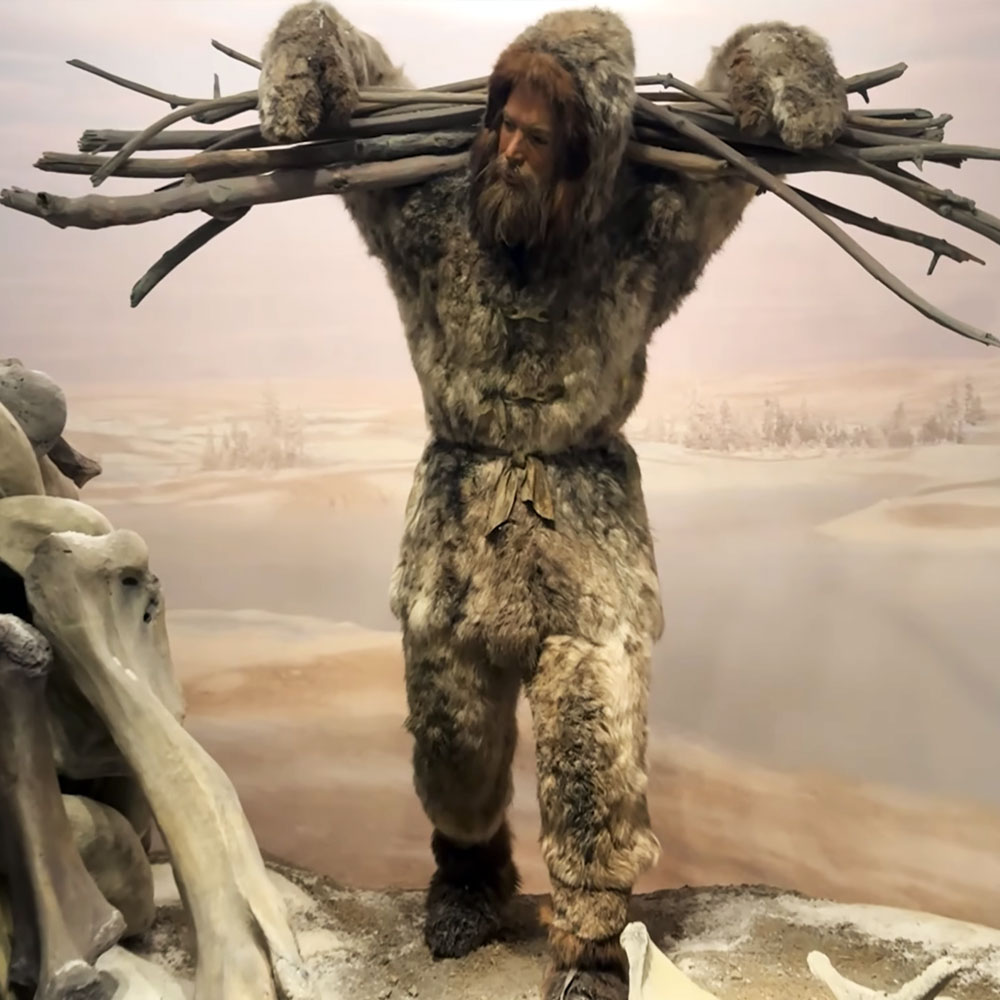
Homo sapiens known as Cro-Magnon man a reconstruction of an early modern humans who lived in Europe during the Ice Age, approximately 15,000 to 40,000 years ago
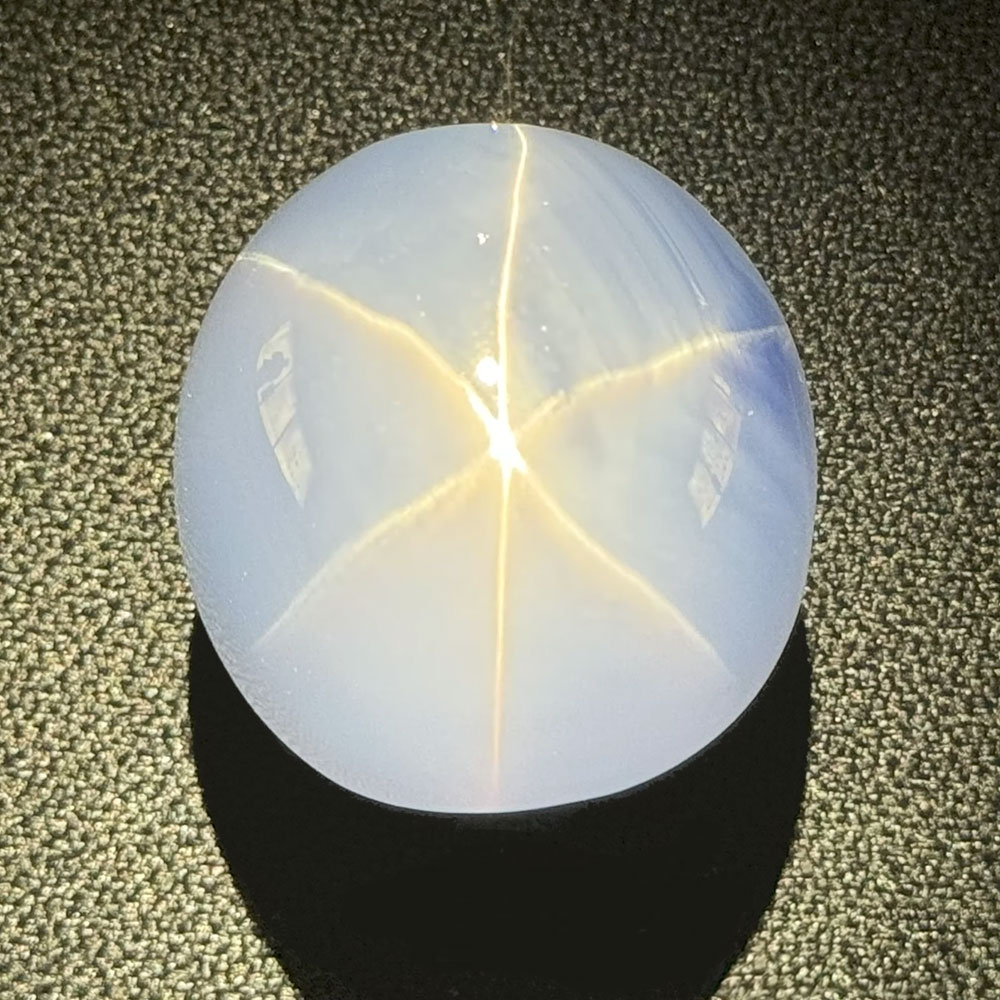
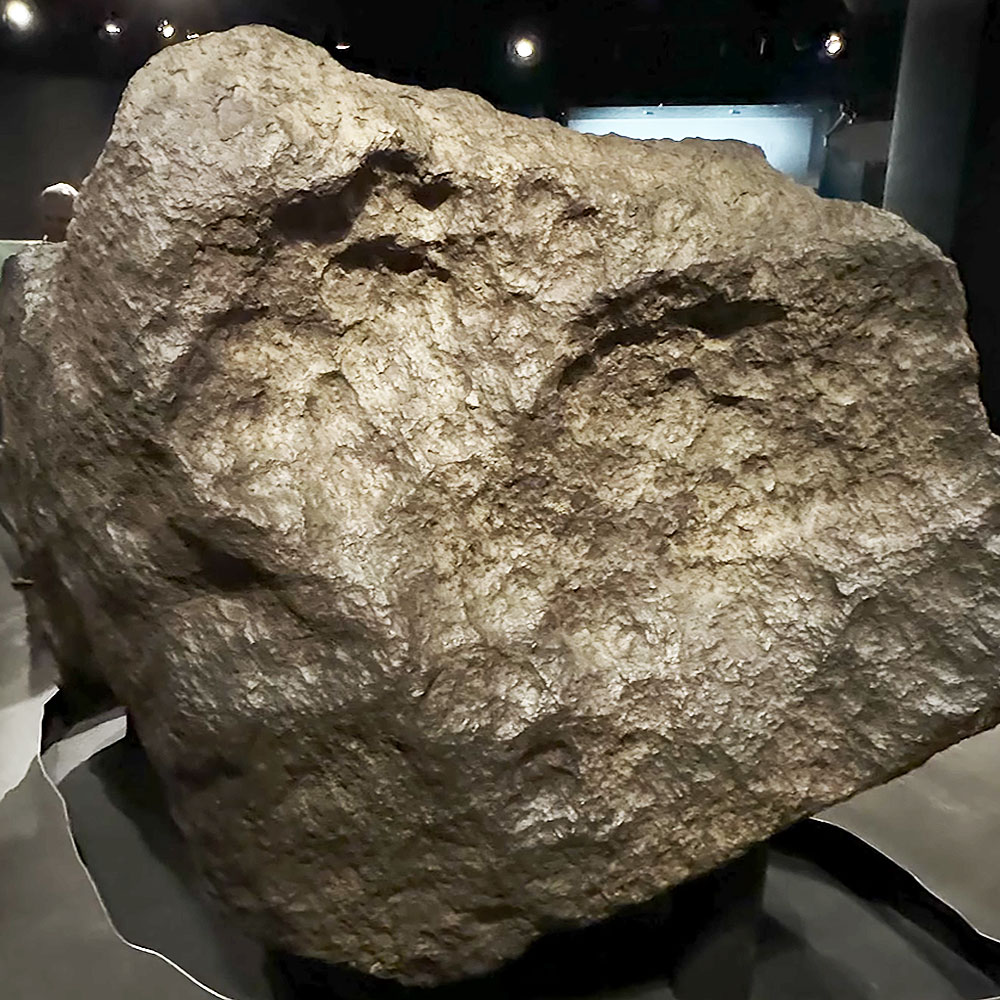
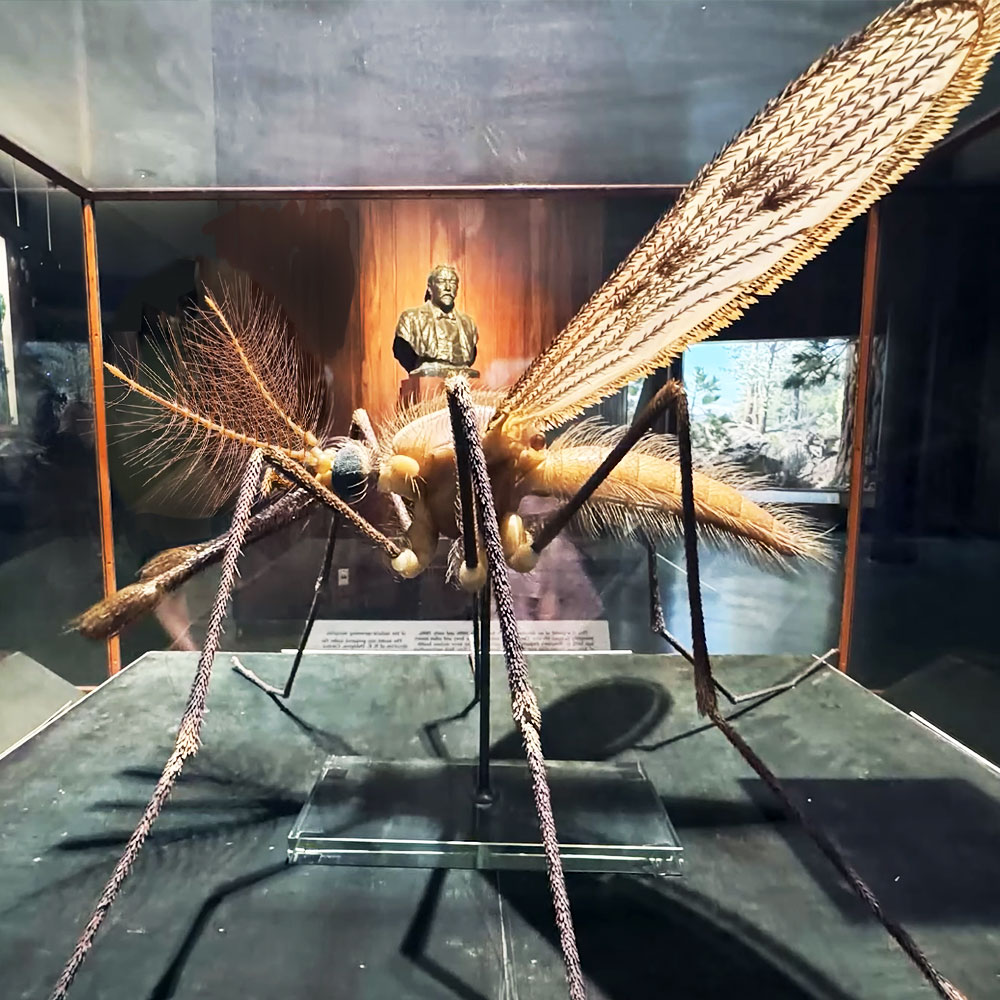
Star of India, Ahnighito, & Anopheles Star of India, which is the world's largest gem-quality blue star sapphire, weighing 563.35 carats. Discovered in Sri Lanka, it is over two billion years old. It is almost flawless and is unusual in that it has stars on both sides of the stone. Ahnighito, the large meteorite is the largest fragment of the Cape York Meteorite, weighing approximately 34 tons. The iron meteorite fragment was discovered in West Greenland in 1894 and sold to the museum. It is estimated to be roughly 4.5 billion years old, nearly as old as the Earth. Anopheles mosquito a giant scale model enlarged 47 times its actual size. It was unveiled in 1917 to educate the public about mosquito-borne illnesses like malaria and yellow fever.
Star of India, which is the world's largest gem-quality blue star sapphire, weighing 563.35 carats.
Ahnighito the large meteorite
Anopheles mosquito a giant scale model
The blue whale
The AMNH's iconic 94‑foot‑long Blue Whale model dominates the Milstein Hall of Ocean Life. Weighing roughly 21,000 pounds and built from fiberglass and polyurethane, the life‑size replica has been suspended from the ceiling since 1969. Its design was based on photographs of a female blue whale found off South Georgia in 1925. The blue whale itself is the largest animal known to have lived—surpassing even the biggest dinosaurs. Instead of teeth, it uses flexible plates of baleen to filter vast quantities of tiny prey, especially krill. Blue whales undertake long migrations, traveling alone or in small pods. They breed in warm southern waters during the winter and feed in the rich, cold seas of the polar regions during spring and summer.
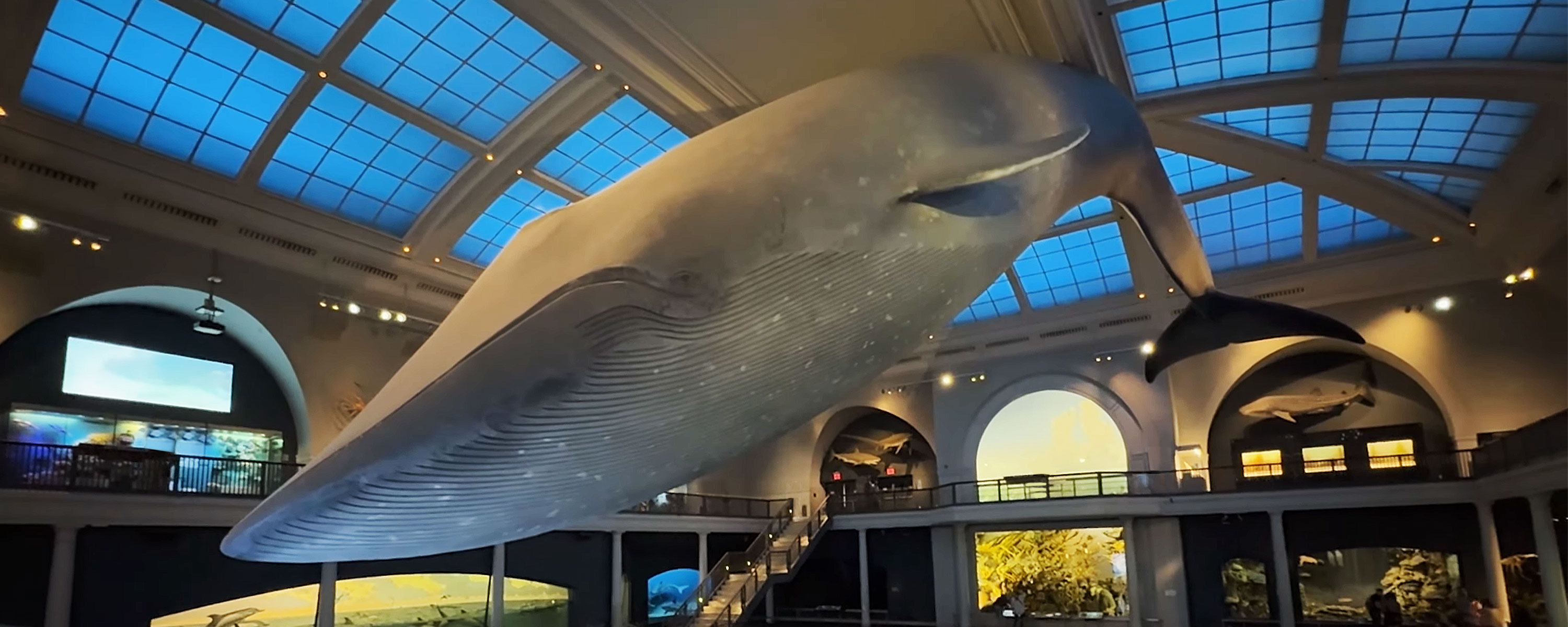
The museum’s iconic 94‑foot‑long Blue Whale model dominates the Milstein Hall of Ocean Life.
Website & Content Created by Richard Brafford, © 2025, All Rights Reserved, Fair Use Disclaimer for Non-Commercial Use for Educational & Entertainment Purposes OnlyTop